Search Results: "beh"

3 April 2011

Cyril Brulebois: Debian XSF News #8

This is the eighth Debian XSF News issue. For a change, I m going to use a numbered list, which should help telling people which item to look for when pointing to a given URL. Feel free to let me know if that seems like a nice idea or whether that hurts readability. Also, it was prepared several days ago already, so I m publishing it (with the needed bits of polishing it still needed) without mentioning what happened in the last few days (see you in the next DXN issue!).
  1. Let s start with a few common bugs reported over the past few weeks:
    • The server can crash due to some X Font Server (XFS) issue as reported upstream in FDO#31501 or in Debian as #616578. The easy fix is to get rid of FontPath in xorg.conf, or to remove the xfs package. It s deprecated anyway.
    • Xdm used to crash when started from init, but not afterwards (#617208). Not exactly fun to reproduce, but with the help of a VM, bisecting libxt to find the guilty commit was quite easy. After a quick upload with this commit reverted, a real fix was pushed upstream; a new upstream was released, packaged, and uploaded right after that.
    • We ve had several reports of flickering screens, which are actually due to upowerd s polling every 30 seconds: #613745.
    • Many bug reports were filed due to a regression on the kernel side for the 6.0.1 squeeze point release, leading to cursor issues with Intel graphics: #618665.
  2. Receiving several similar reports reminded me of the CurrentProblemsInUnstable page on the wiki, which is long unmaintained (and that s why I m not linking to it). I m not exactly sure what to do at this point, but I think having a similar page on http://pkg-xorg.alioth.debian.org/, linked from the how to report bugs page would make sense. Common issues as well as their solutions or workarounds for stable should probably go to the FAQ instead.
  3. As explained in DXN#7, we re waiting for the kernel to migrate to wheezy. The 2.6.38 upstream release was quickly pushed to unstable, which is great news, even if it s not really ready yet (since it s still failing to build on armel and mips).
  4. I ve been using markdown for our documentation, basically since it looked sufficient for our needs, and since I ve been using it to blog for years now, but it had some limitations. I ve been hearing a lot of nice things about asciidoc for a while (hi, Corsac!), so I gave it a quick shot. Being quite happy with it, I converted our documentation to asciidoc, which at the bare minimum buys us a nice CSS (at least nicer than the one I wrote ), and with automatic table of contents if we ask for it, which should help navigating to the appropriate place. A few drawbacks:
    • The syntax (or the parser s behaviour) changed a lot since lenny s version, so updating the online documentation broke badly. Thanks to the nice Alioth admins, the version from lenny-backports was quickly installed and the website should look fine.
    • The automatic table of contents is generated through JavaScript, which doesn t play nicely with wkhtmltopdf (WebKit-based HTML to PDF converter), since the table of contents gets pixelated in the generated PDF documents. We could use a2x to generate documents through the DocBook way, but that means dealing with XSL stylesheets as far as I can tell; that looks time-consuming and a rather low-priority task. But of course, contributions are welcome.
  5. When I fixed missing XSecurity (#599657) for squeeze, I didn t notice the 1.9 packages were forked right before that, so were affected too. I fixed it in sid since then (and in git for experimental). I noticed that when Ian reported a crash with large timeouts in xauth calls, which I couldn t reproduce since untrusted cookies without XSecurity don t trigger this issue. I reported that upstream as FDO#35066, which got marked as a duplicate of (currently restricted) FDO#27134. My patch is currently still waiting for a review.
  6. Let s mention upcoming updates, prepared in git, but not uploaded yet:
    • mesa 7.10.1, prepared by Chris (RAOF); will probably be uploaded to experimental, unless 7.10 migrates to testing first, in which case that update will target unstable.
    • Intel driver: Lintian s been complaining about the .so symlinks for a while, and I finally gave it a quick look. It seems one is supposed to put e.g. libI810XvMC.so.1 in /etc/X11/XvMCConfig to use that library, so the symlinks are indeed not needed at all, and I removed them.
    • Tias Guns and Timo Aaltonen introduced xinput-calibrator in a git repository; that s a generic touchscreen calibration tool.
  7. Here come the updated packages, with uploader between square brackets (JVdG = Julien Viard de Galbert, Sean = Sean Finney). For the next issue, I ll try to link to the relevant entries in the Package Tracking System.
    • [KiBi] libxt: to unstable, as mentioned above, with a hot fix, then with a real fix.
    • [KiBi] synaptics input driver: to unstable and experimental, fixing the FTBFS on GNU/kFreeBSD.
    • [KiBi] xterm: new upstream, to unstable.
    • [KiBi] libdrm: new upstream, to experimental. A few patches to hide private symbols were sent upstream, but I ve seen no reactions yet (and that apparently happened in the past already).
    • [KiBi] xorg-server 1.9.5rc1 then 1.9.5, to unstable.
    • [KiBi] xutils-dev to unstable: the bootstrap issue goes away, thanks to Steve s report.
    • [KiBi] libxp to unstable, nothing fancy, that s libxp
    • [KiBi] keyboard input driver: mostly documentation update, to unstable and experimental.
    • [KiBi] mouse input driver: fixes BSD issues, to unstable and experimental.
    • [KiBi] intel video driver: to experimental, but the debian-unstable branch can be used to build the driver against unstable s server.
    • [KiBi] xfixes: protocol to unstable, and library to experimental (just in case); this brings support for pointer barriers.
    • [JVdG] openchrome video driver: Julien introduced a debugging package, and got rid of the (old!) via transitional package. He also performed his first upload as a Debian Maintainer. Yay!
    • [KiBi] siliconmotion video driver: to unstable.
    • [KiBi] pixman: new upstream release candidate, to experimental
    • [Sean] last but not least: many compiz packages to experimental.

1 April 2011

Josselin Mouette: GNOME.Asia 2011 hackfest

For the whole week, I ve been in Bangalore for the GNOME.Asia 2011 hackfest. I ve been delegated by Stefano to represent Debian here, and my employer EDF has agreed to cover for travel costs since they are very interested in first-hand information the future of the Linux desktop and sharing our work on scientific computing. It s been a really exciting week; I ve spent quite some time packaging missing pieces of GNOME 3.0 (well, the release candidate versions of course) in experimental, together with Fred Peters. I think it s reaching a usable state now, so we ll probably soon provide metapackages to make it easily installable. The latest developments of the Shell make it a very exciting piece of software, with a strong focus on usability. Many things were written about it, but in the end my main criticism would be that it lacks some functionality - for example, the combined clock/weather/locations applet will be greatly missed. The good news is that it is extremely customizable, and with all the libraries being made accessible through GObject introspection, there are many features that are accessible from it. If you know how to write JavaScript, now is the time to write your favorite extension. On the good news front, Vincent Untz also spent a lot of time improving the so-called legacy mode , which is more and more starting to look like the Shell without special effects, and with all the features from gnome-panel 2.x that are still here. We will try in Debian to cover all uses cases that there were for GNOME 2 with GNOME 3 technology, so that panel lovers are not left behind. I ve also proposed an update to the dh_gsettings proposal, which will provide the same functionality as dh_gconf and allow to easily set distribution-specific overrides. It is still missing a way to set mandatory settings, which might come as a problem for some corporate users, but this is planned for a future version of GSettings. Today, we re having a business track where I and representatives of other companies (Oracle, Lanedo, Dexxa) are sharing experiences about making money with free software. Unfortunately the local organizers didn t manage to gather many people, despite our being in a city with an incredible number of IT industries. Tomorrow, the public conference starts, and this should be the opposite: we re expecting around 1000 people, which is a great achievement for a free software conference. For an unrelated topic, being around so many GNOME hackers has some interesting side effects; I ve been added to Planet GNOME. So, hey, hello Planet GNOME readers!

31 March 2011

Josselin Mouette: News@11: Mozilla gives the finger to embedders

There have been a lot of web browsers embedding the Gecko engine, especially through the gtkmozembed library (it was not really a proper library but let s call it like that). I remember being a happy user of galeon, which went on as epiphany, but there were also all these small applications that just need a good HTML renderer in one of their widgets, like yelp, or several Python applications using python-gtkmozembed. Anyone having had to deal with these applications, especially the most complex ones, could tell you a few things: So, today, it is official: Mozilla is dropping gtkmozembed from their codebase. I don t think this will come as a surprise to anyone. You can t develop a new version of a behemoth, monolithic application every 3 months while still caring about the interfaces underneath. Embedded applications have been migrating to webkit over the recent years, and those that don t do it really soon will die. The interesting part of the announcement is not here. It can be found hidden in a bug report: a stable and versioned libmozjs will just never happen. What does it mean? First of all, it means that Debian and Ubuntu will have to go on maintaining their own versioning of libmozjs so that it can be linked to in a decent way by applications using the SpiderMonkey JS engine. It also means that this version will have to be bumped more often. But it also puts into question the whole future of SpiderMonkey as a separate library. With a shortened release cycle, the Mozilla developers will be tempted to add more specific interfaces to SpiderMonkey, reducing its genericity in favor of its use in Firefox itself. This will produce less and less useful libmozjs versions, until we reach the point when they ll make the same announcement as above, with s/gtkmozembed/libmozjs/. This is especially relevant in the context of the GNOME Shell, which is at the core of the GNOME 3 experience. The developers deliberately chose to avoid using JavaScriptCore (the JS library inside webkit) through the Seed engine, and used GJS instead, that relies on libmozjs. In my opinion this was done for frivolous reasons (being able to use more language extensions); and not only this put the GNOME developers in an awkward situation where 2 JS interpreters compete in the same desktop, but now it puts a risk on a technology which is at the core of the desktop. One of the reasons for the limited adoption of JSCore is that it lies currently in the same library as Webkit, which is a huge dependency. I ve been very glad to learn that Gustavo is considering the idea of splitting it. We need to provide an escape route for applications using libmozjs, and it looks like more than a decent one. I hope that GNOME Shell follows it sooner than later.

Pau Garcia i Quiles: A wish a day 7: make emerge a generic package manager for Windows

A while ago I said Koen from Emweb made an interesting proposal at FOSDEM about emerge, the KDE Windows build tool. Yesterday, Jaros aw Staniek and I reaffirmed our commitment to emerge . Today, I d like to go a bit further: let s bring more developers to emerge by opening it up to other projects. Keep reading! What is emerge, why is it important and what was Koen s proposal? Fact: Microsoft Windows is very different to Unix in regards to development. On Unix platforms -that includes Linux and Mac OS X-, software is usually installed to /usr: applications in /usr/bin and /usr/sbin, libraries in /usr/lib, headers in /usr/include, common resources in /usr/share, etc. Also, dependency management is usually something you can count on: when you install kdelibs5-dev in Ubuntu, it will automatically install libqt4-dev, kdelibs5-data, libfreetype (runtime), etc That makes setting up a development environment a very easy task: look for shared libraries, header files, etc in the common places and you will probably find them. On Windows there is nothing like that. When you want to compile an application, you need to provide (build and install) all its dependencies, and you need to tell Visual Studio where to find everything. Even CMake usually needs some help in the form of a hint for CMAKE_PREFIX_PATH. As you may imagine, building KDE, which has more than 200 third party dependencies and tens of modules (and with the move + split to git, many more) becomes an almost insurmountable task. Emerge to the rescue: inspired by Gentoo s emerge, Ralf Habacker, Christian Ehrlicher, Patrick Spendrin and others (yours faithfully included) developed a tool which downloads the source, configures, builds, installs and packages KDE and its dependencies. It makes a world of difference when building KDE. Actually, it makes building KDE on Windows possible. Once more: thank you very much guys, impressive tool. There are two well-differentiated parts in emerge, the engine and the recipes . The engine takes care of downloading the sources (tarballs, checkouts from Subversion and git clones, etc) , configuring and building for the usual build systems (QMake, CMake, NMake makefiles, etc), installing, bundling packages together and much more. All that for four compilers (MSVC2008, MSVC2010, MinGW32 and MinGW-W64). It s the equivalent to Gentoo s emerge, Debian s dpkg + debhelper/cdbs or Homebrew and MacPorts for Macintosh. The recipes are the package-specific instructions a particular piece of software needs to build: what s the name of the tarball? URL to download from? What versions are available? What build system to use to configure and build? Does it need any Windows-specific patch? They are written in Python using some helper modules emerge provides (the debhelper-like part I mentioned above). Currently, there are about 70 recipes in emerge, organized in our portage tree (bear in mind the names are taken from Gentoo but the internals of the tool are completely different). With those 70 recipes, we are able to build most KDE modules. Problem is to provide all the optional features, we are missing probably 200 to 250 more recipes. Given that KDE on Windows is quite short on developers, we have to decide: either we fix bugs and improve the integration of KDE on Windows, or we keep track of the dependencies. I won t lie: for KDE on Windows, I d rather focus on development than on packaging. Given that writing and maintaining recipes does not strictly require programming skills (although they help :-) ), during my talk at FOSDEM I kept asking people to join the KDE on Windows team as packagers, even if you know little to nothing about software development. If you think about it, that s what we have in Linux distributions: there are hundreds (thousands?) of packagers in Debian, Fedora, openSuse, etc which take care of the recipes to build software developed by someone else ( upstream , in the parlance). What we have in KDE on Windows, where we are the KDE packagers, the KDE developers (upstream) and the emerge developers, is actually an anomaly. Then Koen took the microphone and said: why don t you open emerge to other projects? And I there I realized he was damn right We have developed an awesome tool to download, configure, build, package and install third party software on Windows, to manage dependencies, to update, etc. For four compilers, no less. The engine of emerge is not really tied to KDE. We already have a lot of recipes for software which is not KDE specific: openssl, Qt, bzip2, libpng, mysql, etc. I see no actual reason to disallow Gnome, GStreamer, OpenSceneGraph, LibreOffice and many others in (assuming someone wants to take care of them, of course no, do not look at me! I don t have time!). Currently, the only barrier preventing those recipes in is emerge is developed in the KDE repository and you need a KDE developer account to commit your recipes. That s about it. There is also a perception problem: if emerge is developed in KDE, it s because it s a KDE-thingy, right? . Well, no. One way to avoid that would be to graduate emerge from KDE and make it an independent project, one in which the current developers have accounts, and new developers get an emerge project account instead of a KDE account to commit recipes. Please note graduating does not mean expelling , firing or anything peyorative. It does not mean that emerge developers (engine and recipes) are worse than KDE developers, or less KDE developers than our god David Faure: in KDE, we consider Debian, Fedora, openSuse, etc KDE packagers as equals, they are also KDE developers and many of them are in the KDE eV (funny thing is I am not). My wish for today: think of one application or library you d like to see in Windows and become its maintainer in emerge for Windows. For now, let s do this in the kde-windows mailing list and if this idea succeeds, then we ll talk about graduating. You could also try to add support for a new compiler (OpenWatcom, Intel C++, etc) but that s a lot more more and it s not a priority now. PS: Yes, I know about CoApp, Microsoft s similar effort, with some magic involved. I ve been watching and trying it since day 1. I m really interested. It s just not there yet and I do not have spare time to help Garrett (hey Microsoft, hire me and I ll have all the time in the world! :-) )

29 March 2011

Steve Langasek: Multiarch Monomania

So the other day, I was able to do this in an Ubuntu natty amd64 chroot for the first time.
# cat > /etc/apt/apt.conf.d/multiarch-me
APT::Architectures   "amd64"; "i386";  ;
^D
# cat >> /etc/dpkg/dpkg.cfg
foreign-architecture i386
^D
# apt-get update
# apt-get install flashplugin-installer:i386
Reading package lists... Done
Building dependency tree       
Reading state information... Done
[...]
The following NEW packages will be installed:
  flashplugin-installer:i386 flashplugin-nonfree:i386 gcc-4.5-base:i386
  libatk1.0-0:i386 libavahi-client3:i386 libavahi-common-data:i386
  libavahi-common3:i386 libc6:i386 libcairo2:i386 libcomerr2:i386
  libcups2:i386 libdatrie1:i386 libdbus-1-3:i386 libdrm2:i386
  libegl1-mesa:i386 libexpat1:i386 libfontconfig1:i386 libfreetype6:i386
  libgcc1:i386 libgcrypt11:i386 libgdk-pixbuf2.0-0:i386 libgl1-mesa-glx:i386
  libglib2.0-0:i386 libgnutls26:i386 libgpg-error0:i386 libgssapi-krb5-2:i386
  libgtk2.0-0:i386 libgtk2.0-common libice6:i386 libjasper1:i386
  libjpeg62:i386 libk5crypto3:i386 libkeyutils1:i386 libkrb5-3:i386
  libkrb5support0:i386 libnspr4:i386 libnspr4-0d:i386 libnss3:i386
  libnss3-1d:i386 libpango1.0-0:i386 libpcre3:i386 libpixman-1-0:i386
  libpng12-0:i386 libselinux1:i386 libsm6:i386 libsqlite3-0:i386
  libstdc++6:i386 libtasn1-3:i386 libthai-data libthai0:i386 libtiff4:i386
  libudev0:i386 libuuid1:i386 libx11-6:i386 libx11-data libx11-xcb1:i386
  libxau6:i386 libxcb-dri2-0:i386 libxcb-render0:i386 libxcb-shape0:i386
  libxcb-shm0:i386 libxcb-xfixes0:i386 libxcb1:i386 libxcomposite1:i386
  libxcursor1:i386 libxdamage1:i386 libxdmcp6:i386 libxext6:i386
  libxfixes3:i386 libxft2:i386 libxi6:i386 libxinerama1:i386 libxrandr2:i386
  libxrender1:i386 libxt6:i386 libxxf86vm1:i386 x11-common zlib1g:i386
0 upgraded, 78 newly installed, 0 to remove and 3 not upgraded.
Need to get 15.1 MB/15.6 MB of archives.
After this operation, 48.9 MB of additional disk space will be used.
Do you want to continue [Y/n]?
It is a truly heady experience, after so many years of talking about the need to properly support multiarch in Debian and Ubuntu, to see support for cross-installation of packages come to fruition. If you've talked to me any time in the past couple of weeks and noticed it's a little hard to get me to change the subject, well, that's why. Many who have grown accustomed to Debian and Ubuntu's lack of support for installing i386 packages on amd64 (or vice versa) may wonder what the fuss is about. (Whereas others who are well versed in distributions such as Red Hat and SuSE may laugh and wonder what took us so long...) So maybe a few words of explanation are in order. If you've ever installed ia32-libs on an amd64 machine anywhere; if you've ever noticed a bug where ia32-libs didn't work right because of wrong system paths, or had to file a request for another library to be added to ia32-libs because it wasn't included in the set of libraries Debian decided to package up in this grotesque, all-in-one 32-bit compatibility bundle; if you've ever decided not to install a 64-bit OS on your perfectly 64-bit-capable hardware because of concern that you wouldn't be able to run $random32-bitonly_application; multiarch is for you. If you've gotten stuck maintaining a lib32foo "biarch" package in Debian due to popular demand, multiarch is definitely for you. :) If you've ever cross-compiled software for a different Debian architecture than the one you were running, multiarch is for you. If you've ever wanted to run binaries for a different architecture under emulation, and found it awkward to set up the library dependencies, multiarch is for you, too. Because although the .deb world may be a little late to the party, we're also naturally taking things much further than anyone's done with rpm. Multiarch won't just give you the ability to install 32-bit libs on 64-bit systems; it'll give you the ability to install libs for any known architecture on any system. And a whole lot of pain just falls out of the equation in the process. A cross-compiling environment looks the same as a native-compiling environment. An emulated system looks the same as a native system. We can start to seriously consider cross-grading systems from one architecture to another. And all this is happening now. The groundwork is there in Ubuntu natty. Wheezy will be the release that brings multiarch to Debian. When dpkg 1.16.0 is uploaded to unstable real soon now, the bootstrapping will begin. I am immensely grateful to everyone who's helped make multiarch a reality - to Tollef, Matt and others for seeding the vision; Aurelien, Matthias and Arthur for their work to ready the toolchain; David and Michael for the apt implementation; Guillem and Raphael for the dpkg implementation, and Linaro's support to help make this possible; and the many other developers who've helped to refine this design over the years in numerous other BoFs, sessions and mailing list threads. I'm excited to find out what the Debian community will do with multiarch now that it's upon us. Christian, maybe you should start a pool for how long it will take before all the libraries shipped in ia32-libs have been converted to multiarch and we can drop ia32-libs from the archive?

28 March 2011

Raphaël Hertzog: People behind Debian: Bdale Garbee, chair of the technical committee

Bdale is a long-time Free Software believer, he has been contributing even before Debian existed in the prehistoric era of free software. :-) Anyone who went to a big Free Software conference has seen one of his colorful t-shirts. Or maybe you have heard the story where he got his beard shaved by Linus Torvalds to raise funds to protect the Tasmanian Devil. More seriously Bdale has played and continue to play a number of important roles in the Debian community. He also represents one of the biggest corporate sponsors (both for DebConf and for the servers that Debian owns): Hewlett Packard. My questions are in bold, the rest is by Bdale. Who are you? I made my first personal contribution of source code to what we now call Free Software in 1979. I started with HP in 1986 and for nearly a decade have served the company as Chief Technologist for Open Source & Linux. I am president of Software in the Public Interest, which is the umbrella organization providing legal and financial existence for Debian in the USA. I also represent users, developers, and Debian interests on a number of boards including at the Linux Foundation and the Freedombox Foundation. I m happily married with two children. Many people in Debian have met some or all of my family. They all joined me for Debconf in Edinburgh, and my daughter Elizabeth also attended in Caceres and New York. I joined Debian in 1994. I ve been responsible for a number of packages essential to our base system continuously since that time. But I ve also contributed to the project in many other ways over the years. I ran the first server that was fully dedicated to Debian. Ideas of mine influenced the development of project infrastructure, from the early design of our mirror network to structuring the archive around a package pool . I started or made significant early contributions to 5 ports of Debian to non-i386 architectures. I served as Debian Project Leader (DPL) in 2002-2003, was acting Secretary for a while, and have served on the Technical Committee for a number of years. Over the years, I ve also had some interesting hobbies. I helped design, build, and program pieces of various amateur radio satellites. I enjoy making physical things, and have many tools for working in wood and metals. My son and I are very active in the world of high power model rockets. And with my partner (and fellow Debian developer!) Keith Packard I m now running a small business making and selling open hardware and open source avionics for hobby rockets. You can read more about that at http://altusmetrum.org. You re the chair of the Debian technical committee. Can you quickly explain the role of this committee? I think many people assume the Technical Committee has a larger role in Debian than it really does. Section 6 of Debian s constitution defines the official role of the Technical Committee. Most importantly, the committee exists as a last resort place to resolve technical conflicts between Debian developers that they are unable to resolve by themselves. Most of the power in Debian is left in the hands of individual developers, who are usually able to collaborate with each other to make good technical decisions. So the Technical Committee s resolution process has only rarely been needed, which I think is a very good thing. From my point of view, the technical committee is not working. In many cases, the committee does not take any (timely) decision and just waits until the underlying situation has evolved to a point where the intervention of the committee is no longer needed. Do you agree with this and how can you explain it? I think it s very important for all of us to remember that everyone working on Debian does so voluntarily, and people who volunteer their time generally deserve a measure of respect and appreciation for their efforts. No issue is brought to the Technical Committee unless resolving it is expected to be really difficult, or at least contentious. And often, the issues brought to the committee have been as much or more about personality than technology. That makes some of them really hard to solve. So I do not agree that the technical committee is not working. It seems to me that the decisions that bog down and take a long time are the ones where arguments start out or become emotional instead of technical. In this context, if committee members can help lead public and private discussions in a way that causes a situation to evolve to the point where a decision is no longer needed, that may be healthier for the project in the long term than a quick vote that satisfies some contributors at the expense of others. The last important change that was made to try to revive the committee was the addition of two new members (Don Armstrong and Russ Allbery). Is there anything else that could be tried? The biggest improvement I could personally wish for is something people sending issues to the committee can help with. As the ultimate technical decision making body for a project whose output is mostly software, the more a request can be put in terms of a decision about source code, the easier it will be for us to make a decision. That won t always be possible, but when we re forced to try and dream up alternatives and then figure out whether anyone would actually be willing to write the code to implement those alternatives, the process takes a lot longer than choosing between competing patch sets or deciding whether a patch should be included. Besides your role in the technical committee, you have held the role of mediator/facilitator/advisor on numerous occasions. Because you re an old wise bearded guy who travels a lot and knows many Debian contributors I would like to thank you for all this work that few people notice. Are there been times where this has been a real burden for you? Thank you for mentioning this. I ve put a lot of my heart into Debian over the years, largely because it s a project and a community that continues to amaze and inspire me. I feel fortunate to have been able to meet and work on Debian with so many outstanding people from around the world. Many are now my friends, with all the silly and serious things being a friend implies. I ve been asked for and have given advice many times. I ve helped celebrate birthdays, marriages, new jobs, and the arrival of children. Sadly, I have also found myself having to try and find the right words to mark the loss of some of these friends The only time any of this feels like a burden is when there s some important problem that many people care about, that I m working behind the scenes to help fix, but can t really talk about publicly without causing more harm than good. It s distressing to have people think you don t care or aren t helping, when really you re doing everything you possibly can just not in a publicly visible way. Of course I understand that this is an impossible situation. If you can t see what s happening, there s no way to know if something is happening or not. That s why I advocate doing as much as possible in Debian, and SPI, and everywhere else I contribute in as open a way as possible. You have been Debian Project Leader and you promoted the vision of Debian as the Universal Operating System. What does universal mean for you? The biggest thing to me at the time was the idea that Debian could be anything. Those who chose to work on Debian would ultimately determine what Debian became. I also wanted to make sure we thought about as broad a set of potential users and collaborators as possible. But this vision provided a framework for pursuing a whole range of worthwhile increases in Debian s scope of utility, some of which I articulated in my DPL platforms, some others put forward. Internationalization, porting to more supported architectures, our inclusive and evolving approaches to accepting new developers and new packages, and so forth. I think this vision has served us well, and it pleases me that it has stayed a part of our collective thinking for so long. We re again in Debian s electoral period, what do you think of the work done by the current DPL? I m very happy with what I ve observed of Stefano s activities during his first year as DPL. He has an obvious enthusiasm for Debian, communicates well both in one to one interactions and in front of a crowd, and I think represents Debian very well. It is interesting that he s running unopposed for re-election this year. I choose to interpret that as evidence he s doing a good job, the project is running well, and nobody feels the need to try and take the job away From him. I m glad he s willing to continue in this role for another year. What s the most important thing that Debian should achieve in the wheezy timeframe? I don t yet have a very crisp personal wish-list for wheezy. But I would certainly like to see multiarch support finally completed! I m also very interested to see what comes from the CUT work. You have been an early supporter of multiarch , a project to allow easy installation of foreign architecture packages. It s on good track for Wheezy. Do you think it s an important milestone? My original motivation for requesting multiarch support was to enable support for 32-bit x86 binaries on ia64 Itanium systems, in the time leading up to the sarge release. I ended up creating the ia32-libs package, which I m not proud of. The emergence of 64-bit extensions to x86 (the amd64 architecture) made this a much broader issue. Today, I run a 64 bit kernel and a 32 bit user space on my notebook. There are problems with just moving entirely to 64 bit but I would like to be able to run some applications that work with large data sets in full 64 bit mode!
Thank you to Bdale Garbee for the time spent answering my questions. I hope you enjoyed reading his answers as I did. Subscribe to my newsletter to get my monthly summary of the Debian/Ubuntu news and to not miss further interviews. You can also follow along on Identi.ca, Twitter and Facebook.

4 comments Liked this article? Click here. My blog is Flattr-enabled.

27 March 2011

David Watson: Project 52 - Week 12

Well, three months in and still going. It's getting harder to find things around the house to photograph when I don't get the chance to get outside with my camera. This image was shot in my makeshift home studio ( bedroom ) using only the light from the large window. If anyone is interested I may post some behind the scenes shots next time. Week 12 - Cats

25 March 2011

Michal Čihař: Playing with DLNA aka uPNP

Having Synology diskstation, notebook with XBMC and smart phone with Symbian, it should be possible to make all these talk together being able to play music stored on the diskstation using XBMC and controlled by phone, right? I tried to set it up some time ago, but I used samba export on the diskstatio and all I found for controlling was XBMC Symbian S60 Remote v2, which is indeed useful, but choosing what to play remotely is quite limited. Luckily yesterday I've discovered world of DLNA aka uPNP and was surprised that this works pretty well. I've configured diskstation to behave as a uPHP media server, XBMC is able to act as media renderer and my Nokia E52 has ability to act as a controller. If you are lost in these terms, good overview is available here. Well the control interface of Nokia E52 is far from perfect, but still provides good way to control all the stuff. Maybe I will look for some other solution in future, I'm sure it will exist as well.

Filed under: English 2 comments Flattr this!

23 March 2011

Matthew Garrett: HTC are still incredible fuckheads

Update: Despite another email yesterday reasserting the 90-120 days lie, the source code has now landed on HTC's site.

As has been discussed before, HTC have a somewhat "interesting" interpretation of the GPL that allows them to claim they don't need to provide source code until between 90 and 120 days after the release of binaries. It's probably noteworthy that the FSF (who, you know, wrote the license and all) disagree with this interpretation, as do the kernel copyright holders (who, you know, wrote the code that the license covers) I've talked to about it. Anyway, after a pile of screaming and shouting from all sides HTC have tended to release their source code in a timely manner. So things seemed better.

HTC released the Thunderbolt last week and we're back to the 90-120 day song and dance. It's probably worth remembering that by behaving in this way HTC gain a competitive advantage over any vendors who obey the terms of their license - HTC can incorporate improvements made by others without releasing their own until through a significant portion of the lifecycle of their phone.

As far as I'm concerned, every single Thunderbolt sold so far embodies a copyright infringement. Wilfully engaging in copyright infringement for commercial benefit is typically frowned upon by courts, especially if by doing so a foreign company is gaining commercial advantage over a domestic one. If you think Microsoft's patent assault on Android is a problem, just imagine what they could do if they hired one significant Linux kernel developer and used their copyrights to attack the overwhelming majority of Android vendors who fail to comply with the GPL. It probably wouldn't be industry ending (companies would merely have improve their compliance procedures) but it'd do a huge deal of damage in the short term. It's insane for companies to behave this way. Don't reward them by giving them your money.

I'll be talking about this at the Linux Foundation Collaboration Summit next month, along with an update on my study of the compliance of Android tablets. I'm hoping that there'll be further developments after that.

(comment count unavailable Comments Comment on this)

Jaldhar Vyas: Happy Birthday William Shatner...

...and me. I turned 40 today and on such a momentous occasion I should pause
to take stock of my life. Executive summary: it's not bad at all. Last week I completed 13 years of marriage to Jyoti who loves me and always
looks out for my best interest even during the times when I do not. I have two lovely children who are kind, intelligent, Dharmic, and (mostly :-)
well behaved. Of course I can't forget all my dear friends and family who gave me their
blessings and good wishes today and indeed every day. My health is better now than it was in my twenties. Since last year I've been
exercising on the treadmill regularly and taken a lot of junk out of my diet.
I've lost about two stones and while I won't be joining the Debian marathon
runners just yet, I can at least jog briskly without collapsing in a puddle of
sweat, heart palpitations and shame. Mentally, I've been taking college level courses in Maths in an effort to
relearn the things I didn't pay proper attention to the first time I was in
college. I completed National Novel Writing Month for the first time with a
60,000 word philosophical science fiction blockbuster that other people might
actually consider readable once I finish revising it. And I am still training
for the day when I shall be granted the spot on Jeopardy which is rightfully
mine. Financially, the last few years have not been good for many people but we are
holding our heads above water and even slowly moving forwards. This is the
year Consolidated Braincells Inc. my little corporate empire will take off I
hope. As I begin preparing for Chaitra Navaratri I feel it will be extra special
this year because all these good things that are happening to me are solely
due to Her grace and krpa. Last thing I wanted to mention is that a present I gave myself today was to
make a donation to the Red Cross to help the victims of the tsunami in Japan.
If you have had good fortune in your life and have not already done so won't
you consider doing the same? (or to any of the other reputable charities
engaged in disaster relief.) Our shastras say that dana is the best insurance
against accidental sins and the guarantor of good luck.

22 March 2011

Adrian von Bidder: On Bad Lenses

I, and maybe some others, wondered why people would (have to) send new lenses back claiming that they got a bad copy so often. I couldn't imagine quality control being so bad that two out of three (at least that's the impression I got from reading the occasional foto discussion forum) lenses are bad. It turns out that it is not only people needing to be pampered and having the impression that their second (identical) copy of the expensive new lens is better. Nor is it bad QA by the manufacturers alone. Fact is that todays high megapixel cameras are at the limit of the manufacturing precision that can be achieved at a reasonable price. Roger Cicala (LensRentals.com, so he occasionally does have a lens or two at his place) wrote some very interesting articles about this topic which I discovered just now as they were featured on canonrumors (In case you're wondering: No, I don't see any issues with my new 70-200mm, just coincidence that I'm reading this just after getting a new lens. When I upgrade my camera body to something like a 5D MkII I will take a very close look at my Tokina 11-16 though, where I don't trust the AF 100%. On the 10MP Canon 40D it's a great lens, so I'm quite happy for now, but it seems strange that when I release and half-press the shutter again after having focused, the focus will sometimes move a tiny bit again. Haven't noticed this behaviour on the other lenses.)

21 March 2011

Joerg Jaspert: Debian FTPMaster meeting 2011 - Alright Brain...Its all up to you

And so there went a day of work. Minutes done, come back tomorrow
Okok, more text: We did lots of stuff. There was breakfast, soon after we had Lunch, and guess, Dinner also. Now, would you please come back tomorrow?
Anyways, we did some things. One of those was to have PostgreSQL 9.0 and to enable the replication to the machine any DD can access. Which is, from today on, ries.debian.org. And for the first time ever (since that time ftp-master got closed to the public), DDs can now see the live status of the archive, literally a second after a package got accepted a dak ls on ries will show you that fact. Torsten worked on fixing up old remnants of code and database entries around contents and also tackled a problem between our usage of SQLalchemy and the python multiprocessing module. He also started working on the source contents and was weird enough to get us standardized logging into a dak tool. Mark worked with DSA on the Postgres 9.0 upgrade to fix what was to fix in out database and did some tests with our environment in squeeze and coordinated changes in python-apt needed for multiarch and xz. He then started working on some larger database changes around the built-using feature. I myself started off with getting generate-packages-sources to behave when there is an error instead of silently ignoring that. I also did a bit of groundwork to enable us to do NEW processing adding overrides for all affected binary packages, not just those from the architecture currently uploaded. That will allow stuff like linux-2.6 to pass NEW just once, not once per architecture. That involves a new field in our dsc files and the status of that is tracked in Bug #619131.

Lars Wirzenius: Obnam version 0.15 and 0.15.1, and btree/larch 0.19

I've just made a couple of software releases: This is the first release of Obnam this year. Below is a summary of the changes. My apt repository has binary packages for amd64, i386, and armel. I've started mentoring someone to help me maintain the Debian packages, and hope to start uploading Obnam and its dependencies to Debian within a few weeks. Obnam is still in ALPHA, but the only missing thing for moving to BETA is encryption support. There's a bunch of bugs that need to be fixed, but I'm not going to block the BETA on them. I'd be very interested to hear any feedback on this version. Bugs fixed: Improvements and other changes:

20 March 2011

Keith Packard: Altos0.9.2

AltOS 0.9.2 Minor update to ground station software Bdale and I are pleased to announce the release of AltOS version 0.9.2. AltOS is the core of the software for all of the Altus Metrum products. It consists of cc1111-based microcontroller firmware and Java-based ground station software. AltosUI Just a few bug fixes AltOS version 0.9.2 is a minor release with just a couple of fixes: No Firmware Update AltOS version 0.9.2 does not include any firmware changes. We re still busy testing the Kalman filter code; that ll be in the next major release.

14 March 2011

Mike Hommey: Avoiding dependencies upon recent libstdc++

Mozilla has been distributing Firefox builds for GNU/Linux systems for a while, and 4.0 should even bring official builds for x86-64 (finally, some would say). The buildbots configuration for these builds uses gcc 4.3.3 to compile the Firefox source code. With the C++ part of gcc, it can sometimes mean side effects when using the C++ STL. Historically, the Mozilla code base hasn t made a great use of the STL, most probably because 10+ years back, portability and/or compiler support wasn t very good. More recently, with the borrowing of code from the Chromium project, this changed. While the borrowed code for out-of-process plugins support didn t have an impact on libstdc++ usage, the recent addition of ANGLE had. This manifests itself in symbols version usage These are the symbol versions required from libstdc++.so.6 on 3.6 (as given by objdump -p): And on 4.0: This means Firefox 4.0 builds from Mozilla need the GLIBCXX_3.4.9 symbol version, which was introduced with gcc 4.2. This means Firefox 4.0 builds don t work on systems with a libstdc++ older than that, while 3.6 builds would. It so happens that the system libstdc++ on the buildbots themselves is that old, which is why we set LD_LIBRARY_PATH to the appropriate location during tests. This shouldn t however be a big problem for users. Newer gcc, new problems As part of making Firefox faster, we re planning to switch to gcc 4.5, to benefit from better (as in working) profile guided optimization, and other compiler improvements. We actually attempted to switch to gcc 4.5 twice during the 4.0 development cycle. But various problems made us go back to gcc 4.3.3, the main contender being the use of even newer libstdc++ symbols: GLIBCXX_3.4.14 was added in gcc 4.5, making the build require a very recent libstdc++ installed on users systems. As this wouldn t work for Mozilla builds, we attempted to build with -static-libstdc++. This options makes the resulting binary effectively contain libstdc++ itself, which means not requiring a system one. This is the usual solution used for builds such as Mozilla s, that require to work properly on very different systems. The downside of -static-libstdc++ is that it makes the libxul.so binary larger (about 1MB larger). It looks like the linker doesn t try to eliminate the code from libstdc++ that isn t actually used. Taras has been fighting to try to get libstdc++ in a shape that would allow the linker to remove that code that is effectively dead weight for Firefox. Why do we need these symbols? The actual number of symbols required with the GLIBCXX_3.4.14 version is actually very low: With the addition of the following on debug builds only: The number of symbols required with the GLIBCXX_3.4.9 version is even lower: It however varies depending on the compiler version. I have seen other builds also require std::ostream& std::ostream::_M_insert(double). All these are actually internal implementation details of the libstdc++. We re never calling these functions directly. I m going to show two small examples triggering some of these requirements (that actually generalize to all of them). The case of templates
#include <iostream>
int main()  
    unsigned int i;
    std::cin >> i;
    return i;
 
This example, when built, requires std::istream& std::istream::_M_extract<double>(double&), but we are effectively calling std::istream& operator>>(unsigned int&). It is defined in /usr/include/c++/4.5/istream as:
template<typename _CharT, typename _Traits>
class basic_istream : virtual public basic_ios<_CharT, _Traits>  
    basic_istream<_CharT, _Traits>& operator>>(unsigned int& __n)  
        return _M_extract(__n);
     
 
And _M_extract is defined in /usr/include/c++/4.5/bits/istream.tcc as:
template<typename _CharT, typename _Traits> template<typename _ValueT>
        basic_istream<_CharT, _Traits>&
        basic_istream<_CharT, _Traits>::_M_extract(_ValueT& __v)  
            (...)
         
And later on in the same file:
extern template istream& istream::_M_extract(unsigned int&);
What this all means is that libstdc++ actually provides an implementation of an instance of the template for the istream (a.k.a. basic_istream<char>) class, with an unsigned int & parameter (and some more implementations). So, when building the example program, gcc decides, instead of instantiating the template, to use the libstdc++ function. This extern definition, however, is guarded by a #if _GLIBCXX_EXTERN_TEMPLATE, so if we build with -D_GLIBCXX_EXTERN_TEMPLATE=0, we actually get gcc to instantiate the template, thus getting rid of the GLIBCXX_3.4.9 dependency. The downside is that this doesn t work so well with bigger code, because other things are hidden behind #if _GLIBCXX_EXTERN_TEMPLATE. There is however another (obvious) way to for the template instantiation: instantiating it. So adding template std::istream& std::istream::_M_extract(unsigned int&); to our code is just enough to get rid of the GLIBCXX_3.4.9 dependency. Other template cases obviously can be worked around the same way. The case of renamed implementations
#include <list>
int main()  
    std::list<int> l;
    l.push_back(42);
    return 0;
 
Here, we get a dependency on std::_List_node_base::_M_hook(std::_List_node_base*) but we are effectively calling std::list<int>::push_back(int &). It is defined in /usr/include/c++/bits/stl_list.h as:
template<typename _Tp, typename _Alloc = std::allocator<_Tp> >
class list : protected _List_base<_Tp, _Alloc>  
    void push_back(const value_type& __x)  
        this->_M_insert(end(), __x);
     
 
_M_insert is defined in the same file:
template<typename ... _Args>
void _M_insert(iterator __position, _Args&&... __args)  
    _List_node<_Tp>* __tmp = _M_create_node(std::forward<_args>(__args)...);
    __tmp->_M_hook(__position._M_node);
 
Finally, _M_hook is defined as follows:
struct _List_node_base  
    void _M_hook(_List_node_base * const __position) throw ();
 
In gcc 4.4, however, push_back has the same definition, and while _M_insert is defined similarly, it calls __tmp->hook instead of __tmp->_M_hook. Interestingly, gcc 4.5 s libstdc++ exports symbols for both std::_List_node_base::_M_hook and std::_List_node_base::hook, and the code for both methods is the same. Considering the above, a work-around for this kind of dependency is to define the newer function in our code, and make it call the old function. In our case here, this would look like:
namespace std  
    struct _List_node_base  
        void hook(_List_node_base * const __position) throw ();
        void _M_hook(_List_node_base * const __position) throw ();
     ;
    void _List_node_base::_M_hook(_List_node_base * const __position) throw ()  
        hook(__position);
     
 
which you need to put in a separate source file, not including <list>. All in all, with a small hack, we are able to build Firefox with gcc 4.5 without requiring libstdc++ 4.5. Now, another reason to switch to gcc 4.5 was to use better optimization flags, but it turns out it makes the binaries 6MB bigger. But that s another story.

13 March 2011

Mark Brown: Changing core code

One of the biggest differences between working on most other OSs and working upstream on drivers for the Linux kernel is that elsewhere the core is usually a fixed thing that has been released and can t really be changed, even if source is available (which may not even be the case). If whatever subsystem you re working in can t cope with the thing you re trying to express then one of the things it s really useful to be good at is working out ways to implement the behaviour that s required behind the back of the subsystem. It s very common to see such code in drivers submitted by hardware vendors, particularly those that are new to Linux, as this is such a big mindset shift. With kernel development the approach is much more to make sure that the core can cope with whatever needs expressing. It s not always done in the core for example, sometimes the issue is due to unusually limited hardware and very likely to never come up again but it s very unusual to see code merged that doesn t at least fit in with the design of the subsystem. This post is inspired by a brief exchange with Thomas Gleixner on linux-kernel who articulated the advantages of doing things this way very well:
 - It's usually simpler and faster as the core code has all the
   necessary information. So that's even an argument which managers
   might understand.
 - Such workarounds, when not caught, tend to spread themself
   magically because driver writers checkout the existing code of
   similar devices and copy/paste/modify^Wuglify them over and over.
 - In the worst case such workarounds make the core maintainence
   harder and in some cases impossible, because they silently imply
   semantics on the core w/o the core maintainer knowing about them.
The last point is the most important one to me as a subsystem maintainer I really don t want to be merging code that is going to create issues with ongoing development of the subsystem. This is all another facet of the policy on stable APIs: APIs are only worth working around if they re fixed, and the assumptions that end up embedded in a workaroud are as much part of the API as the explicit interfaces. It s things like this that make Linux such a pleasure to work on.

12 March 2011

Russell Coker: Climate Action Now Rally Melbourne 12th March

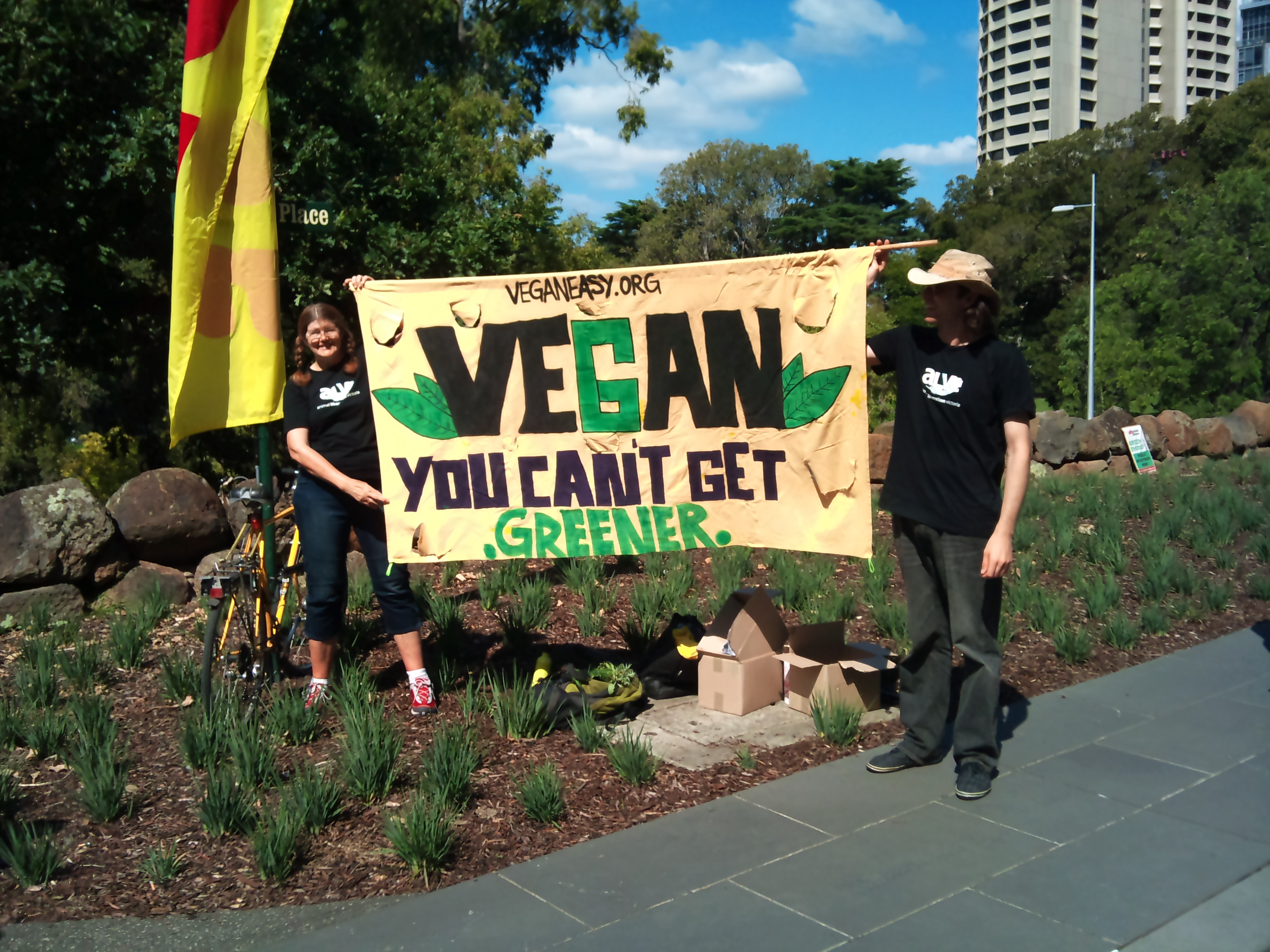
This morning I attended the Climate Action Now rally to support a pollution tax [1]. The event was well attended, my personal estimate of the number of people there was there there was definitely more than 3,000 people, and maybe as many as 8,000 or more.I spoke to an employee of the APS who was on guard duty, he described the event as big and said that they don t usually have events that are so well attended. He gave a personal estimate of 5,000 people. While he wasn t speaking on behalf of the APS he was presumably more skillful at making such estimations than most people. I expect that he also gave a conservative estimate, so it could have been a lot more than that.There were some people using comedy to make political points. Below is a picture of the carbon monster, what you can t see is the man who was handing out coal BBQ fuel for people to feed the monster, children appeared to enjoy that! Also there were three people dressed as Gollum representing the Liberal party (the Australian conservative party), I was unable to get all three in one picture.Carbon monster with sign saying feed me carbonTwo people dressed as Gollum with Liberal Party badges advocating that we die tax-free and that the Liberal party is for famine, fire, and floodSome vegans had a banner supporting the VeganEasy.org site [2]. Being vegetarian can make a significant impact on human environmental impact including on the amount of electricity used (from coal or other sources).Vegans waving a banner for VeganEasy.orgHere are pictures taken looking East over the main part of the rally, looking North towards the building at 3 Treasury place from the other side of the road, looking South over the lawns where people who didn t like being crowded gathered, and looking West over part of the main crowd. The picture looking South shows another view of the Carbon Monster and his accomplice with a sign haven t you had enough dear? .Looking East over the main rallyLooking North towards the building across Treasury PlaceLooking south over the lawnLooking west over the crowdWhen I first arrived there were two main sections to the rally. They weren t discrete (there was no empty space between them) but they acted separately because there was no PA system that could make enough noise to be heard in both sections. At one stage the West section was chanting while there were speeches in the East section. Below is a picture looking out over the West section as people had just turned to go home. This area was entirely packed when I first arrived.The rally was really a family event. There were some grey-haired people wearing t-shirts explaining that they wanted to create a better world for their grand-children and there were also some young children. At the end of the event some children used cardboard signs as toboggans to slide down a steep grassy bank near the main rally area recycling!!! I deliberately chose my photos to try and avoid including children, but even so you can see a few in the background of some of them.

11 March 2011

Eddy Petri&#537;or: HOWTO: Making Windows usable and avoiding accidental sending of mails in Microsoft Outlook

I've changed jobs recently and after 5 years of not having to work with a Windows system I am having all sorts of adaptation-to-Windows problems at the new job.

First I just had to have the usual X-mouse behaviour and so I installed True X-Mouse Gizmo for Windows. This provides focus under mouse, middle click paste after select (not perfect, but it works), right click to push to bottom the window.

Second I had to have a virtual desktop, so I installed Microsoft's Virtual Desktop Manager from the PowerToys page. I tried another virtual desktop manager before using MSVDM, but I found it too clumsy so I switched to MSVDM which I knew from way back when I used Windows the last time. Good, now I can have my applications organised the way I am used to.

UPDATE:
I gave up on MSVDM in favour of Virtual Dimension since I wasn't able to send a particular window to the intended desktop unless I had in the taskbar all apps visible (Shared Desktop option). I might try other suggestions (Virtual Dimension does not have a way to send a window directly to a specific desktop, but just to the neighbours of the current one.)


Third, I had to make Caps Lock work as Ctrl. I just can't go back to an inferior setup. I found information on this page and ended up at this page from where I got a zip file with various registry keys which allow the deactivation of caps, or turning it into another Ctrl.

Fourth, I am used to write with diacritics in Romanian with the secondary layout of the standard (SR 13392:2004), so I rushed to Cristian Secar 's page for the keyboard driver since on XP the Romanian layout is retarded (some history in which some arbitrary German guy decided y and z had to be switched on Romanian keyboards and some other similarly weird stuff). Since the installation, my keyboard behaves according to this layout:


Things started to look well, but I soon was reminded that Outlook is an idiotic mailer since it doesn't require a confirmation on send, not even if you didn't set a subject. And this is problematic since sending the mail is done via Alt+S, so if the current layer is NOT Romanian, when I want to type (s with a comma below), a fairly common character in Romanian words, you end up looking like an idiot on the recipient side since they receive an incomplete mail. Remember, no confirmation AND no default spell checking before send. Yay!

At my second such accidental mail sending (of which the last two were sent to the same person), I decided to see if this can't be fixed. I initially looked for changing the short cut, but I couldn't find it (I might be inept at finding things in Windows, remember, I haven't touched Windows systems in the last 5 years) but I found another workaround and decided it's good enough to share with other people that might hit the problem.

Just setup a delay rule following these steps.
1. Go to Tools....Rules Wizard
2. Click 'New' Rule
3. Select "Check messages after sending"
4. Click Next on "Which conditions you want to Check?" dialog.
5. Press yes to "This Rule will be applied to every message" message box
6. In the "What do you want to do with message?" dialog, Select "Defer delivery by a number of minutes"
7. Select your favourite number of minutes.... I usually select 2 mins.
8. Select Finish. and close the Rules Wizard.

Now everytime you send an email it will sit in your outbox
for specified number of minutes. If you ever wanted to change it, delete it etc, You have sufficient time to do it :)


I used 3 minutes for the delay. At least now I can prevent looking retarded in front of people... more than necessary :D .


Oh, and Windows' clock display is retarded. It shows, by default, the hour and minutes, but there's no way to change that in a sane way. If you want the date, you must hover over the clock and it shows it, but the day of week is missing. Great job! You can see that information, too, but you have to drag the toolbar to be 2 or even 3 rows high (here it requires 2, but I've seen people saying they needed 3) to get that information, too. Great! One has to choose between wasting desktop real estate and having access to useful information. Or you could install an independent application for the clock... retarded. I am not making this shit up.

I hope this helped.

7 March 2011

Alexander Reichle-Schmehl: Debian honoured with LNM award for Outstanding Contribution to Free Software

Those who followed the live stream or read our News already knew it: Debian has been honored with the Linux New Media Award in the Categories "Best Open Source Server Distribution" and Outstanding Contribution to Open Source/Linux/Free Software. Especially the second one, considered to be the "kings class" of the LNM awards, is a great honour. While it is called the Linux New Media award, the decision of whom to honor with them isn't done by the company themselves, but by a bigger jury, consisting of over 300 representative community members, developers, journalists and companies. Deciding in a secret vote1. To the best of my knowledge, there's nothing similar. So one can truly say, we weren't awarded by a company, but by the entire Free Software community! Congratulations to everyone involved! For our Outstanding Contribution to Open Source/Linux/Free Software award, we also had the special pleasure, to receive our presentation speech from Karsten Gerloff, president of the Free Software Foundation Europe, who found words, I can hardly explain myself. As it might take some time for the video of the award ceremony to be published and several people already asked for it, you'll find the text of the speech below. Still, you might want to watch the video for a special surprise by Karsten:
I'm here to congratulate the Debian project. Debian has recently taken a nearly unprecedented step, one that many people thought would never come to pass: The project has updated its website design. Today, Debian receives the Linux New Media Award for its outstanding contribution to Free Software. I could hardly think of a more fitting recipient for such an award. Debian is coming of age, literally. In August, the distribution will turn 18. Debian offers great technology. It's stable. Really stable. It's highly flexible, and performs well in lots of different roles. IT supports more different architectures than almost anything else out there. It runs on pretty much anything. The package management is great. It makes a highly complex system of almost 30,000 packages extremely simple to configure and use. Debian started out as a true pioneer. When the project was created in 1993, the whole concept of a distribution wasn't too well established. Ian Murdock announced the project thus:

"Debian Linux is a brand-new kind of Linux distribution. Rather than being developed by one isolated individual or group, as other distributions of Linux have been developed in the past, Debian is being developed openly in the spirit of Linux and GNU. [...] Debian is being carefully and conscientiously put together and will be maintained and supported with similar care." At a recent conference, the current Debian project lead, Stefano Zacchiroli, gave a talk titled Who the bloody hell cares about Debian? Turns out that many people do indeed. Debian is the GNU/Linux distribution that has the most derivatives based on it currently 128, if Distrowatch.com is to be believed: Ubuntu, Knoppix, gNewSense, and many more. And those distributions again have their own derivatives. None of these could function without Debian. Lots of people rely on Debian. That makes it all the more important that Debian is so reliable. The Debian project gives us Free Software that is both rock-solid and exciting. But the greatest thing about Debian is not the fact that it delivers great software. Other distributions do that, too. The big thing about Debian is the *idea* of Debian: The idea that a massive Free Software project can be totally independent. Debian shows how it's possible to build a highly reliable operating system without a formal body. The project has created some pretty complex structures to run itself, as a do-ocracy, based on consensus and running code. This is important. We are currently debating how Free Software projects can best be governed in the long run. How do we make sure that a project's users can always enjoy the freedom they deserve? How can we structure a project in a way that makes it immune to a hostile takeover? Oracle's acquisition of Sun has shown that these are important question. A Free Software license, preferably one like the GPL that protects freedom in the long run, is an important first step. But a Free Software project consists of much more than code. While uncounted people and companies are earning good money with Debian, the Debian project itself can't be bought simply because there is noone you could buy it from. Debian has been doing vendor independence long before it was cool. What I love most about Debian is that like few other big projects, Debian has the idea of freedom at its core. Debian's Free Software guidelines are a central manifesto for software freedom. The Debian Social Contract does not mention a single package or program. But it is without a doubt one of Debian's most important pieces of documentation. In Debian, quality is the focus of everyone's attention. But those who work on the Debian system know that great software is worth nothing without Freedom. With the release of Squeeze, the latest stable version, in February, Debian has taken the important step of offering a completely free kernel, with no binary blobs. This is a first for a major distribution in recent times. Debian is giving its users Freedom by default. And this Freedom for users and developers on a massive scale truly is Debian's outstanding contribution, not just to Free Software, but to the information society. On behalf of the Free Software Foundation Europe, I would like to thank everyone in Debian for their work, and congratulate them on this award. It's well deserved. Keep up the good work!

1: I forgot to mention one small, but important detail: The voting period for the jury ended on December 23, 2010, so long before Squeeze was released. So we can be quite sure, that the Jury didn't followed the Squeeze-Hype with their decision, but really thinks, we did something great :)

6 March 2011

Tim Retout: Software Architect

I've been promoted - my job title will now be 'Software Architect'. This seems to mean I'll be writing documents rather than code - any higher-level, and I'd need Mark Shuttleworth's spacesuit. Is this a good thing? Anyway, I celebrated by opening my last bottle of Debian wine. <spam>Unfortunately, I can't take up my new role until we have hired a replacement. UK-based developers who know Perl and ideally PostgreSQL might want to look at the job description, although I'd recommend sending your CV and covering letter to me directly. I don't get a referral bonus, it's just that I don't like what that agency does with your carefully-crafted application.</spam> I'd like to thank everyone who maintains LaTeX for their assistance in this matter. In other news, I'm studying a couple of Open University courses part-time - one on software development (i.e. UML), and one on interaction design. They're going well so far - I've had a couple of tutorials, and the first part of an assignment came back with good marks. I've been reading the Lean Software Development books by Mary and Tom Poppendieck. They seem to put Agile development into a 'respectable' historical context of similar improvements in manufacturing, which might be useful for persuading project managers.

Next.

Previous.