Search Results: "ah"

9 July 2011

Wouter Verhelst: CUPS: ghaaah!

So I have a postscript color printer. This is nice, because I can just throw postscript at it, and it will provide me with a hardcopy of whatever that postscript describes. Since postscript is what Unix-like systems like most, that's great. Today, I needed to print something. It had been a while, and apparently some things in sid that are related to printing had changed, because it did not work anymore. I don't print every day (I absolutely don't print every day), so it had been, well, "a fair while" since I last used it. Of course it didn't work. Of course, it is not the first time this happens. Every so often, my printer loses track with the cups installation on my server, and then I have to prod it a bit usually by restarting the printer or the CUPS server, or both and then it works again. The usual CUPS failure mode is that the printer was not available when I tried to print something, which causes CUPS to mark the printer as 'offline' or something, resulting in it being 'disabled'. The 'cupsenable' command is supposed to fix this, except that once in a blue moon it doesn't. I've learned to live with it. But today was different. Rather than the printer being disabled, something in the printer stack would just discard print jobs. That is, they would show up in the cups queue for a moment, and then disappear. I wouldn't get a piece of paper with something useful on it. I would just get nothing at all. This featureful printer supports syslog, and so I told it to send syslog messages to a useful system somewhere on the network. But that didn't produce anything interesting. It would tell me when the system had been powercycled, sure, but not why something would fail. After trying many things for about an hour, sick of it all, I purged CUPS off my system and reinstalled it, then had it search for a printer again. It did find the printer through zeroconf messages, and I allowed the autoconfiguration stuff do things as it saw fit. When I asked it to print the exact same postscript file again, something came out of the printer. Finally, I thought, "success"! Except it wasn't. Instead, the printer just produced gibberish. It turned out that cups had decided that my HP 2550n network-enabled postscript laserprinter was instead a HP 9xx-something USB-only PCL printer. Going back to the configuration interface and telling it to use the 2550n ppd file instead got me back to square one: the print job would appear in the print queue for a few seconds, then magically disappear. At this point I was using 'tail -F' to monitor any logfile that might remotely be related. /var/log/cups/*, /var/log/syslog, /var/log/daemon.log, you name it. But nothing gave me any remote clue what was happening with the postscript that I'd been throwing at cups. So I used netcat. This printer supports LPR, but will also accept postscript on port 9100 (I forgot what HP calls it), so a simple 'nc printer 9100 < foo.ps' should in theory just produce a printed page. And since someone told me that a "modern" (yeah, right) Linux printing system uses pdf throughout rather than postscript (for what, I don't know), I thought it might've been possible that something somewhere was just mangling the postscript in a way that things would not work anymore. I was right, ut I never expected to e right in this manner.

Did you think this would be listed in the cups logs somewhere? Of
course not! That would be too easy!
But then of course fixing this was fairly easy: just throw the
original file from which this postscript was generated through a
different postscript-generating program, and try again. Magic: suddenly
the printer prints what I want! And it only took me 90 minutes.
Sometimes I wonder what the "userfriendly" police is smoking. Oh
well. 
 

6 July 2011

Dirk Eddelbuettel: Even faster linear model fits with R using RcppEigen

Linear regression models are a major component of every applied researcher's toolbox. Obtaining results more quickly is therefore of central importance, particularly when many such models have to be fit. Common examples in this context are Monte Carlo simulation or bootstrapping. My talks introducing High Performance Computing with R (see e.g. these slides from a five-hour workshop at the ISM in Tokyo) frequently feature an example of how to extend R with dedicated compiled code for linear regressions. Romain and I also frequently use this a motivating examples with our Rcpp package for seamless R and C++ integration. In fact, the examples directory for Rcpp still contains an earlier version of a benchmark for fastLm(), a faster alternative for R's lm() and lm.fit() functions. We have also extended this with the RcppArmadillo package which brings Conrad Sanderson's excellent Armadillo library with templated C++ code for linear algebra to R, as well as a simple integration to the GNU GSL via our RcppGSL package. The Rcpp section on my blog contains several posts about fastLm benchmarks. Doug Bates has been a key Rcpp contributor, helping particularly with the initial Armadillo integration. His research, however, also requires highly performing sparse matrix operations which Armadillo does not yet offer. So Doug has started to explore the Eigen project---a free C++ template math library mainly focused on vectors, matrices, and linear algebra (note that we will refer to the Eigen, Eigen2 and Eigen3 APIs as just 'Eigen' here, focusing on the latest version, Eigen3). Better still, Doug went to work and pretty much single-handedly wrote a new package RcppEigen which integrates the templated C++ library Eigen with R using Rcpp. RcppEigen also provides a fastLm implementation and benchmark script. In fact, it contains a full six different implementations as Doug is keenly interested in rank-revealing decompositions which can guard against ill-conditioned model matrices. Some more background information on this is also available in Doug's article on Least Squares Calculations in R in R News 4(1). Doug's implementation also uses an elegant design. It comprises a base class with common functionality, and six subclasses which specialize accordingly for these six different decompositions approaches: On my server, the result of running the included benchmark script lmBenchmark is as follows:
lm benchmark for n = 100000 and p = 40: nrep = 20
     test   relative elapsed user.self sys.self
7     LLt   1.000000   0.918      0.91     0.00
3    LDLt   1.002179   0.920      0.92     0.00
5 SymmEig   3.021786   2.774      2.19     0.57
6      QR   5.136166   4.715      4.24     0.48
2   PivQR   5.303922   4.869      4.27     0.58
8    arma   6.592593   6.052      6.03     0.02
1  lm.fit   9.386710   8.617      7.14     1.45
4     SVD  33.858388  31.082     30.19     0.84
9     GSL 114.972767 105.545    104.79     0.63
From this first set of results, the preferred method may be 'PivQR', the pivoted QR. Strictly-speaking, it is the only one we can compare to lm.fit() which also uses a pivoting scheme. In the case of a degenerated model matrix, all the other methods, including the four fastest approaches, are susceptible to producing incorrect estimates. Doug plans to make SVD and SymmEig rank-revealing too. As for pure speed, the LL and LDL decomposition have almost identical performance, and are clearly faster than the other approaches. Compared to lm.fit(), which is the best one could do with just R, we see an improvement by a factor of eight which is quite impressive (albeit not robust to rank-deficient model matrices). Apart from the SVD, all approaches using Eigen are faster than the one using Armadillo, which itself is still faster than R's lm.fit(). Doug and I were very surprised by the poor performance of the GNU GSL (which also uses SVD) via RcppGSL. Now, Eigen uses its own code for all linear algebra operations, bypassing BLAS and LAPACK libraries. The results above were achieved with the current Atlas package in Ubuntu. If we take advantage of the BLAS / LAPACK plug-in architecture offered on Debian / Ubuntu systems (see the vignette in my gcbd package for more) and use Goto BLAS which provide tuning as well as parallelism on multi-core machines, the results are as follow:
lm benchmark for n = 100000 and p = 40: nrep = 20
     test   relative elapsed user.self sys.self
3    LDLt   1.000000   0.907      0.90     0.00
7     LLt   1.000000   0.907      0.91     0.00
5 SymmEig   2.981257   2.704      2.14     0.56
6      QR   5.004410   4.539      4.03     0.50
8    arma   5.072767   4.601     15.30     3.05
2   PivQR   5.307607   4.814      4.27     0.55
1  lm.fit   8.302095   7.530      9.55    12.25
4     SVD  33.015436  29.945     29.06     0.85
9     GSL 195.413451 177.240    244.64   319.89
We see that the BLAS-using Armadillo approach improves a little and moves just slightly ahead of the pivoted QR. On the other hand, lm.fit(), which also uses a pivoting scheme and hence only level 1 BLAS operations, changes less. GSL performs even worse (and it is unclear why). Doug's post announcing RcppEigen on the Eigen list has a few more sets of results. This post has illustrated some of the performance gains that can be obtained from using Eigen via RcppEigen. When not using rank-revealing methods, computing time can be reduced by up to eight times relative to lm.fit(). Rank-revealing method can still improve by almost a factor of two. The main disadvantage of Eigen may be one of the reasons behind its impressive performance: its heavily templated code does not use BLAS, and the resulting object code (as e.g. in RcppEigen) becomes enormous (when compiling with debugging symbols). As one illustration, the shared library for RcppEigen on my Ubuntu 64-bit system has a size of 24.6 mb whereas RcppArmadillo comes in at a mere 0.78 mb; without debugging symbols it is a more reasonable 0.52 mb. The performance of Eigen is certainly intriguiging, and its API is rather complete. It seems safe to say that we may see more R projects going to make use of Eigen thanks to the RcppEigen wrapper.

Update: Clarified statement about large object size which was entirely due to building with debugging support.

5 July 2011

John Goerzen: The Lives of Others

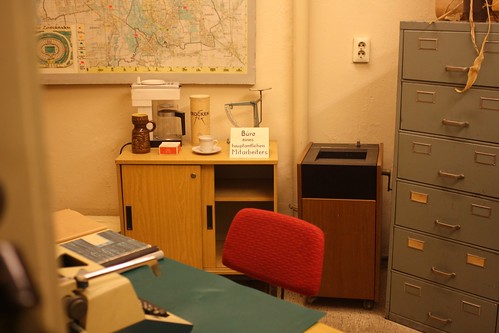
It s not very often that I watch a movie anymore. It s been a few years since I ve actually purchased one (normally I see them from Netflix). But yesterday I saw one that may change that. The Lives of Others is an incredible film set in the former East Germany (GDR/DDR) mostly in 1984. The authenticity of it is incredible and so is the story. It s subtitled, but if you re an American wary of subtitled European films, don t be wary of this one. It is easy to watch and worth every minute. The story revolves around the Stasi, the GDR Ministry for State Security ( secret police ). It is an incredible picture of what living in a police state was like, and how many of the informants were victims of the regime too. My breath caught near the beginning of the film, showing the inside of a Stasi building. A prisoner was being interrogated for helping someone attempt to escape to the west. But the reason my breath caught was this incredible feeling of I was there . Last year, Terah and I were in Leipzig and visited the Stasi museum there, Museum in der Runden Ecke . I always have an incredible sense of history when being in a preserved place, and this building was literally the Stasi headquarters for Leipzig. Much of it was preserved intact, and seeing it in the film brought home even more vividly the terrible things that happened in that building, and others like it, not so very long ago. IMG_2717 We watched the special features on the Blu-Ray disc, and one of them was an interview with director Florian Henckel von Donnersmarck. He described how he spent a lot of time interviewing both victims of the Stasi, as well as ex-Stasi officers. One of the most disturbing things to me was his almost offhand comment that most of the former Stasi officers still had some pride in performing their jobs well. Even now, freed of the state s ideology, they were proud of the work they did which could be put most charitably as ruining people s lives. What leads a person to view life that way? How can we try to make sure it doesn t happen again elsewhere? I am happy to say that most of us have never experienced anything like the Stasi. And yet, small reflections of that mindset can be seen almost everywhere. Societies at wartime or feeling under threat, even Western democracies, can drum up those feelings. In the USA, for instance, the McCarthyism era saw people s careers ruined for alleged anti-state behavior. Contemporary examples include the indefinite detention (I hate that word; shouldn t we say imprisonment ?) of terrorism suspects at Guantanamo Bay, and the terrible treatment of Bradley Manning, who revealed some true but embarrassing things about the US military which really needed to be revealed. Even tobacco farmers and companies are selling a product they know ruins lives, but somehow keep doing it. And there are still members of the public that try to make life difficult for people that don t think like they do. From organizing campaigns of telephone harassment of colleges that don t perform the American national anthem before sporting events, to tossing about the term un-American (a loaded McCarthyist one, which many may not even be aware) at an inflated rate, we are not immune from attempts at forcing conformity or silence in others, and blind loyalty to state. I am never in a particularly celebratory mood on July 4, the biggest day for American boasting, faux patriotism, militarism, and general flag-waving. We do have a lot to be proud of and thankful for, but it seems that we celebrate all the wrong things on July 4, and see it as an occasion to proclaim American exceptionalism rather than as one to see how far we ve come and bolster hope for how far we can, and should, yet go. No, I don t think that the land of the free ought to have operated secret prisons in Europe (nor the Europeans to have been complicit in it), or that the American military was defending our freedom 100% of the time they were deployed, or that it is right for governments to mandate daily recitation of an untrue document (the pledge of allegiance) in schools. And yet, I am mindful that I have a lot to be thankful for stability, lack of much internal violent conflict, etc. And this particular day I am happy that a post like this is not something that gets the attention of some government agency and mostly that I will have a handful of angry emails to delete.

3 July 2011

Benjamin Drung: Symptoms of a dying graphic card

All started in December last year. I saw a red and a green pixel on my monitor. Moving the window containing the wrong-colors pixels corrected them. The wrong-colored pixels reappear from time to time in increased quantity. Then a second symptom appeared: The screen went black and came back one second later. This was triggered by moving a window and scrolling. I wasn t sure what the reason was. Either it was a bug somewhere in the X stack or some hardware was dying. dmesg showed multiple problems with the radeon driver:
[283808.667454] radeon 0000:01:00.0: ffff88021f815c00 unpin not necessary
[283808.667820] radeon 0000:01:00.0: GPU softreset
[283808.667823] radeon 0000:01:00.0: R_008010_GRBM_STATUS=0xE57024A4
[283808.667825] radeon 0000:01:00.0: R_008014_GRBM_STATUS2=0 00330302
[283808.667826] radeon 0000:01:00.0: R_000E50_SRBM_STATUS=0x200000C0
[283808.667832] radeon 0000:01:00.0: R_008020_GRBM_SOFT_RESET=0x00007FEE
[283808.682844] radeon 0000:01:00.0: R_008020_GRBM_SOFT_RESET=0 00000001
[283808.698840] radeon 0000:01:00.0: R_008010_GRBM_STATUS=0 00003028
[283808.698843] radeon 0000:01:00.0: R_008014_GRBM_STATUS2=0 00000002
[283808.698845] radeon 0000:01:00.0: R_000E50_SRBM_STATUS=0x200000C0
[283808.699845] radeon 0000:01:00.0: GPU reset succeed
[283808.717570] [drm] Clocks initialized !
[283808.765829] [drm] ring test succeeded in 0 usecs
[283808.765838] [drm] ib test succeeded in 1 usecs
[283808.765840] [drm] Enabling audio support
[283812.521265] radeon 0000:01:00.0: GPU lockup CP stall for more than 1000msec
[283812.521269] [ cut here ]
[283812.521294] WARNING: at /build/buildd/linux-2.6.35/drivers/gpu/drm/radeon/radeon_fence.c:235 radeon_fence_wait+0 365/0x3d0 [radeon]()
[283812.521297] Hardware name:
[283812.521299] GPU lockup (waiting for 0x00AE670A last fence id 0x00AE6705)
[283812.521301] Modules linked in: btrfs zlib_deflate crc32c libcrc32c ufs qnx4 hfsplus hfs minix ntfs vfat msdos fat jfs xfs exportfs reiserfs nls_utf8 udf ip6table_filter ip6_tables binfmt_misc ipt_MASQUERADE iptable_nat nf_nat nf_conntrack_ipv4 nf_defrag_ipv4 xt_state nf_conntrack ipt_REJECT xt_tcpudp iptable_filter ip_tables x_tables bridge stp kvm_intel kvm parport_pc ppdev snd_emu10k1_synth snd_emux_synth snd_seq_virmidi snd_seq_midi_emul snd_emu10k1 snd_ac97_codec ac97_bus snd_pcm snd_page_alloc snd_util_mem snd_hwdep snd_seq_midi radeon snd_rawmidi snd_seq_midi_event snd_seq snd_timer snd_seq_device ttm snd pl2303 drm_kms_helper coretemp usbserial joydev psmouse soundcore drm serio_raw intel_agp i2c_algo_bit lp parport hid_cherry usbhid hid firewire_ohci firewire_core usb_storage crc_itu_t e1000e ahci libahci pata_marvell
[283812.521360] Pid: 2194, comm: compiz Tainted: G W 2.6.35-24-generic #42-Ubuntu
[283812.521362] Call Trace:
[283812.521370] [<ffffffff8106089f>] warn_slowpath_common+0x7f/0xc0
[283812.521374] [<ffffffff81060996>] warn_slowpath_fmt+0 46/0 50
[283812.521390] [<ffffffffa01bd775>] radeon_fence_wait+0 365/0x3d0 [radeon]
[283812.521394] [<ffffffff8107f730>] ? autoremove_wake_function+0 0/0 40
[283812.521410] [<ffffffffa01bdf71>] radeon_sync_obj_wait+0 11/0 20 [radeon]
[283812.521418] [<ffffffffa01751a3>] ttm_bo_wait+0 103/0x1c0 [ttm]
[283812.521435] [<ffffffffa01d4e1a>] radeon_gem_wait_idle_ioctl+0x9a/0 150 [radeon]
[283812.521447] [<ffffffffa010f433>] drm_ioctl+0 463/0 520 [drm]
[283812.521465] [<ffffffffa01d4d80>] ? radeon_gem_wait_idle_ioctl+0 0/0 150 [radeon]
[283812.521470] [<ffffffff81162f0d>] vfs_ioctl+0x3d/0xd0
[283812.521473] [<ffffffff811637e1>] do_vfs_ioctl+0 81/0 340
[283812.521477] [<ffffffff811535f1>] ? vfs_read+0 181/0x1a0
[283812.521480] [<ffffffff81163b21>] sys_ioctl+0 81/0xa0
[283812.521484] [<ffffffff8100a0f2>] system_call_fastpath+0 16/0x1b
[283812.521487] [ end trace 6d5e03bab743abfa ]
[283812.521493] [drm] Disabling audio support
[283812.525575] [drm:radeon_ib_schedule] *ERROR* radeon: couldn t schedule IB(10).
[283812.525579] [drm:radeon_cs_ioctl] *ERROR* Faild to schedule IB !
[283812.527021] [drm:radeon_ib_schedule] *ERROR* radeon: couldn t schedule IB(11).
[283812.527024] [drm:radeon_cs_ioctl] *ERROR* Faild to schedule IB !
[283812.527921] [drm:radeon_ib_schedule] *ERROR* radeon: couldn t schedule IB(12).
[283812.527923] [drm:radeon_cs_ioctl] *ERROR* Faild to schedule IB !
The time between going black reduces every time. The system wasn t usable any more in the end. After testing that the screen was going blank on other systems like a live CD of Ubuntu and a not noteworthy proprietary system, it was clear that some hardware component was dying. My first assumption was verified after replacing it: My graphic card, a Radeon HD 4670, died. This was three weeks ago and around 25 month after I bought the graphics card. So I didn t have to worry if replacing the fan voided the guarantee, because the guarantee lasts only 24 month. Conclusion:
  1. Not every error is a software bug.
  2. The hardware component with the highest failure rate is the graphics card, followed by the motherboard. Four graphics cards died last year (in four different systems owned by four different people, in three different households).
  3. Not every error is a software bug.

2 July 2011

Guillaume Mazoyer: Status report Jigsaw num. 3 for GSoC 2011

code.pngAt beginning of the last two weeks, I was working on the final package of JTReg. I was working on generating man pages and I finally found a solution. I decided to use help2man to generate the man pages but I had to patch the two scripts jtreg.sh and jtdiff.sh . Basically, these two scripts launch main classes of the jtreg.jar JAR file. The problem with them is that they don t know where they can find the JAR file on Debian. So I patched the two scripts shell so they can locate JAR files in /usr/share/java .
To be able to generate man pages with help2man, I needed to be able to use the scripts. But with jtdiff.sh and jtreg.sh using jtreg.jar which is not in /usr/share/java during the build, I had to find a way to make the scripts work. I decided to patch the scripts (again) and make them depend of some environment variables. So in each script, there are 4 used variables: So during the packaging only JTREG_HOME needed to be changed to be able to use the script. Once the scripts patch done, I finally wrote the rules file of the package. Once again, I used javahelper so the rules file contains the following code:

#!/usr/bin/make -f
JAVA_HOME = /usr/lib/jvm/default-java

override_dh_auto_build:
ant -f make/build.xml
dh_auto_build
JTREG_HOME=./dist/jtreg/lib/ help2man \
--name="Regression Test Harness" \
--help-option="-help" \
./dist/jtreg/linux/bin/jtdiff > jtdiff.1
JTREG_HOME=./dist/jtreg/lib/ help2man \
--name="Regression Test Harness" \
--help-option="-help" \
./dist/jtreg/linux/bin/jtreg > jtreg.1

override_dh_auto_clean:
rm -r dist :
rm -r build :
rm jtdiff.1 :
rm jtreg.1 :
dh_auto_clean

%:
dh $@ --with javahelper


As you can see it is not really complicated. The most interesting part is the one when the man pages are generated. The JTREG_HOME variable is set to ./dist/jtreg/lib/ because it is the path where jtreg.jar is once it is built. I also used the help-option option of help2man because the help option of jtreg and jtdiff is -help and not help .
The jtreg package is now on the Debian Java team SVN so anyone can get it using:

svn checkout svn+ssh://$ SVN_USER @svn.debian.org/svn/pkg-java/trunk/jtreg

Thanks to Sylestre Ledru, jtreg is now available in Sid and the ITP is now closed.

The second part of my work consisted in testing Jigsaw and fixed tests if necessary. All the packaging work is now useful since the tests need JTReg to be run. The problem with the current build system of Jigsaw is that it is enough generic to be used on any system. So I had to patch several makefiles. To find them:

cd jigsaw-tests
find . -name 'Makefile' grep '/test/Makefile'

Then, the path to find jtreg has to be modified to match /usr/bin/jtreg . After that it is possible to run the tests with the following command:

make test

Passing all the tests is something which takes a lot of time. After that, I identified 42 (that s a cool number right?) failing tests. Some of them came from the lack of X11 server and other from unreachable network hosts. Some hackers of IcedTea gave me some ideas to fix several tests. They told me to look here and here because I just had the same problems that they had before.
With this, I was able to fix the tests related to unreachable hosts and to the lack of X server. I used Xvfb to fix the X server depending tests.
After running the tests again, only 13 tests were still failing. That is a good result. Tom Marble and me decided to apply the patch of Alan Bateman and re-run the tests to see if it will break something:

cd jigsaw-tests
mkdir patches && cd patches
wget http://cr.openjdk.java.net/~alanb/jigsaw-mp-prototype1/webrev/jdk.patch
cd jdk
patch -p1 < ../patches/jdk.patch
make clean
make sanity
make all
make modules
xvfb-run -e xvfb-errors -a -s -ac make test -k


15 tests failed against 13 before. The 2 new failing tests are: I didn t go further but I ll try to understand why we have 15 failing tests in few days. All the modifications that I have made on the source code of Jigsaw can be found in a patch format here:

This 2 weeks were also dedicated to the understanding of Jigsaw and its modules. Reading the jigsaw-dev mailing list, I have found some interesting conversation about jigsaw and how to write modules. So I decided to write a module to see how it works. I followed the instruction of the quick start guide but when compiling the module didn t work. So I tried to understand why and then to fix it. I eventually compiled and installed my module and here is how I did it:

mkdir -p src/com.greetings/com/greetings/
mkdir -p src/org.astro/org/astro/
mkdir modules
vim src/com.greetings/module-info.java
vim src/com.greetings/com/greetings/Hello.java
vim src/org.astro/module-info.java
vim src/org.astro/org/astro/World.java
./jigsaw/build/linux-amd64/bin/javac -d modules \
-modulepath ./jigsaw/build/linux-amd64/modules/modules \
-sourcepath src find src -name '*.java'
./jigsaw/build/linux-amd64/bin/jmod create -L mlib
./jigsaw/build/linux-amd64/bin/jmod install \
modules org.astro com.greetings -L mlib
./jigsaw/build/linux-amd64/bin/java -L mlib -m com.greetings


And here it is, we have a nice hello world module. The documentation says to put the module-info.java of org.astro in src/org.astro/org/astro/ but it didn t work for me so I tried to put it in src/org.astro/ and it worked. Also the quick start guide says that we have to use the -modulepath option to specify where the modules are. I first tried to use ./jigsaw/build/linux-amd64/modules/ but javac told me he could not find java.lang so I noticed that there is a subdirectory called modules in ./jigsaw/build/linux-amd64/modules/ so I used it as module path and it worked.

Writing a module and seeing how Jigsaw modules are made started to make me think about the packaging of Jigsaw. Dependencies being available, knowing how to build and test Jigsaw and seeing how modules are made, I think that I will soon try to start the packaging of Jigsaw and getting started with the packaging will be my goal for the next two weeks.

30 June 2011

Jordi Mallach: Cinema d'Estiu de Benimaclet 2011

Yeah! It's this time of the year: Friday evenings after work with your friends having some cool beer on the streets, Saturdays around the nearby mountains for a good hike and swimming in a lake or river, and good beach Sunday in a Valencian beach. And for a great ending of a Summer weekend, a good indie movie in your neighbourhood, reclaiming the streets and going back to our roots, when people perceived the public spaces as theirs, and would bring foldable chairs out, would gather with their neighbours and had a good after-dinner chat a la fresca. The always active Associaci de Ve ns i Ve nes de Benimaclet has organized, for the fifth year four cinema projections in Benimaclet's square, which are open for anyone who wants to share good moments with us. The program this year includes Soul Kitchen (3rd of July), When the Wind Blows (10th), Concursante (17th) and Moon (24th). Before every movie, we'll enjoy live music by local bands, and projections of good short films. We'll be happy to see you there, and remember you only need a chair and some dinner... but be sure to be there a bit before 22:00: last year this got so popular some people started having issues to find good spots for their chairs!

29 June 2011

Stefano Zacchiroli: debian society track at debconf

Debian/Society at DebConf11 For DebConf11 which, needless to say, I'll be attending I've accepted to coordinate the Debian/Society track, together with dkg. As it's Daniel who has done most of the work up to now, let me pretend I'm catching up with a brief but very important call for papers. The idea of the Debian/Society track is to collect talks and other events that explore two society-related aspects of Debian:
  1. Debian is a society in itself. It is a society formed by a group of people that are connected by relationships, share a (virtual) territory, and are subject to various kinds of self-imposed rules (technical, political, etc.)
  2. Debian relates with larger human societies and has an impact on them, mainly but not only through the Free Software artifacts that Debian produces and distributes.
Several talks and events that have already been submitted to DebConf11 do a very good job at presenting one or both of the above aspects. But we are looking for a few more. In particular, we would like to receive submissions of events about: If you think you can host the event we are looking for, just head to penta and submit your event providing all associated information (event kind, title, abstract, etc.). Please e-mail me or dkg when you've done so. We're way past the general event submission deadline, but if your proposal is just what we need to fill out the track, we can lobby the Talks Team for its acceptance (we can't guarantee acceptance, though). Daniel Kahn Gillmor
Stefano Zacchiroli

27 June 2011

Riku Voipio: QEMU with OpenGL ES acceleration

In the graphics side, the major differences between ARM and X86 systems is that on ARM 3D acceleration is done with OpenGL ES. It is mostly a subset of modern OpenGL used on X86 desktop machines. From QEMU point of view this could mostly be ignored, as OpenGL was mostly used on games and specialist applications. This has now been changing, as desktops and user interfaces have started OpenGL to render graphics. Without acceleration, these user interfaces become slower than slugs crossing a tarpit.

For this reason, MeeGo introduced OpenGL ES acceleration support to QEMU. With the lack of easily available MeeGo QEMU images and test setup, I've created a test setup for Linaro 11.05 image.

Running torus opengl es1 demo from mesa-demos inside QEMU.

26 June 2011

Miriam Ruiz: I won t be able to attend DebConf this year

I haven t blogged for a while, because I ve been doing so many things that I scarcely had time nor will for it. Among all those things, and during the weekends of the last few months, we have been teaching kids (8-12 y.o.) about computers, Free Software and technology. Those kids are great, very intelligent, very motivated, and very funny to be with. I miss them a bit after the program has ended. In any case, I ve been given the chance to teach some more kids during summer weekdays, and I m really looking forward to it. The downside of this is that I won t have any summer holidays and, thus, I finally won t be able to attend DebConf 11 in Banja Luka, which was something I was also looking forward too. But, even though that s something I d really love to do, one cannot be in two places at the time, so this year I finally won t be able to attend DebConf either. Have lots of fun! I ll miss you! :) In case you want to know more about all of this (sorry, links are in Spanish): Oh, and to show you what I m exchanging you for (nothing personal): Photo of the official presentation, with the parents and the kidsPhoto of all the kids in Campus TICPhoto of all the kids in Yo ProgramoPhoto of the kids in my group of Campus TICKids in Campus TIC working with their computersTeam group of my kids in Campus TICGroup photo of the kids in my group, in Campus TICKids in Campus TIC working with Lego WeDo robots I wouldn t like to end this post without thanking all the kids from both Campus TIC and Yo Programo for being so cool, and also to welcome the kids from Fantastic Park, in case any of them -or their parents- are reading. Oh, and all of you who attend DebConf this year, have a lot of fun! :)

23 June 2011

Philipp Kern: I'm going to DebConf 11

I finally got around to book my (train) trip back from Zagreb. The hotline of Deutsche Bahn was interesting. The booking system crashed and I was called back. But in the end it worked and I can print it the next time I get near a vending machine.

I'm worried how I manage to get there from Banja Luka on my own. And the travel to Zagreb together with Joachim Breitner won't be as comfortable as it should be. But meh, I'm going to DebConf again! \o/

21 June 2011

Daniel Kahn Gillmor: unreproducible buildd test suite failures

I've been getting strange failures on some architectures for xdotool. xdotool is a library and a command-line tool to allow you to inject events into an existing X11 session. I'm trying to understand (or even to reproduce) these errors so i can fix them. The upstream project ships an extensive test suite; this test suite is failing on three architectures: ia64, armel, and mipsel; it passes fine on the other architectures (the hurd-i386 failure is unrelated, and i know how to fix it). The suite is failing on some "typing" tests -- some symbols "typed" are getting dropped on the failing architectures -- but it is not failing in a repeatable fashion. You can see two attempted armel builds failing with different outputs: The first failure shows [ and occasionally < failing under a us,se keymap (that is, after the test-suite's invocation of setxkbmap -option grp:switch,grp:shifts_toggle us,se):
Running test_typing.rb
Setting up keymap on new server as us
Loaded suite test_typing
Started
...........F..
Finished in 19.554214 seconds.
  1) Failure:
test_us_se_symbol_typing(XdotoolTypingTests)
    [test_typing.rb:58:in  _test_typing'
     test_typing.rb:78:in  test_us_se_symbol_typing']:
<" 12345678990-=~ !@\#$%^&*()_+[] ;:\",./<>?:\",./<>?"> expected but was
<" 12345678990-=~ !@\#$%^&*()_+] ;:\",./>?:\",./<>?">.
14 tests, 14 assertions, 1 failures, 0 errors
The second failure, on the same buildd, a day later, shows no failures under us,se, but several failures under other keymaps:
Running test_typing.rb
Setting up keymap on new server as us
Loaded suite test_typing
Started
..F.F.F.......
Finished in 16.784192 seconds.
  1) Failure:
test_de_symbol_typing(XdotoolTypingTests)
    [test_typing.rb:58:in  _test_typing'
     test_typing.rb:118:in  test_de_symbol_typing']:
<" 12345678990-=~ !@\#$%^&*()_+[] ;:\",./<>?:\",./<>?"> expected but was
<" 12345678990-=~ !@\#$%^&*()_+] ;:\",./<>?:\",./<>?">.
  2) Failure:
test_se_symbol_typing(XdotoolTypingTests)
    [test_typing.rb:58:in  _test_typing'
     test_typing.rb:108:in  test_se_symbol_typing']:
<" 12345678990-=~ !@\#$%^&*()_+[] ;:\",./<>?:\",./<>?"> expected but was
<" 12345678990-=~ !@\#$%^&*()_+[] ;:\",./<>?:\",./<>?">.
  3) Failure:
test_se_us_symbol_typing(XdotoolTypingTests)
    [test_typing.rb:58:in  _test_typing'
     test_typing.rb:88:in  test_se_us_symbol_typing']:
<" 12345678990-=~ !@\#$%^&*()_+[] ;:\",./<>?:\",./<>?"> expected but was
<" 12345678990-=~ !@\#$%^&*()_+ ;:\",./>?:\",./<>?">.
14 tests, 14 assertions, 3 failures, 0 errors
I've tried to reproduce on a cowbuilder instance on my own armel machine; I could not reproduce the problem -- the test suites pass for me. I've asked for help on the various buildd lists, and from upstream; no one resolutions have been proposed yet. I'd be grateful for any suggestions or hints of things i might want to look for. It would be a win if i could just reproduce the errors. Of course, one approach would be to disable the test suite as part of the build process, but it has already helped catch a number of other issues with the upstream source. It would be a shame to lose those benefits. Any thoughts?

18 June 2011

John Goerzen: Music Powerful and Fun

Sometimes there s nothing quite so heartwarming as hearing a 4-year-old that doesn t think anybody is listening. When Jacob is all alone in his room, sometimes he will sing. Maybe it s a song he knows, or fragments of a song he knows. Or maybe it s something he just made up on the fly. It might be about trains, cats, letters, or who knows what. Maybe it will crack him up and he ll keep singing and then laugh. Or maybe it will stop in 30 seconds and he ll go on to something else. Brief and out of tune though it may be, it is still one of the most beautiful sounds I know and I love to hear it. Jacob loves to have other people sing, too. Sometimes I will make up songs while we drive: We are driving, we are driving, we are driving down the road; we are driving down the old country road and we re making some dust, yes a lot of dust Or Jacob likes me to sing the songs in the Winnie the Pooh book he has (the original, pre-Disney version, which has the words for the songs but not a tune, so I make up a little bit different one each time). Very occasionally he will sing with me, but if he does, he doesn t want anybody to comment about it. I sing with the Kansas Mennonite Men s Chorus. We re a group of about 300 singers (all men, though not all Kansan and not all Mennonite) that sing for charity. We ve raised over $600,000 for charity so far. I still remember the first time I went to a KMMC practice 3 years ago. It was my first year singing, and the first practice of the season. We started singing the first song, and wow what a powerful moment. Even at its imperfect first practice state, hearing 300 people sing quietly is a powerful sound and when they get to the top of their lungs, it s indescribable. No CD can ever quite do that justice. Jacob and Oliver come to KMMC concerts sometimes, but this year they took a special interest. Oliver pointed to, hm, perhaps 300 men and said dad for each one. (He was quite far away and probably couldn t pick me out specifically.) Jacob, for the first time, sat quietly engrossed in the concert until we got to Dry Bones (a song involving surprise and lots of homemade instruments) which made him laugh out loud. Then he would hide under his seat from the applause. Last week, KMMC went on tour. This was my first choir tour, and Terah came along while the boys spent time with grandparents in Kansas. We sang in Bloomington, IL, and then in Goshen, IN at the fairly new Sauder Concert Hall. That hall is a few years old, and has been reviewed as once of the best concert halls in the world acoustically. It seats 1100 people and was perfect for this. The 85 or so singers from KMMC that went on tour joined the Indiana and Ohio Men s Choruses to make a combined group of about 200 singers. And what an experience that was. I learned later this was the first event to completely pack Sauder Concert Hall. We ended the concert singing the Mennonite Anthem a souped-up version of the doxology. (You can see a video of a different group singing it to get an idea of what it was). This is often joked about as being part of Mennonite DNA. You can gather a random group of Mennonites and ask to hear 606 (its number in, well, an old hymnbook that we don t use anymore) and you can probably get a fairly well-sounding rendition, from memory, a cappella, complete with 4-part harmony, at the drop of the hat. Mennonite youth have been known to sing it in train stations, airports, soccer stadiums, and with kazoos. At Goshen, we had 200 men on stage, plus a brass band, plus 1100 people in the audience facing us. They were, of course, invited to sing along. (That s one of the rules of 606: you can t exclude anybody because even if you tried, they d still sing, because how can you resist?) So I was up there on stage, singing a song I love, and hearing the 1100 people in the audience sing it to me. I could glance out over the front rows and saw the smiles on so many faces as they sang, and what a moving moment that was. The excitement and thrill of it all hit me so much that I could barely finish the song. The numbers aren t all in yet, but I m guessing that we raised over $15,000 for charity last weekend (the choir members paid their own expenses in advance, so 100% of the money raised goes to international relief efforts.) A 4-year-old singing alone in his room is really heartwarming. I have to say that 1300 people singing a song that touches each one of them is a pretty close second.

Guillaume Mazoyer: Status report Jigsaw num. 2 for GSoC 2011

code.pngMy internship is now finished, this means that I will be able to work on my GSoC project a lot more than the previous weeks. I hope to make some good progress in the next days.

This last 2 weeks, I was still studying how Jigsaw works. Even if there is no progress on the Jigsaw packaging I have done some packages that will help later.

I ve spend a lot of time trying to package JT Harness and JTReg.
I ve successfully built JT Harness using CDBS but I ve finally rewritten the package using only debhelper and javahelper. Javahelper was really useful to build JAR files, move them to the right directory, put the Javadoc in the right place as well as the examples. The Debian directory of JT Harness can be found on the Java team SVN.

svn co svn+ssh://$ SVN_USER @svn.debian.org/svn/pkg-java/trunk/libjtharness-java

The source package of jtharness build 2 binary packages: libjtharness-java and libjtharness-java-doc. You can see that by looking at the control file in the debian directory. There are some interesting files in this package, let s take a look at them.

First of all, some of the source files needed to be patched for the package to build. So to accomplish this, there is a couple of patches in debian/patches : To generate these patches, I ve used the edit-patch command which is a really awesome tool. This command uses a temporary shell where we can edit files we want to patch. When the job is done, CTRL + D terminates the temporary shell and the patch is generated.

There are 4 interesting files which are used to build the binary packages and put the files in the right directories. These files are: Of course rules is the most important one. This file tells us how packages are built. A good thing is that rules is quite simple in the jtharness case.

#!/usr/bin/make -f
JAVA_HOME = /usr/lib/jvm/default-java

override_dh_auto_build:
ant -f build/build.xml

%:
dh $@ --with javahelper


We just tell where Java is and to use javahelper ( with javahelper). Overriding dh_auto_build is interesting because since the JT Harness uses Ant as build system we need to give to Ant where the build.xml file is. By default Ant is searching it in the current directory but in jtharness the file is in the build directory. Since the Ant build file is correctly written, the build generates JAR files, Javadoc and examples code. And libjtharness-java* files are here to put the generated things in the right places.
The job of libjtharness-java.jlibs is to tell where to find the JAR libraries. In this case, the intesresting JAR files were javatest.jar and jt-junit.jar . So in the .jlibs file we just give where those files are after being built.
The job of libjtharness-java-doc.javadoc is to tell where the Javadoc is and where to put it. So there is only one line that says the generated Javadoc is in jar-build/javadoc and put it in /usr/share/doc/libjtharness-java/api .
And finally, libjtharness-java-doc.install is used to move the examples. The syntax is same as libjtharness-java-doc.javadoc .

The JT Harness package can be found in Sid now thanks to Sylvestre Ledru who uploaded it for me. So the ITP bug that I created is now closed.

Building the package for jtreg is quite similar. In fact, it probably easier but I m still facing a problem. jtharness is just a library, jtreg does have main classes and generate some binaries. The difficulty here is to generate the man pages for the 2 generated binaries: jtdiff and jtreg. These 2 files are shell scripts which just use jtreg.jar with the correct parameters.

I tried several tools to generate the man pages of each script. Sadly, I can t find a way that does not causes any problems.
My first choice was to use help2man. This tool looked like to be perfect for the job. But I couldn t find how to launch the scripts correctly. The scripts needs jtreg.jar but they also need javatest.jar from the libjtharness-java package. The classpath cannot be set correctly due how the scripts are written. So to use help2man I ll probably have to patch and completely rewrite jtdiff.sh and jtreg.sh in the sources.
My second choice was to use txt2man. During the build of jtreg there is a usage.txt file which is generated and which can be used as a man page. txt2man can take this text file and output a man page based on the text. I thought it was working but when building the package, lintian threw some warnings about syntax errors in the man pages.

W: jtreg: manpage-has-bad-whatis-entry usr/share/man/man1/jtdiff.1.gz
W: jtreg: manpage-has-errors-from-man usr/share/man/man1/jtdiff.1.gz 292: warning [p 4, 3.3i]: cannot adjust line


Finally, few days ago I decided to try rst2man. This tool looks cool and easy to use. But the text that I have to convert into a man page is not a reStructured text so it cannot without patching the usage.txt file for example. I was going to do it but there is no such file in the sources of jtreg. Actually this file is generated during the build but the text had to come from somewhere. And it was from two properties files in the source code.
I m still looking for a good solution to generate the man pages. If someone has any idea just let me know ;-)

The debian packaging of jtreg is not in the Java team SVN yet because of the man pages problem. I opened an ITP bug so people know that someone is working on jtreg.

My goal for the next two weeks is to finish the jtreg package, understand how jpkg (which is supposed to create Debian packages) works in Jigsaw and write more examples using the modular JVM.

16 June 2011

Rapha&#235;l Hertzog: Installing GNOME 3 on Debian 6.0 Squeeze? No, sorry

Ever since I blogged about the status of GNOME 3 in Debian experimental, my web logs show that many people are looking for ways to try out GNOME 3 with Debian Squeeze. No GNOME 3 for Debian 6.0 Don t hold your breath, it s highly unlikely that anyone of the Debian GNOME team will prepare backports of GNOME 3 for Debian 6.0 Squeeze. It s already difficult enough to do everything right in unstable with a solid upgrade path from the current versions in Squeeze But if you are brave enough to want to install GNOME 3 with Debian 6.0 on your machine then I would suggest that you re the kind of person who should run Debian testing instead (or even Debian unstable, it s not so horrible). That s what most people who like to run recent versions of software do. How to run Debian testing You re convinced and want to run Debian testing? It s really easy, just edit your /etc/apt/sources.list and replace stable with testing . A complete file could look like this:

# Main repository
deb http://ftp.debian.org/debian testing main contrib non-free
deb-src http://ftp.debian.org/debian testing main contrib non-free
# Security updates
deb http://security.debian.org/debian-security testing main contrib non-free
Now you should be able to run apt-get dist-upgrade and end up with a testing system. How to install GNOME 3 on Debian testing aka wheezy If you want to try GNOME 3 before it has landed in testing, you ll have to add unstable and experimental to your sources.list:
deb http://ftp.debian.org/debian unstable main contrib non-free
deb http://ftp.debian.org/debian experimental main contrib non-free
You should not install GNOME 3 from experimental if you re not ready to deal with some problems and glitches. Beware: once you upgraded to GNOME 3 it will be next to impossible to go back to GNOME 2.32 (you can try it, but it s not officially supported by Debian).

To avoid upgrading all your packages to unstable, you will tell APT to prefer testing with the APT::Default-Release directive:
# cat >/etc/apt/apt.conf.d/local <<END
APT::Default-Release "testing";
END
To allow APT to upgrade the GNOME packages to unstable/experimental, you will also install the following pinning file as /etc/apt/preferences.d/gnome:
Package: *gnome* libglib2.0* *vte* *pulse* *peas* libgtk* *gjs* *gconf* *gstreamer* alacarte *brasero* cheese ekiga empathy* gdm3 gcalctool baobab *gucharmap* gvfs* hamster-applet *nautilus* seahorse* sound-juicer *totem* remmina vino gksu xdg-user-dirs-gtk dmz-cursor-theme eog epiphany* evince* *evolution* file-roller gedit* metacity *mutter* yelp* rhythmbox* banshee* system-config-printer transmission-* tomboy network-manager* libnm-* update-notifier shotwell liferea *software-properties* libunique-3.0-0 libseed-gtk3-0 libnotify* libpanel-applet-4-0 libgdata11 libcamel* libcanberra* libchamplain* libebackend* libebook* libecal* libedata* libegroupwise* libevent* gir1.2-* libxklavier16 python-gmenu libgdict-1.0-6 libgdu-gtk0
Pin: release experimental
Pin-Priority: 990
Package: *gnome* libglib2.0* *vte* *pulse* *peas* libgtk* *gjs* *gconf* *gstreamer* alacarte *brasero* cheese ekiga empathy* gdm3 gcalctool baobab *gucharmap* gvfs* hamster-applet *nautilus* seahorse* sound-juicer *totem* remmina vino gksu xdg-user-dirs-gtk dmz-cursor-theme eog epiphany* evince* *evolution* file-roller gedit* metacity *mutter* yelp* rhythmbox* banshee* system-config-printer transmission-* tomboy network-manager* libnm-* update-notifier shotwell liferea *software-properties* libunique-3.0-0 libseed-gtk3-0 libnotify* libpanel-applet-4-0 libgdata11 libcamel* libcanberra* libchamplain* libebackend* libebook* libecal* libedata* libegroupwise* libevent* gir1.2-* libxklavier16 python-gmenu libgdict-1.0-6 libgdu-gtk0
Pin: release unstable
Pin-Priority: 990
Package: *
Pin: release experimental
Pin-Priority: 150
Note that I used Pin-Priority: 990 this time (while I used 500 in the article explaining how to install GNOME 3 on top of unstable), that s because you want these packages to have the same priority than those of testing, and they have a priority of 990 instead of 500 due to the APT::Default-Release setting. You re done, your next dist-upgrade should install GNOME 3. It will pull a bunch of packages from unstable too but that s expected since the packages required by GNOME 3 are spread between unstable and experimental.
If you want to read more articles like this one, click here to subscribe to my free newsletter. You can also follow me on Identi.ca, Twitter and Facebook.

13 comments Liked this article? Click here. My blog is Flattr-enabled.

15 June 2011

Christian Perrier: So, what happened with Kikithon?

I mentioned this briefly yesterday, but now I'll try to summarize the story of a great surprise and a big moment for me. All this started when my wife Elizabeth and my son Jean-Baptiste wanted to do something special for my 50th birthday. So, it indeed all started months ago, probably early March or something (I don't yet have all the details). Jean-Baptiste described this well on the web site, so I won't go again into details, but basically, this was about getting birthday wishes from my "free software family" in, as you might guess, as many languages as possible. Elizabeth brought the original idea and JB helped her by setting up the website and collecting e-mail addresses of people I usually work with: he grabbed addresses from PO files on Debian website, plus some in his own set of GPG signatures and here we go. And then he started poking dozens of you folks in order to get your wishes for this birthday. Gradually, contributions accumulated on the website, with many challenges for them: be sure to get as many people as possible, poking and re-poking all those FLOSS people who keep forgetting things... It seems that poking people is something that's probably in the Perrier's genes! And they were doing all this without me noticing. As usually in Debian, releasing on time is a no-no. So, it quickly turned out that having everything ready by April 2nd wouldn't be possible. So, their new goal was offering this to me on Pentecost Sunday, which was yesterday. And...here comes the gift. Aha, this looks like a photo album. Could it be a "50 years of Christian" album? But, EH, why is that pic of me, with the red Debconf5 tee-shirt (that features a world map) and a "bubulle" sign, in front of the book? But, EH EH EH, what the .... are doing these word by H0lger, then Fil, then Joey doing on the following pages? And only then, OMG, I discover the real gift they prepared. 106, often bilingual, wishes from 110 people (some were couples!). 18 postcards (one made of wood). 45 languages. One postcard with wishes from nearly every distro representatives at LinuxTag 2011. Dozens of photos from my friends all around the world. All this in a wonderful album. I can't tell what I said. Anyway, JB was shooting a video, so...we'll see. OK, I didn't cry...but it wasn't that far and emotion was really really intense. Guys, ladies, gentlemen, friends....it took me a while to realize what you contributed to. It took me the entire afternoon to realize the investment put by Elizabeth and JB (and JB's sisters support) into this. Yes, as many of you wrote, I have an awesome family and they really know how to share their love. I also have an awesome virtual family all around the world. Your words are wholeheartedly appreciated and some were indeed much much much appreciated. Of course, I'll have the book in Banja Luka so that you can see the result. I know (because JB and Elizabeth told me) that many of you were really awaiting to see how it would be received (yes, that includes you, in Germany, who I visited in early May!!!). Again, thank you so much for this incredible gift. Thank you Holger Levsen, Phil Hands, Joey Hess, Lior Kaplan, Martin Michlmayr, Alberto Gonzalez Iniesta, Kenshi "best friend" Muto, Praveen Arimbrathodiyil, Felipe Augusto van de Wiel, Ana Carolina Comandulli (5 postcards!), Stefano Zacchiroli (1st contribution received by JB, of course), Gunnar Wolf, Enriiiiiico Zini, Clytie Siddall, Frans Pop (by way of Clytie), Tenzin Dendup, Otavio Salvador, Neil McGovern, Konstantinos Margaritis, Luk Claes, Jonas Smedegaard, Pema Geyleg, Meike "sp tzle queen" Reichle, Alexander Reichle-Schmehl, Torsten Werner, "nette BSD" folks, CentOS Ralph and Brian, Fedora people, SUSE's Jan, Ubuntu's Lucia Tamara, Skolelinux' Paul, Rapha l Hertzog, Lars Wirzenius, Andrew McMillan (revenge in September!), Yasa Giridhar Appaji Nag (now I know my name in Telugu), Amaya Rodrigo, St phane Glondu, Martin Krafft, Jon "maddog" Hall (and God save the queen), Eddy Petri or, Daniel Nylander, Aiet Kolkhi, Andreas "die Katze geht in die K che, wunderbar" Tille, Paul "lets bend the elbow" Wise, Jordi "half-marathon in Banja Luka" Mallach, Steve "as ever-young as I am" Langasek, Obey Arthur Liu, YAMANE Hideki, Jaldhar H. Vyas, Vikram Vincent, Margarita "Bronx cross-country queen" Manterola, Patty Langasek, Aigars Mahinovs (finding a pic *with* you on it is tricky!), Thepittak Karoonboonyanan, Javier "nobody expects the Spanish inquisition" Fern ndez-Sanguino, Varun Hiremath, Moray Allan, David Moreno Garza, Ralf "marathon-man" Treinen, Arief S Fitrianto, Penny Leach, Adam D. Barrat, Wolfgang Martin Borgert, Christine "the mentee overtakes the mentor" Spang, Arjuna Rao Chevala, Gerfried "my best contradictor" Fuchs, Stefano Canepa, Samuel Thibault, Eloy "first samba maintainer" Par s, Josip Rodin, Daniel Kahn Gillmor, Steve McIntyre, Guntupalli Karunakar, Jano Gulja , Karolina Kali , Ben Hutchings, Matej Kova i , Khoem Sokhem, Lisandro "I have the longest name in this list" Dami n Nicanor P rez-Meyer, Amanpreet Singh Alam, H ctor Or n, Hans Nordhaugn, Ivan Mas r, Dr. Tirumurti Vasudevan, John "yes, Kansas is as flat as you can imagine" Goerzen, Jean-Baptiste "Piwet" Perrier, Elizabeth "I love you" Perrier, Peter Eisentraut, Jesus "enemy by nature" Climent, Peter Palfrader, Vasudev Kamath, Miroslav "Chicky" Ku e, Mart n Ferrari, Ollivier Robert, Jure uhalev, Yunqiang Su, Jonathan McDowell, Sampada Nakhare, Nayan Nakhare, Dirk "rendez-vous for Chicago marathon" Eddelbuettel, Elian Myftiu, Tim Retout, Giuseppe Sacco, Changwoo Ryu, Pedro Ribeoro, Miguel "oh no, not him again" Figueiredo, Ana Guerrero, Aur lien Jarno, Kumar Appaiah, Arangel Angov, Faidon Liambotis, Mehdi Dogguy, Andrew Lee, Russ Allbery, Bj rn Steensrud, Mathieu Parent, Davide Viti, Steinar H. Gunderson, Kurt Gramlich, Vanja Cvelbar, Adam Conrad, Armi Be irovi , Nattie Mayer-Hutchings, Joerg "dis shuld be REJECTed" Jaspert and Luca Capello. Let's say it gain:

13 June 2011

Christian Perrier: So, what happened with Kikithon?

I mentioned this briefly yesterday, but now I'll try to summarize the story of a great surprise and a big moment for me. All this started when my wife Elizabeth and my son Jean-Baptiste wanted to do something special for my 50th birthday. So, it indeed all started months ago, probably early March or something (I don't yet have all the details). Jean-Baptiste described this well on the web site, so I won't go again into details, but basically, this was about getting birthday wishes from my "free software family" in, as you might guess, as many languages as possible. Elizabeth brought the original idea and JB helped her by setting up the website and collecting e-mail addresses of people I usually work with: he grabbed addresses from PO files on Debian website, plus some in his own set of GPG signatures and here we go. And then he started poking dozens of you folks in order to get your wishes for this birthday. Gradually, contributions accumulated on the website, with many challenges for them: be sure to get as many people as possible, poking and re-poking all those FLOSS people who keep forgetting things... It seems that poking people is something that's probably in the Perrier's genes! And they were doing all this without me noticing. As usually in Debian, releasing on time is a no-no. So, it quickly turned out that having everything ready by April 2nd wouldn't be possible. So, their new goal was offering this to me on Pentecost Sunday, which was yesterday. And...here comes the gift. Aha, this looks like a photo album. Could it be a "50 years of Christian" album? But, EH, why is that pic of me, with the red Debconf5 tee-shirt (that features a world map) and a "bubulle" sign, in front of the book? But, EH EH EH, what the .... are doing these word by H0lger, then Fil, then Joey doing on the following pages? And only then, OMG, I discover the real gift they prepared. 106, often bilingual, wishes from 110 people (some were couples!). 18 postcards (one made of wood). 45 languages. One postcard with wishes from nearly every distro representatives at LinuxTag 2011. Dozens of photos from my friends all around the world. All this in a wonderful album. I can't tell what I said. Anyway, JB was shooting a video, so...we'll see. OK, I didn't cry...but it wasn't that far and emotion was really really intense. Guys, ladies, gentlemen, friends....it took me a while to realize what you contributed to. It took me the entire afternoon to realize the investment put by Elizabeth and JB (and JB's sisters support) into this. Yes, as many of you wrote, I have an awesome family and they really know how to share their love. I also have an awesome virtual family all around the world. Your words are wholeheartedly appreciated and some were indeed much much much appreciated. Of course, I'll have the book in Banja Luka so that you can see the result. I know (because JB and Elizabeth told me) that many of you were really awaiting to see how it would be received (yes, that includes you, in Germany, who I visited in early May!!!). Again, thank you so much for this incredible gift. Thank you Holger Levsen, Phil Hands, Joey Hess, Lior Kaplan, Martin Michlmayr, Alberto Gonzalez Iniesta, Kenshi "best friend" Muto, Praveen Arimbrathodiyil, Felipe Augusto van de Wiel, Ana Carolina Comandulli (5 postcards!), Stefano Zacchiroli (1st contribution received by JB, of course), Gunnar Wolf, Enriiiiiico Zini, Clytie Siddall, Frans Pop (by way of Clytie), Tenzin Dendup, Otavio Salvador, Neil McGovern, Konstantinos Margaritis, Luk Claes, Jonas Smedegaard, Pema Geyleg, Meike "sp tzle queen" Reichle, Alexander Reichle-Schmehl, Torsten Werner, "nette BSD" folks, CentOS Ralph and Brian, Fedora people, SUSE's Jan, Ubuntu's Lucia Tamara, Skolelinux' Paul, Rapha l Hertzog, Lars Wirzenius, Andrew McMillan (revenge in September!), Yasa Giridhar Appaji Nag (now I know my name in Telugu), Amaya Rodrigo, St phane Glondu, Martin Krafft, Jon "maddog" Hall (and God save the queen), Eddy Petri or, Daniel Nylander, Aiet Kolkhi, Andreas "die Katze geht in die K che, wunderbar" Tille, Paul "lets bend the elbow" Wise, Jordi "half-marathon in Banja Luka" Mallach, Steve "as ever-young as I am" Langasek, Obey Arthur Liu, YAMANE Hideki, Jaldhar H. Vyas, Vikram Vincent, Margarita "Bronx cross-country queen" Manterola, Patty Langasek, Aigars Mahinovs (finding a pic *with* you on it is tricky!), Thepittak Karoonboonyanan, Javier "nobody expects the Spanish inquisition" Fern ndez-Sanguino, Varun Hiremath, Moray Allan, David Moreno Garza, Ralf "marathon-man" Treinen, Arief S Fitrianto, Penny Leach, Adam D. Barrat, Wolfgang Martin Borgert, Christine "the mentee overtakes the mentor" Spang, Arjuna Rao Chevala, Gerfried "my best contradictor" Fuchs, Stefano Canepa, Samuel Thibault, Eloy "first samba maintainer" Par s, Josip Rodin, Daniel Kahn Gillmor, Steve McIntyre, Guntupalli Karunakar, Jano Gulja , Karolina Kali , Ben Hutchings, Matej Kova i , Khoem Sokhem, Lisandro "I have the longest name in this list" Dami n Nicanor P rez-Meyer, Amanpreet Singh Alam, H ctor Or n, Hans Nordhaugn, Ivan Mas r, Dr. Tirumurti Vasudevan, John "yes, Kansas is as flat as you can imagine" Goerzen, Jean-Baptiste "Piwet" Perrier, Elizabeth "I love you" Perrier, Peter Eisentraut, Jesus "enemy by nature" Climent, Peter Palfrader, Vasudev Kamath, Miroslav "Chicky" Ku e, Mart n Ferrari, Ollivier Robert, Jure uhalev, Yunqiang Su, Jonathan McDowell, Sampada Nakhare, Nayan Nakhare, Dirk "rendez-vous for Chicago marathon" Eddelbuettel, Elian Myftiu, Tim Retout, Giuseppe Sacco, Changwoo Ryu, Pedro Ribeoro, Miguel "oh no, not him again" Figueiredo, Ana Guerrero, Aur lien Jarno, Kumar Appaiah, Arangel Angov, Faidon Liambotis, Mehdi Dogguy, Andrew Lee, Russ Allbery, Bj rn Steensrud, Mathieu Parent, Davide Viti, Steinar H. Gunderson, Kurt Gramlich, Vanja Cvelbar, Adam Conrad, Armi Be irovi , Nattie Mayer-Hutchings, Joerg "dis shuld be REJECTed" Jaspert and Luca Capello. Let's say it gain:

Rapha&#235;l Hertzog: Why you should always have a network connection when installing Debian

This is a simple tip but an important one: when you re installing Debian, take the time required to ensure the machine is connected to the Internet with a wired connection. If you have DHCP available, the debian-installer will use it to configure the network. Why not use the wireless connection? Because debian-installer in Squeeze doesn t support WPA encryption, but only WEP. So if you re using WPA, picking the wireless connection will lead to no working network during the installation and this is to be avoided. If you re still using WEP, you can go ahead of course. If you only have a wireless connection with WPA, your might want to help the debian-installer team and add the required support. Matthew Palmer did some work on it a few months ago (see this mail and his branch in the netcfg git repository) but he resigned from the d-i team in the mean time. So WPA support is still not available in the wheezy debian-installer. Why is the network so important?
  1. The tasks that you select during the installation process might suggest installation of supplementary packages that are not available on your installation disc. If you install without network, the resulting system might differ from the expected one since it will be missing some packages that are available in the Debian repositories but not on your installation disc.
  2. Your installation media might be old and there are security updates that have been published. If you do your initial installation with network, the security updates will be installed before the reboot and thus before the services are exposed over the network.
  3. If you re not installing a desktop with network-manager (Debian s default GNOME Desktop provides it), the initial network configuration is important since this configuration is kept for the future. And you surely want network connectivity on your machine, don t you?
  4. Without network, APT s sources.list will not be properly configured to include an HTTP mirror of your country. And really, I prefer when apt-get install can work without the initial installation disc.
If you want to read more articles like this one, click here to subscribe to my free newsletter. You can also follow me on Identi.ca, Twitter and Facebook.

22 comments Liked this article? Click here. My blog is Flattr-enabled.

12 June 2011

Christian Perrier: Developers per country (June 2011) - 3rd take

See comments at the end about this 3rd version This is time again for yet another bubulle game: counting the number of developers per country. I already published such analysis in 2010 and 2009. So, here we are with the June 2011 version, sorted by the ratio of *active* developers per million population for each country.
Act: number of active developers
Dev: total number of developers
A/M: number of active devels per million pop.
D/M: number of devels per million pop.
2009: rank in 2009
2010: rank in 2010
June 2011: rank now
Code Name Population Act Dev Dev Act/Million Dev/Million 2009 2010 June 2011
fi Finland 5374781 21 31 3,91 5,77 1 1 1
ch Switzerland 7866500 21 26 2,67 3,31 2 2 2
mq Martinique 397730 1 1 2,51 2,51

3
no Norway 4964500 12 15 2,42 3,02 5 4 4
nz New Zealand 4393500 10 15 2,28 3,41 4 3 5
ie Ireland 4470700 10 13 2,24 2,91 13 9 6
se Sweden 9354462 19 35 2,03 3,74 3 6 7
lu Luxemburg 511840 1 1 1,95 1,95 8 5 8
de Germany 81802000 155 221 1,89 2,7 7 7 9
at Austria 8404252 15 25 1,78 2,97 6 8 10
fr France 63136180 91 119 1,44 1,88 12 12 11
au Australia 22632213 31 57 1,37 2,52 9 10 12
be Belgium 11007020 15 17 1,36 1,54 10 11 13
uk United-Kingdom 62008048 67 106 1,08 1,71 14 14 14
nl Netherlands 16674600 18 37 1,08 2,22 11 13 15
dk Denmark 5564219 6 10 1,08 1,8 17 17 16
ca Canada 34480000 27 57 0,78 1,65 15 15 17
hr Croatia 4429078 3 3 0,68 0,68 20 18 18
es Spain 46030109 31 51 0,67 1,11 16 16 19
lt Lithuania 3225346 2 2 0,62 0,62 28 19 20
cz Czech Rep 10540748 6 6 0,57 0,57 21 20 21
it Italy 60605053 33 47 0,54 0,78 23 22 22
bg Bulgaria 7351254 4 4 0,54 0,54 25 23 23
il Israel 7602400 4 6 0,53 0,79 24 24 24
us USA 308745538 162 364 0,52 1,18 19 21 25
hu Hungary 9979000 5 11 0,5 1,1 18 25 26
lv Latvia 2245357 1 1 0,45 0,45 26 26 27
uy Uruguay 3494382 1 2 0,29 0,57 22 27 28
jp Japan 127960000 33 46 0,26 0,36 30 28 29
pl Poland 38186860 9 13 0,24 0,34 29 29 30
cr Costa Rica 4253897 1 1 0,24 0,24 31 30 31
pt Portugal 10647763 2 4 0,19 0,38 27 32 32
sk Slovakia 5429763 1 1 0,18 0,18 32 31 33
gr Greece 11305118 2 3 0,18 0,27 33 38 34
ar Argentina 40091359 7 9 0,17 0,22 34 33 35
sv El Salvador 6134000 1 1 0,16 0,16

36
tw Taiwan 23061689 3 3 0,13 0,13 37 34 37
br Brazil 190732694 20 21 0,1 0,11 36 35 38
by Belarus 9648533 1 1 0,1 0,1 35 36 39
mg Madagascar 20653556 2 2 0,1 0,1 44 37 40
cu Cuba 11239363 1 1 0,09 0,09
38 41
kr South Korea 48758000 4 6 0,08 0,12 39 39 42
ec Ecuador 14790608 1 1 0,07 0,07
40 43
cl Chile 17224200 1 2 0,06 0,12 42 41 44
ro Romania 21466174 1 2 0,05 0,09 45 43 45
co Colombia 45925397 2 3 0,04 0,07 41 44 46
ru Russia 142905200 6 7 0,04 0,05 43 42 47
za South Africa 49991300 2 9 0,04 0,18 38 48 48
my Malaysia 27565821 1 1 0,04 0,04

49
ve Venezuela 29105632 1 1 0,03 0,03 40 45 50
pe Peru 29496000 1 1 0,03 0,03 46 46 51
tr Turkey 73722988 2 2 0,03 0,03 47 47 52
mx Mexico 112322757 2 2 0,02 0,02 49 49 53
th Thailand 63878267 1 2 0,02 0,03 50 50 54
eg Egypt 80085862 1 3 0,01 0,04 51 51 55
in India 1210193422 8 8 0,01 0,01 52 52 56
cn China 1339724852 7 11 0,01 0,01 53 53 57
ua Ukraine 45888000 0 0 0 0 48 53 58


896 1450 61,79%


A few interesting facts: v2 comment: This is the second version of this blog post. I have been pointed that the population I was using for "Ireland" is indeed the population of the entire island, so Republic of Ireland (Eire) plus Northern Ireland (Ulster). We may guess that people listing "IE" as their country are citizens of the Republic of Ireland, so the population to use is that of this part of the island. As a consequence, Ireland is bumped up to 6th rank instead of 9th. v3 comment: Doh. Since I'm doing this survey, I was always adding people using "sv" as country to Sweden. This is a quite common mistake and it was happening in the past. But now, there is only ONE developer who uses "sv" as country, this is Rene Mayorga and he definitely lives in El Salvador, not Sweden. As a consequence, Sweden lost one developer (but keeps its rank) and El Salvador now appears at rank 36. It is not a "new" country as Rene is DD for quite some time.

11 June 2011

Dirk Eddelbuettel: United Sounds of America: New York

Last night was the kick-off concert in a series the Chicago Symphony has been preparing (and pushing) for the last little while: United Sounds of America: A Journey through Musical Roots. Five concerts featuring New York (last night), Chicago/Route 66 (tonight), New Orleans (tomorrow), Detroit (next Friday) and Austin (next Saturday). The New York evening was organized by pianist Bill Charlap (wikipedia) who also headlined and MC-ed the first set. Covering the birth of Jazz until early post-war bebop in chronological fashion, it was a pretty decent jazz set with a very nice band featuring Kenny Washington (dr), Peter Washington (b), Jeremy Pelt (tp), Jimmy Greene (ts) and Ken Peplowski (cl) --- and local favourite Kurt Elling (wikipedia) who was simply outstanding with the classic songbook material. Having seen him live once before a few years ago, I happened to listen a lot to Elling of late, following the random find of this stream from a live concert in February as well as his two most recent records, the Grammy-winning Dedicated to You (which retakes the wonderful Coltrane/Hartman album from 1963) and the simply amazing very recent The Gate (which you should go and buy right now). And I was not disappointed. He has a great four-octave-spanning baritone voice and great stage presence. The second set was dedicated to post-war folk and singer/songwriter material and organized by Suzanne Vega. That was neat too, if somewhat different in format and more like your standard (rock-ish) concert. Vega brought her own band featuring Gerry Leonard (g), Mike Visceglia (b), Graham Hawthorne (dr) along with guest appearances by Tom Paxton (g, vocals) and Richard Julian (g, vocals). Somehow Vega seems a little trapped in her own success in the 1980s and rehashed a lot of old hits. Nothing wrong that per se as it is good material (more on that below). Only during three encores did she provide new material which was ... excellent. So maybe some rebalancing towards new stuff was neat. Also nice was the additiona of four string players from the Chicago Symphony which had joined the band for a Simon and Garfunkel's song The Boxer. Oh, and of course seeing Vega perform Tom's Diner was nice, especially in such a fast and rocking version, even enhanced by the those strings. Just a few months ago I had gone over the passage from the original a-capella version of Tom's Diner to the various beat-box remixes which were then remixed by Vega in various live performances (e.g. videos of a capella, rockish, another rockish and beatboxish versions). Good fun, and it is nice to see she is playing along and enjoying it as well. All told, a really nice iniative by the CSO. If you're in Chicagoland, go and see some of the remaining shows.

Christian Perrier: Developers per country (June 2011) - 2nd take

See comment at the end about this 2nd version This is time again for yet another bubulle game: counting the number of developers per country. I already published such analysis in 2010 and 2009. So, here we are with the June 2011 version, sorted by the ratio of *active* developers per million population for each country.
Act: number of active developers
Dev: total number of developers
A/M: number of active devels per million pop.
D/M: number of devels per million pop.
2009: rank in 2009
2010: rank in 2010
June 2011: rank now
Code Name Population Act Dev Dev Act/Million Dev/Million 2009 2010 June 2011
fi Finland 5374781 21 31 3,91 5,77 1 1 1 1
ch Switzerland 7866500 21 26 2,67 3,31 2 2 2 2
mq Martinique 397730 1 1 2,51 2,51

3 3
no Norway 4964500 12 15 2,42 3,02 5 4 4 4
nz New Zealand 4393500 10 15 2,28 3,41 4 3 5 5
ie Ireland 4470700 10 13 2,24 2,91 13 9 6 6
se Sweden 9354462 20 36 2,14 3,85 3 6 7 7
lu Luxemburg 511840 1 1 1,95 1,95 8 5 8 8
de Germany 81802000 155 221 1,89 2,7 7 7 9 9
at Austria 8404252 15 25 1,78 2,97 6 8 10 10
fr France 63136180 91 119 1,44 1,88 12 12 11 11
au Australia 22632213 31 57 1,37 2,52 9 10 12 12
be Belgium 11007020 15 17 1,36 1,54 10 11 13 13
uk United-Kingdom 62008048 67 106 1,08 1,71 14 14 14 14
nl Netherlands 16674600 18 37 1,08 2,22 11 13 15 15
dk Denmark 5564219 6 10 1,08 1,8 17 17 16 16
ca Canada 34480000 27 57 0,78 1,65 15 15 17 17
hr Croatia 4429078 3 3 0,68 0,68 20 18 18 18
es Spain 46030109 31 51 0,67 1,11 16 16 19 19
lt Lithuania 3225346 2 2 0,62 0,62 28 19 20 20
cz Czech Rep 10540748 6 6 0,57 0,57 21 20 21 21
it Italy 60605053 33 47 0,54 0,78 23 22 22 22
bg Bulgaria 7351254 4 4 0,54 0,54 25 23 23 23
il Israel 7602400 4 6 0,53 0,79 24 24 24 24
us USA 308745538 162 364 0,52 1,18 19 21 25 25
hu Hungary 9979000 5 11 0,5 1,1 18 25 26 26
lv Latvia 2245357 1 1 0,45 0,45 26 26 27 27
uy Uruguay 3494382 1 2 0,29 0,57 22 27 28 28
jp Japan 127960000 33 46 0,26 0,36 30 28 29 29
pl Poland 38186860 9 13 0,24 0,34 29 29 30 30
cr Costa Rica 4253897 1 1 0,24 0,24 31 30 31 31
pt Portugal 10647763 2 4 0,19 0,38 27 32 32 32
sk Slovakia 5429763 1 1 0,18 0,18 32 31 33 33
gr Greece 11305118 2 3 0,18 0,27 33 38 34 34
ar Argentina 40091359 7 9 0,17 0,22 34 33 35 35
tw Taiwan 23061689 3 3 0,13 0,13 37 34 36 36
br Brazil 190732694 20 21 0,1 0,11 36 35 37 37
by Belarus 9648533 1 1 0,1 0,1 35 36 38 38
mg Madagascar 20653556 2 2 0,1 0,1 44 37 39 39
cu Cuba 11239363 1 1 0,09 0,09
38 40 40
kr South Korea 48758000 4 6 0,08 0,12 39 39 41 41
ec Ecuador 14790608 1 1 0,07 0,07
40 42 42
cl Chile 17224200 1 2 0,06 0,12 42 41 43 43
ro Romania 21466174 1 2 0,05 0,09 45 43 44 44
co Colombia 45925397 2 3 0,04 0,07 41 44 45 45
ru Russia 142905200 6 7 0,04 0,05 43 42 46 46
za South Africa 49991300 2 9 0,04 0,18 38 48 47 47
my Malaysia 27565821 1 1 0,04 0,04

48 48
ve Venezuela 29105632 1 1 0,03 0,03 40 45 49 49
pe Peru 29496000 1 1 0,03 0,03 46 46 50 50
tr Turkey 73722988 2 2 0,03 0,03 47 47 51 51
mx Mexico 112322757 2 2 0,02 0,02 49 49 52 52
th Thailand 63878267 1 2 0,02 0,03 50 50 53 53
eg Egypt 80085862 1 3 0,01 0,04 51 51 54 54
in India 1210193422 8 8 0,01 0,01 52 52 55 55
cn China 1339724852 7 11 0,01 0,01 53 53 56 56
ua Ukraine 45888000 0 0 0 0 48 53 57 57


896 1450 61,79%


A few interesting facts: This is the second version of this blog post. I have been pointed that the population I was using for "Ireland" is indeed the population of the entire island, so Republic of Ireland (Eire) plus Northern Ireland (Ulster). We may guess that people listing "IE" as their country are citizens of the Republic of Ireland, so the population to use is that of this part of the island. As a consequence, Ireland is bumped up to 6th rank instead of 9th.

Next.

Previous.