Search Results: "sf"

9 April 2014

Petter Reinholdtsen: S3QL, a locally mounted cloud file system - nice free software

For a while now, I have been looking for a sensible offsite backup solution for use at home. My requirements are simple, it must be cheap and locally encrypted (in other words, I keep the encryption keys, the storage provider do not have access to my private files). One idea me and my friends had many years ago, before the cloud storage providers showed up, was to use Google mail as storage, writing a Linux block device storing blocks as emails in the mail service provided by Google, and thus get heaps of free space. On top of this one can add encryption, RAID and volume management to have lots of (fairly slow, I admit that) cheap and encrypted storage. But I never found time to implement such system. But the last few weeks I have looked at a system called S3QL, a locally mounted network backed file system with the features I need. S3QL is a fuse file system with a local cache and cloud storage, handling several different storage providers, any with Amazon S3, Google Drive or OpenStack API. There are heaps of such storage providers. S3QL can also use a local directory as storage, which combined with sshfs allow for file storage on any ssh server. S3QL include support for encryption, compression, de-duplication, snapshots and immutable file systems, allowing me to mount the remote storage as a local mount point, look at and use the files as if they were local, while the content is stored in the cloud as well. This allow me to have a backup that should survive fire. The file system can not be shared between several machines at the same time, as only one can mount it at the time, but any machine with the encryption key and access to the storage service can mount it if it is unmounted. It is simple to use. I'm using it on Debian Wheezy, where the package is included already. So to get started, run apt-get install s3ql. Next, pick a storage provider. I ended up picking Greenqloud, after reading their nice recipe on how to use S3QL with their Amazon S3 service, because I trust the laws in Iceland more than those in USA when it come to keeping my personal data safe and private, and thus would rather spend money on a company in Iceland. Another nice recipe is available from the article S3QL Filesystem for HPC Storage by Jeff Layton in the HPC section of Admin magazine. When the provider is picked, figure out how to get the API key needed to connect to the storage API. With Greencloud, the key did not show up until I had added payment details to my account. Armed with the API access details, it is time to create the file system. First, create a new bucket in the cloud. This bucket is the file system storage area. I picked a bucket name reflecting the machine that was going to store data there, but any name will do. I'll refer to it as bucket-name below. In addition, one need the API login and password, and a locally created password. Store it all in ~root/.s3ql/authinfo2 like this:
[s3c]
storage-url: s3c://s.greenqloud.com:443/bucket-name
backend-login: API-login
backend-password: API-password
fs-passphrase: local-password
I create my local passphrase using pwget 50 or similar, but any sensible way to create a fairly random password should do it. Armed with these details, it is now time to run mkfs, entering the API details and password to create it:
# mkdir -m 700 /var/lib/s3ql-cache
# mkfs.s3ql --cachedir /var/lib/s3ql-cache --authfile /root/.s3ql/authinfo2 \
  --ssl s3c://s.greenqloud.com:443/bucket-name
Enter backend login: 
Enter backend password: 
Before using S3QL, make sure to read the user's guide, especially
the 'Important Rules to Avoid Loosing Data' section.
Enter encryption password: 
Confirm encryption password: 
Generating random encryption key...
Creating metadata tables...
Dumping metadata...
..objects..
..blocks..
..inodes..
..inode_blocks..
..symlink_targets..
..names..
..contents..
..ext_attributes..
Compressing and uploading metadata...
Wrote 0.00 MB of compressed metadata.
# 
The next step is mounting the file system to make the storage available.
# mount.s3ql --cachedir /var/lib/s3ql-cache --authfile /root/.s3ql/authinfo2 \
  --ssl --allow-root s3c://s.greenqloud.com:443/bucket-name /s3ql
Using 4 upload threads.
Downloading and decompressing metadata...
Reading metadata...
..objects..
..blocks..
..inodes..
..inode_blocks..
..symlink_targets..
..names..
..contents..
..ext_attributes..
Mounting filesystem...
# df -h /s3ql
Filesystem                              Size  Used Avail Use% Mounted on
s3c://s.greenqloud.com:443/bucket-name  1.0T     0  1.0T   0% /s3ql
#
The file system is now ready for use. I use rsync to store my backups in it, and as the metadata used by rsync is downloaded at mount time, no network traffic (and storage cost) is triggered by running rsync. To unmount, one should not use the normal umount command, as this will not flush the cache to the cloud storage, but instead running the umount.s3ql command like this:
# umount.s3ql /s3ql
# 
There is a fsck command available to check the file system and correct any problems detected. This can be used if the local server crashes while the file system is mounted, to reset the "already mounted" flag. This is what it look like when processing a working file system:
# fsck.s3ql --force --ssl s3c://s.greenqloud.com:443/bucket-name
Using cached metadata.
File system seems clean, checking anyway.
Checking DB integrity...
Creating temporary extra indices...
Checking lost+found...
Checking cached objects...
Checking names (refcounts)...
Checking contents (names)...
Checking contents (inodes)...
Checking contents (parent inodes)...
Checking objects (reference counts)...
Checking objects (backend)...
..processed 5000 objects so far..
..processed 10000 objects so far..
..processed 15000 objects so far..
Checking objects (sizes)...
Checking blocks (referenced objects)...
Checking blocks (refcounts)...
Checking inode-block mapping (blocks)...
Checking inode-block mapping (inodes)...
Checking inodes (refcounts)...
Checking inodes (sizes)...
Checking extended attributes (names)...
Checking extended attributes (inodes)...
Checking symlinks (inodes)...
Checking directory reachability...
Checking unix conventions...
Checking referential integrity...
Dropping temporary indices...
Backing up old metadata...
Dumping metadata...
..objects..
..blocks..
..inodes..
..inode_blocks..
..symlink_targets..
..names..
..contents..
..ext_attributes..
Compressing and uploading metadata...
Wrote 0.89 MB of compressed metadata.
# 
Thanks to the cache, working on files that fit in the cache is very quick, about the same speed as local file access. Uploading large amount of data is to me limited by the bandwidth out of and into my house. Uploading 685 MiB with a 100 MiB cache gave me 305 kiB/s, which is very close to my upload speed, and downloading the same Debian installation ISO gave me 610 kiB/s, close to my download speed. Both were measured using dd. So for me, the bottleneck is my network, not the file system code. I do not know what a good cache size would be, but suspect that the cache should e larger than your working set. I mentioned that only one machine can mount the file system at the time. If another machine try, it is told that the file system is busy:
# mount.s3ql --cachedir /var/lib/s3ql-cache --authfile /root/.s3ql/authinfo2 \
  --ssl --allow-root s3c://s.greenqloud.com:443/bucket-name /s3ql
Using 8 upload threads.
Backend reports that fs is still mounted elsewhere, aborting.
#
The file content is uploaded when the cache is full, while the metadata is uploaded once every 24 hour by default. To ensure the file system content is flushed to the cloud, one can either umount the file system, or ask S3QL to flush the cache and metadata using s3qlctrl:
# s3qlctrl upload-meta /s3ql
# s3qlctrl flushcache /s3ql
# 
If you are curious about how much space your data uses in the cloud, and how much compression and deduplication cut down on the storage usage, you can use s3qlstat on the mounted file system to get a report:
# s3qlstat /s3ql
Directory entries:    9141
Inodes:               9143
Data blocks:          8851
Total data size:      22049.38 MB
After de-duplication: 21955.46 MB (99.57% of total)
After compression:    21877.28 MB (99.22% of total, 99.64% of de-duplicated)
Database size:        2.39 MB (uncompressed)
(some values do not take into account not-yet-uploaded dirty blocks in cache)
#
I mentioned earlier that there are several possible suppliers of storage. I did not try to locate them all, but am aware of at least Greenqloud, Google Drive, Amazon S3 web serivces, Rackspace and Crowncloud. The latter even accept payment in Bitcoin. Pick one that suit your need. Some of them provide several GiB of free storage, but the prize models are quite different and you will have to figure out what suits you best. While researching this blog post, I had a look at research papers and posters discussing the S3QL file system. There are several, which told me that the file system is getting a critical check by the science community and increased my confidence in using it. One nice poster is titled "An Innovative Parallel Cloud Storage System using OpenStack s SwiftObject Store and Transformative Parallel I/O Approach" by Hsing-Bung Chen, Benjamin McClelland, David Sherrill, Alfred Torrez, Parks Fields and Pamela Smith. Please have a look. Given my problems with different file systems earlier, I decided to check out the mounted S3QL file system to see if it would be usable as a home directory (in other word, that it provided POSIX semantics when it come to locking and umask handling etc). Running my test code to check file system semantics, I was happy to discover that no error was found. So the file system can be used for home directories, if one chooses to do so. If you do not want a locally file system, and want something that work without the Linux fuse file system, I would like to mention the Tarsnap service, which also provide locally encrypted backup using a command line client. It have a nicer access control system, where one can split out read and write access, allowing some systems to write to the backup and others to only read from it. As usual, if you use Bitcoin and want to show your support of my activities, please send Bitcoin donations to my address 15oWEoG9dUPovwmUL9KWAnYRtNJEkP1u1b.

7 April 2014

Olivier Berger: Tagged a first version of the TWiki to FusionForge s MediaWiki converter

As announced previously, I ve been hacking on a migration tool allowing to import into the MediaWiki of a FusionForge project, a conversion of the contents of a TWiki wiki. I ve succesfully imported a first project (from PicoForge to FusionForge) using the tool, so I ve decided to tag a first release and make the Git repo accessible. More details at : https://fusionforge.int-evry.fr/projects/pytwiki2mediawi/ Feel free to ask here in the comments or by email, in case of need. And, yes, my Python is most likely awful, but at least, this works, and much more featureful than existing tools I could test.

Russ Allbery: Review: Fantasy & Science Fiction, September/October 2011

Review: Fantasy & Science Fiction, September/October 2011
Editor: Gordon van Gelder
Issue: Volume 121, No. 3 & 4
ISSN: 1095-8258
Pages: 258
Another review of a magazine that I finished quite some time ago. Apologies for any inaccuracies or lack of depth in the reviews. There wasn't much in Charles de Lint's reviews in this issue that interested me, but Michelle West covers a great selection of books. Two of them (The Wise Man's Fear and The Quantum Thief) are already on my to-read list; the third, The Postmortal, sounded interesting and would go on my list to purchase if I didn't already have so many good books I've not read. Otherwise, this issue is short on non-fiction. The only other essay entry is a film review from Kathi Maio, which is the typical whining about all things film that F&SF publishes. "Rutger and Baby Do Jotenheim" by Esther M. Friesner: Baby is a former pole dancer with a toy poodle named Mister Snickers, which warns you right away that this story is going to involve a few over-the-top caricatures and more use of the word "piddle" than one might ideally want. Rutger is a mythology professor who tolerates her for the standard reasons in this sort of pairing. They're travelling across country to Baby's sister's wedding when their car breaks down in Minnesota, prompting an encounter with frost giants. As you might expect, this is a sort of fractured fairy tale, except based on Norse mythology instead of the more typical Grimm fare. The fun is in watching these two apparent incompetents (but with enough knowledge of mythology to clue in the reader) reproduce the confrontation between Thor and Utgard-Loki. The fight with old age is particularly entertaining. If you've read any of Friesner's other stories, you know what to expect: not much in the way of deeper meaning, but lots of fun playing with stereotypes and an optimistic, funny outcome. Good stuff. (7) "The Man Inside Black Betty" by Sarah Langan: This story comes with a mouthful of a subtitle: "Is Nicholas Wellington the World's Best Hope?" It's also a story that purports to be written by a fictional character, in this case one Saurub Ramesh (with Langan credited as having done "research"). It's told in the style of first-person journalism, relating the thoughts and impressions of Ramesh as he interviews Nicholas Wellington. The topic is Black Betty: a black hole above Long Island Sound. Wellington is a scientific genius and iconoclast with radical theories of black holes that contradict how the government has been attempting to deal with Black Betty, unsuccessfully. The structure here was well-handled, reminding me a lot of a Michael Lewis article during the financial collapse. Langan has a good feel for how journalism of this type mixes personalities, politics, and facts. But it's all setup and no story. We get some world building, and then it's over, with no resolution except pessimism. Meh. (4) "A Borrowed Heart" by Deborah J. Ross: Ross starts with the trappings of urban fantasy transplanted into a Victorian world: supernatural creatures about, a protagonist who is a high-class prostitute, and sex and a sucubus by the second page. It evolves from there into a family drama and an investigation, always giving the reader the impression that a vampire will jump out at any moment. But the ending caught me entirely by surprise and was far more effective due to its departure from the expected path. Well done. (7) "Bright Moment" by Daniel Marcus: The conflict between terraforming and appreciation for the universe as we find it is an old story pattern in science fiction, and Marcus doesn't add much here. I think the story would have been stronger if he'd found a way to write the same plot with a pure appeal to environmental beauty without the typical stakes-raising. But he does sprinkle the story with a few interesting bits, including a pod marriage and a futuristic version of extreme sports as a way of communing with nature. (6) "The Corpse Painter's Masterpiece" by M. Rickert: This is typical of my reaction to a Rickert story: shading a bit too much towards horror for me, a bit too cryptic, well-written but not really my thing. It's about a corpse painter who does the work of an informal mortician, improving the appearance of bodies for their funerals, and the sheriff who brings him all the dead bodies. It takes an odd macabre twist, and I have no idea what to make of the ending. (4) "Aisle 1047" by Jon Armstrong: Armstrong is best known for a couple of novels, Grey and Yarn, which entangle their stories in the future of marketing and commerce. One may be unsurprised, then, that this short story is on similar themes, with the intensity turned up to the parody point. Tiffan3 is a department-store saleswoman, spouting corporate slogans and advertising copy while trying to push customers towards particular products. The story follows the escalation into an all-out brand war, fought with the bubbly short-cut propaganda of a thirty-second commercial. For me, it fell awkwardly between two stools: it's a little too over-the-top and in love with its own bizarre alternate world to be effective satire, but the world is more depressing than funny and the advertising copy is grating. More of a curiosity than a successful story, I think. (5) "Anise" by Chris DeVito: Stories that undermine body integrity and focus on the fascinated horror of violation of physical boundaries aren't generally my thing, so take that into account in this review. Anise's husband died, but that's not as much of a problem as it used to be. Medical science can resurrect people via a sort of permanent, full-body life support system, making them more cyborg than human. "Anise" is about the social consequences of this technology in a world where a growing number of people have a much different relationship with their body than the typical living person today. It's a disturbing story that is deeply concerned with the physical: sex, blood, physical intimacy in various different forms, and a twisted type of psychological abuse. I think fans of horror will like this more than I did, although it's not precisely horror. It looks at the way one's perception of self and others can change by passing through a profound physical transformation. (5) "Spider Hill" by Donald Mead: I liked this story a lot better. It's about witchcraft and farm magic, about family secrets, and a sort of coming-of-age story (for a girl rather than a boy, for once). The main character is resourceful, determined, but also empathetic and aware of the impact of her actions, which made her more fun to read about. I doubt I'll remember this for too long, but when skimming through it again for a review, I had fond memories of it. (6) "Where Have All the Young Men Gone?" by Albert E. Cowdrey: Cowdrey in his paranormal investigation mode, which I like better than his horror mode. For once, the protagonist isn't even a lower-class or backwoods character. Instead, he's a military historian travelling in Austria who runs across a local ghost story. This is a fairly straightforward ghost investigation that follows a familiar path (albeit to an unusual final destination), but Cowdrey is a good story-teller and I liked the protagonist. (7) "Overtaken" by Karl Bunker: This is the sort of story that delivers its moral with the force of a hammer. It's not subtle. But if you're in the right mood for that, it's one of the better stories of its type. It's about a long-journey starship, crew in hibernation, that's overtaken by a far newer and faster mechanized ship from Earth that's attempting to re-establish contact with the old ships. The story is a conversation between the ship AIs. Save this one until you're in the mood for an old-fashioned defense of humanity. (8) "Time and Tide" by Alan Peter Ryan: Another pseudo-horror story, although I think it's better classified as a haunting. A wardrobe recalls a traumatic drowning in the childhood of the protagonist. As these things tend to do in stories like this, reality and memory start blurring and the wardrobe takes on a malevolent role. Not my sort of thing. (3) "What We Found" by Geoff Ryman: Any new Geoff Ryman story is something to celebrate. This is a haunting story on the boundaries between the scientific method and tribal superstition, deeply entangled with the question of how one recovers from national and familial trauma. How can we avoid passing the evils and madness of one generation down to the next? Much of the story is about family trauma, told with Ryman's exceptional grasp of character, but the science is entangled in an ingenious way that I won't spoil. As with Air, this is in no way science fiction. The science here would have fascinating and rather scary implications for our world, but clearly is not how science actually works. But as an insight into politics, and into healing, I found it a startlingly effective metaphor. I loved every bit of this. By far the best story of the issue. (9) Rating: 7 out of 10

6 April 2014

Julien Danjou: Doing A/B testing with Apache httpd

When I started to write the landing page for The Hacker's Guide to Python, I wanted to try new things at the same time. I read about A/B testing a while ago, and I figured it was a good opportunity to test it out. A/B testing If you do not know what A/B testing is about, take a quick look at the Wikipedia page on that subject. Long story short, the idea is to serve two different version of a page to your visitors and check which one is getting the most success. When you found which version is better, you can definitely switch to it. In the case of my book, I used that technique on the pre-launch page where people were able to subscribe to the newsletter. I didn't have a lot of things I wanted to test out on that page, so I just used that approach on the subtitle, being either "Learn everything you need to build a successful Python project" or "It's time you make the most out of Python". Statistically, each version would be served half of the time, so both would get the same number of view. I then would build statistics about which page was attracting the most subscribers. With the results I would be able to switch definitively to that version of the landing page. Technical design My Web site, this Web site, is entirely static and served by Apache httpd. I didn't want to use any dynamic page, language or whatever. Mainly because I didn't want to have something else to install and maintain just for that on my server. It turns out that Apache httpd is powerful enough to implement such a feature. There are different ways to build it, and I'm going to describe my choices here. The first thing to pick is a way to balance the display of the page. You need to find a way so that if you get 100 visitors, around 50 will see the version A of your page, and around 50 will see the version B of the page. You could use a random number generator, pick a random number for each visitor, and decides which page he's going to see. But it turns out that I didn't find a way to do that with Apache httpd at first sight. My second thought was to pick the client IP address. But it's not such a good idea, because if you got visitors from, for example, people behind a company firewall, they are all going to be served the same page, so that kind of kills the statistics. Finally, I picked time based balancing: if you visit the page on a second that is even, you get version A of the page, and if you visit the page on a second that is odd, you get version B. Simple, and so far nothing proves there are more visitors on even than odd seconds, or vice-versa. The next thing is to always serve the same page to a returning visitor. I mean that if the visitor comes back later and get a different version, that's cheating. I decided the system should always serve the same page once a visitor "picked" a version. To do that, it's simple enough, you just have to use cookies to store the page the visitor has been attributed, and then use that cookie if he comes back. Implementation To do that in Apache httpd, I used the powerful mod_rewrite that is shipped with it. I put 2 files in the books directory, named either "the-hacker-guide-to-python-a.html" and "the-hacker-guide-to-python-b.html" that got served when you requested "/books/the-hacker-guide-to-python".
RewriteEngine On
RewriteBase /books

# If there's a cookie called thgtp-pre-version set,
# use its value and serve the page
RewriteCond % HTTP_COOKIE thgtp-pre-version=([^;])
RewriteRule ^the-hacker-guide-to-python$ % REQUEST_FILENAME -%1.html [L]

# No cookie yet and
RewriteCond % HTTP_COOKIE !thgtp-pre-version=([^;]+)
# the number of seconds of the time right now is even
RewriteCond % TIME_SEC [02468]$
# Then serve the page A and store "a" in a cookie
RewriteRule ^the-hacker-guide-to-python$ % REQUEST_FILENAME -a.html [cookie=thgtp-pre-version:a:julien.danjou.info,L]

# No cookie yet and
RewriteCond % HTTP_COOKIE !thgtp-pre-version=([^;]+)
# the number of seconds of the time right now is odd
RewriteCond % TIME_SEC [13579]$
# Then serve the page B and store "b" in a cookie
RewriteRule ^the-hacker-guide-to-python$ % REQUEST_FILENAME -b.html [cookie=thgtp-pre-version:b:julien.danjou.info,L]

With that few lines, it worked flawlessly. Results The results were very good, as it worked perfectly. Combined with Google Analytics, I was able to follow the score of each page. It turns out that testing this particular little piece of content of the page was, as expected, really useless. The final score didn't allow to pick any winner. Which also kind of proves that the system worked perfectly.
But it still was an interesting challenge!

3 April 2014

Johannes Schauer: mapbender - maps for long-distance travels

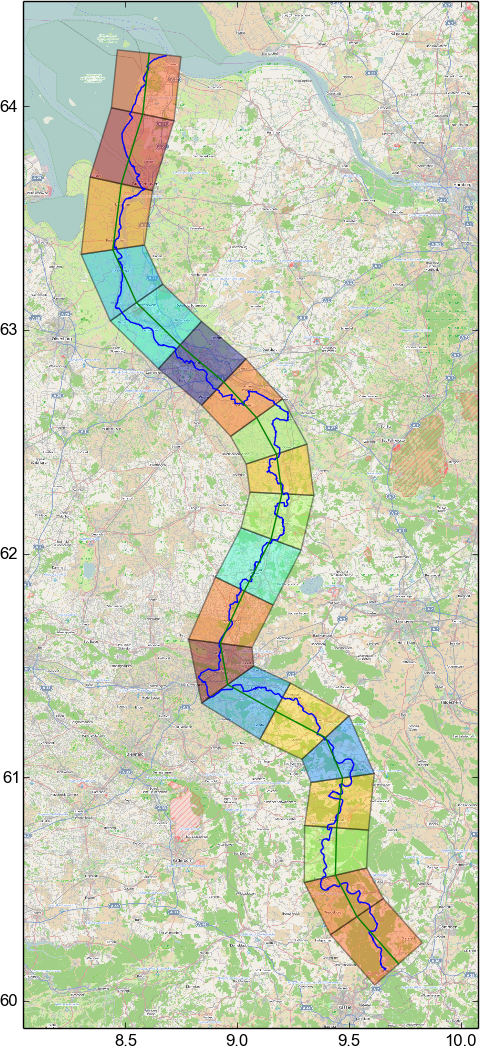
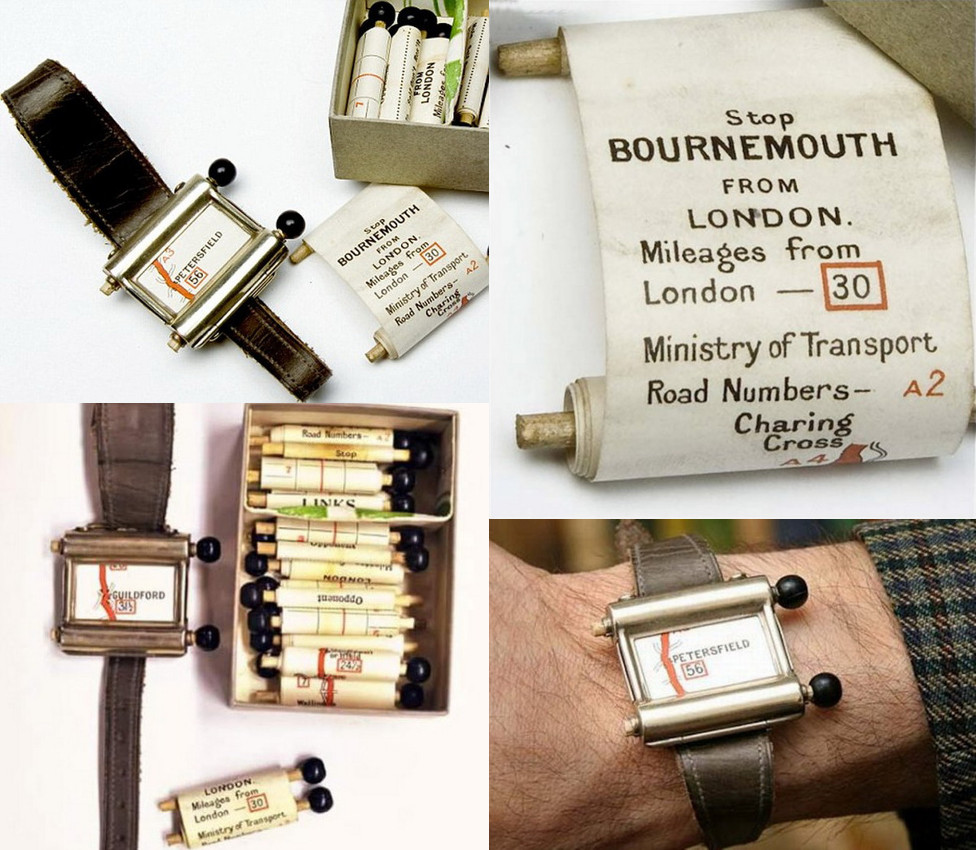
Back in 2007 I stumbled over the "Plus Fours Routefinder", an invention of the 1920's. It's worn on the wrist and allows the user to scroll through a map of the route they planned to take, rolled up on little wooden rollers. At that point I thought: that's awesome for long trips where you either dont want to take electronics with you or where you are without any electricity for a long time. And creating such rollable custom maps of your route automatically using openstreetmap data should be a breeze! Nevertheless it seems nobody picked up the idea. Years passed and in a few weeks I'll go on a biking trip along the Weser, a river in nothern Germany. For my last multi-day trip (which was through the Odenwald, an area in southern Germany) I printed a big map from openstreetmap data which contained the whole route. Openstreetmap data is fantastic for this because in contrast to commercial maps it doesnt only allow you to just print the area you need but also allows you to highlight your planned route and objects you would probably not find in most commercial maps like for example supermarkets to stock up on supplies or bicycle repair shops. Unfortunately such big maps have the disadvantage that to show everything in the amount of detail that you want along your route, they have to be pretty huge and thus easily become an inconvenience because the local plotter can't handle paper as large as DIN A0 or because it's a pain to repeatedly fold and unfold the whole thing every time you want to look at it. Strong winds are also no fun with a huge sheet of paper in your hands. One solution would be to print DIN A4 sized map regions in the desired scale. But that has the disadvantage that either you find yourself going back and forth between subsequent pages because you happen to be right at the border between two pages or you have to print sufficiently large overlaps, resulting in many duplicate map pieces and more pages of paper than you would like to carry with you. It was then that I remembered the "Plus Fours Routefinder" concept. Given a predefined route it only shows what's important to you: all things close to the route you plan to travel along. Since it's a long continuous roll of paper there is no problem with folding because as you travel along the route you unroll one end and roll up the other. And because it's a long continuous map there is also no need for flipping pages or large overlap regions. There is not even the problem of not finding a big enough sheet of paper because multiple DIN A4 sheets can easily be glued together at their ends to form a long roll. On the left you see the route we want to take: the bicycle route along the Weser river. If I wanted to print that map on a scale that allows me to see objects in sufficient detail along our route, then I would also see objects in Hamburg (upper right corner) in the same amount of detail. Clearly a waste of ink and paper as the route is never even close to Hamburg.
As the first step, a smooth approximation of the route has to be found. It seems that the best way to do that is to calculate a B-Spline curve approximating the input data with a given smoothness. On the right you can see the approximated curve with a smoothing value of 6. The curve is sampled into 20 linear segments. I calculated the B-Spline using the FITPACK library to which scipy offers a Python binding.
The next step is to expand each of the line segments into quadrilaterals. The distance between the vertices of the quadrilaterals and the ends of the line segment they belong to is the same along the whole path and obviously has to be big enough such that every point along the route falls into one quadrilateral. In this example, I draw only 20 quadrilaterals for visual clarity. In practice one wants many more for a smoother approximation.
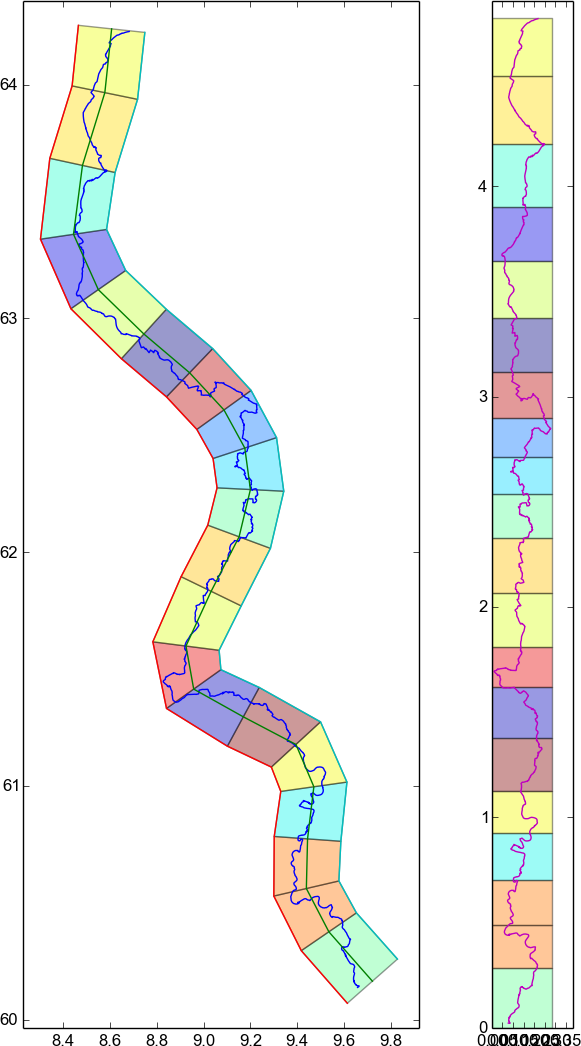
Using a simple transform, each point of the original map and the original path in each quadrilateral is then mapped to a point inside the corresponding "straight" rectangle. Each target rectangle has the height of the line segment it corresponds to. It can be seen that while the large scale curvature of the path is lost in the result, fine details remain perfectly visible. The assumption here is, that while travelling a path several hundred kilometers long, it does not matter that large scale curvature that one is not able to perceive anyways is not preserved. The transformation is done on a Mercator projection of the map itself as well as the data of the path. Therefore, this method probably doesnt work if you plan to travel to one of the poles. Currently I transform openstreetmap bitmap data. This is not quite optimal as it leads to text on the map being distorted. It would be just as easy to apply the necessary transformations to raw openstreetmap XML data but unfortunately I didnt find a way to render the resulting transformed map data as a raster image without setting up a database. I would've thought that it would be possible to have a standalone program reading openstreetmap XML and dumping out raster or svg images without a round trip through a database. Furthermore, tilemill, one of the programs that seem to be one of the least hasslesome to set up and produce raster images is stuck in an ITP and the existing packaging attempt fails to produce a non-empty binary package. Since I have no clue about nodejs packaging, I wrote about this to the pkg-javascript-devel list. Maybe I can find a kind soul to help me with it.
Here a side by side overview that doesnt include the underlying map data but only the path. It shows how small details are preserved in the transformation. The code that produced the images in this post is very crude, unoptimized and kinda messy. If you dont care, then it can be accessed here

2 April 2014

Joey Hess: propellor type-safe reversions

Propellor ensures that a list of properties about a system are satisfied. But requirements change, and so you might want to revert a property that had been set up before. For example, I had a system with a webserver container:
Docker.docked container hostname "webserver"
I don't want a web server there any more. Rather than having a separate property to stop it, wouldn't it be nice to be able to say:
revert (Docker.docked container hostname "webserver")
I've now gotten this working. The really fun part is, some properies support reversion, but other properties certianly do not. Maybe the code to revert them is not worth writing, or maybe the property does something that cannot be reverted. For example, Docker.garbageCollected is a property that makes sure there are no unused docker images wasting disk space. It can't be reverted. Nor can my personal standardSystem Unstable property, which amoung other things upgrades the system to unstable and sets up my home directory.. I found a way to make Propellor statically check if a property can be reverted at compile time. So revert Docker.garbageCollected will fail to type check! The tricky part about implementing this is that the user configures Propellor with a list of properties. But now there are two distinct types of properties, revertable ones and non-revertable ones. And Haskell does not support heterogeneous lists.. My solution to this is a typeclass and some syntactic sugar operators. To build a list of properties, with individual elements that might be revertable, and others not:
 props
        & standardSystem Unstable
        & revert (Docker.docked container hostname "webserver")
        & Docker.docked container hostname "amd64-git-annex-builder"
        & Docker.garbageCollected

1 April 2014

Russell Coker: Comparing Telcos Again

Late last year I compared the prices of mobile providers after Aldi started getting greedy [1]. Now Aldi have dramatically changed their offerings [2] so at least some of the phones I manage have to be switched to another provider. There are three types of use that are of interest to me. One is for significant use, that means hours of calls per month, lots of SMS, and at least 2G of data transfer. Another is for very light use, maybe a few minutes of calls per month where the aim is to have the lowest annual price for an almost unused phone. The third is somewhere in between and being able to easily switch between plans for moderate and significant use is a major benefit. Firstly please note that I have no plans to try and compare all telcos, I ll only compare ones that seem to have good offers. Ones with excessive penalty clauses or other potential traps are excluded. Sensible Plans The following table has the minimum costs for plans where the amount paid counts as credit for calls and data, this makes it easy to compare those plans.
Plan Cost per min or SMS Data Minimum cost
AmaySIM As You Go [3] $0.12 $0.05/meg, $19.90 for 2.5G in 30 days, $99.90 for 10G in 365days $10 per 90 days
AmaySIM Flexi [4] $0.09 500M included, free calls to other AmaySIM users, $19.90 for 2.5G in 30 days, $99.90 for 10G in 365days $19.90 per 30 days
Aldi pre-paid [5] $0.12 $0.05/meg, $30 for 3G in 30 days $15 per 365 days
Amaysim has a $39.90 Unlimited plan which doesn t have any specific limits on the number of calls and SMS (unlike Aldi Unlimited ) [6], that plan also offers 4G of data per month. The only down-side is that changing between plans is difficult enough to discourage people from doing so, but if you use your phone a lot every month then this would be OK. AmaySIM uses the Optus network. Lebara has a $29.90 National Unlimited plan that offers unlimited calls and SMS and 2G of data [7]. The Lebara web site doesn t seem to include details such as how long pre-paid credit lasts, the lack of such detail doesn t give me confidence in their service. Lebara uses the Vodafone network which used to have significant problems, hopefully they fixed it. My lack of confidence in the Vodafone network and in Lebara s operations makes me inclined to avoid them. Obscure Plans Telechoice has a $28 per month i28 plan that offers unlimited SMS, $650 of calls (which can be international) at a rate of over $1 per minute, unlimited SMS, unlimited calls to other Telechoice customers, and 2G of data [8]. According to the Whirlpool forum they use the Telstra network although the TeleChoice web site doesn t state this (one of many failings of a horrible site). The TeleChoice Global Liberty Starter plan costs $20 per month and includes unlimited calls to other TeleChoice customers, unlimited SMS, $500 of calls at a rate of over $1 per minute, and 1G of data [9]. Which One to Choose For my relatives who only rarely use their phones the best options are the AmaySIM As You Go [3] plan which costs $40 per 360 days and the Aldi prepaid which costs $15 per year. Those relatives are already on Aldi and it seems that the best option for them is to keep using it. My wife typically uses slightly less than 1G of data per month and makes about 25 minutes of calls and SMS. For her use the best option is the AmaySIM As You Go [3] plan which will cost her about $4 in calls per month and $99.90 for 10G of data which will last 10 months. That will average out to about $13 per month. It could end up being a bit less because the 10G of data that can be used in a year gives an incentive to reduce data use while previously with Aldi she had no reason to use less than 2G of data per month. Her average cost will be $11.30 per month if she can make 10G of data last a year. The TeleChoice Global Liberty Starter [9] plan is also appealing, but it is a little more expensive at $20 per month, it would be good value for someone who averages more than 83 minutes per month and also uses almost 1G of data. Some of my relatives use significantly less than 1G of data per month. For someone who uses less than 166MB of billable data per month then the Aldi pre-paid rate of $0.05 per meg [5] is the best, but with a modern phone that does so many things in the background and a plan that rounds up data use it seems almost impossible to be billed for less than 300MB/month. Even when you tell the phone not to use any mobile data some phones still do, on a Nexus 4 and a Nexus 5 I ve found that the only way to prevent being billed for 3G data transfer is to delete the APN from the phone s configuration. So it seems that the AmaySIM As You Go [3] plan with a 10G annual data pack is the best option. One of my relatives needs less than 1G of data per month and not many calls, but needs to be on the Telstra network because their holiday home is out of range of Optus. For them the TeleChoice Global Liberty Starter [9] plan seems best. I have been averaging a bit less than 2G of data transfer per month. If I use the AmaySIM As You Go [3] plan with the 10G data packs then I would probably average about $18 worth of data per month. If I could keep my average number of phone calls below $10 (83 minutes) then that would be the cheapest option. However I sometimes spend longer than that on the phone (one client with a difficult problem can involve an hour on the phone). So the TeleChoice i28 plan looks like the best option for me, it gives $650 of calls at a rate of $0.97 per minute + $0.40 connection (that s $58.60 for a hour long call I can do 11 of those calls in a month) and 2G of data. The Telstra coverage is an advantage for TeleChoice, I can run my phone as a Wifi access point so my wife can use the Internet when we are out of Optus range. Please let me know if there are any good Australian telcos you think I ve missed or if there are any problems with the above telcos that I m not aware of.

Gergely Nagy: Motif on Wayland

Earlier this year, on the fourth of February, Matthew Garrett posted an interesting tweet. The idea of porting Motif to Wayland sounded quite insane, which is right up my alley, so I've been pondering and preparing since. The result of that preparation is a fundraiser campaign, which, if successful, I'll dive deeper into the porting effort, to deliver a library that brings the Motif we used to love back in the days to a modern platform.The aim of the project is to create a library, available under the GNU Lesser General Public License (version 2.1 or later, the same license original Motif is under), ported to Wayland, with full API compatibility if at all possible. In the end, we want the result to feel like Motif, to look like Motif, so that any program that can be compiled against Motif, will also work with the ported library. I will start fresh, using modern tools and modern methodologies (including, but not limited to autotools and test-driven development, on GitHub) to develop the new library, instead of changing the existing code base. Whether the goal is fully achievable remains to be seen, but the API - and the look of the widgets, of course - will feel like Motif, even if in a Wayland context, and we will do our best to either make the API 100% compatible with Motif, or provide a compatibility library.Since I have a day job, in order to be able to spend enough time on the library, I will need funding that more or less matches my salary. The more raised, the more time will be allocated to the porting project. Would we exceed the funding goal, there are a few stretch goal ideas that can be added later (such as porting the Motif Window Manager, and turning it into a Wayland compositor, with a few modern bells and whistles).For further information, such as perks, updates and all, please see the campaign, or the project website!

Joey Hess: adding docker support to propellor

Propellor development is churning away! (And leaving no few puns in its wake..) Now it supports secure handling of private data like passwords (only the host that owns it can see it), and fully end-to-end secured deployment via gpg signed and verified commits. And, I've just gotten support for Docker to build. Probably not quite work, but it should only be a few bugs away at this point. Here's how to deploy a dockerized webserver with propellor:
host hostname@"clam.kitenet.net" = Just
    [ Docker.configured
    , File.dirExists "/var/www"
    , Docker.hasContainer hostname "webserver" container
    ]
container _ "webserver" = Just $ Docker.containerFromImage "joeyh/debian-unstable"
        [ Docker.publish "80:80"
        , Docker.volume "/var/www:/var/www"
        , Docker.inside
            [ serviceRunning "apache2"
                 requires  Apt.installed ["apache2"]
            ]
        ]
Docker containers are set up using Properties too, just like regular hosts, but their Properties are run inside the container. That means that, if I change the web server port above, Propellor will notice the container config is out of date, and stop the container, commit an image based on it, and quickly use that to bring up a new container with the new configuration. If I change the web server to say, lighttpd, Propellor will run inside the container, and notice that it needs to install lighttpd to satisfy the new property, and so will update the container without needing to take it down. Adding all this behavior took only 253 lines of code, and none of it impacts the core of Propellor at all; it's all in Propellor.Property.Docker. (Well, I did need another hundred lines to write a daemon that runs inside the container and reads commands to run over a named pipe... Docker makes running ad-hoc commands inside a container a PITA.) So, I think that this vindicates the approach of making the configuration of Propellor be a list of Properties, which can be constructed by abitrarily interesting Haskell code. I didn't design Propellor to support containers, but it was easy to find a way to express them as shown above. Compare that with how Puppet supports Docker: http://docs.docker.io/en/latest/use/puppet/
docker::run   'helloworld':
  image        => 'ubuntu',
  command      => '/bin/sh -c "while true; do echo hello world; sleep 1; done"',
  ports        => ['4444', '4555'],
...
All puppet manages is running the image and a simple static command inside it. All the complexities that puppet provides for configuring servers cannot easily be brought to bear inside the container, and a large reason for that is, I think, that its configuration file is just not expressive enough.

Russ Allbery: Review: Asimov's, September 2011

Review: Asimov's Science Fiction, September 2011
Editor: Sheila Williams
Issue: Volume 35, No. 9
ISSN: 1065-2698
Pages: 112
Due to various other life priorities, it's been quite a while since I read this magazine. Let's see if I can remember the contents well enough to review it properly. The editorial this issue was about the Readers' Awards. Vaguely interesting, but Williams didn't have much to add beyond announcing the winners. I'm very happy to see Rusch's "Becoming One with the Ghosts" win best novella, though. The Silverberg column was more interesting: some musings and pop history about the Japanese convention of a retired emperor and how that fit into national politics. Di Filippo's book review column is all about short story collections, continuing the trend of Di Filippo mostly being interested in things I don't care about. "The Observation Post" by Allen M. Steele: A bit of alternate history set during the Cuban Missile Crisis, but with airships. The protagonist was a radioman aboard a blimp that was patrolling the ocean for Russian vessels sailing to Cuba. A storm forces them down on an island, resulting in an encounter with some claimed tourists who may be Russian spies. The SFnal twist is unlikely to come as much surprise to an experienced reader, and the barb at the end of the story suffers from the same problem. I appreciate the ethical dilemma, but I've also seen it in lots of stories and have a hard time getting fully invested in another version of it. But the story is otherwise competently written. (6) "D.O.C.S." by Neal Barrett, Jr.: Everyone has an author or two that they just don't get. Barrett is one of mine, although this story is a bit less surreal than most of his. I'm fairly sure it's an odd twist on the "death panel" conspiracy theory given a fantastic twist, but it's not entirely forthright about what's going on. Possibly of more interest to those who like Barrett better. (5) "Danilo" by Carol Emshwiller: Emshwiller's stories are always distinctive and not quite like anyone else's, involving odd outsiders and their attempts to make sense of their world. This one involves, as is common, an out-of-the-way village. Lewella claims that she's going to be married to a stranger from the north. No one believes her, although they give her bridal gifts anyway, and then one day she takes her gifts and leaves. The protagonist follows her, to look after her. The rest of the story walks the boundary that Emshwiller often walks, leaving the reader unsure whether the characters are in touch with some deeper reality or insane and suffering, but the ending is even more ambiguous than normal and, at least for me, entirely unsatisfying. (4) "Shadow Angel" by Erick Melton: This is another retread of an old SF idea. This time, it's that piloting through hyperspace involves alternate modes of consciousness and has profound effects on the pilot. The risk of this sort of story is that it turns hallucinatory and a bit incoherent, and I think that happened here. I like the world-building; the glimmers of future politics and trade and the way he weaves alternate timelines into the story caught my interest. But the story wasn't quite coherent enough (although part of this may be reviewing it quite some time after I originally read it). Promising, but not clear, and without quite enough agency for the protagonist. (6) "The Odor of Sanctity" by Ian Creasey: I found this story more memorable. The conceit is that a future society has developed technology that allows the capture and replay of scents, which has created a huge market for special scent experiences and the triggering of memories. The story is set in the Philippines and revolves around a Catholic priest who takes the mission to the poor seriously. He's dying, and several people wonder if it is possible to capture the mythical odor of scantity: the sweet scent said to follow the death of a saint rather than the normal odor of human death. Creasey handles this idea well, blending postulated future technology, the practical and cynical world of the poor streets, and a balance between mystical belief and practical skepticism. Nothing in the story is that surprising, but I was happy with the eventual resolution. (7) "Grandma Said" by R. Neube: This story's protagonist is a cleanser on a frontier planet made extremely dangerous by a virulent alien fungus. It is almost always fatal and very difficult to eradicate. Vic's job is to completely sanitize anything that had been in contact with a victim and maintain the other rules of strict quarantine required to keep the fungal infection from spreading uncontrolled. Nuebe weaves world-building together with Vic's background and adds a twist in the form of deeply unhealthy responses to the constant stress of living near death. Well told, if a bit disturbing. (7) "Stalker" by Robert Reed: Reed has a knack for fascinating and disturbing stories, and this is an excellent example of the type. The protagonist is a manufactured companion who is completely devoted to its owner. Their commercial name is Adorers, but everyone calls them Stalkers. In this case, the protagonist's owner is a serial rapist and murderer; given that, and given how good Reed is at writing these sorts of stories, you can probably imagine how chilling it is. As usual, there is a sharp barb in the ending, and not the one I was expecting. Good if you can handle the graphic violence and disturbing subject material. (7) "Burning Bibles" by Alan Wall: This is an interesting twist on the spy thriller. A three-letter agency in charge of investigating possible terrorist plots becomes suspicious after a warehouse of Bibles burns in mysterious circumstances. The agent they send in is a deaf-mute with special powers of intuition. This prompted some eye-rolling, and there's a lot of magic disability powers here to annoy, but it's played mostly straight after that introduction. The rest is a fairly conventional spy story, despite special empathic powers, but it's one I enjoyed and thought was fairly well-written. (7) Rating: 6 out of 10

Andrew Pollock: [life] Day 63: Productive procrastination, pizza dough, podiatrist, positive

parenting and a haircut with a spot of painting How's that for some alliteration? Today was a really good day. And that's before I started drinking red wine. I got up this morning and successfully banged out a 10km run. It wasn't pretty, but I did it in under an hour, so I was happy. I got home, and after breakfast I pretty much flopped on the couch with my laptop and procrastinated instead of doing my taxes. But it was productive procrastination. I: I also (finally) got my taxes to a point where I'm ready to send them off to my US accountant and deal with the rest of it incrementally. So it was a productive day! I had a follow up appointment with my podiatrist in the afternoon to see how my orthotics were going. I biked to Kindergarten early, ditched the bike trailer, and then biked over to the podiatrist, and made it back to Kindergarten about 10 minutes before pick up time. Zoe was, unsurprisingly, fast asleep. I decided to try applying sunscreen to her while she was asleep as a way of killing two birds with one stone. I got as far as getting her legs done before she woke up and had a massive meltdown. Poor kid really doesn't deal well with being woken up. One of the teachers took pity on us and distracted Zoe by letting her cuddle one of the baby chicks, which snapped her out of it for the duration, but she had another meltdown once it was over. Another teacher gave her a cuddle for a bit, and she eventually calmed down enough for me to get sunscreen on her arms. I'd foolishly left the bike trailer separated from the bike, so I had to drag the trailer back to the bike, whilst carrying Zoe. Fortunately another teacher took sympathy on us and helped me with the trailer. Turns out trying to drag a single-wheeled trailer single-handed whilst carrying a toddler and having excess sunscreen on my hands is extremely difficult. We finally got the trailer on the bike, and Zoe in the trailer, and headed towards home. Zoe's ballerina pumps aren't great on the bike because the straps on the pedals cross the tops of her exposed feet and irritate her, so there were multiple meltdowns on the way home, culminating in needing to go to the toilet "right now" before we got home. I stopped at the health food shop on the way home, to see if they had a toilet we could use. Luckily I'm a customer and the naturopath let us use the toilet in the clinic. Zoe had another meltdown in there, announcing she "didn't like being woken up". Poor kid. It wasn't a good afternoon for her. I'm just glad I was in a sufficiently good mood to be able to deal with it all in a satisfactorily positive parenting way. We finally made it home, and I'd promised her we could have a big cuddle on the couch once we got home, so we did that and read a library book, and then it was time to head to the hairdressers for our haircuts. We started out on foot, and had made it one block from home, and she saw another kid on a scooter and announced she wanted to ride her scooter too. Initially tried saying we couldn't do it this time, because we'd be late, but she was on the verge of having another meltdown, so I capitulated, and we went back and grabbed it. I'm actually really glad I did, because she was as happy as Larry from that point on, and we were only a couple of minutes late at the hairdresser. We did her fringe trim first, and then she had a great play in the kid's corner while I got my haircut. She even cleaned up the corner better than she found it without argument. We then had plenty of time to scooter back home, so I decided to check out the 'OO'niverse Family Cafe, which is next door to the Hawthorne Cinemas. It's this thing I've never gotten around to checking out, and it was the second thing I was glad I did this afternoon. It's not a big place, and it was super quiet. There was just us and two twin Kindergarten-aged girls being babysat. Zoe had a banana milkshake and got a dolphin painted on her arm and a balloon dog made, and I had a coffee and we just chilled out for a bit while I chatted with the owner (who was babysitting the twins). By this stage Anshu was already at my place, and Sarah wasn't far off leaving work to pick up Zoe, so we made our way back home. Zoe had a great time playing with Anshu until Sarah arrived. So I was basically really happy that I managed to turn around a massively molten afternoon and give Zoe a really good afternoon instead. Anshu and I then proceeded to made a couple of really fantastic pizzas. I really love my Thermomix. I made the pizza dough earlier today, and tonight I made some pizza sauce, some pesto sauce and caramelized some onions in it, and we were still done with dinner by 8pm.

31 March 2014

John Goerzen: Springtime in the Mountains

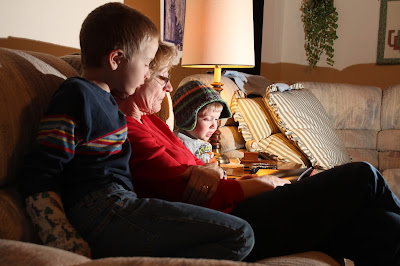
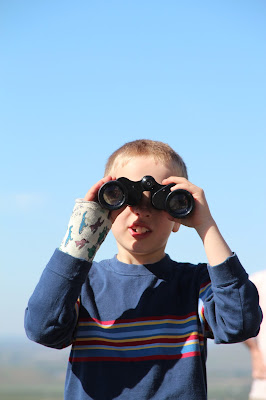
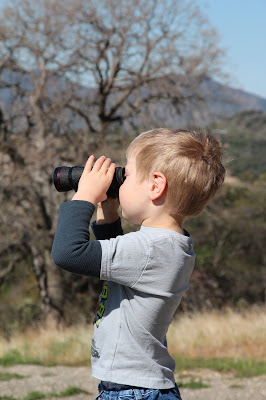
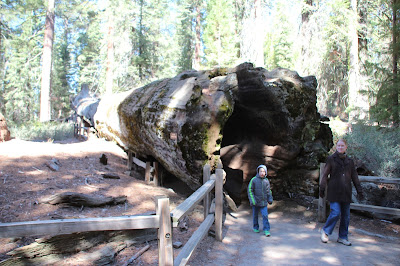
The scene: early one morning as the sun has just started to rise. Jacob and Oliver, ages 7 and 4, are the first people to wake up in the house their grandparents in California, where the four of us are visiting for the first time as a family. They have a conversation and decide that would be a good to go find a mystery. They decide to take their flashlights pink and blue, matching each boy s favorite color and slowly, but not very quietly, open their bedroom door and creep out. Brother, you forgot your flashlight! says Oliver. Oh, thanks brother! I ll get it! says Jacob. Meanwhile, Laura s mom wakes up, and notices two boys with flashlights creeping through the living room. Pretty soon they reach the kitchen, open the dishwasher, spy a suspicious-looking bowl, and decide that they have found the mystery a clean bowl! Or, at least that s the story that I pieced together based on what a 4-year-old and the grandma he awakened told me. We were on our first family trip to the Fresno, California area, to visit Laura s parents Jacob and Oliver s new grandparents. They ve played together before, but as this was our first visit to their place, there was quite the excitement. The boys had flown before, but it was several years ago and neither of them remember it well, so they were excited about that, too. The night before, Jacob woke up to tell me Dad, I am too excited to sleep. I think I will go downstairs and watch some TV. He didn t get too far with that plan. But he was excited. We went through security at the laid-back Wichita airport (where the TSA agents smile and there are often no security lines at all). We found our gate with enough time to grab lunch, which we did. The boys and I then did what we often do to kill time: explore. We explored the terminal, watching carpet-layers cut out carpet for the jetway, watching the construction of the new Terminal 3 out the window. And, of course, watching airplanes take off and land from the terminal s large windows. Finally it was our turn to board, and we all got on the plane: Jacob and Oliver with their backpacks of on-board activites, Laura and me with the rest of our carryon luggage, for the short trip to Denver. Jacob and Oliver s noses were pressed against the windows. Or, well, Jacob s was. Oliver s window was a little too high for him, but he was thrilled anyhow. They delighted in the airplane snacks, and the fact that they were allowed to drink pop on the plane. We packed books and some new art supplies for them (colored post-its, pages from a train-themed page-a-day calendar, a notebook, and a set of colored pens really seemed to do the trick.) We had a choice of 35 minutes or 4 hours between flights in Denver, and I had chosen 4 hours, thinking that would be a lot less stressful with boys. And it was. We found a nice corner of the mezzanine to sit for awhile they did art projects and played a game with Laura. Then I took them exploring Denver. We rode the moving sidewalks up and down the terminal, took a train ride to another terminal and back, ate supper all together, and flew to Fresno. We had stopped in the Wichita airport to buy them each a souvenir airplane, and these came out often during the rest of the trip. They enjoyed the mockups of the sequoias in Fresno Yosemite International Airport, enjoyed their beds and their room at the house, and did actually manage to fall asleep eventually. We had a few days there, where they played in a park, with bubbles on the patio, or croquet in the yard (I even discovered Jacob happily using the cast his broken arm is in as a hammer to pound the hoops into the ground!) There are a lot of miniatures in the house, and the boys enjoyed exploring the dollhouses and especially the N-gauge model train. Jacob enjoyed it so much he asked me to record a video of him playing with the trains. Evenings often brought book-reading, from the many children s books in the house. At home, Laura and I and both boys often scrunch onto an oversized chair and read a book and sing a song (one I make up on whatever topic they choose). Over there, we often had Laura, Jacob, Oliver, Laura s mom, and me scrunched up somewhere while the boys heard a story read to them by their grandma. That happened plenty of times other than bedtime, too. (Or Jacob would take his favorite books and read them to himself.) Laura s parents organized a reception Sunday for us, for the people from that area that couldn t make it to our wedding. Jacob and Oliver, predictably, had fun playing and even talked to some of the adults. The adults that didn t ask Jacob about his cast, anyhow (he dislikes talking about it). The boys discovered a live mic at the church where the reception was, and do I detect two future pastors in our midst? We had a great time at Laura s uncle and aunt s place. The boys were happy to discover an orange tree in their backyard, a tetherball post not far away, and an uncle ready to give them a demonstration of a swimming pool vacuum cleaner or sit at the piano with them. Jacob s favorite part, though, was when the hamburger buns his great uncle were toasting were left on the grill during the prayer before the meal, got a bit scorched, and the uncle remarked with a chuckle that I guess the Lord was tired of listening to me drone on! Jacob loved his meal, and cackled at the thought of a prayer causing buns to get scorched. But their highlight was the visit to the sequoias at Kings Canyon National Park the next day. The excitement had been building for that day all weekend. On the way out, we stopped at a fruit stand and bought some delicious strawberries the fresh, juicy, sweet and tasty kind that are red all the way through. We continued up through the foothills, stopping periodically to get out and stretch, look at the sights, take some photos, or borrow grandpa s binoculars. I knew we d be traveling in two cars, so I had the thought to pack some 2-way radios before we left. I gave one to the boys and one to the grandparents. All weekend long, whenever the six of us went somewhere, the boys (and especially Jacob) would give directions to the car that was following. Turn right! The light is green! Catch up, you re going too slow! So all the way into the mountains, Jacob would send back instructions on what to do. We saw Grant Grove, home to the worlds third-largest tree (267ft/81m tall and 3000 years old). It s quite the impressive tree the trunk s diameter near the ground is 29ft or almost 9m. As we walked the trails, their speed kept increasing as they were hunting for the tree tunnel I had told them about a tree that fell centuries ago and had been hollowed out to make a home. That trunk was easily 8ft or more in diameter, and I could stand up completely in places. We found it, to much delight from the boys So this is what it s like to be inside a tree! Our trip home brought a delay in Denver and a missed flight, which excited the boys when I told them now we get to eat supper in the airport! I wonder how long that tactic will work But Jacob was also excited because the plane we were put on in the end was bigger than the one we were scheduled on, so that was another piece of excitement. We got home, and I carried two sleeping boys in from the car, upstairs, tucked them in, pulled off their shoes, and put their favorite stuffed animals in their arms. They were happy to be home, and with memories to treasure for a long time.

Andrew Pollock: [life] Day 62: Kindergarten, cleaning

Zoe slept really well last night, and had a good breakfast of porridge this morning. We biked to Kindergarten for the first time in ages, as it wasn't raining. Drop off went nice and smoothly. I can't believe this is the last week of term 1 already. Today was an exceptional day, because Sarah had the day off, and picked up Zoe from Kindergarten instead of me. As tonight Zoe is with her, I got about 3 extra hours up my sleeve. The house was a bit of a mess, I decided to switch today with my Wednesday "clean the house day" and use the extra time to do a more thorough clean. Part way through that, an acquaintance, who recently separated from his wife, dropped by for a chat. We ended up chatting for about 3 hours, so I dialed back my cleaning to something more standard. My business debit card arrived in the mail today. It was exciting to see something with my name and my company name on it. I've scheduled a bank transfer to fund my business with the first loan I'll be making to it, so it'll have some cash as of the start of second quarter. All I need now is the cheque book to arrive, and I can go pay the patent lawyer a visit. I had contemplated going for a run tonight before my yoga class, but I ended up faffing around with trying to fix the song order on the USB stick that has all of Zoe's music on it. The new head unit isn't playing one album in the right order, and it's phenomenally annoying. To this end, I discovered fatsort, which is a godsend. Yoga was in the new studio tonight for the first time. I'm really happy that my teacher is growing her business. The new studio is even closer to home than the old one, which is lovely.

Russ Allbery: Review: Sundiver

Review: Sundiver, by David Brin
Series: Uplift #1
Publisher: Bantam
Copyright: February 1980
Printing: September 1995
ISBN: 0-553-26982-8
Format: Mass market
Pages: 340
Sundiver is the first book of Brin's Uplift series, which I think it's fair to say are the books that made his reputation as an author. It's less well-known than the later sequels Startide Rising and The Uplift War for reasons that I'll get into in a moment. This was a re-read; I've read the first Uplift series before (and Startide Rising separately before that), but not in many years, and I wanted to re-read them and review them. I haven't finished doing that yet, several months after I re-read Sundiver, largely because this book wasn't as enjoyable as I remembered. The Uplift series is set in a heavily populated galaxy with a multitude of alien races. It follows the SF alien life pattern where the galaxy was well-populated and fully developed long before humans discovered it. The Earth is a relatively obscure backwater, and humans are expected to adopt to and follow the rules and restrictions that the other races had long-since established. This primarily means a complex and very formal system of caste and patronage: species brought to sapience by the technology of their patrons are expected to serve their patron races for millennia, and one's status in the galaxy is determined by the length of those patronage chains and the number of species one has fostered in turn. As is typical for stories of this sort, humans break the rules in unexpected ways. They have no known patrons, having apparently evolved sapience entirely on their own (although the galactic races are quite dubious of this theory). And they have uplifted two species to sapience (chimpanzees and dolphins) before their discovery by the rest of galactic civilization, although in fairly primitive ways and not properly by galactic standards. Set against this background, Sundiver is a science fiction puzzle story of a fairly old style. The protagonist, Jacob Demwa, is a scientific investigator who retired after a tragedy that killed his love. He's recruited out of that retirement and into this plot by an alien who is sympathetic to humans. A human exploration mission into the chromosphere of the Sun, treated as ridiculous by most of the galactics since the shared Library Institute certainly contains more information about stars than human technology could possibly uncover, has found strange and apparently sapient creatures living there: flocks of cattle-like creatures that are apparently being herded. There is no reference to such star-dwellers in the Library, which raises the possibility that humans have discovered something novel. That would be quite a coup against the galactics. But after the destruction of one of the solar exploration ships, it starts looking like these creatures are hostile. Jacob reminded me of a mix between a Larry Niven short story protagonist, working through the practical impact of a physics puzzle, and Isaac Asimov's Elijah Baley. What exactly is going on, both scientifically and politically, remains unclear for nearly the entire book. Both Jacob and the reader are constantly forming and then discarding hypotheses as events overtake them. The stakes are more interesting than a lot of science fiction novels: rather than survival or war, the stakes are prestige, influence, and status, with subtle but possibly vital effects on what position humans will take among the other species of the galaxy. All this sounds promising, and is why I remembered this book fondly. Unfortunately, re-reading it was a disappointing experience on several fronts. First, the characterization varies between trite and stereotyped. The aliens suffer from the standard alien characterization problem: each of them is an exemplar of their species, and all of the aliens feel like archetypes. While there are some twists in the inter-alien politics, one never gets a sense of the aliens as varied and complex societies in their own right. The humans are more varied, but that primarily means varieties of irritating. The worst is Peter LaRoque, a journalist who is set up as a villain of the story, and who is such an unremitting and over-the-top stereotype of everything possibly bad about journalists (and French people) that every scene containing him felt like someone scraping fingernails on a chalkboard. The other characters are a bit better, but not by much. Jacob himself has a bizarre, semi-mystical psychological problem from trauma that seems to give his amoral subconscious a life of its own. Brin appears to be setting this up to have major plot significance, but it never made any sense to me, didn't matter much in the end, and seems to mostly be an excuse for Jacob's hypercompetence. Sundiver's treatment of female characters also annoyed me enough to be worth a mention. The primary female character, Helene, is clearly intended to be a strong character with her own agency (she's both station commander and a starship captain), and Brin makes a lot of the humans switching to different words than male and female as a sign of a more egalitarian future. But this all feels skin-deep. The inevitable romance is all about Helene's attractiveness and ability to listen to Jacob, her logic is described as unscientific, and I got more and more annoyed by her portrayal as the book went along. She's not entirely without agency in the story, but she's much closer to a damsel in distress than the independent character Brin appeared to be trying for. It's hard to shake the feeling that she's being persistently belittled by the story. But this is a scientific puzzle story more than a mystery; characterization would be nice, but isn't strictly required. On re-read, the part of Sundiver that annoyed me the most was how much of a letdown the plot resolution was. I'm going to avoid any specific spoilers here, but I found the ending of both quite disappointing and a sign of the major problem with this series as a whole. The setup over-promises and Brin fails to deliver, a pattern that will repeat itself in this series. We get tantalizing hints of a new solar species, of revelations about the past of humanity, of deep galactic politics, and of vast knowledge contained in the Library that humans don't yet have access to. We get superficial archetypes for characters, politics that seem more like the bickering of children, plot twists that persistently take the story in more mundane and less interesting directions, and a sense of wonder, or lack thereof, that feels more like a Scooby Doo story than what I expect from science fiction. Some of the plot twists are unexpected and almost add some interest to the story, but don't make enough sense in the context of the story to be satisfying. And, of course, there's an climactic action sequence involving physical combat, as is required of all good Star Trek (original series) episodes. (I was waiting for Jacob's shirt to fall off.) The problem I have always had with Brin as a writer is that his ideas are far better than his ability to write characters and plots. In the hands of a better author, the Uplift universe background has so much potential. And I think Brin is a better author a few years later; my recollection is that both Startide Rising and The Uplift War do a better job of delivering on their promises. But Sundiver is deservedly forgettable. The good ideas rarely go anywhere beyond the obvious, the characters are irritating and often don't make sense, and the story is disappointing. I can't say I'm sorry to have read it, since my memory edited it down into a much better story, but I can only recommend it as background for later, better books. Rating: 4 out of 10

30 March 2014

Olivier Berger: Working on a TWiki to MediaWiki converter (targetting FusionForge wikis)

I m currently working on a wiki converter allowing me to transfer old TWiki wikis (hosted on picoforge) to MediaWikis hosted on FusionForge. Unlike existing tools that I ve found that more or less target the same needs, mine will address two peculiarities : The tool is written in Python, and will include my own crappy wiki syntax converter in Python, instead of spawning existing Perl scripts, as others did. It may happen to work for FosWiki too, but I don t intend to use it beyond our old TWiki installations, for a start. Stay tuned for more progress updates. Edit: I ve now released a first version.

Joey Hess: propellor

Whups, I seem to have built a configuration management system this evening! Propellor has similar goals to chef or puppet or ansible, but with an approach much more like slaughter. Except it's configured by writing Haskell code. The name is because propellor ensures that a system is configured with the desired PROPerties, and also because it kind of pulls system configuration along after it. And you may not want to stand too close. Disclaimer: I'm not really a sysadmin, except for on the scale of "diffuse administration of every Debian machine on planet earth or nearby", and so I don't really understand configuration management. (Well, I did write debconf, which claims to be the "Debian Configuration Management system".. But I didn't understand configuration management back then either.) So, propellor makes some perhaps wacky choices. The least of these is that it's built from a git repository that any (theoretical) other users will fork and modify; a cron job can re-make it from time to time and pull down configuration changes, or something can be run to push changes. A really simple configuration for a Tor bridge server using propellor looks something like this:
main = ensureProperties
    [ Apt.stdSourcesList Apt.Stable  onChange  Apt.upgrade
    , Apt.removed ["exim4"]  onChange  Apt.autoRemove
    , Hostname.set "bridget"
    , Ssh.uniqueHostKeys
    , Tor.isBridge
    ]
Since it's just haskell code, it's "easy" to refactor out common configurations for classes of servers, etc. Or perhaps integrate reclass? I don't know. I'm happy with just pure functions and type-safe refactorings of my configs, I think. Properties are also written in Haskell of course. This one ensures that all the packages in a list are installed.
installed :: [Package] -> Property
installed ps = check (isInstallable ps) go
  where
        go = runApt $ [Param "-y", Param "install"] ++ map Param ps
Here's one that ensures the hostname is set to the desired value, which shows how to specify content for a file, and also how to run another action if a change needed to be made to satisfy a property.
set :: HostName -> Property
set hostname = "/etc/hostname"  File.hasContent  [hostname]
         onChange  cmdProperty "hostname" [Param hostname]
Here's part of a custom one that I use to check out a user's home directory from git. Shows how to make a property require that some other property is satisfied first, and how to test if a property has already been satisfied.
installedFor :: UserName -> Property
installedFor user = check (not <$> hasGitDir user) $
        Property ("githome " ++ user) (go =<< homedir user)
                     requires  Apt.installed ["git", "myrepos"]
  where
    go ... -- 12 lines elided
I'm about 37% happy with the overall approach to listing properties and combining properties into larger properties etc. I think that some unifying insight is missing -- perhaps there should be a Property monad? But as long as it yields a list of properties, any smarter thing should be able to be built on top of this. Propellor is 564 lines of code, including 25 or so built-in properties like the examples above. It took around 4 hours to build. I'm pretty sure it was easier to write it than it would have been to look into ansible and salt and slaughter (and also liw's human-readable configuration language whose name I've forgotten) in enough detail to pick one, and learn how its configuration worked, and warp it into something close to how I wanted this to work. I think that's interesting.. It's partly about NIH and I-want-everything-in-Haskell, but it's also about a complicated system that is a lot of things to a lot of people -- of the kind I see when I look at ansible -- vs the tools and experience to build just the thing you want without the cruft. Nice to have the latter!

26 March 2014

Clint Adams: Belinda Carlisle (@belindaofficial) retweeted one of your Tweets!

Now that ZOMG has support for Opus, I find myself wondering how one does the equivalent of vorbisgain, preferably without floating-point.

25 March 2014

Francesca Ciceri: A crafty roundup: projects from the last months

A quick roundup of things I made during the last months, following tutorials here and there. finished projects for babies 1: a soft bunny more or less based on this one 2: skelly man! You can find pattern and instructions on Chez Beeper Bebe's blog 3: bibs: the embroidered one is based on this pattern by Charlotte Lyons on SouleMama's blog, the other re-uses the same pattern but add a bird applique instead. finished projects for women 1, 4: my first try with the beautiful Weekender Bag ended with something else entirely: apparently, where euclidean geometry principles apply, cutting a piece of fabric 10 cm smaller will result in a bag 10 cm smaller!
Go figure! Fhtang! I'm happy anyway with the final result, but it resembles more a tote bag than a weekender one. I then made also a successful Weekender, but haven't taken a pic yet. If you try that pattern, you may find this blogpost helpful. 2: This is my try at copycatting this model without a pattern and didn't end very well.
However, a couple lessons learned: 3: Blouse with knit-stretchy stuff! (You love me when I speak technical, don't you?)
I did that without pattern, mostly using a similar top I have as inspiration/guide

Petter Reinholdtsen: Public Trusted Timestamping services for everyone

Did you ever need to store logs or other files in a way that would allow it to be used as evidence in court, and needed a way to demonstrate without reasonable doubt that the file had not been changed since it was created? Or, did you ever need to document that a given document was received at some point in time, like some archived document or the answer to an exam, and not changed after it was received? The problem in these settings is to remove the need to trust yourself and your computers, while still being able to prove that a file is the same as it was at some given time in the past. A solution to these problems is to have a trusted third party "stamp" the document and verify that at some given time the document looked a given way. Such notarius service have been around for thousands of years, and its digital equivalent is called a trusted timestamping service. The Internet Engineering Task Force standardised how such service could work a few years ago as RFC 3161. The mechanism is simple. Create a hash of the file in question, send it to a trusted third party which add a time stamp to the hash and sign the result with its private key, and send back the signed hash + timestamp. Both email, FTP and HTTP can be used to request such signature, depending on what is provided by the service used. Anyone with the document and the signature can then verify that the document matches the signature by creating their own hash and checking the signature using the trusted third party public key. There are several commercial services around providing such timestamping. A quick search for "rfc 3161 service" pointed me to at least DigiStamp, Quo Vadis, Global Sign and Global Trust Finder. The system work as long as the private key of the trusted third party is not compromised. But as far as I can tell, there are very few public trusted timestamp services available for everyone. I've been looking for one for a while now. But yesterday I found one over at Deutches Forschungsnetz mentioned in a blog by David M ller. I then found a good recipe on how to use the service over at the University of Greifswald. The OpenSSL library contain both server and tools to use and set up your own signing service. See the ts(1SSL), tsget(1SSL) manual pages for more details. The following shell script demonstrate how to extract a signed timestamp for any file on the disk in a Debian environment:
#!/bin/sh
set -e
url="http://zeitstempel.dfn.de"
caurl="https://pki.pca.dfn.de/global-services-ca/pub/cacert/chain.txt"
reqfile=$(mktemp -t tmp.XXXXXXXXXX.tsq)
resfile=$(mktemp -t tmp.XXXXXXXXXX.tsr)
cafile=chain.txt
if [ ! -f $cafile ] ; then
    wget -O $cafile "$caurl"
fi
openssl ts -query -data "$1" -cert   tee "$reqfile" \
      /usr/lib/ssl/misc/tsget -h "$url" -o "$resfile"
openssl ts -reply -in "$resfile" -text 1>&2
openssl ts -verify -data "$1" -in "$resfile" -CAfile "$cafile" 1>&2
base64 < "$resfile"
rm "$reqfile" "$resfile"
The argument to the script is the file to timestamp, and the output is a base64 encoded version of the signature to STDOUT and details about the signature to STDERR. Note that due to a bug in the tsget script, you might need to modify the included script and remove the last line. Or just write your own HTTP uploader using curl. :) Now you too can prove and verify that files have not been changed. But the Internet need more public trusted timestamp services. Perhaps something for Uninett or my work place the University of Oslo to set up?

Andrew Pollock: [life] Day 56, Kindergarten, rain, taxes

There was quite the torrential downpour overnight. It woke me up, and it woke Zoe up too, and at about 1:45am she ended up in bed with me. I think she managed to invent a new baby sleep position, where she was on my pillow, perpendicular to me along the bed head, and had somehow ejected the pillow that was on her side of the bed. We got up, with a slow start, and the weather was still looking a bit dicey, so Zoe wanted to go to Kindergarten by car. That actually meant we were the first ones there, because I'd been working to a timetable of leaving home by bike. One of the chickens was starting to hatch (and subsequently hatched around noon) so that was exciting. Funnily enough, Zoe had spent all morning telling me how she didn't want to go to Kindergarten, but by the time we got there, she didn't seem to mind being there all that much. After I got home from Kindergarten, I biked down to Bulimba to go to the bank to finalise opening my business bank accounts. I've since discovered that one can't do much without an ABN, I can't even get a cheque book, so I've sicked my accountant on that one for me. I got stuck into my US taxes some more today, and made a very satisfactory amount of progress on them. I think I should be able to finish them off in the next session I get to work on them. I felt like getting out of the house after that. It was looking quite like rain again, making picking up Zoe by bike out, so I ran a few errands in the car before getting to Kindergarten quite early. Zoe was fast asleep, but I let her have a long, slow wake up, and that made our departure much easier. She got to have a little hold of one of the baby chicks before we left. Today I learned that baby chicks smell absolutely divine. We got home, and Zoe did some self-directed craft for a bit, and then wanted to play hide and seek, so we did that and finally got around to looking at all of the Woolworths DreamWorks Heroes cards she's been collecting. I was disappointed to discover there's only a single card per pack, so that's going to mean I have to spend at least $840 on groceries, excluding duplicates, before we get all of them. I'm glad the checkout operators aren't sticking to the rules and are handing them out a little more generously than that. After that, we did a bit more rough and tumble play, and then it was time to start making dinner, so Zoe watched a DVD. We got dinner out of the way relatively early, so I practiced plaiting her hair (I've surprised myself with the half-decent job I can do) and then did bath time and bed time. Bed time was a little protracted (she didn't like her bedroom and wanted to sleep in my bed) but otherwise seems to have gone smoothly.

Next.

Previous.