Search Results: "ah"

26 July 2011

John Goerzen: Jacob and the Amazing Technicolor Adding Machine

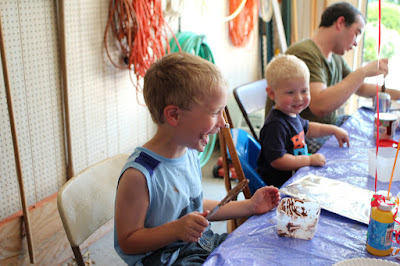
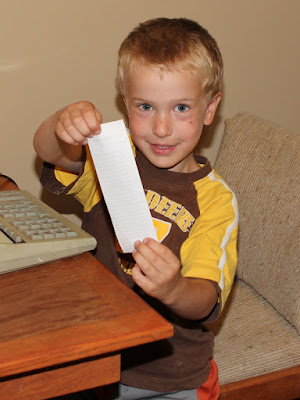
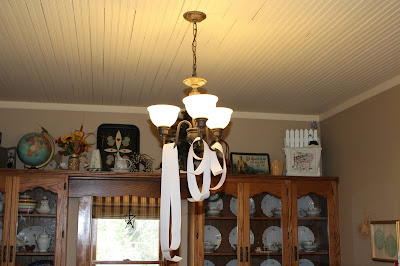
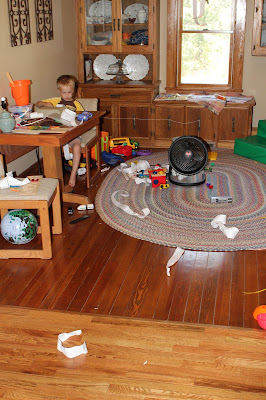
Jacob has been eagerly awaiting this day for at least, well, 2 days now. This morning he started asking questions. All day long he has been wondering how long until the big event. And that event is the arrival of the UPS truck carrying a special $8 package for him. And in that $8 package is not a DVD, or a book, or a toy, but rather 12 rolls of adding machine tape (totaling 1/3 of a mile). Oh yes, our four-year-old can hardly contain his excitement over office supplies. Let me back up a bit to explain. I am always on the lookout for a certain kind of toy. The sort of thing that you don t find in the toy section of a store. The sort of thing that is interesting and engages the curiosity of our boys, that most people would consider would toss, and that usually costs less than $5. Along those lines, Jacob has an old manual typewriter he can use, he and I built a switchbox full of switches and light bulbs that the boys love to play with, we built him a command-line-only PC out of spare parts, the boys have some radios they can use, and one day I salvaged a decades-old adding machine that was going to be thrown out. Jacob liked it he enjoys number and letter games and had some fun, but didn t zealously engage with it until just a few days ago. He sat down at his table and started making cards . He will print out a bunch of numbers, making a strip a couple of feet long, and then say, Dad, I made another card for you! We will then happily accept the card and he will continue making more. Here he is, holding up one of his cards: Jacob had a ton of fun making them, and Oliver wanted in on the action too. Oliver was somewhat interested in the adding machine, but not as much as Jacob, and Jacob didn t want to share. So somehow they decided that Oliver would run and get cards from Jacob and then take them to whatever parent Jacob said. Today Jacob said, Dad, the Oliver delivery service will bring you a card! Saturday morning we had some time to hang around and play, so we played some adding machine tape games. I tucked some long cards under my waistband, and the boys happily chased me all over the house trying to get them back. We also decorated: And here is what the room looked like after some cleanup: That orange bucket on the desk is my card bucket where I can put all the cards he gives me. He even helpfully empties it out into the recycle bin when there are too many old cards in it! But then tragedy struck it was out of paper! I ordered a 12-roll pack off Amazon, and boy was it a long couple of days until it arrived. Today before the UPS truck got here, I showed him how we could feed old paper through and print on the back side an incredible innovation, it seemed! Terah had a conversation with him earlier that went like this: Terah: Jacob, we need to clean up the house. Jacob: Why? Terah: Because some people are coming over. Jacob: Who is OH YES! The UPS delivery man! Yes, let s clean! Terah: Ah, well yes he will be here too, but your great uncle and aunt are coming. Jacob: Oh yay! And the UPS man! It is hard to describe Jacob s excitement when the package arrived. I quickly opened it up, and at his great uncle s prompting, he counted to see if he really did get 12 rolls of paper. IT IS TWELVE ROLLS! YAY! And then we quickly installed it in the machine and off he went. At his great uncle s prompting, he started writing a J on each card . This meant Jacob , or maybe he d put two J s, meaning To John From Jacob , or perhaps the two J s meant To Terah From Jacob he d always have to clue us in. Anyhow, for an $8 investment in paper this has brought hours of joy to our boys. Even though Jacob isn t yet really using it to perform arithmetic, it is setting him up to enjoy that sort of thing and encouraging his curiosity. Both good things.
Benjamin Mako Hill: Lawn Scrabble

The Acetarium, where I live, runs what we like to think of as the world's smallest artistic residency program by hosting artists, social scientists, hackers, and free software and free culture folks for periods of 1-3 months. Our most recently graduated resident, Noah, built a lawn scrabble set on the Media Lab ShopBot and held a Scrabble picnic this weekend with some former Acetarium residents and others. I don't really like playing Scrabble, so you can see me working on an essay (and verifying words) in the background. /copyrighteous/images/lawn_scrabble_01.jpg

/copyrighteous/images/lawn_scrabble_02.jpg Thanks to Ben Schwartz as I yoinked these pictures from his blog.

25 July 2011

Andrea Veri: Backup your Gmail in a few easy steps!

I ve actually spent a few hours searching around for a good backup solution for my mailbox until I decided to stick with getmail. What you ll be able to achieve after reading this HowTo and deploying the following setup is:
  1. A full backup of your e-mail DATA in the Mbox format. (yes, Gmail s labels / folders as well)
  2. Prevent getmail to mark all mails as read after delivering them. (this was a pretty bad issue since getmail was marking all my mails as read even if I did not access my e-mail at all)
  3. Keep your backups up-to-date with the latest content from your mailbox. (by default getmail grabs all the DATA from your mailbox and fills up the Mbox / Maildir content keeping deleted mails. So let s say I deleted a mail two days ago, well it ll still appear on today s backups. This behaviour is definitely unwanted)
I ll now move to explain a few details about my new configuration but before moving to tweak getmail s main config file, please do the following change on _retrieverbases.py* :
return self._getmsgpartbyid(msgid, (RFC822) ) to return self._getmsgpartbyid(msgid, (BODY.PEEK[]) )
When done grab the following getmailrc and adapt it to your needs**:
[retriever]
type = SimpleIMAPSSLRetriever ## or SimplePOP3SSLRetriever.
server = imap.gmail.com ## or pop.gmail.com for POP3.
username = example@gmail.com
password = password ## so-called Gmail s labels should be listed one by one here for getmail to retrieve mail from them successfully. mailboxes = ( INBOX , [Gmail]/Sent mail ,
ubuntu , gnome/example , linux/example ) [destination]
type = Mboxrd
path = ~/.getmail/backup.mbox [options]
delivered_to = false ## No delivered_to header added automatically.
received = false ## No received header added automatically.
verbose = 2 ## getmail will print messages about each of its actions.
When done we should go ahead setting up getmail s directories and config file:
mkdir $HOME/.getmail cp $HOME/getmailrc $HOME/.getmail/ ## Adapt $HOME/getmailrc to whatever dir you put that file into.
But pretty much all the remaining work will be done by a small shell script I wrote:
#!/bin/sh WORKDIR=$HOME/.getmail
date= date +%d-%m-%Y_%H:%M if [ ! -f $WORKDIR/backup.mbox ]
then
touch $WORKDIR/backup.mbox
fi getmail > $WORKDIR/getmail.log
OUT=$?
if [ $OUT -eq 0 ]
then
mkdir -p $WORKDIR/backups/ && mv $WORKDIR/backup.mbox $WORKDIR/backups/backup_$date.mbox ;
else [ $OUT -eq 1 ]
exit 1
fi ## Cleanup older than 3 days backups
find $WORKDIR/backups/* -mtime +3 -exec rm ;
cd $WORKDIR && rm -rf oldmail-* ;
This script will:
  1. Run getmail using the getmailrc config file you previously worked on.
  2. If the above command will be successful, it ll create a backups dir into $HOME/.getmail and move the latest Mbox file there appending a date and time to its name. (by doing this we are sure next getmail run will happen on an empty backup.mbox file, thus it will just contain the latest content from your mailbox)
  3. It ll re-create a backup.mbox file on $HOME/.getmail to avoid the next getmail run to fail.
  4. In the end, it ll clean up older than 3 days backups to avoid a too crowded backups folder. (it removes the oldmail file as well since it is useless in our case)
In the end set up a cronjob that will run the above script and generate the backups for you every one hour:
0 * * * * $HOME/.getmail/getmail_run.sh > /dev/null
Feel free to let me know if you ve encountered any issue while following the above HowTo. Enjoy! * /usr/share/getmail4/getmailcore/_retrieverbases.py on line 901. ** More documentation about the getmailrc file and syntax can be found on getmail s documentation page.

23 July 2011

Joey Hess: from the convoy

As I type this, it's just passed midnight. I'm in the back of a BMW somewhere in east Germany , and the Debian UK convoy is doing 110 mph on the autobahn, twenty hours into a twenty-five hour first leg of our trip to Banja Lunka. This all started out so sanely with a 3 am departure to catch the 6 am ferry at Dover. Followed by a couple of hours leisurely breakfast onboard. First hint that yes, this is a road trip in which things will go wrong was a minor bumper denting of one of the convoy's cars by a stray landrover during the ferry trip, but it didn't really phase us. On to Cologne, for a very nice lunch and to pick up another person. But we didn't anticipate how brutal the next leg to Gratz would be. Nor did we count on apparently half of Germany and the Netherlands getting out their campers and heading east this Friday. Spent multiple hours stop-and-go, and many more in constant traffic. Finally it opened out, so we can follow the night speed limit. And while we started out horsing around on the radio, we've developed some real comms discipline by now to keep the convoy together. Also people seem to be amazingly keeping rested while not driving. To add to the sleep debt to me, I flew in the day before, but I actually feel caught up now. Still I've not been driving at all due to mislaid license and general inability to safely drive a right side drive stick shift at 100 mph at night. Our 7 drivers are doing an amazing job. Update: Arrived safely in Gratz at 4 am. Austria tantilized with 30+ miles of tunnels thru the alps, but I've not seen an alp yet.
PS, you'll never appreciate a stinky, free bathroom until you're in a country where all the antiseptic bathrooms cost money and hoards of vacationers are doing the logical thing next to service stations.

Antonio Terceiro: Hello, Planet Debian

Hello, world! So, now this blog is being syndicated on Planet Debian, and I decided to write something to introduce myself. I was born in Salvador, Bahia, Brazil. I am married to Josy, a wonderful person; we do not have any kids yet, but anyone can notice we both discretely drooling when close to small children. I have a passion for building things, and making things work. Programming happens to be the better building toy that someone already invented. I became am official Debian Developer a little more than one week ago, but I have been working in the project for some time already. In the very beginning I was involved with the Perl group, but now almost all my work is in the Ruby team. I am a PhD student at Federal University of Bahia under supervision of professor Christina Chavez. My research involves three topics I am just fascinated about: Free ("and Open Source") Software, Software Design and Empirical Software Engineering. I am investigating whether it is possible to explain the variation in Structural Complexity by analyzing developer attributes. I want to answer questions such as "do developers with more experience in a project produce more complex code?", or "do developers that focus on a single part of the project produce more complex code than developers who work on the entire project?". As part of my PhD research I have been working on analizo, a multi-language source code analysis and visualization toolkit. I plan to write specifically about it in a later opportunity. My other job is running my own company, Colivre, together with several other great people. Colivre is a cooperative, which basically means that everyone who works there is also an owner of the company. We provide web solutions, in special social networking environments, social media websites and the like. Working on (and with) free software is our premise at Colivre, and most of our work involves either Noosfero or Foswiki. Right now I am taking some time off from Colivre to be able to concentrate on (and finish!) my PhD. Until late September I live at the beautiful Vancouver, BC, Canada, where I am currenly a visiting reasearcher at the Software Practices Lab at UBC under supervision of professor Gail Murphy. So that's it, I hope to post interesting stuff here and to get your feedback whenever you find it's worth. I also maintain a microblog at identi.ca, where you'll find shorter (and more frequent) updates.

22 July 2011

Matthew Palmer: Aaah, That Takes Me Back...

The Wrong Answer story from these tales from the interview brings back some memories I ve written this code (well, I got halfway through it before I realised precisely how stupid an idea it was), and I ve counselled more than one developer against trying it again (always unsuccessfully, much to my chagrin and that of anyone who had to deal with it in the future, I m sure). The reason people do it is twofold:
  1. It s more fun to write this sort of code than the sort that actually solves a real problem; and
  2. Schema manipulation in SQL databases sucks rocks. There s usually limited (or at least painful) introspection capabilities, and manipulating the schema is annoying and usually is deeply balls, performance wise.
If the resources that have been spent building these databases-on-databases over the years were instead redirected into fixing problem 2, above, then it probably wouldn t be a problem any more. On the other hand, problem 1 would still exist, for which the only solution is regular beatings. Remember: always whack your programmers on the back of the head at least once a week. Even if you don t know why, they do.

21 July 2011

Julien Blache: Now, say

just how many Space Shuttle Programs can you fund with the insane amounts of money Europe is about to spend to pull Greece out of the hole they ve dug for themselves? Same for the countries that will undoubtedly follow the same path in the coming weeks. Yeah, fuck that. Point is: there are so many better ways to spend that money (that we don t have anyway).

20 July 2011

Andrew Pollock: [life/americania] 4th of July in the Grand Canyon

Our adventurous friends Eric and Katie had invited us to join them on a hike in the Grand Canyon over the 4th of July weekend. As this struck us as something we'd never have considered doing otherwise, we thought we'd accept their kind offer. We're so glad we did. It was quite a bit of traveling just to get there. We flew out of San Jose on Thursday night, got into Las Vegas, rented a car, and then drove to Peach Springs, Arizona, where we stayed the night. We didn't get in at the Grand Canyon Caverns Inn until around midnight, and we had to get up again for a 5:00am departure (I think we actually got away by more like 5:30am), to drive to the Hualapai Hilltop, where the trail head was. Zoe handled all of this very well. She didn't end up falling asleep in the car until about 10:30pm I think, and dealt with the transfer out of the car at midnight very well and went back to sleep. The drive to the Hualapai Hilltop, along Indian Road 18, took about an hour. We had to dodge a bit of livestock on the road. The road itself was sealed and of good quality. We remarked on the way back out that as soon as you left the Havasupai Reservation and entered the Hualapai Reservation that there was a distinct degradation in the quality of the road. We parked at the Hilltop, and got ourselves organised, and commenced our descent by about 7:10am. The first 1.5 miles was very steep. There were a bunch of switchbacks and there was a fair few people coming up the other way already. There were also a few mule trains coming in the opposite direction that we had to dodge. The mule trains have right of way, so we had to stop and get out of the way to let them pass. Zoe thought they were pretty cool because they invariably had a few dogs with them as well, and she thinks dogs are awesome. The remaining 6.5 miles (it was an 8 mile/13 kilometre hike in total) were fairly easy. There was a lot of variety in terrain. Rocks, sand, dirt. It wasn't all in the sun, which was made it more comfortable. Heat wise, I think it was in the high 30's Celsius, with pretty much no humidity, so it didn't feel too uncomfortable. Towards the end, as we got near the water, there was a distinct change in the canyon. There was more greenery, and we started hearing insects and seeing bird life. When we first saw the water, it was hard not to just jump in, it looked so inviting. The total hiking time was about 4 hours 45 minutes, which included a reasonable stop to give Zoe some breakfast. We arrived in the village at around midday. Unfortunately the lodge wasn't ready for check ins until 1pm, so we had to twiddle our thumbs for a little bit. Zoe handled the hike incredibly well. We used a Macpac Possum child carrier that Nigel had passed down to us, and she didn't complain the whole time. She even took a nap in it. We were very relieved that it wasn't a problem for her. Sarah carried her, and I carried everything else. (I'm so glad I didn't see the photo of how I looked until well afterwards). In hindsight we probably brought too much stuff, but we didn't really know what to expect down there, so we'd rather have too much than too little. The village completely exceeded my expectations. I had this (silly) mental picture of it being just the lodge and not much else, but somewhere between 450 and 700 people live in the village. It had two general-type stores, a cafe that was pretty much like a fast food/takeaway place, an elementary school, and some sort of basic medical clinic. There was also a small general purpose community centre of some sort. The main store had pretty much everything you'd need in the food department. The cafe frequently ran out of various different things, but you weren't going to go hungry. For the remainder of Friday, we just stayed put in the village and let Zoe stretch her legs. Eric and Katie and their kids explored the first set of falls down from the village, unofficially named Rock Falls. On Saturday, we all hiked down to Havasu Falls. We met a couple of other families (amusingly both from the Bay Area) along the way, so we had some interesting conversations. I have no idea how long the hike was. Havasu Falls was impressive. Quite tall and narrow at the top, and quite loud. Zoe was impressed. We took her for a bit of a swim in the pools in the bottom. We had lunch there, and then Zoe and Sarah stayed there (Zoe took a nap in the KinderKot (also courtesy of Nigel) in the shade by the falls, and I took the Macpac with a water bladder in it to refill it at the spring in the campground, which was further down stream, and to check out Mooney Falls with Eric and Katie (and their kids), which was further downstream again from the campground. Mooney Falls was pretty insane. A lot taller than Havasu Falls, and a lot more treacherous to get to the bottom of. Parts of it were vertical. Chains and rickety ladders were involved. Caves were involved. I'm so glad I didn't have Zoe in the Macpac, because on multiple occasions, the top of it got bashed into rocks, so without having Sarah with me also to act as a guide, there's no way I could have safely descended with Zoe in the backpack. My favourite photo illustrating how crazy this was is this one that I took of Eric and Katie. This photo highlights some of the craziness involved to get down. I pretty much got to the bottom, had a quick look around and left Eric and Katie to it, because I figured Zoe would have woken up by now, and was probably bored. Turned out I had all of the sunscreen with me as well. So I climbed back up, and trekked back to the campground, refilled at the spring, and headed back up to Havasu Falls. After we reunited, we then hiked back up to the village, which to be honest, was the hardest bit of hiking we did. I was carrying Zoe in the Macpac, and it was hot, and it was mostly loose sand all the way. We were very glad to get back to the village. Zoe started showing signs of coming down with a cold and a cough, so we decided to cut short our stay in the village and leave on Sunday instead of Monday. We'd been tossing up between getting a helicopter or horses out. We ended up opting for the helicopter after learning that the horses still took about 3.5 hours, and you basically had no control over the animal. We were dubious as to how Zoe would go being bounced around on the back of a horse for that long. The helicopter ride also took all of about 5 minutes. The tribal members get first dibs on the helicopter, and there had been a death in the village, and I think a lot of people had come to the village for the viewing (the casket itself was flown out earlier on Sunday morning for a burial out of the village), so I suspect there was a higher number of tribal passengers than usual. We didn't get out until 2pm. Again, Zoe was incredibly good. She just hung out with us while we waiting for a flight out. There were plenty of dogs for her to be entertained by, and some other kids. She also took a pretty decent nap. So we finally got out, and got back to our car, and then the heavens opened. It absolutely poured down with rain. Sarah was keen to check out Hoover Dam, so we decided to stay near Boulder City in Nevada, and got a suite in the Hacienda Hotel and Casino for cheap. The next day was the Monday public holiday for Independence Day, and we were tossing up whether or not to take Zoe to a doctor to get her checked to see if she had bronchitis (we've been a bit gun-shy about bronchitis since the time she came down with it when we were in Australia). She ended up falling asleep in the car while we were hunting around for an Urgent Care facility that was open, so we decided to let her sleep and drove to Las Vegas. After she woke up, we took her to see the flamingos at Flamingo and the lions at MGM Grand. Zoe absolutely loved all the lights, sights and sounds of Las Vegas. In the afternoon, we took her to a doctor, and got the "first child, huh?" from the doctor (she didn't have bronchitis). After that, we went and briefly checked out Hoover Dam (just walked half way across the bridge in front of it and walked across the dam itself). The following day, we packed up and spent the morning on the Las Vegas strip again. This time we went to the Venetian (Zoe thought the gondolas were pretty cool) and then we flew out in the afternoon. So it was a lovely little family vacation. We ended up spending about as much time in Las Vegas as we did in the Grand Canyon, but that was okay. I'd really like to go back to Supai again, but I'm not sure if the stars will align themselves appropriately. If we did, knowing what I know now, I'd take a lot less food and put all of the luggage on a horse, and just hike in with the minimum of stuff. I'd probably be game to hike out as well if the bulk of the luggage was on a horse. Photos from the trip are here.

Aigars Mahinovs: Debconf11 the arrival and Debcamp

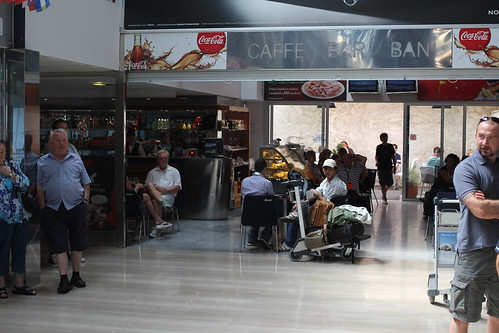
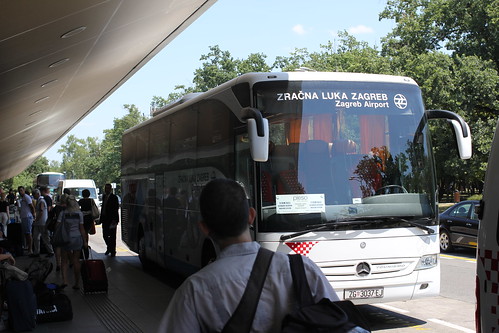
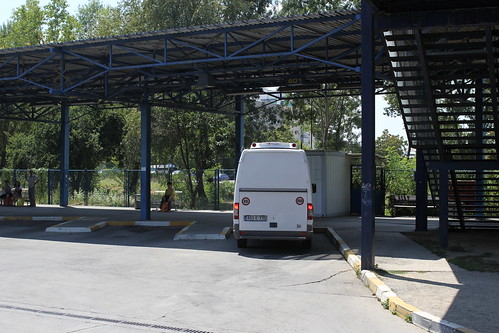
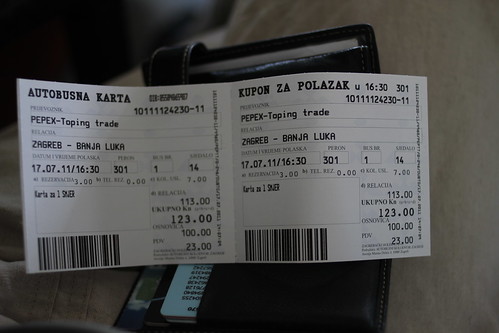
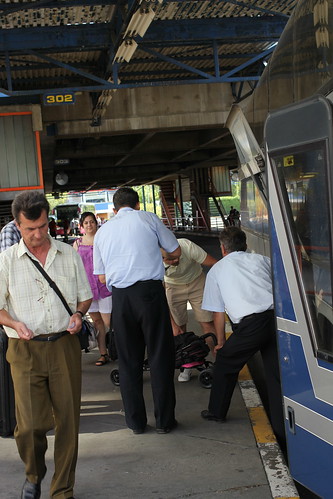
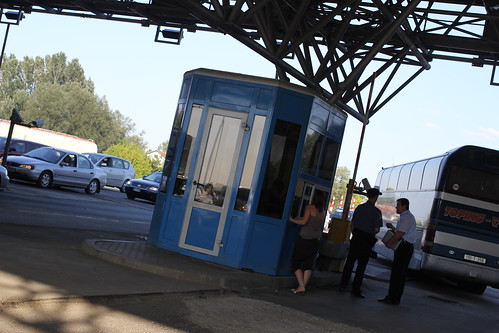
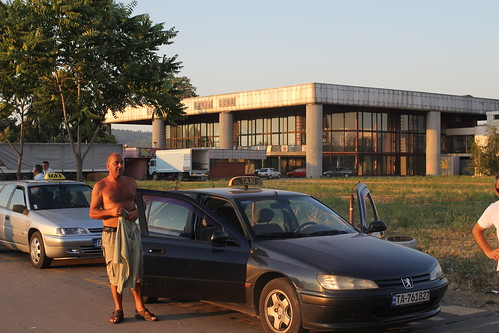
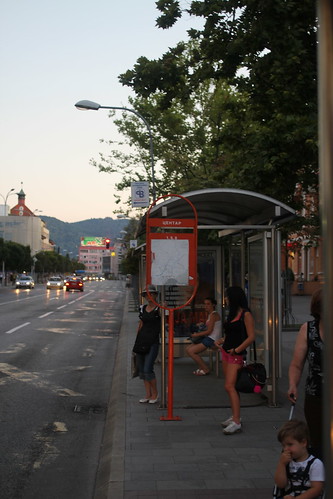
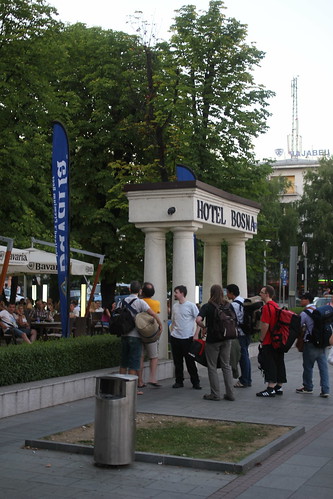
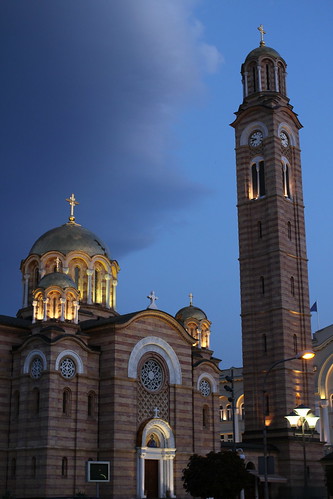
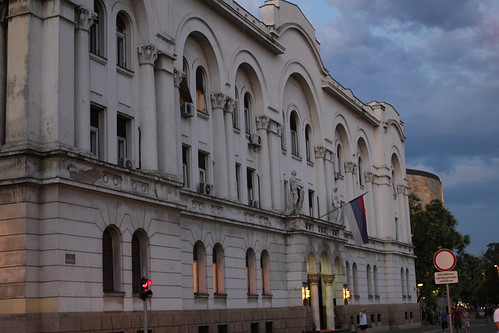
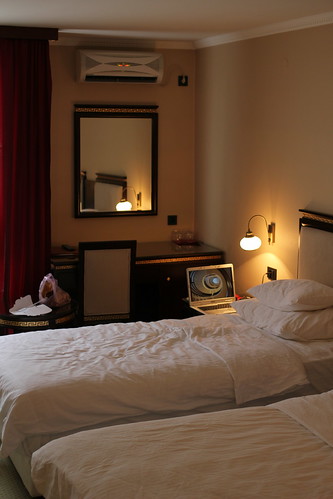
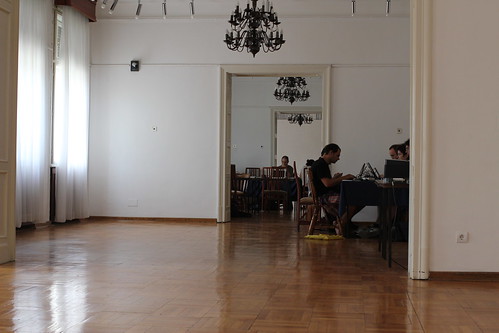
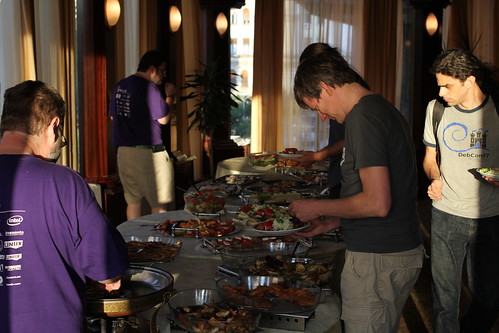
Short version arrival was quite easy, the arrival wiki page is now up-to-date and my photos are uploaded every day to this Flickr set. I had a small problem departing from CDG to Zagreb after scanning my suit twice and complaining that it had too many electronic devices, they had me remove my Nexus S, Nokia N950 and Kindle 3 from the suit pockets and then scanned that all lot again. After that another security guy asked me to open my suitcase and started squishing my Ligo cheese and declaring in a grave voice that it was too soft to be legal . As I kept calm and explained the DebConf cheese party to him, he looked around, put the cheese back in the bag and said ok, ok, off you go . So I still have that softness for the party. I heard an even better anecdote from our next years hosts when they were travelling trough Germany, a border official asked a typical so, what are you here for? question. They answered that they were in transit for an IT conference and gave him the invitation letter. He read the letter, nodded and then said: DebConf, huh? So, who was the author of the Linux kernel? and when after the initial shock they gave the right answer, they were immediately waved trough. Now that s what I call good border security. :) Meeting point - cafe at the Zagreb airport I met up with the guys in the Zagreb airport caf , which was immediately after exiting the secure zone. We waited for dkg to arrive and get his baggage. The passport check too a couple of minutes, but the baggage claim looked to be taking almost a half an hour. The airport bus After that was sorted out, we took out some local money in one of the 5 ATMs around and went to the bus. We were waived to just put our bags into the bus luggage space and get on, the driver went around to sell us tickets just before we drove off. It was one of the most comfortable and well air-conditioned buses I have been on in a long time. We were in the Zagreb bus station in less than half an hour. Non-official bus that tried to lure us Then a funny part started an old man came up to dkg and immediately asked Are you going to Banja Luka? , and when he said yes, the man started dragging us along to the bus station saying that there is a bus to there that will leave in a couple minutes, but we were in luck, so we should follow him right to the bus. Driven by curiosity, we went on. The man dragged us to the far side of the bus terminal bus stops where there was a minibus with Bosnian number plates, but no official designation as a passenger transit bus and no other passengers. They asked a reasonable 120 kuna for the trip, but they looked very shady to me, so we refused. I think that if we agreed and we were lucky enough that they actually did get us to Banja Luka, the price would have risen along the way, for example using the highway tolls as an excuse. Bus ticket to Banja Luka After getting cursed at by the old man and being demanded to buy him a beer for his efforts, we went upstairs to the real bus station where we were told that there were two buses to Banja Luka: one at 15:00 and another at 16:30, but that those two buses arrive in Banja Luka almost at the same time, so we got us tickets for the latter bus and went to a local bar to get some food and drinks. I somehow managed to get sausages in deepfried bread that for some reason cost almost triple of a hamburger and fries that others got, but it sure helped to pass the time and after all those 9 was not a bad price for a good meal. Bus to Banja Luka at Zagreb bus station We were a bit surprised by the bus drivers asking us to pay 1 (or 8 kuna) for bags to be put into bus bag storage, especially as we for several minutes could not quite understand what they want of us as neither of them spoke either English, Russian or German. Border crossing I don t remember when was the last time I crossed a real (i.e. non-Shengen) border in a bus, so getting out of the bus and walking one-by-one to the border official was a new experience. On the other border of two bus drivers collected the passports an then brought them back later, so that was less painful. And by then we were in Bosnia! And of the things that greeted us was a billboard for the casino in Banja Luka Hotel Bosna. :) By the time we got to Banja Luka, dkg had already made friends with an official from Croatian ministry of regional development that sat behind us on the bus and knew English very well (after living in Canada for some time). The bus station in Banja Luka looked almost abandoned like the bus stopped in the field with only a few taxi drivers and a bunch of buildings some distance away showing that this was indeed part of civilization. Banja Luka taxis The taxi drivers would take you to the venue for 8-10 KM 5 or 50-100 kuna (if their meter is broken and you look to be really ignorant of the exchange rates). If you walk on a bit, there is a bus station with an ATM taking Visa cards and a bit further on a bus stop that will take you to the centre of the city for 1.5 KM. The train station looked fully abandoned when we went there, only a news kiosk was working there. The bus driver reacted well to the name Hotel Bosna and wave toward it when we passed by it. Central bus stop - get off here Meeting first Debian peoples at the hotel It is hard to miss, especially the blinking Casino sign or the white pillars with black letters Hotel Bosna on top. You just get off at the bus station Central and walk back a couple hundred meters. Then see all you Debian friends drinking in the cool bar and walk around the corner to the main entrance of the hotel to check in. Church at sunset Main event location Hotel room The rooms are looking really great this is the best DebConf location that I have been to (I was not in Argentina). Soft beds with linens changed daily, nice air conditioning, towels (changed daily, if used), good shower, It is lacking in the speed and power of its free WiFi and in some place there is a clear impression that the hotel was built as a top of the line hotel a couple decades ago, but somehow has fallen into a disrepair since. Or it is simply used much more than expected. IMG_4973 So far I would say that the DebCamp is running full steam two hacklabs have desks, chairs, power and network connection, one of them even has sufficient air conditioning. The network works great for me so far, at least in the venue. The hotel wireless is barely usable to read a blog post, preferably without photos. Dinner buffet The food is being served well and on time. So far for lunch and dinner you walk up to the reception and get a food ticket based on your room number and go to the M level for the food (the M level is between the ground floor, labelled as PR , and first floor) where for breakfast and dinner there is a buffet, but for lunch you sit at a table and they bring you food. Vegetarians should clearly say vegetarian while pointing at themselves to get the special vegetarian option. So far food has been very good, except that that they often run out of popular items, such as fries, in the buffet. You can also ask for beer and other extra drinks with your food, but know that they cost extra up to 2.5KM for a beer, for example.

Aigars Mahinovs: Paris preDebConf11

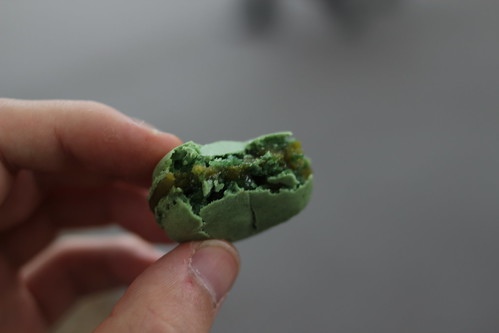
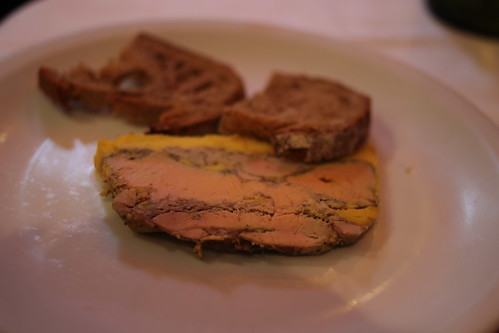
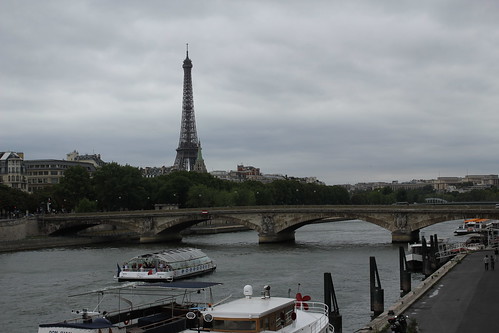
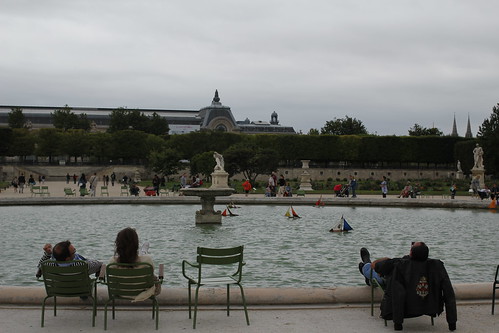
Before arriving to DebConf11, I arranged my flights so that I had a day and a night in Paris as I have not been there before. So after checking out of my work apartment in Tampere, going to work there with all the things from that apartment, then flying back to Riga, going to a midnight screening of the last Potter movie and finally getting back home around 2am, I quickly checked that I have everything needed for the conference and went off to sleep only to wake up at 8am again, pack everything (into a single carry-on bag, after a year of experience travelling by air weekly and watching Up in the Air twice) and be off to the plain to Paris. The CDG airport is quite huge, even compared to something like JFK it feels bigger and more concrete. And yet so dark and lacking interesting features that the only photo I got from it was this IMG_4710 I then used the B line train to get to my hotel(9.1 ), drop my stuff there and another metro ticket (1.7 ) to go to Arc de Triomphe (M tro Charles de Gaulle-Etoile), went up there and walked the length of the Champs-Elys es right up to the Louvre. Then I walked to the river, crossed it to a small island to see the Notre Dame and then went back following the other bank of the river Seine seing both some more normal non-touristy streets of central Paris and also some other magnificent buildings, like Les Invalides and ending up at the Eifel tower. It was a rather easy walk that was only spoiled by some rain in the end so I did not get to take some night photos of the Eiffel tower as I wanted. But the experience still was breathtaking. The scale of the buildings was impressive. The pervasive gold-gilded decorations do expand on the splendour and the same time the full access to all the previously-royal places brings them down to people. The city looks well built and the planning mostly makes sense, especially if you are on foot. Car drivers might have a different opinion about it considering the maze of roads and traffic circles and underpasses I saw in central Paris. It is often said that Riga is a mini-Paris. Mostly, that is said in Riga. But walking the back streets of Paris I can see where that comes from the architecture, the street design, the small cafes and some cobblestone roads and some historical buildings with a few modern building thrown into the mix, and a tower too. Visually Riga does look like Paris a lot, but for the feeling, I still think that Riga feels more like Berlin with its mix of eastern and western Europe. I had one incident when some girl in front of Louvre started to ask me to sign something, gesturing to show that she was mute, it looked like a donation racket, but I did not get to find it out in detail as a swift security guard appeared and started running for the girl, who immediately took off running along with several friends. I guess the guards know them very well. On a more positive note, in one of many confetterie shops I noticed the macaron sweets that my friend advertised loudly some time ago, so I decided to buy and try some. They cost 7 for a box of 6. The taste was very, very sweet. Basically it tastes like froffed up and then frozen sugar made into cookie form with a cream layer between two cookies. IMG_4806 So basically it is like an Oreo cookie, but much, much, much more tender, airy and sweet. The two of the 6 cookies were partly crushed while I tenderly carried them for 5 minutes in their box while searching for a place to sit down and eat them. IMG_4815 After that I also had a proper dinner in a restaurant that was not too near the touristy paths, but still it was a bit lacking. The starter was quite nice I mean it is hard to screw up cutting off a piece of foie gras (basically a piece of liver paste with a layer of extra geese fat), but the main dish was disappointing I ordered a medium rare steak. First of all it came with a side of fries, that in itself was an insult to Paris, baked potatoes would have fit much better with this dish. And despite the main part of the steak being very nicely done to medium rare, the cut was done badly and the edges of the steak had sinew that was too chewy to eat or even cut normally. Other interesting things I liked about Paris:
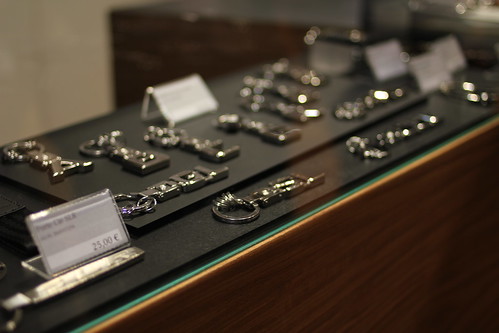
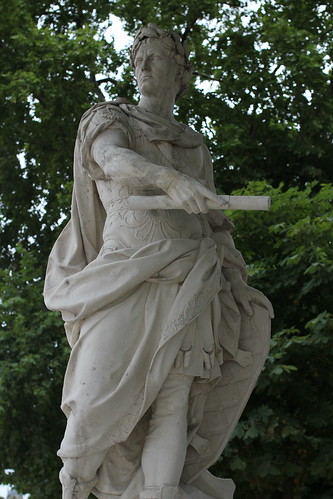
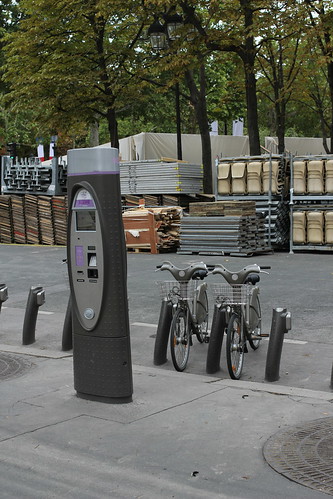
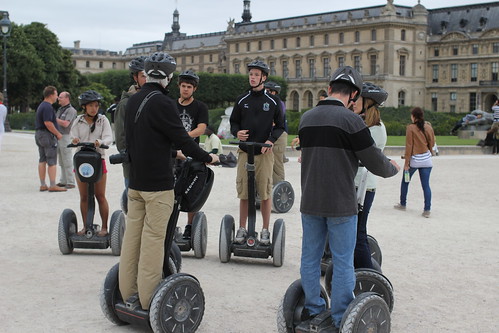
* high street shops of fashion labels and car manufacturers, that showed off the concept cars and also sold small branded accessories, such as Mercedes Benz key chains IMG_4723 * Statues some made of stone, some of iron, some covered in gold, everywhere and made with great quality IMG_4768 * Bicycle rentals, I mostly saw the locals using them IMG_4754 * Segway tourists IMG_4773 * And countless classic postcard shots of very recognizable architecture IMG_4738 The Eiffel tower was immensely impressive. It towers over everything around, especially because there simply is nothing high enough around it. It would not have been so impressive in the middle of New York, for example. The age and openness of the construction makes you really feel the massiveness of this marvel of functional architecture. But in the end Paris also looks like a great city to just kick back and relax in IMG_4770 P.S. I am amazed that when I put a link to a Flickr image (such as http://www.flickr.com/photos/aigarius/5950187165/in/set-72157627230456160 in a separate paragraph in my WordPress article text, something along the way translates them into proper linked images with a reasonable size. Progress is amazing.

19 July 2011

John Goerzen: Trains and Birthdays

This weekend, the boys got what they ve been waiting for: another trip on Amtrak. For the last week or so, Jacob has had a morning ritual. He ll look at the calendar, figure out what today is, figure out when we ll get on the train, and then figure out how many days it will be. As the number gets lower, the excitement gets higher, of course. Friday morning, we woke the boys at 2:30AM to get to the train station. The only Amtrak trains through our area are middle of the night departures. Jacob is normally hard to wake up, but when I tell him that I m waking him up to go to the train station, he wakes up faster than I ve ever seen him before. It takes about 3 seconds for him to process that in his groggy state, and then he sits up straight, throws off the covers, and is instantly ready to go. Both boys were excited even in the station waiting room. Oliver has been on an Amtrak train before, but it s been awhile and he probably doesn t remember it. He constantly talked about it, jabbering as much as his vocabulary lets him. Once we were on the train, Terah and I would have liked to get some more sleep. The boys, on the other hand, were now wide awake, and didn t fall back asleep until about 5:30. That means Terah and I didn t, either. Here s what it usually looks like: When it came time for breakfast, we went to the dining car as usual. Jacob had already been telling us for days what he would eat for breakfast on the train: I always have French toast on the train, dad. And so he did. A few minutes later, I heard the waitress telling other people they were out of French toast, so I was glad I didn t have to disappoint Jacob over that! But it was Oliver that really came alive on this trip. I don t think I ve ever seen him so excited. It was almost constant. He happily talked about anything he could see or touch. But he also listened to other conversations, and would frequently pick out one word from a sentence and try to say it. He does that at home too, but not nearly so often as on the train. Both boys wanted to go exploring a lot my word for taking them for a walk in the train and seeing what they might find. We walked up and down the train several times, Jacob excited over opening the doors between the cars, and Oliver excited just to be there. Oliver s excitement kept him from sleeping well. He did eventually get a short nap, but that wasn t quite enough to avert a couple of tantrums later in the day. The reason for the trip was the 80th birthday party for Terah s grandpa. And it so happened that Oliver s 2nd birthday would be over the same time. So, Saturday morning, we all went for breakfast at Das Dutchman Essenhaus, one of the favorite local restaurants in northern Indiana. After that, it was over to a relative s place for some birthday festivities. The children got mini cakes to decorate as rail cars. There was frosting and all sorts of toppings. Great fun was had by all, and it was wise that this activity took place in a garage rather than indoors. Yes, that is a marshmallow stuck to Jacob s nose. Then in the evening, it was off to another relative s place for some more family time. Jacob had a great time all day, and was in high spirits. He asked me to sit by him at dinner, and started one of the longest conversations I ve had with him in some time. We just talked about the things that happened in the day, but it was nice when I told him, I like sitting by you, Jacob, and he said, Dad, me too! The big highlight for the day happened in the evening. We were gathered around a fire with a guitar to do some singing. Jacob was happily perched in his lawn chair, but got very excited when he saw some lightweight airplanes flying overhead. These kept flying at some distance, and he kept pointing them out to us. But that wasn t even the most exciting part. That came when the fireflies came out. Jacob ran around, catching them in his hands, and excitedly showing them to whatever person happened to be closest. He was laughing with joy for such a long time. At one point, someone asked him if the bugs were tickling his hands. He said, evidentally just realizing it, Oh yes, they ARE tickling my hands! He was one very happy boy. Sunday I had to leave to get back home, while Terah and the boys will return a couple of days later. Although I do sort of look forward to a train trip that I can relax without having to manage two young boys, I do miss them already and will be happy to have everyone back home in a few days. (This post written during the trip and posted a week later after arriving home)

18 July 2011

Raphaël Hertzog: Deciphering one of dpkg s weirdest errors: unable to open /path/to/foo.dpkg-new

We already studied one weird error of dpkg, let s do another one:
Unpacking replacement libexo-common ...
dpkg: error processing /var/cache/apt/archives/libexo-common_0.6.1-1_all.deb (--unpack):
 unable to open '/usr/share/doc/exo/html/C/images/exo-preferred-applications-internet.png.dpkg-new': No such file or directory
Rather difficult to understand on the first look right? Let s see in detail what s usually happening when you get this error. The first hint comes from the file extension .dpkg-new . This extension is used by dpkg to unpack the updated files near the old files. When everything has been unpacked, they are renamed over the old files. The failure happens precisely when dpkg tries to rename the file (in fact when it tries to fsync() it before the rename) but why does it fail? Usually because there are unexpected symlinks (or bind mounts) involved that resulted in two different files being installed in the same directory. For example consider package that provides /dir1/a-file and /dir2/a-file. Now imagine that on the target system, /dir1 is a real directory but /dir2 is a symbolic link that points to /dir1. When dpkg processes /dir1/a-file.dpkg-new everything is fine, but when it tries to process /dir2/a-file.dpkg-new it will fail because that file is the same than /dir1/a-file.dpkg-new which has already been renamed. Diagnosing further the problem requires to understand why there s a symlink instead of a real directory. It might be two packages that were badly coordinated, or a problem in the package itself because it lacks some code that drops the symlink in the preinst (so that dpkg installs the real directory instead of keeping the symlink). There might be variations in the way two files end up sharing the same directory, but this simple example should have clarified the nature of the underlying problem.
Subscribe to this blog by RSS, by email or on Facebook.

No comment Liked this article? Click here. My blog is Flattr-enabled.

17 July 2011

Daniel Baumann: Debian Live Autobuilds

Right now I am sitting in the train to the airport for going to DebCamp/DebConf 11 in Banja Luka, Bosnia and Herzegovina. During DebCamp amongst other things I am going to work on finishing up the last bits on getting daily/weekly Debian Live autobuilds back for wheezy. This spring Jimmy Kaplowitz offered to help with the task of overseeing the debian-live autobuilder and to coordinate necessary bits with cdimage.debian.org. Having them on cdimage.d.o became recently possible as Steve McIntyre offered to make a VM available for us (live-build requires root privileges, and naturally, you would not want to let that run on the host system itself, that is why in the past it was not possible to build them on cdimage.d.o). The remaining issues are, and this is why the autobuilds are not yet back since spring, that live-build still needs two things: a couple of tweeks for wheezy, and the autobuild stuff need to be properly integrated into live-build itself. That will happen as an additional binary package live-build-cron with a bunch of debconf questions, so that everyone and his dog can setup a debian-live autobuild server on his own machine. The initial upload (which will not yet work, do not bother to try) was uploaded to experimental this week and cleared the new queue, now looking forward to get this all finished up and resulting in a live-build uploaded to unstable by the end of the week. In the second week, Jimmy arrives, I will be introducing him to live-build and the various little things to watch for and hopefully manage to persuade him to take over the autobuilds maintenance. Having all images that are based on packages solely from the stable/testing/unstable archives moved to cdimage.d.o is freeing up ressources on live.debian.net which did the job in the past since etch. Ben Armstrong volunteered to help with overseeing the live.d.n instance of live-build-cron that will build more then once per day images for si, with the only difference that they will not use live-* from the archive but the latest snapshots from our git snapshots repository. This will be a big help for the development as eventually we will be autotesting these images for various things. Last but not least, thanks to both Jimmy and Ben for all your kindness, patience and help with this during the last couple of months. We have interesting times ahead.

Thorsten Glaser: mksh R40b; joe 3.1jupp16 and 2.8jupp2 released

mksh R40b (nowadays with filled in user s caveats (for R40, too!) and packager s upgrade hints) has just been released. This is a should-have upgrade, fixing a number of admittedly some obscure bugs, changing things begun in R40, improving upon others. Thanks to the PLD Linux guys for spotting all these errors; thanks to them and phpnet.org both for adopting mksh so well. I have also fixed a bug in nroff(1) which will lead to an even nicer looking HTML manpage mksh(1) (after the next rebuild and upload of a MirBSD snapshot scheduled RSN). jupp 3.1.16 took on the task of merging Debian joe changes (aiming at an upload). I also split the jupprc file into three versions (2.8 generic/DOS, 3.1+jupp and 3.7/Unix) because of the differences in the baseline executables making rc files partially mutually incompatible (think Insert key), annoyingly warning (think syntax, hmsg), or less usable (joe s new menu system). jupp 2.8.2 is a companion to jupp 3.1.16 mostly because of the new help window character map Binaries for jupp should be updated RSN too. Considering Banja Luka is arriving quickly, the r in RSN should be taken with a few grains of salt. I ve also scheduled working on the pcc Debian package for the next future; updating lynx and maybe others like OpenSSH in MirBSD is also due; cvs(1) will receive more of my time, but before the next Upload I d like to fix LP#12230 once verified. Builds for Debian/m68k are also still running. I note I did in fact not manage to make a new base image, yet (but 2.6.39 kernels miss a patch, anyway, so waiting for 3.0 is ok). It s still using gcc-4.4 because nobody tests gcc-4.6 and gcj-4.6 FTBFS due to SIGSEGV, but that s ok in my books. rsyslog is broken but sysklogd works. The #ksh Freenode page finally got a well-deserved link to Planet Commandline. Throw more my way! Acronyms and translations, too. (Got Norwegian and Rumanian covered in the meantime. No idea whether any RTL languages will work in that beast. But I m young and need the money) Since I m writing a wlog entry anyway let me thank Gunnar for a nice summary on the current Free Culture discussion; my comments on Nina s site seem to be eaten, but let me support it fully, although, of course, I normally use a copycenter style licence, which is specifically written for general works of authorship under copyright law, not limited to software. I did in fact have that in mind. Maybe some people will like it (it s less than one Kibibyte long) either generally or just for their everyday random musings (they can then keep CC-BY-SA for the big works if they so desire). Wouter, grass background makes green headlines illegible. I ve never liked, and never installed manually, cups either. (Benny tells me that Apple s new version refuses to talk with a non-Apple cups, kinda defeating the whole idea I think.) Port 9100 is JetDirect (probably with an HP in front and some subset of trailing) and just nice. (Being able to talk ESC/P with your printer like print '\033K\x07\0\x3E\x81\x99\xA5\xA5\x81\x3E' >/dev/lpa too rocks though, IMHO. Yes, mine can, and I still can. /dev/lpa is BSD.)

Kai, thanks for your vimrc lines:

	:highlight TrailWhitespace ctermbg=red guibg=red
	:match TrailWhitespace /\s\+$\  \+\ze\t/
 

Automatic removal is harmful, though I just fell into the trap since jupprc contains needed whitespace at EOL but manual removal (bound to ^K] in jupp) rocks. And I like that your solution uses such strong a colour vim users are the single most represented offender group for actually leaving the redundant whitespace at EOL there, and it should hurt their eyes. (Sadly there is some vehement disagreement preventing them from inclusion in grml-etc-core but that s why I re-post them here.) Ah, and jupp can of course display whitespace visibly (although it uses / , replacing the arrow with if no UTF-8, not ), accessible with ^Ov. Steve, want to put up a checklist for sites? We can crowdsource the testing to maybe get some interesting results Some other people would get more comments if they were idling in IRC (Freenode) or allow comments on their blog, specifically without too high an entrance barrier OpenID is ok, but many other things, and ECMAscript, are not; but I can t really say that loud because our wlog is static HTML compiled from a flat plaintext data source so it doesn t allow such either. I often forget what I wanted to add if I can t get it out quickly enough (especially at work). Sowwy Me like the cat picture postings (Amayita, Tiago, Gracias!).

16 July 2011

Matthew Palmer: MySQL replication and crash recovery

The question was recently asked, How do I perform crash recovery on a MySQL master/slave database cluster? Because replication is async, a transaction that has been committed to the master may not be able to leave the master before the crash happens. The short answer is, you don t. Asynchronous replication, by it s very nature, is prone to these sorts of issues, and MySQL doesn t make life easier in general by using query replay. Some of the issues aren t massive: for instance, if a slave crashes, the master will keep replication logs for the slave until it comes back up (as long as the slave comes back before the master decides some of the replogs are too old and starts deleting them, of course), so as long as you can live without a master for a while, you can recover and continue along your merry way. Promoting a slave to be a master, on the other hand, is a situation frought with peril. Here, you ve just got to hope hope that your chosen slave is consistent with the master s state at death (because it s async, you have no guarantees about that), and that all the other slaves have the same ideas about what counts as the current state of the data. If your newly-promoted slave managed to apply an update that another slave didn t, that slave will be out of sync with reality (until such time as the now-dead master comes back and replays all those queries hahahaha). To even guarantee that any slaves have a consistent view of the data as compared to the new master, you ve got to rereplicate everything from the new master, because MySQL s where are you up to? counter is master-specific. I ve heard people who have to deal with this sort of thing these days say that the Maatkit tools are handy for dealing with various issues of this type (monitoring, repairing the database when it gets inconsistent). However, I prefer to keep right the hell away from MySQL replication altogether, after a year of having to gently coax an insane MySQL tree replication setup to do the right thing for any extended period, and watching a group of DBAs at Engine Yard go slowly insane. My preferred alternatives are: Never discount the value of the Jaws approach to scaling ( we re gonna need a bigger boat^Wmachine ) hardware is so ridiculously cheap, relative to the clueful sysadmin time needed to make (and keep) MySQL replication running, that you really need to be at the huge end of town (where other scaling issues are going to bite you in the arse first) before spending too much time on your database is worth the investment. Even then, you ll get more bang for your buck from: than you ever will from the constant, mind-numbing grind that is keeping MySQL replication going.
  1. The term comes from a time when a colleague near-screamed This slave cluster keeps fucking me! at a particularly intransigent set of MySQL slaves.

14 July 2011

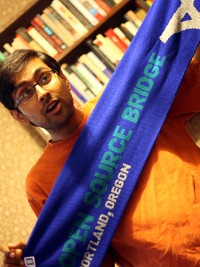
Asheesh Laroia: Open Source Bridge 2011: they love me (and gave me a scarf)!

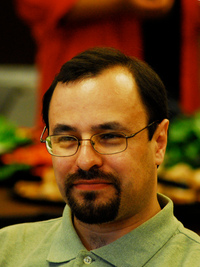
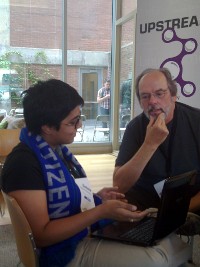
On Friday, June 24, the last day of Open Source Bridge, I won a scarf! It says, "Open Source Citizen." I wasn't the only one. The attendees nominated people who "made an extra effort to help others and share their knowledge," and the conference committee chose the three people they felt exemplified this. The winners were Sumana Harihareswara, Igal Koshevoy, and me. In case you don't know Sumana, she's the new Wikimedia Volunteer Development Coordinator, a friend, and a commenter here at Asheeshworld. In the photo of her and her new scarf, you can also see Ward Cunningham. I suggest reading her wrap-up about the conference, and checking out the notes from her talk. I haven't met Igal, but I've learned he's a fixture of the Portland tech scene. He's user number one on opensourcebridge.org and one of the original contributors to calagator, the most important event calendar in the Portland tech world. That's just a brief summary; follow him on Twitter to keep in touch. I started the conference a little shy, not wanting to introduce myself to people, so I hung out with Sumana. She talked to everyone she could find, and there I was standing next to her. On the first day, it was only because of Sumana's outgoingness that people knew who I was. On the second and third days, I was involved in two sessions: a panel on open source communities and a talk about the OpenHatch training missions. I was extremely honored to be chosen. There were so many other spectacular people I met for the first time, like Valerie Aurora, Jacinta Richardson, Brian Aker, and Alex Linsker. These are all people with three crucial traits: they're extremely knowledgeable, friendly, and opinionated. I'm glad I had a chance to attend and meet them! Photo credits: Thanks to Noah Swartz for the photo of me. Sumana's photo comes from her post to wikitech-l. Igal's comes from his Open Source Bridge user profile.

13 July 2011

Wouter Verhelst: 'grass' theme

I got tired of my previous website theme, so I created a new one. And thanks to the miracles of CSS, I didn't have to throw out the old there's still a 'choose your layout' option in the menu. Playing with CSS is fun, and this was an ideal opportunity to learn the new features of CSS3. I've used some of those, and did so in such a way that the theme should still be usable under a browser that doesn't speak CSS3 yet (I hope, though I didn't test). I'm calling it the 'grass' theme if you go check it out, you'll see why and it's now the default. While I was at it, I found out about this little features of CSS that I didn't know about earlier, but could be useful none the less: Using background: inherit is not the same as background: transparent. The latter will render all elements on the site (including floating elements) on top of eachother, while the former will inherit the background of parent elements, but will 'hide' elements that have a lower z-index value on the same location. This is useful if you have position:fixed or position: absolute elements that might overlap with floating elements on small screens. I'm sure this is old hat to anyone who's done some serious web development (me, serious web development? hah!), but it's news to me. One thing I haven't found is whether it's possible to use an alpha layer using CSS3. I looked for quite a while and didn't find it, so I suppose the answer is that it can't be done, and you'll have to use a PNG file with alpha values, or some such. Oh well. In other news, . But I guess that's not a surprise to anyone. Leaving by car, in three days. That might be a surprise. Still have to pack a shitload of things, and also find some things. No surprise there nothing better for me to do something than an uncomfortably close deadline. Oh well.

Clint Adams: Savannah Doldrums

About a month ago, I submitted a project request to Savannah. It made sense at the time to host it there for a variety of reasons, but now I am still waiting for project approval. I am told that the reason my very exciting project is sitting there collecting moss is that there is a lack of reviewers. So if you want to help Savannah out, you should write to savannah-hackers-public@gnu.org.

11 July 2011

Michael Prokop: Creating 32bit Debian packages in 64bit environments

i386 systems are dying off and therefore building 32bit Debian packages in 64bit environments is important if you still need packages for i386. For some recent projects I had to set up 64bit-only environments with the need to provide 32bit packages for i386 as well as according i386 Linux kernel packages. 1) Common Debian packages Just prepend the linux32 command to the build commands and use the -a386 option of dpkg-buildpackage(1). So use linux32 dpkg-buildpackage -ai386 , linux32 git-buildpackage -ai386 , linux32 debuild -ai386 , or whatever build tool you prefer to work with. I personally like using git-buildpackage -S together with cowbuilder. When using cowbuilder it s easy to get i386 Debian packages:
# create initial cow base directory, needs to be executed just once:
cowbuilder --create --basepath /var/cache/pbuilder/wheezy32.cow \
   --architecture i386 --distribution wheezy --mirror http://ftp.de.debian.org/debian
# the "debbuildopts -b" says I want a binary-only build, see dpkg-buildpackage(1):
linux32 cowbuilder --build --basepath /var/cache/pbuilder/wheezy32.cow \
   ~/foobar_0.42.dsc --debbuildopts "-b"
2) Debian Kernel packages If you re building your own kernel images you might be aware of setting ARCH for the common make targets, like:
ARCH=i386 make oldconfig
To build a linux-image Debian package you can use upstream s deb-pkg target, like:
ARCH=i386 make deb-pkg
This should provide you according linux-headers, linux-firmware-image, linux-libc-dev and linux-image i386 Debian packages. But if you need the according source and doc packages as well you might prefer make-kpkg of kernel-package instead, using options like:
DEB_HOST_ARCH=i386 setarch i386 make-kpkg --revision "$KERNELVERSION" \
  --cross-compile - --arch=i386 --us --uc --initrd \
  --rootcmd fakeroot kernel-image kernel-headers kernel-doc kernel-source
3) Debian linux-2.6 kernel packages If you re interested in building Debian kernel images the same way as the Debian kernel team does (AKA linux-2.6) make sure to check out the kernel-handbook. After installing essential software packages I had to set up some symlinks for building:
apt-get install build-essential fakeroot devscripts fakeroot
apt-get build-dep linux-2.6
ln -s /usr/bin/gcc-4.4 /usr/bin/i486-linux-gnu-gcc-4.4
ln -s /usr/bin/ld /usr/bin/i486-linux-gnu-ld
ln -s /usr/bin/ar /usr/bin/i486-linux-gnu-ar
ln -s /usr/bin/objcopy /usr/bin/i486-linux-gnu-objcopy
ln -s /usr/bin/nm /usr/bin/i486-linux-gnu-nm
ln -s /usr/bin/objdump /usr/bin/i486-linux-gnu-objdump
ln -s /usr/bin/strip /usr/bin/i486-linux-gnu-strip
Then executing:
apt-get source linux-2.6
cd linux-2.6*
debuild -ai386 -us -uc
provided the according Debian packages (linux-doc, linux-headers, linux-image, linux-libc-dev, linux-manual, linux-patch-debian, linux-source, linux-support and linux-tools). 4) Out-of-tree kernel module packages If you want to build external modules which are available as $MODULENAME-source in Debian (e.g. tp-smapi-source) using module-assistant then use the DEB_HOST_ARCH environment variable, like:
DEB_HOST_ARCH=i386 m-a -v --text-mode -k /home/mika/linux-$KERNELVERSION -l $KERNELVERSION build tp-smapi
If the external module is not available for use with module-assistant then compile the module running:
make -C /lib/modules/$KERNELVERSION/build M=$(pwd)
whereas /lib/modules/$KERNELVERSION/build is pointing to the build directory of your 32bit kernel.

Thorsten Glaser: [Update] Big Brother , or: Help wanted arguments against monitoring employees

English version of this posting lese stattdessen die deutsche Version The head system administrator of a henceforth unnamed company I happen to be employed at wants to force us to use the shell s persistent history feature disabled by default in mksh as is sensible, for privacy reasons on all systems, so he can retrace what we do (of course, his wording was more like, so he can reconstruct how I fixed a problem the last time it occurred yeah, sure). Now I ve escalated this to the boss, since this just cannot happen, what ll be next, video monitoring our offices or what and the boss said he sees my concerns and would like a meeting to get an agreement between all parties involved. Most sysadmin coworkers actually don t even think about this, they are sheeple, really; but my project manager (for when I m not a sysadmin but a programmer) and the leaderess of our QA department agree with me, luckily. Now I m in dire need of arguments, especially German-Legalese, to fight this total surveillance of employees, mostly targetted at these who use the command line almost exclusively, which I m a prime example of. Please mail me at my address, which is not junk@mirbsd.org but with tg instead of the waste part here to catch address grabbers (sending mail to that address yields a 24-hour total blacklist of your IPv4 address I ve yet to get enough spam via IPv6 to say filtering it is worth the cost). Thanks in advance!


Update 2011-07-12: We talked, and it was agreed to not force a shell history; instead I will now put problem solutions into smallish scripts and commit them into the sysadmin SCM. It was not solved using legal arguments, as many people commented would have been difficult; instead, they acknowledged that I was concerned with this, and we searched for a different solution to the head sysadmin s original concerns (apparently, to figure out how to fix things without reinventing the fix every time, and to find out what was changed on a server in case it breaks).

Next.

Previous.