Search Results: "zed"

22 March 2012

Richard Hartmann: Svalbard

Svalbard The things you find when cleaning out a disk; preparing for re-installation of your laptop on a larger disk once the laptop comes back from repair... I thought I had posted this in early January, but apparently not. As it would be a shame to just throw this away, here goes: I am sitting in the Oslo airport, waiting for boarding back home to start. Seeing the sun after a week of darkness still feels strange. Inital trouble It's been a very interesting week, starting with our trip to Oslo in the other direction. We spent New Year's Eve in Oslo, timing our forced overnight stay before reaching Svalbard to coincide with something interesting. The close timing of our travel meant that there was exactly one flight to Oslo we could take. Never having heard of Air Baltic before and finding out that they are a discount airline, my gut feeling told me to be be wary. I refuse to fly with those airlines on principle, not wanting to support their business model while hurting airlines with decent treatment of customers. Unfortunately, I was forced to book with them in this case. As it turns out, my gut was right. More on that below. Our plane was late in landing and my luggage was lost. As it was New Year's Eve, the staff at Oslo airport understandably wanted to be home, not at work. Still, getting them to file a report was tedious and finding out days later that the report was incomplete was, well, not good. The express train from the airport to Oslo central station had closed early without any advance notice or local signs, presumably because of NYE. The gates were simply closed and that's that. We figured out how the bus system worked, got our tickets from a vending machine, saw the one bus to central station drive away, and proceeded to wait in the outside waiting area; at least we had a front spot in the queue. While we don't get cold easily, it was funny to see Norwegians in thin clothes stand around in the biting wind, apparently being comfortable. A young mother with a baby, who didn't anticipate being forced to wait outside at -15C, as opposed to just sitting down in a train, had no warm clothes for her son; something that was fixed by wrapping him in spare clothes from Ilona's luggage. After waiting for about thirty minutes for the next bus to appear, it parked twenty or thirty meters away from the designated parking spot. The rough queue disintegrated and if not for Ilona's leaving me with luggage and backpacks and storming off to fight the masses, said mother with baby and ourselves would have waited for another thirty minutes. More than hundred people were left stranded at the airport to celebrate there or on the bus. Meh. We hurried, by taxi, from central station to hotel to harbour and arrived about five minutes to twelve. NYE itself was nice. We stood on top of the opera house and watched a rather impressive show of fireworks through the thickening mists. Norwegian fireworks pack lot more punch than German ones; you actually feel your clothes shake when they go off. Getting to Longyearbyen The flight from Troms to Longyearbyen had free in-flight Wi-Fi and flying over the edge of satellite coverage demonstrated how far we were from everywhere else rather impressively. Arriving at Longyearbyen, I fixed the lost luggage claim with the help of an extremely nice woman working at the airport. She confirmed that Air Baltic is legally required to reimburse me after an arcane system based on a virtual IMF currency to the tune of about 1.500. That may sound like a lot, but seeing as I had most of my scuba gear with me, that's not even half of what my luggage was worth. I was forced to get by New Years with what I had on my body and went shopping the next day when I could buy at least a few things. I got by with spending about 180 by going for non-fitting bargain bin clothes, wanting to reduce impact on Air Baltic. Shortly after that, my luggage arrived, unannounced. Air Baltic refused to reimburse me even though they are legally required to, again the airport staff confirmed this. But unless I sue in the country of destination, Norway, I won't see any money. Long story short: Avoid Air Baltic if possible. They will break the law to cheat you out of money when they have a reasonable expectation of getting away with it. Update: Yep, seems they got away with it unless I take legal measures. You have been warned. Longyearbyen itself was very nice. We started off with a short, guided taxi tour around the city, seeing literally everything of it as there's not a lot of Longyearbyen to start with. Dogsledding Next day, as noted earlier, we went shopping and spent the "evening" with dogsledding which turned out to be tons of fun. We helped with harnessing the dogs which is somewhat cumbersome as the dogs are so eager to burn off their energy that they want to run all over the place, not being put into a harness and snapped onto the pull-line. Never having been dogsledding before I was a bit wary, but riding over not too rough terrain is almost trivial once you get the hang of it; listen to what the musher in front of you yells and emulate the same shouts with your own dogs. If the dogs become too fast, step onto the brake pad which simply drives spikes into the snow. If the dogs slow down while going uphill, skate with one foot to help them. That's it for speed. As the dogs are following the musher's sled anyway, steering the dogs was not a concern. Fun fact: The musher used a laser pointer to steer his dogs; simple, efficient, and presumably fun. We learned, by demonstration, that sledding dogs can eat snow, take a leak, and take a dump while running at full speed and pretty much all at the same time. The dogs are left either in cages or on long chains far away from the city as they tend to bark and howl a lot. We were surprised to learn that, even when there are seals left to hang dry as dog food nearby, there are no problems with bear attacks. Apparently even the extremely aggressive and hungry one year old males will not go near dogs. Still, while out in the ice and snow, our guide carefully flooded all crevices and cliff bases to root out female bears with young ones early. They hide their children from the wind and they will attack, dogs and all, if we get too close. That's why our musher carried rifle in his sled and flare gun on his body. Snowmobile The next "morning", we drove around by snowmobile. This turned out to be extremely boring as it was a curated trip with over half a dozen snowmobiles in our group; a stark contrast to our two-sled tour the day before. The last time I went snowmobiling, we raced each other up and down a two-star black (i.e. steep, bumpy, and curvy) ski slope, jumping several meters when racing over larger bumps and crossing streets, so riding single file at 30 km/h was... anticlimatic. Again, the guide had rifle and flare gun with him. We spent the afternoon and evening walking around the city. Ice bears, part I As the ice caves and the glacier were still closed, we decided to have another walk around the city. Having planned make it a quick tour, we lost track of time due to lack of sun and ended up walking around for seven hours. A note about that trip.. If you are alone with your wife, unarmed, climbing up a very steep and slippery mountainside over a sheet of ice with deep snow underneath and loose rocks in between, and then start shining around with your flashlight under the stilts of an abandoned mine that looks like in a horror movie, the correct answer to "What are you doing?" is never ever "Looking for ice bears". Even if it's the truth, this is not an acceptable answer. I crawled up the last part on all fours, camera and tripod in hand while Ilona stayed about two dozen meters below the mines' entrance, refusing to go another step towards the mine. As soon I made it up the creaky and shaky, for a lack of a better word, let's call it ladder, she forced me to come down again. Bleh, but I guess I deserved that. Armed photographer Next day, we got final confirmation that we would not be allowed to rent snowmobiles to explore the hinterland on our own and that other for some, and I quote, "crazy Russians", no one would even attempt to cross over to Barentsburg. Thus, we ended up renting a car for the ~20 kilometers of total road length. That turned out to be a great idea as it allowed us to get away from the light and take some very nice long exposures. It was then that I got a rental rifle, as well. There is a law against leaving the town unarmed and I was not about to test my luck too much. Turns out that, as part of Germany's WWII reparations, Norway received our all hand guns and as they still function perfectly when dirty and in cold climate which makes them still popular in Svalbard, today. The Karabiner 98 Kurz which I received is built incredibly well. It's somewhat scary inasmuch every detail is designed to make this weapon ready to fire. If you hurry or are inexperienced, you will end up with an unlocked and loaded rifle after putting in the bolt. Putting the safety in and not chambering a bullet takes conscious effort and knowledge of the weapon. This is in stark contrast to other weapons I had the chance to dissect, which all defaulted to being safe. Even other military weapons such as the AK74 and the M4A1 are inherently more secure, designed to be locked and safe. The Mauser K98... not so much. As an aside, they didn't bother to remove the Reichsadler and Swastika from the rifle, contending themselves with striking out the German registration number and stamping the rifle with a Norwegian one. I guess Norwegians don't really "care" about these signs as much as we Germans do. In a way, that's a good thing I guess, at least as long as it's an indication of indifference towards the sign, not one of forgetting or ignoring the underlying issues. Still, I was very glad to have rented the rifle. While Ilona tended to stay in the running car with heat and lights on, I went out and away from the car. Even when standing near a street, a medium snow storm will make you appreciate the four powerful arguments against being eaten by a random bear which are at the ready over your shoulder. We even went to the shooting range so I could get some practice. The procedure is very trusting, as is anything in Longyearbyen. After accessing the interior of one of the houses in a particular way which I won't specify here, you simply switch on the floodlights, put up the red flag, position a target and write your name into the guest book. Once you're done shooting, toss a few coins into the bowl next to the guest book, remove the targets and flag, turn off the lights, close the door and that's that. Unfortunately, the way in was under a few meters of snow so I couldn't get in any practice shots. Ice bears, part II Later, as I was standing on a wind-polished slate of ice taking pictures of the Seed Vault (located here), I heard an ice bear roar behind (i.e. to the north of) me. I consciously remember hearing the bear, I consciously remember facing the other way around, half-crouched, rifle raised in the direction of the roar. I also consciously remember smacking the safety off and chambering a bullet after having regained control of my body. I do not remember spinning around on a wind-polished slate of ice, so treacherous I hand to balance with my arms and didn't even lift my feet when walking over it, without losing balance or footing, nor do I remember crouching and raising the gun. Evolution really is amazing; no matter what primal chord that roar struck, it certainly saved a ton of people over the years. In my case, thankfully, there was no bear to be seen down the slope. There may be no sun or anything, but the snow reflects the starlight so you tend to see surprisingly far and as I was on on the mountainside and the roar came from down from the coast, and as I had my rifle, I decided to finish the photo session while keeping the slope in close view. In hindsight, I am still glad I decided to do that as the shots came out rather nice. Next day, we drove out to Mine 12, the farthest you can away from Longyearbyen. The dump truck transporting coal alternated between driving a full load of coal back to the city and being its own snowplow. One quick trip to get coal, one slow and empty trip to plow away snow, rinse, repeat. If not for that, our 4WD would never have made it all the way up to the mine. Neither snow storms in North America nor around the Alps prepared me for what people on Longyearbyen consider normal wind in their backyard. This is where the word wind-swept was invented. The main reason that Svalbard is inhabited at all, other than the Gulf Stream, is coal. We have been told that the coal up there is of extremely high quality and while I can't say much about that, I can say that it's hard as stone. This is nice as it does not smear when you get coal all over yourself. Just shake out your jacket and pants and you are good as new. On our way back, we met two locals who had just prepared the glacier and ice caves for tourists. Had I known that in advance, I would have tried to go with them to take pictures completely away from all artificial light. Oh well, can't have everything. Speaking of not being able to have everything, the outdoor hot tub in our hotel which integrated ice bar and BBQ grill was still under several meters of snow so we couldn't use that, either. Finally, the few divers who are in Longyearbyen didn't have time to take me onto a trip while I was there. As I already missed my opportunity to dive the Arctic circle when the one diver on Gr msey happened to be on the mainland and barely missing it by diving Str tan instead, this was kind of a bummer. On the plus side, this has given me a goal to pursue and achieve. Random notes For the rest of my notes, I will resort to a largely unsorted list of bullet points as there's just too much to talk about in prose. All in all, it was well worth it. PS: If you know anyone working with Google Maps, ask them to consider improving their coverage of the Arctic. This is a real pity. As is the rest of the Arctic and the fact that Google Earth cheats you out of the North and South Pole by stretching adjacent tiles into and over them.

17 March 2012

Christian Perrier: 2012 update 15 for Debian Installer localization

Status for D-I level 1 (core D-I files): Status for D-I level 2 (packages that have localized material that may appear during default installs, such as iso-codes, tasksel, etc.): Status for D-I level 3 (packages that have localized material that may appear during non-default installs, such as win32-loader) Full 100% completeness (hall of fame) for 17 languages: Belarusian, Bulgarian, Catalan, Czech, German, French, Indonesian, Italian, Japanese, Kazakh, Dutch, Polish, Portuguese, Russian, Slovak, Swedish, Turkish

16 March 2012

Pablo Lorenzzoni: Windows Laptop with Debian Recovery Partition

I was playing with my new Laptop (a Philco 14E-P686WP) that comes with (argh!) Windows 7. I was gathering information in order to avoid surprises with regards to drivers and hardware-compatibility so I can proceed with the Debian installation By doing that with a new machine, I, usually, peek and poke everywhere, including the Recovery System. I was shocked to find out that this (argh) Windows 7 laptop has a bootable recovery partition loaded with a customized Debian just to run Partclone which installs a Windows factory image. I was about to take some pictures of the process, but I managed to find some in a forum post. Debian is being used to re-install (argh) Windows How sad is that! ;-)

15 March 2012

Erich Schubert: ELKI applying for GSoC 2012

I've submitted an organization application to the Google Summer of Code 2012 for ELKI - an open source data mining framework I'm working on.
ELKI
I hope I can get spots for 1-2 students to help implementing additional state of the art methods, to allow for even more broad comparisons. Acceptance notification will be tomorrow. I have no idea how high out chances are of getting accepted. We're open source, as part of the university we have a proven record of educating students (in fact, around two dozen have by now contributed to ELKI, although not all of this has been "released" yet). We're rather small compared to e.g. Gnome, Debian or Apache and just a few years old. But I believe we are trying to fill an important gap in the research and open source interaction: way too many algorithms get published in science, but are never made available as source code to test and compare. This is where we try to step in: make many largely overlooked methods available. Of course we also have k-means (who hasn't?), but there is much more than just k-means! And there are plenty of methods often cited in scientific literature, yet nobody seems to have a working implementation of them ...

While most people equal data mining to prediction and classification (both of which are actually more machine learning topics), ELKI is strong on cluster analysis and outlier detection as well as index structures. Plus, it is much more flexible than other frameworks. For example, we allow almost arbitrary combinations of algorithms and distance functions. So with our tool, you can easily test your own distance function by plugging it into various algorithms. Otherwise we could just have used Weka.
The other reason why we did not extend Weka (or used R) is that we actually wanted to not just implement some algorithms, but actually be able to study the effects of index structures on the algorithms. And in my opinion, this is actually the key difference between true data mining and ML, AI or "statistics". In ML and statistics, the key objective is the result quality. Which is often rather easy to measure, too. For "full" data mining, one also needs to consider all the issues of actually managing the data, indexing it to accelerate computations. Plus, the prime objective is to discover something new, that you did not know before.
Of course these things cannot be completely separated. You can of course discover patterns and rules in the data that will allow you to make good predictions. But data mining is not just prediction and classification!

The next release of ELKI, 0.5, will be released in early april. ELKI 0.4 is already available in Debian testing and Ubuntu. The next release has a focus on comparing clustering results, including an experimental visualization for clustering differences, which will be presented at the ICDE 2012 conference.
On the big to-do list is a lot of stuff. In particular, ELKI is currently mostly useful for research, as it is too difficult to use for the average business guy wanting to do data mining. You can think of it more as a prototyping system: try out what works for you, then implement that within your larger project in an integrated and optimized way. The other big thing that I'm unhappy with is the visualization speed. SVG is great for print export, but Batik can be really slow, and the XML-DOM-API isn't exactly "accessible" to students wanting to add new visualizations. Right now, it is all useful and okay for my kind of experiments, but it could be so much more if we could solve the speed (and memory) issues of the pure SVG based approach. I'd love to see something much faster here, but with a SVG export for editing and printing.

9 March 2012

Andreas Barth: Traveling to DebConf 11 - in Mostar

The next day was reserved for seeing Mostar. I could leave my luggage at the hotel, so I first went to the train station. The train station was rather large and impressive, in spite of only two trains per day and direction. However, the train station was closed at that time, so no ticket purchase yet. Into the historic city of Mostar: Visiting the Ottoman House was interesting, as well as climbing on the tower of one mosque. In the city, many houses still had effects of shelters and gun shots from the war. (At least) One of the trees in the pedestrian area had many shots as well.
river Neretva within the city of Mostar
City of Mostar from the mosque tower
Ottoman House and bird nests within Seeing Stari Most, the old (or rather: rebuilt) bridge was nice, as well as the masses of people looking there. However, the area with many tourists was quite small. Whereas Stari Most was shoot down during the war, there was a small sister bridge which survived the war damaged but still existed. However, that bridge collapsed during one high water afterwards but had also been rebuilt.
Stari Most with tourists, sister bridge of Stari Most without tourists and houses along the river Below Stari Most, there was an area that looked like a nice picknick-place to look at the bridge and old city, but it was obviously unmaintained since some time. Same at other places: Really great, but many of them unmaintained (as in "too less money", not as in "vandalized"). Soon in the afternoon, most tourists disappeared, so I had the chance to look at the city with only few tourists arround before I had to leave for the train. Walking around Mostar, I meet a few people who were in Germany before, for work, studying or school. The city was quite fascinating - in some way reminded me of 20 years ago. I saw a few more nice vegetables, like kiwis. Mostar wasn't as tourismn-oriented as I would have expected from the monuments available to see there. All people were very nice and friendly, and in the cafes around there was free wifi. A nice place, but also depressing when thinking how much better it could be.

Michal Čihař: Weblate 0.4

Yesterday, I've finalized Weblate 0.4. It improved handling of plural strings, added documentation and implemented support for secondary languages. If you ask for 0.3, well I managed to release two versions in the day, but I expect to slow down this pace. Full list of changes for 0.3: Full list of changes for 0.4: You can find more information about Weblate on it's website, the code is hosted on Github. If you are curious how it looks, you can try it out on demo server. You can login there with demo account using demo password or register your own user. Weblate is now also being used https://l10n.cihar.com/ as official translating service for phpMyAdmin, Gammu and others.
Filed under: English Weblate 0 comments Flattr this!

8 March 2012

Raphaël Hertzog: People Behind Debian: Gregor Herrmann, member of the Perl team

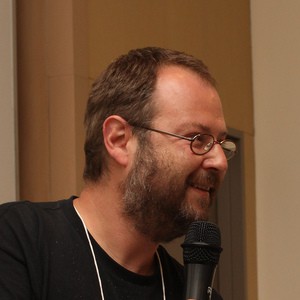
Photo by Aigars Mahinovs

I followed Gregor s evolution within Debian because I used to be somewhat active in the Perl team. His case is exemplar because it shows that you don t need to be an IT professional to join Debian and to make a difference. His QA page is impressive with hundreds of packages maintained and hundreds of non-maintainer uploads too. While he started out slowly, I remember meeting him at Debconf 7 in Edinburgh and after that he really got more implicated. Again a case of someone joining for technical reasons but getting more involved and staying there for social reasons! :-) Let s jump into the interview and learn more about him. Raphael: Who are you? Gregor: I m 41 years old, and I live in Innsbruck, Austria, in a shared apartment with a friend of mine. In my day job, I m working at the regional addiction prevention agency, so I m one of the few Debian guys who s not an IT student or professional. I started maintaining packages in 2006, and I am a DD since April 2008. Raphael: How did you start contributing to Debian? Gregor: After having used Debian on servers for some years, I finally switched to it on the desktop after some procrastinating. Soon afterwards I wanted to know more about the making-of , started to join mailing lists, filed bugs, and tried to learn packaging. Luckily I quickly found a permanent sponsor Tony Mancill, and we re still co-maintaining each others packages. And when I packaged my first Perl modules, Gunnar Wolf invited me to join the Debian Perl Group, an offer I accepted a few days later. And I m still there :) Later, the NM process, although it involved some waiting times, was also a good learning experience due to my AM Wouter Verhelst. (And in the meantime the organization of the NM process has vastly improved, from what I hear.) So my starting point for joining Debian was my curiosity but what really helped me to find my way into the project was the support of the people who invited and helped me. Raphael: What s your biggest achievement within Debian or Ubuntu? Gregor: I m not sure I can name a single big achievement but I guess I can say that my contributions to the Debian Perl Group have helped to make and keep the team a success story. Raphael: The pkg-perl team seems to work very well. As an active member, can you explain us how it is organized? How do you explain its success? In particular it seems to be a great entry point for new contributors. Gregor: The team is huge, both in numbers of members and packages (over 2200). Since last DebConf we manage our source packages in git, we have 2 mailing lists and an IRC channel, and we manage to keep an overview by using PET, the Package Entropy Tracker. It s true that we get new members on a regular basis; we try to invite people (like it happened to me 6 years ago :) ) but there are also quite a few new contributors who find our docs and introduce themselves on the mailing list. Maybe someone should conduct a study and ask them what motivated them to join. :) We hand out group membership/commit access quickly, and we try to mentor new contributors actively during their early times in the group. Some of them leave for other projects after some time, but many also stay and become DDs later. I m not sure what the reasons for the group s success are, maybe a combination of: For everyone interested in joining the Debian Perl Group, our Welcome page on the wiki is a good starting point. Raphael: What are your plans for Debian Wheezy? Gregor: Nothing overly exciting. What I should do is getting a newer JabRef into Debian (which involves packaging some new Java libraries any takers?). A solution for libdatetime-timezone-perl (which ships timezone data converted to Perl modules and tends to get outdated when the timezone data change) would be nice; let s see if #660404 leads to some results And some Perl packages will also need a bit of work for the hardening build flags release goal (cf. #657853). Raphael: What s the biggest problem of Debian? Gregor: Inertia. While I really like the fact that Debian is a volunteer project, and that every contributor works when and on what they decide to work on, I get the feeling that Debian could do better in moving forward, innovating, taking decisions. I also think that more uniformity in managing source packages would make things easier; it s quite amazing to see how many source formats, packaging helpers, patch systems, RCSs etc. are used all over the archive. I m not advocating for mono-cultures, and I consider this diversity a strength in general, but having to find out first how this particular package works when preparing a bug fix can be annoying. On the bright side, I think that the myth Debian and its mailing lists are mostly about flames can be seen as dispelled in the meantime. Sure, sometimes the tone could be a bit more civil, but in general most of the interactions I ve seen in the last years were friendly and helpful. IMO, the Debian Project consists of mostly nice and cooperative people, and that s what makes it fun for me. Raphael: You re one of the most dedicated participants to RCBW (Release Critical Bugs of the Week), an initiative to fix RC bugs every week. How much time do you spend on it? What would you advise to people who are considering to join the movement? Gregor: I got into the habit of fixing RC bugs after having been invited to my first Bug Squashing Party in Munich some years ago. During this weekend I saw that fixing RC bugs can be fun, is often not that difficult, and gives a warm fuzzy feeling :) I can definitely recommend attending a BSP if one happens to be organized near you. After tasting blood at this first BSP I tried to continue looking at RC bugs, and I guess I spend something around half an hour per day on it. I usually blog about it once a week, in order to motivate others to join in. And joining is easy: just take a look at the tips people like Zack, Vorlon, or me have written. You don t have to be a DD to help, many of my NMUs are based on patches that others kindly prepare and send to the BTS kudos! Another nice aspect is that the RC bug list contains problems from different fields: general packaging problems, language-specific issues, policy violations, etc. So there s something for everybody, and you don t have to be an expert in all fields to fix a specific bug. What s rewarding about fixing RC bugs is not only the feeling of accomplishment and the knowledge about having helped the next release I also received quite a few Thank you mails from maintainers who were busy at that time and appreciated the help. Raphael: Do you have wishes for Debian Wheezy? Gregor: Well, there s not so much left of the Wheezy release cycle if we manage to freeze in June :) Some quick thoughts for Wheezy and Wheezy+1: Raphael: Is there someone in Debian that you admire for their contributions? Gregor: There are many people in Debian I admire, too many to name them all. The first one that comes to my mind is Russ Allbery who not only does great work from lintian to Debian policy but who also sets a great example of communicating in a perfectly polite and respectful way even in heated discussions.
Thank you to Gregor for the time spent answering my questions. I hope you enjoyed reading his answers as I did. Note that older interviews are indexed on wiki.debian.org/PeopleBehindDebian.

Subscribe to my newsletter to get my monthly summary of the Debian/Ubuntu news and to not miss further interviews. You can also follow along on Identi.ca, Google+, Twitter and Facebook.

2 comments Liked this article? Click here. My blog is Flattr-enabled.

6 March 2012

Mike Hommey: libgcc.a symbol visibility considered harmful

I recently got to rebuild an Android NDK with a fresh toolchain again, and hit an interesting problem. I actually had hit it before, but only this time I fully analyzed what s going on. [As a side note, if you build such a NDK, don't use mpfr 3.1.0, as there is a bug in the libtool it ships] Linking an application or a library pulls many things, that aren t part of the code being built. One of these many things is the libgcc static library. Part of libgcc consists in an implementation of the platform ABI. On Android systems, this means the ARM EABI. GCC, when compiling some instructions, will generate ABI calls. For example, integer divisions may call __aeabi_idiv. Consider the following minimized real world scenario:
$ echo "int foo(int a) return 42 % a; " > foo.c
$ arm-linux-androideabi-gcc -o libfoo.so -shared foo.c -mandroid
GCC will emit a call to __aeabi_idivmod for the % operation. With GCC 4.6.3, this function is in _divsi3.o under libgcc.a. That function itself calls __aeabi_idiv0, which lives in _dvmd_lnx.o under libgcc.a. When statically linking, ld will thus include foo.o, _divsi3.o and _dvmd_lnx.o, meaning it will include all functions from these object files. That is, foo, __divsi3, __aeabi_idiv, __aeabi_idivmod, __aeabi_idiv0 and __aeabi_ldiv0. And more than being included, these functions are exported, because symbol visibility in libgcc.a is default. So while we expect exporting foo from our library, we re actually exporting much more, including functions that just happened to be near the ones that our code (indirectly) uses. Now, let s say we want to build another library, using that foo function from libfoo:
$ cat > bar.c <<EOF
extern int foo(int a);
long long bar(long long a) return foo(a) % a;
EOF
$ arm-linux-androideabi-gcc -o libbar.so -shared bar.c -mandroid
(The code above has absolutely no meaning, it just triggers the same function calls as what I was getting in the actual real world case) When statically linking the above code, GCC will generate a call to __aeabi_ldivmod, which calls __aeabi_ldiv0, and many other things, directly or indirectly. When linking as above, nothing particularly nasty is going to happen. However, linking as above is actually wrong: the resulting library has an undefined reference to the foo symbol, and doesn t depend on libfoo. At runtime, if libfoo wasn t already loaded somehow, loading libbar would fail. The proper way to link is the following:
$ arm-linux-androideabi-gcc -o libbar.so -shared bar.c -mandroid -L. -lfoo
A feature of ELF static linking is that when it resolves undefined symbols, the linker will choose to use the first occurrence of a symbol it finds in the various objects and libraries given on its command line. So with the command line above, for each __aeabi_* symbol, it will first look in libfoo if there isn t one. And while __aeabi_ldivmod is not in libfoo, __aeabi_ldiv0 is (see above). So instead of including the code for __aeabi_ldiv0 from libgcc.a, it will call the copy from libfoo. This wouldn t be so much of a problem if __aeabi_ldiv0 wasn t a weak symbol. Enters faulty.lib. In the real world case, libfoo is loaded by the system dynamic linker, and libbar by faulty.lib. When resolving symbols for libbar, faulty.lib has to resolve libfoo symbols with the system linker, using dlsym(). On Android, dlsym() returns NULL for weak (defined) symbols, so faulty.lib can t resolve __aeabi_ldiv0. The real world case wasn t a problem with GCC 4.4.3 from the vanilla Android NDK because in that GCC version, __aeabi_ldivmod doesn t call __aeabi_ldiv0. This wouldn t happen if shared libraries wouldn t expose random platform ABI specific bits depending on what they use and depending on other symbols that happen to be in the same object files. A similar issue happened a little while ago on Debian powerpc because a shared library was exporting ABI specific bits. Even worse, the toolchain was assuming the symbols would come from libgcc.a and generated wrong relocations for these symbols. Update: Interestingly, the __aeabi_* symbols are hidden, in libgcc.a as provided on the Debian armel port.

4 March 2012

Stefano Zacchiroli: bits from the DPL for February 2012

Released a few hours ago, here is the monthly report of DPL activities for February 2012.
Howdy, dear Project Members,
here's another round of updates about what has happened in DPL land, this time during February 2012. Highlights Quit a bit of highlights for this month: Talks, interviews, and the like Sprints Plenty of sprints related news! It would be amazing to have an average of one sprint per month for 2012, and we're on good track for it. If you want to help, organize one for your team as documented on the wiki. Legal stuff Appointments In addition to the GSoC admins delegation (see above), I've agreed with former secretary Kurt Roeckx to reappoint him as a secretary for another year. Many thanks, Kurt! Miscellaneous Happy Debian hacking.
PS as usual, the boring day-to-day activity log is available at master:/srv/leader/news/bits-from-the-DPL.*

3 March 2012

Ingo Juergensmann: Goodbye Google, hello Diaspora!

Well, at least in Germany there was lot of press coverage about Google changing its data protection policies and joining the user profiles of their services like Youtube, GMail, Google+ and so on. There were even HowTos to delete some tracking relevant data and history before of March 1st. like on German Spiegel Online news magazine. Because I'm no big fan of Google and being a strong privacy advocate, I tried to follow the steps mentioned there and got some surprises. First of all I discovered in Googles Dashboard that Google already joined my private account or email address with the one I used at work when I was testing some Android phones for some reasons. The mail address from work was considered as primary address and I couldn't change this. I could delete my private mail address from that account, but not the primary address from work. So, time was pressing because 1st of March was coming near, only one hour left, but what to do know? I'm already using plugins like Ghostery and AdBlockPlus for some time now to minimize the chance of being tracked and such. I registered with Google+ to have a look onto it and to reserve my name and account there, but I was not actively using it for privacy reasons nor do I use Facebook. Therefor the decision was simple and easy: deleting my Google account was probably the best idea I got on that day. That was easy and a quick win for my privacy concerns! On the other hand having some sort of a social network can be nice. And I'm a fan of decentralized solutions like Jabber, which I prefer over AIM/ICQ. I'm running my own Jabber server for some years now, so it was a natural thought to me to make this step for a social network as well. Diaspora* started as a distributed social network in 2010 after some students listened to a speech by Eben Moglen about "Freedom in the Cloud" and is currently still in Alpha stage of development. But it is working and it is running on free software. That's a fairly good reason alone to prefer, support and use Diaspora* over other proprietary social networks like G+ or Facebook, isn't it? So, give it a try! Everyone can run a Diaspora* node, called "pod", on their own server. There are some good installation guides available at Github.com Wiki even covering installation on Debian! Although these installation HowTo is quite good there are some pitfalls left. For example you'll need good SSL cert from an CA authority that is wildly installed on all systems. CAcert seems not to be supported and self-signed certs and CAs doesn't work either. Without a good SSL cert you won't be able to interconnect with other Diaspora* pods. Another pitfall for Debian seems to be the installation of Ruby. First I used the Debian Ruby packages, but got some errors when starting the server that some CSS files couldn't be found. After using the RVM installation metioned in the installation guide these problems were solved (please note that the described way of using RVM didn't work for me either and I got help from some really helpful people on #diaspora-de@freenode). But anyway, I managed to get Diaspora* up and running on my own server and get it to interconnect with other pods. Although installing Diaspora* from source is currently a little pain compared with the ease and comfort of pre-built Debian packages, it's worth the effort! Everyone who consider Google evil and Facebook bad should consider switching to Diaspora*! The more people join, the better the social network will get! Help to fight against the AOL-ism of the Internet by using open and non-proprietary APIs and software like Jabber and Diaspora*! You can find my Diaspora* pod at: http://nerdwind.de/ where my account is "ij".
Kategorie:
File attachments:

Christian Perrier: 2012 update 13 for Debian Installer localization

Status for D-I level 1 (core D-I files): Status for D-I level 2 (packages that have localized material that may appear during default installs, such as iso-codes, tasksel, etc.): Status for D-I level 3 (packages that have localized material that may appear during non-default installs, such as win32-loader) Full 100% completeness (hall of fame) for 13 languages: Bulgarian, Czech, German, French, Indonesian, Italian, Kazakh, Dutch, Polish, Portuguese, Russian, Slovak, Turkish

29 February 2012

Antonio Terceiro: Thesis submitted

Last Friday, after 5 long years, I have finally submitted my PhD thesis. It was quite a relief, more or less as if an elephant was taken off my back. An English title for my thesis would be Structural Complexity Characterization in Software Systems. Here is an abstract:
This thesis proposes a theory to characterize structural complexity in software systems. This theory aims to identify (i) the contribution of several factors to the structural complexity variation and (ii) the effects of structural complexity in software projects. Possible factors in the structural complexity variation include: human factors, such as general experience of the developers and their familiarity with the different parts of the system; factors related to the changes performed on the system, such as size variation and change diffusion; and organizational factors, such as the maturity of the software development process and the communication structure of the project. Effects of structural complexity include higher effort, and consequently higher cost, in software comprehension and maintenance activities. To test the validity of the proposed theory, four empirical studies were performed, mining data from free software project repositories. We analyzed historical data from changes performed in 13 systems from different application domains and written in different programming languages. The results of these studies indicated that all the factors studied influenced the structural complexity variation significantly in at least one of the projects, but different projects were influenced by different sets of factors. The models obtained were capable of describing up to 93% of the structural complexity variation in the projects analyzed. Keywords: Structural Complexity, Software Maintainance, Human factors in Software Engineering, Mining Software Repositories, Theories in Software Engineering, Empirical Software Engineering, Free/Open Source Software Projects.
Those who read Portuguese can check out the actual thesis text as a PDF file. Most of the studies discussed in the thesis are presented in English in papers I have published during the last years. My defense is going to be on March 23rd. If you happen to be at Salvador at that day, please feel cordially invited.

27 February 2012

Christian Perrier: 2012 update 12 for Debian Installer localization

Status for D-I level 1 (core D-I files): Status for D-I level 2 (packages that have localized material that may appear during default installs, such as iso-codes, tasksel, etc.): Status for D-I level 3 (packages that have localized material that may appear during non-default installs, such as win32-loader) Full 100% completeness (hall of fame) for 9 languages: Bulgarian, Czech, German, French, Indonesian, Polish, Portuguese, Russian, Slovak

Leandro G&oacute;mez: DebConf needs you!

The 13th Debian Conference is just around the corner. DebConf12 will be held in Managua, Nicaragua, July 8-14, 2012, and we need your help! Why should I care? DebConf is the annual conference for Debian contributors and interested users. Previous Debian Conferences have featured speakers and attendees from around the world (DebConf11 had attendees from 46 different countries). DebConf helps share the knowledge and experiences of individual developers with the entire community. It also helps promote enthusiasm for specialized areas of development and encourages discussions about Debian s future. The benefits that DebConf brings to the Debian project as a whole, and the larger Free Software community, will improve Debian and by extension will help improve GNU/Linux for everyone, whether they use Debian (or a Debian derivative), or any other distribution. How can I help? DebConf is a lot to organize and pay for. We invite you to help that this is going to be a successfull event.

25 February 2012

Russ Allbery: Copyright format 1.0 published

Four and a half years after Sam Hocevar started a draft proposal on the Debian Wiki, we've published revision 1.0 of the machine-readable format for debian/copyright files. The format (as DEP-5) has been in widespread use for some time, but there have been multiple versions of the format and multiple transitional versioned URLs. Everyone can now update to the same version of the document and use a stable format URL. Below is the text of the annoucement that I just sent to debian-devel-announce. Version 1.0 of the machine-readable format for debian/copyright files (the culmination of the DEP-5 process) has now been published. The canonical URL (and also the URL to use in the Format field in such files) is:
http://www.debian.org/doc/packaging-manuals/copyright-format/1.0/
For those who have adopted various iterations of the DEP-5 format for your packages, please consider updating to this format the next time you revise your package. Use of this format in Debian packages is optional. Thanks to all of the people who have contributed to this work over its long evolution. Particular thanks go to Steve Langasek, Charles Plessy, and Lars Wirzenius, who kept this document moving through its extended DEP discussion process, and Sam Hocevar, who started this work in 2007. The copyright format specification is now being maintained as part of the debian-policy package and will follow the same update process that's used for other parts of Policy. See:
http://wiki.debian.org/PolicyChangesProcess
for that process. For this specification, we're trying something new for Debian technical policies. This document is versioned, and older versions of the specification will be maintained to not invalidate older references in copyright files that have not been moved to newer versions. This is similar to the way that specifications are handled by some other projects, particularly the freedesktop.org standards. The plan, going forward, is that informative changes (changes that do not change the requirements or the contents of compliant copyright files) will be made following the same relaxed procedure as other informative changes to Policy, and new versions will only informative changes will be published with the same version number. So the existing 1.0 document may receive further improvements in wording, examples, or similar changes that don't modify its meaning. Normative changes (changes that change requirements for compliant files, which includes addition of new standardized license short names) will follow the normative Policy change process, including formal seconds. Once normative changes are accepted, the next release of this specification will receive a new version number (1.1, for example). The previous version, prior to the normative changes, will be frozen, and from that point forward will not be changed except as required to continue to publish it. This includes further informative changes. We will continue publishing these frozen older versions of the standard on www.debian.org and in the debian-policy package for some time: possibly forever, and at least as long as they're still referred to by packages distributed by the project. The hope is that this will provide a good balance between specification stability, editing for clarity, and specification changes to meet changing requirements, while not invalidating the URLs in older files and while continuing to provide the information required to interpret older files.

22 February 2012

Bernd Zeimetz: nagios-plugins-contrib released

Nagios or Icinga users probably know the problem that neither the default plugin packages (nagios-plugins-basic and -standard) nor the few other plugin packages ship all the plugins you need to monitor your hardware and software properly. And unless you have puppet, cfengine or some other automation software, you probably just start searching plugins on Nagios Exchange, MonitoringExchange or some other machines you are monitoring already. Your problem shall be solved! nagios-plugins-contrib passed NEW today. It is a collection of various useful plugins, maintained within the Debian Nagios Maintainer Group. So far it contains only 6 plugins (check_email_delivery, check_ipmi_sensor, check_lm_sensors, check_memcached, check_raid, check_rbl), but more are going to come. check_lm_sensors in action To have your favorite plugins added to the package we would like to encourage you to send pull requests, either using github, alioth or your personal repository. Please keep in mind that you'll be added to the Uploaders of the package automatically to ensure that you keep your plugin updated and in a good shape. See debian/README.source for some instructions on adding new plugins. Unmaintained plugins will be removed! Of course you can also submit bug reports to have a new plugin added, but you have to convince somebody to maintain it for you (or that he wants to use the plugin and needs to maintain it therefore :) ). We might also also have a similar package in contrib as a lot of commonly used plugins require non-free software, so don't hesitate to prepare plugins for inclusion in such a package and let us know! Suggestions and ideas for improvement are always welcome. And so is help to maintain the packages!

Christian Perrier: 2012 update 11 for Debian Installer localization

Status for D-I level 1 (core D-I files): Status for D-I level 2 (packages that have localized material that may appear during default installs, such as iso-codes, tasksel, etc.): Status for D-I level 3 (packages that have localized material that may appear during non-default installs, such as win32-loader) Full 100% completeness (hall of fame) for 18 languages: Bulgarian, Czech, German, Esperanto, Spanish, Persian, French, Indonesian, Italian, Japanese, Kazakh, Dutch, Polish, Portuguese, Russian, Slovak, Turkish, Simplified Chinese

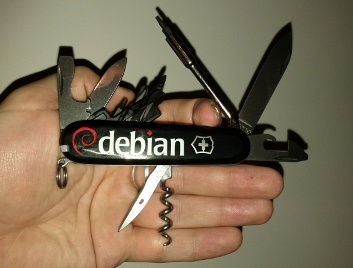
Cyril Brulebois: Wrench days

Fixing hardware Thanks to the nice Debian Swiss Knives initiative! Fixing software Besides trying to maintain the whole X stack as usual, and preparing the funky wayland, mesa, and weston trio for experimental, I got myself into other areas. Debugging gzip Jakup Wilk noticed a while ago that some multiarchified packages couldn t be co-installed due to gzipped files being different between architectures. That was reported as #647522 against the gzip package. While some developers consider the lack of determinism (as in: it s not in the gzip specification, and the current implementation generates different packages anyway!) as a dead-end for the multiarch experiment, it didn t look like undebuggable or unfixable. And indeed, as confirmed by a quick analysis: a lack of clean-up when several files are processed at once can lead to different results, depending on the order in which files are specified on the command line; the patch for that is trivial, and was later made smaller and the need for it was explained. Working in the Release Team I reviewed/approved a few packages for squeeze, but also took care of handling or finishing a few transitions (as seen in my hints file), among which the funny iceweasel9/libmozjs ones; release tools are nice, but one gets to learn lots of stuff at once (which isn t a negative aspect). I hacked a tiny collision detector so that packages involved in several transitions can be easily spotted. Given the huge number of ongoing transitions we had lately, that didn t look overkill. Squashing bugs It had been a very long time since my last working on totally random RC bugs. The Bug Squashing Party organized at IRILL was a very nice opportunity to get back to totally crazy bugs in unknown packages, but also to meet with other Debian contributors; sponsoring maintainers with good patches on their first try was nice, but walking other contributors through their first patches sent to the BTS or through their first NMUs was nice too. Waving good bye to yada Back in the M rida QA meeting I attended in 2007, there were already jokes about how bad yada was, and how it should die in a fire etc. When I started looking at the RC bug list, I quickly switched to scrolling it backwards, and I wondered how much work was left. The details can be seen in #660548, and the result is: yada is gone! sanity++; packages.debian.org Both long descriptions and translations for packages in some suites disappeared after the switch to Description-md5. Thanks to a quick and reduced packages.debian.org setup (mostly: en+de for squeeze+sid+experimental), I managed to find my way through Perl and DB files to propose patches for #657557. I m still waiting for a confirmation, but in case it works fine, we could even get a fix for DDTP/DDTSS.

18 February 2012

Biella Coleman: Montreal, first impressions

frozenlights When I told people of my plans to move to Montreal, it usually prompted one of two reactions: one was some version of joyful envy, many people exclaiming breathlessly Montreal is one of my favorite cities, one person once even clutching my arm and told me as he looked me straight in the eye: you are so lucky, there is no city quite like Montreal in North America. The second reaction came off as a thinly veiled mixture of disdain and disbelief usually peppered with many reallys: oh wow, really, really you would really leave NYC? I am pretty certain they really were thinking something along the lines of what a fool, how dare she leave a great job, a great university, a world class city (the only city to live) for some Canadian mid-sized city, which is like tundra for a good chunk of the year? The decision to move weighed heavily on me, if for no other reason I had a choice to stay or to go and I honestly have not had a choice, a decision to make about where to go since I got accepted to graduate school (and even then the choice was more obvious than this one). So over a month into my move what is my verdict? In a word, win. I don t miss NYC at all though I get why some people cannot leave the place and know that despite some oddities and difficulties of living in Montreal, it fits my tastes and needs much better than NYC which dwarfed me in so many ways. I never felt I could enjoy it, I grew tired of the cramped living quarters, the noise ate at my soul, and I simply felt more overwhelmed by the fact that I could not even get a handle on the neighborhoods in my vicinity, much less all the other hoods in the area. Instead of dogging NYC anymore, I think I will spend a little time on first impressions, as they will soon be lost to the familiarity borne with time and experience. In essence Montreal is chock full of life but rather intimate, a quirky city with lots of charm but some grit and lacking the way over designed and done feel of cities like Portland. Here are some of quirks: 1. The Hawt Metro: I fell in love with the Metro when I first rode it a few years ago. I just love the powder blue color of the cars and the super sweet 1960s aesthetic of many stations. Even better and unlike NYC, they are just clean and quiet. The downside? The temperatures approximates a sauna during the winter and while you would think this is a good thing, when you are layered with the clothing necessary to survive outside (re: long underwear along with Canada-coat, gloves, hat, and scarf), it is hooooooot down there and you feel like you need to pass out. 2. Spend money, get free stuff: In many establishments you get free stuff (like blueberries or some like sports bar) when you spend over a certain amount of money, like 70 bucks. Quirky local tradition. 3. The culture of negotiation and the kick ass standard lease: Housing is amazing here. There is plenty of it, there are many different styles, and it is rather fun exploring all the different hoods that make up the city. Problem is too that lots of apartments have weird problems and issues and I had to steer clear of anything that could even possibly have mold. I spent weeks day in day out looking for a place, desperate to move out of my corporate apartment very nicely provided by the university but still not my ideal living situation. Finally found a place that fit all my needs in the perfect location and I took it to only find out that places are priced to negotiate and I was faced with the decision to negotiate or not. Sort of did, was not thrilled about it (thinking that I might lose the place) but it sort of worked and I scored the place. If price is up to haggling, the lease on the other hand, is standard (you can buy one at your local bodega ). It is the law to use it and it is like a no nonsense, straightforward lease, which is very protective of renters. 4. Montreal is known for its exceptional food but you know Poutine is just plain gross: Food here is good and I can tell that I will get a handle of restaurants in a way that felt impossible in NYC. The gluten free religion seems to be spreading, thankfully. There are many little Fruiterias! to get your fruits veggies which I am still exploring and right around my house is a crazy supermarket that is so cheap, which is weird because consumer goods generally ain t cheap in Montreal like they are in the states but this place is a gem and everyone agrees (and almost impossible to notice from the street!). Now Poutine is disgusting. Ok it did not help that the first night I went out to eat it, I was still under the clutches of Noro virus, and I think it re-activated the nausea that had been zapped by some strong medicine and the hospital, the day before, which brings me to the next point, the health care system. 5. Healthcare, I had to use it way too early: So last week I came down with the Noro virus and you usually wait it out as it runs through you quickly but I was dehydrated before I even started to vomit to for 8 hours straight, at which point severely tired and so nauseous (I was yelling to make it stop), I went to the hospital. Now I had talked to lot of people about the healthcare system in Montreal as it seems good, really great but a bit over taxed, especially compared to where I had lived in Edmonton where it was like a magic fairy tale dream. I had heard of two things: the care is excellent but the facilities are shocking and the wait times unless dire can be atrociously long. So facilities, yea they are kinda shocking, somewhat shabby but who cares, so long as the care is good, no? Packaging is irrelevant so long as the goods are derived. Before going I was scared of the long wait times (and also the taxi took me by mistake to Montreal General Hospital was looked too much like a HUGE version of the creepy buildings in The Shining for me, and I was supposed to go to Jewish General so left for there). The wait time: nearly none, somewhat as shocking as the facilities first looked to me. I think it was a combination of the time I arrived, with the fact that my lounge was parched and yellowish-gross (sorry, it was gross), indicating I was dehydrated, oh and I was crying bit hysterically, for despite my high threshold for pain, nausea terrorizes me. I was covered by insurance and since I did not yet have my McGill health cards (it takes three months to qualify for the local stuff), I did pay and the price was laughably cheap compared to what I would pay in NYC for the same treatment. 6. Now for my favorite, snow so nice, ice oh Christ: Well this winter has been, by all accounts, weak and warm, the spirit of winter barely making its way from the underworld to the outerworld. But even though it is has been more idle than full throttle, I still got a pretty accurate taste of what winter is like, with a few days of 20- c temps, and having to walk a number of times on a layer of frozen ice that makes it feel like a very dangerous mini-ice age in the making. IMAG0028-1 I do rather love the quiet snow falling and just love love sprinting through the snow with my dog, Roscoe, who has taken a liking for prancing in the white stuff and looks awful cute with his winter man s ice beard. After a sizable snowfall, it is clear they city does not toy with the snow removal although the sidewalk snow plows do look somewhat like very large and dangerous but kinda cute toys. But let s be frank, winters are hard, so hard that I think I would go mad if I had to stay through the entire thing, being born and raised in the tropics So the fact that I am writing this from the southern hemisphere in the height of summer gives me the assurance I can handle the rest of the snow, ice, ice and snow upon my return.

Christian Perrier: 2012 update 10 for Debian Installer localization

Status for D-I level 1 (core D-I files): Status for D-I level 2 (packages that have localized material that may appear during default installs, such as iso-codes, tasksel, etc.): Status for D-I level 3 (packages that have localized material that may appear during non-default installs, such as win32-loader) Full 100% completeness (hall of fame) for 0 languages

Next.

Previous.