Search Results: "rul"

27 January 2009

Joey Hess: ephemera vs the law

The changes to whitehouse.gov are being used as an example of ephemeral digital content.
At the exact moment Barack Obama was inaugurated, all traces of President Bush vanished from the White House website, replaced by images of and speeches by his successor. Attached to the website had been a booklet entitled 100 Things Americans May Not Know About the Bush Administration - they may never know them now. When the website changed, the link was broken and the booklet became unavailable.
At the same time, the Obama administration is chafing under rules that don't allow them to use Facebook, gmail, Blackberries, and Twitter. Because of this pesky Presidential Records Act.
Suddenly, they have to relearn how to communicate, because the law has not caught up with the way people live. They are being forced to return to older technologies (or they will once those technologies start working properly), and abandon or become more guarded in their use of newer technologies.
Anyone else find the dissonance am(az us)ing? Seems that anyone who really wants a copy of that missing booklet will be able to access it via FOIA in a few years (unless it got wiped with all of Cheney's files). Meanwhile, if the new guys find a way to stop being hobbled by the law, their digital content will likely be truely ephemeral, since they have become addicted to "newer technologies" that eliminate all expectations about data's preservation and privacy. I think this is one case of the law not keeping up with technology that I can support. It might be more fair to describe it though, as technology not keeping up with the law.

24 January 2009

Kees Cook: debugging hangs in MIMEDefang

I spent a while this morning hunting down the root cause of a 100% CPU MIMEDefang process. (Turned out to be one specific email triggering one of my custom SpamAssassin rules that seems to get processed really inefficiently.) I wasn t able to find any documentation on how to debug where in MIMEDefang an email was getting stuck, and even jacking up the debugging output of my mimedefang-filter script seemed to imply it was happening late in the filtering process. After digging through mimedefang.pl, I found a status reporting subsystem and tracked it back out into configuration in /etc/default/mimedefang:
# Uncomment next line to have busy slaves send status updates to the
# multiplexor. NOTE: Consumes one extra file descriptor per slave, plus
# a bit of CPU time.
# MX_STATUS_UPDATES=yes
Turning this on, and then using md-mx-ctrl busyslaves (I command I didn t know existed until today either) I got to see exactly where it was stuck:
3 B 13380 (Running SpamAssassin j951iX1t025805)
Now I m having fun running md-mx-ctl with histo, barstatus, and load. :)

Brice Goglin: Debian/X.org notes - Howto Input-hotplug?

I have been wondering for a while how to get X.org "input-hotplug" to work, but I never actually tried before today. It is actually fairly easy, once you know what to do. Requirements First, make sure you have the evdev X driver installed (xserver-xorg-input-evdev). You might want to use X packages from experimental since things are much more recent than in Lenny or Sid these days, and upstream improved input management in the meantime. Then, if you are not running a pre-packaged kernel, check the the evdev driver is enabled and loaded in your kernel (CONFIG_INPUT_EVDEV). Telling hal what to do with input devices Now, you need to tell hal how to configure your input devices. Actually, you do not have much to do since latest xserver-xorg-input-evdev packages bring what you need. hal reads all fdi files under /usr/share/hal/fdi/policy to find out how devices should be configured. If you run lshal and look for input, you should see that the evdev is planned to drive your input devices. However, if you look at keyboard devices in lshal (look for input.keys), you will see that the US layout is used. To switch to another layout, you can add some overriding rules as a new *.fdi file in /etc/hal/fdi/policy/. For instance, to get French layout:
<?xml version="1.0" encoding="UTF-8"?>
<deviceinfo version="0.2">
  <device>
    <match key="info.capabilities" contains="input.keys">
      <-- Enforce XkbLayout=fr and XkbVariant empty -->
      <merge key="input.xkb.layout" type="string">fr</merge>
      <merge key="input.xkb.variant" type="string" />
    </match>
  </device>
</deviceinfo>
Thanks to this, you can enforce XkbLayout, XkbVariant and friends as usual in /etc/X11/xorg.conf. Don't forget to restart hal after modifying some fdi files. Then run lshal, and look for Xkb, you should find your setup there. Note that you can add some matching rules to configure some devices with different setups if needed. Just need to read the output of lshal and find something like a hardware identifier to match on. You can find some documentation about these rules by looking at the existing fdi files in /usr/share/hal/fdi/policy/20thirdparty/, and in the upstream x11-input.fdi (note that input.xkb.foo is the actual recommended syntax instead of input.x11_options.XkbFoo). Touchpads If you have a touchpad and want to use the synaptics driver, installing the xserver-xorg-input-synaptics will bring another fdi file. /usr/share/hal/fdi/policy/20thirdparty/11-x11-synaptics.fdi matches input.touchpad in the device capabilities in hal. Now the synaptics driver will be automagically loaded for your touchpad (instead of evdev for regular mice). Again, you can override this rule in /etc/hal/fdi/policy/ and you can add many configuration options for synaptics as well. See /usr/share/hal/fdi/policy/20thirdparty/11-x11-synaptics.fdi to get an example. Fortunately, you will not have to manually take care of the above /etc/hal/fdi/policy/ file for ever. The plan is to have hal look at the Debian console configuration and get at least the keyboard layout from there automatically. Telling the Xserver to talk to hal Now, you need to tell the Xserver to use what hal wants. Basically, you want to remove everything about keyboard, mouse and other input devices from your xorg.conf. Just drop all InputDevice sections and all references to them within other sections. With recent Xserver versions, options AllowEmptyInput and AutoAddDevices are enabled by default (otherwise, you might have to add them in the ServerFlags section). For more documentation, you want to read Peter Hutterer's blog, especially this post and this one. By the way, if you don't want this input-hotplug thing and you want to run a recent Xserver anyway, you should set AllowEmptyInput and AutoAddDevices to off in the ServerFlags section. Update: Fixed the way to manage fdi files, fixed the syntax of input.xkb.foo rules, added a paragraph about synaptics, and organized things in sections. Thanks to everybody's comment.
(Permanent link)

22 January 2009

Benjamin Mako Hill: Annual Free Software Foundation Fundraiser

When I explain the importance of free software, I often use some variation of the following example:
Suppose I see a beautiful sunset and I want to describe it to a loved one on the other side of the world. Today's communication technology makes this possible. In the process, however, the technology in question puts constraints on message communicated. For example, if I pick up my cellphone, my description of the sunset will be limited to words and sounds that can be transmitted by phone. If I happen to have a camera phone and the ability to send a picture message, I will be able to communicate a very different type of description. If I'm limited to 150 characters in an SMS message, my message will be constrained differently again.
The point of the example is this: the technology I use to communicate puts limits and constraints on my communication. Technology defines what I can say, how I can say it, when I can say it, and even who I can say it to. This is neither good nor bad. It is simply the nature of technology. But it means that those who control our technology control us, to some degree. As information technology becomes increasingly central to our lives, the way we experience, understand, and act in the world is increasingly controlled by technology and, by extension, by those who control technology. I believe that the single most important struggle for freedom in the twenty first century is over the question of who will set these terms. Who will control the technology that controls our lives? Free software can be understood as an answer to this question: An answer in the form of an unambiguous statement that technology must be under the control of its users. When free software triumphs, we will live in a world where users control their technological destiny. We simply cannot afford to fail. The Free Software Foundation is the most important organization fighting for the rights of users in this struggle. Here are some of the ways that I plan to direct the FSF to support software freedom in the coming year:
Network Services Last year, the FSF organized a meeting on software freedom and network services that lead to the creation of the Autonomo.us group and the release of the Franklin Street Statement on Freedom and Network Services. As network services --- like those built by Facebook, Google, and others --- continue rise in popularity, progress in this conversation is of increasing importance. This year, I will direct the FSF to build on the work of Autonomo.us to launch the first of what I hope will be several FSF position statements on software freedom and network services. More importantly, the FSF will begin to provide support and planning for solutions --- technologies, social campaigns, and legal steps --- that will protect computer users whose freedom is currently threatened by network services. Enforcing free software licenses Early on, people who decided to work on free software did so because they agreed with --- or, at the very least, were willing to abide by --- the principles and rules laid out in our licenses. In our push for software freedom, we have created software of immense value and attracted companies and individuals to our community who are less willing, or simply less interested, in protecting users' freedom. In December 2008, the FSF went to court for the first time in the organization's history to force Cisco to uphold the freedom of the users of FSF copyrighted software. This lawsuit asks Cisco to live up to its obligations under the GPL and to ensure that it does so in the future. The FSF needs the support of its community in this and in future enforcement actions. The FSF has operated a compliance lab for several years and has ensured software freedom for countless users. As free software becomes more successful in the next year, the FSF will be playing an increased role in protecting software freedom from those who do not share its principles. Continuing the fight against software patents As I said last year, one cannot write non-trivial software today without running a serious risk of infringing patents. The software patent minefield we've found ourselves in is a very fundamental threat to the success of free software and we've already begun to see the first casualties and costs. We must eliminate software patents. Now. The FSF will continue its work toward this end. The FSF's End Software Patents project's major contribution this year was a brief submitted in the In Re Bilski case at the U.S. Court of Appeals for the Federal Circuit. Recently, an opinion was issued which seems to mark an important shift away from broad protection for software patents. With this victory, now is the time to keep up this momentum. The FSF is drawing up a strategy to do just this and will be announcing the relaunch of its campaign on February 9,2009 led by Ciaran O'Riordan.
Every recent fundraising appeal seems to mention the difficult economic climate and it seems to cliche to do so here. That said, the effect of a bad economy is, in fact, felt most strongly in non-profits dependent on donations. The FSF is not immune. The FSF's work is essential for success on the issues I've described here and on all of its other campaigns and projects. Although the cost of a membership or donation may be less easy to afford this year for many of you, the free software movement cannot afford a weakened FSF at this important moment. If you are not an FSF associate member, now is the time to become one. If you are already a member, please join me in giving generously through a tax-deductible donation. The FSF is a very lean, very humble organization of passionate and dedicated individuals working tirelessly for software freedom. Every single gift makes a difference.

21 January 2009

Martin-&#201;ric Racine: Uninformed shoppers blaming Ubuntu: a brief TODO list for Canonical

My own perception of the debacle about the end-user who decided to cancel her college enrollment because she could not get Microsoft products to install on Ubuntu is three folds: Personally, I think that Canonical needs to hire an individual that understands the above three aspects and, most of all, how to remedy them, as its next OEM channel Manager, if they truly want to increase Ubuntu's market penetration.

20 January 2009

Steve Kemp: I saw green fields and flowers. I could smell the grass.

Fabio Tranchitella recently posted about his new filesystem which really reminded me of an outstanding problem I have. I do some email filtering, and that is setup in a nice distributed fashion. I have a web/db machine, and then I have a number of MX machines which process incoming mail rejecting spam and queuing good mail for delivery. I try not to talk about it very often, because that just smells of marketting. More users would be good, but I find explicit promotion & advertising distasteful. (It helps to genuinly consider users as users, and not customers even though money changes hands.) Anyway I handle mail for just over 150 domains (some domains will receive 40,000 emails a day others will receive 10 emails a week) and each of these domains has different settings, such as "is virus scanning enabled?" and "which are the valid localparts at this domain?", then there are whitelists, blacklists, all that good stuff. The user is encouraged to fiddle with their settings via the web/db/master machine - but ultimately any settings actually applied and used upon the MX boxes. This was initially achieved by having MySQL database slaves, but eventually I settled upon a simpler and more robust scheme: Using the filesystem. (Many reasons why, but perhaps the simplest justification is that this way things continue to work even if the master machine goes offline, or there are network routing issues. Each MX machine is essentially standalone and doesn't need to be always talking to the master host. This is good.) On the master each domain has settings beneath /srv. Changes are applied to the files there, and to make the settings live on the slave MX boxes I can merely rsync the contents over. Here is an anonymized example of a settings hierarchy.. So a user makes a change on the web machine. That updates /srv on the master machine immediately - and then every fifteen minutes, or so, the settigngs are pushed accross to the MX boxes where the incoming mail is actually processed. Now ideally I want the updates to be applied immediately. That means I should look at using sshfs or similar. But also as a matter of policy I want to keep things reliable. If the main box dies I don't want the machines to suddenly cease working. So that rules out remotely mounting via sshfs, nfs or similar. Thus far I've not really looked at the possabilities, but I'm leaning towards having each MX machine look for settings in two places: That way I can rsync to /backup on a fixed schedule, but expect that in everyday operation I'll get current/live settings from /srv via NFS, sshfs, or something similar. My job for the weekend is to look around and see what filesystems are available and look at testing them. Obmovie:Alive

Russell Coker: Security Lessons from a Ferry

On Saturday I traveled from Victoria to Tasmania via the ferry (to attend LCA), they grossly failed in their security measures and provide three lessons for others:

  1. Make it possible for people to read security relevant documents .

  2. Make obeying the rules not be a cost and make the fact known.

  3. Don t be lazy.

Here is the detail:

  1. When driving towards the ferry in a queue that lasted about 30 minutes just around the last corner there was a sign notifying me of the security rules. As soon as it was visible I started reading it but the security guard started frantically waving at me, the time taken to read it was holding up the queue. Therefore I never discovered the full list of things that I m not supposed to do.

  2. One rule was that cylinders of gas (such as propane) were apparently banned and should be surrendered - presumably to prevent a gas leak in the confined space of the ship s hold from risking an explosion. Anyone who did have such a gas cylinder would probably not want to have it stolen by the security people and would be inclined to lie and hope that the security people wouldn t find it. If they had made it well known that such gas cylinders would be stored in safe keeping for the duration of the voyage and then returned then they would have been more successful.

  3. They wanted to check the luggage compartments of all vehicles. To check the tail-gate of the Kia Carnival van I was driving first required that all the bags which had been put over the back seat be removed (they were resting against the tail-gate and would fall out if it was opened). When the guard realised that they would have to wait for me to empty a lot of luggage out they decided to just trust me that I didn t have any bad things on board (even though due to point #1 I didn t know what bad things were). This problem happened a second time when I reached Tasmania and the guards wanted to search for fruit.

19 January 2009

Stefano Zacchiroli: gitweb vs DSA 1708-1 on lenny

packages backported by yours truly Just in case you need backported packages for DSA 1708-1 affecting backported gitweb to Etch (and in case you trust my as a builder), I've made available mines (arch amd64, signed with my DD GPG key, together with backports of build-deps). No, sorry, no upload to bpo: I did the rebuilds in a hurry, without bothering to check the backports guidelines as I usually do before uploading to bpo. Packages tested and working properly on medium-sized machines, including a forge-like service. Ah, right, beware that gitweb.css changed location since the last version in bpo, the new location is /usr/share/gitweb/gitweb.css, upgrade your links / alises / whatever to avoid a 80's theme for your brand new gitweb.

Stefano Zacchiroli: debcheckout hacking

New features for debcheckout, ... now with TopGit support! Today I've spent some time hacking on debcheckout, which for weird reasons happens to be at the bottom of a stack of chained things that I need to do in the forthcoming days. Also, I had neglected debcheckout for a while, and the other devscripts folks where ready to shout at me because of that :-) . Well, it has been fun, and beside having fixed all the outstanding bugs, debcheckout has grown some cute new features: Enjoy! (ah, of course all this is not uploaded yet, but you can grab a preview from devscripts' VCS or, better, doing debcheckout devscripts which is soooo bootstrapy. SCNR.)

Stefano Zacchiroli: ocaml batteries included debian packages

preview of OCaml batteries included Debian packages OCaml batteries included is a wonderful community-driven initiative to standardize the OCaml development platform. It is similar to initiatives sharing the same motto, like Haskell batteries included and Python batteries included (which then has become the legacy Python distribution), but I have always felt that OCaml was more desperately needing a similar initiative. David Teller and the OCaml batteries included team have been the first actually doing something to address the frustration of many otherwise enthusiastic OCaml developers. A couple of days ago, their efforts have given birth to a first milestone: the release of the first alpha version of batteries included. To help out, I've released as quickly as possible the Debian packages of OCaml batteries included. You can find them in experimental (actually in NEW, at the time of writing), and from my people.d.o space. I've only built the packages for amd64, if you need some other architecture you can build on it by yourself, but I recommend not trying to rebuild the -doc package (which takes 10 minutes on my laptop to build). You can reuse the -doc package I've built, which is arch: all, to rebuild only the -dev part unpack the source package and do fakeroot debian/rules binary-arch.

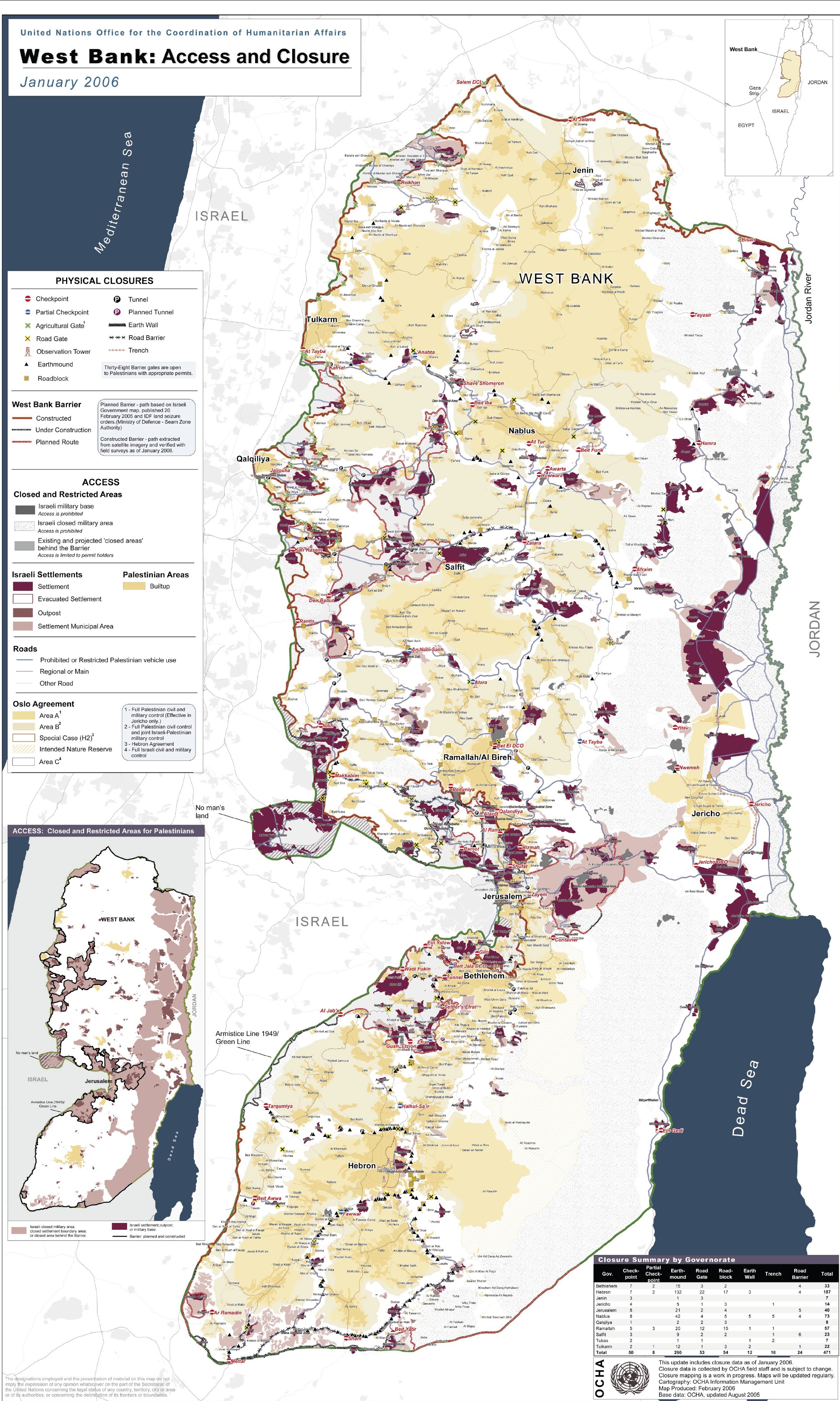
Gunnar Wolf: About the recent events and possible outcomes in Israel and Palestine

Several friends, from different groups and backgrounds and with different points of view regarding the current war in Israel (and regarding the Arab-Israeli conflict in general) have asked me for an explanation on what is happening there, what is (my view of) the real conflict, its causes... and any possible answers. And yet I am quite far from being an authority, I do want to write something about it. Be prepared, as this post is quite long.
And yet, after writing frankly a lot more than what I expected... It is by far not enough. I have still much more to add, but I have to say "stop" at some point. So, here you have it: My points of view, as well as some explanation on why are we standing where we currently are.
I am writing this based just on my personal experiencie and, of course, my personal point of view. Furthermore, I wrote a good part of this text while riding a bus, with no network access, so I am offering very few references - In any case, it will allow me to make much more progress. References always take as much time as the text itself! About me Why am I writing this? Why do people ask for my opinion? I must start by explaining who I am, so the rest of this makes sense. I am a Mexican Jew. That means, I was born in a Jewish (albeit secular) family, and grew up in an environment with general Jewish culture. My direct family (say, my parents and brother, and to a lesser degree my closest cousins) are not at all religious, I'd even venture to say most of us are complete atheists. Yet, besides the cultural belonging (which is a mixture of a Eastern European culture with lots of Idish words and dishes and general humor), my family has a strong national identification - In other words, I grew up in a fully Zionist environment, which traces back to Poland.
My grandmother was member of Hashomer Hatzair in Poland, since the early years of its existence, late 1910s and early 1920s. What is it? To make it short, a Zionist Socialist, Kibbutzian youth movement. It has many similarities (and somewhat stems indirectly from) the Scouts many of you will be familiar with, but -obviously- has a way lengthier agenda. And, yes, nowadays I feel it is somewhat out of reach with the current state of the world - It was founded in 1913, and only slightly adjusted its principles since then.
I will talk more about Hashomer later on.
My grandmother arrived in the late 1920s to Mexico, for familiar and economic reasons, but still dreamt about living in Israel for a long time. As they grew up, first my uncle joined Hashomer in Mexico in the late 1940s, when it still pursued a very much Soviet-style ideals for Israel (one of the core points that changed during the 1950s); both my father and my mother joined in the late 1950s (in fact, that's where they met). My cousins and myself were very active in the 1980s and 1990s.
The Iszaevich family has something very unusual, I'd say, engraved in our genes. We live very deeply our ideologies. That's the only explanation I can find to the way we all have led our lives. I won't go into the other family members' details, but just into mine: I was fully convinced of all we taught to our younger members and what we discussed among ourselves. I am among the very few people who really learnt Hebrew at my school, and that was only because I really cared - I know some people that just after 12 years of pseudo-learning could maybe utter a few phrases.
After finishing high school I went with my Hashomer group, together with people my age from other similar-minded Mexican Zionist youth groups, to live and learn for a year in Israel, on what is usually known as shnat hajshar - A year to get ready. To get ready to what? But of course, to come and give back go the younger groups of the movement, and finally go back to Israel and settle there definitively. I came back to Mexico, and after one year I did the only thing that was logical: I became an Israeli and went to live to a kibutz - Zikim, a beautiful place just between Ashkelon and Gaza, very near the sea shore. It was a beautiful period in my life, and I really enjoyed it - But it didn't last for very long - I quickly grew to hate the Israeli society at large. A society full of rage, of hatred. Not just between Arabs and Israelis, as many would think from the outside, but between religious and seculars. And between immigrants and locals. And between leftists and rightists (in several dimensions, as it is one of the countries where you can most easily be a economic leftist while being a political rightist - a complex society it is). A society full of disrespect and intolerance. A very hypocritical society. And one of the things that most shocked me: I wanted to live in a society of proud of its existence, that's what I had learnt Israel was - But Israelis aspire and dream of being anything else (and mostly US-Americans) in a way that made me sick, more than anything I had previously seen in Mexico.
I loved the life at the Kibutz, and I loved being an agricultor, doing hard work every day and literally getting the fruit of it. However, I cannot live isolated to a 300-people universe - At least once a week you have to go to the city if you don't want to become insane. And I could not stand the sick Israeli society.
Anyway, to make things short: After six months as an Israeli, I came back to Mexico. I went through a long period of finding myself, as I could not uphold anymore my Hashomer ideology (if I am not going to live by it, how can I continue teaching it?). Many people do anyway, but for the first months, where my Hashomer work was basically all of my life, I felt really uncomfortable. So, in short, I severed all of my relations to the Jewish community, and even denied for a long time my Jewishness until I found a (I think) better balance.
Today I am at peace. But anyway, I wanted to talk about myself in the critical period that marked me in this regard: The 1990s. Enough, lets get down to business. Zionism 1870-1920 Many people argue that the Jews invaded the Palestinians homeland - And yes, nowadays I cannot counter this. But we cannot judge what happened then based on what we see now.
Modern Zionism started around the 1870s. The Jewish history is full of pogroms and persecution, in different countries all over Europe - And a group of young people decided the only solution was to build a place to call their own. And yes, this was full of idealism and in no small part the foolishness of youth. For several centuries and up to 1920, all of current Middle East were provinces of the Ottoman Empire. Before Zionism began, the population of today-Israel was very sparse, not more than 400,000 people - up to 5% of them Jewish, around 10% Christian Arabs, and the remainder, Muslim Arabs. Of course, the low population was mostly because the country was mostly hostile - A desert in the South, mostly swamps in the North, and some minor towns mostly in the hills. It was a mostly forgotten province, away from the central Turkish rule, and there had been no frictions with the local population. It was a nice place to go, thinking -again- as a fool youngster, or as an idealist. They said, lets take a folk without a land to a land without a folk.
The number of accomplishing Zionists (this is, people who actually went to Israel instead of just talking about doing so) was not high during the first decades. But towards the 1890s, it gained critical mass. The political Zionist movement was born, with Theodor Herzl as a leader, and they started pushing -politically- for different governments to concede a territory to Jews. They went to the Turks, and didn't really get much echo. Went to other colonial powers of the time, and got unfeasible promises with no real backing (i.e. Birobidjan in Eastern Russia, Uganda in Africa)... And, as it happens in strongly ideologized movements, the movement started splitting into different groups with slightly different positions.
And no, I am not talking about the People Front for the Liberation of Judea and the People Judean Liberation Front, but I very well could. Sometimes the differences are as ridiculous as that. But hey, I take that most of my readers are acquinted with the Free Software issues, right? Think BSD vs. GPL vs. OpenSource. To give a broad idea - Only in Mexico City, with a very small Jewish community (~30,000 people), in the mid-1990s we had over 10 such movements, with 50-150 youngsters attending each. And even though some were local, and even though some very important ideologies are not represented in this country, they are all different enough to exist as separate entities. British Mandate The Ottoman empire was divided after the first World War. Its possesions in Europe became independent states, while in Asia (and Africa, if you take the semi-independent Egypt and part of Sudan into account) they were taken over as colonies or protectorates by France and the UK - Evidently, attempting to secure a long-term dominion over the area. In some aspects, they failed. In some aspects, they were (and still are) tremendously successful. The division of people by setting arbitrary boundaries has led to countries sustainable only by force and a harsh rule (such as Iraq, Lebanon and Syria), or doomed to poverty (and thus submission) due to lack of natural resources (as Jordan). Focusing on Israel/Palestine, the UK entered the area by making mutually incompatible promises to arabs and Jews - i.e. the Hussein-McMahon letters and the Balfour declaration, both ambiguous enough to lead to... Well, today. The UK rule was disastrous to the region, both in giving (and taking away) power from all sorts of puppet regimes, and swiftly going away as soon as things started looking too complicated. Yes, typical colonialism.
So, while up to the 1920s there was no real animosity between Arabs and Jews (as i.e. the Faisal-Weizmann agreement shows), during the next decades the seeds of hatred started growing, from both sides.
Many people still quote the 1947 partition plan as the direct antecedent towards Israel's real existence - That was not the first partition plan that existed. Ten years earlier, the Peel commision suggested a similar partition involving forceful population transfer. And many people see the separation of Transjordan (now Jordan) from Palestine in 1922 as a first partition. It is understandable that both partition plans (much more the 1947 than the 1937 one) were accepted by Zionists: Going from having nothing to having something (and against all odds in the environment they lived) is acceptable.
From the Zionist side, two main groups rejected the partitions: The right-wing and religious groups, insisting that the whole of the Mandate should become Israel, and the left-wing groups, which advocated for a single, bi-national state, with equal rights for all of its population. Go over and read this last link, as it was quite interesting (to me at least) to see how this solution has kept existing and regarded by (relatively) many people, and has many interesting links. 1948 onwards: Where did the refugees come from? The November 1947 partition didn't exactly translate to a planned, smooth Israeli independence - It led to six months of revolts (basically, a civil war). By mid May, the UK government and troops abandoned the territory, and one day later, Israel declared its independence. And, of course, all neighbouring countries (and Iraq) sent their troops to invade Israel. The war lasted for over six months (cease-fire was signed in January 1949). There was an intense Arab campaign indicating the armies would enter Israel and devastate it, leaving no stone in place, indicating Arab population to temporarily leave the Jewish-destined areas. The war, they said, would not take more than a couple of months, and they would be able to go back home.
Only that... When the war ended, the results were far from what the Arab governments expected. Not only Israel continued to exist, but it conquered important territories.
Of course, the Israelis were not innocent from said exodus: During the 1947-1948 civil war, and the independence war, some of the existing so-called self-defense forces (some of them were really defensive, while some were quite aggressive, even terrorist) attacked Arab villages in strategic or predominantly Jewish areas to prompt them to leave - yes, what we today call ethnic cleansing.
I had (in my head) the number of 650,000 Arabs (from a total of slightly over a million) fleeing to neighbouring countries. Wikipedia states that it is somewhere between 367,000 and 950,000. A similar number of Jews were expelled from Arab countries, many of which arrived to settle at Israel (and many others went elsewhere - For instance, a good part of the Mexican Jewish community is from Syrian origins - Many of them fleed in those years). Israel didn't accept back the (relatively few) Arabs that requested to resettle, as they were seen as hostile population - but neither did the countries that "temporarily" accepted the Palestinians accepted them as citizens. The Palestinian refugee camps today, mainly in in Lebanon, Syria, and the occupied territories held by Israel have terrible living conditions, and its population -despite living there for over 60 years- have no civil rights at all. Note that I'm omitting Jordan here, although it has several camps as well, as their situation is way better.
The Arab population that didn't leave did receive full Israeli citizenship. No, their living standards are not up to level with the average Israeli. The country and the society do have a sensible degree of racism and segregation. But the situation is nowhere as terrible as it is in the camps.
The areas which were originally to become Palestinian and were not conquered by Israel -this is, current-day West Bank and Gaza- bacame respectively Jordan and Egyptian territory. While Jordan did fully extend its soverignty covering the West Bank, Egypt didn't - Gaza is, since 1949, occupied military territory. Gaza, among the most densely populated areas in the world, has had their inhabitants under military rule ever since. When Israel returned the Sinai after signing the peace treaty with President Sadat, Egypt didn't accept Gaza back - And that's where today's greatest problem is born.
Now, Israel conquered those territories in 1967, along with the very sparsely populated Sinai and Golan. For the first ten years, the territories were basically only administered (yes, under a military rule). In 1977, with the first right-wing Israeli government, an extensive settlement policy began (and led partly to today's seemingly unsolvable situation). In 1980-1982, Israel withdrew from the Sinai. In 1981, Israel claimed full soverignty over the whole of Jerusalem and the Golan. In 1993, the "Oslo Agreement" was signed between Israel and the PLO, and it seemed we were heading towards a bright future. I lived in Israel between 1994 and 1996 - Yes, the most hope-filled period in the country's life.
Since 1996, I have tried to keep up to date with the country's evolution. All in all, even if I won't live there again, it is a country I learnt to love, a society I have long studied (even if in the end I did include many references, I wrote most of this text just off the top of my head, with the data I remember - so it might have several big errata). And yes, I keep the political stand I had 12 years ago: The only solution is to dialogue, to treat the current enemies -and not only their governments- with respect, recognizing their dignity and right to life, to self-determination. Only then we will change the status quo. How not to fight hatred Since 1993, the dream of peaceful coexistence seems to have faded. What we saw during the past three weeks, along to what we saw in Lebanon in 2006, is plainly a gross mistake if the goal is to achieve good, lasting peace.
Try to imagine how could life in Gaza be, even in the total absence of Israeli attacks. Just to set some numbers first: The Gaza strip hosts almost 1.5 million people on 360 km . When I lived in Israel, I was constantly surprised at how small a country it is - Israel tops at 550Km North to South, 150Km east to West (it is amazing, almost wherever you stand, except in the middle of the Negev, you can see the country's borders. Yes, I recognize as the border the so-called Green Line); over half of the territory is a desert, and it hosts seven million inhabitants. And it is hard to imagine how that country can be economically viable.
I do not find it feasible to imagine Gaza and the West Bank integrating a single country, and not only because they are separated by ~40Km, but because they are so sociologically different. People in the West Bank, yes, live opressed under military rule and subject to a much more constant, more visible apartheid-like state (as the territory is truly sprinkled with Jewish outposts which many Israelis refuse to recognize as their own, but still, which have incredibly higher living standards). The best land has been taken away from them, yes, but they have some space between cities to have some farming, to communicate, to... Breathe. Besides, West Bank inhabitants -even those in refugee camps- have much better living standards than anybody in Gaza. It is still an overpopulated area, but not nearly as much as Gaza.
Gazan population have been driven towards extremism. And yes, there was a civil war between Palestinian factions, as the world views between both populations are completely different - However hostile a Jenin inhabitant can be towards Israel, he does not lead the life -if it can so be called- you see at Khan Yunis.
But back to Gaza... What Israel is doing (and not only during this military operation terror campaign is wrong, from any rational point of view. Israel wants Hamas to become weaker? Then don't drive the population into supporting them!
Palestinians started giving over 50% of their support to Fatah (ex-PLO), and under 20% to Hamas. That was less than 15 years ago. However, Fatah has shown to be corrupt and inefficient at building infrastructure and improving life conditions, ineffective at negotiating a permanent agreement which secures dignity and sustainability to their people. Hamas stands as a religious, righteous organization. There are no serious corruption charges against any Hamas leaders. Hamas is clearly still at war - They didn't subscribe any peace agreement so far, and their stated #1 goal is to build a Muslim State in the whole of Israel. And the Hamas movement -like Hizbollah in Lebanon- has built quite a bit of infrastructure in the areas they control - Mainly housing. Yes, housing where they mix their own offices, many will accuse, getting human shields for free. But still, they are benefactors to a dehumanized, pauperized population.
I find it obvious that, if living conditions were at a basic level in the region, support of Hamas would decrease. Even more, of course, if they improved due to Israeli support. Israel controls this territory, so it is responsible for the well-being of its population, like it or not. And Gaza is simply too small and low on resources to survive by itself.
I was a bit surprised to find mention -although very brief- of a three state solution - And yes, this is close to what I would expect as a viable outcome. It is clear that Israel will not ever grant full citizenship to the Palestinians, as they would -euphemistically speaking- challenge the Jewish character of the State. Dropping the euphemism, Israel relies on apartheid in order not to become an Arab majority country. I might have some numbers wrong, but AFAIK, there are ~7 million Israelis, 20% of which are Arab citizens (which means, 1.4 million Arabs and probably 5 million Jews, with many other minor denominations for the difference), and ~4 million Palestinians live in the territories. Today, the country is already predominantly Arab, or at least is close to being so. So, Israel should permanently, formally disengage from all of the occupied territories. And in order to ensure violence stops, start a comprehensive, unconditional, long-term aid program. Start with giving them autonomy to regain their sea, as the Gaza port has long been closed. Allow the airport to operate again. Instead of bombing tunnels in the Egypt-Gaza borders, allow Gaza to trade with Egypt - Perhaps even to integrate territorialy, if the conditions are met. Treat their people with respect, and help them ease the terrible situation they have lived for so many decades - and then, undoubtely, terror will stop.
The West Bank? Possibly it could become a Palestinian state by itself. Possibly, it could integrate back to Jordan. That would be up to Jordans and Palestinians to decide. Of course, Jordan has already a large segment of its population defining itself as Palestinians, which counts both for and against. So, I won't venture into this supposition.
But anyway - Back to what prompted me to write this text -yes, a very or maybe even too long text - I hope somebody even takes the time to read it!- is to explain what is my point of view on the current situation, and why.
Today, a cease-fire was announced, after 23 days of murder and destruction. I sadly do not hold very high hopes for it to be lasting, much the less to be enough, to lead to what they call a de-escalation of the conflict. The most I can currently do is to voice my opinion, and hope that mine is just one more voice pointing to a sane solution, to a permanent, dignifying way out, for all people involved. Every people has the right for survival and for safety. We cannot deny this to any others. And certainly, we cannot expect anybody not to fight for their right to live.

Marco d'Itri: automatic backups on a removable device

These scripts allow automatically running rsnapshot when the right USB hard disk is plugged in. If you do not want so much automation then just let gnome-volume-manager do its work and then run the last script from the command line. /etc/udev/rules.d/68-automount.rules:
ACTION=="add", SUBSYSTEM=="block", \
        ENV ID_FS_USAGE =="filesystem", ENV ID_FS_LABEL =="red", \
        RUN+="backup.agent $env ID_FS_LABEL "
/lib/udev/backup.agent:
#!/bin/sh -e
##############################################################################
wait_for_fs()  
  local fs_path="$1"
  local count="$2"
  if [ -z "$count" ]; then count=60; fi
  while ! mountpoint -q $fs_path; do
    sleep 1
    count=$(($count - 1))
    if [ $count -eq 0 ]; then
      echo "$fs_path has not been mounted after $count seconds!" 1>&2
      return 1
    fi
  done
  return 0
 
##############################################################################
do_stuff()  
  if [ -e /tmp/nobackup ]; then exit 0; fi
  wait_for_fs $FSPATH   exit 1
  nice -n 19 ionice -c 3 sh $FSPATH/doit
  rsnapshot -v diff daily.0 daily.1   mail -s "rsnapshot diff" md
  if [ -e /tmp/noumount ]; then exit 0; fi
  pumount $FSPATH
 
##############################################################################
if [ ! -t 0 ]; then
  exec >> /var/log/backup.log 2>&1
fi
if [ "$1" ]; then
  FSNAME="$1"
else
  echo "Usage: $0 name"
  exit 1
fi
FSPATH="/media/$FSNAME"
# the script may be called multiple times due to multiple change events
# being fired by the kernel
if mountpoint -q $FSPATH; then exit 0; fi
# daemonize
do_stuff &
A while loop which waits for the file system to appear is not elegant, but you cannot do this the right way with only a shell script because it requires watching /proc/mounts using inotify(3). /media/red/doit:
#!/bin/sh -e
##############################################################################
file_older_than_days()  
  local filename="$1"
  local days="$2"
  # consider a day passed if it will end in at most 6 hours
  local more=$((60 * 60 * 6))
  local now=$(date +%s)
  local filetime=$(stat --format=%Y "$filename" 2> /dev/null   echo 0)
  local age=$(($now - $filetime))
  if [ "$age" -gt $((60 * 60 * 24 * $days - $more)) ]; then
    return 0
  else
    return 1
  fi
 
##############################################################################
RSNAPSHOT_ROOT=$(awk '/^snapshot_root[\t ]/   print $2  ' /etc/rsnapshot.conf)
if [ -z "$RSNAPSHOT_ROOT" ]; then
  echo "Cannot determine snapshot_root!"
  exit 1
elif [ ! -d "$RSNAPSHOT_ROOT" ]; then
  echo "snapshot_root is not a directory: $RSNAPSHOT_ROOT"
  exit 1
fi
if file_older_than_days "$RSNAPSHOT_ROOT/daily.0/" 1; then
  if file_older_than_days "$RSNAPSHOT_ROOT/weekly.0/" 14; then
    if file_older_than_days "$RSNAPSHOT_ROOT/monthly.0/" 60; then
      /usr/bin/rsnapshot monthly
    fi
    /usr/bin/rsnapshot weekly
  fi
  /usr/bin/rsnapshot daily
fi

15 January 2009

Antti-Juhani Kaijanaho: Randomness, or not

Rules of the game:
Link to the person who tagged you.
Post the rules on your blog.
Write six random things about yourself.
Tag six people at the end of your post and link to them.
Let each person know they ve been tagged and leave a comment on their blog.
Let the tagger know when your entry is up. I have no idea how to select random things about myself, but I can select some non-randomly, by my own whim:
  1. I m 31 years old and I m only now in the process of getting my driving license (as my Finnish readers well know).
  2. I eat too much canned fish.
  3. I think I found perfection when I bought my current winter shoes they have extra-friction soles and they have saved me from many falls due to bad walking weather.
  4. I tend to get bored when I don t have way too much to do and when I do, I tend to get stressed.
  5. I could do better in my apartment cleaning.
  6. I was a teenager when the Finnish banking system (almost) collapsed in the early 1990 s. The current difficulties seem a bit ho-hum after that.
Via Niobe. I don t feel like tagging anybody just now feel free to consider yourself tagged if you feel like it.

Evan Prodromou: 26 Niv se CCXVII

I got tagged in the bunnymeme. I even got nagged about it. I have to admit, drawing a bunny is kind of a relief from a busy week. Here are the rules:
  1. Draw a Bunny (or more)
  2. Post it to your blog with the rules
  3. Name three other bloggers that should draw a bunny
Here is my bunny: My bunny And here are the three blogger friends I can think of who aren't too uptight and full of themselves to post a picture of a hand-drawn bunny: Update: there's a nice graph tracking the meme's progress. tags:

Montreal Startup invests in Control Yourself, Inc. On a more serious note, I'm glad that GigaOM has published a story about venture investment in my company, Control Yourself, Inc. ("Identi.ca Gets Funding to Make Open-source Twitter Variant"). I'm psyched to be working with Montreal Start Up to build CYI into a viable Open Source business. They've been really supportive of the Open Everything strategy, including building the OpenMicroBlogging standard. Thanks to everyone who's sent private and public congratulations. The fun part starts now! tags:

Open Source Jaiku The news came out on the same day that Google announced they're going to release the Jaiku code as Open Source software. I think this is great news. Hopefully, we can work together to build a federated network of microblogging sites running Open Source software connected with open standards. It's so important to have multiple implementations of any open standard, and I think Identica and Jaiku can be a good team for the microblogging world. tags:

11 January 2009

Julian Andres Klode: What have you done this week?


Well, I wrote 2599 lines of documentation. More detailed I wrote 2599 lines of documentation from Thursday to Sunday. In total, the jak branch of python-apt now has a diffstat (compared to debian-sid) of: Changes: 113 files changed, 5845 insertions (+), 2763 deletions(-) Partly responsible is Ben Finney, whose patches I merged. I also closed 7 bugs not relevant anymore in current versions of python-apt. This is the changelog to from debian-sid to jak:
python-apt (0.7.9~exp2) experimental; urgency=low
  * apt/*.py:
    - Almost complete cleanup of the code
    - Remove inconsistent use of tabs and spaces (Closes: #505443)
    - Improved documentation
  * apt/debfile.py:
    - Drop get*() methods, as they are deprecated and were
      never in a stable release
    - Make DscSrcPackage working
  * apt/gtk/widgets.py:
    - Fix the code and document the signals
  * Introduce new documentation build with Sphinx
    - Contains style Guide (Closes: #481562)
    - debian/rules: Build the documentation here
    - setup.py: Remove pydoc building and add new docs.
    - debian/examples: Include examples from documentation
    - debian/python-apt.docs:
      + Change html/ to build/doc/html.
      + Add build/doc/text for the text-only documentation
  * setup.py:
    - Only create build/data when building, not all the time
    - Remove build/mo and build/data on clean -a
  * debian/control:
    - Remove the Conflicts on python2.3-apt, python2.4-apt, as
      they are only needed for oldstable (sarge)
    - Build-Depend on python-sphinx (>= 0.5)
  * aptsources/distinfo.py:
    - Allow @ in mirror urls (Closes: #478171) (LP: #223097)
  * Merge Ben Finney's whitespace changes (Closes: #481563)
  * Merge Ben Finney's do not use has_key() (Closes: #481878 )
  * Do not use deprecated form of raise statement (Closes: #494259)
  * Add support for PkgRecords.SHA256Hash (Closes: #456113)
 -- Julian Andres Klode   Sun, 11 Jan 2009 20:01:59 +0100
This will again close 7 bugs. But the most important part is to actually have the complete documentation (OK, some descriptions are missing, but all classes,functions,methods,attributes,data should be there now). I still need to rearrange parts of the documentation and add some descriptions to some pieces, but all in all I am satisfied with what I have done this week. Take a look at the documentation: http://people.debian.org/~jak/python-apt-doc/apt/, it received documentation for 9 new classes today. I also added an entry to the DeveloperNews page on wiki.debian.org. Posted in Debian

9 January 2009

Axel Beckert: Draw a Bunny

I got tagged. By splitbrain. With a really silly but funny meme. The basic rule is: Draw a bunny. So here s my bunny:
             /\ /\
             ,. ,. 
             
             \' /
            / . .\
           (   Y  )
          __\  v'/
       _-^      \
     ,'  _        
    /      \    /
 _ ;          , \\
/        __;__\ \\
\_,\___________;\_;;
Nobody said, ASCII art is not allowed and I drew it myself with aewan (Ascii art Editor Without A Name) in an xterm. But aewan was not really a help here, Emacs would have done the same job. In fact I had to fix some non-ascii characters later by using Emacs anyway. Ok, and since this are the rules:
  1. Draw a Bunny (or more)
  2. Post it to your blog with the rules
  3. Name three other bloggers that should draw a bunny
You can draw your bunny however you like. Use pencil and paper, a drawing tablet or just your mouse. It doesn t matter. It also doesn t matter if it looks crappy or not. The important thing is the bunny!
here are the three blogger I m tagging. Ehm, that s harder than the bunny. Hmmm. I think, I ll stay with the DokuWiki on identi.ca crowd for tagging. So I herewith tag:
  1. foosel,
  2. chimeric, and
  3. jaypikay
Hope, they don t mind and join the fun. ;-)

8 January 2009

Bdale Garbee: Blogging in IkiWiki

I just moved my blog from blosxom to ikiwiki. Slowly, but surely, my web-related infrastructure for gag.com and related sites is all moving to ikiwiki+git... I shoved in a rewrite rule to map the old top-level URL to the new one, and ensured that my rss feed will only contain new posts. However, all the "permanent" article paths changed. Oh well. I'm much happier now!

4 January 2009

Sami Haahtinen: About Usability

Some people consider the gnome usability guidelines a nuisance and some consider certain applications way too simplistic. While it is really hard to get the usability right, it's well worth it. We need to keep in mind that as computer oriented people we tend to see things differently. Things that are simple to us aren't really that simple to the "normal people". But one of the simple things we can do the insure that the software we write serve the people it's designed for is to remove all not needed pop-ups and questions. A good way to detect these would be to ask yourself why would a user choose anything else but the most logical option. It's kind of hard to explain, so lets pick an example: Firefox is updated, the first question it usually asks after upgrade is about incompatible extensions. The user is presented with choices, check for updates or cancel. Now, we are dealing with internet browser so the user should be connected to the internet so there is no problem with checking for the updates, we can rule out that scenario. The other scenario that I can come up with is that a developer doesn't want to update some certain extension. So at least I can't come up with any reasonable scenario why someone would want to select anything else but to upgrade the main option of upgrading the extensions. Why not just leave out the option and instead do the upgrade automatically. If you wish to be transparent, you can show the user that you are doing the upgrade. Or you can do like some applications do and just do it without bothering the user with the options. I know I sound like a Google fanboy, but Google generally gets this right. Their applications skip out all upgrade related notices and just do the upgrade. Regular user doesn't want to upgrade because the user has been scared with incompatibility notices and upgrade checklists for so long. Just going ahead with the upgrade in complete silence keeps their software up to date as well. Another example would be from few years back: The Ubuntu installation. Back in the day Debian was working on Debian Installer, which is also used as the main installer in Ubuntu alternative installation media. Debian Installer is capable of doing most things silently, but with Debian it by default asks a lot of questions. It doesn't matter, since most people who install Debian can be categorized as developers. But in my opinion, the thing that made Ubuntu a success was that it doesn't ask the questions that can be answered without asking the user. So, back to usability. There are basically 2 camps, the "normal" users and the developers. Developers want and need to see a lot of the backend behaviour, just to debug problems. Currently a lot of the open source software is focused towards developers while they are gaining grounds on the "normal" population as well. We should start focusing on the users for a change.

3 January 2009

Julian Andres Klode: python-apt: Deprecation of mixedCase names, re-organisation of apt.progress, and more


[as sent to deity@lists.debian.org] Hello, while hacking a bit on python-apt in the last days, I formulated some
proposals which I want to present to you. I have already implemented proposals I and VII, started with the implementation
of proposal II, and have partially implemented proposal III, all in
my local branch. I could implement the rest next week, and this could
result in python-apt 0.7.9~exp2 (at least this is my wish, I do not
have commit access to the python-apt repository, and this mail is not
discussed yet :) ). My local branch is not online yet, but I m working on it. It is based
off debian-sid revision 202 (which is 0.7.9~exp1). I would have also suggest to (at least partially) follow PEP 7 (C code),
but re-indenting the whole extension code is not a good idea. Before I go on, I would like to know your opinions about these proposals,
what you like and what not, your suggestions, etc, etc List of Proposals
 I   Deprecation of mixedCase naming conventions in apt module
 II  Re-organisation of the apt.progress module
 III Language updates
 IV  Unification of testing code
 V   Cleanup of the code
 VI  Using unique variable names throughout the modules
 VII Some other changes
 
I. Deprecation of mixedCase naming conventions in apt module In order to comply with PEP 8, we should start to change our names
from mixedCase to lowercasewithunderscores style. This style is
more common in the Python world, and used eg. in the Python library. I hereby propose that:
  1. a new module apt.deprecate is introduced, which provides functions
    for compatibility and a class named DeprecateMixedCase
  2. Most classes are changed to subclass DeprecateMixedCase instead of
    object.
  3. All methods, attributes and variable names are changed from the
    mixedCase style to the lowercasewithunderscores style.
  4. apt_pkg will be changed to call the new methods on progress objects,
    and fall back to the old names if methods with new names are not
    available.
How backward compatibility is implemented: The DeprecatedMixedName class provides the methods getattr()
and setattr(). These classes will forward all access to attributes
with mixedNames to the ones with lowercasewithunderscores names. In case of methods, the getattr() method returns a helper function
which fixes all keyword arguments with mixedCase names and than calls
the right function. As this only works for methods with mixedCase names, methods which have
mixedCase-named args, get the argument **kwds, and its content will be
checked for mixedCase-named arguments. [On the other side, given that
the API is marked as not stable, we could also drop that level of
compatibility.] Schedule:
  1. Implement all the changes in an experimental version of python-apt
    as soon as possible.
  2. (A) Once all packages have been adjusted to use the new names, remove
    the old ones (about 50 binary packages, and I would write the needed
    patches). This would Breaks: about 50 packages.
    or
    (B) After the release of Debian Squeeze, remove the compatibility
    functions (and the deprecate module from apt). This is the same
    as (A), but does not require Breaks on 50 packages.
Known Issues:
  1. The methods will not be available using their oldName at class
    level, only at object level. This means that some code subclassing
    apt.* classes may fail. Most code will not break, however.
II. Re-organisation of the apt.progress module The apt.progress module is not very consistent in the way classes
are named. For example, there is OpTextProgress but TextFetchProgress. Therefore, I hereby propose that:
  1. For each of the for types of progress ( Cdrom , Fetch , Install , Op ),
    a new class is introduced with the name: Abstract%sProgress % progress
  2. For each type of progress a class Text%sprogress % progress is introduced,
    which subclasses Abstract%sProgress and provides textual output
  3. For further classes, a general naming scheme is introduced, which is
    %(outputtype)s%(progresstype)sProgress [whereas (1) and (2) implement
    this naming scheme]
Schedule: Same as in proposal I. III. Language updates The apt package has been written some time ago, and has not been updated
to make use of the latest language features. Therefore, I propose that:
  1. all code using old language features is adjusted to use language
    features as of Python 2.5.
    1.1 Examples include the use of decorators, and the use
    of str methods instead of functions of the string module.
  2. The with statement will be used where appropriate, and that
    apt_pkg.*Lock() gain support for being used as context managers.
Schedule: Implement as soon as possible. IV. Unification of testing code Most modules ship test code which will be called when the module is
run as a script. Therefore, I propose that:
  1. All testing code in the apt module is removed
  2. All the tests in the tests directory of python-apt
    are converted to a unified testing suite.
  3. Testing code which has been removed as part of (1) is
    reintroduced in the relevant test module, if appropriate.
Schedule: Implement as soon as possible. V. Cleanup of the code In accordance to PEP 8, which is also named as a rule in apt/README.apt,
code will be reformatted where needed. This includes 2 lines between module-level definitions, spaces after
, , comparing to None using is instead of = , and more. Schedule: Implement as soon as possible. VI. Using unique variable names throughout the modules I hereby propose the following names:
 cache    - An apt.cache.Cache() object
 pkg      - An object returned by cache[str()] (in special cases)
 pkg      - An apt.package.Package() object
 cand     - An object returned by depcache.GetCandidateVer()
This would remove some confusion for developers, especially
if you see that apt.Package() objects are named cand in debfile,
but pkg everywhere else. Schedule: Implement as soon as possible. VII. Some other changes Here is a list of other changes I have already made in my branch:
  • Remove apt.package.Record(), it behaves exactly like the
    object it is wrapping (apt_pkg.ParseTagFile() result)
  • Move the Origin class out of the Package() class and at
    the module level.
  • If a package should be marked for upgrade, but is not upgradable
    raise an exception (which will be apt.package.NotUpgradableError)
Schedule: Implement as soon as possible. Posted in Debian

1 January 2009

Jeff Bailey: Launchpad email noise finally crushed!

Launchpad's email handling is awful. Truly awful. I left a pile of teams I was on to reduce the noise, and vaguely considered leaving the core-dev team so that I would never have to see another "merge request" come through that I couldn't possibly ever care about.

But I have solved the problem!

I remembered that my email can cope with jbailey+FOO@raspberryginger.com and still delivery it, giving me something to filter on. So effectively immediately, all mail from launchpad now skips my inbox is tagged in case I do actually need it. The only thing I need to improve this is a feature to auto-delete emails after 30 days labeled with a certain tag.

What a lovely start to 2009.

Next.

Previous.