Search Results: "ag"

15 January 2009

Russell Coker: Old PDA vs New Mobile Phone for PDA use

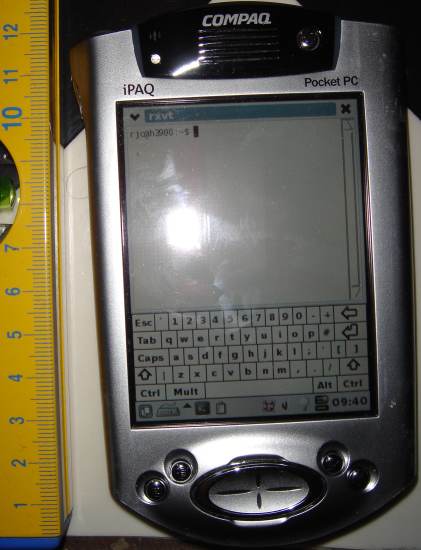
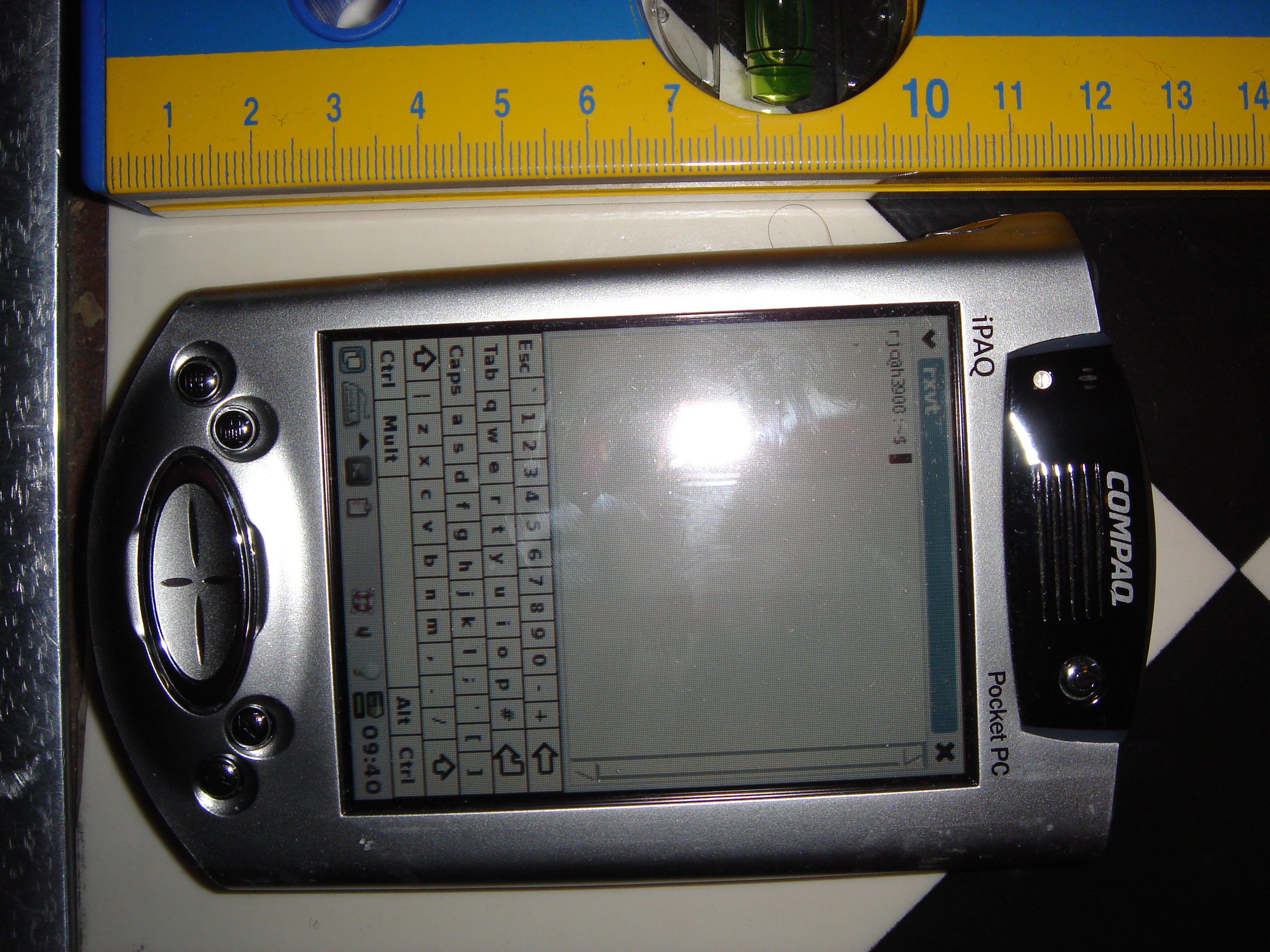
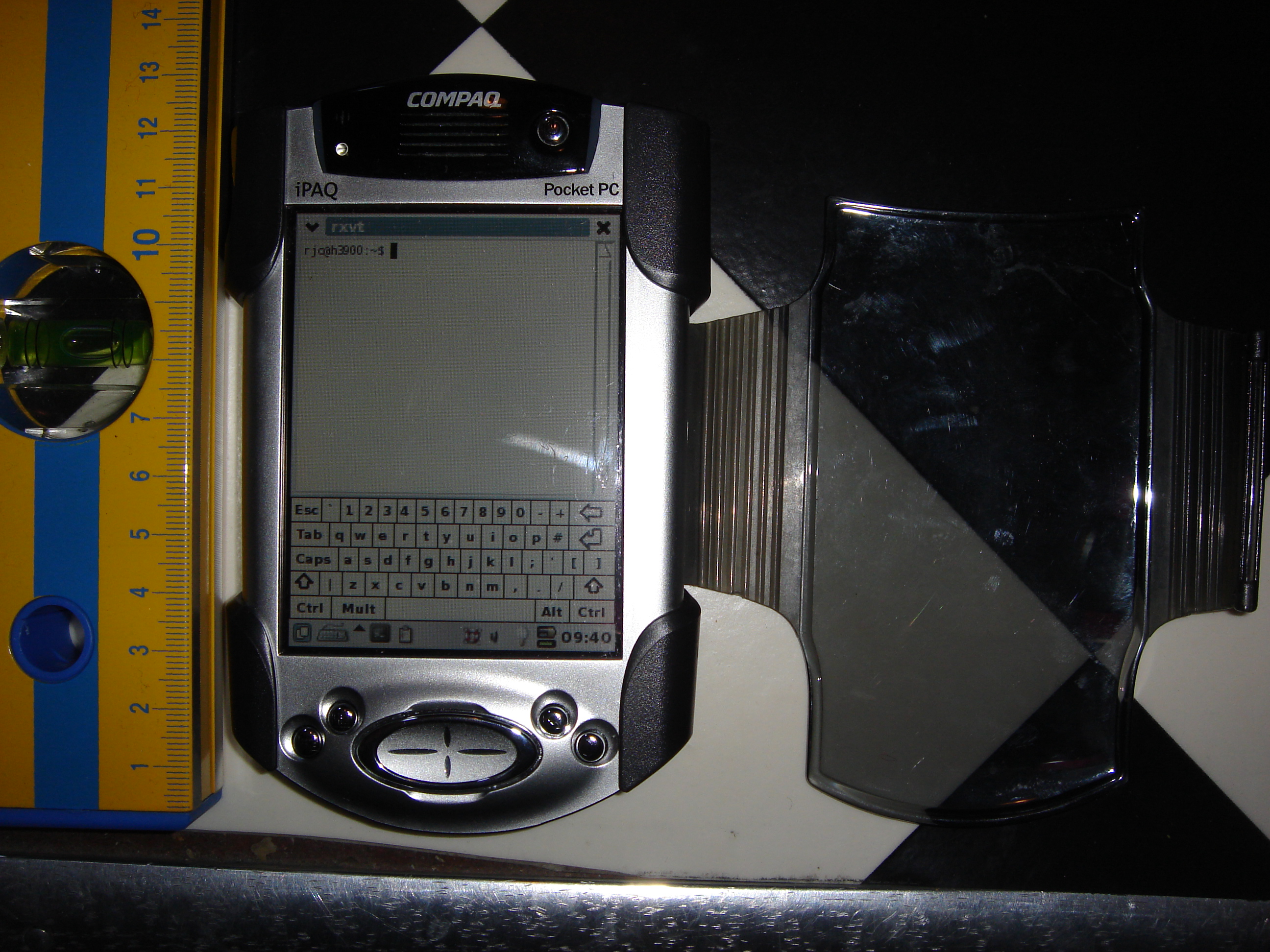
Since about 2002 I have been using a iPaQ [1] for taking notes while on the move. I have a pair of H3950 iPaQs that were given to me for the purpose of some software development work. As modern mobile phones have telephony as a small part of their feature set I think it s worth comparing a 2002 iPaQ with a 2009 mobile phone in terms of the note taking functionality. I have just got myself an LG U990 Viewty mobile phone [2]. It has a screen resolution of 240*320 which is the highest resolution that is remotely common for a mobile phone - and the same resolution as my 2002 model iPaQ. The LG KC910 Renoir has a resolution of 240*400 and seems to be the only phone that my carrier provides which has a higher resolution. The iPhone [3] has a resolution of 480*320. So it seems that the most expensive modern mobile phone that is available in Australia has a screen resolution that is only twice that of a 2002 PDA. I believe that in Japan you could buy a PDA with a higher resolution than 240*320 in 2002. My iPaQ is running Linux, so I can do whatever I want with it. I have a bar at the bottom of the screen with icons to launch, I configure it with the programs that I need most often and they are always one click away. While with my mobile phone I always have two large icons for paid services from my telco and I can t add icons for the things that I want. My iPaQ has a virtual keyboard that can be displayed in portrait or landscape mode. The above pictures show it in the portrait mode which allows the greatest area of screen space for text. The landscape mode is good for entering long lines of text even though the total number of words that can be displayed on screen is smaller. The size of my iPaQ is 134mm in height, between 77 and 84mm in width (it tapers) and 15.9mm thick without it s protective sleeve. The protective sleeve (shown in the second picture) adds about another 5mm to the width and thickness. My iPaQ is 1.76* the volume of my Viewty phone and at 184g vs 112g is 1.64* the mass. With it s sleeve on it is about 2.4* the volume. It s larger but with the sleeve it s a lot more solid, a touch-screen is very fragile so putting a touch-screen device in your back pocket without a sleeve is not a viable option. So I now own a mobile phone that has more storage, RAM, and CPU power than my iPaQ, but is less useful for the basic task of writing small documents and seems to have no facility for drawing diagrams. Most recent mobile phones have the ability to record voice (my Viewty can store 34 hours on it s internal storage and supports mini-SD cards for extra storage). But my Viewty lacks the ability to pause voice recording so if I wanted a series of notes during a meeting I would get a series of short voice recordings rather than a single file with many items. The todo list is also fairly poor in the Viewty, so even disregarding the poor keyboard on the touch-screen it would compare badly to the iPaQ. So it seems that an iPaQ that is almost seven years old when running Linux and the GPE Palmtop Environment [4] with with default configuration handily beats one of the latest and greatest mobile phones for all areas of common functionality. If the Viewty had it s source code available I would be tempted to contribute some patches (even if it was not free software). Finally, before someone suggests an Android [5], Greenphone [6] or other phone that s relatively open and programmable, I wanted a phone that had a good camera (by phone standards) and came essentially for free on an affordable contract. Maybe in two years time (when my current contract ends) there will be such a phone on offer. Mobile phones aren t THAT important to me, so while I would like to encourage the development of open telephony platforms it s a much lower priority than about a dozen free software projects. I expect that in the future something like an Android will become a great mobile phone with great PDA functionality. But for the moment I ll use an iPaQ and a Viewty.
Kapil Paranjape: Securing Synchronisation with unison (Mostly Wrong)

There are a number of documents about how to permit ssh access to run rsync or unison for remote synchronisation by an appropriate configuration of the authorized_keys file. Of these the best two are probably those by St phane Kattoor and Christian 'Greek0' Aichinger. Joey Hess also explains some of the pitfalls. The problem is the familiar one: to limit the file-system hierarchy accessible. The humble chroot is a natural way to implement such restrictions which is probably what led "Greek0" to suggest the use of dchroot. This is indeed a fine solution ... except, how does one implement it if one is not root on the server machine? WARNING: The rest of this entry is wrong as was pointed out by Joey Hess. See the update at the bottom. The package fakechroot by Piotr Roszatycki provides a way out. The problem I had was as follows: A recent enough version of fakechroot (version 2.8 worked) allows one to do make use of environment variables as follows:
LD_PRELOAD=libfakechroot.so
LD_LIBRARY_PATH=/usr/lib/fakechroot:/usr/lib64/fakechroot:/usr/lib32/fakechroot:/usr/lib:/lib
FAKECHROOT=true
FAKECHROOT_VERSION=2.8
FAKECHROOT_EXCLUDE_PATH=/bin:/lib:/usr
export LD_LIBRARY_PATH LD_PRELOAD
export FAKECHROOT_EXCLUDE_PATH FAKECHROOT FAKECHROOT_VERSION

After this setup one can run
HOME=/ chroot $HOME/some/dir /usr/bin/unison -server

and the unison server1 will only be able to view /bin, /lib, /usr and $HOME/some/dir; the latter will be mapped to /. (One needs to set the $HOME variable to something sensible for unison to function.) One should not be tempted to create subdirectories of $HOME/some/dir containing only the "relevant" portions of the system directories for unison. The reason is that those files will be created as me and so could be overwritten by unison. The creation of a suitable entry in authorized_keys to use this is an easy exercise! UPDATE: As Joey Hess has noted:
Taking a program, be it fakechroot or unison, that was never designed with security in mind, and trying to use it as a security barrier, is an open invitation to pain.
I had thought about the problem of uploading static-linked binaries and had imagined that it had been overcome. However, the basic facts in this case are:

  1. For those trying this out at $HOME with some terminal command like /bin/sh instead of /usr/bin/unison a suggestion is to add /dev to the FAKEROOT_EXCLUDE_PATH variable so that you have access to your terminal. Be aware that giving remote access to /dev may have unintended consequences!

Romain Beauxis: Discriminations

I recently stumbled upon a document asking for one s ethnic orgin: My initial reaction was not really constructive, so I though it worth some toughs.. Indeed, after discussing with friends about this, I happened to an interesting conclusion.

Dirk Eddelbuettel: littler 0.1.2

Version 0.1.2 of r (pronounced littler) was just rolled up. This version adds two new command-line switches: As usual, our code in our svn archive, on my r page, and in the local directory here. A fresh package is in Debian's incoming queue, and Jeff's littler page at Vanderbilt should reflect the new release soon too.

14 January 2009

Aurelien Jarno: QEMU PowerPC

For a few weeks Laurent Vivier, Blue Swirl and myself have been working on getting QEMU PowerPC working correctly with recent distributions. QEMU used to rely on OpenHackWare for the OpenFirmware implementation on PowerPC. It is a very limited implementation (for example it as no Forth support), which is unable to boot most 2.6.x kernels with the OldWorld emulation. It is able to boot recent kernels with the PReP emulation, but things like the PCI bus emulation are not working correctly. Moreover the PReP kernels are gone with the removal of the arch/ppc tree. OpenBIOS was already used for the OpenFirmware implementation of Sparc 32 and Sparc 64 targets. It now supports PowerPC for the OldWorld emulation. As a result it is now possible to use Debian PowerPC under QEMU emulating an OldWorld machine. What works? What doesn t work / has to be done? For those who want to test, an Etch image is available. You will need to compile QEMU by manually given that the version in Debian is too old and that openbios-ppc is still in the NEW queue.

Gunnar Wolf: Hyperdimensional strings

I am stunned no more people have been bitten by this. Or at least, the Intarweb has not heard about it. Censorship perhaps? I haven't researched more into the causes, but anyway...

I was pushing a project I have had lingering for some time from Rails 2.0.x to 2.1.x (yes, 2.2 is already out there, but 2.1 is the version that will ship with Lenny) - The changes should not be too invasive, as it is a minor release, but there are some quite noticeable changes.
Anyway... What was the problem? Take this very simple migration:
  1. class CreatePeople < ActiveRecord::Migration
  2. def self.up
  3. create_table :people do t
  4. t.column :login, :string, :null => false
  5. t.column :passwd, :string, :null => false
  6. t.column :firstname, :string, :null => false
  7. t.column :famname, :string, :null => false
  8. t.column :email, :string
  9. t.column :pw_salt, :string
  10. t.column :created_at, :timestamp
  11. t.column :last_login_at, :timestamp
  12. end
  13. end
  14. def self.down
  15. drop_table :people
  16. end
  17. end

The problem is that PostgreSQL refuses to create a hyperdimensional string field. I offer this here to you, line-wrapped by me for your convenience.
  1. PGError: ERROR: syntax error at OR near "("
  2. LINE 1: ...serial PRIMARY KEY, "login" character varying(255)(255) NOT ...
  3. ^
  4. : CREATE TABLE "people" ("id" serial PRIMARY KEY,
  5. "login" character varying(255)(255) NOT NULL,
  6. "passwd" character varying(255)(255)(255) NOT NULL,
  7. "firstname" character varying(255)(255)(255)(255) NOT NULL,
  8. "famname" character varying(255)(255)(255)(255)(255) NOT NULL,
  9. "email" character varying(255)(255)(255)(255)(255)(255) DEFAULT NULL NULL,
  10. "pw_salt" character varying(255)(255)(255)(255)(255)(255)(255) DEFAULT NULL NULL,
  11. "created_at" timestamp DEFAULT NULL NULL, "last_login_at" timestamp DEFAULT NULL NULL)

Beautiful. Now I can store strings not only as character vectors, but as planes, cubes, hypercubes, and any other hyperdimensional construct! Are we approaching quantum computers?
What is really striking is that... I found only one occurrence on tha net of this bug - one and a half years ago, in Ola Bini's blog. No stunned users looking for the culprit, no further reports... Strange.
Still, the bug was fixed in Rails 2.2 about half a year ago, although not in revisions of earlier versions. I will request the patch to be applied to earlier versions as well. Sigh.

Jonathan McDowell: Yet another missed FOSDEM

I managed to go to FOSDEM in 2005. I enjoyed myself. I'd like to go again. No, really, I would.

In 2006 I drew the short straw while working for Black Cat; Simon and Dom went, I remained the person on the same landmass as the servers.

In 2007 I had a wedding to go to.

Last year I was too disorganised to sort out suitable transport from Northern Ireland.

I'd resigned myself to having to take off the Friday and Monday this year and fly. Except it's been moved to near the start of February, which thus conflicts with an annual dinner that gets to have higher priority. Bah.

Maybe I'll manage 2010, but I'll not be holding my breath.

Axel Beckert: Sedating irssi's nick highlight for microblogging messages

My favourite IRC client is irssi. I like it so much that I even use it for all my instant messaging needs. The gateway of choice between irssi and mostly Jabber is Bitlbee. I also microblog on identi.ca, a free (free as in AGPL) microblogging service based on laconi.ca. In comparsion to the non-free and proprietary Twitter microblogging, identi.ca has all the features which Twitter turned off already again. For me the most important feature of Twitter was tweeting via XMPP (aka Jabber). Since Twitter turned off that feature, Twitter increasingly fast became unimportant for me. Identi.ca still has this feature and cultivates it further. So usually don t visit the identi.ca website that often anymore but get the microblogging stream of my friends via XMPP and Bitlbee directly into my irssi. Although this is very convenient, it has one big disadvantage: In comparison to an IRC channel, not only notices directed to me personally but every incoming notice beeps, because Bitlbee sends them either as /MSG or prepends my nick name. For normal IRC communication /MSG should beep, and you can t make exceptions for that so easily in irssi. I asked on #bitlbee (OFTC) and on #irssi (IRCNet). On #irssi funnily the first answer was I tried that yesterday, no success from Shrike. So I m not alone, although Shrike uses Jaiku and not identi.ca. Then I had the idea to get Bitlbee to not prepend my nick name for all those identi.ca notices which go into the &bitlbee channel but I didn t find a way to configure this in Bitlbee. But Shrike found a way to do this with already existing irssi plugins: The trigger.pl plugin (available e.g. in Debian s irssi-scripts package or on scripts.irssi.org) can add triggers which replace parts of the message. So the following three lines helped me to reduce the noise microblogging causes in my irssi:
/script load trigger
/trigger add -publics -masks 'identica!update@identi.ca' -channels '&bitlbee' -regexp "^XTaran: " -replace ''
/trigger save
And on the command line I just needed a symlink to automatically start the trigger plugin on irssi startup:
ln -vis /usr/share/irssi/scripts/trigger.pl ~/.irssi/scripts/autorun/
So now again only the important messages beep. :-)

David Welton: Hosting, Commodities, and "The Cloud"

Anyone connected to the world of IT has been bludgeoned over the head with "cloud" news lately, to the point where the term has become vague and mostly a buzzword. There is, however, something behind the phenomenon, described in Nick Carr's book The Big Switch, with more computing power being centralized at large data centers where economies of scale come into play. I had an interesting chat with Marco D'Itri a while back, about hosting and commodities. It's clear that there is some commoditization going on, but he maintains that hosting is not a commodity. I've been thinking about it and the conclusion I've come to is that some parts of the business are certainly commodities: disk space, memory, bandwidth, and processor cycles. Those things, are, ultimately, what we want to buy when we buy 'hosting'. However, the bits and pieces between that, and people who build on top of those services (i.e. someone who runs a web site) are not really a commodity, yet. Customer service, for instance, might vary a great deal between providers. What will happen in that space, will we see a baseline price for the commodities, and hosting resellers built on top of that that offer different levels of service? I do think that the "mom and pop" hosting type of situations will gradually disappear in favor of larger data centers that can take advantage of economics of scale, though. Also, as I've written about in the past, in Web Hosting - A Market for Lemons, there are some serious information asymmetry issues - how do you know the people providing your service are serious? How do you know they're using good components that wont' break often, rather than cheap junk that will lead to frequent outages? If you have the resources, you can build a system like Google's, where it doesn't matter what fails, it just works around it, but the basic tools that most of us are working with right now aren't that high level. I was reminded of the information asymmetry issue by this article, written by the Dreamhost folks, Web Hosting's Dirty Laundry, which describes how they caught a 'review' site trying to get money from Dreamhost for positive reviews, which is interesting in light of the lemon problem. Wikipedia has some criteria for a lemon market here: http://en.wikipedia.org/wiki/The_Market_for_Lemons#Criteria, which include the following:
Deficiency of effective public quality assurances (by reputation or regulation and/or of effective guarantees / warranties
If it's difficult to get real, honest, impartial reviews of hosting services, that is a push in the direction of 'lemons'. Of course, it's not impossible to get this information, but it seems that a lot of us still go by "hearsay" - what others we know use and report to be ok. To compare it with another product, I'd probably ask around to friends prior to purchasing a new car, but whatever I get is likely to work ok, even if it's not the absolute best. On the other hand, the wrong hosting provider might be very much a "fly by night" operation that leads to a lot of downtime, so I'm far more likely to listen to what other people have to say, and be far more cautious about buying "any old thing". Opinions? Comments? Thoughts? Where do you see this industry going?

Jon Dowland: sysadvent

Someone has performed a month of sysadmin blogging over at http://sysadvent.blogspot.com/: some good stuff in there. In particular, I found Day 2 - Windows Powershell interesting (hotwire is an example of something similar in the UNIX world) and Day 24 - Message Brokers is relevant for me as we're looking at implementing some message queueing stuff at work.

David Welton: Hosting, Commodities, and "The Cloud"

Anyone connected to the world of IT has been bludgeoned over the head with "cloud" news lately, to the point where the term has become vague and mostly a buzzword. There is, however, something behind the phenomenon, described in Nick Carr's book The Big Switch, with more computing power being centralized at large data centers where economies of scale come into play. I had an interesting chat with Marco D'Itri a while back, about hosting and commodities. It's clear that there is some commoditization going on, but he maintains that hosting is not a commodity. I've been thinking about it and the conclusion I've come to is that some parts of the business are certainly commodities: disk space, memory, bandwidth, and processor cycles. Those things, are, ultimately, what we want to buy when we buy 'hosting'. However, the bits and pieces between that, and people who build on top of those services (i.e. someone who runs a web site) are not really a commodity, yet. Customer service, for instance, might vary a great deal between providers. What will happen in that space, will we see a baseline price for the commodities, and hosting resellers built on top of that that offer different levels of service? I do think that the "mom and pop" hosting type of situations will gradually disappear in favor of larger data centers that can take advantage of economics of scale, though. Also, as I've written about in the past, in Web Hosting - A Market for Lemons, there are some serious information asymmetry issues - how do you know the people providing your service are serious? How do you know they're using good components that wont' break often, rather than cheap junk that will lead to frequent outages? If you have the resources, you can build a system like Google's, where it doesn't matter what fails, it just works around it, but the basic tools that most of us are working with right now aren't that high level. I was reminded of the information asymmetry issue by this article, written by the Dreamhost folks, Web Hosting's Dirty Laundry, which describes how they caught a 'review' site trying to get money from Dreamhost for positive reviews, which is interesting in light of the lemon problem. Wikipedia has some criteria for a lemon market here: http://en.wikipedia.org/wiki/The_Market_for_Lemons#Criteria, which include the following:
Deficiency of effective public quality assurances (by reputation or regulation and/or of effective guarantees / warranties
If it's difficult to get real, honest, impartial reviews of hosting services, that is a push in the direction of 'lemons'. Of course, it's not impossible to get this information, but it seems that a lot of us still go by "hearsay" - what others we know use and report to be ok. To compare it with another product, I'd probably ask around to friends prior to purchasing a new car, but whatever I get is likely to work ok, even if it's not the absolute best. On the other hand, the wrong hosting provider might be very much a "fly by night" operation that leads to a lot of downtime, so I'm far more likely to listen to what other people have to say, and be far more cautious about buying "any old thing". Opinions? Comments? Thoughts? Where do you see this industry going?

Martin Meredith: Obligatory Post

Ok, so here s my obligatory Hello Planet Debian and I m now a Debian Developer post. So, yeah, I m now a Debian Developer - and have a shiny new email address. For those of you considering going through the NM process, or already going through it - don t give up hope, you ll get there eventually! Thanks to all those who ve helped me along the way. In other news, I ve been meaning to blog about a couple of sites for a while now. First of all, is Feedbooks.com - a nifty little site with lots of ebooks to download. Including a lot of the classics. You can also publish books on there, but I haven t got round to it yet. This is currently my homepage on my eeePC. I ve setup the custom PDF to be a good size for the eeePC (152mmx91mm, 10px font, 5mm all borders) and have been reading some of the Doctor Who books on there (and actually not finding it that uncomfortable curling up in bed with. The next site is Stack Overflow - I ve mentioned this briefly before, but it s a great site. A community driven Programming Q+A site. Kind of hard to describe, but go have a look, you ll soon get the gist of it! Anyway, I think it s time to head to bed for me!

13 January 2009

Joerg Jaspert: New FTP Assistant, Call for help

Like a short while ago, we just added another member to our Ftpteam as you can read in my latest d-d-a mail. As you can also read, we are having another DD as a trainee and possible further addition (at least I hope it will turn out to be one!), and we are also asking for more volunteers. Read that mail if you want to find out more. :)

Simon McVittie: Compiling against uninstalled versions of libraries

Developers seem to do a lot of fighting with bleeding-edge libraries installed in a --prefix, so I thought I'd share how I develop telepathy-glib (a library) and telepathy-gabble (a program using that library). ~/Collabora/telepathy/tpglib on my laptop is a git clone of telepathy-glib.git, branched using the process I documented on http://telepathy.freedesktop.org/wiki/Git, which is basically: ~/Collabora/telepathy/gabble is a git clone of telepathy-gabble.git, using the same process. In my Gabble checkout, I used to configure like this:
cd ~/Collabora/telepathy/gabble
./autogen.sh \
TP_GLIB_CFLAGS="-I$ HOME /Collabora/telepathy/tpglib" \
TP_GLIB_LIBS="$ HOME /Collabora/telepathy/tpglib/telepathy-glib/libtelepathy-glib.la"
This would make libtool link Gabble against the copy of telepathy-glib built by my bleeding-edge git checkout, without ever needing to install it. This allowed me to try out my latest telepathy-glib changes with Gabble's more extensive regression tests, which was a great win. It also meant I could develop Gabble branches that required a not-yet-released telepathy-glib, and all without touching my system copy of telepathy-glib (the one I use to run Empathy and talk to people - which is the packaged version from Debian unstable or experimental). The reason I could do this is that I laid out the telepathy-glib source tree in The Right Way , which is: if a header is designed to be used via #include <my-library/foo.h>, then it goes in a my-library/ directory in the source tree, and includes other headers (even from the same project) with #include <my-library/other.h>. This means you can just add the top directory of the source tree to your include path (which automake does by default) and the right thing will happen. (Actually, this is a slight simplification of the truth: because telepathy-glib contains generated headers, you have to add the top directory of the build tree to your include path too, if you want to support out-of-tree builds. Which, of course, you do.) Other projects that do this correctly include GLib and Avahi. Avahi is a particularly interesting example because it has numerous libraries in the same tarball (including avahi-common, avahi-core, avahi-glib and avahi-gobject, which form a dependency chain). Projects that don't do this correctly include telepathy-mission-control (which is on my hit list for further swamp-draining) and libtelepathy (which is obsolete). Today I committed a patch to telepathy-glib, inspired by GStreamer, to generate telepathy-glib-uninstalled.pc. The presence of this patch simplifies the process further, to:
./autogen.sh PKG_CONFIG_PATH=$HOME/Collabora/tpglib/telepathy-glib
This has the same benefits as setting TP_GLIB_CFLAGS and TP_GLIB_LIBS, but is easier to remember, and is more future-proof against changes to telepathy-glib. It only works because pkg-config has a special case for this situation - if you ask for the package "foo", pkg-config will always look for foo-uninstalled.pc before foo.pc. (Edited 2009-01-13: putting environment variables on the ./configure or ./autogen.sh command line like ./autogen.sh PKG_CONFIG_PATH=foo is better than putting them in the environment like PKG_CONFIG_PATH=foo ./autogen.sh, since it works around Debian bug #398901 and bugs like it)

Lior Kaplan: Where did the openoffice.org language packs go ?


Is it just me, or you can t get language packs from the openoffice.org website? I couldn t even find them in the extension packs. I know the code and files are outthere since, the Linux distributions continue to create such packages for their users, but why can I get the files from the official website (e.g. for windows users)? I d like to get the official openoffice.org version in English, and to add to it the Hebrew language pack (e.g. interface translation) - why should I redownload the whole software again just for the language pack? Posted in i18n & l10n, Openoffice.org Tagged: openoffice

Romain Beauxis: (not) Being tolerant.

I usually like to discover other cultural usages and try understand what I feel chocking from my cultural point. Not for THIS. I strongly believe this kind of stupidity should be removed as soon as possible. It is an insult to humanity. And the better way to put bareers between people. White British, White Irish or Mixed Black African and White and Mixed Black Caribbean and White. What a bullshit !!!!

Christoph Haas: NFS: sec=sys or ruin your day

And once again I was bitten by problems on my Debian laptop mounting directories from the file server via NFS. After a Debian dist-upgrade I couldn t login to KDE any more. Shell login worked somehow but I quickly found out I could neither read nor write any files there. Apparently an ls -al showed me the right permissions (not just unmappable numeric UIDs or something of that kind) and an id -a confirmed that my LDAP PAM configuration still worked. But reading or writing any file just lead to Permission denied . I m not sure if it was an update in the nfs-common package in Sid. But I had the same problem before and it took me hours until I finally figured out that Debian s NFS seems to use non-standard defaults. Namely the sec parameter when mounting the NFS share. According to the Solaris documentation the default is sec=sys which means that NFS uses the locally acquired UIDs and GIDs. Like /etc/passwd, NIS or LDAP/PAM. But on Debian it seems to default to sec=krb5 or something. As I have close to no idea how to set up Kerberos and don t want to (and talking to other people hardly anyone has used Kerberos either) I figured that it s not really a sane default. I didn t even ask for NFSv4 - just NFSv3. Perhaps I undeliberately set some /etc/default/nfs-common configuration setting wrong or whatever. It was just strange. So I set sec=sys in the options of the NFS share of my /etc/fstab and the problem was fixed. Actually I wonder what network file systems other people use in a Debian environment. NFS somehow feels antiquated to me anyway.

Jose Carlos Garcia Sogo: Postfix+TLS+SASL in Debian HowTo recovered

Once of the most visited pages in my site was the Postfix+SASL+TLS for Debian Sid and Sarge Howto, who I wrote 3 years ago. As I hosted it in my old home server, when it broke it went offline, and though there are still some copies around the net, there are a lot of referals still directing traffic to tribulaciones.org.
Now I have recovered it and it is now available here. I will write an .htaccess file to redirect people to the new place and, with some more time, I will review it to see if there are some changes needed for Lenny.
Enjoy! UPDATED 14/01/2009: I have added promised .htaccess file, so every link to old URL (http://www.tribulaciones .org/docs/postfix-sasl-tls-howto.html) will work again.

Petr Rockai: darcs 2.2.0rc1

(This post is somewhat late, the final release is in two days. However, we still need testing and reports of possible issues.) I am pleased to announce that darcs 2.2 is coming along nicely. I would like to ask everyone to give a ride to darcs 2.2, release candidate 1. This release again comes in two flavours:
  1. The source tarball, http://repos.mornfall.net/darcs/darcs-2.2.0rc1.tar.gz, which can be built using the traditional autoconf-based buildsystem. This is the fully supported version. After downloading and unpacking, you can issue:
    $ ./configure
    $ make
    $ ./darcs --version
    
    or
    # make install
    
    More detailed instructions inside the tarball (file README).
  2. Cabalised source. You can either download a tarball from http://repos.mornfall.net/darcs/darcs-2.1.99.0.tar.gz and build manually (see the build instructions in README inside the tarball), or, alternatively, you can use cabal-install to obtain a copy (the release candidate is now available on hackage):
    $ cabal update  
    $ cabal install darcs
    
    This should give you a darcs binary in ~/.cabal/bin you should probably add that to your PATH.
This is a preliminary changelog since version 2.1.2 (released last November): Preliminary list of issues that have been fixed in darcs since version 2.1.2: 1223 sporadic init.sh test failure (2.1.1rc2+472)
525 amend-record => darcs patches show duplicate additions
1247 make TAGS is broken
1273 renameFile: does not exist (No such file or directory)
1165 get should print last gotten tag
1249 2.1.2 (+ 342 patches) local drive detection on Windows error
1238 wish: darcs help setpref should list all prefs
1199 Backup files darcs added after external merge
1043 pull => mergeAfterConflicting failed in geteff (2.0.2+)
1117 Whatsnew should warn on non-recorded files
1101 darcs send cc recipient not included in success message Thanks to Thorkil Naur for compiling this list. I would like to thank all contributors developers, testers, bystanders for helping darcs get along further. It s been hard times recently for darcs, as many of you probably know. Nevertheless, we are regaining confidence in future darcs development. No way are we going to leave darcs fall by the road. I am sure that this one time, I speak for everyone in our developer and user community.

12 January 2009

Jonathan McDowell: Life with the Google/T-Mobile G1

I've previously mentioned my desire for a new smartphone. I'd been eyeing the G1 since its release, with the main factor stopping me from going ahead the need for a T-Mobile contract. They don't have any 3G coverage north of Belfast that I've seen and I'm very happy with my 20/month O2 Simplicity contract and don't have any need to pay twice that. Luckily Katherine decided to get me one for my birthday, and after some confusion involving it going to Norwich (always remember to update your Paypal delivery address as well as the card address when you move home, folks. Oh, and your Amazon wishlist address too; it's different than your primary address and I've been bitten by that myself in the past) it turned up the weekend before Christmas.

I have a UK spec T-Mobile G1. First step was to get it unlocked for use on O2. I used Unlock G1 - they weren't the cheapest, but I'd seen them recommended on a few G1 news sites and they had a helpful guide on their site about activating without a T-Mobile SIM. They claim a code within 2 business days. I ordered at 19:30 UTC on a Saturday night and had a code by 21:00 that worked first time.

Once the O2 SIM was working I needed to check if the phone was easily rootable. I typed reboot and was rewarded with a rebooting phone. I had the RC7 UK firmware release, which still had the bug. I followed the android-dls.com guide to keeping root and upgraded to the RC8 release. With that out of the way I could start to actually have a play.

The screen is lovely. I'm used to the high res E70 screen and have been disappointed at the number of phones that only do 320x240. 480x320 is probably the minimum I'd want (if I can't manage an 80 character wide SSH session I'm not really interested) though obviously if HTC ever get round to a Touch Pro with Android I might be tempted... Touch aspect is perfectly responsive, as is the interface in general - while I don't use a phone that much day to day my mobile is the only number I give out so it tends to be the only phone I use. This means that the ability to make/receive calls/sms is the most important feature for me (it's odd having to say this, but I know people who've claimed to love phones but on further probing reveal it's a great PDA but dire for calls and they have to carry something else for that). The G1 performs admirably for my needs.

The built in apps are good too. The browser is much better than the E70. I don't know if that's the bigger screen (though the resolution isn't much different) or a faster processor, but browsing on my mobile is a much more realistic proposition now. I've only played briefly with the iPhone browser and I wouldn't say the G1 was any better, but it's certainly good. Calendaring is functional too and copes with multiple Google Calendars as you'd hope. Shame it doesn't deal with anything else, but for the moment this suits my needs. I haven't used it for email; I prefer to ssh to my colo box and run mutt. Contacts are mostly ok, though I have a few gripes I'll mention later.

I haven't felt the need to install many apps. The connectbot ssh client was an obvious one and is pretty nice (main missing feature is UTF-8 and there's a feature request for it raised already). I've installed a few games off the Android Market, as well as Barcode Scanner (does what you'd think) and CellFinder (displays your location and which mobile cell you're using; it's a bit scary how few O2 masts there seem to be near my house). Installation from the market has been a breeze and it's nice to be able to flick through what's available. With my E70 it was always a real pain to go and hunt down Symbian apps (especially when S60 3rd Edition was new) and install them.

Before I start on my gripes, let me clarify that I am very happy with this phone. I wanted something with a keyboard that was functional and this fits the bill. It's a definite improvement over my E70 and I feel it's much more responsive than any of the recent Windows Mobile devices I've encountered. Also the battery life hasn't proved to be an issue - from articles I'd read I'd expected to have difficulty getting a day out of it, but in general I can easily get 2 and have had 3. Maybe my usage patterns aren't as heavy as everyone else, but that's fine for me (I remember my 9000i Communicator which really was a case of having to charge it every night).

The first issue I hit was the contacts system. Google have tied this into GMail and it really seems to have been a last minute thought process, perhaps along the lines of "Where can we stick this? Oh, hang on, people have email contacts, how about there?". Trying to move my contacts over from my E70 I was surprised to find that there's no way to import a vCard. The only option is CSV. WTF? I'm not saying vCard is perfect, but it's pretty much what we have as a standard method of contact interchange. I ended up writing some Perl to crudely parse the vCards and output CSV. I shouldn't have had to.

Then again, maybe the issue is that Google know their contacts system is a bit lacking. You'd think a company with online calendaring and contacts would be able to cope with things like birthdays, tying them together between contacts and displaying them in your calendar, wouldn't you? They can't. I can't see any way to store a birthday or anniversary with a contact. Nor a home page. The contacts system is the one area that the E70 outshines the G1.

I miss an onscreen keyboard more than I thought I would (ie at all). I understand this should be coming in the next release, which will make things like quick replies to SMSes much easier (there's no point opening the keyboard for a "Nearly there" response).

The use of only a single APN for internet access and MMS is a bit troublesome; I haven't managed to get this to work properly with O2 - either I have fully working 'net or fully working MMS with only web seeming to work. I haven't played with the settings very much though and I spent 7 months without MMS even enabled on my O2 account, so it's not high priority. Also something I understand is being fixed upstream.

I'd like a way to see the next calendar event on my home screen. I may just be missing how to do this, but it was a nice feature on the E70.

I haven't played much with the camera, but I get the impression it's pretty typical of the average mobile phone; ie not great. Not a problem for me, but don't expect this to replace a compact digital camera.

While I accept this phone isn't for everyone I think it's pretty much what I'm looking for in terms of what's on the market today. There's nicer hardware out there, but a large part of what makes this phone is the Android software. I look forward to seeing new phones in the coming year making use of it, hopefully leading to a decent selection by the time I need a new phone again. :)

Next.

Previous.