Search Results: "tb"

4 September 2014

Russell Coker: Inteltech/Clicksend SMS Script

USER=username
API_KEY=1234ABC
OUTPUTDIR=/var/spool/sms
LOG_SERVICE=local1 I ve just written the below script to send SMS via the inteltech.com/clicksend.com service. It takes the above configuration in /etc/sms-pass.cfg where the username is assigned with the clicksend web page and the API key is a long hex string that clicksend provides as a password. The LOG_SERVICE is which syslog service to use for the log messages, on systems that are expected to send many messages I use the service local1 and I use user for development systems. I hope this is useful to someone, and if you have any ideas for improvement then please let me know. #!/bin/sh
# $1 is destination number
# text is on standard input
# standard output gives message ID on success, and 0 is returned
# standard error gives error from server on failure, and 1 is returned . /etc/sms-pass.cfg
OUTPUT=$OUTPUTDIR/out.$$
TEXT= tr "[:space:]" + cut -c 1-159 logger -t sms -p $LOG_SERVICE.info "sending message to $1"
wget -O $OUTPUT "https://api.clicksend.com/http/v2/send.php?method=http&username=$USER&key=$API_KEY&to=$1&message=$TEXT" > /dev/null 2> /dev/null if [ "$?" != "0" ]; then
echo "Error running wget" >&2
logger -t sms -p $LOG_SERVICE.err "failed to send message \"$TEXT\" to $1 wget error"
exit 1
fi if ! grep -q ^.errortext.Success $OUTPUT ; then
cat $OUTPUT >&2
echo >&2
ERR=$(grep ^.errortext $OUTPUT sed -e s/^.errortext.// -e s/..errortext.$//)
logger -t sms -p $LOG_SERVICE.err "failed to send message \"$TEXT\" to $1 $ERR"
rm $OUTPUT
exit 1
fi ID=$(grep ^.messageid $OUTPUT sed -e s/^.messageid.// -e s/..messageid.$//)
rm $OUTPUT logger -t sms -p $LOG_SERVICE.info "sent message to $1 with ID $ID"
exit 0

31 August 2014

Russell Coker: Links August 2014

Matt Palmer wrote a good overview of DNSSEC [1]. Sociological Images has an interesting article making the case for phasing out the US $0.01 coin [2]. The Australian $0.01 and $0.02 coins were worth much more when they were phased out. Multiplicity is a board game that s designed to address some of the failings of SimCity type games [3]. I haven t played it yet but the page describing it is interesting. Carlos Buento s article about the Mirrortocracy has some interesting insights into the flawed hiring culture of Silicon Valley [4]. Adam Bryant wrote an interesting article for NY Times about Google s experiments with big data and hiring [5]. Among other things it seems that grades and test results have no correlation with job performance. Jennifer Chesters from the University of Canberra wrote an insightful article about the results of Australian private schools [6]. Her research indicates that kids who go to private schools are more likely to complete year 12 and university but they don t end up earning more. Kiwix is an offline Wikipedia reader for Android, needs 9.5G of storage space for the database [7]. Melanie Poole wrote an informative article for Mamamia about the evil World Congress of Families and their connections to the Australian government [8]. The BBC has a great interactive web site about how big space is [9]. The Raspberry Pi Spy has an interesting article about automating Minecraft with Python [10]. Wired has an interesting article about the Bittorrent Sync platform for distributing encrypted data [11]. It s apparently like Dropbox but encrypted and decentralised. Also it supports applications on top of it which can offer social networking functions among other things. ABC news has an interesting article about the failure to diagnose girls with Autism [12]. The AbbottsLies.com.au site catalogs the lies of Tony Abbott [13]. There s a lot of work in keeping up with that. Racialicious.com has an interesting article about Moff s Law about discussion of media in which someone says why do you have to analyze it [14]. Paul Rosenberg wrote an insightful article about conservative racism in the US, it s a must-read [15]. Salon has an interesting and amusing article about a photography project where 100 people were tased by their loved ones [16]. Watch the videos.

Lucas Nussbaum: Debian trivia

After an intensive evening of brainstorming by the 5th floor cabal, I am happy to release the very first version of the Debian Trivia, modeled after the famous TCP/IP Drinking Game. Only the questions are listed here maybe they should go (with the answers) into a package? Anyone willing to co-maintain? Any suggestions for additional questions?

30 August 2014

Joachim Breitner: DebConf 14

I m writing this blog post on the plane from Portland towards Europe (which I now can!), using the remaining battery live after having watched one of the DebConf talks that I missed. (It was the systemd talk, which was good and interesting, but maybe I should have watched one of the power management talks, as my battery is running down faster than it should be, I believe.) I mostly enjoyed this year s DebConf. I must admit that I did not come very prepared: I had neither something urgent to hack on, nor important things to discuss with the other attendees, so in a way I had a slow start. I also felt a bit out of touch with the project, both personally and technically: In previous DebConfs, I had more interest in many different corners of the project, and also came with more naive enthusiasm. After more than 10 years in the project, I see a few things more realistic and also more relaxed, and don t react on Wouldn t it be cool to have crazy idea very easily any more. And then I mostly focus on Haskell packaging (and related tooling, which sometimes is also relevant and useful to others) these days, which is not very interesting to most others. But in the end I did get to do some useful hacking, heard a few interesting talks and even got a bit excited: I created a new tool to schedule binNMUs for Haskell packages which is quite generic (configured by just a regular expression), so that it can and will be used by the OCaml team as well, and who knows who else will start using hash-based virtual ABI packages in the future... It runs via a cron job on people.debian.org to produce output for Haskell and for OCaml, based on data pulled via HTTP. If you are a Debian developer and want up-to-date results, log into wuiet.debian.org and run ~nomeata/binNMUs --sql; it then uses the projectb and wanna-build databases directly. Thanks to the ftp team for opening up incoming.debian.org, by the way! Unsurprisingly, I also held a talk on Haskell and Debian (slides available). I talked a bit too long and we had too little time for discussion, but in any case not all discussion would have fitted in 45 minutes. The question of which packages from Hackage should be added to Debian and which not is still undecided (which means we carry on packaging what we happen to want in Debian for whatever reason). I guess the better our tooling gets (see the next section), the more easily we can support more and more packages. I am quite excited by and supportive of Enrico s agenda to remove boilerplate data from the debian/ directories and relying on autodebianization tools. We have such a tool for Haskell package, cabal-debian, but it is unofficial, i.e. neither created by us nor fully endorsed. I want to change that, so I got in touch with the upstream maintainer and we want to get it into shape for producing perfect Debian packages, if the upstream provided meta data is perfect. I d like to see the Debian Haskell Group to follows Enrico s plan to its extreme conclusion, and this way drive innovation in Debian in general. We ll see how that goes. Besides all the technical program I enjoyed the obligatory games of Mao and Werewolves. I also got to dance! On Saturday night, I found a small but welcoming Swing-In-The-Park event where I could dance a few steps of Lindy Hop. And on Tuesday night, Vagrant Cascadian took us (well, three of us) to a blues dancing night, which I greatly enjoyed: The style was so improvisation-friendly that despite having missed the introduction and never having danced Blues before I could jump right in. And in contrast to social dances in Germany, where it is often announced that the girls are also invited to ask the boys, but then it is still mostly the boys who have to ask, here I took only half a minute of standing at the side until I got asked to dance. In retrospect I should have skipped the HP reception and went there directly... I m not heading home at the moment, but will travel directly to G teborg to attend ICFP 2014. I hope the (usually worse) west-to-east jet lag will not prevent me from enjoying that as much as I could.

29 August 2014

Steve Kemp: Migration of services and hosts

Yesterday I carried out the upgrade of a Debian host from Squeeze to Wheezy for a friend. I like doing odd-jobs like this as they're generally painless, and when there are problems it is a fun learning experience. I accidentally forgot to check on the status of the MySQL server on that particular host, which was a little embarassing, but later put together a reasonably thorough serverspec recipe to describe how the machine should be setup, which will avoid that problem in the future - Introduction/tutorial here. The more I use serverspec the more I like it. My own personal servers have good rules now:
shelob ~/Repos/git.steve.org.uk/server/testing $ make
..
Finished in 1 minute 6.53 seconds
362 examples, 0 failures
Slow, but comprehensive. In other news I've now migrated every single one of my personal mercurial repositories over to git. I didn't have a particular reason for doing that, but I've started using git more and more for collaboration with others and using two systems felt like an annoyance. That means I no longer have to host two different kinds of repositories, and I can use the excellent gitbucket software on my git repository host. Needless to say I wrote a policy for this host too:
#
#  The host should be wheezy.
#
describe command("lsb_release -d") do
  its(:stdout)   should match /wheezy/  
end
#
# Our gitbucket instance should be running, under runit.
#
describe supervise('gitbucket') do
  its(:status)   should eq 'run'  
end
#
# nginx will proxy to our back-end
#
describe service('nginx') do
  it   should be_enabled    
  it   should be_running    
end
describe port(80) do
  it   should be_listening  
end
#
#  Host should resolve
#
describe host("git.steve.org.uk" ) do
  it   should be_resolvable.by('dns')  
end
Simple stuff, but being able to trigger all these kind of tests, on all my hosts, with one command, is very reassuring.

Jakub Wilk: More spell-checking

Have you ever wanted to use Lintian's spell-checker against arbitrary files? Now you can do it with spellintian:
$ zrun spellintian --picky /usr/share/doc/RFC/best-current-practice/rfc*
/tmp/0qgJD1Xa1Y-rfc1917.txt: amoung -> among
/tmp/kvZtN435CE-rfc3155.txt: transfered -> transferred
/tmp/o093khYE09-rfc3481.txt: unecessary -> unnecessary
/tmp/4P0ux2cZWK-rfc6365.txt: charater -> character
mwic (Misspelled Words In Context) takes a different approach. It uses classic spell-checking libraries (via Enchant), but it groups misspellings and shows them in their contexts. That way you can quickly filter out false-positives, which are very common in technical texts, using visual grep:
$ zrun mwic /usr/share/doc/debian/social-contract.txt.gz
DFSG:
   an Free Software Guidelines (DFSG)
   an Free Software Guidelines (DFSG) part of the
                                ^^^^
Perens:
     Bruce Perens later removed the Debian-spe 
  by Bruce Perens, refined by the other Debian 
           ^^^^^^
Ean, Schuessler:
  community" was suggested by Ean Schuessler. This document was drafted
                              ^^^ ^^^^^^^^^^
GPL:
  The "GPL", "BSD", and "Artistic" lice 
       ^^^
contrib:
  created "contrib" and "non-free" areas in our 
           ^^^^^^^
CDs:
  their CDs. Thus, although non-free wor 
        ^^^

26 August 2014

Neil Williams: vmdebootstrap images for ARMMP on BBB

After patches from Petter to add foreign architecture support and picking up some scripting from freedombox, I ve just built a Debian unstable image using the ARMMP kernel on Beaglebone-black. A few changes to vmdebootstrap will need to go into the next version (0.3), including an example customise script to setup the u-boot support. With the changes, the command would be:
sudo ./vmdebootstrap --owner  whoami  --verbose --size 2G --mirror http://mirror.bytemark.co.uk/debian --log beaglebone-black.log --log-level debug --arch armhf --foreign /usr/bin/qemu-arm-static --no-extlinux --no-kernel --package u-boot --package linux-image-armmp --distribution sid --enable-dhcp --configure-apt --serial-console-command '/sbin/getty -L ttyO0 115200 vt100' --customize examples/beagleboneblack-customise.sh --bootsize 50m --boottype vfat --image bbb.img
Some of those commands are new but there are a few important elements: With this in place, a simple dd to an SD card and the BBB boots directly into Debian ARMMP. The examples are now in my branch and include an initial cubieboard script which is unfinished. The current image is available for download. (222Mb). I hope to upload the new vmdebootstrap soon let me know if you do try the version in the branch.

25 August 2014

Steve Kemp: Updates on git-hosting and load-balancing

To round up the discussion of the Debian Administration site yesterday I flipped the switch on the load-balancing. Rather than this:
  https -> pound \
                  \
  http  -------------> varnish  --> apache
We now have the simpler route for all requests:
http  -> haproxy -> apache
https -> haproxy -> apache
This means we have one less HTTP-request for all incoming secure connections, and these days secure connections are preferred since a Strict-Transport-Security header is set. In other news I've been juggling git repositories; I've setup an installation of GitBucket on my git-host. My personal git repository used to contain some private repositories and some mirrors. Now it contains mirrors of most things on github, as well as many more private repositories. The main reason for the switch was to get a prettier interface and bug-tracker support. A side-benefit is that I can use "groups" to organize repositories, so for example: Most of those are mirrors of the github repositories, but some are new. When signed in I see more sources, for example the source to http://steve.org.uk. I've been pleased with the setup and performance, though I had to add some caching and some other magic at the nginx level to provide /robots.txt, etc, which are not otherwise present. I'm not abandoning github, but I will no longer be using it for private repositories (I was gifted a free subscription a year or three ago), and nor will I post things there exclusively. If a single canonical source location is required for a repository it will be one that I control, maintain, and host. I don't expect I'll give people commit access on this mirror, but it is certainly possible. In the past I've certainly given people access to private repositories for collaboration, etc.

23 August 2014

Daniel Pocock: Want to be selected for Google Summer of Code 2015?

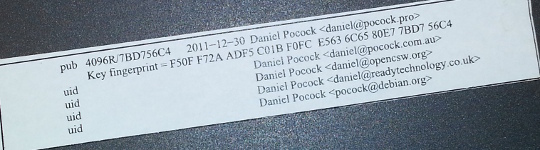
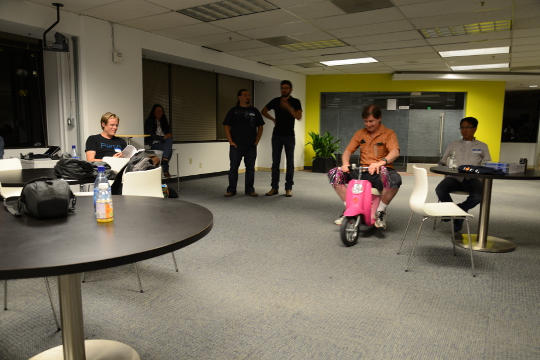
I've mentored a number of students in 2013 and 2014 for Debian and Ganglia and most of the companies I've worked with have run internships and graduate programs from time to time. GSoC 2014 has just finished and with all the excitement, many students are already asking what they can do to prepare and be selected in 2015. My own observation is that the more time the organization has to get to know the student, the more confident they can be selecting that student. Furthermore, the more time that the student has spent getting to know the free software community, the more easily they can complete GSoC. Here I present a list of things that students can do to maximize their chance of selection and career opportunities at the same time. These tips are useful for people applying for GSoC itself and related programs such as GNOME's Outreach Program for Women or graduate placements in companies. Disclaimers There is no guarantee that Google will run the program again in 2015 or any future year. There is no guarantee that any organization or mentor (including myself) will be involved until the official list of organizations is published by Google. Do not follow the advice of web sites that invite you to send pizza or anything else of value to prospective mentors. Following the steps in this page doesn't guarantee selection. That said, people who do follow these steps are much more likely to be considered and interviewed than somebody who hasn't done any of the things in this list. Understand what free software really is You may hear terms like free software and open source software used interchangeably. They don't mean exactly the same thing and many people use the term free software for the wrong things. Not all open source projects meet the definition of free software. Those that don't, usually as a result of deficiencies in their licenses, are fundamentally incompatible with the majority of software that does use genuinely free licenses. Google Summer of Code is about both writing and publishing your code and it is also about community. It is fundamental that you know the basics of licensing and how to choose a free license that empowers the community to collaborate on your code well after GSoC has finished. Please review the definition of free software early on and come back and review it from time to time. The The GNU Project / Free Software Foundation have excellent resources to help you understand what a free software license is and how it works to maximize community collaboration. Don't look for shortcuts There is no shortcut to GSoC selection and there is no shortcut to GSoC completion. The student stipend (USD $5,500 in 2014) is not paid to students unless they complete a minimum amount of valid code. This means that even if a student did find some shortcut to selection, it is unlikely they would be paid without completing meaningful work. If you are the right candidate for GSoC, you will not need a shortcut anyway. Are you the sort of person who can't leave a coding problem until you really feel it is fixed, even if you keep going all night? Have you ever woken up in the night with a dream about writing code still in your head? Do you become irritated by tedious or repetitive tasks and often think of ways to write code to eliminate such tasks? Does your family get cross with you because you take your laptop to Christmas dinner or some other significant occasion and start coding? If some of these statements summarize the way you think or feel you are probably a natural fit for GSoC. An opportunity money can't buy The GSoC stipend will not make you rich. It is intended to make sure you have enough money to survive through the summer and focus on your project. Professional developers make this much money in a week in leading business centers like New York, London and Singapore. When you get to that stage in 3-5 years, you will not even be thinking about exactly how much you made during internships. GSoC gives you an edge over other internships because it involves publicly promoting your work. Many companies still try to hide the potential of their best recruits for fear they will be poached or that they will be able to demand higher salaries. Everything you complete in GSoC is intended to be published and you get full credit for it. Imagine a young musician getting the opportunity to perform on the main stage at a rock festival. This is how the free software community works. It is a meritocracy and there is nobody to hold you back. Having a portfolio of free software that you have created or collaborated on and a wide network of professional contacts that you develop before, during and after GSoC will continue to pay you back for years to come. While other graduates are being screened through group interviews and testing days run by employers, people with a track record in a free software project often find they go straight to the final interview round. Register your domain name and make a permanent email address Free software is all about community and collaboration. Register your own domain name as this will become a focal point for your work and for people to get to know you as you become part of the community. This is sound advice for anybody working in IT, not just programmers. It gives the impression that you are confident and have a long term interest in a technology career. Choosing the provider: as a minimum, you want a provider that offers DNS management, static web site hosting, email forwarding and XMPP services all linked to your domain. You do not need to choose the provider that is linked to your internet connection at home and that is often not the best choice anyway. The XMPP foundation maintains a list of providers known to support XMPP. Create an email address within your domain name. The most basic domain hosting providers will let you forward the email address to a webmail or university email account of your choice. Configure your webmail to send replies using your personalized email address in the From header. Update your ~/.gitconfig file to use your personalized email address in your Git commits. Create a web site and blog Start writing a blog. Host it using your domain name. Some people blog every day, other people just blog once every two or three months. Create links from your web site to your other profiles, such as a Github profile page. This helps reinforce the pages/profiles that are genuinely related to you and avoid confusion with the pages of other developers. Many mentors are keen to see their students writing a weekly report on a blog during GSoC so starting a blog now gives you a head start. Mentors look at blogs during the selection process to try and gain insight into which topics a student is most suitable for. Create a profile on Github Github is one of the most widely used software development web sites. Github makes it quick and easy for you to publish your work and collaborate on the work of other people. Create an account today and get in the habbit of forking other projects, improving them, committing your changes and pushing the work back into your Github account. Github will quickly build a profile of your commits and this allows mentors to see and understand your interests and your strengths. In your Github profile, add a link to your web site/blog and make sure the email address you are using for Git commits (in the ~/.gitconfig file) is based on your personal domain. Start using PGP Pretty Good Privacy (PGP) is the industry standard in protecting your identity online. All serious free software projects use PGP to sign tags in Git, to sign official emails and to sign official release files. The most common way to start using PGP is with the GnuPG (GNU Privacy Guard) utility. It is installed by the package manager on most Linux systems. When you create your own PGP key, use the email address involving your domain name. This is the most permanent and stable solution. Print your key fingerprint using the gpg-key2ps command, it is in the signing-party package on most Linux systems. Keep copies of the fingerprint slips with you. This is what my own PGP fingerprint slip looks like. You can also print the key fingerprint on a business card for a more professional look. Using PGP, it is recommend that you sign any important messages you send but you do not have to encrypt the messages you send, especially if some of the people you send messages to (like family and friends) do not yet have the PGP software to decrypt them. If using the Thunderbird (Icedove) email client from Mozilla, you can easily send signed messages and validate the messages you receive using the Enigmail plugin. Get your PGP key signed Once you have a PGP key, you will need to find other developers to sign it. For people I mentor personally in GSoC, I'm keen to see that you try and find another Debian Developer in your area to sign your key as early as possible. Free software events Try and find all the free software events in your area in the months between now and the end of the next Google Summer of Code season. Aim to attend at least two of them before GSoC. Look closely at the schedules and find out about the individual speakers, the companies and the free software projects that are participating. For events that span more than one day, find out about the dinners, pub nights and other social parts of the event. Try and identify people who will attend the event who have been GSoC mentors or who intend to be. Contact them before the event, if you are keen to work on something in their domain they may be able to make time to discuss it with you in person. Take your PGP fingerprint slips. Even if you don't participate in a formal key-signing party at the event, you will still find some developers to sign your PGP key individually. You must take a photo ID document (such as your passport) for the other developer to check the name on your fingerprint but you do not give them a copy of the ID document. Events come in all shapes and sizes. FOSDEM is an example of one of the bigger events in Europe, linux.conf.au is a similarly large event in Australia. There are many, many more local events such as the Debian France mini-DebConf in Lyon, 2015. Many events are either free or free for students but please check carefully if there is a requirement to register before attending. On your blog, discuss which events you are attending and which sessions interest you. Write a blog during or after the event too, including photos. Quantcast generously hosted the Ganglia community meeting in San Francisco, October 2013. We had a wild time in their offices with mini-scooters, burgers, beers and the Ganglia book. That's me on the pink mini-scooter and Bernard Li, one of the other Ganglia GSoC 2014 admins is on the right. Install Linux GSoC is fundamentally about free software. Linux is to free software what a tree is to the forest. Using Linux every day on your personal computer dramatically increases your ability to interact with the free software community and increases the number of potential GSoC projects that you can participate in. This is not to say that people using Mac OS or Windows are unwelcome. I have worked with some great developers who were not Linux users. Linux gives you an edge though and the best time to gain that edge is now, while you are a student and well before you apply for GSoC. If you must run Windows for some applications used in your course, it will run just fine in a virtual machine using Virtual Box, a free software solution for desktop virtualization. Use Linux as the primary operating system. Here are links to download ISO DVD (and CD) images for some of the main Linux distributions: If you are nervous about getting started with Linux, install it on a spare PC or in a virtual machine before you install it on your main PC or laptop. Linux is much less demanding on the hardware than Windows so you can easily run it on a machine that is 5-10 years old. Having just 4GB of RAM and 20GB of hard disk is usually more than enough for a basic graphical desktop environment although having better hardware makes it faster. Your experiences installing and running Linux, especially if it requires some special effort to make it work with some of your hardware, make interesting topics for your blog. Decide which technologies you know best Personally, I have mentored students working with C, C++, Java, Python and JavaScript/HTML5. In a GSoC program, you will typically do most of your work in just one of these languages. From the outset, decide which language you will focus on and do everything you can to improve your competence with that language. For example, if you have already used Java in most of your course, plan on using Java in GSoC and make sure you read Effective Java (2nd Edition) by Joshua Bloch. Decide which themes appeal to you Find a topic that has long-term appeal for you. Maybe the topic relates to your course or maybe you already know what type of company you would like to work in. Here is a list of some topics and some of the relevant software projects:


  • System administration, servers and networking: consider projects involving monitoring, automation, packaging. Ganglia is a great community to get involved with and you will encounter the Ganglia software in many large companies and academic/research networks. Contributing to a Linux distribution like Debian or Fedora packaging is another great way to get into system administration.
  • Desktop and user interface: consider projects involving window managers and desktop tools or adding to the user interface of just about any other software.
  • Big data and data science: this can apply to just about any other theme. For example, data science techniques are frequently used now to improve system administration.
  • Business and accounting: consider accounting, CRM and ERP software.
  • Finance and trading: consider projects like R, market data software like OpenMAMA and connectivity software (Apache Camel)
  • Real-time communication (RTC), VoIP, webcam and chat: look at the JSCommunicator or the Jitsi project
  • Web (JavaScript, HTML5): look at the JSCommunicator
Before the GSoC application process begins, you should aim to learn as much as possible about the theme you prefer and also gain practical experience using the software relating to that theme. For example, if you are attracted to the business and accounting theme, install the PostBooks suite and get to know it. Maybe you know somebody who runs a small business: help them to upgrade to PostBooks and use it to prepare some reports. Make something Make some small project, less than two week's work, to demonstrate your skills. It is important to make something that somebody will use for a practical purpose, this will help you gain experience communicating with other users through Github. For an example, see the servlet Juliana Louback created for fixing phone numbers in December 2013. It has since been used as part of the Lumicall web site and Juliana was selected for a GSoC 2014 project with Debian. There is no better way to demonstrate to a prospective mentor that you are ready for GSoC than by completing and publishing some small project like this yourself. If you don't have any immediate project ideas, many developers will also be able to give you tips on small projects like this that you can attempt, just come and ask us on one of the mailing lists. Ideally, the project will be something that you would use anyway even if you do not end up participating in GSoC. Such projects are the most motivating and rewarding and usually end up becoming an example of your best work. To continue the example of somebody with a preference for business and accounting software, a small project you might create is a plugin or extension for PostBooks. Getting to know prospective mentors Many web sites provide useful information about the developers who contribute to free software projects. Some of these developers may be willing to be a GSoC mentor. For example, look through some of the following: Getting on the mentor's shortlist Once you have identified projects that are interesting to you and developers who work on those projects, it is important to get yourself on the developer's shortlist. Basically, the shortlist is a list of all students who the developer believes can complete the project. If I feel that a student is unlikely to complete a project or if I don't have enough information to judge a student's probability of success, that student will not be on my shortlist. If I don't have any student on my shortlist, then a project will not go ahead at all. If there are multiple students on the shortlist, then I will be looking more closely at each of them to try and work out who is the best match. One way to get a developer's attention is to look at bug reports they have created. Github makes it easy to see complaints or bug reports they have made about their own projects or other projects they depend on. Another way to do this is to search through their code for strings like FIXME and TODO. Projects with standalone bug trackers like the Debian bug tracker also provide an easy way to search for bug reports that a specific person has created or commented on. Once you find some relevant bug reports, email the developer. Ask if anybody else is working on those issues. Try and start with an issue that is particularly easy and where the solution is interesting for you. This will help you learn to compile and test the program before you try to fix any more complicated bugs. It may even be something you can work on as part of your academic program. Find successful projects from the previous year Contact organizations and ask them which GSoC projects were most successful. In many organizations, you can find the past students' project plans and their final reports published on the web. Read through the plans submitted by the students who were chosen. Then read through the final reports by the same students and see how they compare to the original plans. Start building your project proposal now Don't wait for the application period to begin. Start writing a project proposal now. When writing a proposal, it is important to include several things:
  • Think big: what is the goal at the end of the project? Does your work help the greater good in some way, such as increasing the market share of Linux on the desktop?
  • Details: what are specific challenges? What tools will you use?
  • Time management: what will you do each week? Are there weeks where you will not work on GSoC due to vacation or other events? These things are permitted but they must be in your plan if you know them in advance. If an accident or death in the family cut a week out of your GSoC project, which work would you skip and would your project still be useful without that? Having two weeks of flexible time in your plan makes it more resilient against interruptions.
  • Communication: are you on mailing lists, IRC and XMPP chat? Will you make a weekly report on your blog?
  • Users: who will benefit from your work?
  • Testing: who will test and validate your work throughout the project? Ideally, this should involve more than just the mentor.
If your project plan is good enough, could you put it on Kickstarter or another crowdfunding site? This is a good test of whether or not a project is going to be supported by a GSoC mentor. Learn about packaging and distributing software Packaging is a vital part of the free software lifecycle. It is very easy to upload a project to Github but it takes more effort to have it become an official package in systems like Debian, Fedora and Ubuntu. Packaging and the communities around Linux distributions help you reach out to users of your software and get valuable feedback and new contributors. This boosts the impact of your work. To start with, you may want to help the maintainer of an existing package. Debian packaging teams are existing communities that work in a team and welcome new contributors. The Debian Mentors initiative is another great starting place. In the Fedora world, the place to start may be in one of the Special Interest Groups (SIGs). Think from the mentor's perspective After the application deadline, mentors have just 2 or 3 weeks to choose the students. This is actually not a lot of time to be certain if a particular student is capable of completing a project. If the student has a published history of free software activity, the mentor feels a lot more confident about choosing the student. Some mentors have more than one good student while other mentors receive no applications from capable students. In this situation, it is very common for mentors to send each other details of students who may be suitable. Once again, if a student has a good Github profile and a blog, it is much easier for mentors to try and match that student with another project. GSoC logo generic Conclusion Getting into the world of software engineering is much like joining any other profession or even joining a new hobby or sporting activity. If you run, you probably have various types of shoe and a running watch and you may even spend a couple of nights at the track each week. If you enjoy playing a musical instrument, you probably have a collection of sheet music, accessories for your instrument and you may even aspire to build a recording studio in your garage (or you probably know somebody else who already did that). The things listed on this page will not just help you walk the walk and talk the talk of a software developer, they will put you on a track to being one of the leaders. If you look over the profiles of other software developers on the Internet, you will find they are doing most of the things on this page already. Even if you are not selected for GSoC at all or decide not to apply, working through the steps on this page will help you clarify your own ideas about your career and help you make new friends in the software engineering community.

22 August 2014

Russell Coker: Men Commenting on Women s Issues

A lecture at LCA 2011 which included some inappropriate slides was followed by long discussions on mailing lists. In February 2011 I wrote a blog post debunking some of the bogus arguments in two lists [1]. One of the noteworthy incidents in the mailing list discussion concerned Ted Ts o (an influential member of the Linux community) debating the definition of rape. My main point on that issue in Feb 2011 was that it s insensitive to needlessly debate the statistics. Recently Valerie Aurora wrote about another aspect of this on The Ada Initiative blog [2] and on her personal blog. Some of her significant points are that conference harassment doesn t end when the conference ends (it can continue on mailing lists etc), that good people shouldn t do nothing when bad things happen, and that free speech doesn t mean freedom from consequences or the freedom to use private resources (such as conference mailing lists) without restriction. Craig Sanders wrote a very misguided post about the Ted Ts o situation [3]. One of the many things wrong with his post is his statement I m particularly disgusted by the men who intervene way too early without an explicit invitation or request for help or a clear need such as an immediate threat of violence in womens issues . I believe that as a general rule when any group of people are involved in causing a problem they should be involved in fixing it. So when we have problems that are broadly based around men treating women badly the prime responsibility should be upon men to fix them. It seems very clear that no matter what scope is chosen for fixing the problems (whether it be lobbying for new legislation, sociological research, blogging, or directly discussing issues with people to change their attitudes) women are doing considerably more than half the work. I believe that this is an indication that overall men are failing. Asking for Help I don t believe that members of minority groups should have to ask for help. Asking isn t easy, having someone spontaneously offer help because it s the right thing to do can be a lot easier to accept psychologically than having to beg for help. There is a book named Women Don t Ask which has a page on the geek feminism Wiki [4]. I think the fact that so many women relate to a book named Women Don t Ask is an indication that we shouldn t expect women to ask directly, particularly in times of stress. The Wiki page notes a criticism of the book that some specific requests are framed as complaining , so I think we should consider a complaint from a woman as a direct request to do something. The geek feminism blog has an article titled How To Exclude Women Without Really Trying which covers many aspects of one incident [5]. Near the end of the article is a direct call for men to be involved in dealing with such problems. The geek feminism Wiki has a page on Allies which includes Even a blog post helps [6]. It seems clear from public web sites run by women that women really want men to be involved. Finally when I get blog comments and private email from women who thank me for my posts I take it as an implied request to do more of the same. One thing that we really don t want is to have men wait and do nothing until there is an immediate threat of violence. There are two massive problems with that plan, one is that being saved from a violent situation isn t a fun experience, the other is that an immediate threat of violence is most likely to happen when there is no-one around to intervene. Men Don t Listen to Women Rebecca Solnit wrote an article about being ignored by men titled Men Explain Things to Me [7]. When discussing women s issues the term Mansplaining is often used for that sort of thing, the geek feminism Wiki has some background [8]. It seems obvious that the men who have the greatest need to be taught some things related to women s issues are the ones who are least likely to listen to women. This implies that other men have to teach them. Craig says that women need space to discover and practice their own strength and their own voices . I think that the best way to achieve that goal is to listen when women speak. Of course that doesn t preclude speaking as well, just listen first, listen carefully, and listen more than you speak. Craig claims that when men like me and Matthew Garrett comment on such issues we are making women s spaces more comfortable, more palatable, for men . From all the discussion on this it seems quite obvious that what would make things more comfortable for men would be for the issue to never be discussed at all. It seems to me that two of the ways of making such discussions uncomfortable for most men are to discuss sexual assault and to discuss what should be done when you have a friend who treats women in a way that you don t like. Matthew has covered both of those so it seems that he s doing a good job of making men uncomfortable I think that this is a good thing, a discussion that is comfortable and palatable for the people in power is not going to be any good for the people who aren t in power. The Voting Aspect It seems to me that when certain issues are discussed we have a social process that is some form of vote. If one person complains then they are portrayed as crazy. When other people agree with the complaint then their comments are marginalised to try and preserve the narrative of one crazy person. It seems that in the case of the discussion about Rape Apology and LCA2011 most men who comment regard it as one person (either Valeria Aurora or Matthew Garrett) causing a dispute. There is even some commentary which references my blog post about Rape Apology [9] but somehow manages to ignore me when it comes to counting more than one person agreeing with Valerie. For reference David Zanetti was the first person to use the term apologist for rapists in connection with the LCA 2011 discussion [10]. So we have a count of at least three men already. These same patterns always happen so making a comment in support makes a difference. It doesn t have to be insightful, long, or well written, merely I agree and a link to a web page will help. Note that a blog post is much better than a comment in this regard, comments are much like conversation while a blog post is a stronger commitment to a position. I don t believe that the majority is necessarily correct. But an opinion which is supported by too small a minority isn t going to be considered much by most people. The Cost of Commenting The Internet is a hostile environment, when you comment on a contentious issue there will be people who demonstrate their disagreement in uncivilised and even criminal ways. S. E. Smith wrote an informative post for Tiger Beatdown about the terrorism that feminist bloggers face [11]. I believe that men face fewer threats than women when they write about such things and the threats are less credible. I don t believe that any of the men who have threatened me have the ability to carry out their threats but I expect that many women who receive such threats will consider them to be credible. The difference in the frequency and nature of the terrorism (and there is no other word for what S. E. Smith describes) experienced by men and women gives a vastly different cost to commenting. So when men fail to address issues related to the behavior of other men that isn t helping women in any way. It s imposing a significant cost on women for covering issues which could be addressed by men for minimal cost. It s interesting to note that there are men who consider themselves to be brave because they write things which will cause women to criticise them or even accuse them of misogyny. I think that the women who write about such issues even though they will receive threats of significant violence are the brave ones. Not Being Patronising Craig raises the issue of not being patronising, which is of course very important. I think that the first thing to do to avoid being perceived as patronising in a blog post is to cite adequate references. I ve spent a lot of time reading what women have written about such issues and cited the articles that seem most useful in describing the issues. I m sure that some women will disagree with my choice of references and some will disagree with some of my conclusions, but I think that most women will appreciate that I read what women write (it seems that most men don t). It seems to me that a significant part of feminism is about women not having men tell them what to do. So when men offer advice on how to go about feminist advocacy it s likely to be taken badly. It s not just that women don t want advice from men, but that advice from men is usually wrong. There are patterns in communication which mean that the effective strategies for women communicating with men are different from the effective strategies for men communicating with men (see my previous section on men not listening to women). Also there s a common trend of men offering simplistic advice on how to solve problems, one thing to keep in mind is that any problem which affects many people and is easy to solve has probably been solved a long time ago. Often when social issues are discussed there is some background in the life experience of the people involved. For example Rookie Mag has an article about the street harassment women face which includes many disturbing anecdotes (some of which concern primary school students) [12]. Obviously anyone who has lived through that sort of thing (which means most women) will instinctively understand some issues related to threatening sexual behavior that I can t easily understand even when I spend some time considering the matter. So there will be things which don t immediately appear to be serious problems to me but which are interpreted very differently by women. The non-patronising approach to such things is to accept the concerns women express as legitimate, to try to understand them, and not to argue about it. For example the issue that Valerie recently raised wasn t something that seemed significant when I first read the email in question, but I carefully considered it when I saw her posts explaining the issue and what she wrote makes sense to me. I don t think it s possible for a man to make a useful comment on any issue related to the treatment of women without consulting multiple women first. I suggest a pre-requisite for any man who wants to write any sort of long article about the treatment of women is to have conversations with multiple women who have relevant knowledge. I ve had some long discussions with more than a few women who are involved with the FOSS community. This has given me a reasonable understanding of some of the issues (I won t claim to be any sort of expert). I think that if you just go and imagine things about a group of people who have a significantly different life-experience then you will be wrong in many ways and often offensively wrong. Just reading isn t enough, you need to have conversations with multiple people so that they can point out the things you don t understand. This isn t any sort of comprehensive list of ways to avoid being patronising, but it s a few things which seem like common mistakes. Anne Onne wrote a detailed post advising men who want to comment on feminist blogs etc [13], most of it applies to any situation where men comment on women s issues.

21 August 2014

Steve Kemp: Updating Debian Administration

Recently I've been getting annoyed with the Debian Administration website; too often it would be slower than it should be considering the resources behind it. As a brief recap I have six nodes: The misc server is designed to display events. There is a node.js listener which receives UDP messages and stores them in a rotating buffer. The messages might contain things like "User bob logged in", "Slaughter ran", etc. It's a neat hack which gives a good feeling of what is going on cluster-wide. I need to rationalize that code - but there's a very simple predecessor posted on github for the curious. Anyway enough diversions, the database is tuned, and "small". The misc server is almost entirely irrelevent, non-public, and not explicitly advertised. So what do the web nodes run? Well they run a lot. Potentially. Each web node has four services configured: Apache runs the main site, listening on *:8080. One of the nodes will be special and will claim a virtual IP provided via ucarp. The virtual IP is actually the end-point visitors hit, meaning we have:
Master HostOther hosts
Running:
  • Apache.
  • Pound.
  • Varnish
Running:
  • Apache.
Pound is configured to listen on the virtual IP and perform SSL termination. That means that incoming requests get proxied from "vip:443 -> vip:80". Varnish listens on "vip:80" and proxies to the back-end apache instances. The end result should be high availability. In the typical case all four servers are alive, and all is well. If one server dies, and it is not the master, then it will simply be dropped as a valid back-end. If a single server dies and it is the master then a new one will appear, thanks to the magic of ucarp, and the remaining three will be used as expected. I'm sure there is a pathological case when all four hosts die, and at that point the site will be down, but that's something that should be atypical. Yes, I am prone to over-engineering. The site doesn't have any availability requirements that justify this setup, but it is good to experiment and learn things. So, with this setup in mind, with incoming requests (on average) being divided at random onto one of four hosts, why is the damn thing so slow? We'll come back to that in the next post. (Good news though; I fixed it ;)

20 August 2014

Gunnar Wolf: Bigger than the cloud

Summer is cool in Mexico City. It is cool because, unlike Spring, this is our rainy season And rains are very predictable. Almost every day we wake up with a gorgeous, clean, blue sky. Cool, nice temperature, around 15 C. The sun slowly evaporates the rain throughout the morning; when I go out for lunch, the sky is no longer so blue, giving way to a seemingly dirty white/grayish tint. No, it's not our world-famous pollution: It's just yesterday's rain. Rain starts falling usually between 4 and 7 PM. Sometimes it starts as a light rain, sometimes it starts with all of its thunder, all of its might. But anyway, almost every night, there is a moment of awe, of not believing how much rain we are getting today. It slowly fades away during the late night. And when I wake up, early next morning, everything is wet and still smells fresh. Yes, I love our summer, even though it makes shy away from my much enjoyed cycling to work and school. And I love taking some minutes off work, look through the window of my office (located ~70m over the level of our mostly flat city) and watching how different parts of the city have sun or rain; learning to estimate the distance to the clouds, adding it to the direction and guessing which of my friends have which weather. But I didn't realize our city had so clearly defined micro-climates... (would they really be *micro*-climates?) In fact, it even goes against my knowledge of Mexico City's logic I always thought Coyoac n, towards the South of the city, got more rain than the Center and North because we are near the mountains, and the dominant air currents go Southwards, "clumping" the clouds by us. But no, or at least, not this year. Regina (still in the far South Far because she's too far away from me and I'm too egocentric; she returns home after DebConf) often asks me about the weather, as our friends working nearer the center of the city. According to the photos they post on their $social_media_of_the_day accounts, rains are really heavier there. Today I heard on the radio accounts of yesterday's chaos after the rain. This evening, at ESIME-Culhuac n, I saw one of the reported fallen trees (of course, I am not sure if it's from yesterday's rain). And the media pushes galleries of images of a city covered in hail... While in Copilco we only had a regular rain, I'd even say a mild one. This city is bigger than any cloud you can throw at it.

AttachmentSize
IMG_20140819_155052.jpg929.69 KB

Holger Levsen: 20140819-lts-july-2014

Debian LTS - impressions and thoughts from my first month involvement About LTS - we want feedback and more companies supporting it financially Squeeze LTS, and even more Debian LTS, is a pretty young project, started in May 2014, so it's still a bit unclear where exactly we'll be going :) One purpose of this post is to spread some information about the initiative and invite you to tell us what you think about it or what your needs are. LTS stands for "Long Term Support" and the goal of the project is to extend the security support for Squeeze (aka the current oldstable distribution) by two years. If it weren't for Squeeze LTS, the security support for it would have been stopped in May 2014 (=one year after the release of the current stable distribution), which for many is a too short timespan after it's release in February 2011. It's an experiment, we hope that there will be a similar Wheezy LTS initiative in future, but the future is unwritten and things will change based on our experiences and your needs. If you have feedback on the direction LTS should take (or anything else LTS related), please comment on the lts mailing list. For immediate feedback there is also the #debian-lts IRC channel. Another quite pragmatic way to express your needs is to read more about how to financially contribute to LTS and then doing exactly that - and unsurprisingly we are prioritizing the updates based on the needs expressed from our paying customers. My LTS work in July 2014 So, "somehow" I started working for money on Debian LTS in July, which means there were 10h I got paid, and probably another 10h where I did LTS related work unpaid. I used those to release four updates for squeeze-lts (linux-2.6, file, munin and reportbug) fixing 22 CVEs in total. The unpaid work was mostly spent on unsuccessfully working on security updates and on adding support for LTS to the security team tracker, which I improved but couldn't fully address and which I haven't properly shared / committed yet... but at least I have a local instance of the tracker now, which - for LTS - is more useful than the .debian.org one. Hopefully during DebConf14 we'll manage to fix the tracker for good. Without success I've looked at libtasn1-3 (where the first fixes applied easily but then the code had changed too much from what was in squeeze compared to the available patches that I gave up) and libxstream-java (which is at version 1.3, while patches exist for upstream branches 1.4 and 2.x, but those need newer java to build and maybe if I'll spend two more hours I'll can get it build and then I'll have to find a useful test case, which looked quite difficult on a brief look.. so maybe I give up on libxstream-java too.... OTOH, if you use it and can do some testing, please do tell me. Working on all these updates turned out to be more team work than expected and a lot of work involving code (which I did expect), and often code which I'd normally not look at... similarily with tools: one has to deal with tools one doesnt like, eg I had to install cdbs... :-) And as I usually like challenges, this has actually been a lot of fun! Though it's also pretty cool to use common best practices, easy and understandable workflows. I love README.Source (or better yet, when it's not needed). And while git is of course really really great, it's still very desirable if your package builds twice (=many times) in a row, without resetting it via git. Some more observations The first 16 updates (until July 19th) didn't have a DLA ID, until I suggested to introduce them and insisted until we agreed. So now we agreed to put the DLA ID in the subject of the announcement mails and there is also some tool support for generating the templates/mails, but enforcing proper subjects is not done, as silent bounces are useless (and non silent ones can be abused too easily). I'm not really happy about this, but who is happy with the way email works today? And I agree, it's not the end of the world if an LTS announcement is done without a proper ID, but it looks unprofessional and could be avoided, but we have more important work to do. But one day we should automate this better. Another detail I'm not entirely happy is the policy/current decision that "almost everything is fine to upload if deemed sensible by the uploader" (which is everyone in the Debian upload keyring(s)). In discussions before actually having the archive some people suggested the desire to upload new upstream versions too (eg newer kernels, iceweasel or other software to keep running a squeeze desktop in the modern world were discussed). I sincerely hope for most intrusive new upstream versions squeeze-(sloppy-)backports is used instead, and squeeze-lts rather not. Luckily so far all uploads were (IMHO) sensible and so, right now, I will just say that I hope it will stay this way. And it's true, one also has to install these upgrades in the first place. But people do that blindly all the time... So by design/desire currently there is no gatekeeping mechanism whatsover (no NEW, no proposed updates), except that only some selected "few" can upload. What is uploaded (and signed correctly), gets pushed to archive, buildds and the mirrors, and hopefully maybe someone will send an announcement. So far this has worked remarkedly well - and it's also the way the Debian Security team works, as I'm told. Looking at this from a process quality / automatisation perspective, all this manual and errorprone labour seems very strange to me. ;-) And then there is another thing: as already mentioned, the people working paid hours for this, are prioritizing their work based on customer requests. So we did two updates (python-scipy and file), which are not fixed in wheezy yet. I think this is unfortunate and while I could probably prepare the wheezy DSA for file, I don't really want to join the Security Team... or maybe I want/should join the Security Team and be a seldomly active member (eg fixing file in wheezy now....) A note related to this: out of those 37 uploads done until today, 16 were done by those two people being paid, while the other 21 uploads were done by 10 volunteers (or at least not paid by Debian LTS). It will be interesting to see how this statistics evolves over time. Last, but not least, there is also this can of worms (aka: the discussion) about paying people to work on Debian... I do agree it's work we didnt find volunteers for and I also see how the (financial side of the) setup is done outside of Debian (and well too, btw!), but... then we also use Debian ressources like buildds, the archive itself and official mailing lists. Also I'm currently biased in this discussion, as I directly (and happily) profit from it. I'm mentioning this here, because I believe it's important we discuss this and come to both good and practical conclusions. FWIW, we have also discussed this on the list, feel free to search the archives for it. To bring this post to an end: for those attending DebConf14 (directly or thanks to some ninjas), there will be an event about LTS in Portland, though I'm not sure yet what I will have to talk about what hasn't been already covered here :-) But this probably means that will be a good opportunity for you to do lots of talking instead! I'm curious what you will have to say! Thanks for reading this far. I think I can promise that my next LTS report will be shorter :-D

17 August 2014

Matt Brown: GPG Key Transition

Firstly, thanks to all who responded to my previous rant. It turns out exactly what I wanted does exist in the form of a ID-000 format smartcard combined with a USB reader. Perfect. No idea why I couldn t find that on my own prior to ranting, but very happy to have found it now. Secondly, now that I ve got my keys and management practices in order, it is time to begin transitioning to my new key. Click this link to find the properly signed, full transition statement. I m not going to paste the full statement into this post, but my new key is:
pub   4096R/A48F065A 2014-07-27 [expires: 2016-07-26]
      Key fingerprint = DBB7 64A1 797D 2E21 C799  3CD7 A628 CB5F A48F 065A
uid                  Matthew Brown <matt @mattb.net.nz>
uid                  Matthew Brown <mattb @debian.org>
sub   4096R/1937883F 2014-07-27 [expires: 2016-07-26]
If you signed my old key, I d very much appreciate a signature on my new key, details and instructions in the transition statement. I m happy to reciprocate if you have a similarly signed transition statement to present.

15 August 2014

Steve Kemp: A tale of two products

This is a random post inspired by recent purchases. Some things we buy are practical, others are a little arbitrary. I tend to avoid buying things for the sake of it, and have explicitly started decluttering our house over the past few years. That said sometimes things just seem sufficiently "cool" that they get bought without too much thought. This entry is about two things. A couple of years ago my bathroom was ripped apart and refitted. Gone was the old and nasty room, and in its place was a glorious space. There was only one downside to the new bathroom - you turn on the light and the fan comes on too. When your wife works funny shifts at the hospital you can find that the (quiet) fan sounds very loud in the middle of the night and wakes you up.. So I figured we could buy a couple of LED lights and scatter them around the place - when it is dark the movement sensors turn on the lights. These things are amazing. We have one sat on a shelf, one velcroed to the bottom of the sink, and one on the floor, just hidden underneath the toilet. Due to the shiny-white walls of the room they're all you need in the dark. By contrast my second purchase was a mistake - The Logitech Harmony 650 Universal Remote Control should be great. It clearly has the features I want - Able to power: The problem is solely due to the horrific software. You program the device via an application/website which works only under Windows. I had to resort to installing Windows in a virtual machine to make it run:
# Get the Bus/ID for the USB device
bus=$(lsusb  grep -i Harmony   awk ' print $2 '   tr -d 0)
id=$(lsusb  grep -i Harmony   awk ' print $4 '   tr -d 0:)
# pass to kvm
kvm -localtime ..  -usb -device usb-host,hostbus=$bus,hostaddr=$id ..
That allows the device to be passed through to windows, though you'll later have to jump onto the Qemu console to re-add the device as the software disconnects and reconnects it at random times, and the bus changes. Sigh. I guess I can pretend it works, and has cut down on the number of remotes sat on our table, but .. The overwhelmingly negative setup and configuration process has really soured me on it. There is a linux application which will take a configuration file and squirt it onto the device, when attached via a USB cable. This software, which I found during research prior to buying it, is useful but not as much as I'd expected. Why? Well the software lets you upload the config file, but to get a config file you must fully complete the setup on Windows. It is impossible to configure/use this device solely using GNU/Linux. (Apparently there is MacOS software too, I don't use macs. *shrugs*) In conclusion - Motion-activated LED lights, more useful than expected, but Harmony causes Discord.

14 August 2014

Gregor Herrmann: RC bugs 2014/13 - 2014/33

perl 5.20 got uploaded to debian unstable a few minutes ago; be prepared for some glitches when upgrading sid machines/chroots in the next days, while all 557 reverse dependencies are rebuilt via binNMUs. how does this relate to this blog post's title? it does, since during the last weeks I was mostly trying to help with the preparation of this transition. & we managed to fix quite a few bugs while they were not bumped to serious yet, otherwise the list below would be a bit longer :) anyway, here are the the RC bugs I've worked on in the last 20 or so weeks: p.s.: & now, go & enjoy the new perl 5.20 features :)

13 August 2014

Daniel Pocock: WebRTC in CRM/ERP solutions at xTupleCon 2014

In October this year I'll be visiting the US and Canada for some conferences and a wedding. The first event will be xTupleCon 2014 in Norfolk, Virginia. xTuple make the popular open source accounting and CRM suite PostBooks. The event kicks off with a keynote from Apple co-founder Steve Wozniak on the evening of October 14. On October 16 I'll be making a presentation about how JSCommunicator makes it easy to add click-to-call real-time communications (RTC) to any other web-based product without requiring any browser plugins or third party softphones. Juliana Louback has been busy extending JSCommunicator as part of her Google Summer of Code project. When finished, we hope to quickly roll out the latest version of JSCommunicator to other sites including rtc.debian.org, the WebRTC portal for the Debian Developer community. Juliana has also started working on wrapping JSCommunicator into a module for the new xTuple / PostBooks web-based CRM. Versatility is one of the main goals of the JSCommunicator project and it will be exciting to demonstrate this in action at xTupleCon. xTupleCon discounts for developers xTuple has advised that they will offer a discount to other open source developers and contributers who wish to attend any part of their event. For details, please contact xTuple directly through this form. Please note it is getting close to their deadline for registration and discounted hotel bookings. Potential WebRTC / JavaScript meet-up in Norfolk area For those who don't or can't attend xTupleCon there has been some informal discussion about a small WebRTC-hacking event at some time on 15 or 16 October. Please email me privately if you may be interested.

Riku Voipio: Booting Linaro ARMv8 OE images with Qemu

A quick update - Linaro ARMv8 OpenEmbbeded images work just fine with qemu 2.1 as well:

$ http://releases.linaro.org/14.07/openembedded/aarch64/Image
$ http://releases.linaro.org/14.07/openembedded/aarch64/vexpress64-openembedded_lamp-armv8-gcc-4.9_20140727-682.img.gz
$ qemu-system-aarch64 -m 1024 -cpu cortex-a57 -nographic -machine virt \
-kernel Image -append 'root=/dev/vda2 rw rootwait mem=1024M console=ttyAMA0,38400n8' \
-drive if=none,id=image,file=vexpress64-openembedded_lamp-armv8-gcc-4.9_20140727-682.img \
-netdev user,id=user0 -device virtio-net-device,netdev=user0 -device virtio-blk-device,drive=image
[ 0.000000] Linux version 3.16.0-1-linaro-vexpress64 (buildslave@x86-64-07) (gcc version 4.8.3 20140401 (prerelease) (crosstool-NG linaro-1.13.1-4.8-2014.04 - Linaro GCC 4.8-2014.04) ) #1ubuntu1~ci+140726114341 SMP PREEMPT Sat Jul 26 11:44:27 UTC 20
[ 0.000000] CPU: AArch64 Processor [411fd070] revision 0
...
root@genericarmv8:~#
Quick benchmarking with age-old ByteMark nbench:
Index Qemu Foundation Host
Memory 4.294 0.712 44.534
Integer 6.270 0.686 41.983
Float 1.463 1.065 59.528
Baseline (LINUX) : AMD K6/233*
Qemu is upto 8x faster than Foundation model on Integers, but only 50% faster on Math. Meanwhile, the Host pc spends 7-40x slower emulating ARMv8 than executing native instructions.

11 August 2014

Sylvestre Ledru: clang 3.4, 3.5 and 3.6 are now coinstallable in Debian

Clang is finally co installable on Debian. 3.4, 3.5 and the current trunk (snapshot) can be installed together. So, just like gcc, the different version can be called with clang-3.4, clang-3.5 or clang-3.6. /usr/bin/clang, /usr/bin/clang++, /usr/bin/scan-build and /usr/bin/scan-view are now handled through the llvm-defaults package. llvm-defaults is also now managing clang-check, clang-tblgen, c-index-test, clang-apply-replacements, clang-tidy, pp-trace and clang-query. Changes are also available on llvm.org/apt/.
The next step will be to manage also llvm-defaults on llvm.org/apt to simplify the transition for people using these packages. So, with:
# /etc/apt/sources.list
deb http://llvm.org/apt/unstable/ llvm-toolchain main
deb http://llvm.org/apt/unstable/ llvm-toolchain-3.4 main
deb http://llvm.org/apt/unstable/ llvm-toolchain-3.5 main
$ apt-get install clang-3.4 clang-3.5 clang-3.6
$ clang-3.4 --version
Debian clang version 3.4.2 (branches/release_34) (based on LLVM 3.4.2)
Target: x86_64-pc-linux-gnu
Thread model: posix
$ clang-3.5 --version
Debian clang version 3.5.0-+rc2-1~exp1 (tags/RELEASE_350/rc2) (based on LLVM 3.5.0)
Target: x86_64-pc-linux-gnu
Thread model: posix
$ clang-3.6 --version
Debian clang version 3.6.0-svn214990-1~exp1 (trunk) (based on LLVM 3.6.0)
Target: x86_64-pc-linux-gnu
Thread model: posix

9 August 2014

Russell Coker: Being Obviously Wrong About Autism

I m watching a Louis Theroux documentary about Autism (here s the link to the BBC web site [1]). The main thing that strikes me so far (after watching 7.5 minutes of it) is the bad design of the DLC-Warren school for Autistic kids in New Jersey [2]. A significant portion of people on the Autism Spectrum have problems with noisy environments, whether most Autistic people have problems with noise depends on what degree of discomfort is considered a problem. But I think it s reasonable to assume that the majority of kids on the Autism Spectrum will behave better in a quiet environment. So any environment that is noisy will cause more difficult behavior in most Autistic kids and the kids who don t have problems with the noise will have problems with the way the other kids act. Any environment that is more prone to noise pollution than is strictly necessary is hostile to most people on the Autism Spectrum and all groups of Autistic people. The school that is featured in the start of the documentary is obviously wrong in this regard. For starters I haven t seen any carpet anywhere. Carpeted floors are slightly more expensive than lino but the cost isn t significant in terms of the cost of running a special school (such schools are expensive by private-school standards). But carpet makes a significant difference to ambient noise. Most of the footage from that school included obvious echos even though they had an opportunity to film when there was the least disruption presumably noise pollution would be a lot worse when a class finished. It s not difficult to install carpet in all indoor areas in a school. It s also not difficult to install rubber floors in all outdoor areas in a school (it seems that most schools are doing this already in play areas for safety reasons). For a small amount of money spent on installing and maintaining noise absorbing floor surfaces the school could achieve better educational results. The next step would be to install noise absorbing ceiling tiles and wallpaper, that might be a little more expensive to install but it would be cheap to maintain. I think that the hallways in a school for Autistic kids should be as quiet as the lobby of a 5 star hotel. I don t believe that there is any technical difficulty in achieving that goal, making a school look as good as an expensive hotel would be expensive but giving it the same acoustic properties wouldn t be difficult or expensive. How do people even manage to be so wrong about such things? Do they never seek any advice from any adult on the Autism Spectrum about how to run their school? Do they avoid doing any of the most basic Google searches for how to create a good environment for Autistic people? Do they just not care at all and create an environment that looks good to NTs? If they are just trying to impress NTs then why don t they have enough pride to care that people like me will know how bad they are? These aren t just rhetorical questions, I d like to know what s wrong with those people that makes them do their jobs in such an amazingly bad way.

Next.

Previous.