Enrico Zini: Reimagining Ansible variables
This is part of a series of posts on ideas for an ansible-like provisioning
system, implemented in Transilience.
While experimenting with Transilience, I've been giving some thought about
Ansible variables.
My gripes
I like the possibility to define host and group variables, and I like to have a
set of variables that are autodiscovered on the target systems.
I do not like to have everything all blended in a big bucket of global
variables.
Let's try some more prototyping.
My fiddlings
First,
Using
I can also model results from fact gathering into dataclass members:
I like that this way, one can explicitly declare what variables a
One can also fill in variables when instantiating Roles, making parameterized
generic Roles possible and easy:
Outcomes
I like where this is going: having well defined variables for facts and roles,
means that the variables that get into play can be explicitly defined, well
known, and documented.
I think this design lends itself quite well to role reuse:
Role classes could become dataclasses, too, and declare the variables and
facts that they intend to use (typed, even!):
class Role(role.Role):
    """
    Postfix mail server configuration
    """
    # Postmaster username
    postmaster: str = None
    # Public name of the mail server
    myhostname: str = None
    # Email aliases defined on this mail server
    aliases: Dict[str, str] = field(default_factory=dict)
dataclasses.asdict()
I immediately gain context variables for rendering Jinja2 templates:
class Role:
    # [...]
    def render_file(self, path: str, **kwargs):
        """
        Render a Jinja2 template from a file, using as context all Role fields,
        plus the given kwargs.
        """
        ctx = asdict(self)
        ctx.update(kwargs)
        return self.template_engine.render_file(path, ctx)
    def render_string(self, template: str, **kwargs):
        """
        Render a Jinja2 template from a string, using as context all Role fields,
        plus the given kwargs.
        """
        ctx = asdict(self)
        ctx.update(kwargs)
        return self.template_engine.render_string(template, ctx)
# From ansible/module_utils/facts/system/platform.py
@dataclass
class Platform(Facts):
    """
    Facts from the platform module
    """
    ansible_system: Optional[str] = None
    ansible_kernel: Optional[str] = None
    ansible_kernel: Optional[str] = None
    ansible_kernel_version: Optional[str] = None
    ansible_machine: Optional[str] = None
    # [...]
    ansible_userspace_architecture: Optional[str] = None
    ansible_machine_id: Optional[str] = None
    def summary(self):
        return "gather platform facts"
    def run(self, system: transilience.system.System):
        super().run(system)
        # ... collect facts
Facts
action will collect, and what variables a Role needs.
At this point, I can add machinery to allow a Role to declare what Facts it
needs, and automatically have the fields from the Facts class added to the
Role class. Then, when facts are gathered, I can make sure that their fields
get copied over to the Role classes that use them.
In a way, variables become role-scoped, and Facts subclasses can be used like
some kind of Role mixin, that contributes only field members:
# Postfix mail server configuration
@role.with_facts([actions.facts.Platform])
class Role(role.Role):
    # Postmaster username
    postmaster: str = None
    # Public name of the mail server
    myhostname: str = None
    # Email aliases defined on this mail server
    aliases: Dict[str, str] = field(default_factory=dict)
    # All fields from actions.facts.Platform are inherited here!
    def have_facts(self, facts):
        # self.ansible_domain comes from actions.facts.Platform
        self.add(builtin.command(
            argv=["certbot", "certonly", "-d", f"mail. self.ansible_domain ", "-n", "--apache"],
            creates=f"/etc/letsencrypt/live/mail. self.ansible_domain /fullchain.pem"
        ), name="obtain mail.* certificate")
        # the template context will have the Role variables, plus the variables
        # of all the Facts the Role uses
        with self.notify(ReloadPostfix):
            self.add(builtin.copy(
                dest="/etc/postfix/main.cf",
                content=self.render_file("roles/mailserver/templates/main.cf"),
            ), name="configure /etc/postfix/main.cf")
    runner.add_role(
            "mailserver",
            postmaster="enrico",
            myhostname="mail.enricozini.org",
            aliases=
                "me": "enrico",
             ,
    )
- Roles can use variables without risking interfering with each other.
- Variables from facts can have well defined meanings across roles.
- Roles are classes, and can easily be made inheritable.
 Powershell and nushell take unix piping beyond raw streams of text to
structured or typed data. Is it possible to keep a traditional shell
like bash and still get typed pipes?
I think it is possible, and I'm now surprised noone seems to have done it
yet. This is a fairly detailed design for how to do it. I've not
implemented it yet. RFC.
Let's start with a command called

 The Python programming language is one of the most popular and in huge demand. It is free, has a large community, is intended for the development of projects of varying complexity, is easy to learn, and opens up great opportunities for programmers. To work comfortably with it, you need special Python tools, which are able to simplify your work. We have selected the best Python tools that will be relevant in 2021.








 It's been more than a year since I wrote about
 Today,
 Wrote a quick hack to open chroot in emacs tramp.
 Today, Fre(i)e Software GmbH has been contracted for packaging
 I built my last desktop computer what seems like ages ago. In 2011, I was in a
very different place, both financially and as a person. At the time, I was
earning minimum wage at my school's caf to pay rent. Since the caf was owned
by the school cooperative, I had an employee discount on computer parts. This
gave me a chance to build my first computer from spare parts at a reasonable
price.
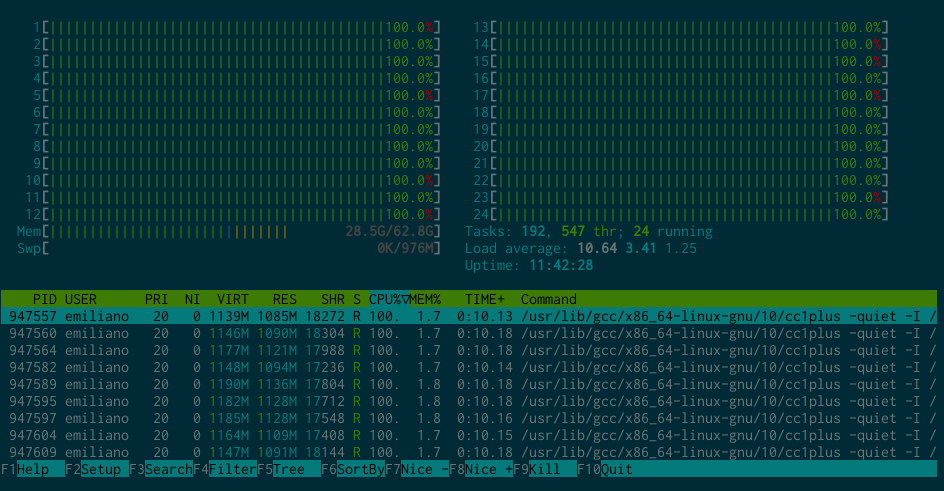
After 10 years of service
 Continuing with
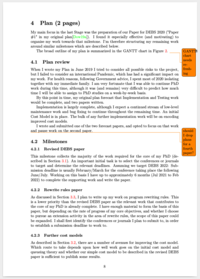 Two TODO items in the margin
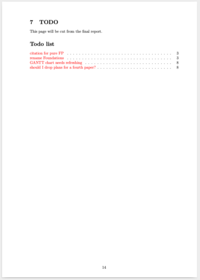 Collated TODOs in a list
 To start writing about updates regarding my GSoC project, the first obvious thing I need to do is to explain what my project really is. So let s get started.
 Today, KDE
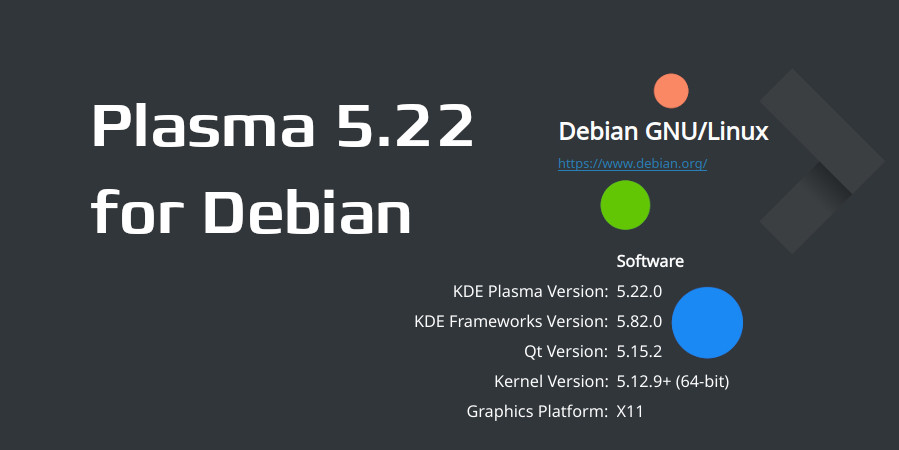 As usual, I am providing packages via my OBS builds. If you have used my packages till now, then you only need to change the

 The DebConf team is glad to announce that registration for DebConf21 Online is
now open.
The 21st Debian Conference is being held Online, due to COVID-19, from August 22 to August 29, 2021.
It will also sport a DebCamp from August 15 to August 21, 2021 (preceeding the DebConf).
To register for DebConf21, please visit the DebConf website
at