Search Results: "sto"

4 May 2021

Erich Schubert: Machine Learning Lecture Recordings

I have uploaded most of my Machine Learning lecture to YouTube. The slides are in English, but the audio is in German. Some very basic contents (e.g., a demo of standard k-means clustering) were left out from this advanced class, and instead only a link to recordings from an earlier class were given. In this class, I wanted to focus on the improved (accelerated) algorithms instead. These are not included here (yet). I believe there are some contents covered in this class you will find nowhere else (yet). The first unit is pretty long (I did not split it further yet). The later units are shorter recordings. ML F1: Principles in Machine Learning ML F2/F3: Correlation does not Imply Causation & Multiple Testing Problem ML F4: Overfitting beranpassung ML F5: Fluch der Dimensionalit t Curse of Dimensionality ML F6: Intrinsische Dimensionalit t Intrinsic Dimensionality ML F7: Distanzfunktionen und hnlichkeitsfunktionen ML L1: Einf hrung in die Klassifikation ML L2: Evaluation und Wahl von Klassifikatoren ML L3: Bayes-Klassifikatoren ML L4: N chste-Nachbarn Klassifikation ML L5: N chste Nachbarn und Kerndichtesch tzung ML L6: Lernen von Entscheidungsb umen ML L7: Splitkriterien bei Entscheidungsb umen ML L8: Ensembles und Meta-Learning: Random Forests und Gradient Boosting ML L9: Support Vector Machinen - Motivation ML L10: Affine Hyperebenen und Skalarprodukte Geometrie f r SVMs ML L11: Maximum Margin Hyperplane die breitest m gliche Stra e ML L12: Training Support Vector Machines ML L13: Non-linear SVM and the Kernel Trick ML L14: SVM Extensions and Conclusions ML L15: Motivation of Neural Networks ML L16: Threshold Logic Units ML L17: General Artificial Neural Networks ML L18: Learning Neural Networks with Backpropagation ML L19: Deep Neural Networks ML L20: Convolutional Neural Networks ML L21: Recurrent Neural Networks and LSTM ML L22: Conclusion Classification ML U1: Einleitung Clusteranalyse ML U2: Hierarchisches Clustering ML U3: Accelerating HAC mit Anderberg s Algorithmus ML U4: k-Means Clustering ML U5: Accelerating k-Means Clustering ML U6: Limitations of k-Means Clustering ML U7: Extensions of k-Means Clustering ML U8: Partitioning Around Medoids (k-Medoids) ML U9: Gaussian Mixture Modeling (EM Clustering) ML U10: Gaussian Mixture Modeling Demo ML U11: BIRCH and BETULA Clustering ML U12: Motivation Density-Based Clustering (DBSCAN) ML U13: Density-reachable and density-connected (DBSCAN Clustering) ML U14: DBSCAN Clustering ML U15: Parameterization of DBSCAN ML U16: Extensions and Variations of DBSCAN Clustering ML U17: OPTICS Clustering ML U18: Cluster Extraction from OPTICS Plots ML U19: Understanding the OPTICS Cluster Order ML U20: Spectral Clustering ML U21: Biclustering and Subspace Clustering ML U22: Further Clustering Approaches

3 May 2021

Russell Coker: DNS, Lots of IPs, and Postal

I decided to start work on repeating the tests for my 2006 OSDC paper on Benchmarking Mail Relays [1] and discover how the last 15 years of hardware developments have changed things. There have been software changes in that time too, but nothing that compares with going from single core 32bit systems with less than 1G of RAM and 60G IDE disks to multi-core 64bit systems with 128G of RAM and SSDs. As an aside the hardware I used in 2006 wasn t cutting edge and the hardware I m using now isn t either. In both cases it s systems I bought second hand for under $1000. Pedants can think of this as comparing 2004 and 2018 hardware. BIND I decided to make some changes to reflect the increased hardware capacity and use 2560 domains and IP addresses, which gave the following errors as well as a startup time of a minute on a system with two E5-2620 CPUs.
May  2 16:38:37 server named[7372]: listening on IPv4 interface lo, 127.0.0.1#53
May  2 16:38:37 server named[7372]: listening on IPv4 interface eno4, 10.0.2.45#53
May  2 16:38:37 server named[7372]: listening on IPv4 interface eno4, 10.0.40.1#53
May  2 16:38:37 server named[7372]: listening on IPv4 interface eno4, 10.0.40.2#53
May  2 16:38:37 server named[7372]: listening on IPv4 interface eno4, 10.0.40.3#53
[...]
May  2 16:39:33 server named[7372]: listening on IPv4 interface eno4, 10.0.47.0#53
May  2 16:39:33 server named[7372]: listening on IPv4 interface eno4, 10.0.48.0#53
May  2 16:39:33 server named[7372]: listening on IPv4 interface eno4, 10.0.49.0#53
May  2 16:39:33 server named[7372]: listening on IPv6 interface lo, ::1#53
[...]
May  2 16:39:36 server named[7372]: zone localhost/IN: loaded serial 2
May  2 16:39:36 server named[7372]: all zones loaded
May  2 16:39:36 server named[7372]: running
May  2 16:39:36 server named[7372]: socket: file descriptor exceeds limit (123273/21000)
May  2 16:39:36 server named[7372]: managed-keys-zone: Unable to fetch DNSKEY set '.': not enough free resources
May  2 16:39:36 server named[7372]: socket: file descriptor exceeds limit (123273/21000)
The first thing I noticed is that a default configuration of BIND with 2560 local IPs (when just running in the default recursive mode) takes a minute to start and needed to open over 100,000 file handles. BIND also had some errors in that configuration which led to it not accepting shutdown requests. I filed Debian bug report #987927 [2] about this. One way of dealing with the errors in this situation on Debian is to edit /etc/default/named and put in the following line to allow BIND to access to many file handles:
OPTIONS="-u bind -S 150000"
But the best thing to do for BIND when there are many IP addresses that aren t going to be used for DNS service is to put a directive like the following in the BIND configuration to specify the IP address or addresses that are used for the DNS service:
listen-on   10.0.2.45;  ;
I have just added the listen-on and listen-on-v6 directives to one of my servers with about a dozen IP addresses. While 2560 IP addresses is an unusual corner case it s not uncommon to have dozens of addresses on one system. dig When doing tests of Postfix for relaying mail I noticed that mail was being deferred with DNS problems (error was Host or domain name not found. Name service error for name=a838.example.com type=MX: Host not found, try again . I tested the DNS lookups with dig which failed with errors like the following:
dig -t mx a704.example.com
socket.c:1740: internal_send: 10.0.2.45#53: Invalid argument
; <
> DiG 9.16.13-Debian <
> -t mx a704.example.com
;; global options: +cmd
;; connection timed out; no servers could be reached
Here is a sample of the strace output from tracing dig:
bind(20,  sa_family=AF_INET, sin_port=htons(0), 
sin_addr=inet_addr("0.0.0.0") , 16) = 0
recvmsg(20,  msg_namelen=128 , 0)       = -1 EAGAIN (Resource temporarily 
unavailable)
write(4, "\24\0\0\0\375\377\377\377", 8) = 8
sendmsg(20,  msg_name= sa_family=AF_INET, sin_port=htons(53), 
sin_addr=inet_addr("10.0.2.45") , msg_
namelen=16, msg_iov=[ iov_base="86\1 
\0\1\0\0\0\0\0\1\4a704\7example\3com\0\0\17\0\1\0\0)\20\0\0\0\0
\0\0\f\0\n\0\10's\367\265\16bx\354", iov_len=57 ], msg_iovlen=1, 
msg_controllen=0, msg_flags=0 , 0) 
= -1 EINVAL (Invalid argument)
write(2, "socket.c:1740: ", 15)         = 15
write(2, "internal_send: 10.0.2.45#53: Invalid argument", 45) = 45
write(2, "\n", 1)                       = 1
futex(0x7f5a80696084, FUTEX_WAIT_PRIVATE, 0, NULL) = 0
futex(0x7f5a80696010, FUTEX_WAKE_PRIVATE, 1) = 0
futex(0x7f5a8069809c, FUTEX_WAKE_PRIVATE, 1) = 1
futex(0x7f5a80698020, FUTEX_WAKE_PRIVATE, 1) = 1
sendmsg(20,  msg_name= sa_family=AF_INET, sin_port=htons(53), 
sin_addr=inet_addr("10.0.2.45") , msg_namelen=16, msg_iov=[ iov_base="86\1 
\0\1\0\0\0\0\0\1\4a704\7example\3com\0\0\17\0\1\0\0)\20\0\0\0\0\0\0\f\0\n\0\10's\367\265\16bx\354", 
iov_len=57 ], msg_iovlen=1, msg_controllen=0, msg_flags=0 , 0) = -1 EINVAL 
(Invalid argument)
write(2, "socket.c:1740: ", 15)         = 15
write(2, "internal_send: 10.0.2.45#53: Invalid argument", 45) = 45
write(2, "\n", 1)
Ubuntu bug #1702726 claims that an insufficient ARP cache was the cause of dig problems [3]. At the time I encountered the dig problems I was seeing lots of kernel error messages neighbour: arp_cache: neighbor table overflow which I solved by putting the following in /etc/sysctl.d/mine.conf:
net.ipv4.neigh.default.gc_thresh3 = 4096
net.ipv4.neigh.default.gc_thresh2 = 2048
net.ipv4.neigh.default.gc_thresh1 = 1024
Making that change (and having rebooted because I didn t need to run the server overnight) didn t entirely solve the problems. I have seen some DNS errors from Postfix since then but they are less common than before. When they happened I didn t have that error from dig. At this stage I m not certain that the ARP change fixed the dig problem although it seems likely (it s always difficult to be certain that you have solved a race condition instead of made it less common or just accidentally changed something else to conceal it). But it is clearly a good thing to have a large enough ARP cache so the above change is probably the right thing for most people (with the possibility of changing the numbers according to the required scale). Also people having that dig error should probably check their kernel message log, if the ARP cache isn t the cause then some other kernel networking issue might be related. Preliminary Results With Postfix I m seeing around 24,000 messages relayed per minute with more than 60% CPU time idle. I m not sure exactly how to count idle time when there are 12 CPU cores and 24 hyper-threads as having only 1 process scheduled for each pair of hyperthreads on a core is very different to having half the CPU cores unused. I ran my script to disable hyper-threads by telling the Linux kernel to disable each processor core that has the same core ID as another, it was buggy and disabled the second CPU altogether (better than finding this out on a production server). Going from 24 hyper-threads of 2 CPUs to 6 non-HT cores of a single CPU didn t change the thoughput and the idle time went to about 30%, so I have possibly halved the CPU capacity for these tasks by disabling all hyper-threads and one entire CPU which is surprising given that I theoretically reduced the CPU power by 75%. I think my focus now has to be on hyper-threading optimisation. Since 2006 the performance has gone from ~20 messages per minute on relatively commodity hardware to 24,000 messages per minute on server equipment that is uncommon for home use but which is also within range of home desktop PCs. I think that a typical desktop PC with a similar speed CPU, 32G of RAM and SSD storage would give the same performance. Moore s Law (that transistor count doubles approximately every 2 years) is often misquoted as having performance double every 2 years. In this case more than 1024* the performance over 15 years means the performance doubling every 18 months. Probably most of that is due to SATA SSDs massively outperforming IDE hard drives but it s still impressive. Notes I ve been using example.com for test purposes for a long time, but RFC2606 specifies .test, .example, and .invalid as reserved top level domains for such things. On the next iteration I ll change my scripts to use .test. My current test setup has a KVM virtual machine running my bhm program to receive mail which is taking between 20% and 50% of a CPU core in my tests so far. While that is happening the kvm process is reported as taking between 60% and 200% of a CPU core, so kvm takes as much as 4* the CPU of the guest due to the virtual networking overhead even though I m using the virtio-net-pci driver (the most efficient form of KVM networking for emulating a regular ethernet card). I ve also seen this in production with a virtual machine running a ToR relay node. I ve fixed a bug where Postal would try to send the SMTP quit command after encountering a TCP error which would cause an infinite loop and SEGV.

Russ Allbery: Review: The Voyage of the Dawn Treader

Review: The Voyage of the Dawn Treader, by C.S. Lewis
Illustrator: Pauline Baynes
Series: Chronicles of Narnia #3
Publisher: Collier Books
Copyright: 1952
Printing: 1978
ISBN: 0-02-044260-2
Format: Mass market
Pages: 216
There was a boy named Eustace Clarence Scrubb and he almost deserved it.
The Voyage of the Dawn Treader is the third Narnia book in original publication order (see my review of The Lion, the Witch and the Wardrobe for more about reading order). You could arguably start reading here; there are a lot of references to the previous books, but mostly as background material, and I don't think any of it is vital. If you wanted to sample a single Narnia book to see if you'd get along with the series, this is the one I'd recommend. Since I was a kid, The Voyage of the Dawn Treader has held the spot of my favorite of the series. I'm happy to report that it still holds up. Apart from one bit that didn't age well (more on that below), this is the book where the story and the world-building come together, in part because Lewis picks a plot shape that works with what he wants to write about. The younger two Pevensie children, Edmund and Lucy, are spending the summer with Uncle Harold and Aunt Alberta because their parents are in America. That means spending the summer with their cousin Eustace. C.S. Lewis had strong opinions about child-raising that crop up here and there in his books, and Harold and Alberta are his example of everything he dislikes: caricatured progressive, "scientific" parents who don't believe in fiction or mess or vices. Eustace therefore starts the book as a terror, a whiny bully who has only read boring practical books and is constantly scoffing at the Pevensies and making fun of their stories of Narnia. He is therefore entirely unprepared when the painting of a ship in the guest bedroom turns into a portal to the Narnia and dumps the three children into the middle of the ocean. Thankfully, they're in the middle of the ocean near the ship in the painting. That ship is the Dawn Treader, and onboard is Caspian from the previous book, now king of Narnia. He has (improbably) sorted things out in his kingdom and is now on a sea voyage to find seven honorable Telmarine lords who left Narnia while his uncle was usurping the throne. They're already days away from land, headed towards the Lone Islands and, beyond that, into uncharted seas. MAJOR SPOILERS BELOW. Obviously, Eustace gets a redemption arc, which is roughly the first half of this book. It's not a bad arc, but I am always happy when it's over. Lewis tries so hard to make Eustace insufferable that it becomes tedious. As an indoor kid who would not consider being dumped on a primitive sailing ship to be a grand adventure, I wanted to have more sympathy for him than the book would allow. The other problem with Eustace's initial character is that Lewis wants it to stem from "modern" parenting and not reading the right sort of books, but I don't buy it. I've known kids whose parents didn't believe in fiction, and they didn't act anything like this (and kids pick up a lot more via osmosis regardless of parenting than Lewis seems to realize). What Eustace acts like instead is an entitled, arrogant rich kid who is used to the world revolving around him, and it's fascinating to me how Lewis ignores class to focus on educational philosophy. The best part of Eustace's story is Reepicheep, which is just setup for Reepicheep becoming the best part of The Voyage of the Dawn Treader. Reepicheep, the leader of Narnia's talking mice, first appears in Prince Caspian, but there he's mostly played for laughs: the absurdly brave and dashing mouse who rushes into every fight he sees. In this book, he comes into his own as the courage and occasionally the moral conscience of the party. Caspian wants to explore and to find the lords of his past, the Pevensie kids want to have a sea adventure, and Eustace is in this book to have a redemption arc, but Reepicheep is the driving force at the heart of the voyage. He's going to Aslan's country beyond the sea, armed with a nursemaid's song about his destiny and a determination to be his best and most honorable self every step of the way, and nothing is going to stop him. Eustace, of course, takes an immediate dislike to a talking rodent. Reepicheep, in return, is the least interested of anyone on the ship in tolerating Eustace's obnoxious behavior and would be quite happy to duel him. But when Eustace is turned into a dragon, Reepicheep is the one who spends hours with him, telling him stories and ensuring he's not alone. It's beautifully handled, and my only complaint is that Lewis doesn't do enough with the Eustace and Reepicheep friendship (or indeed with Eustace at all) for the rest of the book. After Eustace's restoration and a few other relatively short incidents comes the second long section of the book and the part that didn't age well: the island of the Dufflepuds. It's a shame because the setup is wonderful: a cultivated island in the middle of nowhere with no one in sight, mysterious pounding sounds and voices, the fun of trying to figure out just what these invisible creatures could possibly be, and of course Lucy's foray into the second floor of a house, braving the lair of a magician to find and read one of the best books of magic in fantasy. Everything about how Lewis sets this scene is so well done. The kids are coming from an encounter with a sea serpent and a horrifically dangerous magic island and land on this scene of eerily normal domesticity. The most dangerous excursion is Lucy going upstairs in a brightly lit house with soft carpet in the middle of the day. And yet it's incredibly tense because Lewis knows exactly how to put you in Lucy's head, right down to having to stand with her back to an open door to read the book. And that book! The pages only turn forward, the spells are beautifully illustrated, and the sense of temptation is palpable. Lucy reading the eavesdropping spell is one of the more memorable bits in this series, at least for me, and makes a surprisingly subtle moral point about the practical reasons why invading other people's privacy is unwise and can just make you miserable. And then, when Lucy reads the visibility spell that was her goal, there's this exchange, which is pure C.S. Lewis:
"Oh Aslan," said she, "it was kind of you to come." "I have been here all the time," said he, "but you have just made me visible." "Aslan!" said Lucy almost a little reproachfully. "Don't make fun of me. As if anything I could do would make you visible!" "It did," said Aslan. "Did you think I wouldn't obey my own rules?"
I love the subtlety of what's happening here: the way that Lucy is much more powerful than she thinks she is, but only because Aslan decided to make the rules that way and chooses to follow his own rules, making himself vulnerable in a fascinating way. The best part is that Lewis never belabors points like this; the characters immediately move on to talk about other things, and no one feels obligated to explain. But, unfortunately, along with the explanation of the thumping and the magician, we learn that the Dufflepuds are (remarkably dim-witted) dwarfs, the magician is their guardian (put there by Aslan, no less!), he transformed them into rather absurd shapes that they hate, and all of this is played for laughs. Once you notice that these are sentient creatures being treated essentially like pets (and physically transformed against their will), the level of paternalistic colonialism going on here is very off-putting. It's even worse that the Dufflepuds are memorably funny (washing dishes before dinner to save time afterwards!) and are arguably too dim to manage on their own, because Lewis made the authorial choice to write them that way. The "white man's burden" feeling is very strong. And Lewis could have made other choices! Coriakin the magician is a fascinating and somewhat morally ambiguous character. We learn later in the book that he's a star and his presence on the island is a punishment of sorts, leading to one of my other favorite bits of theology in this book:
"My son," said Ramandu, "it is not for you, a son of Adam, to know what faults a star can commit."
Lewis could have kept most of the setup, kept the delightfully silly things the Dufflepuds believe, changed who was responsible for their transformation, and given Coriakin a less authoritarian role, and the story would have been so much stronger for it. After this, the story gets stranger and wilder, and it's in the last part that I think the true magic of this book lies. The entirety of The Voyage of the Dawn Treader is a progression from a relatively mundane sea voyage to something more awe-inspiring. The last few chapters are a tour de force of wonder: rejuvenating stars, sunbirds, the Witch's stone knife, undersea kingdoms, a sea of lilies, a wall of water, the cliffs of Aslan's country, and the literal end of the world. Lewis does it without much conflict, with sparse description in a very few pages, and with beautifully memorable touches like the quality of the light and the hush that falls over the ship. This is the part of Narnia that I point to and wonder why I don't see more emulation (although I should note that it is arguably an immram). Tolkien-style fantasy, with dwarfs and elves and magic rings and great battles, is everywhere, but I can't think of many examples of this sense of awe and discovery without great battles and detailed explanations. Or of characters like Reepicheep, who gets one of the best lines of the series:
"My own plans are made. While I can, I sail east in the Dawn Treader. When she fails me, I paddle east in my coracle. When she sinks, I shall swim east with my four paws. And when I can swim no longer, if I have not reached Aslan's country, or shot over the edge of the world in some vast cataract, I shall sink with my nose to the sunrise and Peepiceek shall be the head of the talking mice in Narnia."
The last section of The Voyage of the Dawn Treader is one of my favorite endings of any book precisely because it's so different than the typical ending of a novel. The final return to England is always a bit disappointing in this series, but it's very short and is preceded by so much wonder that I don't mind. Aslan does appear to the kids as a lamb at the very end of the world, making Lewis's intended Christian context a bit more obvious, but even that isn't belabored, just left there for those who recognize the symbolism to notice. I was curious during this re-read to understand why The Voyage of the Dawn Treader is so much better than the first two books in the series. I think it's primarily due to two things: pacing, and a story structure that's better aligned with what Lewis wants to write about. For pacing, both The Lion, the Witch and the Wardrobe and Prince Caspian have surprisingly long setups for short books. In The Voyage of the Dawn Treader, by contrast, it takes only 35 pages to get the kids in Narnia, introduce all the characters, tour the ship, learn why Caspian is off on a sea voyage, establish where this book fits in the Narnian timeline, and have the kids be captured by slavers. None of the Narnia books are exactly slow, but Dawn Treader is the first book of the series that feels like it knows exactly where it's going and isn't wasting time getting there. The other structural success of this book is that it's a semi-episodic adventure, which means Lewis can stop trying to write about battles and political changes whose details he's clearly not interested in and instead focus wholeheartedly on sense-of-wonder exploration. The island-hopping structure lets Lewis play with ideas and drop them before they wear out their welcome. And the lack of major historical events also means that Aslan doesn't have to come in to resolve everything and instead can play the role of guardian angel. I think The Voyage of the Dawn Treader has the most compelling portrayal of Aslan in the series. He doesn't make decisions for the kids or tell them directly what to do the way he did in the previous two books. Instead, he shows up whenever they're about to make a dreadful mistake and does just enough to get them to make a better decision. Some readers may find this takes too much of the tension out of the book, but I have always appreciated it. It lets nervous child readers enjoy the adventures while knowing that Aslan will keep anything too bad from happening. He plays the role of a protective but non-interfering parent in a genre that usually doesn't have parents because they would intervene to prevent adventures. I enjoyed this book just as much as I remembered enjoying it during my childhood re-reads. Still the best book of the series. This, as with both The Lion, the Witch and the Wardrobe and Prince Caspian, was originally intended to be the last book of the series. That, of course, turned out to not be the case, and The Voyage of the Dawn Treader is followed (in both chronological and original publication order) by The Silver Chair. Rating: 9 out of 10

2 May 2021

Santiago Garc a Manti n: Windows and Linux software Raid dual boot BIOS machine

One could think that nowadays having a machine with software raid doing dual boot should be easy, but... my experience showed that it is not that easy.Having a Windows machine do software raid is easy (I still don't understand why it doesn't really work like it should, but that is because I'm used to Linux software raid), and having software raid on Linux is also really easy. But doing so on a BIOS booted machine, on mbr disks (as Windows doesn't allow GPT on BIOS) is quite a pain.The problem is how Windows does all this, with it's dynamic disks. What happens with this is that you get from a partitioning like this:/dev/sda1 * 2048 206847 204800 100M 7 HPFS/NTFS/exFAT /dev/sda2 206848 312580095 312373248 149G 7 HPFS/NTFS/exFAT /dev/sda3 312580096 313165823 585728 286M 83 Linux /dev/sda4 313165824 957698047 644532224 307,3G fd Linux raid autodetect To something like this:/dev/sda1 63 2047 1985 992,5K 42 SFS /dev/sda2 * 2048 206847 204800 100M 42 SFS /dev/sda3 206848 312580095 312373248 149G 42 SFS /dev/sda4 312580096 976769006 664188911 316,7G 42 SFS These are the physical partitions as seen by fdisk, logical partitions are still like before, of course, so there is no problem in accesing them under Linux or windows, but what happens here is that Windows is using the first sectors for its dynamic disks stuff, so... you cannot use those to write grub info there :-(So... the solution I found here was to install Debian's mbr and make it boot grub, but then... where do I store grub's info?, well, to do this I'm using a btrfs /boot which is on partition 3, as btrfs has room for embedding grub's info, and I setup the software raid with ext4 on partition 4, like you can see on my first partition dump. Of course, you can have just btrfs with its own software raid, then you don't need the fourth partition or anything.There are however some caveats on doing all this, what I found was that I had to install grub manually using grub-install --no-floppy on /dev/sda3 and /dev/sdb3, as Debian's grub refused to give me the option to install there, also... several warnings came as a result, but things work ok anyway.One more warning, I did all this on Buster, but it looks like for Grub 2.04 which is included on Bullseye, things have gotten a bit bigger, so at least on my partitions there was no room for it, so I had to leave the old Buster's grub around for now, if anybody has any ideas on how to solve this... they are welcome.
1 May 2021

Ingo Juergensmann: The Fediverse What About Resources?

Today ist May, 1st. In about two weeks on May, 15th WhatsApp will put their changed Terms of Service into action and when you don t accept their rules you won t be able to use WhatsApp any longer. Early this year there was already a strong movement away from WhatsApp towards other solutions. Mainly to Signal, but also some other services like the Fediverse gained some new users. And also XMPP got their fair share of new users. So, what to do about the WhatsApp ToS change then? Shall we go all to Signal? Surely not. Signal is another vendor lock-in silo. It s centralistic and recent development plans want to implement some crypto payment system. Even Bruce Schneier thinks that this is a bad idea. Other alternatives often named include Matrix/Element or XMPP. Today, Don di Dislessia in the (german) Fediverse asked about power consumption of the Fediverse incl. Matrix and XMPP and how much renewable energy is being used. Of course this is no easy answer to this question, but I tried my best at least for my own server. Here are my findings and conclusions Power
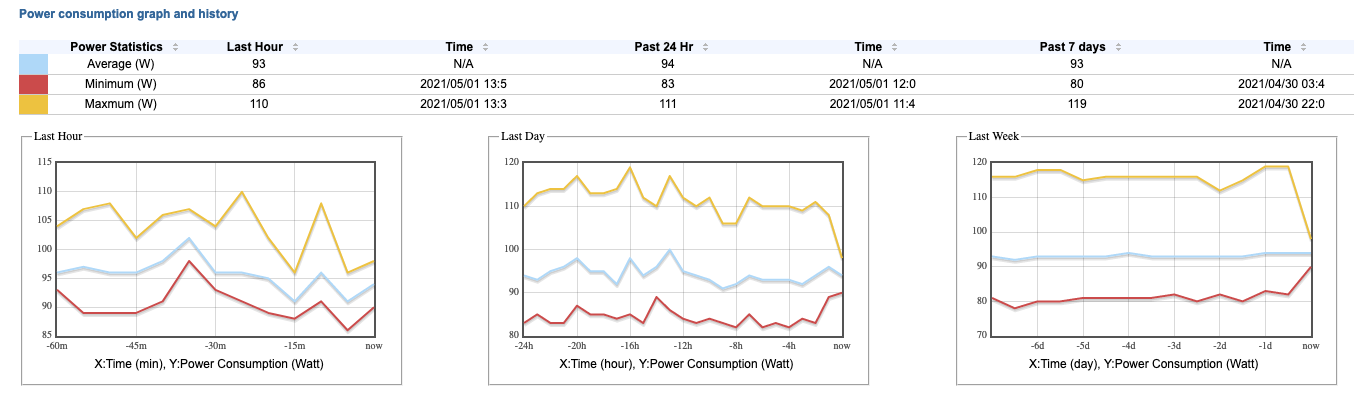
screenshot showing power consumption of serverscreenshot showing power consumption of server

Currently my server in the colocation is using about 93W in average with 6c Xeon E5-2630L, 128 GB RAM, 4x 2 TB WD Red + 1 Samsung 960pro NVMe. The server is 7 years old. When I started with that server the power consumption was about 75W, but back then there were far less users on the server. So, 20W more over the past year Users I m running my Friendica node on Nerdica.net since 2013. Over the years it became one of the largest Friendica servers in the Fediverse, for some time it was the largest one. It has currently like 700 total users and 180 monthly active users. My Mastodon instance on Nerdculture.de has about 1000 total users and about 300 monthly active users. Since last year I also run a Matrix-Synapse server. Although I invited my family I m in fact the only active user on that server and have joined some channels. My XMPP server is even older than my Friendica node. For long time I had like maybe 20 users. Now I setup a new website and added some domains like hookipa.net and xmpp.social the user count increased and currently I have like 130 users on those two domains and maybe like 50 monthly active users. Also note that all my Friendica and Mastodon users can use XMPP with their accounts, but won t be counted the same way as on native users on ejabberd, because the auth backend is different. So, let s assume I do have like 2000 total users and 500 monthly active users. CPU, Database Sizes and Disk I/O Let s have a look about how many resources are being used by those users. Database Sizes: CPU times according to xentop: Friendica does use the largest database and causes most disk I/O on NVMe, but it s difficult to differentiate between the load between the web apps on the webserver. So, let s have a quick look on an simple metric: Number of lines in webserver logfile: These metrics correlate to some degree with the database I/O load, at least for Friendica. If you take into account the number of users, things look quite different. Conclusion Overall, and my personal impression, is that Matrix is really bad in regards of resource usage. Given that I m the only active user it uses exceptionally many resources. When you also consider that Matrix is using a distributed database for its chat rooms, you can assume that the resource usage is multiplied across the network, making things even worse. Friendica is using a large database and many disk accesses, but has a fairly large user base, so it seems ok, but of course should be improved. Mastodon seems to be quite good, considering the database size, the number of log lines and the user count. XMPP turns out to be the most efficient contestant in this comparison: it uses much less CPU cycles and database disk I/O. Of course, Mastdon/Friendica are different services than XMPP or Matrix. So, coming back to the initial question about alternatives to WhatsApp, the answer for me is: you should prefer XMPP over Matrix alone for reasons of saving resources and thus reducing power consumption. Less power consumption also means a smaller ecological footprint and fewer CO2 emissions for your communication with your family and friends. XMPP is surely not the perfect replacement for WhatsApp, but I think it is the best thing to recommend. As said above, I don t think that Signal is an viable option. It s just another proprierary silo with all the problems that come with it. Matrix is a resource hog and not a messenger but a MS Teams replacement. Element as the main Matrix client is laggy and not multi-account/multi-server capable. Other Matrix clients do support multiple accounts but are not as feature-complete as Element. In the end the Matrix ecosystem will suffer from the same issues as XMPP did already a decade ago. But XMPP has learned to deal with it. Also XMPP is proceeding fast in the last years and it has solved many problems many people are still complaining about. Sure, there still some open issues. The situation on IOS is still not as good as on Android with Conversations, but it is fairly close to it. There are many efforts to improve XMPP. There is Quicksy IM, which is a service that will use your phone number as Jabber ID/JID and is thus comparable to Signal which uses phone numbers as well as unique identifier. But Quicksy is compatible with XMPP standards. Snikket is another new XMPP ecosystem aiming at smaller groups hosting their own server by simply installing a Docker container and setup some basic SRV records in the DNS. Or there is Mailcow, a Docker based mailserver setup that added XMPP server in their setup as well, so you can have the same mail and XMPP address. Snikket even got EU based funding for implementing XMPP Account Portability which also will improve the decentralization even further. Additionally XMPP helps vaccination in Canada and USA with vaxbot by Monal. Be smart and use ecofriendly infrastructure.

30 April 2021

Chris Lamb: Free software activities in April 2021

Here is my monthly update covering what I have been doing in the free software world during April 2021 (previous month): Reproducible Builds One of the original promises of open source software is that distributed peer review and transparency of process results in enhanced end-user security. However, whilst anyone may inspect the source code of free and open source software for malicious flaws, almost all software today is distributed as pre-compiled binaries. This allows nefarious third-parties to compromise systems by injecting malicious code into ostensibly secure software during the various compilation and distribution processes. The motivation behind the Reproducible Builds effort is to ensure no flaws have been introduced during this compilation process by promising identical results are always generated from a given source, thus allowing multiple third-parties to come to a consensus on whether a build was compromised. The project is proud to be a member project of the Software Freedom Conservancy. Conservancy acts as a corporate umbrella allowing projects to operate as non-profit initiatives without managing their own corporate structure. If you like the work of the Conservancy or the Reproducible Builds project, please consider becoming an official supporter. This month, I:
Debian
Debian Long Term Support (LTS) This month I have worked 18 hours on Debian Long Term Support (LTS) and 12 hours on its sister Extended LTS project: You can find out more about the project via the following video:

Bastian Venthur: Getting the Function keys of a Keychron working on Linux

Having destroyed the third Cherry Stream keyboard in 4 years, I wanted to try a more substantial keyboard for a change. After some research I decided that I want a mechanical, wired, tenkeyless keyboard without any fancy LEDs. At the end I settled for a Keychron C1 with red switches. It meets all requirements, looks very nice and the price is reasonable. Surprise! After the keyboard was delivered, I connected it to my Debian machine and was unpleasantly surprised to notice that the Function-keys did not work at all. The keyboard shares the Multimedia keys with the F-keys and you have an fn key that supposedly switches between the two modes, like you re used to on a laptop. On Linux, however you cannot access the F-keys at all: pressing fn + F1 or F1 makes no difference, you ll always get the Multimedia key. Switching the keyboard between Windows and Mac mode makes no difference either, in both modes the F-keys are not accessible. Apparently Keychron is aware of the problem, because the quick start manual tells you:

We have a Linux user group on facebook. Please search Keychron Linux Group on facebook. So you can better experience with our keyboard.
Customer support at its finest! So at this point you should probably just send the keyboard back, get the refund and buy a proper one with functioning F-keys. The fix Test if this command fixes the issue and enables the Fn + F-key-combos:
# as root:
echo 2 > /sys/module/hid_apple/parameters/fnmode
Depending on the mode the keyboard is in, you should now be able to use the F-keys by simply pressing them, and the Multimedia keys by pressing fn + F-key (or the other way round). To switch the default mode of the F-keys to Function- or Multimedia-mode, press and hold fn + X + L for 4 seconds. If everything works as expected, you can make the change permanent by creating the file /etc/modprobe.d/hid_apple.conf and adding the line:
options hid_apple fnmode=2
This works regardless if the keyboard is in Windows- or Mac-mode, and that might hint at the problem: in both cases the Linux thinks you re connecting a Mac keyboard. The rant Although the fix was not very hard to find and apply, this experience still leaves a foul taste. I naively assumed the problem of having a properly functioning keyboard that simply works when you plug it in, has been thoroughly solved by 2021. To make it worse, I assume Keychron must be aware of the problem because the other Keychron models have the same issue! But instead of fixing it on their end, they forward you to a facebook community and expect you to somehow fix it yourself. So dear Keychron, you do make really beautiful keyboards! But before you release your next model with the same bug, maybe invest a bit on fixing the basics? I see that your keyboards support firmware updates for Windows and Mac maybe you can talk to the folks over at the Linux Vendor Firmware Service and support Linux as well? Maybe you can even fix this annoying bug for the keyboards you ve already sold? I found it really cute that you sent different keycaps for Windows and Mac setups a few disappointed Linux users might accept an apology in form of a Linux cap

28 April 2021

Jonathan McDowell: DeskPi Pro update

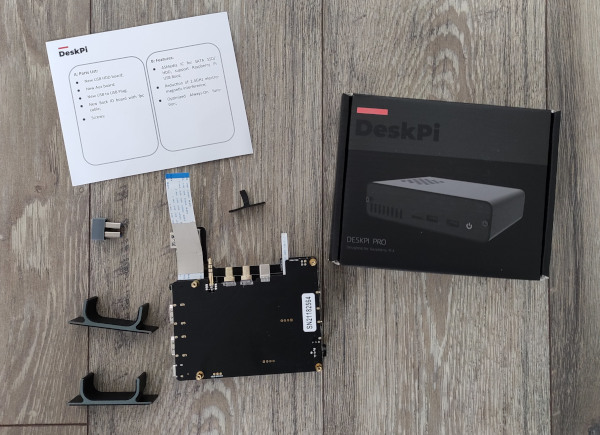
I wrote previously about my DeskPi Pro + 8GB Pi 4 setup. My main complaint at the time was the fact one of the forward facing USB ports broke off early on in my testing. For day to day use that hasn t been a problem, but it did mar the whole experience. Last week I received an unexpected email telling me The new updated PCB Board for your DeskPi order was shipped. . Apparently this was due to problems with identifying SSDs and WiFi/HDMI issues. I wasn t quite sure how much of the internals they d be replacing, so I was pleasantly surprised when it turned out to be most of them; including the PCB with the broken USB port on my device. DeskPi Pro replacement PCB They also provided a set of feet allowing for vertical mounting of the device, which was a nice touch. The USB/SATA bridge chip in use has changed; the original was:

usb 2-1: New USB device found, idVendor=152d, idProduct=0562, bcdDevice= 1.09
usb 2-1: New USB device strings: Mfr=1, Product=2, SerialNumber=3
usb 2-1: Product: RPi_SSD
usb 2-1: Manufacturer: 52Pi
usb 2-1: SerialNumber: DD5641988389F
and the new one is:
usb 2-1: New USB device found, idVendor=174c, idProduct=1153, bcdDevice= 0.01
usb 2-1: New USB device strings: Mfr=2, Product=3, SerialNumber=1
usb 2-1: Product: AS2115
usb 2-1: Manufacturer: ASMedia
usb 2-1: SerialNumber: 00000000000000000000
That s a move from a JMicron 6Gb/s bridge to an ASMedia 3Gb/s bridge. It seems there are compatibility issues with the JMicron that mean the downgrade is the preferred choice. I haven t retried the original SSD I wanted to use (that wasn t detected), but I did wonder if this might have resolved that issue too. Replacing the PCB was easier than the original install; everything was provided pre-assembled and I just had to unscrew the Pi4 and slot it out, then screw it into the new PCB assembly. Everything booted fine without the need for any configuration tweaks. Nice and dull. I ve tried plugging things into the new USB ports and they seem ok so far as well. However I also then ended up pulling in a new backports kernel from Debian (upgrading from 5.9 to 5.10) which resulted in a failure to boot. The kernel and initramfs were loaded fine, but no login prompt ever appeared. Some digging led to the discovery that a change in boot ordering meant USB was not being enabled. The solution is to add reset_raspberrypi to the /etc/initramfs-tools/modules file - that way this module is available in the initramfs, the appropriate pre-USB reset can happen and everything works just fine again. The other niggle with the new kernel was a regular set of errors in the kernel log:
mmc1: Timeout waiting for hardware cmd interrupt.
mmc1: sdhci: ============ SDHCI REGISTER DUMP ===========
and a set of registers afterwards, roughly every 10s or so. This seems to be fallout from an increase in the core clock due to the VC4 driver now being enabled, the fact I have no SD card in the device and a lack of working card-detect line for the MicroSD slot. There s a GitHub issue but I solved it by removing the sdhci_iproc for now - I m not using the wifi so loss of MMC isn t a problem. Credit to DeskPi for how they handled this. I didn t have to do anything and didn t even realise anything was happening until I got the email with my tracking number and a description of what they were sending out in it. Delivery took less than a week. This is a great example of how to handle a product issue - no effort required on the part of the customer.

Russell Coker: Links April 2021

Dr Justin Lehmiller s blog post comparing his official (academic style) and real biographies is interesting [1]. Also the rest of his blog is interesting too, he works at the Kinsey Institute so you know he s good. Media Matters has an interesting article on the spread of vaccine misinformation on Instagram [2]. John Goerzen wrote a long post summarising some of the many ways of having a decentralised Internet [3]. One problem he didn t address is how to choose between them, I could spend months of work to setup a fraction of those services. Erasmo Acosta wrote an interesting medium article Could Something as Pedestrian as the Mitochondria Unlock the Mystery of the Great Silence? [4]. I don t know enough about biology to determine how plausible this is. But it is a worry, I hope that humans will meet extra-terrestrial intelligences at some future time. Meredith Haggerty wrote an insightful Medium article about the love vs money aspects of romantic comedies [5]. Changes in viewer demographics would be one factor that makes lead actors in romantic movies significantly less wealthy in recent times. Informative article about ZIP compression and the history of compression in general [6]. Vice has an insightful article about one way of taking over SMS access of phones without affecting voice call or data access [7]. With this method the victom won t notice that they are having their sservice interfered with until it s way too late. They also explain the chain of problems in the US telecommunications industry that led to this. I wonder what s happening in this regard in other parts of the world. The clown code of ethics (8 Commandments) is interesting [8]. Sam Hartman wrote an insightful blog post about the problems with RMS and how to deal with him [9]. Also Sam Whitton has an interesting take on this [10]. Another insightful post is by Selam G about RMS long history of bad behavior and the way universities are run [11]. Cory Doctorow wrote an insightful article for Locus about free markets with a focus on DRM on audio books [12]. We need legislative changes to fix this!

Russ Allbery: Review: Beyond Shame

Review: Beyond Shame, by Kit Rocha
Series: Beyond #1
Publisher: Kit Rocha
Copyright: December 2013
ASIN: B00GIA4GN8
Format: Kindle
Pages: 270
I read this book as part of the Beyond Series Bundle (Books 1-3), which is what the sidebar information is for. Noelle is a child of Eden, the rich and technologically powerful city of a post-apocalyptic world. As the daughter of a councilman, she had everything she wanted except the opportunity to feel. Eden's religious elite embrace a doctrine of strict Puritanism: Even hugging one's children was frowned upon, let alone anything related to sex. Noelle was too rebellious to settle for that, which is why this book opens with her banished from Eden, ejected into Sector Four. The sectors are the city slums, full of gangs and degenerates and violence, only a slight step up from the horrific farming communes. Luckily for her, she literally stumbles into one of the lieutenants of the O'Kane gang, who are just as violent as their reputations but who have surprising sympathy for a helpless city girl. My shorthand distinction between romance and erotica is that romance mixes some sex into the plot and erotica mixes some plot into the sex. Beyond Shame is erotica, specifically BDSM erotica. The forbidden sensations that Noelle got kicked out of Eden for pursuing run strongly towards humiliation, which is tangled up in the shame she was taught to feel about anything sexual. There is a bit of a plot surrounding the O'Kanes who take her in, their leader, some political skulduggery that eventually involves people she knows, and some inter-sector gang warfare, but it's quite forgettable (and indeed I've already forgotten most of it). The point of the story is Noelle navigating a relationship with Jasper (among others) that involves a lot of very graphic sex. I was of two minds about reviewing this. Erotica is tricky to review, since to an extent it's not trying to do what most books are doing. The point is less to tell a coherent story (although that can be a bonus) than it is to turn the reader on, and what turns the reader on is absurdly personal and unpredictable. Erotica is arguably more usefully marked with story codes (which in this case would be something like MF, MMFF, FF, Mdom, Fdom, bd, ds, rom, cons, exhib, humil, tattoos) so that the reader has an idea whether the scenarios in the story are the sort of thing they find hot. This is particularly true of BDSM erotica, since the point is arousal from situations that wouldn't work or might be downright horrifying in a different sort of book. Often the forbidden or taboo nature of the scene is why it's erotic. For example, in another genre I would complain about the exaggerated and quite sexist gender roles, where all the men are hulking cage fighters who want to control the women, but in male-dominant BDSM erotica that's literally the point. As you can tell, I wrote a review anyway, primarily because of how I came to read this book. Kit Rocha (which is a pseudonym for the writing team of Donna Herren and Bree Bridges) recently published Deal with the Devil, a book about mercenary librarians in a post-apocalyptic future. Like every right-thinking person, I immediately wanted to read a book about mercenary librarians, but discovered that it was set in an existing universe. I hate not starting at the beginning of things, so even though there was probably no need to read the earlier books first, I figured out Beyond Shame was the first in this universe and the bundle of the first three books was only $2. If any of you are immediately hooked by mercenary librarians but are back-story completionists, now you know what you'll be getting into. That said, there are a few notable things about this book other than it has a lot of sex. The pivot of the romantic relationship was more interesting and subtle than most erotica. Noelle desperately wants a man to do all sorts of forbidden things to her, but she starts the book unable to explain or analyze why she wants what she wants, and both Jasper and the story are uncomfortable with that and unwilling to leave it alone. Noelle builds up a more coherent theory of herself over the course of the book, and while it's one that's obviously designed to enable lots of erotic scenes, it's not a bad bit of character development. Even better is Lex, the partner (sort of) of the leader of the O'Kane gang and by far the best character in the book. She takes Noelle under her wing from the start, and while that relationship is sexualized like nearly everything in this book, it also turns into an interesting female friendship that I would have also enjoyed in a different genre. I liked Lex a lot, and the fact she's the protagonist of the next book might keep me reading. Beyond Shame also has a lot more female gaze descriptions of the men than is often the case in male-dominant BDSM. The eye candy is fairly evenly distributed, although the gender roles are very much not. It even passes the Bechdel test, although it is still erotica and nearly all the conversations end up being about sex partners or sex eventually. I was less fond of the fact that the men are all dangerous and violent and the O'Kane leader frequently acts like a controlling, abusive psychopath. A lot of that was probably the BDSM setup, but it was not my thing. Be warned that this is the sort of book in which one of the (arguably) good guys tortures someone to death (albeit off camera). Recommendations are next to impossible for erotica, so I won't try to give one. If you want to read the mercenary librarian novel and are dubious about this one, it sounds like (although I can't confirm) that it's a bit more on the romance end of things and involves a lot fewer group orgies. Having read this book, I suspect it was entirely unnecessary to have done so for back-story. If you are looking for male-dominant BDSM, Beyond Shame is competently written, has a more thoughtful story than most, and has a female friendship that I fully enjoyed, which may raise it above the pack. Rating: 6 out of 10

26 April 2021

Vishal Gupta: Ramblings // On Sikkim and Backpacking

What I loved the most about Sikkim can t be captured on cameras. It can t be taped since it would be intrusive and it can t be replicated because it s unique and impromptu. It could be described, as I attempt to, but more importantly, it s something that you simply have to experience to know. Now I first heard about this from a friend who claimed he d been offered free rides and Tropicanas by locals after finishing the Ladakh Marathon. And then I found Ronnie s song, whose chorus goes : Dil hai pahadi, thoda anadi. Par duniya ke maya mein phasta nahi (My heart belongs to the mountains. Although a little childish, it doesn t get hindered by materialism). While the song refers his life in Manali, I think this holds true for most Himalayan states. Maybe it s the pleasant weather, the proximity to nature, the sense of safety from Indian Army being round the corner, independence from material pleasures that aren t available in remote areas or the absence of the pollution, commercialisation, & cutthroat-ness of cities, I don t know, there s just something that makes people in the mountains a lot kinder, more generous, more open and just more alive. Sikkimese people, are honestly some of the nicest people I ve ever met. The blend of Lepchas, Bhutias and the humility and the truthfulness Buddhism ingrains in its disciples is one that ll make you fall in love with Sikkim (assuming the views, the snow, the fab weather and food, leave you pining for more). As a product of Indian parenting, I ve always been taught to be wary of the unknown and to stick to the safer, more-travelled path but to be honest, I enjoy bonding with strangers. To me, each person is a storybook waiting to be flipped open with the right questions and the further I get from home, the wilder the stories get. Besides there s something oddly magical about two arbitrary curvilinear lines briefly running parallel until they diverge to move on to their respective paths. And I think our society has been so busy drawing lines and spreading hate that we forget that in the end, we re all just lines on the universe s infinite canvas. So the next time you travel, and you re in a taxi, a hostel, a bar, a supermarket, or on a long walk to a monastery (that you re secretly wishing is open despite a lockdown), strike up a conversation with a stranger. Small-talk can go a long way.
Header icon made by Freepik from www.flaticon.com

25 April 2021

Antoine Beaupr : Lost article ideas

I wrote for LWN for about two years. During that time, I wrote (what seems to me an impressive) 34 articles, but I always had a pile of ideas in the back of my mind. Those are ideas, notes, and scribbles lying around. Some were just completely abandoned because they didn't seem a good fit for LWN. Concretely, I stored those in branches in a git repository, and used the branch name (and, naively, the last commit log) as indicators of the topic. This was the state of affairs when I left:
remotes/private/attic/novena                    822ca2bb add letter i sent to novena, never published
remotes/private/attic/secureboot                de09d82b quick review, add note and graph
remotes/private/attic/wireguard                 5c5340d1 wireguard review, tutorial and comparison with alternatives
remotes/private/backlog/dat                     914c5edf Merge branch 'master' into backlog/dat
remotes/private/backlog/packet                  9b2c6d1a ham radio packet innovations and primer
remotes/private/backlog/performance-tweaks      dcf02676 config notes for http2
remotes/private/backlog/serverless              9fce6484 postponed until kubecon europe
remotes/private/fin/cost-of-hosting             00d8e499 cost-of-hosting article online
remotes/private/fin/kubecon                     f4fd7df2 remove published or spun off articles
remotes/private/fin/kubecon-overview            21fae984 publish kubecon overview article
remotes/private/fin/kubecon2018                 1edc5ec8 add series
remotes/private/fin/netconf                     3f4b7ece publish the netconf articles
remotes/private/fin/netdev                      6ee66559 publish articles from netdev 2.2
remotes/private/fin/pgp-offline                 f841deed pgp offline branch ready for publication
remotes/private/fin/primes                      c7e5b912 publish the ROCA paper
remotes/private/fin/runtimes                    4bee1d70 prepare publication of runtimes articles
remotes/private/fin/token-benchmarks            5a363992 regenerate timestamp automatically
remotes/private/ideas/astropy                   95d53152 astropy or python in astronomy
remotes/private/ideas/avaneya                   20a6d149 crowdfunded blade-runner-themed GPLv3 simcity-like simulator
remotes/private/ideas/backups-benchmarks        fe2f1f13 review of backup software through performance and features
remotes/private/ideas/cumin                     7bed3945 review of the cumin automation tool from WM foundation
remotes/private/ideas/future-of-distros         d086ca0d modern packaging problems and complex apps
remotes/private/ideas/on-dying                  a92ad23f another dying thing
remotes/private/ideas/openpgp-discovery         8f2782f0 openpgp discovery mechanisms (WKD, etc), thanks to jonas meurer
remotes/private/ideas/password-bench            451602c0 bruteforce estimates for various password patterns compared with RSA key sizes
remotes/private/ideas/prometheus-openmetrics    2568dbd6 openmetrics standardizing prom metrics enpoints
remotes/private/ideas/telling-time              f3c24a53 another way of telling time
remotes/private/ideas/wallabako                 4f44c5da talk about wallabako, read-it-later + kobo hacking
remotes/private/stalled/bench-bench-bench       8cef0504 benchmarking http benchmarking tools
remotes/private/stalled/debian-survey-democracy 909bdc98 free software surveys and debian democracy, volunteer vs paid work
Wow, what a mess! Let's see if I can make sense of this:

Attic Those are articles that I thought about, then finally rejected, either because it didn't seem worth it, or my editors rejected it, or I just moved on:
  • novena: the project is ooold now, didn't seem to fit a LWN article. it was basically "how can i build my novena now" and "you guys rock!" it seems like the MNT Reform is the brain child of the Novena now, and I dare say it's even cooler!
  • secureboot: my LWN editors were critical of my approach, and probably rightly so - it's a really complex subject and I was probably out of my depth... it's also out of date now, we did manage secureboot in Debian
  • wireguard: LWN ended up writing extensive coverage, and I was biased against Donenfeld because of conflicts in a previous project

Backlog Those were articles I was planning to write about next.
  • dat: I already had written Sharing and archiving data sets with Dat, but it seems I had more to say... mostly performance issues, beaker, no streaming, limited adoption... to be investigated, I guess?
  • packet: a primer on data communications over ham radio, and the cool new tech that has emerged in the free software world. those are mainly notes about Pat, Direwolf, APRS and so on... just never got around to making sense of it or really using the tech...
  • performance-tweaks: "optimizing websites at the age of http2", the unwritten story of the optimization of this website with HTTP/2 and friends
  • serverless: god. one of the leftover topics at Kubecon, my notes on this were thin, and the actual subject, possibly even thinner... the only lie worse than the cloud is that there's no server at all! concretely, that's a pile of notes about Kubecon which I wanted to sort through. Probably belongs in the attic now.

Fin Those are finished articles, they were published on my website and LWN, but the branches were kept because previous drafts had private notes that should not be published.

Ideas A lot of those branches were actually just an empty commit, with the commitlog being the "pitch", more or less. I'd send that list to my editors, sometimes with a few more links (basically the above), and they would nudge me one way or the other. Sometimes they would actively discourage me to write about something, and I would do it anyways, send them a draft, and they would patiently make me rewrite it until it was a decent article. This was especially hard with the terminal emulator series, which took forever to write and even got my editors upset when they realized I had never installed Fedora (I ended up installing it, and I was proven wrong!)

Stalled Oh, and then there's those: those are either "ideas" or "backlog" that got so far behind that I just moved them out of the way because I was tired of seeing them in my list.
  • stalled/bench-bench-bench benchmarking http benchmarking tools, a horrible mess of links, copy-paste from terminals, and ideas about benchmarking... some of this trickled out into this benchmarking guide at Tor, but not much more than the list of tools
  • stalled/debian-survey-democracy: "free software surveys and Debian democracy, volunteer vs paid work"... A long standing concern of mine is that all Debian work is supposed to be volunteer, and paying explicitly for work inside Debian has traditionally been frowned upon, even leading to serious drama and dissent (remember Dunc-Tank)? back when I was writing for LWN, I was also doing paid work for Debian LTS. I also learned that a lot (most?) Debian Developers were actually being paid by their job to work on Debian. So I was confused by this apparent contradiction, especially given how the LTS project has been mostly accepted, while Dunc-Tank was not... See also this talk at Debconf 16. I had hopes that this study would show the "hunch" people have offered (that most DDs are paid to work on Debian) but it seems to show the reverse (only 36% of DDs, and 18% of all respondents paid). So I am still confused and worried about the sustainability of Debian.

What do you think? So that's all I got. As people might have noticed here, I have much less time to write these days, but if there's any subject in there I should pick, what is the one that you would find most interesting? Oh! and I should mention that you can write to LWN! If you think people should know more about some Linux thing, you can get paid to write for it! Pitch it to the editors, they won't bite. The worst that can happen is that they say "yes" and there goes two years of your life learning to write. Because no, you don't know how to write, no one does. You need an editor to write. That's why this article looks like crap and has a smiley. :)

23 April 2021

Matthew Garrett: An accidental bootsplash

Back in 2005 we had Debconf in Helsinki. Earlier in the year I'd ended up invited to Canonical's Ubuntu Down Under event in Sydney, and one of the things we'd tried to design was a reasonable graphical boot environment that could also display status messages. The design constraints were awkward - we wanted it to be entirely in userland (so we didn't need to carry kernel patches), and we didn't want to rely on vesafb[1] (because at the time we needed to reinitialise graphics hardware from userland on suspend/resume[2], and vesa was not super compatible with that). Nothing currently met our requirements, but by the time we'd got to Helsinki there was a general understanding that Paul Sladen was going to implement this.

The Helsinki Debconf ended being an extremely strange event, involving me having to explain to Mark Shuttleworth what the physics of a bomb exploding on a bus were, many people being traumatised by the whole sauna situation, and the whole unfortunate water balloon incident, but it also involved Sladen spending a bunch of time trying to produce an SVG of a London bus as a D-Bus logo and not really writing our hypothetical userland bootsplash program, so on the last night, fueled by Koff that we'd bought by just collecting all the discarded empty bottles and returning them for the deposits, I started writing one.

I knew that Debian was already using graphics mode for installation despite having a textual installer, because they needed to deal with more complex fonts than VGA could manage. Digging into the code, I found that it used BOGL - a graphics library that made use of the VGA framebuffer to draw things. VGA had a pre-allocated memory range for the framebuffer[3], which meant the firmware probably wouldn't map anything else there any hitting those addresses probably wouldn't break anything. This seemed safe.

A few hours later, I had some code that could use BOGL to print status messages to the screen of a machine booted with vga16fb. I woke up some time later, somehow found myself in an airport, and while sitting at the departure gate[4] I spent a while staring at VGA documentation and worked out which magical calls I needed to make to have it behave roughly like a linear framebuffer. Shortly before I got on my flight back to the UK, I had something that could also draw a graphical picture.

Usplash shipped shortly afterwards. We hit various issues - vga16fb produced a 640x480 mode, and some laptops were not inclined to do that without a BIOS call first. 640x400 worked basically everywhere, but meant we had to redraw the art because circles don't work the same way if you change the resolution. My brief "UBUNTU BETA" artwork that was me literally writing "UBUNTU BETA" on an HP TC1100 shortly after I'd got the Wacom screen working did not go down well, and thankfully we had better artwork before release.

But 16 colours is somewhat limiting. SVGALib offered a way to get more colours and better resolution in userland, retaining our prerequisites. Unfortunately it relied on VM86, which doesn't exist in 64-bit mode on Intel systems. I ended up hacking the X.org x86emu into a thunk library that exposed the same API as LRMI, so we could run it without needing VM86. Shockingly, it worked - we had support for 256 colour bootsplashes in any supported resolution on 64 bit systems as well as 32 bit ones.

But by now it was obvious that the future was having the kernel manage graphics support, both in terms of native programming and in supporting suspend/resume. Plymouth is much more fully featured than Usplash ever was, but relies on functionality that simply didn't exist when we started this adventure. There's certainly an argument that we'd have been better off making reasonable kernel modesetting support happen faster, but at this point I had literally no idea how to write decent kernel code and everyone should be happy I kept this to userland.

Anyway. The moral of all of this is that sometimes history works out such that you write some software that a huge number of people run without any idea of who you are, and also that this can happen without you having any fucking idea what you're doing.

Write code. Do crimes.

[1] vesafb relied on either the bootloader or the early stage kernel performing a VBE call to set a mode, and then just drawing directly into that framebuffer. When we were doing GPU reinitialisation in userland we couldn't guarantee that we'd run before the kernel tried to draw stuff into that framebuffer, and there was a risk that that was mapped to something dangerous if the GPU hadn't been reprogrammed into the same state. It turns out that having GPU modesetting in the kernel is a Good Thing.

[2] ACPI didn't guarantee that the firmware would reinitialise the graphics hardware, and as a result most machines didn't. At this point Linux didn't have native support for initialising most graphics hardware, so we fell back to doing it from userland. VBEtool was a terrible hack I wrote to try to re-execute the system's graphics hardware through a range of mechanisms, and it worked in a surprising number of cases.

[3] As long as you were willing to deal with 640x480 in 16 colours

[4] Helsinki-Vantaan had astonishingly comfortable seating for time

comment count unavailable comments

22 April 2021

Dirk Eddelbuettel: drat 0.2.0: Now with docs/

drat user A new release of drat arrived on CRAN today. This is the first release in a few months (with the last release in July of last year) and it (finally) makes the leap to supporting docs/ in the main branch as we are all so tired of the gh-pages branch. We also have new vignettes, new (and very shiny) documentation and refreshed vignettes! drat stands for drat R Archive Template, and helps with easy-to-create and easy-to-use repositories for R packages. Since its inception in early 2015 it has found reasonably widespread adoption among R users because repositories with marked releases is the better way to distribute code. See below for a few custom reference examples. Because for once it really is as your mother told you: Friends don t let friends install random git commit snapshots. Or as we may now add: stay away from semi-random universes snapshots too. Properly rolled-up releases it is. Just how CRAN shows us: a model that has demonstrated for two-plus decades how to do this. And you can too: drat is easy to use, documented by (now) six vignettes and just works. The NEWS file summarises the release as follows:

Changes in drat version 0.2.0 (2021-04-21)
  • A documentation website for the package was added at https://eddelbuettel.github.io/drat/ (Dirk)
  • The continuous integration was switched to using r-ci (Dirk)
  • The docs/ directory of the main repository branch can now be used instead of gh-pages branch (Dirk in #112)
  • A new repository https://github.com/drat-base/drat can now be used to fork an initial drat repository (Dirk)
  • A new vignette Drat Step-by-Step was added (Roman Hornung and Dirk in #117 fixing #115 and #113)
  • The test suite was refactored for docs/ use (Felix Ernst in #118)
  • The minimum R version is now R (>= 3.6) (Dirk fixing #119)
  • The vignettes were switched to minidown (Dirk fixing #116)
  • A new test file was added to ensure NEWS.Rd is always at the current release version.

Courtesy of my CRANberries, there is a comparison to the previous release. More detailed information is on the drat page. If you like this or other open-source work I do, you can now sponsor me at GitHub.

This post by Dirk Eddelbuettel originated on his Thinking inside the box blog. Please report excessive re-aggregation in third-party for-profit settings.

Russell Coker: HP ML350P Gen8

I m playing with a HP Proliant ML350P Gen8 server (part num 646676-011). For HP servers ML means tower (see the ProLiant Wikipedia page for more details [1]). For HP servers the generation indicates how old the server is, Gen8 was announced in 2012 and Gen10 seems to be the current generation. Debian Packages from HP
wget -O /usr/local/hpePublicKey2048_key1.pub https://downloads.linux.hpe.com/SDR/hpePublicKey2048_key1.pub
echo "# HP RAID" >> /etc/apt/sources.list
echo "deb [signed-by=/usr/local/hpePublicKey2048_key1.pub] http://downloads.linux.hpe.com/SDR/downloads/MCP/Debian/ buster/current non-free" >> /etc/apt/sources.list
The above commands will setup the APT repository for Debian/Buster. See the HP Downloads FAQ [2] for more information about their repositories. hponcfg This package contains the hponcfg program that configures ILO (the HP remote management system) from Linux. One noteworthy command is hponcfg -r to reset the ILO, something you should do before selling an old system. ssacli This package contains the ssacli program to configure storage arrays, here are some examples of how to use it:
# list controllers and show slot numbers
ssacli controller all show
# list arrays on controller identified by slot and give array IDs
ssacli controller slot=0 array all show
# show details of one array
ssacli controller slot=0 array A show
# show all disks on one controller
ssacli controller slot=0 physicaldrive all show
# show config of a controller, this gives RAID level etc
ssacli controller slot=0 show config
# delete array B (you can immediately pull the disks from it)
ssacli controller slot=0 array B delete
# create an array type RAID0 with specified drives, do this with one drive per array for BTRFS/ZFS
ssacli controller slot=0 create type=arrayr0 drives=1I:1:1
When a disk is used in JBOD mode just under 33MB will be used at the end of the disk for the RAID metadata. If you have existing disks with a DOS partition table you can put it in a HP array as a JBOD and it will work with all data intact (GPT partition table is more complicated). When all disks are removed from the server the cooling fans run at high speed, this would be annoying if you wanted to have a diskless workstation or server using only external storage. ssaducli This package contains the ssaducli diagnostic utility for storage arrays. The SSD wear gauge report doesn t work for the 2 SSDs I tested it on, maybe it only supports SAS SSDs not SATA SSDs. It doesn t seem to do anything that I need. storcli This package contains both 32bit and 64bit versions of the MegaRAID utility and deletes whichever one doesn t match the installation in the package postinst, so it fails debsums checks etc. The MegaRAID utility is for a different type of RAID controller to the Smart Storage Array (AKA SSA) that the other utilities work with. As an aside it seems that there are multiple types of MegaRAID controller, the management program from the storcli package doesn t work on a Dell server with MegaRAID. They should have made separate 32bit and 64bit versions of this package. Recommendations Here is HP page for downloading firmware updates (including security updates) [3], you have to login first and have a warranty. This is legal but poor service. Dell servers have comparable prices (on the second hand marker) and comparable features but give free firmware updates to everyone. Dell have overall lower quality of Debian packages for supporting utilities, but a wider range of support so generally Dell support seems better in every way. Dell and HP hardware seems of equal quality so overall I think it s best to buy Dell. Suggestions for HP Finding which of the signing keys to use is unreasonably difficult. You should get some HP employees to sign the HP keys used for repositories with their personal keys and then go to LUG meetings and get their personal keys well connected to the web of trust. Then upload the HP keys to the public key repositories. You should also use the same keys for signing all versions of the repositories. Having different keys for the different versions of Debian wastes people s time. Please provide firmware for all users, even if they buy systems second hand. It is in your best interests to have systems used long-term and have them run securely. It is not in your best interests to have older HP servers perform badly. Having all the fans run at maximum speed when power is turned on is a standard server feature. Some servers can throttle the fan when the BIOS is running, it would be nice if HP servers did that. Having ridiculously loud fans until just before GRUB starts is annoying.

Shirish Agarwal: The Great Train Robbery

I had a twitter fight few days back with a gentleman and the article is a result of that fight. Sadly, I do not know the name of the gentleman as he goes via a psuedo name and then again I ve not taken permission from him to quote him in either way. So I will just state the observations I was able to make from the conversations we had. As people who read this blog regularly would know, I am and have been against Railway Privatization which is happening in India. And will be sharing some of the case studies from other countries as to how it panned out for them.

UK Railways
How Privatization Fails : Railways
The Above video is by a gentleman called Shaun who basically shared that privatization as far as UK is concerned is nothing but monopolies and while there are complex reasons for the same, the design of the Railways is such that it will always be a monopoly structure. At the most what you can do is have several monopolies but that is all that can happen. The idea of competition just cannot happen. Even the idea that subsidies will be less or/and trains will run on time is far from fact. Both of these facts have been checked and found to be truthful by fullfact.org. It is and argued that UK is small and perhaps it doesn t have the right conditions. It is probably true but still we do deserve to have a glance at the UK railway map.
UK railway map with operatorsUK railway map with operators
The above map is copyrighted to Map Marketing where you could see it today . As can be seen above most companies had their own specified areas. Now if you had looked at the facts then you would have seen that UK fares have been higher. In fact, an oldish article from Metro (a UK publication) shares the same. In fact, UK nationalized its railways effectively as many large rail operators were running in red. Even Scotland is set to nationalised back in March 2022. Remember this is a country which hasn t seen inflation go upwards of 5% in nearly a decade. The only outlier was 2011 where they indeed breached the 5% mark. So from this, what we see is Private Gains and Private Gains Public Losses perhaps seem fit. But then maybe we didn t use the right example. Perhaps Japan would be better. They have bullet trains while UK is still thinking about it. (HS2).

Japanese Railway Below is the map of Japanese Railway
Railway map of Japan with private ownership courtesy Wikimedia commons
Japan started privatizing its railway in 1987 and to date it has not been fully privatized. And on top of it, amount as much as 24 trillion of the long-term JNR debt was shouldered by the government at the expense of taxpayers of Japan while also reducing almost 1/4th of it employees. To add to it, while some parts of Japanese Railways did make profits, many of them made profits by doing large-scale non-railway business mostly real estate of land adjacent to railway stations. In many cases, it seems this went all the way up to 60% of the revenue. The most profitable has been the Shinkansen though. And while it has been profitable, it has not been without safety scandals over the years, the biggest in recent years was the 2005 Amagasaki derailment. What was interesting to me was the Aftermath, while the Wikipedia page doesn t share much, I had read at the time and probably could be found how a lot of ordinary people stood up to the companies in a country where it is a known fact that most companies are owned by the Yakuza. And this is a country where people are loyal to their corporation or company no matter what. It is a strange culture to west and also here in India where people change jobs on drop of hat, although nowadays we have record unemployment. So perhaps Japan too does not meet our standard as it doesn t do competition with each other but each is a set monopoly in those regions. Also how much subsidy is there or not is not really transparent.

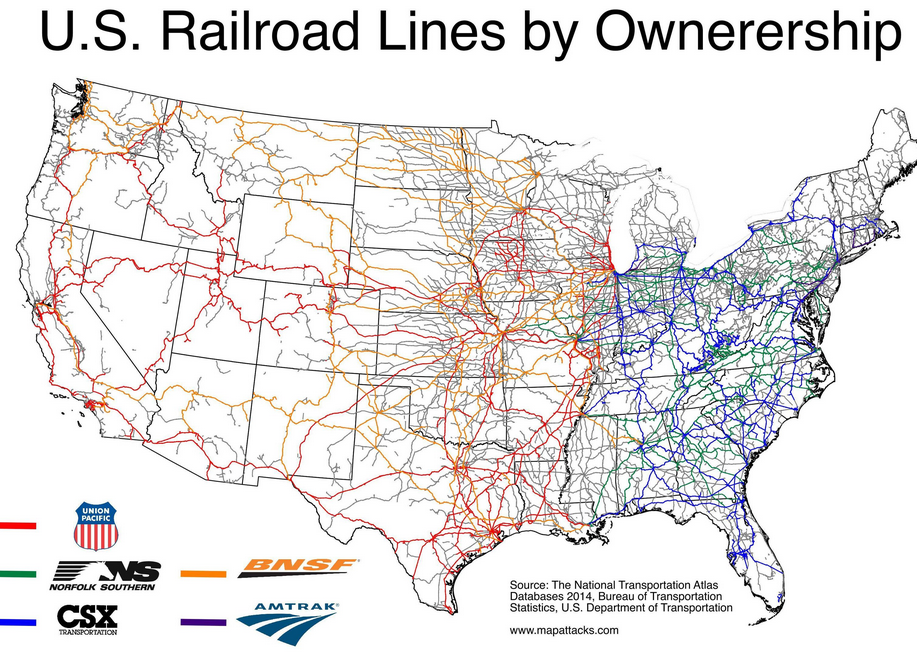
U.S. Railways Last, but not the least I share the U.S. Railway map. This is provided by A Mr. Tom Alison on reddit on channel maporn. As the thread itself is archived and I do not know the gentleman concerned, nor have taken permission for the map, hence sharing the compressed version


U.S. Railway lines with the different owners
Now the U.S. Railways is and has always been peculiar as unlike the above two the U.S. has always been more of a freight network. Probably, much of it has to do that in the 1960 s when oil was cheap, the U.S. made zillions of roadways and romanticized the road trip and has been doing it ever since. Also the creation of low-cost airlines definitely didn t help the railways to have more passenger services, in fact the opposite. There are and have been smaller services and attempts of privatization in both New Zealand and Australia and both have been failures. Please see papers in that regard. My simple point is this, as can be seen above, there have been various attempts at privatization of railways and most of them have been a mixed bag. The only one which comes close to what we think as good is Japanese but that also used a lot of public debt which we don t know what will happen on next. Also for higher-speed train services like a bullet train or whatever, you need to direct, no hair pen bends. In fact, a good talk on the topic is the TBD podcast which while it talks about hyperloop, the same questions is and would be asked if were to do in India. Another thing to be kept in mind is that the Japanese have been exceptional builders and this is because they have been forced to. They live in a seismically active zone which made Fukushima disaster a reality but at the same time, their buildings are earthquake-resistant. Standard Disclaimer The above is a simplified version of things. I could have added in financial accounts but that again has no set pattern. For e.g. some Railways use accrual, some use cash and some use hybrid. I could have also shared in either the guage or electrification but all have slightly different standards, although uniguage is something that all Railways aspire for and electrification is again something that all Railways want although in many cases it just isn t economically feasible.

Indian Railways Indian Railways itself recently made the move from Cash to Accrual couple of years back. In-between for a couple of years, it was hybrid. The sad part is and was you can now never measure against past performance in the old way because it is so different. Hence, whether the Railways will be making a loss or a profit, we would come to know only much later. Also, most accountants don t know the new system well, so it is gonna take more time, how much unknown. Sadly, what GOI did a few years back is merge the Railway budget into the Union Budget. Of course, the excuse they gave is too many pressures of new trains, while the truth is, by doing this, they decreased transparency about the whole thing. For e.g. for the last few years, the only state which had significant work being done is in U.P. (Uttar Pradesh) and a bit in Goa, although that is has been protested time and again. I being from the neighborly state of Maharashtra , and have been there several times. Now it does feels all like a dream, going to Goa :(.

Covid news Now before I jump on the news, I should share the movie Virus (2019) which was made by the talented Aashiq Abu. Even though, am not a Malayalee, I still have enjoyed many of his movies simply because he is a terrific director and Malayalam movies, at least most of them have English subtitles and lot of original content.. Interestingly, unlike the first couple of times when I saw it a couple of years back. The first time I saw it, I couldn t sleep a wink for a week. Even the next time, it was heavy. I had shared the movie with mum, and even she couldn t see it in one go. It is and was that powerful Now maybe because we are headlong in the pandemic, and the madness is all around us. There are two terms that helped me though understand a great deal of what is happening in the movie, the first term was altered sensorium which has been defined here. The other is saturation or to be more precise oxygen saturation . This term has also entered the Indian twitter lexicon quite a bit as India has started running out of oxygen. Just today Delhi High Court did an emergency hearing on the subject late at night. Although there is much to share about the mismanagement of the center, the best piece on the subject has been by Miss Priya Ramani. Yup, the same lady who has won against M.J. Akbar and this is when Mr. Akbar had 100 lawyers for this specific case. It would be interesting to see what happens ahead. There are however few things even she forgot in her piece, For e.g. reverse migration i.e. from urban to rural migration started again. Two articles from different entities sharing a similar outlook.Sadly, the right have no empathy or feeling for either the poor or the sick. Even the labor minister Santosh Gangwar s statement that around 1.04 crores were the only people who walked back home. While there is not much data, however some work/research has been done on migration to cites that the number could be easily 10 times as much. And this was in the lockdown of last year. This year, again the same issue has re-surfaced and migrants learning lessons started leaving cities. And I m ashamed to say I think they are doing the right thing. Most State Governments have not learned lessons nor have they done any work to earn the trust of migrants. This is true of almost all state Governments. Last year, just before the lockdown was announced, me and my friend spent almost 30k getting a cab all the way from Chennai to Pune, how much we paid for the cab, how much we bribed the various people just so we could cross the state borders to return home to our anxious families. Thankfully, unlike the migrants, we were better off although we did make a loss. I probably wouldn t be alive if I were in their situation as many didn t. That number is still in the air undocumented deaths  Vaccine issues Currently, though the issue has been the Vaccine and the pricing of the same. A good article to get a summation of the issues outlined has been shared on Economist. Another article that goes to the heart of the issue is at scroll. To buttress the argument, the SII chairman had shared this few weeks back
Adar Poonawala talking to Vishnu Som on Left, right center, 7th April 2021.
So, a licensee manufacturer wants to make super-profits during the pandemic. And now, as shared above they can very easily do it. Even the quotes given to nearby countries is smaller than the quotes given to Indian states

Prices of AstraZeneca among various states and countries.
The situation around beds, vaccines, oxygen, anything is so dire that people could go to any lengths to save their loved ones. Even if they know if a certain medicine doesn t work. For e.g. Remdesivir, 5 WHO trials have concluded that it doesn t increase mortality. Heck, even AIIMS chief said the same. But both doctors and relatives desperation to cling on hope has made Remdesivir as a black market drug with unoffical prices hovering anywhere between INR 14k/- to INR30k/- per vial. One of the executives of a top firm was also arrested in Gujarat. In Maharashtra, the opposition M.P. came to the rescue of the officials of Bruick pharms in Mumbai. Sadly, this strange affliction to the party in the center is also there in my extended family. At one end, they will heap praise on Mr. Modi, at the same time they can t get wait to get fast out of India. Many of them have settled in horrors of horror Dubai, as it is the best place to do business, get international schools for the young ones at decent prices, cheaper or maybe a tad more than what they paid in Delhi or elsewhere. Being an Agarwal or a Gupta makes it easier to compartmentalize both things. Ease of doing business, 5 days flat to get a business registered, up and running. And the paranoia is still there. They won t talk on the phone about him because they are afraid they may say something which comes back to bite them. As far as their decision to migrate, can t really blame them. If I were 20-25 yeas younger and my mum were in a better shape than she is, we probably would have migrated as well, although would have preferred Europe than anywhere else.

Internet Freedom and Aarogya Setu App.


Internet Freedom had shared the chilling effects of the Aarogya Setu App. This had also been shared by FSCI in the past, and recently had their handle being banned on Twitter. This was also apparent in a legal bail order which the high court judge gave. While I won t go into the merits and demerits of the bail order, it is astounding for the judge to say that the accused, even though he would be on bail install an app. so he can be surveilled. And this is a high court judge, such a sad state of affairs. We seem to be putting up new lows every day when it comes to judicial jurisprudence. One interesting aspect of the whole case was shared by Aishwarya Iyer. She shared a story that she and her team worked on quint which raises questions on the quality of the work done by Delhi Police. This is of course, up to Delhi Police to ascertain the truth of the matter because unless and until they are able to tie in the PMO s office in for a leak or POTUS s office it hardly seems possible. For e.g. the dates when two heads of state can meet each other would be decided by the secretaries of the two. Once the date is known, it would be shared with the press while at the same time some sort of security apparatus would kick in place. It is incumbent, especially on the host to take as much care as he can of the guest. We all remember that World War 1 (the war to end all wars) started due to the murder of Archduke Ferdinand.

As nobody wants that, the best way is to make sure that a political murder doesn t happen on your watch. Now while I won t comment on what it would be, it would be safe to assume that it would be z+ security along with higher readiness. Especially if it as somebody as important as POTUS. Now, it would be quite a reach for Delhi Police to connect the two dates. They either will have to get creative with the dates or some other way. Otherwise, with practically no knowledge in the public domain, they can t work in limbo. In either case, I do hope the case comes up for hearing soon and we see what the Delhi Police says and contends in the High Court about the same. At the very least, it would be irritating for them to talk of the dates unless they can contend some mass conspiracy which involves the PMO (and would bring into question the constant vetting done by the Intelligence dept. of all those who work in PMO). And this whole case is to kind of shelter to the Delhi riots which happened in which majorly the Muslims died but their deaths lay unaccounted till date

Conclusion In Conclusion, I would like to share a bit of humor because right now the atmosphere is humorless, both with authoritarian tendencies of the Central Govt. and the mass mismanagement of public health which they now have left to the state to do as they fit. The peice I am sharing is from arre, one of my goto sites whenever I feel low.

21 April 2021

Sven Hoexter: bullseye: doveadm as unprivileged user with dovecot ssl config

The dovecot version which will be released with bullseye seems to require some subtle config adjustment if you I guess one of the common cases is executing doveadm pw e.g. if you use postfixadmin. For myself that manifested in the nginx error log, which I use in combination with php-fpm, as.
2021/04/19 20:22:59 [error] 307467#307467: *13 FastCGI sent in stderr: "PHP message:
Failed to read password from /usr/bin/doveadm pw ... stderr: doveconf: Fatal: 
Error in configuration file /etc/dovecot/conf.d/10-ssl.conf line 12: ssl_cert:
Can't open file /etc/dovecot/private/dovecot.pem: Permission denied
You easily see the same error message if you just execute something like doveadm pw -p test123. The workaround is to move your ssl configuration to a new file which is only readable by root, and create a dummy one which disables ssl, and has a !include_try on the real one. Maybe best explained by showing the modification:
cd /etc/dovecot/conf.d
cp 10-ssl.conf 10-ssl_server
chmod 600 10-ssl_server
echo 'ssl = no' > 10-ssl.conf
echo '!include_try 10-ssl_server' >> 10-ssl.conf
Discussed upstream here.

19 April 2021

Ritesh Raj Sarraf: Catching Up Your Sources

I ve mostly had the preference of controlling my data rather than depend on someone else. That s one reason why I still believe email to be my most reliable medium for data storage, one that is not plagued/locked by a single entity. If I had the resources, I d prefer all digital data to be broken down to its simplest form for storage, like email format, and empower the user with it i.e. their data. Yes, there are free services that are indirectly forced upon common users, and many of us get attracted to it. Many of us do not think that the information, which is shared for the free service in return, is of much importance. Which may be fair, depending on the individual, given that they get certain services without paying any direct dime.
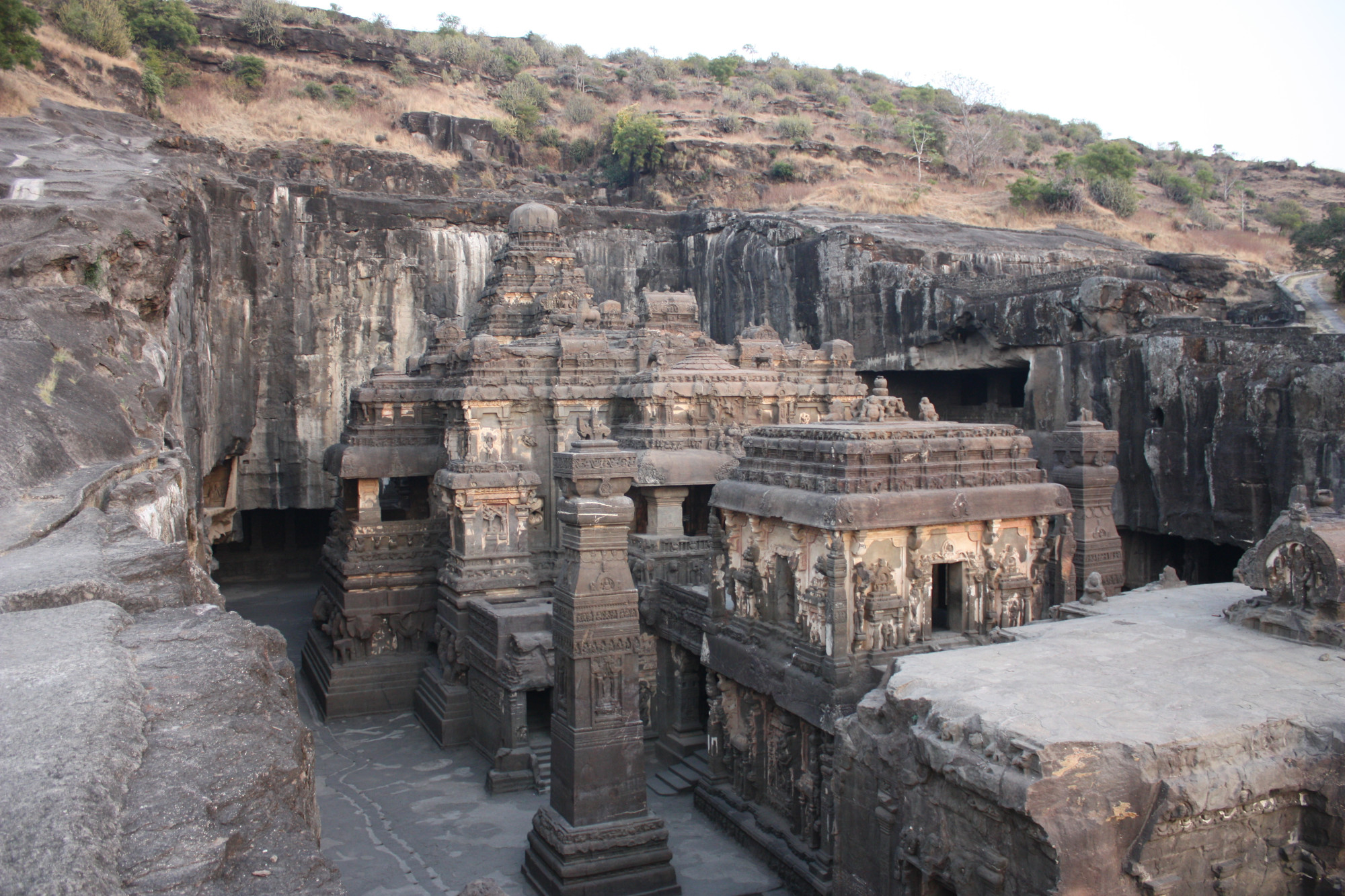
New age communication So first, we had email and usenet. As I mentioned above, email was designed with fine intentions. Intentions that make it stand even today, independently. But not everything, back then, was that great either. For example, instant messaging was very closed and centralised then too. Things like: ICQ, MSN, Yahoo Messenger; all were centralized. I wonder if people still have access to their ICQ logs. Not much has chagned in the current day either. We now have domination by: Facebook Messenger, Google Whatever the new marketing term they introdcue, WhatsApp, Telegram, Signal etc. To my knowledge, they are all centralized. Over all this time, I m yet to see a product come up with good (business) intentions, to really empower the end user. In this information age, the most invaluable data is user activity. That s one data everyone is after. If you decline to share that bit of free data in exchange for the free services, mind you, that that free service like Facebook, Google, Instagram, WhatsApp, Truecaller, Twitter; none of it would come to you at all. Try it out. So the reality is that while you may not be valuating the data you offer in exchange correctly, there s a lot that is reaped from it. But still, I think each user has (and should have) the freedom to opt in for these tech giants and give them their personal bit, for free services in return. That is a decent barter deal. And it is a choice that one if free to choose

Retaining my data I m fond of keeping an archive folder in my mailbox. A folder that holds significant events in the form of an email usually, if documented. Over the years, I chose to resort to the email format because I felt it was more reliable in the longer term than any other formats. The next best would be plain text. In my lifetime, I have learnt a lot from the internet; so it is natural that my preference has been with it. Mailing Lists, IRCs, HOWTOs, Guides, Blog posts; all have helped. And over the years, I ve come across hundreds of such content that I d always like to preserve. Now there are multiple ways to preserving data. Like, for example, big tech giants. In most usual cases, your data for your lifetime, should be fine with a tech giant. In some odd scenarios, you may be unlucky if you relied on a service provider that went bankrupt. But seriously, I think users should be fine if they host their data with Microsoft, Google etc; as long as they abide by their policies. There s also the catch of alignment. As the user, you should ensure to align (and transition) with the product offerings of your service provider. Otherwise, what may look constant and always reliable, will vanish in the blink of an eye. I guess Google Plus would be a good example. There was some Google Feed service too. Maybe Google Photos in the near decade future, just like Google Picasa in the previous (or current) decade.

History what is On the topic of retaining information, lets take a small drift. I still admire our ancestors. I don t know what went in their mind when they were documenting events in the form of scriptures, carvings, temples, churches, mosques etc; but one things for sure, they were able to leave a fine means of communication. They are all gone but a large number of those events are evident through the creations that they left. Some of those events have been strong enough that further rulers/invaders have had tough times trying to wipe it out from history. Remember, history is usually not the truth, but the statement to be believed by the teller. And the teller is usually the survivor, or the winner you may call. But still, the information retention techniques were better. I haven t visited, but admire whosoever built the Kailasa Temple, Ellora, without which, we d be made to believe what not by all invaders and rulers of the region. But the majestic standing of the temple, is a fine example of the history and the events that have occured in the past.
Ellora Temple -  The majectic carving believed to be carved out of a single stone
Ellora Temple - The majectic carving believed to be carved out of a single stone
Dominance has the power to rewrite history and unfortunately that s true and it has done its part. It is just that in a mere human s defined lifetime, it is not possible to witness the transtion from current to history, and say that I was there then and I m here now, and this is not the reality. And if not dominance, there s always the other bit, hearsay. With it, you can always put anything up for dispute. Because there s no way one can go back in time and produce a fine evidence. There s also a part about religion. Religion can be highly sentimental. And religion can be a solid way to get an agenda going. For example, in India - a country which today consitutionally is a secular country, there have been multiple attempts to discard the belief, that never ever did the thing called Ramayana exist. That the Rama Setu, nicely reworded as Adam s Bridge by who so ever, is a mere result of science. Now Rama, or Hanumana, or Ravana, or Valmiki, aren t going to come over and prove that that is true or false. So such subjects serve as a solid base to get an agenda going. And probably we ve even succeeded in proving and believing that there was never an event like Ramayana or the Mahabharata. Nor was there ever any empire other than the Moghul or the British Empire. But yes, whosoever made the Ellora Temple or the many many more of such creations, did a fine job of making a dent for the future, to know of what the history possibly could also be.

Enough of the drift So, in my opinion, having events documented is important. It d be nice to have skills documented too so that it can be passed over generations but that s a debatable topic. But events, I believe should be documented. And documented in the best possible ways so that its existence is not diminished. A documentation in the form of certain carvings on a rock is far more better than links and posts shared on Facebook, Twitter, Reddit etc. For one, these are all corporate entities with vested interests and can pretext excuse in the name of compliance and conformance. So, for the helpless state and generation I am in, I felt email was the best possible independent form of data retention in today s age. If I really had the resources, I d not rely on digital age. This age has no guarantee of retaining and recording information in any reliable manner. Instead, it is just mostly junk, which is manipulative and changeable, conditionally.

Email and RSS So for my communication, I like to prefer emails over any other means. That doesn t mean I don t use the current trends. I do. But this blog is mostly about penning my desires. And desire be to have communication over email format. Such is the case that for information useful over the internet, I crave to have it formatted in email for archival. RSS feeds is my most common mode of keeping track of information I care about. Not all that I care for is available in RSS feeds but hey such is life. And adaptability is okay. But my preference is still RSS. So I use RSS feeds through a fine software called feed2imap. A software that fits my bill fairly well. feed2imap is:
  • An rss feed news aggregator
  • Pulls and extracts news feeds in the form of an email
  • Can push the converted email over pop/imap
  • Can convert all image content to email mime attachment
In a gist, it makes the online content available to me offline in the most admired email format In my mail box, in today s day, my preferred email client is Evolution. It does a good job of dealing with such emails (rss feed items). An image example of accessing the rrs feed item through it is below
RSS News Item through Evolution
The good part is that my actual data is always independent of such MUAs. Tomorrow, as technology - trends - economics evolve, something new would come as a replacement but my data would still be mine.

17 April 2021

Chris Lamb: Tour d'Orwell: Wallington

Previously in George Orwell travel posts: Sutton Courtenay, Marrakesh, Hampstead, Paris, Southwold & The River Orwell. Wallington is a small village in Hertfordshire, approximately fifty miles north of London and twenty-five miles from the outskirts of Cambridge. George Orwell lived at No. 2 Kits Lane, better known as 'The Stores', on a mostly-permanent basis from 1936 to 1940, but he would continue to journey up from London on occasional weekends until 1947. His first reference to The Stores can be found in early 1936, where Orwell wrote from Lancashire during research for The Road to Wigan Pier to lament that he would very much like "to do some work again impossible, of course, in the [current] surroundings":
I am arranging to take a cottage at Wallington near Baldock in Herts, rather a pig in a poke because I have never seen it, but I am trusting the friends who have chosen it for me, and it is very cheap, only 7s. 6d. a week [ 20 in 2021].
For those not steeped in English colloquialisms, "a pig in a poke" is an item bought without seeing it in advance. In fact, one general insight that may be drawn from reading Orwell's extant correspondence is just how much he relied on a close network of friends, belying the lazy and hagiographical picture of an independent and solitary figure. (Still, even Orwell cultivated this image at times, such as in a patently autobiographical essay he wrote in 1946. But note the off-hand reference to varicose veins here, for they would shortly re-appear as a symbol of Winston's repressed humanity in Nineteen Eighty-Four.) Nevertheless, the porcine reference in Orwell's idiom is particularly apt, given that he wrote the bulk of Animal Farm at The Stores his 1945 novella, of course, portraying a revolution betrayed by allegorical pigs. Orwell even drew inspiration for his 'fairy story' from Wallington itself, principally by naming the novel's farm 'Manor Farm', just as it is in the village. But the allusion to the purchase of goods is just as appropriate, as Orwell returned The Stores to its former status as the village shop, even going so far as to drill peepholes in a door to keep an Orwellian eye on the jars of sweets. (Unfortunately, we cannot complete a tidy circle of references, as whilst it is certainly Napoleon Animal Farm's substitute for Stalin who is quoted as describing Britain as "a nation of shopkeepers", it was actually the maraisard Bertrand Bar re who first used the phrase). "It isn't what you might call luxurious", he wrote in typical British understatement, but Orwell did warmly emote on his animals. He kept hens in Wallington (perhaps even inspiring the opening line of Animal Farm: "Mr Jones, of the Manor Farm, had locked the hen-houses for the night, but was too drunk to remember to shut the pop-holes.") and a photograph even survives of Orwell feeding his pet goat, Muriel. Orwell's goat was the eponymous inspiration for the white goat in Animal Farm, a decidedly under-analysed character who, to me, serves to represent an intelligentsia that is highly perceptive of the declining political climate but, seemingly content with merely observing it, does not offer any meaningful opposition. Muriel's aesthetic of resistance, particularly in her reporting on the changes made to the Seven Commandments of the farm, thus rehearses the well-meaning (yet functionally ineffective) affinity for 'fact checking' which proliferates today. But I digress. There is a tendency to "read Orwell backwards", so I must point out that Orwell wrote several other works whilst at The Stores as well. This includes his Homage to Catalonia, his aforementioned The Road to Wigan Pier, not to mention countless indispensable reviews and essays as well. Indeed, another result of focusing exclusively on Orwell's last works is that we only encounter his ideas in their highly-refined forms, whilst in reality, it often took many years for concepts to fully mature we first see, for instance, the now-infamous idea of "2 + 2 = 5" in an essay written in 1939. This is important to understand for two reasons. Although the ostentatiously austere Barnhill might have housed the physical labour of its writing, it is refreshing to reflect that the philosophical heavy-lifting of Nineteen Eighty-Four may have been performed in a relatively undistinguished North Hertfordshire village. But perhaps more importantly, it emphasises that Orwell was just a man, and that any of us is fully capable of equally significant insight, with to quote Christopher Hitchens "little except a battered typewriter and a certain resilience."
The red commemorative plaque not only limits Orwell's tenure to the time he was permanently in the village, it omits all reference to his first wife, Eileen O'Shaughnessy, whom he married in the village church in 1936.
Wallington's Manor Farm, the inspiration for the farm in Animal Farm. The lower sign enjoins the public to inform the police "if you see anyone on the [church] roof acting suspiciously". Non-UK-residents may be surprised to learn about the systematic theft of lead.

Steve Kemp: Having fun with CP/M on a Z80 single-board computer.

In the past, I've talked about building a Z80-based computer. I made some progress towards that goal, in the sense that I took the initial (trivial steps) towards making something: But then I stalled, repeatedly, at designing an interface to RAM and ROM, so that it could actually do something useful. Over the lockdown I've been in two minds about getting sucked back down the rabbit-hole, so I compromised. I did a bit of searching on tindie, and similar places, and figured I'd buy a Z80-based single board computer. My requirements were minimal: With those goals there were a bunch of boards to choose from, rc2014 is the standard choice - a well engineered system which uses a common backplane and lets you build mini-boards to add functionality. So first you build the CPU-card, then the RAM card, then the flash-disk card, etc. Over-engineered in one sense, extensible in another. (There are some single-board variants to cut down on soldering overhead, at a cost of less flexibility.) After a while I came across https://8bitstack.co.uk/, which describes a simple board called the the Z80 playground. The advantage of this design is that it loads code from a USB stick, making it easy to transfer files to/from it, without the need for a compact flash card, or similar. The downside is that the system has only 64K RAM, meaning it cannot run CP/M 3, only 2.2. (CP/M 3.x requires more RAM, and a banking/paging system setup to swap between pages.) When the system boots it loads code from an EEPROM, which then fetches the CP/M files from the USB-stick, copies them into RAM and executes them. The memory map can be split so you either have ROM & RAM, or you have just RAM (after the boot the ROM will be switched off). To change the initial stuff you need to reprogram the EEPROM, after that it's just a matter of adding binaries to the stick or transferring them over the serial port. In only a couple of hours I got the basic stuff working as well as I needed: I had some fun with a CP/M emulator to get my hand back in things before the board arrived, and using that I tested my first "real" assembly language program (cls to clear the screen), as well as got the hang of using the wordstar keyboard shortcuts as used within the turbo pascal environment. I have some plans for development: Nothing major, but fun changes that won't be too difficult to implement. Since CP/M 2.x has no concept of sub-directories you end up using drives for everything, I implemented a "search-path" so that when you type "FOO" it will attempt to run "A:FOO.COM" if there is no file matching on the current-drive. That's a nicer user-experience at all. I also wrote some Z80-assembly code to search all drives for an executable, if not found in current drive and not already qualified. Remember CP/M doesn't have a concept of sub-directories) that's actually pretty useful:
  B>LOCATE H*.COM
  P:HELLO   COM
  P:HELLO2  COM
  G:HITCH   COM
  E:HYPHEN  COM
I've also written some other trivial assembly language tools, which was surprisingly relaxing. Especially once I got back into the zen mode of optimizing for size. I forked the upstream repository, mostly to tidy up the contents, rather than because I want to go into my own direction. I'll keep the contents in sync, because there's no point splitting a community even further - I guess there are fewer than 100 of these boards in the wild, probably far far fewer!

Next.

Previous.