Search Results: "ag"

5 December 2023

Louis-Philippe V ronneau: Montreal's Debian & Stuff - November 2023

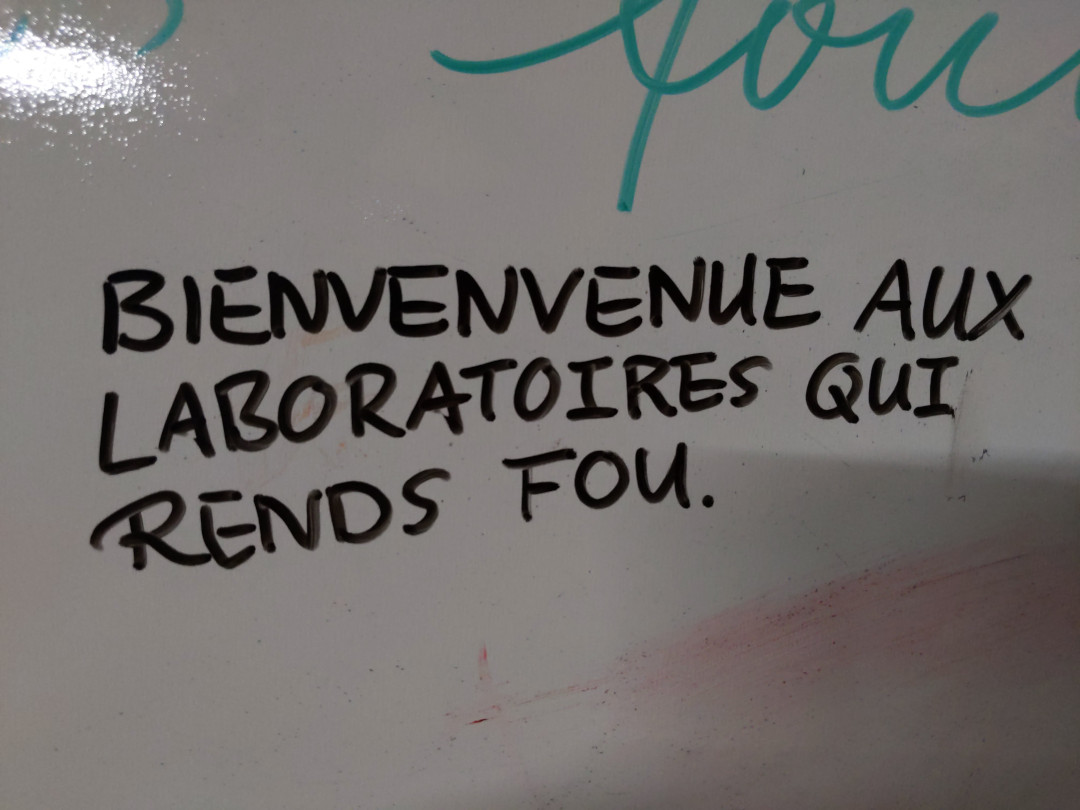
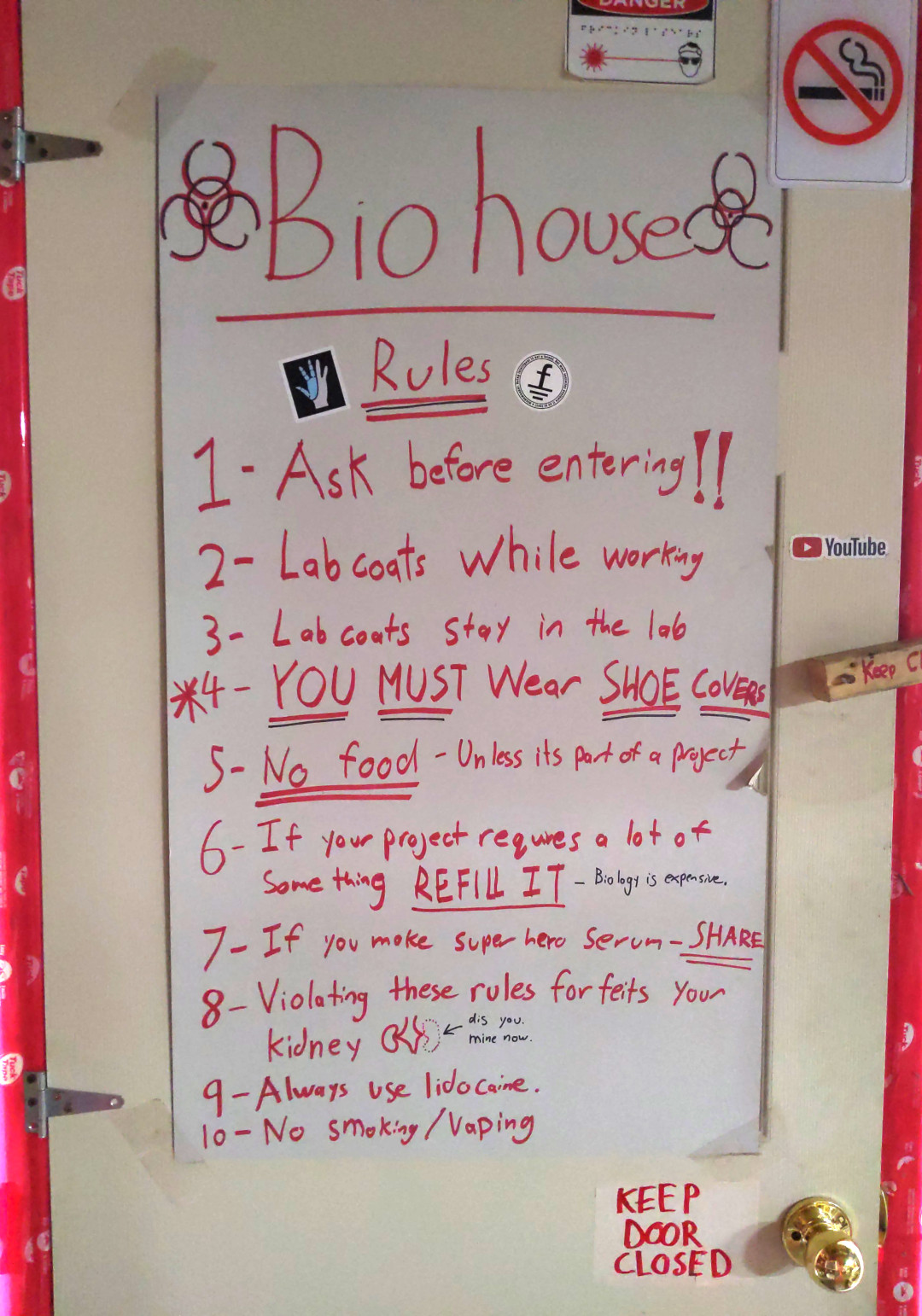
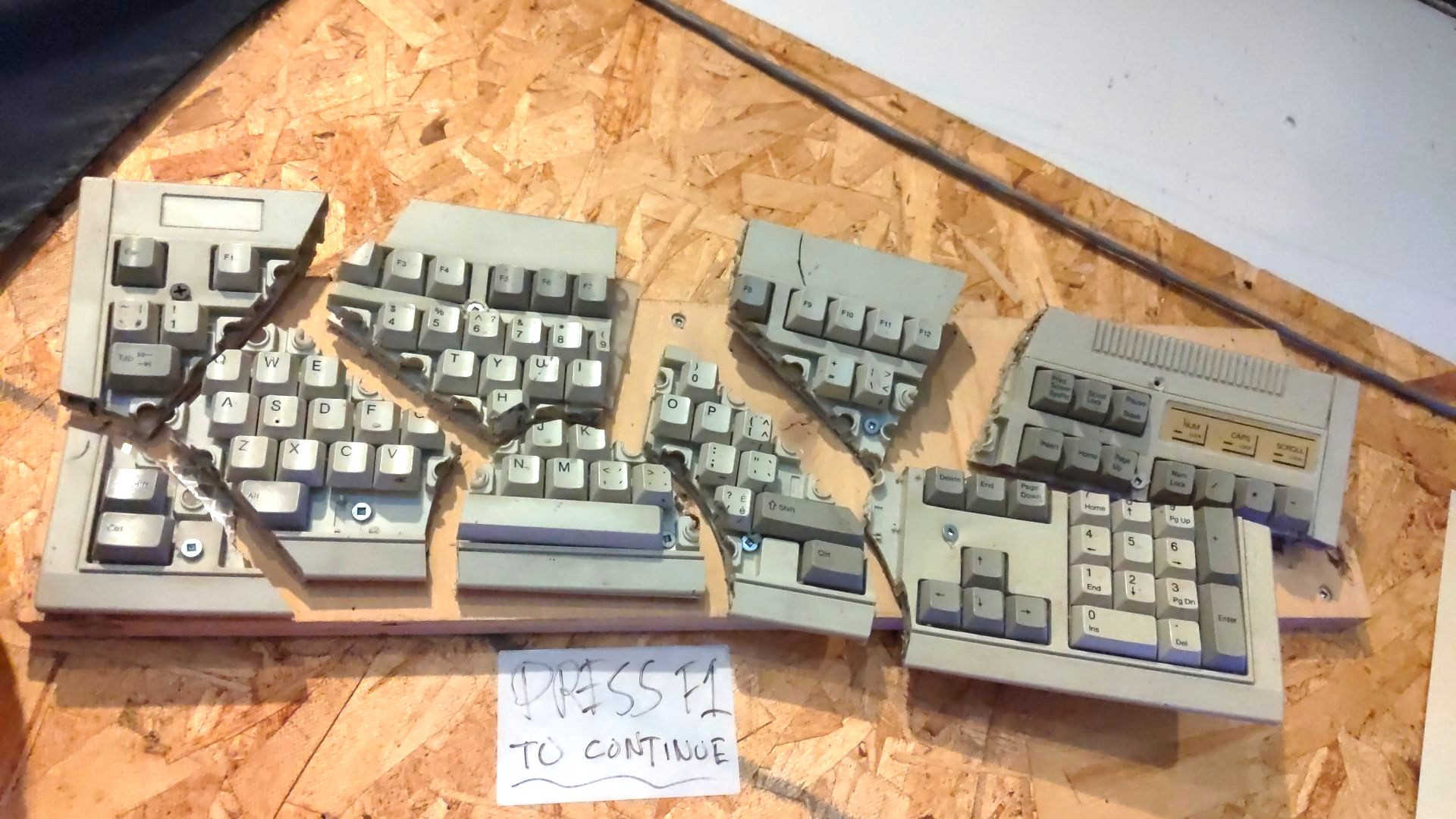
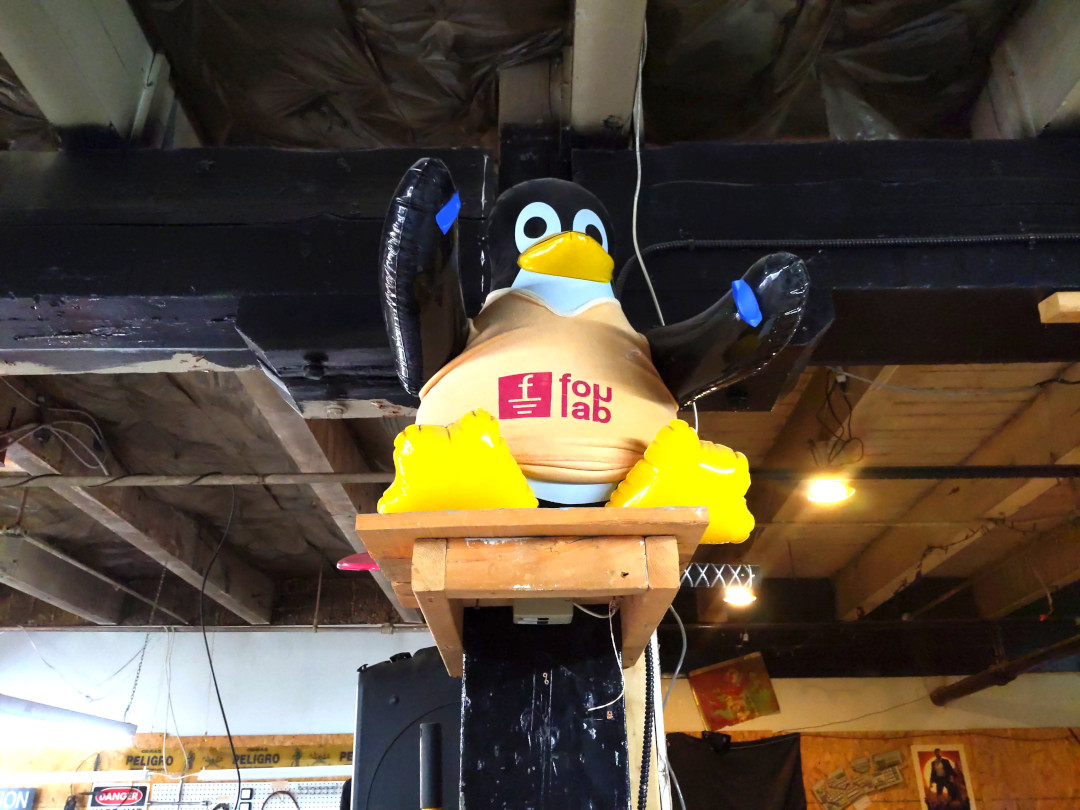
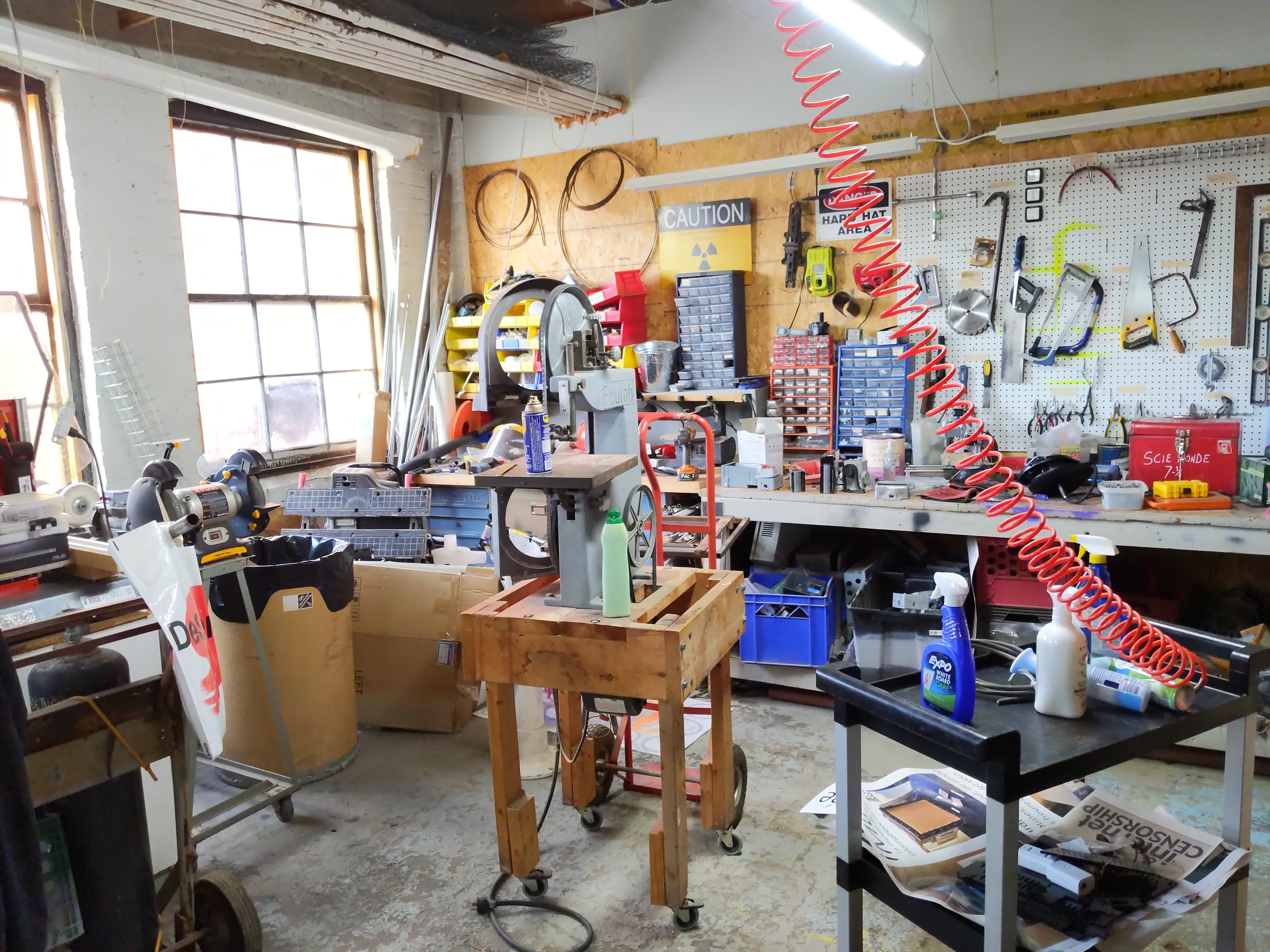
Hello from a snowy Montr al! My life has been pretty busy lately1 so please forgive this late report. On November 19th, our local Debian User Group met at Montreal's most prominent hackerspace, Foulab. We've been there a few times already, but since our last visit, Foulab has had some membership/financial troubles. Happy to say things are going well again and a new team has taken over the space. This meetup wasn't the most productive day for me (something about being exhausted apparently makes it hard to concentrate), but other people did a bunch of interesting stuff :) Pictures Here are a bunch of pictures I took! Foulab is always a great place to snap quirky things :) A sign on a whiteboard that says 'Bienvenue aux laboratoires qui rends fou' The entrance of the bio-hacking house, with a list of rules An exploded keyboard with a 'Press F1 to continue' sign An inflatable Tux with a Foulab T-Shirt A picture of the woodworking workshop

  1. More busy than the typical end of semester rush... At work, we are currently renegotiating our collective bargaining agreement and things aren't going so well. We went on strike for a few days already and we're planning on another 7 days starting on Friday 8th.

Matthew Garrett: Why does Gnome fingerprint unlock not unlock the keyring?

There's a decent number of laptops with fingerprint readers that are supported by Linux, and Gnome has some nice integration to make use of that for authentication purposes. But if you log in with a fingerprint, the moment you start any app that wants to access stored passwords you'll get a prompt asking you to type in your password, which feels like it somewhat defeats the point. Mac users don't have this problem - authenticate with TouchID and all your passwords are available after login. Why the difference?

Fingerprint detection can be done in two primary ways. The first is that a fingerprint reader is effectively just a scanner - it passes a graphical representation of the fingerprint back to the OS and the OS decides whether or not it matches an enrolled finger. The second is for the fingerprint reader to make that determination itself, either storing a set of trusted fingerprints in its own storage or supporting being passed a set of encrypted images to compare against. Fprint supports both of these, but note that in both cases all that we get at the end of the day is a statement of "The fingerprint matched" or "The fingerprint didn't match" - we can't associate anything else with that.

Apple's solution involves wiring the fingerprint reader to a secure enclave, an independently running security chip that can store encrypted secrets or keys and only release them under pre-defined circumstances. Rather than the fingerprint reader providing information directly to the OS, it provides it to the secure enclave. If the fingerprint matches, the secure enclave can then provide some otherwise secret material to the OS. Critically, if the fingerprint doesn't match, the enclave will never release this material.

And that's the difference. When you perform TouchID authentication, the secure enclave can decide to release a secret that can be used to decrypt your keyring. We can't easily do this under Linux because we don't have an interface to store those secrets. The secret material can't just be stored on disk - that would allow anyone who had access to the disk to use that material to decrypt the keyring and get access to the passwords, defeating the object. We can't use the TPM because there's no secure communications channel between the fingerprint reader and the TPM, so we can't configure the TPM to release secrets only if an associated fingerprint is provided.

So the simple answer is that fingerprint unlock doesn't unlock the keyring because there's currently no secure way to do that. It's not intransigence on the part of the developers or a conspiracy to make life more annoying. It'd be great to fix it, but I don't see an easy way to do so at the moment.

comment count unavailable comments

Dirk Eddelbuettel: RcppArmadillo 0.12.6.6.1 on CRAN: No More Deprecation

armadillo image Armadillo is a powerful and expressive C++ template library for linear algebra and scientific computing. It aims towards a good balance between speed and ease of use, has a syntax deliberately close to Matlab, and is useful for algorithm development directly in C++, or quick conversion of research code into production environments. RcppArmadillo integrates this library with the R environment and language and is widely used by (currently) 1126 other packages on CRAN, downloaded 31.7 million times (per the partial logs from the cloud mirrors of CRAN), and the CSDA paper (preprint / vignette) by Conrad and myself has been cited 569 times according to Google Scholar. This release ends the practice on asking Armadillo to suppress deprecation warnings. RcppArmadillo, as noted, has a large user base. Sometimes Conrad sometimes made changes without too much of a heads-up so at times it was opportune to not bring those warnings to dozens (or maybe hundreds) of packages at CRAN. Yet we need to balance this with the demonstrable need to call out older deprecated code use. So sixteen months ago, with GitHub issue #391, we started to alert author of 30+ affected packages and supplied either pull requests or emailed patches to all. Eleven months ago GitHub issues #402 was added for a second deprecation. And the time of making the switch has come. Release 0.12.6.6.1 no longer defines ARMA_IGNORE_DEPRECATED_MARKER. So among the over 1100 packages using RcppArmadillo at CRAN, around a good dozen or so were flagged in the upload but CRAN concurred and let the package migrate to CRAN. If you maintain an affected package, consider applying the patch or pull request now. A simple stop-gap measure also exists by adding -DARMA_IGNORE_DEPRECATED_MARKER to src/Makevars as either PKG_CPPFLAGS or PKG_CXXFLAGS to reactivate it. But a proper code update, which is generally simple, may be better. If you are unsure, do not hesitate to get in touch. The set of changes since the last CRAN release follows.

Changes in RcppArmadillo version 0.12.6.6.1 (2023-12-03)
  • Following the extendeded transition in #391 and #402, this release no longer sets ARMA_IGNORE_DEPRECATED_MARKER. Maintainers of affected packages have received pull requests or patches and can set -DARMA_IGNORE_DEPRECATED_MARKER as PKG_CPPFLAGS.

Courtesy of my CRANberries, there is a diffstat report relative to previous release. More detailed information is on the RcppArmadillo page. Questions, comments etc should go to the rcpp-devel mailing list off the Rcpp R-Forge page. If you like this or other open-source work I do, you can sponsor me at GitHub.

This post by Dirk Eddelbuettel originated on his Thinking inside the box blog. Please report excessive re-aggregation in third-party for-profit settings.

4 December 2023

Ian Jackson: Don t use apt-get source; use dgit

tl;dr: If you are a Debian user who knows git, don t work with Debian source packages. Don t use apt source, or dpkg-source. Instead, use dgit and work in git. Also, don t use: VCS links on official Debian web pages, debcheckout, or Debian s (semi-)official gitlab, Salsa. These are suitable for Debian experts only; for most people they can be beartraps. Instead, use dgit. > Struggling with Debian source packages? A friend of mine recently asked for help on IRC. They re an experienced Debian administrator and user, and were trying to: make a change to a Debian package; build and install and run binary packages from it; and record that change for their future self, and their colleagues. They ended up trying to comprehend quilt. quilt is an ancient utility for managing sets of source code patches, from well before the era of modern version control. It has many strange behaviours and footguns. Debian s ancient and obsolete tarballs-and-patches source package format (which I designed the initial version of in 1993) nowadays uses quilt, at least for most packages. You don t want to deal with any of this nonsense. You don t want to learn quilt, and suffer its misbehaviours. You don t want to learn about Debian source packages and wrestle dpkg-source. Happily, you don t need to. Just use dgit One of dgit s main objectives is to minimise the amount of Debian craziness you need to learn. dgit aims to empower you to make changes to the software you re running, conveniently and with a minimum of fuss. You can use dgit to get the source code to a Debian package, as a git tree, with dgit clone (and dgit fetch). The git tree can be made into a binary package directly. The only things you really need to know are:
  1. By default dgit fetches from Debian unstable, the main work-in-progress branch. You may want something like dgit clone PACKAGE bookworm,-security (yes, with a comma).
  2. You probably want to edit debian/changelog to make your packages have a different version number.
  3. To build binaries, run dpkg-buildpackage -uc -b.
  4. Debian package builds are often disastrously messsy: builds might modify source files; and the official debian/rules clean can be inadequate, or crazy. Always commit before building, and use git clean and git reset --hard instead of running clean rules from the package.
Don t try to make a Debian source package. (Don t read the dpkg-source manual!) Instead, to preserve and share your work, use the git branch. dgit pull or dgit fetch can be used to get updates. There is a more comprehensive tutorial, with example runes, in the dgit-user(7) manpage. (There is of course complete reference documentation, but you don t need to bother reading it.) Objections But I don t want to learn yet another tool One of dgit s main goals is to save people from learning things you don t need to. It aims to be straightforward, convenient, and (so far as Debian permits) unsurprising. So: don t learn dgit. Just run it and it will be fine :-). Shouldn t I be using official Debian git repos? Absolutely not. Unless you are a Debian expert, these can be terrible beartraps. One possible outcome is that you might build an apparently working program but without the security patches. Yikes! I discussed this in more detail in 2021 in another blog post plugging dgit. Gosh, is Debian really this bad? Yes. On behalf of the Debian Project, I apologise. Debian is a very conservative institution. Change usually comes very slowly. (And when rapid or radical change has been forced through, the results haven t always been pretty, either technically or socially.) Sadly this means that sometimes much needed change can take a very long time, if it happens at all. But this tendency also provides the stability and reliability that people have come to rely on Debian for. I m a Debian maintainer. You tell me dgit is something totally different! dgit is, in fact, a general bidirectional gateway between the Debian archive and git. So yes, dgit is also a tool for Debian uploaders. You should use it to do your uploads, whenever you can. It s more convenient and more reliable than git-buildpackage and dput runes, and produces better output for users. You too can start to forget how to deal with source packages! A full treatment of this is beyond the scope of this blog post.

comment count unavailable comments

Russ Allbery: Cumulative haul

I haven't done one of these in quite a while, long enough that I've already read and reviewed many of these books. John Joseph Adams (ed.) The Far Reaches (sff anthology)
Poul Anderson The Shield of Time (sff)
Catherine Asaro The Phoenix Code (sff)
Catherine Asaro The Veiled Web (sff)
Travis Baldree Bookshops & Bonedust (sff)
Sue Burke Semiosis (sff)
Jacqueline Carey Cassiel's Servant (sff)
Rob Copeland The Fund (nonfiction)
Mar Delaney Wolf Country (sff)
J.S. Dewes The Last Watch (sff)
J.S. Dewes The Exiled Fleet (sff)
Mike Duncan Hero of Two Worlds (nonfiction)
Mike Duncan The Storm Before the Storm (nonfiction)
Kate Elliott King's Dragon (sff)
Zeke Faux Number Go Up (nonfiction)
Nicola Griffith Menewood (sff)
S.L. Huang The Water Outlaws (sff)
Alaya Dawn Johnson The Library of Broken Worlds (sff)
T. Kingfisher Thornhedge (sff)
Naomi Kritzer Liberty's Daughter (sff)
Ann Leckie Translation State (sff)
Michael Lewis Going Infinite (nonfiction)
Jenna Moran Magical Bears in the Context of Contemporary Political Theory (sff collection)
Ari North Love and Gravity (graphic novel)
Ciel Pierlot Bluebird (sff)
Terry Pratchett A Hat Full of Sky (sff)
Terry Pratchett Going Postal (sff)
Terry Pratchett Thud! (sff)
Terry Pratchett Wintersmith (sff)
Terry Pratchett Making Money (sff)
Terry Pratchett Unseen Academicals (sff)
Terry Pratchett I Shall Wear Midnight (sff)
Terry Pratchett Snuff (sff)
Terry Pratchett Raising Steam (sff)
Terry Pratchett The Shepherd's Crown (sff)
Aaron A. Reed 50 Years of Text Games (nonfiction)
Dashka Slater Accountable (nonfiction)
Rory Stewart The Marches (nonfiction)
Emily Tesh Silver in the Wood (sff)
Emily Tesh Drowned Country (sff)
Valerie Vales Chilling Effect (sff)
Martha Wells System Collapse (sff)
Martha Wells Witch King (sff)

3 December 2023

Ben Hutchings: FOSS activity in November 2023

Ben Hutchings: FOSS activity in October 2023

Ben Hutchings: FOSS activity in September 2023

Ben Hutchings: FOSS activity in August 2023

Iustin Pop: Life, getting sick and unfit

Like clockwork, like every autumn, got sick again. Just a flu, actually probably two in a row. I don t really understand it - from January to September I m feeling really awesome, and I manage to do sports five days a week, or more. Then September comes, and things start degrading, and then October or November, I get sick and it takes me ~3 weeks to recover, during which I m not even managing reliably 5K steps a day (from walking), not even talking about running or swimming or biking. My Garmin statistics for November compared to October (which wasn t a good month either) are depressing. Let s not even bring up for example July I can see three potential pathways: Basically all three pathways are similar, just not sure what s the root cause (vs. a trigger). I just did a D test, and despite taking regularly supplements, it was below normal range. So clearly somewhere there, lack of vitamin D is a problem. I probably should do a yearly check-up at end of September? Sigh, I still haven t found the detailed user manual for Homo Sapiens. If anyone has it, specifically for version late 1900 s, I d be thankful. Till next time, hopefully by then things will get better.

Dirk Eddelbuettel: dang 0.0.16: New Features, Some Maintenance

A new release of my mixed collection of things package dang package arrived at CRAN a little while ago. The dang package regroups a few functions of mine that had no other home as for example lsos() from a StackOverflow question from 2009 (!!), the overbought/oversold price band plotter from an older blog post, the market monitor blogged about as well as the checkCRANStatus() function tweeted about by Tim Taylor. And more so take a look. This release brings a number of updates, including a rather nice improvement to the market monitor making updates buttery smooth and not flickering (with big thanks to Paul Murrell who calmly pointed out once again that base R does of course have the functionality I was seeking) as well as three new functions (!!) and then a little maintenance on the -Wformat print format string issue that kept everybody busy this week. The NEWS entry follows.

Changes in version 0.0.16 (2023-12-02)
  • Added new function str.language() based on post by Bill Dunlap
  • Added new argument sleep in intradayMarketMonitor
  • Switched to dev.hold() and dev.flush() in intradayMarketMonitor with thanks to Paul Murrell
  • Updated continued integration setup, twice, and package badges
  • Added new function shadowedPackages
  • Added new function limitDataTableCores
  • Updated two error() calls to updated tidyCpp signature to not tickle -Wformat warnings under R-devel
  • Updated two URL to please link checks in R-devel
  • Switch two tests for variable of variable to is.* and inherits(), respectively

Courtesy of my CRANberries, there is a comparison to [the previous release][previous releases]. For questions or comments use the the issue tracker at the GitHub repo. If you like this or other open-source work I do, you can now sponsor me at GitHub.

This post by Dirk Eddelbuettel originated on his Thinking inside the box blog. Please report excessive re-aggregation in third-party for-profit settings.

2 December 2023

Dirk Eddelbuettel: tidyCpp 0.0.7 on CRAN: Maintenance

A maintenance release of the tidyCpp package arrived on CRAN this morning. The packages offers a clean C++ layer (as well as one small C++ helper class) on top of the C API for R which aims to make use of this robust (if awkward) C API a little easier and more consistent. See the vignette for motivating examples. This release follows a number of other releases this week in accomodating the recently added -Wformat -Wformat-security from the development branch of R. It also includes a new example snippet illustrating creation of a numeric matrix. The NEWS entry follows.

Changes in tidyCpp version 0.0.7 (2023-11-30)
  • Add an example for a numeric matrix creator
  • Update the continuous integration setup
  • Accomodate print format warnings from r-devel

Thanks to my CRANberries, there is also a diffstat report for this release. For questions, suggestions, or issues please use the issue tracker at the GitHub repo. If you like this or other open-source work I do, you can now sponsor me at GitHub.

This post by Dirk Eddelbuettel originated on his Thinking inside the box blog. Please report excessive re-aggregation in third-party for-profit settings.

1 December 2023

Scarlett Gately Moore: KDE neon and snaps, Debian Weekly report.

While the winter sets in, I have been mostly busy following up on job leads and applying to anything and everything. Something has to stick I am trying! Even out of industry. Debian: This weeks main focus was getting involved and familiar with Debian rust-packaging. It is really quite different from other teams! I was successful and the MR is https://salsa.debian.org/rust-team/debcargo-conf/-/merge_requests/566 if anyone on the rust team can take a gander, I will upload when merged. I will get a few more under my belt next week now that I understand the process. KDE neon: Unfortunately, I did not have much time for neon, but I did get some red builds fixed and started uploading the new signing key for mauikit* applications. KDE snaps: A big thank you to Josh and Albert for merging all my MR s and I have finished 23.08.3 releases to stable. I released a new Krita 5.2.1 with some runtime fixes, please update. Still no source of income so I must ask, if you have any spare change, please consider a donation. Thank you, Scarlett https://gofund.me/b74e4c6f

Paul Wise: FLOSS Activities November 2023

Focus This month I didn't have any particular focus. I just worked on issues in my info bubble.

Changes

Issues

Review
  • Debian packages: sponsored purple-discord x2
  • Debian wiki: RecentChanges for the month
  • Debian BTS usertags: changes for the month
  • Debian screenshots:
    • approved c-evo-dh-gtk2 fim fish foliate mpc123 nfoview qpwgraph scite viewnior
    • rejected hw-probe (photos), wine64 (desktop logo), phasex (artwork), qpwgraph (about dialog), fim/fish (help output), python-lunch (full desktop), ruby-full (website), ausweisapp2 (PII), pngtools (movie poster), x11vnc (web page,) mount (systemd), blastem (photo), ca-certificates (tiny, Windows)

Administration
  • Debian servers: extract user data from recent wiki backups
  • Debian wiki: fix broken user account, approve accounts

Communication
  • Respond to queries from Debian users and contributors on the mailing lists and IRC.

Sponsors The SWH work was sponsored. All other work was done on a volunteer basis.

Dirk Eddelbuettel: RcppClassicExamples 0.1.3 on CRAN: Maintenance

Another upgrade triggered solely by changing CRAN standards (see previous one from five years ago). This time it concerns warnings under r-devel with -Wformat -Wformat-security so we injected a number of "%s" into Rf_error() calls. No new code or features. Full details below. And as a reminder, don t use the old RcppClassic use Rcpp instead.

Changes in version 0.1.3 (2023-11-30)
  • Update Rf_error() call to not tickle -Wformat
  • Minor other packaging and continuous integration tweaks

Thanks to CRANberries, you can also look at a diff to the previous release. If you like this or other open-source work I do, you can sponsor me at GitHub.

This post by Dirk Eddelbuettel originated on his Thinking inside the box blog. Please report excessive re-aggregation in third-party for-profit settings.

30 November 2023

Russell Coker: Links November 2023

The Long Now has an insightful article about air quality [1]. Every country needs food labelling laws like Mexico has [2]. Also we need to abolish the investor state tribunals, companies should just accept local laws and obey them or be treated in the same way as pirates on the high seas. Ian Jackson wrote a good post about conference policies regarding Covid19 [3]. We really need to do more about this, conservatives like to imagine that it s gone away but people are still getting sick and dying of it. John Goerzen wrote an informative article about air gaps and ways they can be part of a useful and usable security system [4]. This YouTube video has a good introduction to LLMs (Large Languge Models) for machine learning [5]. This eye tracker is interesting technology [6]. The video shows it being used for MS Flight Simulator but it can be used for other things. Unfortunately the price of about $550 Australian puts it out of range of a lot of free software work. I think this would be good for tracking the user FOR THEIR BENEFIT so that notifications won t be delivered when the user is concentrating. This ABC article about the risk of a past Covid19 infection exacerbating or accelerating Parkinson s or Alzheimer s is a worry [7]. Sam Hartman wrote an insightful blog post about AI safety, consent, and discussions of sex [8].

Dirk Eddelbuettel: RcppSpdlog 0.0.15 on CRAN: Maintenance

Version 0.0.15 of RcppSpdlog is now on CRAN and will be uploaded to Debian. RcppSpdlog bundles spdlog, a wonderful header-only C++ logging library with all the bells and whistles you would want that was written by Gabi Melman, and also includes fmt by Victor Zverovich. You can learn more at the nice package documention site. This releases updates the code to address warning now shown under R-devel when -Wformat -Wformat-security are enabled. This amounted to re-generating RcppExports.cpp under an updated [Rcpp][rcpp] version. It also updates the package default help page by removing some stubs that were not filled in. The NEWS entry for this release follows.

Changes in RcppSpdlog version 0.0.15 (2023-11-29)
  • Correct default package help page slighly
  • RcppExports.cpp has been regenerated under an updated Rcpp to address a format string warning under R-devel

Courtesy of my CRANberries, there is also a diffstat report. More detailed information is on the RcppSpdlog page, or the package documention site. If you like this or other open-source work I do, you can sponsor me at GitHub.

This post by Dirk Eddelbuettel originated on his Thinking inside the box blog. Please report excessive re-aggregation in third-party for-profit settings.

Dirk Eddelbuettel: qlcal 0.0.9 on CRAN: Maintenance

The ninth release of the qlcal package arrivied at CRAN today. qlcal delivers the calendaring parts of QuantLib. It is provided (for the R package) as a set of included files, so the package is self-contained and does not depend on an external QuantLib library (which can be demanding to build). qlcal covers over sixty country / market calendars and can compute holiday lists, its complement (i.e. business day lists) and much more. This releases updates the code to address warning now shown under R-devel when -Wformat -Wformat-security are enabled. This amounted to re-generating RcppExports.cpp under an updated Rcpp version. We also no longer set C++14 explicitly as a compilation standard but rather determine at build time if it is needed or not.

Changes in version 0.0.9 (2023-11-29)
  • configure now uses a new helper script to only set a compilation standard when needed for R versions older than 4.2.0
  • The file RcppExports.cpp was regenerated to avoid a string format warning from R-devel

Courtesy of my CRANberries, there is a diffstat report for this release. See the project page and package documentation for more details, and more examples. If you like this or other open-source work I do, you can now sponsor me at GitHub.

This post by Dirk Eddelbuettel originated on his Thinking inside the box blog. Please report excessive re-aggregation in third-party for-profit settings.

Dirk Eddelbuettel: RcppQuantuccia 0.1.1 on CRAN: Maintenance

A minor release of RcppQuantuccia arrived on CRAN today. RcppQuantuccia started from the Quantuccia header-only subset / variant of QuantLib which it brings it to R. This project validated the idea of making the calendaring functionality of QuantLib available in a more compact and standalone project which we now do with qlcal which can be seen as a successor to this. This releases updates the code to address warning now shown under R-devel when -Wformat -Wformat-security are enabled. This amounted to re-generating RcppExports.cpp under an updated Rcpp version. We also no longer set C++14 explicitly as a compilation standard. The complete list changes for this release follows.

Changes in version 0.1.2 (2023-11-29)
  • RcppExports.cpp has been regenerated under an updated Rcpp to address a format string warning under R-devel
  • The compilation standard is no longer set to C++14

Courtesy of CRANberries, there is also a diffstat report relative to the previous release. More information is on the RcppQuantuccia page. Issues and bugreports should go to the GitHub issue tracker. If you like this or other open-source work I do, you can now sponsor me at GitHub.

This post by Dirk Eddelbuettel originated on his Thinking inside the box blog. Please report excessive re-aggregation in third-party for-profit settings.

29 November 2023

Jonathan Dowland: Useful vim plugins: AnsiEsc

Sometimes I have to pore over long debugging logs which have originally been written out to a terminal and marked up with colour or formatting via ANSI escape codes. The formatting definitely makes reading them easier, but I want to read them in Vim, rather than a terminal, and (out of the box) Vim doesn't render the formatting. Cue AnsiEsc.vim: an OG Vim script1 that translates some ANSI escape codes in particular some colour specifying ones into Vim syntax highlighting. This makes viewing and navigating around multi-MiB console log files much nicer.

  1. AnsiEsc is old enough to have been distributed as a script, and then as a "vimball", an invention of the same author to make installing Vim scripts easier. It pre-dates the current fashion for plugins, but someone else has updated it and repackaged it as a plugin. I haven't tried that out.

Next.

Previous.