Search Results: "ads"

28 October 2022

Dirk Eddelbuettel: RcppAnnoy 0.0.20 on CRAN: Maintenance

annoy image Another minor maintenance release, now at version 0.0.20, of RcppAnnoy has arrived on CRAN. RcppAnnoy is the Rcpp-based R integration of the nifty Annoy library by Erik Bernhardsson. Annoy is a small and lightweight C++ template header library for very fast approximate nearest neighbours originally developed to drive the Spotify music discovery algorithm. This release only contains internal changes to please, respectively clang-15 and (macOS) Xcode 14 (one of which PRed upstream too). No changes in package functionality. Detailed changes follow.

Changes in version 0.0.20 (2022-10-27)
  • Minor tweaks to appease clang-15 and Xcode 14

Courtesy of my CRANberries, there is also a diffstat report for this release. If you like this or other open-source work I do, you can sponsor me at GitHub.

This post by Dirk Eddelbuettel originated on his Thinking inside the box blog. Please report excessive re-aggregation in third-party for-profit settings.

27 October 2022

Emmanuel Kasper: Convert a root filesystem to a bootable disk image

The year is 2022, and it is still that complicated to install GRUB2 externally onto a disk image. But using the wonders of libguestfs, you can create a bootable diskimage using a qemu VM abstraction very easily. The steps here imply we want to create a disk with a single partition containing the root filesystem. Create an empty disk image, partition it
$ truncate --size 40G target.img
$ virt-format --add target.img --partition=mbr --filesystem=ext4
copy the root file system into a partition
cd path/to/root/fs
sudo tar --numeric-owner -cvf - .   guestfish --rw --add ../target.img --mount /dev/sda1:/ -- tar-in - /
install grub using guestfish
$ guestfish --add target.img --inspector
and in the guestfish prompt:
>> command 'grub-install /dev/sda'
>> command 'update-grub'
# also make sure init can mount our root partition
>> write /etc/fstab '/dev/sda1 / ext4 defaults 0 1'
>> exit
test boot the disk image
$ kvm -m 1024 -drive file=target.img,format=raw

26 October 2022

Dirk Eddelbuettel: RQuantLib 0.4.17 on CRAN: Maintenance

A new release 0.4.17 of RQuantLib arrived at CRAN earlier today, and has been uploaded to Debian as well. QuantLib is a very comprehensice free/open-source library for quantitative finance; RQuantLib connects it to the R environment and language. The release of RQuantLib comes five months after the previous maintenance, and brings a somewhat humurous upgrade from a default C++ standard of C++11 to C++14. We waited so long for C++11 to become available for R (which happened eventually when g++ 4.9 was no longer the default on Windows) and now it has become a constraint!! QuantLib 1.28, released today actually switched to C++14 as a minimum required. R also supports this as the default, but we still had C++11 hardwired so this quick maintenance release does away with that.

Changes in RQuantLib version 0.4.17 (2022-10-25)
  • Switch compilation to C++14 which is required by QuantLib 1.28 and, while standard with R 4.2.*, may be needed for R 4.1.*

Courtesy of my CRANberries, there is also a diffstat report for the this release. As always, more detailed information is on the RQuantLib page. Questions, comments etc should go to the new rquantlib-devel mailing list. Issue tickets can be filed at the GitHub repo. If you like this or other open-source work I do, you can now sponsor me at GitHub.

This post by Dirk Eddelbuettel originated on his Thinking inside the box blog. Please report excessive re-aggregation in third-party for-profit settings.

25 October 2022

Arturo Borrero Gonz lez: Netfilter Workshop 2022 summary

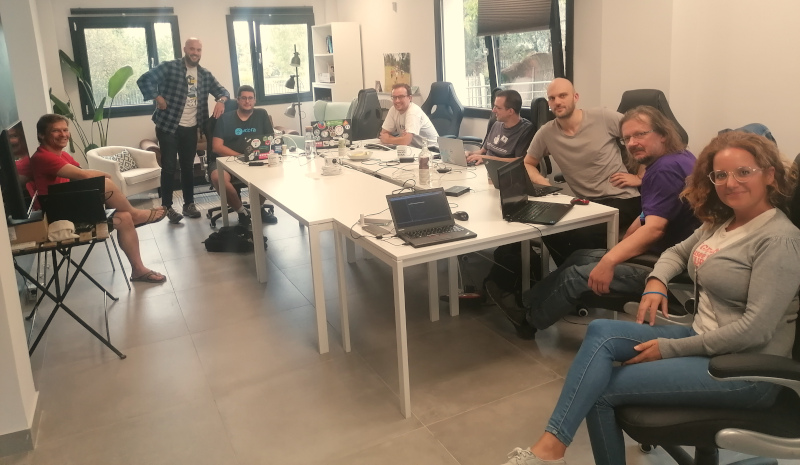
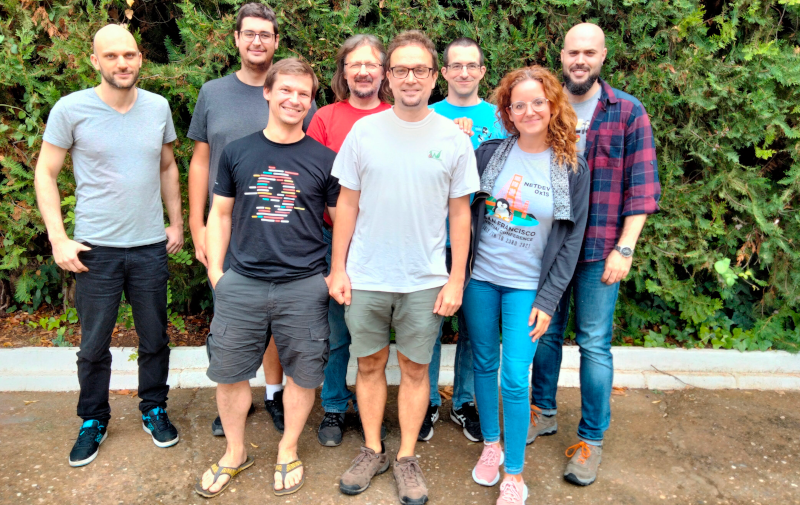
Netfilter logo This is my report from the Netfilter Workshop 2022. The event was held on 2022-10-20/2022-10-21 in Seville, and the venue was the offices of Zevenet. We started on Thursday with Pablo Neira (head of the project) giving a short welcome / opening speech. The previous iteration of this event was in virtual fashion in 2020, two years ago. In the year 2021 we were unable to meet either in person or online. This year, the number of participants was just eight people, and this allowed the setup to be a bit more informal. We had kind of an un-conference style meeting, in which whoever had something prepared just went ahead and opened a topic for debate. In the opening speech, Pablo did a quick recap on the legal problems the Netfilter project had a few years ago, a topic that was settled for good some months ago, in January 2022. There were no news in this front, which was definitely a good thing. Moving into the technical topics, the workshop proper, Pablo started to comment on the recent developments to instrument a way to perform inner matching for tunnel protocols. The current implementation supports VXLAN, IPIP, GRE and GENEVE. Using nftables you can match packet headers that are encapsulated inside these protocols. He mentioned the design and the goals, that was to have a kernel space setup that allows adding more protocols by just patching userspace. In that sense, more tunnel protocols will be supported soon, such as IP6IP, UDP, and ESP. Pablo requested our opinion on whether if nftables should generate the matching dependencies. For example, if a given tunnel is UDP-based, a dependency match should be there otherwise the rule won t work as expected. The agreement was to assist the user in the setup when possible and if not, print clear error messages. By the way, this inner thing is pure stateless packet filtering. Doing inner-conntracking is an open topic that will be worked on in the future. Pablo continued with the next topic: nftables automatic ruleset optimizations. The times of linear ruleset evaluation are over, but some people have a hard time understanding / creating rulesets that leverage maps, sets, and concatenations. This is where the ruleset optimizations kick in: it can transform a given ruleset to be more optimal by using such advanced data structures. This is purely about optimizing the ruleset, not about validating the usefulness of it, which could be another interesting project. There were a couple of problems mentioned, however. The ruleset optimizer can be slow, O(n!) in worst case. And the user needs to use nested syntax. More improvements to come in the future. Next was Stefano Brivio s turn (Red Hat engineer). He had been involved lately in a couple of migrations to nftables, in particular libvirt and KubeVirt. We were pointed to https://libvirt.org/firewall.html, and Stefano walked us through the 3 or 4 different virtual networks that libvirt can create. He evaluated some options to generate efficient rulesets in nftables to instrument such networks, and commented on a couple of ideas: having a null matcher in nftables set expression. Or perhaps having kind of subsets, something similar to a view in a SQL database. The room spent quite a bit of time debating how the nft_lookup API could be extended to support such new search operations. We also discussed if having intermediate facilities such as firewalld could provide the abstraction levels that could make developers more comfortable. Using firewalld also may have the advantage that coordination between different system components writing ruleset to nftables is handled by firewalld itself and developers are freed of the responsibility of doing it right. Next was Fernando F. Mancera (Red Hat engineer). He wanted to improve error reporting when deleting table/chain/rules with nftables. In general, there are some inconsistencies on how tables can be deleted (or flushed). And there seems to be no correct way to make a single table go away with all its content in a single command. The room agreed in that the commands destroy table and delete table should be defined consistently, with the following meanings: This topic diverted into another: how to reload/replace a ruleset but keep stateful information (such as counters). Next was Phil Sutter (Netfilter coreteam member and Red Hat engineer). He was interested in discussing options to make iptables-nft backward compatible. The use case he brought was simple: What happens if a container running iptables 1.8.7 creates a ruleset with features not supported by 1.8.6. A later container running 1.8.6 may fail to operate. Phil s first approach was to attach additional metadata into rules to assist older iptables-nft in decoding and printing the ruleset. But in general, there are no obvious or easy solutions to this problem. Some people are mixing different tooling version, and there is no way all cases can be predicted/covered. iptables-nft already refuses to work in some of the most basic failure scenarios. An other way to approach the issue could be to introduce some kind of support to print raw expressions in iptables-nft, like -m nft xyz. Which feels ugly, but may work. We also explored playing with the semantics of release version numbers. And another idea: store strings in the nft rule userdata area with the equivalent matching information for older iptables-nft. In fact, what Phil may have been looking for is not backwards but forward compatibility. Phil was undecided which path to follow, but perhaps the most common-sense approach is to fall back to a major release version bump (2.x.y) and declaring compatibility breakage with older iptables 1.x.y. That was pretty much it for the first day. We had dinner together and went to sleep for the next day. The room The second day was opened by Florian Westphal (Netfilter coreteam member and Red Hat engineer). Florian has been trying to improve nftables performance in kernels with RETPOLINE mitigations enabled. He commented that several workarounds have been collected over the years to avoid the performance penalty of such mitigations. The basic strategy is to avoid function indirect calls in the kernel. Florian also described how BPF programs work around this more effectively. And actually, Florian tried translating nf_hook_slow() to BPF. Some preliminary benchmarks results were showed, with about 2% performance improvement in MB/s and PPS. The flowtable infrastructure is specially benefited from this approach. The software flowtable infrastructure already offers a 5x performance improvement with regards the classic forwarding path, and the change being researched by Florian would be an addition on top of that. We then moved into discussing the meeting Florian had with Alexei in Zurich. My personal opinion was that Netfilter offers interesting user-facing interfaces and semantics that BPF does not. Whereas BPF may be more performant in certain scenarios. The idea of both things going hand in hand may feel natural for some people. Others also shared my view, but no particular agreement was reached in this topic. Florian will probably continue exploring options on that front. The next topic was opened by Fernando. He wanted to discuss Netfilter involvement in Google Summer of Code and Outreachy. Pablo had some personal stuff going on last year that prevented him from engaging in such projects. After all, GSoC is not fundamental or a priority for Netfilter. Also, Pablo mentioned the lack of support from others in the project for mentoring activities. There was no particular decision made here. Netfilter may be present again in such initiatives in the future, perhaps under the umbrella of other organizations. Again, Fernando proposed the next topic: nftables JSON support. Fernando shared his plan of going over all features and introduce programmatic tests from them. He also mentioned that the nftables wiki was incomplete and couldn t be used as a reference for missing tests. Phil suggested running the nftables python test-suite in JSON mode, which should complain about missing features. The py test suite should cover pretty much all statements and variations on how the nftables expression are invoked. Next, Phil commented on nftables xtables support. This is, supporting legacy xtables extensions in nftables. The most prominent problem was that some translations had some corner cases that resulted in a listed ruleset that couldn t be fed back into the kernel. Also, iptables-to-nftables translations can be sloppy, and the resulting rule won t work in some cases. In general, nft list ruleset nft -f may fail in rulesets created by iptables-nft and there is no trivial way to solve it. Phil also commented on potential iptables-tests.py speed-ups. Running the test suite may take very long time depending on the hardware. Phil will try to re-architect it, so it runs faster. Some alternatives had been explored, including collecting all rules into a single iptables-restore run, instead of hundreds of individual iptables calls. Next topic was about documentation on the nftables wiki. Phil is interested in having all nftables code-flows documented, and presented some improvements in that front. We are trying to organize all developer-oriented docs on a mediawiki portal, but the extension was not active yet. Since I worked at the Wikimedia Foundation, all the room stared at me, so at the end I kind of committed to exploring and enabling the mediawiki portal extension. Note to self: is this perhaps https://www.mediawiki.org/wiki/Portals ? Next presentation was by Pablo. He had a list of assorted topics for quick review and comment. Following this, a new topic was introduced by Stefano. He wanted to talk about nft_set_pipapo, documentation, what to do next, etc. He did a nice explanation of how the pipapo algorithm works for element inserts, lookups, and deletion. The source code is pretty well documented, by the way. He showed performance measurements of different data types being stored in the structure. After some lengthly debate on how to introduce changes without breaking usage for users, he declared some action items: writing more docs, addressing problems with non-atomic set reloads and a potential rework of nft_rbtree. After that, the next topic was kubernetes & netfilter , also by Stefano. Actually, this topic was very similar to what we already discussed regarding libvirt. Developers want to reduce packet matching effort, but also often don t leverage nftables most performant features, like sets, maps or concatenations. Some Red Hat developers are already working on replacing everything with native nftables & firewalld integrations. But some rules generators are very bad. Kubernetes (kube-proxy) is a known case. Developers simply won t learn how to code better ruleset generators. There was a good question floating around: What are people missing on first encounter with nftables? The Netfilter project doesn t have a training or marketing department or something like that. We cannot force-educate developers on how to use nftables in the right way. Perhaps we need to create a set of dedicated guidelines, or best practices, in the wiki for app developers that rely on nftables. Jozsef Kadlecsik (Netfilter coreteam) supported this idea, and suggested going beyond: such documents should be written exclusively from the nftables point of view: stop approaching the docs as a comparison to the old iptables semantics. Related to that last topic, next was Laura Garc a (Zevenet engineer, and venue host). She shared the same information as she presented in the Kubernetes network SIG in August 2020. She walked us through nftlb and kube-nftlb, a proof-of-concept replacement for kube-proxy based on nftlb that can outperform it. For whatever reason, kube-nftlb wasn t adopted by the upstream kubernetes community. She also covered latest changes to nftlb and some missing features, such as integration with nftables egress. nftlb is being extended to be a full proxy service and a more robust overall solution for service abstractions. In a nutshell, nftlb uses a templated ruleset and only adds elements to sets, which is exactly the right usage of the nftables framework. Some other projects should follow its example. The performance numbers are impressive, and from the early days it was clear that it was outperforming classical LVS-DSR by 10x. I used this opportunity to bring a topic that I wanted to discuss. I ve seen some SRE coworkers talking about katran as a replacement for traditional LVS setups. This software is a XDP/BPF based solution for load balancing. I was puzzled about what this software had to offer versus, for example, nftlb or any other nftables-based solutions. I commented on the highlighs of katran, and we discussed the nftables equivalents. nftlb is a simple daemon which does everything using a JSON-enabled REST API. It is already packaged into Debian, ready to use, whereas katran feels more like a collection of steps that you need to run in a certain order to get it working. All the hashing, caching, HA without state sharing, and backend weight selection features of katran are already present in nftlb. To work on a pure L3/ToR datacenter network setting, katran uses IPIP encapsulation. They can t just mangle the MAC address as in traditional DSR because the backend server is on a different L3 domain. It turns out nftables has a nft_tunnel expression that can do this encapsulation for complete feature parity. It is only available in the kernel, but it can be made available easily on the userspace utility too. Also, we discussed some limitations of katran, for example, inability to handle IP fragmentation, IP options, and potentially others not documented anywhere. This seems to be common with XDP/BPF programs, because handling all possible network scenarios would over-complicate the BPF programs, and at that point you are probably better off by using the normal Linux network stack and nftables. In summary, we agreed that nftlb can pretty much offer the same as katran, in a more flexible way. Group photo Finally, after many interesting debates over two days, the workshop ended. We all agreed on the need for extending it to 3 days next time, since 2 days feel too intense and too short for all the topics worth discussing. That s all on my side! I really enjoyed this Netfilter workshop round.
Dirk Eddelbuettel: nanotime 0.3.7 on CRAN: Enhancements

A new version of our nanotime package arrived at CRAN today as version 0.3.7. nanotime relies on the RcppCCTZ package (as well as the RcppDate package for additional C++ operations) and offers efficient high(er) resolution time parsing and formatting up to nanosecond resolution, and the bit64 package for the actual integer64 arithmetic. Initially implemented using the S3 system, it has benefitted greatly from a rigorous refactoring by Leonardo who not only rejigged nanotime internals in S4 but also added new S4 types for periods, intervals and durations. This release adds a few more operators, plus some other fixes, that were contributed in several PRs by Trevor Davis. The NEWS snippet has the full details.

Changes in version 0.3.7 (2022-10-23)
  • Update mkdocs for material docs generator (Dirk in #102)
  • Use inherits() instead comparing to class() (Trevor Davis in #104)
  • Set default arguments in nanoduration() (Trevor Davis in #105)
  • Add as.nanoduration.difftime() support (Trevor Davis in #106)
  • Add +/- methods for nanotime and difftime objects (Trevor Davis in #110 closing #108, #107)

Thanks to my CRANberries there is also a diff to the previous version. More details and examples are at the nanotime page; code, issue tickets etc at the GitHub repository and all documentation is provided at the nanotime documentation site. If you like this or other open-source work I do, you can now sponsor me at GitHub.

This post by Dirk Eddelbuettel originated on his Thinking inside the box blog. Please report excessive re-aggregation in third-party for-profit settings.

23 October 2022

Dirk Eddelbuettel: RDieHarder 0.2.4 on CRAN: Packaging Updates

An new version 0.2.4 of the random-number generator tester RDieHarder (based on the DieHarder suite developed / maintained by Robert Brown with contributions by David Bauer and myself along with other contributors) is now on CRAN. This release comes ten months after the previous release 0.2.3. It is once more related to R and requested CRAN changes as clang-15 brings additional warnings concerning -Wstrict-prototyping. This make use of C more solid, but it was a metric ton of work (see pull request #8). Thanks to CRANberries, you can also look at the most recent diff. If you like this or other open-source work I do, you can now sponsor me at GitHub.

This post by Dirk Eddelbuettel originated on his Thinking inside the box blog. Please report excessive re-aggregation in third-party for-profit settings.

20 October 2022

Mike Gabriel: Ubuntu Touch development - Wanna sponsor ARM64 CPU power for CI build infrastructure?

What is Ubuntu Touch? (And what does sunweaver have to do with it?) With Ubuntu Touch, the UBports Foundation offers a truly unique mobile experience - a viable alternative to Android and iOS. The UBports community provides a free and open-source GNU/Linux-based mobile operating system. One that can be installed and used today. Currently, there is an intensive effort going on lifting Ubuntu Touch from its current Ubuntu 16.04 base up to an Ubuntu 20.04 base. (And very soon after that to an Ubuntu 22.04 base...). With the Ubuntu Touch 20.04 base the progress bar is already at (I'd say) 89%, but we recently got hit by a drawback. I am currently involved in the Ubuntu Touch core development team at UBports and on medium short notice our current ARM64 server sponsor has announced to decommission our ARM64 build server that currently powers all the ARM64 and armhf CI builds. Call for Hardware Sponsoring So, the UBports core development team is currently desperately looking for a sponsor (or a few sponsors) who can provide us with (datacenter-hosted) ARM-based CPU power. It is important, that also 32-bit ARM builds are possible with the hardware provided. For testing, I recently ordered a HoneyComb LX2 (by SolidRun) as a possible solution (multi-node in the end), but the board arrived in a non-usable state, it seems. So this also didn't work out as easy as expected. As the former provider/sponsor is about to pull the plug, this call for help is kind of urgent. Please get in touch if you can help us out or know people who can. Thanks!!!
Mike (sunweaver at debian.org, libera.chat, OFTC, Telegram, matrix.org, etc.)

Dirk Eddelbuettel: qlcal 0.0.3 on CRAN: Maintenance and Updates

The third release of the still pretty new qlcal package arrivied at CRAN today. qlcal is based on the calendaring subset of QuantLib. It is provided (for the R package) as a set of included files, so the package is self-contained and does not depend on an external QuantLib library (which can be demanding to build). qlcal covers over sixty country / market calendars and can compute holiday lists, its complement (i.e. business day lists) and much more. This release fixes a small bug affecting one function, brings calendar updates from QuantLib 1.27 and 1.28, and applies a little bit of polish to appease clang++-15.

Changes in version 0.0.3 (2022-10-19)
  • Correct the isBusinessDay() functionality (Fixes #2)
  • Update Australia and Saudi Arabia calendars from QuantLib 1.27
  • Update United Kingdom calendar from QuantLib 1.28
  • Convert one source file to utf-8 to appease clang-15

See the project page and package documentation for more details, and more examples. If you like this or other open-source work I do, you can now sponsor me at GitHub.

This post by Dirk Eddelbuettel originated on his Thinking inside the box blog. Please report excessive re-aggregation in third-party for-profit settings.

Dirk Eddelbuettel: RcppQuantuccia 0.1.1 on CRAN: Maintenance

A minor release of RcppQuantuccia arrived on CRAN today. RcppQuantuccia started from the Quantuccia header-only subset / variant of QuantLib which it brings it to R. This project validated the idea of making the calendaring functionality of QuantLib available in a more compact and standalone project which we now do with qlcal which can be seen as a successor to this. This release merely updates a source file to proper encoding as clang++-15 would otherwise warn. The complete list changes for this release follows.

Changes in version 0.1.1 (2022-10-19)
  • Minor code reorganization splitting off calendars.cpp
  • Convert the Argentinian calendar sources files as utf-8 to appease clang++-15
  • Advertise the qlcal package as an alternative

Courtesy of CRANberries, there is also a diffstat report relative to the previous release. More information is on the RcppQuantuccia page. Issues and bugreports should go to the GitHub issue tracker. If you like this or other open-source work I do, you can now sponsor me at GitHub.

This post by Dirk Eddelbuettel originated on his Thinking inside the box blog. Please report excessive re-aggregation in third-party for-profit settings.

19 October 2022

Shirish Agarwal: Pune Rains, Uncosted Budgets, Hearing Loss Covid, Fracking

Pune Rains Lemme start with a slightly funny picture that tells as much about Pune, my city as anything else does.
Pune- Leave your attitude behind, we have our own
This and similar tags, puns and whatnot you will find if you are entering Pune from the road highway. You can also find similar similar symbols and Puns all over the city and they are partly sarcasm and ironic and partly the truth. Puneities work from the attitude that they know everything rather than nothing, including yours truly  . What is the basis of that or why is there such kind of confidence I have no clue or idea, it is what it is. Approximately 24 hrs. ago, apparently we had a cloudburst. What I came to know later is that we got 100 mm of rain. Sharing from local news site. Much more interesting was a thread made on Reddit where many people half-seriously asked where they can buy a boat. One of the reasons being even if it s October, in fact, we passed middle of October and it s still raining. Even today in the evening, it rained for quite a while. As I had shared in a few blog posts before, June where rains should have started, it didn t, it actually started late July or even August, so something has shifted. The current leadership does not believe in Anthropogenic Climate Change or human activity induced climate change even though that is a reality. I could share many links and even using the term above should give links to various studies. Most of the people who are opposed to it are either misinformed or influenced from the fossil fuel industry. Again, could share many links, but will share just one atm. I have talked to quite a few people about it but nobody has ever been able to give a convincing answer as to why GM had to crush the cars. Let s even take the argument that it was the worst manufactured car in history and there have been quite a few, have the others been crushed? If not, then the reason shared or given by most people sounds hollow. And if you look into it, they had an opportunity that they let go, and now most of them are scrambling and yet most of the legacy auto manufacturers will be out of existence if they don t get back into the game in the next 2-3 years. There have been a bunch of announcements but we are yet to see. The Chinese though have moved far ahead, although one has to remark that they have been doing that for the last decade, so they have a 10-year head start, hardly surprising then. But I need to get back to the subject, another gentleman on Reddit remarked that if you start to use boat, and others start to use boat, then the Govt. will tax it. In fact, somebody had shared the below the other day
Different types of taxes collected by GOI
Many of the taxes that I have shared above are by the Modi Govt. who came on the platform, manifesto that once they come to power they will reduce taxes for the common man, they have reduced taxes but only for the Corporates. For the common man, the taxes have only gone up, both direct tax and indirect tax. Any reference to the Tory party who have also done similar things and have also shared that it is labor who had done large expenditures even though they have been 8 years in power, I am sure for most is purely coincidental. Incidentally, that is the same tack that was taken even by the Republican party. They all like to give tax benefits to the 1% while for the rest is austerity claiming some reason, even if it has been proven to be false.
Corporate Tax Rate, Revenue Loss to Govt.
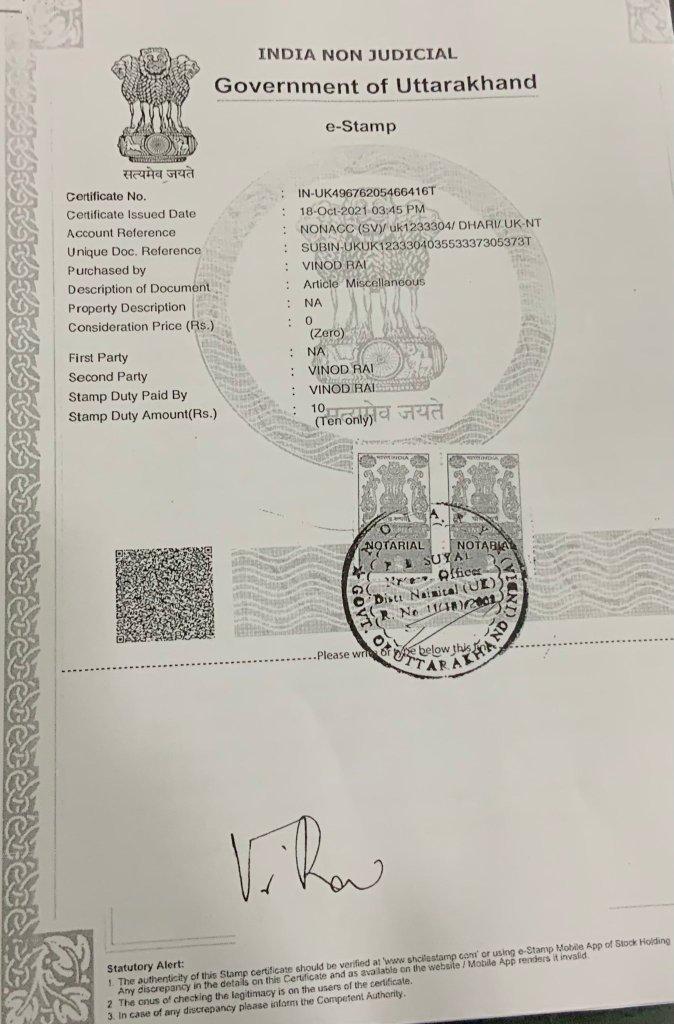
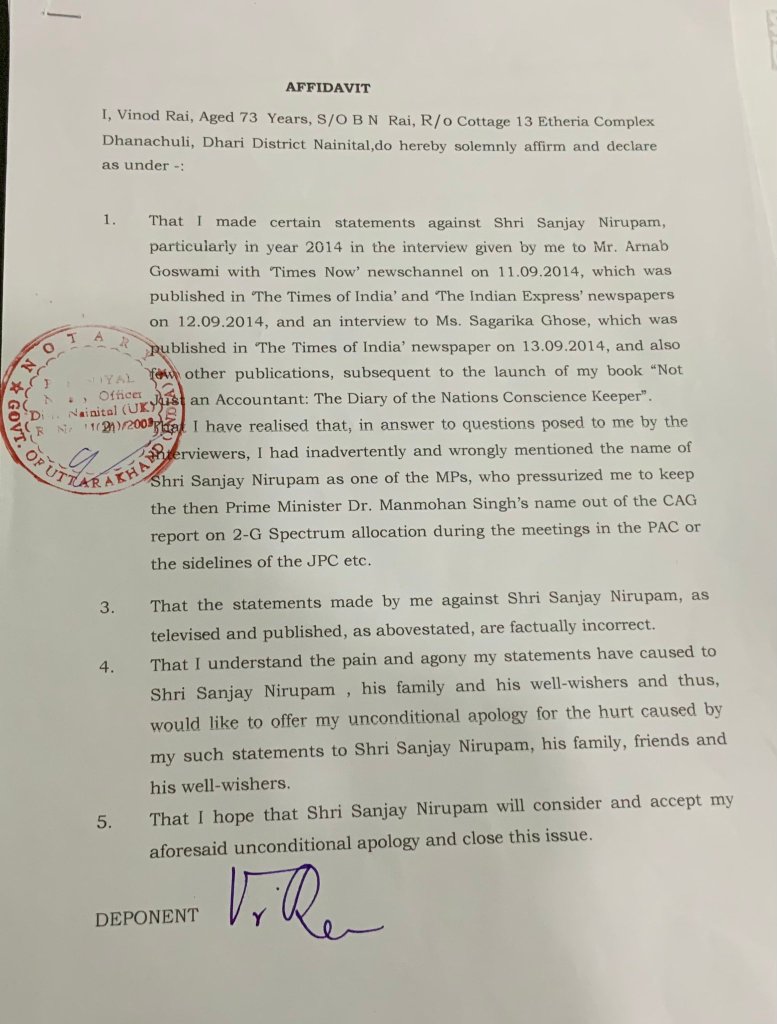
The figures mentioned above are findings of parliamentary panel so nobody can accuse of anybody having a bias. Also, I probably had shared this but still feel the need to re-share it as people still believe that 2G scam happened even though there are plenty of arguments I can share to prove how it was all a fabricated lie.
Vinod Rai Mafinama in Uttarakhand High Court.
Part 2 of the same Mafinama.
How pathetic Mr. Rai s understanding of economics is can be gauged from the fact that he was made Chairman of IDFC and subsequently had to be thrown out. That whole lie was engineered to throw UPA out and it worked. There are and have been many such coincidences happening over the last 8 years, parallel stories happening in India and UK. This was just yesterday, about a year back Air India was given back to the Tatas, There was controversy about the supposed auctions as only Indigo was the only other party allowed to be at auction but not allowed to buy but more as a spectator as they already have 60% of the Indian civil aviation market. And there was lot of cheering from the Govt. side that finally Air India has been bought home to its true owners, the Tatas. The Tatas too started cheering and sharing how they will take down all the workers, worker unions and everything will be happy glory within a year. In fact, just couple of days back they shared new plans. Btw for the takeover of Air India, they had bought loans from the Banks and they are in the category of too big to fail. As I have shared couple of times before, RBI has not shared any inspection reports of nationalized or private banks after 2013/14. While by law, RBI is supposed to do inspection reports every 3 months and share them in the Public domain. And if you ask any of their supporter, for everything they will say UPA did x or y, which only goes to show morally bankrupt the present Govt. is. Coming back to the topic, before I forget, the idea of sharing their plans is so that they can again borrow money from the banks. But that is not the only story. Just one day back, Smita Prakash, one of the biggest cheerleaders of the present Govt. (she is the boss at Asia News International (ANI)) posted how Air India had treated her sister and other 21 passengers. Basically, they had bought business tickets but the whole cabin was dirty, they complained and they were forced to sit in economy class, not just her cousin sister but the other 21 odd passengers too. Of course Ms Smita became calm as her sister was given free air tickets on Vistara and other goodies. Of course, after that she didn t post anything about the other 21 odd passengers after that. And yes, I understand she is supposed to be a reporter but as can be seen from the twitter thread, there is or was no follow up. Incidentally, she is one of many who has calling others about Revdi culture (freebies to the masses.) but guess that only applies to other people not her or her sister. Again, if there are any coincidences of similar nature in the UK or when Trump was P.M. of the U.S. they are just coincidental .

The Uncosted budget India and the UK have many parallels, it s mind boggling. Before we get into the nitty-gritties, saw something that would be of some interest to the people here.
For those who might not be able to see above, apparently there is place in UK called Tufton Street where there are quite a few organizations that are shadowy and whose finances are not known as to how they are financed. Ms. Truss and quite a few of the people in the cabinet are from the same shadowy organizations. Mr. Kwasi Kwarteng, the just-departed chancellor is and was part of the same group. Now even for me it was a new term to learn and understand what is an uncosted budget is. To make it much more easier I share the example using a common person who goes to the bank for a loan

Now M/S X wants a loan of say Rs. 1000/- for whatever reason. He/she/they go to the bank and asks give me a loan of say INR 1000/- The banks asks them to produce a statement of accounts to show what their financial position is. They produce a somewhat half-filled statement of accounts In which all liabilities are shown, but incomes are not. The bank says you already have so much liabilities, how are you gonna pay those, accounts have to be matched otherwise you are not solvent. M/s X adamantly refuses to do any changes citing that they don t need to. At this point, M/s X credit rating goes down and nobody in the market will give them a loan. At the same time, the assets they had held, their value also depreciates because it became known that they can t act responsibly. So whose to say whether or not M/s X has those number of assets and priced them accurately. But the drama doesn t end there, M/s X says this is the responsibility of actually Mr. Z ( cue The Bank of England) as they are my accountant/lawyer etc. M/s Z says as any lawyer/accountant should. This is not under my remit. If the clients either gives incomplete information or false information or whatever then it is their responsibility not mine. And in fact, the Chancellor is supposed to be the one who is given the responsibility of making the budget. The Chancellor is very similar to our Finance Minister. Because the UK has constitutional monarchy, I am guessing the terms are slightly different, otherwise the functionality seems to be the same. For two weeks, there was lot of chaos, lot of pension funds lost quite a bit in the market and in the end Mr. Kwasi Kwarteng was ousted out of the job. Incredibly, the same media and newspapers who had praised Mr. Kwarteng just few weeks back as the best Tory budget, they couldn t wait to bury him. And while I have attempted to simplify what happened, the best explanation of what has happened can be found in an article from the guardian. Speculation is rife in the UK as to who s ruling atm as the new Chancellor has reversed almost all the policies that Ms. Truss had bought and she is now more or less a figurehead. Mr. Hunt, the new chancellor doesn t have anybody behind him. Apparently, the gentleman wanted to throw his hat the ring in the Tory leadership contest that was held about a month back and he couldn t get 20 MP s to support him. Another thing that is different between UK and India is that in UK by law the PM has to answer questions put up to him or her by the opposition leaders. That is the way accountability is measured there. This is known as PMQ s or Prime Minister Questions and Answers. One can just go to YouTube or any streaming service and give Liz Truss and PMQ s and if they are interested of a certain date, give a date and they can see how she answered the questions thrown at her. Unfortunately, all she could do in both times were non-answers. In fact, the Tories seem to be using some of Labor s policies after they had bad-mouthed the same policies. Politics of right-wing both in the UK and the US seems so out of touch with the people whom they are supposed to protect and administer. An article about cyclists which is sort of half-truth, half irony shows how screwed up the policies are of the RW (right-wing). Now they are questions about the pensions triple-lock. Sadly, it is the working class who would suffer the most, most of the rich have already moved their money abroad several years ago. The Financial Times, did share a video about how things have been unfolding

Seems Ms. Truss forgot to add Financial Times in the list of anti-growth coalition she is so fond of. Also, the Tory party seems to want to create more tax havens in the UK and calling them investment zones. Of course, most of the top tax havens are situated around the UK itself. I wouldn t go more into as that would probably require its own article, although most of that information is all in public domain. Fracking I don t really want to take much time as the blog post has become long. There have been many articles written why Fracking is bad and that is why even the Tories had put in their Manifesto that they won t allow Fracking but apparently, today they are trying to reopen Fracking. And again how bad it is and can be found out by the article in Guardian.

18 October 2022

Dirk Eddelbuettel: RcppSimdJson 0.1.8 on CRAN: Maintenance

The RcppSimdJson package was just updated to release 0.1.8 today. RcppSimdJson wraps the fantastic and genuinely impressive simdjson library by Daniel Lemire and collaborators. Via very clever algorithmic engineering to obtain largely branch-free code, coupled with modern C++ and newer compiler instructions, it results in parsing gigabytes of JSON parsed per second which is quite mindboggling. The best-case performance is faster than CPU speed as use of parallel SIMD instructions and careful branch avoidance can lead to less than one cpu cycle per byte parsed; see the video of the talk by Daniel Lemire at QCon. This release simply changes one statement to not trigger a warning under clang++-14. The very short NEWS entry for this release follows.

Changes in version 0.1.8 (2022-10-18)
  • Use the ' ' operator instead of ' ' on a set of booleans to appease 'clang-14'.

Courtesy of my CRANberries, there is also a diffstat report for this release. For questions, suggestions, or issues please use the issue tracker at the GitHub repo. If you like this or other open-source work I do, you can now sponsor me at GitHub.

This post by Dirk Eddelbuettel originated on his Thinking inside the box blog. Please report excessive re-aggregation in third-party for-profit settings.

Dirk Eddelbuettel: digest 0.6.30 on CRAN: More Package Maintenance

Release 0.6.30 of the digest package arrived at CRAN earlier today, and was just uploaded to Debian as well. digest creates hash digests of arbitrary R objects (using the md5, sha-1, sha-256, sha-512, crc32, xxhash32, xxhash64, murmur32, spookyhash, and blake3 algorithms) permitting easy comparison of R language objects. It is a mature and widely-used as many tasks may involve caching of objects for which it provides convenient general-purpose hash key generation to quickly identify the various objects. This release contains two tiny changes on old standard C code to appease the new / upcoming clang-15 release now used by CRAN in their forward-looking checks. My CRANberries provides the usual summary of changes to the previous version. For questions or comments use the issue tracker off the GitHub repo. If you like this or other open-source work I do, you can now sponsor me at GitHub.

This post by Dirk Eddelbuettel originated on his Thinking inside the box blog. Please report excessive re-aggregation in third-party for-profit settings.

16 October 2022

Colin Watson: Reproducible man-db databases

I ve released man-db 2.11.0 (announcement, NEWS), and uploaded it to Debian unstable. The biggest chunk of work here was fixing some extremely long-standing issues with how the database is built. Despite being in the package name, man-db s database is much less important than it used to be: most uses of man(1) haven t required it in a long time, and both hardware and software improvements mean that even some searches can be done by brute force without needing prior indexing. However, the database is still needed for the whatis(1) and apropos(1) commands. The database has a simple format - no relational structure here, it s just a simple key-value database using old-fashioned DBM-like interfaces and composing a few fields to form values - but there are a number of subtleties involved. The issues tend to amount to this: what does a manual page name mean? At first glance it might seem simple, because you have file names that look something like /usr/share/man/man1/ls.1.gz and that s obviously ls(1). Some pages are symlinks to other pages (which we track separately because it makes it easier to figure out which entries to update when the contents of the file system change), and sometimes multiple pages are even hard links to the same file. The real complications come with whatis references . Pages can list a bunch of names in their NAME section, and the historical expectation is that it should be possible to use those names as arguments to man(1) even if they don t also appear in the file system (although Debian policy has deprecated relying on this for some time). Not only does that mean that man(1) sometimes needs to consult the database, but it also means that the database is inherently more complicated, since a page might list something in its NAME section that conflicts with an actual file name in the file system, and now you need a priority system to resolve ambiguities. There are some other possible causes of ambiguity as well. The people working on reproducible builds in Debian branched out to the related challenge of reproducible installations some time ago: can you take a collection of packages, bootstrap a file system image from them, and reproduce that exact same image somewhere else? This is useful for the same sorts of reasons that reproducible builds are useful: it lets you verify that an image is built from the components it s supposed to be built from, and doesn t contain any other skulduggery by accident or design. One of the people working on this noticed that man-db s database files were an obstacle to that: in particular, the exact contents of the database seemed to depend on the order in which files were scanned when building it. The reporter proposed solving this by processing files in sorted order, but I wasn t keen on that approach: firstly because it would mean we could no longer process files in an order that makes it more efficient to read them all from disk (still valuable on rotational disks), but mostly because the differences seemed to point to other bugs. Having understood this, there then followed several late nights of very fiddly work on the details of how the database is maintained. None of this was conceptually difficult: it mainly amounted to ensuring that we maintain a consistent well-order for different entries that we might want to insert for a given database key, and that we consider the same names for insertion regardless of the order in which we encounter files. As usual, the tricky bit is making sure that we have the right data structures to support this. man-db is written in C which is not very well-supplied with built-in data structures, and originally much of the code was written in a style that tried to minimize memory allocations; this came at the cost of ownership and lifetime often being rather unclear, and it was often difficult to make changes without causing leaks or double-frees. Over the years I ve been gradually introducing better encapsulation to make things easier to follow, and I had to do another round of that here. There were also some problems with caching being done at slightly the wrong layer: we need to make use of a trace of the chain of links followed to resolve a page to its ultimate source file, but we were incorrectly caching that trace and reusing it for any link to the same file, with incorrect results in many cases. Oh, and after doing all that I found that the on-disk representation of a GDBM database is insertion-order-dependent, so I ended up having to manually reorganize the database at the end by reading it all in and writing it all back out in sorted order, which feels really weird to me coming from spending most of my time with PostgreSQL these days. Fortunately the database is small so this takes negligible time. None of this is particularly glamorous work, but it paid off:
# export SOURCE_DATE_EPOCH="$(date +%s)"
# mkdir emptydir disorder
# disorderfs --multi-user=yes --shuffle-dirents=yes --reverse-dirents=no emptydir disorder
# export TMPDIR="$(pwd)/disorder"
# mmdebstrap --variant=standard --hook-dir=/usr/share/mmdebstrap/hooks/merged-usr \
      unstable out1.tar
# mmdebstrap --variant=standard --hook-dir=/usr/share/mmdebstrap/hooks/merged-usr \
      unstable out2.tar
# cmp out1.tar out2.tar
# echo $?
0

Aigars Mahinovs: Ryzen 7000 amdgpu boot hang

So you decided to build a brand new system using all the latest and coolest tech, so you buy a Ryzen 7000 series Zen 4 CPU, like the Ryzen 7700X that I picked, with a new mother board and DDR5 memory and all that jazz. But for now, you don't yet have a fitting GPU for that system (as the new ones will only come out in November), so you are booting a Debian system using the new build-in video card of the new CPUs (Zen 4 generation has a simple AMD GPU build-in into every CPU now - great stuff for debugging and mostly-headless systems) and you get ... nothing on the screen. Hmm. You boot into the rescue mode and the kernel message stop after:
Oct 16 13:31:25 home kernel: [    4.128328] amdgpu: Ignoring ACPI CRAT on non-APU system
Oct 16 13:31:25 home kernel: [    4.128329] amdgpu: Virtual CRAT table created for CPU
Oct 16 13:31:25 home kernel: [    4.128332] amdgpu: Topology: Add CPU node
That looks bad, right? Well, if you either ssh into the machine or reboot with module_blacklist=amdgpu in the kernel command line you will find in /var/log/kern.log.1 those messages and also the following messages that will clarify the situation a bit:
Oct 16 13:31:25 home kernel: [    4.129352] amdgpu 0000:10:00.0: firmware: failed to load amdgpu/psp_13_0_5_toc.bin (-2)
Oct 16 13:31:25 home kernel: [    4.129354] firmware_class: See https://wiki.debian.org/Firmware for information about missing firmware
Oct 16 13:31:25 home kernel: [    4.129358] amdgpu 0000:10:00.0: firmware: failed to load amdgpu/psp_13_0_5_toc.bin (-2)
Oct 16 13:31:25 home kernel: [    4.129359] amdgpu 0000:10:00.0: Direct firmware load for amdgpu/psp_13_0_5_toc.bin failed with error -2
Oct 16 13:31:25 home kernel: [    4.129360] amdgpu 0000:10:00.0: amdgpu: fail to request/validate toc microcode
Oct 16 13:31:25 home kernel: [    4.129361] [drm:psp_sw_init [amdgpu]] *ERROR* Failed to load psp firmware!
Oct 16 13:31:25 home kernel: [    4.129432] [drm:amdgpu_device_init.cold [amdgpu]] *ERROR* sw_init of IP block <psp> failed -2
Oct 16 13:31:25 home kernel: [    4.129525] amdgpu 0000:10:00.0: amdgpu: amdgpu_device_ip_init failed
Oct 16 13:31:25 home kernel: [    4.129526] amdgpu 0000:10:00.0: amdgpu: Fatal error during GPU init
Oct 16 13:31:25 home kernel: [    4.129527] amdgpu 0000:10:00.0: amdgpu: amdgpu: finishing device.
Oct 16 13:31:25 home kernel: [    4.129633] amdgpu: probe of 0000:10:00.0 failed with error -2
So what you need is to get a new set of Linux Kernel Firmware blobs and upack that in /lib/firmware. The tarball from 2022-10-12 worked well for me. After that you also need to re-create the initramfs with update-initramfs -k all -c to include the new firmware. Having kernel version 5.18 or newer is also required for stable Zen 4 support. It might be that a fresh Mesa version is also of importance, but as I am running sid on this machine I can only say that Mesa 22.2.1 that is in sid works fine.

Vincent Fourmond: Tutorial: analysis of multiwavelength fast kinetics data

The purpose of this post is to demonstrate a first approach to the analysis of multiwavelength kinetic data, like those obtained using stopped-flow data. To practice, we will use data that were acquired during the stopped flow practicals of the MetBio summer school from the FrenchBIC. During the practicals, the student monitored the reaction of myoglobin (in its Fe(III) state) with azide, which yields a fast and strong change in the absorbance spectrum of the protein, which was monitored using a diode array. The data is publicly available on zenodo. Aims of this tutorial The purpose of this tutorial is to teach you to use the free softwareQSoas to run a simple, multiwavelength exponential fit on the data, and to look at the results. This is not a kinetics lecture, so that it will not go in depth about the use of the exponential fit and its meaning. Getting started: loading the file First, make sure you have a working version of QSoas, you can download them (for free) there. Then download the data files from zenodo. We will work only on the data file Azide-1.25mm_001.dat, but of course, the purpose of this tutorial is to enable you to work on all of them. The data files contain the time evolution of the absorbance for all wavelengths, in a matrix format, in which each row correpond to a time point and each column to a wavelength. Start QSoas, and launch the command:
QSoas> load /comments='"'
Then, choose the Azide-1.25mm_001.dat data file. This should bring up a horizontal red line at the bottom of the data display, with X values between about 0 and 2.5. If you zoom on the red line with the mouse wheel, you'll realize it is data. The /comments='"' part is very important since it allows the extraction of the wavelength from the data. We will look at what it means another day. At this stage, you can look at the loaded data using the command:
QSoas> edit
You should have a window looking like this:
The rows each correspond to a data point displayed on the window below. The first column correspond to the X values, the second the Y values, and all the other ones to extra Y columns (they are not displayed by default). What is especially interesting is the first row, which contains a nan as the X value and what is obviously the wavelength for all the Y values. To tell that QSoas should take this line as the wavelength (which will be the perpendicular coordinate, the coordinate of the other direction of the matrix), first close the edit window and run:
QSoas> set-perp /from-row=0
Splitting and fitting Now, we have a single dataset containing a lot of Y columns. We want to fit all of them simultaneously with a (mono) exponential fit. For that, we first need to split the big matrix into a series of X,Y datasets (because fitting only works on the first Y). This is possible by running:
QSoas> expand /style=red-to-blue /flags=kinetics
Your screen should now look like this:
You're looking at the kinetics at all wavelengths at the same time (this may take some time to display on your computer, it is after all a rather large number of data points). The /style=red-to-blue is not strictly necessary, but it gives the red to blue color gradient which makes things easier to look at (and cooler !). The /flags=kinetics is there to attach a label (a flag) to the newly created datasets so we can easily manipulate all of them at the same time. Then it's time to fit, with the following command:
QSoas> mfit-exponential-decay flagged:kinetics
This should bring up a new window. After resizing it, you should have something that looks like this:
The bottom of the fit window is taken by the parameters, each with two checkboxes on the right to set them fixed (i.e. not determined by the fitting mechanism) and/or global (i.e. with a single value for all the datasets, here all the wavelengths). The top shows the current dataset along with the corresponding fit (in green), and, below, the residuals. You can change the dataset by clicking on the horizontal arrows or using Ctrl+PgUp or Ctrl+PgDown (keep holding it to scan fast). See the Z = 728.15 showing that QSoas has recognized that the currently displayed dataset corresponds to the wavelength 728.15. The equation fitted to the data is: $$y(x) = A_\infty + A_1 \times \exp -(x - x_0)/\tau_1$$ In this case, while the \(A_1\) and \(A_\infty\) parameters clearly depend on the wavelength, the time constant of evolution should be independent of wavelength (the process happens at a certain rate regardless of the wavelength we're analyzing), so that the \(\tau_1\) parameter should be common for all the datasets/wavelengths. Just click on the global checkbox at the right of the tau_1 parameter, make sure it is checked, and hit the Fit button... The fit should not take long (less than a minute), and then you end up with the results of the fits: all the parameters. The best way to look at the non global parameters like \(A_1\) and \(A_\infty\) is to use the Show Parameters item from the Parameters menu. Using it and clicking on A_inf too should give you a display like this one:
The A_inf parameter corresponds to the spectum at infinite time (of azide-bound heme), while the A_1 parameter corresponds to the difference spectrum between the initial (azide-free) and final (azide-bound) states. Now, the fit is finished, you can save the parameters if you want to reload them in a later fit by using the Parameters/Save menu item or export them in a form more suitable for plotting using Parameters/Export (although QSoas can also display and the parameters saved using Save). This concludes this first approach to fitting the data. What you can do is How to read the code above All the lines starting by QSoas> in the code areas above are meant to be typed into the QSoas command line (at the bottom of the window), and started by pressing enter at the end. You must remove the QSoas> bit. The other lines (when applicable) show you the response of QSoas, in the terminal just above the command-line. You may want to play with the QSoas tutorial to learn more about how to interact with QSoas. About QSoas QSoas is a powerful open source data analysis program that focuses on flexibility and powerful fitting capacities. It is released under the GNU General Public License. It is described in Fourmond, Anal. Chem., 2016, 88 (10), pp 5050 5052. Current version is 3.1. You can freely (and at no cost) download its source code or precompiled versions for MacOS and Windows there. Alternatively, you can clone from the GitHub repository.
Contact: find my email address there, or contact me on LinkedIn.

15 October 2022

Jonathan Dowland: podman generate

I've been working with and on container technology for seven years, but I still learn new things every day. Recently I read the excellent LWN article Docker and the OCI container ecosystem and this was news to me:
Running the docker CLI under a process supervisor only results in supervising the CLI process. This has a variety of consequences for users of these tools. For example, any attempt to limit a container's memory usage by running the CLI as a systemd service will fail; the limits will only apply to the CLI and its non-existent children. In addition, attempts to terminate a client process may not result in terminating all of the processes in the container.
Huh of course! I hadn't really thought about that. I run a small number of containers on my home system via docker (since I was using it at work) and systemd, and sometimes I have weird consistency issues. This explains them. Later:
As a result, Podman plays nicely with tools like systemd; using podman run with a process supervisor works as expected, because the processes inside the container are children of podman run. The developers of Podman encourage people to use it in this way by a command to generate systemd units for Podman containers.
Given the above, it seemed like a good idea to migrate my few local containers over to Podman. This was easy. The first part is copying the images from Docker's storage to Podman's. To do this, I used the skopeo tool:
sudo skopeo copy  docker-daemon,containers-storage :octoprint/octoprint:latest
(I want to launch these as a superuser, rather than use root-less containers, to isolate the containers from each other: rootless ones are forced to share a common namespace.) Once the images were copied over, I needed to start up a container instance via Podman. For most of them, running under Docker, I had volume-mounted the important bits for persistent data. I can do the same with Podman:
# podman run -d --rm \
    --name octoprint \
    -p 8080:80 \
    -v /archive/octoprint:/octoprint \
    --device /dev/ttyACM0:/dev/ttyACM0 \
    octoprint/octoprint
Once an instance was running, I can use podman generate to create a Systemd unit file which describes creating an equivalent container:
# cd /etc/systemd/system
# podman generate systemd octoprint \
    --new \
    --name \
    --files
For some of the containers I was running, there are a few more steps required: migrating docker volumes and configuring equivalents for private docker networks. But Podman's versions of those concepts are largely identical. Running a mixture of Podman and Docker containers side-by-side also meant renumbering some private addresses for migrated hosts whilst the original network was still up.

14 October 2022

Shirish Agarwal: Dowry, Racism, Railways

Dowry Few days back, had posted about the movie Raksha Bandhan and whatever I felt about it. Sadly, just couple of days back, somebody shared this link. Part of me was shocked and part of me was not. Couple of acquaintances of mine in the past had said the same thing for their daughters. And in such situations you are generally left speechless because you don t know what the right thing to do is. If he has shared it with you being an outsider, how many times he must have told the same to their wife and daughters? And from what little I have gathered in life, many people have justified it on similar lines. And while the protests were there, sadly the book was not removed. Now if nurses are reading such literature, how their thought process might be forming, you can tell :(. And these are the ones whom we call for when we are sick and tired :(. And I have not taken into account how the girls/women themselves might be feeling. There are similar things in another country but probably not the same, nor the same motivations though although feeling helplessness in both would be a common thing. But such statements are not alone. Another gentleman in slightly different context shared this as well
The above is a statement shared in a book recommended for CTET (Central Teacher s Eligibility Test that became mandatory to be taken as the RTE (Right To Education) Act came in.). The statement says People from cold places are white, beautiful, well-built, healthy and wise. And people from hot places are black, irritable and of violent nature. Now while I can agree with one part of the statement that people residing in colder regions are more fair than others but there are loads of other factors that determine fairness or skin color/skin pigmentation. After a bit of search came to know that this and similar articulation have been made in an idea/work called Environmental Determinism . Now if you look at that page, you would realize this was what colonialism is and was all about. The idea that the white man had god-given right to rule over others. Similarly, if you are fair, you can lord over others. Seems simplistic, but yet it has a powerful hold on many people in India. Forget the common man, this thinking is and was applicable to some of our better-known Freedom fighters. Pune s own Bal Gangadhar Tilak The Artic Home to the Vedas. It sort of talks about Aryans and how they invaded India and became settled here. I haven t read or have access to the book so have to rely on third-party sources. The reason I m sharing all this is that the right-wing has been doing this myth-making for sometime now and unless and until you put a light on it, it will continue to perpetuate  . For those who have read this blog, do know that India is and has been in casteism from ever. They even took the fair comment and applied it to all Brahmins. According to them, all Brahmins are fair and hence have god-given right to lord over others. What is called the Eton boy s network serves the same in this casteism. The only solution is those idea under limelight and investigate. To take the above, how does one prove that all fair people are wise and peaceful while all people black and brown are violent. If that is so, how does one count for Mahatma Gandhi, Martin Luther King Junior, Nelson Mandela, Michael Jackson the list is probably endless. And not to forget that when Mahatma Gandhiji did his nonviolent movements either in India or in South Africa, both black and brown people in millions took part. Similar examples of Martin Luther King Jr. I know and read of so many non-violent civl movements that took place in the U.S. For e.g. Rosa Parks and the Montgomery Bus Boycott. So just based on these examples, one can conclude that at least the part about the fair having exclusive rights to being fair and noble is not correct. Now as far as violence goes, while every race, every community has had done violence in the past or been a victim of the same. So no one is and can be blameless, although in light of the above statement, the question can argumentated as to who were the Vikings? Both popular imagination and serious history shares stories about Vikings. The Vikings were somewhat nomadic in nature even though they had permanent settlements but even then they went on raids, raped women, captured both men and women and sold them at slaves. So they are what pirates came to be, but not the kind Hollywood romanticizes about. Europe in itself has been a tale in conflict since time immemorial. It is only after the formation of EU that most of these countries stopped fighting each other From a historical point perspective, it is too new. So even the part of fair being non-violent dies in face of this evidence. I could go on but this is enough on that topic.

Railways and Industrial Action around the World. While I have shared about Railways so many times on this blog, it continues to fascinate me that how people don t understand the first things about Railways. For e.g. Railways is a natural monopoly. What that means is and you can look at all and any type of privatization around the world, you will see it is a monopoly. Unlike the road or Skies, Railways is and would always be limited by infrastructure and the ability to have new infrastructure. Unlike in road or Skies (even they have their limits) you cannot run train services on a whim. At any particular point in time, only a single train could and should occupy a stretch of Railway network. You could have more trains on one line, but then the likelihood of front or rear-end collisions becomes a real possibility. You also need all sorts of good and reliable communications, redundant infrastructure so if one thing fails then you have something in place. The reason being a single train can carry anywhere from 2000 to 5000 passengers or more. While this is true of Indian Railways, Railways around the world would probably have some sort of similar numbers.It is in this light that I share the below videos.
To be more precise, see the fuller video
Now to give context to the recording above, Mike Lynch is the general secretary at RMT. For those who came in late, both UK and the U.S. have been threatened by railway strikes. And the reason for the strikes or threat of strikes is similar. Now from the company perspective, all they care is to invest less and make the most profits that can be given to equity shareholders. At the same time, they have freezed the salaries of railway workers for the last 3 years. While the politicians who were asking the questions, apparently gave themselves raise twice this year. They are asking them to negotiate at 8% while inflation in the UK has been 12.3% and projected to go higher. And it is not only the money. Since the 1980s when UK privatized the Railways, they stopped investing in the infrastructure. And that meant that the UK Railway infrastructure over period of time started getting behind and is even behind say Indian Railways which used to provide most bang for the buck. And Indian Railways is far from ideal. Ironically, most of the operators on UK are nationalized Railways of France, Germany etc. but after the hard Brexit, they too are mulling to cut their operations short, they have too  There is also the EU Entry/Exit system that would come next year. Why am I sharing about what is happening in UK Rail, because the Indian Government wants to follow the same thing, and fooling the public into saying we would do it better. What inevitably will happen is that ticket prices go up, people no longer use the service, the number of services go down and eventually they are cancelled. This has happened both in Indian Railways as well as Airlines. In fact, GOI just recently announced a credit scheme just a few days back to help Airlines stay afloat. I was chatting with a friend who had come down to Pune from Chennai and the round-trip cost him INR 15k/- on that single trip alone. We reminisced how a few years ago, 8 years to be precise, we could buy an Air ticket for 2.5k/- just a few days before the trip and did it. I remember doing/experiencing at least a dozen odd trips via air in the years before 2014. My friend used to come to Pune, almost every weekend because he could afford it, now he can t do that. And these are people who are in the above 5-10% of the population. And this is not just in UK, but also in the United States. There is one big difference though, the U.S. is mainly a freight carrier while the UK Railway Operations are mostly passenger based. What was and is interesting that Scotland had to nationalize their services as they realized the Operators cannot or will not function when they were most needed. Most of the public even in the UK seem to want a nationalized rail service, at least their polls say so. So, it would definitely be interesting to see what happens in the UK next year. In the end, I know I promised to share about books, but the above incidents have just been too fascinating to not just share the news but also share what I think about them. Free markets function good where there is competition, for example what is and has been happening in China for EV s but not where you have natural monopolies. In all Railway privatization, you have to handover the area to one person, then they have no motivation. If you have multiple operators, then there would always be haggling as to who will run the train and at what time. In either scenario, it doesn t work and raises prices while not delivering anything better  I do take examples from UK because lot of things are India are still the legacy of the British. The whole civil department that was created in 1953 is/was a copy of the British civil department at that time and it is to this day. P.S. Just came to know that the UK Chancellor Kwasi Kwarteng was just sacked as UK Chancellor. I do commend Truss for facing the press even though she might be dumped a week later unlike our PM who hasn t faced a single press conference in the last 8 odd years.

https://www.youtube.com/watch?v=oTP6ogBqU7of The difference in Indian and UK politics seems to be that the English are now asking questions while here in India, most people are still sleeping without a care in the world. Another thing to note Minidebconf Palakkad is gonna happen 12-13th November 2022. I am probably not gonna go but would request everyone who wants to do something in free software to attend it. I am not sure whether I would be of any use like this and also when I get back, it would be an empty house. But for people young and old, who want to do anything with free/open source software it is a chance not to be missed. Registration of the same closes on 1st of November 2022. All the best, break a leg  Just read this, beautifully done.

Gunnar Wolf: Learning some Rust with Lars!

A couple of weeks ago, I read a blog post by former Debian Developer Lars Wirzenius offering a free basic (6hr) course on the Rust language to interested free software and open source software programmers. I know Lars offers training courses in programming, and besides knowing him for ~20 years and being proud to consider us to be friends, have worked with him in a couple of projects (i.e. he is upstream for vmdb2, which I maintain in Debian and use for generating the Raspberry Pi Debian images) He is a talented programmer, and a fun guy to be around. I was admitted to the first cohort of students of this course (please note I m not committing him to run free courses ever again! He has said he would consider doing so, specially to offer a different time better suited for people in Asia). I have wanted to learn some Rust for quite some time. About a year ago, I bought a copy of The Rust Programming Language, the canonical book for learning the language, and started reading it But lacked motivation and lost steam halfway through, and without having done even a simple real project beyond the simple book exercises. How has this been? I have enjoyed the course. I must admit I did expect it to be more hands-on from the beginning, but Rust is such a large language and it introduces so many new, surprising concepts. Session two did have two somewhat simple hands-on challenges; by saying they were somewhat simple does not mean we didn t have to sweat to get them to compile and work correctly! I know we will finish this Saturday, and I ll still be a complete newbie to Rust. I know the only real way to wrap my head around a language is to actually have a project that uses it And I have some ideas in mind. However, I don t really feel confident to approach an already existing project and start meddling with it, trying to contribute. What does Rust have that makes it so different? Bufff Variable ownership (borrow checking) and values lifetimes are the most obvious salient idea, but they are relatively simple, as you just cannot forget about them. But understanding (and adopting) idiomatic constructs such as the pervasive use of enums, understanding that errors always have to be catered for by using expect() and Result<T,E> It will take some time to be at ease developing in it, if I ever reach that stage! Oh, FWIW Interested related reading. I am halfway through an interesting article, published in March in the Communications of the ACM magazine, titled Here We Go Again: Why Is It Difficult for Developers to Learn Another Programming Language? , that presents an interesting point we don t always consider: If I m a proficient programmer in the X programming language and want to use the Y programming language, learning it Should be easier for me than for the casual bystander, or not? After all, I already have a background in programming! But it happens that mental constructs we build for a given language might hamper our learning of a very different one. This article presents three interesting research questions:
  1. Does cross-language interference occur?
  2. How do experienced programmers learn new languages?
  3. What do experienced programmers find confusing in new languages?
I m far from reaching the conclusions, but so far, it s been a most interesting read. Anyway, to wrap up Thanks Lars! I am learning (although at a pace that is not magically quick But I am aware of the steep learning curve of the language) quite a bit of a very interesting topic, and I m also enjoying the time I spend in front of my computer on Saturday.

13 October 2022

Dirk Eddelbuettel: GitHub Streak: Round Nine

Eight years ago I referenced the Seinfeld Streak used in an earlier post of regular updates to to the Rcpp Gallery:
This is sometimes called Jerry Seinfeld s secret to productivity: Just keep at it. Don t break the streak.
and then showed the first chart of GitHub streaking 366 days:
github activity october 2013 to october 2014github activity october 2013 to october 2014
And seven years ago a first follow-up appeared in this post about 731 days:
github activity october 2014 to october 2015github activity october 2014 to october 2015
And six years ago we had a followup at 1096 days
github activity october 2015 to october 2016github activity october 2015 to october 2016
And five years ago we had another one marking 1461 days
github activity october 2016 to october 2017github activity october 2016 to october 2017
And four years ago another one for 1826 days
github activity october 2017 to october 2018github activity october 2017 to october 2018
And three years ago another one bringing it to 2191 days
github activity october 2018 to october 2019github activity october 2018 to october 2019
And two years ago another one bringing it to 2557 days
github activity october 2019 to october 2020github activity october 2019 to october 2020
And last year another one bringing it to 2922 days
github activity october 2020 to october 2021github activity october 2020 to october 2021
And as today is October 12 here is the newest one from 2021 to 2022 one bringing it 3287 days:
github activity october 2021 to october 2022github activity october 2021 to october 2022

As always, special thanks go to Alessandro Pezz for the Chrome add-on GithubOriginalStreak. If you like this or other open-source work I do, you can now sponsor me at GitHub.

This post by Dirk Eddelbuettel originated on his Thinking inside the box blog. Please report excessive re-aggregation in third-party for-profit settings.

11 October 2022

Ben Hutchings: Debian LTS work, August-September 2022

I have continued to work for Freexian on Debian LTS. In August I carried over 21 hours from July, and worked 13 hours. In September I was assigned an additional 17 hours, and worked 16 hours. I will carry over 9 hours into October. In August, Debian 10 "buster" entered LTS status. I spent some time on the backport of Linux 5.10 for buster. While this previously existed in buster-backports, further changes were required to add it as an alternative kernel version in buster-security, particularly around code signing. When that was complete, I issued DLA-3102-1. I also prepared and uploaded an update to the linux (4.19) package. I issued DLA-3131-1 for these changes.

Next.

Previous.