Paul Tagliamonte: Decoding LDPC: k-Bit Brute Forcing

Before you go on: I've been
warned off
implementing this in practice on a few counts; namely, the space tradeoff isn't
worth it, and it's unlikely to correct meaningful errors. I'm going to leave
this post up, but please do take the content with a very large grain of salt!
My initial efforts to build a PHY
and Data Link layer from
scratch using my own code have been progressing nicely since the initial
BPSK based protocol I ve documented under the PACKRAT series. As part of that,
I ve been diving deep into FEC,
and in particular, LDPC.
I won t be able to do an overview of LDPC justice in this post with any
luck that ll come in a later post to come as part of the RATPACK series,
so some knowledge is assumed. As such this post is less useful for those
looking to learn about LDPC, and a bit more targeted to those who enjoy
talking and thinking about FEC.
Hey, heads up! - This post contains extremely unvalidated and back of
the napkin quality work without any effort to prove this out generally.
Hopefully this work can be of help to others, but please double check anything
below if you need it for your own work!
While implementing LDPC, I ve gotten an encoder and checker working, enough
to use LDPC like a checksum. The next big step is to write a Decoder, which
can do error correction. The two popular approaches for the actual correction
that I ve seen while reading about LDPC are
Belief Propagation,
and some class of linear programming that I haven t dug into yet.
I m not thrilled at how expensive this all is in software, so while implementing
the stack I ve been exploring every shady side ally to try and learn more about
how encoders and decoders work, both in theory - and in practice.
Processing an LDPC Message
Checking if a message is correct is fairly straightforward with LDPC (as with
encoding, I ll note). As a quick refresher given the LDPC H (check) matrix
of width N, you can check your message vector (msg) of length N by
multipling H and msg, and checking if the output vector is all zero.
 // scheme contains our G (generator) and
 // H (check) matrices.
 scheme :=  G: Matrix ... , H: Matrix ...
// msg contains our LDPC message (data and
 // check bits).
 msg := Vector ...
// N is also the length of the encoded
 // msg vector after check bits have been
 // added.
 N := scheme.G.Width
// Now, let's generate our 'check' vector.
 ch := Multiply(scheme.H, msg)
We can now see if the message is correct or not:
 // if the ch vector is all zeros, we know
 // that the message is valid, and we don't
 // need to do anything.
 if ch.IsZero()
// handle the case where the message
 // is fine as-is.
 return ...

// Expensive decode here
This is great for getting a thumbs up / thumbs down on the message being
correct, but correcting errors still requires pulling the LDPC matrix values
from the g (generator) matrix out, building a bipartite graph, and
iteratively reprocessing the bit values, until constraints are satisfied and
the message has been corrected.
This got me thinking - what is the output vector when it s not all zeros?
Since 1 values in the output vector indicates consistency problems in the
message bits as they relate to the check bits, I wondered if this could be used
to speed up my LDPC decoder. It appears to work, so this post is half an attempt
to document this technique before I put it in my hot path, and half a plea for
those who do like to talk about FEC to tell me what name this technique
actually is.
k-Bit Brute Forcing
Given that the output Vector s non-zero bit pattern is set due to the position
of errors in the message vector, let s use that fact to build up a table
of k-Bit errors that we can index into.
 // for clarity's sake, the Vector
 // type is being used as the lookup
 // key here, even though it may
 // need to be a hash or string in
 // some cases.
 idx := map[Vector]int
for i := 0; i < N; i++
// Create a vector of length N
 v := Vector
v.FlipBit(i)
// Now, let's use the generator matrix to encode
 // the data with checksums, and then use the
 // check matrix on the message to figure out what
 // bit pattern results
 ev := Multiply(scheme.H, Multiply(v, scheme.G))
idx[ev] = i
This can be extended to multiple bits (hence: k-Bits), but I ve only done
one here for illustration. Now that we have our idx mapping, we can now
go back to the hot path on Checking the incoming message data:
 // if the ch vector is all zeros, we know
 // that the message is valid, and we don't
 // need to do anything.
 if ch.IsZero()
// handle the case where the message
 // is fine as-is.
 return ...

errIdx, ok := idx[ch]
if ok
msg.FlipBit(errIdx)
// Verify the LDPC message using
 // H again here.
 return ...

// Expensive decode here
Since map lookups wind up a heck of a lot faster than message-passing
bit state, the hope here is this will short-circuit easy to solve errors
for k-Bits, for some value of k that the system memory can tolerate.
Does this work?
Frankly I have no idea. I ve written a small program and brute forced
single-bit errors in all bit positions using random data to start with, and
I ve not been able to find any collisions in the 1-bit error set, using the
LDPC matrix from 802.3an-2006. Even if I was to find a collision for a
higher-order k-Bit value, I m tempted to continue with this approach, and treat
each set of bits in the Vector s bin (like a hash-table), checking the LDPC
validity after each bit set in the bin. As long as the collision rate is small
enough, it should be possible to correct k-Bits of error faster than the more
expensive Belief Propagation approach. That being said, I m not entirely
convinced collisions will be very common, but it ll take a bit more time
working through the math to say that with any confidence.
Have you seen this approach called something official in publications? See
an obvious flaw in the system? Send me a tip, please!
// scheme contains our G (generator) and
// H (check) matrices.
scheme := G: Matrix ... , H: Matrix ...
// msg contains our LDPC message (data and
// check bits).
msg := Vector ...
// N is also the length of the encoded
// msg vector after check bits have been
// added.
N := scheme.G.Width
// Now, let's generate our 'check' vector.
ch := Multiply(scheme.H, msg)
// if the ch vector is all zeros, we know
// that the message is valid, and we don't
// need to do anything.
if ch.IsZero()
// handle the case where the message
// is fine as-is.
return ...
// Expensive decode here
// for clarity's sake, the Vector
// type is being used as the lookup
// key here, even though it may
// need to be a hash or string in
// some cases.
idx := map[Vector]int
for i := 0; i < N; i++
// Create a vector of length N
v := Vector
v.FlipBit(i)
// Now, let's use the generator matrix to encode
// the data with checksums, and then use the
// check matrix on the message to figure out what
// bit pattern results
ev := Multiply(scheme.H, Multiply(v, scheme.G))
idx[ev] = i
idx mapping, we can now
go back to the hot path on Checking the incoming message data:
// if the ch vector is all zeros, we know
// that the message is valid, and we don't
// need to do anything.
if ch.IsZero()
// handle the case where the message
// is fine as-is.
return ...
errIdx, ok := idx[ch]
if ok
msg.FlipBit(errIdx)
// Verify the LDPC message using
// H again here.
return ...
// Expensive decode here
 Our local Debian user group gathered on Sunday October 30th to chat, work on
Debian and do other, non-Debian related hacking :) This time around, we met at
 This was our 4th meeting this year and once again, attendance was great: 10
people showed up to work on various things.
Following our bi-monthly schedule, our next meeting should be in December, but
I'm not sure it'll happen. December can be a busy month here and I will have to
poke our mailing list to see if people have the spoons for an event.
This time around, I was able to get a rough log of the Debian work people did:
pollo:
 A new minor release 0.2.2 of our
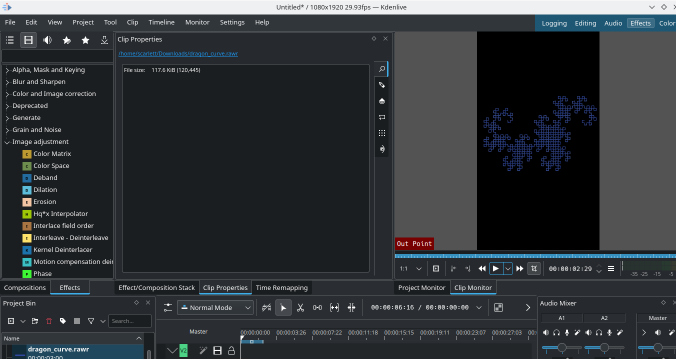 Kdenlive with Glaximate animations!


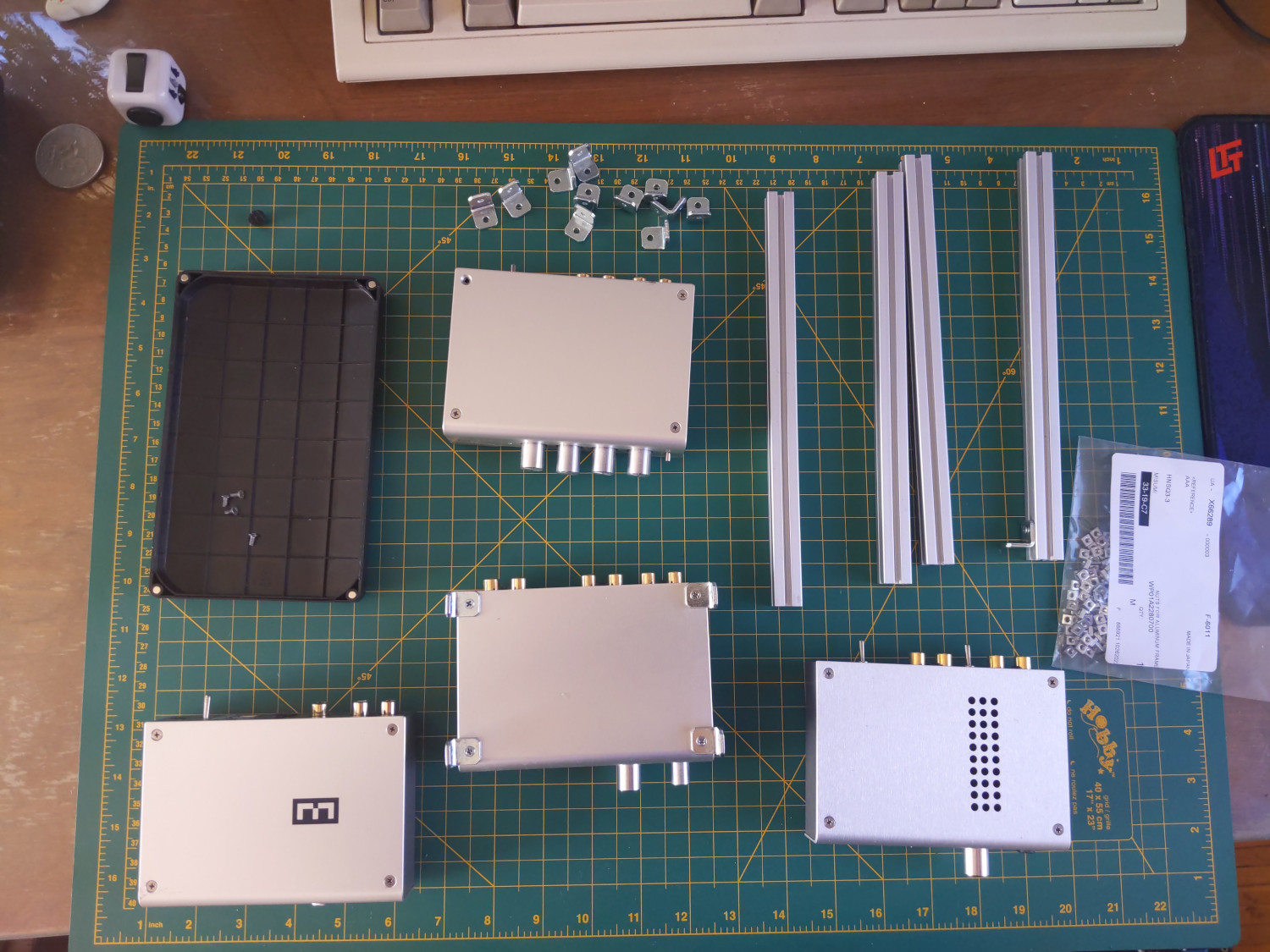 This was my first time working with aluminium frame extrusions and I had tons
of fun! I specced the first version using
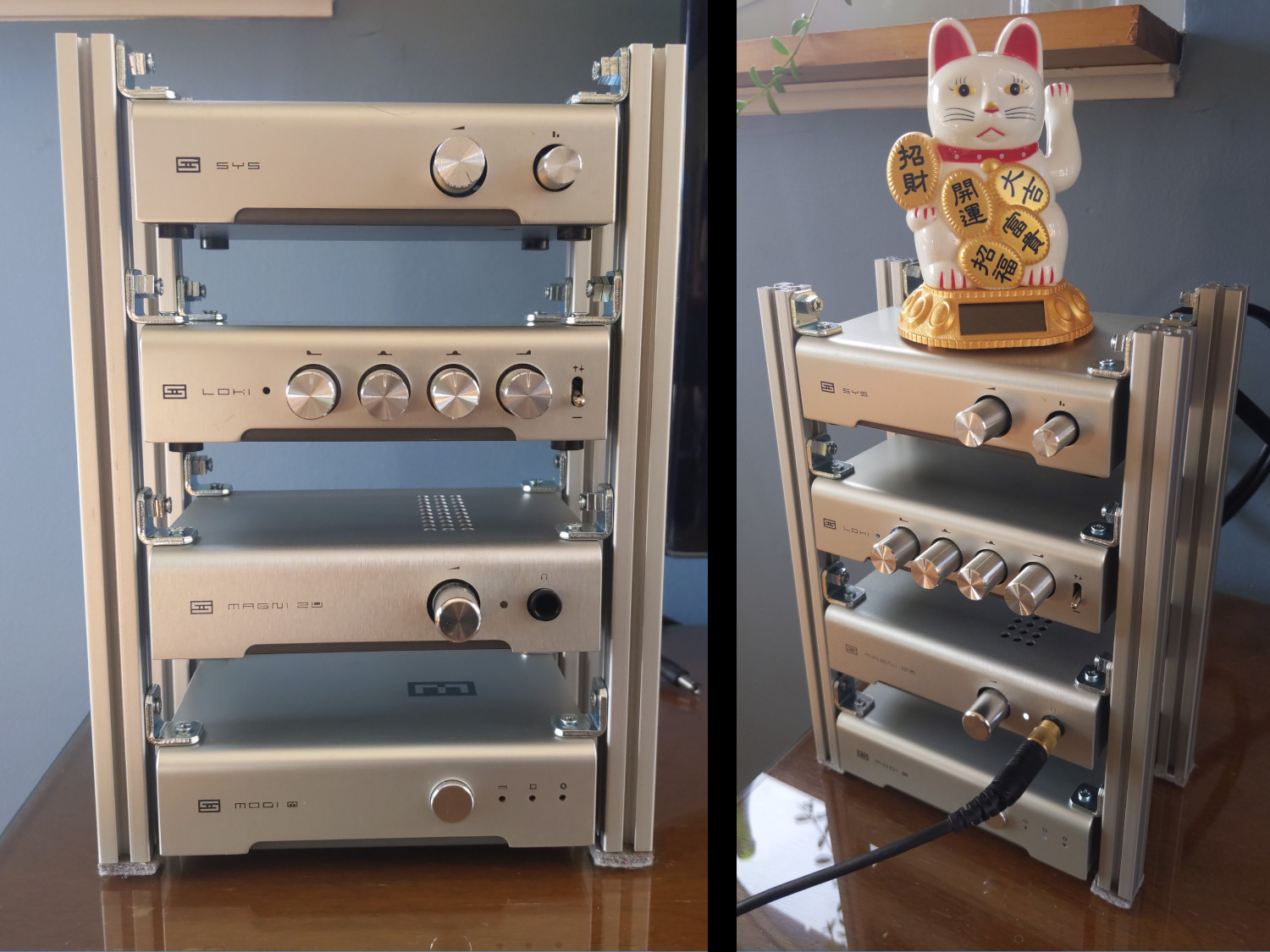 For the curious ones, the cabling is done this way:

 My impression of that city from couple of visits at that point in time where they were still more tongas (horse-ridden carriages), an occasional two wheelers and not many three wheelers. Although, it was one of the more turbulent times as lot of agitation for worker rights were happening around that time and a lot of
 So the last three stories I found the most intriguing.
The first one is titled Man on the Beach. Apparently, a gentleman goes to one of the beaches, a sort of lonely beach, hails a taxi and while returning suddenly dies. The Taxi driver showing good presence of mind takes it to hospital where the gentleman is declared dead on arrival. Unlike in India, he doesn t run away but goes to the cafeteria and waits there for the cops to arrive and take his statement. Now the man is in his early 40s and looks to be fit. Upon searching his pockets he is found to relatively well-off and later it turns out he owns a couple of shops. So then here are the questions ?
What was the man doing on a beach, in summer that beach is somewhat popular but other times not so much, so what was he doing there?
How did he die, was it a simple heart attack or something more? If he had been drugged or something then when and how?
These and more questions can be answered by reading the story Man on the Beach .
2. The death of a photographer Apparently, Kurt lives in a small town where almost all the residents have been served one way or the other by the town photographer. The man was polite and had worked for something like 40 odd years before he is killed/murdered. Apparently, he is murdered late at night. So here come the questions
a. The shop doesn t even stock any cameras and his cash box has cash. Further investigation reveals it is approximate to his average takeout for the day. So if it s not for cash, then what is the motive ?
b. The body was discovered by his cleaning staff who has worked for almost 20 years, 3 days a week. She has her own set of keys to come and clean the office? Did she give the keys to someone, if yes why?
c. Even after investigation, there is no scandal about the man, no other woman or any vices like gambling etc. that could rack up loans. Also, nobody seems to know him and yet take him for granted till he dies. The whole thing appears to be quite strange. Again, the answers lie in the book.
3. The Pyramid Kurt is sleeping one night when the telephone rings. The scene starts with a Piper Cherokee, a single piston aircraft flying low and dropping something somewhere or getting somebody from/on the coast of Sweden. It turns and after a while crashes. Kurt is called to investigate it. Turns out, the plane was supposed to be destroyed. On crash, both the pilot and the passenger are into pieces so only dental records can prove who they are. Same day or a day or two later, two seemingly ordinary somewhat elderly women, spinsters, by all accounts, live above the shop where they sell buttons and all kinds of sewing needs of the town. They seem middle-class. Later the charred bodies of the two sisters are found :(. So here come the questions
a.Did the plane drop something or pick something somebody up ? The Cherokee is a small plane so any plane field or something it could have landed up or if a place was somehow marked then could be dropped or picked up without actually landing.
b. The firefighter suspects arson started at multiple places with the use of petrol? The question is why would somebody wanna do that? The sisters don t seem to be wealthy and practically everybody has bought stuff from them. They weren t popular but weren t also unpopular.
c. Are the two crimes connected or unconnected? If connected, then how?
d. Most important question, why the title Pyramid is given to the story. Why does the author share the name Pyramid. Does he mean the same or the original thing? He could have named it triangle. Again, answers to all the above can be found in the book.
One thing I also became very aware of during reading the book that it is difficult to understand people s behavior and what they do. And this is without even any criminality involved in. Let s say for e.g. I die in some mysterious circumstances, the possibility of the police finding my actions in last days would be limited and this is when I have hearing loss. And this probably is more to do with how our minds are wired. And most people I know are much more privacy conscious/aware than I am.




 https://github.com/abbbi/trktor