Search Results: "ina"

21 April 2022

Andy Simpkins: Firmware and Debian

There has been a flurry of activity on the Debian mailing lists ever since Steve McIntyre raised the issue of including non-free firmware as part of official Debian installation images. Firstly I should point out that I am in complete agreement with Steve s proposal to include non-free firmware as part of an installation image. Likewise I think that we should have a separate archive section for firmware. Because without doing so it will soon become almost impossible to install onto any new hardware. However, as always the issue is more nuanced than a first glance would suggest. Lets start by defining what is firmware? Firmware is any software that runs outside the orchestration of the operating system. Typically firmware will be executed on a processor(s) separate from the processor(s) running the OS, but this does not need to be the case. As Debian we are content that our systems can operate using fully free and open source software and firmware. We can install our OS without needing any non-free firmware. This is an illusion! Each and every PC platform contains non-free firmware It may be possible to run free firmware on some Graphics controllers, Wi-Fi chip-sets, or Ethernet cards and we can (and perhaps should) choose to spend our money on systems where this is the case. When installing a new system we might still be forced to hold our nose and install with non-free firmware on the peripheral before we are able to upgrade it to FLOSS firmware later if this is exists or is even possible to do so. However after the installation we are running a full FLOSS system in terms of software and firmware. We all (almost without exception) are running propitiatory firmware whether we like it or not. Even after carefully selecting graphics and network hardware with FLOSS firmware options we still haven t escaped from non-free-firmware. Other peripherals contain firmware too each keyboard, disk (SSDs and Spinning rust). Even your USB memory stick that you use to contain the Debian installation image contains a microcontroller and hence also contains firmware that runs on it.
  1. Much of this firmware can not even be updated.
  2. Some can be updated, but is stored in FLASH ROM and the hardware vendor has defeated all programming methods (possibly circumnavigated with a hardware mod).
  3. Some of it can be updated but requires external device programmers (and often the programming connections are a series of test points dotted around the board and not on a header in order to make programming as difficult as possible).
  4. Sometimes the firmware can be updated from within the host operating system (i.e. Debian)
  5. Sometimes, as Steve pointed out in his post, the hardware vendor has enough firmware on a peripheral to perform basic functions perhaps enough to install the OS, but requires additional firmware to enable specific feature (i.e. higher screen resolutions, hardware accelerated functions etc.)
  6. Finally some vendors don t even bother with any non-volatile storage beyond a basic boot loader and firmware must be loaded before the device can be used in any mode.
What about the motherboard? If we are lucky we might be able to run a FLOSS implementation of the UEFI subsystem (edk2/tianocore for example), indeed the non AMD64/i386 platforms based around ARM, MIPS architectures are often the most free when it comes to firmware. What about the microcode on the processor? Personally I wasn t aware that that this was updatable firmware until the Spectre and Meltdown classes of vulnerabilities arose a few years back. So back to Debian images including non-free firmware. This is specifically to address the last two use cases mentioned above, i.e. where firmware needs to be loaded to achieve a minimum functioning of a device. Although it could also include motherboard support, and microcode as well. As far as I can tell the proposal exists for several reasons: #1 Because some freely distributable firmware is required for more and more devices, in order to install Debian, or because whilst Debian can be installed a desktop environment can not be started or fully function #2 Because frankly it is less work to produce, test and maintain fewer installation images As someone who performs tests on our images, this clearly gets my vote :-) and perhaps most important of all.. #3 Because our least experienced users, and new users will download an official image and give up if things don t just work TM Steve s proposal option 5 would address theses issues and I fully support it. I would love to see separate repositories for firmware and firmware-none free. Additionally to accompany firmware non-free I would like to have information on what the firmware actually does. Can I run my hardware without it, what function(s) are limited without the firmware, better yet is there a FLOSS equivalent that I can load instead? Is this something that we can present in Debian installer? I would love not to require non-free firmware, but if I can t, I would love if DI would enable a user to make an informed choice as to what, if any, firmware is installed. Should we be requesting (requiring?) this information for any non-free firmware image that we carry in the archive? Finally lets consider firmware in the wider general case, not just the case where we need to load firmware from within Debian each and every boot. Personally I am annoyed whenever a hardware manufacturer has gone out of their way to prevent firmware updates. Lets face it software contains bugs, and we can assume that the software making up a firmware image will as well. Critical (security) vulnerabilities found in firmware, especially if this runs on the same processor(s) as the OS can impact on the wider system, not just the device itself. This will mean that, without updatable firmware, the hardware itself should be withdrawn from use whilst it would otherwise still function. By preventing firmware updates vendors are forcing early obsolescence in the hardware they sell, perhaps good for their bottom line, but certainly no good for users or the environment. Here I can practice what I preach. As an Electronic Engineer / Systems architect I have been beating the drum for In System Updatable firmware for ALL programmable devices in a system, be it a simple peripheral or a deeply embedded system. I can honestly say that over the last 20 years (yes I have been banging this particular drum for that long) I have had 100% success in arguing this case commercially. Having device programmers in R&D departments is one thing, but that is additional cost for production, and field service. Needing custom programming headers or even a bed of nails fixture to connect your target device to a programmer is more trouble than it is worth. Finally, the ability to update firmware in the field means that you can launch your product on schedule, make a sale and ship to a customer even if the first thing that you need to do is download an update. Offering that to any project manager will make you very popular indeed. So what if this firmware is non-free? As long as the firmware resides in non-volatile media without needing the OS to interact with it, we as a project don t need to carry it in our archives. And we as principled individuals can vote with our feet and wallets by choosing to purchase devices that have free firmware. But where that isn t an option, I ll take updatable but non-free firmware over non-free firmware that can not be updated any day of the week. Sure, the manufacture can choose to no longer support the firmware, and it is shocking how soon this happens often in the consumer market, the manufacture has withdrawn support for a product before it even reaches the end user (In which case we should boycott that manufacture in future until they either change their ways of go bust). But again if firmware can be updated in system that would at least allow the possibility of open firmware to arise. Indeed the only commercial case I have seen to argue against updatable firmware has been either for DRM, in which case good lets get rid of both, or for RF licence compliance, and even then it is tenuous because in this case the manufacture wants ISP for its own use right up until a device is shipped out the door, typically achived by blowing one time programmable fuse links .

20 April 2022

Russell Coker: Android Without Play

A while ago I was given a few reasonably high-end Android phones to give away. I gave two very nice phones to someone who looks after refugees so a couple of refugee families could make video calls to relatives. The third phone is a Huawei Nova 7i [1] which doesn t have the Google Play Store. The Nova 7i is a ridiculously powerful computer (8G of RAM in a phone!!!) but without the Google Play Store it s not much use to the average phone user. It has the HuaWei App Gallery which isn t as bad as most of the proprietary app stores of small players in the Android world, it has SnapChat, TikTok, Telegram, Alibaba, WeChat, and Grays auction (an app I didn t even know existed) along with many others. It also links to ApkPure (apparently a 3rd party app installer that obtains APK files for major commercial apps) for Facebook among others. The ApkPure thing might be Huawei outsourcing the violation of Facebook terms of service. For the moment I ve decided to only use free software on this phone and use my old phone for non-free stuff (Facebook, LinkedIn, etc). The eventual aim is that I can only carry a phone with free software for normal use and carry a second phone if I m active on LinkedIn or something. My recollection is that when I first got the phone (almost 2 years ago) it didn t have such a range of apps. The first thing to install was f-droid [2] as the app repository. F-droid has a repository of thousands of free software Android apps as well as some apps that are slightly less free which are tagged appropriately. You can install the F-Droid app from the web site. As an aside I had to go to settings and enable force old index format to get the list of packages, I don t know why as other phones had worked without it. Here are the F-Droid apps I installed: Future Plans The current main things I m missing are a calendar, a contact list, and a shared note taking system (like Google Keep). For calendaring and a contact list the CalDAV and CardDAV protocols seem best. The most common implementation on the server side appears to be DAViCal [5]. The Nextcloud system supports CalDAV, CardDAV, web editing of notes and documents (including LibreOffice if you install that plugin) [6]. But it is huge and demands write access to all it s own code (bad for security), and it s not packaged for Debian. Also in my tests it gave me an error 401 when I tried to authenticate to it from the Android Nextcloud client. I ve seen a positive review about Radicale, a simple CalDAV and CardDAV server that doesn t need a database [7]. I prefer the Unix philosophy of keeping things simple with file storage unless there s a real need for anything else. I don t think that anything I ever do with calendaring will require the PostgreSQL database that DAViCal uses. I ll give Radicale a go for CalDAV and CardDAV, but I still need something for shared notes (shopping lists etc). Suggestions welcome. Current Status Lack of a contacts list is a major loss of functionality in a phone. I could store contacts in the phone memory or on the SIM, but I would still have to get all my old contacts in there and also getting something half working reduces motivation for getting it working properly. Lack of a calendar is also a problem, again I could work around that by exporting all my Google calendars as iCal URLs but I d rather get it working correctly. The lack of shared notes may be a harder problem to solve given the failure of Nextcloud. For that I would consider just having the keep.google.com web site always open in Mozilla at least in the short term. At the moment I require two phones, my new Android phone without Google and the old one for my contacts list etc. Hopefully in a week or so I ll have my new phone doing contacts, calendaring, and notes. Then my old phone will just be for proprietary apps which I don t need most of the time and I can leave it at home when I don t need that sort of thing.

Petter Reinholdtsen: geteltorito make CD firmware upgrades a breeze

Recently I wanted to upgrade the firmware of my thinkpad, and located the firmware download page from Lenovo (which annoyingly do not allow access via Tor, forcing me to hand them more personal information that I would like). The download from Lenovo is a bootable ISO image, which is a bit of a problem when all I got available is a USB memory stick. I tried booting the ISO as a USB stick, but this did not work. But genisoimage came to the rescue. The geteltorito program in the genisoimage binary package is able to convert the bootable ISO image to a bootable USB stick using a simple command line recipe, which I then can write to the most recently inserted USB stick:
geteltorito -o usbstick.img lenovo-firmware.iso
sudo dd bs=10M if=usbstick.img of=$(ls -tr /dev/sd? tail -1)
This USB stick booted the firmware upgrader just fine, and in a few minutes my machine had the latest and greatest BIOS firmware in place.

19 April 2022

Steve McIntyre: Firmware - what are we going to do about it?

TL;DR: firmware support in Debian sucks, and we need to change this. See the "My preference, and rationale" Section below. In my opinion, the way we deal with (non-free) firmware in Debian is a mess, and this is hurting many of our users daily. For a long time we've been pretending that supporting and including (non-free) firmware on Debian systems is not necessary. We don't want to have to provide (non-free) firmware to our users, and in an ideal world we wouldn't need to. However, it's very clearly no longer a sensible path when trying to support lots of common current hardware. Background - why has (non-free) firmware become an issue? Firmware is the low-level software that's designed to make hardware devices work. Firmware is tightly coupled to the hardware, exposing its features, providing higher-level functionality and interfaces for other software to use. For a variety of reasons, it's typically not Free Software. For Debian's purposes, we typically separate firmware from software by considering where the code executes (does it run on a separate processor? Is it visible to the host OS?) but it can be difficult to define a single reliable dividing line here. Consider the Intel/AMD CPU microcode packages, or the U-Boot firmware packages as examples. In times past, all necessary firmware would normally be included directly in devices / expansion cards by their vendors. Over time, however, it has become more and more attractive (and therefore more common) for device manufacturers to not include complete firmware on all devices. Instead, some devices just embed a very simple set of firmware that allows for upload of a more complete firmware "blob" into memory. Device drivers are then expected to provide that blob during device initialisation. There are a couple of key drivers for this change: Due to these reasons, more and more devices in a typical computer now need firmware to be uploaded at runtime for them to function correctly. This has grown: At the beginning of this timeline, a typical Debian user would be able to use almost all of their computer's hardware without needing any firmware blobs. It might have been inconvenient to not be able to use the WiFi, but most laptops had wired ethernet anyway. The WiFi could always be enabled and configured after installation. Today, a user with a new laptop from most vendors will struggle to use it at all with our firmware-free Debian installation media. Modern laptops normally don't come with wired ethernet now. There won't be any usable graphics on the laptop's screen. A visually-impaired user won't get any audio prompts. These experiences are not acceptable, by any measure. There are new computers still available for purchase today which don't need firmware to be uploaded, but they are growing less and less common. Current state of firmware in Debian For clarity: obviously not all devices need extra firmware uploading like this. There are many devices that depend on firmware for operation, but we never have to think about them in normal circumstances. The code is not likely to be Free Software, but it's not something that we in Debian must spend our time on as we're not distributing that code ourselves. Our problems come when our user needs extra firmware to make their computer work, and they need/expect us to provide it. We have a small set of Free firmware binaries included in Debian main, and these are included on our installation and live media. This is great - we all love Free Software and this works. However, there are many more firmware binaries that are not Free. If we are legally able to redistribute those binaries, we package them up and include them in the non-free section of the archive. As Free Software developers, we don't like providing or supporting non-free software for our users, but we acknowledge that it's sometimes a necessary thing for them. This tension is acknowledged in the Debian Free Software Guidelines. This tension extends to our installation and live media. As non-free is officially not considered part of Debian, our official media cannot include anything from non-free. This has been a deliberate policy for many years. Instead, we have for some time been building a limited parallel set of "unofficial non-free" images which include non-free firmware. These non-free images are produced by the same software that we use for the official images, and by the same team. There are a number of issues here that make developers and users unhappy:
  1. Building, testing and publishing two sets of images takes more effort.
  2. We don't really want to be providing non-free images at all, from a philosophy point of view. So we mainly promote and advertise the preferred official free images. That can be a cause of confusion for users. We do link to the non-free images in various places, but they're not so easy to find.
  3. Using non-free installation media will cause more installations to use non-free software by default. That's not a great story for us, and we may end up with more of our users using non-free software and believing that it's all part of Debian.
  4. A number of users and developers complain that we're wasting their time by publishing official images that are just not useful for a lot (a majority?) of users.
We should do better than this. Options The status quo is a mess, and I believe we can and should do things differently. I see several possible options that the images team can choose from here. However, several of these options could undermine the principles of Debian. We don't want to make fundamental changes like that without the clear backing of the wider project. That's why I'm writing this...
  1. Keep the existing setup. It's horrible, but maybe it's the best we can do? (I hope not!)
  2. We could just stop providing the non-free unofficial images altogether. That's not really a promising route to follow - we'd be making it even harder for users to install our software. While ideologically pure, it's not going to advance the cause of Free Software.
  3. We could stop pretending that the non-free images are unofficial, and maybe move them alongside the normal free images so they're published together. This would make them easier to find for people that need them, but is likely to cause users to question why we still make any images without firmware if they're otherwise identical.
  4. The images team technically could simply include non-free into the official images, and add firmware packages to the input lists for those images. However, that would still leave us with problem 3 from above (non-free generally enabled on most installations).
  5. We could split out the non-free firmware packages into a new non-free-firmware component in the archive, and allow a specific exception only to allow inclusion of those packages on our official media. We would then generate only one set of official media, including those non-free firmware packages. (We've already seen various suggestions in recent years to split up the non-free component of the archive like this, for example into non-free-firmware, non-free-doc, non-free-drivers, etc. Disagreement (bike-shedding?) about the split caused us to not make any progress on this. I believe this project should be picked up and completed. We don't have to make a perfect solution here immediately, just something that works well enough for our needs today. We can always tweak and improve the setup incrementally if that's needed.)
These are the most likely possible options, in my opinion. If you have a better suggestion, please let us know! I'd like to take this set of options to a GR, and do it soon. I want to get a clear decision from the wider Debian project as to how to organise firmware and installation images. If we do end up changing how we do things, I want a clear mandate from the project to do that. My preference, and rationale Mainly, I want to see how the project as a whole feels here - this is a big issue that we're overdue solving. What would I choose to do? My personal preference would be to go with option 5: split the non-free firmware into a special new component and include that on official media. Does that make me a sellout? I don't think so. I've been passionately supporting and developing Free Software for more than half my life. My philosophy here has not changed. However, this is a complex and nuanced situation. I firmly believe that sharing software freedom with our users comes with a responsibility to also make our software useful. If users can't easily install and use Debian, that helps nobody. By splitting things out here, we would enable users to install and use Debian on their hardware, without promoting/pushing higher-level non-free software in general. I think that's a reasonable compromise. This is simply a change to recognise that hardware requirements have moved on over the years. Further work If we do go with the changes in option 5, there are other things we could do here for better control of and information about non-free firmware:
  1. Along with adding non-free firmware onto media, when the installer (or live image) runs, we should make it clear exactly which firmware packages have been used/installed to support detected hardware. We could link to docs about each, and maybe also to projects working on Free re-implementations.
  2. Add an option at boot to explicitly disable the use of the non-free firmware packages, so that users can choose to avoid them.
Acknowledgements Thanks to people who reviewed earlier versions of this document and/or made suggestions for improvement, in particular:

17 April 2022

Matthew Garrett: The Freedom Phone is not great at privacy

The Freedom Phone advertises itself as a "Free speech and privacy first focused phone". As documented on the features page, it runs ClearOS, an Android-based OS produced by Clear United (or maybe one of the bewildering array of associated companies, we'll come back to that later). It's advertised as including Signal, but what's shipped is not the version available from the Signal website or any official app store - instead it's this fork called "ClearSignal".

The first thing to note about ClearSignal is that the privacy policy link from that page 404s, which is not a great start. The second thing is that it has a version number of 5.8.14, which is strange because upstream went from 5.8.10 to 5.9.0. The third is that, despite Signal being GPL 3, there's no source code available. So, I grabbed jadx and started looking for differences between ClearSignal and the upstream 5.8.10 release. The results were, uh, surprising.

First up is that they seem to have integrated ACRA, a crash reporting framework. This feels a little odd - in the absence of a privacy policy, it's unclear what information this gathers or how it'll be stored. Having a piece of privacy software automatically uploading information about what you were doing in the event of a crash with no notification other than a toast that appears saying "Crash Report" feels a little dubious.

Next is that Signal (for fairly obvious reasons) warns you if your version is out of date and eventually refuses to work unless you upgrade. ClearSignal has dealt with this problem by, uh, simply removing that code. The MacOS version of the desktop app they provide for download seems to be derived from a release from last September, which for an Electron-based app feels like a pretty terrible idea. Weirdly, for Windows they link to an official binary release from February 2021, and for Linux they tell you how to use the upstream repo properly. I have no idea what's going on here.

They've also added support for network backups of your Signal data. This involves the backups being pushed to an S3 bucket using credentials that are statically available in the app. It's ok, though, each upload has some sort of nominally unique identifier associated with it, so it's not trivial to just download other people's backups. But, uh, where does this identifier come from? It turns out that Clear Center, another of the Clear family of companies, employs a bunch of people to work on a ClearID[1], some sort of decentralised something or other that seems to be based on KERI. There's an overview slide deck here which didn't really answer any of my questions and as far as I can tell this is entirely lacking any sort of peer review, but hey it's only the one thing that stops anyone on the internet being able to grab your Signal backups so how important can it be.

The final thing, though? They've extended Signal's invitation support to encourage users to get others to sign up for Clear United. There's an exposed API endpoint called "get_user_email_by_mobile_number" which does exactly what you'd expect - if you give it a registered phone number, it gives you back the associated email address. This requires no authentication. But it gets better! The API to generate a referral link to send to others sends the name and phone number of everyone in your phone's contact list. There does not appear to be any indication that this is going to happen.

So, from a privacy perspective, going to go with things being some distance from ideal. But what's going on with all these Clear companies anyway? They all seem to be related to Michael Proper, who founded the Clear Foundation in 2009. They are, perhaps unsurprisingly, heavily invested in blockchain stuff, while Clear United also appears to be some sort of multi-level marketing scheme which has a membership agreement that includes the somewhat astonishing claim that:

Specifically, the initial focus of the Association will provide members with supplements and technologies for:

9a. Frequency Evaluation, Scans, Reports;

9b. Remote Frequency Health Tuning through Quantum Entanglement;

9c. General and Customized Frequency Optimizations;


- there's more discussion of this and other weirdness here. Clear Center, meanwhile, has a Chief Physics Officer? I have a lot of questions.

Anyway. We have a company that seems to be combining blockchain and MLM, has some opinions about Quantum Entanglement, bases the security of its platform on a set of novel cryptographic primitives that seem to have had no external review, has implemented an API that just hands out personal information without any authentication and an app that appears more than happy to upload all your contact details without telling you first, has failed to update this app to keep up with upstream security updates, and is violating the upstream license. If this is their idea of "privacy first", I really hate to think what their code looks like when privacy comes further down the list.

[1] Pointed out to me here

comment count unavailable comments

14 April 2022

Reproducible Builds: Supporter spotlight: Amateur Radio Digital Communications (ARDC)

The Reproducible Builds project relies on several projects, supporters and sponsors for financial support, but they are also valued as ambassadors who spread the word about the project and the work that we do. This is the third instalment in a series featuring the projects, companies and individuals who support the Reproducible Builds project. If you are a supporter of the Reproducible Builds project (of whatever size) and would like to be featured here, please let get in touch with us at contact@reproducible-builds.org. We started this series by featuring the Civil Infrastructure Platform project and followed this up with a post about the Ford Foundation. Today, however, we ll be talking with Dan Romanchik, Communications Manager at Amateur Radio Digital Communications (ARDC).
Chris Lamb: Hey Dan, it s nice to meet you! So, for someone who has not heard of Amateur Radio Digital Communications (ARDC) before, could you tell us what your foundation is about? Dan: Sure! ARDC s mission is to support, promote, and enhance experimentation, education, development, open access, and innovation in amateur radio, digital communication, and information and communication science and technology. We fulfill that mission in two ways:
  1. We administer an allocation of IP addresses that we call 44Net. These IP addresses (in the 44.0.0.0/8 IP range) can only be used for amateur radio applications and experimentation.
  2. We make grants to organizations whose work aligns with our mission. This includes amateur radio clubs as well as other amateur radio-related organizations and activities. Additionally, we support scholarship programs for people who either have an amateur radio license or are pursuing careers in technology, STEM education and open-source software development projects that fit our mission, such as Reproducible Builds.
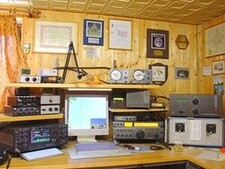
Chris: How might you relate the importance of amateur radio and similar technologies to someone who is non-technical? Dan: Amateur radio is important in a number of ways. First of all, amateur radio is a public service. In fact, the legal name for amateur radio is the Amateur Radio Service, and one of the primary reasons that amateur radio exists is to provide emergency and public service communications. All over the world, amateur radio operators are prepared to step up and provide emergency communications when disaster strikes or to provide communications for events such as marathons or bicycle tours. Second, amateur radio is important because it helps advance the state of the art. By experimenting with different circuits and communications techniques, amateurs have made significant contributions to communications science and technology. Third, amateur radio plays a big part in technical education. It enables students to experiment with wireless technologies and electronics in ways that aren t possible without a license. Amateur radio has historically been a gateway for young people interested in pursuing a career in engineering or science, such as network or electrical engineering. Fourth and this point is a little less obvious than the first three amateur radio is a way to enhance international goodwill and community. Radio knows no boundaries, of course, and amateurs are therefore ambassadors for their country, reaching out to all around the world. Beyond amateur radio, ARDC also supports and promotes research and innovation in the broader field of digital communication and information and communication science and technology. Information and communication technology plays a big part in our lives, be it for business, education, or personal communications. For example, think of the impact that cell phones have had on our culture. The challenge is that much of this work is proprietary and owned by large corporations. By focusing on open source work in this area, we help open the door to innovation outside of the corporate landscape, which is important to overall technological resiliency.
Chris: Could you briefly outline the history of ARDC? Dan: Nearly forty years ago, a group of visionary hams saw the future possibilities of what was to become the internet and requested an address allocation from the Internet Assigned Numbers Authority (IANA). That allocation included more than sixteen million IPv4 addresses, 44.0.0.0 through 44.255.255.255. These addresses have been used exclusively for amateur radio applications and experimentation with digital communications techniques ever since. In 2011, the informal group of hams administering these addresses incorporated as a nonprofit corporation, Amateur Radio Digital Communications (ARDC). ARDC is recognized by IANA, ARIN and the other Internet Registries as the sole owner of these addresses, which are also known as AMPRNet or 44Net. Over the years, ARDC has assigned addresses to thousands of hams on a long-term loan (essentially acting as a zero-cost lease), allowing them to experiment with digital communications technology. Using these IP addresses, hams have carried out some very interesting and worthwhile research projects and developed practical applications, including TCP/IP connectivity via radio links, digital voice, telemetry and repeater linking. Even so, the amateur radio community never used much more than half the available addresses, and today, less than one third of the address space is assigned and in use. This is one of the reasons that ARDC, in 2019, decided to sell one quarter of the address space (or approximately 4 million IP addresses) and establish an endowment with the proceeds. This endowment now funds ARDC s a suite of grants, including scholarships, research projects, and of course amateur radio projects. Initially, ARDC was restricted to awarding grants to organizations in the United States, but is now able to provide funds to organizations around the world.

Chris: How does the Reproducible Builds effort help ARDC achieve its goals? Dan: Our aspirational goals include: We think that the Reproducible Builds efforts in helping to ensure the safety and security of open source software closely align with those goals.
Chris: Are there any specific success stories that ARDC is particularly proud of? Dan: We are really proud of our grant to the Hoopa Valley Tribe in California. With a population of nearly 2,100, their reservation is the largest in California. Like everywhere else, the COVID-19 pandemic hit the reservation hard, and the lack of broadband internet access meant that 130 children on the reservation were unable to attend school remotely. The ARDC grant allowed the tribe to address the immediate broadband needs in the Hoopa Valley, as well as encourage the use of amateur radio and other two-way communications on the reservation. The first nation was able to deploy a network that provides broadband access to approximately 90% of the residents in the valley. And, in addition to bringing remote education to those 130 children, the Hoopa now use the network for remote medical monitoring and consultation, adult education, and other applications. Other successes include our grants to:

Chris: ARDC supports a number of other existing projects and initiatives, not all of them in the open source world. How much do you feel being a part of the broader free culture movement helps you achieve your aims? Dan: In general, we find it challenging that most digital communications technology is proprietary and closed-source. It s part of our mission to fund open source alternatives. Without them, we are solely reliant, as a society, on corporate interests for our digital communication needs. It makes us vulnerable and it puts us at risk of increased surveillance. Thus, ARDC supports open source software wherever possible, and our grantees must make a commitment to share their work under an open source license or otherwise make it as freely available as possible.
Chris: Thanks so much for taking the time to talk to us today. Now, if someone wanted to know more about ARDC or to get involved, where might they go to look? To learn more about ARDC in general, please visit our website at https://www.ampr.org. To learn more about 44Net, go to https://wiki.ampr.org/wiki/Main_Page. And, finally, to learn more about our grants program, go to https://www.ampr.org/apply/

For more about the Reproducible Builds project, please see our website at reproducible-builds.org. If you are interested in ensuring the ongoing security of the software that underpins our civilisation and wish to sponsor the Reproducible Builds project, please reach out to the project by emailing contact@reproducible-builds.org.

Jonathan Dowland: hledger

This year I've decided to bite the bullet and properly try out hledger for personal accounting. It seems I need to commit to it properly if I'm to figure out whether it will work for me or not. Up until now I'd been strictly separating my finances into two buckets: family and personal. I'd been using GNUCash for a couple of years for my personal finances, initially to evaluate it for use for the family, but I had not managed to adopt it for that. I set up a new git repository to track the ledger file, as well as a notes.txt "diary" that documents my planning around its structure and how to use it, and a import.txt which documents what account data I have imported and confirmed that the resulting balances match those reported on monthly statements. For this evaluation, I decided to bite the bullet and track both family and personal finances at the same time. I'm still keeping them conceptually very separate. To reflect that I've organised my account names around that: all accounts relating to family are prefixed family:, and likewise personal jon:.1 Some example accounts:
family:assets:shared    - shared bank account
family:dues:jon         - I owe to family
family:expenses:cat     - budget category for the cat
income                  - where money enters this universe
jon:assets:current      - my personal account
jon:dues:peter          - money Peter owes me
jon:expenses:snacks     - budget category for coffees etc
jon:liabilities:amex    - a personal credit card
I decided to make the calendar year a strict cut-over point: my personal opening balances in hledger are determined by what GNUCash reports. It's possible those will change over this year, as adjustments are made to last year's data: but it's easy enough to go in and update the opening balances in hledger to reflect that. Credit cards are a small exception. January's credit card bills are paid in January but cover transactions from mid-December. I import those transactions into hledger to balance the credit card payment. As a consequence, the "spend per month" view of my data is a bit skewed: All the transactions in December should be thought of as in January since that's when they were paid. I need to explore options to fix this. When I had family and personal managed separately, occasionally something would be paid for on the wrong card and end up in the wrong data. The solution I used last year was to keep an account dues:family to which I posted those and periodically I'd settle it with a real-world bank transfer. I've realised that this doesn't work so well when I manage both together: I can't track both dues and expense categorisation with just one posting. The solution I'm using for now is hledger's unbalanced virtual postings: a third posting for the transaction to the budget category, which is not balanced, e.g.:
2022-01-02 ZTL*RELISH
    family:liabilities:creditcard        -3.00
    family:dues:jon                       3.00
    (jon:expenses:snacks)                 3.00
This works, but it completely side-steps double-entry book keeping, which is the whole point of using a double-entry system. There's also no check and balance that the figure I put in the virtual posting ( 3) matches the figure in the rest of the transaction. I'm therefore open to other ideas.

  1. there are a couple of places in hledger where default account names are used, such as the default place that expenses are posted to during CSV imports: expenses:unknown, that obviously don't fit my family/jon: prefix scheme. The solution is to make sure I specify a default posting-to account in all my CSV import rules.

Dirk Eddelbuettel: drat 0.2.3 on CRAN: Arm M1 Support

drat user A new minor release of drat arrived on CRAN today. drat stands for drat R Archive Template, and helps with easy-to-create and easy-to-use repositories for R packages. Since its inception in early 2015 it has found widespread adoption among R users because repositories with marked releases is the better way to distribute code. See below for a few custom reference examples. Because for once it really is as your mother told you: Friends don t let friends install random git commit snapshots. Properly rolled-up releases it is. Just how CRAN shows us: a model that has demonstrated for two-plus decades how to do this. And you can too: drat is easy to use, documented by six vignettes and just works. Detailed information about drat is at its documentation site. This release adds support for the macOS Arm M1 architecture, initially supplied in a PR last fall and now finalized with additional tests. The NEWS file summarises the release as follows:
Changes in drat version 0.2.3 (2022-04-13)
  • Arm M1 repos are now supported (#126 and #131 fixing #125)
  • A vignette typo has been fixed (#130)

Courtesy of my CRANberries, there is a comparison to the previous release. More detailed information is on the drat page as well as at the documentation site. If you like this or other open-source work I do, you can now sponsor me at GitHub.

This post by Dirk Eddelbuettel originated on his Thinking inside the box blog. Please report excessive re-aggregation in third-party for-profit settings.

13 April 2022

Jonathan Dowland: Another Green World

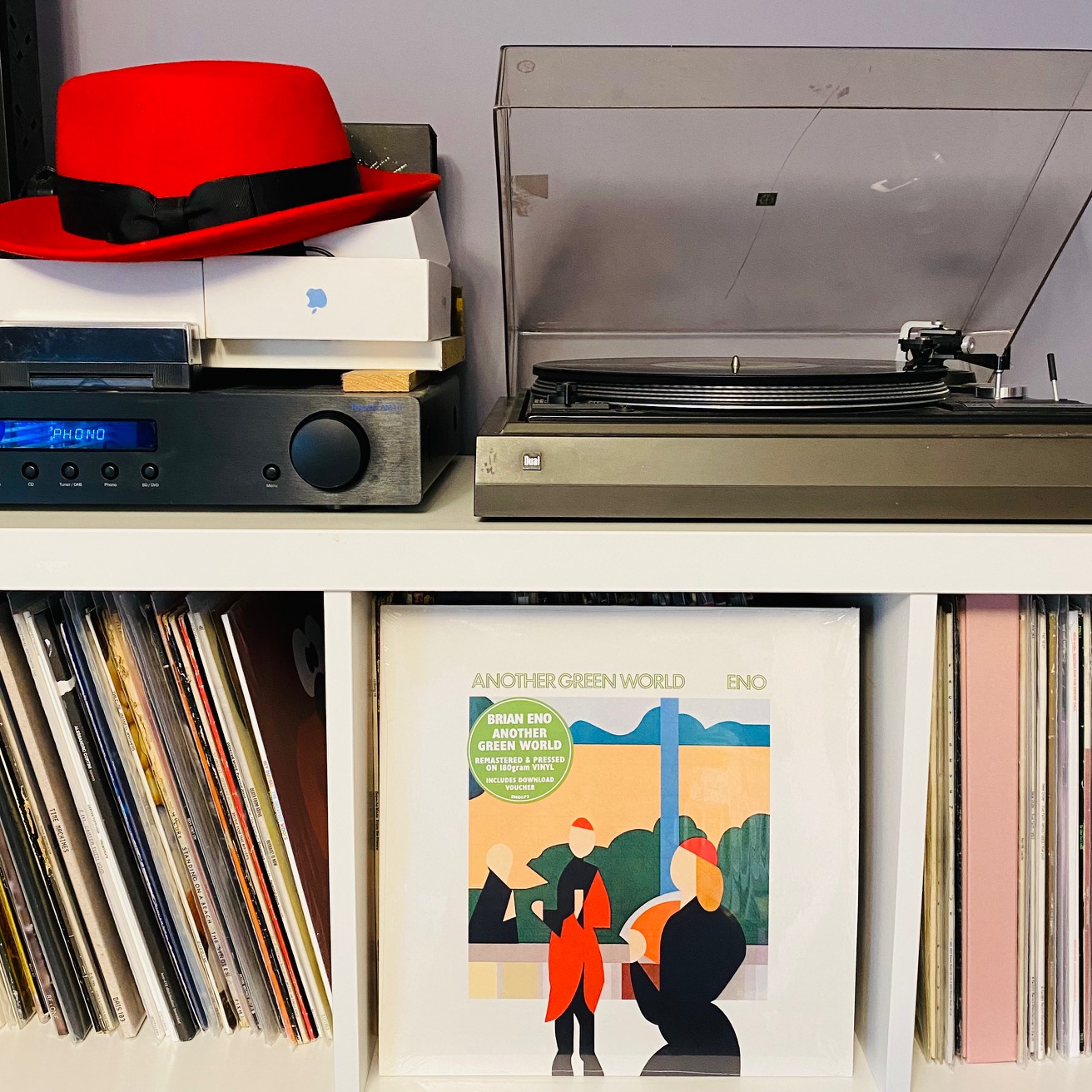
Brian Eno's classic 1975 album Another Green World, with the iconic cover crop from Tom Philip's After Raphael. This is a recent pressing. I try to avoid buying new vinyl, and I think I got this as part of a trade-in swap two years ago when I went to get one of my first Covid vaccinations in Newcastle. It was the first time I'd been anywhere near a record shop (which was adjacent to the temporary vaccine centre) in a year or more, and I took the opportunity to bring in some records to sell. I definitely left with fewer records than I went in with, at least
Another Green World on the turntable
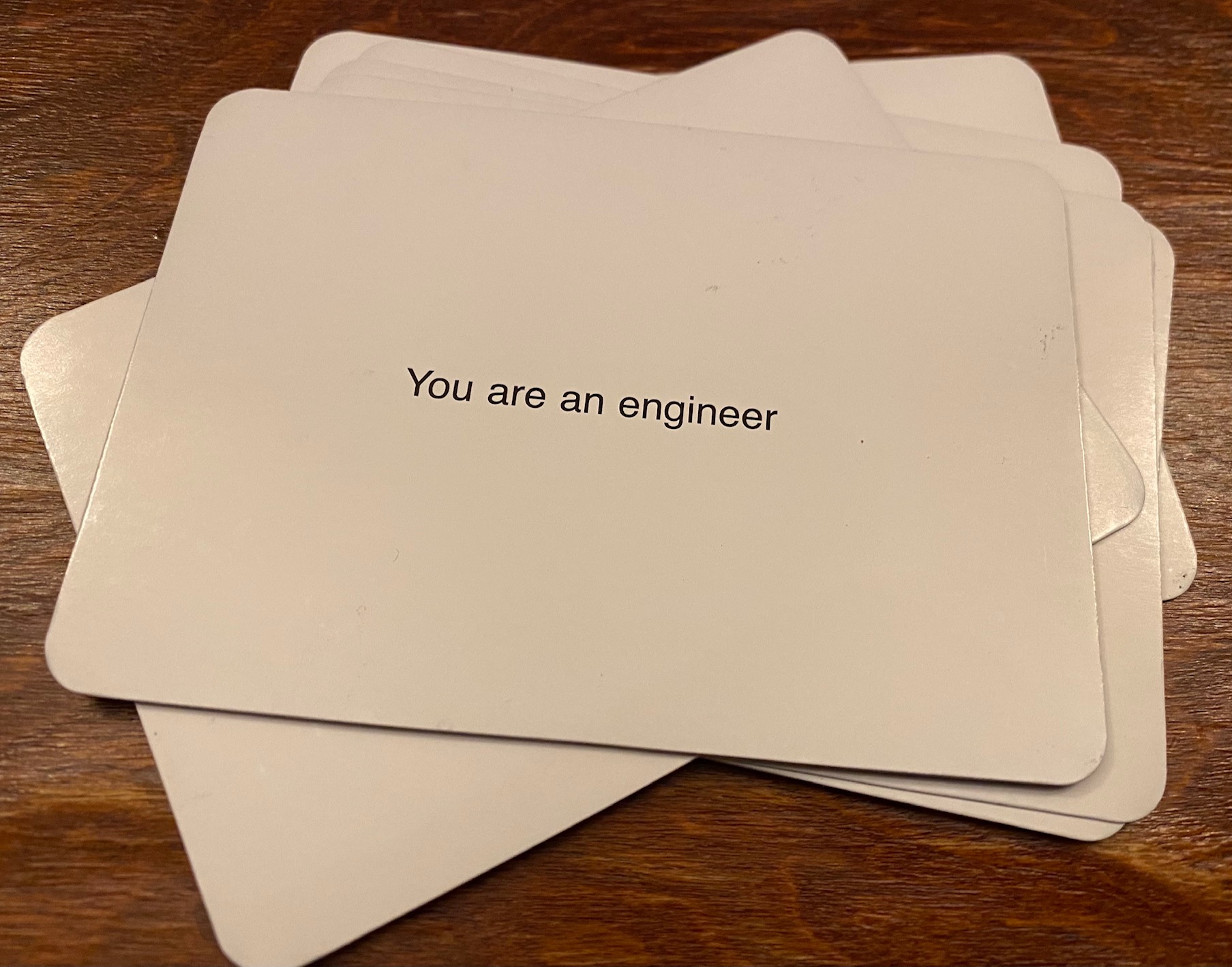
What to say about this album? It's a classic, it's weirdly compelling, it dances over the line between engaging your attention and something you can have on in the background. Many of the tracks are quite short relative to the ideas they express: I imagine some remixer could have a lot of fun with it. The Big Ship is perhaps the standout, but I really like the title track, and opener Sky Saw too. It's probably the first album written using using the oblique strategies card system.
Card reading 'You are an Engineer'

12 April 2022

Sven Hoexter: Emulating Raspi2 like hardware with RaspiOS in 2022

Update of my notes from 2020.
# Download a binary device tree file and matching kernel a good soul uploaded to github
wget https://github.com/vfdev-5/qemu-rpi2-vexpress/raw/master/kernel-qemu-4.4.1-vexpress
wget https://github.com/vfdev-5/qemu-rpi2-vexpress/raw/master/vexpress-v2p-ca15-tc1.dtb
# Download the official Rasbian image without X
wget https://downloads.raspberrypi.org/raspios_lite_armhf/images/raspios_lite_armhf-2022-04-07/2022-04-04-raspios-bullseye-armhf-lite.img.xz
unxz 2022-04-04-raspios-bullseye-armhf-lite.img.xz
# Convert it from the raw image to a qcow2 image and add some space
qemu-img convert -f raw -O qcow2 2022-04-04-raspios-bullseye-armhf-lite.img rasbian.qcow2
qemu-img resize rasbian.qcow2 4G
# make sure we get a user account setup
echo "me:$(echo 'test123' openssl passwd -6 -stdin)" > userconf
sudo guestmount -a rasbian.qcow2 -m /dev/sda1 /mnt
sudo mv userconf /mnt
sudo guestunmount /mnt
# start qemu
qemu-system-arm -m 2048M -M vexpress-a15 -cpu cortex-a15 \
 -kernel kernel-qemu-4.4.1-vexpress -no-reboot \
 -smp 2 -serial stdio \
 -dtb vexpress-v2p-ca15-tc1.dtb -sd rasbian.qcow2 \
 -append "root=/dev/mmcblk0p2 rw rootfstype=ext4 console=ttyAMA0,15200 loglevel=8" \
 -nic user,hostfwd=tcp::5555-:22
# login at the serial console as user me with password test123
sudo -i
# enable ssh
systemctl enable ssh
systemctl start ssh
# resize partition and filesystem
parted /dev/mmcblk0 resizepart 2 100%
resize2fs /dev/mmcblk0p2
Now I can login via ssh and start to play:
ssh me@localhost -p 5555

11 April 2022

Jonathan Dowland: With Teeth

Sometimes people ask me which is the best entry point for Nine Inch Nails, and I have trouble answering. I've eventually decided that it's 2005's With Teeth.
Picture of 'With Teeth' playing on my turntable
I've pulled this from my pile of records to sell. Most Nine Inch Nails stuff seems to increase in value over time, and it's got to the stage that some of the ones in my collection are now valuable enough that I'm nervous to play them, which makes them a little pointless. A couple of years ago, a handful of the albums were re-issued (including With Teeth, here, and The Fragile, which hadn't been repressed since 1999). I had a vague plan to sell off my original pressings to someone who would appreciate them more and use the takings to buy the re-issues, but I didn't move fast enough, and now the re-issues are (for the most part) also sought-after.

10 April 2022

Dirk Eddelbuettel: RcppRedis 0.2.1: Maintenance

A month after the major release 0.2.0 bringing pub/sub and other goodies to our RcppRedis package, a new version 0.2.1 arrived on CRAN yesterday. RcppRedis is one of several packages connecting R to the fabulous Redis in-memory datastructure store (and much more). RcppRedis does not pretend to be feature complete, but it may do some things faster than the other interfaces, and also offers an optional coupling with MessagePack binary (de)serialization via RcppMsgPack. The package has carried production loads for several years now. This release updated the rredis suggestion by adding an Additional_repositories entry as Bryan decided to retire the rredis package. You can still install it via install.packages("rredis") by setting the addtional repo, for example repos=c("https://ghrr.github.io/drat", getOption("repos")) as documented in package and at our ghrr drat repo. The detailed changes list follows.

Changes in version 0.2.1 (2022-04-09)
  • The rredis package can be installed via the repo listed in Additional_repositories; the pubsub.R test file makes rredis optional and conditional; all demos now note that the optional rredis package is installable via the drat listed in Additional_repositories.
  • The fallback-compilation of hiredis has been forced to override compilation flags because CRAN knows better than upstream.
  • The GLOBEX pub/sub example has small updates.

Courtesy of CRANberries, there is also a diffstat report for this release. More information is on the RcppRedis page. If you like this or other open-source work I do, you can now sponsor me at GitHub.

This post by Dirk Eddelbuettel originated on his Thinking inside the box blog. Please report excessive re-aggregation in third-party for-profit settings.

8 April 2022

Dirk Eddelbuettel: RcppEigen 0.3.3.9.2 on CRAN: Maintenance

A new release 0.3.3.9.2 of RcppEigen arrived on CRAN today (and already went to Debian). Eigen is a C++ template library for linear algebra: matrices, vectors, numerical solvers, and related algorithms. This update was (as it happens) requested by CRAN as R aims to bring the Fortran / C interface to best practices. We call dgesdd twice in one example and use a character argument, and the-powers-that-be now prefer better control over that character argument. So we did. Another change, kindly contributed by Mikael Jagan, switches row and column indices for R_xlen_t allowing for greater range. Plus some more small tweaks mostly to CI, see the NEWS entry below for full details. And again as we said for the previous three releases:
One additional and recent change was the accomodation of a recent CRAN Policy change to not allow gcc or clang to mess with diagnostic messages. A word of caution: this may make your compilation of packages using RcppEigen very noisy so consider adding -Wno-ignored-attributes to the compiler flags added in your ~/.R/Makevars.
We still find this requirement rather annoying. Eigen is only usable if you set, say,
-Wno-deprecated-declarations -Wno-parentheses -Wno-ignored-attributes -Wno-unused-function
asoptions in~/.R/Makevars . But CRAN makes the rules. Maybe if a few of us gently and politely nudge them they may relent one day. One can only hope. The complete NEWS file entry follows.

Changes in RcppEigen version 0.3.3.9.2 (2022-04-05)
  • Added test coverage in continuous integration
  • Added new tests to increase test coverage
  • Small improvement to the RcppEigen.package.skeleton() code
  • Small updates and edits to README.md and inst/CITATION
  • Use R_xlen_t for vector rows and columns (by Mikael Jagan)
  • Support USE_FC_LEN_T by adding FCONE to two dgesdd calls

Courtesy of CRANberries, there is also a diffstat report for the most recent release. If you like this or other open-source work I do, you can sponsor me at GitHub.

This post by Dirk Eddelbuettel originated on his Thinking inside the box blog. Please report excessive re-aggregation in third-party for-profit settings.

Reproducible Builds: Reproducible Builds in March 2022

Welcome to the March 2022 report from the Reproducible Builds project! In our monthly reports we outline the most important things that we have been up to over the past month.
The in-toto project was accepted as an incubating project within the Cloud Native Computing Foundation (CNCF). in-toto is a framework that protects the software supply chain by collecting and verifying relevant data. It does so by enabling libraries to collect information about software supply chain actions and then allowing software users and/or project managers to publish policies about software supply chain practices that can be verified before deploying or installing software. CNCF foundations hosts a number of critical components of the global technology infrastructure under the auspices of the Linux Foundation. (View full announcement.)
Herv Boutemy posted to our mailing list with an announcement that the Java Reproducible Central has hit the milestone of 500 fully reproduced builds of upstream projects . Indeed, at the time of writing, according to the nightly rebuild results, 530 releases were found to be fully reproducible, with 100% reproducible artifacts.
GitBOM is relatively new project to enable build tools trace every source file that is incorporated into build artifacts. As an experiment and/or proof-of-concept, the GitBOM developers are rebuilding Debian to generate side-channel build metadata for versions of Debian that have already been released. This only works because Debian is (partial) reproducible, so one can be sure that that, if the case where build artifacts are identical, any metadata generated during these instrumented builds applies to the binaries that were built and released in the past. More information on their approach is available in README file in the bomsh repository.
Ludovic Courtes has published an academic paper discussing how the performance requirements of high-performance computing are not (as usually assumed) at odds with reproducible builds. The received wisdom is that vendor-specific libraries and platform-specific CPU extensions have resulted in a culture of local recompilation to ensure the best performance, rendering the property of reproducibility unobtainable or even meaningless. In his paper, Ludovic explains how Guix has:
[ ] implemented what we call package multi-versioning for C/C++ software that lacks function multi-versioning and run-time dispatch [ ]. It is another way to ensure that users do not have to trade reproducibility for performance. (full PDF)

Kit Martin posted to the FOSSA blog a post titled The Three Pillars of Reproducible Builds. Inspired by the shock of infiltrated or intentionally broken NPM packages, supply chain attacks, long-unnoticed backdoors , the post goes on to outline the high-level steps that lead to a reproducible build:
It is one thing to talk about reproducible builds and how they strengthen software supply chain security, but it s quite another to effectively configure a reproducible build. Concrete steps for specific languages are a far larger topic than can be covered in a single blog post, but today we ll be talking about some guiding principles when designing reproducible builds. [ ]
The article was discussed on Hacker News.
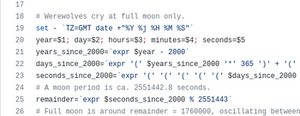
Finally, Bernhard M. Wiedemann noticed that the GNU Helloworld project varies depending on whether it is being built during a full moon! (Reddit announcement, openSUSE bug report)

Events There will be an in-person Debian Reunion in Hamburg, Germany later this year, taking place from 23 30 May. Although this is a Debian event, there will be some folks from the broader Reproducible Builds community and, of course, everyone is welcome. Please see the event page on the Debian wiki for more information. Bernhard M. Wiedemann posted to our mailing list about a meetup for Reproducible Builds folks at the openSUSE conference in Nuremberg, Germany. It was also recently announced that DebConf22 will take place this year as an in-person conference in Prizren, Kosovo. The pre-conference meeting (or Debcamp ) will take place from 10 16 July, and the main talks, workshops, etc. will take place from 17 24 July.

Misc news Holger Levsen updated the Reproducible Builds website to improve the documentation for the SOURCE_DATE_EPOCH environment variable, both by expanding parts of the existing text [ ][ ] as well as clarifying meaning by removing text in other places [ ]. In addition, Chris Lamb added a Twitter Card to our website s metadata too [ ][ ][ ]. On our mailing list this month:

Distribution work In Debian this month:
  • Johannes Schauer Marin Rodrigues posted to the debian-devel list mentioning that he exploited the property of reproducibility within Debian to demonstrate that automatically converting a large number of packages to a new internal source version did not change the resulting packages. The proposed change could therefore be applied without causing breakage:
So now we have 364 source packages for which we have a patch and for which we can show that this patch does not change the build output. Do you agree that with those two properties, the advantages of the 3.0 (quilt) format are sufficient such that the change shall be implemented at least for those 364? [ ]
In openSUSE, Bernhard M. Wiedemann posted his usual monthly reproducible builds status report.

Tooling diffoscope is our in-depth and content-aware diff utility. Not only can it locate and diagnose reproducibility issues, it can provide human-readable diffs from many kinds of binary formats. This month, Chris Lamb prepared and uploaded versions 207, 208 and 209 to Debian unstable, as well as made the following changes to the code itself:
  • Update minimum version of Black to prevent test failure on Ubuntu jammy. [ ]
  • Updated the R test fixture for the 4.2.x series of the R programming language. [ ]
Brent Spillner also worked on adding graceful handling for UNIX sockets and named pipes to diffoscope. [ ][ ][ ]. Vagrant Cascadian also updated the diffoscope package in GNU Guix. [ ][ ] reprotest is the Reproducible Build s project end-user tool to build the same source code twice in widely different environments and checking whether the binaries produced by the builds have any differences. This month, Santiago Ruano Rinc n added a new --append-build-command option [ ], which was subsequently uploaded to Debian unstable by Holger Levsen.

Upstream patches The Reproducible Builds project detects, dissects and attempts to fix as many currently-unreproducible packages as possible. We endeavour to send all of our patches upstream where appropriate. This month, we wrote a large number of such patches, including:

Testing framework The Reproducible Builds project runs a significant testing framework at tests.reproducible-builds.org, to check packages and other artifacts for reproducibility. This month, the following changes were made:
  • Holger Levsen:
    • Replace a local copy of the dsa-check-running-kernel script with a packaged version. [ ]
    • Don t hide the status of offline hosts in the Jenkins shell monitor. [ ]
    • Detect undefined service problems in the node health check. [ ]
    • Update the sources.lst file for our mail server as its still running Debian buster. [ ]
    • Add our mail server to our node inventory so it is included in the Jenkins maintenance processes. [ ]
    • Remove the debsecan package everywhere; it got installed accidentally via the Recommends relation. [ ]
    • Document the usage of the osuosl174 host. [ ]
Regular node maintenance was also performed by Holger Levsen [ ], Vagrant Cascadian [ ][ ][ ] and Mattia Rizzolo.
If you are interested in contributing to the Reproducible Builds project, please visit our Contribute page on our website. However, you can get in touch with us via:

Jacob Adams: The Unexpected Importance of the Trailing Slash

For many using Unix-derived systems today, we take for granted that /some/path and /some/path/ are the same. Most shells will even add a trailing slash for you when you press the Tab key after the name of a directory or a symbolic link to one. However, many programs treat these two paths as subtly different in certain cases, which I outline below, as all three have tripped me up in various ways1.

POSIX and Coreutils Perhaps the trickiest use of the trailing slash in a distinguishing way is in POSIX2 which states:
When the final component of a pathname is a symbolic link, the standard requires that a trailing <slash> causes the link to be followed. This is the behavior of historical implementations3. For example, for /a/b and /a/b/, if /a/b is a symbolic link to a directory, then /a/b refers to the symbolic link, and /a/b/ refers to the directory to which the symbolic link points.
This leads to some unexpected behavior. For example, if you have the following structure of a directory dir containing a file dirfile with a symbolic link link pointing to dir. (which will be used in all shell examples throughout this article):
$ ls -lR
.:
total 4
drwxr-xr-x 2 jacob jacob 4096 Apr  3 00:00 dir
lrwxrwxrwx 1 jacob jacob    3 Apr  3 00:00 link -> dir
./dir:
total 0
-rw-r--r-- 1 jacob jacob 0 Apr  3 00:12 dirfile
On Unixes such as MacOS, FreeBSD or Illumos4, you can move a directory through a symbolic link by using a trailing slash:
$ mv link/ otherdir
$ ls
link	otherdir
On Linux5, mv will not rename the indirectly referenced directory and not the symbolic link, when given a symbolic link with a trailing slash as the source to be renamed. despite the coreutils documentation s claims to the contrary6, instead failing with Not a directory:
$ mv link/ other
mv: cannot move 'link/' to 'other': Not a directory
$ mkdir otherdir
$ mv link/ otherdir
mv: cannot move 'link/' to 'otherdir/link': Not a directory
$ mv link/ otherdir/
mv: cannot move 'link/' to 'otherdir/link': Not a directory
$ mv link otherdirlink
$ ls -l otherdirlink
lrwxrwxrwx 1 jacob jacob 3 Apr  3 00:13 otherdirlink -> dir
This is probably for the best, as it is very confusing behavior. There is still one advantage the trailing slash has when using mv, even on Linux, in that is it does not allow you to move a file to a non-existent directory, or move a file that you expect to be a directory that isn t.
$ mv dir/dirfile nonedir/
mv: cannot move 'dir/dirfile' to 'nonedir/': Not a directory
$ touch otherfile
$ mv otherfile/ dir
mv: cannot stat 'otherfile/': Not a directory
$ mv otherfile dir
$ ls dir
dirfile  otherfile
However, Linux still exhibits some confusing behavior of its own, like when you attempt to remove link recursively with a trailing slash:
rm -rvf link/
Neither link nor dir are removed, but the contents of dir are removed:
removed 'link/dirfile'
Whereas if you remove the trailing slash, you just remove the symbolic link:
$ rm -rvf link
removed 'link'
While on MacOS, FreeBSD or Illumos4, rm will also remove the source directory:
$ rm -rvf link
link/dirfile
link/
$ ls
link
The find and ls commands, in contrast, behave the same on all three operating systems. The find command only searches the contents of the directory a symbolic link points to if the trailing slash is added:
$ find link -name dirfile
$ find link/ -name dirfile
link/dirfile
The ls command acts similarly, showing information on just a symbolic link by itself unless a trailing slash is added, at which point it shows the contents of the directory that it links to:
$ ls -l link
lrwxrwxrwx 1 jacob jacob 3 Apr  3 00:13 link -> dir
$ ls -l link/
total 0
-rw-r--r-- 1 jacob jacob 0 Apr  3 00:13 dirfile

rsync The command rsync handles a trailing slash in an unusual way that trips up many new users. The rsync man page notes:
You can think of a trailing / on a source as meaning copy the contents of this directory as opposed to copy the directory by name , but in both cases the attributes of the containing directory are transferred to the containing directory on the destination.
That is to say, if we had two folders a and b each of which contained some files:
$ ls -R .
.:
a  b
./a:
a1  a2
./b:
b1  b2
Running rsync -av a b moves the entire directory a to directory b:
$ rsync -av a b
sending incremental file list
a/
a/a1
a/a2
sent 181 bytes  received 58 bytes  478.00 bytes/sec
total size is 0  speedup is 0.00
$ ls -R b
b:
a  b1  b2
b/a:
a1  a2
While running rsync -av a/ b moves the contents of directory a to b:
$ rsync -av a/ b
sending incremental file list
./
a1
a2
sent 170 bytes  received 57 bytes  454.00 bytes/sec
total size is 0  speedup is 0.00
$ ls b
a1  a2	b1  b2

Dockerfile COPY The Dockerfile COPY command also cares about the presence of the trailing slash, using it to determine whether the destination should be considered a file or directory. The Docker documentation explains the rules of the command thusly:
COPY [--chown=<user>:<group>] <src>... <dest>
If <src> is a directory, the entire contents of the directory are copied, including filesystem metadata. Note: The directory itself is not copied, just its contents. If <src> is any other kind of file, it is copied individually along with its metadata. In this case, if <dest> ends with a trailing slash /, it will be considered a directory and the contents of <src> will be written at <dest>/base(<src>). If multiple <src> resources are specified, either directly or due to the use of a wildcard, then <dest> must be a directory, and it must end with a slash /. If <dest> does not end with a trailing slash, it will be considered a regular file and the contents of <src> will be written at <dest>. If <dest> doesn t exist, it is created along with all missing directories in its path.
This means if you had a COPY command that moved file to a nonexistent containerfile without the slash, it would create containerfile as a file with the contents of file.
COPY file /containerfile
container$ stat -c %F containerfile
regular empty file
Whereas if you add a trailing slash, then file will be added as a file under the new directory containerdir:
COPY file /containerdir/
container$ stat -c %F containerdir
directory
Interestingly, at no point can you copy a directory completely, only its contents. Thus if you wanted to make a directory in the new container, you need to specify its name in both the source and the destination:
COPY dir /dirincontainer
container$ stat -c %F /dirincontainer
directory
Dockerfiles do also make good use of the trailing slash to ensure they re doing what you mean by requiring a trailing slash on the destination of multiple files:
COPY file otherfile /othercontainerdir
results in the following error:
When using COPY with more than one source file, the destination must be a directory and end with a /
  1. I m sure there are probably more than just these three cases, but these are the three I m familiar with. If you know of more, please tell me about them!.
  2. Some additional relevant sections are the Path Resolution Appendix and the section on Symbolic Links.
  3. The sentence This is the behavior of historical implementations implies that this probably originated in some ancient Unix derivative, possibly BSD or even the original Unix. I don t really have a source on that though, so please reach out if you happen to have any more knowledge on what this refers to.
  4. I tested on MacOS 11.6.5, FreeBSD 12.0 and OmniOS 5.11 2
  5. unless the source is a directory trailing slashes give -ENOTDIR
  6. In fairness to the coreutils maintainers, it seems to be true on all other Unix platforms, but it probably deserves a mention in the documentation when Linux is the most common platform on which coreutils is used. I should submit a patch.

7 April 2022

Gunnar Wolf: How is the free firmware for the Raspberry progressing?

Raspberry Pi computers require a piece of non-free software to boot the infamous raspi-firmware package. But for almost as long as there has been a Raspberry Pi to talk of (this year it turns 10 years old!), there have been efforts to get it to boot using only free software. How is it progressing? Michael Bishop (IRC user clever) explained today in the #debian-raspberrypi channel in OFTC that it advances far better than what I expected: It is even possible to boot a usable system under the RPi2 family! Just There is somewhat incomplete hardware support: For his testing, he has managed to use a xfce environment but over the composite (NTSC) video output, as HDMI initialization support is not there. However, he shared with me several interesting links and videos, and I told him I d share them there are still many issues; I do not believe it is currently worth it to make Debian images with this firmware. Before anything else: Go visit the librerpi/lk-overlay repository. Its README outlines hardware support for each of the RPi families; there is a binary build available with nixos if you want to try it out, and instructions to build it. But what clever showed me that made me write this post Is the amount of stuff you can do with the RPi s VPU (why Vision Vector Processing Unit and not the more familiar GPU, Graphical Processing Unit? I don t really know But I trust clever s definitions beyond how I trust my own ) before it loads an opearting system: There s not too much I can add to this. I was just Truly amazed. And I hope to see the remaining hurdles for regular Linux booting on this range of machines with purely free software quickly go away! Packaging this for Debian? Well, not yet not so fast I first told clever we could push this firmware to experimental instead of unstable, as it is not yet ready for most production systems. However, pabs made some spot-on further questions. And yes, it requires installing three(!) different cross-compilers, one of which vc4-toolchain, for the VPU is free software, but not yet upstreamed, and hence is not available for Debian. Anyway, the talk continued long after I had to go. I have gone a bit over the backlog, but I have to leave now so that will be it as for this blog post

5 April 2022

Dirk Eddelbuettel: RcppSpdlog 0.0.8 on CRAN: Upstream Update

A new version 0.0.8 of RcppSpdlog is now on CRAN. RcppSpdlog bundles spdlog, a wonderful header-only C++ logging library with all the bells and whistles you would want that was written by Gabi Melman, and also includes fmt by Victor Zverovich. This release brings a new upstream release 1.10.0 of spdlog. The (minimal) NEWS entry for this release follows.

Changes in RcppSpdlog version 0.0.8 (2022-04-04)
  • Upgraded to upstream releases spdlog 1.10.0

Courtesy of my CRANberries, there is also a diffstat report. More detailed information is on the RcppSpdlog page, or the package documention site. If you like this or other open-source work I do, you can sponsor me at GitHub.

This post by Dirk Eddelbuettel originated on his Thinking inside the box blog. Please report excessive re-aggregation in third-party for-profit settings.

Dirk Eddelbuettel: RcppArmadillo 0.11.0.0.0 on CRAN: Upstream Updates

armadillo image Armadillo is a powerful and expressive C++ template library for linear algebra aiming towards a good balance between speed and ease of use with a syntax deliberately close to a Matlab. RcppArmadillo integrates this library with the R environment and language and is widely used by (currently) 972 other packages on CRAN, downloaded over 24 million times (per the partial logs from the cloud mirrors of CRAN), and the CSDA paper (preprint / vignette) by Conrad and myself has been cited 465 times according to Google Scholar. This release brings a new upstream release 11.0.0. We tested this very rigorously via three different RC release each of which got a full reverse-dependencies run (for which results are always logged here). The full set of changes (since the last CRAN release 0.10.8.1.0) follows.

Changes in RcppArmadillo version 0.11.0.0 (2022-04-04)
  • Upgraded to Armadillo release 11.0.0 (Creme Brulee)
    • added variants of inv() and inv_sympd() that provide rcond (reciprocal condition number)
    • expanded inv() and inv_sympd() with options inv_opts::tiny and inv_opts::allow_approx
    • stricter handling of singular matrices by inv() and inv_sympd()
    • stricter handling of non-sympd matrices by inv() and inv_sympd()
    • stricter handling of non-finitie matrices by pinv()
    • more robust handling of rank deficient matrices by solve()
    • faster handling of diagonal matrices by rcond()
    • changed eigs_sym() and eigs_gen() to use higher quality RNG
    • quantile() and median() will now throw an exception if given matrices/vectors have NaN elements
    • workaround for yet another bug in Intel MKL
  • Until May 2022, protect correction to Field behavior via define of RCPP_ARMADILLO_FIX_Field
  • If a LAPACK installation with missing complex routines is found (as e.g. Ubuntu using 3.9.0) then the LAPACK unit test is skipped.

Changes in RcppArmadillo version 0.10.8.2.0 (2022-02-01)
  • Upgraded to Armadillo release 10.8.2 (Realm Raider)
    • fix potential speed regression in pinv() and rank()

Courtesy of my CRANberries, there is a diffstat report relative to previous release. More detailed information is on the RcppArmadillo page. Questions, comments etc should go to the rcpp-devel mailing list off the R-Forge page. If you like this or other open-source work I do, you can sponsor me at GitHub.

This post by Dirk Eddelbuettel originated on his Thinking inside the box blog. Please report excessive re-aggregation in third-party for-profit settings.

Kees Cook: security things in Linux v5.10

Previously: v5.9 Linux v5.10 was released in December, 2020. Here s my summary of various security things that I found interesting: AMD SEV-ES
While guest VM memory encryption with AMD SEV has been supported for a while, Joerg Roedel, Thomas Lendacky, and others added register state encryption (SEV-ES). This means it s even harder for a VM host to reconstruct a guest VM s state. x86 static calls
Josh Poimboeuf and Peter Zijlstra implemented static calls for x86, which operates very similarly to the static branch infrastructure in the kernel. With static branches, an if/else choice can be hard-coded, instead of being run-time evaluated every time. Such branches can be updated too (the kernel just rewrites the code to switch around the branch ). All these principles apply to static calls as well, but they re for replacing indirect function calls (i.e. a call through a function pointer) with a direct call (i.e. a hard-coded call address). This eliminates the need for Spectre mitigations (e.g. RETPOLINE) for these indirect calls, and avoids a memory lookup for the pointer. For hot-path code (like the scheduler), this has a measurable performance impact. It also serves as a kind of Control Flow Integrity implementation: an indirect call got removed, and the potential destinations have been explicitly identified at compile-time. network RNG improvements
In an effort to improve the pseudo-random number generator used by the network subsystem (for things like port numbers and packet sequence numbers), Linux s home-grown pRNG has been replaced by the SipHash round function, and perturbed by (hopefully) hard-to-predict internal kernel states. This should make it very hard to brute force the internal state of the pRNG and make predictions about future random numbers just from examining network traffic. Similarly, ICMP s global rate limiter was adjusted to avoid leaking details of network state, as a start to fixing recent DNS Cache Poisoning attacks. SafeSetID handles GID
Thomas Cedeno improved the SafeSetID LSM to handle group IDs (which required teaching the kernel about which syscalls were actually performing setgid.) Like the earlier setuid policy, this lets the system owner define an explicit list of allowed group ID transitions under CAP_SETGID (instead of to just any group), providing a way to keep the power of granting this capability much more limited. (This isn t complete yet, though, since handling setgroups() is still needed.) improve kernel s internal checking of file contents
The kernel provides LSMs (like the Integrity subsystem) with details about files as they re loaded. (For example, loading modules, new kernel images for kexec, and firmware.) There wasn t very good coverage for cases where the contents were coming from things that weren t files. To deal with this, new hooks were added that allow the LSMs to introspect the contents directly, and to do partial reads. This will give the LSMs much finer grain visibility into these kinds of operations. set_fs removal continues
With the earlier work landed to free the core kernel code from set_fs(), Christoph Hellwig made it possible for set_fs() to be optional for an architecture. Subsequently, he then removed set_fs() entirely for x86, riscv, and powerpc. These architectures will now be free from the entire class of kernel address limit attacks that only needed to corrupt a single value in struct thead_info. sysfs_emit() replaces sprintf() in /sys
Joe Perches tackled one of the most common bug classes with sprintf() and snprintf() in /sys handlers by creating a new helper, sysfs_emit(). This will handle the cases where kernel code was not correctly dealing with the length results from sprintf() calls, which might lead to buffer overflows in the PAGE_SIZE buffer that /sys handlers operate on. With the helper in place, it was possible to start the refactoring of the many sprintf() callers. nosymfollow mount option
Mattias Nissler and Ross Zwisler implemented the nosymfollow mount option. This entirely disables symlink resolution for the given filesystem, similar to other mount options where noexec disallows execve(), nosuid disallows setid bits, and nodev disallows device files. Quoting the patch, it is useful as a defensive measure for systems that need to deal with untrusted file systems in privileged contexts. (i.e. for when /proc/sys/fs/protected_symlinks isn t a big enough hammer.) Chrome OS uses this option for its stateful filesystem, as symlink traversal as been a common attack-persistence vector. ARMv8.5 Memory Tagging Extension support
Vincenzo Frascino added support to arm64 for the coming Memory Tagging Extension, which will be available for ARMv8.5 and later chips. It provides 4 bits of tags (covering multiples of 16 byte spans of the address space). This is enough to deterministically eliminate all linear heap buffer overflow flaws (1 tag for free , and then rotate even values and odd values for neighboring allocations), which is probably one of the most common bugs being currently exploited. It also makes use-after-free and over/under indexing much more difficult for attackers (but still possible if the target s tag bits can be exposed). Maybe some day we can switch to 128 bit virtual memory addresses and have fully versioned allocations. But for now, 16 tag values is better than none, though we do still need to wait for anyone to actually be shipping ARMv8.5 hardware. fixes for flaws found by UBSAN
The work to make UBSAN generally usable under syzkaller continues to bear fruit, with various fixes all over the kernel for stuff like shift-out-of-bounds, divide-by-zero, and integer overflow. Seeing these kinds of patches land reinforces the the rationale of shifting the burden of these kinds of checks to the toolchain: these run-time bugs continue to pop up. flexible array conversions
The work on flexible array conversions continues. Gustavo A. R. Silva and others continued to grind on the conversions, getting the kernel ever closer to being able to enable the -Warray-bounds compiler flag and clear the path for saner bounds checking of array indexes and memcpy() usage. That s it for now! Please let me know if you think anything else needs some attention. Next up is Linux v5.11.

2022, Kees Cook. This work is licensed under a Creative Commons Attribution-ShareAlike 4.0 License.
CC BY-SA 4.0

4 April 2022

Arturo Borrero Gonz lez: Wikimedia Toolforge and Grid Engine

Logos This post was originally published in the Wikimedia Tech blog, authored by Arturo Borrero Gonzalez. One of the most important and successful products provided by the Wikimedia Cloud Services team at the Wikimedia Foundation is Toolforge, a hosting service commonly known in the industry as Platform as a Service (PaaS). In particular, it is a platform that allows users and developers to run and use a variety of applications with the ultimate goal of helping the Wikimedia mission from the technical side. Toolforge is powered by two different backend engines, Kubernetes and Grid Engine. The two backends have traditionally offered different features for tool developers. But as time moves forward we ve learnt that Kubernetes is the future. Explaining why is the purpose of this blog post: we want to share more information and reasoning behind this mindset. There are a number of reasons that make Grid Engine poorly suitable to remain as execution backend in Toolforge:
  • There has not been a new Grid Engine release (bug fixes, security patches, or otherwise) since 2016. This doesn t feel like a project being actively developed or maintained.
  • The grid has poor support and controls for important aspects such as high availability, fault tolerance and self-recovery.
  • Maintaining a healthy grid requires plenty of manual operations, like manual queue cleanups in case of failures, hand-crafted scripts for pooling/depooling nodes, etc.
  • There is no good or modern monitoring support for the grid, and we need to craft and maintain several monitoring pieces for proper observability, and to be able to do proper maintenance.
  • The grid is also strongly tied to the underlying operating system release version. Migrating from one Debian version to the next is painful (a dedicated blog post about this will follow shortly).
  • The grid imposes a strong dependency on NFS, another old technology. We would like to reduce dependency on NFS overall, and in the future we will explore NFS-free approaches for Toolforge.
  • In general, Grid Engine is old software, old technology, which can be replaced by more modern approaches for providing an equivalent or better service.
As mentioned above, our desire is to cover all our grid-like needs with Kubernetes, a technology which has several benefits:
  • Good high availability, fault tolerance and self-recovery semantics, constructs and facilities.
  • Maintaining a running Kubernetes cluster requires little manual operations.
  • There are good monitoring and observability options for Kubernetes deployments, including seamless integration with industry standards like prometheus.
  • Our current approach to deploying and upgrading Kubernetes is independent of the underlying operating system.
  • While our current Kubernetes deployment uses NFS as a central component, there is support for using other, more modern, approaches for the kind of shared storage needs we have in Toolforge.
  • In general, Kubernetes is a modern technology, with a vibrant and healthy community, that enables new use cases and has enough flexibility to adapt legacy ones.
The relationship between Toolforge and Grid Engine has been interesting over the years. The grid has been used for quite a lot of time, we have plenty of documentation and established good practices. On the other hand, the grid is hard to maintain, imposes a heavy burden on the WMCS team and is a technology we must eventually discontinue. How to accommodate the two realities is a refreshing challenge, one that we hope to tackle together in the near future. A tradeoff exists here, but it is clear to us which option is best. So we will work on deprecating and removing Grid Engine and migrating use cases into Kubernetes. This deprecation, however, will be done with care, as we know our technical community relies on the grid for some import Toolforge tools. And some of these workflows will need some adaptation in order to be fully supported on Kubernetes. Stay tuned for more information on present and next works surrounding the Wikimedia Toolforge service. The next blog post will share more concrete details. This post was originally published in the Wikimedia Tech blog, authored by Arturo Borrero Gonzalez.

Next.

Previous.