Search Results: "bab"

24 September 2014

Matthew Garrett: My free software will respect users or it will be bullshit

I had dinner with a friend this evening and ended up discussing the FSF's four freedoms. The fundamental premise of the discussion was that the freedoms guaranteed by free software are largely academic unless you fall into one of two categories - someone who is sufficiently skilled in the arts of software development to examine and modify software to meet their own needs, or someone who is sufficiently privileged[1] to be able to encourage developers to modify the software to meet their needs.

The problem is that most people don't fall into either of these categories, and so the benefits of free software are often largely theoretical to them. Concentrating on philosophical freedoms without considering whether these freedoms provide meaningful benefits to most users risks these freedoms being perceived as abstract ideals, divorced from the real world - nice to have, but fundamentally not important. How can we tie these freedoms to issues that affect users on a daily basis?

In the past the answer would probably have been along the lines of "Free software inherently respects users", but reality has pretty clearly disproven that. Unity is free software that is fundamentally designed to tie the user into services that provide financial benefit to Canonical, with user privacy as a secondary concern. Despite Android largely being free software, many users are left with phones that no longer receive security updates[2]. Textsecure is free software but the author requests that builds not be uploaded to third party app stores because there's no meaningful way for users to verify that the code has not been modified - and there's a direct incentive for hostile actors to modify the software in order to circumvent the security of messages sent via it.

We're left in an awkward situation. Free software is fundamental to providing user privacy. The ability for third parties to continue providing security updates is vital for ensuring user safety. But in the real world, we are failing to make this argument - the freedoms we provide are largely theoretical for most users. The nominal security and privacy benefits we provide frequently don't make it to the real world. If users do wish to take advantage of the four freedoms, they frequently do so at a potential cost of security and privacy. Our focus on the four freedoms may be coming at a cost to the pragmatic freedoms that our users desire - the freedom to be free of surveillance (be that government or corporate), the freedom to receive security updates without having to purchase new hardware on a regular basis, the freedom to choose to run free software without having to give up basic safety features.

That's why projects like the GNOME safety and privacy team are so important. This is an example of tying the four freedoms to real-world user benefits, demonstrating that free software can be written and managed in such a way that it actually makes life better for the average user. Designing code so that users are fundamentally in control of any privacy tradeoffs they make is critical to empowering users to make informed decisions. Committing to meaningful audits of all network transmissions to ensure they don't leak personal data is vital in demonstrating that developers fundamentally respect the rights of those users. Working on designing security measures that make it difficult for a user to be tricked into handing over access to private data is going to be a necessary precaution against hostile actors, and getting it wrong is going to ruin lives.

The four freedoms are only meaningful if they result in real-world benefits to the entire population, not a privileged minority. If your approach to releasing free software is merely to ensure that it has an approved license and throw it over the wall, you're doing it wrong. We need to design software from the ground up in such a way that those freedoms provide immediate and real benefits to our users. Anything else is a failure.

(title courtesy of My Feminism will be Intersectional or it will be Bullshit by Flavia Dzodan. While I'm less angry, I'm solidly convinced that free software that does nothing to respect or empower users is an absolute waste of time)

[1] Either in the sense of having enough money that you can simply pay, having enough background in the field that you can file meaningful bug reports or having enough followers on Twitter that simply complaining about something results in people fixing it for you

[2] The free software nature of Android often makes it possible for users to receive security updates from a third party, but this is not always the case. Free software makes this kind of support more likely, but it is in no way guaranteed.

comment count unavailable comments

21 September 2014

Dariusz Dwornikowski: statistics of RFS bugs and sponsoring process

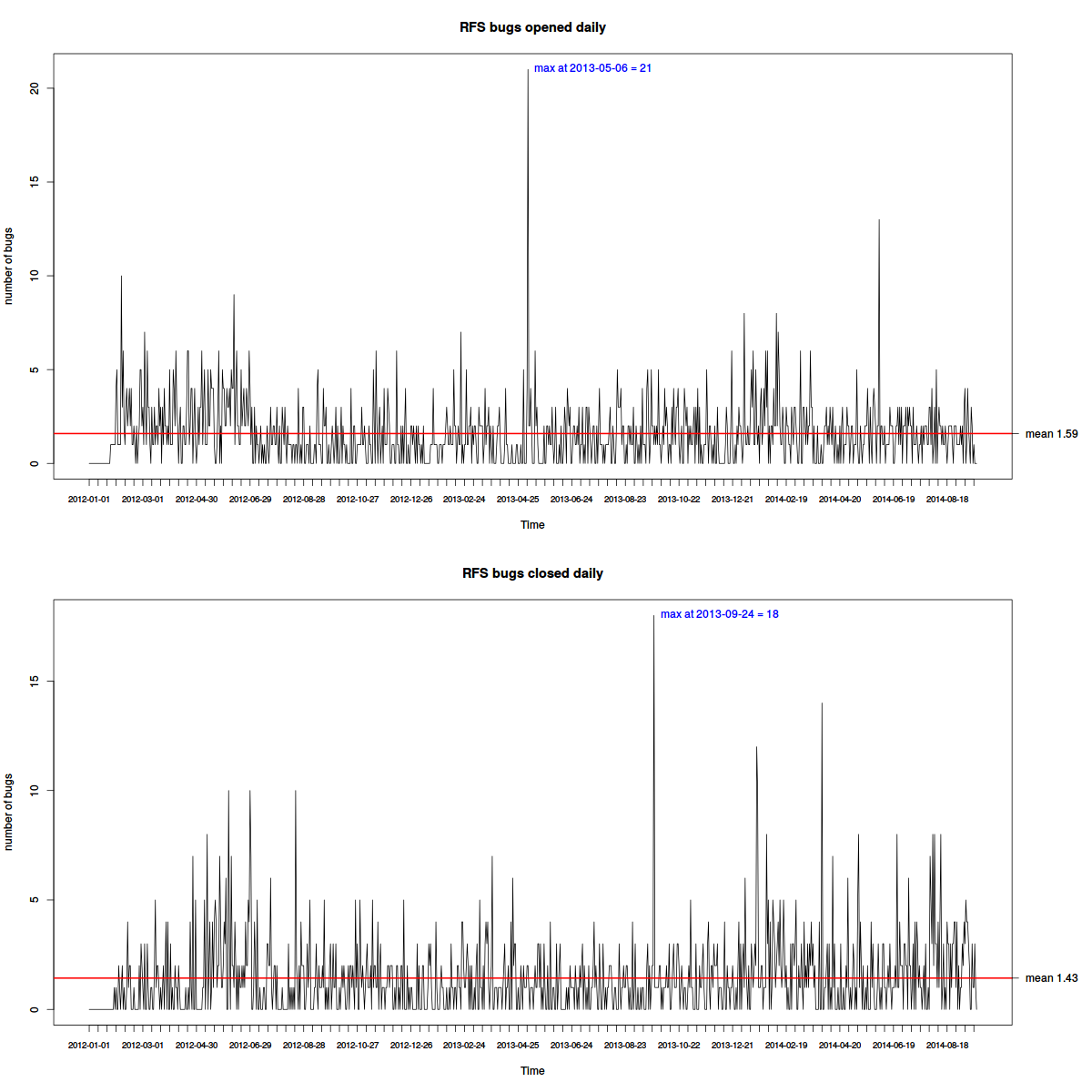
For some days I have been working on statistics of the sponsoring process in Debian. I find this to be one of the most important things that Debian has to attract and enable new contributions. It is important to know how this process works, whether we need more sponsors, how effective is the sponsoring and what are the timings connected to it. How I did this ? I have used Debbugs SOAP interface to get all bugs that are filed against sponsorship-requests pseudo package. SOAP gives a little bit of overhead because it needs to download a complete list of bugs for the sponsorship-requests package, and then process them according to given date ranges. The same information can be easily extracted from the UDD database in the future, it will be faster because SQL is better when working with date ranges than python obviously. The most problematic part was getting the "real done date" of a particular bug, and frankly most of my time I have spent on writing a rather dirty and complicated script. The script gets a log for a particular bug number and returns a "real done date". I have published a proof of concept in a previous post.. What I measured ? RFSs is a queue, and in every queue one is interested in a mean time to get processed. In this case I called the metric global MTTGS (mean time to get sponsored). This is a metric that gives the overall performance insight in RFS queue. Time to get sponsored (TTGS) for a bug is a number of days that passed between filing an RFS bug and closing it (bug was sponsored). Mean time to get sponsored is calculated as a sum of TTGSs of all bugs divided by number of bugs (in a given period of time). Global MTTGS is MTTGS calculated for a period of time 2012-1-1 until today(). Besides MTTGS I have also measured typical bug related metrics: Plots and graphs Below is a plot of global MTTGS vs. time (click for a larger image). mttgs plot As you can see, the trend is roughly exponential and MTTGS tends to settle around 60 days at the end of the year 2013. This does not mean that your package will wait 60 days on average nowadays to get sponsored. I remind that this is a global MTTGS, so even if the MTTGS of last month was very low, the global MTTGS would decrease just slightly. It gives, however, a good glance in performance of the process. Even that more packages are filed for sponsoring (see next graphs) now, than in the beginning of the epoch, the sponsoring rate is high enough to flatten the global MTTGS, and with time maybe decrease it. The image below (click for a larger one) shows how many bugs reside in a queue with status open or closed (calculated for each day). For closed we have an almost linear function, so each day more or less the same amount of bugs are closed and they increase the pool of bugs with status closed. For bugs with status open the interesting part begins around May 2012 after the system is saturated or gets popular. It can be interpreted as a plot of how many bugs reside in the queue, the important part is that it is stable and does not show clear increasing trend. open done plot The last plot shows arrival and departure rate of bugs from RFS queue, i.e. how many bugs are opened and closed each day. The interesting part here are the maxima. Let's look at them. opened closed plot Maximal number of opened bugs (21) was on 2012-05-06. As it appears it was a bunch upload of RFSs for tryton-modules-*..
  706953  RFS: tryton-modules-account-stock-anglo-saxon/2.8.0-1 
  706954  RFS: tryton-modules-purchase-shipment-cost/2.8.0-1 
  706948  RFS: tryton-modules-production/2.8.0-1 
  706969  RFS: tryton-modules-account-fr/2.8.0-1 
  706946  RFS: tryton-modules-project-invoice/2.8.0-1 
  706950  RFS: tryton-modules-stock-supply-production/2.8.0-1 
  706942  RFS: tryton-modules-product-attribute/2.8.0-1 
  706957  RFS: tryton-modules-stock-lot/2.8.0-1 
  706958  RFS: tryton-modules-carrier-weight/2.8.0-1 
  706941  RFS: tryton-modules-stock-supply-forecast/2.8.0-1 
  706955  RFS: tryton-modules-product-measurements/2.8.0-1 
  706952  RFS: tryton-modules-carrier-percentage/2.8.0-1 
  706949  RFS: tryton-modules-account-asset/2.8.0-1 
  706904  RFS: chinese-checkers/0.4-1 
  706944  RFS: tryton-modules-stock-split/2.8.0-1 
  706981  RFS: distcc/3.1-6 
  706945  RFS: tryton-modules-sale-supply/2.8.0-1 
  706959  RFS: tryton-modules-carrier/2.8.0-1 
  706951  RFS: tryton-modules-sale-shipment-cost/2.8.0-1 
  706943  RFS: tryton-modules-account-stock-continental/2.8.0-1 
  706956  RFS: tryton-modules-sale-supply-drop-shipment/2.8.0-1
Maximum number of closed bugs (18) was on 2013-09-24, and as you probably guessed right also tryton modules had impact on that.
  706953  RFS: tryton-modules-account-stock-anglo-saxon/2.8.0-1 
  706954  RFS: tryton-modules-purchase-shipment-cost/2.8.0-1 
  706948  RFS: tryton-modules-production/2.8.0-1 
  706969  RFS: tryton-modules-account-fr/2.8.0-1 
  706946  RFS: tryton-modules-project-invoice/2.8.0-1 
  706950  RFS: tryton-modules-stock-supply-production/2.8.0-1 
  706942  RFS: tryton-modules-product-attribute/2.8.0-1 
  706958  RFS: tryton-modules-carrier-weight/2.8.0-1 
  706941  RFS: tryton-modules-stock-supply-forecast/2.8.0-1 
  706955  RFS: tryton-modules-product-measurements/2.8.0-1 
  706952  RFS: tryton-modules-carrier-percentage/2.8.0-1 
  706949  RFS: tryton-modules-account-asset/2.8.0-1 
  706944  RFS: tryton-modules-stock-split/2.8.0-1 
  706959  RFS: tryton-modules-carrier/2.8.0-1 
  723991  RFS: mapserver/6.4.0-2 
  706951  RFS: tryton-modules-sale-shipment-cost/2.8.0-1 
  706943  RFS: tryton-modules-account-stock-continental/2.8.0-1 
  706956  RFS: tryton-modules-sale-supply-drop-shipment/2.8.0-1
The software Most of the software was written in Python. Graphs were generated in R. After a code cleanup I will publish a complete solution on my github account, free to use by everybody. If you would like to see another statistics, please let me know, I can create them if the data provides sufficient information.

19 September 2014

Paul Tagliamonte: Docker PostgreSQL Foreign Data Wrapper

For the tl;dr: Docker FDW is a thing. Star it, hack it, try it out. File bugs, be happy. If you want to see what it's like to read, there's some example SQL down below. The question is first, what the heck is a PostgreSQL Foreign Data Wrapper? PostgreSQL Foreign Data Wrappers are plugins that allow C libraries to provide an adaptor for PostgreSQL to talk to an external database. Some folks have used this to wrap stuff like MongoDB, which I always found to be hilarous (and an epic hack). Enter Multicorn During my time at PyGotham, I saw a talk from Wes Chow about something called Multicorn. He was showing off some really neat plugins, such as the git revision history of CPython, and parsed logfiles from some stuff over at Chartbeat. This basically blew my mind. All throughout the talk I was coming up with all sorts of things that I wanted to do -- this whole library is basically exactly what I've been dreaming about for years. I've always wanted to provide a SQL-like interface into querying API data, joining data cross-API using common crosswalks, such as using Capitol Words to query for Legislators, and use the bioguide ids to JOIN against the congress api to get their Twitter account names. My first shot was to Multicorn the new Open Civic Data API I was working on, chuckled and put it aside as a really awesome hack. Enter Docker It wasn't until tianon connected the dots for me and suggested a Docker FDW did I get really excited. Cue a few hours of hacking, and I'm proud to say -- here's Docker FDW. This lets us ask all sorts of really interesting questions out of the API, and might even help folks writing webapps avoid adding too much Docker-aware logic. Abstractions can be fun! Setting it up I'm going to assume you have a working Multicorn, PostgreSQL and Docker setup (including adding the postgres user to the docker group) So, now let's pop open a psql session. Create a database (I called mine dockerfdw, but it can be anything), and let's create some tables. Before we create the tables, we need to let PostgreSQL know where our objects are. This takes a name for the server, and the Python importable path to our FDW.
CREATE SERVER docker_containers FOREIGN DATA WRAPPER multicorn options (
    wrapper 'dockerfdw.wrappers.containers.ContainerFdw');
CREATE SERVER docker_image FOREIGN DATA WRAPPER multicorn options (
    wrapper 'dockerfdw.wrappers.images.ImageFdw');
Now that we have the server in place, we can tell PostgreSQL to create a table backed by the FDW by creating a foreign table. I won't go too much into the syntax here, but you might also note that we pass in some options - these are passed to the constructor of the FDW, letting us set stuff like the Docker host.
CREATE foreign table docker_containers (
    "id"          TEXT,
    "image"       TEXT,
    "name"        TEXT,
    "names"       TEXT[],
    "privileged"  BOOLEAN,
    "ip"          TEXT,
    "bridge"      TEXT,
    "running"     BOOLEAN,
    "pid"         INT,
    "exit_code"   INT,
    "command"     TEXT[]
) server docker_containers options (
    host 'unix:///run/docker.sock'
);
CREATE foreign table docker_images (
    "id"              TEXT,
    "architecture"    TEXT,
    "author"          TEXT,
    "comment"         TEXT,
    "parent"          TEXT,
    "tags"            TEXT[]
) server docker_image options (
    host 'unix:///run/docker.sock'
);
And, now that we have tables in place, we can try to learn something about the Docker containers. Let's start with something fun - a join from containers to images, showing all image tag names, the container names and the ip of the container (if it has one!).
SELECT docker_containers.ip, docker_containers.names, docker_images.tags
  FROM docker_containers
  RIGHT JOIN docker_images
  ON docker_containers.image=docker_images.id;
     ip                   names                               tags                   
-------------+-----------------------------+-----------------------------------------
                                              ruby:latest 
                                              paultag/vcs-mirror:latest 
                /de-openstates-to-ocd         sunlightlabs/scrapers-us-state:latest 
                /ny-openstates-to-ocd         sunlightlabs/scrapers-us-state:latest 
                /ar-openstates-to-ocd         sunlightlabs/scrapers-us-state:latest 
 172.17.0.47    /ms-openstates-to-ocd         sunlightlabs/scrapers-us-state:latest 
 172.17.0.46    /nc-openstates-to-ocd         sunlightlabs/scrapers-us-state:latest 
                /ia-openstates-to-ocd         sunlightlabs/scrapers-us-state:latest 
                /az-openstates-to-ocd         sunlightlabs/scrapers-us-state:latest 
                /oh-openstates-to-ocd         sunlightlabs/scrapers-us-state:latest 
                /va-openstates-to-ocd         sunlightlabs/scrapers-us-state:latest 
 172.17.0.41    /wa-openstates-to-ocd         sunlightlabs/scrapers-us-state:latest 
                /jovial_poincare              <none>:<none> 
                /jolly_goldstine              <none>:<none> 
                /cranky_torvalds              <none>:<none> 
                /backstabbing_wilson          <none>:<none> 
                /desperate_hoover             <none>:<none> 
                /backstabbing_ardinghelli     <none>:<none> 
                /cocky_feynman                <none>:<none> 
                                              paultag/postgres:latest 
                                              debian:testing 
                                              paultag/crank:latest 
                                              <none>:<none> 
                                              <none>:<none> 
                /stupefied_fermat             hackerschool/doorbot:latest 
                /focused_euclid               debian:unstable 
                /focused_babbage              debian:unstable 
                /clever_torvalds              debian:unstable 
                /stoic_tesla                  debian:unstable 
                /evil_torvalds                debian:unstable 
                /foo                          debian:unstable 
(31 rows)
OK, let's see if we can bring this to the next level now. I finally got around to implementing INSERT and DELETE operations, which turned out to be pretty simple to do. Check this out:
DELETE FROM docker_containers;
DELETE 1
This will do a stop + kill after a 10 second hang behind the scenes. It's actually a lot of fun to spawn up a container and terminate it from PostgreSQL.
INSERT INTO docker_containers (name, image) VALUES ('hello', 'debian:unstable') RETURNING id;
                                id                                
------------------------------------------------------------------
 0a903dcf5ae10ee1923064e25ab0f46e0debd513f54860beb44b2a187643ff05
INSERT 0 1
(1 row)
Spawning containers works too - this is still very immature and not super practical, but I figure while I'm showing off, I might as well go all the way.
SELECT ip FROM docker_containers WHERE id='0a903dcf5ae10ee1923064e25ab0f46e0debd513f54860beb44b2a187643ff05';
     ip      
-------------
 172.17.0.12
(1 row)
Success! This is just a taste of what's to come, so please feel free to hack on Docker FDW, tweet me @paultag, file bugs / feature requests. It's currently a bit of a hack, and it's something that I think has long-term potential after some work goes into making sure that this is a rock solid interface to the Docker API.

15 September 2014

Martin Pitt: autopkgtest 3.5: Reboot support, Perl/Ruby implicit tests

Last week s autopkgtest 3.5 release (in Debian sid and Ubuntu Utopic) brings several new features which I d like to announce. Tests that reboot For testing low-level packages like init or the kernel it is sometimes desirable to reboot the testbed in the middle of a test. For example, I added a new boot_and_services systemd autopkgtest which configures grub to boot with systemd as pid 1, reboots, and then checks that the most important services like lightdm, D-BUS, NetworkManager, and cron come up as expected. (This test will be expanded a lot in the future to cover other areas like the journal, logind, etc.) In a testbed which supports rebooting (currently only QEMU) your test will now find an autopkgtest-reboot command which the test calls with an arbitrary marker string. autopkgtest will then reboot the testbed, save/restore any files it needs to (like the tests file tree or previously created artifacts), and then re-run the test with ADT_REBOOT_MARK=mymarker. The new Reboot during a test section in README.package-tests explains this in detail with an example. Implicit test metadata for similar packages The Debian pkg-perl team recently discussed how to add package tests to the ~ 3.000 Perl packages. For most of these the test metadata looks pretty much the same, so they created a new pkg-perl-autopkgtest package which centralizes the logic. autopkgtest 3.5 now supports an implicit debian/tests/control control file to avoid having to modify several thousand packages with exactly the same file. An initial run already looked quite promising, 65% of the packages pass their tests. There will be a few iterations to identify common failures and fix those in pkg-perl-autopkgtest and autopkgtestitself now. There is still some discussion about how implicit test control files go together with the DEP-8 specification, as other runners like sadt do not support them yet. Most probably we ll declare those packages XS-Testsuite: autopkgtest-pkg-perl instead of the usual autopkgtest. In the same vein, Debian s Ruby maintainer (Antonio Terceiro) added implicit test control support for Ruby packages. We haven t done a mass test run with those yet, but their structure will probably look very similar.

13 September 2014

Laura Arjona: Disabling comments in the blog

I m getting more spam than the amount that I can stand in this blog. Comments are moderated, so the public is not suffering that, only me. From time to time I go to my dashboard and clean the spam. I m afraid that I delete some legit comment in these spam-cleaning-fevers, or, more probably, that a legit comment waits in the queue for several days (weeks?), just because I m lazy to deal with spam and let days pass by (until the fever comes). I think I m going to follow the wisdom of Bradley M. Kuhn and link to a pump.io note for comments on my blog posts (disabling them here in WordPress.com). I usually post a notice when I write something in my blog, so the only task is to update the blog post with the pump.io URL of the thread for comments. While WordPress.com allows to write comments quickly, without need of an account (you write just a name and an email, and the comment), in pump you need to have an account and sign in to comment. That looks as a bad thing, a barrier for people to participate. But of course, it stops spam :) After thinking about it a bit, pump.io it s a federated network, you can choose the pump server that they want, you can create a fake account, you don t need to provide personal information and it s another way to promote one of the social networks where I live. Other systems link to facebook, twitter, or other places, and nobody complains! Even when those services don t have any of the advantages of being in a federated free-software powered social network :) If anybody don t want to use pump.io but wants to comment, other ways to reach me or the related blog post are: So now it s decided, and this is the first post of this new experiment. This text is posted in pump.io too, and you can comment there :)
Filed under: My experiences and opinion, Tools Tagged: Blog, English, federation, pump.io, social networks, Wordpress

12 September 2014

Elena 'valhalla' Grandi: Sometimes apologies are the worst part

I am sick of hearing apologies directed to me just after a dirty joke.

Usually, I don't mind dirty jokes in themselves: I *do* have a dirty mind and make my share of those, or laugh for the ones my friends with even dirtier minds make.

There are of course times and places where they aren't appropriate, but I'd rather live in a world where they are the exception (although a common one) rather than the norm.

Then there is the kind of dirty jokes strongly based on the assumptions that women are sexual objects, a nuisance that must be tolerated because of sex or both: of course I don't really find them fun, but that's probably because I'm a nuisance and I don't even give them reason to tolerate me. :)

Even worse that those, however, is being singled out as the only women in the group with an empty apology for the joke (often of the latter kind): I know you are not really sorry, you probably only want to show that your parents taught you not to speak that way in front of women, but since I'm intruding in a male-only group I have to accept that you are going to talk as appropriate for it.

P.S. no, the episode that triggered this post didn't happen in a Debian environment, it happened in Italy, in a tech-related environment (and not in a wanking club for penis owners, where they would have every right to consider me an intruder).

11 September 2014

Matthias Klumpp: Listaller: Back to the future!

Listaller-Logo (with text)It is time for another report on Listaller, the cross-distro 3rd-party package installer, which is now in development for depending how you count 5-6 years. This will become a longer post, so you might grab some coffee or tea ;-) The original idea The Listaller project was initially started with the goal to make application deployment on Linux distributions as simple as possible, by providing a unified package installation format and tools which make building apps for multiple distributions easier and deployment of updates simple. The key ideas were: The current state The current release of Listaller handles all of this with a plugin for PackageKit, the cross-distro package-management abstraction layer. It hooks into PackageKit and reads information passing through to the native distributor backend, and if it encounters Listaller software, it handles it appropriately. It can also inject update information. This results in all Listaller software being shown in any PackageKit frontends, and people can work with it just like if the packages were native packages. Listaller package installations are controlled by a machine policy, so the administrator can decide that e.g. only packages from a trusted source (= GPG signature in trusted database) can be installed. Dependencies can be pulled from the distributor s repositories, or optionally from external sources, like the PyPI. This sounds good on paper, but the current implementation has various problems. The issues The current Listaller approach has some problems. The biggest one lies in the future: Soon, there will be no PackageKit plugins anymore! PackageKit 1.0 will remove support for them, because they appear to be a major source for crashes, even the in-tree plugins cause problems. Also, the PackageKit service itself is currently being trimmed of unneeded features and less-used code. These changes in PackageKit are great and needed for the project (and I support these efforts), but they cause a pretty huge problem for Listaller: The project relies on the PackageKit plugin if used without it, you loose the system-integration part, which is one of the key concepts of Listaller, and a primary goal. But this issue is not the only one. There are more. One huge problem for Listaller is dependency-solving: It needs to know where to get software from in case it isn t installed already. And that has to be done in a cross-distributional way. This is an incredibly complex task, and Listaller contains lots of workarounds for various quirks. It contains so much hacks for distro-specific stuff, that it became really hard to understand. The Listaller dependency model also became very complex, because it tried to handle many corner-cases. This is bad, of course. But the workarounds weren t added for fun, but because it was assumed to be easier than to fixing the root cause, which would have required collaboration between distributors and some changes on the stack, which seemed unlikely to happen at the time the code was written. The systemd effort Also a thing which affects Listaller, is the latest push from the systemd team to allow cross-distro 3rd-party installations to happen. I definitively recommend reading the linked blogpost from Lennart, if you have some spare time! The identified problems are the same as for Listaller, but the solution they propose is completely different, and about three orders of magnitude more invasive than whatever the Listaller project had in mind (I make these numbers up, so don t ask!). There are also a few issues I see with Lennarts approach, I will probably go into detail about that in another blogpost (e.g. it requires multiple copies of a library lying around, where one version might have a security vulnerability, and another one doesn t it s hard to ensure everything is up to date and secure that way, even if you have a top-notch sandbox). I have great respect for the systemd crew and especially Lennart, and I hope them to succeed with their efforts. However, I also think Listaller can achieve a similar things with a less-invasive solution, at least for the 3rd-party app-installations (Listaller is one of the partial-fix solutions with strict focus, so not a direct competitor to the holistic systemd approach. Both solutions could happily live together.) A step into the future Some might have guessed it already: There are some bigger changes coming to Listaller! The most important one is that there will be no Listaller anymore, at least not in its old form. Since the current code relies heavily on the PackageKit plugin, and contains some ugly workarounds, it doesn t make much sense to continue working on it. Instead, I started the Listaller.NEXT project, which is a rewrite of Listaller in C. There are a some goals for the rewrite: I made a last release of the 0.5.x series of Listaller, to work with PackageKit 0.9.x the future lies in the C port. If you are using Listaller (and I know of people who do, for example some deploy statically-linked stuff on internal test-setups with it), stay tuned. The packaging format will stay mostly compatible with the current version, so you will not see many changes there (the plan is to freeze it very soon, so no backwards-incompatible changes are made anymore). The o.5.x series will receive critical bugfixes if necessary. Help needed! As always, there is help needed! Writing C is not that difficult ;-) But user feedback is welcome as well, in case you have an idea. The new code will be hosted on Github in the new listaller-next branch (currently not that much to find there). Long-term, we will completely migrate away from Launchpad. You can expect more blogposts about the Listaller concepts and progress in the next months (as soon as I am done with some AppStream-related things, which take priority).

9 September 2014

Holger Levsen: 20140909-lts-august-2014

Debian LTS - feedback about the feedback from my LTS talk at DebConf14 So, I'm more or less back from dc14 and today, five days later, I think I might have mostly overcome jetlag. Probably... So, at DebConf14 I gave a talk about LTS and while I'm sorry that I was that tired, I'm more or less happy how the talk went. Thankfully at least I was calm and relaxed... There are a couple of things I learned from the talk: a.) LTS has been really really perceived well b.) it fits a demand c.) people already take it for granted (eg plan for Wheezy LTS) d.) people expect the same non-intrusive changes as currently done for security updates. To explain the last point: when I explained the - so far - rather theoretical problem that ''squeeze-lts'' has no gatekeeper mechanisms whatsoever (eg no ''proposed-updates'', no NEW queue..) the reaction in the audience was basically "something like this should exist, else how can we deploy this in large scale / on important setup?!". Also currently there is no, well-documented, easily to be found policy for what kind of updates are acceptable. I said that we basically follow the same rules as there are for debian-security updates, but this should really be documented properly. This doesn't seem very hard to fix, just like many things it "just" needs someone to do the work. IOW: we explain how to use LTS, we explain how to contribute to LTS (through uploads or financially) but we lack a simple explaination what LTS is and what kind of updates to expect. It's kinda self evident, but only kinda. So since giving the talk I changed one thing in my personal usage of LTS: I don't use my personal LTS repo anymore, where I made sure only good packages got in. This is for two reasons: a.) I had too add new packages too often and b.) if it really is a problem that LTS has no gatekeeping mechanism (which I'm not sure anymore it is, after all, the updates are prepared by reasonable people with a common goal...) then I want to suffer this first hand, so I can build solutions which benefit everyone, not just me. That personal LTS repo only helped me. On the technical side I prepared five DLAs, for lzo2, libwpd, squid3, lua5.1 and bind9. Not much to see here, they all were very smooth. I still enjoyed the challenge of digging in unknown sourcecode, as described in my previous post. Then more interestingly, and with the help of Raphael Geissert and Salvatore Bonaccorso I fixed the security-tracker to also know about oldstable, after waiting for more than 8 weeks to someone else doing it. I'm very glad that this is done now, as without it was really tedious to check which issues were applying to oldstable. Oh, and another afterthought from giving the talk: currently at least parts of the security-tracker codebase assume that there won't ever be support for oldoldstable, but once jessie has been released this won't be true anymore. Then we will support stable, oldstable and oldoldstable. And oldstable will be wheezy, not squeeze. We have something like 6 months to fix this, hopefully we won't have much more time... ;-) Oh, and surely there are other places than just the security-tracker which will need to be taught about this.

Holger Levsen: 20140819-lts-august-2014

Debian LTS - feedback about the feedback from my LTS talk at DebConf14 So, I'm more or less back from dc14 and today, five days later, I think I might have mostly overcome jetlag. Probably... So, at DebConf14 I gave a talk about LTS and while I'm sorry that I was that tired, I'm more or less happy how the talk went. Thankfully at least I was calm and relaxed. There are a couple of things I learned from the talk: a.) LTS has been really really perceived well b.) it fits a demand c.) people already take it for granted (eg plan for Wheezy LTS) d.) people expect the same non-intrusive changes as currently done for security updates. To explain the last point: when I explained the - so far - rather theoretical problem that ''squeeze-lts'' has no gatekeeper mechanisms whatsoever (eg no ''proposed-updates'', no NEW queue..) the reaction in the audience was basically "something like this should exist, else how can we deploy this in large scale / on important setup?!". Also currently there is no, well-documented, easily to be found policy for what kind of updates are acceptable. I said that we basically follow the same rules as there are for debian-security updates, but this should really be documented properly. This doesn't seem very hard to fix, just like many things it "just" needs someone to do the work. IOW: we explain how to use LTS, we explain how to contribute to LTS (through uploads or financially) but we lack a simple explaination what LTS is and what kind of updates to expect. It's kinda self evident, but only kinda. So since giving the talk I changed one thing in my personal usage of LTS: I don't use my personal LTS repo anymore, where I made sure only good packages got in. This is for two reasons: a.) I had too add new packages too often and b.) if it really is a problem that LTS has no gatekeeping mechanism (which I'm not sure anymore it is, after all, the updates are prepared by reasonable people with a common goal...) then I want to suffer this first hand, so I can build solutions which benefit everyone, not just me. That personal LTS repo only helped me. On the technical side I prepared five DLAs, for lzo2, libwpd, squid3, lua5.1 and bind9. Not much to see here, they all were very smooth. I still enjoyed the challenge of digging in unknown sourcecode, as described in my previous post. Then more interestingly, and with the help of Raphael Geissert and Salvatore Bonaccorso I fixed the security-tracker to also know about oldstable, after waiting for more than 8 weeks to someone else doing it. I'm very glad that this is done now, as without it was really tedious to check which issues were applying to oldstable. Oh, and another afterthought from giving the talk: currently at least parts of the security-tracker codebase assume that there won't ever be support for oldoldstable, but once jessie has been released this won't be true anymore. Then we will support stable, oldstable and oldoldstable. And oldstable will be wheezy, not squeeze. We have something like 6 months to fix this, hopefully we won't have much more time... ;-) Oh, and surely there are other places than just the security-tracker which will need to be taught about this.

6 September 2014

Thomas Goirand: Debconf 14 activity

Before I start a short listing of (some of) the stuff I did during Debconf 14, I d like to say how much I enjoyed everyone there. You guys (all of you, really!) are just awesome, and it s always a real pleasure to see you all, each time. Anyway, here s a bits of the stuff I did. 1/ packaging of Google Cloud Engine client tools. Thanks to the presence of Eric and Jimmy, I was able to finish the work I started at Debconf 13 last year. All python modules are packaged and uploaded. Only the final client (the gcloud command line utility) isn t uploaded, even though it s already packaged. The reason is that this client downloads stuff from internet, so I need to get the full, bundled, version of it, to avoid this. Eric gave me the link, I just didn t have time to finish it yet. Though the (unfinished) package is already in the Git in Alioth. 2/ Tasksel talks We discussed improvements in Tasksel both during the conference, and later (in front of beers ). I was able to add a custom task on a modified version of the Tasksel package for my own use. I volunteered myself for adding a more task option in Tasksel for Jessie+1 because I really would like to see this feature, and nobody raised hand, but honestly, I have no idea how to do it, and therefore, I m not sure I ll be able to do so. We ll see Anyway, before this happen, we must make sure that we know what kind of tasks we want in this more tasks screen, otherwise it d be useless work for nothing. Therefore, I have setup a wiki page. Please edit the page and drop your ideas there. I ve already added entries for desktops and Debian blends, but I m sure there s more that we could add. 3/ Custom Debian CD I started experimentation on building my own Debian Wheezy CD image (well, DVD, since the resulting image is nearly 2GB). This was fun, but I am still having the issue that the installer fails to install Dash, so the CD is still unusable. I ll try to debug it. Oh I nearly forgot of course , the ISO image aims at including all OpenStack Icehouce packages backported to Wheezy, and the goal was to include the above custom Tasksel task, with an OpenStack proxy node task, and a OpenStack compute task. Let s hope I can figure out what the issue is, and finally release it. 4/ OpenStack talk Nothing special to say, just watch the video. I hope my talk was interesting enough. Of course, after watching myself, I hate everything I see, and would like to correct so many mistakes, but that s the usual, I guess. 5/ Some RC fixing Thanks to the nice work of our DPL rebuilding all the archive, I had to fix a couple of FTBFS issues on my own packages. 3 of them have been easy to fix (2 missing build-dependencies which I missed because my automated build environment has them by default, and a unit test failure), I still don t understand what s going on with Ceilometer. I also NMU-ed transmission (switching from 2.82 to 2.84, as upstream had the bugfix, and current maintainer was not responsive) which was the last blocker for the miniupnpc transition to Jessie. After the 5 days delay of the upload, it went in Sid, then migrated to Jessie, together with the miniupnpc library. I also fixed a trivial RC bug with python3-webob. 6/ Python team meeting It was nice to see everyone, and hopefully, we ll soon implement what we discussed. I hope to start migrating some of my OpenStack dependencies to the team once we move to Git (though please don t expect this to happen before the Juno release, which keeps me very busy these days). There s probably more stuff which I did during Debconf 14 (hacking or otherwise), but either it s not worth sharing, or I can t remember :)

Russ Allbery: Accumulated hauls

I haven't made one of these in a long time, so I have some catching from random purchases to do, which includes a (repurposed) nice parting gift from my previous employer and a trip to Powell's since I was in the area for DebConf14. This also includes the contents of the Hugo voter's packet, which contained a wide variety of random stuff even if some of the novels were represented only by excerpts. John Joseph Adams (ed.) The Mad Scientist's Guide to World Domination (sff anthology)
Roger McBride Allen The Ring of Charon (sff)
Roger McBride Allen The Shattered Sphere (sff)
Iain M. Banks The Hydrogen Sonata (sff)
Julian Barnes The Sense of an Ending (mainstream)
M. David Blake (ed.) 2014 Campbellian Anthology (sff anthology)
Algis Budrys Benchmarks Continued (non-fiction)
Algis Budrys Benchmarks Revisited (non-fiction)
Algis Budrys Benchmarks Concluded (non-fiction)
Edgar Rice Burroughs Carson of Venus (sff)
Wesley Chu The Lives of Tao (sff)
Ernest Cline Ready Player One (sff)
Larry Correia Hard Magic (sff)
Larry Correia Spellbound (sff)
Larry Correia Warbound (sff)
Sigrid Ellis & Michael Damien Thomas (ed.) Queer Chicks Dig Time Lords (non-fiction)
Neil Gaiman The Ocean at the End of the Lane (sff)
Max Gladstone Three Parts Dead (sff)
Max Gladstone Two Serpents Rise (sff)
S.L. Huang Zero Sum Game (sff)
Robert Jordan & Brandon Sanderson The Wheel of Time (sff)
Drew Karpyshyn Mass Effect: Revelation (sff)
Justin Landon & Jared Shurin (ed.) Speculative Fiction 2012 (non-fiction)
John J. Lumpkin Through Struggle, the Stars (sff)
L. David Marquet Turn the Ship Around! (non-fiction)
George R.R. Martin & Raya Golden Meathouse Man (graphic novel)
Ramez Naam Nexus (sff)
Eiichiro Oda One Piece Volume 1 (manga)
Eiichiro Oda One Piece Volume 2 (manga)
Eiichiro Oda One Piece Volume 3 (manga)
Eiichiro Oda One Piece Volume 4 (manga)
Alexei Panshin New Celebrations (sff)
K.J. Parker Devices and Desires (sff)
K.J. Parker Evil for Evil (sff)
Sofia Samatar A Stranger in Olondria (sff)
John Scalzi The Human Division (sff)
Jonathan Straham (ed.) Fearsome Journeys (sff anthology)
Vernor Vinge The Children of the Sky (sff)
Brian Wood & Becky Cloonan Demo (graphic novel)
Charles Yu How to Live Safely in a Science Fictional Universe (sff) A whole bunch of this is from the Hugo voter's packet, and since the Hugos are over, much of that probably won't get prioritized. (I was very happy with the results of the voting, though.) Other than that, it's a very random collection of stuff, including a few things that I picked up based on James Nicoll's reviews. Now that I have a daily train commute, I should pick up the pace of reading, and as long as I can find enough time in my schedule to also write reviews, hopefully there will be more content in this blog shortly.

5 September 2014

Craig Small: WordPress 4.0 for Debian

Yesterday WordPress released version 4.0 or Benny of WordPress. I have now downloaded it and packed up for Debian users. The files just hit the ftp-master a few minutes ago and will then be distributed out to the various Debian mirrors. The upgrade should go smoothly but you will probably need to upgrade the twentytwelve/twentyfourteen themes if you have them installed. It seems release 4.0 they also updated these themes. My next Debian task for wordpress is to re-examine the permissions and locations of wp-content to see if we can have something that permits online updates of the plugins and themes but is still FHS compliant. I ve also had some people report they have some installation problems, mainly around configuration and directories so let s see if that can get fixed too.

4 September 2014

Adnan Hodzic: Debian PPA Utility

Debian remains to be my favorite distribution, however there s one thing that s missing, that thing is called PPA. There were numerous discussions on this topic inside of Debian, but AFAIK without any visible movement. Thus, I decided to publish a utility I ve been using for some time now. PPA s Since its introduction, PPA s are exclusively connected to Ubuntu and its derivatives (Mint, Elementary, etc ). But over time, a number of interesting projects appeared whose whole development is happening inside of PPA s. To name few, I m talking about TLP, Geary, Oracle Java Installer, Elementary OS and etc Some of these projects are in WNPP without much happening for a long time, i.e: TLP One option was to repackage these packages and then have them uploaded to Debian, or just go rogue and install them directly from its PPA s. Title of this post might hint which path I took. In theory, adding Ubuntu packages on your Debian system is a bad idea, and adding its PPA s is probably even worse. But, I ve been using couple (TLP, Geary, couple of custom icon sets) of these PPA s on my personal/work boxes, and to be honest, never had a single problem. Also, setting Pinning priority to low for the PPA you added is never a bad idea. Most of the PPA s I use, are usually fairly simple packages with single binary and dependencies which are found in Debian itself. Of course, I don t recommend adding PPA s on production boxes, or even PPA s such as GNOME3 Team PPA s, but rather add Apt Pinning on your system and fetch those packages directly from Debian. Debian PPA Utility Is a very simple utility, which adds add-apt-repository binary script that allows you to add PPA s on Debian. Code is available on GitHub, it s licensed as GPLv3, so feel free to fork it, improve it, use it and abuse it. How to use it? Download/Build package You can download my signed package (source and changes file are in same directory) Or you can build your own by running "dpkg-buildpackage -uc -us" inside of the debian-ppa source directory. Install/Add PPA s After you install the package, you re able to run add-apt-repository and add PPA s. i,e: sudo add-apt-repository ppa:linrunner/tlp debian ppa utility Currently, Debian PPA Utility only works on >= Wheezy. At this point I have no plans to try pushing this utility into Debian, as I m sure even this blog post will be labelled as heresy by many. Update! It was just pointed to me that add-apt-repository is available in software-properties-common package. However, PPA s added by add-apt-repository binary present in this package instead of adding Ubuntu codename s to your list file, will add Debian codenames which without change will make whole PPA entry useless. I believe codename handling is better in Debian PPA Utility . I admit, my only mistake is, instead of fixing things in software-properties-common package, I made a completely new utility which aims to do the same thing. Added: conflicts/replaces: software-properties-common to debian/control file. Anyway, enjoy!

Rapha&#235;l Hertzog: The problem of distributing applications

A few days ago I watched a Q/A session with Linus Torvalds at Debconf 14. One of the main complaint of Linus towards Linux distribution was the way that distribution ends up using different versions of libraries than what has been used during application development. And the fact that it s next to impossible to support properly all Linux distributions at the same time due to this kind of differences. Warning, some internals ahead
And now I just discovered a new proposal of the systemd team that basically tries to address this: Revisiting how we put together Linux Systems. They suggest to make extensive use of btrfs subvolumes to host multiple variants of the /usr tree (that is supposed to contain all the invariant system code/data) that you could combine with multiple runtime/framework subvolumes thanks to filesytem namespaces and make available to individual applications. This way of grouping libraries in runtime subvolumes reminds me a bit of the concepts of baserock (they are using git instead of btrfs) and while I was a bit dubious of all this (because it goes against quite a few of the principles of distribution integration) I m beginning to believe that there s room for both models to work together. It would be nice if Debian could become the reference distribution that upstream developers are using to develop against Linux. This would in turn mean that when upstream distribution their application under this new form, they will provide (or reference) Debian-based subvolumes ready for use by users (even those who are not using Debian as their main OS). And those subvolumes would be managed by the Debian project (probably automatically built from our collection of .deb). We re still quite far from this goal but it will interesting to see this idea mature and become reality. There are plenty of challenges facing us.

18 comments Liked this article? Click here. My blog is Flattr-enabled.

Steve Kemp: systemd, a brave new world

After spending a while fighting with upstart, at work, I decided that systemd couldn't be any worse and yesterday morning upgraded one of my servers to run it. I have two classes of servers: I thought it would be a fair test to upgrade one of each systems, to see how it worked. The Debian wiki has instructions for installing Systemd, and both systems came up just fine. Although I realize I should replace my current runit jobs with systemd units I didn't want to do that. So I wrote a systemd .service file to launch runit against /etc/service, as expected, and that was fine. Docker was a special case. I wrote a docker.service + docker.socket file to launch the deamon, but when I wrote a graphite.service file to start a docker instance it kept on restarting, or failing to stop. In short I couldn't use systemd to manage running a docker guest, but that was probably user-error. For the moment the docker-host has a shell script in root's home directory to launch the guest:

#!/bin/sh
#
# Run Graphite in a detached state.
#
/usr/bin/docker run -d -t -i -p 8080:80 -p 2003:2003 skxskx/graphite
Without getting into politics (ha), systemd installation seemed simple, resulted in a faster boot, and didn't cause me horrific problems. Yet. ObRandom: Not sure how systemd is controlling prosody, for example. If I run the status command I can see it is using the legacy system:
root@chat ~ # systemctl status prosody.service 
prosody.service - LSB: Prosody XMPP Server
      Loaded: loaded (/etc/init.d/prosody)
      Active: active (running) since Wed, 03 Sep 2014 07:59:44 +0100; 18h ago
      CGroup: name=systemd:/system/prosody.service
            942 lua5.1 /usr/bin/prosody
I've installed systemd and systemd-sysv, so I thought /etc/init.d was obsolete. I guess it is making pretend-services for things it doesn't know about (because obviously not all packages contain /lib/systemd/system entries), but I'm unsure how that works.

1 September 2014

Christian Perrier: Bug #760000

Ren Mayorga reported Debian bug #760000 on Saturday August 30th, against the pyfribidi package. Bug #750000 was reported as of May 31th: nearly exactly 3 months for 10,000 bugs. The bug rate increased a little bit during the last weeks, probably because of the freeze approaching. We're therefore getting more clues about the time when bug #800000 for which we have bets. will be reported. At current rate, this should happen in one year. So, the current favorites are Knuth Posern or Kartik Mistry. Still, David Pr vot, Andreas Tille, Elmar Heeb and Rafael Laboissiere have their chances, too, if the bug rate increases (I'll watch you guys: any MBF by one of you will be suspect...:-)).

31 August 2014

Stefano Zacchiroli: debsources hacking

Debsources now has a HACKING file Here at DebConf14 I have given a few talks. The second one has been a technical talk about recent and future developments on Debsources. Both the talk slides and video are available. After the talk, various DebConf participants have approached me and started hacking on Debsources, which is awesome! As a result of their work, new shiny features will probably be announced shortly. Stay tuned. When discussing with new contributors (hi Luciano, Raphael!), though, it quickly became clear that getting started with Debsources hacking wasn't particularly easy. In particular, doing a local deployment for testing purposes might be intimidating, due to the need of having a (partial) source mirror and whatnot. To fix that, I have now written a HACKING file for Debsources, which you can find at top-level in the Git repo. Happy Debsources hacking!

30 August 2014

Francois Marier: Outsourcing your webapp maintenance to Debian

Modern web applications are much more complicated than the simple Perl CGI scripts or PHP pages of the past. They usually start with a framework and include lots of external components both on the front-end and on the back-end. Here's an example from the Node.js back-end of a real application:
$ npm list   wc -l
256
What if one of these 256 external components has a security vulnerability? How would you know and what would you do if of your direct dependencies had a hard-coded dependency on the vulnerable version? It's a real problem and of course one way to avoid this is to write everything yourself. But that's neither realistic nor desirable. However, it's not a new problem. It was solved years ago by Linux distributions for C and C++ applications. For some reason though, this learning has not propagated to the web where the standard approach seems to be to "statically link everything". What if we could build on the work done by Debian maintainers and the security team?

Case study - the Libravatar project As a way of discussing a different approach to the problem of dependency management in web applications, let me describe the decisions made by the Libravatar project.

Description Libravatar is a federated and free software alternative to the Gravatar profile photo hosting site. From a developer point of view, it's a fairly simple stack: The service is split between the master node, where you create an account and upload your avatar, and a few mirrors, which serve the photos to third-party sites. Like with Gravatar, sites wanting to display images don't have to worry about a complicated protocol. In a nutshell, all that a site needs to do is hash the user's email and add that hash to a base URL. Where the federation kicks in is that every email domain is able to specify a different base URL via an SRV record in DNS. For example, francois@debian.org hashes to 7cc352a2907216992f0f16d2af50b070 and so the full URL is:
http://cdn.libravatar.org/avatar/7cc352a2907216992f0f16d2af50b070
whereas francois@fmarier.org hashes to 0110e86fdb31486c22dd381326d99de9 and the full URL is:
http://fmarier.org/avatar/0110e86fdb31486c22dd381326d99de9
due to the presence of an SRV record on fmarier.org.

Ground rules The main rules that the project follows is to:
  1. only use Python libraries that are in Debian
  2. use the versions present in the latest stable release (including backports)

Deployment using packages In addition to these rules around dependencies, we decided to treat the application as if it were going to be uploaded to Debian:
  • It includes an "upstream" Makefile which minifies CSS and JavaScript, gzips them, and compiles PO files (i.e. a "build" step).
  • The Makefile includes a test target which runs the unit tests and some lint checks (pylint, pyflakes and pep8).
  • Debian packages are produced to encode the dependencies in the standard way as well as to run various setup commands in maintainer scripts and install cron jobs.
  • The project runs its own package repository using reprepro to easily distribute these custom packages.
  • In order to update the repository and the packages installed on servers that we control, we use fabric, which is basically a fancy way to run commands over ssh.
  • Mirrors can simply add our repository to their apt sources.list and upgrade Libravatar packages at the same time as their system packages.

Results Overall, this approach has been quite successful and Libravatar has been a very low-maintenance service to run. The ground rules have however limited our choice of libraries. For example, to talk to our queuing system, we had to use the raw Python bindings to the C Gearman library instead of being able to use a nice pythonic library which wasn't in Debian squeeze at the time. There is of course always the possibility of packaging a missing library for Debian and maintaining a backport of it until the next Debian release. This wouldn't be a lot of work considering the fact that responsible bundling of a library would normally force you to follow its releases closely and keep any dependencies up to date, so you may as well share the result of that effort. But in the end, it turns out that there is a lot of Python stuff already in Debian and we haven't had to package anything new yet. Another thing that was somewhat scary, due to the number of packages that were going to get bumped to a new major version, was the upgrade from squeeze to wheezy. It turned out however that it was surprisingly easy to upgrade to wheezy's version of Django, Apache and Postgres. It may be a problem next time, but all that means is that you have to set a day aside every 2 years to bring everything up to date.

Problems The main problem we ran into is that we optimized for sysadmins and unfortunately made it harder for new developers to setup their environment. That's not very good from the point of view of welcoming new contributors as there is quite a bit of friction in preparing and testing your first patch. That's why we're looking at encoding our setup instructions into a Vagrant script so that new contributors can get started quickly. Another problem we faced is that because we use the Debian version of jQuery and minify our own JavaScript files in the build step of the Makefile, we were affected by the removal from that package of the minified version of jQuery. In our setup, there is no way to minify JavaScript files that are provided by other packages and so the only way to fix this would be to fork the package in our repository or (preferably) to work with the Debian maintainer and get it fixed globally in Debian. One thing worth noting is that while the Django project is very good at issuing backwards-compatible fixes for security issues, sometimes there is no way around disabling broken features. In practice, this means that we cannot run unattended-upgrades on our main server in case something breaks. Instead, we make use of apticron to automatically receive email reminders for any outstanding package updates. On that topic, it can occasionally take a while for security updates to be released in Debian, but this usually falls into one of two cases:
  1. You either notice because you're already tracking releases pretty well and therefore could help Debian with backporting of fixes and/or testing;
  2. or you don't notice because it has slipped through the cracks or there simply are too many potential things to keep track of, in which case the fact that it eventually gets fixed without your intervention is a huge improvement.
Finally, relying too much on Debian packaging does prevent Fedora users (a project that also makes use of Libravatar) from easily contributing mirrors. Though if we had a concrete offer, we would certainly look into creating the appropriate RPMs.

Is it realistic? It turns out that I'm not the only one who thought about this approach, which has been named "debops". The same day that my talk was announced on the DebConf website, someone emailed me saying that he had instituted the exact same rules at his company, which operates a large Django-based web application in the US and Russia. It was pretty impressive to read about a real business coming to the same conclusions and using the same approach (i.e. system libraries, deployment packages) as Libravatar. Regardless of this though, I think there is a class of applications that are particularly well-suited for the approach we've just described. If a web application is not your full-time job and you want to minimize the amount of work required to keep it running, then it's a good investment to restrict your options and leverage the work of the Debian community to simplify your maintenance burden. The second criterion I would look at is framework maturity. Given the 2-3 year release cycle of stable distributions, this approach is more likely to work with a mature framework like Django. After all, you probably wouldn't compile Apache from source, but until recently building Node.js from source was the preferred option as it was changing so quickly. While it goes against conventional wisdom, relying on system libraries is a sustainable approach you should at least consider in your next project. After all, there is a real cost in bundling and keeping up with external dependencies. This blog post is based on a talk I gave at DebConf 14: slides, video.

John Goerzen: 2AM to Seattle

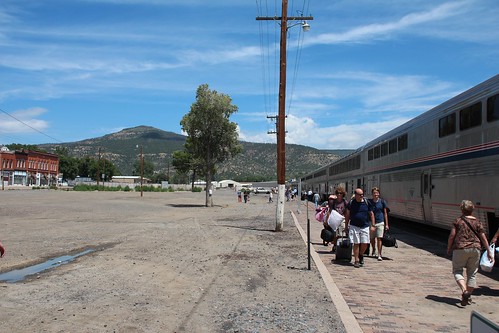
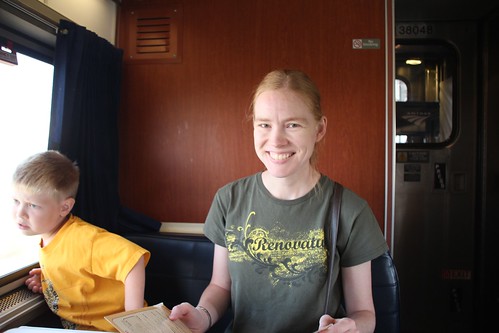
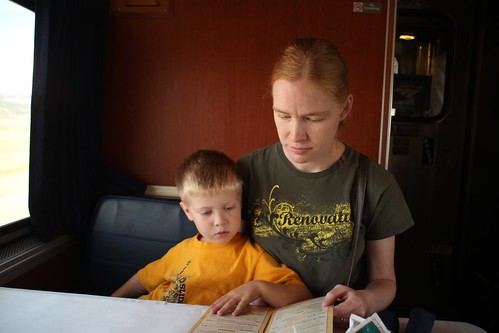
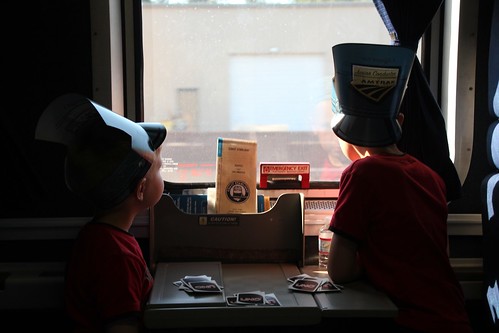
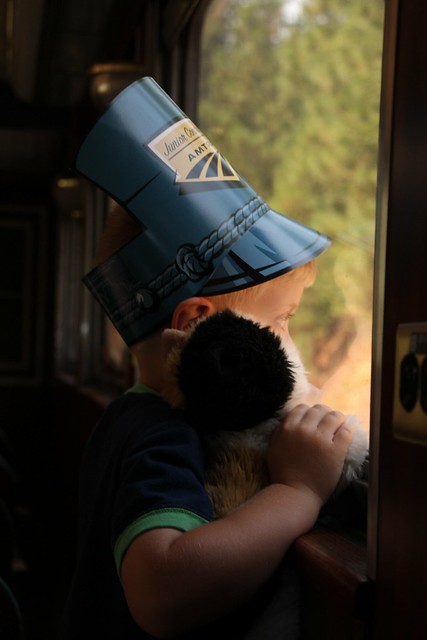
Monday morning, 1:45AM. Laura and I walk into the boys room. We turn on the light. Nothing happens. (They re sound sleepers.) Boys, it s time to get up to go get on the train! Four eyes pop open. Yay! Oh I m so excited! And then, Meow! (They enjoy playing with their stuffed cats that Laura got them for Christmas.) Before long, it was out the door to the train station. We even had time to stop at a donut shop along the way. We climbed into our family bedroom (a sleeping car room on Amtrak specifically designed for families of four), and as the train started to move, the excitement of what was going on crept in. Yes, it s 2:42AM, but these are two happy boys: 2014-08-04 02 Jacob and Oliver love trains, and this was the beginning of a 3-day train trip from Newton to Seattle that would take us through Kansas, Colorado, the Rocky Mountains of New Mexico, Arizona, Los Angeles, up the California coast, through the Cascades, and on to Seattle. Whew! Here we are later that morning before breakfast: IMG_3776 Here s our train at a station stop in La Junta, CO: IMG_3791 And at the beautiful small mountain town of Raton, NM: IMG_3805 Some of the passing scenery in New Mexico: IMG_3828 Through it all, we found many things to pass the time. I don t think anybody was bored. I took the boys exploring the train several times we d walk from one end to the other and see what all was there. There was always the dining car for our meals, the lounge car for watching the passing scenery, and on the Coast Starlight, the Pacific Parlor Car. Here we are getting ready for breakfast one morning. IMG_3830 Getting to select meals and order in the train restaurant was a big deal for the boys. IMG_3832 Laura brought one of her origami books, which even managed to pull the boys away from the passing scenery in the lounge car for quite some time. IMG_3848 Origami is serious business: IMG_3869 They had some fun wrapping themselves around my feet and challenging me to move. And were delighted when I could move even though they were trying to weight me down! IMG_3880 Several games of Uno were played, but even those sometimes couldn t compete with the passing scenery: IMG_3898 The Coast Starlight features the Pacific Parlor Car, which was built over 50 years ago for the Santa Fe Hi-Level trains. They ve been updated; the upper level is a lounge and small restaurant, and the lower level has been turned into a small theater. They show movies in there twice a day, but most of the time, the place is empty. A great place to go with little boys to run around and play games. IMG_3896 The boys and I sort of invented a new game: roadrunner and coyote, loosely based on the old Looney Tunes cartoons. Jacob and Oliver would be roadrunners, running around and yelling MEEP MEEP! Meanwhile, I was the coyote, who would try to catch them even briefly succeeding sometimes but ultimately fail in some hilarious way. It burned a lot of energy. And, of course, the parlor car was good for scenery-watching too: IMG_3908 We were right along the Pacific Ocean for several hours sometimes there would be a highway or a town between us and the beach, but usually there was nothing at all between us and the coast. It was beautiful to watch the jagged coastline go by, to gaze out onto the ocean, watching the birds apparently so beautiful that I didn t even think to take some photos. Laura s parents live in California, and took a connecting train. I had arranged for them to have a sleeping car room near ours, so for the last day of the trip, we had a group of 6. Here are the boys with their grandparents at lunch Wednesday: 2014-08-06 11 We stepped off the train in Seattle into beautiful King Street Station. P8100197 Our first day in Seattle was a quiet day of not too much. Laura s relatives live near Lake Washington, so we went out there to play. The boys enjoyed gathering black rocks along the shore. IMG_3956 We went blackberry picking after that filled up buckets for a cobbler. The next day, we rode the Seattle Monorail. The boys have been talking about this for months a kind of train they ve never been on. That was the biggest thing in their minds that they were waiting for. They got to ride in the very front, by the operator. P8080073 Nice view from up there. P8080078 We walked through the Pike Market I hadn t been in such a large and crowded place like that since I was in Guadalajara: P8080019 At the Seattle Aquarium, we all had a great time checking out all the exhibits. The please touch one was a particular hit. P8080038 Walking underneath the salmon tank was fun too. We spent a couple of days doing things closer to downtown. Laura s cousin works at MOHAI, the Museum of History and Industry, so we spent a morning there. The boys particularly enjoyed the old periscope mounted to the top of the building, and the exhibit on chocolate (of course!) P8100146 They love any kind of transportation, so of course we had to get a ride on the Seattle Streetcar that comes by MOHAI. P8090094 All weekend long, we had been noticing the seaplanes taking off from Lake Washington and Lake Union (near MOHAI). So finally I decided to investigate, and one morning while Laura was doing things with her cousin, the boys and I took a short seaplane ride from one lake to another, and then rode every method of transportation we could except for ferries (we did that the next day). Here is our Kenmore Air plane: P8100100 The view of Lake Washington from 1000 feet was beautiful: P8100109 I think we got a better view than the Space Needle, and it probably cost about the same anyhow. P8100117 After splashdown, we took the streetcar to a place where we could eat lunch right by the monorail tracks. Then we rode the monorail again. Then we caught a train (it went underground a bit so it was a subway to them!) and rode it a few blocks. There is even scenery underground, it seems. P8100151 We rode a bus back, and saved one last adventure for the next day: a ferry to Bainbridge Island. 2014-08-11 14 2014-08-11 16 Laura and I even got some time to ourselves to go have lunch at an amazing Greek restaurant to celebrate a year since we got engaged. It s amazing to think that, by now, it s only a few months until our wedding anniversary too! There are many special memories of the weekend I could mention visiting with Laura s family, watching the boys play with her uncle s pipe organ (it s in his house!), watching the boys play with their grandparents, having all six of us on the train for a day, flying paper airplanes off the balcony, enjoying the cool breeze on the ferry and the beautiful mountains behind the lake. One of my favorites is waking up to high-pitched Meow? Meow meow meow! Wake up, brother! sorts of sounds. There was so much cat-play on the trip, and it was cute to hear. I have the feeling we won t hear things like that much more. So many times on the trip I heard, Oh dad, I am so excited! I never get tired of hearing that. And, of course, I was excited, too.

Matthew Palmer: Chromium tabs crashing and not rendering correctly?

If you ve noticed your chrome/chromium on Linux having problems since you upgraded to somewhere around version 35/36, you re not alone. Thankfully, it s relatively easy to workaround. It will hit people who keep their browser open for a long time, or who have lots of tabs (or if you re like me, and do both). To tell if you re suffering from this particular problem, crack open your ~/.xsession-errors file (or wherever your system logs stdout/stderr from programs running under X), and look for lines that look like this:
[22161:22185:0830/124533:ERROR:shared_memory_posix.cc(231)]
Creating shared memory in /dev/shm/.org.chromium.Chromium.gFTQSy
failed: Too many open files
And
[22161:22185:0830/124601:ERROR:host_shared_bitmap_manager.cc(122)]
Cannot create shared memory buffer
If you see those errors, congratulations! The rest of this blog post will be of use to you. There s probably a myriad of bugs open about this problem, but the one I found was #367037: Shared memory-related tab crash. It turns out there s a file handle leak in the chromium codebase somewhere, relating to shared memory handling. There s no fix available, but the workaround is quite simple: increase the number of files that processes are allowed to have open. System-wide, you can do this by creating a file /etc/security/limits.d/local-nofile.conf, containing this line:
* - nofile 65535
You could also edit /etc/security/limits.conf to contain the same line, if you were so inclined. Note that this will only take effect next time you login, or perhaps even only when you restart X (or, at worst, your entire machine). This doesn t help you if you ve got Chromium already open and you d like to stop it from crashing Right Now (perhaps restarting your machine would be a terrible hardship, causing you to lose your hard-won uptime record), then you can use a magical tool called prlimit. The prlimit syscall is available if you re running a Linux 2.6.36 or later kernel, and running at least glibc 2.13. You ll have a prlimit command line program if you ve got util-linux 2.21 or later. If not, you can use the example source code in the prlimit(2) manpage, changing RLIMIT_CPU to RLIMIT_NOFILE, and then running it like this:
prlimit <PID> 65535 65535
The <PID> argument is taken from the first number in the log messages from .xsession-errors in the example above, it s 22161. And now, you can go back to using your tabs as ersatz bookmarks, like I do.

Next.

Previous.