Search Results: "ah"

12 November 2011

John Goerzen: Greece part 5: Friends and Radios

See also parts 1, 2, 3, and 4. This is the biggest highlight of our trip to Greece for me. I enjoy having the chance to meet people, visit for awhile, and make new friends and that certainly happened in Greece. In one of the shops we happened to step into, I noticed a radio behind the counter. That s not unusual itself; radios often catch my eye these days. But this radio was tuned to 21.070, an amateur radio frequency. So I asked the shop owner if he happened to be a ham. And indeed he was. He was Lakis (SV5KKU), and Terah and I had a great time visiting with him. Terah took some photos of us, and then we made our purchases and headed out. I had brought my HT (handheld radio, weighs a few ounces and is powered by batteries) with me, and Lakis told me about the repeaters in the area. I had known about some of that since I had emailed Panos of the amatuer radio club in Rhodes before leaving home (I found his name via Google). A couple of days later, on Tuesday, we found ourselves back in Lindos. It was mid-afternoon, so the shops were quiet. After a late lunch, I thought it would be nice to drop in on Lakis one more time, since we were scheduled to fly back the following morning. I m not sure how long we stayed it must have been at least an hour and enjoyed the fresh orange juice he prepared. After we got back to our hotel Tuesday, I learned that our flights on Wednesday were canceled due to a nationwide air traffic controller strike in Greece. After 3 hours on the phone with Delta (more on that experience later), we got rescheduled to fly back Friday. On Wednesday morning, I remembered that the Rhodes amateur radio club meets every Wednesday evening, and now I would be able to go! I knew how to contact Lakis by email and on the radio, and he kindly offered to pick me up and take me there. So that evening, I got a tour of his impressive mountaintop installation, and then it was on to the club the Radio Amateur Association of the Dodecanese (SZ5RDS). There I met Panos, whom I had emailed earlier (and I think surprised him a bit). It was a friendly group, and they translated into English for me every so often so I knew what was being discussed. When I was about to leave, they gave me this: The translation, partly from my memory and partly with the help of Google Translate, is:
Radio Amateur Association of the Dodecanese, SZ5RDS Our friend and radio colleague KR0L JOHN GOERZEN, who visited the island, has our recognition as an HONORARY CLUB MEMBER. PRESIDENT KAVALAKIS PANAGIOTIS SV5AZK (Panos) SECRETARY PAPADIMITRIOU CHRISTOS SV5DDT RHODES Oct. 5, 2011
(I hope that any Greeks reading this will send me corrections.) I truly appreciated that gesture and meeting all the people in the club. On the way back to the hotel, Lakis and I stopped by a restaurant, which I believe had the best souvlaki I ve ever tasted thanks! We brought some back for Terah. She had chosen to stay at the hotel that evening and had a small hotel meal earlier, but enjoyed the souvlaki and pita. Terah had explained to the ma tre d that I wasn t along that evening because I had gone to an amateur radio club meeting. Judging by the surprised reaction, this was probably the first time they had heard that particular comment! Experiences like this make travel fun and worthwhile. Thank you very much, Lakis and everyone in the club I hope to have a chance to visit again.

10 November 2011

Aigars Mahinovs: Well, this is now really on :)

http://lists.debconf.org/lurker/message/20111110.144615.333c5288.en.html Date: 2011-11-10 16:46 +200
To: DebConf Team
CC: debconf-discuss
Subject: [Debconf-team] Debconf13 in Riga, Latvia bid
Hello all, I will be concise and to the point. This email is a formal bid to organize Debconf13 in Riga, Latvia. You can find all the relevant information on the appropriate wiki page: http://wiki.debconf.org/wiki/DebConf13/Latvia All the plans have been solidified over the last few months and the backup options are there only for unforeseen disaster scenarios (like a big fire burning down the primary venue or something like that). The only details that are not nailed down are the final location for the day trip and formal dinner as the vendors did not want to give us such quotes and tentative reservations so far in advance, but even there we have primary and backup options planned already. We are trying to keep everything about this bid simple and predictable, so we hope you ll enjoy it.
Best regards,
Aigars Mahinovs

8 November 2011

Jan Hauke Rahm: On GNOME 3

Since there have been a few blog posts about GNOME 3 already, I m sure you don t mind me adding one. I m one of those who don t do any work, just lurk around and wait for stuff to be fixed or working in the first place. I also don t like compiling GNOME myself. I barely touched the already packaged stuff in the repository of our Debian GNOME packaging team. But I run unstable plus stuff from experimental. I ll thus have a bit of a different experience with GNOME 3 than current testing users who at least in parts don t seem to like what they re getting. That being said I love it. No, I don t mind running network manager on my systems, I even have it on my netbook (Atom processor). I used wicd for a long time because network manager really got nothing done back in the days (half a year ago or what :)). Nowadays, since version 0.9, it works fine for me. No fiddling around with config files, perfect integration in the desktop, and LAN and WLAN Just Work [tm]. No, I don t like if some weird dependencies dictate what tools to use. I usually used pidgin for messaging, for instance. Now I m using empathy, simply because it s best integrated in GNOME. And no, I won t switch from mutt to evolution. :-P And there are more such cases. Also, these weird accessibility tools that are stuck in the gnome-shell top panel , I don t need them. Still there. (There s an extension to remove it, by the way.) Also, I must say, GNOME 3.2 is a lot better than 3.0 already. And I think 3.4 might do the final trick for me. Fact is, with GNOME 3 I have a much cleaner desktop, there is more room for windows (which is nice on a netbook display), there are web apps which I already use a lot, and it has a professional, not too playful look (i.e. a few effects, clear and consistent theming, no bubbling windows). And the new notification stuff is just awesome, especially with the empathy integration. Oh, and too many mouse click to access an application? 1) Put your most used apps in the favorites bar (or whatever it is called); it s just one click then. 2) Press your meta-key (that way our name for the windows key, or was that the ESC key? Whatever, press your windows key), type in the first two or three letters of your application, and hit enter; you don t need a mouse at all. There. It had to be said. :)

5 November 2011

Christian Perrier: People behind Debian: Rapha l Hertzog, dpkg maintainer, book author

It's about time that Rapha l is interviewed in the "People behind Debian" series he initiated on his blog. Indeed, when he interviews people, Rapha l asks about other people they could suggest for next interviews. So, during mine, I suggested him to be a next "victim". As he couldn't interview himself, I volunteered for this. As you'll see below, Rapha l (who's a friend of mine as I'm a friend of his) likes to speak and that shows in the length of his answers :-) but you always know more about Debian when reading his blog posts, books, mails, etc. I personnally think that he is among the best promoters of the project for years and it was a pleasure for me to conduct this interview. My questions are in bold, the rest is by Rapha l. Who are you? Hi, Rapha l Hertzog, I'm a 32 years old French Debian developer who is married and who has a 2-year old son. I'm running my own company (Freexian) since 2005, I started it 3 years after the end of my computer science studies. I'm also a very proud author of the Cahier de l'Admin Debian, a French book about Debian. You often wrote about your attempts to make your living partly, if not completely, out of your Debian work. Can you describe the way you're trying to do this? My first try has been with Freexian. I always advertised this company as being specialized in Debian GNU/Linux. While Freexian is successful enough to provide me a decent income, I'm not really satisfied with the result because very few of my contracts are about improving Debian. I use Debian daily for the benefit of my customers, writing new customer specific (embedded) software, deploying a service on Debian servers, etc. But except for the occasional bugfix, all this work does not improve Debian (the only exception has been the dpkg multiarch implementation work sponsored by Linaro). The positive side is that I don't need to fill my entire schedule to earn enough money to live. So I'm regularly taking some days off work to be able to contribute to Debian. This is a freedom that I enjoy... My French book has also been a bestseller and depending on the years the royalties represented between 1 and 2 months of supplementary time that I can spend on Debian (that is between 2000 and 4000 EUR of income). Now since last year, I decided to actively work towards my goal of making a living out of my Debian work. I want to build on what has been most successful for me up to now, that is my book. My strategy has been to build an audience around my blog: with a direct contact with my readers I have the opportunity to sell e-books, and without any intermediary taking the biggest part of the price, I don't need a very large audience to be successful. I have also been experiencing micro-donations with Flattr, people who are enjoying my articles on my blog can use it to give a few cents for each article they find useful. With a large enough userbase, this could fund free documentation and would avoid the need for commercial e-books but we're not there currently and I don't know if it will ever reach the critical mass. Last but not least, I'm soliciting donations for my Debian work on the sidebar of my blog, and I have the chance to a have a few (regular) donators. You're a proud father since last year. How do you manage your commitment to the project with your family life? There are few things that I put above Debian in my life, but my family certainly is. I try to handle most of my Debian duties during work hours so that I can spend time with my family on evenings and during week-ends but in truth I never really disconnect from Debian. It happens quite often that I say to my wife I'll come in a few minutes, let me finish this and then I end up responding to a Debian mail, or an IRC query and take 30 minutes instead of the 5 expected ones. I try hard to avoid this but it's difficult. Luckily for me, my wife is very supportive of my Debian involvement and knows me well... By the way my wife is using Debian on her computer, and my son has already played with DoudouLinux (a Debian derivative!). Have you already been accused of self-promotion in your writings? If that would ever happen, what would you answer to that? Yes, more than once. I am proud of what I do for Debian, I enjoy sharing the result of my work. Because of this, some people believe that I'm selfish and egocentric. And this has somewhat increased since I have been soliciting donations: for me it's important to be transparent towards donators so that they see what I really do for Debian. But some people have the feeling that I'm getting undeserved attention and that I bring everything towards my own person. On the other side, as an author, I'm a public figure who is definitely seeking some attention... I don't have any miraculous answer, we are a large and diverse community, it's next to impossible to please everybody. I listen to all the concerns that people bring forward, I take them into account as much as possible, in particular when I believe they are reasonable/well justified, or when they come from people that I highly respect. But sometimes I have to plainly ignore them too... in particular when they are trying to impose their own political view on a topic that's not directly related to the only value that we all share: the social contract. Contributing to Debian is a challenge, we all have to make efforts to put aside our differences and to concentrate on the work that brings us closer to the best free software operating system ever built. You recently launched a campaign to free out the soon-to-be-published "Debian Administrator Handbook", an English version of your well-known book about Debian in French. Can you tell us more about this project? My French book has been very successful at helping people to get started with Debian, and like I already explained, it was also effective to fund a part of my Debian work. So I wanted to make it available world-wide by publishing an English translation of it. I tried to find an English-speaking editor willing to take on the challenge but I found none interested. Not put off by a setback, Roland (my co-author) and I decided to negotiate with our French editor Eyrolles to recuperate the necessary rights to translate the book into English. Handling everything ourselves represents a lot of work, but it also means that we have the freedom required to decide of the license of the resulting book. We would love to see it under a license compatible with the Debian Free Software Guidelines. But at the same time we firmly believe that we deserve a reasonable monetary compensation for the work on the book, so we conditioned its liberation to a predefined amount of money (25 K ) in what we call the "liberation fund". And since we wanted to be sure that we would have the required means to complete the translation, we used a crowfunding platform to seek support of people interested by the book. With such a platform you're only debited if the minimal requested amount is reached. Anyone can participate, pre-order the book and/or put some money in the liberation fund. As of today, we already reached the minimal funding goal (15 K ) so the book translation will happen. But the liberation target has not yet been reached so we don't know yet if the book will be free from the start... you can follow the progress right on the fundraising page or on the website dedicated to the book. PS: If you want to contribute to this project and also make a donation to Debian at the same time, you should check out this page. You're one of the main developers of dpkg, a critical tool for Debian systems. Can you tell us more about the current development challenges it is facing? What will be the new dpkg features for wheezy? The current challenges are not really technical. dpkg is a relatively mature piece of software and it will continue to work for the foreseeable future without needing much maintenance work. The real challenge is trying to setup a healthy developement community around it so that we can keep tackling new interesting problems (there are many listed in the roadmap and in the 225 wishlist bugs). There is a real problem of leadership and communication in the current team. We used to be three, and we're only two nowadays. Guillem is the legitimate leader since he's involved in dpkg's developement since early 2006 while I joined only in late 2007. But in the last 4 years, we did not manage to recruit anyone else on the team. Some persons tried to contribute significant new features (like Sean Finney with a rework of the way we handle configuration files) but they gave up frustrated after a while because we did not manage to review their work (and discuss the design) in any reasonable timeframe. Another famous case is Ian Jackson with his trigger work. His work got merged, but so late that in the mean time he blew up while trying to hijack the maintenance of dpkg. For a long time I was concentrating my work on the Perl part of dpkg (aka dpkg-dev mainly), so I did not feel qualified to review and merge work related to the C part and I was just a worried observator of this situation. I tried to improve it by setting up some basic review infrastructure, it should have brought some lisibility to the status of each change left to be reviewed... but it has not been used and it changed nothing. Over the years, I became much more interested in the C part. My first big contribution in C has been the rewrite of update-alternatives (from Perl to C). I made other small changes in between, but at the start of this year I had this great opportunity to work on the multiarch implementation (FYI, multiarch is the possibility to mix packages from several architectures on a single system). This really forced me to jump into the C codebase and learn a lot about how dpkg is implemented. Thanks to this I have been able to tackle other small projects (like the improved triggers). This would be all great if my multiarch work was already merged, but it's not. It's a large work, I do not mind waiting a bit in particular since Guillem is a highly skilled C programmer. His sharp analysis of new designs are invaluable, when he reviews code he always finds something to improve. I learnt a lot just by reviewing the code he wrote over the years. That said I have been waiting since April without almost no updates from him. With the release team asking us to hurry up, the situation is getting somewhat strained as I really want to see multiarch in Wheezy and I do not really want to short-circuit Guillem. Hum, I may have drifted a bit from your original question... what great new features can people expect? Well multiarch is supposed to be the big new feature, apart from that there aren't many things that matter to the end users. But there are already quite a few changes that are of interest to package maintainers (like hardened build flags, source package improvements, improved triggers, ). What's the biggest problem of Debian? Manicheism and a tendency to quickly polarize the discussions. In reality, there are very few situations where everything is all good or all bad. Ever since I have read The 7 Habits of Highly Effective People I try hard to put into practice the habits of interdependence . Instead of having only my point of view in mind, I try to understand the motivations from the other party ( Seek First to Understand, Then to be Understood ) in order to be able to put forward solutions acceptable to both parties ( Think Win-Win ). I highly recommend this book to anyone. And I invite everybody to at least try to follow those simple advices. Is there someone in Debian you admire for their contributions? There are many and I can't give an exhaustive list... here are some that I would like to highlight (in no particular order): Most of those people are working on improving Debian's infrastructure so that we can all be more effective and do an even better work. This kind of work is not always very visible but it's crucial to Debian's future. Thank you to Rapha l for the time spent answering my questions. I hope you enjoyed reading his answers as I did. And, anyway, it was fun to just play the game "the other way".

4 November 2011

Michael Prokop: FAI: switch from Subversion to Git

Revision one in the Subversion repository of the FAI project dates back to the 27th of June 2000. Over the last few months we were discussing the switch to Git. At the last FAI meeting we decided to finally switch to Git and I volunteered to drive the migration. Today I officially did the migration. I ve been using git-svn to handle the FAI svn repository for at least as long as I m wearing the FAI stable release manager hat. But the tags, author information, inside my git-svn checkout weren t ready for official publishing yet There are at least two different well known and referenced svn2git implementations out there. I decided to give the one hosted on github a shot because it s mentioned at http://help.github.com/import-from-subversion/. It basically uses git-svn and just does the few annoying steps for you that I d had to do manually otherwise. For more complex repositories the other svn2git implementation might be worth a try, especially since it s supported by the svneverever tool. svneverever supports more flexible rules regarding the repository layout (it was used for switching Gentoo s Portage from Subversion to Git). Luckily we didn t need it in our situation and I had experience with git-svn on the FAI repository already, so Converting the repository was as simple as running:

% svn2git svn://svn.debian.org/svn/fai --authors ../fai-svnauthors
The ../fai-svnauthors file contains all the svnuser = Realname <mail@example.org> mappings to get the author information right. Some 41 minutes later svn2git finished its work. Finally I pushed the result to the FAI repository at github. If you re interested in the repository size of svn vs. git:

Paul Wise: Migrating from Galeon to Iceweasel/Firefox

I have been a long-time user of the Galeon web browser, which, while powerful for its time, is getting a bit long in the teeth and has been abandoned for a long time. As a result I need to find something new. As Galeon uses the Mozilla engine I figure switching to Iceweasel/Firefox will be the least amount of pain since they share similar formats for lots of the user configuration and data (with the exception of history). Switching to Firefox also gives me access to a lot of configurability and a vast sea of extensions all written in RDF, JavaScript and zoooool (ahem, XUL). Another plus was that I was already using Firebug for the occasional web development project. Looking at the Mozilla addons site is like entering someone's shed. There will be the few beautiful unfinished projects still being worked on, one polished finished scuplture gathering dust but still admirable, things with power plugs from a bygone era, some things that have a coin slot on them, some cryptic machines with no visible screws or manuals, some spiders and their cobwebs and a few rats and mice chewing through things. A place where you can find some excellent, well documented, useful and Free Software extensions alongside lots of crud. Luckily for me the good stuff that I wanted to use was already in Debian or the friendly Debian Mozilla extension maintainers team was willing to package them for me. In my quest for freedom from Galeon I first noticed that there is no up button in Iceweasel. Bummer, I use that a lot so I went searching for extensions. I soon found one extension, but it hadn't kept up with the ever-changing Mozilla APIs so it fell by the wayside. Thanks to the leavers of breadcrumbs I picked up the trail to a new shiny and working extension. Lo-and-behold I found Uppity, which was all about going up and as it turns out, much better at that than Galeon. Thanks to MozExt team, thats solved, next! The next glaring problem was the lack of Galeon-style smart bookmarks. Before you ask, yes, Firefox smart keyword bookmarks are not the same thing. This was rediculously hard to search for due to the wording used by both projects being same same but different. Some folks switched to Epiphany to get the extra search boxes on their toolbars. Like this guy I was not interested in that, mainly due to the addons I would be missing out on. I tried a few different tacks, even searching for a way to have multiple search boxes in the Firefox toolbars. I soon gave up on finding an extension that would do this like Galeon does so I figured its time to roll up the sleeves and learn some zzzoooool. I already know a little bit about JavaScript and CSS so... First slap a dash of a tutorial about adding toolbar buttons, add a slither of adding extensions without installing them, stare down some Mozilla reference manuals, thrown in a pinch of favicons, give up on a wild goose chase or two, add a big fat blob of zoooool and sautee in fugly hacks. Soon enough you will have something hardcoded that works like Galeon smart bookmarks but looks even better. A screenshot of hacky galeon smart bookmarks in Iceweasel I may eventually turn this into a proper and functionally equivalent extension for Galeon-stlye smart bookmarks but for now it will remain a useful hack. If you want to get your hands dirty with zzzoooooool and try this out after modifying it to use your personal search URLs, please feel free to contact me. For now the only remaining issue I can see is that the forward/back buttons in Iceweasel don't have the explict menu buttons. This is a minor issue for me so now it is time for me to figure out how to migrate my data and config1 before permanently switching away from Galeon. Wish me luck! 1. Of course the data and config are fugly, but that is a something for another, much broader and more complicated hack

3 November 2011

Andrew Pollock: [life] Zoe at 18 months

Wow, a lot (of travel) has happened in the last three months. Zoe has been to Chicago, Langkawi, Brisbane, and is now back in Mountain View. I'm actually feeling really guilty about our carbon footprint for this year. She spent the last about 3.5 weeks in Brisbane with Sarah after the wedding in Langkawi, until I flew there last weekend for my sister's wedding. Losing and finding Smudge helped pass the time, as did having Liam stay with me while he was visiting from Zurich. I could have done without the former, but really appreciated the timing of the latter. There was quite a noticeable vocabulary difference when I finally saw Zoe again. I can't keep up with all the words she can say now, and she's starting to grasp concepts as well. For example, she opened a small cardboard box, and declared it "empty". Apparently we say "uh oh" a lot, as this is one of her favourite things to blurt out whenever anything happens, ranging from my sister's bridal train dragging on the ground at her wedding, to vomiting all over herself in the back of the car. She's definitely not going to be a girly girl. When the flight from Brisbane landed in Los Angeles she yelled out a big "WHOA!" and then "Again!" while furiously doing the baby sign language for "more". Fortunately we were able to oblige for the flight from LAX to San Jose, and she again enjoyed the landing (she got to sit in her own seat for this one) and did a loud "Wow!" and "Again!" I'm looking forward to taking her on her first roller coaster ride. Her canine teeth still haven't come through yet, but I think they've just started to make an appearance. We're still trying to de-jetlag her at the moment, so it's unclear if the wake-ups throughout the night are because of jetlag or teeth issues (or a combination of both). She handled all of the travel fairly well, although she's now too long for a aeroplane bassinet. She didn't get a lot of sleep on the 12.5 hour flight from Brisbane to Los Angeles (which meant we got none), but she was pretty well behaved for the bulk of it. She's good enough on her legs now that she can just tear up and down the aisles without incident, so we made countless laps of the plane to keep her occupied. The return flight was on Halloween, and the cabin crew had gotten into the spirit with temporary face tattoos, some cabin decorations and some "costumes". The trip back home was actually epic in that it was littered with minor annoyances, but I'll save that for a separate blog post. This Christmas should be a fun one, as she'll be old enough to be a bit more interactive about the whole thing. She may also freak out sitting on Santa's knee, so we may not get quite as nice a photo as we got last year.
John Goerzen: Greece part 4: Food and Shopping

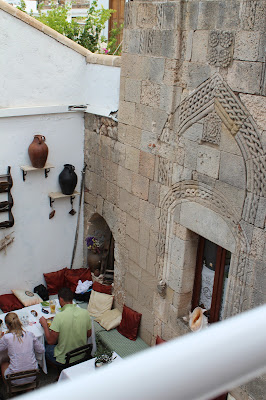
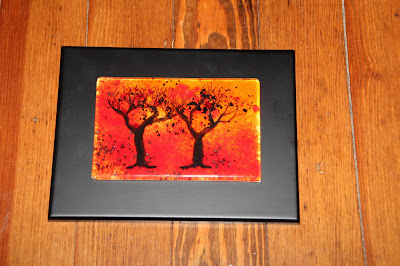
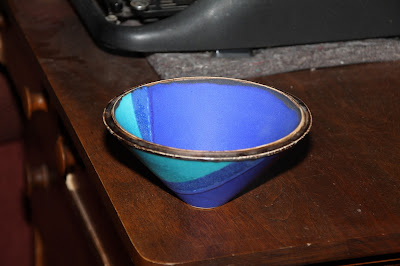
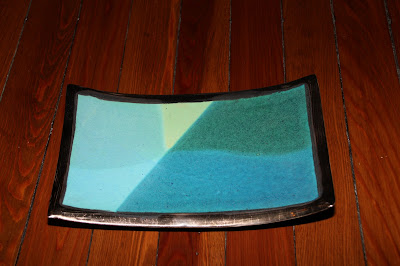
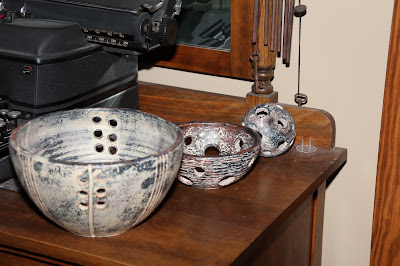
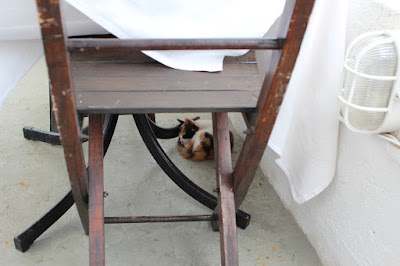
See also parts 1, 2, and 3. I am a person that enjoys food that s different from what s at home, and Rhodes didn t disappoint. Terah and I used to live close to an excellent Greek restaurant in Indianapolis, so we were already familiar in some way with the food. But there isn t any Greek restaurant at all in the Wichita area, so we missed it. Our favorite restaurant on Rhodes was Kalypso of Lindos. Everything there was just excellent, starting with the saganaki, one of my favorite Greek appetizers. I had yogurt with honey there for dessert both times we visited, a surprisingly tasty desert. Like many restaurants in Lindos, Kalypso had the option of eating on the rooftop, or at ground level. We ate on the roof, which had a nice view of the Lindos Acropolis. Being outdoors, there were sometimes cats around. This kitten enjoyed playing games with my shoestrings for awhile. Kalypso is at a 17th century captain s house. Here s a view of it from the rooftop: We, of course, had the chance to eat at quite a few different places during our visit, and I d go on way too long if I mentioned them all. Terah particularly enjoyed the gelaterie.gr ice cream shop in the square in Rhodes. We liked our lunch at Maria s Taverna in Lindos and enjoyed chatting with the staff there. I recently talked about shopping in Mexico, and perhaps learned a thing or two from that. I won t say we never buy them, but in general we don t buy souvenirs like t-shirts, plastic things made in China, etc. We prefer to buy local. Those items tend to be higher quality, more interesting, and we like to support the local economy. We also don t have lots of room for things, so we try to choose carefully. So it was something of a surprise to Terah, and perhaps even to me, when I suggested we go shopping one day. Terah typically enjoys shopping a lot more than I do. Anyhow, off we went to Lindos. One of the first things that had caught our eye in Lindos was the shop selling glass. But it wasn t just any glass; it appeared to be made with some sort of layered process, and has a distinctly three-dimensional feel to it. As you move around, it looks like the background shifts. We wound up with this item, which was made in Athens: By the time we visited Lindos specifically for shopping, we had a good feel for when the busy times of day were, so we could avoid them. It gave us the opportunity to visit with people and when they weren t busy, many shopkeepers liked to chat. I enjoy hearing people s stories and we heard several. One ceramics shop the Musa Shop -caught Terah s eye. They had such incredible and beautiful pieces outside that we just had to go in. We wound up with two pieces from there, both in shades of blue: Both remind me of the Aegean Sea and the deep blue sky of Rhodes. And then, as we were walking along, I pointed inside a shop and said to Terah, Hey, those look different. We went in, and eventually wound up buying these: The appearance, and even feel, of them is unlike anything I d seen. Quite interesting. And seeing those particular items in the Lakis Place shop led to making some new friends I ll write about it in the next post.

2 November 2011

Benjamin Mako Hill: Slouching Toward Autonomy

I care a lot about free network services. Recently, I have been given lots of reasons to be happy with the progress the free software community has made in developing services that live up to my standards. I have personally switched from a few proprietary network services to alternative systems that respect my autonomy and have been very happy both with the freedom I have gained and with the no-longer-rudimentary feature sets that the free tools offer. Although there is plenty left to do, here are four tools I'm using now instead of the proprietary tools that many people use, or that I used to use myself: In trying to switch away from proprietary services, I have found that there still a lack of good information comparing the different systems out there and giving folks advice on who might be able to help with things like setup or hosting. I really value hearing from other people about what they use and what they find useful but finding this information online still seems to be a struggle. The autonomo.us wiki seems like the natural place to host or summarize this discussion and to collect and share information useful for those of us slouching (or running) toward autonomy in our use of network services. I invite folks to get involved in improving that already useful resource. For example, this week, I spent a few hours researching free social bookmarking tools and produced a major update to the (already useful) social bookmarking page on the autonomo.us wiki. Of course, I can imagine lots of ways to improve that page and to collect similar information on other classes of network services. Please join me in that effort!

Jon Dowland: Greece (Dodecanese islands)

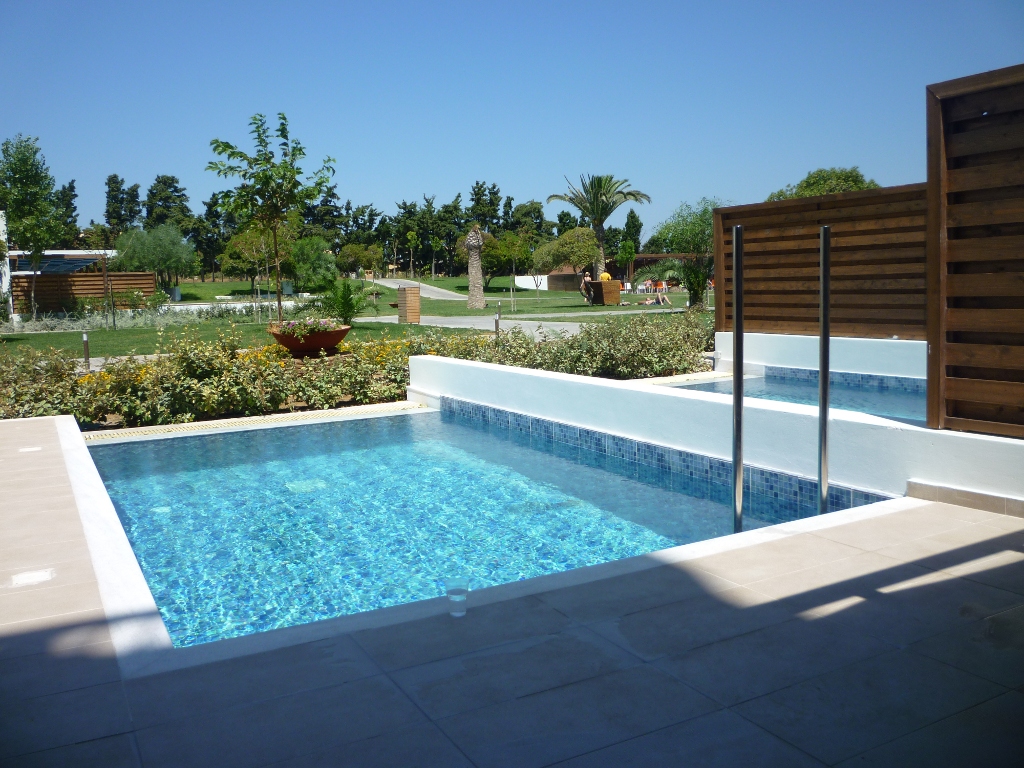
private pool in Kos private pool in Kos
In August 2010, Sarah and I had a lovely (but short) week-long holiday in Rhodes, Greece. We thoroughly enjoyed it but I didn't document it here. When John Goerzen was looking for European holiday destinations earlier this year, I had no hesitation in recommending Rhodes. I am surprised and delighted that John took up my suggestion and loved it too! See John's holiday blogging for more on this beautiful place. This year we wanted to take a two-week holiday and have a similar experience again. We ended up choosing Kos, Greece. Kos was, perhaps not surprisingly, quite similar to Rhodes. We were based in "Hotel Oceanis" in Psalidi, on the north-east side, about ten minutes bus journey from Kos town. The hotel was very relaxing with plenty of space. It's based on the sea-side and has two public pools: the large main one and a smaller (but seemingly deeper) one adjacent to a snack bar. We were very lucky to find that the hotel had put is in a room with a private swimming pool! In total, we had four separate places to swim in the hotel. Kos town was similar to Rhodes town, but not quite as "historic" feeling. It was a bit larger/more spread-out. Some areas of the town are quite lively but we always managed to find pleasant and quiet places to eat and drink together. We had twice as much time and took advantage of that by hiring a car and visiting the rest of the island. In particular we loved the beach in Mastichari (middle-North), which had quite turbulent rolling waves. "Sunny beach" on the south coast was absolutely packed with holiday makers, but was none-the-less worth the look. All in all, my first two experiences of Greek islands were wonderful. One day, I'm sure we will return to (at least) Rhodes, but we may leave it for a while and see what the rest of the world has to offer in the mean time.

Andrew McMillan: Teaching our children to lie

My son is being encouraged to lie. It's a fairly regular occurrence around here, and I'm sure you've seen it yourself. It's that checkbox on the website you're visiting where you say "Yes, I am over X years of age".

How could you not trust this child?

It's well-known that there are 10 year olds on Facebook, and everyone agrees that they lied to get those accounts, but nobody really cares much. Facebook don't care. Facebook just see another pair of eyeballs, and another node in their social graph, but actually Fraser, Max (and even Heather) aren't nodes on that particular graph. Today's annoyance was that Fraser's Youtube account has been blocked. That just seems silly. It's an open website where anyone can read pretty much anything, except that to have an account on there you have to be older than X years (I haven't bothered to discover how old X is - it's not relevant). So it seems there's this website, worth many billions of dollars and these guys can only control the functionality available to signed up members with an "on/off" switch. Is it bad if under 12 year olds post comments in a public forum? Oh, we should not let them create accounts then. Is it bad if under 8 year olds see soft porn? Oh, if we stop them creating accounts they'll be safe from that! What about the 14 year old with the videos of her cat? Well we definitely, definitely don't want that! That's ludicrous! Can these people not design a website to accept a child? Someone who might want to log into the website just like mummy and daddy do? Then, when the honest child is logged in, perhaps the account can be linked to a parent's account, or perhaps it could just be restricted in different ways. Let's see what they say an account on Youtube offers you:
  1. Subscribe to your favorite channels.
  2. Rent or purchase top Hollywood movies
  3. Save videos to watch later
  4. Get recommendations based on what you've watched
  5. Share videos you like on Facebook, Twitter, and more
  6. Find your Facebook, Yahoo, Hotmail and Gmail contacts on YouTube
  7. Watch private videos from friends and family
OK, so as far as I can see:
  1. Might be useful to any age person, and is entirely innocuous in the context of the
    content of Youtube which is available to anonymous visitors of any age.
  2. Well, Fraser wouldn't be able to pay, since he doesn't have anything to pay
    with. I guess he could steal my credit card, but if he's already at that level
    of skullduggery then some silly checkbox would be "child's play" to his lying
    skillz.
  3. Entirely innocuous.
  4. Seems pretty innocuous too.
  5. Presumably he wouldn't because 10 year old's can't have identities. And this
    functionality could easily be restricted, in any case
  6. And if there are no relationships, there are no friends. Maybe there is family,
    which is fine, I guess. I think the risks here are controllable.
So there's plenty of value to a 10 year old in having an account. There's nothing that most reasonable parents would be concerned about, if there was a clear policy of limited functionality in place that parents could see and have confidence in. The Youtube thing actually seems to be related to (maybe) to Google's recent push towards "identity". Children younger than X are not allowed to have an on-line identity, because they might run amok on the intarwebs. Or see scary stuff. Or something. And yet, by denying them an account, they are removing any ability to actually apply a level of control that reflects the presumed maturity (since, after all, age is no more a direct measure of maturity than height). Truly though, what totally pisses me off about this situation, is that Fraser associated a bunch of channels with his Youtube account, and he receives a weekly digest of the activity. Unfortunately we can't log in to turn it off.

1 November 2011

Michal &#268;iha&#345;: New Pootle on l10n.cihar.com

Translation server for phpMyAdmin and Gammu/Wammu has been updated to run latest Pootle. I had to do this upgrade to be able to run on latest Django, which is used by other websites as well (this blog is one of them). Unfortunately it was not as easy as running apt-get upgrade as Pootle package has been dropped from Debian recently. So I had to make quick and dirty packages myself (no removal of embedded software and so on). Installing newer version lead to major breakage as the database upgrade silently failed and I had to recover manually. In the end I've dropped all pootle_* tables and recreated them again. Unfortunately this lead to loss of some data from user profiles, but I could not see other way around. Anyway the service should be now back running in normal shape, so go ahead and translate :-).

Filed under: Debian English Phpmyadmin 0 comments Flattr this!

31 October 2011

Russell Coker: Links October 2011

Ron has written an interesting blog post about the US as a lottery economy [1]. Most people won t win the lottery (literally or metaphorically) so they remain destined for poverty. Tim Connors wrote an informative summary of the issues relating to traffic light timing and pedestrians/cyclists [2]. I have walked between Southgate and the Crown Casino area many times and have experienced the problem he describes many times. Scientific American has an interesting article about a new global marketplace for scientific research [3]. The concept is that instead of buying a wide range of research equipment (and hiring people to run it) you can outsource non-core research for a lower cost. Svante P bo gave an interesting TED talk about his work analysing human DNA to determine prehistoric human migration patterns [4]. Among other things he determined that 2.5% of the DNA from modern people outside Africa came from the Neandertals. Lisa wrote an informative article about Emotional Support Animals (as opposed to Service Animals such as guide dogs) for disabled people [5]. It seems that the US law is quite similar to Australian law in that reasonable accommodations have to be made for disabled people which includes allowing pets in rental properties even if such pets aren t officially ESAs. Beyond Zero Emissions has an interesting article about electricity prices which explains how wind power forces prices down [6]. This should offset the new carbon tax . Problogger has an article listing some of the ways that infographics can be used on the web [7]. This can be for blog posts or just for your personal understanding. Petter Reinholdtsen wrote a handy post about ripping DVDs which also explains how to do it when the DVD has errors [8], I haven t yet ripped a DVD but this one is worth noting for when I do. Miriam has written about the Fantastic Park ICT training for 8-12yo kids [9]. It s run in Spain (and all the links are in Spanish but Google Translation works well) and is a camp to teach children about computers and robotics using Lego Wedo among other things. We need to have more of these things in other countries. The Atlantic Cities has an interesting article comparing grid and cul-de-sac based urban designs [10]. Apparently the cul-de-sac design forces an increase in car use and therefore an increase in fatal accidents while also decreasing the health benefits of walking. Having lived in both grid and cul-de-sac based urban areas I have personally experienced the benefits of the grid based layout. Sarah Chayes wrote an interesting LA Times article about governments being taken over by corruption [11]. She argues that arbitrary criminal government leads to an increase in religious fundamentelism. Michael Lewis has an insightful article in Vanity Fair about the bankruptcy of US states and cities [12]. Ben Goldacre gave an interesting TED talk about bad medical science [13]. He starts with the quackery that is published in tabloid newspapers and then moves on to deliberate scientific fraud by medical companies. Geoff Mulgan gave an interesting TED talk about the Studio Schools in the UK which are based around group project work [14]. The main thing I took from this is that the best method of teaching varies by subject and by student. So instead of having a monolithic education department controlling everything we should have schools aimed at particular career paths and learning methods. Sophos has an interesting article about the motion sensors of smart phones being used to transcribe keyboard input based on vibration [15]. This attack could be launched by convincing a target to install a trojan application on their phone. It s probably best to regard your phone with suspicion nowadays. Simon Josefsson wrote a good article explaining how to use a GPG smart-card to authenticate ssh sessions with particular reference to running backups over ssh [16]. C ran wrote a good article explaining how to use all the screen space when playing DVDs on a wide screen display with mplayer [17]. Charles Stross has an informative blog post about Wall St Journal circulation fraud [18]. Apparently the WSJ was faking readership numbers to get more money from advertisers, this should lead to law suits and more problems for Rupert Murdoch. Is everything associated with Wall St corrupt?

25 October 2011

Jon Dowland: ifttt

I've just learned of if this then that: a simple web tool that performs actions based on events. It's like a streamlined, easy-to-use subset of yahoo pipes. I'm going to try and use it to achieve a few bits of integration, such as tweeting when I write a new blog post.

23 October 2011

Uwe Hermann: The TrekStor eBook Reader 3.0 (EBR30-a), review and dissection

The TrekStor eBook Reader 3.0, front
The TrekStor eBook Reader 3.0, front on There a many, many, e-book reader devices available these days, and they're quickly becoming pretty affordable. The currently cheapest device in Germany (that I know of) is the TrekStor eBook Reader 3.0, model number EBR30-a, at 59.- Euros via Weltbild or Hugendubel. The device has an 800x480 7" TFT (yep, no e-ink), 2100mAh battery, it can display PDFs, EPUB, and TXT files (and Adobe DRM crap, which I don't really care about), it has an accelerometer which allows for landscape/portrait switching, it can play MP3, OGG, WAV, and WMA audio files (headphone jack), it can display pictures (BMP, GIF, JPG, even PNG, though that's not mentioned in the vendor's specs), and it has 2GB internal storage for books/music/pictures. Uploading of (non-DRM) content is done by a simple file copy, it enumerates as a standard USB mass storage device with FAT filesystem. It's a relatively nice reader for the price, I've read a few PDFs (datasheets, presentations) on it in the subway/train while listening to music from the device and it's quite OK for my purposes. So much for the review part. However, I didn't really buy it for reading books on it, I was more interested in taking it apart, of course ;-) My hope was that it would turn out to be a really cheap device running Linux/U-Boot which would be perfect for playing around with embedded Linux stuff. Unfortunately, I wasn't so lucky (it seems). The TrekStor eBook Reader 3.0, opened I've posted a few photos of the device and its hardware components on my flickr account and over at randomprojects.org, together with all the information I was able to find out so far. Here's a quick summary: The TrekStor eBook Reader 3.0, CPU There are public datasheets for most of the hardware components (see randomprojects.org for links), but unfortunately the most important one (for the CPU) is not yet found/identified. I was told that the CPU/SoC is probably based on an ARM9 (ARM926EJ-S) core and the firmware running on it seems to be some uCos-based RTOS (not Linux, unfortunately). So far I was not able to find out the vendor name or website of the "FI E200" CPU/SoC (let alone any datasheets), any hints would be highly appreciated. I checked arm.com: Processor Licensees, but the only two companies whose name starts with "F" having licensed an ARM9 core are Fujitsu and Freescale, which doesn't fit, I think? I could (and probably will) check the PCB for RX/TX lines on an UART and/or JTAG pads (none are obviously labelled), and given that it's and ARM9 core there is a good chance that OpenOCD can be used and that a standard cross-gcc for ARM will work. However, that is all pretty pointless until it's clear which SoC exactly is used, and thus whether there is already Linux and/or U-Boot support for it and/or whether datasheets are available so that the respective code could be written. Without datasheets, this is going to be a pretty painful experience, not really worth investing much time, IMHO. If anyone knows more about the vendor/device and respective datasheets, please let me know. Thanks!

Andrew Pollock: [life] Miss Representation

A few months after Zoe was born, it hit me that we didn't just have to raise a baby to grow up happy and healthy, we were raising a girl, and had to worry about making sure she had a healthy self-image and mind as well, and having to worry about how the world she was coming into was going to have an impact on that. I think it might have been around the time that I became aware of the book Cinderella Ate My Daughter that I had this realisation. I started taking more of an interest in, what I guess I'd call feminist issues. I became a seed funder for the Ada Initiative, and I tend to prick my ears up when I hear about feminist issues. So when an email went by on the parents list at work about a screening of an independent documentary film called Miss Representation, I watched the trailer, and since I'm currently swanning around sans wife and child, ponied up the $10 to go and see a screening of it in Palo Alto, which was followed by a Q&A session with the writer/director/producer. I basically went along on the strength of the trailer, and being a father of a daughter, and didn't do much more reading into the who the writer/director/producer was. It turns out that Jennifer Siebel is Gavin Newsom's wife. I didn't figure that out until I got home and did my homework, so some of the references she made in the conversation after the screening didn't make a lot of sense to me at the time. The documentary itself was very poignant, but I found that after about 40 or 50 minutes, I felt that the point was made, and I would have preferred to see more about what to do about it. But I guess what to do about it is to be aware of the problem. I had some trouble accepting the statistic quoted at the beginning of the film that the average teenager spends more than 10 hours each day consuming media. If they sleep for 8 hours, and go to school for 6 hours, that means they're spending every other waking minute consuming media, and I just don't buy that. Apparently Jennifer is working on a couple of related follow-up documentaries, so it'll be interesting to see what they're about and what they're like, and how they're presented to the viewing public. One of the things that disappointed me a bit was this film doesn't look like it's going to do any sort of mainstream theatre run. I'm not sure why, but it seems like the way they're going is for more of a grassroots, small screening thing, possibly as a way of trying to get it added to (I presume private) school curricula. It is getting a couple of showings on Oprah Winfrey's cable channel OWN, but that doesn't seem like enough to me. I think it'd really cause people to sit up and take notice if it got half-decent box office numbers and a bit more press coverage as a result. It's the kind of thing I could see going viral if it gets more exposure. The other thing that really disappointed me was the lack of men in the audience. I think I could have counted on both hands the number of men there. But I have to say that I wouldn't have heard about it (yet, anyway) if it weren't for that email that went by on the mailing list at work, so maybe it just doesn't have much of a profile yet. I view this documentary in the same calibre as Super Size Me, or anything that Michael Moore has put out. It's a documentary trying to highlight an issue with American culture. It should get as widespread a viewing as possible to get the conversation going. Instead, as best I can tell, there's two DVDs billed as "educational material", with what I consider prohibitive pricetags. I want to purchase a copy of the film for posterity (if nothing more, it'll be interesting to show Zoe a snapshot of American culture from around when she was born), but I'd also like to get my hands on the age-appropriate educational stuff so that I can use it with Zoe. The likelihood of Zoe going to a school that incorporates the material into its curriculum is slim (she'll be educated in Australia), so I'd really like to be able to use it at home. I'll end with this thought provoking article that also did the rounds of the parents list at work a few months ago.

22 October 2011

Antti-Juhani Kaijanaho: Have you edited /etc/grep-dctrl.rc or ~/.grep-dctrlrc ?

If so, please tell me in the comments, how and for what purpose. I am going to remove this configuration feature as being an unnecessary complication, unless I hear compelling user stories.

18 October 2011

Lars Wirzenius: In search of boredom

A month ago I started a new job, at Codethink, a British software development company. We work mainly on and with free software. I'm working on a new project called Baserock, a way to build embedded Linux systems that we think will avoid many of the pain points that people usually have. Baserock is still in its formative stages, not something you can really play with. Codethink has its main office in Manchester, so the past weekend I moved there with my fianc . Oh yeah, Soile and I got engaged. Rings of Palladium. While I've been having a lot of fun, I'd like to be bored for a while now. Instead, I'm going to Prague for ELC Europe.

14 October 2011

John Goerzen: Greece part 2: History (and sauntering up to guys with machine guns)

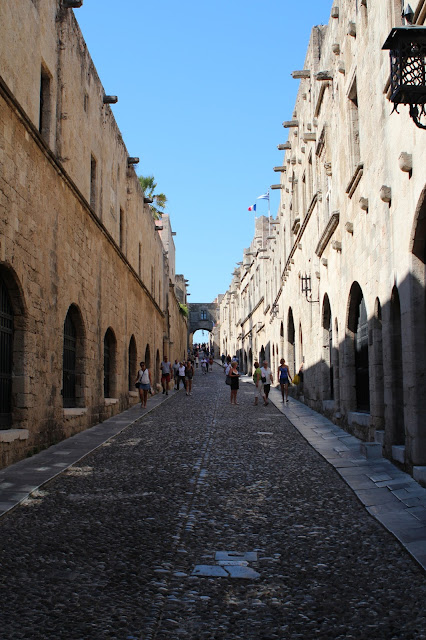
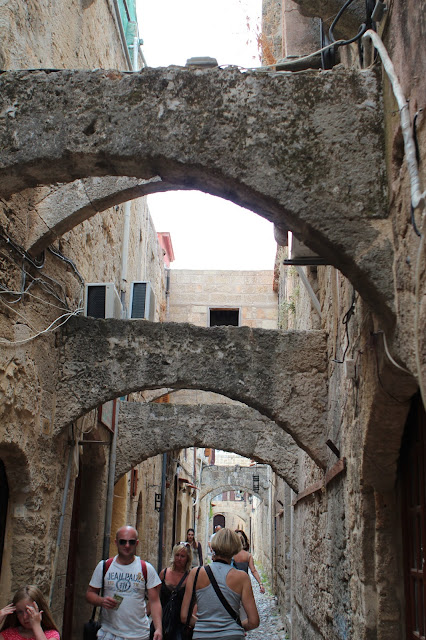
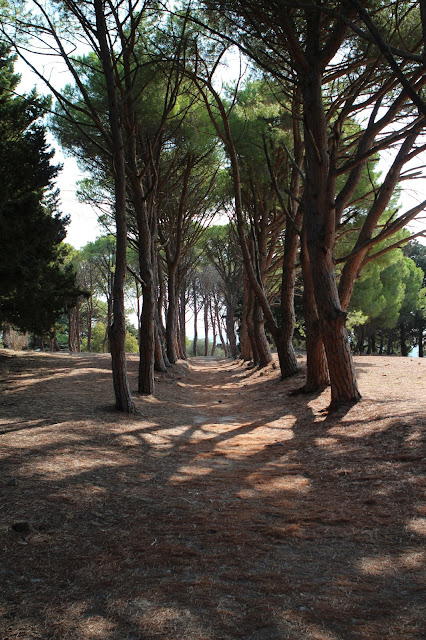
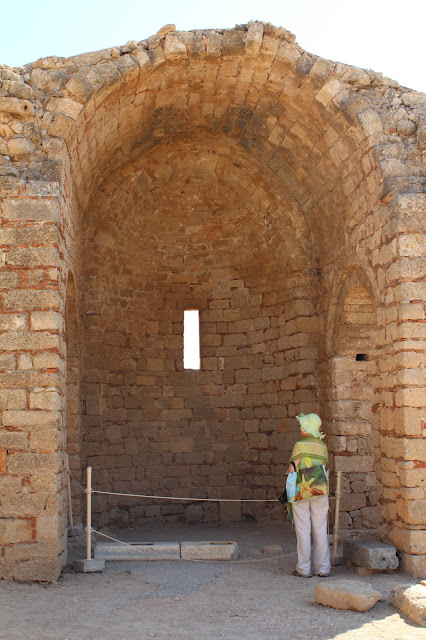
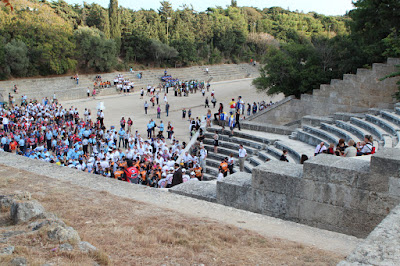
Terah and I went to the Greek island Rhodes recently. This is the second in a series about it. I am one to enjoy history. There is something deeply, well, connecting, about standing in an old place. There is a timeless quality to it a feeling of being connected to so many people of the past, and yet still being connected to change, visible in things such as weathering of stones. To gaze at pottery that s 300 years old, walk past 700-year-old walls, or pass through what remains of the grand portico of an ancient temple to Athena stirs a feeling I can barely explain, of timelessness. Although Rhodes doesn t have the famous Greek sites such as the Parthenon or Delphi, I can t help but wonder why the Rhodes sites aren t better known. They were incredible and it is hard to condense all that we saw into a short blog post. I have to start with the medieval Rhodes Old Town. We got off the bus a few blocks from it one bright morning, and our first task was to find a gate across the moat. Oh yes, A GATE ACROSS THE MOAT. It s a dry moat, and that bridge off in the distance is the gate we were headed to. Outside of the outer wall is a nice quiet walking area. The moat and walls completely surround Old Town and, for the most part, date back about 500 years. The round stones you see on that picture, we were told, were likely surplus from catapults and other projectile weapons. Cross one line of walls and you come to another, with original canons still present. The Knights Hospitaller of St. John, which held Rhodes for a few centuries until the Ottomans captured it, sure knew how to build to impress. The gate we happened to use was Amboise, the Grand Master s Gate. Right there is the stunningly rebuilt landmark Palace of the Grand Master. It is absolutely impossible for any photograph to begin to do this building justice. Between its imported Greek and Roman floors, to the grand nature of everything in it, and the archaeological museum in one corner, it was a fitting start to a visit to Old Town. Here s one of the main staircases. Just near the Palace is quiet courtyard with an old door. Pass through that door and suddenly you re in the midst of the busy Old Town. And among the landmarks in Old Town, the most prominent is Ippoton, the Avenue of the Knights. Along this avenue are the buildings built by the various nationalities of knights, many of which are historical sites in their own. Taken together, it is quite clear why Rhodes is said to be one of the world s best-preserved medieval cities. Down at the other end of Ippoton is the Knights Hospital, which is now part of the archaeological museum. Step off the Avenue a few blocks and you get to some quieter narrow streets just as old, in many cases. On Sunday morning, we were able to visit Mount Filerimos. In contrast to the busy Rhodes, Filerimos had an air of quiet and still to it. It was the site of a monastery, two historic churches, and a landmark Italian cross on the mountaintop. We arrived, and begin our visit with a walk up the quiet stone path. When we got to the top, we walked past this peaceful church. As we walked past the outside, we heard the beautiful music of chant from indoors. We got to step in and listen to mass for a few minutes. In typical fashion, directly in front of the church are two much older sites: one, the ruins of a temple to Athena, and the other a 4th-century Christian bapistery. Rhodes is a popular tourist destination, and of course we saw plenty of popular sites (such as the grandmaster s palace). Filerimos had a few tourists too, but not as many. I frequently like to operate on the plan of going wherever all the tourists aren t. And so, on Filerimos, that meant seeing what was behind the monastery. It started with this peaceful tree-lined path. And the deserted, but intentionally open, gate led to the remains of a Byzantine fortress, which had been a staging area for both the Knights and the Ottomans before their campaigns to capture Rhodes. It also provided incredible views of the surrounding countryside. The first historic site we had visited on our trip was the Acropolis of Lindos, parts of which are 2300 years old. Here s a view of the mountain from the rooftop of the Kalypso, our favorite restaurant in Lindos. The columns of the temple to Athena Lindia are visible, and of course so are the walls. The road up to the acropolis is accessible only on foot or by donkey. It is apparently the only road that has ever been used to get to the acropolis. Here is the partially-restored grand portico to the temple. There s an old Christian church (4th century, if memory serves) at the Acropolis too. The Acropolis makes some pretty good use of natural defenses too. Here s a view from one level of it. There s a manmade wall up there at the very top. And, of course, the beautiful Aegean always in the background. There are lots of cats on Rhodes. Here is a kitten napping at the top of the Lindos Acropolis: Lindos itself is a beautiful town. Here s one of the quieter streets: Notice the pebble steps leading into the houses those intricate pieces of artwork are all over. This post won t be complete without the story of our visit to the Acropolis of Rhodes. We walked there from Old Town. At the Acropolis, there are the remains of a temple to Apollo, an ancient theater, and an ancient stadium where qualifying matches for the Olympics were held. As we got closer to the area, we were repeatedly passed by people dressed in uniforms of various types. And as we got there, we joined a stream of people entering the area. The ancient stadium had apparently thousands of people in it, country names were being read off over the loudspeakers, policemen wielding machine guns were standing by, and we had absolutely no idea what was going on. At this point, you can appreciate the difference between Terah and me. Terah thought that we have no idea what is happening, she was tired from the walk, and so thought we should just leave. I thought that we have no idea what is happening, which is a great reason to stay. So Terah opted to sit and read a bit under some trees while I explored. Here s a view of the stadium as it was emptying out, seen from the theater: I explored the temple and theater, and eventually we were ready to head back. We knew there was a bus back to the New Market (from where we could get a bus back to our hotel), but didn t know where the bus stop was. The obvious place to ask were the policemen, which I thought I would do. Terah thought she would just stay sitting under the trees, on the grounds that the policemen nearest us were all carrying machine guns and perhaps wouldn t like to be disturbed. This led to my cryptic tweet:
Only ONE of us is the kind of person that goes up to guys with machine guns to ask what s happening. Me to Terah today
They told me that it was the preparations for the opening ceremony for a global shooting contest, and also gave me directions to the bus stop.

Martin F. Krafft: Deutsche Bahn frequent traveller: a joke!

It has been a while since I last ranted about the Deutsche Bahn, our national train service monopoly. Out of necessity, I ve since become one of their frequent travellers. Together with the spiffy, silver card, I received a pamphlet, in which the advantages of frequent travellers are listed. When I compare those advantages to what was promised, I cannot help but notice quite a few differences to my disadvantage. Since I refused to believe that the Deutsche Bahn could be this stupid, I double-checked with the service hotline, and I now have the information to report:
  1. While the website promises free access to DB lounges for two , the pamphlet clarifies this: free access to DB lounges for you and your partner, provided each of you owns a first-class, long-distance ticket. What they left out: Oh, you don t need the frequent traveller status for that, the ticket suffices. Or, put differently: the frequent traveller status does not give you any access to the lounges. False advertising, anyone?
  2. The pamphlet explains that there are special seat areas reserved for frequent travellers. However, one must not be a frequent traveller to use them. So should I expect people to prompt me to show my card or clear my seat. And should I be expected to prompt people to flash the card or leave? Not feasible, anyone?
  3. I am told that I get priority treatment at the counter, except there is only one counter (in Munich), usually with a line of people for 1st-class and frequent travellers. All other travellers get delegated to 12 counters by an efficient number system, which means one is better off picking a number and standing in line. The other day, a lady came and flashed her frequent traveller card, expecting people to make way, but obviously noone did. Did they actually think about this, anyone?
I don t need to go into detail on the other benefits : they claim that there is special, reserved parking, but that s probably only on paper. They claim reductions in hotels and rental cars, but probably limited to availability, they claim exclusive events, but those are likely the ones noone goes to anyway. And they claim a service hotline, but it s a premium-rate number. So all in all, Deutsche Bahn have once again managed to disappoint. The frequent traveller card does not give any benefits. It rather makes me regret having spent so much money on this company. Scratch frequent traveller , make it repeat idiot . NP: Steven Wilson: Grace for Drowning

Next.

Previous.