Welcome to post 52 in the R4 series.
Following up on the post #51
yesterday and its stated intent of posting some more here The r-ci setup (which was
introduced in post
#32 and updated in post
#45) offers portable continuous integration which can take
advantage of different backends: Github Actions, Azure Pipelines,
GitLab, BitBuckets, and possibly as it only requires a basic Ubuntu
shell after which it customizes itself and runs via shell script.
Portably. Now, most of us, I suspect still use it with GitHub Actions
but it is reassuring to know that one can take it elsewhere should the
need or desire arise.
One thing many repos did, and which stopped working reliably is
coverage analysis. This is made easy by the covr package, and
made fast, easy, reliable (as we quip) thanks to r2u. But transmission to
codecov stopped working a while back so
I had mostly commented it out in my repos, rendering the reports more
and more stale. Which is not ideal.
A few weeks ago I gave this another look, and it turns that that codecov now requires an API token
to upload. Which one can generate in the user -> settings menu on
their website under the access tab. Which in turn then needs to be
stored in each repo wanting to upload. For Github, this is
under settings -> secrets and variables -> actions as a
repository secret . I suggest using CODECOV_TOKEN for its
name.
After that the three-line block in the yaml file can reference it as
a secret as in the following snippet, now five lines, taken from one of
my ci.yaml files:
It assigns the secret we stored on the website, references it by
prefix secrets. and assigns it to the environment variable
CODECOV_TOKEN. After this reports flow as one can see on
repositories where I re-enabled this as for example here for
RcppArmadillo.
Welcome to post 51 in the R4 series.
A while back I realized I should really just post a little more as
not all post have to be as deep and introspective as for example the
recent-ish two
cultures post #49.
So this post is a neat little trick I (somewhat belatedly) realized
somewhat recently. The context is the ongoing transition from
(Rcpp)Armadillo 14.6.3 and earlier to (Rcpp)Armadillo 15.0.2 or later.
(I need to write a bit more about that, but that may require a bit more
time.) (And there are a total of seven (!!) issue tickets managing the
transition with issue
#475 being the main parent issue, please see there for more
details.)
In brief, the newer and current Armadillo no longer allows C++11
(which also means it no longer allowes suppression of deprecation
warnings ). It so happens that around a decade ago packages were
actively encouraged to move towards C++11 so many either set an
explicit SystemRequirements: for it, or set CXX_STD=CXX11
in src/Makevars .win . CRAN has for some time now issued
NOTEs asking for this to be removed, and more recently enforced this
with actual deadlines. In RcppArmadillo I opted to accomodate old(er)
packages (using this by-now anti-pattern) and flip to Armadillo 14.6.3
during a transition period. That is what the package does now: It gives
you either Armadillo 14.6.3 in case C++11 was detected (or this legacy
version was actively selected via a compile-time #define),
or it uses Armadillo 15.0.2 or later.
So this means we can have either one of two versions, and may want to
know which one we have. Armadillo carries its own version macros, as
many libraries or projects do (R of course included). Many many years
ago (git blame points to sixteen and twelve for a revision)
we added the following helper function to the package (full source here,
we show it here without the full roxygen2 comment header)
// [[Rcpp::export]]Rcpp::IntegerVector armadillo_version(bool single)// These are declared as constexpr in Armadillo which actually does not define them// They are also defined as macros in arma_version.hpp so we just use thatconstunsignedint major = ARMA_VERSION_MAJOR;constunsignedint minor = ARMA_VERSION_MINOR;constunsignedint patch = ARMA_VERSION_PATCH;if(single)return Rcpp::wrap(10000* major +100* minor + patch);elsereturn Rcpp::IntegerVector::create(Rcpp::Named("major")= major, Rcpp::Named("minor")= minor, Rcpp::Named("patch")= patch);
It either returns a (named) vector of the standard major , minor ,
patch form of the common package versioning pattern, or a single
integer which can used more easily in C(++) via preprocessor macros. And
this being an Rcpp-using package, we can of course access either easily
from R:
>library(RcppArmadillo)>armadillo_version(FALSE)major minor patch 1502>armadillo_version(TRUE)[1] 150002>
Perfectly valid and truthful. But cumbersome at the R level. So
when preparing for these (Rcpp)Armadillo changes in one of my package, I
realized I could alter such a function and set the S3 type to
package_version. (Full version of one such variant here)
// [[Rcpp::export]]Rcpp::List armadilloVersion()// create a vector of major, minor, patchauto ver = Rcpp::IntegerVector::create(ARMA_VERSION_MAJOR, ARMA_VERSION_MINOR, ARMA_VERSION_PATCH);// and place it in a list (as e.g. packageVersion() in R returns)auto lst = Rcpp::List::create(ver);// and class it as 'package_version' accessing print() etc methods lst.attr("class")= Rcpp::CharacterVector::create("package_version","numeric_version");return lst;
Three statements each to
create the integeer vector of known dimensions and compile-time
known value
embed it in a list (as that is what the R type expects)
set the S3 class which is easy because Rcpp accesses attributes and
create character vectors
and return the value. And now in R we can operate more easily on this
(using three dots as I didn t export it from this package):
An object of class package_version inheriting from
numeric_version can directly compare against a (human- but
not normally machine-readable) string like 15.0.0 because the simple
S3 class defines appropriate operators, as well as print()
/ format() methods as the first expression shows. It is
these little things that make working with R so smooth, and we can
easily (three statements !!) do so from Rcpp-based packages too.
The underlying object really is merely a list containing a
vector:
but the S3 glue around it makes it behave nicely.
So next time you are working with an object you plan to return to R,
consider classing it to take advantage of existing infrastructure (if it
exists, of course). It s easy enough to do, and may smoothen the
experience at the R side.
The Incandescent is a stand-alone magical boarding school fantasy.
Your students forgot you. It was natural for them to forget you. You
were a brief cameo in their lives, a walk-on character from the
prologue. For every sentimental my teacher changed my life
story you heard, there were dozens of my teacher made me
moderately bored a few times a week and then I got through the year
and moved on with my life and never thought about them again.
They forgot you. But you did not forget them.
Doctor Saffy Walden is Director of Magic at Chetwood, an elite boarding
school for prospective British magicians. She has a collection of
impressive degrees in academic magic, a specialization in demonic
invocation, and a history of vague but lucrative government job offers
that go with that specialty. She turned them down to be a teacher, and
although she's now in a mostly administrative position, she's a good
teacher, with the usual crop of promising, lazy, irritating, and nervous
students.
As the story opens, Walden's primary problem is Nikki Conway. Or, rather,
Walden's primary problem is protecting Nikki Conway from the Marshals, and
the infuriating Laura Kenning in particular.
When Nikki was seven, she summoned a demon who killed her entire family
and left her a ward of the school. To Laura Kenning, that makes her a risk
who should ideally be kept far away from invocation. To Walden, that makes
Nikki a prodigious natural talent who is developing into a brilliant
student and who needs careful, professional training before she's tempted
into trying to learn on her own.
Most novels with this setup would become Nikki's story. This one does not.
The Incandescent is Walden's story.
There have been a lot of young-adult magical boarding school novels since
Harry Potter became a mass phenomenon, but most of them focus on
the students and the inevitable coming-of-age story. This is a story about
the teachers: the paperwork, the faculty meetings, the funding challenges,
the students who repeat in endless variations, and the frustrations and
joys of attempting to grab the interest of a young mind. It's also about
the temptation of higher-paying, higher-status, and less ethical work,
which however firmly dismissed still nibbles around the edges.
Even if you didn't know Emily Tesh is herself a teacher, you would guess
that before you get far into this novel. There is a vividness and a depth
of characterization that comes from being deeply immersed in the nuance
and tedium of the life that your characters are living. Walden's
exasperated fondness for her students was the emotional backbone of this
book for me. She likes teenagers without idealizing the process of
being a teenager, which I think is harder to pull off in a novel than it
sounds.
It was hard to quantify the difference between a merely very
intelligent student and a brilliant one. It didn't show up in a list
of exam results. Sometimes, in fact, brilliance could be a
disadvantage when all you needed to do was neatly jump the hoop of
an examiner's grading rubric without ever asking why. It was the
teachers who knew, the teachers who could feel the difference. A few
times in your career, you would have the privilege of teaching someone
truly remarkable; someone who was hard work to teach because they made
you work harder, who asked you questions that had never
occurred to you before, who stretched you to the very edge of your own
abilities. If you were lucky as Walden, this time, had been lucky
your remarkable student's chief interest was in your discipline: and
then you could have the extraordinary, humbling experience of teaching
a child whom you knew would one day totally surpass you.
I also loved the world-building, and I say this as someone who is
generally not a fan of demons. The demons themselves are a bit of a
disappointment and mostly hew to one of the stock demon conventions, but
the rest of the magic system is deep enough to have practitioners who
approach it from different angles and meaty enough to have some satisfying
layered complexity. This is magic, not magical science, so don't expect a
fully fleshed-out set of laws, but the magical system felt substantial and
satisfying to me.
Tesh's first novel, Some Desperate
Glory, was by far my favorite science fiction novel of 2023. This is a
much different book, which says good things about Tesh's range and the
potential of her work yet to come: adult rather than YA, fantasy rather
than science fiction, restrained and subtle in places where Some
Desperate Glory was forceful and pointed. One thing the books do have in
common, though, is some structure, particularly the false climax near the
midpoint of the book. I like the feeling of uncertainty and possibility
that gives both books, but in the case of The Incandescent, I was
not quite in the mood for the second half of the story.
My problem with this book is more of a reader preference than an objective
critique: I was in the mood for a story about a confident, capable
protagonist who was being underestimated, and Tesh was writing a novel
with a more complicated and fraught emotional arc. (I'm being
intentionally vague to avoid spoilers.) There's nothing wrong with the
story that Tesh wanted to tell, and I admire the skill with which she did
it, but I got a tight feeling in my stomach when I realized where she was
going. There is a satisfying ending, and I'm still very happy I read this
book, but be warned that this might not be the novel to read if you're in
the mood for a purer competence porn experience.
Recommended, and I am once again eagerly awaiting the next thing Emily
Tesh writes (and reminding myself to go back and read her novellas).
Content warnings: Grievous physical harm, mind control, and some body
horror.
Rating: 8 out of 10
A new version 0.1.6 of the tint package
arrived at CRAN today.
tint provides a style not unlike Tufte for use in html
and pdf documents created from markdown. The github repo shows
several examples in its README, more as usual in the package
documentation.
This release addresses a small issue where in pdf mode,
pandoc (3.2.1 or newer) needs a particular macros defined
when static (premade) images or figure files are included. No other
changes.
Changes in tint
version 0.1.6 (2025-09-25)
An additional LaTeX command needed by pandoc (>= 3.2.1) has been defined for the two pdf
variants.
rebuilderd v0.25.0 was recently released, this version has improved in-toto support for cryptographic attestations that this blog post briefly outlines.
As a quick recap, rebuilderd is an automatic build scheduler that emerged in 2019/2020 from the Reproducible Builds project doing the following:
Track binary packages available in a Linux distribution
Attempt to compile the official binary packages from their (alleged) source code
Check if the package we compiled is bit-for-bit identical
If so, mark it GOOD, issue an attestation
In every other case, mark it BAD, generate a diffoscope
The binary packages in question are explicitly the packages users would also fetch and install.
This project has caught the attention of Arch Linux, Debian and Fedora.
Before this version
The original in-toto integration was added 4 years ago by Joy Liu during GSoC 2021, with help from Santiago Torres and Aditya Sirish (shoutout to the real ones!). Each rebuilderd-worker had its own cryptographic key and included a signed attestation along with the build result that could then be fetched from /api/v0/builds/ id /attestation.
Since these workers are potentially ephemeral, and the list of worker public keys wasn t publicly known, it was difficult to make use of those signatures.
Since this version
This version introduces the following:
The rebuilderd daemon itself generates a long-term signing key
All attestations signed by a trusted worker also get signed by the rebuilderd daemon
The rebuilderd daemon gets a new endpoint that can be used to query the public-key this instance identifies with: /api/v0/public-keys
An example of this new endpoint can be found here:
https://reproducible.archlinux.org/api/v0/public-keys
The response looks something like this (this is the real long-term signing key used by reproducible.archlinux.org):
"current":["-----BEGIN PUBLIC KEY-----\r\nMCwwBwYDK2VwBQADIQBLNcEcgErQ1rZz9oIkUnzc3fPuqJEALr22rNbrBK7iqQ==\r\n-----END PUBLIC KEY-----\r\n"]
It s a list so keys can potentially be rolled over time, and in future versions it should also list the public keys the instance has used in the past.
I haven t develop any integrations for this yet (partially also to allow deployments to catch up with the new release), but I m planning to do so using the in-toto crate.
Closing words
To give credit where credit is due (and because people pointed out I tend to end my blog posts too abruptly), rebuilderd is only the scheduler software, the actual build in the correct build-environment is outsourced to external tooling like archlinux-repro and debrebuild.
For further reading on applied reproducible builds, see also my previous blogpost Disagreeing rebuilders and what that means.
Also, there are currently efforts by the European Commission to outlaw unregulated end-to-end encrypted chat, so this may be a good time to prepare for (potential) impact and check what tools you have available to reduce unchecked trust in (open source) software authorities, to keep them operating honest and accountable.
Never lose the plot~
Sincerely yours
In December 2024, I went on a trip through four countries - Singapore, Malaysia, Brunei, and Vietnam - with my friend Badri. This post covers our experiences in Singapore.
I took an IndiGo flight from Delhi to Singapore, with a layover in Chennai. At the Chennai airport, I was joined by Badri. We had an early morning flight from Chennai that would land in Singapore in the afternoon. Within 48 hours of our scheduled arrival in Singapore, we submitted an arrival card online. At immigration, we simply needed to scan our passports at the gates, which opened automatically to let us through, and then give our address to an official nearby. The process was quick and smooth, but it unfortunately meant that we didn t get our passports stamped by Singapore.
Before I left the airport, I wanted to visit the nature-themed park with a fountain I saw in pictures online. It is called Jewel Changi, and it took quite some walking to get there. After reaching the park, we saw a fountain that could be seen from all the levels. We roamed around for a couple of hours, then proceeded to the airport metro station to get to our hotel.
A shot of Jewel Changi. Photo by Ravi Dwivedi. Released under the CC-BY-SA 4.0.
There were four ATMs on the way to the metro station, but none of them provided us with any cash. This was the first country (outside India, of course!) where my card didn t work at ATMs.
To use the metro, one can tap the EZ-Link card or bank cards at the AFC gates to get in. You cannot buy tickets using cash. Before boarding the metro, I used my credit card to get Badri an EZ-Link card from a vending machine. It was 10 Singapore dollars ( 630) - 5 for the card, and 5 for the balance. I had planned to use my Visa credit card to pay for my own fare. I was relieved to see that my card worked, and I passed through the AFC gates.
We had booked our stay at a hostel named Campbell s Inn, which was the cheapest we could find in Singapore. It was 1500 per night for dorm beds. The hostel was located in Little India. While Little India has an eponymous metro station, the one closest to our hostel was Rochor.
On the way to the hostel, we found out that our booking had been canceled.
We had booked from the Hostelworld website, opting to pay the deposit in advance and to pay the balance amount in person upon reaching. However, Hostelworld still tried to charge Badri s card again before our arrival. When the unauthorized charge failed, they sent an automatic message saying we tried to charge and to contact them soon to avoid cancellation, which we couldn t do as we were in the plane.
Despite this, we went to the hostel to check the status of our booking.
The trip from the airport to Rochor required a couple of transfers. It was 2 Singapore dollars (approx. 130) and took approximately an hour.
Upon reaching the hostel, we were informed that our booking had indeed been canceled, and were not given any reason for the cancelation. Furthermore, no beds were available at the hostel for us to book on the spot.
We decided to roam around and look for accommodation at other hostels in the area. Soon, we found a hostel by the name of Snooze Inn, which had two beds available. It was 36 Singapore dollars per person (around 2300) for a dormitory bed. Snooze Inn advertised supporting RuPay cards and UPI. Some other places in that area did the same. We paid using my card. We checked in and slept for a couple of hours after taking a shower.
By the time we woke up, it was dark. We met Praveen s friend Sabeel to get my FLX1 phone. We also went to Mustafa Center nearby to exchange Indian rupees for Singapore dollars. Mustafa Center also had a shopping center with shops selling electronic items and souvenirs, among other things. When we were dropping off Sabeel at a bus stop, we discovered that the bus stops in Singapore had a digital board mentioning the bus routes for the stop and the number of minutes each bus was going to take.
In addition to an organized bus system, Singapore had good pedestrian infrastructure. There were traffic lights and zebra crossings for pedestrians to cross the roads. Unlike in Indian cities, rules were being followed. Cars would stop for pedestrians at unmanaged zebra crossings; pedestrians would in turn wait for their crossing signal to turn green before attempting to walk across. Therefore, walking in Singapore was easy.
Traffic rules were taken so seriously in Singapore I (as a pedestrian) was afraid of unintentionally breaking them, which could get me in trouble, as breaking rules is dealt with heavy fines in the country. For example, crossing roads without using a marked crossing (while being within 50 meters of it) - also known as jaywalking - is an offence in Singapore.
Moreover, the streets were litter-free, and cleanliness seemed like an obsession.
After exploring Mustafa Center, we went to a nearby 7-Eleven to top up Badri s EZ-Link card. He gave 20 Singapore dollars for the recharge, which credited the card by 19.40 Singapore dollars (0.6 dollars being the recharge fee).
When I was planning this trip, I discovered that the World Chess Championship match was being held in Singapore. I seized the opportunity and bought a ticket in advance. The next day - the 5th of December - I went to watch the 9th game between Gukesh Dommaraju of India and Ding Liren of China. The venue was a hotel on Sentosa Island, and the ticket was 70 Singapore dollars, which was around 4000 at the time.
We checked out from our hostel in the morning, as we were planning to stay with Badri s aunt that night. We had breakfast at a place in Little India. Then we took a couple of buses, followed by a walk to Sentosa Island. Paying the fare for the buses was similar to the metro - I tapped my credit card in the bus, while Badri tapped his EZ-Link card. We also had to tap it while getting off.
If you are tapping your credit card to use public transport in Singapore, keep in mind that the total amount of all the trips taken on a day is deducted at the end. This makes it hard to determine the cost of individual trips. For example, I could take a bus and get off after tapping my card, but I would have no way to determine how much this journey cost.
When you tap in, the maximum fare amount gets deducted. When you tap out, the balance amount gets refunded (if it s a shorter journey than the maximum fare one). So, there is incentive for passengers not to get off without tapping out. Going by your card statement, it looks like all that happens virtually, and only one statement comes in at the end. Maybe this combining only happens for international cards.
We got off the bus a kilometer away from Sentosa Island and walked the rest of the way. We went on the Sentosa Boardwalk, which is itself a tourist attraction. I was using Organic Maps to navigate to the hotel Resorts World Sentosa, but Organic Maps route led us through an amusement park. I tried asking the locals (people working in shops) for directions, but it was a Chinese-speaking region, and they didn t understand English. Fortunately, we managed to find a local who helped us with the directions.
A shot of Sentosa Boardwalk. Photo by Ravi Dwivedi. Released under the CC-BY-SA 4.0.
Following the directions, we somehow ended up having to walk on a road which did not have pedestrian paths. Singapore is a country with strict laws, so we did not want to walk on that road. Avoiding that road led us to the Michael Hotel. There was a person standing at the entrance, and I asked him for directions to Resorts World Sentosa. The person told me that the bus (which was standing at the entrance) would drop me there! The bus was a free service for getting to Resorts World Sentosa. Here I parted ways with Badri, who went to his aunt s place.
I got to the Resorts Sentosa and showed my ticket to get in. There were two zones inside - the first was a room with a glass wall separating the audience and the players. This was the room to watch the game physically, and resembled a zoo or an aquarium. :) The room was also a silent room, which means talking or making noise was prohibited. Audiences were only allowed to have mobile phones for the first 30 minutes of the game - since I arrived late, I could not bring my phone inside that room.
The other zone was outside this room. It had a big TV on which the game was being broadcast along with commentary by David Howell and Jovanka Houska - the official FIDE commentators for the event. If you don t already know, FIDE is the authoritative international chess body.
I spent most of the time outside that silent room, giving me an opportunity to socialize. A lot of people were from Singapore. I saw there were many Indians there as well. Moreover, I had a good time with Vasudevan, a journalist from Tamil Nadu who was covering the match. He also asked questions to Gukesh during the post-match conference. His questions were in Tamil to lift Gukesh s spirits, as Gukesh is a Tamil speaker.
Tea and coffee were free for the audience. I also bought a T-shirt from their stall as a souvenir.
After the game, I took a shuttle bus from Resorts World Sentosa to a metro station, then travelled to Pasir Ris by metro, where Badri was staying with his aunt. I thought of getting something to eat, but could not find any caf s or restaurants while I was walking from the Pasir Ris metro station to my destination, and was positively starving when I got there.
Badri s aunt s place was an apartment in a gated community. On the gate was a security guard who asked me the address of the apartment. Upon entering, there were many buildings. To enter the building, you need to dial the number of the apartment you want to go to and speak to them. I had seen that in the TV show Seinfeld, where Jerry s friends used to dial Jerry to get into his building.
I was afraid they might not have anything to eat because I told them I was planning to get something on the way. This was fortunately not the case, and I was relieved to not have to sleep with an empty stomach.
Badri s uncle gave us an idea of how safe Singapore is. He said that even if you forget your laptop in a public space, you can go back the next day to find it right there in the same spot. I also learned that owning cars was discouraged in Singapore - the government imposes a high registration fee on them, while also making public transport easy to use and affordable. I also found out that 7-Eleven was not that popular among residents in Singapore, unlike in Malaysia or Thailand.
The next day was our third and final day in Singapore. We had a bus in the evening to Johor Bahru in Malaysia. We got up early, had breakfast, and checked out from Badri s aunt s home. A store by the name of Cat Socrates was our first stop for the day, as Badri wanted to buy some stationery. The plan was to take the metro, followed by the bus. So we got to Pasir Ris metro station. Next to the metro station was a mall. In the mall, Badri found an ATM where our cards worked, and we got some Singapore dollars.
It was noon when we reached the stationery shop mentioned above. We had to walk a kilometer from the place where the bus dropped us. It was a hot, sunny day in Singapore, so walking was not comfortable. We had to go through residential areas in Singapore. We saw some non-touristy parts of Singapore.
After we were done with the stationery shop, we went to a hawker center to get lunch. Hawker centers are unique to Singapore. They have a lot of shops that sell local food at cheap prices. It is similar to a food court. However, unlike the food courts in malls, hawker centers are open-air and can get quite hot.
This is the hawker center we went to. Photo by Ravi Dwivedi. Released under the CC-BY-SA 4.0.
To have something, you just need to buy it from one of the shops and find a table. After you are done, you need to put your tray in the tray-collecting spots. I had a kaya toast with chai, since there weren t many vegetarian options. I also bought a persimmon from a nearby fruit vendor. On the other hand, Badri sampled some local non-vegetarian dishes.
Table littering at the hawker center was prohibited by law. Photo by Ravi Dwivedi. Released under the CC-BY-SA 4.0.
Next, we took a metro to Raffles Place, as we wanted to visit Merlion, the icon of Singapore. It is a statue having the head of a lion and the body of a fish. While getting through the AFC gates, my card was declined. Therefore, I had to buy an EZ-Link card, which I had been avoiding because the card itself costs 5 Singapore dollars.
From the Raffles Place metro station, we walked to Merlion. The place also gave a nice view of Marina Bay Sands. It was filled with tourists clicking pictures, and we also did the same.
Merlion from behind, giving a good view of Marina Bay Sands. Photo by Ravi Dwivedi. Released under the CC-BY-SA 4.0.
After this, we went to the bus stop to catch our bus to the border city of Johor Bahru, Malaysia. The bus was more than an hour late, and we worried that we had missed the bus. I asked an Indian woman at the stop who also planned to take the same bus, and she told us that the bus was late. Finally, our bus arrived, and we set off for Johor Bahru.
Before I finish, let me give you an idea of my expenditure. Singapore is an expensive country, and I realized that expenses could go up pretty quickly. Overall, my stay in Singapore for 3 days and 2 nights was approx. 5500 rupees. That too, when we stayed one night at Badri s aunt s place (so we didn t have to pay for accomodation for one of the nights) and didn t have to pay for a couple of meals. This amount doesn t include the ticket for the chess game, but includes the costs of getting there. If you are in Singapore, it is likely you will pay a visit to Sentosa Island anyway.
Stay tuned for our experiences in Malaysia!
Credits: Thanks to Dione, Sahil, Badri and Contrapunctus for reviewing the draft. Thanks to Bhe for spotting a duplicate sentence.
Akvorado 2.0 was released today! Akvorado collects network flows with
IPFIX and sFlow. It enriches flows and stores them in a ClickHouse database.
Users can browse the data through a web console. This release introduces an
important architectural change and other smaller improvements. Let s dive in!
New outlet service
The major change in Akvorado 2.0 is splitting the inlet service into two
parts: the inlet and the outlet. Previously, the inlet handled all flow
processing: receiving, decoding, and enrichment. Flows were then sent to Kafka
for storage in ClickHouse:
Akvorado flow processing before the introduction of the outlet service
Network flows reach the inlet service using UDP, an unreliable protocol. The
inlet must process them fast enough to avoid losing packets. To handle a
high number of flows, the inlet spawns several sets of workers to receive flows,
fetch metadata, and assemble enriched flows for Kafka. Many configuration
options existed for scaling, which increased complexity for users. The code
needed to avoid blocking at any cost, making the processing pipeline complex
and sometimes unreliable, particularly the BMP receiver.1 Adding new
features became difficult without making the problem worse.2
In Akvorado 2.0, the inlet receives flows and pushes them to Kafka without
decoding them. The new outlet service handles the remaining tasks:
Akvorado flow processing after the introduction of the outlet service
This change goes beyond a simple split:3 the outlet now reads flows from
Kafka and pushes them to ClickHouse, two tasks that Akvorado did not handle
before. Flows are heavily batched to increase efficiency and reduce the load
on ClickHouse using ch-go, a low-level Go client for ClickHouse. When
batches are too small, asynchronous inserts are used (e20645). The number of
outlet workers scales dynamically (e5a625) based on the target batch
size and latency (50,000 flows and 5 seconds by default).
This new architecture also allows us to simplify and optimize the code. The
outlet fetches metadata synchronously (e20645). The BMP component becomes
simpler by removing cooperative multitasking (3b9486). Reusing the same
RawFlow object to decode protobuf-encoded flows from Kafka reduces pressure on
the garbage collector (8b580f).
The effect on Akvorado s overall performance was somewhat uncertain, but a
user reported 35% lower CPU usage after migrating from the previous
version, plus resolution of the long-standing BMP component issue.
Other changes
This new version includes many miscellaneous changes, such as completion for
source and destination ports (f92d2e), and automatic restart of the
orchestrator service (0f72ff) when configuration changes to avoid a common
pitfall for newcomers.
Let s focus on some key areas for this release: observability,
documentation, CI,
Docker, Go, and JavaScript.
Observability
Akvorado exposes metrics to provide visibility into the processing pipeline and
help troubleshoot issues. These are available through Prometheus HTTP metrics
endpoints, such as /api/v0/inlet/metrics. With the introduction
of the outlet, many metrics moved. Some were also renamed (4c0b15) to match
Prometheus best practices. Kafka consumer lag was added as a new metric
(e3a778).
If you do not have your own observability stack, the Docker Compose setup
shipped with Akvorado provides one. You can enable it by activating the profiles
introduced for this purpose (529a8f).
The prometheus profile ships Prometheus to store metrics and Alloy
to collect them (2b3c46, f81299, and 8eb7cd). Redis and Kafka
metrics are collected through the exporter bundled with Alloy (560113).
Other metrics are exposed using Prometheus metrics endpoints and are
automatically fetched by Alloy with the help of some Docker labels, similar to
what is done to configure Traefik. cAdvisor was also added (83d855) to
provide some container-related metrics.
The loki profile ships Loki to store logs (45c684). While Alloy
can collect and ship logs to Loki, its parsing abilities are limited: I could
not find a way to preserve all metadata associated with structured logs produced
by many applications, including Akvorado. Vector replaces Alloy (95e201)
and features a domain-specific language, VRL, to transform logs. Annoyingly,
Vector currently cannot retrieve Docker logs from before it was
started.
Finally, the grafana profile ships Grafana, but the shipped dashboards are
broken. This is planned for a future version.
Documentation
The Docker Compose setup provided by Akvorado makes it easy to get the web
interface up and running quickly. However, Akvorado requires a few mandatory
steps to be functional. It ships with comprehensive documentation, including
a chapter about troubleshooting problems. I hoped this documentation would
reduce the support burden. It is difficult to know if it works. Happy users
rarely report their success, while some users open discussions asking for help
without reading much of the documentation.
In this release, the documentation was significantly improved.
The documentation was updated (fc1028) to match Akvorado s new architecture.
The troubleshooting section was rewritten (17a272). Instructions on how to
improve ClickHouse performance when upgrading from versions earlier than 1.10.0
was added (5f1e9a). An LLM proofread the entire content (06e3f3).
Developer-focused documentation was also improved (548bbb, e41bae, and
871fc5).
From a usability perspective, table of content sections are now collapsable
(c142e5). Admonitions help draw user attention to important points
(8ac894).
Example of use of admonitions in Akvorado's documentation
Continuous integration
This release includes efforts to speed up continuous integration on GitHub.
Coverage and race tests run in parallel (6af216 and fa9e48). The Docker
image builds during the tests but gets tagged only after they succeed
(8b0dce).
GitHub workflow to test and build Akvorado
End-to-end tests (883e19) ensure the shipped Docker Compose setup works as
expected. Hurl runs tests on various HTTP endpoints, particularly to verify
metrics (42679b and 169fa9). For example:
## Test inlet has received NetFlow flowsGEThttp://127.0.0.1:8080/prometheus/api/v1/query[Query]query:sum(akvorado_inlet_flow_input_udp_packets_total job="akvorado-inlet",listener=":2055" )
HTTP200[Captures]inlet_receivedflows:jsonpath "$.data.result[0].value[1]" toInt
[Asserts]variable"inlet_receivedflows">10## Test inlet has sent them to KafkaGEThttp://127.0.0.1:8080/prometheus/api/v1/query[Query]query:sum(akvorado_inlet_kafka_sent_messages_total job="akvorado-inlet" )
HTTP200[Captures]inlet_sentflows:jsonpath "$.data.result[0].value[1]" toInt
[Asserts]variable"inlet_sentflows">=inlet_receivedflows
Docker
Akvorado ships with a comprehensive Docker Compose setup to help users get
started quickly. It ensures a consistent deployment, eliminating many
configuration-related issues. It also serves as a living documentation of the
complete architecture.
This release brings some small enhancements around Docker:
Previously, many Docker images were pulled from the Bitnami Containers
library. However, VMWare acquired Bitnami in 2019 and Broadcom acquired
VMWare in 2023. As a result, Bitnami images were deprecated in less than a
month. This was not really a surprise4. Previous versions of Akvorado
had already started moving away from them. In this release, the Apache project s
Kafka image replaces the Bitnami one (1eb382). Thanks to the switch to KRaft
mode, Zookeeper is no longer needed (0a2ea1, 8a49ca, and f65d20).
Akvorado s Docker images were previously compiled with Nix. However, building
AArch64 images on x86-64 is slow because it relies on QEMU userland emulation.
The updated Dockerfile uses multi-stage and multi-platform builds: one
stage builds the JavaScript part on the host platform, one stage builds the Go
part cross-compiled on the host platform, and the final stage assembles the
image on top of a slim distroless image (268e95 and d526ca).
# This is a simplified versionFROM--platform=$BUILDPLATFORMnode:20-alpineASbuild-js
RUNapkadd--no-cachemake
WORKDIR/buildCOPYconsole/frontendconsole/frontend
COPYMakefile.
RUNmakeconsole/data/frontend
FROM--platform=$BUILDPLATFORMgolang:alpineASbuild-go
RUNapkadd--no-cachemakecurlzip
WORKDIR/buildCOPY..
COPY--from=build-js/build/console/data/frontendconsole/data/frontend
RUNgomoddownload
RUNmakeall-indep
ARGTARGETOSTARGETARCHTARGETVARIANTVERSION
RUNmake
FROMgcr.io/distroless/static:latestCOPY--from=build-go/build/bin/akvorado/usr/local/bin/akvorado
ENTRYPOINT["/usr/local/bin/akvorado"]
When building for multiple platforms with --platform
linux/amd64,linux/arm64,linux/arm/v7, the build steps until the highlighted
line execute only once for all platforms. This significantly speeds up the
build.
Akvorado now ships Docker images for these platforms: linux/amd64,
linux/amd64/v3, linux/arm64, and linux/arm/v7. When requesting
ghcr.io/akvorado/akvorado, Docker selects the best image for the current CPU.
On x86-64, there are two choices. If your CPU is recent enough, Docker
downloads linux/amd64/v3. This version contains additional optimizations and
should run faster than the linux/amd64 version. It would be interesting to
ship an image for linux/arm64/v8.2, but Docker does not support the same
mechanism for AArch64 yet (792808).
Go
This release includes many changes related to Go but not visible to the users.
Toolchain
In the past, Akvorado supported the two latest Go versions, preventing immediate
use of the latest enhancements. The goal was to allow users of stable
distributions to use Go versions shipped with their distribution to compile
Akvorado. However, this became frustrating when interesting features, like go
tool, were released. Akvorado 2.0 requires Go 1.25 (77306d) but can be
compiled with older toolchains by automatically downloading a newer one
(94fb1c).5 Users can still override GOTOOLCHAIN to revert this
decision. The recommended toolchain updates weekly through CI to ensure we get
the latest minor release (5b11ec). This change also simplifies updates to
newer versions: only go.mod needs updating.
Thanks to this change, Akvorado now uses wg.Go() (77306d) and I have
started converting some unit tests to the new test/synctest package
(bd787e, 7016d8, and 159085).
Testing
When testing equality, I use a helper function Diff() to display the
differences when it fails:
This function uses kylelemons/godebug. This package is
no longer maintained and has some shortcomings: for example, by default, it does
not compare struct private fields, which may cause unexpectedly successful
tests. I replaced it with google/go-cmp, which is stricter
and has better output (e2f1df).
Another package for Kafka
Another change is the switch from Sarama to franz-go to interact with
Kafka (756e4a and 2d26c5). The main motivation for this change is to
get a better concurrency model. Sarama heavily relies on channels and it is
difficult to understand the lifecycle of an object handed to this package.
franz-go uses a more modern approach with callbacks6 that is both more
performant and easier to understand. It also ships with a package to spawn fake
Kafka broker clusters, which is more convenient than the mocking functions
provided by Sarama.
Improved routing table for BMP
To store its routing table, the BMP component used
kentik/patricia, an implementation of a patricia tree
focused on reducing garbage collection pressure.
gaissmai/bart is a more recent alternative using an
adaptation of [Donald Knuth s ART algorithm][] that promises better
performance and delivers it: 90% faster lookups and 27% faster
insertions (92ee2e and fdb65c).
Unlike kentik/patricia, gaissmai/bart does not help efficiently store values
attached to each prefix. I adapted the same approach as kentik/patricia to
store route lists for each prefix: store a 32-bit index for each prefix, and use
it to build a 64-bit index for looking up routes in a map. This leverages Go s
efficient map structure.
gaissmai/bart also supports a lockless routing table version, but this is not
simple because we would need to extend this to the map storing the routes and to
the interning mechanism. I also attempted to use Go s new unique package to
replace the intern package included in Akvorado, but performance was
worse.7
Miscellaneous
Previous versions of Akvorado were using a custom Protobuf encoder for
performance and flexibility. With the introduction of the outlet service,
Akvorado only needs a simple static schema, so this code was removed. However,
it is possible to enhance performance with
planetscale/vtprotobuf (e49a74, and 8b580f).
Moreover, the dependency on protoc, a C++ program, was somewhat annoying.
Therefore, Akvorado now uses buf, written in Go, to convert a Protobuf
schema into Go code (f4c879).
Another small optimization to reduce the size of the Akvorado binary by
10 MB was to compress the static assets embedded in Akvorado in a ZIP file. It
includes the ASN database, as well as the SVG images for the documentation. A
small layer of code makes this change transparent (b1d638 and e69b91).
JavaScript
Recently, two large supply-chain attacks hit the JavaScript ecosystem: one
affecting the popular packages chalk and debug and another
impacting the popular package @ctrl/tinycolor. These attacks also
exist in other ecosystems, but JavaScript is a prime target due to heavy use of
small third-party dependencies. The previous version of Akvorado relied on 653
dependencies.
npm-run-all was removed (3424e8, 132 dependencies). patch-package was
removed (625805 and e85ff0, 69 dependencies) by moving missing
TypeScript definitions to env.d.ts. eslint was replaced with oxlint, a
linter written in Rust (97fd8c, 125 dependencies, including the plugins).
I switched from npm to Pnpm, an alternative package manager (fce383).
Pnpm does not run install scripts by default8 and prevents installing
packages that are too recent. It is also significantly faster.9 Node.js
does not ship Pnpm but it ships Corepack, which allows us to use Pnpm
without installing it. Pnpm can also list licenses used by each dependency,
removing the need for license-compliance (a35ca8, 42 dependencies).
For additional speed improvements, beyond switching to Pnpm and Oxlint, Vite
was replaced with its faster Rolldown version (463827).
After these changes, Akvorado only pulls 225 dependencies.
Next steps
I would like to land three features in the next version of Akvorado:
Add Grafana dashboards to complete the observability stack. See issue
#1906 for details.
Integrate OVH s Grafana plugin by providing a stable API for such
integrations. Akvorado s web console would still be useful for browsing
results, but if you want to build and share dashboards, you should switch to
Grafana. See issue #1895.
Move some work currently done in ClickHouse (custom dictionaries, GeoIP and IP
enrichment) back into the outlet service. This should give more flexibility
for adding features like the one requested in issue #1030. See issue #2006.
I started working on splitting the inlet into two parts more than one year ago.
I found more motivation in recent months, partly thanks to Claude Code,
which I used as a rubber duck. Almost none of the produced code was
kept:10 it is like an intern who does not learn.
Many attempts were made to make the BMP component both performant and
not blocking. See for example PR #254, PR #255, and PR #278.
Despite these efforts, this component remained problematic for most users.
See issue #1461 as an example.
Some features have been pushed to ClickHouse to avoid the
processing cost in the inlet. See for example PR #1059.
Broadcom is known for its user-hostile moves. Look at what happened
with VMWare.
As a Debian developer, I dislike these mechanisms that circumvent
the distribution package manager. The final straw came when Go 1.25 spent one month in the Debian NEW queue, an arbitrary mechanism I
don t like at all.
In the early years of Go, channels were heavily promoted. Sarama
was designed during this period. A few years later, a more nuanced approach
emerged. See notably Go channels are bad and you should feel bad.
This should be investigated further, but my theory is that the
intern package uses 32-bit integers, while unique uses 64-bit pointers.
See commit 74e5ac.
This is also possible with npm. See commit dab2f7.
An even faster alternative is Bun, but it is less available.
The exceptions are part of the code for the admonition blocks,
the code for collapsing the table of content, and part of the documentation.
When this book was presented as available for review, I jumped on it. After
all, who doesn t love reading a nice bit of computing history, as told by a
well-known author (affectionaly known as Uncle Bob ), one who has been
immersed in computing since forever? What s not to like there?
Reading on, the book does not disappoint. Much to the contrary, it digs
into details absent in most computer history books that, being an operating
systems and computer architecture geek, I absolutely enjoyed. But let me
first address the book s organization.
The book is split into four parts. Part 1, Setting the Stage, is a short
introduction, answering the question Who are we? ( we being the
programmers, of course). It describes the fascination many of us felt when
we realized that the computer was there to obey us, to do our bidding, and
we could absolutely control it.
Part 2 talks about the giants of the computing world, on whose shoulders
we stand. It digs in with a level of detail I have never seen before,
discussing their personal lives and technical contributions (as well as the
hoops they had to jump through to get their work done). Nine chapters cover
these giants, ranging chronologically from Charles Babbage and Ada Lovelace
to Ken Thompson, Dennis Richie, and Brian Kernighan (understandably, giants
who worked together are grouped in the same chapter). This is the part with
the most historically overlooked technical details. For example, what was
the word size in the first computers, before even the concept of a byte
had been brought into regular use? What was the register structure of early
central processing units (CPUs), and why did it lead to requiring
self-modifying code to be able to execute loops?
Then, just as Unix and C get invented, Part 3 skips to computer history as
seen through the eyes of Uncle Bob. I must admit, while the change of
rhythm initially startled me, it ends up working quite well. The focus is
no longer on the giants of the field, but on one particular person (who
casts a very long shadow). The narrative follows the author s life: a boy
with access to electronics due to his father s line of work; a computing
industry leader, in the early 2000s, with extreme programming; one of the
first producers of training materials in video format a role that today
might be recognized as an influencer. This first-person narrative reaches
year 2023.
But the book is not just a historical overview of the computing world, of
course. Uncle Bob includes a final section with his thoughts on the future
of computing. As this is a book for programmers, it is fitting to start
with the changes in programming languages that we should expect to see and
where such changes are likely to take place. The unavoidable topic of
artificial intelligence is presented next: What is it and what does it
spell for computing, and in particular for programming? Interesting (and
sometimes surprising) questions follow: What does the future of hardware
development look like? What is prone to be the evolution of the World Wide
Web? What is the future of programming and programmers?
At just under 500 pages, the book is a volume to be taken seriously. But
space is very well used with this text. The material is easy to read, often
funny and always informative. If you enjoy computer history and
understanding the little details in the implementations, it might very well
be the book you want.
mlpack is a fabulous project
providing countless machine learning algorithms in clean and performant
C++ code as a header-only library. This gives both high performance and
the ability to run the code in resource-constrained environment such as
embedded systems. Bindings to a number of other languages are available,
and an examples repo
provides examples.
The project also has a mature R package on CRAN
which offers the various algorithms directly in R. Sometimes, however,
one might want to use the header-only C++ code in another R package. How
to do that was not well documented. A user alerted me by email to this
fact a few weeks ago, and this lead to both an updated mlpack release at
CRAN and this package.
In short, we show via three complete examples how to access the mlpack code in C++ code in this
package, offering a re-usable stanza to start a different package from.
The only other (header-only) dependencies are provided by CRAN packages
RcppArmadillo
and RcppEnsmallen
wrapping, respectively, the linear algebra and optimization libraries
used by mlpack.
Courtesy of my CRANberries, there
is also a a
new package note (no diffstat report yet). More detailed
information is on the rcppmlpackexamples
page, or the github
repo.
Armadillo is a powerful
and expressive C++ template library for linear algebra and scientific
computing. It aims towards a good balance between speed and ease of use,
has a syntax deliberately close to Matlab, and is useful for algorithm
development directly in C++, or quick conversion of research code into
production environments. RcppArmadillo
integrates this library with the R environment and language and is
widely used by (currently) 1261 other packages on CRAN, downloaded 41.4 million
times (per the partial logs from the cloud mirrors of CRAN), and the CSDA paper (preprint
/ vignette) by Conrad and myself has been cited 647 times according
to Google Scholar.
This versions updates the 15.0.2-1
release from last week. Following fairly extensive email discussions
with CRAN, we are now
accelerating the transition to Armadillo. When C++14 or newer
is used (which after all is the default since R 4.1.0 released May 2021,
see WRE
Section 1.2.4), or when opted into, the newer Armadillo is selected.
If on the other hand either C++11 is still forced, or the legacy version
is explicitly selected (which currently one package at CRAN does), then
Armadillo 14.6.3 is selected.
Most packages will not see a difference and automatically switch to
the newer Armadillo. However, some packages will see one or two types of
warning. First, if C++11 is still actively selected via for examples
CXX_STD then CRAN will nudge a change to a newer
compilation standard (as they have been doing for some time already).
Preferably the change should be to simply remove the constraint and let
R pick the standard based on its version and compiler availability.
These days that gives us C++17 in most cases; see WRE
Section 1.2.4 for details. (Some packages may need C++14 or C++17 or
C++20 explicitly and can also do so.)
Second, some packages may see a deprecation warning. Up until
Armadillo 14.6.3, the package suppressed these and you can still get
that effect by opting into that version by setting
-DARMA_USE_LEGACY. (However this route will be sunset
eventually too.) But one really should update the code to the
non-deprecated version. In a large number of cases this simply means
switching from using arma::is_finite() (typically called on
a scalar double) to calling std::isfinite().
But there are some other cases, and we will help as needed. If you
maintain a package showing deprecation warnings, and are lost here and
cannot workout the conversion to current coding styles, please open an
issue at the RcppArmadillo repository (i.e. here) or in
your own repository and tag me. I will also reach out to the maintainers
of a smaller set of packages with more than one reverse dependency.
A few small changes have been made internal packaging and
documentation, a small synchronization with upstream for two commits
since the 15.0.2 release, as well as a link to the ldlasb2 repository
and its demonstration
regarding some ill-stated benchmarks done elsewhere.
The detailed changes since the last CRAN release follow.
Changes in
RcppArmadillo version 15.0.2-2 (2025-09-18)
Here, in classic Goerzen deep dive fashion, is more information than you knew you wanted about a topic you ve probably never thought of. I found it pretty interesting, because it took me down a rabbit hole of subsystems I ve never worked with much and a mishmash of 1980s and 2020s tech.
I had previously tried and failed to get an actual 80x25 Linux console, but I ve since figured it out!
This post is about the Linux text console not X or Wayland. We re going to get the console right without using those systems. These instructions are for Debian trixie, but should be broadly applicable elsewhere also. The end result can look like this:
(That s a Wifi Retromodem that I got at VCFMW last year in the Hayes modem case)
What s a pixel?
How would you define a pixel these days? Probably something like a uniquely-addressable square dot in a two-dimensional grid .
In the world of VGA and CRTs, that was just a logical abstraction. We got an API centered around that because it was convenient. But, down the VGA cable and on the device, that s not what a pixel was.
A pixel, back then, was a time interval. On a multisync monitor, which were common except in the very early days of VGA, the timings could be adjusted which produced logical pixels of different sizes. Those screens often had a maximum resolution but not necessarily a native resolution in the sense that an LCD panel does. Different timings produced different-sized pixels with equal clarity (or, on cheaper monitors, equal fuzziness).
A side effect of this was that pixels need not be square. And, in fact, in the standard DOS VGA 80x25 text mode, they weren t.
You might be seeing why DVI, DisplayPort, and HDMI replaced VGA for LCD monitors: with a VGA cable, you did a pixel-to-analog-timings conversion, then the display did a timings-to-pixels conversion, and this process could be a bit lossy. (Hence why you sometimes needed to fill the screen with an image and push the center button on those older LCD screens)
(Note to the pedantically-inclined: yes I am aware that I have simplified several things here; for instance, a color LCD pixel is made up of approximately 3 sub-dots of varying colors, and that things like color eInk displays have two pixel grids with different sizes of pixels layered atop each other, and printers are another confusing thing altogether, and and and . MOST PEOPLE THINK OF A PIXEL AS A DOT THESE DAYS, OK?)
What was DOS text mode?
We think of this as the standard display: 80 columns wide and 25 rows tall. 80x25. By the time Linux came along, the standard Linux console was VGA text mode something like the 4th incarnation of text modes on PCs (after CGA, MDA, and EGA). VGA also supported certain other sizes of characters giving certain other text dimensions, but if I cover all of those, this will explode into a ridiculously more massive page than it already is.
So to display text on an 80x25 DOS VGA system, ultimately characters and attributes were written into the text buffer in memory. The VGA system then rendered it to the display as a 720x400 image (at 70Hz) with non-square pixels such that the result was approximately a 4:3 aspect ratio.
The font used for this rendering was a bitmapped one using 8x16 cells. You might do some math here and point out that 8 * 80 is only 640, and you d be correct. The fonts were 8x16 but the rendered cells were 9x16. The extra pixel was normally used for spacing between characters. However, in line graphics mode, characters 0xC0 through 0xDF repeated the 8th column in the position of the 9th, allowing the continuous line-drawing characters we re used to from TUIs.
Problems rendering DOS fonts on modern systems
By now, you re probably seeing some of the issues we have rendering DOS screens on more modern systems. These aren t new at all; I remember some of these from back in the days when I ran OS/2, and I think also saw them on various terminals and consoles in OS/2 and Windows.
Some issues you d encounter would be:
Incorrect aspect ratio caused by using the original font and rendering it using 1:1 square pixels (resulting in a squashed appearance)
Incorrect aspect ratio for ANOTHER reason, caused by failing to render column 9, resulting in text that is overall too narrow
Characters appearing to be touching each other when they shouldn t (failing to render column 9; looking at you, dosbox)
Gaps between line drawing characters that should be continuous, caused by rendering column 9 as empty space in all cases
Character set issues
DOS was around long before Unicode was. In the DOS world, there were codepages that selected the glyphs for roughly the high half of the 256 possible characters. CP437 was the standard for the USA; others existed for other locations that needed different characters. On Unix, the USA pre-Unicode standard was Latin-1. Same concept, but with different character mappings.
Nowadays, just about everything is based on UTF-8. So, we need some way to map our CP437 glyphs into Unicode space. If we are displaying DOS-based content, we ll also need a way to map CP437 characters to Unicode for display later, and we need these maps to match so that everything comes out right. Whew.
So, let s get on with setting this up!
Selecting the proper video mode
As explained in my previous post, proper hardware support for DOS text mode is limited to x86 machines that do not use UEFI. Non-x86 machines, or x86 machines with UEFI, simply do not contain the necessary support for it. As these are now standard, most of the time, the text console you see on Linux is actually the kernel driving the video hardware in graphics mode, and doing the text rendering in software.
That s all well and good, but it makes it quite difficult to actually get an 80x25 console.
First, we need to be running at 720x400. This is where I ran into difficulty last time. I realized that my laptop s LCD didn t advertise any video modes other than its own native resolution. However, almost all external monitors will, and 720x400@70 is a standard VGA mode from way back, so it should be well-supported.
You need to find the Linux device name for your device. You can look at the possible devices with ls -l /sys/class/drm. If you also have a GUI, xrandr may help too. But in any case, each directory under /sys/class/drm has a file named modes, and if you cat them all, you will eventually come across one with a bunch of modes defined. Drop the leading card0 or whatever from the directory name, and that s your device. (Verify that 720x400 is in modes while you re at it.)
Now, you re going to edit /etc/default/grub and add something like this to GRUB_CMDLINE_LINUX_DEFAULT:
video=DP-1:720x400@70
Of course, replace DP-1 with whatever your device is.
Now you can run update-grub and reboot. You should have a 720x400 display.
At first, I thought I had succeeded by using Linux s built-in VGA font with that mode. But it looked too tall. After noticing that repeated 0s were touching, I got suspicious about the missing 9th column in the cells. stty -a showed that my screen was 90x25, which is exactly what it would show if I was using 8x16 instead of 9x16 cells. Sooo . I need to prepare a 9x16 font.
Building it yourself
First, install some necessary software: apt-get install fontforge bdf2psf
Start by going to the Oldschool PC Font Pack Download page. Download oldschool_pc_font_pack_v2.2_FULL.zip and unpack it.
The file we re interested in is otb - Bm (linux bitmap)/Bm437_IBM_VGA_9x16.otb. Open it in fontforge by running fontforge BmPlus_IBM_VGA_9x16.otb. When it asks if you will load the bitmap fonts, hit select all, then yes. Go to File -> generate fonts. Save in a BDF, no need for outlines, and use guess for resolution.
Now you have a file such as Bm437_IBM_VGA_9x16-16.bdf. Excellent.
Now we need to generate a Unicode map file. We will make sure this matches the system s by enumerating every character from 0x00 to 0xFF, converting it from CP437 to Unicode, and writing the appropriate map.
Here s a Python script to do that:
By convention, we normally store these files gzipped, so gzip CP437-VGA.psf.
You can test it on the console with setfont CP437-VGA.psf.gz.
Now copy this file into /usr/local/etc.
Activating the font
Now, edit /etc/default/console-setup. It should look like this:
# CONFIGURATION FILE FOR SETUPCON

# Consult the console-setup(5) manual page.

ACTIVE_CONSOLES="/dev/tty[1-6]"

CHARMAP="UTF-8"

CODESET="Lat15"
FONTFACE="VGA"
FONTSIZE="8x16"
FONT=/usr/local/etc/CP437-VGA.psf.gz

VIDEOMODE=

# The following is an example how to use a braille font
# FONT='lat9w-08.psf.gz brl-8x8.psf'
At this point, you should be able to reboot. You should have a proper 80x25 display! Log in and run stty -a to verify it is indeed 80x25.
Using and testing CP437
Part of the point of CP437 is to be able to access BBSs, ANSI art, and similar.
Now, remember, the Linux console is still in UTF-8 mode, so we have to translate CP437 to UTF-8, then let our font map translate it back to CP437. A weird trip, but it works.
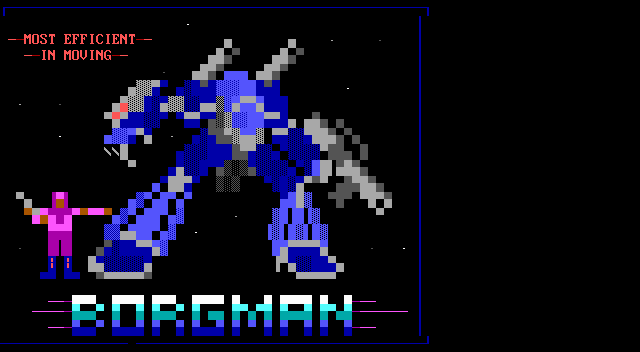
Let s test it using the Textfiles ANSI art collection. In the artworks section, I randomly grabbed a file near the top: borgman.ans. Download that, and display with:
clear; iconv -f CP437 -t UTF-8 < borgman.ans
You should see something similar to but actually more accurate than the textfiles PNG rendering of it, which you ll note has an incorrect aspect ratio and some rendering issues. I spot-checked with a few others and they seemed to look good. belinda.ans in particular tries quite a few characters and should give you a good sense if it is working.
Use with interactive programs
That s all well and good, but you re probably going to want to actually use this with some interactive program that expects CP437. Maybe Minicom, Kermit, or even just telnet?
For this, you ll want to apt-get install luit. luit maps CP437 (or any other encoding) to UTF-8 for display, and then of course the Linux console maps UTF-8 back to the CP437 font.
Here s a way you can repeat the earlier experiment using luit to run the cat program:
clear; luit -encoding CP437 cat borgman.ans
You can run any command under luit. You can even run luit -encoding CP437 bash if you like. If you do this, it is probably a good idea to follow my instructions on generating locales on my post on serial terminals, and then within luit, set LANG=en_us.IBM437. But note especially that you can run programs like minicom and others for accessing BBSs under luit.
Final words
This gave you a nice DOS-type console. Although it doesn t have glyphs for many codepoints, it does run in UTF-8 mode and therefore is compatible with modern software.
You can achieve greater compatibility with more UTF-8 codepoints with the DOS font, at the expense of accuracy of character rendering (especially for the double-line drawing characters) by using /usr/share/bdf2psf/standard.equivalents instead of /dev/null in the bdf2psf command.
Or you could go for another challenge, such as using the DEC vt-series fonts for coverage of ISO-8859-1. But just using fonts extracted from DEC ROM won t work properly, because DEC terminals had even more strangeness going on than DOS fonts.
If you use HaProxy to e.g. terminate TLS on the frontend and connect via
TLS to a backend, one has to take care of sending the SNI (server name
indication) extension in the TLS handshake sort of manually.
Even if you use host names to address the backend server, e.g.
server foobar foobar.example:2342 ssl verify required ca-file /etc/haproxy/ca/foo.crt
HaProxy will
try to establish the connection without SNI. You manually have to enforce
SNI here, e.g.
server foobar foobar.example:2342 ssl verify required ca-file /etc/haproxy/ca/foo.crt sni str(foobar.example)
The surprising thing here was that it requires an expression, so you can not just write sni foobar.example, you've to wrap it in an expression. The simplest one is making sure it's a string.
Update: Might be noteworthy that you've to configure SNI for the health check separately, and
in that case it's a string not an expression. E.g.
Introduction and some stats
We announced tag2upload s open beta in mid-July. That was in the middle of the the freeze for trixie, so usage was fairly light until the forky floodgates opened.
Since then the service has successfully performed 637 uploads, of which 420 were in the last 32 days. That s an average of about 13 per day. For comparison, during the first half of September up to today there have been 2475 uploads to unstable. That s about 176/day.
So, tag2upload is already handling around 7.5% of uploads. This is very gratifying for a service which is advertised as still being in beta!
Sean and I are very pleased both with the uptake, and with the way the system has been performing.
Recent UI/UX improvements
During this open beta period we have been hard at work. We have made many improvements to the user experience.
Current git-debpush in forky, or trixie-backports, is much better at detecting various problems ahead of time.
When uploads do fail on the service the emailed error reports are now more informative. For example, anomalies involving orig tarballs, which by definition can t be detected locally (since one point of tag2upload is not to have tarballs locally) now generally result in failure reports containing a diffstat, and instructions for a local repro.
Why we are still in beta
There are a few outstanding work items that we currently want to complete before we declare the end of the beta.
Retrying on Salsa-side failures
The biggest of these is that the service should be able to retry when Salsa fails. Sadly, Salsa isn t wholly reliable, and right now if it breaks when the service is trying to handle your tag, your upload can fail.
We think most of these failures could be avoided. Implementing retries is a fairly substantial task, but doesn t pose any fundamental difficulties. We re working on this right now.
Other notable ongoing work
We want to support pristine-tar, so that pristine-tar users can do a new upstream release. Andrea Pappacoda is working on that with us. See #1106071. (Note that we would generally recommend against use of pristine-tar within Debian. But we want to support it.)
We have been having conversations with Debusine folks about what integration between tag2upload and Debusine would look like. We re making some progress there, but a lot is still up in the air.
We are considering how best to provide tag2upload pre-checks as part of Salsa CI. There are several problems detected by the tag2upload service that could be detected by Salsa CI too, but which can t be detected by git-debpush.
Common problems
We ve been monitoring the service and until very recently we have investigated every service-side failure, to understand the root causes. This has given us insight into the kinds of things our users want, and the kinds of packaging and git practices that are common. We ve been able to improve the system s handling of various anomalies and also improved the documentation.
Right now our failure rate is still rather high, at around 7%. Partly this is because people are trying out the system on packages that haven t ever seen git tooling with such a level of rigour.
There are two classes of problem that are responsible for the vast majority of the failures that we re still seeing:
Reuse of version numbers, and attempts to re-tag
tag2upload, like git (and like dgit), hates it when you reuse a version number, or try to pretend that a (perhaps busted) release never happened.
git tags aren t namespaced, and tend to spread about promiscuously. So replacing a signed git tag, with a different tag of the same name, is a bad idea. More generally, reusing the same version number for a different (signed!) package is poor practice. Likewise, it s usually a bad idea to remove changelog entries for versions which were actually released, just because they were later deemed improper.
We understand that many Debian contributors have gotten used to this kind of thing. Indeed, tools like dcut encourage it. It does allow you to make things neat-looking, even if you ve made mistakes - but really it does so by covering up those mistakes!
The bottom line is that tag2upload can t support such history-rewriting. If you discover a mistake after you ve signed the tag, please just burn the version number and add a new changelog stanza.
One bonus of tag2upload s approach is that it will discover if you are accidentally overwriting an NMU, and report that as an error.
Discrepancies between git and orig tarballs
tag2upload promises that the source package that it generates corresponds precisely to the git tree you tag and sign.
Orig tarballs make this complicated. They aren t present on your laptop when you git-debpush. When you re not uploading a new upstream version, the tag2upload service reuses existing orig tarballs from the archive. If your git and the archive s orig don t agree, the tag2upload service will report an error, rather than upload a package with contents that differ from your git tag.
With the most common Debian workflows, everything is fine:
If you base everything on upstream git, and make your orig tarballs with git archive (or git deborig), your orig tarballs are the same as the git, by construction. We recommend usually ignoring upstream tarballs: most upstreams work in git, and their tarballs can contain weirdness that we don t want. (At worst, the tarball can contain an attack that isn t visible in git, as with xz!)
Alternatively, if you use gbp import-orig, the differences (including an attack like Jia Tan s) are imported into git for you. Then, once again, your git and the orig tarball will correspond.
But there are other workflows where this correspondence may not hold. Those workflows are hazardous, because the thing you re probably working with locally for your routine development is the git view. Then, when you upload, your work is transplanted onto the orig tarball, which might be quite different - so what you upload isn t what you ve been working on!
This situation is detected by tag2upload, precisely because tag2upload checks that it s keeping its promise: the source package is identical to the git view. (dgit push makes the same promise.)
Get involved
Of course the easiest way to get involved is to start using tag2upload.
We would love to have more contributors. There are some easy tasks to get started with, in bugs we ve tagged newcomer mostly UX improvements such as detecting certain problems earlier, in git-debpush.
More substantially, we are looking for help with sbuild: we d like it to be able to work directly from git, rather than needing to build source packages: #868527.
Locking down database access is probably the single most important thing for a system administrator or software developer to prevent their application from leaking its data. As MariaDB 11.8 is the first long-term supported version with a few new key security features, let s recap what the most important things are every DBA should know about MariaDB in 2025.
Back in the old days, MySQL administrators had a habit of running the clumsy mysql-secure-installation script, but it has long been obsolete. A modern MariaDB database server is already secure by default and locked down out of the box, and no such extra scripts are needed. On the contrary, the database administrator is expected to open up access to MariaDB according to the specific needs of each server. Therefore, it is important that the DBA can understand and correctly configure three things:
Separate application-specific users with granular permissions allowing only necessary access and no more.
Distributing and storing passwords and credentials securely
Ensuring all remote connections are properly encrypted
For holistic security, one should also consider proper auditing, logging, backups, regular security updates and more, but in this post we will focus only on the above aspects related to securing database access.
How encrypting database connections with TLS differs from web server HTTP(S)
Even though MariaDB (and other databases) use the same SSL/TLS protocol for encrypting remote connections as web servers and HTTPS, the way it is implemented is significantly different, and the different security assumptions are important for a database administrator to grasp.
Firstly, most HTTP requests to a web server are unauthenticated, meaning the web server serves public web pages and does not require users to log in. Traditionally, when a user logs in over a HTTP connection, the username and password were transmitted in plaintext as a HTTP POST request. Modern TLS, which was previously called SSL, does not change how HTTP works but simply encapsulates it. When using HTTPS, a web browser and a web server will start an encrypted TLS connection as the very first thing, and only once established, do they send HTTP requests and responses inside it. There are no passwords or other shared secrets needed to form the TLS connection. Instead, the web server relies on a trusted third party, a Certificate Authority (CA), to vet that the TLS certificate offered by the web server can be trusted by the web browser.
For a database server like MariaDB, the situation is quite different. All users need to first authenticate and log in to the server before getting being allowed to run any SQL and getting any data out of the server. The database server and client programs have built-in authentication methods, and passwords are not, and have never been, sent in plaintext. Over the years, MySQL and its successor, MariaDB, have had multiple password authentication methods: the original SHA-1-based hashing, later double SHA-1-based mysql_native_password, followed by sha256_password and caching_sha256_password in MySQL and ed25519 in MariaDB. The MariaDB.org blog post by Sergei Golubchik recaps the history of these well.
Even though most modern MariaDB installations should be using TLS to encrypt all remote connections in 2025, having the authentication method be as secure as possible still matters, because authentication is done before the TLS connection is fully established.
To further harden the authentication agains man-in-the-middle attacks, a new password the authentication method PARSEC was introduced in MariaDB 11.8, which builds upon the previous ed25519 public-key-based verification (similar to how modern SSH does), and also combines key derivation with PBKDF2 with hash functions (SHA512,SHA256) and a high iteration count.
At first it may seem like a disadvantage to not wrap all connections in a TLS tunnel like HTTPS does, but actually not having the authentication done in a MitM resistant way regardless of the connection encryption status allows a clever extra capability that is now available in MariaDB: as the database server and client already have a shared secret that is being used by the server to authenticate the user, it can also be used by the client to validate the server s TLS certificate and no third parties like CAs or root certificates are needed. MariaDB 11.8 was the first LTS version to ship with this capability for zero-configuration TLS.
Note that the zero-configuration TLS also works on older password authentication methods and does not require users to have PARSEC enabled. As PARSEC is not yet the default authentication method in MariaDB, it is recommended to enable it in installations that use zero-configuration TLS encryption to maximize the security of the TLS certificate validation.
Why the root user in MariaDB has no password and how it makes the database more secure
Relying on passwords for security is problematic, as there is always a risk that they could leak, and a malicious user could access the system using the leaked password. It is unfortunately far too common for database passwords to be stored in plaintext in configuration files that are accidentally committed into version control and published on GitHub and similar platforms. Every application or administrative password that exists should be tracked to ensure only people who need it know it, and rotated at regular intervals to ensure old employees etc won t be able to use old passwords. This password management is complex and error-prone.
Replacing passwords with other authentication methods is always advisable when possible. On a database server, whoever installed the database by running e.g. apt install mariadb-server, and configured it with e.g. nano /etc/mysql/mariadb.cnf, already has full root access to the operating system, and asking them for a password to access the MariaDB database shell is moot, since they could circumvent any checks by directly accessing the files on the system anyway. Therefore, MariaDB, since version 10.4 stopped requiring the root user to enter a password when connecting locally, and instead checks using socket authentication whether the user is the operating-system root user or equivalent (e.g. running sudo). This is an elegant way to get rid of a password that was actually unnecessary to begin with. As there is no root password anymore, the risk of an external user accessing the database as root with a leaked password is fully eliminated.
Note that socket authentication only works for local connections on the same server. If you want to access a MariaDB server remotely as the root user, you would need to configure a password for it first. This is not generally recommended, as explained in the next section.
Create separate database users for normal use and keep root for administrative use only
Out of the box a MariaDB installation is already secure by default, and only the local root user can connect to it. This account is intended for administrative use only, and for regular daily use you should create separate database users with access limited to the databases they need and the permissions required.
The most typical commands needed to create a new database for an app and a user the app can use to connect to the database would be the following:
sqlCREATE DATABASE app_db;
CREATE USER 'app_user'@'%' IDENTIFIED BY 'your_secure_password';
GRANT ALL PRIVILEGES ON app_db.* TO 'app_user'@'%';
FLUSH PRIVILEGES;
Alternatively, if you want to use the parsec authentication method, run this to create the user:
sqlCREATE OR REPLACE USER 'app_user'@'%'
IDENTIFIED VIA parsec
USING PASSWORD('your_secure_password');
CREATEORREPLACEUSER'app_user'@'%' IDENTIFIED VIA parsec
USING PASSWORD('your_secure_password');
Note that the plugin auth_parsec is not enabled by default. If you see the error message ERROR 1524 (HY000): Plugin 'parsec' is not loaded fix this by running INSTALL SONAME 'auth_parsec';.
In the CREATE USER statements, the @'%' means that the user is allowed to connect from any host. This needs to be defined, as MariaDB always checks permissions based on both the username and the remote IP address or hostname of the user, combined with the authentication method. Note that it is possible to have multiple user@remote combinations, and they can have different authentication methods. A user could, for example, be allowed to log in locally using the socket authentication and over the network using a password.
If you are running a custom application and you know exactly what permissions are sufficient for the database users, replace the ALL PRIVILEGES with a subset of privileges listed in the MariaDB documentation.
For new permissions to take effect, restart the database or run FLUSH PRIVILEGES.
Allow MariaDB to accept remote connections and enforce TLS
Using the above 'app_user'@'%' is not enough on its own to allow remote connections to MariaDB. The MariaDB server also needs to be configured to listen on a network interface to accept remote connections. As MariaDB is secure by default, it only accepts connections from localhost until the administrator updates its configuration. On a typical Debian/Ubuntu system, the recommended way is to drop a new custom config in e.g. /etc/mysql/mariadb.conf.d/99-server-customizations.cnf, with the contents:
[mariadbd]
# Listen for connections from anywhere
bind-address = 0.0.0.0
# Only allow TLS encrypted connections
require-secure-transport = on
[mariadbd]
# Listen for connections from anywhere
bind-address = 0.0.0.0
# Only allow TLS encrypted connections
require-secure-transport = on
For settings to take effect, restart the server with systemctl restart mariadb. After this, the server will accept connections on any network interface. If the system is using a firewall, the port 3306 would additionally need to be allow-listed.
To confirm that the settings took effect, run e.g. mariadb -e "SHOW VARIABLES LIKE 'bind_address';" , which should now show 0.0.0.0.
When allowing remote connections, it is important to also always define require-secure-transport = on to enforce that only TLS-encrypted connections are allowed. If the server is running MariaDB 11.8 and the clients are also MariaDB 11.8 or newer, no additional configuration is needed thanks to MariaDB automatically providing TLS certificates and appropriate certificate validation in recent versions.
On older long-term-supported versions of the MariaDB server one would have had to manually create the certificates and configure the ssl_key, ssl_cert and ssl_ca values on the server, and distribute the certificate to the clients as well, which was cumbersome, so good it is not required anymore. In MariaDB 11.8 the only additional related config that might still be worth setting is tls_version = TLSv1.3 to ensure only the latest TLS protocol version is used.
Finally, test connections to ensure they work and to confirm that TLS is used by running e.g.:
--------------
mariadb from 11.8.3-MariaDB, client 15.2 for debian-linux-gnu (x86_64)
...
Current user: app_user@192.168.1.66
SSL: Cipher in use is TLS_AES_256_GCM_SHA384, cert is OK
...
--------------
mariadb from 11.8.3-MariaDB, client 15.2 for debian-linux-gnu (x86_64)
...
Current user: app_user@192.168.1.66
SSL: Cipher in use is TLS_AES_256_GCM_SHA384, cert is OK
...
If running a Debian/Ubuntu system, see the bundled README with zcat /usr/share/doc/mariadb-server/README.Debian.gz to read more configuration tips.
Should TLS encryption be used also on internal networks?
If a database server and app are running on the same private network, the chances that the connection gets eavesdropped on or man-in-the-middle attacked by a malicious user are low. However, it is not zero, and if it happens, it can be difficult to detect or prove that it didn t happen. The benefit of using end-to-end encryption is that both the database server and the client can validate the certificates and keys used, log it, and later have logs audited to prove that connections were indeed encrypted and show how they were encrypted.
If all the computers on an internal network already have centralized user account management and centralized log collection that includes all database sessions, reusing existing SSH connections, SOCKS proxies, dedicated HTTPS tunnels, point-to-point VPNs, or similar solutions might also be a practical option. Note that the zero-configuration TLS only works with password validation methods. This means that systems configured to use PAM or Kerberos/GSSAPI can t use it, but again those systems are typically part of a centrally configured network anyway and are likely to have certificate authorities and key distribution or network encryption facilities already set up.
In a typical software app stac however, the simplest solution is often the best and I recommend DBAs use the end-to-end TLS encryption in MariaDB 11.8 in most cases.
Hopefully with these tips you can enjoy having your MariaDB deployments both simpler and more secure than before!
Debusine is a tool designed
for Debian developers and Operating System developers in general. This posts
describes our approach to the use of JavaScript, and some practical designs we
came up with to integrate it with Django with minimal effort.
Debusine web UI and JavaScript
Debusine currently has 3 user interfaces: a client on the command line, a
RESTful API, and a Django-based Web UI.
Debusine s web UI is a tool to interact with the system, and we want to spend
most of our efforts in creating a system that works and works well, rather than
chasing the latest and hippest of the frontend frameworks for the web.
Also, Debian as a community has an aversion to having parts of the JavaScript
ecosystem in the critical path of its core infrastructure, and in our
professional experience this aversion is not at all unreasonable.
This leads to having some interesting requirements for the web UI, that (rather
surprisingly, one would think) one doesn t usually find advertised in many
projects:
Straightforward to create and maintain.
Well integrated with Django.
Easy to package in Debian, with as little vendoring as possible, which helps mitigate supply chain attacks
Usable without JavaScript whenever possible, for progressive
enhancement rather
than core functionality.
The idea is to avoid growing the technical complexity and requirements of the
web UI, both server-side and client-side, for functionality that is not needed
for this kind of project, with tools that do not fit well in our ecosystem.
Also, to limit the complexity of the JavaScript portions that we do develop, we
choose to limit our JavaScript browser supports to the main browser versions
packaged in Debian Stable, plus recent oldstable.
This makes JavaScript easier to write and maintain, and it also makes it less
needed, as modern HTML plus modern CSS interfaces can go a long way with less
scripting interventions.
We recently
encoded JavaScript practices and tradeoffs in a
JavaScript Practices
chapter of Debusine s documentation.
How we use JavaScript
From the start we built the UI using Bootstrap,
which helps in having responsive layouts that can also work on mobile devices.
When we started having large select fields, we introduced
Select2 to make interaction more efficient, and which
degrades gracefully to working HTML.
Both Bootstrap and Select2 are packaged in Debian.
Form validation is done server-side by Django, and we do not reimplement it
client-side in JavaScript, as we prefer the extra round trip through a form
submission to the risk of mismatches between the two validations.
In those cases where a UI task is not at all possible without JavaScript, we
can make its support mandatory as long as the same goal can be otherwise
achieved using the debusine client command.
Django messages as Bootstrap toasts
Django has a Messages framework
that allows different parts of a view to push messages to the user, and it is
useful to signal things like a successful form submission, or warnings on
unexpected conditions.
Django messages integrate well with Bootstrap
toasts, which use a
recognisable notification language, are nicely dismissible and do not invade
the rest of the page layout.
Since toasts require JavaScript to work, we added graceful degradation.
to Bootstrap alerts
Doing so was surprisingly simple: we handle the toasts as usual, and also render the
plain alerts inside a <noscript> tag.
This is precisely the intended usage of the <noscript> tag, and it works
perfectly: toasts are displayed by JavaScript when it s available, or rendered
as alerts when not.
The resulting Django template is something like this:
JavaScript incremental improvement of formsets
Debusine is built around
workspaces,
which are, among other things, containers for resources.
Workspaces can inherit from other workspaces, which act as fallback lookups for
resources. This allows, for example, to maintain an experimental package to be
built on Debian Unstable, without the need to copy the whole Debian Unstable
workspace. A workspace can inherit from multiple others, which are looked up in
order.
When adding UI to configure workspace
inheritance, we
faced the issue that plain HTML forms do not have a convenient way to perform
data entry of an ordered list.
We initially built the data entry around Django formsets, which support
ordering
using an extra integer input field to enter the ordering position. This works,
and it s good as a fallback, but we wanted something more appropriate, like
dragging and dropping items to reorder them, as the main method of interaction.
Our final approach
renders the plain formset inside a <noscript> tag, and the JavaScript widget
inside a display: none element, which is later shown by JavaScript code.
As the workspace inheritance is edited, JavaScript serializes its state into
<form type='hidden'> fields that match the structure used by the formset, so
that when the form is submitted, the view performs validation and updates the
server state as usual without any extra maintenance burden.
Serializing state as hidden form fields looks a bit vintage, but it is an
effective way of preserving the established data entry protocol between the
server and the browser, allowing us to do incremental improvement of the UI
while minimizing the maintenance effort.
More to come
Debusine is now gaining significant adoption and is still under active
development, with new features like personal archives coming soon.
This will likely mean more user stories for the UI, so this is a design space
that we are going to explore again and again in the coming future.
Meanwhile, you can try out Debusine on
debusine.debian.net, and follow its development
on salsa.debian.org!
Please consider supporting my work in Debian and elsewhere through Liberapay.
Debian stable updates work through three main channels: point releases, security repositories, and the updates repository. Understanding these ensures your system stays secure and current.
A note about suite names
Every Debian release, or suite, has a codename the most recent major release was trixie, or Debian 13. The codename uniquely identifies that suite.
We also use changeable aliases to add meaning to the suite s lifecycle. For example, trixie currently has the alias stable, but when forky becomes stable instead, trixie will become known as oldstable.
This post uses either codenames or aliases depending on context. In source lists, codenames are generally preferred since that avoids surprise major upgrades right after a release is made.
The stable suites (point releases)
stable and oldstable (currently trixie and bookworm) are only updated during a point release. This is a minor update released to a major version. For example, 13.1 is the first minor update to trixie. It s not possible to install older minor versions of a suite except via the snapshots mechanism (not covered here). It s possible to view past versions via snapshot.debian.org, which preserves historical Debian archives.
There are also the testing and unstable aliases for the development suites. However, these are not relevant for users who want to run officially released versions.
Almost every stable installation of Debian will be opted into a stable or oldstable base suite. An example APT source might look like:
Type: deb
URIs: http://deb.debian.org/debian
Suites: trixie
Components: main
Signed-By: /usr/share/keyrings/debian-archive-keyring.pgp
Or, in legacy sources.list style:
deb https://deb.debian.org/debian trixie main
The security suites (DSAs explained)
For urgent security-related updates, the Security Team maintains a counterpart suite for each stable suite. These are called stable-security and oldstable-security when maintained by Debian s security team, and oldstable-security, oldoldstable-security, etc when maintained by the LTS team.
Example APT source:
Type: deb
URIs: https://deb.debian.org/debian-security
Suites: trixie-security
Components: main
Signed-By: /usr/share/keyrings/debian-archive-keyring.pgp
Or, in legacy sources.list style:
deb https://deb.debian.org/debian-security trixie-security main
The updates suites (SUAs and maintenance)
For urgent non-security updates, the final recommended suites are stable-updates and oldstable-updates. This is where updates staged for a point release, but needed sooner, are published. Examples include virus database updates, timezone changes, urgent bug fixes for specific problems and corrections to errors in the release process itself.
Example APT source:
Type: deb
URIs: https://deb.debian.org/debian
Suites: trixie-updates
Components: main
Signed-By: /usr/share/keyrings/debian-archive-keyring.pgp
Or, in legacy sources.list style:
deb https://deb.debian.org/debian trixie-updates main
Debian enables the updates suites by default. Stable Update Announcements (SUAs) are published to debian-stable-announce@lists.debian.org. This is also where announcements of forthcoming point releases are published.
Summary
These are the recommended suites for all production Debian systems:
Suite
Example codename
Purpose
Announcements
stable
trixie
Base suite containing all the available software for a release. Point releases every 2 4 months including lower-severity security fixes that do not require immediate release.
After a release moves from oldstable to unsupported status, Long Term Support (LTS) takes over for several more years. LTS provides urgent security updates for selected architectures. For details, see wiki.debian.org/LTS.
If you d like to stay informed, the official Debian announcement lists and release.debian.org share the latest schedules and updates.
Photo by Brian Wangenheim on Unsplash
My trip to pgday.at started Wednesday at the airport in D sseldorf. I was there on time, and the plane started with an estimated flight time of about 90 minutes. About half an hour into the flight, the captain announced that we would be landing in 30 minutes - in D sseldorf, because of some unspecified technical problems. Three hours after the original departure time, the plane made another attempt, and we made it to Vienna.
On the plane I had already met Dirk Krautschick who had the great honor of bringing Slonik (in the form of a big extra bag) to the conference, and we took a taxi to the hotel. On the taxi, the next surprise happened: Hans-J rgen Sch nig unfortunately couldn't make it to the conference, and his talks had to be replaced. I had submitted a talk to the conference, but it was not accepted, and neither queued on the reserve list. But two speakers on the reserve list had cancelled, and another was already giving a talk in parallel to the slot that had to be filled, so Pavlo messaged me if I could hold the talk - well of course I could. Before, I didn't have any specific plans for the evening yet, but suddenly I was a speaker, so I joined the folks going to the speakers dinner at the Wiener Grill Haus two corners from the hotel. It was a very nice evening, chatting with a lot of folks from the PostgreSQL community that I had not seen for a while.
Thursday was the conference day. The hotel was a short walk from the venue, the Apothekertrakt in Vienna's Schloss Sch nbrunn. The courtyard was already filled with visitors registering for the conference. Since I originally didn't have a talk scheduled, I had signed up to volunteer for a shift as room host. We got our badge and swag bag, and I changed into the "crew" T-shirt.
The opening and sponsor keynotes took place in the main room, the Orangerie. We were over 100 people in the room, but apparently still not enough to really fill it, so the acoustics with some echo made it a bit difficult to understand everything. I hope that part can be improved for next time (which is planned to happen!).
I was host for the Maximilian room, where the sponsor sessions were scheduled in the morning. The first talk was by our Peter Hofer, also replacing the absent Hans. He had only joined the company at the beginning of the same week, and was already tasked to give Hans' talk on PostgreSQL as Open Source. Of course he did well.
Next was Tanmay Sinha from Readyset. They are building a system that caches expensive SQL queries and selectively invalidates the cache whenever any data used by these queries changes. Whenever actually fixing the application isn't feasible, that system looks like an interesting alternative to manually maintaining materialized views, or perhaps using pg_ivm.
After lunch, I went to Federico Campoli's Mastering Index Performance, but really spent the time polishing the slides for my talk. I had given the original version at pgconf.de in Berlin in May, and the slides were still in German, so I had to do some translating. Luckily, most slides are just git commit messages, so the effort was manageable.
The next slot was mine, talking about Modern VACUUM. I started with a recap of MVCC, vacuum and freezing in PostgreSQL, and then showed how over the past years, the system was updated to be more focused (the PostgreSQL 8.4 visibility map tells vacuum which pages to visit), faster (12 made autovacuum run 10 times faster by default), less scary (14 has an emergency mode where freezing switches to maximum speed if it runs out of time; 16 makes freezing create much less WAL) and more performant (17 makes vacuum use much less memory). In summary, there is still room for the DBA to tune some knobs (for example, the default autovacuum_max_workers=3 isn't much), but the vacuum default settings are pretty much okay these days for average workloads. Specific workloads still have a whopping 31 postgresql.conf settings at their disposal just for vacuum.
Right after my talk, there was another vacuum talk: When Autovacuum Met FinOps by Mayuresh Bagayatkar. He added practical advice on tuning the performance in cloud environments. Luckily, our contents did not overlap.
After the coffee break, I was again room host, now for Floor Drees and Contributing to Postgres beyond code. She presented the various ways in which PostgreSQL is more than just the code in the Git repository: translators, web site, system administration, conference organizers, speakers, bloggers, advocates. As a member of the PostgreSQL Contributors Committee, I could only approve and we should closer cooperate in the future to make people's contributions to PostgreSQL more visible and give them the recognition they deserve.
That was already the end of the main talks and everyone rushed to the Orangerie for the lightning talks. My highlight was the Sheldrick Wildlife Trust. Tickets for the conference had included the option to donate for the elephants in Kenya, and the talk presented the trust's work in the elephant orphanage there.
After the conference had officially closed, there was a bonus track: the Celebrity DB Deathmatch, aptly presented by Boriss Mejias. PostgreSQL, MongoDB, CloudDB and Oracle were competing for the grace of a developer. MongoDB couldn't stand the JSON workload, CloudDB was dismissed for handing out new invoices all the time, and Oracle had even brought a lawyer to the stage, but then lost control over a literally 10 meter long contract with too much fine print. In the end, PostgreSQL (played by Floor) won the love of the developer (played by our Svitlana Lytvynenko).
The day closed with a gathering at the Brandauer Schlossbr u - just at the other end of the castle ground, but still a 15min walk away. We enjoyed good beer and Kaiserschmarrn. I went back to the hotel a bit before midnight, but some extended that time quite some bit more.
On Friday, my flight back was only in the afternoon, so I spent some time in morning in the Technikmuseum just next to the hotel, enjoying some old steam engines and a live demonstration of Tesla coils. This time, the flight actually went to the destination, and I was back in D sseldorf in the late afternoon.
In summary, pgday.at was a very nice event in a classy location. Thanks to the organizers for putting in all the work - and next year, Hans will hopefully be present in person!
The post A Trip To Vienna With Surprises appeared first on CYBERTEC PostgreSQL Services & Support.
Preparing for setup.py install deprecation, by Colin Watson
setuptools upstream will be removing the setup.py install command
on 31 October. While this may not trickle down immediately into Debian, it does
mean that in the near future nearly all Python packages will have to use
pybuild-plugin-pyproject (though they don t necessarily have to use
pyproject.toml; this is just a question of how the packaging runs the build
system). Some of the Python team talked about this a bit at DebConf, and Colin
volunteered to write up some notes
on cases where this isn t straightforward. This page will likely grow as the
team works on this problem.
Salsa CI, by Santiago Ruano Rinc n
Santiago fixed some pending issues in the MR that moves the pipeline to sbuild+unshare,
and after several months, Santiago was able to mark the MR as ready. Part of the
recent fixes include handling external repositories,
honoring the RELEASE autodetection from d/changelog
(thanks to Ahmed Siam for spotting the main reason of the issue), and fixing a
regression about the apt resolver for *-backports releases.
Santiago is currently waiting for a final review and approval from other members
of the Salsa CI team, and being able to merge it. Thanks to all the folks who
have helped testing the changes or provided feedback so far. If you want to test
the current MR, you need to include the following pipeline definition in your
project s CI config file:
As a reminder, this MR will make the Salsa CI pipeline build the packages more
similar to how it s built by the Debian official builders. This will also save
some resources, since the default pipeline will have one stage less (the
provisioning) stage, and will make it possible for more projects to be built on
salsa.debian.org (including large projects and
those from the OCaml ecosystem), etc. See the different issues being fixed in
the MR description.
Debian 13 trixie release, by Emilio Pozuelo Monfort
On August 9th, Debian 13 trixie was released, building on two years worth of
updates and bug fixes from hundreds of developers. Emilio helped coordinate the
release, communicating with several teams involved in the process.
DebConf 26 Site Visit, by Stefano Rivera
Stefano visited Santa Fe, Argentina, the site for DebConf 26
next year. The aim of the visit was to help build a local team and see the
conference venue first-hand. Stefano and Nattie represented the DebConf
Committee. The local team organized Debian meetups in Buenos Aires and Santa Fe,
where Stefano presented a talk
on Debian and DebConf. Venues were scouted
and the team met with the university management and local authorities.
Miscellaneous contributions
Rapha l updated tracker.debian.org after the
trixie release to add the new forky release in the set of monitored
distributions.
He also reviewed and deployed the work of Scott Talbert
showing open merge requests from salsa in the action needed panel.
Rapha l reviewed some DEP-3 changes
to modernize the embedded examples in light of the broad git adoption.
Rapha l configured new workflows
on debusine.debian.net to upload to trixie and
trixie-security, and officially announced the service
on debian-devel-announce, inviting Debian developers to try the service for
their next upload to unstable.
Carles created a merge request
for django-compressor upstream to fix an error when concurrent node processing
happened. This will allow removing a workaround
added in openstack-dashboard and avoid the same bug in other projects that use
django-compressor.
Carles prepared a system to detect packages that Recommends packages which
don t exist in unstable. Processed (either reported
or ignored due to mis-detected problems or temporary problems) 16% of the
reports. Will continue next month.
Carles got familiar and gave feedback for the freedict-wikdict package.
Planned contributions with the maintainer to improve the package.
Helmut responded to queries related to /usr-move.
Helmut adapted crossqa.d.n to the release of
trixie .
Helmut diagnosed sufficient failures in rebootstrap
to make it work with gcc-15.
Faidon discovered that the Multi-Arch hinter would emit confusing hints about
:any annotations. Helmut identified the root cause to be the handling of
virtual packages and fixed it.
Colin upgraded about 70 Python packages to new upstream versions, which is
around 10% of the backlog; this included a complicated Pydantic upgrade in
collaboration with the Rust team.
Colin fixed
a bug in debbugs that caused incoming emails to bugs.debian.org with certain
header contents to go missing.
Thorsten uploaded sane-airscan, which was already in experimental, to unstable.
Thorsten created a script to automate the upload of new upstream versions of
foomatic-db. The database contains information about printers and regularly gets
an update. Now it is possible to keep the package more up to date in Debian.
Stefano prepared updates to almost all of his packages that had new versions
waiting to upload to unstable. (beautifulsoup4, hatch-vcs, mkdocs-macros-plugin,
pypy3, python-authlib, python-cffi, python-mitogen, python-pip, python-pipx,
python-progress, python-truststore, python-virtualenv, re2, snowball, soupsieve).
Stefano uploaded two new python3.13 point releases to unstable.
Stefano updated distro-info-data in stable releases, to document the trixie
release and expected EoL dates.
Stefano did some debian.social sysadmin work (keeping up quotas with growing
databases and filesystems).
Stefano supported the Debian treasurers in processing some of the DebConf 25
reimbursements.
Lucas uploaded ruby3.4 to experimental. It was already approved by FTP masters.
Lucas uploaded ruby-defaults to experimental to add support for ruby3.4. It
will allow us to start triggering test rebuilds and catch any FTBFS with ruby3.4.
Lucas did some administrative work for Google Summer of Code (GSoC) and
replied to some queries from mentors and students.
Anupa helped to organize release parties for Debian 13 and Debian Day events.
Anupa did the live coverage for the Debian 13 release and prepared the Bits
post for the release announcement and 32nd Debian Day as part of the Debian
Publicity team.
Anupa attended a Debian Day event
organized by FOSS club SSET as a speaker.
Armadillo is a powerful
and expressive C++ template library for linear algebra and scientific
computing. It aims towards a good balance between speed and ease of use,
has a syntax deliberately close to Matlab, and is useful for algorithm
development directly in C++, or quick conversion of research code into
production environments. RcppArmadillo
integrates this library with the R environment and language and is
widely used by (currently) 1279 other packages on CRAN, downloaded 41.2 million
times (per the partial logs from the cloud mirrors of CRAN), and the CSDA paper (preprint
/ vignette) by Conrad and myself has been cited 644 times according
to Google Scholar.
Fairly shortly after the release of Armadillo 14.6.3 (which became
our precedig release 14.6.3),
Conrad released version
15.0.0 of Armadillo. It
contains several breaking changes which made it unsuitable for CRANas is. First, the
minimum C++ standard was lifted to C++14. There are many good reasons
for doing so, but doing it unannounced with no transition offered cannot
work at CRAN. For (mostly
historical) reasons (as C++11 was once a step up from even more archaic
code) many packages still enforce C++11. These packages would
break under Armadillo
15.0.0. With some reverse-dependency checks we quickly found that this
would affect over 200 packages. Second, Armadillo frequently deprecates
code and issues a warning offering a hint towards an improved / current
alternative. That too is good practice, and recommended. But at CRAN a deprecation warning seen
leads to NOTE and an unfixed NOTEs can lead to archival which is not
great. For that reason, we had added a global muffler suppressing the
deprecation warnings. This was now removed in C++14 (as one can rely on
newer compiler attributes we cannot undo, whereas the old scheme just
used macros). Again, not something we can do at CRAN.
So I hatched the plan of offering both the final release
under the previous state of the world, i.e. 14.6.3, along with 15.0.0.
User could then opt-into 15.0.0 but have a fallback of 14.6.3 allowing
all packages to coexist. The first idea was to turn the fallback on only
if C++11 compilation was noticed. This lead still a lot of deprecation
warnings meaning we had to more strongly default to 14.6.3 and only if
users actively selected 15.0.* would they get it. This seemed to work.
We were still faced with two hard failures. Turns out one was local to a
since-archived package, the other reveal a bad interaction betweem Armadillo and gcc
for complex variables and lead to bug fix 15.0.1. Which I
wrapped and uploaded a week ago.
Release 15.0.1 was quickly seen as only temporary because I
overlooked two issues. Moving legacy and current into, respectively,
a directory of that name meant to top-level include header
armadillo remained. This broked a few use cases where
packages use a direct #include <armadillo> (which we
do not recommend as it may miss a few other settings we apply for the R
case). The other is that an old test for limited LAPACK capabilities
made noise in some builds (for example on Windows). As (current) R
versions generally have sufficient LAPACK and BLAS, this too has been
removed.
We have tested and rested these changed extensively. The usual
repository with the logs shows eight reverse-dependency runs each of
which can take up to a day. This careful approach, together with pacing
uploads at CRAN usually works. We got a NOTE for seven uploads in six
months for this one, but a CRAN maintainer quickly advanced it, and the
fully automated test showed no regression or other human intervention
which is nice given the set of changes, and the over 1200 reverse
dependencies.
The changes since the last announced CRAN release 14.6.3 follow.
Changes in
RcppArmadillo version 15.0.2-1 (2025-09-08)
Upgraded to Armadillo release 15.0.2-1 (Medium Roast)
Optionally use OpenMP parallelisation for fp16 matrix
multiplication
Faster vectorisation of cube tubes
Provide a top-level include file armadillo as
fallback (#480)
Retire the no-longer-needed check for insufficient LAPACK as R
now should supply a sufficient libRlapack (when used) (#483)
Two potential narrowing warnings are avoided via cast
Changes in
RcppArmadillo version 15.0.1-1 (2025-09-01)
Upgraded to Armadillo release 15.0.1-1 (Medium Roast)
Workaround for GCC compiler bug involving misoptimisation of complex
number multiplication
This version contains both 'legacy' and 'current' version of
Armadillo (see also below). Package authors should set a '#define' to
select the 'current' version, or select the 'legacy' version (also
chosen as default) if they must. See GitHub issue #475 for
more details.
Updated DESCRIPTION and README.md
Changes
in RcppArmadillo version 15.0.0-1 (2025-08-21) (GitHub Only)
Upgraded to Armadillo release 15.0.0-1 (Medium Roast)
C++14 is now the minimum required C++ standard
Aded preliminary support for matrices with half-precision fp16
element type
Added second form of cond() to allow detection of
failures
Added repcube()
Added .freeze() and .unfreeze() member
functions to wall_clock
Extended conv() and conv2() to accept
the "valid" shape argument
Also includes Armadillo 14.6.3 as fallback for C++11
compilations
This new 'dual' setup had been rigorously tested with five
interim pre-releases of which several received full reverse-dependency
checks
Back in March, with version 4.17.0, Lean introduced partial_fixpoint, a new way to define recursive functions. I had drafted a blog post for the official Lean FRO blog back then, but forgot about it, and with the Lean FRO blog discontinued, I ll just publish it here, better late than never.
With the partial_fixpoint mechanism we can model possibly partial functions (so those returning an Option) without an explicit termination proof, and still prove facts about them. See the corresponding section in the reference manual for more details.
On the Lean Zulip, I was asked if we can use this feature to define the McCarthy 91 function and prove it to be total. This function is a well-known tricky case for termination proofs.
First let us have a brief look at why this function is tricky to define in a system like Lean. A naive definition like
def f91 (n : Nat) : Nat :=
  if n > 100
  then n - 10
  else f91 (f91 (n + 11))
does not work; Lean is not able to prove termination of this functions by itself.
Even using well-founded recursion with an explicit measure (e.g. termination_by 101 - n) is doomed, because we would have to prove facts about the function s behaviour (namely that f91n = f91101 = 91 for 90 n 100) and at the same time use that fact in the termination proof that we have to provide while defining the function. (The Wikipedia page spells out the proof.)
We can make well-founded recursion work if we change the signature and use a subtype on the result to prove the necessary properties while we are defining the function. Lean by Example shows how to do it, but for larger examples this approach can be hard or tedious.
With partial_fixpoint, we can define the function as a partial function without worrying about termination. This requires a change to the function s signature, returning an Option Nat:
def f91 (n : Nat) : Option Nat :=
  if n > 100
    then pure (n - 10)
    else f91 (n + 11) >>= f91
partial_fixpoint
From the point of view of the logic, Option.none is then used for those inputs for which the function does not terminate.
This function definition is accepted and the function runs fine as compiled code:
#eval f91 42
prints some 91.
The crucial question is now: Can we prove anything about f91 In particular, can we prove that this function is actually total?
Since we now have the f91 function defined, we can start proving auxillary theorems, using whatever induction schemes we need. In particular we can prove that f91 is total and always returns 91 for n 100:
theorem f91_spec_high (n : Nat) (h : 100 < n) : f91 n = some (n - 10) := by
  unfold f91; simp [*]
theorem f91_spec_low (n : Nat) (h  : n   100) : f91 n = some 91 := by
  unfold f91
  rw [if_neg (by omega)]
  by_cases n < 90
    rw [f91_spec_low (n + 11) (by omega)]
    simp only [Option.bind_eq_bind, Option.some_bind]
    rw [f91_spec_low 91 (by omega)]
    rw [f91_spec_high (n + 11) (by omega)]
    simp only [Nat.reduceSubDiff, Option.some_bind]
    by_cases h : n = 100
      simp [f91, *]
      exact f91_spec_low (n + 1) (by omega)
theorem f91_spec (n : Nat) : f91 n = some (if n   100 then 91 else n - 10) := by
  by_cases h100 : n   100
    simp [f91_spec_low, *]
    simp [f91_spec_high, Nat.lt_of_not_le  _ , *]
-- Generic totality theorem
theorem f91_total (n : Nat) : (f91 n).isSome := by simp [f91_spec]
(Note that theorem f91_spec_low is itself recursive in a somewhat non-trivial way, but Lean can figure that out all by itself. Use termination_by? if you are curious.)
This is already a solid start! But what if we want a function of type f91! (n : Nat) : Nat, without the Option? Then can derive that from the partial variant, as we have just proved that to be actually total:
def f91! (n : Nat) : Nat  := (f91 n).get (f91_total n)
theorem f91!_spec (n : Nat) : f91! n = if n   100 then 91 else n - 10 := by
  simp [f91!, f91_spec]
Using partial_fixpoint one can decouple the definition of a function from a termination proof, or even model functions that are not terminating on all inputs. This can be very useful in particular when using Lean for program verification, such as with the aeneas package, where such partial definitions are used to model Rust programs.
 Welcome to post 52 in the R4 series.
Following up on the post #51
yesterday and its stated intent of posting some more here The r-ci setup (which was
introduced in post
#32 and updated in post
#45) offers portable continuous integration which can take
advantage of different backends: Github Actions, Azure Pipelines,
GitLab, BitBuckets, and possibly as it only requires a basic Ubuntu
shell after which it customizes itself and runs via shell script.
Portably. Now, most of us, I suspect still use it with GitHub Actions
but it is reassuring to know that one can take it elsewhere should the
need or desire arise.
One thing many repos did, and which stopped working reliably is
coverage analysis. This is made easy by the covr package, and
made fast, easy, reliable (as we quip) thanks to r2u. But transmission to
codecov stopped working a while back so
I had mostly commented it out in my repos, rendering the reports more
and more stale. Which is not ideal.
A few weeks ago I gave this another look, and it turns that that codecov now requires an API token
to upload. Which one can generate in the user -> settings menu on
their website under the access tab. Which in turn then needs to be
stored in each repo wanting to upload. For Github, this is
under settings -> secrets and variables -> actions as a
repository secret . I suggest using
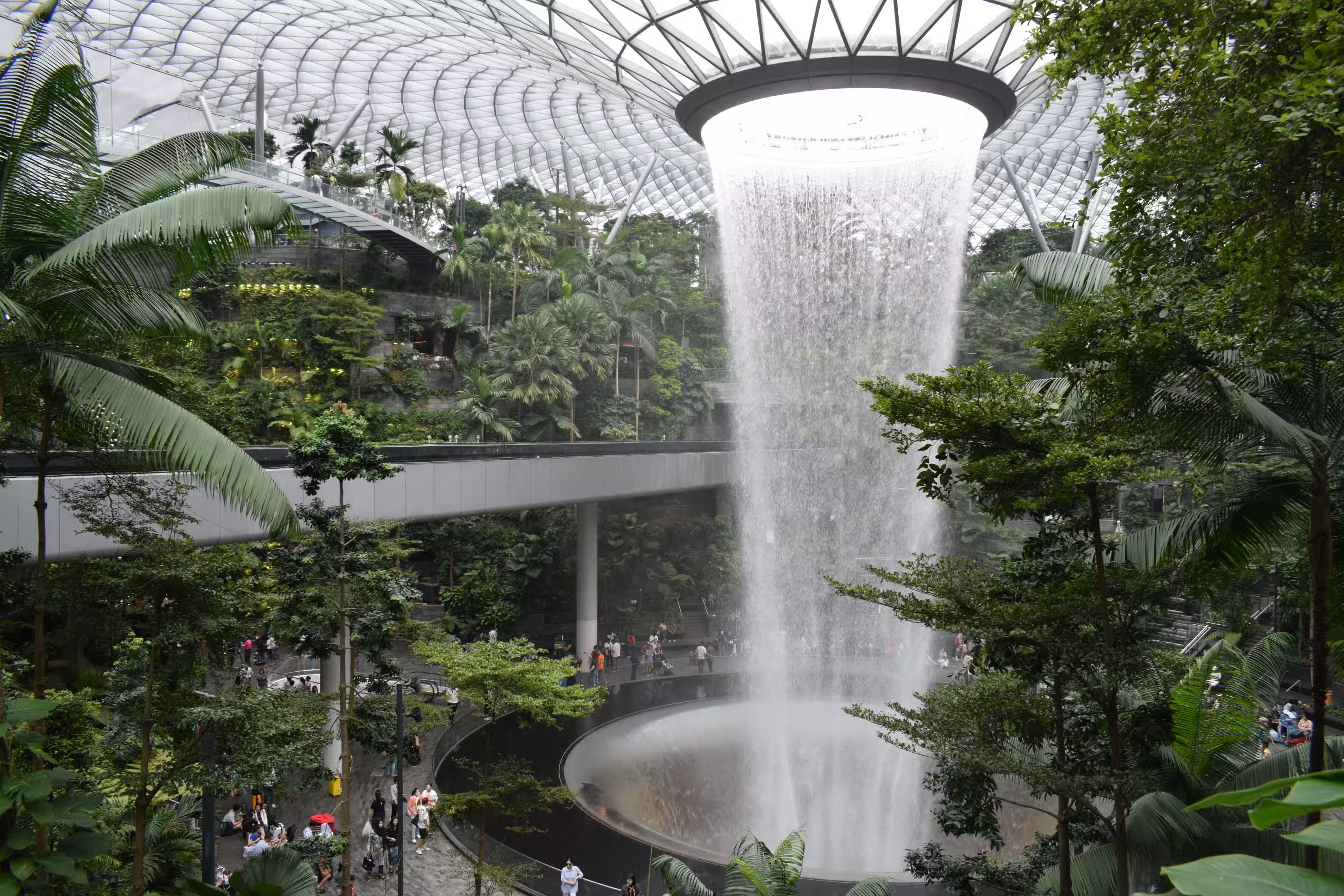 A shot of Jewel Changi. Photo by Ravi Dwivedi. Released under the CC-BY-SA 4.0.
 A shot of Sentosa Boardwalk. Photo by Ravi Dwivedi. Released under the CC-BY-SA 4.0.
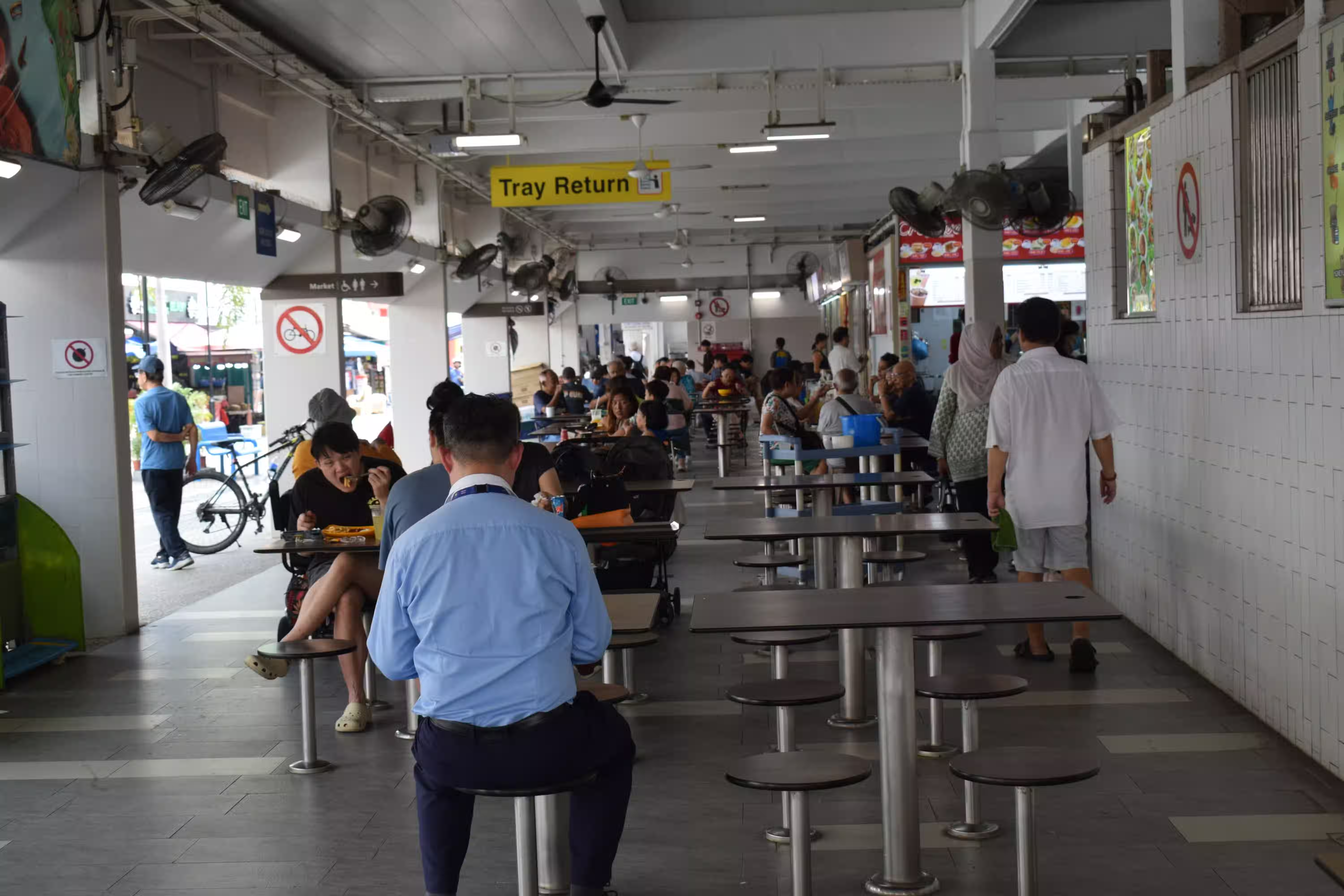 This is the hawker center we went to. Photo by Ravi Dwivedi. Released under the CC-BY-SA 4.0.
 Table littering at the hawker center was prohibited by law. Photo by Ravi Dwivedi. Released under the CC-BY-SA 4.0.
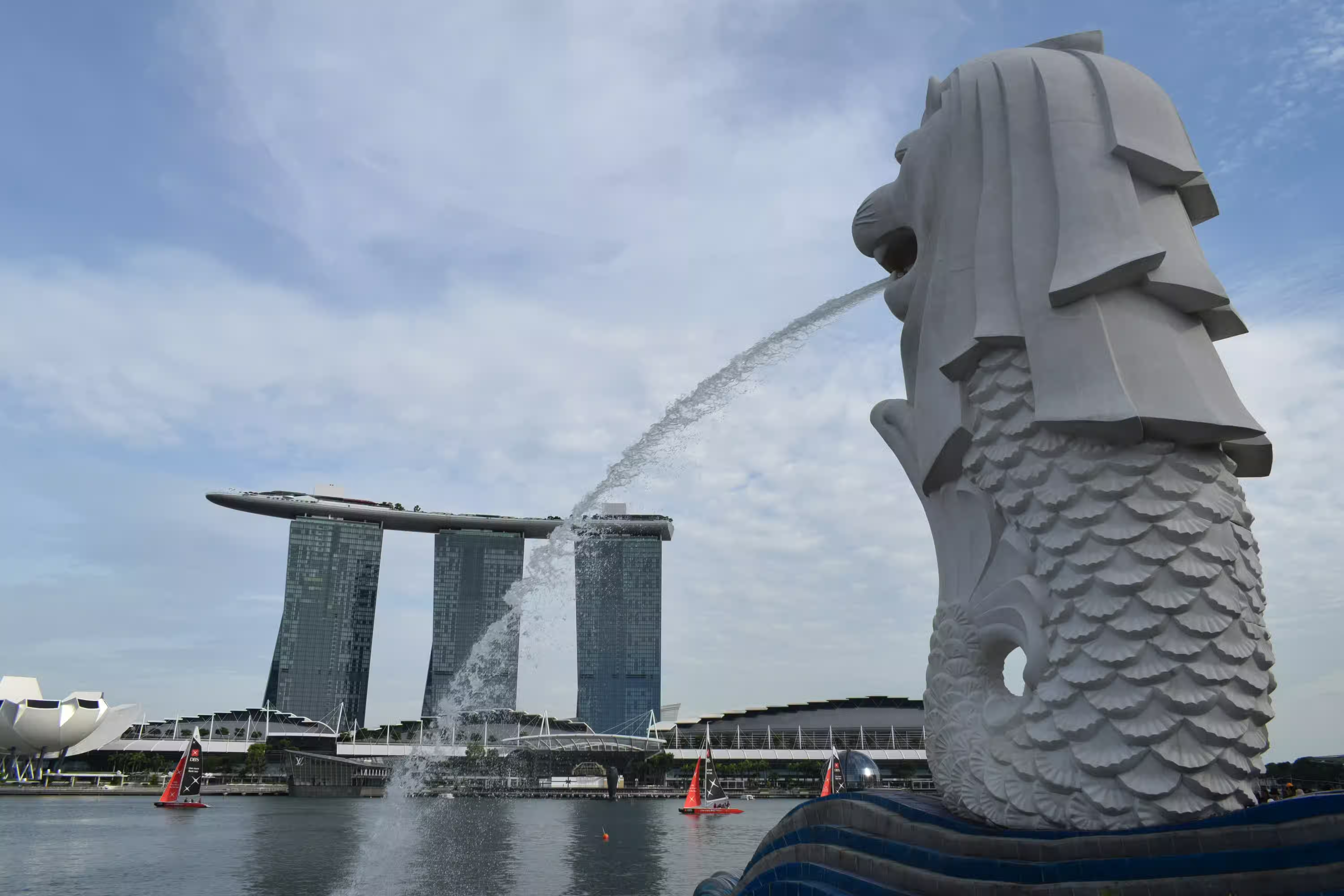 Merlion from behind, giving a good view of Marina Bay Sands. Photo by Ravi Dwivedi. Released under the CC-BY-SA 4.0.


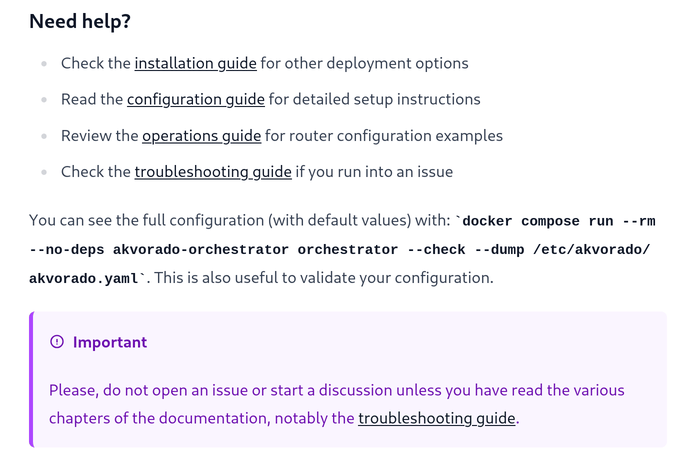
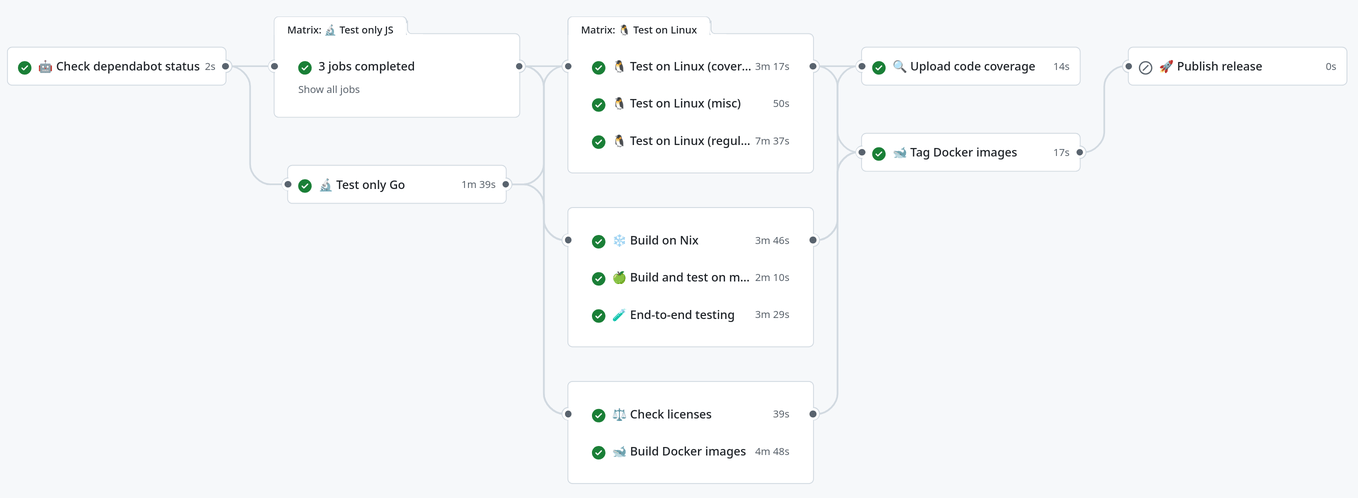


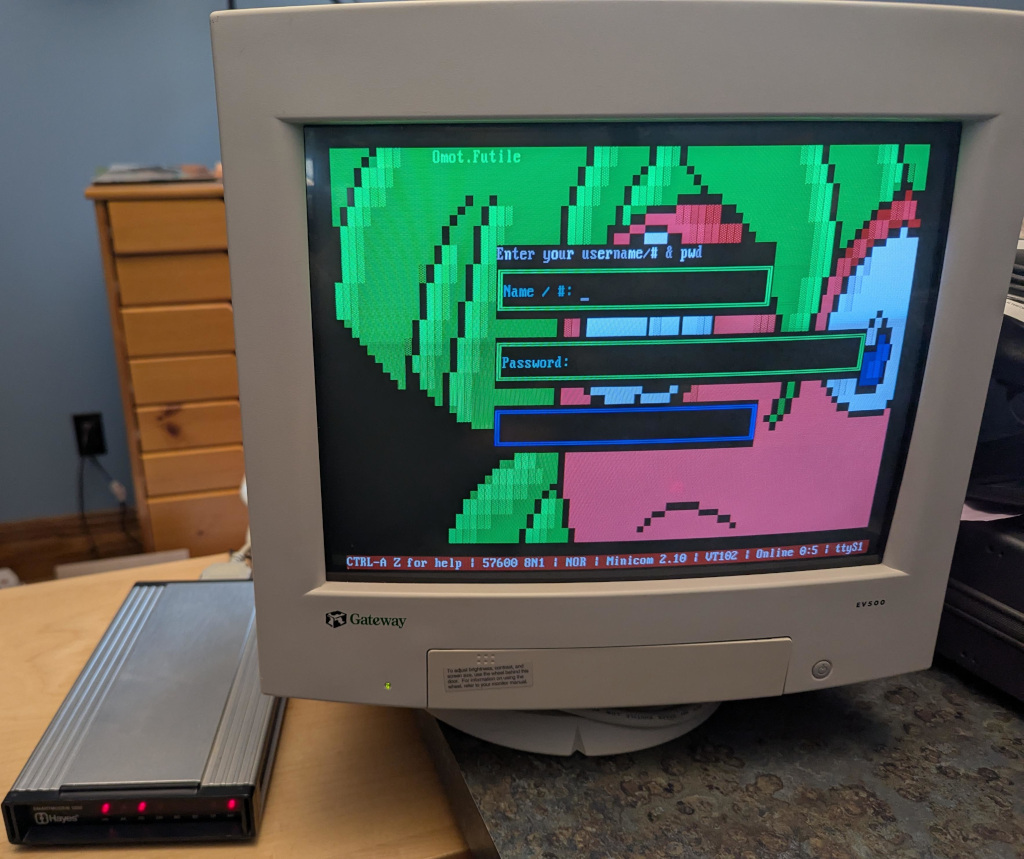

 Locking down database access is probably the single most important thing for a system administrator or software developer to prevent their application from leaking its data. As MariaDB 11.8 is the first long-term supported version with a few new key security features, let s recap what the most important things are every DBA should know about MariaDB in 2025.
Back in the old days, MySQL administrators had a habit of running the clumsy

 My trip to pgday.at started Wednesday at the airport in D sseldorf. I was there on time, and the plane started with an estimated flight time of about 90 minutes. About half an hour into the flight, the captain announced that we would be landing in 30 minutes - in D sseldorf, because of some unspecified technical problems. Three hours after the original departure time, the plane made another attempt, and we made it to Vienna.

 Back in March, with version 4.17.0, Lean introduced