Tiago Bortoletto Vaz: Recycling old Debian t-shirts
 ...and having beautiful dreams :)
 |  |  |
 I have just bought our plane tickets to Managua, so I can finally say this:
 Yes, many of you will ask what happened, I was bragging everywhere I wanted to go by land, driving from Mexico City to Managua. I'd love to, and I'm sure it's completely doable... But we have family issues to attend on July 21, in Argentina. So we will have a beautiful flight schedule (and carbon footprint) for this July:

 If you met Ana, you ll easily remember her. She has a great and pronounced Spanish accent
 I m glad that the existence of the Debian Women project helped her to join Debian because she has been doing a great job.
From KDE packaging to publicity/marketing work, her interests shifted over the years but this allowed her to stay very involved. As she explains it very well, Debian is big enough so that you can stop doing something which is no longer fun for you, and still find something new to do in another part of Debian!
Read on to learn more about Ana, the KDE team, Debian s participation to the Google Summer of Code, and more.
Raphael: Who are you?
Ana: I m Ana Guerrero L pez and I m in my early 30s. I was born and raised in the wonderful city of Sevilla, Spain and I live in Lyon, France. I share my life with another Debian Developer and my paid work is doing Debian support and integration, so you won t be surprised to read that Debian is a big part of my life.
Raphael: How did you start contributing to Debian?
Ana: Although I knew about the existence of Linux since 1997 or so, I didn t really start using Linux until the summer 2001 when I finally got a computer on my own and an Internet link at home. In the beginning, I was using Mandrake in a dual boot with Windows and later around 2003, I happily moved to only using Debian and ditching the Windows partition. Once settled as a Debian user, I knew anybody could help improve the distribution but I hesitated to join mostly due to two reasons, my perception of Debian was the one of a very elitist and aggressive club and who wants to join this kind of cult^wproject? And even if I wanted to join, I did not know how to get started.
By the summer of 2004, the Debian Women project started, it made me seeing Debian as a more welcoming project, and I started maintaining my first packages. The following summer 2005, I attended akademy 2005 (the annual KDE conference) where I had the pleasure to meet there some of the people from the KDE team and this really made a difference for me. Christopher Martin and Adeodato Sim , with the help of other people, have started the maintenance of KDE as a team a few months before and by that time most of the KDE modules where under the maintenance umbrella of the team. This was a very good move since it allowed easily to share the KDE maintenance in a more coordinated way and also eased having non-DDs, like me at that time, to join in and help.
The Debian Women project started, it made me seeing Debian as a more welcoming project.Raphael: You re part of the Debian KDE team. What s your role in the team and what are your plans for Wheezy? Ana: Nowadays, I am not as active in the KDE team as I used to be in the past. The KDE 3 to KDE 4 transition was quite tiring and changes on the KDE side like the successive marketing renames, the shorter 6 months schedule (it used to be at least 9) or the uncoordinated KDE releases mostly burnt me out. Currently, I am mostly working in helping others to get started within the team, some small fixes here and there, and helping with the uploads: an upload of the full KDE suite to the archive requires some building power and upload bandwidth not everybody have. For Wheezy, with the tentative freeze date in June, the plan is to try to ship the latest possible point release of the KDE 4.8 series. The first release of the series, 4.8.0 was released a couple of weeks ago and while writing these lines, the packaging work for 4.8 hasn t started yet. The next move for the team is getting 4.7.4 in unstable, currently sitting in experimental.
For Wheezy, [ ] the plan is to try to ship the latest possible point release of the KDE 4.8 series.Besides the KDE packages, there is some software which users perceive as KDE, such as amarok, digikam, etc., which are not part of KDE but fall under its umbrella. These other programs have their own maintainers and their updates depend greatly in the availability of them. For the KDE office suite, we have right now KOffice in the archive. KOffice got a fork some time ago named Calligra and we should replace KOffice by Calligra in the archive before the release of Wheezy. Sadly there isn t yet a final release of Calligra to use. My personal goal for Wheezy was to finish the removal of all the remaining packages depending on KDE 3 and Qt 3 that Squeeze still contained. The removal of the KDE 3 libraries and all the packages using them was quickly achieved after the release of Squeeze. The removal of Qt 3 soon showed that it was task harder than expected since some popular packages (sometimes not in the Debian archive, e.g. third-party scientific software) depend on it, and also Qt 3 is a requirement for LSB compatibility. Right now, Qt 3 has been orphaned for 9 months and nobody has shown any interest in adopting it. Raphael: KDE, much like GNOME, has been forked by people who were unhappy by the direction that the project has taken since version 4 (cf Trinity). What s your personal opinion on KDE 4.x and what s the position of the Debian KDE team concerning this fork? Ana: I use KDE 4 on my laptop and I think it is a solid desktop environment and platform. However I am finding it less and less attractive for me. On one side, my usage of the computer has been slightly changing and on the other side, I do not like how the new developments in KDE are evolving, things like plasmoids or activities are not attractive for me. I have switched my other 2 systems to awesome although I continue to use mainly a bunch of KDE applications: dolphin, konsole, kate, juk, kmix, etc. So you might say my desktop environment is an awesome KDE. Regarding the Trinity project, a lot of users complained very loudly when KDE 3 got replaced by KDE 4 in testing/unstable, so I find quite laudable the decision of some users to act instead and try to continue with a forked development of KDE 3. However the Trinity team seems to be about 3 persons (funny for a project named Trinity
) while KDE 3 is big. In perspective, it does not look that big because KDE 4 is even larger, but it is still too much for such small team. In addition those developers need to maintain Qt3 that has been end-of-lifed years ago by Nokia/Trolltech . So my guess is that sooner or later the project will fade away.
Nobody from the KDE team is interested in Trinity and in case someone wants to package it for Debian, they would have to make a new team. For the reasons mentioned above: Qt3 maintenance and reduced upstream group, this would be a bad idea.
My advice if you do not like KDE 4 and you miss KDE 3, would be taking a look at razor-qt based on Qt4 and quite similar to KDE 3.
I read they have plans to port it to Qt4, but frankly that could take some years same it took to the KDE project for KDE 4.0.0  Raphael: You used to maintain news.debian.net, a WordPress blog dedicated to Debian, but you stopped a while ago. A few months later you started to maintain a Debian page on Google+. Why did you stop the blog and what s your goal with the Google+ page?
Ana: I blogged about the reasons I started news.debian.net. In short, I thought Debian needed a better system to publish news, something like a blog. I first tried to suggest the idea to the press/publicity team but they weren t interested, so I started the project alone. IMHO the blog worked quite well and I was feeling like it should be made official. I talked about this with some people but at the time I wasn t pushing it because I had other priorities and I knew pushing it to become official would need some extra time and energy.
Stefano decided to start the discussion about making news.debian.net official (that s moving it to a debian.org domain) in its own initiative. After the public discussion and some private exchange of emails with DSA, the situation became frustrating and I decided to close news.debian.net after the release of Squeeze.
Later, during DebConf, an officer from the press team announced they were launching a blog and I asked Stefano if he could try to have a discussion about this to see if it could still somehow fit my ideas, and maybe contributing myself, but nobody from the press team answered Stefano s email and the blog hasn t started yet either.
Irony that communication didn t work when wanting to improve communication.
About the Google+ page, everyday I follow what is going in Debian and quite often I find things I want to share. I do not want to clutter my own profiles with Debian stuff or have people following me because of that, so I decided to create the Debian page when Google+ made them available. I like the fact that people can follow that without having an account in Google+ although they can not comment anonymously. I am not happy about the fact that Google+ is a closed platform but hopefully the data will become easier to export in the near future. Right now, there are some services that provides RSS feeds of Google+ pages if you want to follow the page and you are not in Google+ (or I could setup one if several people ask me).
Raphael: Last year you helped to manage Debian s participation to the Google Summer of Code. How did it went? Is there something that you can improve for this year?
Ana: I think last year we managed to have people in Debian more aware about what the students were doing. That also helped students to get more feedback and therefore get to know more people in the project and get more integrated. Students were sending periodic public reports available to everybody interested in the status of the projects and some of them also held their own sessions in DebConf.
We still failed to start looking for mentors early enough and to give them information about how the GSoC worked and how they could have a successful project. Having good projects in Debian is harder than in other projects because the GSoC mostly promotes having students started in Open Source *coding* for a project, while Debian is more a project about integrating software and we overall do not have so many parts that has to be coded.
My personal goal for this year is to try getting the projects earlier to attract good students from the very beginning, even if that means we have less projects than in other years.
Raphael: What motivates you to continue to contribute year after year?
Ana: Three things. I like improving the OS I use, I like the friends I have made while working in Debian through the years and because I have fun.
Also Debian is quite a big project, so if you become tired or burn out working in some area, you always can easily find interesting things to do somewhere else.
Raphael: Is there someone in Debian that you admire for their contributions?
Ana: Adeodato Sim , he is now in a long leave from the project, but it is one of those persons who made a difference in the project in his job in the release team some years ago. Aur lien Jarno because of his tireless work in (e)glibc and porting of several architectures.
I also have special admiration for all those people who have been very active in the project for more than 7-8 years because I know it is not always easy to combine it with real life.
Subscribe to my newsletter to get my monthly summary of the Debian/Ubuntu news and to not miss further interviews. You can also follow along on Identi.ca, Google+, Twitter and Facebook .
7 comments Liked this article? Click here. My blog is Flattr-enabled.
| GTA01 and GTA02 lovers should take a look at GTA04 project. For those who want to own one, it's time to act. It's not so affordable, but for a small production device it's not bad at all. Note that GTA04 is a motherboard replacement for the Neo Freerunner (GTA02) or the Openmoko Neo 1973 (GTA01). You need such a device to install the new motherboard. Default rootfs is Debian Squeeze + LXDE. Other Debian-based projects like Qtmoko have also been ported. |  |
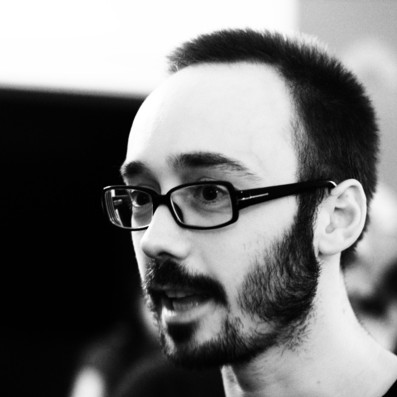
picture by Tiago Bortoletto Vaz, CC BY-NC-SA 2.0
The amount of forwarded patches we receive from downstream is at its maximumThis is by far not an achievement of mine alone. In particular, many of the activity of the Derivatives Front Desk have been organized by other enthusiastic volunteers. But I ve done my part, especially in breaking the ice and in proposing a vision of Free Software distribution where all distros play a role and are welcome to join the game, as long as they give back and give credit to their respective upstreams.
We have several project members that [ ] take care of tasks other than packaging.Once gain, this is by far not an achievement of mine alone, very little project-wide achievements are. DAM has helped a lot and support from the project as a whole has been immense.
It s multi-arch [ ] you realize you are finally doing the right thing and ditching piles of ugly hacks.Raphael: If you were not DPL and could spend all your time on Debian, what project would you do? Stefano: I would sit down and do software development for Debian. It s impressive how many important and beneficial changes for Debian could be delivered by specific software improvements in various parts of our infrastructure. We tend to attract many packagers, but not so many people willing to maintain Debian infrastructure softwares like dak, britney, debbugs, the PTS, etc. Their maintenance burden then falls on the shoulders of the respective teams which are generally very busy with other important tasks. As a project, we seem to be more appealing to packagers than to software developers. That is a pity given the amount of exciting coding tasks that are everywhere in Debian. Part of the reason we are not appealing to developers is that we are not particularly good at collecting coding tasks in a place where interested developers could easily pick them up. It also takes quite a bit of inside knowledge to spot infrastructure bugs and understand how to fix them. I long for some spare hacking time to check if I m still good enough of a coder to hunt down longstanding bugs in our infrastructure, which have ended up being my pet peeves. I d also love to dive again into RCBW. It s less committing than package maintenance, more diverse and challenging, and also an immensely useful activity to get Debian releases done. Raphael: Martin Michlmayr is worried that there is so few paid opportunities around Debian. Do you agree with his sentiment, and if yes do you have ideas on how to improve this situation? Stefano: The idealistic me wishes Debian to be a community made only of volunteers that devote their free time to the Project. Oh, and that me also wishes Debian to be competitive with similar projects, no matter how many full-time employees others have! That is coherent with a view of society where everyone has a day job, but also engages in volunteering activities ensuring that public interest is pursued by people motivated by interests other than profit. But I do realize that for Free Software to succeed companies, employees, and salaries should all have a role. I admire projects that strike a good balance between volunteer and paid work. The Linux kernel is emblematic in that respect: many developers are paid by companies that have a commercial or strategic interest in Linux. Nevertheless volunteers contributions are aplenty and the Linux community gives a convincing impression that choices are driven by the community itself (or by its benevolent dictator) without money-driven impositions.
I do realize that for Free Software to succeed companies, employees, and salaries should all have a role.Such an ecosystem does not exist around Debian. We do have a partner program that allows for it to happen, but we have very few partners with an interest in doing distribution development work. Like Martin, I m worried by this state of affairs, because it de facto means we lag behind in terms of available people power. In a community of volunteers, that might frustrate people and that is not good. To improve over the status quo the first step is to federate together small and medium companies that have a strategic interest in Debian and listen to their needs. I m already in touch with representatives of such companies that, in many cases, already employ Debian Developers to do some distribution work in Debian. We will be soon sending out a call to reach out to more such companies, but since we are discussing this, why waiting? If some of our readers here are representative of such companies, I encourage them to get in touch with me about this. Raphael: You know that the fundraising campaign for the Debian Administrator s Handbook is on good track but the liberation of the book is not yet assured. What do you think of this project? Stefano: I m happy about the project, to the point that I ve accepted writing a testimonial for it
. I m sad about the scarce availability of up to date and high quality (DFSG-)Free books about Debian and I welcome any initiative that might help closing that gap.
I m sad about the scarce availability of up to date and high quality (DFSG-)Free books about Debian.Free Culture is a great offspring of Free Software and I m convinced we need to stand up against double standards in the two camps. Letting aside software-specific licensing details, the basic freedoms to be defended are the same. They are those freedoms that ensure that a reader is in full control of his book, pretty much as they ensure that a computer user is in full control of the software that runs on it. I m therefore proud that Debian has long resolved that the Debian Free Software Guidelines (DFSG) apply not only to software but also to books and other pieces of documentation. But the status quo implies that not only we have very few up to date, high quality books about Debian. It also implies that, at present, we have no such book that we can distribute in the Debian archive, showing off the Free Software (and Free Culture!) values we stand for.
Subscribe to my newsletter to get my monthly summary of the Debian/Ubuntu news and to not miss further interviews. You can also follow along on Identi.ca, Google+, Twitter and Facebook .
7 comments Liked this article? Click here. My blog is Flattr-enabled.
tiago@x61:~$ flickrbackup -h
Usage: flickrbackup [OPTIONS] -o OUTPUT_DIR
Backup your flickr photos.
Options:
  --version             show program's version number and exit
  -h, --help            show this help message and exit
  -o OUTPUT_DIR, --output_dir=OUTPUT_DIR
                        set the local directory where you want to store your
                        pictures
  -e, --metadata-exif   store flickr metadata (title, description etc) as EXIF
                        tags in your local files [default: False]
  -x, --metadata-xml    store metadata as default flickr XML files [NOT
                        IMPLEMENTED]
  -u, --metadata-update
                        update flickr metadata to your local files. Use this
                        option with -x and/or -e [default: False]
  -g, --html-gallery    generate a local HTML gallery [NOT IMPLEMENTED]
 |  |  |
 |  |  |
 |  |  |
 |  |  |
 mksh R40b (nowadays with filled
in user s caveats (for R40, too!)
and packager s upgrade hints) has
just been released. This is a should-have upgrade, fixing a number of
admittedly some obscure bugs, changing things begun in R40, improving
upon others. Thanks to the PLD Linux guys for spotting all these errors;
thanks to them and phpnet.org both for adopting mksh so well.
I have also fixed a bug in nroff(1) which will lead to an even
nicer looking HTML manpage mksh(1) (after the next rebuild and upload of
a MirBSD snapshot scheduled RSN).
jupp 3.1.16 took on the task
of merging Debian joe changes (aiming at an upload). I also split the
jupprc file into three versions (2.8 generic/DOS, 3.1+jupp and 3.7/Unix)
because of the differences in the baseline executables making rc files
partially mutually incompatible (think Insert key), annoyingly warning
(think syntax, hmsg), or less usable (joe s new menu system).
jupp 2.8.2 is a companion to
jupp 3.1.16 mostly because of the new help window character map
Binaries for jupp should be updated RSN too.
Considering Banja Luka is arriving quickly, the r in RSN should be
taken with a few grains of salt. I ve also scheduled working on the pcc
Debian package for the next future; updating lynx and maybe others like
OpenSSH in MirBSD is also due; cvs(1) will receive more of my time, but
before the next Upload I d like to fix LP#12230 once verified.
Builds for Debian/m68k are also still running. I note I did in fact
not manage to make a new base image, yet (but 2.6.39 kernels
miss a patch, anyway, so waiting for 3.0 is ok). It s still using gcc-4.4
because nobody tests gcc-4.6 and gcj-4.6 FTBFS due to SIGSEGV, but that s
ok in my books. rsyslog is broken but sysklogd works.
The #ksh Freenode page finally
got a well-deserved link to Planet Commandline. Throw more my way!
Acronyms and translations,
too. (Got Norwegian and Rumanian covered in the meantime. No idea whether any
RTL languages will work in that beast. But I m young and need the money)
Since I m writing a wlog entry anyway let me thank Gunnar for a nice
summary on the current Free Culture discussion; my comments on Nina s site
seem to be eaten, but let me support it fully, although, of course, I normally
use a copycenter style licence, which
is specifically written for general works of authorship under copyright law,
not limited to software. I did in fact have that in mind. Maybe some people
will like it (it s less than one Kibibyte long) either generally or just for
their everyday random musings (they can then keep CC-BY-SA for the big works
if they so desire).
Wouter, grass background makes green headlines illegible. I ve never liked,
and never installed manually, cups either. (Benny tells me that Apple s new
version refuses to talk with a non-Apple cups, kinda defeating the whole idea
I think.) Port 9100 is JetDirect (probably with an HP in front and some subset
of trailing) and just nice. (Being able to talk ESC/P with your printer
like print '\033K\x07\0\x3E\x81\x99\xA5\xA5\x81\x3E' >/dev/lpa too
rocks though, IMHO. Yes, mine can, and I still can. /dev/lpa is BSD.)
Kai, thanks for your vimrc lines:
	:highlight TrailWhitespace ctermbg=red guibg=red
	:match TrailWhitespace /\s\+$\  \+\ze\t/
Automatic removal is harmful, though I just fell into the trap since jupprc contains needed whitespace at EOL but manual removal (bound to ^K] in jupp) rocks. And I like that your solution uses such strong a colour vim users are the single most represented offender group for actually leaving the redundant whitespace at EOL there, and it should hurt their eyes. (Sadly there is some vehement disagreement preventing them from inclusion in grml-etc-core but that s why I re-post them here.) Ah, and jupp can of course display whitespace visibly (although it uses / , replacing the arrow with if no UTF-8, not ), accessible with ^Ov. Steve, want to put up a checklist for sites? We can crowdsource the testing to maybe get some interesting results Some other people would get more comments if they were idling in IRC (Freenode) or allow comments on their blog, specifically without too high an entrance barrier OpenID is ok, but many other things, and ECMAscript, are not; but I can t really say that loud because our wlog is static HTML compiled from a flat plaintext data source so it doesn t allow such either. I often forget what I wanted to add if I can t get it out quickly enough (especially at work). Sowwy Me like the cat picture postings (Amayita, Tiago, Gracias!).
uboot-pr13 while in Maemo.dd to the device. In my
experience, it is completely unnecessary to use it and, in fact, it is so 6
times slower than using a simple shell redirection. That is, instead of:
bzip2 -d < mg-handset-armv7nhl-n900-whateverwhatever-mmcblk0p.raw.bz2 dd bs=4096 of=/dev/mmcblk0
bzip2 -d < mg-handset-armv7nhl-n900-whateverwhatever-mmcblk0p.raw.bz2 > /dev/mmcblk0
dd command is probably the culprit, but I
don't see the need to write the uncompressed data in chunks this small. If
there is a problem, I would love to be informed of that.
As trying it with uboot and a SD card doesn't mess with your "safe" Maemo
installation, this is a good way to play with the successor of Maemo.
Perhaps, if we give good feedback to the project, we can influence the
direction that it is taking.
It will surely be nice to learn about this new "consumer-oriented"
distribution.
 As previously announced in Ganneff s blog and Debian News, a special funding for DebConf11 is available for Debian Developers and Debian Maintainers who have either never attended a DebConf before, or who have not been to a DebConf since DebConf7 (in Scotland).
How to apply
Email the DebConf Newbies Team (newbies@debconf.org) providing the following information:
After numerous contributions from many of you, the DebConf team has finally released the DebConf10 Final Report. It s a 46-page document which
gives the reader an idea about the conference as a whole. It includes descriptions of talks, DebCamp and Debian Day activities, personal impressions, attendee and budgeting numbers, the work of various teams, social events, funny pictures and so on. If you attended Debconf10, the report will refresh some of your remarkable memories and bring you closer to the organization team work. If not, it will certainly encourage you to be part of future Debian events :)
The report is available in two PDF sizes and can be downloaded from Debconf media website. Enjoy!
the DebConf team
(from http://lists.debconf.org/lurker/message/20110213.040506.1beb418f.en.html)
To: debconf-video
Subject: [Debconf-video] Announcing debian/watch, the Debian Miro Community Hi all,
With help of dc-video people I've just finished generating RSS feeds from penta data and published all Debconf(5-10) available videos to our new Miro Community page: http://debian.mirocommunity.org/
Soon I'll upload the feeds to dc-video repository. The process had to be semi- automated since I noticed some inconsistencies in penta which I'll point later.
I've written the following description for this channel: http://debian.mirocommunity.org/about/ (english language fixes / suggestions are welcome!)
Other nice Miro Community channels for reference:
http://gnome.mirocommunity.org/ http://ubuntu.mirocommunity.org/ [...]
(from a recent email message to Debian Miro Community admins)
Your Site is Now Running Miro Community 1.2!
Hi,
We have just migrated http://debian.mirocommunity.org/ to the latest version of Miro Community. From here forward, we're asking our heaviest users to help support ongoing software development and server costs by upgrading to a paid account, which is very easy to do!
This release limits some features you currently use. You will have 2 weeks to upgrade your account or you will no longer be able to use the following features.
* You have more than one administrator. If you choose to remain at the Basic account level, the following administrators will lose admin privileges: valessio tiago
* You have 556 published videos. If you do not upgrade your account, we will unpublish the oldest videos to keep you within the 500 video limit. You can also cull videos you no longer want at http://debian.mirocommunity.org/admin/bulk_edit/ [...]Although I understand Miro Community needs of releasing paid accounts, I think the features are now too restricted for non-premium users.So, at the end I have to thank Valessio for his amazing CSS work on this and Holger for warning me in time to not announce Debian Miro Community as an official channel for Debconf videos.It seems Miro will unpublish 56 videos from our channel in two weeks. I'm thinking about keeping there only Debconf videos, which should then fit on their new quota... At least until we find another place to publish them. Suggestions are very welcome. Debconf and other Debian videos are currently hosted at http://video.debian.net. Debconf videos feeds are available at http://tiagovaz.org/videoteam/ and corresponding thumbnails at http://tiagovaz.org/thumbs/.
 |  |  |
 |  |  |
Next.


