In December 2024, I went on a trip through four countries - Singapore, Malaysia, Brunei, and Vietnam - with my friend Badri. This post covers our experiences in Singapore.
I took an IndiGo flight from Delhi to Singapore, with a layover in Chennai. At the Chennai airport, I was joined by Badri. We had an early morning flight from Chennai that would land in Singapore in the afternoon. Within 48 hours of our scheduled arrival in Singapore, we submitted an arrival card online. At immigration, we simply needed to scan our passports at the gates, which opened automatically to let us through, and then give our address to an official nearby. The process was quick and smooth, but it unfortunately meant that we didn t get our passports stamped by Singapore.
Before I left the airport, I wanted to visit the nature-themed park with a fountain I saw in pictures online. It is called Jewel Changi, and it took quite some walking to get there. After reaching the park, we saw a fountain that could be seen from all the levels. We roamed around for a couple of hours, then proceeded to the airport metro station to get to our hotel.
A shot of Jewel Changi. Photo by Ravi Dwivedi. Released under the CC-BY-SA 4.0.
There were four ATMs on the way to the metro station, but none of them provided us with any cash. This was the first country (outside India, of course!) where my card didn t work at ATMs.
To use the metro, one can tap the EZ-Link card or bank cards at the AFC gates to get in. You cannot buy tickets using cash. Before boarding the metro, I used my credit card to get Badri an EZ-Link card from a vending machine. It was 10 Singapore dollars ( 630) - 5 for the card, and 5 for the balance. I had planned to use my Visa credit card to pay for my own fare. I was relieved to see that my card worked, and I passed through the AFC gates.
We had booked our stay at a hostel named Campbell s Inn, which was the cheapest we could find in Singapore. It was 1500 per night for dorm beds. The hostel was located in Little India. While Little India has an eponymous metro station, the one closest to our hostel was Rochor.
On the way to the hostel, we found out that our booking had been canceled.
We had booked from the Hostelworld website, opting to pay the deposit in advance and to pay the balance amount in person upon reaching. However, Hostelworld still tried to charge Badri s card again before our arrival. When the unauthorized charge failed, they sent an automatic message saying we tried to charge and to contact them soon to avoid cancellation, which we couldn t do as we were in the plane.
Despite this, we went to the hostel to check the status of our booking.
The trip from the airport to Rochor required a couple of transfers. It was 2 Singapore dollars (approx. 130) and took approximately an hour.
Upon reaching the hostel, we were informed that our booking had indeed been canceled, and were not given any reason for the cancelation. Furthermore, no beds were available at the hostel for us to book on the spot.
We decided to roam around and look for accommodation at other hostels in the area. Soon, we found a hostel by the name of Snooze Inn, which had two beds available. It was 36 Singapore dollars per person (around 2300) for a dormitory bed. Snooze Inn advertised supporting RuPay cards and UPI. Some other places in that area did the same. We paid using my card. We checked in and slept for a couple of hours after taking a shower.
By the time we woke up, it was dark. We met Praveen s friend Sabeel to get my FLX1 phone. We also went to Mustafa Center nearby to exchange Indian rupees for Singapore dollars. Mustafa Center also had a shopping center with shops selling electronic items and souvenirs, among other things. When we were dropping off Sabeel at a bus stop, we discovered that the bus stops in Singapore had a digital board mentioning the bus routes for the stop and the number of minutes each bus was going to take.
In addition to an organized bus system, Singapore had good pedestrian infrastructure. There were traffic lights and zebra crossings for pedestrians to cross the roads. Unlike in Indian cities, rules were being followed. Cars would stop for pedestrians at unmanaged zebra crossings; pedestrians would in turn wait for their crossing signal to turn green before attempting to walk across. Therefore, walking in Singapore was easy.
Traffic rules were taken so seriously in Singapore I (as a pedestrian) was afraid of unintentionally breaking them, which could get me in trouble, as breaking rules is dealt with heavy fines in the country. For example, crossing roads without using a marked crossing (while being within 50 meters of it) - also known as jaywalking - is an offence in Singapore.
Moreover, the streets were litter-free, and cleanliness seemed like an obsession.
After exploring Mustafa Center, we went to a nearby 7-Eleven to top up Badri s EZ-Link card. He gave 20 Singapore dollars for the recharge, which credited the card by 19.40 Singapore dollars (0.6 dollars being the recharge fee).
When I was planning this trip, I discovered that the World Chess Championship match was being held in Singapore. I seized the opportunity and bought a ticket in advance. The next day - the 5th of December - I went to watch the 9th game between Gukesh Dommaraju of India and Ding Liren of China. The venue was a hotel on Sentosa Island, and the ticket was 70 Singapore dollars, which was around 4000 at the time.
We checked out from our hostel in the morning, as we were planning to stay with Badri s aunt that night. We had breakfast at a place in Little India. Then we took a couple of buses, followed by a walk to Sentosa Island. Paying the fare for the buses was similar to the metro - I tapped my credit card in the bus, while Badri tapped his EZ-Link card. We also had to tap it while getting off.
If you are tapping your credit card to use public transport in Singapore, keep in mind that the total amount of all the trips taken on a day is deducted at the end. This makes it hard to determine the cost of individual trips. For example, I could take a bus and get off after tapping my card, but I would have no way to determine how much this journey cost.
When you tap in, the maximum fare amount gets deducted. When you tap out, the balance amount gets refunded (if it s a shorter journey than the maximum fare one). So, there is incentive for passengers not to get off without tapping out. Going by your card statement, it looks like all that happens virtually, and only one statement comes in at the end. Maybe this combining only happens for international cards.
We got off the bus a kilometer away from Sentosa Island and walked the rest of the way. We went on the Sentosa Boardwalk, which is itself a tourist attraction. I was using Organic Maps to navigate to the hotel Resorts World Sentosa, but Organic Maps route led us through an amusement park. I tried asking the locals (people working in shops) for directions, but it was a Chinese-speaking region, and they didn t understand English. Fortunately, we managed to find a local who helped us with the directions.
A shot of Sentosa Boardwalk. Photo by Ravi Dwivedi. Released under the CC-BY-SA 4.0.
Following the directions, we somehow ended up having to walk on a road which did not have pedestrian paths. Singapore is a country with strict laws, so we did not want to walk on that road. Avoiding that road led us to the Michael Hotel. There was a person standing at the entrance, and I asked him for directions to Resorts World Sentosa. The person told me that the bus (which was standing at the entrance) would drop me there! The bus was a free service for getting to Resorts World Sentosa. Here I parted ways with Badri, who went to his aunt s place.
I got to the Resorts Sentosa and showed my ticket to get in. There were two zones inside - the first was a room with a glass wall separating the audience and the players. This was the room to watch the game physically, and resembled a zoo or an aquarium. :) The room was also a silent room, which means talking or making noise was prohibited. Audiences were only allowed to have mobile phones for the first 30 minutes of the game - since I arrived late, I could not bring my phone inside that room.
The other zone was outside this room. It had a big TV on which the game was being broadcast along with commentary by David Howell and Jovanka Houska - the official FIDE commentators for the event. If you don t already know, FIDE is the authoritative international chess body.
I spent most of the time outside that silent room, giving me an opportunity to socialize. A lot of people were from Singapore. I saw there were many Indians there as well. Moreover, I had a good time with Vasudevan, a journalist from Tamil Nadu who was covering the match. He also asked questions to Gukesh during the post-match conference. His questions were in Tamil to lift Gukesh s spirits, as Gukesh is a Tamil speaker.
Tea and coffee were free for the audience. I also bought a T-shirt from their stall as a souvenir.
After the game, I took a shuttle bus from Resorts World Sentosa to a metro station, then travelled to Pasir Ris by metro, where Badri was staying with his aunt. I thought of getting something to eat, but could not find any caf s or restaurants while I was walking from the Pasir Ris metro station to my destination, and was positively starving when I got there.
Badri s aunt s place was an apartment in a gated community. On the gate was a security guard who asked me the address of the apartment. Upon entering, there were many buildings. To enter the building, you need to dial the number of the apartment you want to go to and speak to them. I had seen that in the TV show Seinfeld, where Jerry s friends used to dial Jerry to get into his building.
I was afraid they might not have anything to eat because I told them I was planning to get something on the way. This was fortunately not the case, and I was relieved to not have to sleep with an empty stomach.
Badri s uncle gave us an idea of how safe Singapore is. He said that even if you forget your laptop in a public space, you can go back the next day to find it right there in the same spot. I also learned that owning cars was discouraged in Singapore - the government imposes a high registration fee on them, while also making public transport easy to use and affordable. I also found out that 7-Eleven was not that popular among residents in Singapore, unlike in Malaysia or Thailand.
The next day was our third and final day in Singapore. We had a bus in the evening to Johor Bahru in Malaysia. We got up early, had breakfast, and checked out from Badri s aunt s home. A store by the name of Cat Socrates was our first stop for the day, as Badri wanted to buy some stationery. The plan was to take the metro, followed by the bus. So we got to Pasir Ris metro station. Next to the metro station was a mall. In the mall, Badri found an ATM where our cards worked, and we got some Singapore dollars.
It was noon when we reached the stationery shop mentioned above. We had to walk a kilometer from the place where the bus dropped us. It was a hot, sunny day in Singapore, so walking was not comfortable. We had to go through residential areas in Singapore. We saw some non-touristy parts of Singapore.
After we were done with the stationery shop, we went to a hawker center to get lunch. Hawker centers are unique to Singapore. They have a lot of shops that sell local food at cheap prices. It is similar to a food court. However, unlike the food courts in malls, hawker centers are open-air and can get quite hot.
This is the hawker center we went to. Photo by Ravi Dwivedi. Released under the CC-BY-SA 4.0.
To have something, you just need to buy it from one of the shops and find a table. After you are done, you need to put your tray in the tray-collecting spots. I had a kaya toast with chai, since there weren t many vegetarian options. I also bought a persimmon from a nearby fruit vendor. On the other hand, Badri sampled some local non-vegetarian dishes.
Table littering at the hawker center was prohibited by law. Photo by Ravi Dwivedi. Released under the CC-BY-SA 4.0.
Next, we took a metro to Raffles Place, as we wanted to visit Merlion, the icon of Singapore. It is a statue having the head of a lion and the body of a fish. While getting through the AFC gates, my card was declined. Therefore, I had to buy an EZ-Link card, which I had been avoiding because the card itself costs 5 Singapore dollars.
From the Raffles Place metro station, we walked to Merlion. The place also gave a nice view of Marina Bay Sands. It was filled with tourists clicking pictures, and we also did the same.
Merlion from behind, giving a good view of Marina Bay Sands. Photo by Ravi Dwivedi. Released under the CC-BY-SA 4.0.
After this, we went to the bus stop to catch our bus to the border city of Johor Bahru, Malaysia. The bus was more than an hour late, and we worried that we had missed the bus. I asked an Indian woman at the stop who also planned to take the same bus, and she told us that the bus was late. Finally, our bus arrived, and we set off for Johor Bahru.
Before I finish, let me give you an idea of my expenditure. Singapore is an expensive country, and I realized that expenses could go up pretty quickly. Overall, my stay in Singapore for 3 days and 2 nights was approx. 5500 rupees. That too, when we stayed one night at Badri s aunt s place (so we didn t have to pay for accomodation for one of the nights) and didn t have to pay for a couple of meals. This amount doesn t include the ticket for the chess game, but includes the costs of getting there. If you are in Singapore, it is likely you will pay a visit to Sentosa Island anyway.
Stay tuned for our experiences in Malaysia!
Credits: Thanks to Dione, Sahil, Badri and Contrapunctus for reviewing the draft. Thanks to Bhe for spotting a duplicate sentence.
Akvorado 2.0 was released today! Akvorado collects network flows with
IPFIX and sFlow. It enriches flows and stores them in a ClickHouse database.
Users can browse the data through a web console. This release introduces an
important architectural change and other smaller improvements. Let s dive in!
New outlet service
The major change in Akvorado 2.0 is splitting the inlet service into two
parts: the inlet and the outlet. Previously, the inlet handled all flow
processing: receiving, decoding, and enrichment. Flows were then sent to Kafka
for storage in ClickHouse:
Akvorado flow processing before the introduction of the outlet service
Network flows reach the inlet service using UDP, an unreliable protocol. The
inlet must process them fast enough to avoid losing packets. To handle a
high number of flows, the inlet spawns several sets of workers to receive flows,
fetch metadata, and assemble enriched flows for Kafka. Many configuration
options existed for scaling, which increased complexity for users. The code
needed to avoid blocking at any cost, making the processing pipeline complex
and sometimes unreliable, particularly the BMP receiver.1 Adding new
features became difficult without making the problem worse.2
In Akvorado 2.0, the inlet receives flows and pushes them to Kafka without
decoding them. The new outlet service handles the remaining tasks:
Akvorado flow processing after the introduction of the outlet service
This change goes beyond a simple split:3 the outlet now reads flows from
Kafka and pushes them to ClickHouse, two tasks that Akvorado did not handle
before. Flows are heavily batched to increase efficiency and reduce the load
on ClickHouse using ch-go, a low-level Go client for ClickHouse. When
batches are too small, asynchronous inserts are used (e20645). The number of
outlet workers scales dynamically (e5a625) based on the target batch
size and latency (50,000 flows and 5 seconds by default).
This new architecture also allows us to simplify and optimize the code. The
outlet fetches metadata synchronously (e20645). The BMP component becomes
simpler by removing cooperative multitasking (3b9486). Reusing the same
RawFlow object to decode protobuf-encoded flows from Kafka reduces pressure on
the garbage collector (8b580f).
The effect on Akvorado s overall performance was somewhat uncertain, but a
user reported 35% lower CPU usage after migrating from the previous
version, plus resolution of the long-standing BMP component issue.
Other changes
This new version includes many miscellaneous changes, such as completion for
source and destination ports (f92d2e), and automatic restart of the
orchestrator service (0f72ff) when configuration changes to avoid a common
pitfall for newcomers.
Let s focus on some key areas for this release: observability,
documentation, CI,
Docker, Go, and JavaScript.
Observability
Akvorado exposes metrics to provide visibility into the processing pipeline and
help troubleshoot issues. These are available through Prometheus HTTP metrics
endpoints, such as /api/v0/inlet/metrics. With the introduction
of the outlet, many metrics moved. Some were also renamed (4c0b15) to match
Prometheus best practices. Kafka consumer lag was added as a new metric
(e3a778).
If you do not have your own observability stack, the Docker Compose setup
shipped with Akvorado provides one. You can enable it by activating the profiles
introduced for this purpose (529a8f).
The prometheus profile ships Prometheus to store metrics and Alloy
to collect them (2b3c46, f81299, and 8eb7cd). Redis and Kafka
metrics are collected through the exporter bundled with Alloy (560113).
Other metrics are exposed using Prometheus metrics endpoints and are
automatically fetched by Alloy with the help of some Docker labels, similar to
what is done to configure Traefik. cAdvisor was also added (83d855) to
provide some container-related metrics.
The loki profile ships Loki to store logs (45c684). While Alloy
can collect and ship logs to Loki, its parsing abilities are limited: I could
not find a way to preserve all metadata associated with structured logs produced
by many applications, including Akvorado. Vector replaces Alloy (95e201)
and features a domain-specific language, VRL, to transform logs. Annoyingly,
Vector currently cannot retrieve Docker logs from before it was
started.
Finally, the grafana profile ships Grafana, but the shipped dashboards are
broken. This is planned for a future version.
Documentation
The Docker Compose setup provided by Akvorado makes it easy to get the web
interface up and running quickly. However, Akvorado requires a few mandatory
steps to be functional. It ships with comprehensive documentation, including
a chapter about troubleshooting problems. I hoped this documentation would
reduce the support burden. It is difficult to know if it works. Happy users
rarely report their success, while some users open discussions asking for help
without reading much of the documentation.
In this release, the documentation was significantly improved.
The documentation was updated (fc1028) to match Akvorado s new architecture.
The troubleshooting section was rewritten (17a272). Instructions on how to
improve ClickHouse performance when upgrading from versions earlier than 1.10.0
was added (5f1e9a). An LLM proofread the entire content (06e3f3).
Developer-focused documentation was also improved (548bbb, e41bae, and
871fc5).
From a usability perspective, table of content sections are now collapsable
(c142e5). Admonitions help draw user attention to important points
(8ac894).
Example of use of admonitions in Akvorado's documentation
Continuous integration
This release includes efforts to speed up continuous integration on GitHub.
Coverage and race tests run in parallel (6af216 and fa9e48). The Docker
image builds during the tests but gets tagged only after they succeed
(8b0dce).
GitHub workflow to test and build Akvorado
End-to-end tests (883e19) ensure the shipped Docker Compose setup works as
expected. Hurl runs tests on various HTTP endpoints, particularly to verify
metrics (42679b and 169fa9). For example:
## Test inlet has received NetFlow flowsGEThttp://127.0.0.1:8080/prometheus/api/v1/query[Query]query:sum(akvorado_inlet_flow_input_udp_packets_total job="akvorado-inlet",listener=":2055" )
HTTP200[Captures]inlet_receivedflows:jsonpath "$.data.result[0].value[1]" toInt
[Asserts]variable"inlet_receivedflows">10## Test inlet has sent them to KafkaGEThttp://127.0.0.1:8080/prometheus/api/v1/query[Query]query:sum(akvorado_inlet_kafka_sent_messages_total job="akvorado-inlet" )
HTTP200[Captures]inlet_sentflows:jsonpath "$.data.result[0].value[1]" toInt
[Asserts]variable"inlet_sentflows">=inlet_receivedflows
Docker
Akvorado ships with a comprehensive Docker Compose setup to help users get
started quickly. It ensures a consistent deployment, eliminating many
configuration-related issues. It also serves as a living documentation of the
complete architecture.
This release brings some small enhancements around Docker:
Previously, many Docker images were pulled from the Bitnami Containers
library. However, VMWare acquired Bitnami in 2019 and Broadcom acquired
VMWare in 2023. As a result, Bitnami images were deprecated in less than a
month. This was not really a surprise4. Previous versions of Akvorado
had already started moving away from them. In this release, the Apache project s
Kafka image replaces the Bitnami one (1eb382). Thanks to the switch to KRaft
mode, Zookeeper is no longer needed (0a2ea1, 8a49ca, and f65d20).
Akvorado s Docker images were previously compiled with Nix. However, building
AArch64 images on x86-64 is slow because it relies on QEMU userland emulation.
The updated Dockerfile uses multi-stage and multi-platform builds: one
stage builds the JavaScript part on the host platform, one stage builds the Go
part cross-compiled on the host platform, and the final stage assembles the
image on top of a slim distroless image (268e95 and d526ca).
# This is a simplified versionFROM--platform=$BUILDPLATFORMnode:20-alpineASbuild-js
RUNapkadd--no-cachemake
WORKDIR/buildCOPYconsole/frontendconsole/frontend
COPYMakefile.
RUNmakeconsole/data/frontend
FROM--platform=$BUILDPLATFORMgolang:alpineASbuild-go
RUNapkadd--no-cachemakecurlzip
WORKDIR/buildCOPY..
COPY--from=build-js/build/console/data/frontendconsole/data/frontend
RUNgomoddownload
RUNmakeall-indep
ARGTARGETOSTARGETARCHTARGETVARIANTVERSION
RUNmake
FROMgcr.io/distroless/static:latestCOPY--from=build-go/build/bin/akvorado/usr/local/bin/akvorado
ENTRYPOINT["/usr/local/bin/akvorado"]
When building for multiple platforms with --platform
linux/amd64,linux/arm64,linux/arm/v7, the build steps until the highlighted
line execute only once for all platforms. This significantly speeds up the
build.
Akvorado now ships Docker images for these platforms: linux/amd64,
linux/amd64/v3, linux/arm64, and linux/arm/v7. When requesting
ghcr.io/akvorado/akvorado, Docker selects the best image for the current CPU.
On x86-64, there are two choices. If your CPU is recent enough, Docker
downloads linux/amd64/v3. This version contains additional optimizations and
should run faster than the linux/amd64 version. It would be interesting to
ship an image for linux/arm64/v8.2, but Docker does not support the same
mechanism for AArch64 yet (792808).
Go
This release includes many changes related to Go but not visible to the users.
Toolchain
In the past, Akvorado supported the two latest Go versions, preventing immediate
use of the latest enhancements. The goal was to allow users of stable
distributions to use Go versions shipped with their distribution to compile
Akvorado. However, this became frustrating when interesting features, like go
tool, were released. Akvorado 2.0 requires Go 1.25 (77306d) but can be
compiled with older toolchains by automatically downloading a newer one
(94fb1c).5 Users can still override GOTOOLCHAIN to revert this
decision. The recommended toolchain updates weekly through CI to ensure we get
the latest minor release (5b11ec). This change also simplifies updates to
newer versions: only go.mod needs updating.
Thanks to this change, Akvorado now uses wg.Go() (77306d) and I have
started converting some unit tests to the new test/synctest package
(bd787e, 7016d8, and 159085).
Testing
When testing equality, I use a helper function Diff() to display the
differences when it fails:
This function uses kylelemons/godebug. This package is
no longer maintained and has some shortcomings: for example, by default, it does
not compare struct private fields, which may cause unexpectedly successful
tests. I replaced it with google/go-cmp, which is stricter
and has better output (e2f1df).
Another package for Kafka
Another change is the switch from Sarama to franz-go to interact with
Kafka (756e4a and 2d26c5). The main motivation for this change is to
get a better concurrency model. Sarama heavily relies on channels and it is
difficult to understand the lifecycle of an object handed to this package.
franz-go uses a more modern approach with callbacks6 that is both more
performant and easier to understand. It also ships with a package to spawn fake
Kafka broker clusters, which is more convenient than the mocking functions
provided by Sarama.
Improved routing table for BMP
To store its routing table, the BMP component used
kentik/patricia, an implementation of a patricia tree
focused on reducing garbage collection pressure.
gaissmai/bart is a more recent alternative using an
adaptation of [Donald Knuth s ART algorithm][] that promises better
performance and delivers it: 90% faster lookups and 27% faster
insertions (92ee2e and fdb65c).
Unlike kentik/patricia, gaissmai/bart does not help efficiently store values
attached to each prefix. I adapted the same approach as kentik/patricia to
store route lists for each prefix: store a 32-bit index for each prefix, and use
it to build a 64-bit index for looking up routes in a map. This leverages Go s
efficient map structure.
gaissmai/bart also supports a lockless routing table version, but this is not
simple because we would need to extend this to the map storing the routes and to
the interning mechanism. I also attempted to use Go s new unique package to
replace the intern package included in Akvorado, but performance was
worse.7
Miscellaneous
Previous versions of Akvorado were using a custom Protobuf encoder for
performance and flexibility. With the introduction of the outlet service,
Akvorado only needs a simple static schema, so this code was removed. However,
it is possible to enhance performance with
planetscale/vtprotobuf (e49a74, and 8b580f).
Moreover, the dependency on protoc, a C++ program, was somewhat annoying.
Therefore, Akvorado now uses buf, written in Go, to convert a Protobuf
schema into Go code (f4c879).
Another small optimization to reduce the size of the Akvorado binary by
10 MB was to compress the static assets embedded in Akvorado in a ZIP file. It
includes the ASN database, as well as the SVG images for the documentation. A
small layer of code makes this change transparent (b1d638 and e69b91).
JavaScript
Recently, two large supply-chain attacks hit the JavaScript ecosystem: one
affecting the popular packages chalk and debug and another
impacting the popular package @ctrl/tinycolor. These attacks also
exist in other ecosystems, but JavaScript is a prime target due to heavy use of
small third-party dependencies. The previous version of Akvorado relied on 653
dependencies.
npm-run-all was removed (3424e8, 132 dependencies). patch-package was
removed (625805 and e85ff0, 69 dependencies) by moving missing
TypeScript definitions to env.d.ts. eslint was replaced with oxlint, a
linter written in Rust (97fd8c, 125 dependencies, including the plugins).
I switched from npm to Pnpm, an alternative package manager (fce383).
Pnpm does not run install scripts by default8 and prevents installing
packages that are too recent. It is also significantly faster.9 Node.js
does not ship Pnpm but it ships Corepack, which allows us to use Pnpm
without installing it. Pnpm can also list licenses used by each dependency,
removing the need for license-compliance (a35ca8, 42 dependencies).
For additional speed improvements, beyond switching to Pnpm and Oxlint, Vite
was replaced with its faster Rolldown version (463827).
After these changes, Akvorado only pulls 225 dependencies.
Next steps
I would like to land three features in the next version of Akvorado:
Add Grafana dashboards to complete the observability stack. See issue
#1906 for details.
Integrate OVH s Grafana plugin by providing a stable API for such
integrations. Akvorado s web console would still be useful for browsing
results, but if you want to build and share dashboards, you should switch to
Grafana. See issue #1895.
Move some work currently done in ClickHouse (custom dictionaries, GeoIP and IP
enrichment) back into the outlet service. This should give more flexibility
for adding features like the one requested in issue #1030. See issue #2006.
I started working on splitting the inlet into two parts more than one year ago.
I found more motivation in recent months, partly thanks to Claude Code,
which I used as a rubber duck. Almost none of the produced code was
kept:10 it is like an intern who does not learn.
Many attempts were made to make the BMP component both performant and
not blocking. See for example PR #254, PR #255, and PR #278.
Despite these efforts, this component remained problematic for most users.
See issue #1461 as an example.
Some features have been pushed to ClickHouse to avoid the
processing cost in the inlet. See for example PR #1059.
Broadcom is known for its user-hostile moves. Look at what happened
with VMWare.
As a Debian developer, I dislike these mechanisms that circumvent
the distribution package manager. The final straw came when Go 1.25 spent one month in the Debian NEW queue, an arbitrary mechanism I
don t like at all.
In the early years of Go, channels were heavily promoted. Sarama
was designed during this period. A few years later, a more nuanced approach
emerged. See notably Go channels are bad and you should feel bad.
This should be investigated further, but my theory is that the
intern package uses 32-bit integers, while unique uses 64-bit pointers.
See commit 74e5ac.
This is also possible with npm. See commit dab2f7.
An even faster alternative is Bun, but it is less available.
The exceptions are part of the code for the admonition blocks,
the code for collapsing the table of content, and part of the documentation.
tl;dr: https://osbpo.debian.net/deb-status is now real-time updated and much better than it used to, helping the OpenStack packaging team be a way more efficient.
How it used to be
For years, the Debian OpenStack team has relied on automated tools to track the status of OpenStack packages across Debian releases. Our goal has always been simple: transparency, efficiency, accuracy.
We used to use a tool called os-version-checker, written by Michal Arbet, which generated a static status page at https://osbpo.debian.net/deb-status. It was functional and served us well but it had limitations:
It ran on a cron job, not on demand
It processed all OpenStack releases at once, making it slow
The rsync from Jenkins hosts to osbpo.debian.net was also cron-driven
No immediate feedback after a package build
This meant that when a developer pushed a new package to salsa (the Debian GitLab instance) in the team s repository, the following would happen:
Jenkins would build the backport
Store it in a local repository
Wait up to 30 minutes (or more) for the cron job to run rsync + status update
Only then would the status page reflect the new version
For maintainers actively working on a new release, this delay was frustrating. You d fix a bug, push, build and still see your package marked as missing or out of date for minutes. You had no real-time feedback. This was also an annoyance for testing, because when fixing a bug, I often had to trigger the rsync manually in order to not wait for it, so I could do my tests. Now, osbpo is always up-to-date a few seconds after the build of the package.
The New Way: Event-Driven, Real-Time Updates
We ve rebuilt the system from the ground up to be fast, responsive, and event-driven. Now, the workflow is:
Developer git push triggers Jenkins
Jenkins builds the package publishes to local repo
Jenkins immediately triggers a webhook on osbpo.debian.net
The webhook on osbpo does:
rsyncs the new package to the central Debian repo
Pulls the latest OpenStack releases from git and use its YAML data (instead of parsing the release HTML pages)
Regenerates the status page, comparing what upstream released and what s in Debian
No more cron. No more waiting
How it works
The central osbpo.debian.net server runs:
webhook to receive secure, HMAC-verified triggers that it processes in an async way
Apache to serve the status pages and the Debian OpenStack repositories
Custom scripts to rsync packages, validate, and generate reports
Jenkins instances are configured to curl the webhook on successful build. The status page is generated by openstack-debian-release-manager, a new tool I ve packaged and deployed. The dashboard uses AJAX to load content dynamically (like when browsing from one release to another), with sorting, metadata, and real-time auto-refresh every 10 seconds.
openstack-debian-release-manager is easy to deploy and configure, and will do most (if not all) of the needed configuration. Uploading it to Debian is probably not needed, and a bit over-kill, so I believe I ll just keep it in Salsa for the moment, unless there s a way to make it more generic so it can help someone else (another team?) in Debian.
Room for improvement
There s still things I want to add. Namely:
Add status for Debian stable (ie: without the osbpo.debian.net add-on repository), which we used to have with os-version-checker.
Add a per-release config file option to be able to mask not packaged project on a per OpenStack release granularity
Special thanks to Michal Arbet for the original os-version-checker that served me for years, helping me to never forget a missing OpenStack package release.
Armadillo is a powerful
and expressive C++ template library for linear algebra and scientific
computing. It aims towards a good balance between speed and ease of use,
has a syntax deliberately close to Matlab, and is useful for algorithm
development directly in C++, or quick conversion of research code into
production environments. RcppArmadillo
integrates this library with the R environment and language and is
widely used by (currently) 1261 other packages on CRAN, downloaded 41.4 million
times (per the partial logs from the cloud mirrors of CRAN), and the CSDA paper (preprint
/ vignette) by Conrad and myself has been cited 647 times according
to Google Scholar.
This versions updates the 15.0.2-1
release from last week. Following fairly extensive email discussions
with CRAN, we are now
accelerating the transition to Armadillo. When C++14 or newer
is used (which after all is the default since R 4.1.0 released May 2021,
see WRE
Section 1.2.4), or when opted into, the newer Armadillo is selected.
If on the other hand either C++11 is still forced, or the legacy version
is explicitly selected (which currently one package at CRAN does), then
Armadillo 14.6.3 is selected.
Most packages will not see a difference and automatically switch to
the newer Armadillo. However, some packages will see one or two types of
warning. First, if C++11 is still actively selected via for examples
CXX_STD then CRAN will nudge a change to a newer
compilation standard (as they have been doing for some time already).
Preferably the change should be to simply remove the constraint and let
R pick the standard based on its version and compiler availability.
These days that gives us C++17 in most cases; see WRE
Section 1.2.4 for details. (Some packages may need C++14 or C++17 or
C++20 explicitly and can also do so.)
Second, some packages may see a deprecation warning. Up until
Armadillo 14.6.3, the package suppressed these and you can still get
that effect by opting into that version by setting
-DARMA_USE_LEGACY. (However this route will be sunset
eventually too.) But one really should update the code to the
non-deprecated version. In a large number of cases this simply means
switching from using arma::is_finite() (typically called on
a scalar double) to calling std::isfinite().
But there are some other cases, and we will help as needed. If you
maintain a package showing deprecation warnings, and are lost here and
cannot workout the conversion to current coding styles, please open an
issue at the RcppArmadillo repository (i.e. here) or in
your own repository and tag me. I will also reach out to the maintainers
of a smaller set of packages with more than one reverse dependency.
A few small changes have been made internal packaging and
documentation, a small synchronization with upstream for two commits
since the 15.0.2 release, as well as a link to the ldlasb2 repository
and its demonstration
regarding some ill-stated benchmarks done elsewhere.
The detailed changes since the last CRAN release follow.
Changes in
RcppArmadillo version 15.0.2-2 (2025-09-18)
Here, in classic Goerzen deep dive fashion, is more information than you knew you wanted about a topic you ve probably never thought of. I found it pretty interesting, because it took me down a rabbit hole of subsystems I ve never worked with much and a mishmash of 1980s and 2020s tech.
I had previously tried and failed to get an actual 80x25 Linux console, but I ve since figured it out!
This post is about the Linux text console not X or Wayland. We re going to get the console right without using those systems. These instructions are for Debian trixie, but should be broadly applicable elsewhere also. The end result can look like this:
(That s a Wifi Retromodem that I got at VCFMW last year in the Hayes modem case)
What s a pixel?
How would you define a pixel these days? Probably something like a uniquely-addressable square dot in a two-dimensional grid .
In the world of VGA and CRTs, that was just a logical abstraction. We got an API centered around that because it was convenient. But, down the VGA cable and on the device, that s not what a pixel was.
A pixel, back then, was a time interval. On a multisync monitor, which were common except in the very early days of VGA, the timings could be adjusted which produced logical pixels of different sizes. Those screens often had a maximum resolution but not necessarily a native resolution in the sense that an LCD panel does. Different timings produced different-sized pixels with equal clarity (or, on cheaper monitors, equal fuzziness).
A side effect of this was that pixels need not be square. And, in fact, in the standard DOS VGA 80x25 text mode, they weren t.
You might be seeing why DVI, DisplayPort, and HDMI replaced VGA for LCD monitors: with a VGA cable, you did a pixel-to-analog-timings conversion, then the display did a timings-to-pixels conversion, and this process could be a bit lossy. (Hence why you sometimes needed to fill the screen with an image and push the center button on those older LCD screens)
(Note to the pedantically-inclined: yes I am aware that I have simplified several things here; for instance, a color LCD pixel is made up of approximately 3 sub-dots of varying colors, and that things like color eInk displays have two pixel grids with different sizes of pixels layered atop each other, and printers are another confusing thing altogether, and and and . MOST PEOPLE THINK OF A PIXEL AS A DOT THESE DAYS, OK?)
What was DOS text mode?
We think of this as the standard display: 80 columns wide and 25 rows tall. 80x25. By the time Linux came along, the standard Linux console was VGA text mode something like the 4th incarnation of text modes on PCs (after CGA, MDA, and EGA). VGA also supported certain other sizes of characters giving certain other text dimensions, but if I cover all of those, this will explode into a ridiculously more massive page than it already is.
So to display text on an 80x25 DOS VGA system, ultimately characters and attributes were written into the text buffer in memory. The VGA system then rendered it to the display as a 720x400 image (at 70Hz) with non-square pixels such that the result was approximately a 4:3 aspect ratio.
The font used for this rendering was a bitmapped one using 8x16 cells. You might do some math here and point out that 8 * 80 is only 640, and you d be correct. The fonts were 8x16 but the rendered cells were 9x16. The extra pixel was normally used for spacing between characters. However, in line graphics mode, characters 0xC0 through 0xDF repeated the 8th column in the position of the 9th, allowing the continuous line-drawing characters we re used to from TUIs.
Problems rendering DOS fonts on modern systems
By now, you re probably seeing some of the issues we have rendering DOS screens on more modern systems. These aren t new at all; I remember some of these from back in the days when I ran OS/2, and I think also saw them on various terminals and consoles in OS/2 and Windows.
Some issues you d encounter would be:
Incorrect aspect ratio caused by using the original font and rendering it using 1:1 square pixels (resulting in a squashed appearance)
Incorrect aspect ratio for ANOTHER reason, caused by failing to render column 9, resulting in text that is overall too narrow
Characters appearing to be touching each other when they shouldn t (failing to render column 9; looking at you, dosbox)
Gaps between line drawing characters that should be continuous, caused by rendering column 9 as empty space in all cases
Character set issues
DOS was around long before Unicode was. In the DOS world, there were codepages that selected the glyphs for roughly the high half of the 256 possible characters. CP437 was the standard for the USA; others existed for other locations that needed different characters. On Unix, the USA pre-Unicode standard was Latin-1. Same concept, but with different character mappings.
Nowadays, just about everything is based on UTF-8. So, we need some way to map our CP437 glyphs into Unicode space. If we are displaying DOS-based content, we ll also need a way to map CP437 characters to Unicode for display later, and we need these maps to match so that everything comes out right. Whew.
So, let s get on with setting this up!
Selecting the proper video mode
As explained in my previous post, proper hardware support for DOS text mode is limited to x86 machines that do not use UEFI. Non-x86 machines, or x86 machines with UEFI, simply do not contain the necessary support for it. As these are now standard, most of the time, the text console you see on Linux is actually the kernel driving the video hardware in graphics mode, and doing the text rendering in software.
That s all well and good, but it makes it quite difficult to actually get an 80x25 console.
First, we need to be running at 720x400. This is where I ran into difficulty last time. I realized that my laptop s LCD didn t advertise any video modes other than its own native resolution. However, almost all external monitors will, and 720x400@70 is a standard VGA mode from way back, so it should be well-supported.
You need to find the Linux device name for your device. You can look at the possible devices with ls -l /sys/class/drm. If you also have a GUI, xrandr may help too. But in any case, each directory under /sys/class/drm has a file named modes, and if you cat them all, you will eventually come across one with a bunch of modes defined. Drop the leading card0 or whatever from the directory name, and that s your device. (Verify that 720x400 is in modes while you re at it.)
Now, you re going to edit /etc/default/grub and add something like this to GRUB_CMDLINE_LINUX_DEFAULT:
video=DP-1:720x400@70
Of course, replace DP-1 with whatever your device is.
Now you can run update-grub and reboot. You should have a 720x400 display.
At first, I thought I had succeeded by using Linux s built-in VGA font with that mode. But it looked too tall. After noticing that repeated 0s were touching, I got suspicious about the missing 9th column in the cells. stty -a showed that my screen was 90x25, which is exactly what it would show if I was using 8x16 instead of 9x16 cells. Sooo . I need to prepare a 9x16 font.
Building it yourself
First, install some necessary software: apt-get install fontforge bdf2psf
Start by going to the Oldschool PC Font Pack Download page. Download oldschool_pc_font_pack_v2.2_FULL.zip and unpack it.
The file we re interested in is otb - Bm (linux bitmap)/Bm437_IBM_VGA_9x16.otb. Open it in fontforge by running fontforge BmPlus_IBM_VGA_9x16.otb. When it asks if you will load the bitmap fonts, hit select all, then yes. Go to File -> generate fonts. Save in a BDF, no need for outlines, and use guess for resolution.
Now you have a file such as Bm437_IBM_VGA_9x16-16.bdf. Excellent.
Now we need to generate a Unicode map file. We will make sure this matches the system s by enumerating every character from 0x00 to 0xFF, converting it from CP437 to Unicode, and writing the appropriate map.
Here s a Python script to do that:
By convention, we normally store these files gzipped, so gzip CP437-VGA.psf.
You can test it on the console with setfont CP437-VGA.psf.gz.
Now copy this file into /usr/local/etc.
Activating the font
Now, edit /etc/default/console-setup. It should look like this:
# CONFIGURATION FILE FOR SETUPCON

# Consult the console-setup(5) manual page.

ACTIVE_CONSOLES="/dev/tty[1-6]"

CHARMAP="UTF-8"

CODESET="Lat15"
FONTFACE="VGA"
FONTSIZE="8x16"
FONT=/usr/local/etc/CP437-VGA.psf.gz

VIDEOMODE=

# The following is an example how to use a braille font
# FONT='lat9w-08.psf.gz brl-8x8.psf'
At this point, you should be able to reboot. You should have a proper 80x25 display! Log in and run stty -a to verify it is indeed 80x25.
Using and testing CP437
Part of the point of CP437 is to be able to access BBSs, ANSI art, and similar.
Now, remember, the Linux console is still in UTF-8 mode, so we have to translate CP437 to UTF-8, then let our font map translate it back to CP437. A weird trip, but it works.
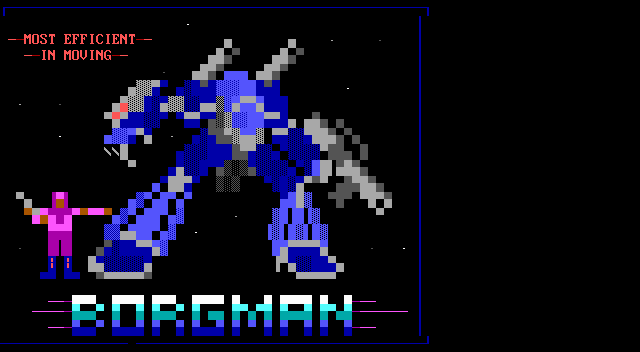
Let s test it using the Textfiles ANSI art collection. In the artworks section, I randomly grabbed a file near the top: borgman.ans. Download that, and display with:
clear; iconv -f CP437 -t UTF-8 < borgman.ans
You should see something similar to but actually more accurate than the textfiles PNG rendering of it, which you ll note has an incorrect aspect ratio and some rendering issues. I spot-checked with a few others and they seemed to look good. belinda.ans in particular tries quite a few characters and should give you a good sense if it is working.
Use with interactive programs
That s all well and good, but you re probably going to want to actually use this with some interactive program that expects CP437. Maybe Minicom, Kermit, or even just telnet?
For this, you ll want to apt-get install luit. luit maps CP437 (or any other encoding) to UTF-8 for display, and then of course the Linux console maps UTF-8 back to the CP437 font.
Here s a way you can repeat the earlier experiment using luit to run the cat program:
clear; luit -encoding CP437 cat borgman.ans
You can run any command under luit. You can even run luit -encoding CP437 bash if you like. If you do this, it is probably a good idea to follow my instructions on generating locales on my post on serial terminals, and then within luit, set LANG=en_us.IBM437. But note especially that you can run programs like minicom and others for accessing BBSs under luit.
Final words
This gave you a nice DOS-type console. Although it doesn t have glyphs for many codepoints, it does run in UTF-8 mode and therefore is compatible with modern software.
You can achieve greater compatibility with more UTF-8 codepoints with the DOS font, at the expense of accuracy of character rendering (especially for the double-line drawing characters) by using /usr/share/bdf2psf/standard.equivalents instead of /dev/null in the bdf2psf command.
Or you could go for another challenge, such as using the DEC vt-series fonts for coverage of ISO-8859-1. But just using fonts extracted from DEC ROM won t work properly, because DEC terminals had even more strangeness going on than DOS fonts.
Introduction and some stats
We announced tag2upload s open beta in mid-July. That was in the middle of the the freeze for trixie, so usage was fairly light until the forky floodgates opened.
Since then the service has successfully performed 637 uploads, of which 420 were in the last 32 days. That s an average of about 13 per day. For comparison, during the first half of September up to today there have been 2475 uploads to unstable. That s about 176/day.
So, tag2upload is already handling around 7.5% of uploads. This is very gratifying for a service which is advertised as still being in beta!
Sean and I are very pleased both with the uptake, and with the way the system has been performing.
Recent UI/UX improvements
During this open beta period we have been hard at work. We have made many improvements to the user experience.
Current git-debpush in forky, or trixie-backports, is much better at detecting various problems ahead of time.
When uploads do fail on the service the emailed error reports are now more informative. For example, anomalies involving orig tarballs, which by definition can t be detected locally (since one point of tag2upload is not to have tarballs locally) now generally result in failure reports containing a diffstat, and instructions for a local repro.
Why we are still in beta
There are a few outstanding work items that we currently want to complete before we declare the end of the beta.
Retrying on Salsa-side failures
The biggest of these is that the service should be able to retry when Salsa fails. Sadly, Salsa isn t wholly reliable, and right now if it breaks when the service is trying to handle your tag, your upload can fail.
We think most of these failures could be avoided. Implementing retries is a fairly substantial task, but doesn t pose any fundamental difficulties. We re working on this right now.
Other notable ongoing work
We want to support pristine-tar, so that pristine-tar users can do a new upstream release. Andrea Pappacoda is working on that with us. See #1106071. (Note that we would generally recommend against use of pristine-tar within Debian. But we want to support it.)
We have been having conversations with Debusine folks about what integration between tag2upload and Debusine would look like. We re making some progress there, but a lot is still up in the air.
We are considering how best to provide tag2upload pre-checks as part of Salsa CI. There are several problems detected by the tag2upload service that could be detected by Salsa CI too, but which can t be detected by git-debpush.
Common problems
We ve been monitoring the service and until very recently we have investigated every service-side failure, to understand the root causes. This has given us insight into the kinds of things our users want, and the kinds of packaging and git practices that are common. We ve been able to improve the system s handling of various anomalies and also improved the documentation.
Right now our failure rate is still rather high, at around 7%. Partly this is because people are trying out the system on packages that haven t ever seen git tooling with such a level of rigour.
There are two classes of problem that are responsible for the vast majority of the failures that we re still seeing:
Reuse of version numbers, and attempts to re-tag
tag2upload, like git (and like dgit), hates it when you reuse a version number, or try to pretend that a (perhaps busted) release never happened.
git tags aren t namespaced, and tend to spread about promiscuously. So replacing a signed git tag, with a different tag of the same name, is a bad idea. More generally, reusing the same version number for a different (signed!) package is poor practice. Likewise, it s usually a bad idea to remove changelog entries for versions which were actually released, just because they were later deemed improper.
We understand that many Debian contributors have gotten used to this kind of thing. Indeed, tools like dcut encourage it. It does allow you to make things neat-looking, even if you ve made mistakes - but really it does so by covering up those mistakes!
The bottom line is that tag2upload can t support such history-rewriting. If you discover a mistake after you ve signed the tag, please just burn the version number and add a new changelog stanza.
One bonus of tag2upload s approach is that it will discover if you are accidentally overwriting an NMU, and report that as an error.
Discrepancies between git and orig tarballs
tag2upload promises that the source package that it generates corresponds precisely to the git tree you tag and sign.
Orig tarballs make this complicated. They aren t present on your laptop when you git-debpush. When you re not uploading a new upstream version, the tag2upload service reuses existing orig tarballs from the archive. If your git and the archive s orig don t agree, the tag2upload service will report an error, rather than upload a package with contents that differ from your git tag.
With the most common Debian workflows, everything is fine:
If you base everything on upstream git, and make your orig tarballs with git archive (or git deborig), your orig tarballs are the same as the git, by construction. We recommend usually ignoring upstream tarballs: most upstreams work in git, and their tarballs can contain weirdness that we don t want. (At worst, the tarball can contain an attack that isn t visible in git, as with xz!)
Alternatively, if you use gbp import-orig, the differences (including an attack like Jia Tan s) are imported into git for you. Then, once again, your git and the orig tarball will correspond.
But there are other workflows where this correspondence may not hold. Those workflows are hazardous, because the thing you re probably working with locally for your routine development is the git view. Then, when you upload, your work is transplanted onto the orig tarball, which might be quite different - so what you upload isn t what you ve been working on!
This situation is detected by tag2upload, precisely because tag2upload checks that it s keeping its promise: the source package is identical to the git view. (dgit push makes the same promise.)
Get involved
Of course the easiest way to get involved is to start using tag2upload.
We would love to have more contributors. There are some easy tasks to get started with, in bugs we ve tagged newcomer mostly UX improvements such as detecting certain problems earlier, in git-debpush.
More substantially, we are looking for help with sbuild: we d like it to be able to work directly from git, rather than needing to build source packages: #868527.
Debusine is a tool designed
for Debian developers and Operating System developers in general. This posts
describes our approach to the use of JavaScript, and some practical designs we
came up with to integrate it with Django with minimal effort.
Debusine web UI and JavaScript
Debusine currently has 3 user interfaces: a client on the command line, a
RESTful API, and a Django-based Web UI.
Debusine s web UI is a tool to interact with the system, and we want to spend
most of our efforts in creating a system that works and works well, rather than
chasing the latest and hippest of the frontend frameworks for the web.
Also, Debian as a community has an aversion to having parts of the JavaScript
ecosystem in the critical path of its core infrastructure, and in our
professional experience this aversion is not at all unreasonable.
This leads to having some interesting requirements for the web UI, that (rather
surprisingly, one would think) one doesn t usually find advertised in many
projects:
Straightforward to create and maintain.
Well integrated with Django.
Easy to package in Debian, with as little vendoring as possible, which helps mitigate supply chain attacks
Usable without JavaScript whenever possible, for progressive
enhancement rather
than core functionality.
The idea is to avoid growing the technical complexity and requirements of the
web UI, both server-side and client-side, for functionality that is not needed
for this kind of project, with tools that do not fit well in our ecosystem.
Also, to limit the complexity of the JavaScript portions that we do develop, we
choose to limit our JavaScript browser supports to the main browser versions
packaged in Debian Stable, plus recent oldstable.
This makes JavaScript easier to write and maintain, and it also makes it less
needed, as modern HTML plus modern CSS interfaces can go a long way with less
scripting interventions.
We recently
encoded JavaScript practices and tradeoffs in a
JavaScript Practices
chapter of Debusine s documentation.
How we use JavaScript
From the start we built the UI using Bootstrap,
which helps in having responsive layouts that can also work on mobile devices.
When we started having large select fields, we introduced
Select2 to make interaction more efficient, and which
degrades gracefully to working HTML.
Both Bootstrap and Select2 are packaged in Debian.
Form validation is done server-side by Django, and we do not reimplement it
client-side in JavaScript, as we prefer the extra round trip through a form
submission to the risk of mismatches between the two validations.
In those cases where a UI task is not at all possible without JavaScript, we
can make its support mandatory as long as the same goal can be otherwise
achieved using the debusine client command.
Django messages as Bootstrap toasts
Django has a Messages framework
that allows different parts of a view to push messages to the user, and it is
useful to signal things like a successful form submission, or warnings on
unexpected conditions.
Django messages integrate well with Bootstrap
toasts, which use a
recognisable notification language, are nicely dismissible and do not invade
the rest of the page layout.
Since toasts require JavaScript to work, we added graceful degradation.
to Bootstrap alerts
Doing so was surprisingly simple: we handle the toasts as usual, and also render the
plain alerts inside a <noscript> tag.
This is precisely the intended usage of the <noscript> tag, and it works
perfectly: toasts are displayed by JavaScript when it s available, or rendered
as alerts when not.
The resulting Django template is something like this:
JavaScript incremental improvement of formsets
Debusine is built around
workspaces,
which are, among other things, containers for resources.
Workspaces can inherit from other workspaces, which act as fallback lookups for
resources. This allows, for example, to maintain an experimental package to be
built on Debian Unstable, without the need to copy the whole Debian Unstable
workspace. A workspace can inherit from multiple others, which are looked up in
order.
When adding UI to configure workspace
inheritance, we
faced the issue that plain HTML forms do not have a convenient way to perform
data entry of an ordered list.
We initially built the data entry around Django formsets, which support
ordering
using an extra integer input field to enter the ordering position. This works,
and it s good as a fallback, but we wanted something more appropriate, like
dragging and dropping items to reorder them, as the main method of interaction.
Our final approach
renders the plain formset inside a <noscript> tag, and the JavaScript widget
inside a display: none element, which is later shown by JavaScript code.
As the workspace inheritance is edited, JavaScript serializes its state into
<form type='hidden'> fields that match the structure used by the formset, so
that when the form is submitted, the view performs validation and updates the
server state as usual without any extra maintenance burden.
Serializing state as hidden form fields looks a bit vintage, but it is an
effective way of preserving the established data entry protocol between the
server and the browser, allowing us to do incremental improvement of the UI
while minimizing the maintenance effort.
More to come
Debusine is now gaining significant adoption and is still under active
development, with new features like personal archives coming soon.
This will likely mean more user stories for the UI, so this is a design space
that we are going to explore again and again in the coming future.
Meanwhile, you can try out Debusine on
debusine.debian.net, and follow its development
on salsa.debian.org!
I m something of a filesystem geek, I guess. I first wrote about ZFS on Linux 14 years ago, and even before I used ZFS, I had used ext2/3/4, jfs, reiserfs, xfs, and no doubt some others.
I ve also used btrfs. I last posted about it in 2014, when I noted it has some advantages over ZFS, but also some drawbacks, including a lot of kernel panics.
Since that comparison, ZFS has gained trim support and btrfs has stabilized. The btrfs status page gives you an accurate idea of what is good to use on btrfs.
Background: Moving towards ZFS and btrfs
I have been trying to move everything away from ext4 and onto either ZFS or btrfs. There are generally several reasons for that:
The checksums for every block help detect potential silent data corruption
Instant snapshots make consistent backups of live systems a lot easier, and without the hassle and wasted space of LVM snapshots
Transparent compression and dedup can save a lot of space in storage-constrained environments
For any machine with at least 32GB of RAM (plus my backup server, which has only 8GB), I run ZFS. While it lacks some of the flexibility of btrfs, it has polish. zfs list -o space shows a useful space accounting. zvols can be behind VMs. With my project simplesnap, I can easily send hourly backups with ZFS, and I choose to send them over NNCP in most cases.
I have a few VMs in the cloud (running Debian, of course) that I use to host things like this blog, my website, my gopher site, the quux NNCP public relay, and various other things.
In these environments, storage space can be expensive. For that matter, so can RAM. ZFS is RAM-hungry, so that rules out ZFS. I ve been running btrfs in those environments for a few years now, and it s worked out well. I do async dedup, lzo or zstd compression depending on the needs, and the occasional balance and defrag.
Filesystems on the Raspberry Pi
I run Debian trixie on all my Raspberry Pis; not Raspbian or Raspberry Pi OS for a number of reasons. My 8-yr-old uses a Raspberry Pi 400 as her primary computer and loves it! She doesn t do web browsing, but plays Tuxpaint, some old DOS games like Math Blaster via dosbox, and uses Thunderbird for a locked-down email account.
But it was SLOW. Just really, glacially, slow, especially for Thunderbird.
My first step to address that was to get a faster MicroSD card to hold the OS. That was a dramatic improvement. It s still slow, but a lot faster.
Then, I thought, maybe I could use btrfs with LZO compression to reduce the amount of I/O and speed things up further? Analysis showed things were mostly slow due to I/O, not CPU, constraints.
The conversion
Rather than use the btrfs in-place conversion from ext4, I opted to dar it up (like tar), run mkfs.btrfs on the SD card, then unpack the archive back onto it. Easy enough, right?
Well, not so fast. The MicroSD card is 128GB, and the entire filesystem is 6.2GB. But after unpacking 100MB onto it, I got an out of space error.
btrfs has this notion of block groups. By default, each block group is dedicated to either data or metadata. btrfs fi df and btrfs fi usage will show you details about the block groups.
btrfs allocates block groups greedily (the ssd_spread mount option I use may have exacerbated this). What happened was it allocated almost the entire drive to data block groups, trying to spread the data across it. It so happened that dar archived some larger files first (maybe /boot), so btrfs was allocating data and metadata blockgroups assuming few large files. But then it started unpacking one of the directories in /usr with lots of small files (maybe /usr/share/locale). It quickly filled up the metadata block group, and since the entire SD card had been allocated to different block groups, I got ENOSPC.
Deleting a few files and running btrfs balance resolved it; now it allocated 1GB to metadata, which was plenty. I re-ran the dar extract and now everything was fine. See more details on btrfs balance and block groups.
This was the only btrfs problem I encountered.
Benchmarks
I timed two things prior to switching to btrfs: how long it takes to boot (measured from the moment I turn on the power until the moment the XFCE login box is displayed), and how long it takes to start Thunderbird.
After switching to btrfs with LZO compression, somewhat to my surprise, both measures were exactly the same!
Why might this be?
It turns out that SD cards are understood to be pathologically bad with random read performance. Boot and Thunderbird both are likely doing a lot of small random reads, not large streaming reads. Therefore, it may be that even though I have reduced the total I/O needed, the impact is unsubstantial because the real bottleneck is the seeks across the disk.
Still, I gain the better backup support and silent data corruption prevention, so I kept btrfs.
SSD mount options and MicroSD endurance
btrfs has several mount options specifically relevant to SSDs. Aside from the obvious trim support, they are ssd and ssd_spread. The documentation on this is vague and my attempts to learn more about it found a lot of information that was outdated or unsubstantiated folklore.
Some reports suggest that older SSDs will benefit from ssd_spread, but that it may have no effect or even a harmful effect on newer ones, and can at times cause fragmentation or write amplification. I could find nothing to back this up, though. And it seems particularly difficult to figure out what kind of wear leveling SSD firmware does. MicroSD firmware is likely to be on the less-advanced side, but still, I have no idea what it might do. In any case, with btrfs not updating blocks in-place, it should be better than ext4 in the most naive case (no wear leveling at all) but may have somewhat more write traffic for the pathological worst case (frequent updates of small portions of large files).
One anecdotal report I read and can t find anymore, somehow was from a person that had set up a sort of torture test for SD cards, with reports that ext4 lasted a few weeks or months before the MicroSDs failed, while btrfs lasted years.
If you are looking for a MicroSD card, by the way, The Great MicroSD Card Survey is a nice place to start.
For longevity: I mount all my filesystems with noatime already, so I continue to recommend that. You can also consider limiting the log size in /etc/systemd/journald.conf, running daily fstrim (which may be more successful than live trims in all filesystems).
Conclusion
I ve been pretty pleased with btrfs. The concerns I have today relate to block groups and maintenance (periodic balance and maybe a periodic defrag). I m not sure I d be ready to say put btrfs on the computer you send to someone that isn t Linux-savvy because the chances of running into issues are higher than with ext4. Still, for people that have some tech savvy, btrfs can improve reliability and performance in other ways.
Welcome to the August 2025 report from the Reproducible Builds project!
Welcome to the latest report from the Reproducible Builds project for August 2025. These monthly reports outline what we ve been up to over the past month, and highlight items of news from elsewhere in the increasingly-important area of software supply-chain security. If you are interested in contributing to the Reproducible Builds project, please see the Contribute page on our website.
In this report:
Reproducible Builds Summit 2025
Please join us at the upcoming Reproducible Builds Summit, set to take place from October 28th 30th 2025 in Vienna, Austria!**
We are thrilled to host the eighth edition of this exciting event, following the success of previous summits in various iconic locations around the world, including Venice, Marrakesh, Paris, Berlin, Hamburg and Athens. Our summits are a unique gathering that brings together attendees from diverse projects, united by a shared vision of advancing the Reproducible Builds effort.
During this enriching event, participants will have the opportunity to engage in discussions, establish connections and exchange ideas to drive progress in this vital field. Our aim is to create an inclusive space that fosters collaboration, innovation and problem-solving.
If you re interesting in joining us this year, please make sure to read the event page which has more details about the event and location. Registration is open until 20th September 2025, and we are very much looking forward to seeing many readers of these reports there!
Reproducible Builds and live-bootstrap at WHY2025
WHY2025 (What Hackers Yearn) is a nonprofit outdoors hacker camp that takes place in Geestmerambacht in the Netherlands (approximately 40km north of Amsterdam). The event is organised for and by volunteers from the worldwide hacker community, and knowledge sharing, technological advancement, experimentation, connecting with your hacker peers, forging friendships and hacking are at the core of this event .
At this year s event, Frans Faase gave a talk on live-bootstrap, an attempt to provide a reproducible, automatic, complete end-to-end bootstrap from a minimal number of binary seeds to a supported fully functioning operating system .
Frans talk is available to watch on video and his slides are available as well.
DALEQ Explainable Equivalence for Java Bytecode
Jens Dietrich of the Victoria University of Wellington, New Zealand and Behnaz Hassanshahi of Oracle Labs, Australia published an article this month entitled DALEQ Explainable Equivalence for Java Bytecode which explores the options and difficulties when Java binaries are not identical despite being from the same sources, and what avenues are available for proving equivalence despite the lack of bitwise correlation:
[Java] binaries are often not bitwise identical; however, in most cases, the differences can be attributed to variations in the build environment, and the binaries can still be considered equivalent. Establishing such equivalence, however, is a labor-intensive and error-prone process.
Jens and Behnaz therefore propose a tool called DALEQ, which:
disassembles Java byte code into a relational database, and can normalise this database by applying Datalog rules. Those databases can then be used to infer equivalence between two classes. Notably, equivalence statements are accompanied with Datalog proofs recording the normalisation process. We demonstrate the impact of DALEQ in an industrial context through a large-scale evaluation involving 2,714 pairs of jars, comprising 265,690 class pairs. In this evaluation, DALEQ is compared to two existing bytecode transformation tools. Our findings reveal a significant reduction in the manual effort required to assess non-bitwise equivalent artifacts, which would otherwise demand intensive human inspection. Furthermore, the results show that DALEQ outperforms existing tools by identifying more artifacts rebuilt from the same code as equivalent, even when no behavioral differences are present.
Reproducibility regression identifies issue with AppArmor security policies
Tails developer intrigeri has tracked and followed a reproducibility regression in the generation of AppArmor policy caches, and has identified an issue with the 4.1.0 version of AppArmor.
Although initially tracked on the Tails issue tracker, intrigeri filed an issue on the upstream bug tracker. AppArmor developer John Johansen replied, confirming that they can reproduce the issue and went to work on a draft patch. Through this, John revealed that it was caused by an actual underlying security bug in AppArmor that is to say, it resulted in permissions not (always) matching what the policy intends and, crucially, not merely a cache reproducibility issue.
Work on the fix is ongoing at time of writing.
Rust toolchain fixes
Rust Clippy is a linting tool for the Rust programming language. It provides a collection of lints (rules) designed to identify common mistakes, stylistic issues, potential performance problems and unidiomatic code patterns in Rust projects. This month, however, Sosth ne Gu don filed a new issue in the GitHub requesting a new check that would lint against non deterministic operations in proc-macros, such as iterating over a HashMap .
Dropping support for the armhf architecture. From July 2015, Vagrant Cascadian has been hosting a zoo of approximately 35 armhf systems which were used for building Debian packages for that architecture.
Holger Levsen also uploaded strip-nondeterminism, our program that improves reproducibility by stripping out non-deterministic information such as timestamps or other elements introduced during packaging. This new version, 1.14.2-1, adds some metadata to aid the deputy tool. ( #1111947)
Lastly, Bernhard M. Wiedemann posted another openSUSEmonthly update for their work there.
diffoscopediffoscope is our in-depth and content-aware diff utility that can locate and diagnose reproducibility issues. This month, Chris Lamb made the following changes, including preparing and uploading versions, 303, 304 and 305 to Debian:
Improvements:
Use sed(1) backreferences when generating debian/tests/control to avoid duplicating ourselves. []
Move from a mono-utils dependency to versioned mono-devel mono-utils dependency, taking care to maintain the [!riscv64] architecture restriction. []
Use sed over awk to avoid mangling dependency lines containing = (equals) symbols such as version restrictions. []
Bug fixes:
Fix a test after the upload of systemd-ukify version 258~rc3. []
Ensure that Java class files are named .class on the filesystem before passing them to javap(1). []
Do not run jsondiff on files over 100KiB as the algorithm runs in O(n^2) time. []
Don t check for PyPDF version 3 specifically; check for >= 3. []
Misc:
Update copyright years. [][]
In addition, Martin Joerg fixed an issue with the HTML presenter to avoid crash when page limit is None [] and Zbigniew J drzejewski-Szmek fixed compatibility with RPM 6 []. Lastly, John Sirois fixed a missing requests dependency in the trydiffoscope tool. []
Website updates
Once again, there were a number of improvements made to our website this month including:
Chris Lamb:
Write and publish a news entry for the upcoming summit. []
Add some assets used at FOSSY, such as the badges and the paper handouts. []
Reproducibility testing framework
The Reproducible Builds project operates a comprehensive testing framework running primarily at tests.reproducible-builds.org in order to check packages and other artifacts for reproducibility. In August, however, a number of changes were made by Holger Levsen, including:
Ignore that the megacli RAID controller requires packages from Debian bookworm. []
In addition,
James Addison migrated away from deprecated toplevel deb822 Python module in favour of debian.deb822 in the bin/reproducible_scheduler.py script [] and removed a note on reproduce.debian.net note after the release of Debian trixie [].
Jochen Sprickerhof made a huge number of improvements to the reproduce.debian.net statistics calculation [][][][][][] as well as to the reproduce.debian.net service more generally [][][][][][][][].
Mattia Rizzolo performed a lot of work migrating scripts to SQLAlchemy version 2.0 [][][][][][] in addition to making some changes to the way openSUSE reproducibility tests are handled internally. []
Lastly, Roland Clobus updated the Debian Live packages after the release of Debian trixie. [][]
Upstream patches
The Reproducible Builds project detects, dissects and attempts to fix as many currently-unreproducible packages as possible. We endeavour to send all of our patches upstream where appropriate. This month, we wrote a large number of such patches, including:
Finally, if you are interested in contributing to the Reproducible Builds project, please visit our Contribute page on our website. However, you can get in touch with us via:
About 95% of my Debian contributions this month were
sponsored by Freexian.
You can also support my work directly via
Liberapay or GitHub
Sponsors.
Python team
forky is
open!
As a result I m starting to think about the upcoming Python
3.14. At some point we ll doubtless do
a full test rebuild, but in advance of that I concluded that one of the most
useful things I could do would be to work on our very long list of packages
with new upstream
versions.
Of course there s no real chance of this ever becoming empty since upstream
maintainers aren t going to stop work for that long, but there are a lot of
packages there where we re quite a long way out of date, and many of those
include fixes that we ll need for 3.14, either directly or by fixing
interactions with new versions of other packages that in turn will need to
be fixed. We can backport changes when we need to, but more often than not
the most efficient way to do things is just to keep up to date.
So, I upgraded these packages to new upstream versions (deep breath):
That s only about 10% of the backlog, but of course others are working on
this too. If we can keep this up for a while then it should help.
I packaged pytest-run-parallel,
pytest-unmagic (still in NEW), and
python-forbiddenfruit (still in NEW),
all needed as new dependencies of various other packages.
setuptools upstream will be removing the setup.py install
command on 31
October. While this may not trickle down immediately into Debian, it does
mean that in the near future nearly all Python packages will have to use
pybuild-plugin-pyproject (note that this does not mean that they
necessarily have to use pyproject.toml; this is just a question of how the
packaging runs the build system). We talked about this a bit at DebConf,
and I said that I d noticed a number of packages where this isn t
straightforward and promised to write up some notes. I wrote the
Python/PybuildPluginPyproject
wiki page for this; I expect to add more bits and pieces to it as I find them.
On that note, I converted several packages to pybuild-plugin-pyproject:
I reviewed Debian defaults: nftables as banaction and systemd as
backend,
but it looked as though nothing actually needed to be changed so we closed
this with no action.
Rust team
Upgrading Pydantic was complicated, and required a rust-pyo3 transition
(which Jelmer Vernoo started and Peter Michael Green has mostly been
driving, thankfully), packaging rust-malloc-size-of (including an upstream
portability fix), and
upgrading several packages to new upstream versions:
Introduction
I am Spaarsh Thakkar, a final-year Computer Science Engineering undergrad from India. My interests lie in research and systems. My recent work has been in and around Graphics Processing Units and I also hold a keen interest in Computer Networks. At the time of writing, I have been an open-source contributor for almost a year.
Proposal Description (as shown on GSoC Project Profile1)
Due to Debian s open-source nature, no Debian package in main can have a proprietary GPU package listed as a dependency. While AI and HPC workloads increasingly rely on GPU acceleration, many Debian packages still focus solely on CUDA, which is proprietary.
With the advent of ROCm, an open-source GPU computing platform, we can now integrate full-fledged AMD GPU support into Debian packages. This will improve the experience of developers working in AI/ML and HPC while positioning Debian as a strong OS choice for GPU-driven workloads. The proposal aims to aid in solving the aforementioned program by packaging several ROCm packages for debian and add ROCm support to some existing debian packages.
The deliverables are as follows:
New Debian packages with GPU support
Enhanced GPU support within existing Debian packages
More autopackagetests running on the Debian ROCm CI
Key Objectives
Enable ROCm in:
dbcsr
gloo
cp2k
Publish the following packages to debian apt archive:
hipblas-common
hipBLASlt
Work Report
1. Publishing hipblas-common to apt
This objective was successfully completed, resulting in hipblas-common being published in the apt repository2.
The process involved the following steps:
Securing sponsorship, which led to the package being accepted into the experimental branch of apt
Since the beginning of GSoC, the package has also been promoted to the unstable branch2.
2. DBCSR ROCm and Multi-Arch Support
During my GSoC project, I worked on extending the DBCSR (Distributed Block Compressed Sparse Row)7 package to improve its ROCm/HIP support, and handling multi-architecture GPU kernels in a way that is both practical for upstream maintainers and debian package developers.
The code changes can be found at my dbcsr fork here8.
ROCm/HIP Enablement
Enabled ROCm backend support to DBCSR, allowing GPU acceleration beyond CUDA by enabling HIP-based builds.
Investigated and resolved build issues specific to HIP kernels within DBCSR.
Multi-Architecture GPU Kernel Handling
(The following content was presented in greater detail at DebConf 25 as well. The presentation video can be found here9 and the presentation slide can be found here10).
DBCSR contains GPU kernels that are heavily optimized for specific architectures. By default, these are built for a single target architecture, which poses challenges for packaging where binaries need to support multiple possible GPU targets.
Explored different strategies for solving the multi-arch GPU kernel distribution problem, including:
Option 1: Fat binaries (embedding multiple GPU architectures into a single binary, with runtime dispatch). This is ideal for end-users but requires deeper changes upstream and is not straightforward with HIP/ROCm.
Option 2: Arch-specific libraries (e.g., libdbcsr.gfxXXX.a), where the alternatives system or explicit user selection would determine which one is used. This solves the problem but pushes complexity downstream into packaging and user configuration.
Option 3: Prefixed functions inside a single file, where kernels are compiled separately per architecture, functions are renamed with an arch prefix, and runtime logic in DBCSR decides which kernel to invoke. This shifts complexity upstream but could give a clean downstream experience.
I critically analyzed these options in the context of Debian packaging and upstream maintainability. Arch-specific .a files introduce exponential dependency complexity. The prefixed-function approach seemed like a plausible way forward, though it requires upstream buy-in.
After consulting with my mentor, these concerns were raised in the dbcsr repository as a discussion here11
Summary
My work involved:
Enabling HIP/ROCm support in DBCSR.
Prototyping strategies for handling GPU multi-arch builds.
Evaluating the trade-offs between upstream maintainability and downstream packaging complexity.
3. gloo, hipification and source code issues
One of the other packages that were targeted was gloo12. It is a collective communications library and has the implementations of different Machine Learning communication algorithms.
The code changes can be found at my gloo fork here13 (some changes have not be committed at the time of writing).
HIP/ROCm Enablement
Fixing old ROCm CMake functions
The upstream Gloo codebase still used old ROCm CMake functions that began with the hip_ prefix (for example, hip_add_executable). These functions have since been deprecated/removed. I updated the build system to use the modern ROCm CMake equivalents so that the package can build properly in a current ROCm environment.
Debian packaging changes
I modified debian/control to add a new package, libgloo-rocm, in addition to the existing packages. This allows proper separation and handling of ROCm-enabled builds in Debian.
First successful library build
After these changes, I was able to successfully build the library. However, I ran into issues when trying to produce the shared library: there were undefined symbol errors at link time.
Source Code Issue
On investigating the undefined symbol errors, I identified that these came from a lack of explicit template instantiation for some Gloo classes. Since C++ templates only get compiled when explicitly used or instantiated, this resulted in missing symbols in the shared library.
To solve this, I explored the source code and noticed that the HIP backend code was not natively written it was generated from the CUDA backend using a custom hipification script maintained by the repo.
I experimented with modifying the HIPification process itself, trying out hipify-perl14 instead of the repository s custom Python script.
I also tried tweaking the source code in places where template instantiations were missing, so that the ROCm build would correctly export the needed symbols.
Summary
The issue is still unresolved. The core problem lies in how the source code is structured: the HIP backend is almost entirely auto-generated from CUDA code, and the process does not handle template instantiations correctly. Because of this, the Debian package for Gloo with ROCm support is not yet ready for release, and further source-level fixes are required to make the ROCm build reliable.
4. cp2kCP2K15 is a quantum chemistry and solid state physics software package that can perform atomistic simulations of solid state, liquid, molecular, periodic, material, crystal, and biological systems.
HIP/ROCm Enablement
cp2k depends on dbcsr and hence, HIP/ROCm enablement in this package required the dbcsr16 package to get through.
Even though dbcsr isn t ready yet, it was worthwhile to plan how it shall be built with HIP/ROCm once we have dbcsr in place. Upon doing this, it was realized that the architecture-wise libraries provided by the dbcsr package will result in a complicated building process for cp2k.
No changes have been made to this package yet and more concrete steps shall be taken once the dbcsr package work is completed.
Summary
The multi-arch build process for cp2k maybe complicated by the one static-library-per-architecture method used in the dependent package, dbcsr.
Auxiliary Work & Activities
While working on the aformentioned GSoC Goals, there were a few other things that were also done.
libamdhip64-dev bug file17
While trying to enable HIP/ROCm in dbcsr, CMakeDetermineHIPCompiler.cmake was unable to find HIP runtime CMake package. After going through some similar issues faced by other developers earlier, it was decided to file a bug report under the libamdhip64-dev package.
After discussions with and trying the changes suggested by Cory (my mentor) under the bug, the issue was resolved.
Turns out, the wrong compiler was being used by me! The gcc compiler was supposed to be used and I was using hipcc. The bug was closed since it was not due an issue with the package.
Cory suggested that I add this info under the ROCm wiki page. It is yet to be done and hopefully I get it done soon.
DebConf25 Talk
After facing the multi-arch build dilemma with dbcsr (and also getting to know about the issues faced by other fellow package developers), I came to realise that this was more than a packaging, build or programming issue. GPU-packaging was facing a policy issue.
Hence, I decided to cover this problem in greater detail at my DebConf25 Virtual Presentation under the Outreach Session.
Shoutout to Cory for his support and Lucas Kanashiro for encouraging me to present my work!
Bi-Weekly AMD ROCm Meetings
Shortly after the Coding period started, Cory began the initiative of Bi-Weekly AMD ROCm Meetings18. Being a part of the meetings (participated in all but one!), seeing the work the other folks are doing and being able to discuss my own problems was a delight.
(Upcoming) IndiaFOSS 2025 Talk
After understanding the nuances and beauty of the debian packaging ecosystem in these months, I decided to spread the work about debian packaging and packaging software in general. My talk19 for the same got accepted in the upcoming IndiaFOSS 202520 conference!
I hope this beings more people towards the packaging ecosystem and to the debian developer ecosystem.
Conclusion
My GSoC time was fantastic! I plan to complete the work that I have started during my GSoC and beyond. Working with Cory21 and Utkarsh22 (a fellow GSoC 25 contributor under Cory) has been a very positive experience.
HIP/ROCm GPU-packaging is in a nascent stage. It is an exciting time to be in this space right now. The problems are new and never encountered before (CPU packaging isn t architecture specific!). The problems were shall face in the coming time, and our solutions to them will set a precendent for the future.
Due to the freeze I did not do that many uploads in the last few months, so
there were various new releases I packaged once Trixie was released. Regarding
the release of Debian 13, Trixie, I wrote a small summary of the changes in my
packages.
I uploaded an unreleased version of cage to experimental, to prepare for the
transition to wlroots-0.19. Both sway and labwc already had packages in
experimental that depended on the new wlroots version. When the transition
happened, I uploaded the cage version to unstable, as well as labwc 0.9.1
and sway 1.11.
I updated
foot to 1.23.1
waybar to 0.14.0
swaylock to 1.8.3
git-quick-stats to 2.7.0
swayimg to 4.5
usbguard to 1.1.4
fcft to 3.3.2
fnott to 1.8.0
wdisplays to 1.1.3
wev to 1.1.0
wlopm to 1.0.0
wmenu to 0.2.0
libsfdo to 0.1.4
Most of the packages I uploaded using git-debpush, some of them could not
be uploaded this way due to upstream using git submodules (this is
1107219). I also
created 1112040 - git-debpush: should also say which tag it
created and
1111504 - git-debpush: pristine-tar check warns about pristine-tar data thats
not present (which
is already fixed).
I uploaded wayback 0.2 to NEW, where it is waiting for
review,
(ITP).
In my dayjob I added extended the place lookup form of apis-core-rdf to allow
searching places and selecting them on a map using leaflet and the nominatim
API. Another issue I worked on was about highlighting those inputs of our
generic list filter that are used to filter the results. I released a couple
of bugfix releases for the v0.50 release, then v0.51 and two bugfix releases
and then v0.52 and another couple of bugfix releases. v0.53 will land in a
couple of days. I also released v0.6.2 of apis-highlighter-ng, which is sort
of a plugin for apis-core-rdf, that allows to highlight parts of a text and
link them to whatever Django object (in our case relations).
The main text below is an edited version of my original review of
Regensis written on 2012-12-21. Additional
comments from my re-read are after the original review.
Regenesis is a direct sequel to Cyteen, picking up very shortly after the end of that book and
featuring all of the same characters. It would be absolutely pointless to
read this book without first reading Cyteen; all of the emotional
resonance and world-building that make Regensis work are done
there, and you will almost certainly know whether you want to read it
after reading the first book. Besides, Cyteen is one of the best SF
novels ever written and not the novel to skip.
Because this is such a direct sequel, it's impossible to provide a good
description of Regenesis without spoiling at least characters and
general plot developments from Cyteen. So stop reading here if
you've not yet read the previous book.
I've had this book for a while, and re-read Cyteen in anticipation
of reading it, but I've been nervous about it. One of the best parts of
Cyteen is that Cherryh didn't belabor the ending, and I wasn't sure
what part of the plot could be reasonably extended. Making me more nervous
was the back-cover text that framed the novel as an investigation of who
actually killed the first Ari, a question that was fairly firmly in the
past by the end of Cyteen and that neither I nor the characters had
much interest in answering. Cyteen was also a magical blend of
sympathetic characters, taut tension, complex plotting, and wonderful
catharsis, the sort of lightning in a bottle that can rarely be caught
twice.
I need not have worried. If someone had told me that Regenesis was
another 700 pages of my favorite section of Cyteen, I would have
been dubious. But that's exactly what it is. And the characters only care
about Ari's murderer because it comes up, fairly late in the novel, as a
clue in another problem.
Ari and Justin are back in the safe laboratory environment of Reseune,
safe now that politics are not trying to kill or control them. Yanni has
taken over administration. There is a general truce, and even some deeper
agreement. Everyone can take a breath and relax, albeit with the presence
of Justin's father Jordan as an ongoing irritant. But broader Union
politics are not stable: there is an election in progress for the Defense
councilor that may break the tenuous majority in favor of Reseune and the
Science Directorate, and Yanni is working out a compromise to gain more
support by turning a terraforming project loose on a remote world. As the
election and the politics heat up, interpersonal relationships abruptly
deteriorate, tensions with Jordan sharply worsen, and there may be moles
in Reseune's iron-clad security. Navigating the crisis while keeping her
chosen family safe will once again tax all of Ari's abilities.
The third section of Cyteen, where Ari finally has the tools to
take fate into her own hands and starts playing everyone off against each
other, is one of my favorite sections of any book. If it was yours as
well, Regenesis is another 700 pages of exactly that. As an
extension and revisiting, it does lose a bit of immediacy and surprise
from the original. Regenesis is also less concerned with the larger
questions of azi society, the nature of thought and personality, loyalty
and authority, and the best model for the development of human
civilization. It's more of a political thriller. But it's a political
thriller that recaptures much of the drama and tension of Cyteen
and is full of exceptionally smart and paranoid people thinking through
all angles of a problem, working fast on their feet, and successfully
navigating tricky and treacherous political landscapes.
And, like Cyteen but unlike others of Cherryh's novels I've read,
it's a novel about empowerment, about seizing control of one's
surroundings and effectively using all of the capability and leverage at
one's fingertips. That gives it a catharsis that's almost as good as
Cyteen.
It's also, like its predecessor, a surprisingly authoritarian novel. I
think it's in that, more than anything else in these books, that one sees
the impact of the azi. Regenesis makes it clear that the story is
set, not in a typical society, but inside a sort of corporation, with an
essentially hierarchical governance structure. There are other SF novels
set within corporations (Solitaire comes
to mind), but normally they follow peons or at best mid-level personnel or
field agents, or otherwise take the viewpoint of the employees or the
exploited. When they follow the corporate leaders, the focus usually isn't
down inside the organization, but out into the world, with the corporation
as silent resources on which the protagonist can draw.
Regenesis is instead about the leadership. It's about decisions
about the future of humanity that characters feel they can make
undemocratically (in part because they or their predecessors have
effectively engineered the opinions of the democratic population), but
it's also about how one manages and secures a top-down organization.
Reseune is, as in the previous novel, a paranoid's suspicions come true;
everyone is out to get everyone else, or at least might be, and the level
of omnipresent security and threat forces a close parsing of alliances and
motivations that elevates loyalty to the greatest virtue.
In Cyteen, we had long enough with Ari to see the basic shape of
her personality and her slight divergences from her predecessor, but her
actions are mostly driven by necessity. Regenesis gives us more of
a picture of what she's like when her actions aren't forced, and here I
think Cherryh manages a masterpiece of subtle characterization. Ari has
diverged substantially from her predecessor without always realizing, and
those divergences are firmly grounded in the differences she found or
created between her life and the first Ari's. She has friends, confidents,
and a community, which combined with past trauma has made her fiercely,
powerfully protective. It's that protective instinct that weaves the plot
together. So many of the events of Cyteen and Regenesis are
driven by people's varying reactions to trauma.
If you, like me, loved the last third of Cyteen, read this, because
Regenesis is more of exactly that. Cherryh finds new politics, new
challenges, and a new and original plot within the same world and with the
same characters, but it has the same feel of maneuvering, analysis, and
decisive action. You will, as with Cyteen have to be comfortable
with pages of internal monologue from people thinking through all sides of
a problem. If you didn't like that in the previous book, avoid this one;
if you loved it, here's the sequel you didn't know you were waiting for.
Original rating: 9 out of 10
Some additional thoughts after re-reading
Regenesis in 2025:
Cyteen mostly held up to a re-reading and I had fond memories of
Regenesis and hoped that it would as well. Unfortunately, it did
not. I think I can see the shape of what I enjoyed the first time I read
it, but I apparently was in precisely the right mood for this specific
type of political power fantasy.
I did at least say that you have to be comfortable with pages of internal
monologue, but on re-reading, there was considerably more of that than I
remembered and it was quite repetitive. Ari spends most of the book
chasing her tail, going over and around and beside the same theories that
she'd already considered and worrying over the nuances of every position.
The last time around, I clearly enjoyed that; this time, I found it
exhausting and not very well-written. The political maneuvering is not
that deep; Ari just shows every minutia of her analysis.
Regenesis also has more about the big questions of how to design a
society and the role of the azi than I had remembered, but I'm not sure
those discussions reach any satisfying conclusions. The book puts a great
deal of effort into trying to convince the reader that Ari is capable of
designing sociological structures that will shape Union society for
generations to come through, mostly, manipulation of azi programming (deep
sets is the term used in the book). I didn't find this entirely convincing
the first time around, and I was even less convinced in this re-read.
Human societies are a wicked problem, and I don't find Cherryh's computer projections any more
convincing than Asimov's psychohistory.
Related, I am surprised, in retrospect, that the authoritarian
underpinnings of this book didn't bother me more on my first read. They
were blatantly obvious on the second read. This felt like something
Cherryh put into these books intentionally, and I think it's left
intentionally ambiguous whether the reader is supposed to agree with Ari's
goals and decisions, but I was much less in the mood on this re-read to
read about Ari making blatantly authoritarian decisions about the future
of society simply because she's smart and thinks she, unlike others, is
acting ethically. I say this even though I like Ari and mostly
enjoyed spending time in her head. But there is a deep fantasy of being
able to reprogram society at play here that looks a lot nastier from the
perspective of 2025 than apparently it did to me in 2012.
Florian and Catlin are still my favorite characters in the series, though.
I find it oddly satisfying to read about truly competent bodyguards,
although like all of the azi they sit in an (I think intentionally)
disturbing space of ambiguity between androids and human slaves.
The somewhat too frank sexuality from Cyteen is still present in
Regenesis, but I found it a bit less off-putting, mostly because
everyone is older. The authoritarian bent is stronger, since
Regenesis is the story of Ari consolidating power rather than the
underdog power struggle of Cyteen, and I had less tolerance for it
on this re-read.
The main problem with this book on re-read was that I bogged down about
halfway through and found excuses to do other things rather than finish
it. On the first read, I was apparently in precisely the right mood to
read about Ari building a fortified home for all of her friends; this
time, it felt like endless logistics and musings on interior decorating
that didn't advance the plot. Similarly, Justin and Grant's slow
absorption into Ari's orbit felt like a satisfying slow burn friendship in
my previous reading and this time felt touchy and repetitive.
I was one of the few avid defenders of Regenesis the first time I
read it, and sadly I've joined the general reaction on a re-read: This is
not a very good book. It's too long, chases its own tail a bit too much,
introduces a lot more authoritarianism and doesn't question it as directly
as I wanted, and gets even deeper into Cherryh's invented
pseudo-psychology than Cyteen. I have a high tolerance for the
endless discussions of azi deep sets and human flux thinking, and even I
got bored this time through.
On re-read, this book was nowhere near as good as I thought it was
originally, and I would only recommend it to people who loved
Cyteen and who really wanted a continuation of Ari's story, even if
it is flabby and not as well-written. I have normally been keeping the
rating of my first read of books, but I went back and lowered this one by
two points to ensure it didn't show as high on my list of recommendations.
I ve noticed that procrastination and inability to be consistently productive at work has become quite common in recent years. This is clearly visible in younger people who have grown up with an endless stream of entertainment literally at their fingertips, on their mobile phone. It is however a trap one can escape from with a little bit of help.
Procrastination is natural they say humans are lazy by nature after all. Probably all of us have had moments when we choose to postpone a task we know we should be working on, and instead spent our time doing secondary tasks (valorisation). Classic example is cleaning your apartment when you should be preparing for an exam. Some may procrastinate by not doing any work at all, and just watching YouTube videos or the like. To some people, typically those who are in their 20s and early in their career, procrastination can be a big challenge and finding the discipline to stick to planned work may need intentional extra effort, and perhaps even external help.
During my 20+ year career in software development I ve been blessed to work with engineers of various backgrounds and each with their unique set of strengths. I have also helped many grow in various areas and overcome challenges, such as lack of intrinsic motivation and managing procrastination, and some might be able to get it in check with some simple advice.
Distance yourself from the digital distractions
The key to avoiding distractions and procrastination is to make it inconvenient enough that you rarely do it. If continuing to do work is easier than switching to procrastination, work is more likely to continue.
Tips to minimize digital distractions, listed in order of importance:
Put your phone away. Just like when you go to a movie and turn off your phone for two hours, you can put the phone away completely when starting to work. Put the phone in a different room to ensure there is enough physical distance between you and the distraction, so it is impossible for you to just take a quick peek .
Turn off notifications from apps. Don t let the apps call you like sirens luring Odysseus. You don t need to have all the notifications. You will see what the apps have when you eventually open them at a time you choose to use them.
Remove or disable social media apps, games and the like from your phone and your computer. You can install them back when you have vacation. You can probably live without them for some time. If you can t remove them, explore your phone s screen time restriction features to limit your own access to apps that most often waste your time. These features are sometimes listed in the phone settings under digital health .
Have a separate work computer and work phone. Having dedicated ones just for work that are void of all unnecessary temptations helps keep distance from the devices that could derail your focus.
Listen to music. If you feel your brain needs a dose of dopamine to get you going, listening to music helps satisfy your brain s cravings while still being able to simultaneously keep working.
Doing a full digital detox is probably not practical, or not sustainable for an extended time. One needs apps to stay in touch with friends and family, and staying current in software development probably requires spending some time reading news online and such. However the tips above can help contain the distractions and minimize the spontaneous attention the distractions get.
Some of the distractions may ironically be from the work itself, for example Slack notifications or new email notifications. I recommend turning them off for a couple of hours every day to have some distraction free time. It should be enough to check work mail a couple times a day. Checking them every hour probably does not add much overall value for the company unless your work is in sales or support where the main task itself is responding to emails.
Distraction free work environment
Following the same principle of distancing yourself from distractions, try to use a dedicated physical space for working. If you don t have a spare room to dedicate to work, use a neighborhood caf or sign up for a local co-working space or start commuting to the company office to find a space to be focused on work in.
Break down tasks into smaller steps
Sometimes people postpone tasks because they feel intimidated by the size or complexity of a task. In particular in software engineering problems may be vague and appear large until one reaches the breakthrough that brings the vision of how to tackle it. Breaking down problems into smaller more manageable pieces has many advantages in software engineering. Not only can it help with task-avoidance, but it can also make the problem easier to analyze, suggest solutions and test them and build a solid foundation to expand upon to ultimately later reach a full solution on the entire larger problem.
Working on big problems as a chain of smaller tasks may also offer more opportunities to celebrate success on completing each subtask and help getting in a suitable cadence of solving a single thing, taking a break and then tackling the next issue.
Breaking down a task into concrete steps may also help with getting more realistic time estimations. Sometimes procrastination isn t real someone could just be overly ambitious and feel bad about themselves for not doing an unrealistic amount of work.
Intrinsic motivation
Of course, you should follow your passion when possible. Strive to pick a career that you enjoy, and thus maximize the intrinsic motivation you experience. However, even a dream job is still a job. Nobody is ever paid to do whatever they want. Any work will include at least some tasks that feel like a chore or otherwise like something you would not do unless paid to.
Some would say that the definition of work itself is having to do things one would otherwise not do. You can only fully do whatever you want while on vacation or when you choose to not have a job at all. But if you have a job, you simply need to find the intrinsic motivation to do it.
Simply put, some tasks are just unpleasant or boring. Our natural inclination is to avoid them in favor of more enjoyable activities. For these situations we just have to find the discipline to force ourselves to do the tasks and figuratively speaking whip ourselves into being motivated to complete the tasks.
Extrinsic motivation
As the name implies, this is something people external to you need to provide, such as your employer or manager. If you have challenges in managing yourself and delivering results on a regular basis, somebody else needs to set goals and deadlines and keep you accountable for them. At the end of the day this means that eventually you will stop receiving salary or other payments unless you did your job.
Forcing people to do something isn t nice, but eventually it needs to be done. It would not be fair for an employer to pay those who did their work the same salary as those who procrastinated and fell short on their tasks.
If you work solo, you can also simulate the extrinsic motivation by publicly announcing milestones and deadlines to build up pressure for yourself to meet them and avoid publicly humiliation. It is a well-studied and scientifically proven phenomenon that most university students procrastinate at the start of assignments, and truly start working on them only once the deadline is imminent.
External help for addictions
If procrastination is mainly due to a single distraction that is always on your mind, it may be a sign of an addiction. For example, constantly thinking about a computer game or staying up late playing a computer game, to the extent that it seriously affects your ability to work, may be a symptom of an addiction, and getting out of it may be easier with external help.
Discipline and structure
Most of the time procrastination is not due to an addiction, but simply due to lack of self-discipline and structure. The good thing is that those things can be learned. It is mostly a matter of getting into new habits, which most young software engineers pick up more or less automatically while working along the more senior ones.
Hopefully these tips can help you stay on track and ensure you do everything you are expected to do with clear focus, and on time!
I have been using my Samsung Galaxy Tab A (2015) with PostmarketOS on and off since last year. It serves as a really good e-book reader with KOReader installed on it. Have tried phosh and plasma-mobile on it, works nicely but slows the device down heavily (2 GB RAM and old processor) so I use MATE Desktop environment on it.Lately I have started using this tablet along with my laptop as a second screen for work. And it has been working super nicely for that. The only issue being that I have to manually rotate the screen to landscape every time I reboot the device. It resets the screen orientation to portrait after a reboot. So I went through the pmOS wiki and a neat nice hack documented there worked very well for me. First we will test if the auto-rotate sensor works and if we can read values from it. So we install some basic necessary packages
As you can see we can read the rotation values from the sensor as I am rotating the tablet in different orientations. Now we just need to use a script which changes the screen orientation using xrandr according to the sensor value.
You need to replace the name of your touch input device in the script, you can get the name by using xinput --list , make sure to type this on the device terminal.
In our script here we are using a Zinitix capacitive screen, it will be different for yours.Once your script is ready with the correct touchscreen name. Save and make the script executable. chmod +x auto-rotate-screen.sh Then test your script in your terminal ./auto-rotate.sh , stop the script using Ctrl + CNow we need add this script to auto-start. On MATE DE you can go to System > Control Center > Startup Applications, then click on Custom Add button, browse the script location, give it a name and then click on Add button. Now reboot the tablet/device, login and see the auto rotation working.
When a Debian cloud VM boots, it typically runs cloud-init at various points in the boot process. Each invocation can perform certain operations based on the host s static configuration passed by the user, typically either through a well known link-local network service or an attached iso9660 drive image. Some of the cloud-init steps execute before the network comes up, and others at a couple of different points after the network is up.
I recently encountered an unexpected issue when configuring a dualstack (uses both IPv6 and legacy IPv4 networking) VM to use a custom apt server accessible only via IPv6. VM provisioning failed because it was unable to access the server in question, yet when I logged in to investigate, it was able to access the server without any problem. The boot had apparently gone smoothly right up until cloud-init s Package Update Upgrade Install module called apt-get update, which failed and broke subsequent provisioning steps. The errors reported by apt-get indicated that there was no route to the service in question, which more accurately probably meant that there was not yet a route to the service. But there was shortly after, when I investigated.
This was surprising because the apt-get invocations occur in a cloud-init sequence that s explicitly ordered after the network is configured according to systemd-networkd-wait-online. Investigation eventually led to similar issues encountered in other environments reported in Debian bug #1111791, systemd: network-online.target reached before IPv6 address is ready . The issue described in that bug is identical to mine, but the bug is tagged wontfix. The behavior is considered correct.
Why the default behavior is the correct one
While it s a bit counterintuitive, the systemd-networkd behavior is correct, and it s also not something we d want to override in the cloud images. Without explicit configuration, systemd can t accurately infer the intended network configuration of a given system. If a system is IPv6-only, systemd-networkd-wait-online will introduce unexpected delays in the boot process if it waits for IPv4, and vice-versa. If it assumes dualstack, things are even worse because it would block for a long time (approximately two minutes) in any single stack network before failing, leaving the host in degraded state. So the most reasonable default behavior is to block until any protocol is configured.
For these same reasons, we can t change the systemd-networkd-wait-online configuration in our cloud images. All of the cloud environments we support offer both single stack and dual stack networking, so we preserve systemd s default behavior.
What s causing problems here is that IPv6 takes significantly longer to configure due to its more complex router solicitation + router advertisement + DHCPv6 setup process. So in this particular case, where I ve got a dualstack VM that needs to access a v6-only apt server during the provisioning process, I need to find some mechanism to override systemd s default behavior and wait for IPv6 connectivity specifically.
What won t work
Cloud-init offers the ability to write out arbitrary files during provisioning. So writing a drop-in for systemd-networkd-wait-online.service is trivial. Unfortunately, this doesn t give us everything we actually need. We still need to invoke systemctl daemon-reload to get systemd to actually apply the changes after we ve written them, and of course we need to do that before the service actually runs. Cloud-init provides a bootcmd module that lets us run shell commands very early in the boot process , but it runs too early: it runs before we ve written out our configuration files. Similarly, it provides a runcmd module, but scripts there are towards the end of the boot process, far too late to be useful.
Instead of using the bootcmd facility, to simply reload systemd s config, it seemed possible that we could both write the config and trigger the reload, similar to the following:
But even that runs too late, as we can see in the logs that systemd-networkd-wait-online.service has completed before bootcmd is executed:
root@sid-tmp2:~# journalctl --no-pager -l -u systemd-networkd-wait-online.service
Aug 29 17:02:12 sid-tmp2 systemd[1]: Starting systemd-networkd-wait-online.service - Wait for Network to be Configured...
Aug 29 17:02:13 sid-tmp2 systemd[1]: Finished systemd-networkd-wait-online.service - Wait for Network to be Configured
.
root@sid-tmp2:~# grep -F 'config-bootcmd ran' /var/log/cloud-init.log
2025-08-29 17:02:14,766 - handlers.py[DEBUG]: finish: init-network/config-bootcmd: SUCCESS: config-bootcmd ran successfully and took 0.467 seconds
At this point, it s looking like there are few options left!
What eventually worked
I ended up identifying two solutions to the issue, both of which involve getting some other component of the provisioning process to run systemd-networkd-wait-online.
Solution 1
The first involves getting apt-get itself to wait for IPv6 configuration. The apt.conf configuration interface allows the definition of an APT::Update::Pre-Invoke hook that s executed just before apt s update operation. By writing the following to a file in /etc/apt/apt.conf.d/, we re able to ensure that we have IPv6 connectivity before apt-get tries accessing the network. This cloud-config snippet accomplishes that:
This is safe to leave in place after provisioning, because the delay will be negligible once IPv6 connectivity is established. It s only during address configuration that it ll block for a noticeable amount of time, but that s what we want.
This solution isn t entirely correct, though, because it s only apt-get that s actually affected by it. Other service that start after the system is ostensibly online might only see IPv4 connectivity when they start. This seems acceptable at the moment, though.
Solution 2
The second solution is to simply invoke systemd-networkd-wait-online directly from a cloud-init bootcmd. Similar to the first solution, it s not exactly correct because the host has already reached network-online.target, but it does block enough of cloud-init that package installation happens only after it completes. The cloud-config snippet for this is
In either case, we still want to write out a snippet to configure systemd-networkd-wait-online to wait for IPv6 connectivity for future reboots. Even though cloud-init won t necessarily run in those cases, and many cloud VMs never reboot at all, it does complete the solution. Additionally, it solves the problem for any derivative images that may be created based on the running VM s state. (At least if we can be certain that instances of those derivative images will never run in an IPv4-only network!)
How to properly solve it
One possible improvement would be for cloud-init to support a configuration key allowing the admin to specify the required protocols. Based on the presence of this key, cloud-init could reconfigure systemd-networkd-wait-online.service accordingly. Alternatively it could set the appropriate RequiredFamilyForOnline= value in the generated .network file. cloud-init supports multiple network configuration backends, so each of those would need to be updated. If using the systemd-networkd configuration renderer, this should be straightforward, but Debian uses the netplan renderer, so that tool might also need to be taught to pass such a configuration along to systemd-networkd.
Today marks both a milestone and a turning point in my journey with open source software. I m proud to announce the release of KDE Gear 25.08.0 as my final snap package release. You can find all the details about this exciting update at the official KDE announcement.
After much reflection and with a heavy heart, I ve made the difficult decision to retire from most of my open source software work, including snap packaging. This wasn t a choice I made lightly it comes after months of rejections and silence in an industry I ve loved and called home for over 20 years.
Passing the Torch
While I m stepping back, I m thrilled to share that the future of KDE snaps is in excellent hands. Carlos from the Neon team has been working tirelessly to set up snaps on the new infrastructure that KDE has made available. This means building snaps in KDE CI is now possible a significant leap forward for the ecosystem. I ll be helping Carlos get the pipelines properly configured to ensure a smooth transition.
Staying Connected (But Differently)
Though I m stepping away from most development work, I won t be disappearing entirely from the communities that have meant so much to me:
Kubuntu: I ll remain available as a backup, though Rik is doing an absolutely fabulous job getting the latest and greatest KDE packages uploaded. The distribution is in capable hands.
Ubuntu Community Council: I m continuing my involvement here because I ve found myself genuinely enjoying the community side of things. There s something deeply fulfilling about focusing on the human connections that make these projects possible.
Debian: I ll likely be submitting for emeritus status, as I haven t had the time to contribute meaningfully and want to be honest about my current capacity.
The Reality Behind the Decision
This transition isn t just about career fatigue it s about financial reality. I ve spent too many years working for free while struggling to pay my bills. The recent changes in the industry, particularly with AI transforming the web development landscape, have made things even more challenging. Getting traffic to websites now requires extensive social media work and marketing all expected to be done without compensation.
My stint at webwork was good while it lasted, but the changing landscape has made it unsustainable. I ve reached a point where I can t continue doing free work when my family and I are struggling financially. It shouldn t take breaking a limb to receive the donations needed to survive.
A Career That Meant Everything
These 20+ years in open source have been the defining chapter of my professional life. I ve watched communities grow, technologies evolve, and witnessed firsthand the incredible things that happen when passionate people work together. The relationships I ve built, the problems we ve solved together, and the software we ve created have been deeply meaningful.
But I also have to be honest about where I stand today: I cannot compete in the current job market. The industry has changed, and despite my experience and passion, the opportunities just aren t there for someone in my situation.
Looking Forward
Making a career change after two decades is terrifying, but it s also necessary. I need to find a path that can provide financial stability for my family while still allowing me to contribute meaningfully to the world.
If you ve benefited from my work over the years and are in a position to help during this transition, I would be forever grateful for any support. Every contribution, no matter the size, helps ease this difficult period: https://gofund.me/a9c55d8f
Thank You
To everyone who has collaborated with me, tested my packages, filed bug reports, offered encouragement, or simply used the software I ve helped maintain thank you. You ve made these 20+ years worthwhile, and you ve been part of something bigger than any individual contribution.
The open source world will continue to thrive because it s built on the collective passion of thousands of people like Carlos, Rik, and countless others who are carrying the torch forward. While my active development days are ending, the impact of this community will continue long into the future.
With sincere gratitude and fond farewells,
Scarlett Moore
Historically the primary way to contribute to Debian has been to email the Debian bug tracker with a code patch. Now that 92% of all Debian source packages are hosted at salsa.debian.org the GitLab instance of Debian more and more developers are using Merge Requests, but not necessarily in the optimal way. In this post I share what I ve found the best practice to be, presented in the natural workflow from forking to merging.
Why use Merge Requests?
Compared to sending patches back and forth in email, using a git forge to review code contributions brings several benefits:
Contributors can see the latest version of the code immediately when the maintainer pushes it to git, without having to wait for an upload to Debian archives.
Contributors can fork the development version and easily base their patches on the correct version and help test that the software continues to function correctly at that specific version.
Both maintainer and other contributors can easily see what was already submitted and avoid doing duplicate work.
It is easy for anyone to comment on a Merge Request and participate in the review.
Integrating CI testing is easy in Merge Requests by activating Salsa CI.
Tracking the state of a Merge Request is much easier than browsing Debian bug reports tagged patch , and the cycle of submit review re-submit re-review is much easier to manage in the dedicated Merge Request view compared to participants setting up their own email plugins for code reviews.
Merge Requests can have extra metadata, such as Approved , and the metadata often updates automatically, such as a Merge Request being closed automatically when the Git commit ID from it is pushed to the target branch.
Keeping these benefits in mind will help ensure that the best practices make sense and are aligned with maximizing these benefits.
Finding the Debian packaging source repository and preparing to make a contribution
Before sinking any effort into a package, start by checking its overall status at the excellent Debian Package Tracker. This provides a clear overview of the package s general health in Debian, when it was last uploaded and by whom, and if there is anything special affecting the package right now. This page also has quick links to the Debian bug tracker of the package, the build status overview and more. Most importantly, in the General section, the VCS row links to the version control repository the package advertises. Before opening that page, note the version most recently uploaded to Debian. This is relevant because nothing in Debian currently enforces that the package in version control is actually the same as the latest uploaded to Debian.
Following the Browse link opens the Debian package source repository, which is usually a project page on Salsa. To contribute, start by clicking the Fork button, select your own personal namespace and, under Branches to include, pick Only the default branch to avoid including unnecessary temporary development branches.
Once forking is complete, clone it with git-buildpackage. For this example repository, the exact command would be gbp clone --verbose git@salsa.debian.org:otto/glow.git.
Next, add the original repository as a new remote and pull from it to make sure you have all relevant branches. Using the same fork as an example, the commands would be:
The gbp pull command can be repeated whenever you want to make sure the main branches are in sync with the original repository. Finally, run gitk --all & to visually browse the Git history and note the various branches and their states in the two remotes. Note the style in comments and repository structure the project has and make sure your contributions follow the same conventions to maximize the chances of the maintainer accepting your contribution.
It may also be good to build the source package to establish a baseline of the current state and what kind of binaries and .deb packages it produces. If using Debcraft, one can simply run debcraft build in the Git repository.
Submitting a Merge Request for a Debian packaging improvement
Always start by making a development branch by running git checkout -b <branch name> to clearly separate your work from the main branch.
When making changes, remember to follow the conventions you already see in the package. It is also important to be aware of general guidelines on how to make good Git commits.
If you are not able to immediately finish coding, it may be useful to publish the Merge Request as a draft so that the maintainer and others can see that you started working on something and what general direction your change is heading in.
If you don t finish the Merge Request in one sitting and return to it another day, you should remember to pull the Debian branch from the original Debian repository in case it has received new commits. This can be done easily with these commands (assuming the same remote and branch names as in the example above):
git fetch go-team
git rebase -i go-team/debian/latest
git fetch go-team
git rebase -i go-team/debian/latest
Frequent rebasing is a great habit to help keep the Git history linear, and restructuring and rewording your commits will make the Git history easier to follow and understand why the changes were made.
When pushing improved versions of your branch, use git push --force. While GitLab does allow squashing, I recommend against it. It is better that the submitter makes sure the final version is a neat and clean set of commits that the receiver can easily merge without having to do any rebasing or squashing themselves.
When ready, remove the draft status of the Merge Request and wait patiently for review. If the maintainer does not respond in several days, try sending an email to <source package name>@packages.debian.org, which is the official way to contact maintainers. You could also post a comment on the MR and tag the last few committers in the same repository so that a notification email is triggered. As a last resort, submit a bug report to the Debian bug tracker to announce that a Merge Request is pending review. This leaves a permanent record for posterity (or the Debian QA team) of your contribution. However, most of the time simply posting the Merge Request in Salsa is enough; excessive communication might be perceived as spammy, and someone needs to remember to check that the bug report is closed.
Respect the review feedback, respond quickly and avoid Merge Requests getting stale
Once you get feedback, try to respond as quickly as possible. When people participating have everything fresh in their minds, it is much easier for the submitter to rework it and for the reviewer to re-review. If the Merge Request becomes stale, it can be challenging to revive it. Also, if it looks like the MR is only waiting for re-review but nothing happens, re-read the previous feedback and make sure you actually address everything. After that, post a friendly comment where you explicitly say you have addressed all feedback and are only waiting for re-review.
Reviewing Merge Requests
This section about reviewing is not exclusive to Debian package maintainers anyone can contribute to Debian by reviewing open Merge Requests. Typically, the larger an open source project gets, the more help is needed in reviewing and testing changes to avoid regressions, and all diligently done work is welcome. As the famous Linus quote goes, given enough eyeballs, all bugs are shallow .
On salsa.debian.org, you can browse open Merge Requests per project or for a whole group, just like on any GitLab instance.
Reviewing Merge Requests is, however, most fun when they are fresh and the submitter is active. Thus, the best strategy is to ensure you have subscribed to email notifications in the repositories you care about so you get an email for any new Merge Request (or Issue) immediately when posted.
When you see a new Merge Request, try to review it within a couple of days. If you cannot review in a reasonable time, posting a small note that you intend to review it later will feel better to the submitter compared to not getting any response.
Personally, I have a habit of assigning myself as a reviewer so that I can keep track of my whole review queue at https://salsa.debian.org/dashboard/merge_requests?reviewer_username=otto, and I recommend the same to others. Seeing the review assignment happen is also a good way to signal to the submitter that their submission was noted.
Reviewing commit-by-commit in the web interface
Reviewing using the web interface works well in general, but I find that the way GitLab designed it is not ideal. In my ideal review workflow, I first read the Git commit message to understand what the submitter tried to do and why; only then do I look at the code changes in the commit. In GitLab, to do this one must first open the Commits tab and then click on the last commit in the list, as it is sorted in reverse chronological order with the first commit at the bottom. Only after that do I see the commit message and contents. Getting to the next commit is easy by simply clicking Next.
When adding the first comment, I choose Start review and for the following remarks Add to review. Finally, I click Finish review and Submit review, which will trigger one single email to the submitter with all my feedback. I try to avoid using the Add comment now option, as each such comment triggers a separate notification email to the submitter.
Reviewing and testing on your own computer locally
For the most thorough review, I pull the code to my laptop for local review with git pull <remote url> <branch name>. There is no need to run git remote add as pulling using a URL directly works too and saves from needing to clean up old remotes later.
Pulling the Merge Request contents locally allows me to build, run and inspect the code deeply and review the commits with full metadata in gitk or equivalent.
Investing enough time in writing feedback, but not too much
See my other post for more in-depth advice on how to structure your code review feedback.
In Debian, I would emphasize patience, to allow the submitter time to rework their submission. Debian packaging is notoriously complex, and even experienced developers often need more feedback and time to get everything right. Avoid the temptation to rush the fix in yourself. In open source, Git credits are often the only salary the submitter gets. If you take the idea from the submission and implement it yourself, you rob the submitter of the opportunity to get feedback, try to improve and finally feel accomplished. Sure, it takes extra effort to give feedback, but the contributor is likely to feel ownership of their work and later return to further improve it.
If a submission looks hopelessly low quality and you feel that giving feedback is a waste of time, you can simply respond with something along the lines of: Thanks for your contribution and interest in helping Debian. Unfortunately, looking at the commits, I see several shortcomings, and it is unlikely a normal review process is enough to help you finalize this. Please reach out to Debian Mentors to get a mentor who can give you more personalized feedback.
There might also be contributors who just dump the code , ignore your feedback and never return to finalize their submission. If a contributor does not return to finalize their submission in 3-6 months, I will in my own projects simply finalize it myself and thank the contributor in the commit message (but not mark them as the author).
Despite best practices, you will occasionally still end up doing some things in vain, but that is how volunteer collaboration works. We all just need to accept that some communication will inevitably feel like wasted effort, but it should be viewed as a necessary investment in order to get the benefits from the times when the communication led to real and valuable collaboration. Please just do not treat all contributors as if they are unlikely to ever contribute again; otherwise, your behavior will cause them not to contribute again. If you want to grow a tree, you need to plant several seeds.
Approving and merging
Assuming review goes well and you are ready to approve, and if you are the only maintainer, you can proceed to merge right away. If there are multiple maintainers, or if you otherwise think that someone else might want to chime in before it is merged, use the Approve button to show that you approve the change but leave it unmerged.
The person who approved does not necessarily have to be the person who merges. The point of the Merge Request review is not separation of duties in committing and merging the main purpose of a code review is to have a different set of eyeballs looking at the change before it is committed into the main development branch for all eternity. In some packages, the submitter might actually merge themselves once they see another developer has approved. In some rare Debian projects, there might even be separate people taking the roles of submitting, approving and merging, but most of the time these three roles are filled by two people either as submitter and approver+merger or submitter+merger and approver.
If you are not a maintainer at all and do not have permissions to click Approve, simply post a comment summarizing your review and that you approve it and support merging it. This can help the maintainers review and merge faster.
Making a Merge Request for a new upstream version import
Unlike many other Linux distributions, in Debian each source package has its own version control repository. The Debian sources consist of the upstream sources with an additional debian/ subdirectory that contains the actual Debian packaging. For the same reason, a typical Debian packaging Git repository has a debian/latest branch that has changes only in the debian/ subdirectory while the surrounding upstream files are the actual upstream files and have the actual upstream Git history. For details, see my post explaining Debian source packages in Git.
Because of this Git branch structure, importing a new upstream version will typically modify three branches: debian/latest, upstream/latest and pristine-tar. When doing a Merge Request for a new upstream import, only submit one Merge Request for one branch: which means merging your new changes to the debian/latest branch.
There is no need to submit the upstream/latest branch or the pristine-tar branch. Their contents are fixed and mechanically imported into Debian. There are no changes that the reviewer in Debian can request the submitter to do on these branches, so asking for feedback and comments on them is useless. All review, comments and re-reviews concern the content of the debian/latest branch only.
It is not even necessary to use the debian/latest branch for a new upstream version. Personally, I always execute the new version import (with gbp import-orig --verbose --uscan) and prepare and test everything on debian/latest, but when it is time to submit it for review, I run git checkout -b import/$(dpkg-parsechangelog -SVersion) to get a branch named e.g. import/1.0.1 and then push that for review.
Reviewing a Merge Request for a new upstream version import
Reviewing and testing a new upstream version import is a bit tricky currently, but possible. The key is to use gbp pull to automate fetching all branches from the submitter s fork. Assume you are reviewing a submission targeting the Glow package repository and there is a Merge Request from user otto s fork. As the maintainer, you would run the commands:
git remote add otto https://salsa.debian.org/otto/glow.git
gbp pull --verbose otto
git remote add otto https://salsa.debian.org/otto/glow.git
gbp pull --verbose otto
If there was feedback in the first round and you later need to pull a new version for re-review, running gbp pull --force will not suffice, and this trick of manually fetching each branch and resetting them to the submitter s version is needed:
for BRANCH in pristine-tar upstream debian/latest
do
git checkout $BRANCH
git reset --hard origin/$BRANCH
git pull --force https://salsa.debian.org/otto/glow.git $BRANCH
done
for BRANCH in pristine-tar upstream debian/latest
do
git checkout $BRANCH
git reset --hard origin/$BRANCH
git pull --force https://salsa.debian.org/otto/glow.git $BRANCH
done
Once review is done, either click Approve and let the submitter push everything, or alternatively, push all the branches you pulled locally yourself. In GitLab and other forges, the Merge Request will automatically be marked as Merged once the commit ID that was the head of the Merge Request is pushed to the target branch.
Please allow enough time for everyone to participate
When working on Debian, keep in mind that it is a community of volunteers. It is common for people to do Debian stuff only on weekends, so you should patiently wait for at least a week so that enough workdays and weekend days have passed for the people you interact with to have had time to respond on their own Debian time.
Having to wait may feel annoying and disruptive, but try to look at the upside: you do not need to do extra work simply while waiting for others. In some cases, that waiting can be useful thanks to the sleep on it phenomenon: when you yourself look at your own submission some days later with fresh eyes, you might notice something you overlooked earlier and improve your code change even without other people s feedback!
Contribute reviews!
The last but not least suggestion is to make a habit of contributing reviews to packages you do not maintain. As we already see in large open source projects, such as the Linux kernel, they have far more code submissions than they can handle. The bottleneck for progress and maintaining quality becomes the reviews themselves.
For Debian, as an organization and as a community, to be able to renew and grow new contributors, we need more of the senior contributors to shift focus from merely maintaining their packages and writing code to also intentionally interact with new contributors and guide them through the process of creating great open source software. Reviewing code is an effective way to both get tangible progress on individual development items and to transfer culture to a new generation of developers.
Why aren t 100% of all Debian source packages hosted on Salsa?
As seen at trends.debian.net, more and more packages are using Salsa. Debian does not, however, have any policy about it. In fact, the Debian Policy Manual does not even mention the word Salsa anywhere. Adoption of Salsa has so far been purely organic, as in Debian each package maintainer has full freedom to choose whatever preferences they have regarding version control.
I hope the trend to use Salsa will continue and more shared workflows emerge so that collaboration gets easier. To drive the culture of using Merge Requests and more, I drafted the Debian proposal DEP-18: Encourage Continuous Integration and Merge Request based Collaboration for Debian packages. If you are active in Debian and you think DEP-18 is beneficial for Debian, please give a thumbs up at dep-team/deps!21.
Last week Debian 13 (Trixie) was released and there have been some updates
and additions in the packages that I maintain, that I wanted to write
about. I think they are not worth of being added to the release notes, but I
still wanted to list some of the changes and some of the new packages.
sway
Sway, the tiling Wayland compositor was version 1.7 in
Bookworm. It was updated to version 1.10 (and 1.11 is already in experimental
and waiting for an upload to unstable). This new version of sway brings,
among a lot of other features, updated support for touchpad gestures and
support for the
ext-session-lock-v1
protocol, which allows for more robust and secure screen locking. The
configuration snippet that activates the default sway background is now shipped
in the sway-backgrounds package instead of being part of the sway package
itself.
The default menu application was changed from dmenu to wmenu. wmenu is a
Wayland native alternative to dmenu which I packaged and it is now
recommended by sway.
There are some small helper tools for sway that were updated: swaybg was
bumped from 1.2.0 to 1.2.1, swaylock was bumped from 1.7.2 to 1.8.2.
The grimshot script, which is a script for making screenshots, was part
of the sway s contrib folder for a long time (but was shipped as a separate
binary package). It was removed from sway and is now part of the
sway-contrib project. There are
some other useful utilities in this source package that I might package in the
future.
slurp, which is used by grimshot to select a region, was updated from
version 1.4 to version 1.5.
labwc
I uploaded the first labwc package two years ago and I m happy it is now part
of a stable Debian release. Labwc is also based on
wlroots, like sway. It is a window-stacking compositor and is inspired by
openbox. I used openbox for a long time back in the day
before I moved to i3 and I m very happy to see that there is a Wayland
alternative.
foot
Foot is a minimalistic and fast Wayland
terminal emulator. It is mostly keyboard driven. foot was updated from version
1.13.1 to 1.21.0. The probably most important change for users updating might be
the fact that:
Control+Shift+u is now bound to unicode-input instead of show- urls-launch, to follow the convention established in GTK and Qt
show-urls-launch now bound to Control+Shift+o
et cetera
The Wayland kiosk cage was updated from 0.1.4 to 0.2.0.
The waybar bar for wlroots compositors was updated from 0.9.17 to 0.12.0.
swayimg was updated from 1.10 to 3.8 and now brings support for custom key
bindings, support for additional image types (PNM, EXR, DICOM, Farbfeld,
sixel) and a gallery mode.
tofi, another dmenu replacement was updated from 0.8.1 to 0.9.1,
wf-recorder a tool for screen recording in wlroots-based compositors, was
updated from version 0.3 to version 0.5.0. wlogout was updated from version
1.1.1 to 1.2.2. The application launcher wofi was updated from 1.3 to 1.4.1.
The lightweight status panel yambar was updated from version 1.9 to 1.11.
kanshi, the tool for managing and automatically switching your output
profiles, was updated from version 1.3.1 to version 1.5.1.
usbguard was updated from version 1.1.2 to 1.1.3.
added
fnott - a lightweight notification daemon for wlroots based compositors
fyi - a utility to send notifications to a notification daemon, similar
to notify-send
pipectl - a tool to create and manage short-lived named pipes, this is a
dependency of wl-present. wl-present is a script around
wl-mirror which implements output
mirroring for wlroots-based compositors
poweralertd - a small daemon that notifies you about the power status of
your battery powered devices
wlopm - control power management of outputs
wlrctl - command line utility for miscellaneous wlroots Wayland extensions
wmenu - already mentioned, the new default launcher of sway
wshowkeys - shows keypresses in wayland sessions, nice for debugging
libsfdo - libraries implementing some freedesktop.org specs, used by labwc
 A shot of Jewel Changi. Photo by Ravi Dwivedi. Released under the CC-BY-SA 4.0.
 A shot of Sentosa Boardwalk. Photo by Ravi Dwivedi. Released under the CC-BY-SA 4.0.
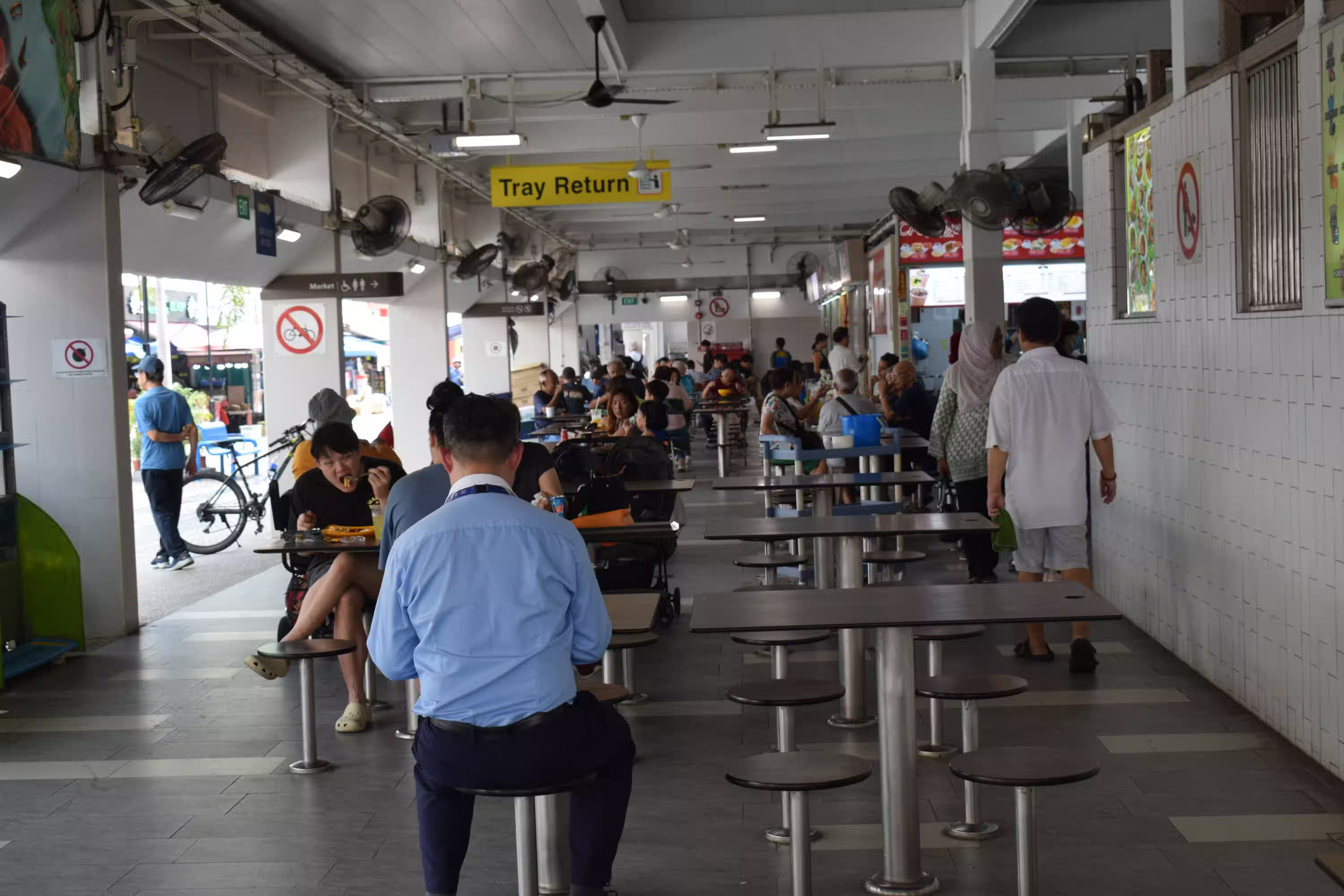 This is the hawker center we went to. Photo by Ravi Dwivedi. Released under the CC-BY-SA 4.0.
 Table littering at the hawker center was prohibited by law. Photo by Ravi Dwivedi. Released under the CC-BY-SA 4.0.
 Merlion from behind, giving a good view of Marina Bay Sands. Photo by Ravi Dwivedi. Released under the CC-BY-SA 4.0.


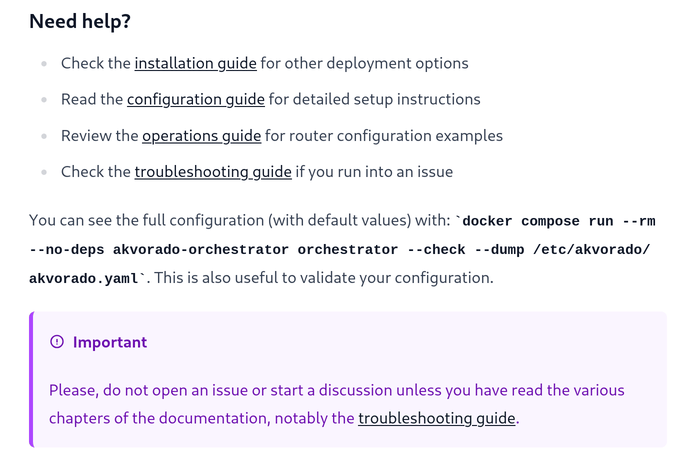
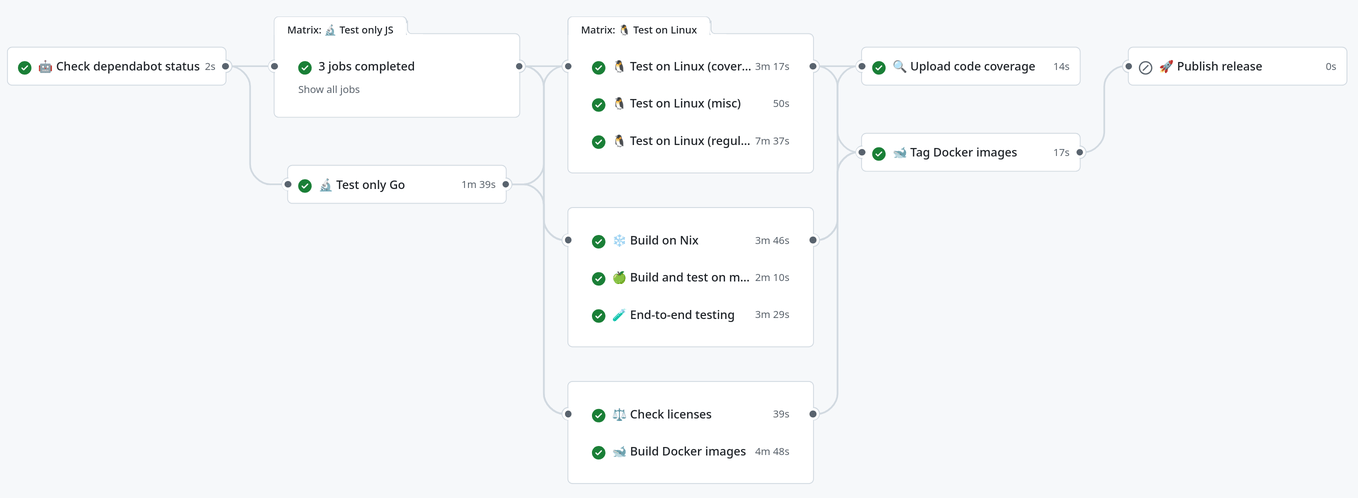
 tl;dr:


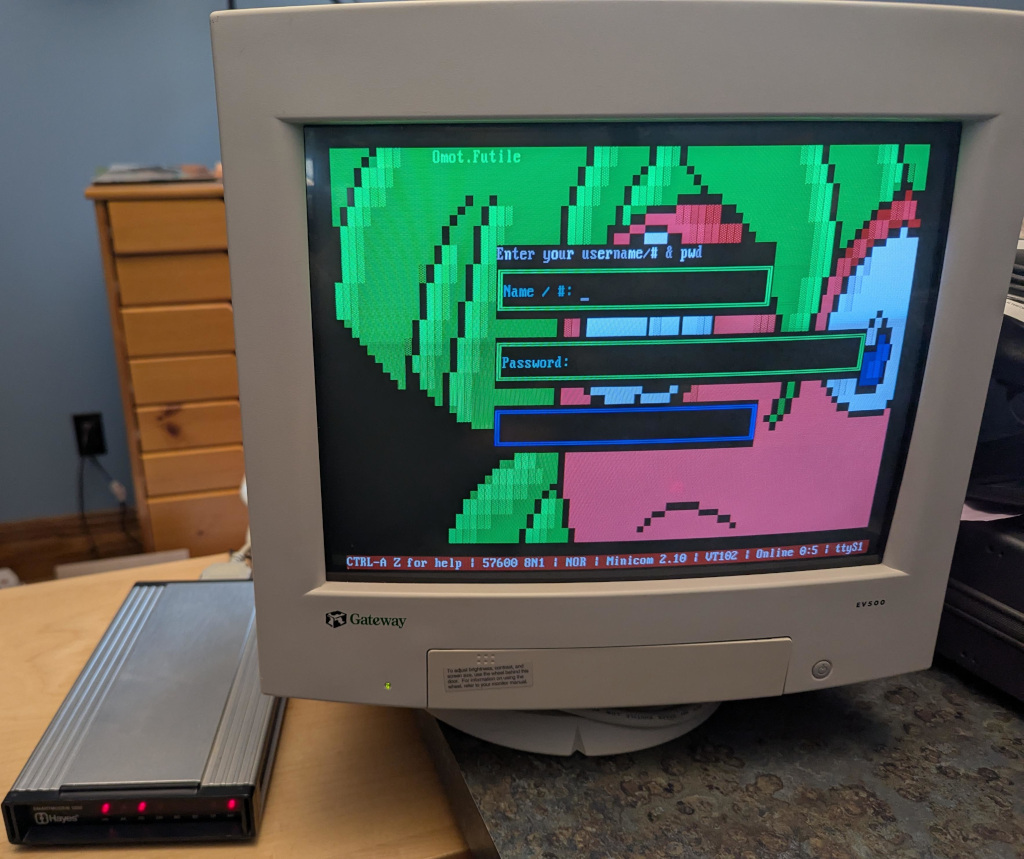




 About 95% of my Debian contributions this month were

 I ve noticed that procrastination and inability to be consistently productive at work has become quite common in recent years. This is clearly visible in younger people who have grown up with an endless stream of entertainment literally at their fingertips, on their mobile phone. It is however a trap one can escape from with a little bit of help.
 I have been using my Samsung Galaxy Tab A (2015) with PostmarketOS on and off since last year. It serves as a really good e-book reader with KOReader installed on it. Have tried phosh and plasma-mobile on it, works nicely but slows the device down heavily (2 GB RAM and old processor) so I use MATE Desktop environment on it.Lately I have started using this tablet along with my laptop as a second screen for work. And it has been working super nicely for that. The only issue being that I have to manually rotate the screen to landscape every time I reboot the device. It resets the screen orientation to portrait after a reboot. So I went through the pmOS wiki and a neat nice hack documented there worked very well for me. First we will test if the auto-rotate sensor works and if we can read values from it. So we install some basic necessary packages
 Historically the primary way to contribute to Debian has been to email the Debian bug tracker with a code patch. Now that
 Following the Browse link opens the Debian package source repository, which is usually a project page on Salsa. To contribute, start by clicking the Fork button, select your own personal namespace and, under Branches to include, pick Only the default branch to avoid including unnecessary temporary development branches.
 Once forking is complete,
 It may also be good to build the source package to establish a baseline of the current state and what kind of binaries and
 When you see a new Merge Request, try to review it within a couple of days. If you cannot review in a reasonable time, posting a small note that you intend to review it later will feel better to the submitter compared to not getting any response.
Personally, I have a habit of assigning myself as a reviewer so that I can keep track of my whole review queue at
 When adding the first comment, I choose Start review and for the following remarks Add to review. Finally, I click Finish review and Submit review, which will trigger one single email to the submitter with all my feedback. I try to avoid using the Add comment now option, as each such comment triggers a separate notification email to the submitter.