Search Results: "rra"

19 March 2024

Colin Watson: apt install everything?

On Mastodon, the question came up of how Ubuntu would deal with something like the npm install everything situation. I replied:
Ubuntu is curated, so it probably wouldn t get this far. If it did, then the worst case is that it would get in the way of CI allowing other packages to be removed (again from a curated system, so people are used to removal not being self-service); but the release team would have no hesitation in removing a package like this to fix that, and it certainly wouldn t cause this amount of angst. If you did this in a PPA, then I can t think of any particular negative effects.
OK, if you added lots of build-dependencies (as well as run-time dependencies) then you might be able to take out a builder. But Launchpad builders already run arbitrary user-submitted code by design and are therefore very carefully sandboxed and treated as ephemeral, so this is hardly novel. There s a lot to be said for the arrangement of having a curated system for the stuff people actually care about plus an ecosystem of add-on repositories. PPAs cover a wide range of levels of developer activity, from throwaway experiments to quasi-official distribution methods; there are certainly problems that arise from it being difficult to tell the difference between those extremes and from there being no systematic confinement, but for this particular kind of problem they re very nearly ideal. (Canonical has tried various other approaches to software distribution, and while they address some of the problems, they aren t obviously better at helping people make reliable social judgements about code they don t know.) For a hypothetical package with a huge number of dependencies, to even try to upload it directly to Ubuntu you d need to be an Ubuntu developer with upload rights (or to go via Debian, where you d have to clear a similar hurdle). If you have those, then the first upload has to pass manual review by an archive administrator. If your package passes that, then it still has to build and get through proposed-migration CI before it reaches anything that humans typically care about. On the other hand, if you were inclined to try this sort of experiment, you d almost certainly try it in a PPA, and that would trouble nobody but yourself.

14 March 2024

Matthew Garrett: Digital forgeries are hard

Closing arguments in the trial between various people and Craig Wright over whether he's Satoshi Nakamoto are wrapping up today, amongst a bewildering array of presented evidence. But one utterly astonishing aspect of this lawsuit is that expert witnesses for both sides agreed that much of the digital evidence provided by Craig Wright was unreliable in one way or another, generally including indications that it wasn't produced at the point in time it claimed to be. And it's fascinating reading through the subtle (and, in some cases, not so subtle) ways that that's revealed.

One of the pieces of evidence entered is screenshots of data from Mind Your Own Business, a business management product that's been around for some time. Craig Wright relied on screenshots of various entries from this product to support his claims around having controlled meaningful number of bitcoin before he was publicly linked to being Satoshi. If these were authentic then they'd be strong evidence linking him to the mining of coins before Bitcoin's public availability. Unfortunately the screenshots themselves weren't contemporary - the metadata shows them being created in 2020. This wouldn't fundamentally be a problem (it's entirely reasonable to create new screenshots of old material), as long as it's possible to establish that the material shown in the screenshots was created at that point. Sadly, well.

One part of the disclosed information was an email that contained a zip file that contained a raw database in the format used by MYOB. Importing that into the tool allowed an audit record to be extracted - this record showed that the relevant entries had been added to the database in 2020, shortly before the screenshots were created. This was, obviously, not strong evidence that Craig had held Bitcoin in 2009. This evidence was reported, and was responded to with a couple of additional databases that had an audit trail that was consistent with the dates in the records in question. Well, partially. The audit record included session data, showing an administrator logging into the data base in 2011 and then, uh, logging out in 2023, which is rather more consistent with someone changing their system clock to 2011 to create an entry, and switching it back to present day before logging out. In addition, the audit log included fields that didn't exist in versions of the product released before 2016, strongly suggesting that the entries dated 2009-2011 were created in software released after 2016. And even worse, the order of insertions into the database didn't line up with calendar time - an entry dated before another entry may appear in the database afterwards, indicating that it was created later. But even more obvious? The database schema used for these old entries corresponded to a version of the software released in 2023.

This is all consistent with the idea that these records were created after the fact and backdated to 2009-2011, and that after this evidence was made available further evidence was created and backdated to obfuscate that. In an unusual turn of events, during the trial Craig Wright introduced further evidence in the form of a chain of emails to his former lawyers that indicated he had provided them with login details to his MYOB instance in 2019 - before the metadata associated with the screenshots. The implication isn't entirely clear, but it suggests that either they had an opportunity to examine this data before the metadata suggests it was created, or that they faked the data? So, well, the obvious thing happened, and his former lawyers were asked whether they received these emails. The chain consisted of three emails, two of which they confirmed they'd received. And they received a third email in the chain, but it was different to the one entered in evidence. And, uh, weirdly, they'd received a copy of the email that was submitted - but they'd received it a few days earlier. In 2024.

And again, the forensic evidence is helpful here! It turns out that the email client used associates a timestamp with any attachments, which in this case included an image in the email footer - and the mysterious time travelling email had a timestamp in 2024, not 2019. This was created by the client, so was consistent with the email having been sent in 2024, not being sent in 2019 and somehow getting stuck somewhere before delivery. The date header indicates 2019, as do encoded timestamps in the MIME headers - consistent with the mail being sent by a computer with the clock set to 2019.

But there's a very weird difference between the copy of the email that was submitted in evidence and the copy that was located afterwards! The first included a header inserted by gmail that included a 2019 timestamp, while the latter had a 2024 timestamp. Is there a way to determine which of these could be the truth? It turns out there is! The format of that header changed in 2022, and the version in the email is the new version. The version with the 2019 timestamp is anachronistic - the format simply doesn't match the header that gmail would have introduced in 2019, suggesting that an email sent in 2022 or later was modified to include a timestamp of 2019.

This is by no means the only indication that Craig Wright's evidence may be misleading (there's the whole argument that the Bitcoin white paper was written in LaTeX when general consensus is that it's written in OpenOffice, given that's what the metadata claims), but it's a lovely example of a more general issue.

Our technology chains are complicated. So many moving parts end up influencing the content of the data we generate, and those parts develop over time. It's fantastically difficult to generate an artifact now that precisely corresponds to how it would look in the past, even if we go to the effort of installing an old OS on an old PC and setting the clock appropriately (are you sure you're going to be able to mimic an entirely period appropriate patch level?). Even the version of the font you use in a document may indicate it's anachronistic. I'm pretty good at computers and I no longer have any belief I could fake an old document.

(References: this Dropbox, under "Expert reports", "Patrick Madden". Initial MYOB data is in "Appendix PM7", further analysis is in "Appendix PM42", email analysis is "Sixth Expert Report of Mr Patrick Madden")

comment count unavailable comments

8 March 2024

Louis-Philippe V ronneau: Acts of active procrastination: example of a silly Python script for Moodle

My brain is currently suffering from an overload caused by grading student assignments. In search of a somewhat productive way to procrastinate, I thought I would share a small script I wrote sometime in 2023 to facilitate my grading work. I use Moodle for all the classes I teach and students use it to hand me out their papers. When I'm ready to grade them, I download the ZIP archive Moodle provides containing all their PDF files and comment them using xournalpp and my Wacom tablet. Once this is done, I have a directory structure that looks like this:
Assignment FooBar/
  Student A_21100_assignsubmission_file
    graded paper.pdf
    Student A's perfectly named assignment.pdf
    Student A's perfectly named assignment.xopp
  Student B_21094_assignsubmission_file
    graded paper.pdf
    Student B's perfectly named assignment.pdf
    Student B's perfectly named assignment.xopp
  Student C_21093_assignsubmission_file
    graded paper.pdf
    Student C's perfectly named assignment.pdf
    Student C's perfectly named assignment.xopp
 
Before I can upload files back to Moodle, this directory needs to be copied (I have to keep the original files), cleaned of everything but the graded paper.pdf files and compressed in a ZIP. You can see how this can quickly get tedious to do by hand. Not being a complete tool, I often resorted to crafting a few spurious shell one-liners each time I had to do this1. Eventually I got tired of ctrl-R-ing my shell history and wrote something reusable. Behold this script! When I began writing this post, I was certain I had cheaped out on my 2021 New Year's resolution and written it in Shell, but glory!, it seems I used a proper scripting language instead.
#!/usr/bin/python3
# Copyright (C) 2023, Louis-Philippe V ronneau <pollo@debian.org>
#
# This program is free software: you can redistribute it and/or modify
# it under the terms of the GNU General Public License as published by
# the Free Software Foundation, either version 3 of the License, or
# (at your option) any later version.
#
# This program is distributed in the hope that it will be useful,
# but WITHOUT ANY WARRANTY; without even the implied warranty of
# MERCHANTABILITY or FITNESS FOR A PARTICULAR PURPOSE.  See the
# GNU General Public License for more details.
#
# You should have received a copy of the GNU General Public License
# along with this program.  If not, see <http://www.gnu.org/licenses/>.
"""
This script aims to take a directory containing PDF files exported via the
Moodle mass download function, remove everything but the final files to submit
back to the students and zip it back.
usage: ./moodle-zip.py <target_dir>
"""
import os
import shutil
import sys
import tempfile
from fnmatch import fnmatch
def sanity(directory):
    """Run sanity checks before doing anything else"""
    base_directory = os.path.basename(os.path.normpath(directory))
    if not os.path.isdir(directory):
        sys.exit(f"Target directory  directory  is not a valid directory")
    if os.path.exists(f"/tmp/ base_directory .zip"):
        sys.exit(f"Final ZIP file path '/tmp/ base_directory .zip' already exists")
    for root, dirnames, _ in os.walk(directory):
        for dirname in dirnames:
            corrige_present = False
            for file in os.listdir(os.path.join(root, dirname)):
                if fnmatch(file, 'graded paper.pdf'):
                    corrige_present = True
            if corrige_present is False:
                sys.exit(f"Directory  dirname  does not contain a 'graded paper.pdf' file")
def clean(directory):
    """Remove superfluous files, to keep only the graded PDF"""
    with tempfile.TemporaryDirectory() as tmp_dir:
        shutil.copytree(directory, tmp_dir, dirs_exist_ok=True)
        for root, _, filenames in os.walk(tmp_dir):
            for file in filenames:
                if not fnmatch(file, 'graded paper.pdf'):
                    os.remove(os.path.join(root, file))
        compress(tmp_dir, directory)
def compress(directory, target_dir):
    """Compress directory into a ZIP file and save it to the target dir"""
    target_dir = os.path.basename(os.path.normpath(target_dir))
    shutil.make_archive(f"/tmp/ target_dir ", 'zip', directory)
    print(f"Final ZIP file has been saved to '/tmp/ target_dir .zip'")
def main():
    """Main function"""
    target_dir = sys.argv[1]
    sanity(target_dir)
    clean(target_dir)
if __name__ == "__main__":
    main()
If for some reason you happen to have a similar workflow as I and end up using this script, hit me up? Now, back to grading...

  1. If I recall correctly, the lazy way I used to do it involved copying the directory, renaming the extension of the graded paper.pdf files, deleting all .pdf and .xopp files using find and changing graded paper.foobar back to a PDF. Some clever regex or learning awk from the ground up could've probably done the job as well, but you know, that would have required using my brain and spending spoons...

7 March 2024

Dirk Eddelbuettel: prrd 0.0.6 at CRAN: Several Improvements

Thrilled to share that a new version of prrd arrived at CRAN yesterday in a first update in two and a half years. prrd facilitates the parallel running [of] reverse dependency [checks] when preparing R packages. It is used extensively for releases I make of Rcpp, RcppArmadillo, RcppEigen, BH, and others. prrd screenshot image The key idea of prrd is simple, and described in some more detail on its webpage and its GitHub repo. Reverse dependency checks are an important part of package development that is easily done in a (serial) loop. But these checks are also generally embarassingly parallel as there is no or little interdependency between them (besides maybe shared build depedencies). See the (dated) screenshot (running six parallel workers, arranged in a split byobu session). This release, the first since 2021, brings a number of enhancments. In particular, the summary function is now improved in several ways. Josh also put in a nice PR that generalizes some setup defaults and values. The release is summarised in the NEWS entry:

Changes in prrd version 0.0.6 (2024-03-06)
  • The summary function has received several enhancements:
    • Extended summary is only running when failures are seen.
    • The summariseQueue function now displays an anticipated completion time and remaining duration.
    • The use of optional package foghorn has been refined, and refactored, when running summaries.
  • The dequeueJobs.r scripts can receive a date argument, the date can be parse via anydate if anytime ins present.
  • The enqueeJobs.r now considers skipped package when running 'addfailed' while ensuring selecting packages are still on CRAN.
  • The CI setup has been updated (twice),
  • Enqueing and dequing functions and scripts now support relative directories, updated documentation (#18 by Joshua Ulrich).

Courtesy of my CRANberries, there is also a diffstat report for this release. If you like this or other open-source work I do, you can sponsor me at GitHub.

This post by Dirk Eddelbuettel originated on his Thinking inside the box blog. Please report excessive re-aggregation in third-party for-profit settings.

Gunnar Wolf: Constructed truths truth and knowledge in a post-truth world

This post is a review for Computing Reviews for Constructed truths truth and knowledge in a post-truth world , a book published in Springer Link
Many of us grew up used to having some news sources we could implicitly trust, such as well-positioned newspapers and radio or TV news programs. We knew they would only hire responsible journalists rather than risk diluting public trust and losing their brand s value. However, with the advent of the Internet and social media, we are witnessing what has been termed the post-truth phenomenon. The undeniable freedom that horizontal communication has given us automatically brings with it the emergence of filter bubbles and echo chambers, and truth seems to become a group belief. Contrary to my original expectations, the core topic of the book is not about how current-day media brings about post-truth mindsets. Instead it goes into a much deeper philosophical debate: What is truth? Does truth exist by itself, objectively, or is it a social construct? If activists with different political leanings debate a given subject, is it even possible for them to understand the same points for debate, or do they truly experience parallel realities? The author wrote this book clearly prompted by the unprecedented events that took place in 2020, as the COVID-19 crisis forced humanity into isolation and online communication. Donald Trump is explicitly and repeatedly presented throughout the book as an example of an actor that took advantage of the distortions caused by post-truth. The first chapter frames the narrative from the perspective of information flow over the last several decades, on how the emergence of horizontal, uncensored communication free of editorial oversight started empowering the netizens and created a temporary information flow utopia. But soon afterwards, algorithmic gatekeepers started appearing, creating a set of personalized distortions on reality; users started getting news aligned to what they already showed interest in. This led to an increase in polarization and the growth of narrative-framing-specific communities that served as echo chambers for disjoint views on reality. This led to the growth of conspiracy theories and, necessarily, to the science denial and pseudoscience that reached unimaginable peaks during the COVID-19 crisis. Finally, when readers decide based on completely subjective criteria whether a scientific theory such as global warming is true or propaganda, or question what most traditional news outlets present as facts, we face the phenomenon known as fake news. Fake news leads to post-truth, a state where it is impossible to distinguish between truth and falsehood, and serves only a rhetorical function, making rational discourse impossible. Toward the end of the first chapter, the tone of writing quickly turns away from describing developments in the spread of news and facts over the last decades and quickly goes deep into philosophy, into the very thorny subject pursued by said discipline for millennia: How can truth be defined? Can different perspectives bring about different truth values for any given idea? Does truth depend on the observer, on their knowledge of facts, on their moral compass or in their honest opinions? Zoglauer dives into epistemology, following various thinkers ideas on what can be understood as truth: constructivism (whether knowledge and truth values can be learnt by an individual building from their personal experience), objectivity (whether experiences, and thus truth, are universal, or whether they are naturally individual), and whether we can proclaim something to be true when it corresponds to reality. For the final chapter, he dives into the role information and knowledge play in assigning and understanding truth value, as well as the value of second-hand knowledge: Do we really own knowledge because we can look up facts online (even if we carefully check the sources)? Can I, without any medical training, diagnose a sickness and treatment by honestly and carefully looking up its symptoms in medical databases? Wrapping up, while I very much enjoyed reading this book, I must confess it is completely different from what I expected. This book digs much more into the abstract than into information flow in modern society, or the impact on early 2020s politics as its editorial description suggests. At 160 pages, the book is not a heavy read, and Zoglauer s writing style is easy to follow, even across the potentially very deep topics it presents. Its main readership is not necessarily computing practitioners or academics. However, for people trying to better understand epistemology through its expressions in the modern world, it will be a very worthy read.

4 March 2024

Colin Watson: Free software activity in January/February 2024

Two months into my new gig and it s going great! Tracking my time has taken a bit of getting used to, but having something that amounts to a queryable database of everything I ve done has also allowed some helpful introspection. Freexian sponsors up to 20% of my time on Debian tasks of my choice. In fact I ve been spending the bulk of my time on debusine which is itself intended to accelerate work on Debian, but more details on that later. While I contribute to Freexian s summaries now, I ve also decided to start writing monthly posts about my free software activity as many others do, to get into some more detail. January 2024 February 2024

3 March 2024

Petter Reinholdtsen: RAID status from LSI Megaraid controllers using free software

The last few days I have revisited RAID setup using the LSI Megaraid controller. These are a family of controllers called PERC by Dell, and is present in several old PowerEdge servers, and I recently got my hands on one of these. I had forgotten how to handle this RAID controller in Debian, so I had to take a peek in the Debian wiki page "Linux and Hardware RAID: an administrator's summary" to remember what kind of software is available to configure and monitor the disks and controller. I prefer Free Software alternatives to proprietary tools, as the later tend to fall into disarray once the manufacturer loose interest, and often do not work with newer Linux Distributions. Sadly there is no free software tool to configure the RAID setup, only to monitor it. RAID can provide improved reliability and resilience in a storage solution, but only if it is being regularly checked and any broken disks are being replaced in time. I thus want to ensure some automatic monitoring is available. In the discovery process, I came across a old free software tool to monitor PERC2, PERC3, PERC4 and PERC5 controllers, which to my surprise is not present in debian. To help change that I created a request for packaging of the megactl package, and tried to track down a usable version. The original project site is on Sourceforge, but as far as I can tell that project has been dead for more than 15 years. I managed to find a more recent fork on github from user hmage, but it is unclear to me if this is still being maintained. It has not seen much improvements since 2016. A more up to date edition is a git fork from the original github fork by user namiltd, and this newer fork seem a lot more promising. The owner of this github repository has replied to change proposals within hours, and had already added some improvements and support for more hardware. Sadly he is reluctant to commit to maintaining the tool and stated in my first pull request that he think a new release should be made based on the git repository owned by hmage. I perfectly understand this reluctance, as I feel the same about maintaining yet another package in Debian when I barely have time to take care of the ones I already maintain, but do not really have high hopes that hmage will have time to spend on it and hope namiltd will change his mind. In any case, I created a draft package based on the namiltd edition and put it under the debian group on salsa.debian.org. If you own a Dell PowerEdge server with one of the PERC controllers, or any other RAID controller using the megaraid or megaraid_sas Linux kernel modules, you might want to check it out. If enough people are interested, perhaps the package will make it into the Debian archive. There are two tools provided, megactl for the megaraid Linux kernel module, and megasasctl for the megaraid_sas Linux kernel module. The simple output from the command on one of my machines look like this (yes, I know some of the disks have problems. :).
# megasasctl 
a0       PERC H730 Mini           encl:1 ldrv:2  batt:good
a0d0       558GiB RAID 1   1x2  optimal
a0d1      3067GiB RAID 0   1x11 optimal
a0e32s0     558GiB  a0d0  online   errs: media:0  other:19
a0e32s1     279GiB  a0d1  online  
a0e32s2     279GiB  a0d1  online  
a0e32s3     279GiB  a0d1  online  
a0e32s4     279GiB  a0d1  online  
a0e32s5     279GiB  a0d1  online  
a0e32s6     279GiB  a0d1  online  
a0e32s8     558GiB  a0d0  online   errs: media:0  other:17
a0e32s9     279GiB  a0d1  online  
a0e32s10    279GiB  a0d1  online  
a0e32s11    279GiB  a0d1  online  
a0e32s12    279GiB  a0d1  online  
a0e32s13    279GiB  a0d1  online  
#
In addition to displaying a simple status report, it can also test individual drives and print the various event logs. Perhaps you too find it useful? In the packaging process I provided some patches upstream to improve installation and ensure a Appstream metainfo file is provided to list all supported HW, to allow isenkram to propose the package on all servers with a relevant PCI card. As usual, if you use Bitcoin and want to show your support of my activities, please send Bitcoin donations to my address 15oWEoG9dUPovwmUL9KWAnYRtNJEkP1u1b.

28 February 2024

Daniel Lange: Opencollective shutting down

Update 28.02.2024 19:45 CET: There is now a blog entry at https://blog.opencollective.com/open-collective-official-statement-ocf-dissolution/ trying to discern the legal entities in the Open Collective ecosystem and recommending potential ways forward.
Gee, there is nothing on their blog yet, but I just [28.02.2023 00:07 CET] received this email from Mike Strode, Program Officer at the Open Collective Foundation: Dear Daniel Lange, It is with a heavy heart that I'm writing today to inform you that the Board of Directors of the Open Collective Foundation (OCF) has made the difficult decision to dissolve OCF, effective December 31, 2024. We are proud of the work we have been able to do together. We have been honored to build community with you and the hundreds of other collectives hosted at the Open Collective Foundation. What you need to know: We are beginning a staged dissolution process that will allow our over 600 collectives the time to close or transition their work. Dissolving OCF will take many months, and involves settling all liabilities while spending down all funds in a legally compliant manner. Our priority is to support our collectives in navigating this change. We want to provide collectives the longest possible runway to wind down or transition their operations while we focus on the many legal and financial tasks associated with dissolving a nonprofit. March 15 is the last day to accept donations. You will have until September 30 to work with us to develop and implement a plan to spend down the money in your fund. Key dates are included at the bottom of this email. We know this is going to be difficult, and we will do everything we can to ease the transition for you. How we will support collectives: It remains our fiduciary responsibility to safeguard each collective's charitable assets and ensure funds are used solely for specified charitable purposes. We will be providing assistance and support to you, whether you choose to spend out and close down your collective or continue your work through another 501(c)(3) organization or fiscal sponsor. Unfortunately, we had to say goodbye to several of our colleagues today as we pare down our core staff to reduce costs. I will be staying on staff to support collectives through this transition, along with Wayne Kleppe, our Finance Administrator. What led to this decision: From day one, OCF was committed to experimentation and innovation. We were dedicated to finding new ways to open up the nonprofit space, making it easier for people to raise and access funding so they can do good in their communities. OCF was created by Open Collective Inc. (OCI), a company formed in 2015 with the goal of "enabling groups to quickly set up a collective, raise funds and manage them transparently." Soon after being founded by OCI, OCF went through a period of rapid growth. We responded to increased demand arising from the COVID-19 pandemic without taking the time to establish the appropriate systems and infrastructure to sustain that growth. Unfortunately, over the past year, we have learned that Open Collective Foundation's business model is not sustainable with the number of complex services we have offered and the fees we pay to the Open Collective Inc. tech platform. In late 2023, we made the decision to pause accepting new collectives in order to create space for us to address the issues. Unfortunately, it became clear that it would not be financially feasible to make the necessary corrections, and we determined that OCF is not viable. What's next: We know this news will raise questions for many of our collectives. We will be making space for questions and reactions in the coming weeks. In the meantime, we have developed this FAQ which we will keep updated as more questions come in. What you need to do next: Dates to know: In Care & Accompaniment,
Mike Strode
Program Officer
Open Collective Foundation Our mailing address has changed! We are now located at 440 N. Barranca Avenue #3717, Covina, CA 91723, USA

25 February 2024

Jacob Adams: AAC and Debian

Currently, in a default installation of Debian with the GNOME desktop, Bluetooth headphones that require the AAC codec1 cannot be used. As the Debian wiki outlines, using the AAC codec over Bluetooth, while technically supported by PipeWire, is explicitly disabled in Debian at this time. This is because the fdk-aac library needed to enable this support is currently in the non-free component of the repository, meaning that PipeWire, which is in the main component, cannot depend on it.

How to Fix it Yourself If what you, like me, need is simply for Bluetooth Audio to work with AAC in Debian s default desktop environment2, then you ll need to rebuild the pipewire package to include the AAC codec. While the current version in Debian main has been built with AAC deliberately disabled, it is trivial to enable if you can install a version of the fdk-aac library. I preface this with the usual caveats when it comes to patent and licensing controversies. I am not a lawyer, building this package and/or using it could get you into legal trouble. These instructions have only been tested on an up-to-date copy of Debian 12.
  1. Install pipewire s build dependencies
    sudo apt install build-essential devscripts
    sudo apt build-dep pipewire
    
  2. Install libfdk-aac-dev
    sudo apt install libfdk-aac-dev
    
    If the above doesn t work you ll likely need to enable non-free and try again
    sudo sed -i 's/main/main non-free/g' /etc/apt/sources.list
    sudo apt update
    
    Alternatively, if you wish to ensure you are maximally license-compliant and patent un-infringing3, you can instead build fdk-aac-free which includes only those components of AAC that are known to be patent-free3. This is what should eventually end up in Debian to resolve this problem (see below).
    sudo apt install git-buildpackage
    mkdir fdk-aac-source
    cd fdk-aac-source
    git clone https://salsa.debian.org/multimedia-team/fdk-aac
    cd fdk-aac
    gbp buildpackage
    sudo dpkg -i ../libfdk-aac2_*deb ../libfdk-aac-dev_*deb
    
  3. Get the pipewire source code
    mkdir pipewire-source
    cd pipewire-source
    apt source pipewire
    
    This will create a bunch of files within the pipewire-source directory, but you ll only need the pipewire-<version> folder, this contains all the files you ll need to build the package, with all the debian-specific patches already applied. Note that you don t want to run the apt source command as root, as it will then create files that your regular user cannot edit.
  4. Fix the dependencies and build options To fix up the build scripts to use the fdk-aac library, you need to save the following as pipewire-source/aac.patch
    --- debian/control.orig
    +++ debian/control
    @@ -40,8 +40,8 @@
                 modemmanager-dev,
                 pkg-config,
                 python3-docutils,
    -               systemd [linux-any]
    -Build-Conflicts: libfdk-aac-dev
    +               systemd [linux-any],
    +               libfdk-aac-dev
     Standards-Version: 4.6.2
     Vcs-Browser: https://salsa.debian.org/utopia-team/pipewire
     Vcs-Git: https://salsa.debian.org/utopia-team/pipewire.git
    --- debian/rules.orig
    +++ debian/rules
    @@ -37,7 +37,7 @@
     		-Dauto_features=enabled \
     		-Davahi=enabled \
     		-Dbluez5-backend-native-mm=enabled \
    -		-Dbluez5-codec-aac=disabled \
    +		-Dbluez5-codec-aac=enabled \
     		-Dbluez5-codec-aptx=enabled \
     		-Dbluez5-codec-lc3=enabled \
     		-Dbluez5-codec-lc3plus=disabled \
    
    Then you ll need to run patch from within the pipewire-<version> folder created by apt source:
    patch -p0 < ../aac.patch
    
  5. Build pipewire
    cd pipewire-*
    debuild
    
    Note that you will likely see an error from debsign at the end of this process, this is harmless, you simply don t have a GPG key set up to sign your newly-built package4. Packages don t need to be signed to be installed, and debsign uses a somewhat non-standard signing process that dpkg does not check anyway.
  1. Install libspa-0.2-bluetooth
    sudo dpkg -i libspa-0.2-bluetooth_*.deb
    
  2. Restart PipeWire and/or Reboot
    sudo reboot
    
    Theoretically there s a set of services to restart here that would get pipewire to pick up the new library, probably just pipewire itself. But it s just as easy to restart and ensure everything is using the correct library.

Why This is a slightly unusual situation, as the fdk-aac library is licensed under what even the GNU project acknowledges is a free software license. However, this license explicitly informs the user that they need to acquire a patent license to use this software5:
3. NO PATENT LICENSE NO EXPRESS OR IMPLIED LICENSES TO ANY PATENT CLAIMS, including without limitation the patents of Fraunhofer, ARE GRANTED BY THIS SOFTWARE LICENSE. Fraunhofer provides no warranty of patent non-infringement with respect to this software. You may use this FDK AAC Codec software or modifications thereto only for purposes that are authorized by appropriate patent licenses.
To quote the GNU project:
Because of this, and because the license author is a known patent aggressor, we encourage you to be careful about using or redistributing software under this license: you should first consider whether the licensor might aim to lure you into patent infringement.
AAC is covered by a number of patents, which expire at some point in the 2030s6. As such the current version of the library is potentially legally dubious to ship with any other software, as it could be considered patent-infringing3.

Fedora s solution Since 2017, Fedora has included a modified version of the library as fdk-aac-free, see the announcement and the bugzilla bug requesting review. This version of the library includes only the AAC LC profile, which is believed to be entirely patent-free3. Based on this, there is an open bug report in Debian requesting that the fdk-aac package be moved to the main component and that the pipwire package be updated to build against it.

The Debian NEW queue To resolve these bugs, a version of fdk-aac-free has been uploaded to Debian by Jeremy Bicha. However, to make it into Debian proper, it must first pass through the ftpmaster s NEW queue. The current version of fdk-aac-free has been in the NEW queue since July 2023. Based on conversations in some of the bugs above, it s been there since at least 20227. I hope this helps anyone stuck with AAC to get their hardware working for them while we wait for the package to eventually make it through the NEW queue. Discuss on Hacker News
  1. Such as, for example, any Apple AirPods, which only support AAC AFAICT.
  2. Which, as of Debian 12 is GNOME 3 under Wayland with PipeWire.
  3. I m not a lawyer, I don t know what kinds of infringement might or might not be possible here, do your own research, etc. 2 3 4
  4. And if you DO have a key setup with debsign you almost certainly don t need these instructions.
  5. This was originally phrased as explicitly does not grant any patent rights. It was pointed out on Hacker News that this is not exactly what it says, as it also includes a specific note that you ll need to acquire your own patent license. I ve now quoted the relevant section of the license for clarity.
  6. Wikipedia claims the base patents expire in 2031, with the extensions expiring in 2038, but its source for these claims is some guy s spreadsheet in a forum. The same discussion also brings up Wikipedia s claim and casts some doubt on it, so I m not entirely sure what s correct here, but I didn t feel like doing a patent deep-dive today. If someone can provide a clear answer that would be much appreciated.
  7. According to Jeremy B cha: https://bugs.debian.org/cgi-bin/bugreport.cgi?bug=1021370#17

23 February 2024

Gunnar Wolf: 10 things software developers should learn about learning

This post is a review for Computing Reviews for 10 things software developers should learn about learning , a article published in Communications of the ACM
As software developers, we understand the detailed workings of the different components of our computer systems. And probably due to how computers were presented since their appearance as digital brains in the 1940s we sometimes believe we can transpose that knowledge to how our biological brains work, be it as learners or as problem solvers. This article aims at making the reader understand several mechanisms related to how learning and problem solving actually work in our brains. It focuses on helping expert developers convey knowledge to new learners, as well as learners who need to get up to speed and start coding. The article s narrative revolves around software developers, but much of what it presents can be applied to different problem domains. The article takes this mission through ten points, with roughly the same space given to each of them, starting with wrong assumptions many people have about the similarities between computers and our brains. The first section, Human Memory Is Not Made of Bits, explains the brain processes of remembering as a way of strengthening the force of a memory ( reconsolidation ) and the role of activation in related network pathways. The second section, Human Memory Is Composed of One Limited and One Unlimited System, goes on to explain the organization of memories in the brain between long-term memory (functionally limitless, permanent storage) and working memory (storing little amounts of information used for solving a problem at hand). However, the focus soon shifts to how experience in knowledge leads to different ways of using the same concepts, the importance of going from abstract to concrete knowledge applications and back, and the role of skills repetition over time. Toward the end of the article, the focus shifts from the mechanical act of learning to expertise. Section 6, The Internet Has Not Made Learning Obsolete, emphasizes that problem solving is not just putting together the pieces of a puzzle; searching online for solutions to a problem does not activate the neural pathways that would get fired up otherwise. The final sections tackle the differences that expertise brings to play when teaching or training a newcomer: the same tools that help the beginner s productivity as training wheels will often hamper the expert user s as their knowledge has become automated. The article is written with a very informal and easy-to-read tone and vocabulary, and brings forward several issues that might seem like commonsense but do ring bells when it comes to my own experiences both as a software developer and as a teacher. The article closes by suggesting several books that further expand on the issues it brings forward. While I could not identify a single focus or thesis with which to characterize this article, the several points it makes will likely help readers better understand (and bring forward to consciousness) mental processes often taken for granted, and consider often-overlooked aspects when transmitting knowledge to newcomers.

20 February 2024

Jonathan Dowland: Propaganda A Secret Wish

How can I not have done one of these for Propaganda already?
Propaganda: A Secret Wish, and 12"s of Duel and p:Machinery
Propaganda/A Secret Wish is criminally underrated. There seem to be a zillion variants of each track, which keeps completionists busy. Of the variants of Jewel/Duel/etc., I'm fond of the 03:10, almost instrumental mix of Jewel; preferring the lyrics to be exclusive to the more radio friendly Duel (04:42); I don't need them conflating (Jewel 06:21); but there are further depths I've yet to explore (Do Well cassette mix, the 20:07 The First Cut / Duel / Jewel (Cut Rough)/ Wonder / Bejewelled mega-mix...) I recently watched The Fall of the House of Usher which I think has Poe lodged in my brain, which is how this album popped back into my conciousness this morning, with the opening lines of Dream within a Dream. But are they Goth?

19 February 2024

Matthew Garrett: Debugging an odd inability to stream video

We have a cabin out in the forest, and when I say "out in the forest" I mean "in a national forest subject to regulation by the US Forest Service" which means there's an extremely thick book describing the things we're allowed to do and (somewhat longer) not allowed to do. It's also down in the bottom of a valley surrounded by tall trees (the whole "forest" bit). There used to be AT&T copper but all that infrastructure burned down in a big fire back in 2021 and AT&T no longer supply new copper links, and Starlink isn't viable because of the whole "bottom of a valley surrounded by tall trees" thing along with regulations that prohibit us from putting up a big pole with a dish on top. Thankfully there's LTE towers nearby, so I'm simply using cellular data. Unfortunately my provider rate limits connections to video streaming services in order to push them down to roughly SD resolution. The easy workaround is just to VPN back to somewhere else, which in my case is just a Wireguard link back to San Francisco.

This worked perfectly for most things, but some streaming services simply wouldn't work at all. Attempting to load the video would just spin forever. Running tcpdump at the local end of the VPN endpoint showed a connection being established, some packets being exchanged, and then nothing. The remote service appeared to just stop sending packets. Tcpdumping the remote end of the VPN showed the same thing. It wasn't until I looked at the traffic on the VPN endpoint's external interface that things began to become clear.

This probably needs some background. Most network infrastructure has a maximum allowable packet size, which is referred to as the Maximum Transmission Unit or MTU. For ethernet this defaults to 1500 bytes, and these days most links are able to handle packets of at least this size, so it's pretty typical to just assume that you'll be able to send a 1500 byte packet. But what's important to remember is that that doesn't mean you have 1500 bytes of packet payload - that 1500 bytes includes whatever protocol level headers are on there. For TCP/IP you're typically looking at spending around 40 bytes on the headers, leaving somewhere around 1460 bytes of usable payload. And if you're using a VPN, things get annoying. In this case the original packet becomes the payload of a new packet, which means it needs another set of TCP (or UDP) and IP headers, and probably also some VPN header. This still all needs to fit inside the MTU of the link the VPN packet is being sent over, so if the MTU of that is 1500, the effective MTU of the VPN interface has to be lower. For Wireguard, this works out to an effective MTU of 1420 bytes. That means simply sending a 1500 byte packet over a Wireguard (or any other VPN) link won't work - adding the additional headers gives you a total packet size of over 1500 bytes, and that won't fit into the underlying link's MTU of 1500.

And yet, things work. But how? Faced with a packet that's too big to fit into a link, there are two choices - break the packet up into multiple smaller packets ("fragmentation") or tell whoever's sending the packet to send smaller packets. Fragmentation seems like the obvious answer, so I'd encourage you to read Valerie Aurora's article on how fragmentation is more complicated than you think. tl;dr - if you can avoid fragmentation then you're going to have a better life. You can explicitly indicate that you don't want your packets to be fragmented by setting the Don't Fragment bit in your IP header, and then when your packet hits a link where your packet exceeds the link MTU it'll send back a packet telling the remote that it's too big, what the actual MTU is, and the remote will resend a smaller packet. This avoids all the hassle of handling fragments in exchange for the cost of a retransmit the first time the MTU is exceeded. It also typically works these days, which wasn't always the case - people had a nasty habit of dropping the ICMP packets telling the remote that the packet was too big, which broke everything.

What I saw when I tcpdumped on the remote VPN endpoint's external interface was that the connection was getting established, and then a 1500 byte packet would arrive (this is kind of the behaviour you'd expect for video - the connection handshaking involves a bunch of relatively small packets, and then once you start sending the video stream itself you start sending packets that are as large as possible in order to minimise overhead). This 1500 byte packet wouldn't fit down the Wireguard link, so the endpoint sent back an ICMP packet to the remote telling it to send smaller packets. The remote should then have sent a new, smaller packet - instead, about a second after sending the first 1500 byte packet, it sent that same 1500 byte packet. This is consistent with it ignoring the ICMP notification and just behaving as if the packet had been dropped.

All the services that were failing were failing in identical ways, and all were using Fastly as their CDN. I complained about this on social media and then somehow ended up in contact with the engineering team responsible for this sort of thing - I sent them a packet dump of the failure, they were able to reproduce it, and it got fixed. Hurray!

(Between me identifying the problem and it getting fixed I was able to work around it. The TCP header includes a Maximum Segment Size (MSS) field, which indicates the maximum size of the payload for this connection. iptables allows you to rewrite this, so on the VPN endpoint I simply rewrote the MSS to be small enough that the packets would fit inside the Wireguard MTU. This isn't a complete fix since it's done at the TCP level rather than the IP level - so any large UDP packets would still end up breaking)

I've no idea what the underlying issue was, and at the client end the failure was entirely opaque: the remote simply stopped sending me packets. The only reason I was able to debug this at all was because I controlled the other end of the VPN as well, and even then I wouldn't have been able to do anything about it other than being in the fortuitous situation of someone able to do something about it seeing my post. How many people go through their lives dealing with things just being broken and having no idea why, and how do we fix that?

(Edit: thanks to this comment, it sounds like the underlying issue was a kernel bug that Fastly developed a fix for - under certain configurations, the kernel fails to associate the MTU update with the egress interface and so it continues sending overly large packets)

comment count unavailable comments

1 February 2024

Russ Allbery: Review: System Collapse

Review: System Collapse, by Martha Wells
Series: Murderbot Diaries #7
Publisher: Tordotcom
Copyright: 2023
ISBN: 1-250-82698-5
Format: Kindle
Pages: 245
System Collapse is the second Murderbot novel. Including the novellas, it's the 7th in the series. Unlike Fugitive Telemetry, the previous novella that was out of chronological order, this is the direct sequel to Network Effect. A very direct sequel; it picks up just a few days after the previous novel ended. Needless to say, you should not start here. I was warned by other people and therefore re-read Network Effect immediately before reading System Collapse. That was an excellent idea, since this novel opens with a large cast, no dramatis personae, not much in the way of a plot summary, and a lot of emotional continuity from the previous novel. I would grumble about this more, like I have in other reviews, but I thoroughly enjoyed re-reading Network Effect and appreciated the excuse.
ART-drone said, I wouldn t recommend it. I lack a sense of proportional response. I don t advise engaging with me on any level.
Saying much about the plot of this book without spoiling Network Effect and the rest of the series is challenging. Murderbot is suffering from the aftereffects of the events of the previous book more than it expected or would like to admit. It and its humans are in the middle of a complicated multi-way negotiation with some locals, who the corporates are trying to exploit. One of the difficulties in that negotiation is getting people to believe that the corporations are as evil as they actually are, a plot element that has a depressing amount in common with current politics. Meanwhile, Murderbot is trying to keep everyone alive. I loved Network Effect, but that was primarily for the social dynamics. The planet that was central to the novel was less interesting, so another (short) novel about the same planet was a bit of a disappointment. This does give Wells a chance to show in more detail what Murderbot's new allies have been up to, but there is a lot of speculative exploration and detailed descriptions of underground tunnels that I found less compelling than the relationship dynamics of the previous book. (Murderbot, on the other hand, would much prefer exploring creepy abandoned tunnels to talking about its feelings.) One of the things this series continues to do incredibly well, though, is take non-human intelligence seriously in a world where the humans mostly don't. It perfectly fills a gap between Star Wars, where neither the humans nor the story take non-human intelligences seriously (hence the creepy slavery vibes as soon as you start paying attention to droids), and the Culture, where both humans and the story do. The corporates (the bad guys in this series) treat non-human intelligences the way Star Wars treats droids. The good guys treat Murderbot mostly like a strange human, which is better but still wrong, and still don't notice the numerous other machine intelligences. But Wells, as the author, takes all of the non-human characters seriously, which means there are complex and fascinating relationships happening at a level of the story that the human characters are mostly unaware of. I love that Murderbot rarely bothers to explain; if the humans are too blinkered to notice, that's their problem. About halfway into the story, System Collapse hits its stride, not coincidentally at the point where Murderbot befriends some new computers. The rest of the book is great. This was not as good as Network Effect. There is a bit less competence porn at the start, and although that's for good in-story reasons I still missed it. Murderbot's redaction of things it doesn't want to talk about got a bit annoying before it finally resolved. And I was not sufficiently interested in this planet to want to spend two novels on it, at least without another major revelation that didn't come. But it's still a Murderbot novel, which means it has the best first-person narrative voice I've ever read, some great moments, and possibly the most compelling and varied presentation of computer intelligence in science fiction at the moment.
There was no feed ID, but AdaCol2 supplied the name Lucia and when I asked it for more info, the gender signifier bb (which didn t translate) and he/him pronouns. (I asked because the humans would bug me for the information; I was as indifferent to human gender as it was possible to be without being unconscious.)
This is not a series to read out of order, but if you have read this far, you will continue to be entertained. You don't need me to tell you this nearly everyone reviewing science fiction is saying it but this series is great and you should read it. Rating: 8 out of 10

30 January 2024

Matthew Palmer: Why Certificate Lifecycle Automation Matters

If you ve perused the ActivityPub feed of certificates whose keys are known to be compromised, and clicked on the Show More button to see the name of the certificate issuer, you may have noticed that some issuers seem to come up again and again. This might make sense after all, if a CA is issuing a large volume of certificates, they ll be seen more often in a list of compromised certificates. In an attempt to see if there is anything that we can learn from this data, though, I did a bit of digging, and came up with some illuminating results.

The Procedure I started off by finding all the unexpired certificates logged in Certificate Transparency (CT) logs that have a key that is in the pwnedkeys database as having been publicly disclosed. From this list of certificates, I removed duplicates by matching up issuer/serial number tuples, and then reduced the set by counting the number of unique certificates by their issuer. This gave me a list of the issuers of these certificates, which looks a bit like this:
/C=BE/O=GlobalSign nv-sa/CN=AlphaSSL CA - SHA256 - G4
/C=GB/ST=Greater Manchester/L=Salford/O=Sectigo Limited/CN=Sectigo RSA Domain Validation Secure Server CA
/C=GB/ST=Greater Manchester/L=Salford/O=Sectigo Limited/CN=Sectigo RSA Organization Validation Secure Server CA
/C=US/ST=Arizona/L=Scottsdale/O=GoDaddy.com, Inc./OU=http://certs.godaddy.com/repository//CN=Go Daddy Secure Certificate Authority - G2
/C=US/ST=Arizona/L=Scottsdale/O=Starfield Technologies, Inc./OU=http://certs.starfieldtech.com/repository//CN=Starfield Secure Certificate Authority - G2
/C=AT/O=ZeroSSL/CN=ZeroSSL RSA Domain Secure Site CA
/C=BE/O=GlobalSign nv-sa/CN=GlobalSign GCC R3 DV TLS CA 2020
Rather than try to work with raw issuers (because, as Andrew Ayer says, The SSL Certificate Issuer Field is a Lie), I mapped these issuers to the organisations that manage them, and summed the counts for those grouped issuers together.

The Data
Lieutenant Commander Data from Star Trek: The Next Generation Insert obligatory "not THAT data" comment here
The end result of this work is the following table, sorted by the count of certificates which have been compromised by exposing their private key:
IssuerCompromised Count
Sectigo170
ISRG (Let's Encrypt)161
GoDaddy141
DigiCert81
GlobalSign46
Entrust3
SSL.com1
If you re familiar with the CA ecosystem, you ll probably recognise that the organisations with large numbers of compromised certificates are also those who issue a lot of certificates. So far, nothing particularly surprising, then. Let s look more closely at the relationships, though, to see if we can get more useful insights.

Volume Control Using the issuance volume report from crt.sh, we can compare issuance volumes to compromise counts, to come up with a compromise rate . I m using the Unexpired Precertificates colume from the issuance volume report, as I feel that s the number that best matches the certificate population I m examining to find compromised certificates. To maintain parity with the previous table, this one is still sorted by the count of certificates that have been compromised.
IssuerIssuance VolumeCompromised CountCompromise Rate
Sectigo88,323,0681701 in 519,547
ISRG (Let's Encrypt)315,476,4021611 in 1,959,480
GoDaddy56,121,4291411 in 398,024
DigiCert144,713,475811 in 1,786,586
GlobalSign1,438,485461 in 31,271
Entrust23,16631 in 7,722
SSL.com171,81611 in 171,816
If we now sort this table by compromise rate, we can see which organisations have the most (and least) leakiness going on from their customers:
IssuerIssuance VolumeCompromised CountCompromise Rate
Entrust23,16631 in 7,722
GlobalSign1,438,485461 in 31,271
SSL.com171,81611 in 171,816
GoDaddy56,121,4291411 in 398,024
Sectigo88,323,0681701 in 519,547
DigiCert144,713,475811 in 1,786,586
ISRG (Let's Encrypt)315,476,4021611 in 1,959,480
By grouping by order-of-magnitude in the compromise rate, we can identify three bands :
  • The Super Leakers: Customers of Entrust and GlobalSign seem to love to lose control of their private keys. For Entrust, at least, though, the small volumes involved make the numbers somewhat untrustworthy. The three compromised certificates could very well belong to just one customer, for instance. I m not aware of anything that GlobalSign does that would make them such an outlier, either, so I m inclined to think they just got unlucky with one or two customers, but as CAs don t include customer IDs in the certificates they issue, it s not possible to say whether that s the actual cause or not.
  • The Regular Leakers: Customers of SSL.com, GoDaddy, and Sectigo all have compromise rates in the 1-in-hundreds-of-thousands range. Again, the low volumes of SSL.com make the numbers somewhat unreliable, but the other two organisations in this group have large enough numbers that we can rely on that data fairly well, I think.
  • The Low Leakers: Customers of DigiCert and Let s Encrypt are at least three times less likely than customers of the regular leakers to lose control of their private keys. Good for them!
Now we have some useful insights we can think about.

Why Is It So?
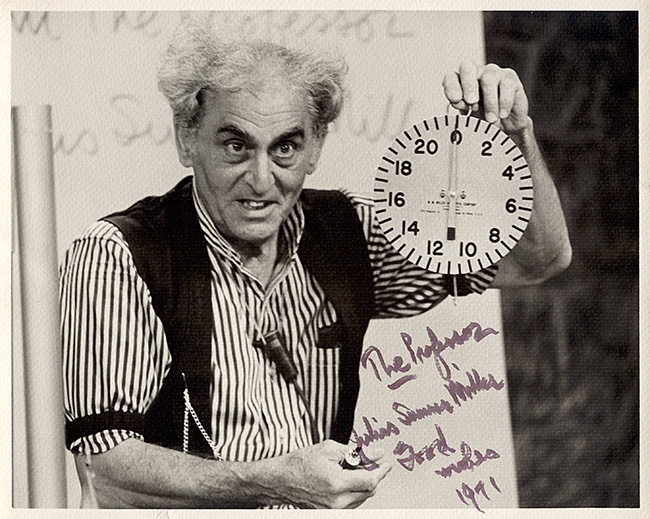
Professor Julius Sumner Miller If you don't know who Professor Julius Sumner Miller is, I highly recommend finding out
All of the organisations on the list, with the exception of Let s Encrypt, are what one might term traditional CAs. To a first approximation, it s reasonable to assume that the vast majority of the customers of these traditional CAs probably manage their certificates the same way they have for the past two decades or more. That is, they generate a key and CSR, upload the CSR to the CA to get a certificate, then copy the cert and key somewhere. Since humans are handling the keys, there s a higher risk of the humans using either risky practices, or making a mistake, and exposing the private key to the world. Let s Encrypt, on the other hand, issues all of its certificates using the ACME (Automatic Certificate Management Environment) protocol, and all of the Let s Encrypt documentation encourages the use of software tools to generate keys, issue certificates, and install them for use. Given that Let s Encrypt has 161 compromised certificates currently in the wild, it s clear that the automation in use is far from perfect, but the significantly lower compromise rate suggests to me that lifecycle automation at least reduces the rate of key compromise, even though it doesn t eliminate it completely.

Explaining the Outlier The difference in presumed issuance practices would seem to explain the significant difference in compromise rates between Let s Encrypt and the other organisations, if it weren t for one outlier. This is a largely traditional CA, with the manual-handling issues that implies, but with a compromise rate close to that of Let s Encrypt. We are, of course, talking about DigiCert. The thing about DigiCert, that doesn t show up in the raw numbers from crt.sh, is that DigiCert manages the issuance of certificates for several of the biggest hosted TLS providers, such as CloudFlare and AWS. When these services obtain a certificate from DigiCert on their customer s behalf, the private key is kept locked away, and no human can (we hope) get access to the private key. This is supported by the fact that no certificates identifiably issued to either CloudFlare or AWS appear in the set of certificates with compromised keys. When we ask for all certificates issued by DigiCert , we get both the certificates issued to these big providers, which are very good at keeping their keys under control, as well as the certificates issued to everyone else, whose key handling practices may not be quite so stringent. It s possible, though not trivial, to account for certificates issued to these hosted TLS providers, because the certificates they use are issued from intermediates branded to those companies. With the crt.sh psql interface we can run this query to get the total number of unexpired precertificates issued to these managed services:
SELECT SUM(sub.NUM_ISSUED[2] - sub.NUM_EXPIRED[2])
  FROM (
    SELECT ca.name, max(coalesce(coalesce(nullif(trim(cc.SUBORDINATE_CA_OWNER), ''), nullif(trim(cc.CA_OWNER), '')), cc.INCLUDED_CERTIFICATE_OWNER)) as OWNER,
           ca.NUM_ISSUED, ca.NUM_EXPIRED
      FROM ccadb_certificate cc, ca_certificate cac, ca
     WHERE cc.CERTIFICATE_ID = cac.CERTIFICATE_ID
       AND cac.CA_ID = ca.ID
  GROUP BY ca.ID
  ) sub
 WHERE sub.name ILIKE '%Amazon%' OR sub.name ILIKE '%CloudFlare%' AND sub.owner = 'DigiCert';
The number I get from running that query is 104,316,112, which should be subtracted from DigiCert s total issuance figures to get a more accurate view of what DigiCert s regular customers do with their private keys. When I do this, the compromise rates table, sorted by the compromise rate, looks like this:
IssuerIssuance VolumeCompromised CountCompromise Rate
Entrust23,16631 in 7,722
GlobalSign1,438,485461 in 31,271
SSL.com171,81611 in 171,816
GoDaddy56,121,4291411 in 398,024
"Regular" DigiCert40,397,363811 in 498,732
Sectigo88,323,0681701 in 519,547
All DigiCert144,713,475811 in 1,786,586
ISRG (Let's Encrypt)315,476,4021611 in 1,959,480
In short, it appears that DigiCert s regular customers are just as likely as GoDaddy or Sectigo customers to expose their private keys.

What Does It All Mean? The takeaway from all this is fairly straightforward, and not overly surprising, I believe.

The less humans have to do with certificate issuance, the less likely they are to compromise that certificate by exposing the private key. While it may not be surprising, it is nice to have some empirical evidence to back up the common wisdom. Fully-managed TLS providers, such as CloudFlare, AWS Certificate Manager, and whatever Azure s thing is called, is the platonic ideal of this principle: never give humans any opportunity to expose a private key. I m not saying you should use one of these providers, but the security approach they have adopted appears to be the optimal one, and should be emulated universally. The ACME protocol is the next best, in that there are a variety of standardised tools widely available that allow humans to take themselves out of the loop, but it s still possible for humans to handle (and mistakenly expose) key material if they try hard enough. Legacy issuance methods, which either cannot be automated, or require custom, per-provider automation to be developed, appear to be at least four times less helpful to the goal of avoiding compromise of the private key associated with a certificate.

Humans Are, Of Course, The Problem
Bender, the robot from Futurama, asking if we'd like to kill all humans No thanks, Bender, I'm busy tonight
This observation that if you don t let humans near keys, they don t get leaked is further supported by considering the biggest issuers by volume who have not issued any certificates whose keys have been compromised: Google Trust Services (fourth largest issuer overall, with 57,084,529 unexpired precertificates), and Microsoft Corporation (sixth largest issuer overall, with 22,852,468 unexpired precertificates). It appears that somewhere between most and basically all of the certificates these organisations issue are to customers of their public clouds, and my understanding is that the keys for these certificates are managed in same manner as CloudFlare and AWS the keys are locked away where humans can t get to them. It should, of course, go without saying that if a human can never have access to a private key, it makes it rather difficult for a human to expose it. More broadly, if you are building something that handles sensitive or secret data, the more you can do to keep humans out of the loop, the better everything will be.

Your Support is Appreciated If you d like to see more analysis of how key compromise happens, and the lessons we can learn from examining billions of certificates, please show your support by buying me a refreshing beverage. Trawling CT logs is thirsty work.

Appendix: Methodology Limitations In the interests of clarity, I feel it s important to describe ways in which my research might be flawed. Here are the things I know of that may have impacted the accuracy, that I couldn t feasibly account for.
  • Time Periods: Because time never stops, there is likely to be some slight mismatches in the numbers obtained from the various data sources, because they weren t collected at exactly the same moment.
  • Issuer-to-Organisation Mapping: It s possible that the way I mapped issuers to organisations doesn t match exactly with how crt.sh does it, meaning that counts might be skewed. I tried to minimise that by using the same data sources (the CCADB AllCertificates report) that I believe that crt.sh uses for its mapping, but I cannot be certain of a perfect match.
  • Unwarranted Grouping: I ve drawn some conclusions about the practices of the various organisations based on their general approach to certificate issuance. If a particular subordinate CA that I ve grouped into the parent organisation is managed in some unusual way, that might cause my conclusions to be erroneous. I was able to fairly easily separate out CloudFlare, AWS, and Azure, but there are almost certainly others that I didn t spot, because hoo boy there are a lot of intermediate CAs out there.

28 January 2024

Niels Thykier: Annotating the Debian packaging directory

In my previous blog post Providing online reference documentation for debputy, I made a point about how debhelper documentation was suboptimal on account of being static rather than online. The thing is that debhelper is not alone in this problem space, even if it is a major contributor to the number of packaging files you have to to know about. If we look at the "competition" here such as Fedora and Arch Linux, they tend to only have one packaging file. While most Debian people will tell you a long list of cons about having one packaging file (such a Fedora's spec file being 3+ domain specific languages "mashed" into one file), one major advantage is that there is only "the one packaging file". You only need to remember where to find the documentation for one file, which is great when you are running on wetware with limited storage capacity. Which means as a newbie, you can dedicate less mental resources to tracking multiple files and how they interact and more effort understanding the "one file" at hand. I started by asking myself how can we in Debian make the packaging stack more accessible to newcomers? Spoiler alert, I dug myself into rabbit hole and ended up somewhere else than where I thought I was going. I started by wanting to scan the debian directory and annotate all files that I could with documentation links. The logic was that if debputy could do that for you, then you could spend more mental effort elsewhere. So I combined debputy's packager provided files detection with a static list of files and I quickly had a good starting point for debputy-based packages.
Adding (non-static) dpkg and debhelper files to the mix Now, I could have closed the topic here and said "Look, I did debputy files plus couple of super common files". But I decided to take it a bit further. I added support for handling some dpkg files like packager provided files (such as debian/substvars and debian/symbols). But even then, we all know that debhelper is the big hurdle and a major part of the omission... In another previous blog post (A new Debian package helper: debputy), I made a point about how debputy could list all auxiliary files while debhelper could not. This was exactly the kind of feature that I would need for this feature, if this feature was to cover debhelper. Now, I also remarked in that blog post that I was not willing to maintain such a list. Also, I may have ranted about static documentation being unhelpful for debhelper as it excludes third-party provided tooling. Fortunately, a recent update to dh_assistant had provided some basic plumbing for loading dh sequences. This meant that getting a list of all relevant commands for a source package was a lot easier than it used to be. Once you have a list of commands, it would be possible to check all of them for dh's NOOP PROMISE hints. In these hints, a command can assert it does nothing if a given pkgfile is not present. This lead to the new dh_assistant list-guessed-dh-config-files command that will list all declared pkgfiles and which helpers listed them. With this combined feature set in place, debputy could call dh_assistant to get a list of pkgfiles, pretend they were packager provided files and annotate those along with manpage for the relevant debhelper command. The exciting thing about letting debpputy resolve the pkgfiles is that debputy will resolve "named" files automatically (debhelper tools will only do so when --name is passed), so it is much more likely to detect named pkgfiles correctly too. Side note: I am going to ignore the elephant in the room for now, which is dh_installsystemd and its package@.service files and the wide-spread use of debian/foo.service where there is no package called foo. For the latter case, the "proper" name would be debian/pkg.foo.service. With the new dh_assistant feature done and added to debputy, debputy could now detect the ubiquitous debian/install file. Excellent. But less great was that the very common debian/docs file was not. Turns out that dh_installdocs cannot be skipped by dh, so it cannot have NOOP PROMISE hints. Meh... Well, dh_assistant could learn about a new INTROSPECTABLE marker in addition to the NOOP PROMISE and then I could sprinkle that into a few commands. Indeed that worked and meant that debian/postinst (etc.) are now also detectable. At this point, debputy would be able to identify a wide range of debhelper related configuration files in debian/ and at least associate each of them with one or more commands. Nice, surely, this would be a good place to stop, right...?
Adding more metadata to the files The debhelper detected files only had a command name and manpage URI to that command. It would be nice if we could contextualize this a bit more. Like is this file installed into the package as is like debian/pam or is it a file list to be processed like debian/install. To make this distinction, I could add the most common debhelper file types to my static list and then merge the result together. Except, I do not want to maintain a full list in debputy. Fortunately, debputy has a quite extensible plugin infrastructure, so added a new plugin feature to provide this kind of detail and now I can outsource the problem! I split my definitions into two and placed the generic ones in the debputy-documentation plugin and moved the debhelper related ones to debhelper-documentation. Additionally, third-party dh addons could provide their own debputy plugin to add context to their configuration files. So, this gave birth file categories and configuration features, which described each file on different fronts. As an example, debian/gbp.conf could be tagged as a maint-config to signal that it is not directly related to the package build but more of a tool or style preference file. On the other hand, debian/install and debian/debputy.manifest would both be tagged as a pkg-helper-config. Files like debian/pam were tagged as ppf-file for packager provided file and so on. I mentioned configuration features above and those were added because, I have had a beef with debhelper's "standard" configuration file format as read by filearray and filedoublearray. They are often considered simple to understand, but it is hard to know how a tool will actually read the file. As an example, consider the following:
  • Will the debhelper use filearray, filedoublearray or none of them to read the file? This topic has about 2 bits of entropy.
  • Will the config file be executed if it is marked executable assuming you are using the right compat level? If it is executable, does dh-exec allow renaming for this file? This topic adds 1 or 2 bit of entropy depending on the context.
  • Will the config file be subject to glob expansions? This topic sounds like a boolean but is a complicated mess. The globs can be handled either by debhelper as it parses the file for you. In this case, the globs are applied to every token. However, this is not what dh_install does. Here the last token on each line is supposed to be a directory and therefore not subject to globs. Therefore, dh_install does the globbing itself afterwards but only on part of the tokens. So that is about 2 bits of entropy more. Actually, it gets worse...
    • If the file is executed, debhelper will refuse to expand globs in the output of the command, which was a deliberate design choice by the original debhelper maintainer took when he introduced the feature in debhelper/8.9.12. Except, dh_install feature interacts with the design choice and does enable glob expansion in the tool output, because it does so manually after its filedoublearray call.
So these "simple" files have way too many combinations of how they can be interpreted. I figured it would be helpful if debputy could highlight these difference, so I added support for those as well. Accordingly, debian/install is tagged with multiple tags including dh-executable-config and dh-glob-after-execute. Then, I added a datatable of these tags, so it would be easy for people to look up what they meant. Ok, this seems like a closed deal, right...?
Context, context, context However, the dh-executable-config tag among other are only applicable in compat 9 or later. It does not seem newbie friendly if you are told that this feature exist, but then have to read in the extended description that that it actually does not apply to your package. This problem seems fixable. Thanks to dh_assistant, it is easy to figure out which compat level the package is using. Then tweak some metadata to enable per compat level rules. With that tags like dh-executable-config only appears for packages using compat 9 or later. Also, debputy should be able to tell you where packager provided files like debian/pam are installed. We already have the logic for packager provided files that debputy supports and I am already using debputy engine for detecting the files. If only the plugin provided metadata gave me the install pattern, debputy would be able tell you where this file goes in the package. Indeed, a bit of tweaking later and setting install-pattern to usr/lib/pam.d/ name , debputy presented me with the correct install-path with the package name placing the name placeholder. Now, I have been using debian/pam as an example, because debian/pam is installed into usr/lib/pam.d in compat 14. But in earlier compat levels, it was installed into etc/pam.d. Well, I already had an infrastructure for doing compat file tags. Off we go to add install-pattern to the complat level infrastructure and now changing the compat level would change the path. Great. (Bug warning: The value is off-by-one in the current version of debhelper. This is fixed in git) Also, while we are in this install-pattern business, a number of debhelper config files causes files to be installed into a fixed directory. Like debian/docs which causes file to be installed into /usr/share/docs/ package . Surely, we can expand that as well and provide that bit of context too... and done. (Bug warning: The code currently does not account for the main documentation package context) It is rather common pattern for people to do debian/foo.in files, because they want to custom generation of debian/foo. Which means if you have debian/foo you get "Oh, let me tell you about debian/foo ". Then you rename it to debian/foo.in and the result is "debian/foo.in is a total mystery to me!". That is suboptimal, so lets detect those as well as if they were the original file but add a tag saying that they are a generate template and which file we suspect it generates. Finally, if you use debputy, almost all of the standard debhelper commands are removed from the sequence, since debputy replaces them. It would be weird if these commands still contributed configuration files when they are not actually going to be invoked. This mostly happened naturally due to the way the underlying dh_assistant command works. However, any file mentioned by the debhelper-documentation plugin would still appear unfortunately. So off I went to filter the list of known configuration files against which dh_ commands that dh_assistant thought would be used for this package.
Wrapping it up I was several layers into this and had to dig myself out. I have ended up with a lot of data and metadata. But it was quite difficult for me to arrange the output in a user friendly manner. However, all this data did seem like it would be useful any tool that wants to understand more about the package. So to get out of the rabbit hole, I for now wrapped all of this into JSON and now we have a debputy tool-support annotate-debian-directory command that might be useful for other tools. To try it out, you can try the following demo: In another day, I will figure out how to structure this output so it is useful for non-machine consumers. Suggestions are welcome. :)
Limitations of the approach As a closing remark, I should probably remind people that this feature relies heavily on declarative features. These include:
  • When determining which commands are relevant, using Build-Depends: dh-sequence-foo is much more reliable than configuring it via the Turing complete configuration we call debian/rules.
  • When debhelper commands use NOOP promise hints, dh_assistant can "see" the config files listed those hints, meaning the file will at least be detected. For new introspectable hint and the debputy plugin, it is probably better to wait until the dust settles a bit before adding any of those.
You can help yourself and others to better results by using the declarative way rather than using debian/rules, which is the bane of all introspection!

22 January 2024

Paul Tagliamonte: Writing a simulator to check phased array beamforming

Interested in future updates? Follow me on mastodon at @paul@soylent.green. Posts about hz.tools will be tagged #hztools.

If you're on the Fediverse, I'd very much appreciate boosts on my toot!
While working on hz.tools, I started to move my beamforming code from 2-D (meaning, beamforming to some specific angle on the X-Y plane for waves on the X-Y plane) to 3-D. I ll have more to say about that once I get around to publishing the code as soon as I m sure it s not completely wrong, but in the meantime I decided to write a simple simulator to visually check the beamformer against the textbooks. The results were pretty rad, so I figured I d throw together a post since it s interesting all on its own outside of beamforming as a general topic. I figured I d write this in Rust, since I ve been using Rust as my primary language over at zoo, and it s a good chance to learn the language better.
This post has some large GIFs

It make take a little bit to load depending on your internet connection. Sorry about that, I'm not clever enough to do better without doing tons of complex engineering work. They may be choppy while they load or something. I tried to compress an ensmall them, so if they're loaded but fuzzy, click on them to load a slightly larger version.
This post won t cover the basics of how phased arrays work or the specifics of calculating the phase offsets for each antenna, but I ll dig into how I wrote a simple simulator and how I wound up checking my phase offsets to generate the renders below.

Assumptions I didn t want to build a general purpose RF simulator, anything particularly generic, or something that would solve for any more than the things right in front of me. To do this as simply (and quickly all this code took about a day to write, including the beamforming math) I had to reduce the amount of work in front of me. Given that I was concerend with visualizing what the antenna pattern would look like in 3-D given some antenna geometry, operating frequency and configured beam, I made the following assumptions: All anetnnas are perfectly isotropic they receive a signal that is exactly the same strength no matter what direction the signal originates from. There s a single point-source isotropic emitter in the far-field (I modeled this as being 1 million meters away 1000 kilometers) of the antenna system. There is no noise, multipath, loss or distortion in the signal as it travels through space. Antennas will never interfere with each other.

2-D Polar Plots The last time I wrote something like this, I generated 2-D GIFs which show a radiation pattern, not unlike the polar plots you d see on a microphone. These are handy because it lets you visualize what the directionality of the antenna looks like, as well as in what direction emissions are captured, and in what directions emissions are nulled out. You can see these plots on spec sheets for antennas in both 2-D and 3-D form. Now, let s port the 2-D approach to 3-D and see how well it works out.

Writing the 3-D simulator As an EM wave travels through free space, the place at which you sample the wave controls that phase you observe at each time-step. This means, assuming perfectly synchronized clocks, a transmitter and receiver exactly one RF wavelength apart will observe a signal in-phase, but a transmitter and receiver a half wavelength apart will observe a signal 180 degrees out of phase. This means that if we take the distance between our point-source and antenna element, divide it by the wavelength, we can use the fractional part of the resulting number to determine the phase observed. If we multiply that number (in the range of 0 to just under 1) by tau, we can generate a complex number by taking the cos and sin of the multiplied phase (in the range of 0 to tau), assuming the transmitter is emitting a carrier wave at a static amplitude and all clocks are in perfect sync.
 let observed_phases: Vec<Complex> = antennas
.iter()
.map( antenna   
let distance = (antenna - tx).magnitude();
let distance = distance - (distance as i64 as f64);
((distance / wavelength) * TAU)
 )
.map( phase  Complex(phase.cos(), phase.sin()))
.collect();
At this point, given some synthetic transmission point and each antenna, we know what the expected complex sample would be at each antenna. At this point, we can adjust the phase of each antenna according to the beamforming phase offset configuration, and add up every sample in order to determine what the entire system would collectively produce a sample as.
 let beamformed_phases: Vec<Complex> = ...;
let magnitude = beamformed_phases
.iter()
.zip(observed_phases.iter())
.map( (beamformed, observed)  observed * beamformed)
.reduce( acc, el  acc + el)
.unwrap()
.abs();
Armed with this information, it s straight forward to generate some number of (Azimuth, Elevation) points to sample, generate a transmission point far away in that direction, resolve what the resulting Complex sample would be, take its magnitude, and use that to create an (x, y, z) point at (azimuth, elevation, magnitude). The color attached two that point is based on its distance from (0, 0, 0). I opted to use the Life Aquatic table for this one. After this process is complete, I have a point cloud of ((x, y, z), (r, g, b)) points. I wrote a small program using kiss3d to render point cloud using tons of small spheres, and write out the frames to a set of PNGs, which get compiled into a GIF. Now for the fun part, let s take a look at some radiation patterns!

1x4 Phased Array The first configuration is a phased array where all the elements are in perfect alignment on the y and z axis, and separated by some offset in the x axis. This configuration can sweep 180 degrees (not the full 360), but can t be steared in elevation at all. Let s take a look at what this looks like for a well constructed 1x4 phased array: And now let s take a look at the renders as we play with the configuration of this array and make sure things look right. Our initial quarter-wavelength spacing is very effective and has some outstanding performance characteristics. Let s check to see that everything looks right as a first test. Nice. Looks perfect. When pointing forward at (0, 0), we d expect to see a torus, which we do. As we sweep between 0 and 360, astute observers will notice the pattern is mirrored along the axis of the antennas, when the beam is facing forward to 0 degrees, it ll also receive at 180 degrees just as strong. There s a small sidelobe that forms when it s configured along the array, but it also becomes the most directional, and the sidelobes remain fairly small.
Long compared to the wavelength (1 ) Let s try again, but rather than spacing each antenna of a wavelength apart, let s see about spacing each antenna 1 of a wavelength apart instead. The main lobe is a lot more narrow (not a bad thing!), but some significant sidelobes have formed (not ideal). This can cause a lot of confusion when doing things that require a lot of directional resolution unless they re compensated for.

Going from ( to 5 ) The last model begs the question - what do things look like when you separate the antennas from each other but without moving the beam? Let s simulate moving our antennas but not adjusting the configured beam or operating frequency. Very cool. As the spacing becomes longer in relation to the operating frequency, we can see the sidelobes start to form out of the end of the antenna system.

2x2 Phased Array The second configuration I want to try is a phased array where the elements are in perfect alignment on the z axis, and separated by a fixed offset in either the x or y axis by their neighbor, forming a square when viewed along the x/y axis. Let s take a look at what this looks like for a well constructed 2x2 phased array: Let s do the same as above and take a look at the renders as we play with the configuration of this array and see what things look like. This configuration should suppress the sidelobes and give us good performance, and even give us some amount of control in elevation while we re at it. Sweet. Heck yeah. The array is quite directional in the configured direction, and can even sweep a little bit in elevation, a definite improvement from the 1x4 above.

Long compared to the wavelength (1 ) Let s do the same thing as the 1x4 and take a look at what happens when the distance between elements is long compared to the frequency of operation say, 1 of a wavelength apart? What happens to the sidelobes given this spacing when the frequency of operation is much different than the physical geometry? Mesmerising. This is my favorate render. The sidelobes are very fun to watch come in and out of existence. It looks absolutely other-worldly.

Going from ( to 5 ) Finally, for completeness' sake, what do things look like when you separate the antennas from each other just as we did with the 1x4? Let s simulate moving our antennas but not adjusting the configured beam or operating frequency. Very very cool. The sidelobes wind up turning the very blobby cardioid into an electromagnetic dog toy. I think we ve proven to ourselves that using a phased array much outside its designed frequency of operation seems like a real bad idea.

Future Work Now that I have a system to test things out, I m a bit more confident that my beamforming code is close to right! I d love to push that code over the line and blog about it, since it s a really interesting topic on its own. Once I m sure the code involved isn t full of lies, I ll put it up on the hztools org, and post about it here and on mastodon.

Russell Coker: Storage Trends 2024

It has been less than a year since my last post about storage trends [1] and enough has changed to make it worth writing again. My previous analysis was that for <2TB only SSD made sense, for 4TB SSD made sense for business use while hard drives were still a good option for home use, and for 8TB+ hard drives were clearly the best choice for most uses. I will start by looking at MSY prices, they aren't the cheapest (you can get cheaper online) but they are competitive and they make it easy to compare the different options. I'll also compare the cheapest options in each size, there are more expensive options but usually if you want to pay more then the performance benefits of SSD (both SATA and NVMe) are even more appealing. All prices are in Australian dollars and of parts that are readily available in Australia, but the relative prices of the parts are probably similar in most countries. The main issue here is when to use SSD and when to use hard disks, and then if SSD is chosen which variety to use. Small Storage For my last post the cheapest storage devices from MSY were $19 for a 128G SSD, now it s $24 for a 128G SSD or NVMe device. I don t think the Australian dollar has dropped much against foreign currencies, so I guess this is partly companies wanting more profits and partly due to the demand for more storage. Items that can t sell in quantity need higher profit margins if they are to have them in stock. 500G SSDs are around $33 and 500G NVMe devices for $36 so for most use cases it wouldn t make sense to buy anything smaller than 500G. The cheapest hard drive is $45 for a 1TB disk. A 1TB SATA SSD costs $61 and a 1TB NVMe costs $79. So 1TB disks aren t a good option for any use case. A 2TB hard drive is $89. A 2TB SATA SSD is $118 and a 2TB NVMe is $145. I don t think the small savings you can get from using hard drives makes them worth using for 2TB. For most people if you have a system that s important to you then $145 on storage isn t a lot to spend. It seems hardly worth buying less than 2TB of storage, even for a laptop. Even if you don t use all the space larger storage devices tend to support more writes before wearing out so you still gain from it. A 2TB NVMe device you buy for a laptop now could be used in every replacement laptop for the next 10 years. I only have 512G of storage in my laptop because I have a collection of SSD/NVMe devices that have been replaced in larger systems, so the 512G is essentially free for my laptop as I bought a larger device for a server. For small business use it doesn t make sense to buy anything smaller than 2TB for any system other than a router. If you buy smaller devices then you will sometimes have to pay people to install bigger ones and when the price is $145 it s best to just pay that up front and be done with it. Medium Storage A 4TB hard drive is $135. A 4TB SATA SSD is $319 and a 4TB NVMe is $299. The prices haven t changed a lot since last year, but a small increase in hard drive prices and a small decrease in SSD prices makes SSD more appealing for this market segment. A common size range for home servers and small business servers is 4TB or 8TB of storage. To do that on SSD means about $600 for 4TB of RAID-1 or $900 for 8TB of RAID-5/RAID-Z. That s quite affordable for that use. For 8TB of less important storage a 8TB hard drive costs $239 and a 8TB SATA SSD costs $899 so a hard drive clearly wins for the specific case of non-RAID single device storage. Note that the U.2 devices are more competitive for 8TB than SATA but I included them in the next section because they are more difficult to install. Serious Storage With 8TB being an uncommon and expensive option for consumer SSDs the cheapest price is for multiple 4TB devices. To have multiple NVMe devices in one PCIe slot you need PCIe bifurcation (treating the PCIe slot as multiple slots). Most of the machines I use don t support bifurcation and most affordable systems with ECC RAM don t have it. For cheap NVMe type storage there are U.2 devices (the enterprise form of NVMe). Until recently they were too expensive to use for desktop systems but now there are PCIe cards for internal U.2 devices, $14 for a card that takes a single U.2 is a common price on AliExpress and prices below $600 for a 7.68TB U.2 device are common that s cheaper on a per-TB basis than SATA SSD and NVMe! There are PCIe cards that take up to 4*U.2 devices (which probably require bifurcation) which means you could have 8+ U.2 devices in one not particularly high end PC for 56TB of RAID-Z NVMe storage. Admittedly $4200 for 56TB is moderately expensive, but it s in the price range for a small business server or a high end home server. A more common configuration might be 2*7.68TB U.2 on a single PCIe card (or 2 cards if you don t have bifurcation) for 7.68TB of RAID-1 storage. For SATA SSD AliExpress has a 6*2.5 hot-swap device that fits in a 5.25 bay for $63, so if you have 2*5.25 bays you could have 12*4TB SSDs for 44TB of RAID-Z storage. That wouldn t be much cheaper than 8*7.68TB U.2 devices and would be slower and have less space. But it would be a good option if PCIe bifurcation isn t possible. 16TB SATA hard drives cost $559 which is almost exactly half the price per TB of U.2 storage. That doesn t seem like a good deal. If you want 16TB of RAID storage then 3*7.68TB U.2 devices only costs about 50% more than 2*16TB SATA disks. In most cases paying 50% more to get NVMe instead of hard disks is a good option. As sizes go above 16TB prices go up in a more than linear manner, I guess they don t sell much volume of larger drives. 15.36TB U.2 devices are on sale for about $1300, slightly more than twice the price of a 16TB disk. It s within the price range of small businesses and serious home users. Also it should be noted that the U.2 devices are designed for enterprise levels of reliability and the hard disk prices I m comparing to are the cheapest available. If NAS hard disks were compared then the price benefit of hard disks would be smaller. Probably the biggest problem with U.2 for most people is that it s an uncommon technology that few people have much experience with or spare parts for testing. Also you can t buy U.2 gear at your local computer store which might mean that you want to have spare parts on hand which is an extra expense. For enterprise use I ve recently been involved in discussions with a vendor that sells multiple petabyte arrays of NVMe. Apparently NVMe is cheap enough that there s no need to use anything else if you want a well performing file server. Do Hard Disks Make Sense? There are specific cases like comparing a 8TB hard disk to a 8TB SATA SSD or a 16TB hard disk to a 15.36TB U.2 device where hard disks have an apparent advantage. But when comparing RAID storage and counting the performance benefits of SSD the savings of using hard disks don t seem to be that great. Is now the time that hard disks are going to die in the market? If they can t get volume sales then prices will go up due to lack of economy of scale in manufacture and increased stock time for retailers. 8TB hard drives are now more expensive than they were 9 months ago when I wrote my previous post, has a hard drive price death spiral already started? SSDs are cheaper than hard disks at the smallest sizes, faster (apart from some corner cases with contiguous IO), take less space in a computer, and make less noise. At worst they are a bit over twice the cost per TB. But the most common requirements for storage are small enough and cheap enough that being twice as expensive as hard drives isn t a problem for most people. I predict that hard disks will become less popular in future and offer less of a price advantage. The vendors are talking about 50TB hard disks being available in future but right now you can fit more than 50TB of NVMe or U.2 devices in a volume less than that of a 3.5 hard disk so for storage density SSD can clearly win. Maybe in future hard disks will be used in arrays of 100TB devices for large scale enterprise storage. But for home users and small businesses the current sizes of SSD cover most uses. At the moment it seems that the one case where hard disks can really compare well is for backup devices. For backups you want large storage, good contiguous write speeds, and low prices so you can buy plenty of them. Further Issues The prices I ve compared for SATA SSD and NVMe devices are all based on the cheapest devices available. I think it s a bit of a market for lemons [2] as devices often don t perform as well as expected and the incidence of fake products purporting to be from reputable companies is high on the cheaper sites. So you might as well buy the cheaper devices. An advantage of the U.2 devices is that you know that they will be reliable and perform well. One thing that concerns me about SSDs is the lack of knowledge of their failure cases. Filesystems like ZFS were specifically designed to cope with common failure cases of hard disks and I don t think we have that much knowledge about how SSDs fail. But with 3 copies of metadata BTFS or ZFS should survive unexpected SSD failure modes. I still have some hard drives in my home server, they keep working well enough and the prices on SSDs keep dropping. But if I was buying new storage for such a server now I d get U.2. I wonder if tape will make a comeback for backup. Does anyone know of other good storage options that I missed?

20 January 2024

Gunnar Wolf: Ruffle helps bring back my family history

Probably a trait of my family s origins as migrants from East Europe, probably part of the collective trauma of jews throughout the world or probably because that s just who I turned out to be, I hold in high regard the preservation of memory of my family s photos, movies and such items. And it s a trait shared by many people in my familiar group. Shortly after my grandmother died 24 years ago, my mother did a large, loving work of digitalization and restoration of my grandparent s photos. Sadly, the higher resolution copies of said photos is lost but she took the work of not just scanning the photos, but assembling them in presentations, telling a story, introducing my older relatives, many of them missing 40 or more years before my birth. But said presentations were built using Flash. Right, not my choice of tool, and I told her back in the day but given I wasn t around to do the work in what I d chosen (a standards-abiding format, naturally), and given my graphic design skills are nonexistant Several years ago, when Adobe pulled the plug on the Flash format, we realized they would no longer be accessible. I managed to get the photos out of the preentations, but lost the narration, that is a great part of the work. Three days ago, however, I read a post on https://www.osnews.com that made me jump to action: https://www.osnews.com/story/138350/ruffle-an-open-source-flash-player-emulator/. Ruffle is an open source Flash Player emulator, written in Rust and compiled to WASM. Even though several OSnews readers report it to be buggy to play some Flash games they long for, it worked just fine for a simple slideshow presentator. So I managed to bring it back to life! Yes, I d like to make a better index page, but that will come later I am now happy and proud to share with you:

Acariciando la ausencia: Familia Iszaevich Fajerstein, 1900 2000 (which would be roughly translated as Caressing the absence: Iszaevich Fajerstein family, 1900-2000).

16 January 2024

Jonathan Dowland: Two reissued Coil LPs

Happy 2024! DAIS have continued their programme of posthumous Coil remasters and re-issues. Constant Shallowness Leads To Evil was remastered by Josh Bonati in 2021 and re-released in 2022 in a dizzying array of different packaging variants. The original releases in 2000 had barely any artwork, and given that void I think Nathaniel Young has done a great job of creating something compelling.
Constant Shallowness leads to Evil and Queens of te Circulating Library
A limited number of the original re-issue have special lenticular covers, although these were not sold by any distributors outside the US. I tried to find a copy on my trip to Portland in 2022, to no avail. Last year DAIS followed Constant with Queens Of The Circulating Library, same deal: limited lenticular covers, US only. Both are also available digital-only, e.g. on Bandcamp: Constant , Queens . The original, pre-remastered releases have been freely available on archive.org for a long time: Constant , Queens Both of these releases feel to me that they were made available by the group somewhat as an afterthought, having been produced primarily as part of their live efforts. (I'm speculating freely here, it might not be true). Live takes of some of this material exist in the form of Coil Presents Time Machines, which has not (yet) been reissued. In my opinion this is a really compelling recording. I vividly remember listening to this whilst trying to get an hour's rest in a hotel somewhere on a work trip. It took me to some strange places! I'll leave you from one of my favourite moments from "Colour Sound Oblivion", Coil's video collection of live backdrops. When this was performed live it was also called "Constant Shallowness Leads To Evil", although it's distinct from the material on the LP: also available on archive.org. A version of this Constant made it onto a Russian live bootleg, which is available on Spotify and Bandcamp complete with some John Balance banter: we only do this on religious holidays Constant Shallowness Leads to Evil by Coil

15 January 2024

Russ Allbery: Review: The Library of Broken Worlds

Review: The Library of Broken Worlds, by Alaya Dawn Johnson
Publisher: Scholastic Press
Copyright: June 2023
ISBN: 1-338-29064-9
Format: Kindle
Pages: 446
The Library of Broken Worlds is a young-adult far-future science fantasy. So far as I can tell, it's stand-alone, although more on that later in the review. Freida is the adopted daughter of Nadi, the Head Librarian, and her greatest wish is to become a librarian herself. When the book opens, she's a teenager in highly competitive training. Freida is low-wetware, without the advanced and expensive enhancements of many of the other students competing for rare and prized librarian positions, which she makes up for by being the most audacious. She doesn't need wetware to commune with the library material gods. If one ventures deep into their tunnels and consumes their crystals, direct physical communion is possible. The library tunnels are Freida's second home, in part because that's where she was born. She was created by the Library, and specifically by Iemaja, the youngest of the material gods. Precisely why is a mystery. To Nadi, Freida is her daughter. To Quinn, Nadi's main political rival within the library, Freida is a thing, a piece of the library, a secondary and possibly rogue AI. A disruptive annoyance. The Library of Broken Worlds is the sort of science fiction where figuring out what is going on is an integral part of the reading experience. It opens with a frame story of an unnamed girl (clearly Freida) waking the god Nameren and identifying herself as designed for deicide. She provokes Nameren's curiosity and offers an Arabian Nights bargain: if he wants to hear her story, he has to refrain from killing her for long enough for her to tell it. As one might expect, the main narrative doesn't catch up to the frame story until the very end of the book. The Library is indeed some type of library that librarians can search for knowledge that isn't available from more mundane sources, but Freida's personal experience of it is almost wholly religious and oracular. The library's material gods are identified as AIs, but good luck making sense of the story through a science fiction frame, even with a healthy allowance for sufficiently advanced technology being indistinguishable from magic. The symbolism and tone is entirely fantasy, and late in the book it becomes clear that whatever the material gods are, they're not simple technological AIs in the vein of, say, Banks's Ship Minds. Also, the Library is not solely a repository of knowledge. It is the keeper of an interstellar peace. The Library was founded after the Great War, to prevent a recurrence. It functions as a sort of legal system and grand tribunal in ways that are never fully explained. As you might expect, that peace is based more on stability than fairness. Five of the players in this far future of humanity are the Awilu, the most advanced society and the first to leave Earth (or Tierra as it's called here); the Mah m, who possess the material war god Nameren of the frame story; the Lunars and Martians, who dominate the Sol system; and the surviving Tierrans, residents of a polluted and struggling planet that is ruthlessly exploited by the Lunars. The problem facing Freida and her friends at the start of the book is a petition brought by a young Tierran against Lunar exploitation of his homeland. His name is Joshua, and Freida is more than half in love with him. Joshua's legal argument involves interpretation of the freedom node of the treaty that ended the Great War, a node that precedent says gives the Lunars the freedom to exploit Tierra, but which Joshua claims has a still-valid originalist meaning granting Tierrans freedom from exploitation. There is, in short, a lot going on in this book, and "never fully explained" is something of a theme. Freida is telling a story to Nameren and only explains things Nameren may not already know. The reader has to puzzle out the rest from the occasional hint. This is made more difficult by the tendency of the material gods to communicate only in visions or guided hallucinations, full of symbolism that the characters only partly explain to the reader. Nonetheless, this did mostly work, at least for me. I started this book very confused, but by about the midpoint it felt like the background was coming together. I'm still not sure I understand the aurochs, baobab, and cicada symbolism that's so central to the framing story, but it's the pleasant sort of stretchy confusion that gives my brain a good workout. I wish Johnson had explained a few more things plainly, particularly near the end of the book, but my remaining level of confusion was within my tolerances. Unfortunately, the ending did not work for me. The first time I read it, I had no idea what it meant. Lots of baffling, symbolic things happened and then the book just stopped. After re-reading the last 10%, I think all the pieces of an ending and a bit of an explanation are there, but it's absurdly abbreviated. This is another book where the author appears to have been finished with the story before I was. This keeps happening to me, so this probably says something more about me than it says about books, but I want books to have an ending. If the characters have fought and suffered through the plot, I want them to have some space to be happy and to see how their sacrifices play out, with more detail than just a few vague promises. If much of the book has been puzzling out the nature of the world, I would like some concrete confirmation of at least some of my guesswork. And if you're going to end the book on radical transformation, I want to see the results of that transformation. Johnson does an excellent job showing how brutal the peace of the powerful can be, and is willing to light more things on fire over the course of this book than most authors would, but then doesn't offer the reader much in the way of payoff. For once, I wish this stand-alone turned out to be a series. I think an additional book could be written in the aftermath of this ending, and I would definitely read that novel. Johnson has me caring deeply about these characters and fascinated by the world background, and I'd happily spend another 450 pages finding out what happens next. But, frustratingly, I think this ending was indeed intended to wrap up the story. I think this book may fall between a few stools. Science fiction readers who want mysterious future worlds to be explained by the end of the book are going to be frustrated by the amount of symbolism, allusion, and poetic description. Literary fantasy readers, who have a higher tolerance for that style, are going to wish for more focused and polished writing. A lot of the story is firmly YA: trying and failing to fit in, developing one's identity, coming into power, relationship drama, great betrayals and regrets, overcoming trauma and abuse, and unraveling lies that adults tell you. But this is definitely not a straight-forward YA plot or world background. It demands a lot from the reader, and while I am confident many teenage readers would rise to that challenge, it seems like an awkward fit for the YA marketing category. About 75% of the way in, I would have told you this book was great and you should read it. The ending was a let-down and I'm still grumpy about it. I still think it's worth your attention if you're in the mood for a sink-or-swim type of reading experience. Just be warned that when the ride ends, I felt unceremoniously dumped on the pavement. Content warnings: Rape, torture, genocide. Rating: 7 out of 10

Next.

Previous.