BBI Kenya and live Supreme Court streaming on YT
The last few weeks have been unrelenting as all sorts of news have been coming in, mostly about the downturn in the Economy, Islamophobia in India on the rise, Covid, and electioneering. However, in the last few days, Kenya surpassed India in live-streaming proceeds in a Court of Appeals about BBI or Building Bridges Initiative. A background filler article on the topic can be found in BBC. The live-streaming was done via YT and if wants to they can start from
https://www.youtube.com/watch?v=JIQzpmVKvro
One can also subscribe to K24TV which took the initiative of sharing the proceedings with people worldwide. If K24TV continues to share SC proceedings of Kenya, that would add to the soft power of Kenya. I will not go into the details of the case as Gautam Bhatia who has been following the goings-on in Kenya is a far better authority on the subject. In fact, just recently he shared about another Kenyan judgment from a trial which can be seen here. He has shared the proceedings and some hot takes on the Twitter thread started by him. Probably after a couple of weeks or more when he has processed what all has happened there, he may also share some nuances although many of his thoughts would probably go to his book on Comparative Constitutional Law which he hopes to publish maybe in 2021/2022 or whenever he can. Such televised proceedings are sure to alleviate the standing of Kenya internationally. There has been a proposal to do similar broadcasts by India but with surveillance built-in, so they know who is watching. The problems with the architecture and the surveillance built-in have been shared by Srinivas Kodali or DigitalDutta quite a few times, but that probably is a story for another day.
Uttar Pradesh Population Control BillHindus comprise 83% of Indian couples with more than two child children
The U.P. Population Bill came and it came with lot of prejudices. One of the prejudices is the idea that Muslims create or procreate to have the most children. Even with data is presented as shared above from NFHS National Family Health Survey which is supposed to carry our surveys every few years did the last one around 4 years back. The analysis from it has been instrumental not only in preparing graphs as above but also sharing about what sort of death toll must have been in rural India. And as somebody who have had the opportunity in the past, can vouch that you need to be extremely lucky if something happens to you when you are in a rural area.
Even in places like Bodh Gaya (have been there) where millions of tourists come as it is one of the places not to be missed on the Buddhism tourist circuit, the medical facilities are pretty underwhelming. I am not citing it simply because there are too many such newspaper reports from even before the pandemic, and both the State and the Central Govt. response has been dismal. Just a few months back, they were recalled. There were reports of votes being bought at INR 1000/- (around $14) and a bottle or two of liquor. There used to be a time when election monitoring whether national or state used to be a thing, and you had LTO s (Long-time Observers) and STO s (Short-Term Observers) to make sure that the election has been neutral. This has been on the decline in this regime, but that probably is for another time altogether. Although, have to point out the article which I had shared a few months ago on the private healthcare model is flawed especially for rural areas. Instead of going for cheap, telemedicine centers that run some version of a Linux distro. And can provide a variety of services, I know Kerala and Tamil Nadu from South India have experimented in past but such engagements need to be scaled up. This probably will come to know when the next time I visit those places (sadly due to the virus, not anytime soonish.:( ) .
Going back to the original topic, though, I had shared Hans Rosling s famous Ted talk on population growth which shows that even countries which we would not normally associate with family planning for e.g. the middle-east and Africa have also been falling quite rapidly. Of course, when people have deeply held prejudices, then it is difficult. Even when sharing China as to how they had to let go of their old policy in 2016 as they had the thing for leftover men . I also shared the powerful movie So Long my Son. I even shared how in Haryana women were and are trafficked and have been an issue for centuries but as neither suits the RW propaganda, they simply refuse to engage. They are more repulsed by people who publish this news rather than those who are actually practicing it, as that is culture . There is also teenage pregnancy, female infanticide, sex-selective abortion, etc., etc. It is just all too horrible to contemplate.
Personal anecdote I know a couple, or they used to be a couple, where the gentleman wanted to have a male child. It was only after they got an autistic child, they got their DNA tested and came to know that the gentleman had a genetic problem. He again forced and had another child, and that too turned out to be autistic. Finally, he left the wife and the children, divorced them and lived with another woman. Almost a decade of the wife s life was ruined. The wife before marriage was a gifted programmer employed at IBM. This was an arranged marriage. After this, if you are thinking of marrying, apart from doing astrology charts, also look up DNA compatibility charts. Far better than ruining yours or the women s life. Both the children whom I loved are now in heaven, god bless them
If one wants to, one can read a bit more about the Uttar Pradesh Population bill here. The sad part is that the systems which need fixing, nobody wants to fix. The reason being simple. If you get good health service by public sector, who will go to the private sector. In Europe, AFAIK they have the best medical bang for the money. Even the U.S. looks at Europe and hopes it had the systems that Europe has but that again is probably for another day.
South Africa and India long-lost brothers.
As had shared before, after the 2016 South African Debconf convention, I had been following South Africa. I was happy when FeesMustFall worked and in 2017 the then ANC president Zuma declared it in late 2017. I am sure that people who have been regular visitors to this blog know how my position is on student loans. They also must be knowing that even in U.S. till the 1970s it had free education all the way to be a lawyer and getting a lawyer license. It is only when people like Thurgood Marshall, Martin Luther King Jr., and others from the civil rights movement came out as a major force that the capitalists started imposing fees. They wanted people who could be sold to corporate slavery, and they won. Just last week, Biden took some steps and canceled student loans and is working on steps towards broad debt forgiveness.
Interestingly, NASA has an affirmative diversity program for people from diverse backgrounds, where a couple of UC (Upper Caste) women got the job. While they got the job, the RW (Right-Wing) was overjoyed as they got jobs on merit . Later, it was found that both the women were the third or fourth generation of immigrants in U.S.
NASA Federal Equal Opportunity Policy Directive NPD 3713 2H
Going back to the original question and topic, while there has been a concerning spate of violence, some calling it the worst sort of violence not witnessed since 1994. The problem, as ascertained in that article, is the same as here in India or elsewhere.
Those, again, who have been on my blog know that merit 90% of the time is a function of privilege and there is a vast amount of academic literature which supports that.
If, for a moment, you look at the data that is shared in the graph above which shows that 83% of Hindus and 13% of Muslims have more than 2 children, what does it show, it shows that 83+13 = 96% of the population is living in insecurity. The 5% are the ones who have actually consolidated more power during this regime rule in India. Similarly, from what I understood living in Cape Town for about a month, it is the Dutch Afrikaans as they like to call themselves and the immigrants who come from abroad who have enjoyed the fruits of tourism and money and power while the rest of the country is dying due to poverty. It is the same there, it is the same here. Corruption is also rampant in both countries, and the judiciary is virtually absent from both communities in India and SA. Interestingly, South Africa and India have been at loggerheads, but I suspect that is more due to the money and lobbying power by the Dutch. Usually, those who have money power, do get laws and even press on their side, and it is usually the ruling party in power. I cannot help but share about the Gupta brothers and their corruption as I came to know about it in 2016. And as have shared that I m related to Gupta s on my mother s side, not those specific ones but Gupta as a clan. The history of the Gupta dynasty does go back to the 3rd-4th century.
Equally interesting have been Sonali Ranade s series of articles which she wrote in National Herald, the latest on exports which is actually the key to taking India out of poverty rather than anything else. While in other countries Exporters are given all sort of subsidies, here it is being worked as how to give them less. This was in Economic times hardly a week back Export incentive schemes being reduced
I can t imagine the incredible stupidity done by the Finance Minister. And then in an attempt to prove that, they will attempt to present a rosy picture with numbers that have nothing to do with reality.
Interestingly enough, India at one time was a major exporter of apples, especially from Kashmir. Now instead of exporting, we are importing them from Afghanistan as well as Belgium and now even from the UK. Those who might not want to use the Twitter link could use this article. Of course, what India got out of this trade deal is not known. One can see that the UK got the better deal from this. Instead of investing in our own capacity expansion, we are investing in increasing the capacity of others. This is at the time when due to fuel price hike (Central taxes 66%) demand is completely flat. And this is when our own CEA (Chief Economic Adviser) tells us that growth will be at the most 6-7% and that too in 2023-2024 while currently, the inflation rate is around 12%. Is it then any wonder that almost 70% are living on Govt. ration and people in the streets of Kolkata, Assam, and other places have to sell kidneys to make sure they have some money for their kids for tomorrow. Now I have nothing against the UK but trade negotiation is an art. Sadly, this has been going on for the last few years. The politicians in India fool the public by always telling of future trade deals. Sadly, as any businessman knows, once you have compromised, you always have to compromise. And the more you compromise, the more you weaken the hand for any future trade deals. IIT pupil tries to sell kidney to repay loan, but no takers for Dalit organ.
The above was from yesterday s Times of India. Just goes to show how much people are suffering. There have been reports in vernacular papers of quite a few people from across regions and communities are doing this so they can live without pain a bit.
Almost all the time, the politicians are saved as only few understand international trade, the diplomacy and the surrounding geopolitics around it. And this sadly, is as much to do with basic education as much as it is to any other factor
Suli Deals
About a month back on the holy day of Ramzan or Ramadan as it is known in the west, which is beloved by Muslims, a couple of Muslim women were targeted and virtually auctioned. Soon, there was a flood and a GitHub repository was created where hundreds of Muslim women, especially those who have a voice and fearlessly talk about their understanding about issues and things, were being virtually auctioned. One week after the FIR was put up, to date none of the people mentioned in the FIR have been arrested. In fact, just yesterday, there was an open letter which was published by livelaw. I have saved a copy on WordPress just in case something does go wrong. Other than the disgust we feel, can t say much as no action being taken by GOI and police.
IT Rules 2021 and Big Media
After almost a year of sleeping when most activists were screaming hoarsely about how the new IT rules are dangerous for one and all, big media finally woke up a few weeks back and listed a writ petition in Madras High Court of the same. Although to be frank, the real writ petition was filed In February 2021, classical singer, performer T.M. Krishna in Madras High Court. Again, a copy of the writ petition, I have hosted on WordPress. On 23rd June 2021, a group of 13 media outlets and a journalist have challenged the IT Rules, 2021.
The Contention came from Digital News Publishers Association which is made up of the following news companies: ABP Network Private Limited, Amar Ujala Limited, DB Corp Limited, Express Network Pvt Ltd, HT Digital Streams Limited, IE Online Media Services Pvt Ltd, Jagran Prakashan Limited, Lokmat Media Private Limited, NDTV Convergence Limited, TV Today Network Limited, The Malayala Manorama Co (P) Ltd, Times Internet Limited, and Ushodaya Enterprises Private Limited. All the above are heavyweights in the markets where they operate. The reason being simple, when these media organizations came into being, the idea was to have self-regulation, which by and large has worked. Now, the present Govt. wants each news item to be okayed by them before publication. This is nothing but blatant misuse of power and an attempt at censorship. In fact, the Tamil Nadu BJP president himself made a promise of the same. And of course, what is true and what is a lie, only GOI knows and will decide for the rest of the country. If somebody remembers Joseph Goebbels at this stage, it is merely a coincidence. Anyways, 3 days ago Supreme Court on 14th July the Honorable Supreme Court asked the Madras High Court to transfer all the petitions to SC. This, the Madras High Court denied as cited/shared by Meera Emmanuel, a reporter who works with barandbench. The Court says nothing doing, let this happen and then the SC can entertain the motion of doing it that level. At the same time, they would have the benefit of Madras High Court opinion as well. It gave the center two weeks to file a reply. So, either of end-week of July or latest by August first week, we might be able to read the Center s reply on the same. The SC could do a forceful intervention, but it would lead to similar outrage as has been witnessed in the past when a judge commented that if the SC has to do it all, then why do we need the High Courts, district courts etc. let all the solutions come from SC itself. This was, admittedly, frustration on the part of the judge, but due in part to the needless intervention of SC time and time again. But the concerns had been felt around all the different courts in the country.
Sedition Law
A couple of days ago, the Supreme Court under the guidance of Honorable CJI NV Ramanna, entertained the PIL filed by Maj Gen S G Vombatkere (Retd.) which asked simply that the sedition law which was used in the colonial times by the British to quell dissent by Mahatma Gandhi and Bal Gangadhar Tilak during the Indian freedom struggle. A good background filler article can be found on MSN which tells about some recent cases but more importantly how historically the sedition law was used to quell dissent during India s Independence. Another article on MSN actually elaborates on the PIL filed by Maj Gen S. G. Vombatkere. Another article on MSN tells how sedition law has been challenged and changed in 10 odd countries. I find it equally sad and equally hilarious that the Indian media whose job is to share news and opinion on this topic is being instead of being shared more by MSN. Although, I would be bereft of my duty if I did not share the editorial on the same topic by the Hindu and Deccan Chronicle. Also, an interesting question to ask is, are there only 10 countries in the world that have sedition laws? AFAIK, there are roughly 200 odd countries as recognized by WTO. If 190 odd countries do not have sedition laws, it also tells a lot about them and a lot about the remaining 10. Also, it came to light that police are still filing laws under sec66A which was declared null and void a few years ago. It was replaced with section 124A if memory serves right and it has more checks and balances.
Danish Siddiqui, Pulitzer award-winning and death in Afghanistan
Before I start with Danish Siddiqui, let me share an anecdote that I think I have shared on the blog years ago about how photojournalists are. Again, those who know me and those who follow me know how much I am mad both about trains and planes (civil aviation). A few months back, I had shared a blog post about some of the biggest railway systems in the world which shows that privatization of Railways doesn t necessarily lead to up-gradation of services but definitely leads to an increase in tariff/fares. Just had a conversation couple of days ago on Twitter and realized that need to also put a blog post about civil aviation in India and the problems it faces, but I digress.
This was about a gentleman who wanted to take a photo of a particular train coming out of a valley at a certain tunnel at two different heights, one from below and one from above the train. This was several years ago, and while I did share that award-winning photograph then, it probably would take me quite a bit of time and effort to again look it up on my blog and share.
The logistics though were far more interesting and intricate than I had first even thought of. We came around a couple of days before the train was supposed to pass that tunnel and the valley. More than half a dozen or maybe more shots were taken throughout the day by the cameras. The idea was to see how much light was being captured by the cameras and how much exposure was to be given so that the picture isn t whitened out or is too black.
Weather is the strangest of foes for a photojournalist or even photographers, and the more you are in nature, the more unpredictable it is and can be. We were also at a certain height, so care had to be taken in case light rainfall happens or dew falls, both not good for digital cameras.
And dew is something which will happen regardless of what you want. So while the two days our gentleman cameraman fiddled with the settings to figure out correct exposure settings, we had one other gentleman who was supposed to take the train from an earlier station and apprise us if the train was late or not.
The most ideal time would be at 0600 hrs. When the train would enter the tunnel and come out and the mixture of early morning sun rays, dew, the flowers in the valley, and the train would give a beautiful effect. We could stretch it to maybe 0700 hrs.
Anything after that would just be useless, as it wouldn t have the same effect. And of all this depended on nature. If the skies were to remain too dark, nothing we could do about it, if the dewdrops didn t fall it would all be over.
On the day of the shoot, we were told by our compatriot that the train was late by half an hour. We sank a little on hearing that news. Although Photoshop and others can do touch-ups, most professionals like to take as authentic a snap as possible. Everything had been set up to perfection. The wide-angle lenses on both the cameras with protections were set up. The tension you could cut with a knife. While we had a light breakfast, I took a bit more and went in the woods to shit and basically not be there. This was too tensed up for me. Returned an hour to find everybody in a good mood. Apparently, the shoot went well. One of the two captured it for good enough. Now, this is and was in a benign environment where the only foe was the environment. A bad shot would have meant another week in the valley, something which I was not looking forward to. Those who have lived with photographers and photojournalists know how self-involved they can be in their craft, while how grumpy they can be if they had a bad shoot. For those, who don t know, it is challenging to be friends with such people for a long time. I wish they would scream more at nature and let out the frustrations they have after a bad shoot. But again, this is in a very safe environment.
Now let s cut to Danish Siddiqui and the kind of photojournalism he followed. He followed a much more riskier sort of photojournalism than the one described above. Krittivas Mukherjee in his Twitter thread shared how reporters in most advanced countries are trained in multiple areas, from risk assessment to how to behave in case you are kidnapped, are in riots, hostage situations, etc. They are also trained in all sorts of medical training from treating gunshot wounds, CPR, and other survival methods. They are supposed to carry medical equipment along with their photography equipment. Sadly, these concepts are unknown in India. And even then they get killed. Sadly, he attributes his death to the thrill of taking an exclusive photograph. And the gentleman s bio reads that he is a diplomat. Talk about tone-deafness
On another completely different level was Karen Hao who was full of empathy as she shared the humility, grace, warmth and kinship she describes in her interaction with the photojournalist. His body of work can be seen via his ted talk in 2020 where he shared a brief collage of his works. Latest, though in a turnaround, the Taliban have claimed no involvement in the death of photojournalist Danish Siddiqui. This could be in part to show the Taliban in a more favorable light as they do and would want to be showcased as progressive, even though they are forcing that all women within a certain age become concubines or marry the fighters and killing the minority Hazaras or doing vile deeds with them. Meanwhile, statements made by Hillary Clinton almost a decade, 12 years ago have come back into circulation which stated how the U.S. itself created the Taliban to thwart the Soviet Union and once that job was finished, forgot all about it. And then in 2001, it landed back in Afghanistan while the real terrorists were Saudi. To date, not all documents of 9/11 are in the public domain. One can find more information of the same here. This is gonna take probably another few years before Saudi Arabia s whole role in the September 11 attacks will be known.
Last but not the least, came to know about the Pegasus spyware and how many prominent people in some nations were targeted, including in mine India. Will not talk more as it s already a big blog post and Pegasus revelations need an article on its own.
How are you meant to write about an unfinished emancipation? Bodies of Light is a 2014 book by Glasgow-born Sarah Moss on the stirrings of women's suffrage in an arty clique in nineteenth-century England. Set in the intellectually smoggy cities of Manchester and London, we follow the studious and intelligent Alethia 'Ally' Moberly, who is struggling to gain the acceptance of herself, her mother and the General Medical Council.
'Alethia' may be the Greek goddess of truth, but our Ally is really searching for wisdom. Her strengths are her patience and bookish learning, and she acquires Latin as soon as she learns male doctors will use it to keep women away from the operating theatre. In fact, Ally's acquisition of language becomes a recurring leitmotif: replaying a suggestive dream involving a love interest, for instance, Ally thinks of 'dark, tumbling dreams for which she has a perfectly adequate vocabulary'. There are very few moments of sensuality in the book, and pairing it with Ally's understated wit achieves a wonderful effect.
The amount we learn about a character is adapted for effect as well. There are few psychological insights about Ally's sister, for example, and she thus becomes a fey, mysterious and almost Pre-Raphaelite figure below the surface of a lake to match the artistic movement being portrayed. By contrast, we get almost the complete origin story of Ally's mother, Elizabeth, who also constitutes of those rare birds in literature: an entirely plausible Christian religious zealot. Nothing Ally does is ever enough for her, but unlike most modern portrayals of this dynamic, neither of them are aware of what is going, and it is conveyed in a way that is chillingly... benevolent. This was brought home in the annual 'birthday letters' that Elizabeth writes to her daughter:
Last year's letter said that Ally was nervous, emotional and easily swayed, and that she should not allow her behaviour to be guided by feeling but remember always to assert her reason. Mamma would help her with early hours, plain food and plenty of exercise. Ally looks at the letter, plump in its cream envelope. She hopes Mamma wrote it before scolding her yesterday.
The book makes the implicit argument that it is a far more robust argument against pervasive oppression to portray a character in, say, 'a comfortable house, a kind husband and a healthy child', yet they are nonetheless still deeply miserable, for reasons they can't quite put their finger on. And when we see Elizabeth perpetuating some generational trauma with her own children, it is telling that is pattern is not short-circuited by an improvement in their material conditions. Rather, it is arrested only by a kind of political consciousness in Ally's case, the education in a school. In fact, if there is a real hero in Bodies of Light, it is the very concept of female education.
There's genuine shading to the book's ideological villains, despite finding their apotheosis in the jibes about 'plump Tories'. These remarks first stuck out to me as cheap thrills by the author; easy and inexpensive potshots that are unbecoming of the pages around them. But they soon prove themselves to be moments of much-needed humour. Indeed, when passages like this are read in their proper context, the proclamations made by sundry Victorian worthies start to serve as deadpan satire:
We have much evidence that the great majority of your male colleagues regard you as an aberration against nature, a disgusting, unsexed creature and a danger to the public.
Funny as these remarks might be, however, these moments have a subtler and more profound purpose as well. Historical biography always has the risk of allowing readers to believe that the 'issue' has already been solved hence, perhaps, the enduring appeal of science fiction. But Moss providing these snippets from newspapers 150 years ago should make a clear connection to a near-identical moral panic today.
On the other hand, setting your morality tale in the past has the advantage that you can show that progress is possible. And it can also demonstrate how that progress might come about as well. This book makes the argument for collective action and generally repudiates individualisation through ever-fallible martyrs. Ally always needs 'allies' not only does she rarely work alone, but she is helped in some way by almost everyone around her. This even includes her rather problematic mother, forestalling any simplistic proportioning of blame. (It might be ironic that Bodies of Light came out in 2014, the very same year that Sophia Amoruso popularised the term 'girl boss'.) Early on, Ally's schoolteacher is coded as the primary positive influence on her, but Ally's aunt later inherits this decisive role, continuing Ally's education on cultural issues and what appears to be the Victorian version of 'self-care'. Both the aunt and the schoolteacher are, of course, surrogate mother figures.
After Ally arrives in the cut-throat capital, you often get the impression you are being shown discussions where each of the characters embodies a different school of thought within first-wave feminism. This can often be a fairly tedious device in fiction, the sort of thing you would find in a Sally Rooney novel, Pilgrim's Progress or some other ponderously polemical tract. Yet when Ally appears to 'win' an argument, it is only in the sense that the narrator continues to follow her, implicitly and lightly endorsing her point. Perhaps if I knew my history better, I might be able to associate names with the book's positions, but perhaps it is better (at least for the fiction-reading experience...) that I don't, as the baggage of real-world personalities can often get in the way. I'm reminded here of Regina King's One Night in Miami... (2020), where caricatures of Malcolm X, Muhammad Ali, Jim Brown and Sam Cooke awkwardly replay various arguments within an analogous emancipatory struggle.
Yet none of the above will be the first thing a reader will notice. Each chapter begins with a description of an imaginary painting, providing a title and a date alongside a brief critical exegesis. The artworks serve a different purpose in each chapter: a puzzle to be unlocked, a fear to be confirmed, an unsolved enigma. The inclusion of (artificial) provenances is interesting as well, not simply because they add colour and detail to the chapter to come, but because their very inclusion feels reflective of how we see art today.
Orphelia (1852) by Sir John Everett Millais.
To continue the question this piece began, how should an author conclude a story about an as-yet-unfinished struggle for emancipation? How can they? Moss' approach dares you to believe the ending is saccharine or formulaic, but what else was she meant to turn in yet another tale of struggle and suffering? After all, Thomas Hardy has already written Tess of the d'Urbervilles. All the same, it still feels slightly unsatisfying to end merely with Ally's muted, uncelebrated success.
Nevertheless, I suspect many readers will dislike the introduction of a husband in the final pages, taking it as a betrayal of the preceding chapters. Yet Moss denies us from seeing the resolution as a Disney-style happy ending. True, Ally's husband turns out to be a rather dashing lighthouse builder, but isn't it Ally herself who is lighting the way in their relationship, warning other women away from running aground on the rocks of mental illness? And Tom feels more of a reflection of Ally's newly acquired self-acceptance instead of that missing piece she needed all along. We learn at one point that Tom's 'importance to her is frightening' this is hardly something a Disney princess would say.
In fact, it is easy to argue that a heroic ending for Ally might have been an even more egregious betrayal. The evil of saints is that you can never live up to them, for the concept of a 'saint' embodies an unreachable ideal that no human can begin to copy. By being taken as unimpeachable and uncorrectable as well, saints preclude novel political action, and are therefore undoubtedly agents of reaction. Appreciating historical figures as the (flawed) people that they really were is the first step if you wish to continue or adapt their political ideas.
I had acquired Bodies of Light after enjoying Moss' Summerwater (2020), which had the dubious honour of being touted as the 'first lockdown novel', despite it being finished before Covid-19. There are countless ways one might contrast the two, so I will limit myself to the sole observation that the strengths of one are perhaps the weaknesses of the other. It's not that Bodies of Light ends with a whimper, of course, as it quietly succeeds in concert with Ally. But by contrast, the tighter arc of Summerwater (which is set during a single day, switches protagonist between chapters, features a closed-off community, etc.) can reach a higher high with its handful of narrative artifices. Summerwater is perhaps like Phil Collins' solo career: 'more satisfying, in a narrower way.'
Although I'm about 5 months early and we're in the middle of a terrible heat
wave where I live, I've just finished building my new winter bicycle!
I've been riding all year round for about 8 years now and the winters in
Montreal are harsh enough that a second winter-ready bicycle is required to
have a fun and safe cold season.
I'm saying "new bicycle" because a few months ago I totaled the frame of my
previous winter bike. As you can see in the picture below (please disregard the
salt crust), I broke the seat tube at the lug.
I didn't notice it at first and while riding I kept hearing a "bang bang" sound
coming from the frame when going over bumps. To my horror, I eventually
realised the sound was coming from the seat tube hitting the bottom bracket
shell!
I'm sad to see this Lejeune French frame go, but it was probably
built in the 70's or the early 80's: it had a good life. Another great example
of how a high quality steel frame can last a lifetime.
Sparing no expense, I decided to replace it by a brand new Surly
Cross-Check frameset. Surly is known for making great bike frames
and the Cross-Check is a very versatile model. I'll finally be able to fit my
Schwalbe Marathon Winter Plus tires at the front and the back
with full length mud guards!!! Hard to ask for more.
Summer has just started and I'm already looking forward to winter :)
Since I joined the Debian Python Team, I have had a lot of fun working on
different QA issues. Although I'm still a Perl illiterate1, I've for
example contributed to a few Lintian tags.
There are multiple ways to make mass QA changes to team-managed packages.
Projects like the Debian Janitor are more than fantastic: they make
for a robust, thorough and automated way to fix QA issues in the archive and I
don't have enough good words to describe the amazing work of Jelmer Vernooij on
the toolsuite the Janitor uses.
But with robustness comes complexity. The Janitor is currently based on 10
different subtools (silver-platter, ognibuild, lintian-brush, ...) and if
you want to use it to fix a bug, you first need to make sure there's a Lintian
tag that flags the issue you're working on. Then you need to write a
lintian-brush fixer to fix said issue. Sadly, sometimes writing a new
Lintian tag to flag a trivial changes is not the appropriate course of action
and only creates clutter.
All this to say until now, I was a missing a "quick and somewhat dirty2"
way to make simple one-off changes to a bunch of packages. 200 lines of Python
later, I'm happy to report I have a simple way to replace
the old Clojure Team email in d/control by the new one for all of our
packages. Even better, although this script doesn't aim to be a versatile tool
like the Janitor is, most of the functions can be reused for other similar
one-off scripts.
Many thanks to Felix Lechner showing me the very handy Lintian Query JSON
interface!
I don't really enjoy coding in Perl, but it makes up so much of the
current Debian infrastructure that I wish I did. I keep telling myself I
should buy an "Introduction to Perl" book...
A quick and dirty way to make those changes would've been to write
a shell script, but one of my 2021 resolution is to use Python for all my
scripting needs.
I've been using weechat to connect to IRC since late 2016 and one
of its killer feature is relays. They let use other frontends like the Weechat
Android app or the amazing Glowing Bear (packaged in
Debian Bullseye by yours truly).
Sadly, relays also used to be somewhat of a security risk: anyone with access to
a relay1 could run scripts on the machine running weechat by using
commands such as /exec or /script. Not great.
Since version 2.5 (Buster had version 2.3), you can mitigate this
risk by setting a command allowlist for relays. Later versions implemented a
sane default by blocking the following commands:
/exec
/fset
/set
/unset
/plugin
/script
/python
/perl
/ruby
/lua
/tcl
/guile
/javascript
/php
/secure
/upgrade
/quit
Sadly, this default didn't make in into Bullseye. If you are
running weechat and are using the relays feature, after upgrading to
Bullseye, I would recommend you run the following commands in the weechat
TUI:
Accessibility
This is perhaps one of the strangest ways and yet also perhaps the straightest way to start the blog post. For the past weeks/months, a strange experience has been there. I am using a Logitech wireless keyboard and mouse for almost a decade. Now, for the past few months and weeks we observed a somewhat rare phenomena . While in-between us we have a single desktop computer. So me and mum take turns to be on the Desktop. At times, however, the system would sit idle and after some time it goes to low-power mode/sleep mode after 30 minutes.
Then, when you want to come back, you obviously have to give your login credentials. At times, the keyboard refuses to input any data in the login screen. Interestingly, the mouse still functions. Much more interesting is the fact that both the mouse and the keyboard use the same transceiver sensor to send data. And I had changed batteries to ensure it was not a power issue but still no input :(.
While my mother uses and used the power switch (I did teach her how to hold it for few minutes and then let it go) but for self, tried another thing. Using the mouse I logged of the session thinking perhaps some race condition or something might be in the session which was not letting the keystrokes be inputted into the system and having a new session might resolve it. But this was not to be
Luckily, on the screen you do have the option to reboot or power off. I did a reboot and lo, behold the system was able to input characters again. And this has happened time and again. I tried to find GOK and failed to remember that GOK had been retired. I looked up the accessibility page on Debian wiki. Very interesting, very detailed but sadly it did not and does not provide the backup I needed. I tried out florence but found that the app. is buggy.
Moreover, the instructions provided on the lightdm screen does not work. I do not get the on-screen keyboard while I followed the instructions. Just to be clear this is all on Debian testing which is gonna be Debian stable soonish
I even tried the same with xvkbd but no avail. I do use mate as my desktop-manager so maybe the instructions need some refinement ????
$ cat /etc/lightdm/lightdm-gtk-greeter.conf grep keyboard # a11y-states = states of accessibility features: name save state on exit, -name disabled at start (default value for unlisted), +name enabled at start. Allowed names: contrast, font, keyboard, reader. keyboard=xvkbd no-gnome focus & # keyboard-position = x y[;width height] ( 50%,center -0;50% 25% by default) Works only for onboard #keyboard=
Interestingly, Debian does provide two more on-screen keyboards, matchbox as well as onboard which comes from Ubuntu. While I have both of them installed. I find xvkbd to be enough for my work, the only issue seems to be I cannot get it from the drop-down box of accessibility at the login screen. Just to make sure that I have not gone to Gnome-display manager, I did run
$ sudo dpkg-reconfigure gdm3
Only to find out that I am indeed running lightdm. So I am a bit confused why it doesn t come up as an option when I have the login window/login manager running. FWIW I do run metacity as the window manager as it plays nice with all the various desktop environments I have, almost all of them.
So this is where I m stuck. If I do get any help, I probably would also add those instructions to the wiki page, so it would be convenient to the next person who comes with the same issue.
I also need to figure out some way to know whether there is some race-condition or something which is happening, have no clue how would I go about it without having whole lot of noise. I am sure there are others who may have more of an idea. FWIW, I did search unix.stackexchange as well as reddit/debian to see if I could see any meaningful posts but came up empty.
Freenode
I had not been using IRC for quite some time now. The reasons have been multiple issues with Riot (now element) taking the whole space on my desktop. I did get alerted to the whole thing about a week after the whole thing went down. Somebody messaged me DM. I *think* I put up a thread or a mini-thread about IRC or something in response to somebody praising telegram/WhatsApp or one of those apps. That probably triggered the DM.
It took me a couple of minutes to hit upon this. I was angry and depressed, seeing the behavior of the new overlords of freenode. I did see that lot of channels moved over to Libera.
It was also interesting to see that some communities were thinking of moving to some other obscure platform, which again could be held hostage to the same thing. One could argue one way or the other, but that would be tiresome and fact is any network needs lot of help to be grown and nurtured, whether it is online or offline.
I also saw that Libera was also using a software Solanum which is ircv3 compliant. Now having done this initial investigation, it was time to move to an IRC client. The Libera documentation is and was pretty helpful in telling which IRC clients would be good with their network. So I first tried hexchat. I installed it and tried to add Libera server credentials, it didn t work. Did see that they had fixed the bug in sid/unstable and now it s in testing. But at the time it was in sid, the bug-fixed and I wanted to have something which just ran the damn thing. I chanced upon quassel. I had played around with quassel quite a number of times before, so I knew I could play/use it. Hence, I installed it and was able to use it on the first try. I did use the encrypted server and just had to tweak some settings before I could use it with some help with their documentation. Although, have to say that even quassel upstream needs to get its documentation in order. It is just all over the place, and they haven t put any effort into streamlining the documentation, so that finding things becomes easier. But that can be said of many projects upstream.
There is one thing though that all of these IRC clients lack. The lack of a password manager. Now till that isn t fixed it will suck because you need another secure place to put your password/s. You either put it on your desktop somewhere (insecure) or store it in the cloud somewhere (somewhat secure but again need to remember that password), whatever you do is extra work. I am sure there will be a day when authenticating with Nickserv will be an automated task and people can just get on talking on channels and figuring out how to be part of the various communities. As can be seen, even now there is a bit of a learning curve for both newbies and people who know a bit about systems to get it working.
Now, I know there are a lot of things that need to be fixed in the anonymity, security place if I put that sort of hat. For e.g. wouldn t it be cool if either the IRC client or one of its add-on gave throwaway usernames and passwords. The passwords would be complex. This would make it easier who are paranoid about security and many do and would have. As an example we can see of Fuchs.
Now if the gentleman or lady is working in a professional capacity and would come to know of their real identity and perceive rightly or wrongly the role of that person, it will affect their career. Now, should it? I am sure a lot of people would be divided on the issue. Personally, as far as I am concerned, I would say no because whether right or wrong, whatever they were doing they were doing on their own time. Not on company time. So it doesn t concern the company at all. If we were to let companies police the behavior outside the time, individuals would be in a lot of trouble.
Although, have to say that is a trend that has been seen in companies that are firing people either on the left or right. A recent example that comes to mind is Emily Wilder who was fired by Associated Press. Interestingly, she was interviewed by Democracy now, and it did come out that she is a Jew. As can be seen and understood there is a lot of nuance to her story and not the way she was fired. It doesn t give a good taste in the mouth, but then getting fired nobody does. On few forums, people did share of people getting fired of their job because they were dancing (cops). Again, it all depends, for me again, hats off to anybody who feels like dancing or whatever because there are just so many depressing stories all around.
Banned and FOE
On few forums I was banned because I was talking about Brexit and American imperialism, both of which are seem to ruffle a few feathers in quite a few places. For instance, many people for obvious reasons do not like this video
Now I m sorry I am not able to and have not been able to give invidious links for the past few months. The reason being invidious itself went through some changes and the changes are good and bad. For e.g. now you need to share your google id with a third-party which at least to my mind is not a good idea. But that probably is another story altogether and it probably will need its own place.
Coming back to the video itself, this was shared by Anthony hazard and the Title is The Atlantic slave trade: What too few textbooks told you . I did see this video quite a few years ago and still find it hard to swallow that tens of millions of Africans were bought as slaves to the Americas, although to be fair it does start with the Spanish settlement in the land which would be called the U.S. but they bought slaves with themselves. They even got the American natives, i.e. people from different tribes which made up America at that point. One point to note is that U.S. got its independence on July 4, 1776 so all the people before that were called as European settlers for want of a better word. Some or many of these European settlers would be convicts who were sent from UK. But as shared in the article, that would only happen with U.S. itself is mature and open enough for that discussion. Going back to the original point though, these European or American settlers bought lot of slaves from Africa. The video does also shed some of the cruelty the Europeans or Americans did on the slaves, men and women in different ways. The most revelatory part though which I also forget many a times that because lot of people were taken from Africa and many of them men, it did lead to imbalances in the African societies not just in weddings but economics in general. It also developed a theory called Critical Race theory in which it tries to paint the Africans as an inferior race otherwise how would Christianity work where their own good book says All men are born equal .
That does in part explain why the African countries are still so far behind their European or American counterparts. But Africa can still be proud as they are richer than us, yup India. Sadly, I don t think America is ready to have that conversation anytime soon or if ever. And if it were to do, it would have to out-do any truth and reconciliation Committee which the world has seen. A mere apology or two would not just cut it. The problems of America sadly are not limited to just Africans but the natives of the land, for e.g. the Lakota people. In 1868, they put a letter stating we will give the land back to the Lakota people forever, but then the gold rush happened. In 2007, when the Lakota stated their proposal for independence, the U.S. through its force denied. So much for the paper, it was written on.
Now from what I came to know over the years, the American natives are called First nations . Time and time again the American Govt. has tried or been foul towards them. Some of the examples include The Yucca Mountain nuclear waste repository . The same is and was the case with The Keystone pipeline which is now dead. Now one could say that it is America s internal matter and I would fully agree but when they speak of internal matters of other countries, then we should have the same freedom.
But this is not restricted to just internal matters, sadly. Since the 1950 s i.e. the advent of the cold war, America s foreign policy made Regime changes all around the world. Sharing some of the examples from the Cold War
Iran 1953 Guatemala 1954 Democratic Republic of the Congo 1960 Republic of Ghana 1966 Iraq 1968 Chile 1973 Argentina 1976 Afghanistan 1978-1980s Grenada Nicaragua 1981-1990 1. Destabilization through CIA assets 2. Arming the Contras El Salvador 1980-92 Philippines 1986
Even after the Cold War ended the situation was anonymolus, meaning they still continued with their old behavior.
After the end of Cold War
Guatemala 1993 Serbia 2000 Iraq 2003- Afghanistan 2001 ongoing
There is a helpful Wikipedia article titled History of CIA which basically lists most of the covert regime changes done by U.S. The abvoe is merely a sub-set of the actions done by U.S.
Now are all the behaviors above of a civilized nation ? And if one cares to notice, one would notice that all the above countries in the list which had the regime change had either Oil or precious metals. So U.S. is and was being what it accuses China, a profiteer. But this isn t just the U.S. China story but more about the American abuse of its power.
My own country, India paid IMF loans till 1991 and we paid through the nose. There were economic sanctions against India. But then, this is again not just about U.S. India. Even with Europe or more precisely Norway which didn t want to side with America because their intelligence showed that no WMD were present in Iraq, the relationship still has issues.
Pandemic and the World
So I do find that this whole blaming of China by U.S. quite theatrical and full of double-triple standards. Very early during the debates, it came to light that the Spanish Flu actually originated in Kensas, U.S.
What was also interesting as I found in the Pentagon Papers much before The Watergate scandal came out that U.S. had realized that China would be more of a competitor than Russia. And this itself was in 1960 s itself. This shows the level of intelligence that the Americans had. From what I can recollect from whatever I have read of that era, China was still mostly an agri-based economy. So, how the U.S. was able to deduce that China will surpass other economies is beyond me even now. They surely must have known something that even we today do not.
One of the other interesting observations and understanding that I got while researching that every year we transfer an average of 7500 diseases from animal to humans and that should be a scary figure. I think more than anything else, loss of habitat and use of animals from food to clothing to medicine is probably the reason we are getting such diseases. I am also sure that there probably are and have been similar number of transfer of diseases from humans to animals as well but for well-known biases and whatnot those studies are neither done or are under-funded. There are and have been reports of something like 850,000 undiscovered viruses which various mammals and birds have.
Also I did find that most of such pandemics are hard to identify, for e.g. SARS 1 took about 15 years, Ebola we don t know till date from where it came. Even HIV has questions for us. Hell, even why does hearing go away is a mystery to us. In all of this, we want to say China is culpable. And while China may or may not be culpable, only time will tell, this is surely the opportunity for all countries to spend and make capacities in public health. Countries which will take lessons from it and improve their public healthcare models will hopefully will not suffer as those who will suffer and are continuing to suffer now
To those who feel that habitat loss of animals is untrue, I would suggest them to see Sherni which depicts the human/animal conflict in all its brutality. I am gonna warn in advance that the ending is not nice but what can you expect from a country in which forest area cover has constantly declined and the Govt. itself is only interested in headline management
The only positive story I can share from India is that finally the Modi Govt. has said we will do free vaccine immunization for everybody. Although the pace is nothing to write home about. One additional thing they relaxed was instead of going to Cowin or any other portal, people could simply walk in using their identity papers. Although, given the pace of vaccinations, it is going to take anywhere between 13-18 months or more depending on availability of vaccines.
Looking forward to all and any replies have a virtual keyboard, preferably xvkbd as that is good enough for my use-case.
I built my last desktop computer what seems like ages ago. In 2011, I was in a
very different place, both financially and as a person. At the time, I was
earning minimum wage at my school's caf to pay rent. Since the caf was owned
by the school cooperative, I had an employee discount on computer parts. This
gave me a chance to build my first computer from spare parts at a reasonable
price.
After 10 years of service1, the time has come to upgrade. Although this
machine was still more than capable for day to day tasks like browsing the web
or playing casual video games, it started to show its limits when time came to
do more serious work.
Old computer specs:
I first started considering an upgrade in September 2020: David Bremner was
kindly fixing a bug in ledger that kept me from balancing my books
and since it seemed like a class of bug that would've been easily caught by an
autopkgtest, I decided to add one.
After adding the necessary snippets to run the upstream testsuite (an easy task
I've done multiple times now), I ran sbuild and ... my computer froze and
crashed. Somehow, what I thought was a simple Python package was maxing all the
cores on my CPU and using all of the 8GB of memory I had available.2
A few month later, I worked on jruby and the builds took 20 to 30 minutes
long enough to completely disrupt my flow. The same thing happened when I
wanted to work on lintian: the testsuite would take more than 15 minutes to
run, making quick iterations impossible.
Sadly, the pandemic completely wrecked the computer hardware market and prices
here in Canada have only recently started to go down again. As a result, I had
to wait more time than I would've liked not to pay scalper prices.
New computer specs:
The difference between the two machines is pretty staggering: I've gone from a
CPU with 2 cores and 8 threads, to one with 12 cores and 24 threads. Not only
that, but single-threaded performance has also vastly increased in those 10
years.
A good example would be building grammalecte, a package I've recently
sponsored. I feel it's a good benchmark, since the build relies
on single-threaded performance for the normal Python operations, while being
threaded when it compiles the dictionaries.
On the old computer:
Build needed 00:10:07, 273040k disk space
And as you can see, on the new computer the build time has been significantly
reduced:
Build needed 00:03:18, 273040k disk space
Same goes for things like the lintian testsuite. Since it's a very
multi-threaded workload, it now takes less than 2 minutes to run; a 750%
improvement.
All this to say I'm happy with my purchase. And lo and behold I can now
build ledger without a hitch, even though it maxes my 24 threads and uses 28GB
of RAM. Who would've thought...
I managed to fry that PC's motherboard in 2016 and later replaced it with
a brand new one. I also upgraded the storage along the way, from a very cheap
cacheless 120GB SSD to a larger Samsung 850 EVO SATA drive.
As it turns out, ledger is mostly written in C++ :)
The Silver Chair is a sequel to The Voyage of the Dawn Treader and the fourth book of the
Chronicles of Narnia in original publication order. (For more about
publication order, see the introduction to my review of
The Lion, the Witch and the Wardrobe.)
Apart from a few references to The Voyage of the Dawn Treader at
the start, it stands sufficiently on its own that you could read it
without reading the other books, although I have no idea why you'd want
to.
We have finally arrived at my least favorite of the Narnia books and the
one that I sometimes skipped during re-reads. (One of my objections to
the new publication order is that it puts The Silver Chair and
The Last Battle back-to-back, and I don't think you should do that
to yourself as a reader.) I was hoping that there would be previously
unnoticed depth to this book that would redeem it as an adult reader.
Sadly, no; with one very notable exception, it's just not very good.
MAJOR SPOILERS BELOW.
The Silver Chair opens on the grounds of the awful school to which
Eustace's parents sent him: Experiment House. That means it opens (and
closes) with a more extended version of Lewis's rant about schools. I
won't get into this in detail since it's mostly a framing device, but
Lewis is remarkably vicious and petty. His snide contempt for putting
girls and boys in the same school did not age well, nor did his emphasis
at the end of the book that the incompetent head of the school is a woman.
I also raised an eyebrow at holding up ordinary British schools as a model
of preventing bullying.
Thankfully, as Lewis says at the start, this is not a school story. This
is prelude to Jill meeting Eustace and the two of them escaping the
bullies via a magical door into Narnia. Unfortunately, that's the second
place The Silver Chair gets off on the wrong foot.
Jill and Eustace end up in what the reader of the series will recognize as
Aslan's country and almost walk off the vast cliff at the end of the
world, last seen from the bottom in The Voyage of the Dawn Treader.
Eustace freaks out, Jill (who has a much better head for heights) goes
intentionally close to the cliff in a momentary impulse of arrogance
before realizing how high it is, Eustace tries to pull her back, and
somehow Eustace falls over the edge.
I do not have a good head for heights, and I wonder how much of it is due
to this memorable scene. I certainly blame Lewis for my belief that
pulling someone else back from the edge of a cliff can result in you being
pushed off, something that on adult reflection makes very little sense but
which is seared into my lizard brain. But worse, this sets the tone for
the rest of the story: everything is constantly going wrong because
Eustace and Jill either have normal human failings that are
disproportionately punished or don't successfully follow esoteric and
unreasonably opaque instructions from Aslan.
Eustace is safe, of course; Aslan blows him to Narnia and then gives Jill
instructions before sending her afterwards. (I suspect the whole business
with the cliff was an authorial cheat to set up Jill's interaction with
Aslan without Eustace there to explain anything.) She and Eustace have
been summoned to Narnia to find the lost Prince, and she has to memorize
four Signs that will lead her on the right path.
Gah, the Signs. If you were the sort of kid that I was, you immediately
went back and re-read the Signs several times to memorize them like Jill
was told to. The rest of this book was then an exercise in anxious
frustration. First, Eustace is an ass to Jill and refuses to even listen
to the first Sign. They kind of follow the second but only with heavy
foreshadowing that Jill isn't memorizing the Signs every day like she's
supposed to. They mostly botch the third and have to backtrack to follow
it. Meanwhile, the narrator is constantly reminding you that the kids
(and Jill in particular) are screwing up their instructions. On
re-reading, it's clear they're not doing that poorly given how obscure the
Signs are, but the ominous foreshadowing is enough to leave a reader a
nervous wreck.
Worse, Eustace and Jill are just miserable to each other through the whole
book. They constantly bicker and snipe, Eustace doesn't want to listen to
her and blames her for everything, and the hard traveling makes it all
worse. Lewis does know how to tell a satisfying redemption arc; one of
the things I have always liked about Edmund's story is that he learns his
lesson and becomes my favorite character in the subsequent stories. But,
sadly, Eustace's redemption arc is another matter. He's totally different
here than he was at the start of The Voyage of the Dawn Treader (to
the degree that if he didn't have the same name in both books, I wouldn't
recognize him as the same person), but rather than a better person he
seems to have become a different sort of ass. There's no sign here of the
humility and appreciation for friendship that he supposedly learned from
his time as a dragon.
On top of that, the story isn't very interesting. Rilian, the lost
Prince, is a damp squib who talks in the irritating archaic accent that
Lewis insists on using for all Narnian royalty. His story feels like
Lewis lifted it from medieval Arthurian literature; most of it could be
dropped into a collection of stories of knights of the Round Table without
seeming out of place. When you have a country full of talking animals and
weirdly fascinating bits of theology, it's disappointing to get a
garden-variety story about an evil enchantress in which everyone is noble
and tragic and extremely stupid.
Thankfully, The Silver Chair has one important redeeming quality:
Puddleglum.
Puddleglum is a Marsh-wiggle, a bipedal amphibious sort who lives alone in
the northern marshes. He's recruited by the owls to help the kids with
their mission when they fail to get King Caspian's help after blowing the
first Sign. Puddleglum is an absolute delight: endlessly pessimistic,
certain the worst possible thing will happen at any moment, but also
weirdly cheerful about it. I love Eeyore characters in general, but
Puddleglum is even better because he gives the kids' endless bickering
exactly the respect that it deserves.
"But we all need to be very careful about our tempers, seeing all the
hard times we shall have to go through together. Won't do to quarrel,
you know. At any rate, don't begin it too soon. I know these
expeditions usually end that way; knifing one another, I
shouldn't wonder, before all's done. But the longer we can keep off
it "
It's even more obvious on re-reading that Puddleglum is the only effective
member of the party. Jill has only a couple of moments where she gets the
three of them past some obstacle. Eustace is completely useless; I can't
remember a single helpful thing he does in the entire book. Puddleglum
and his pessimistic determination, on the other hand, is right about
nearly everything at each step. And he's the one who takes decisive
action to break the Lady of the Green Kirtle's spell near the end.
I was expecting a bit of sexism and (mostly in upcoming books) racism when
re-reading these books as an adult given when they were written and who
Lewis was, but what has caught me by surprise is the colonialism. Lewis
is weirdly insistent on importing humans from England to fill all the
important roles in stories, even stories that are entirely about Narnians.
I know this is the inherent weakness of portal fantasy, but it bothers me
how little Lewis believes in Narnians solving their own problems.
The Silver Chair makes this blatantly obvious: if Aslan had just
told Puddleglum the same information he told Jill and sent a Badger or a
Beaver or a Mouse along with him, all the evidence in the book says the
whole affair would have been sorted out with much less fuss and anxiety.
Jill and Eustace are far more of a hindrance than a help, which makes for
frustrating reading when they're supposedly the protagonists.
The best part of this book is the underground bits, once they finally get
through the first three Signs and stumble into the Lady's kingdom far
below the surface. Rilian is a great disappointment, but the fight
against the Lady's mind-altering magic leads to one of the great quotes of
the series, on par with Reepicheep's speech in The Voyage of the
Dawn Treader.
"Suppose we have only dreamed, or made up, all those things
trees and grass and sun and moon and stars and Aslan himself. Suppose
we have. Then all I can say is that, in that case, the made-up things
seem a good deal more important than the real ones. Suppose this
black pit of a kingdom of yours is the only world. Well, it
strikes me as a pretty poor one. And that's a funny thing, when you
come to think of it. We're just babies making up a game, if you're
right. But four babies playing a game can make a play-world which
licks your real world hollow. That's why I'm going to stand by the
play world. I'm on Aslan's side even if there isn't any Aslan to lead
it. I'm going to live as like a Narnian as I can even if there isn't
any Narnia. So, thanking you kindly for our supper, if these two
gentlemen and the young lady are ready, we're leaving your court at
once and setting out in the dark to spend our lives looking for
Overland. Not that our lives will be very long, I should think; but
that's small loss if the world's as dull a place as you say."
This is Puddleglum, of course. And yes, I know that this is apologetics
and Lewis is talking about Christianity and making the case for faith
without proof, but put that aside for the moment, because this is still
powerful life philosophy. It's a cynic's litany against cynicism. It's a
pessimist's defense of hope.
Suppose we have only dreamed all those things like justice and fairness
and equality, community and consensus and collaboration, universal basic
income and effective environmentalism. The dreary magic of the realists
and the pragmatists say that such things are baby's games, silly
fantasies. But you can still choose to live like you believe in them. In
Alasdair Gray's reworking of a line from Dennis Lee, "work as if you live
in the early days of a better nation."
That's one moment that I'll always remember from this book. The other is
after they kill the Lady of the Green Kirtle and her magic starts to fade,
they have to escape from the underground caverns while surrounded by the
Earthmen who served her and who they believe are hostile. It's a tense
moment that turns into a delightful celebration when they realize that the
Earthmen were just as much prisoners as the Prince was. They were forced
from a far deeper land below, full of living metals and salamanders who
speak from rivers of fire. It's the one moment in this book that I
thought captured the magical strangeness of Narnia, that sense that there
are wonderful things just out of sight that don't follow the normal
patterns of medieval-ish fantasy.
Other than a few great lines from Puddleglum and some moments in Aslan's
country, the first 60% of this book is a loss and remarkably frustrating
to read. The last 40% isn't bad, although I wish Rilian had any
discernible character other than generic Arthurian knight. I don't know
what Eustace is doing in this book at all other than providing a way for
Jill to get into Narnia, and I wish Lewis had realized Puddleglum could be
the protagonist. But as frustrating as The Silver Chair can be, I
am still glad I re-read it. Puddleglum is one of the truly memorable
characters of children's literature, and it's a shame he's buried in a
weak mid-series book.
Followed, in the original publication order, by The Horse and His
Boy.
Rating: 6 out of 10
The Population Issue and its many facets
Another couple of weeks passed. A Lot of things happening, lots of anger and depression in folks due to handling in pandemic, but instead of blaming they are willing to blame everybody else including the population. Many of them want forced sterilization like what Sanjay Gandhi did during the Emergency (1975). I had to share So Long, My son . A very moving tale of two families of what happened to them during the one-child policy in China. I was so moved by it and couldn t believe that the Chinese censors allowed it to be produced, shot, edited, and then shared worldwide. It also won a couple of awards at the 69th Berlin Film Festival, silver bear for the best actor and the actress in that category. But more than the award, the theme, and the concept as well as the length of the movie which was astonishing. Over a 3 hr. something it paints a moving picture of love, loss, shame, relief, anger, and asking for forgiveness. All of which can be identified by any rational person with feelings worldwide.
Girl child
What was also interesting though was what it couldn t or wasn t able to talk about and that is the Chinese leftover men. In fact, a similar situation exists here in India, only it has been suppressed. This has been more pronounced more in Asia than in other places. One big thing in this is human trafficking and mostly women trafficking. For the Chinese male, that was happening on a large scale from all neighboring countries including India. This has been shared in media and everybody knows about it and yet people are silent. But this is not limited to just the Chinese, even Indians have been doing it. Even yesteryear actress Rupa Ganguly was caught red-handed but then later let off after formal questioning as she is from the ruling party. So much for justice.
What is and has been surprising at least for me is Rwanda which is in the top 10 of some of the best places in equal gender. It, along with other African countries have also been in news for putting quite a significant amount of percentage of GDP into public healthcare (between 20-10%), but that is a story for a bit later. People forget or want to forget that it was in Satara, a city in my own state where 220 girls changed their name from nakusha or unwanted to something else and that had become a piece of global news. One would think that after so many years, things would have changed, the only change that has happened is that now we have two ministries, The Ministry of Women and Child Development (MoWCD) and The Ministry of Health and Welfare (MoHFW). Sadly, in both cases, the ministries have been found wanting, Whether it was the high-profile Hathras case or even the routine cries of help which given by women on the twitter helpline. Sadly, neither of these ministries talks about POSH guidelines which came up after the 2012 gangrape case. For both these ministries, it should have been a pinned tweet. There is also the 1994 PCPNDT Act which although made in 1994, actually functioned in 2006, although what happens underground even today nobody knows .
On the global stage, about a decade ago, Stephen J. Dubner and Steven Levitt argued in their book Freakonomics how legalized abortion both made the coming population explosion as well as expected crime rates to be reduced. There was a huge pushback on the same from the conservatives and has become a matter of debate, perhaps something that the Conservatives wanted. Interestingly, it hasn t made them go back but go forward as can be seen from the Freakonomics site.
Climate Change
Another topic that came up for discussion was repeatedly climate change, but when I share Shell s own 1998 Confidential report titled Greenhouse effect all become strangely silent. The silence here is of two parts, there probably is a large swathe of Indians who haven t read the report and there may be a minority who have read it and know what already has been shared with U.S. Congress. The Conservative s argument has been for it is jobs and a weak we need to research more . There was a partial debunk of it on the TBD podcast by Matt Farell and his brother Sean Farell as to how quickly the energy companies are taking to the coming change.
Health Budget
Before going to Covid stories. I first wanted to talk about Health Budgets. From the last 7 years the Center s allocation for health has been between 0.34 to 0.8% per year. That amount barely covers the salaries to the staff, let alone any money for equipment or anything else. And here by allocation I mean, what is actually spent, not the one that is shared by GOI as part of budget proposal. In fact, an article on Wire gives a good breakdown of the numbers. Even those who are on the path of free markets describe India s health business model as a flawed one. See the Bloomberg Quint story on that. Now let me come to Rwanda. Why did I chose Rwanda, I could have chosen South Africa where I went for Debconf 2016, I chose because Rwanda s story is that much more inspiring. In many ways much more inspiring than that South Africa in many ways. Here is a country which for decades had one war or the other, culminating into the Rwanda Civil War which ended in 1994. And coincidentally, they gained independence on a similar timeline as South Africa ending Apartheid in 1994. What does the country do, when it gains its independence, it first puts most of its resources in the healthcare sector. The first few years at 20% of GDP, later than at 10% of GDP till everybody has universal medical coverage.
Coming back to the Bloomberg article I shared, the story does not go into the depth of beyond-expiry date medicines, spurious medicines and whatnot. Sadly, most media in India does not cover the deaths happening in rural areas and this I am talking about normal times. Today what is happening in rural areas is just pure madness. For last couple of days have been talking with people who are and have been covering rural areas. In many of those communities, there is vaccine hesitancy and why, because there have been whatsapp forwards sharing that if you go to a hospital you will die and your kidney or some other part of the body will be taken by the doctor. This does two things, it scares people into not going and getting vaccinated, at the same time they are prejudiced against science. This is politics of the lowest kind. And they do it so that they will be forced to go to temples or babas and what not and ask for solutions. And whether they work or not is immaterial, they get fixed and property and money is seized. Sadly, there are not many Indian movies of North which have tried to show it except for oh my god but even here it doesn t go the distance. A much more honest approach was done in Trance . I have never understood how the South Indian movies are able to do a more honest job of story-telling than what is done in Bollywood even though they do in 1/10th the budget that is needed in Bollywood. Although, have to say with OTT, some baggage has been shed but with the whole film certification rearing its ugly head through MEITY orders, it seems two steps backward instead of forward. The idea being simply to infantilize the citizens even more. That is a whole different ball-game which probably will require its own space.
Vaccine issues
One good news though is that Vaccination has started. But it has been a long story full of greed by none other than GOI (Government of India) or the ruling party BJP. Where should I start with. I probably should start with this excellent article done by Priyanka Pulla. It is interesting and fascinating to know how vaccines are made, at least one way which she shared. She also shared about the Cutter Incident which happened in the late 50 s. The response was on expected lines, character assassination of her and the newspaper they published but could not critique any of the points made by her. Not a single point that she didn t think about x or y. Interestingly enough, in January 2021 Bharati Biotech was supposed to be share phase 3 trial data but hasn t been put up in public domain till May 2021. In fact, there have been a few threads raised by both well-meaning Indians as well as others globally especially on twitter to which GOI/ICMR (Indian Council of Medical Research) is silent. Another interesting point to note is that Russia did say in its press release that it is possible that their vaccine may not be standard (read inactivation on their vaccines and another way is possible but would take time, again Brazil has objected, but India hasn t till date.)
What also has been interesting is the homegrown B.1.617 lineage or known as double mutant . This was first discovered from my own state, Maharashtra and then transported around the world. There is also B.1.618 which was found in West Bengal and is same or supposed to be similar to the one found in South Africa. This one is known as Triple mutant . About B.1.618 we don t know much other than knowing that it is much more easily transferable, much more infectious. Most countries have banned flights from India and I cannot fault them anyway. Hell, when even our diplomats do not care for procedures to be followed during the pandemic then how a common man is supposed to do. Of course, now for next month, Mr. Modi was supposed to go and now will not attend the G7 meeting. Whether, it is because he would have to face the press (the only Prime Minister and the only Indian Prime Minister who never has faced free press.) or because the Indian delegation has been disinvited, we would never know.
A good article which shares lots of lows with how things have been done in India has been an article by Arundhati Roy. And while the article in itself is excellent and shares a bit of the bitter truth but is still incomplete as so much has been happening. The problem is that the issue manifests in so many ways, it is difficult to hold on. As Arundhati shared, should we just look at figures and numbers and hold on, or should we look at individual ones, for e.g. the one shared in Outlook India. Or the one shared by Dr. Dipshika Ghosh who works in Covid ICU in some hospital
Dr. Dipika Ghosh sharing an incident in Covid Ward
Interestingly as well, while in the vaccine issue, Brazil Anvisa doesn t know what they are doing or the regulator just isn t knowledgeable etc. (statements by various people in GOI, when it comes to testing kits, the same is an approver.)
ICMR/DGCI approving internationally validated kits, Press release.
Twitter
In the midst of all this, one thing that many people have forgotten and seem to have forgotten that Twitter and other tools are used by only the elite. The reason why the whole thing has become serious now than in the first phase is because the elite of India have also fallen sick and dying which was not the case so much in the first phase. The population on Twitter is estimated to be around 30-34 million and people who are everyday around 20 odd million or so, which is what 2% of the Indian population which is estimated to be around 1.34 billion. The other 98% don t even know that there is something like twitter on which you can ask help. Twitter itself is exclusionary in many ways, with both the emoticons, the language and all sorts of things. There is a small subset who does use Twitter in regional languages, but they are too small to write anything about. The main language is English which does become a hindrance to lot of people.
Censorship
Censorship of Indians critical of Govt. mishandling has been non-stop. Even U.S. which usually doesn t interfere into India s internal politics was forced to make an exception. But of course, this has been on deaf ears. There is and was a good thread on Twitter by Gaurav Sabnis, a friend, fellow Puneite now settled in U.S. as a professor.
Gaurav on Trump-Biden on vaccination of their own citizens
Now just to surmise what has been happened in India and what has been happening in most of the countries around the world. Most of the countries have done centralization purchasing of the vaccine and then is distributed by the States, this is what we understand as co-operative federalism. While last year, GOI took a lot of money under the shady PM Cares fund for vaccine purchase, donations from well-meaning Indians as well as Industries and trade bodies. Then later, GOI said it would leave the states hanging and it is they who would have to buy vaccines from the manufacturers. This is again cheap politics. The idea behind it is simple, GOI knows that almost all the states are strapped for cash. This is not new news, this I have shared a couple of months back. The problem has been that for the last 6-8 months no GST meeting has taken place as shared by Punjab s Finance Minister Amarinder Singh. What will happen is that all the states will fight in-between themselves for the vaccine and most of them are now non-BJP Governments. The idea is let the states fight and somehow be on top. So, the pandemic, instead of being a public health issue has become something of on which politics has to played. The news on whatsapp by RW media is it s ok even if a million or two also die, as it is India is heavily populated. Although that argument vanishes for those who lose their dear and near ones. But that just isn t the issue, the issue goes much more deeper than that
Oxygen:12% Remedisivir:12% Sanitiser:12% Ventilator:12% PPE:18% Ambulances 28%
Now all the products above are essential medical equipment and should be declared as essential medical equipment and should have price controls on which GST is levied. In times of pandemic, should the center be profiting on those. States want to let go and even want the center to let go so that some relief is there to the public, while at the same time make them as essential medical equipment with price controls. But GOI doesn t want to. Leaders of opposition parties wrote open letters but no effect. What is sad to me is how Ambulances are being taxed at 28%. Are they luxury items or sin goods ? This also reminds of the recent discovery shared by Mr. Pappu Yadav in Bihar. You can see the color of ambulances as shared by Mr. Yadav, and the same news being shared by India TV news showing other ambulances. Also, the weak argument being made of not having enough drivers. Ideally, you should have 2-3 people, both 9-1-1 and Chicago Fire show 2 people in ambulance but a few times they have also shown to be flipped over. European seems to have three people in ambulance, also they are also much more disciplined as drivers, at least an opinion shared by an American expat.
Pappu Yadav, President Jan Adhikar Party, Bihar May 11, 2021
What is also interesting to note is GOI plays this game of Health is State subject and health is Central subject depending on its convenience. Last year, when it invoked the Epidemic and DMA Act it was a Central subject, now when bodies are flowing down the Ganges and pyres being lit everywhere, it becomes a State subject. But when and where money is involved, it again becomes a Central subject. The States are also understanding it, but they are fighting on too many fronts.
Snippets from Karnataka High Court hearing today, 13th March 2021
One of the good things is most of the High Courts have woken up. Many of the people on the RW think that the Courts are doing Judicial activism . And while there may be an iota of truth in it, the bitter truth is that many judges or relatives or their helpers have diagnosed and some have even died due to Covid. In face of the inevitable, what can they do. They are hauling up local Governments to make sure they are accountable while at the same time making sure that they get access to medical facilities. And I as a citizen don t see any wrong in that even if they are doing it for selfish reasons. Because, even if justice is being done for selfish reasons, if it does improve medical delivery systems for the masses, it is cool. If it means that the poor and everybody else are able to get vaccinations, oxygen and whatever they need, it is cool. Of course, we are still seeing reports of patients spending in the region of INR 50k and more for each day spent in hospital. But as there are no price controls, judges cannot do anything unless they want to make an enemy of the medical lobby in the country. A good story on medicines and what happens in rural areas, see no further than Laakhon mein ek.
Allahabad High Court hauling Uttar Pradesh Govt. for lack of Oxygen is equal to genocide, May 11, 2021
The censorship is not just related to takedown requests on twitter but nowadays also any articles which are critical of the GOI s handling. I have been seeing many articles which have shared facts and have been critical of GOI being taken down. Previously, we used to see 404 errors happen 7-10 years down the line and that was reasonable. Now we see that happen, days weeks or months. India seems to be turning more into China and North Korea and become more anti-science day-by-day
Fake websites
Before going into fake websites, let me start with a fake newspaper which was started by none other than the Gujarat CM Mr. Modi in 2005 .
Gujarat Satya Samachar 2005 launched by Mr. Modi.
And if this wasn t enough than on Feb 8, 2005, he had invoked Official Secrets Act
Mr. Modi invoking Official Secrets Act, Feb 8 2005 Gujarat Samachar
The headlines were In Modi s regime press freedom is in peril-Down with Modi s dictatorship. So this was a tried and tested technique. The above information was shared by Mr. Urvish Kothari, who incidentally also has his own youtube channel.
Now cut to 2021, and we have a slew of fake websites being done by the same party. In fact, it seems they started this right from 2011. A good article on BBC itself tells the story. Hell, Disinfo.eu which basically combats disinformation in EU has a whole pdf chronicling how BJP has been doing it. Some of the sites it shared are
Times of New York Manchester Times Times of Los Angeles Manhattan Post Washington Herald and many more.
The idea being take any site name which sounds similar to a brand name recognized by Indians and make fool of them. Of course, those of who use whois and other such tools can easily know what is happening. Two more were added to the list yesterday, Daily Guardian and Australia Today. There are of course, many features which tell them apart from genuine websites. Most of these are on shared hosting rather than dedicated hosting, most of these are bought either from Godaddy and Bluehost. While Bluehost used to be a class act once upon a time, both the above will do anything as long as they get money. Don t care whether it s a fake website or true. Capitalism at its finest or worst depending upon how you look at it. But most of these details are lost on people who do not know web servers, at all and instead think see it is from an exotic site, a foreign site and it chooses to have same ideas as me. Those who are corrupt or see politics as a tool to win at any cost will not see it as evil. And as a gentleman Raghav shared with me, it is so easy to fool us. An example he shared which I had forgotten. Peter England which used to be an Irish brand was bought by Aditya Birla group way back in 2000. But even today, when you go for Peter England, the way the packaging is done, the way the prices are, more often than not, people believe they are buying the Irish brand. While sharing this, there is so much of Naom Chomsky which comes to my mind again and again
Caste Issues
I had written about caste issues a few times on this blog. This again came to the fore as news came that a Hindu sect used forced labor from Dalit community to make a temple. This was also shared by the hill. In both, Mr. Joshi doesn t tell that if they were volunteers then why their passports have been taken forcibly, also I looked at both minimum wage prevailing in New Jersey as a state as well as wage given to those who are in the construction Industry. Even in minimum wage, they were giving $1 when the prevailing minimum wage for unskilled work is $12.00 and as Mr. Joshi shared that they are specialized artisans, then they should be paid between $23 $30 per hour. If this isn t exploitation, then I don t know what is.
And this is not the first instance, the first instance was perhaps the case against Cisco which was done by John Doe. While I had been busy with other things, it seems Cisco had put up both a demurrer petition and a petition to strike which the Court stayed. This seemed to all over again a type of apartheid practice, only this time applied to caste. The good thing is that the court stayed the petition.
Dr. Ambedkar s statement if Hindus migrate to other regions on earth, Indian caste would become a world problem given at Columbia University in 1916, seems to be proven right in today s time and sadly has aged well. But this is not just something which is there only in U.S. this is there in India even today, just couple of days back, a popular actress Munmun Dutta used a casteist slur and then later apologized giving the excuse that she didn t know Hindi. And this is patently false as she has been in the Bollywood industry for almost now 16-17 years. This again, was not an isolated incident. Seema Singh, a lecturer in IIT-Kharagpur abused students from SC, ST backgrounds and was later suspended. There is an SC/ST Atrocities Act but that has been diluted by this Govt. A bit on the background of Dr. Ambedkar can be found at a blog on Columbia website. As I have shared and asked before, how do we think, for what reason the Age of Englightenment or the Age of Reason happened. If I were a fat monk or a priest who was privileges, would I have let Age of Enlightenment happen. It broke religion or rather Church which was most powerful to not so powerful and that power was more distributed among all sort of thinkers, philosophers, tinkers, inventors and so on and so forth.
Situation going forward
I believe things are going to be far more complex and deadly before they get better. I had to share another term called Comorbidities which fortunately or unfortunately has also become part of twitter lexicon. While I have shared what it means, it simply means when you have an existing ailment or condition and then Coronavirus attacks you. The Virus will weaken you. The Vaccine in the best case just stops the damage, but the damage already done can t be reversed. There are people who advise and people who are taking steroids but that again has its own side-effects. And this is now, when we are in summer. I am afraid for those who have recovered, what will happen to them during the Monsoons. We know that the Virus attacks most the lungs and their quality of life will be affected. Even the immune system may have issues. We also know about the inflammation. And the grant that has been given to University of Dundee also has signs of worry, both for people like me (obese) as well as those who have heart issues already. In other news, my city which has been under partial lockdown since a month, has been extended for another couple of weeks. There are rumors that the same may continue till the year-end even if it means economics goes out of the window.There is possibility that in the next few months something like 2 million odd Indians could die
The above is a conversation between Karan Thapar and an Oxford Mathematician Dr. Murad Banaji who has shared that the under-counting of cases in India is huge. Even BBC shared an article on the scope of under-counting. Of course, those on the RW call of the evidence including the deaths and obituaries in newspapers as a narrative . And when asked that when deaths used to be in the 20 s or 30 s which has jumped to 200-300 deaths and this is just the middle class and above. The poor don t have the money to get wood and that is the reason you are seeing the bodies in Ganges whether in Buxar Bihar or Gajipur, Uttar Pradesh. The sights and visuals makes for sorry reading Pandit Ranjan Mishra son on his father s death due to unavailability of oxygen, Varanasi, Uttar Pradesh, 11th May 2021.
For those who don t know Pandit Ranjan Mishra was a renowned classical singer. More importantly, he was the first person to suggest Mr. Modi s name as a Prime Ministerial Candidate. If they couldn t fulfil his oxygen needs, then what can be expected for the normal public.
Conclusion
Sadly, this time I have no humorous piece to share, I can however share a documentary which was shared on Feluda . I have shared about Feluda or Prodosh Chandra Mitter a few times on this blog. He has been the answer of James Bond from India. I have shared previously about The Golden Fortress . An amazing piece of art by Satyajit Ray. I watched that documentary two-three times. I thought, mistakenly that I am the only fool or fan of Feluda in Pune to find out that there are people who are even more than me. There were so many facets both about Feluda and master craftsman Satyajit Ray that I was unaware about. I was just simply amazed. I even shared few of the tidbits with mum as well, although now she has been truly hooked to Korean dramas. The only solace from all the surrounding madness. So, if you have nothing to do, you can look up his books, read them and then see the movies. And my first recommendation would be the Golden Fortress. The only thing I would say, do not have high hopes. The movie is beautiful. It starts slow and then picks up speed, just like a train. So, till later.
Update The Mass surveillance part I could not do justice do hence removed it at the last moment. It actually needs its whole space, article. There is so much that the Govt. is doing under the guise of the pandemic that it is difficult to share it all in one article. As it is, the article is big
Review: The Voyage of the Dawn Treader, by C.S. Lewis
Illustrator:
Pauline Baynes
Series:
Chronicles of Narnia #3
Publisher:
Collier Books
Copyright:
1952
Printing:
1978
ISBN:
0-02-044260-2
Format:
Mass market
Pages:
216
There was a boy named Eustace Clarence Scrubb and he almost deserved
it.
The Voyage of the Dawn Treader is the third Narnia book in original
publication order (see my review of The
Lion, the Witch and the Wardrobe for more about reading order). You
could arguably start reading here; there are a lot of references to the
previous books, but mostly as background material, and I don't think any
of it is vital. If you wanted to sample a single Narnia book to see if
you'd get along with the series, this is the one I'd recommend.
Since I was a kid, The Voyage of the Dawn Treader has held the spot
of my favorite of the series. I'm happy to report that it still holds up.
Apart from one bit that didn't age well (more on that below), this is the
book where the story and the world-building come together, in part because
Lewis picks a plot shape that works with what he wants to write about.
The younger two Pevensie children, Edmund and Lucy, are spending the
summer with Uncle Harold and Aunt Alberta because their parents are in
America. That means spending the summer with their cousin Eustace.
C.S. Lewis had strong opinions about child-raising that crop up here and
there in his books, and Harold and Alberta are his example of everything
he dislikes: caricatured progressive, "scientific" parents who don't
believe in fiction or mess or vices. Eustace therefore starts the book as
a terror, a whiny bully who has only read boring practical books and is
constantly scoffing at the Pevensies and making fun of their stories of
Narnia. He is therefore entirely unprepared when the painting of a ship
in the guest bedroom turns into a portal to the Narnia and dumps the three
children into the middle of the ocean.
Thankfully, they're in the middle of the ocean near the ship in the
painting. That ship is the Dawn Treader, and onboard is Caspian
from the previous book, now king of Narnia. He has (improbably) sorted
things out in his kingdom and is now on a sea voyage to find seven
honorable Telmarine lords who left Narnia while his uncle was usurping the
throne. They're already days away from land, headed towards the Lone
Islands and, beyond that, into uncharted seas.
MAJOR SPOILERS BELOW.
Obviously, Eustace gets a redemption arc, which is roughly the first half
of this book. It's not a bad arc, but I am always happy when it's over.
Lewis tries so hard to make Eustace insufferable that it becomes tedious.
As an indoor kid who would not consider being dumped on a primitive
sailing ship to be a grand adventure, I wanted to have more sympathy for
him than the book would allow.
The other problem with Eustace's initial character is that Lewis wants it
to stem from "modern" parenting and not reading the right sort of books,
but I don't buy it. I've known kids whose parents didn't believe in
fiction, and they didn't act anything like this (and kids pick up a lot
more via osmosis regardless of parenting than Lewis seems to realize).
What Eustace acts like instead is an entitled, arrogant rich kid who is
used to the world revolving around him, and it's fascinating to me how
Lewis ignores class to focus on educational philosophy.
The best part of Eustace's story is Reepicheep, which is just setup for
Reepicheep becoming the best part of The Voyage of the Dawn
Treader.
Reepicheep, the leader of Narnia's talking mice, first appears in
Prince Caspian, but there he's mostly
played for laughs: the absurdly brave and dashing mouse who rushes into
every fight he sees. In this book, he comes into his own as the courage
and occasionally the moral conscience of the party. Caspian wants to
explore and to find the lords of his past, the Pevensie kids want to have
a sea adventure, and Eustace is in this book to have a redemption arc, but
Reepicheep is the driving force at the heart of the voyage. He's going to
Aslan's country beyond the sea, armed with a nursemaid's song about his
destiny and a determination to be his best and most honorable self every
step of the way, and nothing is going to stop him.
Eustace, of course, takes an immediate dislike to a talking rodent.
Reepicheep, in return, is the least interested of anyone on the ship in
tolerating Eustace's obnoxious behavior and would be quite happy to duel
him. But when Eustace is turned into a dragon, Reepicheep is the one who
spends hours with him, telling him stories and ensuring he's not alone.
It's beautifully handled, and my only complaint is that Lewis doesn't do
enough with the Eustace and Reepicheep friendship (or indeed with Eustace
at all) for the rest of the book.
After Eustace's restoration and a few other relatively short incidents
comes the second long section of the book and the part that didn't age
well: the island of the Dufflepuds. It's a shame because the setup is
wonderful: a cultivated island in the middle of nowhere with no one in
sight, mysterious pounding sounds and voices, the fun of trying to figure
out just what these invisible creatures could possibly be, and of course
Lucy's foray into the second floor of a house, braving the lair of a
magician to find and read one of the best books of magic in fantasy.
Everything about how Lewis sets this scene is so well done. The kids are
coming from an encounter with a sea serpent and a horrifically dangerous
magic island and land on this scene of eerily normal domesticity. The
most dangerous excursion is Lucy going upstairs in a brightly lit house
with soft carpet in the middle of the day. And yet it's incredibly tense
because Lewis knows exactly how to put you in Lucy's head, right down to
having to stand with her back to an open door to read the book.
And that book! The pages only turn forward, the spells are beautifully
illustrated, and the sense of temptation is palpable. Lucy reading the
eavesdropping spell is one of the more memorable bits in this series, at
least for me, and makes a surprisingly subtle moral point about the
practical reasons why invading other people's privacy is unwise and can
just make you miserable. And then, when Lucy reads the visibility spell
that was her goal, there's this exchange, which is pure C.S. Lewis:
"Oh Aslan," said she, "it was kind of you to come."
"I have been here all the time," said he, "but you have just made me
visible."
"Aslan!" said Lucy almost a little reproachfully. "Don't make fun of
me. As if anything I could do would make you visible!"
"It did," said Aslan. "Did you think I wouldn't obey my own rules?"
I love the subtlety of what's happening here: the way that Lucy is much
more powerful than she thinks she is, but only because Aslan decided to
make the rules that way and chooses to follow his own rules, making
himself vulnerable in a fascinating way. The best part is that Lewis
never belabors points like this; the characters immediately move on to
talk about other things, and no one feels obligated to explain.
But, unfortunately, along with the explanation of the thumping and the
magician, we learn that the Dufflepuds are (remarkably dim-witted)
dwarfs, the magician is their guardian (put there by Aslan, no less!), he
transformed them into rather absurd shapes that they hate, and all of this
is played for laughs. Once you notice that these are sentient creatures
being treated essentially like pets (and physically transformed against
their will), the level of paternalistic colonialism going on here is very
off-putting. It's even worse that the Dufflepuds are memorably funny
(washing dishes before dinner to save time afterwards!) and are arguably
too dim to manage on their own, because Lewis made the authorial choice to
write them that way. The "white man's burden" feeling is very strong.
And Lewis could have made other choices! Coriakin the magician is a
fascinating and somewhat morally ambiguous character. We learn later in
the book that he's a star and his presence on the island is a punishment
of sorts, leading to one of my other favorite bits of theology in this
book:
"My son," said Ramandu, "it is not for you, a son of Adam, to know
what faults a star can commit."
Lewis could have kept most of the setup, kept the delightfully silly
things the Dufflepuds believe, changed who was responsible for their
transformation, and given Coriakin a less authoritarian role, and the
story would have been so much stronger for it.
After this, the story gets stranger and wilder, and it's in the last part
that I think the true magic of this book lies. The entirety of The
Voyage of the Dawn Treader is a progression from a relatively mundane sea
voyage to something more awe-inspiring. The last few chapters are a tour
de force of wonder: rejuvenating stars, sunbirds, the Witch's stone knife,
undersea kingdoms, a sea of lilies, a wall of water, the cliffs of Aslan's
country, and the literal end of the world. Lewis does it without much
conflict, with sparse description in a very few pages, and with
beautifully memorable touches like the quality of the light and the hush
that falls over the ship.
This is the part of Narnia that I point to and wonder why I don't see more
emulation (although I should note that it is arguably an
immram). Tolkien-style
fantasy, with dwarfs and elves and magic rings and great battles, is
everywhere, but I can't think of many examples of this sense of awe and
discovery without great battles and detailed explanations. Or of
characters like Reepicheep, who gets one of the best lines of the series:
"My own plans are made. While I can, I sail east in the Dawn
Treader. When she fails me, I paddle east in my coracle. When she
sinks, I shall swim east with my four paws. And when I can swim no
longer, if I have not reached Aslan's country, or shot over the edge
of the world in some vast cataract, I shall sink with my nose to the
sunrise and Peepiceek shall be the head of the talking mice in
Narnia."
The last section of The Voyage of the Dawn Treader is one of my
favorite endings of any book precisely because it's so different than the
typical ending of a novel. The final return to England is always a bit
disappointing in this series, but it's very short and is preceded by so
much wonder that I don't mind. Aslan does appear to the kids as a lamb at
the very end of the world, making Lewis's intended Christian context a bit
more obvious, but even that isn't belabored, just left there for those who
recognize the symbolism to notice.
I was curious during this re-read to understand why The Voyage of
the Dawn Treader is so much better than the first two books in the
series. I think it's primarily due to two things: pacing, and a story
structure that's better aligned with what Lewis wants to write about.
For pacing, both The Lion, the Witch and the Wardrobe and
Prince Caspian have surprisingly long
setups for short books. In The Voyage of the Dawn Treader, by
contrast, it takes only 35 pages to get the kids in Narnia, introduce all
the characters, tour the ship, learn why Caspian is off on a sea voyage,
establish where this book fits in the Narnian timeline, and have the kids
be captured by slavers. None of the Narnia books are exactly slow, but
Dawn Treader is the first book of the series that feels like it
knows exactly where it's going and isn't wasting time getting there.
The other structural success of this book is that it's a semi-episodic
adventure, which means Lewis can stop trying to write about battles and
political changes whose details he's clearly not interested in and instead
focus wholeheartedly on sense-of-wonder exploration. The island-hopping
structure lets Lewis play with ideas and drop them before they wear out
their welcome. And the lack of major historical events also means that
Aslan doesn't have to come in to resolve everything and instead can play
the role of guardian angel.
I think The Voyage of the Dawn Treader has the most compelling
portrayal of Aslan in the series. He doesn't make decisions for the kids
or tell them directly what to do the way he did in the previous two books.
Instead, he shows up whenever they're about to make a dreadful mistake and
does just enough to get them to make a better decision. Some readers may
find this takes too much of the tension out of the book, but I have always
appreciated it. It lets nervous child readers enjoy the adventures while
knowing that Aslan will keep anything too bad from happening. He plays
the role of a protective but non-interfering parent in a genre that
usually doesn't have parents because they would intervene to prevent
adventures.
I enjoyed this book just as much as I remembered enjoying it during my
childhood re-reads. Still the best book of the series.
This, as with both The Lion, the Witch and the Wardrobe and
Prince Caspian, was originally intended to be the last book of the
series. That, of course, turned out to not be the case, and The
Voyage of the Dawn Treader is followed (in both chronological and
original publication order) by The Silver Chair.
Rating: 9 out of 10
I wrote for LWN for about two years. During that
time, I wrote (what seems to me an impressive) 34
articles, but I always had a pile of ideas in the back of my
mind. Those are ideas, notes, and scribbles lying around. Some were
just completely abandoned because they didn't seem a good fit for LWN.
Concretely, I stored those in branches in a git repository, and used
the branch name (and, naively, the last commit log) as indicators of
the topic.
This was the state of affairs when I left:
remotes/private/attic/novena                    822ca2bb add letter i sent to novena, never published
remotes/private/attic/secureboot                de09d82b quick review, add note and graph
remotes/private/attic/wireguard                 5c5340d1 wireguard review, tutorial and comparison with alternatives
remotes/private/backlog/dat                     914c5edf Merge branch 'master' into backlog/dat
remotes/private/backlog/packet                  9b2c6d1a ham radio packet innovations and primer
remotes/private/backlog/performance-tweaks      dcf02676 config notes for http2
remotes/private/backlog/serverless              9fce6484 postponed until kubecon europe
remotes/private/fin/cost-of-hosting             00d8e499 cost-of-hosting article online
remotes/private/fin/kubecon                     f4fd7df2 remove published or spun off articles
remotes/private/fin/kubecon-overview            21fae984 publish kubecon overview article
remotes/private/fin/kubecon2018                 1edc5ec8 add series
remotes/private/fin/netconf                     3f4b7ece publish the netconf articles
remotes/private/fin/netdev                      6ee66559 publish articles from netdev 2.2
remotes/private/fin/pgp-offline                 f841deed pgp offline branch ready for publication
remotes/private/fin/primes                      c7e5b912 publish the ROCA paper
remotes/private/fin/runtimes                    4bee1d70 prepare publication of runtimes articles
remotes/private/fin/token-benchmarks            5a363992 regenerate timestamp automatically
remotes/private/ideas/astropy                   95d53152 astropy or python in astronomy
remotes/private/ideas/avaneya                   20a6d149 crowdfunded blade-runner-themed GPLv3 simcity-like simulator
remotes/private/ideas/backups-benchmarks        fe2f1f13 review of backup software through performance and features
remotes/private/ideas/cumin                     7bed3945 review of the cumin automation tool from WM foundation
remotes/private/ideas/future-of-distros         d086ca0d modern packaging problems and complex apps
remotes/private/ideas/on-dying                  a92ad23f another dying thing
remotes/private/ideas/openpgp-discovery         8f2782f0 openpgp discovery mechanisms (WKD, etc), thanks to jonas meurer
remotes/private/ideas/password-bench            451602c0 bruteforce estimates for various password patterns compared with RSA key sizes
remotes/private/ideas/prometheus-openmetrics    2568dbd6 openmetrics standardizing prom metrics enpoints
remotes/private/ideas/telling-time              f3c24a53 another way of telling time
remotes/private/ideas/wallabako                 4f44c5da talk about wallabako, read-it-later + kobo hacking
remotes/private/stalled/bench-bench-bench       8cef0504 benchmarking http benchmarking tools
remotes/private/stalled/debian-survey-democracy 909bdc98 free software surveys and debian democracy, volunteer vs paid work
Wow, what a mess! Let's see if I can make sense of this:
Attic
Those are articles that I thought about, then finally rejected, either
because it didn't seem worth it, or my editors rejected it, or I just
moved on:
novena: the project is ooold now, didn't seem to fit a LWN
article. it was basically "how can i build my novena now" and "you
guys rock!" it seems like the MNT Reform is the brain child of
the Novena now, and I dare say it's even cooler!
secureboot: my LWN editors were critical of my approach, and
probably rightly so - it's a really complex subject and I was
probably out of my depth... it's also out of date now, we did
manage secureboot in Debian
wireguard: LWN ended up writingextensive coverage, and
I was biased against Donenfeld because of conflicts in a previous
project
Backlog
Those were articles I was planning to write about next.
dat: I already had written Sharing and archiving data sets with
Dat, but
it seems I had more to say... mostly performance issues, beaker, no
streaming, limited adoption... to be investigated, I guess?
packet: a primer on data communications over ham radio, and the
cool new tech that has emerged in the free software world. those
are mainly notes about Pat, Direwolf, APRS and so
on... just never got around to making sense of it or really using
the tech...
performance-tweaks: "optimizing websites at the age of http2",
the unwritten story of the optimization of this website with HTTP/2
and friends
serverless: god. one of the leftover topics at Kubecon, my notes
on this were thin, and the actual subject, possibly even
thinner... the only lie worse than the cloud is that there's no
server at all! concretely, that's a pile of notes about
Kubecon which I wanted to sort
through. Probably belongs in the attic now.
Fin
Those are finished articles, they were published on my website and
LWN, but the branches were kept because previous drafts had private
notes that should not be published.
backups-benchmarks: review of backup software through performance
and features, possibly based on those benchmarks, maybe based
on this list from restic although they refused
casync. benchmark articles are hard though, especially when
you want to "cover them all"... I did write a silly Attic vs
Bup back when those programs existed (2014), in a related
note...
ideas/on-dying: "what happens when a hacker dies?" rather grim
subject, but a more and more important one... joeyh has ideas
again, phk as well, then there's a protocol for dying
(really grim)... then there are site policies like GitHub,
Facebook, etc... more in the branch, but that one I can't help but
think about now that family has taken a bigger place in my life...
ideas/openpgp-discovery: OpenPGP discovery mechanisms (WKD, etc),
suggested by Jonas Meurer (somewhere?), only links to
Mailveloppe, LEAP, WKD (or is it WKS?), another
standard, probably would need to talk about OpenPGP CA now
and how Debian and Tor manage their keyrings... pain in the back.
ideas/password-bench: bruteforce estimates for various password
patterns compared with RSA key sizes, spinoff of my smartcard
article, in
the crypto-bench, look at this shiny graph, surely that
must mean an article, right?
ideas/prometheus-openmetrics: "Evolving the Prometheus exposition
format into a standard", seems like this happened
ideas/telling-time: telling time to users is hard. xclock vs
ttyclock, etc. maybe gameclock and undertime as well? syncing time
is hard, but it turns out showing it is non trivial as
well... basically turning this bug report into an article. for
some reason I linked to this meme, derived from this
meme, presumably a premonition of my stupid idea of writing
undertime TIMEZONES!
ideas/wallabako: "talk about wallabako, read-it-later + kobo
hacking", that's it, not even a link to the project!
A lot of those branches were actually just an empty commit, with the
commitlog being the "pitch", more or less. I'd send that list to my
editors, sometimes with a few more links (basically the above), and
they would nudge me one way or the other.
Sometimes they would actively discourage me to write about something,
and I would do it anyways, send them a draft, and they would patiently
make me rewrite it until it was a decent article. This was especially
hard with the terminal emulatorseries, which took forever to
write and even got my editors upset when they realized I had never
installed Fedora (I ended up installing it, and I was proven wrong!)
Stalled
Oh, and then there's those: those are either "ideas" or "backlog" that
got so far behind that I just moved them out of the way because I was
tired of seeing them in my list.
stalled/bench-bench-bench benchmarking http benchmarking tools, a
horrible mess of links, copy-paste from terminals, and ideas about
benchmarking... some of this trickled out into this benchmarking
guide at Tor, but not much more than the list of tools
stalled/debian-survey-democracy: "free software surveys and
Debian democracy, volunteer vs paid work"... A long standing
concern of mine is that all Debian work is supposed to be
volunteer, and paying explicitly for work inside Debian has
traditionally been frowned upon, even leading to serious drama and
dissent (remember Dunc-Tank)? back when I was writing for LWN,
I was also doing paid work for Debian LTS. I also learned
that a lot (most?) Debian Developers were actually being paid by
their job to work on Debian. So I was confused by this apparent
contradiction, especially given how the LTS project has been mostly
accepted, while Dunc-Tank was not... See also this talk at Debconf
16. I had hopes that this study would show the "hunch"
people have offered (that most DDs are paid to work on Debian) but
it seems to show the reverse (only 36% of DDs, and 18% of all
respondents paid). So I am still confused and worried about the
sustainability of Debian.
What do you think?
So that's all I got. As people might have noticed here, I have much
less time to write these days, but if there's any subject in there I
should pick, what is the one that you would find most interesting?
Oh! and I should mention that you can write to LWN! If you think
people should know more about some Linux thing, you can get paid to
write for it! Pitch it to the editors, they won't bite. The worst
that can happen is that they say "yes" and there goes two years of
your life learning to write. Because no, you don't know how to write,
no one does. You need an editor to write.
That's why this article looks like crap and has a smiley.
Time flies. Back in 2008, I wrote a game
clock. Since then, what was first called
"chess clock" was renamed to pychessclock and then Gameclock
(2008). It shipped with Debian 6 squeeze (2011), 7 wheezy (4.0, 2013,
with a new UI), 8 jessie (5.0, 2015, with a code cleanup, translation,
go timers), 9 stretch (2017), and 10 buster (2019), phew! Eight years
in Debian over 4 releases, not bad!
But alas, Debian 11 bullseye (2021) won't ship with Gameclock because
both Python 2 and GTK 2 were removed from Debian. I lack the time,
interest, and energy to port this program. Even if I could find the
time, everyone is on their phone nowadays.
So finding the right toolkit would require some serious thinking about
how to make a portable program that can run on Linux and Android. I
care less about Mac, iOS, and Windows, but, interestingly, it feels it
wouldn't be much harder to cover those as well if I hit both Linux and
Android (which is already hard enough, paradoxically).
(And before you ask, no, Java is not an option for me thanks. If I
switch to anything else than Python, it would be Golang or Rust. And I
did look at some toolkit options a few years ago, was excited by
none.)
So there you have it: that is how software dies, I guess. Alternatives
include:
Chessclock - really old Ruby which made Gameclock rename
PS: Monkeysign also suffered the same fate, for what that's
worth. Alternatives include caff, GNOME Keysign, and
pius. Note that this does not affect the larger Monkeysphere
project, which will ship with Debian bullseye.
Previously in George Orwell travel posts: Sutton Courtenay, Marrakesh, Hampstead, Paris, Southwold & The River Orwell.
Wallington is a small village in Hertfordshire, approximately fifty miles north of London and twenty-five miles from the outskirts of Cambridge. George Orwell lived at No. 2 Kits Lane, better known as 'The Stores', on a mostly-permanent basis from 1936 to 1940, but he would continue to journey up from London on occasional weekends until 1947.
His first reference to The Stores can be found in early 1936, where Orwell wrote from Lancashire during research for The Road to Wigan Pier to lament that he would very much like "to do some work again impossible, of course, in the [current] surroundings":
I am arranging to take a cottage at Wallington near Baldock in Herts, rather a pig in a poke because I have never seen it, but I am trusting the friends who have chosen it for me, and it is very cheap, only 7s. 6d. a week [ 20 in 2021].
For those not steeped in English colloquialisms, "a pig in a poke" is an item bought without seeing it in advance. In fact, one general insight that may be drawn from reading Orwell's extant correspondence is just how much he relied on a close network of friends, belying the lazy and hagiographical picture of an independent and solitary figure. (Still, even Orwell cultivated this image at times, such as in a patently autobiographical essay he wrote in 1946. But note the off-hand reference to varicose veins here, for they would shortly re-appear as a symbol of Winston's repressed humanity in Nineteen Eighty-Four.)
Nevertheless, the porcine reference in Orwell's idiom is particularly apt, given that he wrote the bulk of Animal Farm at The Stores his 1945 novella, of course, portraying a revolution betrayed by allegorical pigs. Orwell even drew inspiration for his 'fairy story' from Wallington itself, principally by naming the novel's farm 'Manor Farm', just as it is in the village. But the allusion to the purchase of goods is just as appropriate, as Orwell returned The Stores to its former status as the village shop, even going so far as to drill peepholes in a door to keep an Orwellian eye on the jars of sweets. (Unfortunately, we cannot complete a tidy circle of references, as whilst it is certainly Napoleon Animal Farm's substitute for Stalin who is quoted as describing Britain as "a nation of shopkeepers", it was actually the maraisardBertrand Bar re who first used the phrase).
"It isn't what you might call luxurious", he wrote in typical British understatement, but Orwell did warmly emote on his animals. He kept hens in Wallington (perhaps even inspiring the opening line of Animal Farm: "Mr Jones, of the Manor Farm, had locked the hen-houses for the night, but was too drunk to remember to shut the pop-holes.") and a photograph even survives of Orwell feeding his pet goat, Muriel. Orwell's goat was the eponymous inspiration for the white goat in Animal Farm, a decidedly under-analysed character who, to me, serves to represent an intelligentsia that is highly perceptive of the declining political climate but, seemingly content with merely observing it, does not offer any meaningful opposition. Muriel's aesthetic of resistance, particularly in her reporting on the changes made to the Seven Commandments of the farm, thus rehearses the well-meaning (yet functionally ineffective) affinity for 'fact checking' which proliferates today. But I digress.
There is a tendency to "read Orwell backwards", so I must point out that Orwell wrote several other works whilst at The Stores as well. This includes his Homage to Catalonia, his aforementioned The Road to Wigan Pier, not to mention countless indispensable reviews and essays as well. Indeed, another result of focusing exclusively on Orwell's last works is that we only encounter his ideas in their highly-refined forms, whilst in reality, it often took many years for concepts to fully mature we first see, for instance, the now-infamous idea of "2 + 2 = 5" in an essay written in 1939.
This is important to understand for two reasons. Although the ostentatiously austere Barnhill might have housed the physical labour of its writing, it is refreshing to reflect that the philosophical heavy-lifting of Nineteen Eighty-Four may have been performed in a relatively undistinguished North Hertfordshire village. But perhaps more importantly, it emphasises that Orwell was just a man, and that any of us is fully capable of equally significant insight, with to quote Christopher Hitchens "little except a battered typewriter and a certain resilience."
The red commemorative plaque not only limits Orwell's tenure to the time he was permanently in the village, it omits all reference to his first wife, Eileen O'Shaughnessy, whom he married in the village church in 1936.Wallington's Manor Farm, the inspiration for the farm in Animal Farm. The lower sign enjoins the public to inform the police "if you see anyone on the [church] roof acting suspiciously". Non-UK-residents may be surprised to learn about the systematic theft of lead.
Host to Kanchenjunga, the world s third-highest mountain peak and the endangered Red Panda, Sikkim is a state in northeastern India. Nestled between Nepal, Tibet (China), Bhutan and West Bengal (India), the state offers a smorgasbord of cultures and cuisines. That said, it s hardly surprising that the old spice route meanders through western Sikkim, connecting Lhasa with the ports of Bengal. Although the latter could also be attributed to cardamom (kali elaichi), a perennial herb native to Sikkim, which the state is the second-largest producer of, globally. Lastly, having been to and lived in India, all my life, I can confidently say Sikkim is one of the cleanest & safest regions in India, making it ideal for first-time backpackers.
Brief History
17th century: The Kingdom of Sikkim is founded by the Namgyal dynasty and ruled by Buddhist priest-kings known as the Chogyal.
1890: Sikkim becomes a princely state of British India.
1947: Sikkim continues its protectorate status with the Union of India, post-Indian-independence.
1973: Anti-royalist riots take place in front of the Chogyal's palace, by Nepalis seeking greater representation.
1975: Referendum leads to the deposition of the monarchy and Sikkim joins India as its 22nd state.
Languages
Official: English, Nepali, Sikkimese/Bhotia and Lepcha
Though Hindi and Nepali share the same script (Devanagari), they are not mutually intelligible. Yet, most people in Sikkim can understand and speak Hindi.
Ethnicity
Nepalis: Migrated in large numbers (from Nepal) and soon became the dominant community
Bhutias: People of Tibetan origin. Major inhabitants in Northern Sikkim.
Lepchas: Original inhabitants of Sikkim
Food
Tibetan/Nepali dishes (mostly consumed during winter)
Thukpa: Noodle soup, rich in spices and vegetables. Usually contains some form of meat. Common variations: Thenthuk and Gyathuk
Momos: Steamed or fried dumplings, usually with a meat filling.
Saadheko: Spicy marinated chicken salad.
Gundruk Soup: A soup made from Gundruk, a fermented leafy green vegetable.
Sinki : A fermented radish tap-root product, traditionally consumed as a base for soup and as a pickle. Eerily similar to Kimchi.
While pork and beef are pretty common, finding vegetarian dishes is equally easy.
Staple: Dal-Bhat with Subzi. Rice is a lot more common than wheat (rice) possibly due to greater carb content and proximity to West Bengal, India s largest producer of Rice.
Good places to eat in Gangtok
Hamro Bhansa Ghar, Nimtho (Nepali)
Taste of Tibet
Dragon Wok (Chinese & Japanese)
Buddhism in Sikkim
Bayul Demojong (Sikkim), is the most sacred Land in the Himalayas as per the belief of the Northern Buddhists and various religious texts.
Sikkim was blessed by Guru Padmasambhava, the great Buddhist saint who visited Sikkim in the 8th century and consecrated the land.
However, Buddhism is said to have reached Sikkim only in the 17th century with the arrival of three Tibetan monks viz. Rigdzin Goedki Demthruchen, Mon Kathok Sonam Gyaltshen & Rigdzin Legden Je at Yuksom. Together, they established a Buddhist monastery.
In 1642 they crowned Phuntsog Namgyal as the first monarch of Sikkim and gave him the title of Chogyal, or Dharma Raja.
The faith became popular through its royal patronage and soon many villages had their own monastery.
Today Sikkim has over 200 monasteries.
Major monasteries
Rumtek Monastery, 20Km from Gangtok
Lingdum/Ranka Monastery, 17Km from Gangtok
Phodong Monastery, 28Km from Gangtok
Ralang Monastery, 10Km from Ravangla
Tsuklakhang Monastery, Royal Palace, Gangtok
Enchey Monastery, Gangtok
Tashiding Monastery, 35Km from Ravangla
Reaching Sikkim
Gangtok, being the capital, is easiest to reach amongst other regions, by public transport and shared cabs.
About 20 minutes from Siliguri and 4 hours from Gangtok.
Reserved cabs cost about INR 3000. Shared cabs from INR 350.
By Road:
NH10 connects Siliguri to Gangtok
If you can t find buses plying to Gangtok directly, reach Siliguri and then take a cab to Gangtok.
Sikkim Nationalised Transport Div. also runs hourly buses between Siliguri and Gangtok and daily buses on other common routes. They re cheaper than shared cabs.
Wizzride also operates shared cabs between Siliguri/Bagdogra/NJP, Gangtok and Darjeeling. They cost about the same as shared cabs but pack in half as many people in luxury cars (Innova, Xylo, etc.) and are hence more comfortable.
The easiest & most economical way to explore North Sikkim is the 3D/2N package offered by shared-cab drivers.
This includes food, permits, cab rides and accommodation (1N in Lachen and 1N in Lachung)
The accommodation on both nights are at homestays with bare necessities, so keep your hopes low.
In the spirit of sustainable tourism, you ll be asked to discard single-use plastic bottles, so please carry a bottle that you can refill along the way.
Zero Point and Gurdongmer Lake are snow-capped throughout the year
3D/2N Shared-cab Package Itinerary
Day 1
Gangtok (10am) - Chungthang - Lachung (stay)
Day 2
Pre-lunch : Lachung (6am) - Yumthang Valley [12,139ft] - Zero Point - Lachung [15,300ft]
Post-lunch : Lachung - Chungthang - Lachen (stay)
Day 3
Pre-lunch : Lachen (5am) - Kala Patthar - Gurdongmer Lake [16,910ft] - Lachen
Post-lunch : Lachen - Chungthang - Gangtok (7pm)
This itinerary is idealistic and depends on the level of snowfall.
Some drivers might switch up Day 2 and 3 itineraries by visiting Lachen and then Lachung, depending upon the weather.
Areas beyond Lachen & Lachung are heavily militarized since the Indo-China border is only a few miles away.
East Sikkim
Zuluk and Silk Route
Time needed: 2D/1N
Zuluk [9,400ft] is a small hamlet with an excellent view of the eastern Himalayan range including the Kanchenjunga.
Was once a transit point to the historic Silk Route from Tibet (Lhasa) to India (West Bengal).
The drive from Gangtok to Zuluk takes at least four hours. Hence, it makes sense to spend the night at a homestay and space out your trip to Zuluk
Tsomgo Lake and Nathula
Time Needed : 1D
A Protected Area Permit is required to visit these places, due to their proximity to the Chinese border
Located on the Indo-Tibetan border crossing of the Old Silk Route, it is one of the three open trading posts between India and China.
Plays a key role in the Sino-Indian Trade and also serves as an official Border Personnel Meeting(BPM) Point.
May get cordoned off by the Indian Army in event of heavy snowfall or for other security reasons.
West Sikkim
Time needed: 3N/1N
Hostels at Pelling : Mochilerro Ostillo
Itinerary
Day 1: Gangtok - Ravangla - Pelling
Leave Gangtok early, for Ravangla through the Temi Tea Estate route.
Spend some time at the tea garden and then visit Buddha Park at Ravangla
Head to Pelling from Ravangla
Day 2: Pelling sightseeing
Hire a cab and visit Skywalk, Pemayangtse Monastery, Rabdentse Ruins, Kecheopalri Lake, Kanchenjunga Falls.
Day 3: Pelling - Gangtok/Siliguri
Wake up early to catch a glimpse of Kanchenjunga at the Pelling Helipad around sunrise
Head back to Gangtok on a shared-cab
You could take a bus/taxi back to Siliguri if Pelling is your last stop.
Darjeeling
In my opinion, Darjeeling is lovely for a two-day detour on your way back to Bagdogra/Siliguri and not any longer (unless you re a Bengali couple on a honeymoon)
Once a part of Sikkim, Darjeeling was ceded to the East India Company after a series of wars, with Sikkim briefly receiving a grant from EIC for gifting Darjeeling to the latter
Post-independence, Darjeeling was merged with the state of West Bengal.
Reach Darjeeling by noon and check in to your Hostel. I stayed at Hideout.
Spend the evening visiting either a monastery (or the Batasia Loop), Nehru Road and Mall Road.
Grab dinner at Glenary whilst listening to live music.
Day 2:
Wake up early to catch the sunrise and a glimpse of Kanchenjunga at Tiger Hill. Since Tiger Hill is 10km from Darjeeling and requires a permit, book your taxi in advance.
Alternatively, if you don t want to get up at 4am or shell out INR1500 on the cab to Tiger Hill, walk to the Kanchenjunga View Point down Mall Road
Next, queue up outside Keventers for breakfast with a view in a century-old cafe
Get a cab at Gandhi Road and visit a tea garden (Happy Valley is the closest) and the Ropeway. I was lucky to meet 6 other backpackers at my hostel and we ended up pooling the cab at INR 200 per person, with INR 1400 being on the expensive side, but you could bargain.
Get lunch, buy some tea at Golden Tips, pack your bags and hop on a shared-cab back to Siliguri. It took us about 4hrs to reach Siliguri, with an hour to spare before my train.
If you ve still got time on your hands, then check out the Peace Pagoda and the Darjeeling Himalayan Railway (Toy Train). At INR 1500, I found the latter to be too expensive and skipped it.
Tips and hacks
Download offline maps, especially when you re exploring Northern Sikkim.
Food and booze are the cheapest in Gangtok. Stash up before heading to other regions.
In rural areas and some cafes, you may get to try Rhododendron Wine, made from Rhododendron arboreum a.k.a Gurans. Its production is a little hush-hush since the flower is considered holy and is also the National Flower of Nepal.
If you don t want to invest in a new jacket, boots or a pair of gloves, you can always rent them at nominal rates from your hotel or little stores around tourist sites.
Check the weather of a region before heading there. Low visibility and precipitation can quite literally dampen your experience.
Keep your itinerary flexible to accommodate for rest and impromptu plans.
Shops and restaurants close by 8pm in Sikkim and Darjeeling. Plan for the same.
Carry
a couple of extra pairs of socks (woollen, if possible)
a pair of slippers to wear indoors
a reusable water bottle
an umbrella
a power bank
a couple of tablets of Diamox. Helps deal with altitude sickness
extra clothes and wet bags since you may not get a chance to wash/dry your clothes
a few passport size photographs
Shared-cab hacks
Intercity rides can be exhausting. If you can afford it, pay for an additional seat.
Call shotgun on the drives beyond Lachen and Lachung. The views are breathtaking.
Return cabs tend to be cheaper (WB cabs travelling from SK and vice-versa)
Cost
My median daily expenditure (back when I went to Sikkim in early March 2021) was INR 1350.
This includes stay (bunk bed), food, wine and transit (shared cabs)
In my defence, I splurged on food, wine and extra seats in shared cabs, but if you re on a budget, you could easily get by on INR 1 - 1.2k per day.
For a 9-day trip, I ended up shelling out nearly INR 15k, including 2AC trains to & from Kolkata
Note : Summer (March to May) and Autumn (October to December) are peak seasons, and thereby more expensive to travel around.
Souvenirs and things you should buy
Buddhist souvenirs :
Colourful Prayer Flags (great for tying on bikes or behind car windshields)
Miniature Prayer/Mani Wheels
Lucky Charms, Pendants and Key Chains
Cham Dance masks and robes
Singing Bowls
Common symbols: Om mani padme hum, Ashtamangala, Zodiac signs
Following on from 2020 in Fiction: In 2020 I read a couple of collections
of short fiction from some of my favourite authors.
I started the year with Christopher Priest's Episodes. The stories within are
collected from throughout his long career, and vary in style and tone. Priest
wrote new little prologues and epilogues for each of the stories, explaining
the context in which they were written. I really enjoyed this additional view
into their construction.
By contrast, Adam Robert's Adam Robots presents the stories on their own
terms. Each of the stories is written in a different mode: one as golden-age
SF, another as a kind of Cyberpunk, for example, although they all blend or
confound sub-genres to some degree. I'm not clever enough to have decoded all
their secrets on a first read, and I would have appreciated some "Cliff's Notes on
any deeper meaning or intent.
Ted Chiang's Exhalation was up to the fantastic standard of his earlier
collection and had some extremely thoughtful explorations of philosophical
ideas. All the stories are strong but one stuck in my mind the longest:
Omphalos)
With my daughter I finished three of Terry Pratchett's short story collections
aimed at children: Dragon at Crumbling Castle; The Witch's Vacuum Cleaner
and The Time-Travelling Caveman. If you are a Pratchett fan and you've
overlooked these because they're aimed at children, take another look. The
quality varies, but there are some true gems in these. Several stories take
place in common settings, either the town of Blackbury, in Gritshire (and the
adjacent Even Moor), or the Welsh border-town of Llandanffwnfafegettupagogo.
The sad thing was knowing that once I'd finished them (and the fourth, Father
Christmas's Fake Beard) that was it: there will be no more.
8/31 of the "books" I read in 2020 were issues of Interzone. Counting them as
"books" for my annual reading goal has encouraged me to read full issues,
whereas before I would likely have only read a couple of stories from each
issue. Reading full issues has rekindled the enjoyment I got out of it when I
first discovered the magazine at the turn of the Century. I am starting to
recognise stories by authors that have written stories in other issues, as well
as common themes from the current era weaving their way into the work (Trump,
Brexit, etc.) No doubt the Pandemic will leave its mark on 2021's stories.
Last weekend Debian Quebec held a Bug Squashing Party to try to fix some
bugs in the upcoming Debian Bullseye.
I wasn't convinced at first, but Tassia's contagious energy and willingness to
help organise the event eventually won me over. And shockers! it was
really fun.
We fixed a couple of RC bugs, held lightning talks and had a
virtual pizza party!
My lightning talk on autopkgtests was well received and a few people decided to
migrate to sbuild and enable autopkgtests by default.
Sergio's talk on debuginfod was incredibly interesting. I'm not a C
programmer and the live demo made me understand how this service can help
making debugging C easier.
Jerome's talk on using Yubikeys to unlock LUKS encrypted drives was also very
good! It also served as a reminder that Yubico's product are much more
featureful and convenient to use than other Open Hardware/ Free Software
hardware tokens. Hopefully that will change as enterprises like Nitrokey and
Solokey mature.
This was my third BSP, crazy how time flies... With the Bullseye release closing
in, you should try to join or organise one!
Too much has been written, a war of support letters is going on, Debian is heading head first like Lemmings into the same war. And then, there is this by the first female President of the American Civil Liberties Union (ACLU):
Civil Rights Activist Nadine Strossen s Response To #CancelStallman:
I find it so odd that the strong zeal for revenge and punishment if someone says anything that is perceived to be sexist or racist or discriminatory comes from liberals and progressives. There are so many violations [in cases like Stallman s] of such fundamental principles to which progressives and liberals cling in general as to what is justice, what is fairness, what is due process.
One is proportionality: that the punishment should be proportional to the offense. Another one is restorative justice: that rather than retribution and punishment, we should seek to have the person constructively come to understand, repent, and make amends for an infraction. Liberals generally believe society to be too punitive, too harsh, not forgiving enough. They are certainly against the death penalty and other harsh punishments even for the most violent, the mass murderers. Progressives are right now advocating for the release of criminals, even murderers. To then have exactly the opposite attitude towards something that certainly is not committing physical violence against somebody, I don t understand the double standard!
Another cardinal principle is we shouldn t have any guilt by association. [To hold culpable] these board members who were affiliated with him and ostensibly didn t do enough to punish him for things that he said which by the way were completely separate from the Free Software Foundation is multiplying the problems of unwarranted punishment. It extends the punishment where the argument for responsibility and culpability becomes thinner and thinner to the vanishing point. That is also going to have an enormous adverse impact on the freedom of association, which is an important right protected in the U.S. by the First Amendment.
The Supreme Court has upheld freedom of association in cases involving organizations that were at the time highly controversial. It started with NAACP (National Association for the Advancement of Colored People) during the civil rights movement in the 1950s and 60s, but we have a case that s going to the Supreme Court right now regarding Black Lives Matter. The Supreme Court says even if one member of the group does commit a crime in both of those cases physical violence and assault that is not a justification for punishing other members of the group unless they specifically intended to participate in the particular punishable conduct.
Now, let s assume for the sake of argument, Stallman had an attitude that was objectively described as discriminatory on the basis on race and gender (and by the way I have seen nothing to indicate that), that he s an unrepentant misogynist, who really believes women are inferior. We are not going to correct those ideas, to enlighten him towards rejecting them and deciding to treat women as equals through a punitive approach! The only approach that could possibly work is an educational one! Engaging in speech, dialogue, discussion and leading him to re-examine his own ideas.
Even if I strongly disagree with a position or an idea, an expression of an idea, advocacy of an idea, and even if the vast majority of the public disagrees with the idea and finds it offensive, that is not a justification for suppressing the idea. And it s not a justification for taking away the equal rights of the person who espouses that idea including the right to continue holding a tenured position or other prominent position for which that person is qualified.
But a number of the ideas for which Richard Stallman has been attacked and punished are ideas that I as a feminist advocate of human rights find completely correct and positive from the perspective of women s equality and dignity! So for example, when he talks about the misuse and over use and flawed use of the term sexual assault, I completely agree with that critique! People are indiscriminantly using that term or synonyms to describe everything from the most appaulling violent abuse of helpless vulnerable victims (such as a rape of a minor) to any conduct or expression in the realm of gender or sexuality that they find unpleasant or disagreeable.
So we see the term sexual assault and sexual harrassment used for example, when a guy asks a woman out on a date and she doesn t find that an appealing invitation. Maybe he used poor judgement in asking her out, maybe he didn t, but in any case that is NOT sexual assault or harassment. To call it that is to really demean the huge horror and violence and predation that does exist when you are talking about violent sexual assault. People use the term sexual assault/ sexual harassment to refer to any comment about gender or sexuality issues that they disagree with or a joke that might not be in the best taste, again is that to be commended? No! But to condemn it and equate it with a violent sexual assault again is really denying and demeaning the actual suffering that people who are victims of sexual assault endure. It trivializes the serious infractions that are committed by people like Jeffrey Epstein and Harvey Weinstein. So that is one point that he made that I think is very important that I strongly agree with.
Secondly and relatedly, [Richard Stallman] never said that he endorse child pornography, which by definition the United States Supreme Court has defined it multiple times is the sexual exploitation of an actual minor. Coerced, forced, sexual activity by that minor, with that minor that happens to be filmed or photographed. That is the definition of child pornography. He never defends that! What the point he makes, a very important one, which the U.S. Supreme Court has also made, is mainly that we overuse and distort the term child pornography to refer to any depiction of any minor in any context that is even vaguely sexual.
So some people have not only denounced as child pornography but prosecuted and jailed loving devoted parents who committed the crime of taking a nude or semi-nude picture of their own child in a bathtub or their own child in a bathing suit. Again it is the hysteria that has totally refused to draw an absolutely critical distinction between actual violence and abuse, which is criminal and should be criminal, to any potentially sexual depiction of a minor. And I say potentially because I think if you look at a picture a parent has taken of a child in a bathtub and you see that as sexual, then I d say there s something in your perspective that might be questioned or challenged! But don t foist that upon the parent who is lovingly documenting their beloved child s life and activities without seeing anything sexual in that image.
This is a decision that involves line drawing. We tend to have this hysteria where once we hear terms like pedophilia of course you are going to condemn anything that could possibly have that label. Of course you would. But societies around the world throughout history various cultures and various religions and moral positions have disagreed about at what age do you respect the autonomy and individuality and freedom of choice of a young person around sexuality. And the U.S. Supreme Court held that in a case involving minors right to choose to have an abortion.
By the way, [contraception and abortion] is a realm of sexuality where liberals and progressives and feminists have been saying, Yes! If you re old enough to have sex. You should have the right to contraception and access to it. You should have the right to have an abortion. You shouldn t have to consult with your parents and have their permission or a judge s permission because you re sufficiently mature. And the Supreme Court sided in accord of that position. The U.S. Supreme Court said constitutional rights do not magically mature and spring into being only when someone happens to attain the state defined age of majority.
In other words the constitution doesn t prevent anyone from exercising rights, including Rights and sexual freedoms, freedom of choice and autonomy at a certain age! And so you can t have it both ways. You can t say well we re strongly in favor of minors having the right to decide what to do with their own bodies, to have an abortion what is in some people s minds murder but we re not going to trust them to decide to have sex with somewhat older than they are.
And I say somewhat older than they are because that s something where the law has also been subject to change. On all issues of when you obtain the age of majority, states differ on that widely and they choose different ages for different activities. When you re old enough to drive, to have sex with someone around your age, to have sex with someone much older than you. There is no magic objective answer to these questions. I think people need to take seriously the importance of sexual freedom and autonomy and that certainly includes women, feminists. They have to take seriously the question of respecting a young person s autonomy in that area.
There have been famous cases of 18 year olds who have gone to prison because they had consensual sex with their girlfriends who were a couple of years younger. A lot of people would not consider that pedophilia and yet under some strict laws and some absolute definitions it is. Romeo and Juliet laws make an exception to pedophilia laws when there is only a relatively small age difference. But what is relatively small? So to me, especially when he says he is re-examining his position, Stallman is just thinking through the very serious debate of how to be protective and respectful of young people. He is not being disrespectful, much less wishing harm upon young people, which seems to be what his detractors think he s doing.
Unfortunately, I don t think the Anti-Harassment Team of Debian and others of the usual group of warriors will ever read less understand what is written there. So sad.
While I'm overall very happy about my migration to an OpenPGP hardware
token, the process wasn't entirely seamless and I had to hack around
some issues, for example the PIN caching behavior in GnuPG.
As described in this bug the cache-ttl parameter in GnuPG is not
implemented and thus does nothing. This means once you type in your PIN, it is
cached for as long as the token is plugged.
Security-wise, this is not great. Instead of manually disconnecting the token
frequently, I've come up with a script that restarts scdameon if the token
hasn't been used during the last X minutes.
It seems to work well and I call it using this cron entry:
*/5 * * * * my_user /usr/local/bin/restart-scdaemon
To get a log from scdaemon, you'll need a ~/.gnupg/scdaemon.conf file that
looks like this:
debug-level basic
log-file /var/log/scdaemon.log
Hopefully it can be useful to others!
 #!/usr/bin/python3
# Copyright 2021, Louis-Philippe V ronneau <pollo@debian.org>
#
# This script is free software: you can redistribute it and/or modify it under
# the terms of the GNU General Public License as published by the Free Software
# Foundation, either version 3 of the License, or (at your option) any later
# version.
#
# This script is distributed in the hope that it will be useful, but WITHOUT
# ANY WARRANTY; without even the implied warranty of MERCHANTABILITY or FITNESS
# FOR A PARTICULAR PURPOSE. See the GNU General Public License for more
# details.
#
# You should have received a copy of the GNU General Public License along with
# this script. If not, see <http://www.gnu.org/licenses/>.
"""
This script restarts scdaemon after X minutes of inactivity to reset the PIN
cache. It is meant to be ran by cron each X/2 minutes.
This is needed because there is currently no way to set a cache time for
smartcards. See https://dev.gnupg.org/T3362#137811 for more details.
"""
import os
import sys
import subprocess
from datetime import datetime, timedelta
from argparse import ArgumentParser
p = ArgumentParser(description=__doc__)
p.add_argument('-l', '--log', default="/var/log/scdaemon.log",
               help='Path to the scdaemon log file.')
p.add_argument('-t', '--timeout', type=int, default="10",
               help=("Desired cache time in minutes."))
args = p.parse_args()
def get_last_line(scdaemon_log):
    """Returns the last line of the scdameon log file."""
    with open(scdaemon_log, 'rb') as f:
        f.seek(-2, os.SEEK_END)
        while f.read(1) != b'\n':
            f.seek(-2, os.SEEK_CUR)
        last_line = f.readline().decode()
    return last_line
def check_time(last_line, timeout):
    """Returns True if scdaemon hasn't been called since the defined timeout."""
    # We don't need to restart scdaemon if no gpg command has been run since
    # the last time it was restarted.
    should_restart = True
    if "OK closing connection" in last_line:
        should_restart = False
    else:
        last_time = datetime.strptime(last_line[:19], '%Y-%m-%d %H:%M:%S')
        now = datetime.now()
        delta = now - last_time
        if delta <= timedelta(minutes = timeout):
            should_restart = False
    return should_restart
def restart_scdaemon(scdaemon_log):
    """Restart scdaemon and verify the restart process was successful."""
    subprocess.run(['gpgconf', '--reload', 'scdaemon'], check=True)
    last_line = get_last_line(scdaemon_log)
    if "OK closing connection" not in last_line:
        sys.exit("Restarting scdameon has failed.")
def main():
    """Main function."""
    last_line = get_last_line(args.log)
    should_restart = check_time(last_line, args.timeout)
    if should_restart:
        restart_scdaemon(args.log)
if __name__ == "__main__":
    main()
-----BEGIN PGP SIGNED MESSAGE-----
Hash: SHA512
Sun, 07 Mar 2021 13:00:17 -0500
I've recently set up a new OpenPGP key and will be transitioning away from my
old one.
It is a chance for me to start using a OpenPGP hardware token and to transition
to a new personal email address (my main public contact is still my
 @debian.org  address).
Please note that I've partially redacted some email addresses from this
statement to minimise the amount of spam I receive. It shouldn't be hard for
actual humans to follow the instructions below to find the complete addresses.
The old key will continue to be valid for a few months, but will eventually be
revoked.
You might know my old OpenPGP certificate as:
pub   rsa4096/0x7AEAC4EC6AAA0A97 2014-12-22 [expires: 2021-06-02]
      Key fingerprint = 677F 54F1 FA86 81AD 8EC0  BCE6 7AEA C4EC 6AAA 0A97
uid       Louis-Philippe V ronneau <REDACTED@riseup.net>
uid       Louis-Philippe V ronneau (alias) <REDACTED@riseup.net>
uid       Louis-Philippe V ronneau (debian) <REDACTED@debian.org>
My new OpenPGP certificate is:
pub   ed25519/0xE1E5457C8BAD4113 2021-03-06 [expires: 2022-03-06]
      Key fingerprint = F64D 61D3 21F3 CB48 9156  753D E1E5 457C 8BAD 4113
uid       Louis-Philippe V ronneau <REDACTED@veronneau.org>
uid       Louis-Philippe V ronneau <REDACTED@debian.org>
These days, I mostly use my key for Debian and to sign git commit. I don't
really expect you to sign my new key if you had signed my old one.
I've published the new certificate on keys.openpgp.org as well as on my
personal website. You can fetch it like this:
    $ wget -O- https://veronneau.org/media/openpgp.key   gpg --import
-----BEGIN PGP SIGNATURE-----
iQIzBAEBCgAdFiEEZ39U8fqGga2OwLzmeurE7GqqCpcFAmBFFM8ACgkQeurE7Gqq
CpcuchAAscAeszdtA+TlCI4YvK5nlk+nJnCnNBSnl7Et+jiNjq8kB/Fud+dWMTXC
Zag8oJkalbbxub0BT0bEAn+BiBunu58E0gd0Xq4syTbqZ5o5IN17S/tfxCD0k1hf
ewrnYZ2l0i5g4YvHGKC+Xv4D+Z84BylnIRaXHqlUdluOVfVYDfLybOAqoktO/KUH
I+vQBwXj0Fr/QAtgiz5Nwh/YHFiU9xMSvr5ozRwAFs6+xfIqFHuVPRRkEN5iVo4D
kkMIz+kFfkoh4aWIP4dgAu39XnEgxwTR9J+4yE8TzCCMzO7xCK0X6vqgPAxYMPvb
RuP4FnGWOnGnlcudCUAUkOaryrwRi+dPQTnNICHTYsvVc7dg+W0EhVUkwEuuEwpI
qtcB/Y5AGhqK0Cc11uXiFjIQwLTgwcUez4F0xrGeqsTtAM5gyRup2w0jbocTuYSh
ZRv/2zwrq/S3xVrUYGqdT+L5odmkBzz9zOwY5WlU2H9CMFOdh71XOv9wWQXan9ou
hLRodeOQ8MinIBP+sX36ol1zg/aP7mCHvRRSBzWt7l3WhVxgZFpNwIfp/RZqU0R4
IEq48mntFhPvHJjFmAKLKK/ckzNMtSn+HWQPJV3HTInKCTu5PTNMU3SAvPHOHEps
V6WWSOPB+1Lm/tlIULDc+0SopWoiWO4NObCSs8zMZHlYPBk5x/KIdQQBFgoAHRYh
BMqnQAcHqBawIC/DzfQlelCyHPqFBQJgRRTPAAoJEPQlelCyHPqFFVEA/1qScaAk
O+eBEE4q0BaJDsqweCS1XCcuQGkQCKi5Zv6kAQChQ96Ve7cKbN/wRkT9pdIhmx01
+CmIsnp3k6N0ZYLLCg==
=onl0
-----END PGP SIGNATURE-----

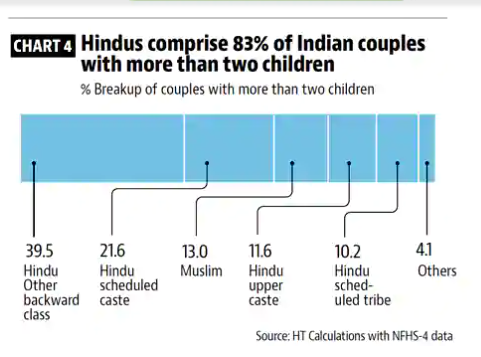 Hindus comprise 83% of Indian couples with more than two child children
 If one wants to, one can read a bit more about the Uttar Pradesh Population bill here. The sad part is that the systems which need fixing, nobody wants to fix. The reason being simple. If you get good health service by public sector, who will go to the private sector. In Europe, AFAIK they have the best medical bang for the money. Even the U.S. looks at Europe and hopes it had the systems that Europe has but that again is probably for another day.
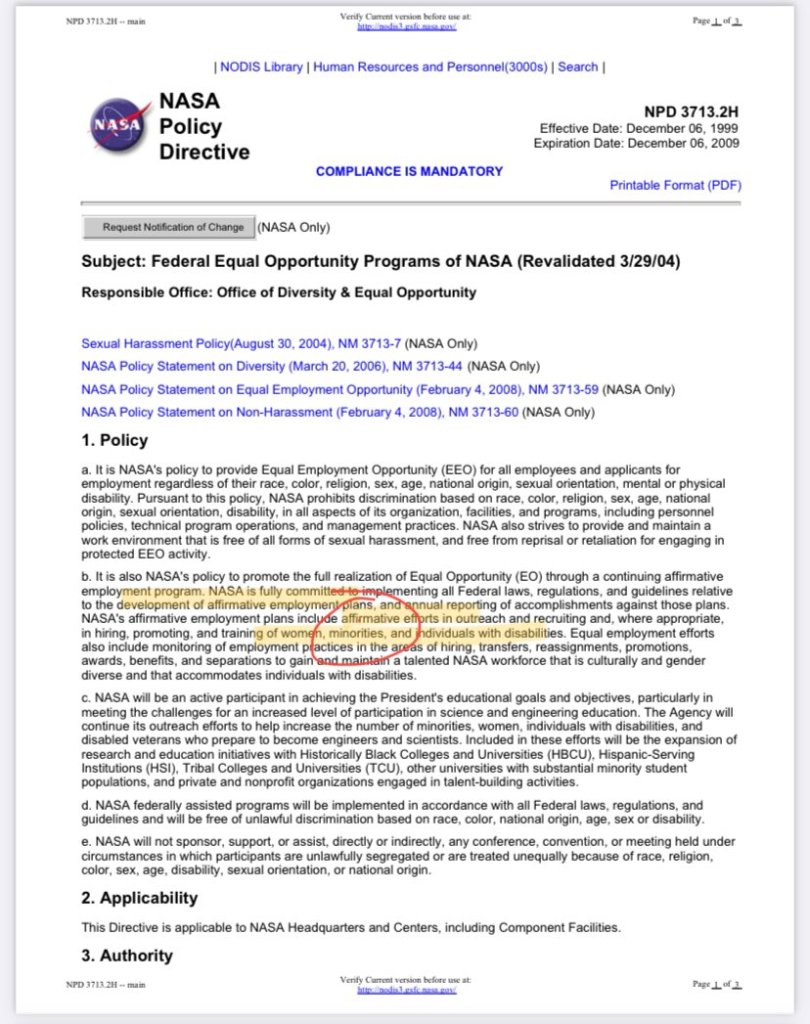 NASA Federal Equal Opportunity Policy Directive NPD 3713 2H
 Export incentive schemes being reduced
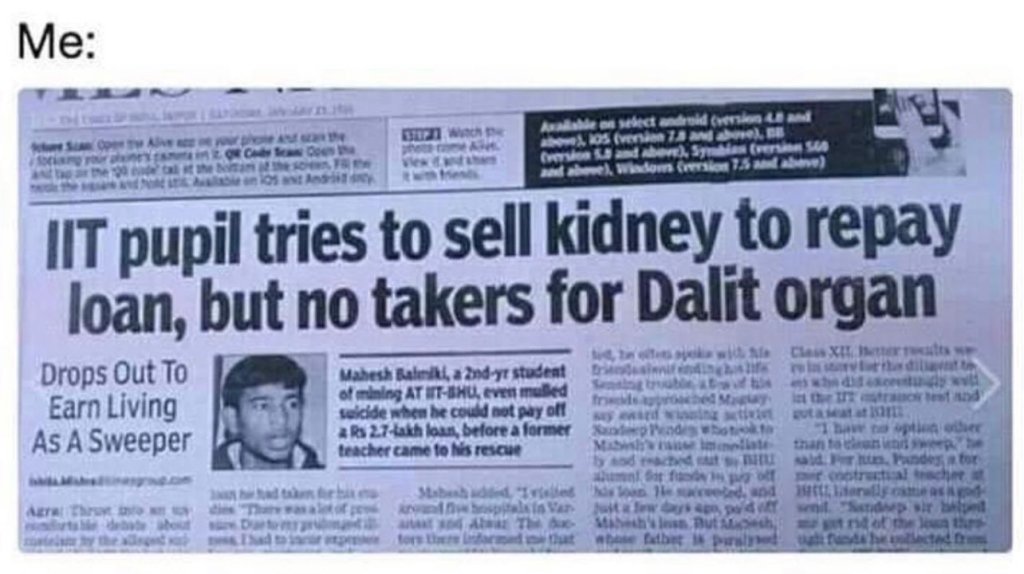 IIT pupil tries to sell kidney to repay loan, but no takers for Dalit organ.
 How are you meant to write about an unfinished emancipation? Bodies of Light is a 2014 book by Glasgow-born Sarah Moss on the stirrings of women's suffrage in an arty clique in nineteenth-century England. Set in the intellectually smoggy cities of Manchester and London, we follow the studious and intelligent Alethia 'Ally' Moberly, who is struggling to gain the acceptance of herself, her mother and the General Medical Council.
'Alethia' may be the Greek goddess of truth, but our Ally is really searching for wisdom. Her strengths are her patience and bookish learning, and she acquires Latin as soon as she learns male doctors will use it to keep women away from the operating theatre. In fact, Ally's acquisition of language becomes a recurring leitmotif: replaying a suggestive dream involving a love interest, for instance, Ally thinks of 'dark, tumbling dreams for which she has a perfectly adequate vocabulary'. There are very few moments of sensuality in the book, and pairing it with Ally's understated wit achieves a wonderful effect.
The amount we learn about a character is adapted for effect as well. There are few psychological insights about Ally's sister, for example, and she thus becomes a fey, mysterious and almost Pre-Raphaelite figure

 Although I'm about 5 months early and we're in the middle of a terrible heat
wave where I live, I've just finished building my new winter bicycle!
I've been riding all year round for about 8 years now and the winters in
Montreal are harsh enough that a second winter-ready bicycle is required to
have a fun and safe cold season.
I'm saying "new bicycle" because a few months ago I totaled the frame of my
previous winter bike. As you can see in the picture below (please disregard the
salt crust), I broke the seat tube at the lug.
I didn't notice it at first and while riding I kept hearing a "bang bang" sound
coming from the frame when going over bumps. To my horror, I eventually
realised the sound was coming from the seat tube hitting the bottom bracket
shell!
 I'm sad to see this
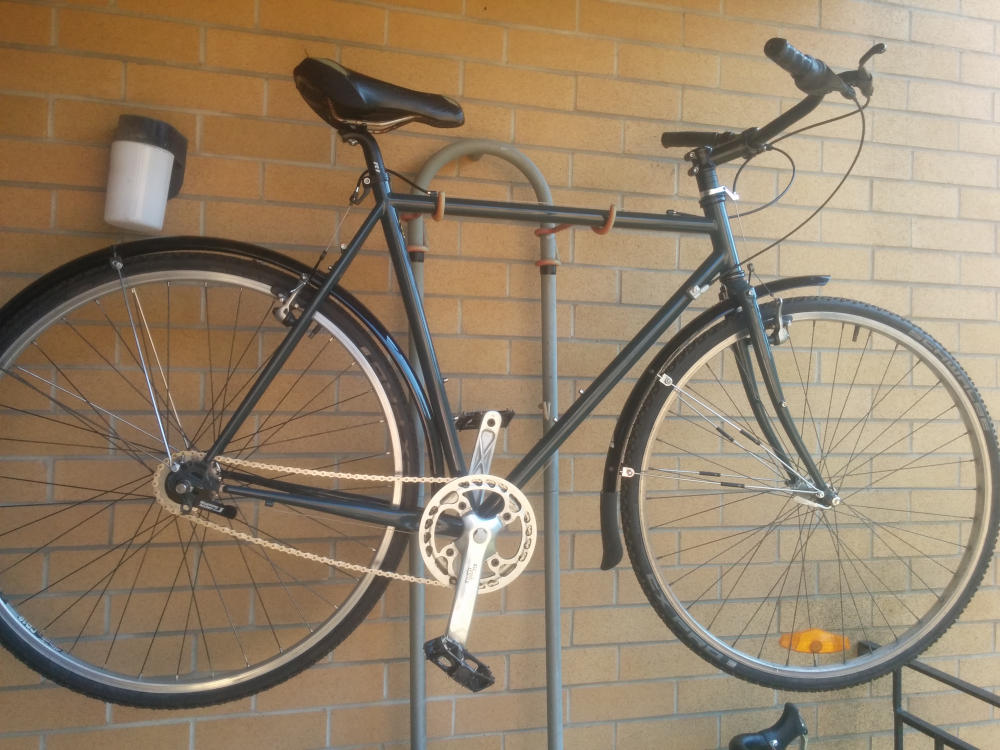 Summer has just started and I'm already looking forward to winter :)
 I even tried the same with xvkbd but no avail. I do use mate as my desktop-manager so maybe the instructions need some refinement ????
$ cat /etc/lightdm/lightdm-gtk-greeter.conf grep keyboard
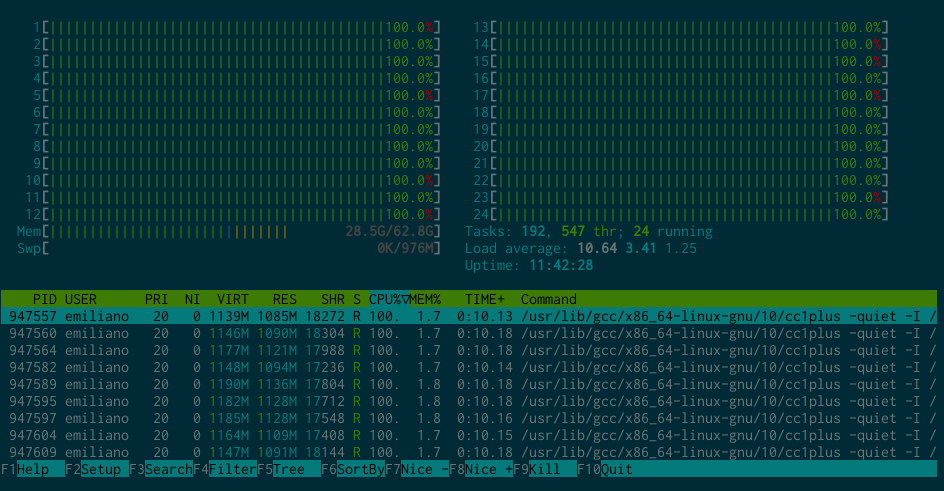


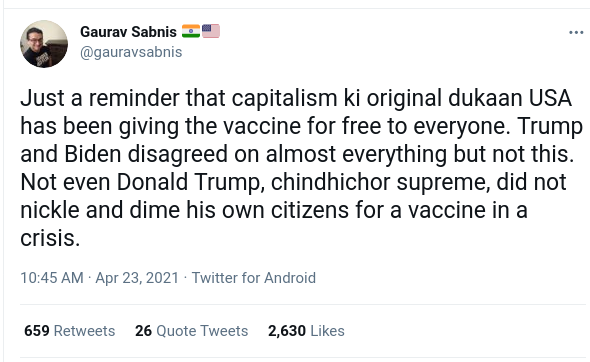
 Pappu Yadav, President Jan Adhikar Party, Bihar May 11, 2021


 The red commemorative plaque not only limits Orwell's tenure to the time he was permanently in the village, it omits all reference to his first wife, Eileen O'Shaughnessy, whom he married in the village church in 1936.
 Wallington's Manor Farm, the inspiration for the farm in Animal Farm. The lower sign enjoins the public to inform the police "if you see anyone on the [church] roof acting suspiciously". Non-UK-residents may be surprised to learn about the systematic theft of lead.

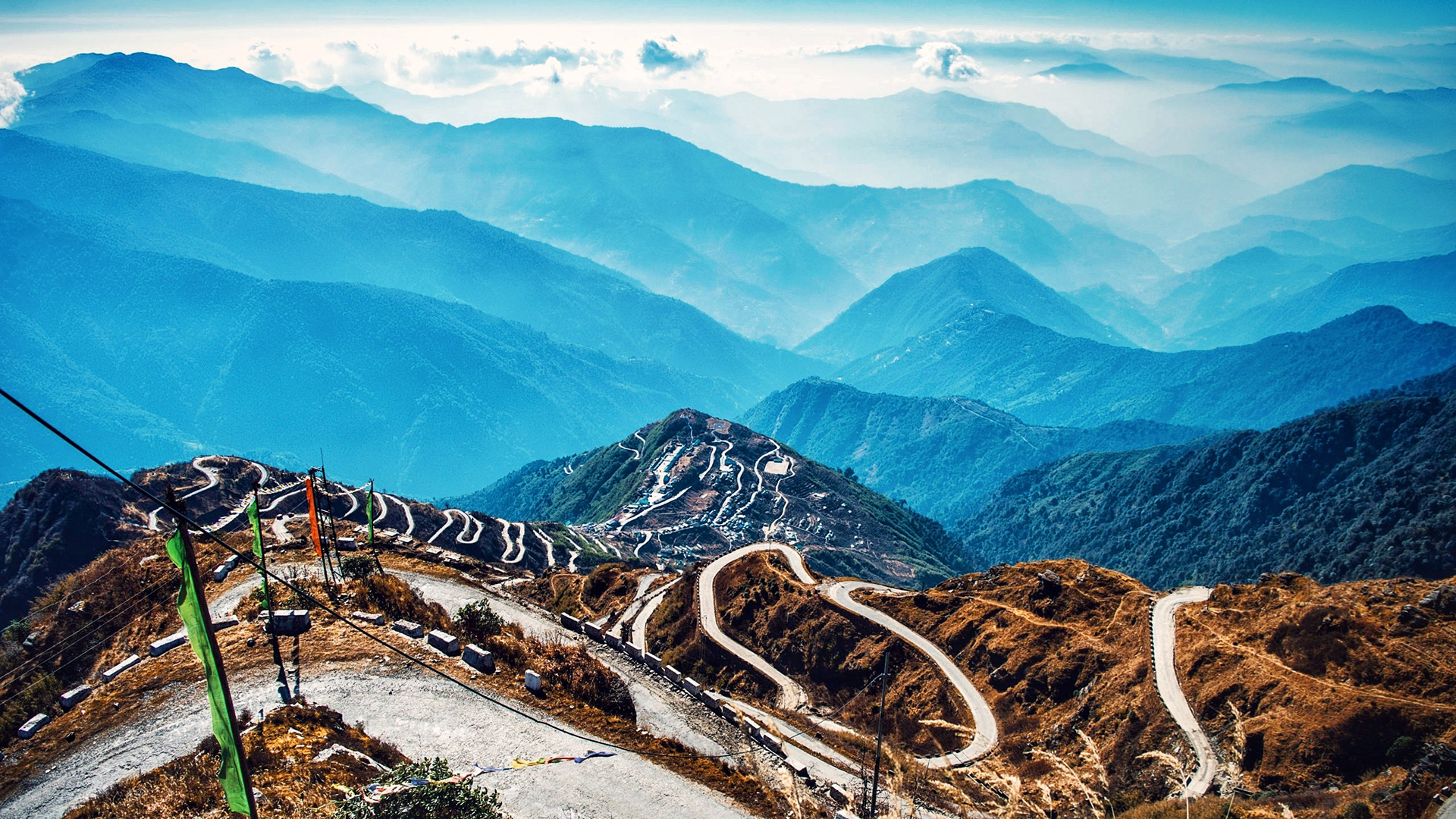
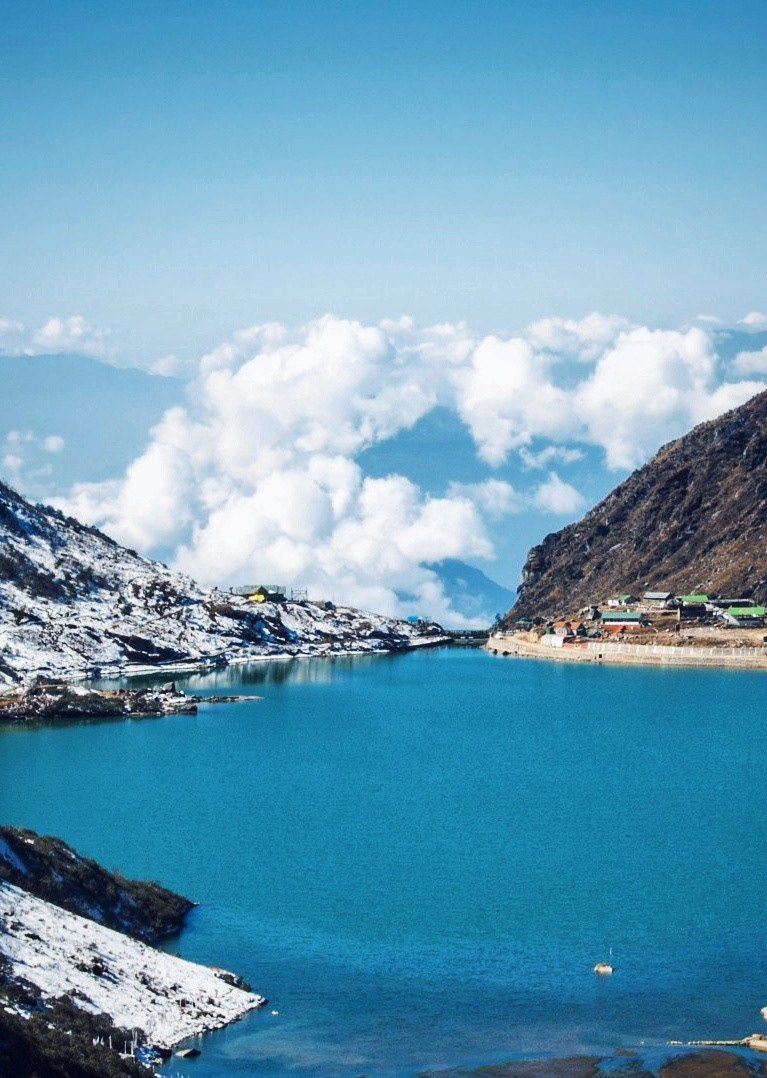
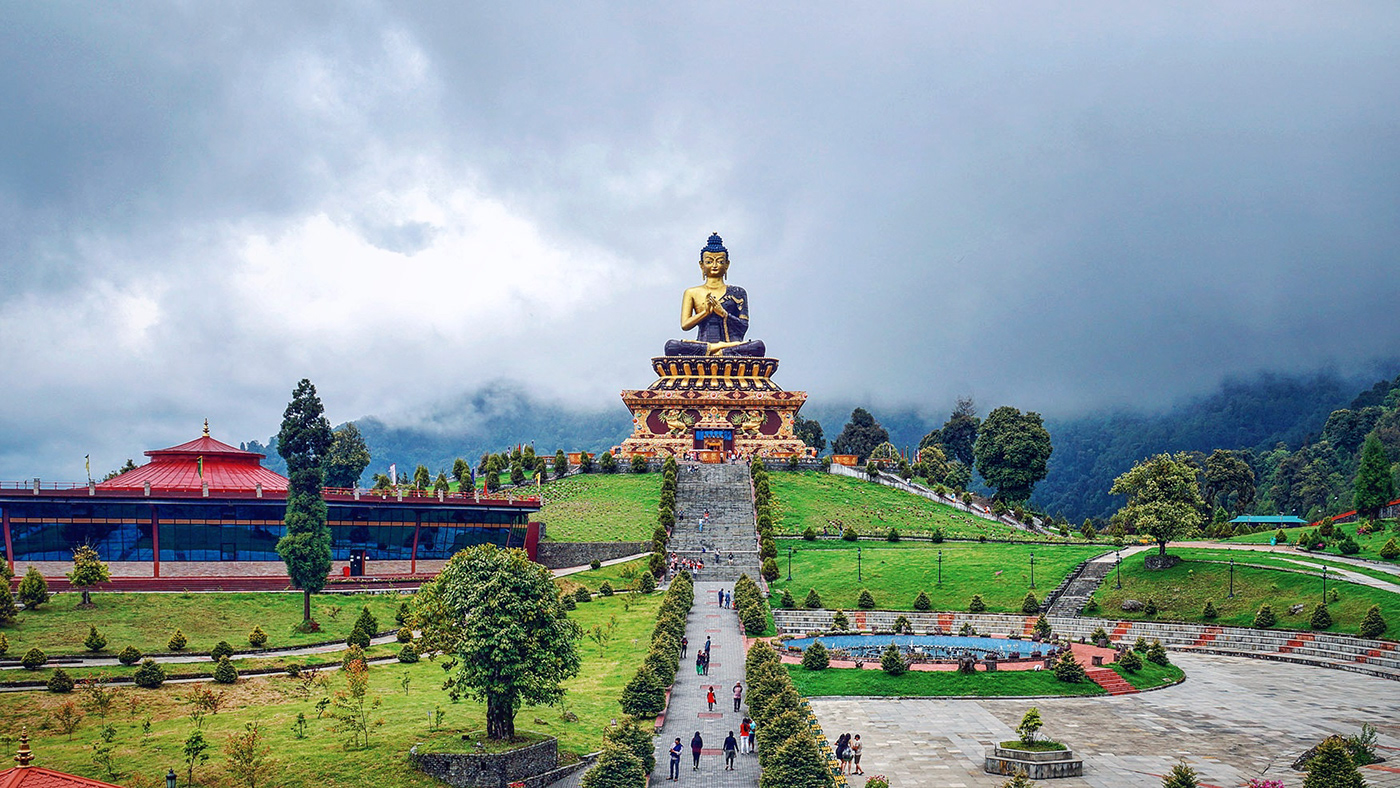


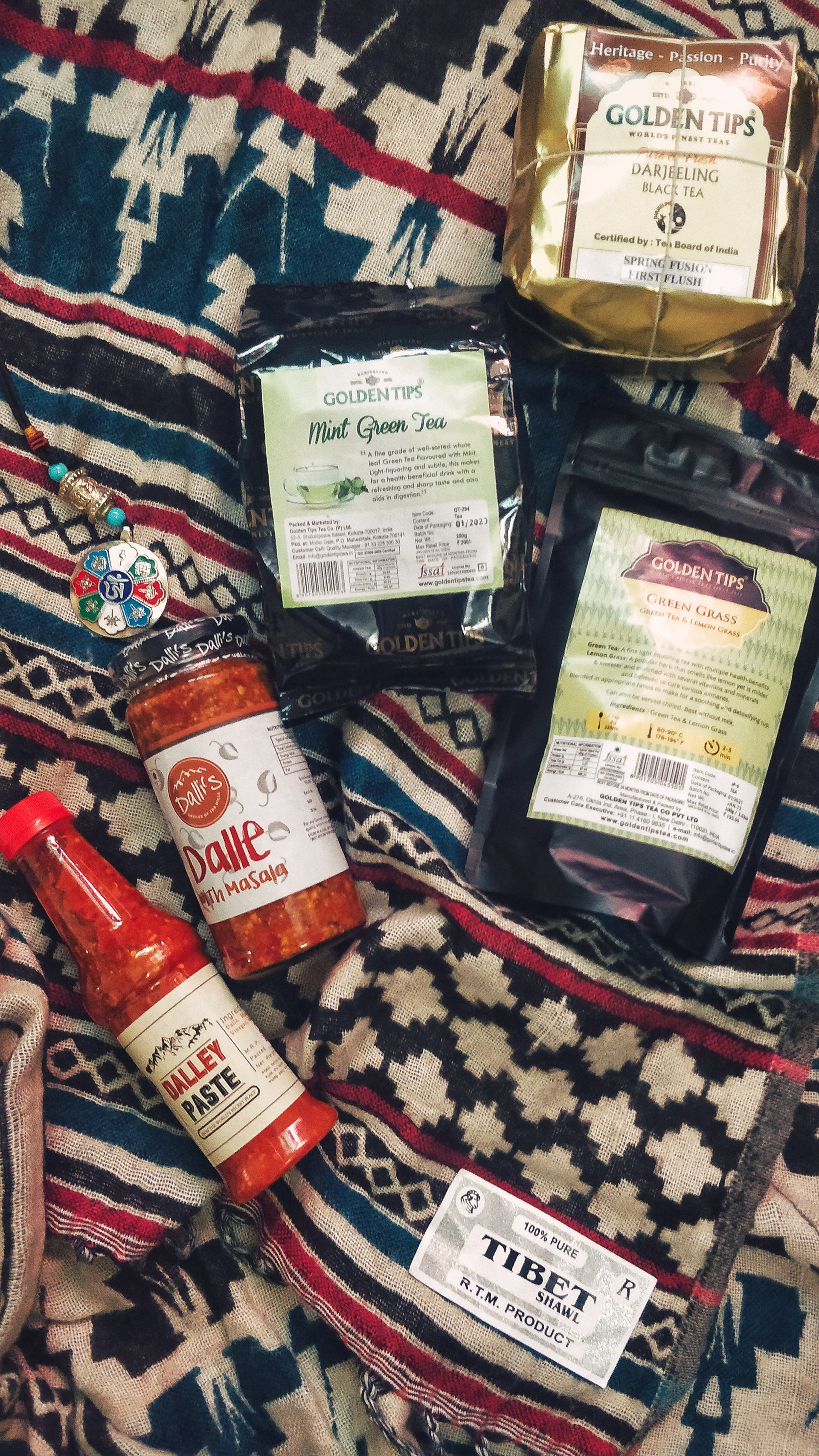




 We fixed a couple of
 Too much has been written, a war of support letters is going on, Debian is heading head first like Lemmings into the same war. And then, there is this by the first female President of the American Civil Liberties Union (ACLU):

