Search Results: "mak"

5 May 2026

Thorsten Alteholz: My Debian Activities in April 2026

Debian LTS/ELTS This was my hundred-forty-second month that I did some work for the Debian LTS initiative, started by Raphael Hertzog at Freexian. During my allocated time I uploaded or worked on: I also did a week of front desk duties and started to work on backports of the cups CVEs. Debian Printing This month I uploaded a new upstream versions: Unfortunately the first upload of cups introduces a regression and another upload was needed to take care of a crash. The patch for one CVE also broke a test script, which is used by lots of printing packages in Debian. As a result some autopkgtest runs failed. This could be fixed as well and the only remaining issue that needs some more investigation is related to cups-pdf. This work is generously funded by Freexian! Debian Lomiri This month I continued to work on unifying packaging on Debian and Ubuntu. This makes it easier to work on those packages independent of the used platform. I also started working on two new packages: lomiri-radio-app and lomiri-fretboardtrainer-app This work is generously funded by Fre(i)e Software GmbH! Debian Astro This month I uploaded a new upstream version or a bugfix version of: Debian IoT This month I uploaded a new upstream version or a bugfix version of: Marcos Talau joined the Debian IoT group, welcome aboard. Debian Mobcom This month I uploaded a new upstream version or a bugfix version of: misc This month I uploaded a new upstream version or a bugfix version of:

4 May 2026

Russell Coker: Copy Fail on Debian and SE Linux

I have just learned of the Copy Fail kernel vulnerability [1] thanks to alexanderkjall@mastodon.social (who I have just followed on Mastodon and I recommend that you follow too). The question for me (after installing the patched kernel the systems of mine that are most exposed) is whether SE Linux would have stopped that. Basic Policy Analysis For the SE Linux policy analysis the alg_socket class is the one that is related to the exploit. So the following policy analysis command (run as non-root with policy copied to /tmp from a running system) shows what domains are allowed access on my current Debian development system:
$ sesearch -A -c alg_socket /tmp/policy.35 
allow NetworkManager_t NetworkManager_t:alg_socket   accept bind create read setopt write  ;
allow bluetooth_t bluetooth_t:alg_socket   accept append bind connect create getattr getopt ioctl listen read setattr setopt shutdown write  ;
allow daemon init_t:alg_socket   getattr getopt ioctl read setopt write  ;
allow devicekit_disk_t domain:alg_socket getattr;
allow lvm_t lvm_t:alg_socket   append bind connect create getattr getopt ioctl read setattr setopt shutdown write  ;
allow sosreport_t domain:alg_socket getattr;
allow sysadm_t domain:alg_socket getattr;
allow unconfined_domain_type domain:alg_socket   accept append bind connect create getattr getopt ioctl listen lock map name_bind read recvfrom relabelfrom relabelto sendto setattr setopt shutdown write  ;
The above is the same as on the Trixie release policy as these things aren t changed often. Below is from Debian/Bookworm which is the same apart from Bookworm not allowing lvm_t:
$ sesearch -A -c alg_socket /tmp/policy.33
allow NetworkManager_t NetworkManager_t:alg_socket   accept bind create read setopt write  ;
allow bluetooth_t bluetooth_t:alg_socket   accept append bind connect create getattr getopt ioctl listen read setattr setopt shutdown write  ;
allow daemon init_t:alg_socket   getattr getopt ioctl read setopt write  ;
allow devicekit_disk_t domain:alg_socket getattr;
allow sosreport_t domain:alg_socket getattr;
allow sysadm_t domain:alg_socket getattr;
allow unconfined_domain_type domain:alg_socket   accept append bind connect create getattr getopt ioctl listen lock map name_bind read recvfrom relabelfrom relabelto sendto setattr setopt shutdown write  ;
I checked every Debian policy back to when the alg_socket class was first added and found that the older versions had fewer domains granted access. The most recently added was bluetooth_t and the one before that was NetworkManager_t. The Risky Lines Of those allow statements the following are the risks: Unconfined Domains and the unconfined_domain_type Attribute When writing policy lines like the following line aren t generally considered a problem as unconfined domains are allowed full access to the system. However it can be an issue if you have a process in an unconfined domain without root access, which means a regular user login. Unfortunately this happens to be where this exploit and the default Debian SE Linux configuration intersect.
allow unconfined_domain_type domain:alg_socket   accept append bind connect create getattr getopt ioctl listen lock map name_bind read recvfrom relabelfrom relabelto sendto setattr setopt shutdown write  ;
The following shell code gets a list of unconfined domains which can be entered from user domains.
A=""
for n in $(seinfo -x -a unconfined_domain_type grep _t$) ; do
  A="$A ($n)"
done
A=$(echo $A sed -e s/^.//)
sesearch -T -s user_application_exec_domain -c process egrep "$A;"
Below is the output on a Debian/Trixie (Stable) system. So a confined user in the user_t domain could run an X server and try and get it to run the exploit code (which seems difficult) or running a Wine or Mono program from the Window manager in a Wayland environment.
type_transition user_t xserver_exec_t:process xserver_t;
type_transition user_wm_t mono_exec_t:process mono_t;
type_transition user_wm_t wine_exec_t:process wine_t;
type_transition user_wm_t xserver_exec_t:process xserver_t;
The issue of unconfined domains in SE Linux policy needs much more work. I ll write some blog posts about it later and the next release of Debian will be significantly better in this regard. Daemons that Have Access
allow NetworkManager_t NetworkManager_t:alg_socket   accept bind create read setopt write  ;
allow bluetooth_t bluetooth_t:alg_socket   accept append bind connect create getattr getopt ioctl listen read setattr setopt shutdown write  ;
Network Manager is something that can potentially be exploited by a desktop user as it has a large attack surface for the desktop interface. But as the vast majority of desktop user accounts are unconfined that s not an issue. This might be an issue for some restricted desktop PCs, maybe kiosk systems and those PCs that were being installed in prisons. The bluetooth_t domain is used by the bluetooth daemon that runs as root. While we generally are less concerned about a root process being exploited the daemon will handle some data from hostile sources and it could be used as an escalation attack by someone with a hostile Bluetooth device. These can t be exploited without another bug. The Lines that Aren t Problems The getattr Lines
allow devicekit_disk_t domain:alg_socket getattr;
allow sosreport_t domain:alg_socket getattr;
allow sysadm_t domain:alg_socket getattr;
The above getattr access isn t an issue as it just allows seeing process information, and it s also by privileged domains. The init_t Sockets
allow daemon init_t:alg_socket   getattr getopt ioctl read setopt write  ;
The daemon access to sockets inherited from init_t probably isn t a great idea, it s from the following section in init.te which is to allow socket activation for daemons, the comment is concerning in this context. Also socket_class_set is overly broad as without even inspecting the systemd source code I m pretty sure that far fewer than 1/3 of the 55 classes allowed by that rule are actually supported in systemd.
ifdef( init_systemd', 
        # Until systemd is fixed
        allow daemon init_t:socket_class_set   getattr getopt ioctl read setopt write  ;
But that s not really a problem as systemd has to just not create a socket of that type, if a hostile party can make systemd create such sockets then you have probably already lost. SE Linux Protection Overall SE Linux systems running confined users (kiosks and other confined GUI environments) will be protected barring a bug in Network Manager or the Bluetooth daemon as long as there is no Xserver installed (or the X server won t run scripts on startup), no Wine system installed, and no Mono. SE Linux servers and VMs will be protected against daemon issues as long as the daemon isn t unconfined. To convert the default login to user_t run the following commands:
semanage login -m -s user_u -r s0 __default__
restorecon -R -v -F /home
But it is still possible to access an unconfined domain from user_t (a topic I will address in detail in a future blog post). To remove unconfined entirely (not a task for novices or something to be done on in production without testing and planning) run the following commands:
semanage login -m -s root -r s0 root
# logout and login again
semodule -X 100 -r unconfined
Then a Debian/Trixie system running SE Linux will be safe against this attack even when running a vulnerable kernel. If you still want to use root as unconfined_t but still have untrusted shell users then run the following command to remove the easiest ways for users to run a program in an unconfined domain:
semodule -X 100 -r mono wine
Success and Failure Blocked by SE Linux Below is what happens on stdout/stderr when SE Linux blocks the exploit (tested with vulnerable Debian kernel 6.12.74+deb13+1-amd64):
test@testing1:~$ python3 ./copy_fail_exp.py 
Traceback (most recent call last):
  File "/home/test/./copy_fail_exp.py", line 9, in <module>
    while i<len(e):c(f,i,e[i:i+4]);i+=4
                   ~^^^^^^^^^^^^^^
  File "/home/test/./copy_fail_exp.py", line 5, in c
    a=s.socket(38,5,0);a.bind(("aead","authencesn(hmac(sha256),cbc(aes))"));h=279;v=a.setsockopt;v(h,1,d('0800010000000010'+'0'*64));v(h,5,None,4);u,_=a.accept();o=t+4;i=d('00');u.sendmsg([b"A"*4+c],[(h,3,i*4),(h,2,b'\x10'+i*19),(h,4,b'\x08'+i*3),],32768);r,w=g.pipe();n=g.splice;n(f,w,o,offset_src=0);n(r,u.fileno(),o)
  File "/usr/lib/python3.13/socket.py", line 233, in __init__
    _socket.socket.__init__(self, family, type, proto, fileno)
    ~~~~~~~~~~~~~~~~~~~~~~~^^^^^^^^^^^^^^^^^^^^^^^^^^^^^^^^^^^PermissionError: [Errno 13] Permission denied
test@testing1:~$ su
Password:
When the attack is blocked by SE Linux there will be no messages in the kernel message log but the SE Linux audit log (typically stored in /var/log/audit/audit.log) will have lines like the following:
type=AVC msg=audit(1777803068.070:76): avc:  denied    create   for  pid=811 comm="python3" scontext=user_u:user_r:user_t:s0 tcontext=user_u:user_r:user_t:s0 tclass=alg_socket permissive=0
type=SYSCALL msg=audit(1777803068.070:76): arch=c000003e syscall=41 success=no exit=-13 a0=26 a1=80005 a2=0 a3=0 items=0 ppid=791 pid=811 auid=1000 uid=1000 gid=1000 euid=1000 suid=1000 fsuid=1000 egid=1000 sgid=1000 fsgid=1000 tty=pts0 ses=1 comm="python3" exe="/usr/bin/python3.13" subj=user_u:user_r:user_t:s0 key=(null)ARCH=x86_64 SYSCALL=socket AUID="test" UID="test" GID="test" EUID="test" SUID="test" FSUID="test" EGID="test" SGID="test" FSGID="test"
type=PROCTITLE msg=audit(1777803068.070:76): proctitle=707974686F6E33002E2F636F70795F6661696C5F6578702E7079
For that the :76 is the audit log entry number, the command ausearch -i -a 76 will interpret that message with the following output:
type=PROCTITLE msg=audit(05/03/26 10:11:08.070:76) : proctitle=python3 ./copy_fail_exp.py 
type=SYSCALL msg=audit(05/03/26 10:11:08.070:76) : arch=x86_64 syscall=socket success=no exit=EACCES(Permission denied) a0=alg a1=SOCK_SEQPACKET a2=ip a3=0x0 items=0 ppid=791 pid=811 auid=test uid=test gid=test euid=test suid=test fsuid=test egid=test sgid=test fsgid=test tty=pts0 ses=1 comm=python3 exe=/usr/bin/python3.13 subj=user_u:user_r:user_t:s0 key=(null) 
type=AVC msg=audit(05/03/26 10:11:08.070:76) : avc:  denied    create   for  pid=811 comm=python3 scontext=user_u:user_r:user_t:s0 tcontext=user_u:user_r:user_t:s0 tclass=alg_socket permissive=0 
When it Works Below is what happens when it works (again tested with Debian kernel 6.12.74+deb13+1-amd64):
test@testing1:~$ python3 ./copy_fail_exp.py 
# 
Here is the kernel log when the attack works:
[   30.441830] alg: No test for authencesn(hmac(sha256),cbc(aes)) (authencesn(hmac(sha256-avx2),cbc-aes-aesni))
[   30.447466] process 'su' launched '/bin/sh' with NULL argv: empty string added
When the Kernel Isn t Vulnerable If the kernel isn t vulnerable and SE Linux permits the attack (EG run from an unconfined domain) the following is seen on stdout/stderr:
$ python3 ./copy_fail_exp.py 
Password: 
su: Authentication failure
In that situation the kernel will log something like the following:
[   36.647023] alg: No test for authencesn(hmac(sha256),cbc(aes)) (authencesn(hmac-sha256-lib,cbc-aes-aesni))
This was tested on the Debian/Unstable kernel 6.19.13+deb14-amd64. Conclusion Run the following commands and then force all users to logout to make a Debian SE Linux system offering shell access reasonably safe against this bug. But also upgrade your kernel as soon as convenient because having multiple layers of protection is always good.
semanage login -m -s user_u -r s0 __default__
restorecon -R -v -F /home
semodule -X 100 -r mono wine
The GrapheneOS people are doing really good work on securing phones, I am most interested in Mobian (Debian on phones) but for people who have made different choices GrapheneOS is a good option. Here is the GrapheneOS statement on Copy Fail (they are not vulnerable to it) [3]. For people interested in running a secure Android build GrapheneOS is the best option. Their supported devices list shows Pixel 6 to Pixel 10 supported and Pixel 8 to Pixel 10a recommended [4]. In Australia Kogan sells refurbished Pixel 6 phones starting at $251 including delivery and refurbished Pixel 8 phones starting at $499 with First membership, they seem to have the cheapest Pixel phones. I want to make Debian more like Android in terms of security, but that s a topic for other blog posts. Here is the Debian page listing kernels that have been fixed against this exploit [5].

Russ Allbery: Review: Full Speed to a Crash Landing

Review: Full Speed to a Crash Landing, by Beth Revis
Series: Chaotic Orbits #1
Publisher: DAW
Copyright: August 2024
ISBN: 0-7564-1947-6
Format: Kindle
Pages: 153
Full Speed to a Crash Landing is a science fiction novella and the first of a series. Beth Revis made the New York Times bestseller list for an earlier series of young adult science fiction novels, but somehow I had not heard of her before this series. Ada Lamarr is a salvager. She picks up material from crashed or dead ships for resale. As the story opens, she has a large hole in the side of her ship, she's running out of oxygen, and the other ship nearby is refusing to answer her distress call. By the time they finally respond, there is barely enough time to get aboard before she is entirely out of air. Ada's first-person narration drops hints that she may not be entirely what she seems. But then, neither is the Halifax, so it's only fair. The captain of the Halifax treats Ada with a great deal of suspicion and wants her out of the way of their ongoing salvage operation. However, the captain does not appear to be entirely in charge. Ada is immediately struck by the mysterious Rian White, who seems to have some authority over their mission and is more thoughtful and calculating than the rest of the crew. He's also handsome, which doesn't hurt. I was tempted to keep writing about the plot, but given the short length of this book, I should stop there and let you enjoy the twists and turns for yourself. This is a fun science fiction action romp: lots of banter, lots of tense moments, and a cagey first-person protagonist with an irrepressible sense of humor and a knack for brazening her way through conversations. It's not long on world-building (there isn't enough room), but Revis works in enough details to be intriguing and to set up some interesting motivations. This is the sort of book that lives and dies by how much you like the protagonist, something that you will easily figure out by the end of an ebook sample if you're the sort of reader who uses those. Ada is irreverent, talkative, and very adroit at diverting attention (entertainingly) onto anything other than the critical piece of information other people are missing. If you want to, I suspect you could easily figure out most of what Ada is up to before the book reveals it explicitly. It's not that complicated, and the book isn't really trying to hide, although it doesn't give you all the necessary information in advance. Personally, I was happy to sit back and enjoy the ride. There is no romance in this book beyond frequent comments from Ada that she would have liked there to be a romance in this book under different circumstances, but I will be surprised if that romance doesn't show up later in the series. Ada and Rian are clearly being set up as a pair. I didn't like Rian as much, mostly because he's less memorable as a character, but he comes into his own in the appendices after the plot proper. I thought those concluding appendices were the best part of the novella and question the Kindle formatting decision to treat them like supplemental material. They purport to be a series of government memos, fill in a lot more of the backstory and world building, and have the best footnotes. Don't skip them! This isn't the sort of book that I am inspired to immediately push into everyone's hands, but it's a fast, well-paced story that delivered a few reading sessions of entertainment. I'm not sure the political philosophy in the background makes a lot of sense, but at least not a standard stereotype of current politics seen in so much science fiction. It's going to set up some interesting character conflict in later books. I'm certainly intrigued enough to keep reading. Recommended when you're in the mood for some fast-paced fun that's short and undemanding. Followed by How to Steal a Galaxy. Rating: 7 out of 10

3 May 2026

Jelmer Vernoo : Inquest, a test result repository in Rust

testrepository For a long time I ve used Robert Collins testrepository (testr) to run tests in many of the projects I work on. It s a small, focused tool built around a simple idea: decouple the running of tests from the recording and querying of their results. The way it works is straightforward. A test runner emits a subunit stream a compact binary protocol for test results and testrepository stores those streams in a per-project .testrepository/ directory. Once results are in the repository, you can ask questions like which tests failed in the last run? , re-run only the failures , what are the slowest tests? , or what changed between this run and the previous one? . The killer feature, for me, has always been the failing-test loop. When a big test suite breaks, you don t want to re-run the whole thing after every fix you want to iterate on just the failures, and only re-run the full suite once they re all green. testrepository made that workflow ergonomic long before most language-specific test runners had anything comparable, and many of them still don t have a good answer for it. testrepository has served me well for over a decade, but it has been largely unmaintained for a while, and I had some ideas of improvements that I wanted to try out. So I wrote a Rust port, which has since grown a number of features of its own.
Inquest Inquest is a Rust port of testrepository that has since grown a number of features of its own. The binary is called inq.
Goals The goals are deliberately modest:
  • a single static binary, no Python runtime required
  • no need to write a dedicated config file for most projects
  • compatible enough with testrepository s workflow that I can switch projects over without retraining my fingers
  • a richer on-disk format that captures more about each run (git commit, command line, duration, exit code, concurrency)
  • good support for the languages I actually use day-to-day: Rust, Python, Go, and Node.js
  • mostly Do What I Mean (DWIM), e.g. getting me to know as quickly as possible what tests are failing and why, and being clever about doing this
Inquest reads and writes subunit v2 streams, so anything that can produce subunit (directly or via one of the many converters) can feed into it.
Quick start Inquest can usually figure out how to run your tests on its own. In a Rust, Python, Go or Node.js project:
 $ cd my-project
 $ inq
Or if the auto-detection doesn t work, you can ask it to generate a config file and then run the tests:
 $ inq auto
 $ inq run
inq auto writes an inquest.toml describing how to invoke the test runner; inq run runs the tests, captures the subunit stream, and stores the results in a .inquest/ directory. For a Rust project the generated config looks like:
 test_command = "cargo subunit $IDOPTION"
 test_id_option = "--test $IDFILE"
 test_list_option = "--list"
After the first run, the usual queries work:
 $ inq stats             # repository-wide statistics
 $ inq last              # results of the most recent run
 $ inq failing           # only the failing tests
 $ inq slowest           # the slowest tests in the last run
 $ inq run --failing     # re-run only what failed last time
The last one is the workflow I use most often: run the full suite once, fix the obvious failures, then iterate on inq run --failing until the list is empty.
A few things that aren t in testrepository Some of the features that have grown in inquest beyond the original testrepository functionality:
  • Timeouts. --test-timeout, --max-duration, and --no-output-timeout will kill a test process that is hanging or has stopped producing output. --test-timeout auto derives a per-test timeout from the historical duration of that test, which is handy for catching tests that hang. Once the test runner is killed, the test is marked as failed and the next test is started, so a broken test doesn t hold up the whole suite.

  • Ordering --order can be used to run tests in a specific order, e.g. to run the slowest tests first, to run the tests that failed most recently first, or to run the widest variety of tests first to maximize the chance of finding a failure early on.

  • Live progress. inq running tails the in-progress subunit stream on disk and reports observed/expected test counts, percent complete, elapsed wall-clock time, and an ETA derived from each test s historical duration. Useful when a CI run is taking longer than you d like.

  • Flakiness ranking. inq flaky ranks tests by pass fail transitions in consecutive runs in which the test was recorded, so chronically broken tests rank low and genuinely flapping tests rank high.

  • Comparing runs. inq diff <A> <B> shows what changed between two test runs newly failing, newly passing, and tests that flipped state which makes it easy to see whether your last change actually fixed (or broke) anything.

  • Bisecting git history. inq bisect <TEST> drives git bisect to find the commit that broke a given test. It defaults the known-good and known-bad commits from the recorded run history (the most recent run where the test passed, and the most recent where it failed), so in the common case there is no need to remember either just point it at the test name and let it work.

  • Richer run metadata. inq info shows the git commit, command line, duration, exit code, and concurrency for a run, with a flag for whether the working tree was dirty when the run started. Combined with inq diff this makes it much easier to triangulate when a regression was introduced.

  • Rerun a previous run verbatim. inq rerun <ID> re-runs exactly the tests of a previous run, in the same order, forwarding the same -- arguments that the original run used. inq rerun -1 repeats the latest.

  • Web based view. inq web serves a web-based view of the repository, with a dashboard of recent runs and detailed views of individual runs and tests.

Web UI Most of the time I drive inquest from the command line, but for browsing historical results of a large suite spotting flapping tests, drilling into a single test s run history, or just getting a visual sense of which parts of the suite are hurting a web view is more pleasant. inq web starts a local server with exactly that:
 $ inq web
The repository overview shows totals and a per-test history grid where each cell is one run, coloured by outcome. Bands of red make it easy to pick out tests that have been broken for a long time, and isolated red cells in an otherwise green column point at flaky tests. Inquest web UI repository overview, with a grid of per-run results Drilling into an individual test gives you its full run history, a duration sparkline, and per-run pass/fail status: Inquest web UI per-test view with run history and duration sparkline
Migrating from testrepository If you already have a .testrepository/ directory full of historical runs, inq upgrade will migrate it into the new .inquest/ format, with a progress bar for the impatient. The legacy .testr.conf (INI) format is still understood, so existing projects don t have to be converted to inquest.toml immediately though the TOML format is preferred for new projects.
Trying it The source is on GitHub at jelmer/inquest. To install from source:
 $ cargo install inquest
In a project with a Rust, Python, Go or Node.js test suite:
 $ inq
Bug reports and patches are welcome.

Birger Schacht: Status update, February - April 2026

Due to health reasons I did not have the energy to write individual status updates for February & March, so I ll just combine them with the April update: In February I cleaned out my GitHub account and moved all remaining projects to Codeberg. I archived the repositories on GitHub and added links to the new repositories on Codeberg. GitHub is a platform that is more and more frustrating to use. I still have to use it for my dayjob, though. The number of pull requests and issues that are written either by bots or by users that use bots increased in the last two years. Combined with that, GitHub provides a very low barrier for entitled users who do not want to contribute to a productive environment. GitHub now feels like the Twitter/X of git forges. Codeberg on the other hand is a community project. I feel a lot more at home there and the platform itself feels a lot more responsive than GitHub.

Debian Related Work
  • Uploaded wayback 0.3-1 to experimental
  • Uploaded slurp 1.6.0-1 to unstable
  • Uploaded first a prerelease of sway to experimental to be able to test wlroots 0.20.0 and then uploaded rc1, rc2 and rc3 of the upcoming 1.12 release
  • Uploaded waybar 0.15.0-1 to unstable
  • Uploaded kanshi 1.9.0-1 to unstable, which was possible because the dependency libscfg finally went through NEW
  • Uploaded libscfg 0.2.0-1 to unstable
  • Uploaded swaybg 1.2.2-1 to unstable
  • Uploaded labwc 0.9.4-1, 0.9.5 & 0.9.6 to unstable
  • Fixed the packaging of vali and uploaded version 0.1.1-1 to unstable; then added vali to the build dependencies of kanshi and reuploaded 1.9.0-2 thereof
  • Uploaded swaylock 1.8.5-1 to unstable
  • Uploaded fcft 3.3.3-1 to unstable
  • Uploaded foot 1.26.1-1 to unstable
  • Uploaded swayimg 5.0-1 and 5.1-1 to unstable
  • Fixed some packaging metadata in libsfdo and uploaded 0.1.4-2 to unstable
  • Reverted the upload of slurp from 1.6.0-1 to 1.6.0really1.5.0-1 because the upstream release of 1.6.0 was made by mistake and yanked a week later. Maybe I should add a cooldown period before uploading new releases ;)
  • Uploaded mako-notifier 1.11.0-1 to unstable
  • Uploaded cage 0.3.0-1 to experimental which uses wlroots 0.20.0
  • Uploaded xdg-desktop-portal-wlr 0.8.2-1 to unstable
  • Voted

DH Related Work I took part in the DHD 2026 Conference in Vienna, including a hands-on workshop of the dhinfra project. I released 0.60.0, 0.61.0 and 0.62.0 of apis-core-rdf. We rewrote the configuration format for the importer. We previously used TOML files, but that does not give us inheritance. So we now use simply Python classes as configuration format. I implemented a new backend for our apis-bibsonomy Django package. The package is meant to provide a datamodel for storing reference data that links to Bibsonomy or Zotero. Given that we don t use Bibsonomy anymore we now dropped the Bibsonomy backend but added a Zotero backend that allows to cache the entries locally.

2 May 2026

Bits from Debian: Debian welcomes the 2026 GSoC interns

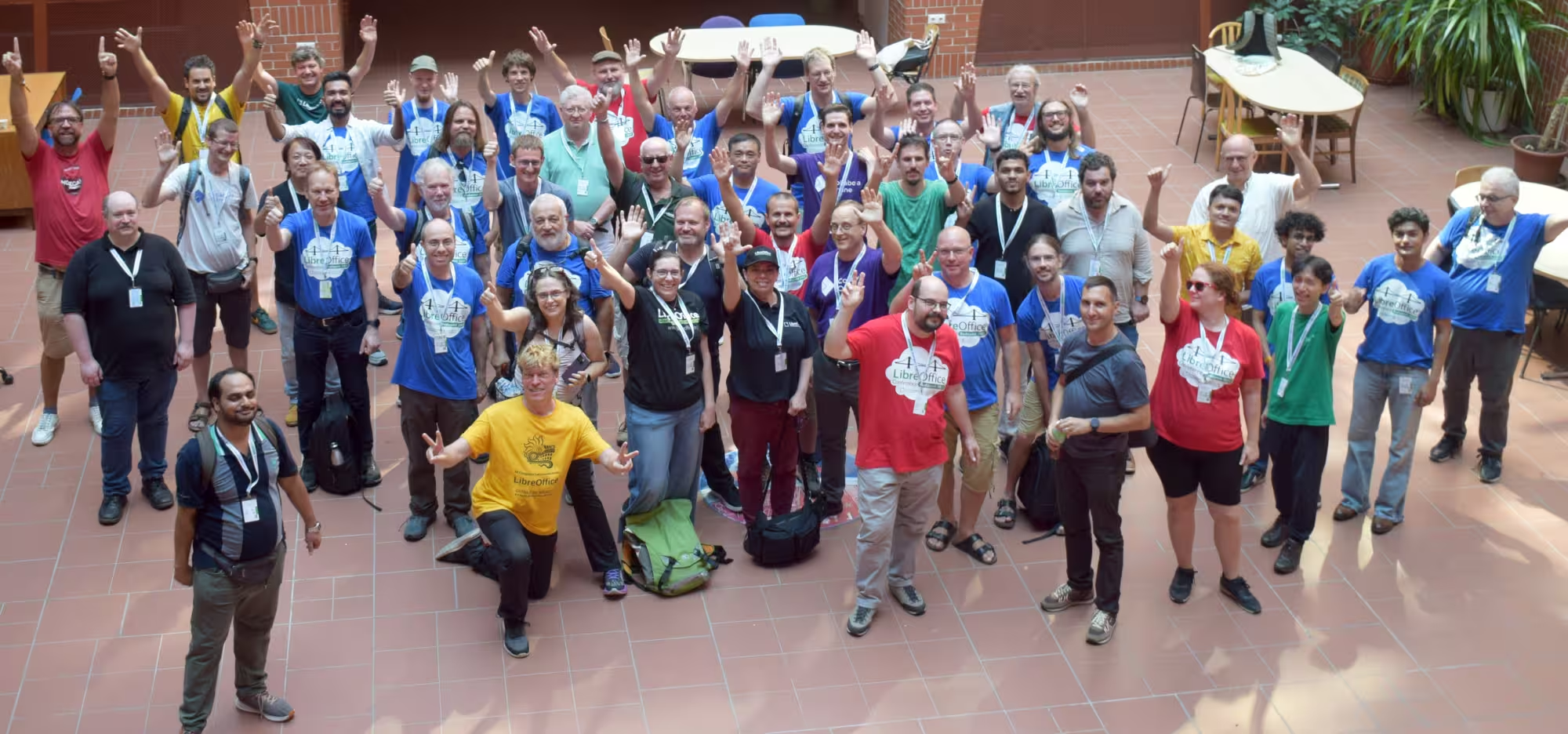
GSoC logo We are very excited to announce that Debian has been assigned seven contributors to work under mentorship on a variety of projects with us during the Google Summer of Code. Here is a list of the projects and contributors, along with details of the tasks to be performed.
Project: Automated Debian Packaging with debianize Deliverables of the project: Debianize is a tool that aims to automatically create debian packages from scratch from upstream source trees. As for the current version, it works for some of the packages but it is not reliable. This project aims at making it production ready such that it can work with most of the projects. Along with that improving its reliability, coverage, integration with the broader ecosystem and other enhancements.
Project: Linux Livepatching Deliverables of the project: Linux Kernel Livepatching is the process of replacing functions in the kernel code affected by CVEs with the patch-applied functions during system runtime. It's basically a method to apply security kernel patches to a running system.
Project: DebNet: Visualising the Bus Factor Graph Analysis of Debian's Infrastructure Deliverables of the project: DebNet models the Debian archive as a graph to identify critical packages maintained by too few people. Using data from the Ultimate Debian Database (UDD), it builds a package dependency graph and a maintainer-package graph to compute practical metrics like the Bus Factor, Fragility Score, and Dependency Impact for every source package.
Project: Attack of the Clones: Fight Back Using Code Duplication Detection From Security Patches Deliverables of the project: This project aims to detect vulnerable code clones in the Debian archive by automatically extracting signatures from security patches. Using a two-signal approach that separates vulnerable patterns from fix patterns, the system generates high-specificity queries to search the entire archive via Debian CodeSearch.
Project: Debusine: debuginfod server Deliverables of the project: This project implements a debuginfod-compatible server within Debusine to provide automated debug symbol resolution for Debian developers.
Project: Debian-LSP: Improve File Format Support Deliverables of the project: The Debian LSP Language Server currently provides only basic features field completion, parse-error diagnostics, and simple quick fixes leaving Debian maintainers without the rich IDE experience available in other ecosystems.
Project: Debusine: live log streaming Deliverables of the project: Debusine currently only shows task logs after a task has fully completed. This means developers working with long-running jobs (such as package builds or test pipelines) have no way to monitor progress in real time or catch failures early. This project adds live log streaming to Debusine.
Congratulations and welcome to all the contributors! The Google Summer of Code program is possible in Debian thanks to the efforts of Debian Developers and Debian Contributors that dedicate part of their free time to mentor contributors and outreach tasks. Join us and help extend Debian! You can follow the contributors' weekly reports on the debian-outreach mailing-list, chat with us on our IRC channel or reach out to the individual projects' team mailing lists.

30 April 2026

Russell Coker: Links April 2026

Charles Stross wrote an interesting blog post about the apparent desire of super rich people to kill the poor, it seems that the people in power want to make all the conspiracy theories come true [1]. Wouter wrote an insightful blog post about the need for free firmware [2]. Matthew Garrett wrote an interesting blog post about the potential security issues raised by non-free firmware and firmware updates [3]. Which goes well with Wouter s post. Interesting article about fake job adverts with a code sample for the applicant to show their skils which depends on hostile libraries that install a RAT [4]. Do we need Qubes for software development nowadays? Bruce Schneier wrote an insightful and informative article about the two-tiered Internet access scheme in Iran and how it is bad for society [5]. Caleb Hearth gave an interesting talk Don t Get Distracted about the often ignored unethical uses of software [6]. Techdirt has an insightful article from 2025 Fascism For First Time Founders about why it s a bad idea for tech companies to support fascism, this aged very well [7]. Dr. Bret C. Devereaux wrote an informative blog post about why fascists always fail at war, and also authoritarians in general [8]. Bruce Schneier and Nathan Sanders wrote an interesting blog post about the new Japanese political party Team Mirai, we need this sort of party in every country to save democracy [9]. Sam Varghese wrote an insightful article about the current situation in Israel and Iran and the poor performance of Australian journalists in covering the issues [10]. Louis Rossman made a video about the Norwegian Consumer Council s advertising campaign about Enshittification, he includes an excellent advert that the Norwegians produced [11]. Marga Manterola gave a really good talk at Fosdem 2026 Free as in Burned Out: Who Really Pays for Open Source? [12].

Sergio Cipriano: How to build reverse dependencies using Salsa CI

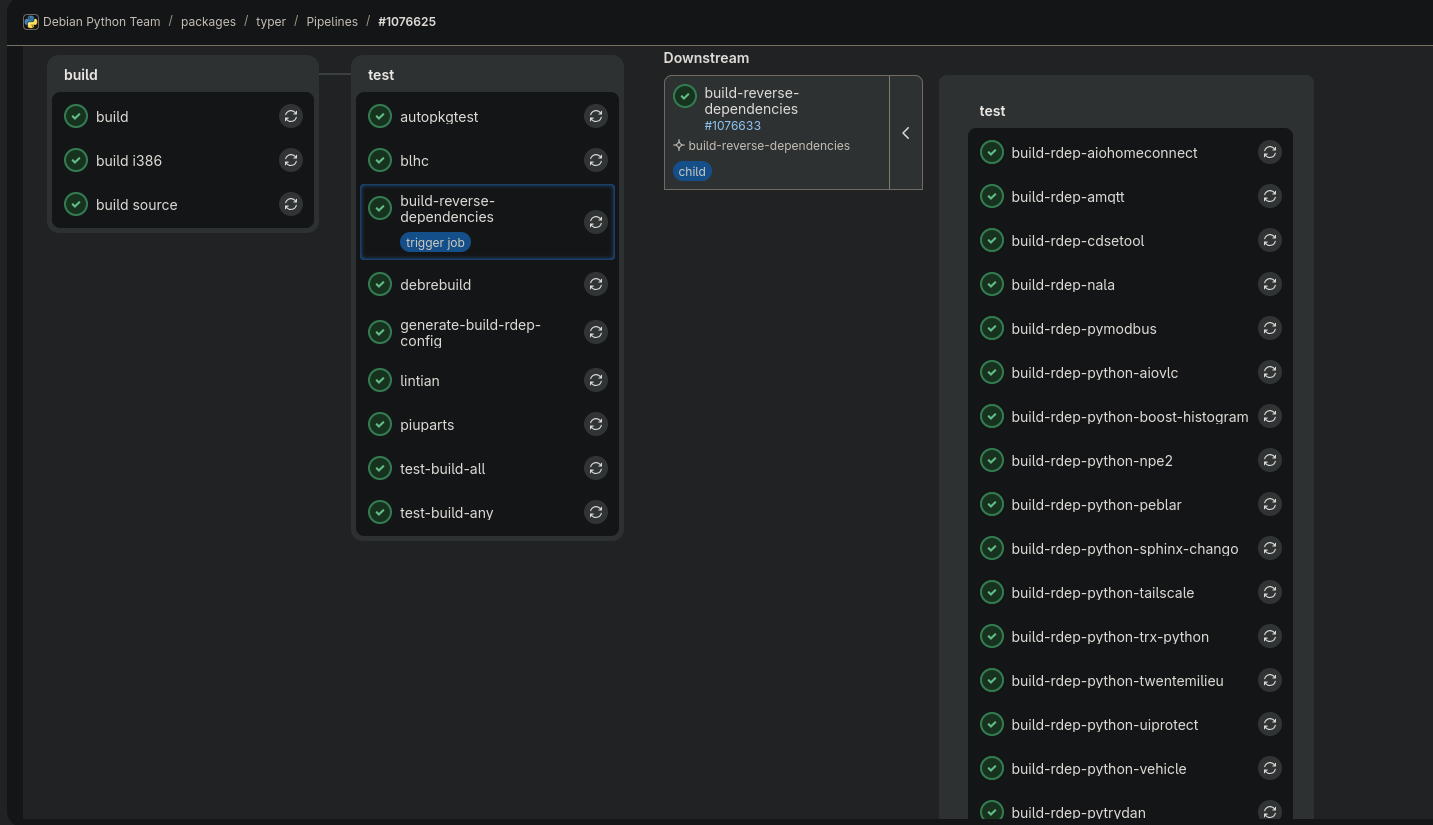
How to build reverse dependencies using Salsa CI Last week, I attended MiniDebConf Campinas, and one of my favorites talks was "Salsa CI, showing features that almost nobody knows" by Aquila Macedo. One of the things I learned is that we can easily build reverse dependencies using:
$ git push -o ci.variable="SALSA_CI_DISABLE_BUILD_REVERSE_DEPENDENCIES=0"
I tried this option before uploading typer version 0.20.0-1: example of salsa ci build rdeps working This is an amazing feature. Thanks to everyone involved in making it happen!

Otto Kek l inen: Mentoring Mondays for aspiring Debian contributors

Featured image of post Mentoring Mondays for aspiring Debian contributorsI mentor several people in Debian, and have been repeatedly asked to offer an opportunity to ask questions on a live call. I have now started a recurring video call for exactly that, which I call Mentoring Mondays, and it is open for anyone aspiring to contribute to Debian, one of the oldest and most widely used Linux distributions. Mentoring Mondays have already been happening for the past few Mondays, and this week we had a record 20 people on the call. During the calls so far we have had a demo of updating a package for a new upstream release using gbp, and of how to create a Merge Request on Salsa for a new upstream version. There is clearly a need for this, so I am announcing this now also on my blog, just as I have publicly announced that I offer mentoring for aspiring Debian contributors.
What is Mentoring Mondays? Mentoring Mondays is a recurring video call that lasts roughly 45 minutes with the agenda:
  • Weekly walk-through: demo of something in Debian packaging, explaining the what and why
  • Discussion on pros and cons to help participants develop their judgment
  • Questions & answers on Debian packaging, or open source contributing in general
This is ideal for you if you:
  • Have built a .deb package at least once and want to do it better
  • Are stuck on a specific Debian packaging bug and need guidance
  • Want to understand how Debian Developers actually work day-to-day
The call is mainly intended for those who want to contribute to Debian (or Debian derivatives, with Ubuntu being the most popular), but anyone can join to learn about things related to contributing to a Linux distribution. Please note that video chat uses Debian Social Jitsi. Joining the call requires authentication using a Salsa account, which anyone contributing to Debian should have anyway. Calls are not recorded, so participants can chat freely, and are also encouraged to be on-camera for an enhanced sense of community.

Next call: Monday May 4th, 2026 Make sure you are logged into Salsa first, before opening the call on Debian s Jitsi instance.

Matrix channel and future meeting time announcements Please join the Matrix channel #mentoringmondays:matrix.debian.social if you plan to attend Mentoring Mondays. All future meeting times will be announced there. It is also the channel to post questions about Debian packaging to be answered during the call. The current meeting time is friendly to people in Europe, Asia and Australian time zones, and will repeat at the same time slot on:
  • May 11th, 2026 at 12:30 UTC
  • May 18th, 2026 at 12:30 UTC
  • May 25th, 2026 at 12:30 UTC
  • June 1st, 2026 at 12:30 UTC
  • June 8th, 2026 at 12:30 UTC
Starting in mid-June the meeting time will change to accommodate participation in different time zones.

Spread the word Feel free to extend the invite to anyone you think might be interested in joining! If you mention this on social media, please post using tag #mentoringmondays, or simply boost the existing posts on the social media of your preference: Mastodon, Lemmy, Reddit, Bluesky, LinkedIn, Farcaster, X.

Thanks A big thanks to Jason Kregting for helping organize. I would also like to thank in advance all the Debian Developers who are able to join the call and be available to participate in discussions and help answer questions.

28 April 2026

Ravi Dwivedi: A day in Vienna

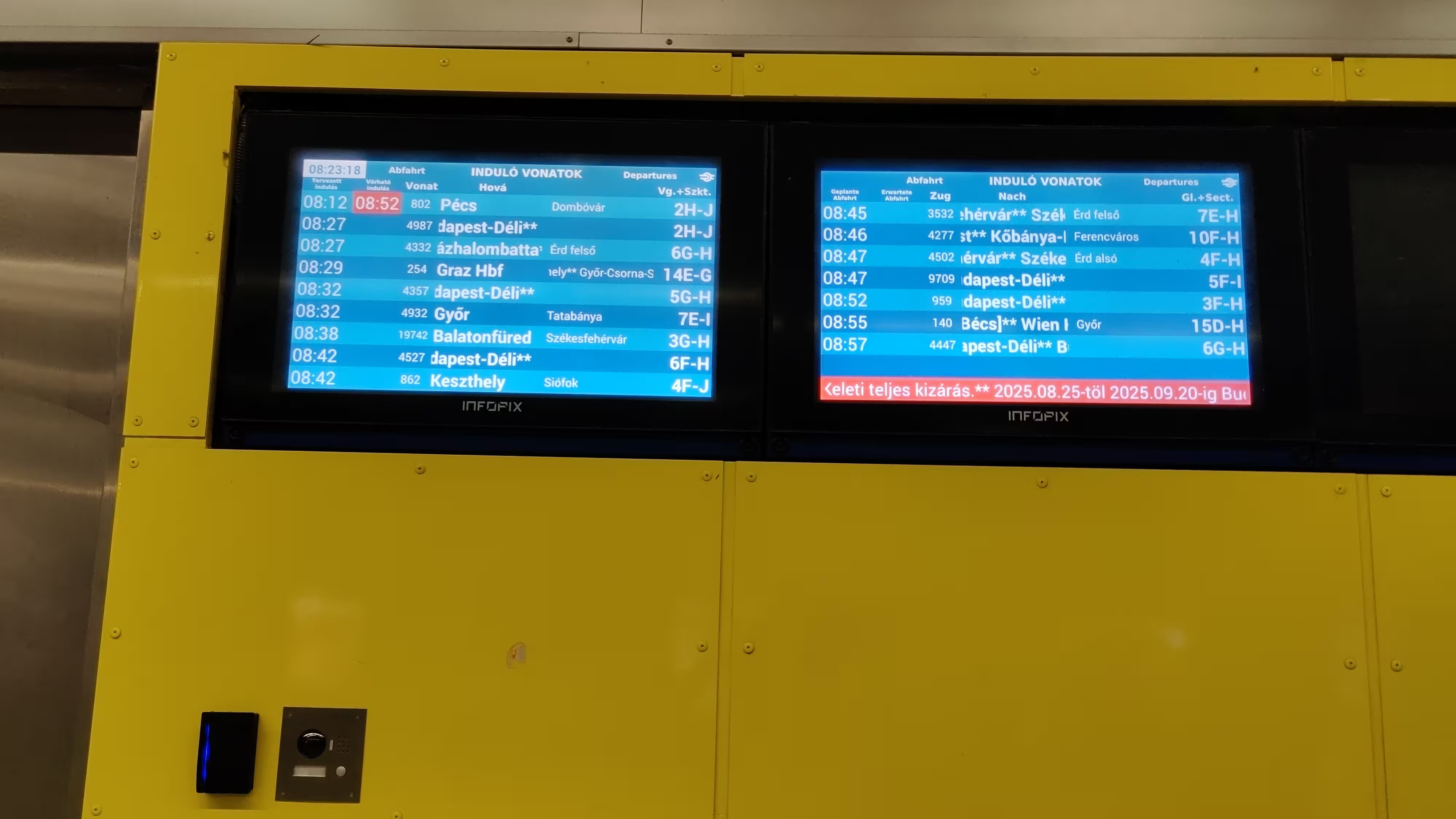
On the 7th of September 2025, my friend Dione and I had a day trip to Vienna the capital of Austria. We were attending a conference in Budapest, Hungary, which is 250 km from Vienna. So, it was a good opportunity to visit Vienna. We took a morning train from Budapest to Vienna and got back to Budapest by night. However, booking these tickets turned out to be a bit complicated. There were many websites to book the train ticket Hungarian Railways, Austrian Railways, and third-party sites such as Omio. All these websites had different prices for the same ticket. I booked the tickets from the Hungarian Railways website as it was the cheapest. The train from Budapest to Vienna was 13, operated by Eurocity. Also, I had to pay 2 for the seat reservation on top. The train from Vienna to Budapest operated by Railjet was 21, along with 2 extra for reservation again making it 23. The tickets for the two-way journey added up to 38. The cost of these tickets varied depending on when one purchses them: the sooner you purchase, the lower the price. I bought my tickets 15 days ahead of the date of journey and paid just 38. In contrast, Dione booked just one day before her trip and paid around 100 for her tickets. As for the seat reservation, long-distance trains in Europe usually require paying extra for the seat reservation. This ensures that you get your preferred seat, such as a window seat or an aisle seat. Nevertheless, you will get a seat on long-distance trains because they do not sell more tickets than there are seats. Therefore, you will get a seat without reservation as well. However, we reserved our seats so that we can sit together. This helped us more in the return part of the journey from Vienna to Budapest which was more crowded than the train we took from Budapest to Vienna in the morning. On another note, reservation is mandatory on some trains in Europe, but ours wasn t one of them. In addition, people also use rail passes, so an extra charge is required on top for reserving the seats for pass holders. On the other hand, local trains do not require seat reservations in general. Our train s scheduled departure was at 08:55 from the Budapest Kelenfold station. We reached the train station 40 minutes before the train s scheduled departure. The Kelenfold station had free Wi-Fi, which was handy because I didn t have a local SIM.
A departures board at Budapest Kelenfold station. A departures board at Budapest Kelenfold station. Photo by Ravi Dwivedi, released under CC-BY-SA 4.0.
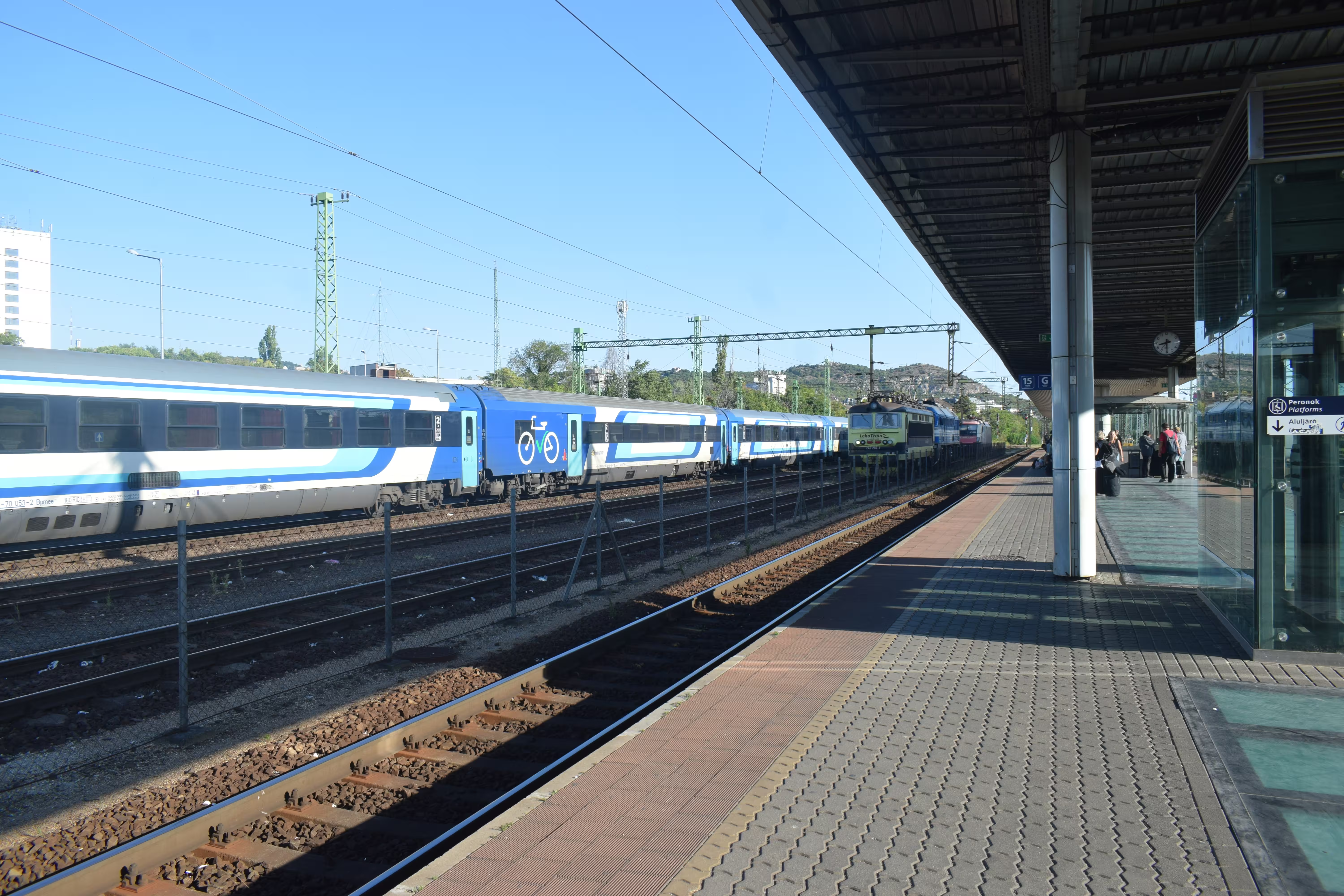
A platform on Budapest Kelenfold station. This is platform number 15 of Budapest Kelenfold station where we boarded our train. Photo by Ravi Dwivedi, released under CC-BY-SA 4.0.
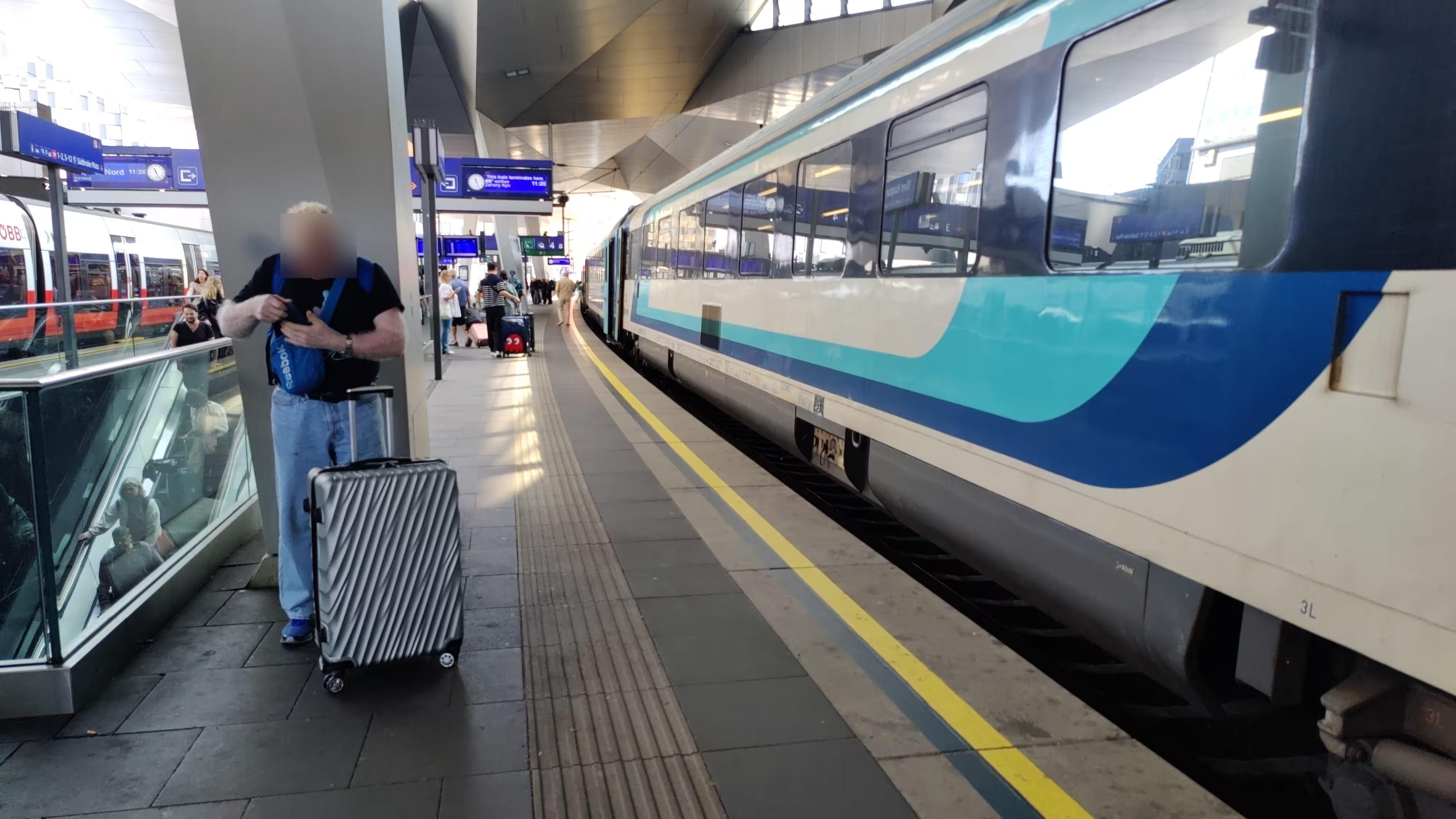
Our train arrived on time. I tried to find our coach number but could not find the numbers written anywhere on the side of the coach. Luckily, we were helped by a fellow passenger who directed me to look at the doors, where the numbers were mentioned clearly! Then we got into our compartment and took our respective seats. Our tickets were checked twice - once while the train was in Hungary and the other when in Austria. Showing the PDF of the train ticket on our mobile to the ticket inspector was good enough for the purpose. Austria and Hungary are a part of the open transit Schengen area, which means this was the extent of the border control checks we had to go through.
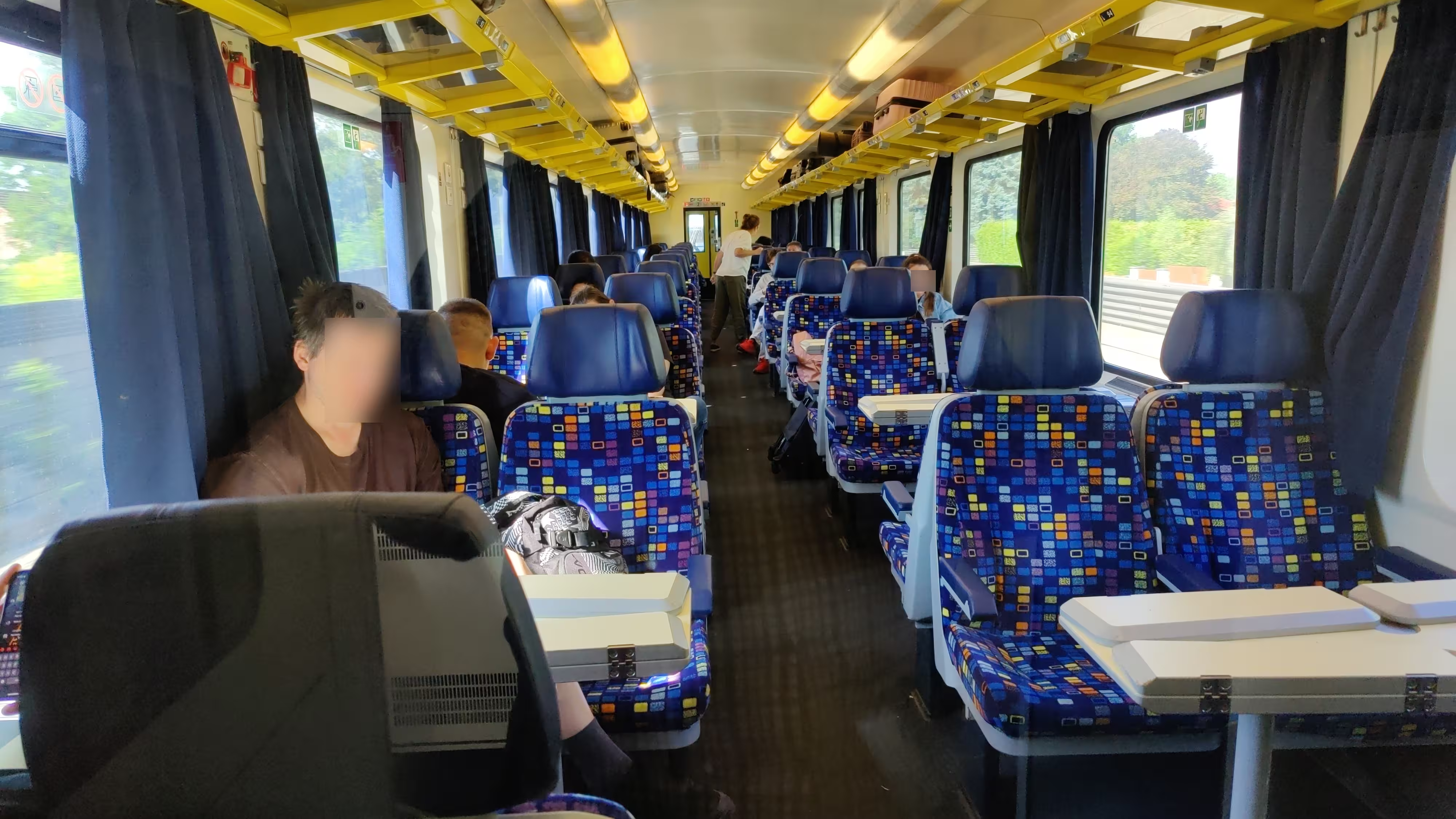
Interior of the train. Interior of our Budapest to Vienna train. Photo by Ravi Dwivedi, released under CC-BY-SA 4.0.
The train also had free Wi-Fi, albeit with poor connection at times. There were no eatery options inside the train. We deboarded at the Wien Hauptbahnhof station in Vienna. The journey was 250 km and took 2.5 hours, reaching Vienna at 11:25, which was the scheduled time.
A blue and white colored train on a railway platform This blue colored train was the one we took for our Budapest to Vienna journey. Photo by Ravi Dwivedi, released under CC-BY-SA 4.0.
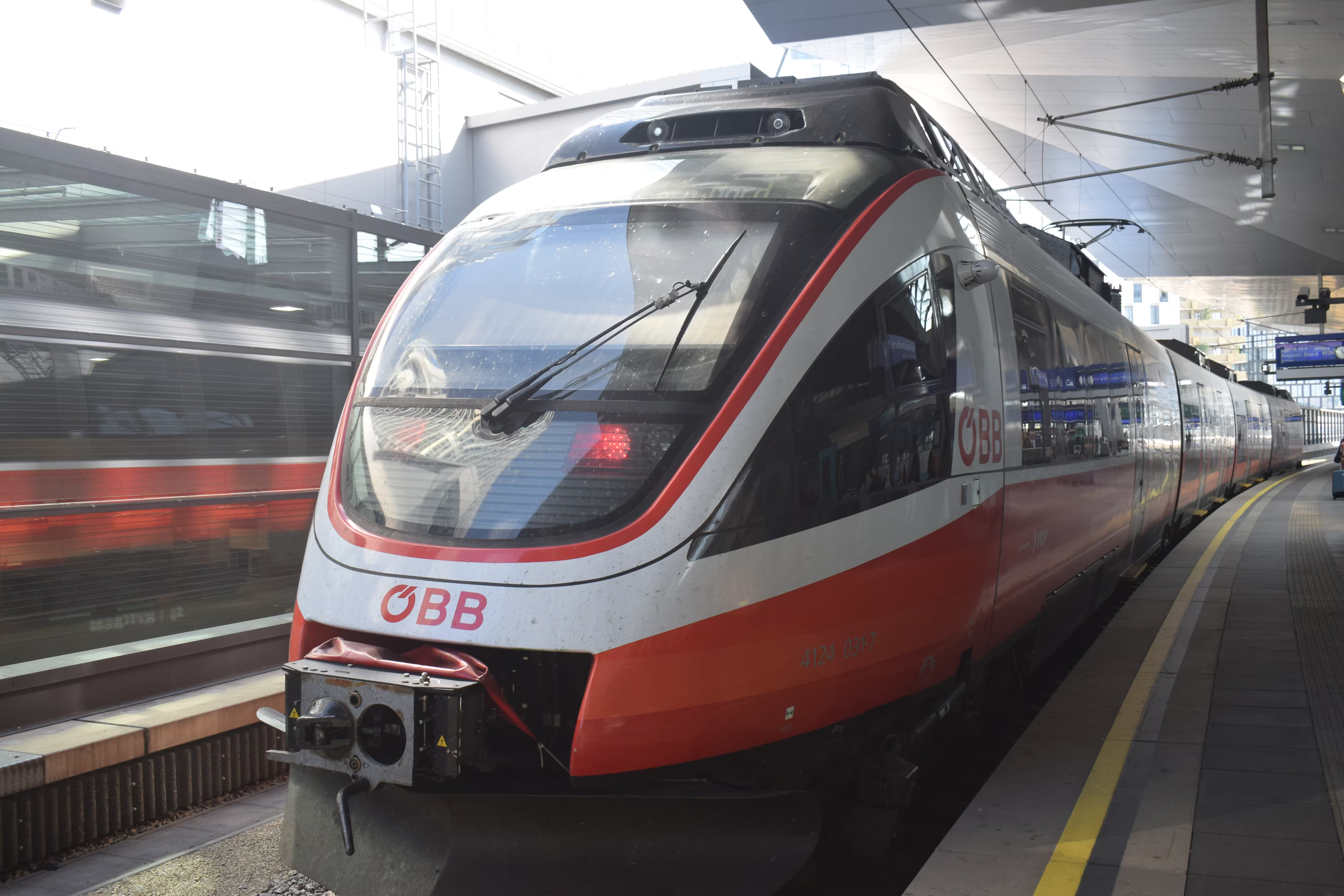
A red colored train standing at the Vienna station An BB train standing at a platform of Vienna train station. BB is the national carrier of Austria. Photo by Ravi Dwivedi, released under CC-BY-SA 4.0.
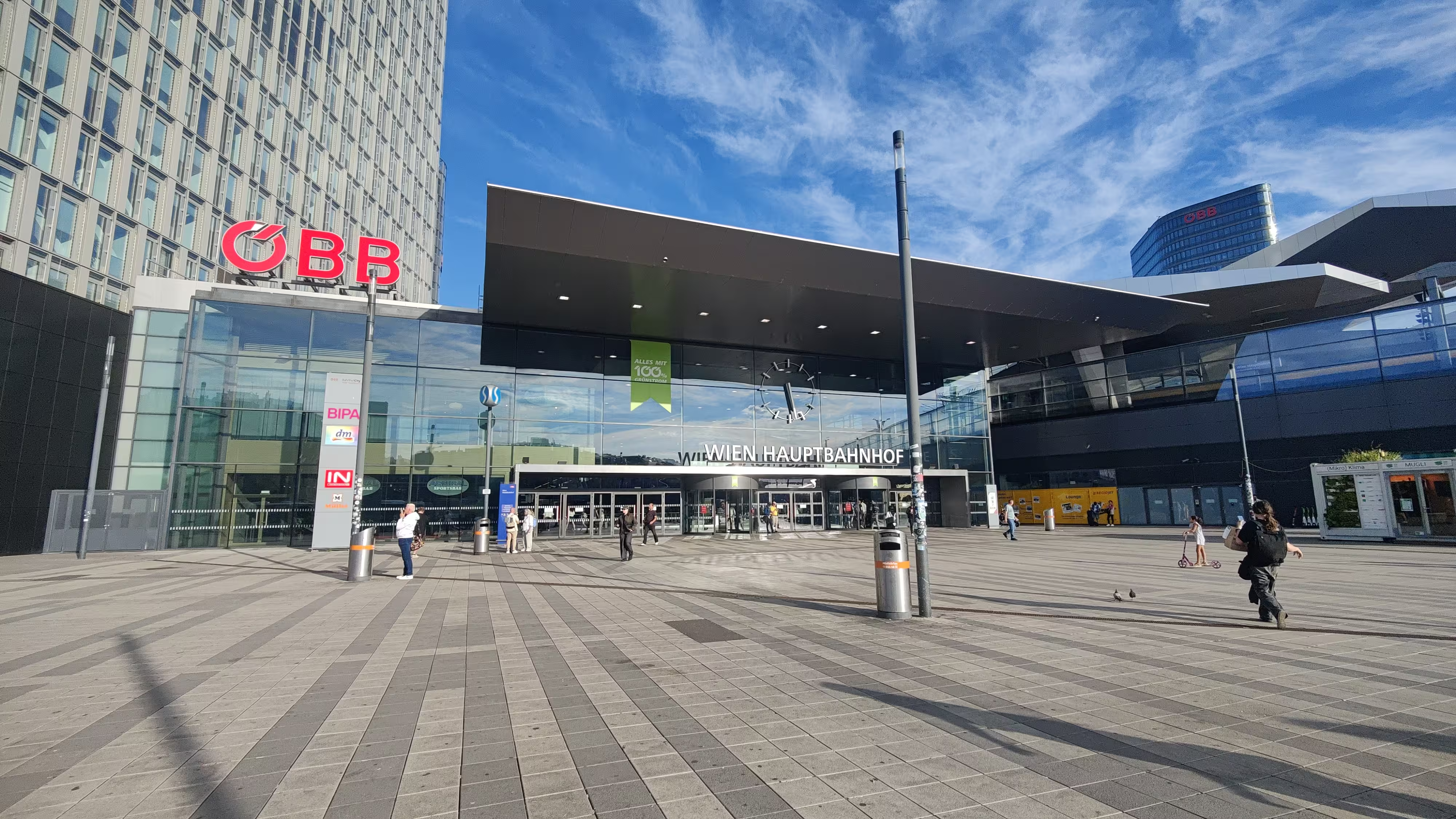
Wien Hauptbahnhof train station Wien Hauptbahnhof train station. Photo by Ravi Dwivedi, released under CC-BY-SA 4.0.

At the station, we bought a 24-hour public transport pass from a ticket machine for 8. The pass includes unlimited access to all the public transport in Vienna for 24 hours. My pass was valid from the 7th of September at 11:34 to the 8th of September at 11:33. A single public transport ticket (from anywhere to anywhere) costs 2.4. A single ticket of 2.4 can be used once on any public transport in Vienna trams, metros, and buses. Therefore, the pass is a good deal if you are going to take at least four public transport trips in a day. Unlike the public transport pass I got in Budapest, the pass in Vienna was anonymous and not tied to the rider s name.
Public transport pass for Vienna. My public transport pass in Vienna.
We wanted to visit the Sch nbrunn Palace. The palace was reachable by subway. In order to get to the subway station, we started by going outside the station. But it was not outside. So we came back inside the station building and realized that the subway was underground. We took the subway and deboarded at the Sch nbrunn subway station the closest one to the palace. The ride was smooth; the train was pretty silent. By the way, like Budapest, there were no AFC gates for boarding the subway in Vienna. The stations had ticket validators instead, where you are supposed to validate your tickets before getting into the subway.
Vienna subway Instead of AFC gates, Vienna has ticket validators as in the picture. You need to tap your ticket in the validator before boarding the subway. Photo by Ravi Dwivedi, released under CC-BY-SA 4.0.
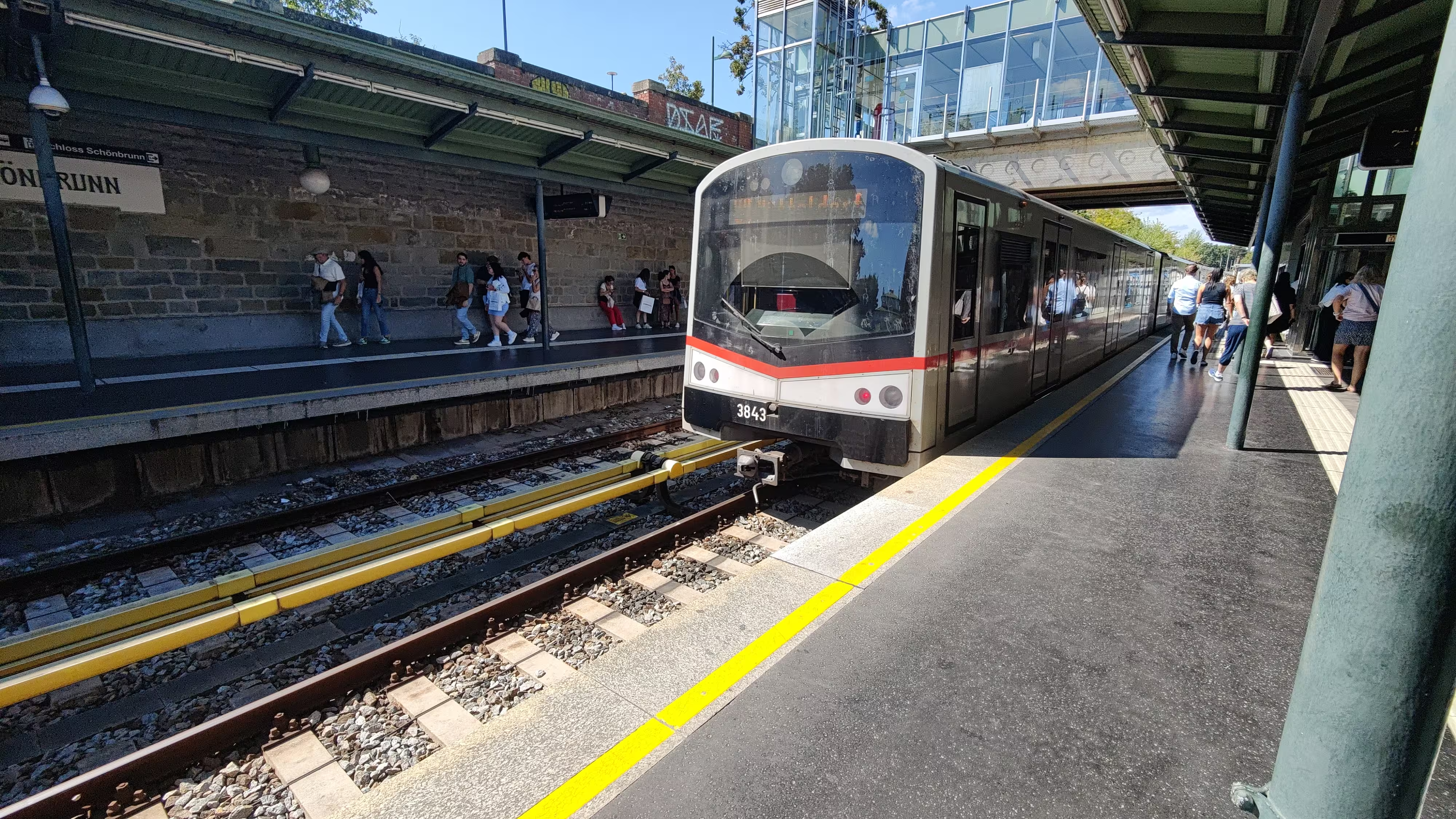
These validators are in place to ensure that you use your ticket only once. Unlike AFC gates, which are present in metros of most of the countries I have been to, the ticket validators don t act as a physical barrier to enter the boarding area. If you board the metro without validating your ticket, you will be facing hefty fines upon getting caught. I have heard that the fine is around 100. On the other hand, if you have a public transport pass like we did, then you don t need to validate it before boarding. In addition, there were no annoying security checks either, unlike in Indian cities. In the Delhi metro, for example, you would need to scan your bags and pass through a security check before getting to the AFC gates.
Vienna subway Vienna subway. Photo by Ravi Dwivedi, released under CC-BY-SA 4.0.
Now back to the story, after alighting at the Sch nbrunn subway station, we walked to the Sch nbrunn Palace. One can roam around outside the palace and click pictures for free. To go inside, however, requires buying tickets. The tickets for the palace can be booked in advance on the internet. We didn t take the tickets in advance, as we decided to visit the palace at the last moment. So we went to the ticket counter and found out that we needed to wait for 1 hour 40 minutes before going inside if we took the tickets at that moment. In addition, one ticket costs 44 (around 4000 Indian rupees). Since we had to return to Budapest in the evening and only had a few hours in the city, we decided not to go inside the palace. Instead, we clicked a few pictures outside the palace.
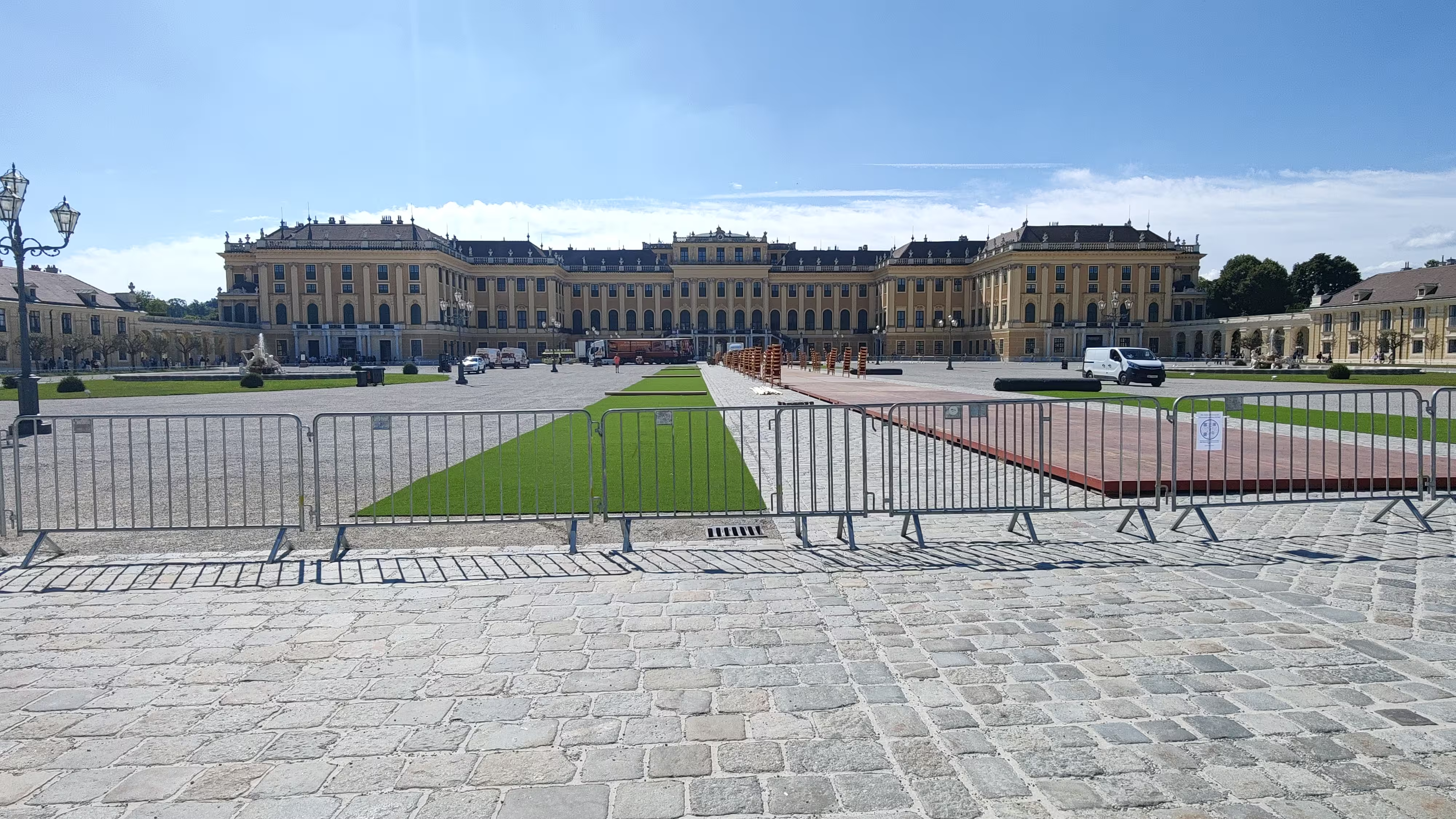
Photo of Sch nbrunn Palace. Sch nbrunn Palace. Photo by Ravi Dwivedi, released under CC-BY-SA 4.0.
The Sch nbrunn Palace is a UNESCO World Heritage Site and is a historically significant place. It servedas one of the residences of the powerful Habsburg dynasty. The palace looked so good that my friend Dione said, It seemed like the palace was built yesterday . This remark applied to other parts of Vienna we went to. For example, the subway stations also seemed like they were built yesterday.
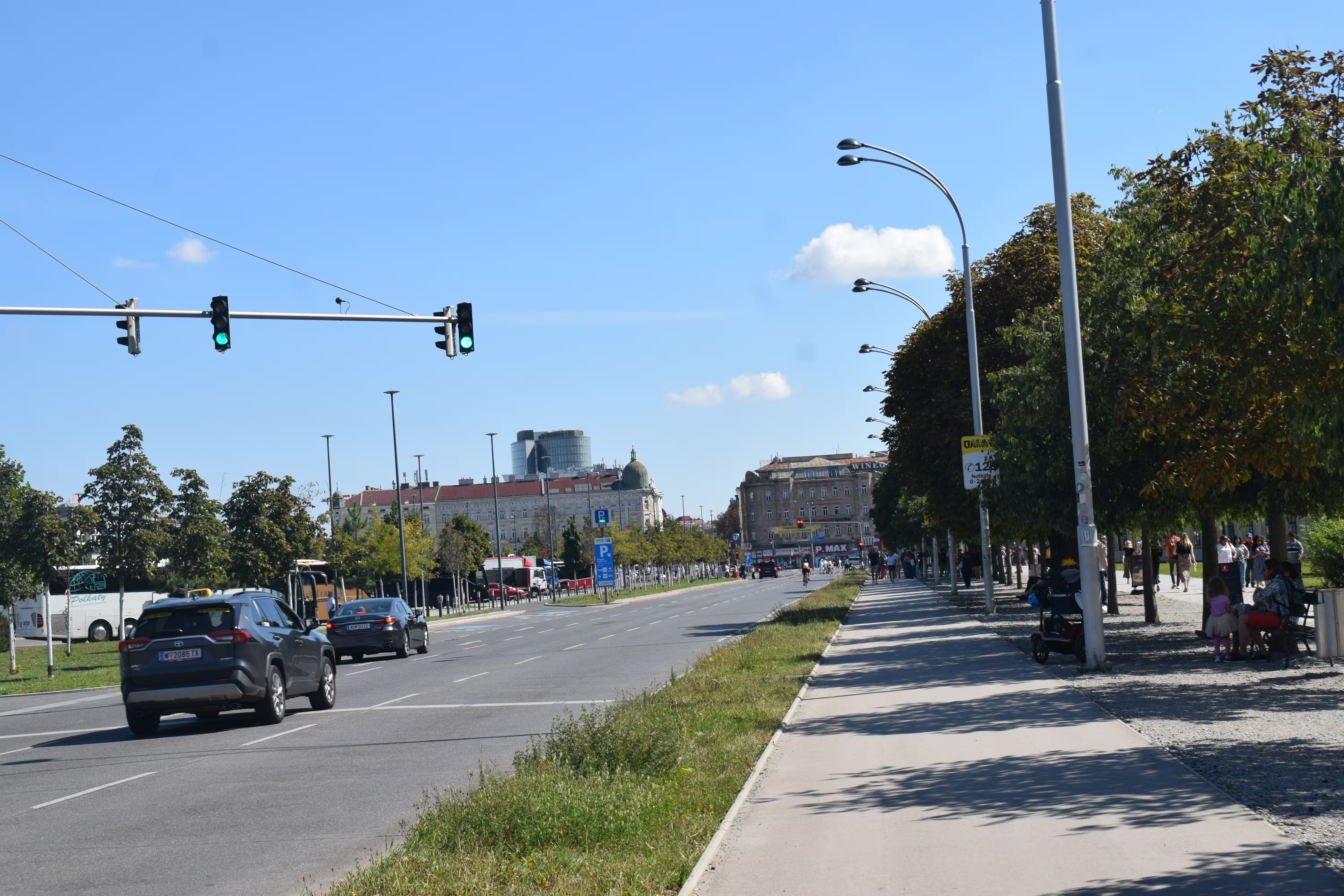
A street near Sch nbrunn Palace. A street near Sch nbrunn Palace. Photo by Ravi Dwivedi, released under CC-BY-SA 4.0.

Now, we wanted to go someplace to grab a bite. I asked my friend Urbec for suggestions on where to go. They suggested we visit the steps named Strudlhofstiege, which had the added benefit of being in a neighborhood with good bakeries and buildings. So, we took the subway and deboarded at the Ro auer L nde station, followed by walking around a kilometer to reach the stairs.
A subway station in Vienna. Ro auer L nde subway station. Photo by Ravi Dwivedi, released under CC-BY-SA 4.0.
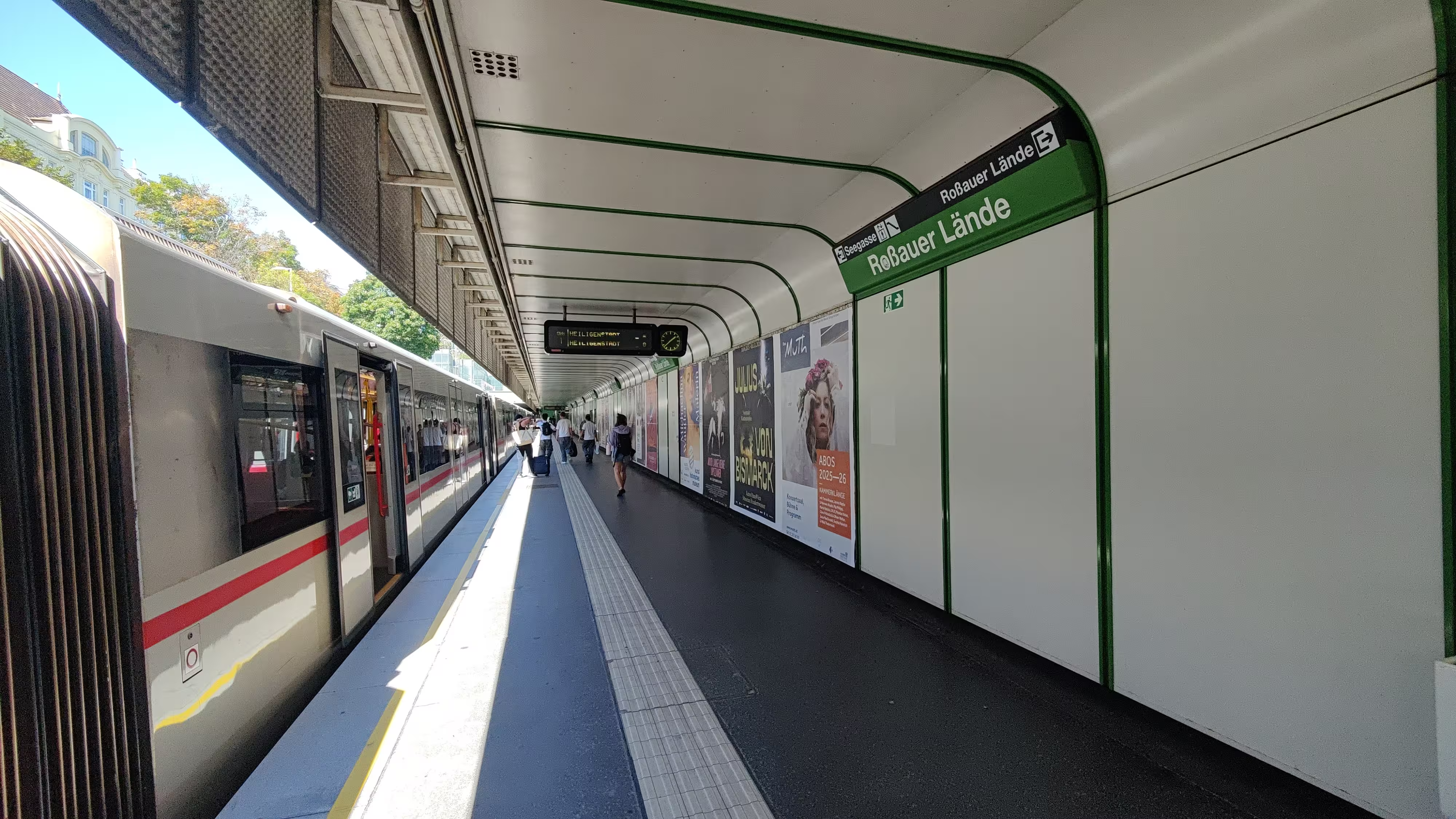
Platform of the _Ro auer L nde_ subway station. Platform of the Ro auer L nde subway station. Photo by Ravi Dwivedi, released under CC-BY-SA 4.0.

stairs with road in the front and trees in the background. Blue sky can also be seen in the background. The The Strudlhofstiege steps. Photo by Ravi Dwivedi, released under CC-BY-SA 4.0.

On the way, we were also looking for a place to eat. Unfortunately, it was Sunday, and Vienna closes on Sunday. That means most of the shops including bakeries and caf s are closed. Only places like railway stations have shops open on Sundays. By the way, walking around in the streets of Vienna was a treat. The streets were not crowded (as it was not exactly a touristy neighborhood) and had good pedestrian infrastructure, with clean streets and separate cycling tracks. The buildings were also beautiful.
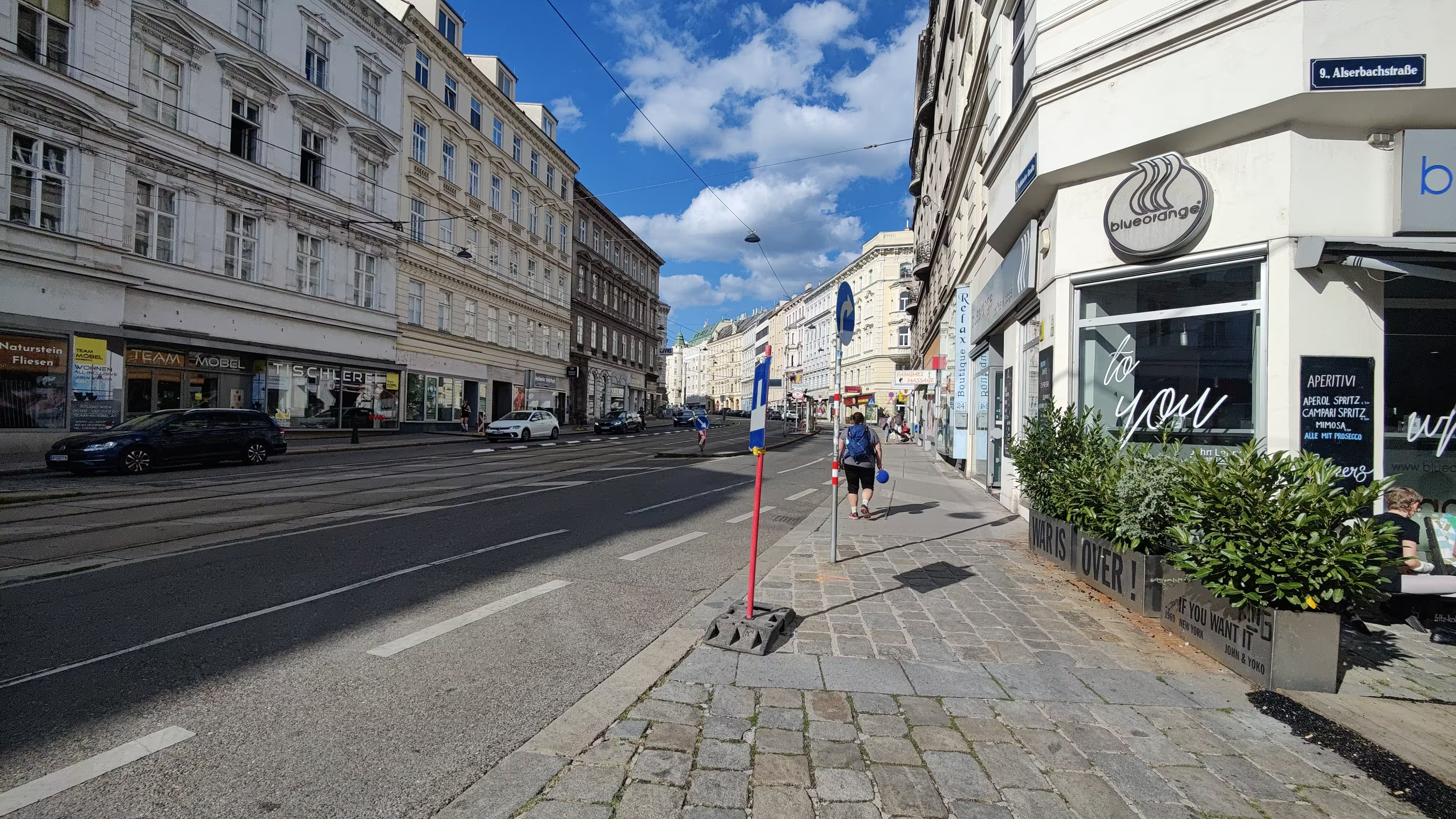
Buildings and streets in Vienna. A random street in Vienna.
Buildings and streets in Vienna. Another street in Vienna.
After some walking, we found a restaurant open. I grabbed the menu to check the prices. A lady at the shop asked me what I was doing, and I told her that I was browsing the menu. She said that the menu was in German. I don t know how she knew that we didn t know German, but it seemed like a racist thing to be told. We roamed around further and found a caf by the name of Blue Orange, where we ordered coffee and croissants. When we got our order, the waiter told us that they were having some issues, so they wouldn t charge us for the croissant if it wasn t good.
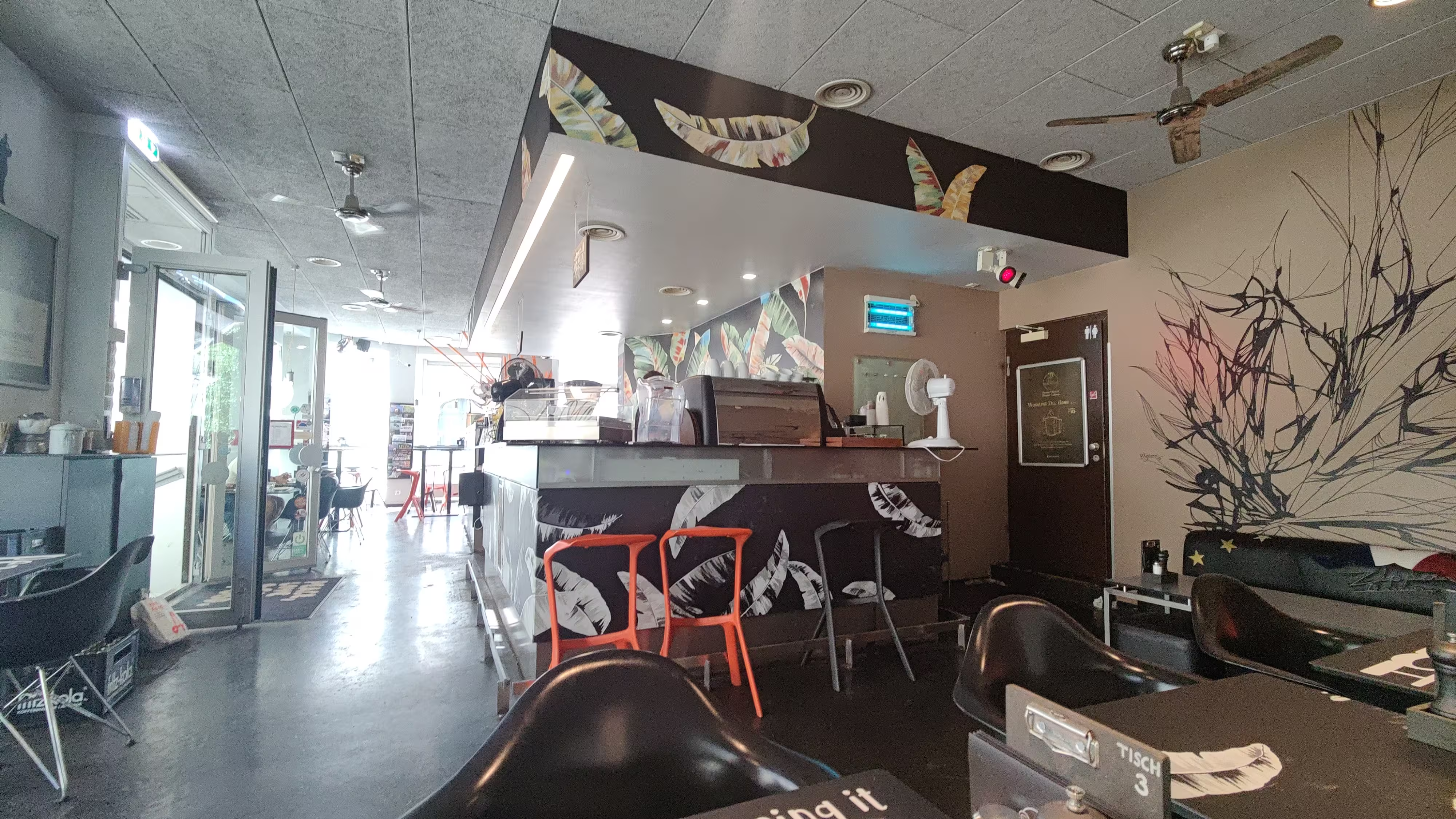
Picture of a caf . A picture of Blue Orange caf . Photo by Ravi Dwivedi, released under CC-BY-SA 4.0.
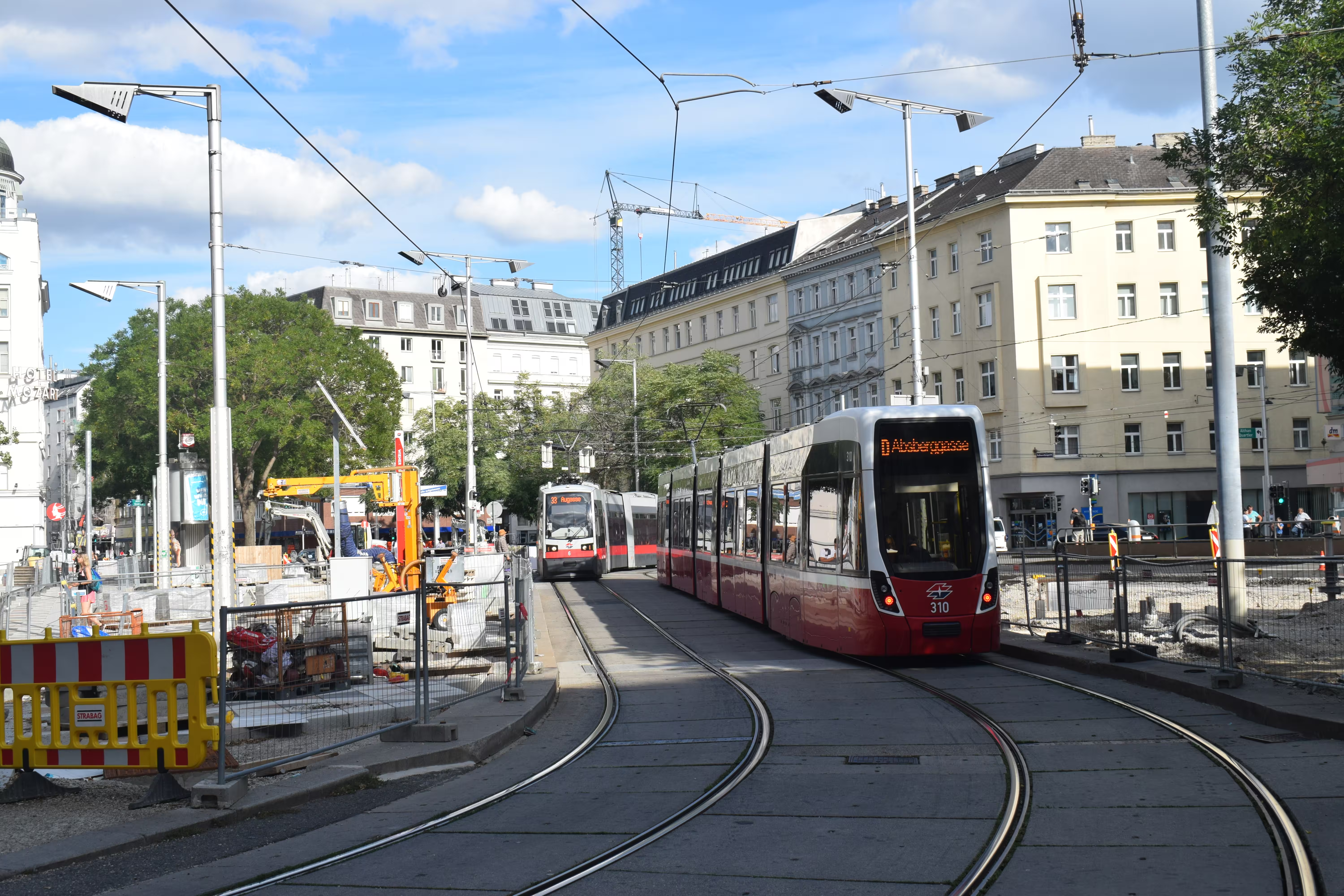
My friend and I took a bite, and both of us didn t like the croissant. After some time, the waiter came to us and asked whether the croissant was okay, to which we said no. Therefore, they didn t charge us for the croissant. This was the first time something like this happened to me. It felt like I was in a different world. I added a small tip at the end for this gesture, which I had to put in a jar at the counter. The cappuccino I ordered was 4.50, while the espresso that Dione ordered was 3.60. The croissant would have been 3.60. I remember Paris having cheaper croissants! Then when the waiter brought our drinks out, they automatically gave me the espresso and Dione the cappuccino. Dione found this funny because there is a stereotype in her country (Australia) that men drink strong black coffee, and women drink milky drinks like cappuccinos. She found it interesting that this stereotype seems to exist in Austrian culture too. We hopped on a tram to reach the nearest subway station and went to the Wien Hauptbahnhof station to have something before we caught our return train to Budapest.
Trams with buildings and the blue sky in the background Trams in Vienna. Photo by Ravi Dwivedi, released under CC-BY-SA 4.0.

At the station, I had Esterhazyschnitten and Punschkrapfen (thanks, Urbec, for the suggestion). The lady at the shop warned me that punschkrapfen had alcohol in it, to which I said okay. Esterhazyschnitten was a cake made of almonds, while punschkrapfen was a jam-filled sponge cake, soaked in rum. Esterhazyschnitten was my favorite out of the two. The punschkrapfen was too sweet for my taste.
Punschkrapfen Punschkrapfen. Photo by Ravi Dwivedi, released under CC-BY-SA 4.0.

Esterhazyschnitten Esterhazyschnitten. Photo by Ravi Dwivedi, released under CC-BY-SA 4.0.
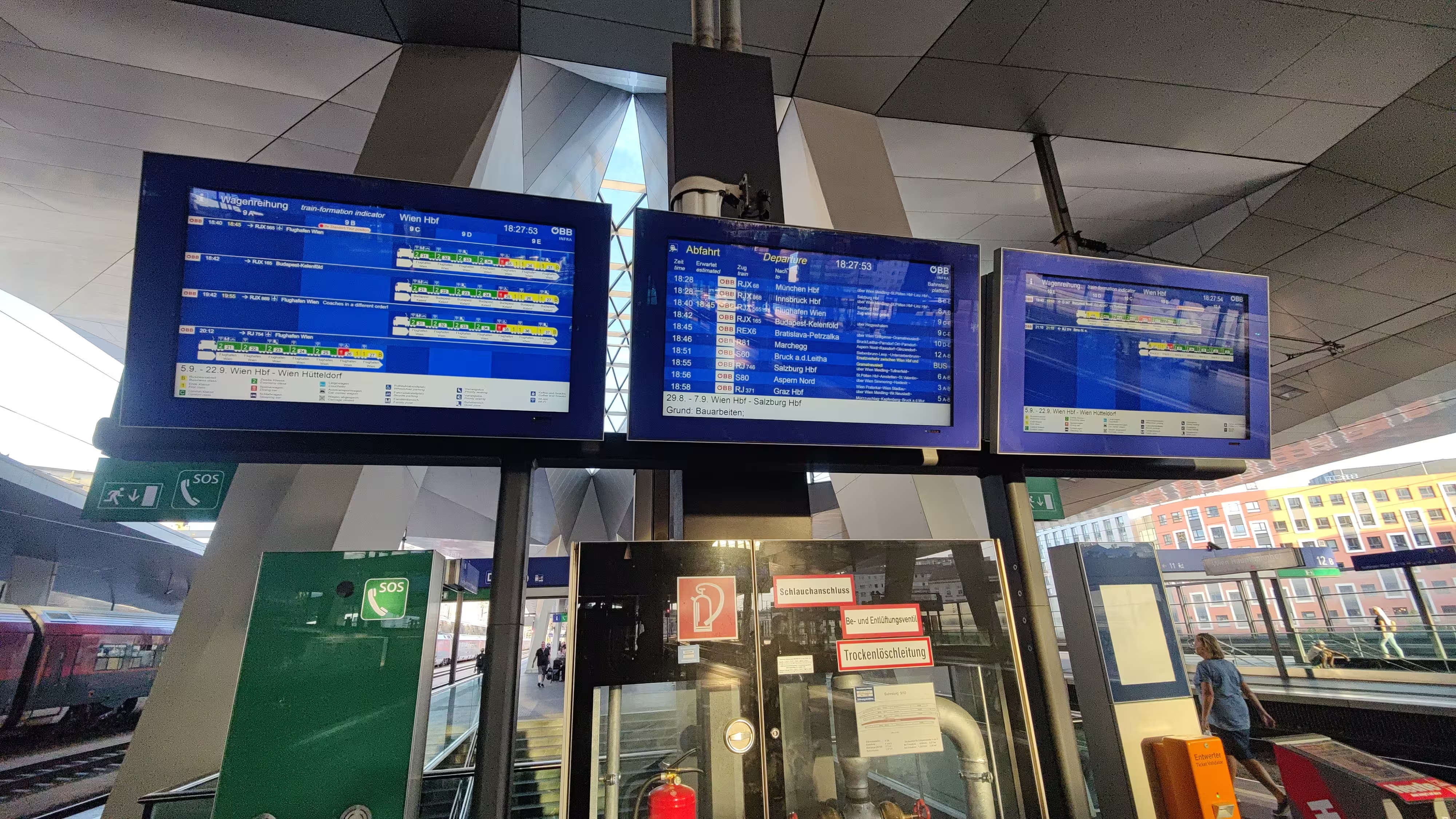
While the station was well-built, there were a couple of things about the Wien Hauptbahnhof station that we didn t like. There were no seats inside the station, so we had to eat outside the building. Also, the toilets needed to be paid for. It costs 50 cents to use the toilets at this station. The Vienna train station had departure boards all over the place. So, we went to the platform our train was to arrive on.
A departure board in Vienna displaying information about the trains Departure boards in Vienna displaying information about the trains. Photo by Ravi Dwivedi, released under CC-BY-SA 4.0.

Platform and tracks at Wien Hauptbahnhof station. Platform and tracks at Wien Hauptbahnhof station. Photo by Ravi Dwivedi, released under CC-BY-SA 4.0.
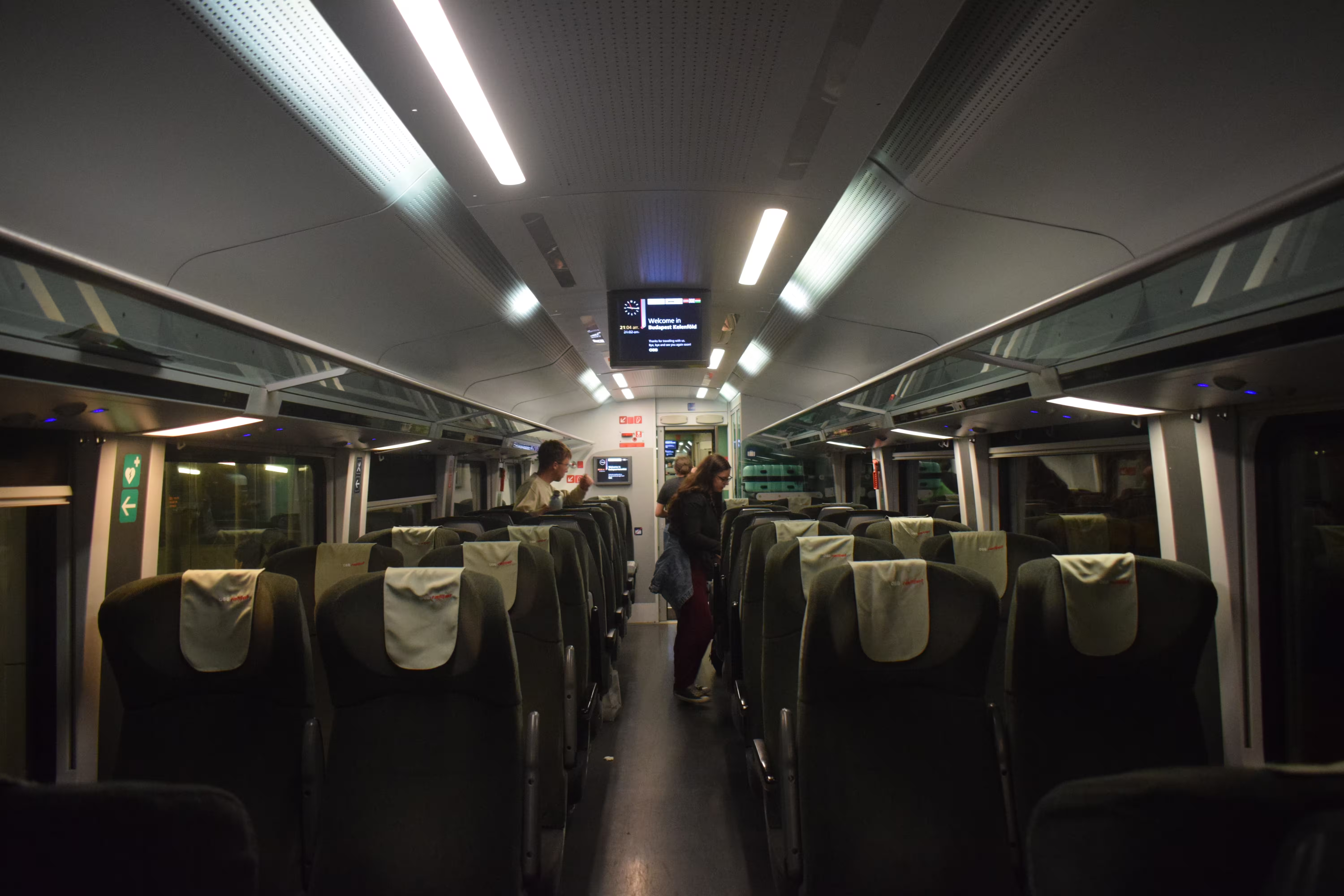
When our train arrived, we had some difficulty locating our compartment. This train was operated by a different company (Railjet) than the one we took in the morning (Eurocity) from Budapest to Vienna, and we were able to locate the coach numbers using the digital board at the station. Each compartment had a digital board next to it on the station displaying the coach number. However, that wasn t the problem. Even after reading the coach numbers and trying to find ours, it didn t appear where we expected in the sequence. When we were not able to find our coach for a while, we asked a ticket inspector of the train who was standing on the platform. He directed us towards the front side of the train. So we started running to the front side as we didn t know how long the train stops. As we ran toward our coach, we found out that the engine of the back train was connected with the last compartment of the train at the front. At that point, we realized that the train was a combination of two trains. At a later station, the train on the back side parted ways and went towards Vienna Airport.
Inside our train. Interior of the train we took from Vienna to Budapest. Photo by Ravi Dwivedi, released under CC-BY-SA 4.0.

A red colored train standing on the platform of Budapest Kelenfold station. This is the train we took for our return journey from Vienna to Budapest. It is standing on a platform in Budapest Kelenfold station. Photo by Ravi Dwivedi, released under CC-BY-SA 4.0.
We had a smooth journey and reached Budapest a couple of hours later. Vienna is a beautiful city; we enjoyed being there, and we would like to visit the city again! That s it for now. Signing off. See you in the next one! Credits: Thanks to Dione and Badri for proofreading.

27 April 2026

Gunnar Wolf: Heads we win, tails you lose AI detectors in education

This post is an unpublished review for Heads we win, tails you lose AI detectors in education
Educators throughout the world are tasked with the difficult requirement of evaluating students works, making sure the grades meaningfully reflect the students understanding of the subject, and that a graded assignment maps to the relevant work invested in solving it. After the irruption of Large-Language Models in late 2023, this task became obviously much harder: if a widely available computer program is able to solve an assignment in a way that resembles a human-generated response, how can educators meaningfully grade their groups? As it has been the case with different innovations over time (such as with the appearance of electronic calculators or the mass availability of digital encyclopedias), the first reactions were of prohibition and denial: students who use the new tool in question are to be disqualified or somehow punished. It is only some time after the innovation in question settles that teachers find a way to properly weigh, integrate and accept its use. The authors of this position article present several arguments as to why it is impossible, unethical and unadvisable to use automated AI detection systems to process student assignments. The first argument is whether it is at all possible to reliably differentiate human-written essays from LLM-generated artifacts. The first criticism is that AI detectors are, themselves, LLMs trained on human-generated texts (negative) and LLM-generated texts (positive). However, the only way to assert the training material is not noisy is to use pre-2020 text as human-generated but natural ways of writing are influenced by what people read, and the authors quote studies pointing out that human language, particularly in the scholarly fields, has incorporated terms and constructions that were used as LLM markers. Quoting the authors, As exposure to AI-generated material becomes increasingly widespread, it is reasonable to expect that the linguistic patterns of human writing will shift, reflecting the influence of AI-assisted texts encountered across education, media, and everyday communication . Stylistic elements and other such markers are being adopted back into regular speech at a high rate. Then, the aspect of ethics comes into play as well. While it is expected that teachers should demand intellectual integrity from students, and plagiarism detectors have been widely accepted into the workflow of academics, the accusation of presenting LLM output as own work is necessarily an uphill battle: the accused party is tasked with providing proof of innocence based on nebulous, probabilistic accusations. The authors argue, once an accusation of turning in a LLM-generated text is made on a student, the onus on proving innocence lies with the accused. The authors review and argue against a series of techniques that have been presented in literature to aid teachers in detecting LLM abuse, such as linguistic markers, single or multiple AI detectors, the use of false references, hidden adversarial prompts, arguing in all cases the techniques fail to be trustable enough and highlighting the probability of both false positives and negatives. They also present AI detection as a false dichotomy: many works presented are not 100% human generated nor 100% LLM-generated, but some pertinent LLM-generated paragraphs are presented mixed with human-generated content, in a positive, critical AI use ( Students work is frequently created with, not by, generative AI ). The article closes by reiterating the authors position: AI detection in education is not merely flawed; it is conceptually unsound . they call upon institutions to accept the use of generative LLMs cannot be solved through surveillance and punishment , but has to be tackled by an assessment design that recognizes AI s role in learning . This article s position is very strong and well argued, and although it will surely meet with ample opposition, it surely poses an important, very current problematic. As a teacher, I found it a very enlightening read.

Sahil Dhiman: Weekly Notes

Weekly notes is a genre where people chronicle their week on their blogs. Weekly notes are like a window. I love going through these, as they re a steady stream of week on week happenings and progress in people s lives. It shows people making efforts to improve: from basic things like learning to swim or drive, to planning long-term goals such as vacations, moving house, states, or even countries. In some cases, they carry internal monologues, thoughts, and anxieties. These are like a constant nudge for me to work on myself, like them. These are the weekly notes I read nowadays: Most are there on Thejesh s weekly notes planet which autoupdates when new posts arrive, usually starting on Friday evenings, and by Monday, almost everyone has posted. It reminds of a word from The Dictionary of Obscure Sorrows - Kenaway :
the longing to see how other people live their lives when they re not in public; wishing you could tune in to the raw feed of another human existence, in all its messiness and solitude shimmying in place while brushing their teeth, squabbling over where to put the shoes, talking out their problems on solitary commutes if only to give you something to compare your own life against, and figure out whether you re bizarrely normal or normally bizarre.
Close enough.

Russ Allbery: Review: What We Are Seeking

Review: What We Are Seeking, by Cameron Reed
Publisher: Tor
Copyright: 2026
ISBN: 1-250-36474-4
Format: Kindle
Pages: 339
What We Are Seeking is a bit hard to classify beyond science fiction. I think I would call it anthropological science fiction, but it's also a first contact story and a planetary colony story. It is a standalone novel (well, so far as I know; see later in the review for caveats). This is Cameron Reed's second novel after the excellent and memorable cyberpunk novel The Fortunate Fall, first published in 1996 under Reed's former name of Raphael Carter. John Maraintha is a doctor from the world of Essius. He took what he thought was a temporary job on the Free Ship Edgar's Folly, where he's endured considerable culture shock. As the novel opens, John learns that the colonists on Scythia have requested a translator to talk to one of the native life forms, and a doctor since they're down to only one. John will be that doctor. The captain has decided, and by the rules of the free ships, John does not get a choice in the matter. The Scythian colony is about four hundred people, now located in a desert climate since the complex native life forms destroyed their previous settlement. The colonists are a split between Ischnurans and Zandaheans, two other human civilizations from the scatter of colony worlds left after Earth embraced AIs (aiyis here) and turned inward. Both of those groups marry, something John considers a moral abomination. Neither of them seem likely to understand Essian sexual ethics. More devastatingly, John had intended to spend some time as a ship doctor and then return home to a new place in Essian society. Once he lands on Scythia, the chances of that are gone; it is highly unlikely any ship would pick him up again and take him home. I have been trying to find the right books to compare What We Are Seeking with ever since I read it. The best I've come up with are Ursula K. Le Guin (particularly The Dispossessed), Eleanor Arnason's A Woman of the Iron People, and Becky Chambers's To Be Taught, If Fortunate. The start of the book felt like an intentional revisiting of an earlier era of science fiction, with somewhat updated science and politics, but the last half of the book, where the action picks up considerably, is a meditation on gender, social systems, religion, and small-group politics. All of that is mixed with biological exploration and a first-contact story with some quite-alien aliens. This is the sort of novel where the protagonist's culture is as foreign to the reader as any of the other cultures he counters, so the reader is assembling several jigsaw puzzles at once. John is dropped into an established colony with its own social norms and established hierarchies. The one other outsider, the translator Sudharma Jain, is, as his name implies, a Jain who keeps very strict religious observances. Half of the colony is from something akin to a fundamentalist Christian religious sect that practices patriarchy and strict marriage codes. The other half is more gently sexist (but still sexist) and has its own tradition of a third gender that becomes central to the story. John, meanwhile, is a strong believer in the Essian approach to social organization: Any two partners of any gender freely have sex by mutual consent and without obligation, and family is based solely on blood relations. These beliefs do not fit comfortably together, even when people are trying (as they mostly do) to be welcoming. The first half of this book is very slow. This gives all of the characters space to breathe and become comfortable, and the characterization is superb, but it is a book to start when you're in the mood for something slow and observational. There is a plot that gradually becomes apparent, or rather there are several plots that are intertwined, but tension and urgency are mostly reserved for the second half of the book. Instead, the book opens with a lot of close observation of alien flora and fauna and the untangling of subtle social dynamics among the Scythians. There is also a visitor from earth, much to the distress of the Scythians. Earth presence means the ships will not return and the colony may be cut off from any sort of technological resupply. Despite speaking a common language, that visitor is as mutually alien to the other groups as they are to the native flora. Her life is fully integrated with aiyis, giving her essentially godlike powers and the ability to turn off inconvenient emotions and disregard anything she doesn't want to see. What she and the Earth aiyis are doing on the planet is one of the early mysteries. The dialogue in this book is truly excellent. Each characters has their own voice, there are fascinating digressions on different words that lead to tidbits of world-building, and some of the culture-specific idioms are delightful.
"I'm making a mess of this. None of that matters. Let me fall out the window and come in the door again. This is how my story ought to start:"
The challenges for the characters in this story are slow but deep ones: belonging and self-definition, the conflict between cultural tradition and personal circumstance, and the sacrifices required to live with small groups in situations where civil war is viscerally attractive. It has one of the most comprehensive and fascinating treatments of transgender issues that I've read in science fiction. Its commentary on current politics is subtle and estranged in the way that science fiction does best, but still pointed and satisfying. And, well, there are passages like this that I absolutely adore:
"I wouldn't go that far. It could be they are right, the universe we see exists because a mind like ours created it at least, a mind enough like ours that we can say it wants one thing and not another, and when it acts it does so with intent. That's as good an idea as any. But it is certainly not plausible that such a being believes that people everywhere should marry, or that men should never visit men, or no one should become a jess. Look at what they have created. The universe could have been nothing at all, or one atom of hydrogen floating in a void, or a diamond crystal infinite in all directions, if their mind cared for simplicity or tidiness. Instead we have stars and planets and black holes and nebulas. It could have all been cold and dead, but there is life. They could have made one species for each world, or just a few, which could have stayed the same forever, but instead we have millions and millions, all of which are changing every moment, varying among themselves and boiling off in all directions. Such a god is like an artist who fills up a library of sketchbooks with their drawings of strange creatures, and when every scrap of paper in the place is used up, goes back with a different color ink and scribbles over them again. They are obsessed with variation they gorge themselves with it and never grow full. Do you really think a mind like that could want us all to live in the same way?"
I had one problem with this book, though, and for me it was a big one: There is no ending. Reed effectively builds tension, gets me caring about all of the characters, sets up several problems, starts down a path towards resolution, and then the book just... ends. Long-time readers of my reviews will know that I'm a denouement fanatic. I want the scouring of the shire, I want the chapter set in the happily ever after, I want the catharsis of an ending. This made me so grumpy! To be clear, this is not sequel bait (at least so far as I can tell). I can write a philosophical defense of the ending. The types of problems and lives that Reed set up don't have clear endings; this is, to some extent, the point. We muddle through, and then those who come after us muddle through some more, and the cumulative effect is called human civilization. And there is some denouement; Reed doesn't leave the reader at a cliffhanger or anything that egregious. But still, I wanted the happy ending, even though that was unrealistic for the style of story this is, because I'm a happy ending reader. This is not an ending sort of book; it's the sort of book where I get a sinking feeling at the 95% mark because there aren't enough pages left for the number of remaining unresolved problems. I've gotten less annoyed in the days since I finished the book, and I can appreciate the thematic point made by how the book ends, but I still feel like it's worth an advance warning if you're a reader like I am. I would be delighted by a sequel, but it didn't feel like that was the intent. Apart from that, this was both excellent and rather unlike a lot of current science fiction. I think the closest comparison I can make among recent novels I've read is Sue Burke's Semiosis. What We Are Seeking has a similar sort of world-building, but I liked these characters so much more. It felt like a classic literary science fiction novel, but very much written in 2026. Highly recommended, just beware of the lack of closure. Content notes: Sexism, homophobia, stomach illness, and some religious abuse. Rating: 8 out of 10

26 April 2026

Aurelien Jarno: Running upstream OpenSBI on SpacemiT K1

The SpacemiT K1 is a rather interesting RISC-V SoC, found for instance on boards like the Banana Pi BPI-F3 board. It's one of those platforms that looked promising on paper, but took a bit of time before things really started to move upstream. Things have clearly accelerated over the last few months. Linux 7.0 brings, among other things PCIe support, making the board quite capable as a development board. SD card, CPU thermal sensor and cpufreq support are already in the pipe. Unfortunately the situation is less advanced on the firmware side. There is only very basic support for the SpacemiT K1 in U-Boot for the second stage, and initial SPL support has been posted on the mailing list, but has not yet been merged. In practice, this means you still have to rely on the vendor U-Boot, which is based on the rather old 2022.10 release. On the other hand, OpenSBI does have upstream support for the SpacemiT K1, however it is not compatible with the vendor U-Boot, mostly due to device tree differences. This can be addressed by applying a few patches to the vendor U-Boot, which I have published in a git tree in the k1-bl-v2.2.y-opensbi branch (technically this can also be handled on the OpenSBI side, but I prefer using a vanilla upstream OpenSBI version). The first two patches update the configuration to get closer to the upstream U-Boot defaults, and to enable some configuration options for the Milk-V Jupiter board, which stores its firmware in SPI NOR flash, instead of eMMC for the Banana Pi BPI-F3. The following patches update the device tree by adding extra compatible entries to several devices, as expected by the upstream kernel and OpenSBI (thanks to Troy Mitchell for the hint about the UART change) and update the CPU riscv,isa properties. Finally an additional patch adds the SpacemiT P1 PMIC to the device tree, which is required for the OpenSBI reboot patchset I recently posted (this is currently done only for the Banana Pi BPI-F3 and Milk-V Jupiter boards, but extending it to other boards should be straightforward). Building this U-Boot version is as simple as running this command in the source directory:
make k1_defconfig && make
On a Banana Pi BPI-F3 board, the resulting U-Boot can be flashed with:
echo 0 > /sys/block/mmcblk0boot0/force_ro
dd if=FSBL.bin of=/dev/mmcblk0boot0 bs=512 seek=1
dd if=u-boot.itb of=/dev/mmcblk0p1
Building upstream OpenSBI is also fairly simple, and can be done by running this command in the source directory:
make PLATFORM=generic
On a Banana Pi BPI-F3 board, the resulting OpenSBI can be flashed with:
dd if=fw_dynamic.itb of=/dev/mmcblk0p2
Note that the vendor U-Boot version is patched to install OpenSBI in a separate partition instead of embedding, as the upstream U-Boot does. While this works well on the Banana Pi BPI-F3, the corresponding partition in the Milk-V Jupiter SPI NOR flash is too small for the upstream OpenSBI version, and can't be easily resized without breaking compatibility. To address this, the branch k1-bl-v2.2.y-opensbi-embedded contains an additional patch (a bit hackish I admit) to somehow restore the upstream approach. The build process remains simple, first build OpenSBI with the following command:
make PLATFORM=generic
Then build U-Boot, specifying the patch to the just built OpenSBI firmware:
make k1_defconfig && make OPENSBI=/path/to/opensbi/build/platform/generic/firmware/fw_dynamic.bin
On a Milk-V Jupiter board, the resulting combined U-Boot/OpenSBI can be flashed with:
modprobe mdtblock
dd bs=4k if=FSBL.bin of=/dev/mtdblock2
dd bs=4k if=u-boot.itb of=/dev/mtdblock5
This combined U-Boot/OpenSBI can also be used on a Banana Pi BPI-F3, using the same flashing procedure as above, while skipping the OpenSBI part (although running it won't cause any issue, it will simply be unused). All of this is admittedly a bit hackish, but enabling the use of upstream OpenSBI is already one step forward. Hopefully, in a few months, we will be able to rely entirely on upstream U-Boot.

25 April 2026

Russ Allbery: Review: The Genocidal Healer

Review: The Genocidal Healer, by James White
Series: Sector General #8
Publisher: Orb
Copyright: 1991
Printing: May 2003
ISBN: 0-7653-0663-8
Format: Trade paperback
Pages: 255
The Genocidal Healer is the eighth book in James White's medical science fiction series about the Sector General hospital. As with the rest of the series, detailed memory of the previous books is not required and the books could be read out of order if you didn't mind spoilers. I read this as part of the Orb General Practice omnibus. Surgeon-Captain Lioren is a Tarlan doctor who was in charge of the medical response to a newly-discovered civilization. The aliens were suffering from an apparently universal plague and an ongoing vicious war waged entirely through hand-to-hand combat, putting them on the edge of extinction. Lioren rushed the distribution of a possible cure against the advice of the doctors working on developing it, with catastrophic results. As The Genocidal Healer opens, Lioren is insisting on a court-martial in the hope of receiving the sentence it believes it deserves and was denied: death. (It pronouns are the convention in the Sector General series for all alien races and formal discussions, because even someone prone to bouts of gender essentialism such as White understood the need for avoiding gender assumptions in a science fiction medical context.) Predictably, both Sector General and the Monitor Corps that technically runs the hospital are flatly unwilling to execute Lioren. Instead, he is assigned as a new apprentice in the psychology department under the legendary O'Mara, where he is ordered to investigate the psychological fitness of a senior doctor named Seldal. This leads him to talk to Seldal's patients, which in turn leads to a challenging set of ethical dilemmas. The first five chapters (and more than sixty pages) are the story of Lioren's trial and a recounting of the events on Cromsag. The series is full of medical and cultural puzzles like this, and usually I like them, but I thought this one was less successful. We know the vague (and horrible) outline of the ending in advance, and the massive simplification and artificial universality that is required to make this puzzle work is particularly blatant. A universally infectious disease is more of a fiction plot than a believable biological concept, and the number of failures of communication, analysis, and misunderstanding that have to line up to create White's predetermined outcome were a bit much for me. Once the story gets past that and into Lioren's psychological work, the novel improves. Lioren is guilt-ridden and irrational, but also rather arrogant about his guilt and his concepts of professional responsibility in a way that I think mostly worked. Most of the novel consists of Lioren slowly discovering that people like him and enjoy talking to him, much to his bafflement. In that, it has the gentle kindness and sense of universal basic decency that is characteristic of this series. There are, of course, medical puzzles to solve, although this time they are primarily psychological in nature. Various characters from previous books make an appearance, but White re-explains their background in sufficient detail that you don't need to remember (or have read) those previous books. There are a lot of similarities between this book and the previous one, Code Blue Emergency. Both feature nonhuman viewpoint protagonists and amusing descriptions of human facial expressions from an alien perspective. Both feature protagonists with overly rigid ethical structures that partly clash with the generally human policies of Sector General. The Genocidal Healer is a bit more subtle and nuanced, although a lot of Lioren's psychological evaluation rests on an ethical difference that I found somewhat unbelievable. This book, though, tackles a subject the previous book did not: religion. The treatment isn't horrible, but I have some complaints. My primary issue is that Lioren, who starts as an atheist, does extensive research into religion to help a patient and then starts making statements summarizing the religions beliefs of the majority of known species that are just... Christianity. As someone raised Christian, I recognized it immediately as the sort of abstracted Christianity that Christians claim is universal while completely ignoring the opinions of the adherents of any other religion. Key components of this majority galactic religious pattern, according to Lioren, include an omnipotent and omnibenevolent creator god, a religious figure who preaches forgiveness and mercy and is persecuted, and emphasis on redemption. This simply is not some abstract universal religion. This is just Christianity in disguise. Even in religions that have some of those elements in their traditions, they do not get the same emphasis and are not handled the way that Lioren describes them. I therefore found Lioren's extended discussions of religion rather annoying, since he kept claiming as relatively universal principles beliefs that are not even held by the majority of religious adherents on Earth, let alone a wildly varying collection of alien races with entirely different biology and societal constructions. It caused a lot of problems for my suspension of disbelief, on top of the annoyance at this repetition of, frankly, Christian propaganda. Lioren goes, from that research, into theodicy (the problem of evil). The interesting part of this is White's earnest portrayal of a doctor's approach to societal problems: a desire to find workarounds and patches and fixes for anything that makes people unhappy, whether medical or social. It makes sense, given the horrible biologic hands that some of the aliens in this series have been dealt, that they would question the idea of a benevolent god, so this philosophical digression is justified in that sense. But you might guess that a mid-list science fiction author is not going to say something new about one of the oldest problems in Christianity, and indeed he does not. Lioren arrives at the standard handwaving about the unknowability of divine intent, which I found tedious to read but at least not fatal to the plot. White, thankfully, doesn't take the religious material too far. The characters recognize how sensitive of an issue religion is in a hospital, Lioren never adopts religion fully, and the resolution of the plot is as much biological as philosophical. White is going somewhere with the introduction of religion, and although some of the path there annoyed me, I think the destination worked. White was from Northern Ireland, and therefore well aware of the drawbacks of religion, and he abhorred violence (hence Sector General as a setting), so the reader is in better hands with him than with most authors who might attempt this plot. I think I know a bit too much about religion to be the best audience for this entry in the series, and I'm not sure the introductory five chapters quite worked. But as with all of the other books in the series, this kept me turning the pages and I'm glad I read it. The Genocidal Healer probably isn't worth seeking out unless you're reading the whole series, but if you're enjoying the rest of the series, you'll probably like this too. Followed by The Galactic Gourmet. Rating: 6 out of 10

23 April 2026

Sergio Talens-Oliag: Developing a Git Worktree Helper with Copilot

Over the past few weeks I ve been developing and using a personal command-line tool called gwt (Git Worktree) to manage Git repositories using worktrees. This article explains what the tool does, how it evolved, and how I used GitHub Copilot CLI to develop it (in fact the idea of building the script was also to test the tool).

The Problem: Managing Multiple BranchesI was working on a project with multiple active branches, including orphans; the regular branches are for fixes or features, while the orphans are used to keep copies of remote documents or store processed versions of those documents. The project also uses a special orphan branch that contains the scripts and the CI/CD configuration to store and process the external documents (it is on a separate branch to avoid mixing its operation with the main project code). The plan is trigger a pipeline against the special branch from remote projects to create or update the doc branch for it in our git repository, retrieving artifacts from the remote projects to get the files and put them on an orphan branch (initially I added new commits after each update, but I changed the system to use force pushes and keep only one commit, as the history is not really needed). The original documents have to be changed, so, after ingesting them, we run a script that modifies them and adds or updates another branch with the processed version; the contents of that branch are used by the main branch build process (there we use git fetch and git archive to retrieve its contents). When working on the scripts to manage the orphan branches I discovered the worktree feature of git, a functionality that allows me to keep multiple branches checked out in parallel using a single .git folder, removing the need to use git switch and git stash when changing between branches (until now I ve been a heavy user of those commands). Reading about it I found that a lot of people use worktrees with the help of a wrapper script to simplify the management. After looking at one or two posts and the related scripts I decided to create my own using a specific directory structure to simplify things. That s how I started to work on the gwt script; as I also wanted to test copilot I decided to build it using its help (I have a pro license at work and wanted to play with the cli version instead of integrated into an editor, as I didn t want to learn a lot of new keyboard shortcuts).

The gwt Philosophy: Opinionated and Transparentgwt enforces a simple, filesystem-visible model:
  • Exactly one bare repository named bare.git (treated as an implementation detail)
  • One worktree directory per branch where the directory name matches the branch name
  • Single responsibility: gwt doesn t try to be a general git wrapper; it only handles operations that map cleanly to this layout
The repository structure looks like this:
my-repo/
+-- bare.git/           # the Git repository (internal)
+-- main/               # worktree for branch "main"
+-- feature/api/        # worktree for branch "feature/api"
+-- fix/docs/           # worktree for branch "fix/docs"
+-- orphan-history/     # worktree for the "orphan-history" branch
The tool follows five core design principles:
  1. Explicit over clever: Git commands are not hidden or reinterpreted
  2. Transparent execution: Every operation is printed before it happens
  3. Safe, preview-first operations: Destructive commands default to preview, confirmation, then apply
  4. Shell-agnostic core: The script never changes the caller s working directory (shell wrappers handle that)
  5. Opinionated but minimal: Only commands that fit the layout model are included

Core CommandsThe script provides these essential commands:
  • gwt init <url> Clone a repository and set up the gwt layout
  • gwt convert <dir> Convert an existing Git checkout to the gwt layout
  • gwt add [--orphan] <branch> [<base>] Create a new worktree (optionally orphaned)
  • gwt remove <branch> Remove a worktree and unregister it (asks the user to remove the local branch too, useful when removing already merged branches)
  • gwt rename <old> <new> Rename a branch AND its worktree directory
  • gwt list List all worktrees
  • gwt default [<branch>] Get or set the default branch
  • gwt current Print the current worktree or branch name
Except init and convert all of the commands work inside a directory structure that follows the gwt layout, which looks for the bare.git folder to find the root folder of the structure. As I don t want to hide which commands are really used by the wrapper, all git and filesystem operations pass through a single run shell function that prints each command before executing it. This gives complete visibility into what the tool is doing. Also, destructive operations (remove, rename) default to preview mode:
$ gwt remove feature-old --dry-run
+ git -C bare.git branch -d feature-old
+ git -C bare.git worktree remove feature-old/
Apply these changes? [y/N]:
The user sees exactly what will happen, can verify it s correct, and only then confirm execution.

Incremental Development with CopilotThe gwt script has grown from 597 lines in its original version (git-wt) to 1,111 lines when writing the first draft of this post. This growth happened through incremental, test-driven development, with each feature being refined based on real usage patterns. What follows is a little history of the script evolution written with the help of git log.

Initial versionFirst I wrote a design document and asked copilot to create the initial version of the git-wt script with the original core commands. I started to use the tool with a remote repostory (I made copies of the branches in some cases to avoid missing work) and fixed bugs (trivial ones with neovim, larger ones asking copilot to fix the issues for me, so I had less typing to do).

First command updateOne of the first commands I had to enhance was rename:
  • as I normally use branches with / on their name and my tool checks out the worktrees using the branch name as the path inside the gwt root folder (i.e. a fix/rename branch creates the fix directory and checks the branch inside the fix/rename folder) the rename command had to clean up the empty parent directories
  • when renaming a worktree we move the folders and fix the references using the worktree repair command to make things work locally, but the rename also affects the remote branch reference, to avoid surprises the command unsets the remote branch reference so it can be pushed again using the new name (of course, the user is responsible of managing the old remote branch, as the gwt can t guess what it should do with it).

Integration with the shellAs I use zsh with the Powerlevel10k theme I asked copilot to help me add visual elements to the prompt when working with gwt folders, something that I would have never tried without help, as it would have required a lot of digging on my part on how to do it, as I never looked into it. The initial version of the code was on an independent file that I sourced from my .zshrc file and it prints on the right part of the prompt when we are inside a gwt folder (note that if the folder is a worktree we see the existing git integration text right before it, so we have the previous behavior and we see that it is a gwt friendly repo) and if we are on the root folder or the bare.git folder we see gwt or bare (I added the text because there are no git promts on those folders). I also asked copilot to create zsh autocompletion functions (I only use zsh, so I didn t add autocompletion for other shells). The good thing here is that I wouldn t have done that manually, as it would have required some reading to get it right, but the output of copilot worked and I can update things using it or manually if I need to. One thing I was missing from the script was the possibility of changing the working directory easily, so I wrote a gwt wrapper function for zsh that intercepts commands that require shell cooperation (changing the working directory) and delegates everything else to the core script. Currently the function supports the following enhanced commands:
  • cd [<branch>]: change into a worktree or the default one if missing
  • convert <dir>: convert a checkout, then cd into the initial worktree
  • add [--orphan] <branch> [<base>]: create a worktree, then cd into it on success
  • rename <old> <new>: rename a worktree, then cd into it if we were inside it
Note that the cd command will not work on other shells or if the user does not load my wrapper, but the rest will still work without the working directory changes.

Renaming the commandAs I felt that git-wt was a long name I renamed the tool to gwt, I could have done it by hand, but using copilot I didn t have to review all files by myself and it did it right (note that I have it configured to always ask me before doing changes, as it sometimes tries to do something I don t want and I like to check its changes as I have the files in git repos, I manually add the files when I like the status and if the cli output is not clear I allow it to apply it and check the effects with git diff so I can validate or revert what was done).

The convert commandAfter playing with one repo I added the convert subcommand for migrating existing checkouts, it seemed a simple task at first, but it took multiple iterations to get it right, as I found multiple issues while testing (in fact I did copies of the existing checkouts to be able to re-test each update, as some of the iterations broke them). The version of the function when this post was first edited had the following comment explaining what it does:
# ---------------------------------------------------------------------------
# convert - convert an existing checkout into the gwt layout
# ---------------------------------------------------------------------------
#
# Must be run from the parent directory of <dir>.
#
# Steps:
#   1. Read branch from the checkout's HEAD
#   2. Rename <dir> to <dir>.wt.tmp (sibling, same filesystem)
#   3. Create <dir>/ as the new gwt root
#   4. Move <dir>.wt.tmp/.git to <dir>/bare.git; set core.bare = true
#   5. Fix fetch refspec (bare clone default maps refs directly, no remotes/)
#   6. Add a --no-checkout worktree so git wires up the metadata and
#      creates <dir>/<branch>/.git (the only file in that dir)
#   7. Move that .git file into the real working tree (<dir>.wt.tmp)
#   8. Remove the now-empty placeholder directory
#   9. Move the real working tree into place as <dir>/<branch>
#  10. Reset the index to HEAD so git status is clean
#      (--no-checkout leaves the index empty)
#  11. Create <dir>/.git -> bare.git symlink so plain git commands work
#      from the root without --git-dir
#
# The .git file ends up at the same absolute path git recorded in step 5,
# so no worktree repair is needed. Working tree files are never modified.
The .git link was added when I noticed that I could run commands that don t need the checked out files on the root of the gwt structure, which is handy sometimes (i.e. a git fetch or a git log, that shows the log of the branch marked as default). After playing with commands that used the bare.git folder I updated the init and convert commands to keep the origin refs, ensuring that the remote tracking works correctly.

Improving the add commandWhile playing with the tool on more repos I noticed that I also had to enhance the add command to better handle worktree creation, depending on my needs. Right now the tool supports the following use cases:
  • if the branch exists locally or on origin, it just checks it out.
  • if the branch does not exist, we create it using the given base branch or, if no base is given, the current worktree (if we are in the root folder or bare.git the command fails).
  • as I needed it for my project, I added a --orphan option to be able to create orphan branches directly.

Moving to a single fileEventually I decided to make the tool self contained; I removed the design document (I moved the content to comments on the top of the script and details to comments on each function definition) and added a pair of commands to print the code to source for the p10k and zsh integration (autocompletion & functions), leaving everything in a single file. Now my .zshrc file adds the following to source both things:
# After loading the p10k configuration
if type gwt >/dev/null 2>&1; then
  source <(gwt p10k)
fi
[...]
# After loading autocompletion
if type gwt >/dev/null 2>&1; then
  source <(gwt zsh)
fi

VersioningAs I modified the script I found interesting to use CalVer-based versioning (the version variable has the format YYYY.mm.dd-r#) so I added a subcommand to show its value or bump it using the current date and computing the right revision number.

About the use of copilotAlthough I ve never been a fan of AI tools I have to admit that the copilot CLI has been very useful for building the tool:
  • Rapid prototyping: Each commit represented a small feature or fix that I could implement, test immediately in my actual workflow, and iterate on based on the result
  • Edge case handling: Rather than trying to anticipate every scenario upfront, I could ask Copilot how to handle edge cases as they appeared in real usage
  • Script refinement: Questions like "how do I clean up empty directories after a rename" or "how do I detect if I m inside a specific worktree" were quickly answered with working code
  • Shell integration: The Zsh wrapper and completion system grew from simple prototypes to sophisticated features, with each iteration informed by how I actually used the tool
For example, the convert command started as a simple rename operation, but evolved to also create a .git symlink and intelligently handle various migration scenarios all because I used it repeatedly and refined the implementation each time.

Self-Contained and Opinionatedgwt is deliberately opinionated:
  • Zsh & Powerlevel10k Integration: The tool includes built-in Zsh shell integration, accessed via source <(gwt zsh) and supports adding a prompt segment when using p10k, as described earlier.
  • Directory Structure: The bare.git directory name is non-negotiable. This is how gwt discovers the repository root from any subdirectory, and how the tool knows whether a directory is a gwt repository. The simplicity of this marker means the discovery mechanism is foolproof and requires no configuration.
  • No Configuration Files: gwt deliberately has no configuration. There are no .gwtrc files or config directories. This makes it portable; the tool works the same way everywhere, and repositories can be shared across systems without synchronizing configuration.

From Script to SystemWhat started as a small helper script for managing worktrees has become a complete system:
  1. Core script (gwt): 1,111 lines of pure shell, no external dependencies
  2. Shell integration: Zsh functions and completions
  3. Prompt integration: Powerlevel10k segment
  4. Documentation: Built-in help and design philosophy documentation
The script is self-contained, everything needed for the tool to work is in a single file. This makes it trivial to update (just replace the script) or audit (no hidden dependencies).

Development with AI supportDeveloping gwt with copilot taught me some things:
  • Incremental refinement works well for small tools: Each iteration informed the next, resulting in a tool that handles real use cases elegantly
  • Transparency is a feature: Making operations visible builds confidence and is easier to debug
  • Opinionated tools can be powerful: By constraining the problem space (one bare repo, one worktree per branch), the solution becomes simpler and more robust
  • Shell integration matters: The same core commands are easier to use when they can automatically change directories and provide completions
  • Real-world testing is essential: I wouldn t have discovered the need for automatic directory cleanup or context-aware cd behavior without actually using the tool daily

What was next?The tool is stable and handles my daily workflow well, so my guess is that I would keep using it and fixing issues if or when I found them, but I do not plan to include additional features unless I find a use case that justifies it (i.e. I never added support for some of the worktree subcommands, as it is easier to use the git versions if I ever needed them).

What really happenedWhile editing this post I discovered that I needed to add another command to it and fixed a bug (see below). With those changes and the inclusion of a license and copyright notice (just in case I distribute it at some point) now the script is 1,217 lines long instead of the 1,111 it had when I started to write this entry.

Submodule SupportWhen I converted this blog repository to the gwt format and tried to preview the post using docker compose, it failed because the worktree I was on didn t have the Git submodule initialized. My blog theme is included on the repository as a submodule, and when I used gwt to check out different branches in worktrees, the submodule was not initialized in the new worktrees. This led me to add new internal function and a gwt submodule command to handle submodule initialization; the internal function is called from convert and add (when converting a repo or adding a worktree) and the public command is useful to update the submodules on existing branches.

Path Handling with Branch Names Containing SlashesThe second discovery was a bug in how the tool handled branch names containing slashes (e.g., feature/new-api, docs/user-guide), the worktree directories are created with the branch name as the path, so a branch like feature/new-api would create two nested folders (feature and new-api inside it). However, there was a mismatch in how the zsh wrapper function resolved worktree paths (initially it used shell parameter expansion, i.e. rel="$ cwd#"$REPO_ROOT"/ "), versus how the core script calculated them, causing the cd command to fail or navigate to the wrong location when branch names contained slashes. The fix involved ensuring consistent path resolution throughout the script and wrapper (now it uses a function that processes the git worktree list output), so that gwt cd feature/new-api correctly navigates to the worktree directory regardless of path depth.

Conclusiongwt is a tool that solves a real problem: managing multiple Git branches simultaneously without context-switching overhead. I m sure I m going to keep using it for my projects, as it simplifies some workflows, although I ll also use switch and stash in some cases, but I like the use of multiple worktrees in parallel. In fact I converted this blog repository checkout to the gwt format to work on a separate branch as it felt the right approach even if I m the only one using the repo now, and it helped me improve the tool, as explained before. Also, it was a good example of how to use AI tools like copilot to develop a simple tool and keep it evolving while using it. In any case, although I find the copilot useful and has saved me time, I don t trust it to work without supervision, it worked well, but got stuck some times and didn t do the things as I wanted in multiple occasions. I also have an additional problem now I ve been reading about it, but I don t really know which models to use or how the premium requests are computed (I ve only been playing with it since last month and I ran out of requests the last day of the month on purpose, just to see what happened it stops working ;). On my work machine I ve been using a specific user account with a GitHub Copilot Business subscription and I only used the Anthropic Claude Sonnet 4.6 model and with my personal account I configured the Anthropic Claude Haiku 4.5 model, but I ve only used that to create the initial draft of this post (I ended up rewriting most of it manually anyway) and to review the final version (I m not a native speaker and it was useful for finding typos and improving the style in some parts). I guess I ll try other models with copilot in the future and check other command line tools like aider or claude-code, but probably only using free accounts unless I get a payed account at work, as I have with GitHub Copilot. To be fair, what I will love to be able to do is to use local models (aider can do it), but the machines I have are not powerful enough. I tried to run a simple test and it felt really slow, but when I have the time or the need I ll try again, just in case.

22 April 2026

Dirk Eddelbuettel: nanotime 0.3.14 on CRAN: Upstream Maintenance

Another minor update 0.3.14 for our nanotime package is now on CRAN, and has compiled for r2u (and will have to wait to be uploaded to Debian until dependency bit64 has been updated there). nanotime relies on the RcppCCTZ package (as well as the RcppDate package for additional C++ operations) and offers efficient high(er) resolution time parsing and formatting up to nanosecond resolution, using the bit64 package for the actual integer64 arithmetic. Initially implemented using the S3 system, it has benefitted greatly from a rigorous refactoring by Leonardo who not only rejigged nanotime internals in S4 but also added new S4 types for periods, intervals and durations. This release has been driven almost entirely by Michael, who took over as bit64 maintainer and has been making changes there that have an effect on us downstream . He reached out with a number of PRs which (following occassional refinement and smoothing) have all been integrated. There are no user-facing changes, or behavioural changes or enhancements, in this release. The NEWS snippet below has the fuller details.

Changes in version 0.3.14 (2026-04-22)
  • Tests were refactored to use NA_integer64_ (Michael Chirico in #149 and Dirk in #156)
  • nanoduration was updated for changes in nanotime 4.8.0 (Michael Chirico in #152 fixing #151)
  • Use of as.integer64(keep.names=TRUE) has been refactored (Michael Chirico in #154 fixing #153)
  • In tests, nanotime is attached after bit64; this still needs a better fix (Michael Chirico in #155)
  • The package now has a hard dependency on the just released bit64 version 4.8.0 (or later)

Thanks to my CRANberries, there is a diffstat report for this release. More details and examples are at the nanotime page; code, issue tickets etc at the GitHub repository and all documentation is provided at the nanotime documentation site.

This post by Dirk Eddelbuettel originated on his Thinking inside the box blog. If you like this or other open-source work I do, you can now sponsor me at GitHub. You can also sponsor my Tour de Shore 2026 ride in support of the Maywood Fine Arts Center.

21 April 2026

Ravi Dwivedi: LibreOffice Conference Budapest 2025

In September 2025, I attended the LibreOffice Conference in Budapest, Hungary, on the 4th and the 5th, and a community meeting on the 3rd. Thanks to The Document Foundation (TDF) for sponsoring my travel and accommodation costs. The conference venue was Faculty of Informatics, E tv s Lor nd University (ELTE). The conference was planned to be held from the 4th to the 6th, but the program for the 6th of September had to be canceled due to the venue being unavailable because of a marathon in Budapest. So, all the talks got squeezed into just two days, making the schedule a bit hectic. The TDF had booked my room at the Corvin Hotel. It was a double bedroom with a window. The breakfast was included in the hotel booking. The hotel was walking distance from the conference venue. One could also take a tram from the hotel to reach the venue.
A double bed A shot of my room. Photo by Ravi Dwivedi, released under CC-BY-SA 4.0.
Tram A tram in Budapest. Photo by Ravi Dwivedi, released under CC-BY-SA 4.0.

3rd of September On the 3rd of September, we had a community meeting at the above-mentioned venue. I walked with my friend Dione to the venue. Upon reaching there, I noticed that the university had no boundaries and gates. This reminded me of the previous year s conference venue in Luxembourg, which also had no boundaries or gates. In contrast, Indian universities and institutes typically have walls and gates serving as boundaries to separate them from the rest of the city. Many of these institutes also have security guards at the entrance, who may ask attendees to present proof of admission before allowing them inside. I was surprised to find that institutes in Europe, like the one where the conference was held, did not have such boundaries. The building where the conference was held was red, which happened to be the same color as the building for the previous year s conference venue. I remember joking with Dione that the criteria for the conference venue might have been the color of the building.
A red building The red building in the picture served as the conference venue. Photo by Ravi Dwivedi, released under CC-BY-SA 4.0.
During the community meeting, we shared ideas on how to spread the word about LibreOffice. The meeting lasted for a couple of hours. After the community meeting, we went to the hotel for dinner sponsored by the TDF.
Cake slices These Esterh zy cake bites were really yummy. Photo by Ravi Dwivedi, released under CC-BY-SA 4.0.
Raspberry Currant cake slices Raspberry Currant cake slices. Photo by Ravi Dwivedi, released under CC-BY-SA 4.0.

4th of September On the first day of the conference, attendees were given swag bags containing a pad, sticky notes, a pen, a conference T-shirt, and a bottle.
A blue colored T-shirt on a bed along with a pen, a bottle, a diary and a sticky note Conference swag. Photo by Ravi Dwivedi, released under CC-BY-SA 4.0.
The talks started early in the morning with Eliane Domingos, Chairperson of TDF s Board of Directors, giving the inauguration talk. As always, I found Italo Vignoli s talk on the importance of document freedom interesting. During the snack break, I noticed that there were three types of milk available for coffee: cow s milk, lactose-free milk, and almond milk. Almond milk is rare in India, but I have managed to get it, but I have never seen lactose-free milk in India. Since I run fundraisers in my projects, such as Prav, I could relate to Lothar K. Becker s talk. He discussed the issue that certain implementations in LibreOffice require a budget that is too large for any single interested entity to fund independently. Furthermore, The Document Foundation (TDF) cannot legally receive funds from government entities. Therefore, there is no organization or entity to pool resources from all the interested entities to finance the implementation.
Lothar giving his presentation Lothar giving his presentation. Photo by Ravi Dwivedi, released under CC-BY-SA 4.0.
Another talk was by the Austrian Armed Forces on their migration to LibreOffice. I wanted to know why they migrated, and I found out that they did it for their digital sovereignty, and not for saving on the license costs. Another point presented in the talk was that LibreOffice is available on all the operating systems, while the Microsoft Office suite is not that widely available. The migration was systematic and was performed over a few years. They started working on it in 2021, and the migration was finished recently. In addition, it also required training their staff in using LibreOffice.
Presentation on migration to LibreOffice by Austrian Armed Forces Presentation on migration to LibreOffice by Austrian Armed Forces. Photo by Ravi Dwivedi, released under CC-BY-SA 4.0.
The lunch was inside the university canteen. We were provided lunch coupons by the TDF. I got a vegan coupon with 4000 Ft written on it, which meant I could take lunch for up to 4000 Hungarian forints.
My lunch ticket My lunch ticket for the conference. Photo by Ravi Dwivedi, released under CC-BY-SA 4.0.

The lunch I had on the first day The lunch I had on the first day. Photo by Ravi Dwivedi, released under CC-BY-SA 4.0.

During the evening, it was my turn for the presentation. I was done with preparing my slides ten days before my talk. I also got my slides reviewed by friends. My talk was finished in 20 minutes, while I was given a 30-minute slot. This helped us catch up on the schedule. Furthermore, I made my talk interactive by asking questions and making sure that the audience was not asleep. During my talk, my friend Dione took my pictures with my camera. My talk was on how free software projects could give users a say in freedom to modify the software. I illustrated this using the Prav project that I am a part of. After the talks were over, we were treated to a conference dinner at Trofea Grill. It had a great selection of desserts, which helped me sample some Hungarian desserts. The sponge cake was especially good.
Desserts at Tofea Grill Desserts at Tofea Grill. Photo by Ravi Dwivedi, released under CC-BY-SA 4.0.
5th of September The next day the 5th of September I went with Dione to the venue early in the morning, as her talk was the first one of the day. Her talk was titled Managing Tasks with Nextcloud Deck. Later that day, I also attended a talk on Collabora. At lunch, I found the egg white salad quite tasty.
Dione giving her presentation Dione giving her presentation. Photo by Ravi Dwivedi, released under CC-BY-SA 4.0.
Egg white salad Egg white salad. Photo by Ravi Dwivedi, released under CC-BY-SA 4.0.

After the lunch break, we had the conference group photo. I had a Nikon camera, which we used to take the group photo. I requested a university student to take our group photo and also taught her how to operate the camera.
People looking at the camera and smiling Group photo
By the evening, the conference ended, after which we went to a pub, which was again sponsored by TDF. I had beer, but that one really tasted bad, so I couldn t finish it. The only vegetarian option was goat cheeseburger, which my friend Manish and I opted for. The burger tasted awful. Apparently, I don t like goat cheese. The next day I went sightseeing with Dione in Budapest. Stay tuned for our adventures! Credits: Thanks to Dione and Richard for proofreading.

20 April 2026

Russ Allbery: Review: Surface Detail

Review: Surface Detail, by Iain M. Banks
Publisher: Orbit
Copyright: October 2010
Printing: May 2011
ISBN: 0-316-12341-2
Format: Trade paperback
Pages: 627
Surface Detail is the ninth novel in Banks's Culture science fiction (literary space opera?) series. As with most of the Culture novels, it can be read in any order, although this isn't the best starting point. There is an Easter egg reference to Use of Weapons that would be easier to notice if you have read that book recently, but which is not that important to the story. Lededje Y'breq is an Indented Intagliate from the Sichultian Enablement. Her body is patterned from her skin down to her bones, covered with elaborate markings similar to tattoos that extend to her internal organs. As an intagliate, she is someone's property. In her case, she is the property of Joller Veppers, the richest man in the Enablement and her father's former business partner. Intagliates are a tradition of great cultural pride in the Enablement. They are a living representation of the seriousness with which debts and honor are taken, up to and including one's not-yet-born children becoming the property of one's debtor. Such children are decorated as living works of art of the highest skill and technical sophistication; after all, the Enablement are not barbarians. As the story opens, Lededje is attempting, not for the first time, to escape. This attempt is successful in an unexpected way. Prin and Chay are Pavulean researchers and academics who, as this story opens, are in Hell. They are not dead; they have infiltrated the Hell that Pavuleans are shown to scare them into proper behavior in order to prove that it is not an illusion and their society does indeed torture people in an afterlife, in more awful ways than people dare imagine. They have reached the portal through which temporary visitors exit, hoping to escape with firm evidence of the existence and horrors of the Pavulean afterlife. They will not be entirely successful. Yime Nsokyi is a Culture agent for Quietus, the part of Contact that concerns itself with the dead. Many advanced societies throughout the galaxy have invented and reinvented the ability to digitize a mind and then run it in a virtual environment. Once a society can capture the minds of every person in that society from that point forward, it faces the question of whether to do so and, if it does, what to do with those minds. More specifically, it faces the moral question of whether to punish the minds of people who were horrible in life. It faces the question of whether to create Hell. Vatueil is a soldier in a contestation, a limited and carefully monitored virtual war. The purpose of that war game is to, once and for all, resolve the question of whether civilizations should be allowed to create Hells. Some civilizations consider them integral to their religion or self-conception. Others consider them morally abhorrent, and that conflict was in danger of spilling over into war in the Real. Hence the War in Heaven: Both sides committed to fight in a virtual space under specific and structured rules, and the winner decides the fate of the galaxy's Hells. Vatueil is fighting for the anti-Hell side. The anti-Hell side is losing. There are very few authors who were better at big-idea science fiction than Iain M. Banks. I've been reading a few books about AI ships and remembered that I had two unread Culture novels that I was saving. It felt like a good time to lose myself in something sprawling. Surface Detail does sprawl. Even by Banks's standards, there was an impressive amount of infodumping in this book. Banks always has huge and lovingly described set pieces, and this book is no exception, but there are also paragraphs and pages of background and cultural musings and galactic politics. We are introduced to not one but three new Contact divisions; as well as the already-mentioned Quietus, there is Numina, which concerns itself with the races that have sublimed (transcended), and Restoria, which deals with hegemonizing swarms (grey goo nanotech, paperclip maximizers, and their equivalents). Infodumping is both a feature and a bane of big-idea science fiction, and it helps to be in the right mood. It also helps if the info being dumped is interesting, and this is where Banks shines. This is a huge, sprawling book, but it deals with some huge, sprawling questions and it has interesting and non-reductive thoughts about them. The problems posed by the plot come with history, failed solutions, multi-sided political disputes, strategies and tactics of varying morality and efficacy, and an effort to wrestle with the irreducible complexity of trying to resolve political and ethical disagreements in a universe full of profound disagreements and moral systems that one cannot simply steamroll. It also helps that the characters are interesting, even when they're not likable. Surface Detail has one fully hissable villain (Veppers) as a viewpoint character, but even Veppers is interesting in a "let me check the publication date to see if Banks was aware of Peter Thiel" sort of way. The Culture ships, of which there are several in this story, tend towards a gently sarcastic kindness that I find utterly charming. Lededje provides the compelling motive force of someone who has no involvement in the broader philosophical questions and instead intends to resolve one specific problem through lethal violence. Vatueil and Yime were a bit bland in personality, more exposition generators than characters I warmed to, but their roles and therefore the surrounding exposition were fascinating enough that I still enjoyed their sections. I'm sure this is not an original observation, but I was struck reading this book in the first half of 2026 that the Culture functions as an implementation of what the United States likes to think it is but has never been. It has a strong sense of shared ethics and moral principles, it tries to export them to the rest of the galaxy through example, persuasion, and careful meddling, but it tries to follow some combination of pragmatic and moral rules while doing so, partly to avoid a backlash and partly to avoid becoming its own sort of hegemonizing swarm. That is a powerfully attractive vision of how to be an advanced civilization, and the fact that every hegemon that has claimed that mantle has behaved appallingly just makes it more intriguing as a fictional concept. In this book, like in many Culture books, the Culture is painfully aware of the failure modes of meddling, and the story slowly reveals the effort the Culture put into staying just on a defensible side of their own moral lines. This is, in a sense, a Prime Directive story, but with a level of hard-nosed pragmatism and political sophistication that the endless Star Trek Prime Directive episodes never reach. Surface Detail does tend to sprawl, and I'm not sure Banks pulled together all the pieces of the plot. For example, if there was a point to the subplot involving the Unfallen Bulbitian, it was lost on me. (There is always a possibility with Banks that I wasn't paying close enough attention.) But the descriptions are so elaborate and the sense of politics and history are so deep that I was never bored, even when following a plot thread that meandered off into apparent irrelevance. The main plot line comes to a satisfying conclusion that may be even more biting social commentary today than it was in 2010. A large part of the plot does involve Hell, so a warning for those who haven't read much Banks: He adores elaborate descriptions of body horror and physical torture. The sections involving Prin and Chay are rather grim and horrific, probably a bit worse than Dante's Inferno. I have a low tolerance for horror and I was able to read past and around the worst bits, but be warned that Banks indulges his love for the painfully grotesque quite a bit. This was great, and exactly what I was hoping for when I picked it up. It's not the strongest Culture novel (for me, that's either The Player of Games or Excession), but it's one of the better ones. Highly recommended, although if you're new to the Culture, I would start with one of the earlier books that provide a more gradual introduction to the Culture and Special Circumstances. Followed, in the somewhat disconnected Culture series sense, by The Hydrogen Sonata. Content warnings: Rape (largely off-screen), graphic violence, lots of Bosch-style grotesque torture, and a lot of Veppers being a thoroughly awful human being as a viewpoint character. Rating: 8 out of 10

19 April 2026

Russ Allbery: Review: Collision Course

Review: Collision Course, by Michelle Diener
Series: Class 5 #6
Publisher: Eclipse
Copyright: November 2024
ISBN: 1-7637844-0-1
Format: Kindle
Pages: 289
Collision Course is the sixth novel in the Class 5 science fiction series and the first that doesn't use the Dark X naming convention. There are lots of spoilers in this story for the earlier books, but you don't have to remember all the details of previous events. Like the novella, Dark Ambitions, this novel returns to Rose, Sazo, and Dav instead of introducing another Earth woman and Class 5 ship. In Dark Class, Ellie discovered an interesting artifact of a previously-unknown space-faring civilization. Rose, Sazo, and Dav are on their way to make first contact when, during a routine shuttle flight between the Class 5 and Dav's Grih military ship, Rose is abducted. The aliens they came to contact have an aggressive, leverage-based negotiating strategy. They're also in the middle of a complicated war with more sides than are readily apparent. What I liked most about Dark Horse, the first book of this series and our introduction to Rose, was the revealed ethical system and a tense plot that hinged primarily on establishing mutual trust when there were excellent reasons for the characters to not trust each other. As the series has continued, I think the plots have become more complicated but the ethical dilemmas and revealing moments of culture shock have become less common. That is certainly true of Collision Course; this is science fiction as thriller, with a complex factional conflict, a lot of events, more plot reversals than the earlier books, but also less ethics and philosophy. I'm not sure if this is a complaint. I kind of miss the ethics and philosophy, but Diener also hasn't had much new to say for the past few books. The plot of Collision Course is quite satisfyingly twisty for a popcorn-style science fiction series. I was kept guessing about the merits of some of the factions quite late into the book, although admittedly I was in the mood for light entertainment and was not trying too hard to figure out where the book was going. I did read nearly the entire book in one sitting and stayed up until 2am to finish it, which is a solid indication that something Diener was doing worked. I do have quibbles, though. One is that the ending is a bit unsatisfying. Like Sazo, I was getting quite annoyed at the people capturing (and recapturing) Rose and would have enjoyed somewhat more decisive consequences. Also, and here I have to be vague to avoid spoilers, I was expecting a bit more of a redemption arc for one of the players in the multi-sided conflict. The ending I did get was believable but rather sad, and I wish Diener had either chosen a different outcome (this is light happily-ever-after science fiction, after all) or wrestled more directly with the implications. There were a bit too many "wait, one more thing" ending reversals and not quite enough emotional payoff for me. The other quibble is that Collision Course was a bit too damsel in distress for this series. Rose is pregnant, which Diener uses throughout the book as a way to raise the stakes of the plot and also make Rose more annoyed but also less capable than she was in her earlier novel. Both Sazo and Dav are in full heroic rescue mode, and while Diener still ensures Rose is primarily responsible for her own fate, there is some "military men attempt to protect the vulnerable woman" here. One of the things I like about this series is that it does not use that plot, so while the balance between Rose rescuing herself and other people rescuing her is still tilted towards Rose, I would have liked this book more if Rose were in firmer control of events. I will mostly ignore the fact that a human and a Grih sexually reproducing makes little to no biological sense, since Star Trek did similar things routinely and it's an established genre trope. But I admit that it still annoys me a bit that the alien hunk is essentially human except that he's obsessed with Rose's singing and has pointy ears. Diener cares about Rose's pregnancy a lot more than I did, which added to my mild grumpiness at how often it came up. Overall, this was fine. I prefer a bit more of a protagonist discovering how powerful she is by making ingenious use of the ethical dilemmas her captors have trapped themselves in, and a bit less of Rose untangling a complicated political situation by getting abducted by every player serially, but it still kept the pages turning. Any book that is sufficiently engrossing for me to read straight through is working at some level. Collision Course was highly readable, undemanding, and distracting, which is what I was looking for when I read it. I would put it about middle of pack in the series. If Rose's pregnancy is more interesting to you than it was to me, that might push it a bit higher. If you have gotten this far in the series, you will probably enjoy this, although it does feel like Diener is running out of new things to say about this universe. That's unfortunate given the number of threads about AI sentience and rights that could still be followed, but I think tracing them properly would require more philosophical meat than Diener intends for these books. Which is why the next book I grabbed was a Culture novel. Currently this is the final book in the Class 5 series, but there is no inherent reason why Diener couldn't write more of them. Rating: 7 out of 10

Next.

Previous.