Search Results: "joey"

16 September 2013

Debian Med

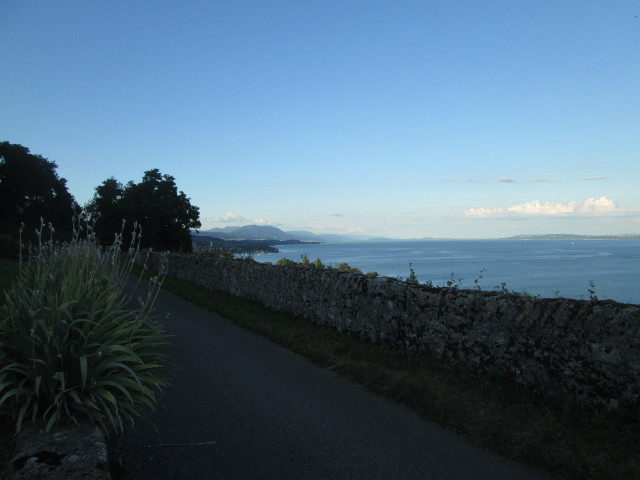
DebConf 13 report (by Andreas Tille) General impression unofficial  Scenic Hacklab I'm beginning my DebConf report in an unofficial "Scenic Hacklab" right at the edge of the lake in Yverdon. This is the right place to memorise the last days. When I started from this place cycling to Le Camp 12 days ago I was full of great expectations and what should I say - the reality has even beaten these. Once it comes about comparing DebConfs even if it is an unfair comparison due all the differences my secret long term favourite was Helsinki very closely followed by Argentina and also very closely followed by all the other great DebConfs I joined (and I joined all in Europe). Would Le Camp be able to beat it? The short answer is: Yes, it is now my favourite DebConf while I think I do not suffer from the last-Debconf-was-the-best-DebConf-syndrome (and I realised there are others thinking the same). As you might probably know I'm a bit addicted to swimming. While Helsinki had admittedly the better conditions I was at least able to fix the distance issue using my bicycle. (Hey, those Le Camp photographers did a great job in hiding the fact that you can not actually touch the lake right from the meadow of Le Camp.) Being able to have my bicycle at DebConf scored some extra points. However, the really great view of the lake, the inspiring "Scenic Hacklab" which was my favourite place has bumped DebConf13 at first place in my personal ranking. So it comes quite natural to say: "Kudos to the great organisation team!" They did a Swiss-like precise work and perfectly succeeded in hiding any problems (I assume there were some as always) from the attendees so everything went smooth, nice and shiny for the attendees. The local team was even precise in setting up great weather conditions for DebConf. sunrise over  the lake While saying thanks to the local team I would like to also explicitly thank Luca Capello who has quite some share that this DebConf was possible at all (while I have to decrease my DebConf score one point because he was not really there - Luca to bad that you were not able to come full time!) Also thanks to Gunnar and Gannef who helped remotely (another score down because I were missing them this year as well). Even if it was my favourite DebConf I was not able to work down my todo list fully (which was not only uploading one package per day which I at least statistically fullfilled). But that's probably a general feature of todo lists anyway. One item was definitely done: Doing my daily swimming BoF. I actually was able to do the other parts of the triathlon which was skipped by Christian and have done in summary about 150km cycling with 3500m elevation and estimated 7-8km swimming (0m elevation ;-)). Considering the great view at sunrise over the lake I was not hating my "Senile bed escape" disease too much (I was every day waking up at sunset) - it was simply a great experience. I will never forget seeing water drips glimmering like gold inside the morning sun while seeing the Alps panorama in the distant. I hope I was able to help all interested swimmers with the DebConf Beach Map which was just a by-product of my activities in DebCamp. Speaking about OSM: I was astonished that the area was way less covered than I expected. Thanks to several DebConf attendees the situation became better and the map does not only show random trees in the wild but also the tracks leading to these. (Remark: It was no DebConf attendee who is responsible for plastering the map with single trees.) While I had my mapping focus basically close to the edge of the lake I was also able to even map my very own street. :-) I clearly remember one specific mapping tour when I was invited by the DPL: He convinced me to join him on a bicycle tour and since I was afraid to get fired I joined him instead to keep on hacking. Also Sorina was brave enough to join us on the tour and she did quite well. (Sorina, do you remember the agreement about your work on the installer? ;-)) Lucas described the tour as: going uphill on only asphalted roads. Sorina and me were witnessing the mighty DPL powers when we left the wood around Le Camp to reach the described road: The asphalt was just put onto the road - no doubt that it was done on the immediate demand of mighty DPL. :-) DebCamp time was flying like nose dive and a lot of known (and unknown) faces arrived at Le Camp. What I really liked a lot this year was that several really young children has pulled down the average age of DebConf attendees. I clearly remember all the discussion one year ago what to do about children. As always the issue was solved in a typical Debian way: Just do it and bring your children - they had obviously a great time as well. I think the youngest child was 2 months and the oldest "child" above 20. ;-) Actually Baptiste Perrier did great in making the C&W party a success and had obviously a nice time. (I wished my son would have been able to come as well but he needs to write his bachelor s thesis in physics. :-() It was nice to see the kids using all playing facilities and communicating with geeks. Also I would like to point out that even the very young attendees had their share at the success of DebConf: Just think of the three "bell ringing assistants" who helped me ringing the bells for lunch and dinner. I've got this cool job from Didier in the beginning of DebCamp. I must say having some real bells ringing is by far nicer than just the "lunch / dinner starts in 10 minutes" from IRC bot. The only thing I did not understand was that people did not considered ringing the bells at 8:00 for breakfast as a good idea. Regarding the food in general I would also like to send kudos to the kitchen: It was tasty, freshly prepared, regional food with a good change rate. I really liked this. Extra points for having the chance to sit outside when eating. Talks But lets have a look into the conference programme. I'd really recommend watching the videos of the talks Bits from the DPL (video) and Debian Cosmology (video). I considered both talks as entertaining and interesting. I also really hope that the effort Enrico Zini started in Debian Contributors (video) will be successful. I had some talks and BoFs myself starting with Why running a Blend (video) and I admit that (as usual) the number of attendees was quite low even if I think there is some proof (see below) that it is interesting for way more people who should consider working more "blendish" in their team. Do you know how to recruit one developer per year and relax the man power problem in your team? Feel free to watch the video. We have confirmation that ten DDs of our team have considered to join Debian only because Debian Med exists. Admittedly biology and medicine are really leaf topics inside the Debian universe. So if even this topic that has a very tiny share of the Debian users is able to attract this level of attention - how many more people could we win for multimedia, games, GIS and others? So if you feel you are quite overworked with your packaging and you have no time this is most probably wrong. The amount of time is basically a matter of priorities you set for your tasks. Try to put some higher priority onto using the just existing Blends tools I explained in my talk to attract more users and developers to your team and by doing so spread the workload over more people. It works, the prove was given in my main talk. So before you start working on a specific package you should wonder who else could have an even stronger interest to get this work done and provide him with some additional motivation and help to get the common goal done. The interesting thing is that my BoF about How to attract new developers for your team (video) - which was a simple report about some by-product of the Blends work - made it into the main talk room and got way more attention. For me this is the proof that the Blends concept itself is probably badly perceived as something like "a few outsiders are doing damn specific stuff which is not really interesting for anybody else" instead of what is really is: Smoothing the way from specific upstream applications to the end user via Debian. Once you see the video of this BoF you can observe how my friend Asheesh Laroia became more and more excited about the Blends concept and admitted what I said above: We should have more Blends for different fields. Funnily enough Asheesh asked me in his excitement to talk more about Blends. This would have been a really good suggestion ten years ago. At DebConf 3 in Oslo I had my very first talk about Blends (at this time under the name "Debian Internal Projects"). I continuously kept on talking about this (MiniDebConf Peking 2005, DebConf 5, Helsinki (video), DebConf 7, Edinburgh (video), DebConf 8, Mar del Plata (video), DebConf 9, C ceres (video), MiniDebConf Berlin 2010 (video in German), MiniDebConf Paris 2010 (not video recorded), DebConf 11, Banja Luka (video) ... and these are only (Mini)DebConfs my talks page is full of this topic) and every new year I try different ways to communicate the idea to my fellow Debianistas. I'm wondering how I could invent a title + abstract avoiding the term Blends, put "Git", "release" and "systemd versus upstart" in and being able to inform about Blends reasonably by not becoming to off topic with the abstract. I also registered the Debian Science round table. I admit we were lacking some input from remote via IRC which used to be quite helpful in the past. The attendees agreed upon the handling of citations in debian/upstream files which was invented by Debian Med team to create even stronger bounds to our upstream developers by giving their work extra reward and providing users with even better documentation (see my summary in Wiki). As usual I suggested to create some Debian Science offsprings like "Debian Astronomy", "Debian Electronics", "Debian Mathematics", "Debian Physics" etc. who could perfectly leave the Debian Science umbrella to get a more fine grained structure and a more focused team to enhance the contact to our users. Unfortunately there is nobody who volunteers to take over the lead for such Blends. I have given a short summary about this BoF on the Debian Science mailing list. In the Debian Med meeting I have given some status report. No other long term team members were attending DebConf and so I gave some kind of introduction for newcomers and interested people. I touched also the DebiChem topic which maintains some packages that are used by biologists frequently and so we have a good connection to this team. Finally I had registered three BoFs in Blends I'm actually not (or not yet) active part of. My motivation was to turn the ideas I have explained in my main talk into specific application inside these teams and helping them to implement the Blends framework. In the first BoF about Debian GIS I have shown the usual team metrics graphs to demonstrate, that the one packaging team Pkg-OSM is in danger to become MIA. There are only three persons doing actual uploads. Two of them were at DebConf but did not joined the BoF because they do not consider their contribution to Pkg-OSM as a major part of their general Debian work. I will contact the main contributor David Paleino about his opinion to move the packages step by step into maintenance of Debian GIS packaging team to try to overcome the split of two teams that are sharing a good amount of interest. At least if I might become an Uploader for one of the packages currently maintained by Pkg-OSM I will move this to pkg-grass-devel (which is the name of the packaging team of Debian GIS for historical reasons). The attendees of the BoF have considered this plan as sensible. Moreover I talked about my experiences with OSGeo Live - an Ubuntu derivative that tries to provide a full tool chain to work on GIS and OSM problems ... basically the same goal as Debian GIS has just provided by the OSGeo project. I'm lurking on OSGeo mailing list when I asked explicitly I've got the answer that they are working together with Debian GIS and are using common repository (which is IMHO the optimal way of cooperation). However, it seems that several protagonists of OSGeo Live are underestimating the resources provided by Debian. For instance there was a question about Java packaging issues but people were not aware about the existence of the debian-java mailing list. I was able to give an example how the Debian Med team managed to strengthen its ties to BioLinux that is also an Ubuntu derivative for biologists. At our first Debian Med sprint in 2011 we invited developers from BioLinux and reached a state where they are using the very same VCS on Alioth where we are maintaining our packages. At DebConf I was able to upload two packages where BioLinux developers did certain changes for enhancing the user experience. My "work" was just bumping the version number in changelog and so we did profit from the work of the BioLinux developers as well as they are profiting from our work. I plan to dive a bit more into Debian GIS and try to strengthen the connection to OSGeo Live a bit. The next BoF was the Debian Multimedia meeting. It was nice that the current leader of Ubuntu Studio Kaj Ailomaa joined the meeting. When I was explaining my ideas about cooperation with derivatives I repeated my detailed explanation about the relation with BioLinux. It seems every topic you could cover inside Debian has its related derivative. So to me it seems to be quite natural to work together with the developers of the derivative to join forces. I actually consider a Blend a derivative done the right way = inside Debian. The final work for the derivers that might be left for them is doing some shiny customising of backgrounds or something like this - but all the hard work could and should be done in common with the relevant Debian team. My dream is to raise such relevant teams inside Debian ... the Blends. Finally the last BoF of this series was the Debian Games meeting. As always I presented the team metrics graphs and the Debian Games team members who attended the BoF were quite interested. So it seems to be some unknown fact that team metrics are done for several teams in side Debian and so I repeat the link to it for those who are not yet aware of it. As a result of the BoF Debian Games team members agreed to put some more effort into maintaining their Blends tasks. Moreover Miriam Ruiz wants to put some effort into reviving Debian Jr. Regarding Debian Jr. there was an interesting talk about DouDouLinux - in case you might want to watch the video I'd recommend skipping the first 30min and rather watch the nice live demo. There was also an ad hoc BoF about Debian Jr scheduled to bring together all people interested into this cute project and Per Anderson volunteered to take over the lead. I have given a summary about this specific BoF at the Debian Jr list. For some other talks that I'd regard as remarkable for some reasons: I'd regard the talk "Debian-LAN" by Andreas Mundt as some hidden pearl because it did not got a lot of attention but after having seen the video I was quite impressed - specifically because it is also relevant for the Blends topic. Memories I also liked "Paths into Debian" by Moray Allan (and I was only able to enjoy the latter talks thanks to the great work of the video team!) because it also scratched the same topic I was concerned about in my mentoring talk. Related to this was in my opinion also "Women in Debian 2013" were we tried to find out reasons for the lack of woman compared to other projects and how to overcome this issue. Geert hovering  over the grass Besides the talks I will probably never forget two specific moments that make DebConf so special. One of these moments is recorded on an image that clearly needs no words - just see Geert hovering over the grass. Another strong moment in my personal record was in the DebConf Newbies BoF "First time at DebConf" that unfortunately was not recorded but at least for this statement it would have been very great if we would have some reference better than personal memory. Aarsh Shah a GSoC student from India suddenly raised up and said: "Four months ago I was not even aware that Free Software exists. Now I'm here with so many people who are totally equal. If I will tell my mother at home that I was standing in the same queue where the Debian Project Leader was queuing up for food she will never believe me." He was totally excited about things we are regarding as normal. IMHO we should memorise moments like this that might be part of the key to success in cultures, where Debian is widely unknown and very rarely in use. Amongst these not scheduled great moments the scheduled day trip was also a great thing. I had a really hard time to decide what tour I might join but ended up in the "long distance walking (or should I say running) group". Inspired by the "running Bubulle" who was flashing between the walking groups we went uphill with 5.4km/h which was a nice exercise. Our destination the large cliff was an exciting landscape and I guess we all enjoyed the dinner organised by the "Trout cabal". ;-) say goodby to  friends So I had a hard time to leave Le Camp and tried hard to make sure my memories will remain as long as possible. Keeping some signs attached to my bicycle, conserving the "Scenic Hacklab" sign for my private "scenic hacklab @ home" was one part. I also have cut some branches of the Buxus sempervirens in Le Camp and have put them in my garden at home (where I create some hedgerow from places where I spent some great time). These will probably build a great part of the hedgerow ... Thanks for reading this longish report. Looking forward to see you all in Germany 2015 (or earlier) Andreas. Scenic Hacklab  @ home

13 September 2013

Joey Hess: a special announcement from RMS

A little grep has told me that RMS is going to announce something special on olduse.net in two weeks time, on 27 September 1983. Best not to speculate about the details, but this announcement will be something people are still talking about thirty years later. So it's an event you and your news reader won't want to miss. I have set up an IRC channel #olduse.net on FreeNode, and we'll see who first spots the post!
9 September 2013

Joey Hess: a rope ladder to the dgit treehouse

Ian has said something along the lines of dgit being a private club; if you're not in the club the strange git-centric views of its members don't affect you. With that said, dgit is now a quite usable and nice tool and we would like more people in the club. To that end, here's one way to get into our little world where the Debian source repository is really a collection of git repositories. I recently made a new package and added it to Debian, and here is every command I typed to do it (other than vim, lintian, and dpkg -i). As you read through, notice that every command has to do with git in one way or another. git clone https://github.com/blake2-ppc/git-remote-gcrypt This software makes git be able to push to encrypted git remotes. Very neat stuff. git archive --format=tar origin/master -o gzip > ../git-remote-gcrypt_0.20130908.orig.tar.gz Like most software on github, this one has no upstream tarball; its git repository is its native source format. Needing to manually generate this tarball appendix is the only unpleasant part of the process. git add debian
git commit -m debianization Had to write 48 lines of control file and stuff to make the package build. dgit build -tc This just runs dpkg-buildpackage. But you need to commit all files before running it. dgit push --new The --new is needed because this is a new package. This created the git repository for the package on alioth and pushed my changes and the upstream history to it, as well as uploadng the package to incoming.

30 August 2013

Joey Hess: best DebConf ever

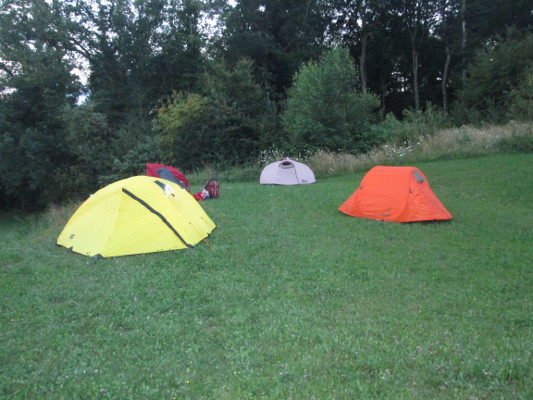
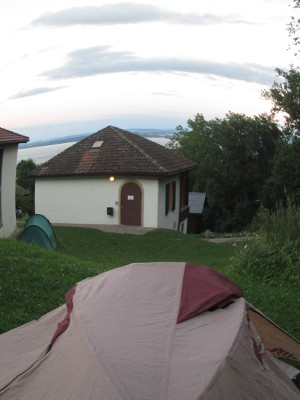
For me, DebConf13 in Switzerland was a perfect DebConf, and generally an great developer meeting and conference. I've attended several past DebConfs in Canada, Norway, Brazil, Finland, Mexico, Scotland, Spain, NYC, Bosnia, and Nicaragua. I have special memories of each. DebConf13 was ideal in every way. Let's start with the camping. Only a minority of us did it, and my campsite was located in a small field behind a bar that was often noisy late into the night, when I was trying to rest and preserve my European jetlag remedy of inverted sleeping schedule. Still, I love sleeping cocooned in a tent, and going through the routines of camping and spending time alone there was a good counterpoint to DebConf. I generally find myself retreating for a day or two in the middle of a week-long conference, burnt out with social interactions. That didn't happen this time. I need to find way to camp at future DebConfs. (Also special shout out to wonderful people who lent me a warmer sleeping bag, and bought me a pillow while on a trip to town! Upgraded my first backpacking in Europe experience's comfort level a lot!) The next perfect thing for me were the talks I gave at DebConf. I always enjoy presenting at DebConf, and barely remember when I'd get nervous doing it. But I really felt comfortable giving these talks in a way I've not before. I'm pleased with how the Debian Cosmology talk turned out; I'd worried it would be a downer talk, or too light, or not well received, and none of those problems surfaced. I was especially happy with my dh_busfactor session, which I prepared for all of 10 minutes and was structured entirely to benefit me by talking over my thoughts and getting feedback, and in which I probably drove the camerapeople crazy running my own mic into the audience. Despite all that, I think it succeeded being interesting for the participants as well as for me. Hope to follow up on it soon.. But beyond the two talks I submitted, there were a series of ad-hoc scheduled talks. It seemed that every day I spent at least an hour discussing something I'm deeply involved in. This started with the Ikiwiki bof, and then there was an epic series of (unrecorded) BoFs about git stuff, which basically turned into an unofficial git track at DebConf. Much, much discussion of git-annex and other things I'm involved in. BTW, I really like that DebConf, as well as being a formal conference on top, is really an un-conference underneath, with new BoFs and things popping up on the schedule all week long. You can even have completely unscheduled meetings that somehow get just the right mix of people to make something awesome happen.
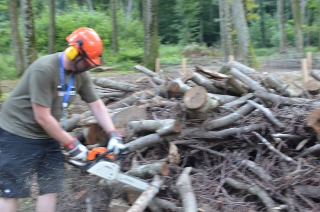
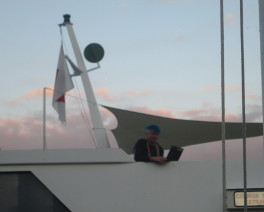
But it wasn't all about talks. Indeed, I only attended 2 or 3 sessions a day. The DebConf13 venue was controversial, but I found it excellent for getting things done. Rather than one or two massive rooms that get too noisy to think in, this venue had many little nooks and crannies suited for different types of work. There were so many I only discovered some while walking down the hill as I was leaving the venue! Anchoring it all was the excellent view, and I particularly enjoyed the "scenic hacklab". I was particularly impressed with the flexability of the venue's management. Someone asked if we could have cheese for breakfast, and every breakfast thereafter had not one but often three excellent cheeses. One day we'd be complaining that there were not enough vegetables in the food, and the next we'd be eating an excellent vegetarian Swiss lunch. They even apparently relaxed stringent Swiss rules on not allowing tents in sightlines visible from people further up the hill. They were clearly happy to welcome our crazy gathering to Le Camp. They let a DD borrow and use a chain saw and build a bonfire! The venue also encouraged getting out and exploring the surrounding countryside. Too often I end up spending the whole DebConf without seeing much of the area around. This time I at least got down the hill to see the castle in Vaumarcus a few times, and enjoyed many evening walks amoung the grape fields. The conference dinner (on a boat!) tied into this well too. And the daytrip to CERN was a great addition. We got to poke around the control center for a massive particle accellerator! My only regret is we didn't get a chance to actually go inside the LHC tunnels. Back to DebConf, another thing I really liked about this one was that its location allowed several upstream authors of software in Debian (other than the usual suspects who are both upstreams and Debian Developers) to attend. I don't know if Lennart Poettering changed any minds about systemd with his talk, but I was happy for the opportunity to buy him a beer. I didn't get to Monty's talk, but it was excellent to see him attend as well. Finally, I got to meet old friends I'd not seen in years, and new ones I've not met in real life before. We're still not sure where this whole DebConf thing is going -- will it be all about the cheese and wine party and greybeards in 20 years time? But one thing we know is we enjoy our little slice of the year where kilts and coding are equally unremarkable, where problems that seem intractable online somehow solve themselves in person, where we come away with ideas for an entire year and memories for a lifetime.

Michael Stapelberg: How git performs when you throw all of Debian at it

During DebConf, Asheesh presented the idea of using git instead of the file system for storing the contents of Debian Code Search. The hope was that it would lead to fewer disk seeks and less data due to gits delta-encoding. Maybe the reduction would be big enough that enough data could be held in RAM to allow for fast retrieval. Joey Hess helped me out with a couple of details: he revealed that using git repack -a -d will lead to a single packfile that optimally contains HEAD, not caring about the history. Also, he showed me how to use git cat-file. We did a small-scale experiment and the results were promising. I told him I ll do the experiment of just committing the entire unpacked source mirror to git and promised to follow up with the results, so here goes:
stapelberg@couper ~/unpacked master $ time cat <<EOT   git cat-file --batch >/dev/null
:linux_3.2.32-1/sound/pci/ice1712/aureon.c
:linux_3.2.32-1/sound/soc/codecs/sgtl5000.c
:linux_3.2.32-1/sound/pci/hda/patch_conexant.c
EOT
cat <<<''  0,00s user 0,00s system 62% cpu 0,006 total
git cat-file --batch > /dev/null  4,38s user 1,08s system 99% cpu 5,477 total
stapelberg@couper ~/unpacked master $ time cat linux_3.2.32-1/sound/pci/ice1712/aureon.c linux_3.2.32-1/sound/soc/codecs/sgtl5000.c linux_3.2.32-1/sound/pci/hda/patch_conexant.c >/dev/null
cat linux_3.2.32-1/sound/pci/ice1712/aureon.c   > /dev/null  0,00s user 0,00s system 69% cpu 0,006 total
stapelberg@couper ~/unpacked master $ time cat <<EOT   git cat-file --batch >/dev/null
:i3-wm_4.6-1/libi3/font.c
EOT
cat <<<':i3-wm_4.6-1/libi3/font.c'  0,00s user 0,00s system 51% cpu 0,008 total
git cat-file --batch > /dev/null  4,30s user 1,18s system 99% cpu 5,533 total
stapelberg@couper ~/unpacked master $ time cat i3-wm_4.6-1/libi3/font.c >/dev/null
cat i3-wm_4.6-1/libi3/font.c > /dev/null  0,00s user 0,00s system 0% cpu 0,004 total
Even after repeating those tests a couple of times to get a warm page cache, the result stays the same: git takes about 5 seconds to resolve the deltas in a large repository. Even if this was 5 seconds startup time and a very small amount of additional time per file, it would not be acceptable for our use case. The conclusion is that git is clearly not suitable for this kind of usage, which is not surprising after having heard a couple of times that git does not scale :-). For the curious, the .git/objects directory is 29 GiB for roughly 140 GiB of source code, so the delta encoding is quite impressive in terms of saving space. However, keep in mind that the compressed (!) Debian source archive is about 35 GiB, so the savings are not that huge.

25 August 2013

Joey Hess: southern fried science fiction with plum sauce

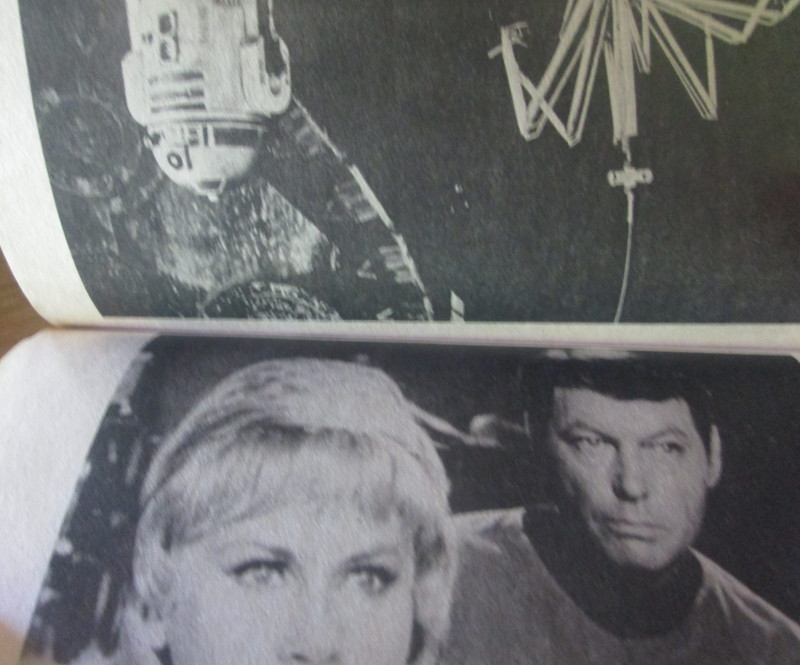
Had an afternoon of steak and science fiction. Elysium is only so-so, but look what we found in a bookstore that was half religious materials and half SF, local books, and carefully hidden romance novels:
Star Wars, Star Trek and the 21st Century Christians
Best part was at the end, when I finally found one of the local asian markets Tomoko tells us about when she casually pulls out the good stuff at family gatherings. I will be back for whole ducks, fresh fish, squid, 50 lb bags of rice, tamarind paste, fresh ginger that has not sat on the shelf for 2 months because only I buy it, etc. Only an hour from home in the woods! Between the garlic scapes, bean sprouts, enoki mushrooms, etc that I got for $10 today and this week's CSA surprise of 18 inch snake beans and smoked pork knuckles, I have the epic stir fry potential.. Spock and R2D2

Joey Hess: idea: git push requests

This is an idea that Keith Packard told me. It's a brilliant way to reduce GitHub's growing lockin, but I don't know how to implement it. And I almost forgot about it, until I had another annoying "how do I send you a patch with this amazing git technology?" experience and woke up with my memory refreshed. The idea is to allow anyone to git push to any anonymous git:// repository. But the objects pushed are not stored in a public part of the repository (which could be abused). Instead the receiving repository emails them off to the repository owner, in a git-am-able format. So this is like a github pull request except it can be made on any git repository, and you don't have to go look up the obfuscated contact email address and jump through git-format-patch hoops to make it. You just commit changes to your local repository, and git push to wherever you cloned from in the first place. If the push succeeds, you know your patch is on its way for review. Keith may have also wanted to store the objects in the repository in some way that a simple git command run there could apply them without the git-am bother on the receiving end. I forget. I think git-am would be good enough -- and including the actual diffs in the email would actually make this far superior to github pull request emails, which are maximally annoying by not doing so.
Hmm, I said I didn't know how to implement this, but I do know one way. Make the git-daemon run an arbitrary script when receiving a push request. A daemon.pushscript config setting could enable this. The script could be something like this:
#!/bin/sh
set -e
tmprepo="$(mktemp -d)"
# this shared clone is *really* fast even for huge repositories, and uses
# only a few 100 kb of disk space!
git clone --shared --bare "$GIT_DIR" "$tmprepo"
git-receive-pack "$tmprepo"
# XXX add email sending code here.
rm -rf "$tmprepo"
Of course, this functionality could be built into the git-daemon too. I suspect a script hook and an example script in contrib/ might be an easier patch to get accepted into git though. That may be as far as I take this idea, at least for now..

21 August 2013

Joey Hess: experimental multiuser git-annex repository

On the last day of DebConf 13, RichiH and Ganneff and I set up a git-annex repository that all Debian developers have automatic commit access to, and everyone can clone and browse. See the announcement email. This is an interesting repository for me for several reasons. Selfishly, I have always wanted an easy way to download lots of DebConf photos for offline viewing, and never seem to get around to downloading everything from gallery.debconf.org when I have bandwidth. I've also wanted an example repository that shows how git-annex can be used by a large group for collaboration. Finally, the way this repository is set up with an incoming queue is fairly unique. With 430 files in the repository, totaling over 3.5 gigabytes (which doesn't include all the talk videos that are #included into it), and at least 18 people having cloned the repository so far, the debconf-share repository is well on its way to being a sort of large git-annex repository. Just running git annex whereis is interesting; many of the files already have 8 copies. Some talk videos are more popular than others and you can see when they're downloaded too. But enough snooping.. ;) So far people have uploaded mostly photos and talk slides. Other places exist to store those things in the DebConf infrastructure, but it's nice to have them all available in one tree. I particularly like today's addition of chrysn's files which include the raw photos and hugin files used to produce panoramas, and then pull those together into a postcard which has all its sources available. In my corner of the debconf-share repository, I'm collecting together files regarding the possibly-historic dpkg-source-git-re-re-redesign process that would have otherwise been scattered around various places and probably not all published. This includes an hour long recording of the main design session (recorded with permissions) made by my laptop's mic, which, surprisingly, turned out to be pretty listenable. I will probably have more to say about this process later, once Ian announces dgit. So, we're still seeing how usage develops. I hope that having this available during the next DebConf, and other Debian meetings, rather than only at the end, will further facilitate file sharing and storage. Especially if a fast clone is available right on the DebConf LAN. ;)
The technical details of how the repository is put together are: I've found at least 4 bugs in git-annex as a result of this repository, which is a rather unusual use case. And fixed 2 of them so far..

19 August 2013

Gunnar Wolf: After Debian's 20th birthday, everybody's life gets back to normality...

As I slowly read my good friends wishing each other a good trip, telling they got home safely, and the IRC channels form thick drops of a bitter-sweet etheral substance, I cannot help feeling DebConf13 is over For me as well, from the distance. Many friends gave me warm greetings, and without being there, gave me that beautiful feeling of real community that Debian has given me for ten years already, since I met in real-life many of its developers at DebConf3 in Oslo. And yes, I have stated this far too many times I have attended every DebConf since (and worked organizing most of them). This year, over 300 people were gathered in Switzerland to enjoy the always most intense weeks of the year. This year, I was unable to attend due to calendar clashes. Even so, without the stress that organizers have, and thanks to the great work of the always-loved Video Team, I think I was able to be present at more sessions than at in any of the last few years. Oh, and for the readers of this blog who were not there Do you want to follow what was presented? You can download already the videos for all of the recorded presentations (that were, due to the planned coverage and the manageable size of the Video Team, about of the total scheduled sessions). And, as always, I was able to follow many very interesting talks and take part of a couple interesting meetings/BoF sessions. I still have a bit of catchup, partly due to the timezone difference (I was only at one of the sessions during the Swiss morning, at 02:30 local time, the pkg-ruby-extras team BoF). Anyway... Not being there, I surely was an avid consumer of the photos posted in the DebConf13 gallery, and will surely follow it for some more time as some of you upload your pending material. It was clear from the beginning that, no matter what your definition of consensus is, the chosen venue was beautiful. A beautiful place between the lake and the mountains where our sportiest guys had a very good share of morning runs, cycling sessions, competition sports of different types, outright plain fun for attendees of all sizes and all species... But, hey, wait! During a chat in the course of DebConf, a friend told me a bit worried that all this beauty and fun might make our dear and very important sponsors they are paying for a geek vacation, is it so? No, not at all. Not by a long stretch. And just looking at those same galleries makes it clear and obvious. After all, it's widely known that Debian is the operating system for the gurus. Simple: It's impossible to have all those geeks without getting amazing work done, in ways that even seem clich s (this last photo had Joey Hess explaining dpkg format version 3.0 (git) ideas, sketched after waking up at 3AM on the first sketching surface available to him). After all, Debian people are famous for their inclination to use any excuse to open their computers and hack away. We can find Debianers hacking in small spaces and also hacking out in the fields. But this time, people were able to hack indoors while enjoying the nature and hack outdoors under a tree. And, yes, one of the things that makes organizing DebConf worth it is, after eleven months having low-bandwidth meetings over IRC, having the opportunity to plan for the next days face to face, in a relaxed but work-full environment. Anyway, here at home I didn't sit idly just longing over them. How could I? We are just celebrating the Debian Project's 20th anniversary! http://gwolf.org/content/jonathan-host-and-organizer-rancho-electr-nico">Jonathan, a Debian enthusiast, student at my university, and collaborator for several free software-related collectives in Mexico City, invited me to the celebration at Rancho Electr nico (which I recently mentioned in this same blog). While I was unable to stay for the whole celebration, we had a very good time; I talked about some ways on how to contribute to Debian. Although I didn't have much of a presentation prepared for it, I feel it was successful and interesting for the attendees I just hope to start seeing some of them get into any of the ways for helping Debian soon. I also stayed as a listener and ocassional commenter for a talk on the Debian Project's history and goals, and to a presentation on a nifty electronic music programming tool called Supercollider (of course, available in Debian). Now, "regular" life should continue. For some value of "regular".
16 August 2013

Joey Hess: Debian at 20

RichiH used flint and steel to light the bonfire. We carefully fed it up from those sparks to a blaze. Put on the biggest logs we could find to make it last. Now I'm sitting on the hill above it watching folks gathered around. A poem is being read, in Hindi, then translated for us to English. Others have shared songs and poems in a dozen languages, both classics and their own. Out below the darkness of the lake. This is Debian at 20. At the start of this DebConf, I gave a talk on "Debian Cosmology. In that (and a later "dh_busfactor" talk) I shared my hopes and my fears. I was conflicted about giving the this talk, worked on it for weeks, felt it might not work, or be depressing. I've had nothing but good comments about it. 20 years is ages in internet time and technical projects ossify over time. The last session I was in this afternoon was a presentation of a new tool, which I hope & feel has the potential to fundamentally change an important and suboptimal part of Debian. Then I walked outside to a rainbow over crystal clear Swiss alps on the horizon. How encouraging, and what a nice story that will be around some future campfire.

14 August 2013

Joey Hess: words fail me


13 August 2013

Joey Hess: swiss cheese

typical DebConf cheese & wine table Organic smelly mystery cheese (Vogon planet Whalke milk)

12 August 2013

Joey Hess: please build a haskell to perl compiler

The Fay compiler is a simple way to build fairly comprehensible javascript code from Haskell source. It occurs to me that it should be rather easy to modify Fay to emit perl code rather than javascript. This would allow contributing things like plugins to various perl programs, without writing perl. Of course, the same idea could probably be used to compile Haskell to other languages like python, but perl seems particularly well suited as a second Fay target, since javascript and it have quite similar syntax and similar support for features like closures which Fay relies on. I do not have time to work on this idea myself. It would be a good project for a beginning Haskell programmer. You probably don't even need to fully understand monads to do it! Essentially, look at Fay output examples, translate them from javascript to perl, and then much of the code changes in Fay would probably be in simple string generation code.
I will forward any bitcoins sent to the address 149eBtWS6i8cwQdPQJJ8hAGpDuEqNidyTj to whoever makes this. If it doesn't happen in 1 year, any donations will be forwarded to the EFF instead.

Joey Hess: good morning

panorama of sunrise Woken at 3 am by fil singing "Join Us Now And Share The Software" (all verses!) I could not get back to sleep and spent 3 hours thinking up a new take on the hopelessly blocked dpkg-source v3 (git) format. A diagram of the new plan, which should meet all ftpmaster requirements, is posted in Hacklab 1. I am looking for reviewers. A rather hard to read photo (DebConf needs mandatory whiteboards!) is available here: Fil has paid me back in full for his drunken carousing by gifting me a Rhombus-Tech system on a chip on a PCMCIA card. I've checked this new computer, which features a modern multicore ARM CPU, into my wallet. And that's 10% of what went on today at DebConf for me, and we've not even gotten to the cheese and wine party tonight.

11 August 2013

Gregor Herrmann: DebCamp 2013

[no pictures here, just a short report]. Today DebConf, this year's edition of the annual Debian developer conference, started with two inspiring talks about Debian proper, one by Lucas Nussbaum, the other by Joey Hess. This also means that yesterday DebCamp ended, the period preceeding DebConf and dedicated to working on Debian together with others. Here's a short report from my point of view: I arrived here on Tuesday, the first day of DebCamp. I immediately fell in love with the venue, & despite the early stage of setup, everything I needed was working fine for me from the very start. Like in previous years, I used the time to do work in the Debian Perl Group, especially taking advantage of the presence of other team members. That's the great thing about DebCamp & DebConf: collaborating in real-life & real-time, from quickly asking a question over sitting together to think about solutions for a problem to "just" chatting & thereby developping ideas for the future. In the previous days I I really enjoy my time here, & I'm especially happy to meet some people for the first time in meat space. This is only possible due to the generous support of the DebConf sponsors & the immense efforts of the DebConf team. Thank you!

10 August 2013

Joey Hess: unexpected Switzerland

3 August 2013

Joey Hess: apple day

2 August 2013

Joey Hess: DIY crowdfunding and bitcoin

Well, my git-annex crowdfunding campaign is half way to its August 15th conclusion. So far it's raised more than five times what I hoped it would. I wish I could say I'm like some canny NASA engineer who intentionally sets low expectations for their Mars rover, but in both the previous kickstarter and this campaign I've really had no idea how far it'd go. I'm glad that I'll be working on git-annex for another year. I was particularly unsure if it'd be successful to move off Kickstarter. During the git-annex assistant Kickstarter campaign, I saw many small contributions from people who learned of it due to it being a successfully funded project, a staff pick, etc. Losing that easy network effect is a gamble. So far I've had only half the number of contributors that I got on Kickstarter. I've basically missed out entirely on the $5 level casual contributors. On the other hand, my backers have generally been more generous (and some have been exceedingly generous). And I've avoided rewards that will cost much money, so I may end up in the same ballpark funding level in the end! Incidentially, I'm really enjoying getting in touch to let people know when I make their sponsored commits. There's still time to sponsor one of your own ;) Bitcoin I also was curious to experiment with Bitcoin in this campaign. Partly because Paypal isn't available everywhere internationally, and takes really obnoxious percentages of transactions (though probably not as bad as Kickstarter taking its percentage followed by Amazon payments taking its percentage..) and partly because there seem to be interesting possibilities for supporting free software with Bitcoin. (Especially if any of the microtransactions on top of Bitcoin take off.) So far 5% of backers have used Bitcoin. It's been quite strange to actually have significant amounts of bitcoins in my wallet. Wordpress has had 94 bitcoin payments over 9 months since starting accepting them. I've had 47 payments in the two weeks my campaign has run so far. Wow! Most of the bitcoin payments have come in via Coinbase (a few people have found my direct payment address), but of those very few were using bitcoin purchased on Coinbase. Most are probably transfers of bitcoin they already had, or perhaps bitcoin purchased on other sites. The one technical issue I've had with using bitcoin is that Coinbase has not provided details about who sent most of the donations. Probably some of them are intentionally anonymous, but I suspect Coinbase's interface to claim incoming bitcoin transactions failed for some of them. (If you donated bitcoin and want to actually get a reward, please email me.) By the way, I'm converting most of the bitcoins back to USD pretty quickly. I'm not interested in speculating on currency exchange rates with money that has been donated so I can accomplish a particular task.. DIY I put up the campaign website without any means in place to handle updating it. This is because I never automate anything until I've done it at least 10 times by hand. ;) After the first trickle of donations became a flood, I quickly realized I needed at least something to handle keeping the numbers straight. What I whipped up in an hour of coding is a system where I enter incoming payments into a hledger file and a small haskell program parses that and writes out various files that are included into the website. Amusingly the percentage calculation and display code was copied from git-annex, so part of git-annex is helping run its own fundraising campaign. The campaign video is itself hosted in a public git-annex repository, come to think of it. The rest of the site is built using ikiwiki. Given that it's hosted at Branchable, this is a high level of dogfooding and DIY. There are certianly better crowdfunding platforms, but all I miss in this one is automated transaction entry. And I have total flexability, double entry accounting, and a powerful static website generator that handled being on the top of Hacker News without a sweat. Oh, and some money. What's not to like?

28 July 2013

Joey Hess: git-annex as a podcatcher

As a Sunday diversion, I wrote 150 lines of code and turned git-annex into a podcatcher! I've been using hpodder, a podcatcher written in Haskell. But John Goerzen hasn't had time to maintain it, and it fell out of Debian a while ago. John suggested I maintain it, but I have not found the time, and it'd be another mass of code for me to learn and worry about. Also, hpodder has some misfeatures common to the "podcatcher" genre: So, here's a rethink of the podcatcher genre:
cd annex; git annex importfeed http://url/to/podcast http://another/podcast
There is no database of feeds at all. Although of course you can check a list of them right into the same git repository, next to the files it adds. git-annex already keeps track of urls associated with content, so it reuses that to know which urls it's already downloaded. So when you're done with a podcast file and delete it, it won't download it again. This is a podcatcher that doesn't need to actually download podcast files! With --fast, it only records the existence of files in git, so git annex get will download them from the web (or perhaps from a nearer location that git-annex knows about). Took just 3 hours to write, and that's including full control over the filenames it uses (--template='$ feedtitle)/$ itemtitle $ extension '), and automatic resuming of interrupted downloads. Most of what I needed was already available in git-annex's utility libraries or Hackage. Technically, the only part of this that was hard at all was efficiently querying the git repository for a list of all known urls. I found a pretty fast way to do it, but might add a local cache file later on.

25 July 2013

Evgeni Golov: Say hello to Mister Hubert!

Some days ago I got myself a new shiny Samsung 840 Pro 256GB SSD for my laptop. The old 80GB Intel was just too damn small. Instead of just doing a pvmove from the old to the new, I decided to set up the system from scratch. That is an awesome way to get rid of old and unused stuff or at least move it to some lower class storage (read: backup). One of the things I did not bother to copy from the old disk were my ~/Debian, ~/Grml and ~/Devel folders. I mean, hey, it s all in some kind of VCS, right? I can just clone it new, if I really want. Neither I copied much of my dotfiles, these are neatly gitted with the help of RichiH s awesome vcsh and a bit of human brains (no private keys on GitHub, yada yada). After cloning a couple of my personal repos from GitHub to ~/Devel, I realized I was doing a pretty dumb job, a machine could do for me. As I already was using Joey s mr for my vcsh repositories, generating a mr config and letting mr do the actual job was the most natural thing to do. So was using Python Requests and GitHub s JSON API. And here is Mister Hubert, aka mrhub: github.com/evgeni/MisterHubert. Just call it with your GitHub username and you get a nice mr config dumped to stdout. Same applies for organizations. As usual, I hope this is useful :)

Next.

Previous.