Search Results: "jan"

12 October 2023

Reproducible Builds: Reproducible Builds in September 2023

Welcome to the September 2023 report from the Reproducible Builds project In these reports, we outline the most important things that we have been up to over the past month. As a quick recap, whilst anyone may inspect the source code of free software for malicious flaws, almost all software is distributed to end users as pre-compiled binaries.

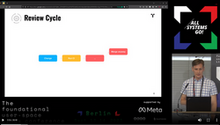
Andreas Herrmann gave a talk at All Systems Go 2023 titled Fast, correct, reproducible builds with Nix and Bazel . Quoting from the talk description:

You will be introduced to Google s open source build system Bazel, and will learn how it provides fast builds, how correctness and reproducibility is relevant, and how Bazel tries to ensure correctness. But, we will also see where Bazel falls short in ensuring correctness and reproducibility. You will [also] learn about the purely functional package manager Nix and how it approaches correctness and build isolation. And we will see where Bazel has an advantage over Nix when it comes to providing fast feedback during development.
Andreas also shows how you can get the best of both worlds and combine Nix and Bazel, too. A video of the talk is available.

diffoscope is our in-depth and content-aware diff utility that can locate and diagnose reproducibility issues. This month, Chris Lamb fixed compatibility with file(1) version 5.45 [ ] and updated some documentation [ ]. In addition, Vagrant Cascadian extended support for GNU Guix [ ][ ] and updated the version in that distribution as well. [ ].

Yet another reminder that our upcoming Reproducible Builds Summit is set to take place from October 31st November 2nd 2023 in Hamburg, Germany. If you haven t been before, our summits are a unique gathering that brings together attendees from diverse projects, united by a shared vision of advancing the Reproducible Builds effort. During this enriching event, participants will have the opportunity to engage in discussions, establish connections and exchange ideas to drive progress in this vital field. If you re interested in joining us this year, please make sure to read the event page, the news item, or the invitation email that Mattia Rizzolo sent out recently, all of which have more details about the event and location. We are also still looking for sponsors to support the event, so please reach out to the organising team if you are able to help. Also note that PackagingCon 2023 is taking place in Berlin just before our summit.
On the Reproducible Builds website, Greg Chabala updated the JVM-related documentation to update a link to the BUILDSPEC.md file. [ ] And Fay Stegerman fixed the builds failing because of a YAML syntax error.

Distribution work In Debian, this month: September saw F-Droid add ten new reproducible apps, and one existing app switched to reproducible builds. In addition, two reproducible apps were archived and one was disabled for a current total of 199 apps published with Reproducible Builds and using the upstream developer s signature. [ ] In addition, an extensive blog post was posted on f-droid.org titled Reproducible builds, signing keys, and binary repos .

Upstream patches The Reproducible Builds project detects, dissects and attempts to fix as many currently-unreproducible packages as possible. We endeavour to send all of our patches upstream where appropriate. This month, we wrote a large number of such patches, including:

Testing framework The Reproducible Builds project operates a comprehensive testing framework (available at tests.reproducible-builds.org) in order to check packages and other artifacts for reproducibility. In August, a number of changes were made by Holger Levsen:
  • Disable armhf and i386 builds due to Debian bug #1052257. [ ][ ][ ][ ]
  • Run diffoscope with a lower ionice priority. [ ]
  • Log every build in a simple text file [ ] and create persistent stamp files when running diffoscope to ease debugging [ ].
  • Run schedulers one hour after dinstall again. [ ]
  • Temporarily use diffoscope from the host, and not from a schroot running the tested suite. [ ][ ]
  • Fail the diffoscope distribution test if the diffoscope version cannot be determined. [ ]
  • Fix a spelling error in the email to IRC gateway. [ ]
  • Force (and document) the reconfiguration of all jobs, due to the recent rise of zombies. [ ][ ][ ][ ]
  • Deal with a rare condition when killing processes which should not be there. [ ]
  • Install the Debian backports kernel in an attempt to address Debian bug #1052257. [ ][ ]
In addition, Mattia Rizzolo fixed a call to diffoscope --version (as suggested by Fay Stegerman on our mailing list) [ ], worked on an openQA credential issue [ ] and also made some changes to the machine-readable reproducible metadata, reproducible-tracker.json [ ]. Lastly, Roland Clobus added instructions for manual configuration of the openQA secrets [ ].

If you are interested in contributing to the Reproducible Builds project, please visit our Contribute page on our website. However, you can get in touch with us via:

3 October 2023

Junichi Uekawa: Electronic receipt storage in Japan.

Electronic receipt storage in Japan. Japan also started allowing electronic data for receipts, but had some red tape associated with it. Presumably they were worried about increase in fraud cases. Law amendment that went in effet Jan 2022 made the last annoying bits simpler. We used to be required to sign the paper receipt and scan within 3 days of receiving the receipt. This special requirement is now gone. It took a few years to reach this state but now we are at a similar state as our colleagues in the US. Nice.


21 September 2023

Jonathan McDowell: DebConf23 Writeup

DebConf2023 Logo (I wrote this up for an internal work post, but I figure it s worth sharing more publicly too.) I spent last week at DebConf23, this years instance of the annual Debian conference, which was held in Kochi, India. As usual, DebConf provides a good reason to see a new part of the world; I ve been going since 2004 (Porto Alegre, Brazil), and while I ve missed a few (Mexico, Bosnia, and Switzerland) I ve still managed to make it to instances on 5 continents. This has absolutely nothing to do with work, so I went on my own time + dime, but I figured a brief write-up might prove of interest. I first installed Debian back in 1999 as a machine that was being co-located to operate as a web server / email host. I was attracted by the promise of easy online upgrades (or, at least, upgrades that could be performed without the need to be physically present at the machine, even if they naturally required a reboot at some point). It has mostly delivered on this over the years, and I ve never found a compelling reason to move away. I became a Debian Developer in 2000. As a massively distributed volunteer project DebConf provides an opportunity to find out what s happening in other areas of the project, catch up with team mates, and generally feel more involved and energised to work on Debian stuff. Also, by this point in time, a lot of Debian folk are good friends and it s always nice to catch up with them. On that point, I felt that this year the hallway track was not quite the same as usual. For a number of reasons (COVID, climate change, travel time, we re all getting older) I think fewer core teams are achieving critical mass at DebConf - I was the only member physically present from 2 teams I m involved in, and I d have appreciated the opportunity to sit down with both of them for some in-person discussions. It also means it s harder to use DebConf as a venue for advancing major changes; previously having all the decision makers in the same space for a week has meant it s possible to iron out the major discussion points, smoothing remote implementation after the conference. I m told the mini DebConfs are where it s at for these sorts of meetings now, so perhaps I ll try to attend at least one of those next year. Of course, I also went to a bunch of talks. I have differing levels of comment about each of them, but I ve written up some brief notes below about the ones I remember something about. The comment was made that we perhaps had a lower level of deep technical talks, which is perhaps true but I still think there were a number of high level technical talks that served to pique ones interest about the topic. Finally, this DebConf was the first I m aware of that was accompanied by tragedy; as part of the day trip Abraham Raji, a project member and member of the local team, was involved in a fatal accident.

Talks (videos not yet up for all, but should appear for most)
  • Opening Ceremony
    Not much to say here; welcome to DebConf!
  • Continuous Key-Signing Party introduction
    I ended up running this, as Gunnar couldn t make it. Debian makes heavy use of the OpenPGP web of trust (no mass ability to send out Yubikeys + perform appropriate levels of identity verification), so making sure we re appropriately cross-signed, and linked to local conference organisers, is a dull but important part of the conference. We use a modified keysigning approach where identity verification + fingerprint confirmation happens over the course of the conference, so this session was just to explain how that works and confirm we were all working from the same fingerprint list.
  • State of Stateless - A Talk about Immutability and Reproducibility in Debian
    Stateless OSes seem to be gaining popularity, so I went along to this to see if there was anything of note. It was interesting, but nothing earth shattering - very high level.
  • What s missing so that Debian is finally reproducible?
    Reproducible builds are something I ve been keeping an eye on for a long time, and I continue to be impressed by the work folks are putting into this - both for Debian, and other projects. From a security standpoint reproducible builds provide confidence against trojaned builds, and from a developer standpoint knowing you can build reproducibly helps with not having to keep a whole bunch of binary artefacts around.
  • Hello from keyring-maint
    In the distant past the process of getting your OpenPGP key into the Debian keyring (which is used to authenticate uploads + votes, amongst other things) was a clunky process that was often stalled. This hasn t been the case for at least the past 10 years, but there s still a residual piece of project memory that thinks keyring is a blocker. So as a team we say hi and talk about the fact we do monthly updates and generally are fairly responsive these days.
  • A declarative approach to Linux networking with Netplan
    Debian s /etc/network/interfaces is a fairly basic (if powerful) mechanism for configuring network interfaces. NetworkManager is a better bet for dynamic hosts (i.e. clients), and systemd-network seems to be a good choice for servers (I m gradually moving machines over to it). Netplan tries to provide a unified mechanism for configuring both with a single configuration language. A noble aim, but I don t see a lot of benefit for anything I use - my NetworkManager hosts are highly dynamic (so no need to push shared config) and systemd-network (or /etc/network/interfaces) works just fine on the other hosts. I m told Netplan has more use with more complicated setups, e.g. when OpenVSwitch is involved.
  • Quick peek at ZFS, A too good to be true file system and volume manager.
    People who use ZFS rave about it. I m naturally suspicious of any file system that doesn t come as part of my mainline kernel. But, as a longtime cautious mdraid+lvm+ext4 user I appreciate that there have been advances in the file system space that maybe I should look at, and I ve been trying out btrfs on more machines over the past couple of years. I can t deny ZFS has a bunch of interesting features, but nothing I need/want that I can t get from an mdraid+lvm+btrfs stack (in particular data checksumming + reflinks for dedupe were strong reasons to move to btrfs over ext4).
  • Bits from the DPL
    Exactly what it says on the tin; some bits from the DPL.
  • Adulting
    Enrico is always worth hearing talk; Adulting was no exception. Main takeaway is that we need to avoid trying to run the project on martyrs and instead make sure we build a sustainable project. I ve been trying really hard to accept I just don t have time to take on additional responsibilities, no matter how interesting or relevant they might seem, so this resonated.
  • My life in git, after subversion, after CVS.
    Putting all of your home directory in revision control. I ve never made this leap; I ve got some Ansible playbooks that push out my core pieces of configuration, which is held in git, but I don t actually check this out directly on hosts I have accounts on. Interesting, but not for me.
  • EU Legislation BoF - Cyber Resilience Act, Product Liability Directive and CSAM Regulation
    The CRA seems to be a piece of ill informed legislation that I m going to have to find time to read properly. Discussion was a bit more alarmist than I personally feel is warranted, but it was a short session, had a bunch of folk in it, and even when I removed my mask it was hard to make myself understood.
  • What s new in the Linux kernel (and what s missing in Debian)
    An update from Ben about new kernel features. I m paying less attention to such things these days, so nice to get a quick overview of it all.
  • Intro to SecureDrop, a sort-of Linux distro
    Actually based on Ubuntu, but lots of overlap with Debian as a result, and highly customised anyway. Notable, to me, for using OpenPGP as some of the backend crypto support. I managed to talk to Kunal separately about some of the pain points around that, which was an interesting discussion - they re trying to move from GnuPG to Sequoia, primarily because of the much easier integration and lack of requirement for the more complicated GnuPG features that sometimes get in the way.
  • The Docker(.io) ecosystem in Debian
    I hate Docker. I m sure it s fine if you accept it wants to take over the host machine entirely, but when I ve played around with it that s not been the case. This talk was more about the difficulty of trying to keep a fast moving upstream with lots of external dependencies properly up to date in a stable release. Vendoring the deps and trying to get a stable release exception seems like the least bad solution, but it s a problem that affects a growing number of projects.
  • Chiselled containers
    This was kinda of interesting, but I think I missed the piece about why more granular packaging wasn t an option. The premise is you can take an existing .deb and chisel it into smaller components, which then helps separate out dependencies rather than pulling in as much as the original .deb would. This was touted as being useful, in particular, for building targeted containers. Definitely appealing over custom built userspaces for containers, but in an ideal world I think we d want the information in the main packaging and it becomes a lot of work.
  • Debian Contributors shake-up
    Debian Contributors is a great site for massaging your ego around contributions to Debian; it s also a useful point of reference from a data protection viewpoint in terms of information the project holds about contributors - everything is already public, but the Contributors website provides folk with an easy way to find their own information (with various configurable options about whether that s made public or not). T ssia is working on improving the various data feeds into the site, but realistically this is the responsibility of every Debian service owner.
  • New Member BOF
    I m part of the teams that help get new folk into Debian - primarily as a member of the New Member Front Desk, but also as a mostly inactive Application Manager. It s been a while since we did one of these sessions so the Front Desk/Debian Account Managers that were present did a panel session. Nothing earth shattering came out of it; like keyring-maint this is a team that has historically had problems, but is currently running smoothly.

30 August 2023

Andrew Cater: Building a mirror of various Red Hat oriented "stuff"

Building a mirror for rpm-based distributions.
I've already described in brief how I built a mirror that currently mirrors Debian and Ubuntu on a daily basis. That was relatively straightforward given that I know how to install Debian and configure a basic system without a GUI and the ftpsync scripts are well maintained, I can pull some archives and get one pushed to me such that I've always got up to date copies of Debian and Ubuntu.I wanted to do something similar using Rocky Linux to pull in archives for Almalinux, Rocky Linux, CentOS, CentOS Stream and (optionally) Fedora.(This was originally set up using Red Hat Enterprise Linux on a developer's subscription and rebuilt using Rocky Linux so that the machine could be passed on to someone else if necessary. Red Hat 9.1 has moved to x86_64v2 - on the machine I have (HP Microserver gen 8) 9.1 it fails immediately. It has been rebuilt to use Rocky 8.8).This is a minimal install of Rocky as console only - the machine it's on only has 4G of memory so won't run a GUI reliably. It will run Cockpit so can be remotely administered. One user to run everything - mirror.
Minimal install of Rocky 8.7 from DVD .iso. SELinux is enabled, SSH works for remote access. SELinux had to be tweaked to allow /srv/ the appropriate permissions to be served by nginx. /srv is a large LVM volume rather than a RAID 6 - I didn't have enough disks
Adding nginx, enabling Cockpit and editing the Rocky Linux mirroring scripts resulted in something straightforward to reproduce.

nginx

I cheated and stole large parts of my Debian config. The crucial part to remember is that there is no autoindexing by default and I had to dig to find the correct configuration snippet.

# Load configuration files for the default server block.

include /etc/nginx/default.d/*.conf;

location /
autoindex on;
autoindex_exact_size off;
autoindex_format html;
autoindex_localtime off;
# First attempt to serve request as file, then
# as directory, then fall back to displaying a 404.
try_files $uri $uri/ =404;

Rocky Linux mirroring scripts

Systemd unit file for service

[Unit]
Description=Rocky Linux Mirroring script

[Service]
Type=simple
User=mirror
Group=mirror
ExecStart=/usr/local/bin/rockylinux

[Install]
WantedBy=multi-user.target

Rocky linux timer file
[Unit]
Description=Run Rocky Linux mirroring script daily

[Timer]
OnCalendar=*-*-* 08:13:00
OnCalendar=*-*-* 22:13:00
Persistent=true

[Install]
WantedBy=timers.target

Mirror script

#!/bin/env bash
#
# mirrorsync - Synchronize a Rocky Linux mirror
# By: Dennis Koerner <koerner@netzwerge.de>
#

# The latest version of this script can be found at:
# https://github.com/rocky-linux/rocky-tools
#
# Please read https://docs.rockylinux.org/en/rocky/8/guides/add_mirror_manager
# for further information on setting up a Rocky mirror.
#
# Copyright (c) 2021 Rocky Enterprise Software Foundation

This is a very long script in total.
Crucial parts I changed only listed the mirror to pull from and the place to put it.

# A complete list of mirrors can be found at
# https://mirrors.rockylinux.org/mirrormanager/mirrors/Rocky
src="mirrors.vinters.com::rocky"

# Your local path. Change to whatever fits your system.
# $mirrormodule is also used in syslog output.
mirrormodule="rocky-linux"
dst="/srv/$ mirrormodule "

filelistfile="fullfiletimelist-rocky"
lockfile="/home/mirror/rocky.lockfile"
logfile="/home/mirror/rocky.log"

Logfile looks something like this: the single time spec file is used to check whether another rsync needs to be run
deleting 9.1/plus/x86_64/os/repodata/3585b8b5-90e0-4856-9df2-95f646bc62c7-PRIMARY.xml.gz

sent 606,565 bytes received 38,808,194,155 bytes 44,839,746.64 bytes/sec
total size is 1,072,593,052,385 speedup is 27.64
End: Fri 27 Jan 2023 08:27:49 GMT
fullfiletimelist-rocky unchanged. Not updating at Fri 27 Jan 2023 22:13:16 GMT
fullfiletimelist-rocky unchanged. Not updating at Sat 28 Jan 2023 08:13:16 GMT
It was essentially easier to store fullfiletimelist-rocky in /home/mirror than anywhere else.

Very similar small modifications to the Rocky mirroring scripts were used to mirror the other distributions I'm mirroring. (Almalinux, CentOS, CentOS Stream, EPEL and Rocky Linux).

29 August 2023

Jonathan Dowland: Gazelle Twin

A couple of releases A couple of releases
I discovered Gazelle Twin last year via Stuart Maconie's Freak Zone (two of her tracks ended up on my 2022 Halloween playlist). Through her website I learned of The Horror Show! exhibition at Somerset House1 in London that I managed to visit earlier this year. I've been intending to write a 5-track blog post (a la Underworld, the Cure, Coil) for a while but I have been spurred on by the excellent news that she's got a new album on the way, and, she's performing at the Sage Gateshead in November. Buy tickets now!! Here's the five tracks I recommend to get started:
  1. Anti-Body, from 2014's UNFLESH. I particularly love the percussion. Perc did a good hard-house-style remix on Fleshed Out, the companion remix album. Anti-Body by Gazelle Twin
  2. Fire Leap, from Gazelle Twin and NYX's collaborative album Deep England. The album is a re-interpretation of material from Gazelle Twin's earlier album, Pastoral, with the exception of this track, which is a cover of Paul Giovanni's song from The Wicker Man. There's a common aesthetic in all three works: eerie-folk, England's self-mythologising as seen through a warped and cracked lens. Anti-Body by Gazelle Twin There's a fantastic performance video of the whole album, directed by Iain Forsyth and Jane Pollard, available on YouTube.
  3. Better In My Day, from the aforementioned Pastoral. This track and this album are, I think, less accessible, more challenging than the re-interpreted material. That's not a bad thing: I'm still working on digesting it! This is one of the more abrasive, confrontational tracks. Better In My Day by Gazelle Twin
  4. I am Shell I am Bone, from way back to her first release, The Entire City in 2011. Composed, recorded, self-produced, self-released. It's remarkable to me how different each phase of GT's work are to one another. This album evokes a strong sense of atmosphere and place to me. There's a hint of possible influence of Joy Division's Unknown Pleasures (or New Order's Movement) in places. The b-side to this song is a cover of Joy Division's The Eternal. I Am Shell I Am Bone by Gazelle Twin
  5. GT re-issued This Entire City in 2022 along with a companion-piece EP of newly-released material from the same era, The Wastelands. This isn't cutting room floor stuff, though, as evidenced by the strength of my final pick, Hole in my Heart. Hole In My Heart by Gazelle Twin
It's hard to pick just five tracks when doing these (that's the point I suppose). I note that I haven't picked anything from her wide-ranging soundtrack work: her last three or four of her releases have been soundtrack works, released on the well-respected UK label Invada, as will be her forthcoming album. You can find all the released stuff on Gazelle Twin's Bandcamp Page.

  1. I recently learned that PJ Harvey once hosted album sessions in Somerset House, and allowed fans to watch her at work during the recording: https://www.theguardian.com/music/2015/jan/16/pj-harvey-somerset-house-recording-in-progress

10 August 2023

Freexian Collaborators: Debian Contributions: PTS tracker, DebConf23 Bursary, and more! (by Utkarsh Gupta)

Contributing to Debian is part of Freexian s mission. This article covers the latest achievements of Freexian and their collaborators. All of this is made possible by organizations subscribing to our Long Term Support contracts and consulting services.

tracker.debian.org work by Rapha l Hertzog Rapha l spent some time during his vacation to update distro-tracker to be fully compatible with Django 3.2 so that the codebase and the whole testsuite can run on Debian 12. There s one exception though with the functional test suite that still needs further work to cope with the latest version of Selenium. By dropping support of Django 2.2, Rapha l could also start to work toward support of Django 4.2 since Django helpfully emits deprecation warnings of things that will break in future versions. All the warnings have been fixed but the codebase still fails its testsuite in Django 4.2 because we have to get rid of the python3-django-jsonfield dependency (that is rightfully dead upstream since Django has native support nowadays). All the JSONField have been converted to use Django s native field, but the migration system still requires that dependency at this point. This will require either some fresh reboot of the migration history, or some other trickery to erase the jsonfield dependency from the history of migrations. If you have experience with that, don t hesitate to share it (mail at hertzog@debian.org, or reach out to buxy on IRC). At this point, tracker.debian.org runs with Django 3.2 on Debian 11 since Debian System Administrators are not yet ready to upgrade debian.org hosts to Debian 12.

DebConf 23 bursary work by Utkarsh Gupta Utkarsh led the bursary team this year. The bursary team got a ton of requests this time. Rolling out the results in 4 batches, the bursary team catered over 165 bursary requests - which is superb! The team managed to address all the requests and answered a bit over 120 emails in the process. With that, the bursaries are officially closed for DebConf 2023. The team also intends to roll out some of the statistics closer to DebConf.

Miscellaneous contributions
  • Stefano implemented meson support in pybuild, the tool for building Python packages in Debian against multiple Python versions.
  • Santiago did some work on Salsa CI to enhance the ARM support on the autopkgtest job and make Josch s branch work. MR to come soon.
  • Helmut sent patches for 6 cross build failures.
  • Stefano has been preparing for DebConf 23: Working on the website, and assisting the local teams.
  • Stefano attended the DebConf Video team sprint in Paris, mostly looking at new hardware and software options for video capture and live-mixing. Full sprint report.

5 August 2023

Bits from Debian: Debian Project Bits Volume 1, Issue 1


Debian Project Bits Volume 1, Issue 1 August 05, 2023 Welcome to the inaugural issue of Debian Project Bits! Those remembering the Debian Weekly News (DwN) will recognize some of the sections here which served as our inspiration. Debian Project Bits posts will allow for a faster turnaround of some project news on a monthly basis. The Debian Micronews service will continue to share shorter news items, the Debian Project News remains as our official newsletter which may move to a biannual archive format. News Debian Day The Debian Project was officially founded by Ian Murdock on August 16, 1993. Since then we have celebrated our Anniversary of that date each year with events around the world. We would love it if you could join our revels this very special year as we have the honor of turning 30! Attend or organize a local Debian Day celebration. You're invited to plan your own event: from Bug Squashing parties to Key Signing parties, Meet-Ups, or any type of social event whether large or small. And be sure to check our Debian reimbursement How To if you need such resources. You can share your days, events, thoughts, or notes with us and the rest of the community with the #debianday tag that will be used across most social media platforms. See you then! Events: Upcoming and Reports Upcoming Debian 30 anos The Debian Brasil Community is organizing the event Debian 30 anos to celebrate the 30th anniversary of the Debian Project. From August 14 to 18, between 7pm and 22pm (UTC-3) contributors will talk online in Portuguese and we will live stream on Debian Brasil YouTube channel. DebConf23: Debian Developers Camp and Conference The 2023 Debian Developers Camp (DebCamp) and Conference (DebConf23) will be hosted this year in Infopark, Kochi, India. DebCamp is slated to run from September 3 through 9, immediately followed by the larger DebConf, September 10 through 17. If you are planning on attending the conference this year, now is the time to ensure your travel documentation, visa information, bursary submissions, papers and relevant equipment are prepared. For more information contact: debconf@debconf. MiniDebConf Cambridge 2023 There will be a MiniDebConf held in Cambridge, UK, hosted by ARM for 4 days in November: 2 days for a mini-DebCamp (Thu 23 - Fri 24), with space for dedicated development / sprint / team meetings, then two days for a more regular MiniDebConf (Sat 25 - Sun 26) with space for more general talks, up to 80 people. Reports During the last months, the Debian Community has organized some Bug Squashing Parties:
Tilburg, Netherlands. October 2022. St-Cergue, Switzerland. January 2023 Montreal, Canada. February 2023 In January, Debian India hosted the MiniDebConf Tamil Nadu in Viluppuram, Tamil Nadu, India (Sat 28 - Sun 26). The following month, the MiniDebConf Portugal 2023 was held in Lisbon (12 - 16 February 2023). These events, seen as a stunning success by some of their attendees, demonstrate the vitality of our community.
Debian Brasil Community at Campus Party Brazil 2023 Another edition of Campus Party Brazil took place in the city of S o Paulo between July 25th and 30th. And one more time the Debian Brazil Community was present. During the days in the available space, we carry out some activities such as: For more info and a few photos, check out the organizers' report. MiniDebConf Bras lia 2023 From May 25 to 27, Bras lia hosted the MiniDebConf Bras lia 2023. This gathering was composed of various activities such as talks, workshops, sprints, BSPs (Bug Squashing Party), key signings, social events, and hacking, aimed to bring the community together and celebrate the world's largest Free Software project: Debian. For more information please see the full report written by the organizers. Debian Reunion Hamburg 2023 This year the annual Debian Reunion Hamburg was held from Tuesday 23 to 30 May starting with four days of hacking followed by two days of talks, and then two more days of hacking. As usual, people - more than forty-five attendees from Germany, Czechia, France, Slovakia, and Switzerland - were happy to meet in person, to hack and chat together, and much more. If you missed the live streams, the video recordings are available. Translation workshops from the pt_BR team The Brazilian translation team, debian-l10n-portuguese, had their first workshop of 2023 in February with great results. The workshop was aimed at beginners, working in DDTP/DDTSS. For more information please see the full report written by the organizers. And on June 13 another workshop took place to translate The Debian Administrator's Handbook). The main goal was to show beginners how to collaborate in the translation of this important material, which has existed since 2004. The manual's translations are hosted on Weblate. Releases Stable Release Debian 12 bookworm was released on June 10, 2023. This new version becomes the stable release of Debian and moves the prior Debian 11 bullseye release to oldstable status. The Debian community celebrated the release with 23 Release Parties all around the world. Bookworm's first point release 12.1 address miscellaneous bug fixes affecting 88 packages, documentation, and installer updates was made available on July 22, 2023. RISC-V support riscv64 has recently been added to the official Debian architectures for support of 64-bit little-endian RISC-V hardware running the Linux kernel. We expect to have full riscv64 support in Debian 13 trixie. Updates on bootstrap, build daemon, porterbox, and development progress were recently shared by the team in a Bits from the Debian riscv64 porters post. non-free-firmware The Debian 12 bookworm archive now includes non-free-firmware; please be sure to update your apt sources.list if your systems requires such components for operation. If your previous sources.list included non-free for this purpose it may safely be removed. apt sources.list The Debian archive holds several components: Example of the sources.list file
deb http://deb.debian.org/debian bookworm main
deb-src http://deb.debian.org/debian bookworm main
deb http://deb.debian.org/debian-security/ bookworm-security main
deb-src http://deb.debian.org/debian-security/ bookworm-security main
deb http://deb.debian.org/debian bookworm-updates main
deb-src http://deb.debian.org/debian bookworm-updates main
Example using the components:
deb http://deb.debian.org/debian bookworm main non-free-firmware
deb-src http://deb.debian.org/debian bookworm main non-free-firmware
deb http://deb.debian.org/debian-security/ bookworm-security main non-free-firmware
deb-src http://deb.debian.org/debian-security/ bookworm-security main non-free-firmware
deb http://deb.debian.org/debian bookworm-updates main non-free-firmware
deb-src http://deb.debian.org/debian bookworm-updates main non-free-firmware
For more information and guidelines on proper configuration of the apt source.list file please see the Configuring Apt Sources - Wiki page. Inside Debian New Debian Members Please welcome the following newest Debian Project Members: To find out more about our newest members or any Debian Developer, look for them on the Debian People list. Security Debian's Security Team releases current advisories on a daily basis. Some recently released advisories concern these packages: trafficserver Several vulnerabilities were discovered in Apache Traffic Server, a reverse and forward proxy server, which could result in information disclosure or denial of service. asterisk A flaw was found in Asterisk, an Open Source Private Branch Exchange. A buffer overflow vulnerability affects users that use PJSIP DNS resolver. This vulnerability is related to CVE-2022-24793. The difference is that this issue is in parsing the query record parse_query(), while the issue in CVE-2022-24793 is in parse_rr(). A workaround is to disable DNS resolution in PJSIP config (by setting nameserver_count to zero) or use an external resolver implementation instead. flask It was discovered that in some conditions the Flask web framework may disclose a session cookie. chromium Multiple security issues were discovered in Chromium, which could result in the execution of arbitrary code, denial of service or information disclosure. Other Popular packages gpgv - GNU privacy guard signature verification tool. 99,053 installations. gpgv is actually a stripped-down version of gpg which is only able to check signatures. It is somewhat smaller than the fully-blown gpg and uses a different (and simpler) way to check that the public keys used to make the signature are valid. There are no configuration files and only a few options are implemented. dmsetup - Linux Kernel Device Mapper userspace library. 77,769 installations. The Linux Kernel Device Mapper is the LVM (Linux Logical Volume Management) Team's implementation of a minimalistic kernel-space driver that handles volume management, while keeping knowledge of the underlying device layout in user-space. This makes it useful for not only LVM, but software raid, and other drivers that create "virtual" block devices. sensible-utils - Utilities for sensible alternative selection. 96,001 daily users. This package provides a number of small utilities which are used by programs to sensibly select and spawn an appropriate browser, editor, or pager. The specific utilities included are: sensible-browser sensible-editor sensible-pager. popularity-contest - The popularity-contest package. 90,758 daily users. The popularity-contest package sets up a cron job that will periodically anonymously submit to the Debian developers statistics about the most used Debian packages on the system. This information helps Debian make decisions such as which packages should go on the first CD. It also lets Debian improve future versions of the distribution so that the most popular packages are the ones which are installed automatically for new users. New and noteworthy packages in unstable Toolkit for scalable simulation of distributed applications SimGrid is a toolkit that provides core functionalities for the simulation of distributed applications in heterogeneous distributed environments. SimGrid can be used as a Grid simulator, a P2P simulator, a Cloud simulator, a MPI simulator, or a mix of all of them. The typical use-cases of SimGrid include heuristic evaluation, application prototyping, and real application development and tuning. This package contains the dynamic libraries and runtime. LDraw mklist program 3D CAD programs and rendering programs using the LDraw parts library of LEGO parts rely on a file called parts.lst containing a list of all available parts. The program ldraw-mklist is used to generate this list from a directory of LDraw parts. Open Lighting Architecture - RDM Responder Tests The DMX512 standard for Digital MultipleX is used for digital communication networks commonly used to control stage lighting and effects. The Remote Device Management protocol is an extension to DMX512, allowing bi-directional communication between RDM-compliant devices without disturbing other devices on the same connection. The Open Lighting Architecture (OLA) provides a plugin framework for distributing DMX512 control signals. The ola-rdm-tests package provides an automated way to check protocol compliance in RDM devices. parsec-service Parsec is an abstraction layer that can be used to interact with hardware-backed security facilities such as the Hardware Security Module (HSM), the Trusted Platform Module (TPM), as well as firmware-backed and isolated software services. The core component of Parsec is the security service, provided by this package. The service is a background process that runs on the host platform and provides connectivity with the secure facilities of that host, exposing a platform-neutral API that can be consumed into different programming languages using a client library. For a client library implemented in Rust see the package librust-parsec-interface-dev. Simple network calculator and lookup tool Process and lookup network addresses from the command line or CSV with ripalc. Output has a variety of customisable formats. High performance, open source CPU/GPU miner and RandomX benchmark XMRig is a high performance, open source, cross platform RandomX, KawPow, CryptoNight, and GhostRider unified CPU/GPU miner and RandomX benchmark. Ping, but with a graph - Rust source code This package contains the source for the Rust gping crate, packaged by debcargo for use with cargo and dh-cargo. Once upon a time in Debian: 2014-07-31 The Technical committee choose libjpeg-turbo as the default JPEG decoder. 2010-08-01 DebConf10 starts New York City, USA 2007-08-05 Debian Maintainers approved by vote 2009-08-05 Jeff Chimene files bug #540000 against live-initramfs. Calls for help The Publicity team calls for volunteers and help! Your Publicity team is asking for help from you our readers, developers, and interested parties to contribute to the Debian news effort. We implore you to submit items that may be of interest to our community and also ask for your assistance with translations of the news into (your!) other languages along with the needed second or third set of eyes to assist in editing our work before publishing. If you can share a small amount of your time to aid our team which strives to keep all of us informed, we need you. Please reach out to us via IRC on #debian-publicity on OFTC.net, or our public mailing list, or via email at press@debian.org for sensitive or private inquiries.

4 August 2023

Shirish Agarwal: License Raj 2.0, 2023

About a week back Jio launched a laptop called JioBook that will be manufactured in China
The most interesting thing is that the whole thing will be produced in Hunan, China. Then 3 days later India mandates a licensing requirement for Apple, Dell and other laptop/tablet manufacturers. And all of these in the guise of Make in India . It is similar how India has exempted Adani and the Tatas from buying as much solar cells as are needed and then sell the same in India. Reliance will be basically monopolizing the laptop business. And if people think that projects like Raspberry Pi, Arduino etc. will be exempted they have another think coming.

History of License Raj After India became free, in the 1980s the Congress wanted to open its markets to the world just like China did. But at that time, the BJP, though small via Jan Sangh made the argument that we are not ready for the world. The indian businessman needs a bit more time. And hence a compromise was made. The compromise was simple. Indian Industry and people who wanted to get anything from the west, needed a license. This was very much in line how the Russian economy was evolving. All the three nations, India, China and Russia were on similar paths. China broke away where it opened up limited markets for competition and gave state support to its firms. Russia and Japan on the other hand, kept their markets relatively closed. The same thing happened in India, what happened in Russia and elsewhere. The businessman got what he wanted, he just corrupted the system. Reliance, the conglomerate today abused the same system as much as it could. Its defence was to be seen as the small guy. I wouldn t go into that as that itself would be a big story in itself. Whatever was sold in India was sold with huge commissions and just like Russia scarcity became the order of the day. Monopolies flourished and competition was nowhere. These remained till 1991 when Prime Minister Mr. Manmohan Singh was forced to liberalize and open up the markets. Even at that time, the RSS through its Swadeshi Jagran Manch was sharing the end of the world prophecies for the Indian businessman.

2014 Current Regime In 2010, in U.K. the Conservative party came in power under the leadership of David Cameron who was influenced by the policies of Margaret Thatcher who arguably ditched manufacturing in the UK. David Cameron and his party did the same 2010 onwards but for public services under the name austerity. India has been doing the same. The inequality has gone up while people s purchasing power has gone drastically down. CMIE figures are much more drastic and education is a joke.
Add to that since 2016 funding for scientists have gone to the dogs and now they are even playing with doctor s careers. I do not have to remind people that a woman scientist took almost a quarter century to find a drug delivery system that others said was impossible. And she did it using public finance. Science is hard. I have already shared in a previous blog post how it took the Chinese 20 years to reach where they are and somehow we think we will be able to both China and Japan. Of the 160 odd countries that are on planet earth, only a handful of countries have both the means and the knowledge to use and expand on that. While I was not part of Taiwan Debconf, later I came to know that even Taiwan in many ways is similar to Japan in the sense that a majority of its population is stuck in low-paid jobs (apart from those employed in TSMC) which is similar to Keiretsu or Chabeol from either Japan or South Korea. In all these cases, only a small percentage of the economy is going forward while the rest is stagnating or even going backwards. Similar is the case in India as well  Unlike the Americans who chose the path to have more competition, we have chosen the path to have more monopolies. So even though, I very much liked Louis es project sooner or later finding the devices itself would be hard. While the recent notification is for laptops, what stops them from doing the same with mobiles or even desktop systems. As it is, both smartphones as well as desktop systems has been contracting since last year as food inflation has gone up. Add to that availability of products has been made scarce (whether by design or not, unknown.) The end result, the latest processor launched overseas becomes the new thing here 3-4 years later. And that was before this notification. This will only decrease competition and make Ambanis rich at cost of everyone else. So much for east of doing business . Also the backlash has been pretty much been tepid. So what I shared will probably happen again sooner or later. The only interesting thing is that it s based on Android, probably in part due to the issues people seeing in both Windows 10, 11 and whatnot. Till later. Update :- The print tried a decluttering but instead cluttered the topic. While what he shared all was true, and certainly it is a step backwards but he didn t need to show how most Indians had to go to RBI for the same. I remember my Mamaji doing the same and sharing afterwards that all he had was $100 for a day which while being a big sum was paltry if you were staying in a hotel and were there for company business. He survived on bananas and whatver cheap veg. he could find then. This is almost 35-40 odd years ago. As shared the Govt. has been doing missteps for quite sometime now. The print does try to take a balanced take so it doesn t run counter of the Government but even it knows that this is a bad take. The whole thing about security is just laughable, did they wake up after 9 years. And now in its own wisdom it apparently has shifted the ban instead from now to 3 months afterwards. Of course, most people on the right just applauding without understanding the complexities and implications of the same. Vendors like Samsung and Apple who have made assembly operations would do a double-think and shift to Taiwan, Vietnam, Mexico anywhere. Global money follows global trends. And such missteps do not help

Implications in A.I. products One of the things that has not been thought about how companies that are making A.I. products in India or even MNC s will suffer. Most of them right now are in stealth mode but are made for Intel or AMD or ARM depending upon how it works for them. There is nothing to tell if the companies made their plea and was it heard or unheard. If the Government doesn t revert it then sooner or later they would either have to go abroad or cash out/sell to somebody else. Some people on the right also know this but for whatever reason have chosen to remain silent. Till later

Reproducible Builds: Reproducible Builds in July 2023

Welcome to the July 2023 report from the Reproducible Builds project. In our reports, we try to outline the most important things that we have been up to over the past month. As ever, if you are interested in contributing to the project, please visit the Contribute page on our website.
Marcel Fourn et al. presented at the IEEE Symposium on Security and Privacy in San Francisco, CA on The Importance and Challenges of Reproducible Builds for Software Supply Chain Security. As summarised in last month s report, the abstract of their paper begins:
The 2020 Solarwinds attack was a tipping point that caused a heightened awareness about the security of the software supply chain and in particular the large amount of trust placed in build systems. Reproducible Builds (R-Bs) provide a strong foundation to build defenses for arbitrary attacks against build systems by ensuring that given the same source code, build environment, and build instructions, bitwise-identical artifacts are created. (PDF)

Chris Lamb published an interview with Simon Butler, associate senior lecturer in the School of Informatics at the University of Sk vde, on the business adoption of Reproducible Builds. (This is actually the seventh instalment in a series featuring the projects, companies and individuals who support our project. We started this series by featuring the Civil Infrastructure Platform project, and followed this up with a post about the Ford Foundation as well as recent ones about ARDC, the Google Open Source Security Team (GOSST), Bootstrappable Builds, the F-Droid project and David A. Wheeler.) Vagrant Cascadian presented Breaking the Chains of Trusting Trust at FOSSY 2023.
Rahul Bajaj has been working with Roland Clobus on merging an overview of environment variations to our website:
I have identified 16 root causes for unreproducible builds in my empirical study, which I have linked to the corresponding documentation. The initial MR right now contains information about 10 root causes. For each root cause, I have provided a definition, a notable instance, and a workaround. However, I have only found workarounds for 5 out of the 10 root causes listed in this merge request. In the upcoming commits, I plan to add an additional 6 root causes. I kindly request you review the text for any necessary refinements, modifications, or corrections. Additionally, I would appreciate the help with documentation for the solutions/workarounds for the remaining root causes: Archive Metadata, Build ID, File System Ordering, File Permissions, and Snippet Encoding. Your input on the identified root causes for unreproducible builds would be greatly appreciated. [ ]

Just a reminder that our upcoming Reproducible Builds Summit is set to take place from October 31st November 2nd 2023 in Hamburg, Germany. Our summits are a unique gathering that brings together attendees from diverse projects, united by a shared vision of advancing the Reproducible Builds effort. During this enriching event, participants will have the opportunity to engage in discussions, establish connections and exchange ideas to drive progress in this vital field. If you re interested in joining us this year, please make sure to read the event page which has more details about the event and location.
There was more progress towards making the Go programming language ecosystem reproducible this month, including: In addition, kpcyrd posted to our mailing list to report that:
while packaging govulncheck for Arch Linux I noticed a checksum mismatch for a tar file I downloaded from go.googlesource.com. I used diffoscope to compare the .tar file I downloaded with the .tar file the build server downloaded, and noticed the timestamps are different.

In Debian, 20 reviews of Debian packages were added, 25 were updated and 25 were removed this month adding to our knowledge about identified issues. A number of issue types were updated, including marking ffile_prefix_map_passed_to_clang being fixed since Debian bullseye [ ] and adding a Debian bug tracker reference for the nondeterminism_added_by_pyqt5_pyrcc5 issue [ ]. In addition, Roland Clobus posted another detailed update of the status of reproducible Debian ISO images on our mailing list. In particular, Roland helpfully summarised that live images are looking good, and the number of (passing) automated tests is growing .
Bernhard M. Wiedemann published another monthly report about reproducibility within openSUSE.
F-Droid added 20 new reproducible apps in July, making 165 apps in total that are published with Reproducible Builds and using the upstream developer s signature. [ ]
The Sphinx documentation tool recently accepted a change to improve deterministic reproducibility of documentation. It s internal util.inspect.object_description attempts to sort collections, but this can fail. The change handles the failure case by using string-based object descriptions as a fallback deterministic sort ordering, as well as adding recursive object-description calls for list and tuple datatypes. As a result, documentation generated by Sphinx will be more likely to be automatically reproducible. Lastly in news, kpcyrd posted to our mailing list announcing a new repro-env tool:
My initial interest in reproducible builds was how do I distribute pre-compiled binaries on GitHub without people raising security concerns about them . I ve cycled back to this original problem about 5 years later and built a tool that is meant to address this. [ ]

Upstream patches The Reproducible Builds project detects, dissects and attempts to fix as many currently-unreproducible packages as possible. We endeavour to send all of our patches upstream where appropriate. This month, we wrote a large number of such patches, including:
In diffoscope development this month, versions 244, 245 and 246 were uploaded to Debian unstable by Chris Lamb, who also made the following changes:
  • Don t include the file size in image metadata. It is, at best, distracting, and it is already in the directory metadata. [ ]
  • Add compatibility with libarchive-5. [ ]
  • Mark that the test_dex::test_javap_14_differences test requires the procyon tool. [ ]
  • Initial work on DOS/MBR extraction. [ ]
  • Move to using assert_diff in the .ico and .jpeg tests. [ ]
  • Temporarily mark some Android-related as XFAIL due to Debian bugs #1040941 & #1040916. [ ]
  • Fix the test skipped reason generation in the case of a version outside of the required range. [ ]
  • Update copyright years. [ ][ ]
  • Fix try.diffoscope.org. [ ]
In addition, Gianfranco Costamagna added support for LLVM version 16. [ ]

Testing framework The Reproducible Builds project operates a comprehensive testing framework (available at tests.reproducible-builds.org) in order to check packages and other artifacts for reproducibility. In July, a number of changes were made by Holger Levsen:
  • General changes:
    • Upgrade Jenkins host to Debian bookworm now that Debian 12.1 is out. [ ][ ][ ][ ]
    • djm: improve UX when rebooting a node fails. [ ]
    • djm: reduce wait time between rebooting nodes. [ ]
  • Debian-related changes:
    • Various refactoring of the Debian scheduler. [ ][ ][ ]
    • Make Debian live builds more robust with respect to salsa.debian.org returning HTTP 502 errors. [ ][ ]
    • Use the legacy SCP protocol instead of the SFTP protocol when transfering Debian live builds. [ ][ ]
    • Speed up a number of database queries thanks, Myon! [ ][ ][ ][ ][ ]
    • Split create_meta_pkg_sets job into two (for Debian unstable and Debian testing) to half the job runtime to approximately 90 minutes. [ ][ ]
    • Split scheduler job into four separate jobs, one for each tested architecture. [ ][ ]
    • Treat more PostgreSQL errors as serious (for some jobs). [ ]
    • Re-enable automatic database documentation now that postgresql_autodoc is back in Debian bookworm. [ ]
    • Remove various hardcoding of Debian release names. [ ]
    • Drop some i386 special casing. [ ]
  • Other distributions:
    • Speed up Alpine SQL queries. [ ]
    • Adjust CSS layout for Arch Linux pages to match 3 and not 4 repos being tested. [ ]
    • Drop the community Arch Linux repo as it has now been merged into the extra repo. [ ]
    • Speed up a number of Arch-related database queries. [ ]
    • Try harder to properly cleanup after building OpenWrt packages. [ ]
    • Drop all kfreebsd-related tests now that it s officially dead. [ ]
  • System health:
    • Always ignore some well-known harmless orphan processes. [ ][ ][ ]
    • Detect another case of job failure due to Jenkins shutdown. [ ]
    • Show all non co-installable package sets on the status page. [ ]
    • Warn that some specific reboot nodes are currently false-positives. [ ]
  • Node health checks:
    • Run system and node health checks for Jenkins less frequently. [ ]
    • Try to restart any failed dpkg-db-backup [ ] and munin-node services [ ].
In addition, Vagrant Cascadian updated the paths in our automated to tests to use the same paths used by the official Debian build servers. [ ]

If you are interested in contributing to the Reproducible Builds project, please visit our Contribute page on our website. However, you can get in touch with us via:

1 August 2023

Reproducible Builds: Supporter spotlight: Simon Butler on business adoption of Reproducible Builds

The Reproducible Builds project relies on several projects, supporters and sponsors for financial support, but they are also valued as ambassadors who spread the word about our project and the work that we do. This is the seventh instalment in a series featuring the projects, companies and individuals who support the Reproducible Builds project. We started this series by featuring the Civil Infrastructure Platform project, and followed this up with a post about the Ford Foundation as well as recent ones about ARDC, the Google Open Source Security Team (GOSST), Bootstrappable Builds, the F-Droid project and David A. Wheeler. Today, however, we will be talking with Simon Butler, an associate senior lecturer in the School of Informatics at the University of Sk vde, where he undertakes research in software engineering that focuses on IoT and open source software, and contributes to the teaching of computer science to undergraduates.

Chris: For those who have not heard of it before, can you tell us more about the School of Informatics at Sk vde University? Simon: Certainly, but I may be a little long-winded. Sk vde is a city in the area between the two large lakes in southern Sweden. The city is a busy place. Sk vde is home to the regional hospital, some of Volvo s manufacturing facilities, two regiments of the Swedish defence force, a lot of businesses in the Swedish computer games industry, other tech companies and more. The University of Sk vde is relatively small. Sweden s large land area and low population density mean that regional centres such as Sk vde are important and local universities support businesses by training new staff and supporting innovation. The School of Informatics has two divisions. One focuses on teaching and researching computer games. The other division encompasses a wider range of teaching and research, including computer science, web development, computer security, network administration, data science and so on.
Chris: You recently had a open-access paper published in Software Quality Journal. Could you tell us a little bit more about it and perhaps briefly summarise its key findings? Simon: The paper is one output of a collaborative research project with six Swedish businesses that use open source software. There are two parts to the paper. The first consists of an analysis of what the group of businesses in the project know about Reproducible Builds (R-Bs), their experiences with R-Bs and their perception of the value of R-Bs to the businesses. The second part is an interview study with business practitioners and others with experience and expertise in R-Bs. We set out to try to understand the extent to which software-intensive businesses were aware of R-Bs, the technical and business reasons they were or were not using R-Bs and to document the business and technical use cases for R-Bs. The key findings were that businesses are aware of R-Bs, and some are using R-Bs as part of their day-to-day development process. Some of the uses for R-Bs we found were not previously documented. We also found that businesses understood the value R-Bs have as part of engineering and software quality processes. They are also aware of the costs of implementing R-Bs and that R-Bs are an intangible value proposition - in other words, businesses can add value through process improvement by using R-Bs. But, that, currently at least, R-Bs are not a selling point for software or products.
Chris: You performed a large number of interviews in order to prepare your paper. What was the most surprising response to you? Simon: Most surprising is a good question. Everybody I spoke to brought something new to my understanding of R-Bs, and many responses surprised me. The interviewees that surprised me most were I01 and I02 (interviews were anonymised and interviewees were assigned numeric identities). I02 described the sceptical perspective that there is a viable, pragmatic alternative to R-Bs - verifiable builds - which I was aware of before undertaking the research. The company had developed a sufficiently robust system for their needs and worked well. With a large archive of software used in production, they couldn t justify the cost of retrofitting a different solution that might only offer small advantages over the existing system. Doesn t really sound too surprising, but the interview was one of the first I did on this topic, and I was very focused on the value of, and need for, trust in a system that motivated the R-B. The solution used by the company requires trust, but they seem to have established sufficient trust for their needs by securing their build systems to the extent that they are more or less tamper-proof. The other big surprise for me was I01 s use of R-Bs to support the verification of system configuration in a system with multiple embedded components at boot time. It s such an obvious application of R-Bs, and exactly the kind of response I hoped to get from interviewees. However, it is another instance of a solution where trust is only one factor. In the first instance, the developer is using R-Bs to establish trust in the toolchain. There is also the second application that the developer can use a set of R-Bs to establish that deployed system consists of compatible components. While this might not sound too significant, there appear to be some important potential applications. One that came to mind immediately is a problem with firmware updates on nodes in IoT systems where the node needs to update quickly with limited downtime and without failure. The node also needs to be able to roll back any update proposed by a server if there are conflicts with the current configuration or if any tests on the node fail. Perhaps the chances of failure could be reduced, if a node can instead negotiate with a server to determine a safe path to migrate from its current configuration to a working configuration with the upgraded components the central system requires? Another potential application appears to be in the configuration management of AI systems, where decisions need to be explainable. A means of specifying validated configurations of training data, models and deployed systems might, perhaps, be leveraged to prevent invalid or broken configurations from being deployed in production.
Chris: One of your findings was that reproducible builds were perceived to be good engineering practice . To what extent do you believe cultural forces affect the adoption or rejection of a given technology or practice? Simon: To a large extent. People s decisions are informed by cultural norms, and business decisions are made by people acting collectively. Of course, decision-making, including assessments of risk and usefulness, is mediated by individual positions on the continuum from conformity to non-conformity, as well as individual and in-group norms. Whether a business will consider a given technology for adoption will depend on cultural forces. The decision to adopt may well be made on the grounds of cost and benefits.
Chris: Another conclusion implied by your research is that businesses are often dealing with software deployment lifespans (eg. 20+ years) that differ from widely from those of the typical hobbyist programmer. To what degree do you think this temporal mismatch is a problem for both groups? Simon: This is a fascinating question. Long-term software maintenance is a requirement in some industries because of the working lifespans of the products and legal requirements to maintain the products for a fixed period. For some other industries, it is less of a problem. Consequently, I would tend to divide developers into those who have been exposed to long-term maintenance problems and those who have not. Although, more professional than hobbyist developers will have been exposed to the problem. Nonetheless, there are areas, such as music software, where there are also long-term maintenance challenges for data formats and software.
Chris: Based on your research, what would you say are the biggest blockers for the adoption of reproducible builds within business ? And, based on this, would you have any advice or recommendations for the broader reproducible builds ecosystem? Simon: From the research, the main blocker appears to be cost. Not an absolute cost, but there is an overhead to introducing R-Bs. Businesses (and thus business managers) need to understand the business case for R-Bs. Making decision-makers in businesses aware of R-Bs and that they are valuable will take time. Advocacy at multiple levels appears to be the way forward and this is being done. I would recommend being persistent while being patient and to keep talking about reproducible builds. The work done in Linux distributions raises awareness of R-Bs amongst developers. Guix, NixOS and Software Heritage are all providing practical solutions and getting attention - I ve been seeing progressively more mentions of all three during the last couple of years. Increased awareness amongst developers should lead to more interest within companies. There is also research money being assigned to supply chain security and R-B s. The CHAINS project at KTH in Stockholm is one example of a strategic research project. There may be others that I m not aware of. The policy-level advocacy is slowly getting results in some countries, and where CISA leads, others may follow.
Chris: Was there a particular reason you alighted on the question of the adoption of reproducible builds in business? Do you think there s any truth behind the shopworn stereotype of hacker types neglecting the resources that business might be able to offer? Simon: Much of the motivation for the research came from the contrast between the visibility of R-Bs in open source projects and the relative invisibility of R-Bs in industry. Where companies are known to be using R-Bs (e.g. Google, etc.) there is no fuss, no hype. They were not selling R-Bs as a solution; instead the documentation is very matter-of-fact that R-Bs are part of a customer-facing process in their cloud solutions. An obvious question for me was that if some people use R-B s in software development, why doesn t everybody? There are limits to the tooling for some programming languages that mean R-Bs are difficult or impossible. But where creating an R-B is practical, why are they not used more widely? So, to your second question. There is another factor, which seems to be more about a lack of communication rather than neglecting opportunities. Businesses may not always be willing to discuss their development processes and innovations. Though I do think the increasing number of conferences (big and small) for software practitioners is helping to facilitate more communication and greater exchange of ideas.
Chris: Has your personal view of reproducible builds changed since before you embarked on writing this paper? Simon: Absolutely! In the early stages of the research, I was interested in questions of trust and how R-Bs were applied to resolve build and supply chain security problems. As the research developed, however, I started to see there were benefits to the use of R-Bs that were less obvious and that, in some cases, an R-B can have more than a single application.
Chris: Finally, do you have any plans to do future research touching on reproducible builds? Simon: Yes, definitely. There are a set of problems that interest me. One already mentioned is the use of reproducible builds with AI systems. Interpretable or explainable AI (XAI) is a necessity, and I think that R-Bs can be used to support traceability in the configuration and testing of both deployed systems and systems used during model training and evaluation. I would also like to return to a problem discussed briefly in the article, which is to develop a deeper understanding of the elements involved in the application of R-Bs that can be used to support reasoning about existing and potential applications of R-Bs. For example, R-Bs can be used to establish trust for different groups of individuals at different times, say, between remote developers prior to the release of software and by users after release. One question is whether when an R-B is used might be a significant factor. Another group of questions concerns the ways in which trust (of some sort) propagates among users of an R-B. There is an example in the paper of a company that rebuilds Debian reproducibly for security reasons and is then able to collaborate on software projects where software is built reproducibly with other companies that use public distributions of Debian.
Chris: Many thanks for this interview, Simon. If someone wanted to get in touch or learn more about you and your colleagues at the School of Informatics, where might they go? Thank you for the opportunity. It has been a pleasure to reflect a little more widely on the research! Personally, you can find out about my work on my official homepage and on my personal site. The software systems research group (SSRG) has a website, and the University of Sk vde s English language pages are also available. Chris: Many thanks for this interview, Simon!


For more information about the Reproducible Builds project, please see our website at reproducible-builds.org. If you are interested in ensuring the ongoing security of the software that underpins our civilisation and wish to sponsor the Reproducible Builds project, please reach out to the project by emailing contact@reproducible-builds.org.

30 July 2023

Russell Coker: Links July 2023

Phys.org has an interesting article about finding evidence for nanohertz gravity waves [1]. 1nano-Herz is a wavelength of 31.7 light years! Wired has an interesting story about OpenAI saying that no further advances will be made with larger training models [2]. Bruce Schneier and Nathan Sanders wrote an insightful article about the need for government run GPT type systems [3]. He focuses on the US, but having other countries/groups of countries do it would be good too. We could have a Chinese one, an EU one, etc. I don t think it would necessarily make sense for a small country like Australia to have one but it would make a lot more sense than having nuclear submarines (which are much more expensive). The Roadmap project is a guide for learning new technologies [4]. The content seems quite good. Bigthink has an informative and darkly amusing article Horror stories of cryonics: The gruesome fates of futurists hoping for immortality [5]. From this month in Australia psilocybin (active ingredient in Magic Mushrooms) can be prescribed for depression and MDMA (known as Ecstacy on the streets) can be prescribed for PTSD [6]. That s great news! Slate has an interesting article about the Operation Underground Railroad organisation that purports to help sex trafficed chilren [7]. This is noteworthy now with the controverst over the recent movie about that. Apparently they didn t provide much help for kids after they had been rescued and at least some of the kids were trafficed specifically to fulfill the demand that they created by offering to pay for it. Vigilantes aren t as effective as law enforcement. The ACCC is going to prevent Apple and Google from forcing app developers to give them a share of in-app purchases in Australia [8]. We need this in every country! This site has links to open source versions of proprietary games [9]. Vice has an interesting article about the Hungarian neuroscientist Viktor T th who taught rats to play Doom 2 [10]. The next logical step is to have mini tanks that they can use in real battlefields. Like the Mason s Rats episode of Love Death and Robots on Netflix. Brian Krebs wrote a mind boggling pair of blog posts about the Ashley Adison hack [11]. A Jewish disgruntled ex-employee sending anti-semitic harassment to the Jewish CEO and maybe cooperating with anti-semitic organisations to harass him is one of the people involved, but he killed himself (due to mental health problems) before the hack took place. Long Now has an insightful blog post about digital avatars being used after the death of the people they are based on [12]. Tavis Ormandy s description of the zenbleed bug is interesting [13]. The technique for finding the bug is interesting as well as the information on how the internals of the CPUs in question work. I don t think this means AMD is bad, trying to deliver increasing performance while limited by the laws of physics is difficult and mistakes are sometimes made. Let s hope the microcode updates are well distributed. The Hacktivist documentary about Andrew Bunnie Huang is really good [14]. Bunnie s lecture about supply chain attacks is worth watching [15]. Most descriptions of this issue don t give nearly as much information. However bad you thought this problem was, after you watch this lecture you will realise it s worse than that!

12 July 2023

Reproducible Builds: Reproducible Builds in June 2023

Welcome to the June 2023 report from the Reproducible Builds project In our reports, we outline the most important things that we have been up to over the past month. As always, if you are interested in contributing to the project, please visit our Contribute page on our website.


We are very happy to announce the upcoming Reproducible Builds Summit which set to take place from October 31st November 2nd 2023, in the vibrant city of Hamburg, Germany. Our summits are a unique gathering that brings together attendees from diverse projects, united by a shared vision of advancing the Reproducible Builds effort. During this enriching event, participants will have the opportunity to engage in discussions, establish connections and exchange ideas to drive progress in this vital field. Our aim is to create an inclusive space that fosters collaboration, innovation and problem-solving. We are thrilled to host the seventh edition of this exciting event, following the success of previous summits in various iconic locations around the world, including Venice, Marrakesh, Paris, Berlin and Athens. If you re interesting in joining us this year, please make sure to read the event page] which has more details about the event and location. (You may also be interested in attending PackagingCon 2023 held a few days before in Berlin.)
This month, Vagrant Cascadian will present at FOSSY 2023 on the topic of Breaking the Chains of Trusting Trust:
Corrupted build environments can deliver compromised cryptographically signed binaries. Several exploits in critical supply chains have been demonstrated in recent years, proving that this is not just theoretical. The most well secured build environments are still single points of failure when they fail. [ ] This talk will focus on the state of the art from several angles in related Free and Open Source Software projects, what works, current challenges and future plans for building trustworthy toolchains you do not need to trust.
Hosted by the Software Freedom Conservancy and taking place in Portland, Oregon, FOSSY aims to be a community-focused event: Whether you are a long time contributing member of a free software project, a recent graduate of a coding bootcamp or university, or just have an interest in the possibilities that free and open source software bring, FOSSY will have something for you . More information on the event is available on the FOSSY 2023 website, including the full programme schedule.
Marcel Fourn , Dominik Wermke, William Enck, Sascha Fahl and Yasemin Acar recently published an academic paper in the 44th IEEE Symposium on Security and Privacy titled It s like flossing your teeth: On the Importance and Challenges of Reproducible Builds for Software Supply Chain Security . The abstract reads as follows:
The 2020 Solarwinds attack was a tipping point that caused a heightened awareness about the security of the software supply chain and in particular the large amount of trust placed in build systems. Reproducible Builds (R-Bs) provide a strong foundation to build defenses for arbitrary attacks against build systems by ensuring that given the same source code, build environment, and build instructions, bitwise-identical artifacts are created.
However, in contrast to other papers that touch on some theoretical aspect of reproducible builds, the authors paper takes a different approach. Starting with the observation that much of the software industry believes R-Bs are too far out of reach for most projects and conjoining that with a goal of to help identify a path for R-Bs to become a commonplace property , the paper has a different methodology:
We conducted a series of 24 semi-structured expert interviews with participants from the Reproducible-Builds.org project, and iterated on our questions with the reproducible builds community. We identified a range of motivations that can encourage open source developers to strive for R-Bs, including indicators of quality, security benefits, and more efficient caching of artifacts. We identify experiences that help and hinder adoption, which heavily include communication with upstream projects. We conclude with recommendations on how to better integrate R-Bs with the efforts of the open source and free software community.
A PDF of the paper is now available, as is an entry on the CISPA Helmholtz Center for Information Security website and an entry under the TeamUSEC Human-Centered Security research group.
On our mailing list this month:
The antagonist is David Schwartz, who correctly says There are dozens of complex reasons why what seems to be the same sequence of operations might produce different end results, but goes on to say I totally disagree with your general viewpoint that compilers must provide for reproducability [sic]. Dwight Tovey and I (Larry Doolittle) argue for reproducible builds. I assert Any program especially a mission-critical program like a compiler that cannot reproduce a result at will is broken. Also it s commonplace to take a binary from the net, and check to see if it was trojaned by attempting to recreate it from source.

Lastly, there were a few changes to our website this month too, including Bernhard M. Wiedemann adding a simplified Rust example to our documentation about the SOURCE_DATE_EPOCH environment variable [ ], Chris Lamb made it easier to parse our summit announcement at a glance [ ], Mattia Rizzolo added the summit announcement at a glance [ ] itself [ ][ ][ ] and Rahul Bajaj added a taxonomy of variations in build environments [ ].

Distribution work 27 reviews of Debian packages were added, 40 were updated and 8 were removed this month adding to our knowledge about identified issues. A new randomness_in_documentation_generated_by_mkdocs toolchain issue was added by Chris Lamb [ ], and the deterministic flag on the paths_vary_due_to_usrmerge issue as we are not currently testing usrmerge issues [ ] issues.
Roland Clobus posted his 18th update of the status of reproducible Debian ISO images on our mailing list. Roland reported that all major desktops build reproducibly with bullseye, bookworm, trixie and sid , but he also mentioned amongst many changes that not only are the non-free images being built (and are reproducible) but that the live images are generated officially by Debian itself. [ ]
Jan-Benedict Glaw noticed a problem when building NetBSD for the VAX architecture. Noting that Reproducible builds [are] probably not as reproducible as we thought , Jan-Benedict goes on to describe that when two builds from different source directories won t produce the same result and adds various notes about sub-optimal handling of the CFLAGS environment variable. [ ]
F-Droid added 21 new reproducible apps in June, resulting in a new record of 145 reproducible apps in total. [ ]. (This page now sports missing data for March May 2023.) F-Droid contributors also reported an issue with broken resources in APKs making some builds unreproducible. [ ]
Bernhard M. Wiedemann published another monthly report about reproducibility within openSUSE

Upstream patches

Testing framework The Reproducible Builds project operates a comprehensive testing framework (available at tests.reproducible-builds.org) in order to check packages and other artifacts for reproducibility. In June, a number of changes were made by Holger Levsen, including:
  • Additions to a (relatively) new Documented Jenkins Maintenance (djm) script to automatically shrink a cache & save a backup of old data [ ], automatically split out previous months data from logfiles into specially-named files [ ], prevent concurrent remote logfile fetches by using a lock file [ ] and to add/remove various debugging statements [ ].
  • Updates to the automated system health checks to, for example, to correctly detect new kernel warnings due to a wording change [ ] and to explicitly observe which old/unused kernels should be removed [ ]. This was related to an improvement so that various kernel issues on Ubuntu-based nodes are automatically fixed. [ ]
Holger and Vagrant Cascadian updated all thirty-five hosts running Debian on the amd64, armhf, and i386 architectures to Debian bookworm, with the exception of the Jenkins host itself which will be upgraded after the release of Debian 12.1. In addition, Mattia Rizzolo updated the email configuration for the @reproducible-builds.org domain to correctly accept incoming mails from jenkins.debian.net [ ] as well as to set up DomainKeys Identified Mail (DKIM) signing [ ]. And working together with Holger, Mattia also updated the Jenkins configuration to start testing Debian trixie which resulted in stopped testing Debian buster. And, finally, Jan-Benedict Glaw contributed patches for improved NetBSD testing.

If you are interested in contributing to the Reproducible Builds project, please visit our Contribute page on our website. However, you can get in touch with us via:

7 July 2023

Dirk Eddelbuettel: Rcpp 1.0.11 on CRAN: Updates and Maintenance

rcpp logo The Rcpp Core Team is delighted to announce that the newest release 1.0.11 of the Rcpp package arrived on CRAN and in Debian earlier today. Windows and macOS builds should appear at CRAN in the next few days, as will builds in different Linux distribution and of course at r2u. The release was finalized three days ago, but given the widespread use and extended reverse dependencies at CRAN it usually takes a few days to be processed. This release continues with the six-months January-July cycle started with release 1.0.5 in July 2020. As a reminder, we do of course make interim snapshot dev or rc releases available via the Rcpp drat repo and strongly encourage their use and testing I run my systems with these versions which tend to work just as well, and are also fully tested against all reverse-dependencies. Rcpp has long established itself as the most popular way of enhancing R with C or C++ code. Right now, 2720 packages on CRAN depend on Rcpp for making analytical code go faster and further, along with 251 in BioConductor. On CRAN, 13.7% of all packages depend (directly) on Rcpp, and 59.6% of all compiled packages do. From the cloud mirror of CRAN (which is but a subset of all CRAN downloads), Rcpp has been downloaded 72.5 million times. The two published papers (also included in the package as preprint vignettes) have, respectively, 1678 (JSS, 2011) and 259 (TAS, 2018) citations, while the the book (Springer useR!, 2013) has another 588. This release is incremental as usual, generally preserving existing capabilities faithfully while smoothing our corners and / or extending slightly, sometimes in response to changing and tightened demands from CRAN or R standards. The full list below details all changes, their respective PRs and, if applicable, issue tickets. Big thanks from all of us to all contributors!

Changes in Rcpp version 1.0.11 (2023-07-03)
  • Changes in Rcpp API:
    • Rcpp:::CxxFlags() now quotes only non-standard include path on linux (Lukasz in #1243 closing #1242).
    • Two unit tests no longer accidentally bark on stdout (Dirk and I aki in #1245).
    • Compilation under C++20 using clang++ and its standard library is enabled (Dirk in #1248 closing #1244).
    • Use backticks in a generated .Call() statement in RcppExports.R (Dirk #1256 closing #1255).
    • Switch to system2() to capture standard error messages in error cases (I aki in #1259 and #1261 fixing #1257).
  • Changes in Rcpp Documentation:
    • The CITATION file format has been updated (Dirk in #1250 fixing #1249).
  • Changes in Rcpp Deployment:
    • A test for qnorm now uses the more accurate value from R 4.3.0 (Dirk in #1252 and #1260 fixing #1251).
    • Skip tests with path issues on Windows (I aki in #1258).
    • Container deployment in continuous integrations was improved. (I aki and Dirk in #1264, Dirk in #1269).
    • Several files receives minor edits to please R CMD check from r-devel (Dirk in #1267).

Thanks to my CRANberries, you can also look at a diff to the previous release. Questions, comments etc should go to the rcpp-devel mailing list off the R-Forge page. Bugs reports are welcome at the GitHub issue tracker as well (where one can also search among open or closed issues); questions are also welcome under rcpp tag at StackOverflow which also allows searching among the (currently) 2994 previous questions. If you like this or other open-source work I do, you can sponsor me at GitHub.

This post by Dirk Eddelbuettel originated on his Thinking inside the box blog. Please report excessive re-aggregation in third-party for-profit settings.

21 June 2023

Louis-Philippe V ronneau: New Keyboard, Who This?

My old Thinkpad X220 has been slowly dying1 and as much as it makes me sad, it is also showing its age in terms of computational power. As such, I've pre-ordered a Framework 13 (the AMD version) and plan to retire my X220 when I get it. One thing I will miss from that laptop is the keyboard. At work, I dock it (on the amazing Thinkpad dock), which lets me use the keyboard while working on a larger monitor. I could probably replicate this setup with the Framework, but I'm not a fan of trackpads. So I built a keyboard. A nice one. One with a trackpoint. The bare board in its box If you follow Debian Planet, you may have seen the Tex Shinobi when Jonathan Dowland featured it on his blog back in January. It is a Tenkeyless board (saving me precious space at work) and is everything you would want from a old-school Thinkpad keyboard replacement. Since I had no previous experience with "Cherry MX"-style keyboard switches2, I decided to go full-bore and buy the "DIY" model that came unpopulated. A 35 switch tester board To know what model of switches I wanted, I bought a nice switch tester and played with it for a few days. After having thoroughly annoyed my SO (turns out 35 different switches on a little board is an incredible fidget toy), I decided to go with the Gateron Aliaz 70g. They are silent tactile switches, similar to the classic Cherry MX Browns, but with a much nicer sound profile and a much stronger actuation force (55g VS 70g). The end result is somewhat "stiff" keyboard that has a nice "THOCC", while still being relatively silent: perfect for a shared office. The keyboard with the switches, but no keycaps The only thing left to do on this keyboard is to replace the three soldered switches that came pre-installed for the mouse buttons. They are Cherry MX Red low-profile switches and are genuinely terrible3. I will be swapping them for Gateron KS-33 low-profile Blue switches when I get the ones I ordered online. My assembled Tex Shinobi Overall, I am very satisfied with this keyboard and I look forward using it daily when schools starts again in September.

  1. The power button sometimes does not work at all (for minutes?) and the laptop has been shutting down randomly (not a heat issue) more and more often...
  2. I am blessed with an IBM M keyboard at home and am in love with those clicky, very loud buckling springs.
  3. Not only are they linear switches (weird choice for mouse buttons), but they are very inconsistent. All three switches feel different and make different sounds.

18 June 2023

Dirk Eddelbuettel: RcppSpdlog 0.0.13 on CRAN: Small Extensions

Version 0.0.13 of RcppSpdlog is now on CRAN and will be soon be uploaded to Debian too. RcppSpdlog bundles spdlog, a wonderful header-only C++ logging library with all the bells and whistles you would want that was written by Gabi Melman, and also includes fmt by Victor Zverovich. You can learn more at the package documention site. This release adds a small (but handy) accessor generalisation: Instead of calling setup() with two arguments for a label and the logging level we now only require the desired level. We also cleaned up one implementation detail for the stopwatch feature added in January, and simplified the default C++ compilation standard setting. The NEWS entry for this release follows.

Changes in RcppSpdlog version 0.0.13 (2023-06-17)
  • Minor tweak to stopwatch setup avoids pulling in fmt
  • No longer set a C++ compilation standard as the default choices by R are sufficient for the package
  • Add convenience wrapper log_init omitting first argument to log_setup while preserving the interface from the latter
  • Add convenience setup wrappers init and log to API header file spdl.h

Courtesy of my CRANberries, there is also a diffstat report. More detailed information is on the RcppSpdlog page, or the package documention site. If you like this or other open-source work I do, you can sponsor me at GitHub.

This post by Dirk Eddelbuettel originated on his Thinking inside the box blog. Please report excessive re-aggregation in third-party for-profit settings.

2 June 2023

Jelmer Vernooij: Porting Python projects to Rust

I ve recently been working on porting some of my Python code to rust, both for performance reasons, and because of the strong typing in the language. As a fan of Haskell, I also just really enjoy using the language. Porting any large project to a new language can be a challenge. There is a temptation to do a rewrite from the ground-up in idiomatic rust and using all new fancy features of the language.
Porting in one go However, this is a bit of a trap:
  • It blocks other work. It can take a long time to finish the rewrite, during which time there is no good place to make other bug fixes/feature changes. If you make the change in the python branch, then you may also have to patch the in-progress rust fork.
  • No immediate return on investment. While the rewrite is happening, all of the investment in it is sunk costs.
  • Throughout the process, you can only run the tests for subsystems that have already been ported. It s common to find subtle bugs later in code ported early.
  • Understanding existing code, porting it and making it idiomatic rust all at the same time takes more time and post-facto debugging.
Iterative porting Instead, we ve found that it works much better to take an iterative approach. One of the hidden gems of rust is the excellent PyO3 crate, which allows creating python bindings for rust code in a way that is several times less verbose and less painful than C or SWIG. Because of rust s strong ownership model, it s also really hard to muck up e.g. reference counts when creating Python bindings for rust code. We port individual functions or classes to rust one at a time, starting with functionality that doesn t have dependencies on other python code and gradually working our way up the call stack. Each subsystem of the code is converted to two matching rust crates: one with a port of the code to pure rust, and one with python bindings for the rust code. Generally multiple python modules end up being a single pair of rust crates. The signature for the pure Rust code follow rust conventions, but the business logic is mostly ported as-is (just in rust syntax) and the signatures of the python bindings match that of the original python code. This then allows running the original python tests to verify that the code still behaves the same way. Changes can also immediately land on the main branch. A subsequent step is usually to refactor the rust code to be more idiomatic - all the while keeping the tests passing. There is also the potential to e.g. switch to using external rust crates (with perhaps subtly different behaviour), or drop functionality altogether. At some point, we will also port the tests from python to rust, and potentially drop the python bindings - once all the caller s have been converted to rust.
Example For example, imagine I have a Python module janitor/mail_filter.py with this function:
 1
 2
 3
 4
 5
 6
 7
 8
 9
10
11
12
13
14
15
16
def parse_plain_text_body(text):
   lines = text.splitlines()
   for i, line in enumerate(lines):
       if line == 'Reply to this email directly or view it on GitHub:':
           return lines[i + 1].split('#')[0]
       if (line == 'For more details, see:'
               and lines[i + 1].startswith('https://code.launchpad.net/')):
           return lines[i + 1]
       try:
           (field, value) = line.split(':', 1)
       except ValueError:
           continue
       if field.lower() == 'merge request url':
           return value.strip()
   return None
Porting this to rust naively (in a crate I ve called mailfilter ) it might look something like this:
 1
 2
 3
 4
 5
 6
 7
 8
 9
10
11
12
13
14
15
16
17
18
19
20
pub fn parse_plain_text_body(text: &str) -> Option<String>  
     let lines: Vec<&str> = text.lines().collect();
     for (i, line) in lines.iter().enumerate()  
         if line == &"Reply to this email directly or view it on GitHub:"  
             return Some(lines[i + 1].split('#').next().unwrap().to_string());
          
         if line == &"For more details, see:"
             && lines[i + 1].starts_with("https://code.launchpad.net/")
          
             return Some(lines[i + 1].to_string());
          
         if let Some((field, value)) = line.split_once(':')  
             if field.to_lowercase() == "merge request url"  
                 return Some(value.trim().to_string());


     None
  
Bindings are created in a crate called mailfilter-py, which looks like this:
 1
 2
 3
 4
 5
 6
 7
 8
 9
10
11
12
13
use pyo3::prelude::*;
 #[pyfunction]
 fn parse_plain_text_body(text: &str) -> Option<String>  
     janitor_mail_filter::parse_plain_text_body(text)
  
 #[pymodule]
 pub fn _mail_filter(py: Python, m: &PyModule) -> PyResult<()>  
     m.add_function(wrap_pyfunction!(parse_plain_text_body, m)?)?;
     Ok(())
  
The metadata for the crates is what you d expect. mailfilter-py uses PyO3 and depends on mailfilter.
 1
 2
 3
 4
 5
 6
 7
 8
 9
10
11
12
[package]
 name = "mailfilter-py"
 version = "0.0.0"
 authors = ["Jelmer Vernoo  <jelmer@jelmer.uk>"]
 edition = "2018"
 [lib]
 crate-type = ["cdylib"]
 [dependencies]
 janitor-mail-filter =   path = "../mailfilter"  
 pyo3 =   version = ">=0.14", features = ["extension-module"] 
I use python-setuptools-rust to get the python ecosystem to build the python bindings. Here is what setup.py looks like:
1
2
3
4
5
6
7
8
9
#!/usr/bin/python3
from setuptools import setup
from setuptools_rust import RustExtension, Binding
setup(
        rust_extensions=[RustExtension(
        "janitor._mailfilter", "crates/mailfilter-py/Cargo.toml",
        binding=Binding.PyO3)],
)
And of course, setuptools-rust needs to be listed as a setup requirement in pyproject.toml or setup.cfg. After that, we can replace the original python code with a simple import and verify that the tests still run:
1
from ._mailfilter import parse_plain_text_body
Of course, not all bindings are as simple as this. Iterators in particular are more complicated, as is code that has a loose idea of ownership in python. But I ve found that the time investment is usually well worth the ability to land changes on the development head early and often. I d be curious to hear if people have had success with other approaches to porting Python code to Rust. If you do, please leave a comment.

31 May 2023

Russell Coker: Links May 2023

Petter Reinholdtsen wrote an interesting blog post about their work on packaging speech to text for Debian [1]. The work of the Debian Deep Learning Team seems really interesting and I look forward to playing with this sort of thing after the release of Bookworm (the packages in question will NOT go in Bookworm but I ll run at least one system on Testing after Bookworm). It would be nice to get more information on the hardware used for running such programs, the minimum hardware needed for real-time speech to text would be interesting to know. Brian Krebs wrote an informative article about attacks involving supply chain compromise and fake LinkedIn profiles [2]. The attacks targetted Linux as well as Windows. Interesting video about the Illium cameras, a bit harsh though, they criticise Illium devices for being too low resolution, too expensive, and taking too much CPU time to process [3]. The Illium cameras still sell for decent prices on eBay, I wonder if it s because of curious people like me who would like to play with them and have money to spare or whether some other interesting things are being done. I wonder how a 4*4 array of the rectangular cameras secured together with duct tape would go. The ideas of Illium should work better if implemented for multi-core CPUs or GPUs. Bruce Schneier with Henry Farrell and Nathan Sanders wrote an insightful blog post about how AT Chatbots could improve democracy [4]. Wired has an interesting article about the way DJI drones transmit the location of the drone operator without encryption by design [5]. Apparently this has been used for targetting attacks on drone operators in Ukraine. This video about robot mice navigating mazes is interesting [6]. But I think it became less interesting when they got to the stage of milliseconds counting for the win, it s very optimised for one case just like F1. I think it would be interesting if they had a rally contest where they go across grass or sand, 3D mazes both in air and water, and contests where Tungsten weights have to be transported. They should push some of the other limits of engineering as completing a maze quickly has been solved. The Guardian has an interesting article about a blood test for sleepy driving [7]. Once they have an objective test they can punish people for it. This github repository listing public APIs is interesting [8]. Lots of fun ideas for phone apps there. Simon Josefsson wrote an insightful blog post about the threat model of security devices [9]. Unfortunately the security of most people is way below the level where this is an issue. But it s good to think about future steps needed for good security. Cory Doctorow wrote an interesting article The Swivel Eyed Loons have a Point [10] about the fact that some of the nuttiest people are protesting about real issues, just in the wrong way.

21 May 2023

Russ Allbery: Review: The Stone Canal

Review: The Stone Canal, by Ken MacLeod
Series: Fall Revolution #2
Publisher: Tor
Copyright: 1996
Printing: January 2001
ISBN: 0-8125-6864-8
Format: Mass market
Pages: 339
The Stone Canal is a sort of halfway sequel to The Star Fraction. They both take place in the same universe, but the characters are almost entirely disjoint. Half of The Stone Canal happens (mostly) well before the previous book and the other half happens well after it. This book does contain spoilers for the ending of The Star Fraction if one connects the events of the two books correctly (which was a bit harder than I thought it should be), so I would not read them out of order. At the start of The Stone Canal, Jon Wilde wakes up on New Mars beside the titular canal, in the middle of nowhere, accompanied only by a robot that says it made him. Wilde remembers dying on Earth; this new life is apparently some type of resurrection. It's a long walk to Ship City, the center of civilization of a place the robot tells him is New Mars. In Ship City, an android named Dee Model has escaped from her owner and is hiding in a bar. There, she meets an AI abolitionist named Tamara, who helps her flee out the back and down the canal on a boat when Wilde walks into the bar and immediately recognizes her. The abolitionists provide her protection and legal assistance to argue her case for freedom from her owner, a man named Reid. The third thread of the story, and about half the book, is Jon Wilde's life on Earth, starting in 1975 and leading up to the chaotic wars, political fracturing, and revolutions that formed the background and plot of The Star Fraction. Eventually that story turns into a full-fledged science fiction setting, but not until the last 60 pages of the book. I successfully read two books in a Ken MacLeod series! Sadly, I'm not sure I enjoyed the experience. I commented in my review of The Star Fraction that the appeal for me in MacLeod's writing was his reputation as a writer of political science fiction. Unfortunately that's been a bust. The characters are certainly political, in the sense that they profess to have strong political viewpoints and are usually members of some radical (often Trotskyite) organization. There are libertarian anarchist societies and lots of political conflict. But there is almost no meaningful political discussion in any of these books so far. The politics are all tactical or background, and often seem to be created by authorial fiat. For example, New Mars is a sort of libertarian anarchy that somehow doesn't have corporations or a strongman ruler, even though the history (when we finally learn it) would have naturally given rise to one or the other (and has, in numerous other SF novels with similar plots). There's a half-assed explanation for this towards the end of the book that I didn't find remotely believable. Another part of the book describes the formation of the libertarian microstate in The Star Fraction, but never answers a "why" or "how" question I had in the previous book in a satisfying way. Somehow people stop caring about control or predictability or stability or traditional hierarchy without any significant difficulties except external threats, in situations of chaos and disorder where historically humans turn to anyone promising firm structure. It's common to joke about MacLeod winning multiple libertarian Prometheus Awards for his fiction despite being a Scottish communist. I'm finding that much less surprising now that I've read more of his books. Whether or not he believes in it himself, he's got the cynical libertarian smugness and hand-waving down pat. What his characters do care deeply about is smoking, drinking, and having casual sex. (There's more political fire here around opposition to anti-smoking laws than there is about any of the society-changing political structures that somehow fall into place.) I have no objections to any of those activities from a moral standpoint, but reading about other people doing them is a snoozefest. The flashback scenes sketch out enough imagined history to satisfy some curiosity from the previous book, but they're mostly about the world's least interesting love triangle, involving two completely unlikable men and lots of tedious jealousy and posturing. The characters in The Stone Canal are, in general, a problem. One of those unlikable men is Wilde, the protagonist for most of the book. Not only did I never warm to him, I never figured out what motivates him or what he cares about. He's a supposedly highly political person who seems to engage in politics with all the enthusiasm of someone filling out tax forms, and is entirely uninterested in explaining to the reader any sort of coherent philosophical approach. The most interesting characters in this book are the women (Annette, Dee Model, Tamara, and, very late in the book, Meg), but other than Dee Model they rarely get much focus from the story. By far the best part of this book is the last 60 pages, where MacLeod finally explains the critical bridge events between Wilde's political history on earth and the New Mars society. I thought this was engrossing, fast-moving, and full of interesting ideas (at least for a 1990s book; many of them feel a bit stale now, 25 years later). It was also frustrating, because this was the book I wanted to have been reading for the previous 270 pages, instead of MacLeod playing coy with his invented history or showing us interminable scenes about Wilde's insecure jealousy over his wife. It's also the sort of book where at one point characters (apparently uniformly male as far as one could tell from the text of the book) get assigned sex slaves, and while MacLeod clearly doesn't approve of this, the plot is reminiscent of a Heinlein novel: the protagonist's sex slave becomes a very loyal permanent female companion who seems to have the same upside for the male character in question. This was unfortunately not the book I was hoping for. I did enjoy the last hundred pages, and it's somewhat satisfying to have the history come together after puzzling over what happened for 200 pages. But I found the characters tedious and annoying and the politics weirdly devoid of anything like sociology, philosophy, or political science. There is the core of a decent 1990s AI and singularity novel here, but the technology is now rather dated and a lot of other people have tackled the same idea with fewer irritating ticks. Not recommended, although I'll probably continue to The Cassini Division because the ending was a pretty great hook for another book. Followed by The Cassini Division. Rating: 5 out of 10

11 May 2023

Simon Josefsson: Streamlined NTRU Prime sntrup761 goes to IETF

The OpenSSH project added support for a hybrid Streamlined NTRU Prime post-quantum key encapsulation method sntrup761 to strengthen their X25519-based default in their version 8.5 released on 2021-03-03. While there has been a lot of talk about post-quantum crypto generally, my impression has been that there has been a slowdown in implementing and deploying them in the past two years. Why is that? Regardless of the answer, we can try to collaboratively change things, and one effort that appears strangely missing are IETF documents for these algorithms. Building on some earlier work that added X25519/X448 to SSH, writing a similar document was relatively straight-forward once I had spent a day reading OpenSSH and TinySSH source code to understand how it worked. While I am not perfectly happy with how the final key is derived from the sntrup761/X25519 secrets it is a SHA512 call on the concatenated secrets I think the construct deserves to be better documented, to pave the road for increased confidence or better designs. Also, reusing the RFC5656 4 structs makes for a worse specification (one unnecessary normative reference), but probably a simpler implementation. I have published draft-josefsson-ntruprime-ssh-00 here. Credit here goes to Jan Moj of TinySSH that designed the earlier sntrup4591761x25519-sha512@tinyssh.org in 2018, Markus Friedl who added it to OpenSSH in 2019, and Damien Miller that changed it to sntrup761 in 2020. Does anyone have more to add to the history of this work? Once I had sharpened my xml2rfc skills, preparing a document describing the hybrid construct between the sntrup761 key-encapsulation mechanism and the X25519 key agreement method in a non-SSH fashion was easy. I do not know if this work is useful, but it may serve as a reference for further study. I published draft-josefsson-ntruprime-hybrid-00 here. Finally, how about a IETF document on the base Streamlined NTRU Prime? Explaining all the details, and especially the math behind it would be a significant effort. I started doing that, but realized it is a subjective call when to stop explaining things. If we can t assume that the reader knows about lattice math, is a document like this the best place to teach it? I settled for the most minimal approach instead, merely giving an introduction to the algorithm, included SageMath and C reference implementations together with test vectors. The IETF audience rarely understands math, so I think it is better to focus on the bits on the wire and the algorithm interfaces. Everything here was created by the Streamlined NTRU Prime team, I merely modified it a bit hoping I didn t break too much. I have now published draft-josefsson-ntruprime-streamlined-00 here. I maintain the IETF documents on my ietf-ntruprime GitLab page, feel free to open merge requests or raise issues to help improve them. To have confidence in the code was working properly, I ended up preparing a branch with sntrup761 for the GNU-project Nettle and have submitted it upstream for review. I had the misfortune of having to understand and implement NIST s DRBG-CTR to compute the sntrup761 known-answer tests, and what a mess it is. Why does a deterministic random generator support re-seeding? Why does it support non-full entropy derivation? What s with the key size vs block size confusion? What s with the optional parameters? What s with having multiple algorithm descriptions? Luckily I was able to extract a minimal but working implementation that is easy to read. I can t locate DRBG-CTR test vectors, anyone? Does anyone have sntrup761 test vectors that doesn t use DRBG-CTR? One final reflection on publishing known-answer tests for an algorithm that uses random data: are the test vectors stable over different ways to implement the algorithm? Just consider of some optimization moved one randomness-extraction call before another, then wouldn t the output be different? Are there other ways to verify correctness of implementations? As always, happy hacking!

6 May 2023

Reproducible Builds: Reproducible Builds in April 2023

Welcome to the April 2023 report from the Reproducible Builds project! In these reports we outline the most important things that we have been up to over the past month. And, as always, if you are interested in contributing to the project, please visit our Contribute page on our website.

General news Trisquel is a fully-free operating system building on the work of Ubuntu Linux. This month, Simon Josefsson published an article on his blog titled Trisquel is 42% Reproducible!. Simon wrote:
The absolute number may not be impressive, but what I hope is at least a useful contribution is that there actually is a number on how much of Trisquel is reproducible. Hopefully this will inspire others to help improve the actual metric.
Simon wrote another blog post this month on a new tool to ensure that updates to Linux distribution archive metadata (eg. via apt-get update) will only use files that have been recorded in a globally immutable and tamper-resistant ledger. A similar solution exists for Arch Linux (called pacman-bintrans) which was announced in August 2021 where an archive of all issued signatures is publically accessible.
Joachim Breitner wrote an in-depth blog post on a bootstrap-capable GHC, the primary compiler for the Haskell programming language. As a quick background to what this is trying to solve, in order to generate a fully trustworthy compile chain, trustworthy root binaries are needed and a popular approach to address this problem is called bootstrappable builds where the core idea is to address previously-circular build dependencies by creating a new dependency path using simpler prerequisite versions of software. Joachim takes an somewhat recursive approach to the problem for Haskell, leading to the inadvertently humourous question: Can I turn all of GHC into one module, and compile that? Elsewhere in the world of bootstrapping, Janneke Nieuwenhuizen and Ludovic Court s wrote a blog post on the GNU Guix blog announcing The Full-Source Bootstrap, specifically:
[ ] the third reduction of the Guix bootstrap binaries has now been merged in the main branch of Guix! If you run guix pull today, you get a package graph of more than 22,000 nodes rooted in a 357-byte program something that had never been achieved, to our knowledge, since the birth of Unix.
More info about this change is available on the post itself, including:
The full-source bootstrap was once deemed impossible. Yet, here we are, building the foundations of a GNU/Linux distro entirely from source, a long way towards the ideal that the Guix project has been aiming for from the start. There are still some daunting tasks ahead. For example, what about the Linux kernel? The good news is that the bootstrappable community has grown a lot, from two people six years ago there are now around 100 people in the #bootstrappable IRC channel.

Michael Ablassmeier created a script called pypidiff as they were looking for a way to track differences between packages published on PyPI. According to Micahel, pypidiff uses diffoscope to create reports on the published releases and automatically pushes them to a GitHub repository. This can be seen on the pypi-diff GitHub page (example).
Eleuther AI, a non-profit AI research group, recently unveiled Pythia, a collection of 16 Large Language Model (LLMs) trained on public data in the same order designed specifically to facilitate scientific research. According to a post on MarkTechPost:
Pythia is the only publicly available model suite that includes models that were trained on the same data in the same order [and] all the corresponding data and tools to download and replicate the exact training process are publicly released to facilitate further research.
These properties are intended to allow researchers to understand how gender bias (etc.) can affected by training data and model scale.
Back in February s report we reported on a series of changes to the Sphinx documentation generator that was initiated after attempts to get the alembic Debian package to build reproducibly. Although Chris Lamb was able to identify the source problem and provided a potential patch that might fix it, James Addison has taken the issue in hand, leading to a large amount of activity resulting in a proposed pull request that is waiting to be merged.
WireGuard is a popular Virtual Private Network (VPN) service that aims to be faster, simpler and leaner than other solutions to create secure connections between computing devices. According to a post on the WireGuard developer mailing list, the WireGuard Android app can now be built reproducibly so that its contents can be publicly verified. According to the post by Jason A. Donenfeld, the F-Droid project now does this verification by comparing their build of WireGuard to the build that the WireGuard project publishes. When they match, the new version becomes available. This is very positive news.
Author and public speaker, V. M. Brasseur published a sample chapter from her upcoming book on corporate open source strategy which is the topic of Software Bill of Materials (SBOM):
A software bill of materials (SBOM) is defined as a nested inventory for software, a list of ingredients that make up software components. When you receive a physical delivery of some sort, the bill of materials tells you what s inside the box. Similarly, when you use software created outside of your organisation, the SBOM tells you what s inside that software. The SBOM is a file that declares the software supply chain (SSC) for that specific piece of software. [ ]

Several distributions noticed recent versions of the Linux Kernel are no longer reproducible because the BPF Type Format (BTF) metadata is not generated in a deterministic way. This was discussed on the #reproducible-builds IRC channel, but no solution appears to be in sight for now.

Community news On our mailing list this month: Holger Levsen gave a talk at foss-north 2023 in Gothenburg, Sweden on the topic of Reproducible Builds, the first ten years. Lastly, there were a number of updates to our website, including:
  • Chris Lamb attempted a number of ways to try and fix literal : .lead appearing in the page [ ][ ][ ], made all the Back to who is involved links italics [ ], and corrected the syntax of the _data/sponsors.yml file [ ].
  • Holger Levsen added his recent talk [ ], added Simon Josefsson, Mike Perry and Seth Schoen to the contributors page [ ][ ][ ], reworked the People page a little [ ] [ ], as well as fixed spelling of Arch Linux [ ].
Lastly, Mattia Rizzolo moved some old sponsors to a former section [ ] and Simon Josefsson added Trisquel GNU/Linux. [ ]

Debian
  • Vagrant Cascadian reported on the Debian s build-essential package set, which was inspired by how close we are to making the Debian build-essential set reproducible and how important that set of packages are in general . Vagrant mentioned that: I have some progress, some hope, and I daresay, some fears . [ ]
  • Debian Developer Cyril Brulebois (kibi) filed a bug against snapshot.debian.org after they noticed that there are many missing dinstalls that is to say, the snapshot service is not capturing 100% of all of historical states of the Debian archive. This is relevant to reproducibility because without the availability historical versions, it is becomes impossible to repeat a build at a future date in order to correlate checksums. .
  • 20 reviews of Debian packages were added, 21 were updated and 5 were removed this month adding to our knowledge about identified issues. Chris Lamb added a new build_path_in_line_annotations_added_by_ruby_ragel toolchain issue. [ ]
  • Mattia Rizzolo announced that the data for the stretch archive on tests.reproducible-builds.org has been archived. This matches the archival of stretch within Debian itself. This is of some historical interest, as stretch was the first Debian release regularly tested by the Reproducible Builds project.

Upstream patches The Reproducible Builds project detects, dissects and attempts to fix as many currently-unreproducible packages as possible. We endeavour to send all of our patches upstream where appropriate. This month, we wrote a large number of such patches, including:

diffoscope development diffoscope version 241 was uploaded to Debian unstable by Chris Lamb. It included contributions already covered in previous months as well a change by Chris Lamb to add a missing raise statement that was accidentally dropped in a previous commit. [ ]

Testing framework The Reproducible Builds project operates a comprehensive testing framework (available at tests.reproducible-builds.org) in order to check packages and other artifacts for reproducibility. In April, a number of changes were made, including:
  • Holger Levsen:
    • Significant work on a new Documented Jenkins Maintenance (djm) script to support logged maintenance of nodes, etc. [ ][ ][ ][ ][ ][ ]
    • Add the new APT repo url for Jenkins itself with a new signing key. [ ][ ]
    • In the Jenkins shell monitor, allow 40 GiB of files for diffoscope for the Debian experimental distribution as Debian is frozen around the release at the moment. [ ]
    • Updated Arch Linux testing to cleanup leftover files left in /tmp/archlinux-ci/ after three days. [ ][ ][ ]
    • Mark a number of nodes hosted by Oregon State University Open Source Lab (OSUOSL) as online and offline. [ ][ ][ ]
    • Update the node health checks to detect failures to end schroot sessions. [ ]
    • Filter out another duplicate contributor from the contributor statistics. [ ]
  • Mattia Rizzolo:


If you are interested in contributing to the Reproducible Builds project, please visit our Contribute page on our website. However, you can get in touch with us via:

Next.

Previous.