I think most people and everyone who reads my blog is familiar with the phone support scams that are common nowadays. There s the we are Microsoft support and have found a problem with your PC , the we are from your ISP and want to warn you that your Internet access will be cut off , and the here s the bill for something expensive and we need you to confirm whether you want to pay .
Most people hang up when scammers call them and don t call them back. But I like to talk to them. I review the quality of their criminal enterprise and tell them that I expect better quality criminals to call me. I ask them if they are proud to be criminals and if their parents would be proud of them. I ask them if they are paid well to be a criminal. Usually they just hang up and on one occasion the criminal told me to get lost before hanging up.
Today I got a spam message telling me to phone +61-2-8006-7237 about an invoice for Norton Software Enhancer and Firewall Defender if I wanted to dispute it. It was interesting that they had an invoice number in the email which they asked me for when I called, at the time I didn t think to make up an invoice number with the same format to determine if they were actually looking it up, in retrospect I should have used a random 9 digit number to determine if they had a database for this.
On the first call they just hung up on me. The second call they told me you won t save anyone before hanging up. The third call I got on to a friendly and talkative guy who told me that he was making good money being a criminal. I asked if he was in India or Australia (both guys had accents from the Indian subcontinent), he said he was in Pakistan. He said that he made good money by Pakistani standards as $1 Australian is over 100 Pakistani Rupees. He asked me if I d like to work for him, I said that I make good money doing legal things, he said that if I have so much money I could send him some. ;) He also offered to take me on a tour of Islamabad if I visited, this could have been a genuine offer to have a friendly meeting with someone from the opposite site of computer security or an attempt at kidnap for ransom. He didn t address my question about whether the local authorities would be interested in his work, presumably he thinks that a combination of local authorities not caring much and the difficulty of tracking international crime makes him safe.
It was an interesting conversation, I encourage everyone to chat to such criminals. They are right that you won t save anyone. But you can have some fun and occasionally learn some interesting things.
Related posts:
Talking Fast My previous post about my LCA mini-conf talk received an...
Another maintenance RVowpalWabbit released brings us to version 0.0.16 on CRAN. This is last package for which configure.ac needed an update to current standards (see the updates of corels, RcppGSL, RQuantLib, and littler). The make matters more interesting we also had to address one UBSAN issue we could not reproduce locally (which, it turns out, was our fault because we had not rebuilt one package dependency under UBSAN). But Prof Ripley confirmed the issue as addressed so all is good for now.
As noted before, there is a newer package rvw based on the excellent GSoC 2018 and beyond work by Ivan Pavlov (mentored by James and myself) so if you are into Vowpal Wabbit from R go check it out.
CRANberries provides a summary of changes to the previous version. More information is on the RVowpalWabbit page. Issues and bugreports should go to the GitHub issue tracker.
If you like this or other open-source work I do, you can now sponsor me at GitHub.
The goal behind reproducible builds is to ensure that no deliberate flaws have been introduced during compilation processes via promising or mandating that identical results are always generated from a given source. This allowing multiple third-parties to come to an agreement on whether a build was compromised or not by a system of distributed consensus.
In these reports we outline the most important things that have been happening in the world of reproducible builds in the past month:
First mentioned in our March 2021 report, Martin Heinz published two blog posts on sigstore, a project that endeavours to offer software signing as a public good, [the] software-signing equivalent to Let s Encrypt . The two posts, the first entitled Sigstore: A Solution to Software Supply Chain Security outlines more about the project and justifies its existence:
Software signing is not a new problem, so there must be some solution already, right? Yes, but signing software and maintaining keys is very difficult especially for non-security folks and UX of existing tools such as PGP leave much to be desired. That s why we need something like sigstore - an easy to use software/toolset for signing software artifacts.
Some time ago I checked Signal s reproducibility and it failed. I asked others to test in case I did something wrong, but nobody made any reports. Since then I tried to test the Google Play Store version of the apk against one I compiled myself, and that doesn t match either.
BitcoinBinary.org was announced this month, which aims to be a repository of Reproducible Build Proofs for Bitcoin Projects :
Most users are not capable of building from source code themselves, but we can at least get them able enough to check signatures and shasums. When reputable people who can tell everyone they were able to reproduce the project s build, others at least have a secondary source of validation.
Related to this, there was continuing discussion on how to embed/encode the build metadata for the Debian live images which were being worked on by Roland Clobus.
Ariadne Conill published another detailed blog post related to various security initiatives within the Alpine Linux distribution. After summarising some conventional security work being done (eg. with sudo and the release of OpenSSH version 3.0), Ariadne included another section on reproducible builds: The main blocker [was] determining what to do about storing the build metadata so that a build environment can be recreated precisely .
Finally, Bernhard M. Wiedemann posted his monthly reproducible builds status report.
Community news
On our website this month, Bernhard M. Wiedemann fixed some broken links [] and Holger Levsen made a number of changes to the Who is Involved? page [][][]. On our mailing list, Magnus Ihse Bursie started a thread with the subject Reproducible builds on Java, which begins as follows:
I m working for Oracle in the Build Group for OpenJDK which is primary responsible for creating a built artifact of the OpenJDK source code. [ ] For the last few years, we have worked on a low-effort, background-style project to make the build of OpenJDK itself building reproducible. We ve come far, but there are still issues I d like to address. []
diffoscopediffoscope is our in-depth and content-aware diff utility. Not only can it locate and diagnose reproducibility issues, it can provide human-readable diffs from many kinds of binary formats. This month, Chris Lamb prepared and uploaded versions 183, 184 and 185 as well as performed significant triaging of merge requests and other issues in addition to making the following changes:
New features:
Support a newer format version of the R language s .rds files. []
Don t call close_archive when garbage collecting Archive instances, unless open_archive definitely returned successfully. This prevents, for example, an AttributeError where PGPContainer s cleanup routines were rightfully assuming that its temporary directory had actually been created. []
Fix (and test) the comparison of R language s .rdb files after refactoring temporary directory handling. []
Ensure that RPM archives exists in the Debian package description, regardless of whether python3-rpm is installed or not at build time. []
Codebase improvements:
Use our assert_diff routine in tests/comparators/test_rdata.py. []
Move diffoscope.versions to diffoscope.tests.utils.versions. []
Reformat a number of modules with Black. [][]
However, the following changes were also made:
Mattia Rizzolo:
Fix an autopkgtest caused by the androguard module not being in the (expected) python3-androguard Debian package. []
Appease a shellcheck warning in debian/tests/control.sh. []
Ignore a warning from h5py in our tests that doesn t concern us. []
Drop a trailing .1 from the Standards-Version field as it s required. []
Zbigniew J drzejewski-Szmek:
Stop using the deprecated distutils.spawn.find_executable utility. [][][][][]
Adjust an LLVM-related test for LLVM version 13. []
Update invocations of llvm-objdump. []
Adjust a test with a one-byte text file for file version 5.40. []
And, finally, Benjamin Peterson added a --diff-context option to control unified diff context size [] and Jean-Romain Garnier fixed the Macho comparator for architectures other than x86-64 [].
Upstream patches
The Reproducible Builds project detects, dissects and attempts to fix as many currently-unreproducible packages as possible. We endeavour to send all of our patches upstream where appropriate. This month, we wrote a large number of such patches, including:
#990246 filed against vlc (forwarded upstream [][])
Testing framework
The Reproducible Builds project runs a testing framework at tests.reproducible-builds.org, to check packages and other artifacts for reproducibility. This month, the following changes were made:
Holger Levsen:
Drop my package rebuilder prototype as it s not useful anymore. []
Schedule old packages in Debian bookworm. []
Stop scheduling packages for Debian buster. [][]
Don t include PostgreSQL debug output in package lists. []
Detect Python library mismatches during build in the node health check. []
Update a note on updating the FreeBSD system. []
Mattia Rizzolo:
Silence a warning from Git. []
Update a setting to reflect that Debian bookworm is the new testing. []
Upgrade the PostgreSQL database to version 13. []
Roland Clobus (Debian live image generation):
Workaround non-reproducible config files in the libxml-sax-perl package. []
Use the new DNS for the snapshot service. []
Vagrant Cascadian:
Also note that the armhf architecture also systematically varies by the kernel. []
Contributing
If you are interested in contributing to the Reproducible Builds project, please visit our Contribute page on our website. However, you can get in touch with us via:
I upgraded my first servers from buster to bullseye over the weekend and it
went very smoothly, so big thank you to all the debian developers who
contributed your labor to the bullseye release!
This morning, however, I hit a snag when the first windows users tried to login.
It seems like a putty bug (see update below).
First, the user received an error related to algorithm selection. I didn t
record the exact error and simply suggested that the user upgrade.
Once the user was running the latest version of putty (0.76), they received a new error:
Server refused public-key signature despite accepting key!
The server log seems to agree with the client returned message: first the key
was accepted, then it was refused.
We re-generated a new key. We turned off the windows firewall. We deleted all
the putty settings via the windows registry and re-set them from scratch.
Nothing seemed to work. Then, another windows user reported no problem (and
that user was running putty version 0.74). So the first user downgraded to 0.74
and everything worked fine.
Update
Wow, very impressed with the responsiveness of putty devs!
And, who knew that putty is available in debian??
Long story short: putty version 0.76 works on linux and, from what I can tell,
works for everyone except my one user. Maybe it s their provider doing some
filtering? Maybe a nuance to their version of Windows?
The diffoscope maintainers are pleased to announce the release of diffoscope
version 184. This version includes the following changes:
[ Chris Lamb ]
* Fix the semantic comparison of R's .rdb files after a refactoring of
  temporary directory handling in a previous version.
* Support a newer format version of R's .rds files.
* Update tests for OCaml 4.12. (Closes: reproducible-builds/diffoscope#274)
* Move diffoscope.versions to diffoscope.tests.utils.versions.
* Use assert_diff in tests/comparators/test_rdata.py.
* Reformat various modules with Black.
[ Zbigniew J drzejewski-Szmek ]
* Stop using the deprecated distutils module by adding a version
  comparison class based on the RPM version rules.
* Update invocations of llvm-objdump for the latest version of LLVM.
* Adjust a test with one-byte text file for file(1) version 5.40.
* Improve the parsing of the version of OpenSSH.
[ Benjamin Peterson ]
* Add a --diff-context option to control the unified diff context size.
  (reproducible-builds/diffoscope!88)
Colson Whitehead's latest novel, Harlem Shuffle, was always going to be widely reviewed, if only because his last two books won Pulitzer prizes. Still, after enjoying both The Underground Railroad and The Nickel Boys, I was certainly going to read his next book, regardless of what the critics were saying indeed, it was actually quite agreeable to float above the manufactured energy of the book's launch.
Saying that, I was encouraged to listen to an interview with the author by Ezra Klein. Now I had heard Whitehead speak once before when he accepted the Orwell Prize in 2020, and once again he came across as a pretty down-to-earth guy. Or if I were to emulate the detached and cynical tone Whitehead embodied in The Nickel Boys, after winning so many literary prizes in the past few years, he has clearly rehearsed how to respond to the cliched questions authors must be asked in every interview. With the obligatory throat-clearing of 'so, how did you get into writing?', for instance, Whitehead replies with his part of the catechism that 'It seemed like being a writer could be a cool job. You could work from home and not talk to people.' The response is the right combination of cute and self-effacing... and with its slight tone-deafness towards enforced isolation, it was no doubt honed before Covid-19.
Harlem Shuffle tells three separate stories about Ray Carney, a furniture salesman and 'fence' for stolen goods in New York in the 1960s. Carney doesn't consider himself a genuine criminal though, and there's a certain logic to his relativistic morality. After all, everyone in New York City is on the take in some way, and if some 'lightly used items' in Carney's shop happened to have had 'previous owners', well, that's not quite his problem. 'Nothing solid in the city but the bedrock,' as one character dryly observes. Yet as Ezra pounces on in his NYT interview mentioned abov, the focus on the Harlem underworld means there are very few women in the book, and Whitehead's circular response ah well, it's a book about the criminals at that time! was a little unsatisfying. Not only did it feel uncharacteristically slippery of someone justly lauded for his unflinching power of observation (after all, it was the author who decided what to write about in the first place), it foreclosed on the opportunity to delve into why the heist and caper genres (from The Killing, The Feather Thief, Ocean's 11, etc.) have historically been a 'male' mode of storytelling.
Perhaps knowing this to be the case, the conversation quickly steered towards Ray Carney's wife, Elizabeth, the only woman in the book who could be said possesses some plausible interiority. The following off-hand remark from Whitehead caught my attention:
My wife is convinced that [Elizabeth] knows everything about Carney's criminal life, and is sort of giving him a pass. And I'm not sure if that's true. I have to have to figure out exactly what she knows and when she knows it and how she feels about it.
I was quite taken by this, although not simply due to its effect on the story it self. As in, it immediately conjured up a charming picture of Whitehead's domestic arrangements: not only does Whitehead's wife feel free to disagree with what one of Whitehead's 'own' characters knows or believes, but that Colson has no problem whatsoever sharing that disagreement with the public at large. (It feels somehow natural that Whitehead's wife believes her counterpart knows more than she lets on, whilst Whitehead himself imbues the protagonist's wife with a kind of neo-Victorian innocence.) I'm minded to agree with Whitehead's partner myself, if only due to the passages where Elizabeth is studiously ignoring Carney's otherwise unexplained freak-outs.
But all of these meta-thoughts simply underline just how emancipatory the Death of the Author can be. This product of academic literary criticism (the term was coined by Roland Barthes' 1967 essay of the same name) holds that the original author's intentions, ideas or biographical background carry no especial weight in determining how others should interpret their work. It is usually understood as meaning that a writer's own views are no more valid or 'correct' than the views held by someone else. (As an aside, I've found that most readers who encounter this concept for the first time have been reading books in this way since they were young. But the opposite is invariably true with cinephiles, who often have a bizarre obsession with researching or deciphering the 'true' interpretation of a film.) And with all that in mind, can you think of a more wry example of how freeing (and fun) nature of the Death of the Author than an author's own partner dissenting with their (Pulitzer Prize-winning) husband on the position of a lynchpin character?
The 1964 Harlem riot began after James Powell, a 15-year-old African American, was shot and killed by Thomas Gilligan, an NYPD police officer in front of 10s of witnesses. Gilligan was subsequently cleared by a grand jury.
As it turns out, the reviews for Harlem Shuffle have been almost universally positive, and after reading it in the two days after its release, I would certainly agree it is an above-average book. But it didn't quite take hold of me in the way that The Underground Railroad or The Nickel Boys did, especially the later chapters of The Nickel Boys that were set in contemporary New York and could thus make some (admittedly fairly explicit) connections from the 1960s to the present day that kind of connection is not there in Harlem Shuffle, or at least I did not pick up on it during my reading.
I can see why one might take exception to that, though. For instance, it is certainly true that the week-long Harlem Riot forms a significant part of the plot, and some events in particular are entirely contingent on the ramifications of this momentous event. But it's difficult to argue the riot's impact are truly integral to the story, so not only is this uprising against police brutality almost regarded as a background event, any contemporary allusion to the murder of George Floyd is subsequently watered down. It's nowhere near the historical rubbernecking of Forrest Gump (1994), of course, but that's not a battle you should ever be fighting.
Indeed, whilst a certain smoothness of affect is to be priced into the Whitehead reading experience, my initial overall reaction to Harlem Shuffle was fairly flat, despite all the action and intrigue on the page. The book perhaps belies its origins as a work conceived during quarantine after all, the book is essentially comprised of three loosely connected novellas, almost as if the unreality and mental turbulence of lockdown prevented the author from performing the psychological 'deep work' of producing a novel-length text with his usual depth of craft. A few other elements chimed with this being a 'lockdown novel' as well, particularly the book's preoccupation with the sheer physicality of the city compared to the usual complex interplay between its architecture and its inhabitants. This felt like it had been directly absorbed into the book from the author walking around his deserted city, and thus being able to take in details for the first time:
The doorways were entrances into different cities no, different entrances into one vast, secret city. Ever close, adjacent to all you know, just underneath. If you know where to look.
And I can't fail to mention that you can almost touch Whitehead's sublimated hunger to eat out again as well:
Stickups were chops they cook fast and hot, you re in and out. A stakeout was ribs fire down low, slow, taking your time.
[ ]
Sometimes when Carney jumped into the Hudson when he was a kid, some of that stuff got into his mouth. The Big Apple Diner served it up and called it coffee.
More seriously, however, the relatively thin personalities of minor characters then reminded me of the simulacrum of Zoom-based relationships, and the essentially unsatisfactory endings to the novellas felt reminiscent of lockdown pseudo-events that simply fizzle out without a bang. One of the stories ties up loose ends with: 'These things were usually enough to terminate a mob war, and they appeared to end the hostilities in this case as well.' They did? Well, okay, I guess.
The corner of 125th Street and Morningside Avenue in 2019, the purported location of Carney's fictional furniture store. Signage plays a prominent role in Harlem Shuffle, possibly due to the author's quarantine walks.
Still, it would be unfair to characterise myself as 'disappointed' with the novel, and none of this piece should be taken as really deep criticism. The book certainly was entertaining enough, and pretty funny in places as well:
Carney didn t have an etiquette book in front of him, but he was sure it was bad manners to sit on a man s safe.
[ ]
The manager of the laundromat was a scrawny man in a saggy undershirt painted with sweat stains. Launderer, heal thyself.
Yet I can't shake the feeling that every book you write is a book that you don't, and so we might need to hold out a little longer for Whitehead's 'George Floyd novel'. (Although it is for others to say how much of this sentiment is the expectations of a White Reader for The Black Author to ventriloquise the pain of 'their' community.)
Some room for personal critique is surely permitted. I dearly missed the junk food energy of the dry and acerbic observations that run through Whitehead's previous work. At one point he had a good line on the model tokenisation that lurks behind 'The First Negro to...' labels, but the callbacks to this idea ceased without any payoff. Similar things happened with the not-so-subtle critiques of the American Dream:
Entrepreneur? Pepper said the last part like manure. That s just a
hustler who pays taxes.
[ ]
One thing I ve learned in my job is that life is cheap, and when things start getting expensive, it gets cheaper still.
Ultimately, though, I think I just wanted more. I wanted a deeper exploration of how the real power in New York is not wielded by individual street hoodlums or even the cops but in the form of real estate, essentially serving as a synecdoche for Capital as a whole. (A recent take of this can be felt in Jed Rothstein's 2021 documentary, WeWork: Or the Making and Breaking of a $47 Billion Unicorn and it is perhaps pertinent to remember that the US President at the time this novel was written was affecting to be a real estate tycoon.). Indeed, just like the concluding scenes of J. J. Connolly's Layer Cake, although you can certainly pull off a cool heist against the Man, power ultimately resides in those who control the means of production... and a homespun furniture salesman on the corner of 125 & Morningside just ain't that. There are some nods to kind of analysis in the conclusion of the final story ('Their heist unwound as if it had never happened, and Van Wyck kept throwing up buildings.'), but, again, I would have simply liked more.
And when I attempted then file this book away into the broader media landscape, given the current cultural visibility of 1960s pop culture (e.g. One Night in Miami (2020), Judas and the Black Messiah (2021), Summer of Soul (2021), etc.), Harlem Shuffle also seemed like a missed opportunity to critically analyse our (highly-qualified) longing for the civil rights era. I can certainly understand why we might look fondly on the cultural products from a period when politics was less alienated, when society was less atomised, and when it was still possible to imagine meaningful change, but in this dimension at least, Harlem Shuffle seems to merely contribute to this nostalgic escapism.
I first started using Debian sometime in the mid 90s and started contributing as a developer and package maintainer more than two decades years ago. My first very first scholarly publication, collaborative work led by Martin Michlmayr that I did when I was still an undergrad at Hampshire College, was about quality and the reliance on individuals in Debian. To this day, many of my closest friends are people I first met through Debian. I met many of them at Debian s annual conference DebConf.
Given my strong connections to Debian, I find it somewhat surprising that although all of my academic research has focused on peer production, free culture, and free software, I haven t actually published any Debian related research since that first paper with Martin in 2003!
So it felt like coming full circle when, several days ago, I was able to sit in the virtual DebConf audience and watch two of my graduate student advisees Kaylea Champion and Wm Salt Hale present their research about Debian at DebConf21.
Salt presented his masters thesis work which tried to understand the social dynamics behind organizational resilience among free software projects. Kaylea presented her work on a new technique she developed to identifying at risk software packages that are lower quality than we might hope given their popularity (you can read more about Kaylea s project in our blog post from earlier this year).
If you missed either presentation, check out the blog post my research collective put up or watch the videos below. If you want to hear about new work we re doing including work on Debian you should follow our research group blog, and/or follow or engage with us in the Fediverse (@communitydata@social.coop), or on Twitter (@comdatasci).
And if you re interested in joining us perhaps to do more research on FLOSS and/or Debian and/or a graduate degree of your own? please be in touch with me directly!
YNAB
On the advice of many friends, I tried to use You Need A
Budget. I gave it a seriously long, proper
evaluation: over a year. But I just couldn't get it to work for me. I don't
want to try and explain why. To be honest, those same friends who advocated for
it fairly strongly, also gave me a pretty hard time for giving up on it!
Despite it not clicking for me, there are a few concepts from YNAB that I quite
like:
"give every dollar a job". Or: Budget your entire income.
The jam-jar budgeting approach of carrying budget "pots" over
from month to month, so you can budget a small amount towards a large
thing over a long period.
GNUCash
Jimmy Kaplowitz suggested back in 2012 that I should take a look at GNUCash. It
took me a few more years before I did. The eventual trigger point for me was
organising an event where I paid for a load of things on behalf of others and
needed to track who had paid me back. It excelled for that.
I've continued to use GNUCash to manage my personal money that is, my "play
money" and anything I've accumulated but I haven't committed to it for my
family finances. Practically speaking that would lock my wife out of them,
which wouldn't be fair. But also because GNUCash's shortcomings (and despite
its strengths, it certainly has some) mean that I don't expect I will be using
it into the indefinite future, even for my personal stuff.
The most significant drawback, in my opinion, is GNUCash's support for scripting.
Sometimes, there's a laborious but easily-mechanisable (in theory) task I need
to perform that would be ideal to script. GNUCash has built-in scripting support
using Guile the GNU lisp/scheme dialect but this is limited to Reports only,
I don't think it can be used for a task such as "match a series of transactions
using one or more filters or regular expressions, and apply a transformation to
them, such as change the account to which they are posted", etc.
It also has a C library and auto-generated bindings for other languages. This
has a horrible API, which is carried over into the language bindings.
Documentation for the whole lot is basically non-existent too.
Plain-text accounting
For that reason I set out to find some better tools. There's a lot of interest
and activity in plain-text accounting
(PTA), including tools such as beancount,
ledger or the Haskell re-implementation
hledger. In a future post I'll write about PTA and
hledger.
It seems like the self-hosting git world has all moved to
gitlab or gitea.
For a number of reasons not worth enumerating, I m still running
gitolite and recently decided I
wanted to checkout my code via https using
gitweb.
I got through most of the installation and configuration without trouble (I
could browse via the web and see all my repositories). But, when I tried to
git clone using the https address I got a fatal not found error.
It seems that gitweb, out of the box, allows for easy web-browsing of git
repositories but needs some extra work if you want to clone over https.
Specifically, you need to use git-http-backend.
The git-http-backend man page is very useful, but assumes you are accessing
your repos via https://example.org/git instead of simply
https://git.exmple.org.
These lines are my variation to the suggested apache configuration lines provided by
man git-http-backend.
They differ by:
allowing for web access without specifying a subdirectory
using the debian /usr/lib/git-core path instead of /usr/libexec/git-core
removing git-receive-pack since I only plan to clone and don t plan to push
back to this repo.
I wrote a control panel in 2005 using PHP, without any framework. Who could
have guessed it would still be in production now?
We ve recently decided to put off replacing it for a few years, so I have to
fix all the deprecation warnings, which are almost all due to:
while(list($k, $v) = each($array))
At some point, early in my PHP coding life, someone told me foreach($array as $k => $v) was bad. I don t even remember why. But it stuck, so my code is
littered with the while/list/each approach. If I ever wrote malware in PHP you
could definitely fingerprint me with this one.
I m working on some sed magic to fix them, starting with:
It seems I m the only person on the Internet who didn t know sending email to
Google with bit.ly links will tank your
deliverability.
To my credit, I ve been answering deliverability support questions for 16 years
and this has never come up.
Until last week.
For some reason, at May First we suddenly had about
three percent of our email to Google deferred with the ominous sounding:
Our system has detected that this message is 421-4.7.0 suspicious due to the
nature of the content and/or the links within.
The quantity of email that accounts for just three percent of mail to Google is
high, and caused all kinds of monitoring alarms to go off, putting us into a
bit of panic.
Eventually we realized all but one of the email messages had bit.ly links.
I m still not sure whether this issue was caused by a weird and coincidental
spike in users sending bit.ly links to Google. Or whether some subtle change in
the Google algorithm is responsible. Or some change in our IP address
reputation placed greater emphasis on bit.ly links.
In the end it doesn t really matter - the real point is that until we disrupt
this growing monopoly we will all be at the mercy of Google and their
algorithms for email deliverability (and much, much more).
Back in the days of Etch, I converted this blog from Drupal to
ikiwiki. I remember being very excited about this brand
new concept of static web sites derived from content stored in a version
control system.
And now over a decade later I ve moved to hugo.
I feel some loyalty to ikiwiki and Joey Hess for opening my eyes to the static
web site concept. But ultimately I grew tired of splitting my time and energy
between learning ikiwiki and hugo, which has been my tool of choice for new
projects. When I started getting strange emails that I suspect had something to
do with spammers filling out ikiwiki s commenting registration system, I choose
to invest my time in switching to hugo over debugging and really understanding
how ikiwiki handles user registration.
I carefully reviewed anarcat s blog on converting from ikiwiki to
hugo and learned
about a lot of ikiwiki features I am not using. Wow, it s times like these that
I m glad I keep it really simple. Based on the various ikiwiki2hugo python
scripts I studied, I eventually wrote a far simpler
one
tailored to my needs.
Also, in what could only be called a desperate act of procrastination combined
with a touch of self-hatred (it s been a rough week) I rejected all the
commenting options available to me and choose to implement my own in
PHP.
What?!?! Why would anyone do such a thing?
I refer you to my previous sentence about desperate procrastination. And
also I know it s fashionable to hate PHP, but honestly as the first
programming language I learned, there is something comforting and familiar
about it. And, on a more objective level, I can deploy it easily to just about
any hosting provider in the world. I don t have to maintain a unicorn service
or a nodejs service and make special configuration entries in my web
configuration. All I have to do is upload the php files and I m done.
Well, I m sure I ll regret this decision.
Special thanks to Alexander Bilz for the
anatole hugo theme. I choose it via a
nearly random click to avoid the rabbit hole of choosing a theme. And, by luck,
it has turned out quite well. I only had to override the commento partial theme
page to hijack it for my own commenting system s use.
May First Movement Technology has been running a
public Jitsi Meet instance since well before
the pandemic to support Internet-based, video meetings for folks who don't want
to rely on corporate and proprietary infrastructure.
However (until this week - see below), we haven't been using it for our own
meetings for one main reason: simultaneous interpretation. We're an
international organization with roots in the US and Mexico and we are committed
to building a bi-national leadership with a movement strategy that recongizes
the symbolic and practical disaster of the US/Mexico border.
As a result, we simply can't hold a meeting without simultaneous interpretation
between english and spanish.
Up to now, we've worked out a creative way to have mumble meetings with
simultaneous
interpretation. In
short: we have a room for interpretation. If you move into the interpretation
room, you hear the interpreter. If you move into the main room, you hear the
live voices of the participants. You can switch between rooms as needed. This
approach is rock solid, and we benefit from mumble's excellent performance in
low bandwidth situations and the availability of mumble clients on both Android
and iPhones.
However, there are limitations, which include:
You can't hear both the live voices and the interpretation at the same time:
it's one or the other. If you are in a face-to-face meeting and receiving
interpretation via headphones, you can see the person talking and even
remove the headphones from one ear to get a sense of the tone and emotions
of the speaker. Not with mumble. In fact, you can't even tell who is
speaking.
Two chat rooms: If you chat to the live group, it's only seen by the live
group. If you chat with the interpretation group, it's only seen by the
interpretation group.
No video in mumble: well, some people consider this a positive. I'll leave
it at that.
After years of reviewing the many dead-end threads and issue requests around
simultaneous interpretation on the Jitsi boards (and the Big Blue Button boards
for that matter) I finally came across the
thread
that led to the pull request
that changed everything.
With the ability to control local volume via the Jitsi Meet API, I was able to
pull together a very small amount of code to produce Jitsi Simultaneous
Interpretation (JSI) - a way to run your Jitsi
Meet server with an interpretation slider at the top allowing you to set the
volume of the interpreter at any time during the meeting.
It's still not perfect - the main problem is that you can't use any of the
Jitsi Meet apps - so it runs well on most desktops, but when it comes to cell
phones, it only runs (in browser) on modern android phones.
May First Movement Technology has been running a public Jitsi Meet instance since well before the pandemic to support Internet-based, video meetings for folks who don t want to rely on corporate and proprietary infrastructure.
"Again, we see there is nothing you can possess which I cannot take away."
The cinema was a rare and expensive treat in my youth, so I first came across Raiders of the Lost Ark by recording it from television onto a poor quality VHS. I only mention this as it meant I watched a slightly different film to the one intended, as my copy somehow missed off the first 10 minutes. For those not as intimately familiar with the film as me, this is just in time to see a Belloq demand Dr. Jones hand over the Peruvian head (see above), just in time to learn that Indy loathes snakes, and just in time to see the inadvertent reproduction of two Europeans squabbling over the spoils of a foreign land.
What this truncation did to my interpretation of the film (released thirty years ago today on June 19th 1981) is interesting to explore. Without Jones' physical and moral traits being demonstrated on-screen (as well as missing the weighing the gold head and the rollercoaster boulder scene), it actually made the idea of 'Indiana Jones' even more of a mythical archetype. The film wisely withholds Jones' backstory, but my directors cut deprived him of even more, and counterintuitively imbued him with even more of a legendary hue as the elision made his qualities an assumption beyond question. Indiana Jones, if you can excuse the clich , needed no introduction at all.
Good artists copy, great artists steal. And oh boy, does Raiders steal. I've watched this film about twenty times over the past two decades and it's now firmly entered into my personal canon. But watching it on its thirtieth anniversary was different not least because I could situate it in a broader cinematic context. For example, I now see the Gestapo officer in Major Strasser from Casablanca (1942), in fact just as I can with many of Raiders' other orientalist tendencies: not only in its breezy depictions of backwards sand people, but also of North Africa as an entrep t and playground for a certain kind of Western gangster. The opening as well, set in an equally reductionist pseudo-Peru, now feels like Werner Herzog's Aguirre, the Wrath of God (1972) but without, of course, any self-conscious colonial critique.
The imagery of the ark appears to be borrowed from James Tissot's The Ark Passes Over the Jordan, part of the fin de siecle fascination with the occult and (ironically enough given the background of Raiders' director), a French Catholic revival.
I can now also appreciate some of the finer edges that make this film just so much damn fun to watch. For instance, the comic book conceit that Jones and Belloq are a 'shadowy reflection' of one other and that they need 'only a nudge' to make one like the other. As is the idea that Belloq seems to be actually enjoying being evil. I also spotted Jones rejecting the martini on the plane. This feels less like a comment on corrupting effect of alcohol (he drinks rather heavily elsewhere in the film), but rather a subtle distancing from James Bond. This feels especially important given that the action-packed cold open is, let us be honest for a second, ripped straight from the 007 franchise.
John William's soundtracks are always worth mentioning. The corny Raiders March does almost nothing for me, but the highly-underrated 'Ark theme' certainly does. I delight in its allusions to Gregorian chant, the diabolus in musica and the Hungarian minor scale, fusing the Christian doctrine of the Holy Trinity (the stacked thirds, get it?), the ars antiqua of the Middle Ages with an 'exotic' twist that the Russian Five associated with central European Judaism.
The best use of the ark leitmotif is, of course, when it is opened. Here, Indy and Marion are saved by not opening their eyes whilst the 'High Priest' Belloq and the rest of the Nazis are all melted away. I'm no Biblical scholar, but I'm almost certain they were alluding to Leviticus 16:2 here:
The Lord said to Moses: Tell your brother Aaron that he is not to come whenever he chooses into the Most Holy Place behind the curtain in front of the atonement cover on the ark, or else he will die, for I will appear in the cloud above the mercy seat.
But would it be too much of a stretch to also see the myth of Orpheus and Eurydices too? Orpheus's wife would only be saved from the underworld if he did not turn around until he came to his own house. But he turned round to look at his wife, and she instantly slipped back into the depths:
For he who overcome should turn back his gaze
Towards the Tartarean cave,
Whatever excellence he takes with him
He loses when he looks on those below.
Perhaps not, given that Marion and the ark are not lost in quite the same way. But whilst touching on gender, it was interesting to update my view of archaeologist Ren Belloq. To countermand his slight queer coding (a trope of Disney villains such as Scar, Jafar, Cruella, etc.), there is a rather clumsy subplot involving Belloq repeatedly (and half-heartedly) failing to seduce Marion. This disavows any idea that Belloq isn't firmly heterosexual, essential for the film's mainstream audience, but it is especially important in Raiders because, if we recall the relationship between Belloq and Jones: 'it would take only a nudge to make you like me'. (This would definitely put a new slant on 'Top men'.)
However, my favourite moment is where the Nazis place the ark in a crate in order to transport it to the deserted island. On route, the swastikas on the side of the crate spontaneously burn away, and a disturbing noise is heard in the background. This short scene has always fascinated me, partly because it's the first time in the film that the power of the ark is demonstrated first-hand but also because gives the object an other-worldly nature that, to the best of my knowledge, has no parallel in the rest of cinema.
Still, I had always assumed that the Aak disfigured the swastikas because of their association with the Nazis, interpreting the act as God's condemnation of the Third Reich. But now I catch myself wondering whether the ark would have disfigured any iconography as a matter of principle or whether their treatment was specific to the swastika. We later get a partial answer to this question, as the 'US Army' inscriptions in the Citizen Kane warehouse remain untouched.
Far from being an insignificant concern, the filmmakers appear to have wandered into a highly-contested theological debate. As in, if the burning of the swastika is God's moral judgement of the Nazi regime, then God is clearly both willing and able to intervene in human affairs. So why did he not, to put it mildly, prevent Auschwitz? From this perspective, Spielberg appears to be limbering up for some of the academic critiques surrounding Holocaust representations that will follow Schindler's List (1993).
Given my nostalgic and somewhat ironic attachment to Raiders, it will always be difficult for me to objectively appraise the film. Even so, it feels like it is underpinned by an earnest attempt to entertain the viewer, largely absent in the affected cynicism of contemporary cinema. And when considered in the totality of Hollywood's output, its tonal and technical flaws are not actually that bad or at least Marion's muddled characterisation and its breezy chauvinism (for example) clearly have far worse examples.
Perhaps the most remarkable thing about the film in 2021 is that it hasn't changed that much at all. It spawned one good sequel (The Last Crusade), one bad one (The Temple of Doom), and one hardly worth mentioning at all, yet these adventures haven't affected the original Raiders in any meaningful way. In fact, if anything has affected the original text it is, once again, George Lucas himself, as knowing the impending backlash around the Star Wars prequels adds an inadvertent paratext to all his earlier works.
Yet in a 1978 discussion prior to the creation of Raiders, you can get a keen sense of how Lucas' childlike enthusiasm will always result in something either extremely good or something extremely bad somehow no middle ground is quite possible. Yes, it's easy to rubbish his initial ideas 'We'll call him Indiana Smith! but hasn't Lucas actually captured the essence of a heroic 'Americana' here, and that the final result is simply a difference of degree, not kind?
Today marks the 90th day of me joining Canonical to work on Ubuntu full-time! So since
it s been a while already, this blog post is long due. :)
The News
I joined Canonical, this February, to work on Ubuntu full-time! \o/
Those who know, they know that this is really very exciting for me because Canonical has
been a dream company for me, for real (more about this below!). And hey, this is my first
job, ever, so all the more reason to be psyched about, isn t it? ^_^
P.S. Keep reading and we ll meet my squad really sooon!
The Story
Being an undergrad student (batch 2017-2021), I ve been slightly worried during my last
two semesters, naturally, thinking about how s it all gonna pan out and what will I be doing,
et al, because I ve been seeing all my friends and batchmates getting placed in companies
or going for masters or at least having some sort of plans for their future and I, on the
other hand, was hopelessly clueless. :D
Well, to be fair, I did Google Summer of Code twice,
in 2019 and
2020, became a
Debian Developer in 2019, been a part of
GCI and Outreachy, contributed
to over dozens of open-source projects, et al, et al. So I wasn t all completely hopeless
but for sure was completely clueless , heh.
And for full disclosure, I was only slightly panicking because firstly, I did get placed
in several companies and secondly, I didn t really need a job immediately since I was already
getting paid to work on Debian stuff by Freexian, which was good enough. :)
(and honestly, Freexian has my whole heart! - more on that later sometime.)
But that s not the point. I was still confused and worried and my mom & dad, more so than
anyone. Ugh. We were all figuring out and she asked me places that I was interested to work
in. And whilst I wasn t clear about things I wanted to do (and still am!) but I was (very)
clear about this and so I told her about Canonical and also did tell her that it s a bit too
ambitious for me to think about it now so I ll probably apply after some experience or something.
and as they say, the world works in mysterious ways and well, it did for me! So back during
the Ruby sprints (Feb 20), Kanashiro, the guy ( ), mentioned that his team was hiring and
has a vacant position but I won t be eligible since I was still in my junior year. It was
since then I ve been actively praying for Cronus, the god of time, to wave his magic wand and
align it in such a way that the next opening should be somewhere near my graduation. And guess
what? IT HAPPENED!
9 months later, in November 20, Kanashiro told me his team is hiring yet again and that I
could apply this time! Without much (since there was some ) delay, I applied and started
asking all sorts of questions to Kanashiro. No words are enough for him, he literally helped
me throughout the process; from referring me to answering all sorts of doubts I had!
And roughly after 2 months of interviewing, et al, my ambitious dream did come true and I
finalyyyy signed my contract! \o/
(the interview process and what went on during those 10 weeks is a story for later ;))
The Server Team! \o
This position, which I didn t mention earlier, was for the Server Team which is a team of
15 people, working to make Ubuntu server the best! And as I
tweeted sometime back, the team
is absolutely lovely, super kind, and consists of the best of teammates one could possibly
ask for!
Here s a quick sneak peek into our weekly team meeting. Thanks to
Rafael for taking such a lovely picture. And yes,
the cat Luna is a part of our squad!
And oh, did I mention that we re completely remote and distributed?
FUN FACT: Our team covers all the TZs, that is, at any point of time (during weekdays),
you ll find someone or the other from the team around! \o/
Anyway, our squad, managed by Rick is divided into two halves: Squeaky Wheels and
Table Flip. Cool names, right?
Squeaky Wheels does the distro side of stuff and consists of Christian, Andreas, Rafael, Robie,
Bryce, Sergio, Kanashiro, Athos, and now myself as well! And OTOH, Table Flip consists of Dan,
Chad, Paride, Lucas, James, and Grant.
Even though I interact w/ Squeaky Wheels more (basically daily), each of my teammates is
absolutely lovely and equally awesome!
Whilst I ll talk more about things here in the upcoming months, this is it for now! If there s
anything, in particular, you d like to know more about, let me know!
And lastly, here s us vibing our way through, making Ubuntu server better, cause that s how
we roll!
Until next time. :wq for today.
The Population Issue and its many facets
Another couple of weeks passed. A Lot of things happening, lots of anger and depression in folks due to handling in pandemic, but instead of blaming they are willing to blame everybody else including the population. Many of them want forced sterilization like what Sanjay Gandhi did during the Emergency (1975). I had to share So Long, My son . A very moving tale of two families of what happened to them during the one-child policy in China. I was so moved by it and couldn t believe that the Chinese censors allowed it to be produced, shot, edited, and then shared worldwide. It also won a couple of awards at the 69th Berlin Film Festival, silver bear for the best actor and the actress in that category. But more than the award, the theme, and the concept as well as the length of the movie which was astonishing. Over a 3 hr. something it paints a moving picture of love, loss, shame, relief, anger, and asking for forgiveness. All of which can be identified by any rational person with feelings worldwide.
Girl child
What was also interesting though was what it couldn t or wasn t able to talk about and that is the Chinese leftover men. In fact, a similar situation exists here in India, only it has been suppressed. This has been more pronounced more in Asia than in other places. One big thing in this is human trafficking and mostly women trafficking. For the Chinese male, that was happening on a large scale from all neighboring countries including India. This has been shared in media and everybody knows about it and yet people are silent. But this is not limited to just the Chinese, even Indians have been doing it. Even yesteryear actress Rupa Ganguly was caught red-handed but then later let off after formal questioning as she is from the ruling party. So much for justice.
What is and has been surprising at least for me is Rwanda which is in the top 10 of some of the best places in equal gender. It, along with other African countries have also been in news for putting quite a significant amount of percentage of GDP into public healthcare (between 20-10%), but that is a story for a bit later. People forget or want to forget that it was in Satara, a city in my own state where 220 girls changed their name from nakusha or unwanted to something else and that had become a piece of global news. One would think that after so many years, things would have changed, the only change that has happened is that now we have two ministries, The Ministry of Women and Child Development (MoWCD) and The Ministry of Health and Welfare (MoHFW). Sadly, in both cases, the ministries have been found wanting, Whether it was the high-profile Hathras case or even the routine cries of help which given by women on the twitter helpline. Sadly, neither of these ministries talks about POSH guidelines which came up after the 2012 gangrape case. For both these ministries, it should have been a pinned tweet. There is also the 1994 PCPNDT Act which although made in 1994, actually functioned in 2006, although what happens underground even today nobody knows .
On the global stage, about a decade ago, Stephen J. Dubner and Steven Levitt argued in their book Freakonomics how legalized abortion both made the coming population explosion as well as expected crime rates to be reduced. There was a huge pushback on the same from the conservatives and has become a matter of debate, perhaps something that the Conservatives wanted. Interestingly, it hasn t made them go back but go forward as can be seen from the Freakonomics site.
Climate Change
Another topic that came up for discussion was repeatedly climate change, but when I share Shell s own 1998 Confidential report titled Greenhouse effect all become strangely silent. The silence here is of two parts, there probably is a large swathe of Indians who haven t read the report and there may be a minority who have read it and know what already has been shared with U.S. Congress. The Conservative s argument has been for it is jobs and a weak we need to research more . There was a partial debunk of it on the TBD podcast by Matt Farell and his brother Sean Farell as to how quickly the energy companies are taking to the coming change.
Health Budget
Before going to Covid stories. I first wanted to talk about Health Budgets. From the last 7 years the Center s allocation for health has been between 0.34 to 0.8% per year. That amount barely covers the salaries to the staff, let alone any money for equipment or anything else. And here by allocation I mean, what is actually spent, not the one that is shared by GOI as part of budget proposal. In fact, an article on Wire gives a good breakdown of the numbers. Even those who are on the path of free markets describe India s health business model as a flawed one. See the Bloomberg Quint story on that. Now let me come to Rwanda. Why did I chose Rwanda, I could have chosen South Africa where I went for Debconf 2016, I chose because Rwanda s story is that much more inspiring. In many ways much more inspiring than that South Africa in many ways. Here is a country which for decades had one war or the other, culminating into the Rwanda Civil War which ended in 1994. And coincidentally, they gained independence on a similar timeline as South Africa ending Apartheid in 1994. What does the country do, when it gains its independence, it first puts most of its resources in the healthcare sector. The first few years at 20% of GDP, later than at 10% of GDP till everybody has universal medical coverage.
Coming back to the Bloomberg article I shared, the story does not go into the depth of beyond-expiry date medicines, spurious medicines and whatnot. Sadly, most media in India does not cover the deaths happening in rural areas and this I am talking about normal times. Today what is happening in rural areas is just pure madness. For last couple of days have been talking with people who are and have been covering rural areas. In many of those communities, there is vaccine hesitancy and why, because there have been whatsapp forwards sharing that if you go to a hospital you will die and your kidney or some other part of the body will be taken by the doctor. This does two things, it scares people into not going and getting vaccinated, at the same time they are prejudiced against science. This is politics of the lowest kind. And they do it so that they will be forced to go to temples or babas and what not and ask for solutions. And whether they work or not is immaterial, they get fixed and property and money is seized. Sadly, there are not many Indian movies of North which have tried to show it except for oh my god but even here it doesn t go the distance. A much more honest approach was done in Trance . I have never understood how the South Indian movies are able to do a more honest job of story-telling than what is done in Bollywood even though they do in 1/10th the budget that is needed in Bollywood. Although, have to say with OTT, some baggage has been shed but with the whole film certification rearing its ugly head through MEITY orders, it seems two steps backward instead of forward. The idea being simply to infantilize the citizens even more. That is a whole different ball-game which probably will require its own space.
Vaccine issues
One good news though is that Vaccination has started. But it has been a long story full of greed by none other than GOI (Government of India) or the ruling party BJP. Where should I start with. I probably should start with this excellent article done by Priyanka Pulla. It is interesting and fascinating to know how vaccines are made, at least one way which she shared. She also shared about the Cutter Incident which happened in the late 50 s. The response was on expected lines, character assassination of her and the newspaper they published but could not critique any of the points made by her. Not a single point that she didn t think about x or y. Interestingly enough, in January 2021 Bharati Biotech was supposed to be share phase 3 trial data but hasn t been put up in public domain till May 2021. In fact, there have been a few threads raised by both well-meaning Indians as well as others globally especially on twitter to which GOI/ICMR (Indian Council of Medical Research) is silent. Another interesting point to note is that Russia did say in its press release that it is possible that their vaccine may not be standard (read inactivation on their vaccines and another way is possible but would take time, again Brazil has objected, but India hasn t till date.)
What also has been interesting is the homegrown B.1.617 lineage or known as double mutant . This was first discovered from my own state, Maharashtra and then transported around the world. There is also B.1.618 which was found in West Bengal and is same or supposed to be similar to the one found in South Africa. This one is known as Triple mutant . About B.1.618 we don t know much other than knowing that it is much more easily transferable, much more infectious. Most countries have banned flights from India and I cannot fault them anyway. Hell, when even our diplomats do not care for procedures to be followed during the pandemic then how a common man is supposed to do. Of course, now for next month, Mr. Modi was supposed to go and now will not attend the G7 meeting. Whether, it is because he would have to face the press (the only Prime Minister and the only Indian Prime Minister who never has faced free press.) or because the Indian delegation has been disinvited, we would never know.
A good article which shares lots of lows with how things have been done in India has been an article by Arundhati Roy. And while the article in itself is excellent and shares a bit of the bitter truth but is still incomplete as so much has been happening. The problem is that the issue manifests in so many ways, it is difficult to hold on. As Arundhati shared, should we just look at figures and numbers and hold on, or should we look at individual ones, for e.g. the one shared in Outlook India. Or the one shared by Dr. Dipshika Ghosh who works in Covid ICU in some hospital
Dr. Dipika Ghosh sharing an incident in Covid Ward
Interestingly as well, while in the vaccine issue, Brazil Anvisa doesn t know what they are doing or the regulator just isn t knowledgeable etc. (statements by various people in GOI, when it comes to testing kits, the same is an approver.)
ICMR/DGCI approving internationally validated kits, Press release.
Twitter
In the midst of all this, one thing that many people have forgotten and seem to have forgotten that Twitter and other tools are used by only the elite. The reason why the whole thing has become serious now than in the first phase is because the elite of India have also fallen sick and dying which was not the case so much in the first phase. The population on Twitter is estimated to be around 30-34 million and people who are everyday around 20 odd million or so, which is what 2% of the Indian population which is estimated to be around 1.34 billion. The other 98% don t even know that there is something like twitter on which you can ask help. Twitter itself is exclusionary in many ways, with both the emoticons, the language and all sorts of things. There is a small subset who does use Twitter in regional languages, but they are too small to write anything about. The main language is English which does become a hindrance to lot of people.
Censorship
Censorship of Indians critical of Govt. mishandling has been non-stop. Even U.S. which usually doesn t interfere into India s internal politics was forced to make an exception. But of course, this has been on deaf ears. There is and was a good thread on Twitter by Gaurav Sabnis, a friend, fellow Puneite now settled in U.S. as a professor.
Gaurav on Trump-Biden on vaccination of their own citizens
Now just to surmise what has been happened in India and what has been happening in most of the countries around the world. Most of the countries have done centralization purchasing of the vaccine and then is distributed by the States, this is what we understand as co-operative federalism. While last year, GOI took a lot of money under the shady PM Cares fund for vaccine purchase, donations from well-meaning Indians as well as Industries and trade bodies. Then later, GOI said it would leave the states hanging and it is they who would have to buy vaccines from the manufacturers. This is again cheap politics. The idea behind it is simple, GOI knows that almost all the states are strapped for cash. This is not new news, this I have shared a couple of months back. The problem has been that for the last 6-8 months no GST meeting has taken place as shared by Punjab s Finance Minister Amarinder Singh. What will happen is that all the states will fight in-between themselves for the vaccine and most of them are now non-BJP Governments. The idea is let the states fight and somehow be on top. So, the pandemic, instead of being a public health issue has become something of on which politics has to played. The news on whatsapp by RW media is it s ok even if a million or two also die, as it is India is heavily populated. Although that argument vanishes for those who lose their dear and near ones. But that just isn t the issue, the issue goes much more deeper than that
Oxygen:12% Remedisivir:12% Sanitiser:12% Ventilator:12% PPE:18% Ambulances 28%
Now all the products above are essential medical equipment and should be declared as essential medical equipment and should have price controls on which GST is levied. In times of pandemic, should the center be profiting on those. States want to let go and even want the center to let go so that some relief is there to the public, while at the same time make them as essential medical equipment with price controls. But GOI doesn t want to. Leaders of opposition parties wrote open letters but no effect. What is sad to me is how Ambulances are being taxed at 28%. Are they luxury items or sin goods ? This also reminds of the recent discovery shared by Mr. Pappu Yadav in Bihar. You can see the color of ambulances as shared by Mr. Yadav, and the same news being shared by India TV news showing other ambulances. Also, the weak argument being made of not having enough drivers. Ideally, you should have 2-3 people, both 9-1-1 and Chicago Fire show 2 people in ambulance but a few times they have also shown to be flipped over. European seems to have three people in ambulance, also they are also much more disciplined as drivers, at least an opinion shared by an American expat.
Pappu Yadav, President Jan Adhikar Party, Bihar May 11, 2021
What is also interesting to note is GOI plays this game of Health is State subject and health is Central subject depending on its convenience. Last year, when it invoked the Epidemic and DMA Act it was a Central subject, now when bodies are flowing down the Ganges and pyres being lit everywhere, it becomes a State subject. But when and where money is involved, it again becomes a Central subject. The States are also understanding it, but they are fighting on too many fronts.
Snippets from Karnataka High Court hearing today, 13th March 2021
One of the good things is most of the High Courts have woken up. Many of the people on the RW think that the Courts are doing Judicial activism . And while there may be an iota of truth in it, the bitter truth is that many judges or relatives or their helpers have diagnosed and some have even died due to Covid. In face of the inevitable, what can they do. They are hauling up local Governments to make sure they are accountable while at the same time making sure that they get access to medical facilities. And I as a citizen don t see any wrong in that even if they are doing it for selfish reasons. Because, even if justice is being done for selfish reasons, if it does improve medical delivery systems for the masses, it is cool. If it means that the poor and everybody else are able to get vaccinations, oxygen and whatever they need, it is cool. Of course, we are still seeing reports of patients spending in the region of INR 50k and more for each day spent in hospital. But as there are no price controls, judges cannot do anything unless they want to make an enemy of the medical lobby in the country. A good story on medicines and what happens in rural areas, see no further than Laakhon mein ek.
Allahabad High Court hauling Uttar Pradesh Govt. for lack of Oxygen is equal to genocide, May 11, 2021
The censorship is not just related to takedown requests on twitter but nowadays also any articles which are critical of the GOI s handling. I have been seeing many articles which have shared facts and have been critical of GOI being taken down. Previously, we used to see 404 errors happen 7-10 years down the line and that was reasonable. Now we see that happen, days weeks or months. India seems to be turning more into China and North Korea and become more anti-science day-by-day
Fake websites
Before going into fake websites, let me start with a fake newspaper which was started by none other than the Gujarat CM Mr. Modi in 2005 .
Gujarat Satya Samachar 2005 launched by Mr. Modi.
And if this wasn t enough than on Feb 8, 2005, he had invoked Official Secrets Act
Mr. Modi invoking Official Secrets Act, Feb 8 2005 Gujarat Samachar
The headlines were In Modi s regime press freedom is in peril-Down with Modi s dictatorship. So this was a tried and tested technique. The above information was shared by Mr. Urvish Kothari, who incidentally also has his own youtube channel.
Now cut to 2021, and we have a slew of fake websites being done by the same party. In fact, it seems they started this right from 2011. A good article on BBC itself tells the story. Hell, Disinfo.eu which basically combats disinformation in EU has a whole pdf chronicling how BJP has been doing it. Some of the sites it shared are
Times of New York Manchester Times Times of Los Angeles Manhattan Post Washington Herald and many more.
The idea being take any site name which sounds similar to a brand name recognized by Indians and make fool of them. Of course, those of who use whois and other such tools can easily know what is happening. Two more were added to the list yesterday, Daily Guardian and Australia Today. There are of course, many features which tell them apart from genuine websites. Most of these are on shared hosting rather than dedicated hosting, most of these are bought either from Godaddy and Bluehost. While Bluehost used to be a class act once upon a time, both the above will do anything as long as they get money. Don t care whether it s a fake website or true. Capitalism at its finest or worst depending upon how you look at it. But most of these details are lost on people who do not know web servers, at all and instead think see it is from an exotic site, a foreign site and it chooses to have same ideas as me. Those who are corrupt or see politics as a tool to win at any cost will not see it as evil. And as a gentleman Raghav shared with me, it is so easy to fool us. An example he shared which I had forgotten. Peter England which used to be an Irish brand was bought by Aditya Birla group way back in 2000. But even today, when you go for Peter England, the way the packaging is done, the way the prices are, more often than not, people believe they are buying the Irish brand. While sharing this, there is so much of Naom Chomsky which comes to my mind again and again
Caste Issues
I had written about caste issues a few times on this blog. This again came to the fore as news came that a Hindu sect used forced labor from Dalit community to make a temple. This was also shared by the hill. In both, Mr. Joshi doesn t tell that if they were volunteers then why their passports have been taken forcibly, also I looked at both minimum wage prevailing in New Jersey as a state as well as wage given to those who are in the construction Industry. Even in minimum wage, they were giving $1 when the prevailing minimum wage for unskilled work is $12.00 and as Mr. Joshi shared that they are specialized artisans, then they should be paid between $23 $30 per hour. If this isn t exploitation, then I don t know what is.
And this is not the first instance, the first instance was perhaps the case against Cisco which was done by John Doe. While I had been busy with other things, it seems Cisco had put up both a demurrer petition and a petition to strike which the Court stayed. This seemed to all over again a type of apartheid practice, only this time applied to caste. The good thing is that the court stayed the petition.
Dr. Ambedkar s statement if Hindus migrate to other regions on earth, Indian caste would become a world problem given at Columbia University in 1916, seems to be proven right in today s time and sadly has aged well. But this is not just something which is there only in U.S. this is there in India even today, just couple of days back, a popular actress Munmun Dutta used a casteist slur and then later apologized giving the excuse that she didn t know Hindi. And this is patently false as she has been in the Bollywood industry for almost now 16-17 years. This again, was not an isolated incident. Seema Singh, a lecturer in IIT-Kharagpur abused students from SC, ST backgrounds and was later suspended. There is an SC/ST Atrocities Act but that has been diluted by this Govt. A bit on the background of Dr. Ambedkar can be found at a blog on Columbia website. As I have shared and asked before, how do we think, for what reason the Age of Englightenment or the Age of Reason happened. If I were a fat monk or a priest who was privileges, would I have let Age of Enlightenment happen. It broke religion or rather Church which was most powerful to not so powerful and that power was more distributed among all sort of thinkers, philosophers, tinkers, inventors and so on and so forth.
Situation going forward
I believe things are going to be far more complex and deadly before they get better. I had to share another term called Comorbidities which fortunately or unfortunately has also become part of twitter lexicon. While I have shared what it means, it simply means when you have an existing ailment or condition and then Coronavirus attacks you. The Virus will weaken you. The Vaccine in the best case just stops the damage, but the damage already done can t be reversed. There are people who advise and people who are taking steroids but that again has its own side-effects. And this is now, when we are in summer. I am afraid for those who have recovered, what will happen to them during the Monsoons. We know that the Virus attacks most the lungs and their quality of life will be affected. Even the immune system may have issues. We also know about the inflammation. And the grant that has been given to University of Dundee also has signs of worry, both for people like me (obese) as well as those who have heart issues already. In other news, my city which has been under partial lockdown since a month, has been extended for another couple of weeks. There are rumors that the same may continue till the year-end even if it means economics goes out of the window.There is possibility that in the next few months something like 2 million odd Indians could die
The above is a conversation between Karan Thapar and an Oxford Mathematician Dr. Murad Banaji who has shared that the under-counting of cases in India is huge. Even BBC shared an article on the scope of under-counting. Of course, those on the RW call of the evidence including the deaths and obituaries in newspapers as a narrative . And when asked that when deaths used to be in the 20 s or 30 s which has jumped to 200-300 deaths and this is just the middle class and above. The poor don t have the money to get wood and that is the reason you are seeing the bodies in Ganges whether in Buxar Bihar or Gajipur, Uttar Pradesh. The sights and visuals makes for sorry reading Pandit Ranjan Mishra son on his father s death due to unavailability of oxygen, Varanasi, Uttar Pradesh, 11th May 2021.
For those who don t know Pandit Ranjan Mishra was a renowned classical singer. More importantly, he was the first person to suggest Mr. Modi s name as a Prime Ministerial Candidate. If they couldn t fulfil his oxygen needs, then what can be expected for the normal public.
Conclusion
Sadly, this time I have no humorous piece to share, I can however share a documentary which was shared on Feluda . I have shared about Feluda or Prodosh Chandra Mitter a few times on this blog. He has been the answer of James Bond from India. I have shared previously about The Golden Fortress . An amazing piece of art by Satyajit Ray. I watched that documentary two-three times. I thought, mistakenly that I am the only fool or fan of Feluda in Pune to find out that there are people who are even more than me. There were so many facets both about Feluda and master craftsman Satyajit Ray that I was unaware about. I was just simply amazed. I even shared few of the tidbits with mum as well, although now she has been truly hooked to Korean dramas. The only solace from all the surrounding madness. So, if you have nothing to do, you can look up his books, read them and then see the movies. And my first recommendation would be the Golden Fortress. The only thing I would say, do not have high hopes. The movie is beautiful. It starts slow and then picks up speed, just like a train. So, till later.
Update The Mass surveillance part I could not do justice do hence removed it at the last moment. It actually needs its whole space, article. There is so much that the Govt. is doing under the guise of the pandemic that it is difficult to share it all in one article. As it is, the article is big
In exciting professional news, it was recently announced that I got an National Science Foundation CAREER award! The CAREER is the US NSF s most prestigious award for early-career faculty. In addition to the recognition, the award involves a bunch of money for me to put toward my research over the next 5 years. The Department of Communication at the University of Washington has put up a very nice web page announcing the thing. It s all very exciting and a huge honor. I m very humbled.
The grant will support a bunch of new research to develop and test a theory about the relationship between governance and online community lifecycles. If you ve been reading this blog for a while, you ll know that I ve been involved in a bunch of research to describe how peer production communities tend to follow common patterns of growth and decline as well as a studies that show that many open communities become increasingly closed in ways that deter lots of the kinds contributions that made the communities successful in the first place.
Over the last few years, I ve worked with Aaron Shaw to develop the outlines of an explanation for why many communities because increasingly closed over time in ways that hurt their ability to integrate contributions from newcomers. Over the course of the work on the CAREER, I ll be continuing that project with Aaron and I ll also be working to test that explanation empirically and to develop new strategies about what online communities can do as a result.
In addition to supporting research, the grant will support a bunch of new outreach and community building within the Community Data Science Collective. In particular, I m planning to use the grant to do a better job of building relationships with community participants, community managers, and others in the platforms we study. I m also hoping to use the resources to help the CDSC do a better job of sharing our stuff out in ways that are useful as well doing a better job of listening and learning from the communities that our research seeks to inform.
There are many to thank. The proposed work was the direct research of the work I did as the Center for Advanced Studies in the Behavioral Sciences at Stanford where I got to spend the 2018-2019 academic year in Claude Shannon s old office and talking through these ideas with an incredible range of other scholars over lunch every day. It s also the product of years of conversations with Aaron Shaw and Yochai Benkler. The proposal itself reflects the excellent work of the whole CDSC who did the work that made the award possible and provided me with detailed feedback on the proposal itself.
 Another maintenance








 Colson Whitehead's latest novel,


 I first started using
 YNAB
On the advice of many friends, I tried to use
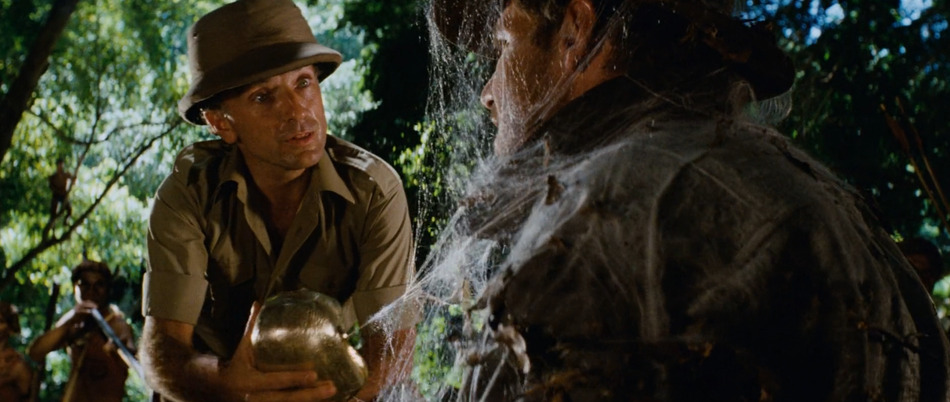 "Again, we see there is nothing you can possess which I cannot take away."
 The imagery of the ark appears to be borrowed from James Tissot's The Ark Passes Over the Jordan, part of the fin de siecle fascination with the occult and (ironically enough given the background of Raiders' director), a French Catholic revival.


 And oh, did I mention that we re completely remote and distributed?


 .
On the global stage, about a decade ago, Stephen J. Dubner and Steven Levitt argued in their book


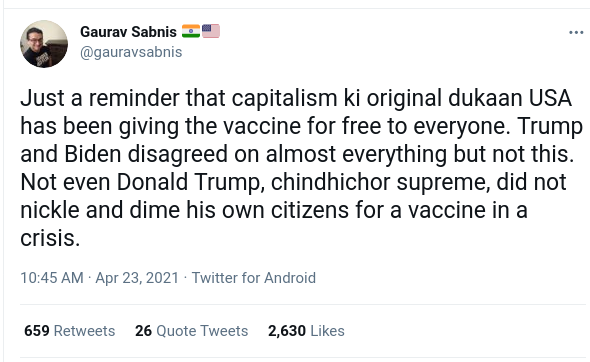
 Pappu Yadav, President Jan Adhikar Party, Bihar May 11, 2021