Reproducible Builds: Reproducible Builds in April 2020
Welcome to the April 2020 report from the Reproducible Builds project. In our regular reports we outline the most important things that we and the rest of the community have been up to over the past month.
 What are reproducible builds? One of the original promises of open source software is that distributed peer review and transparency of process results in enhanced end-user security. But whilst anyone may inspect the source code of free and open source software for malicious flaws, almost all software today is distributed as pre-compiled binaries. This allows nefarious third-parties to compromise systems by injecting malicious code into seemingly secure software during the various compilation and distribution processes.
News
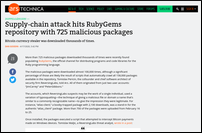 It was discovered that more than 725 malicious packages were downloaded thousands of times from RubyGems, the official channel for distributing code for the Ruby programming language. Attackers used a variation of typosquatting and replaced hyphens and underscores (for example, uploading a malevolent
atlas-client in place of atlas_client) that executed a script that intercepted Bitcoin payments. (Ars Technica report)
Bernhard M. Wiedemann launched ismypackagereproducibleyet.org, a service that takes a package name as input and displays whether the package is reproducible in a number of distributions. For example, it can quickly show the status of Perl as being reproducible on openSUSE but not in Debian. Bernhard also improved the documentation of his unreproducible package to add some example patches for hash issues. [ ].
 There was a post on Chaos Computer Club s website listing Ten requirements for the evaluation of Contact Tracing apps in relation to the SARS-CoV-2 epidemic. In particular:
4. Transparency and verifiability: The complete source code for the app and infrastructure must be freely available without access restrictions to allow audits by all interested parties. Reproducible build techniques must be used to ensure that users can verify that the app they download has been built from the audited source code.
Elsewhere, Nicolas Boulenguez wrote a patch for the Ada programming language component of the GCC compiler to skip -f.*-prefix-map options when writing Ada Library Information files. Amongst other properties, these .ali files embed the compiler flags used at the time of the build which results in the absolute build path being recorded via -ffile-prefix-map, -fdebug-prefix-map, etc.
 In the Arch Linux project, kpcyrd reported that they held their first rebuilder workshop . The session was held on IRC and participants were provided a document with instructions on how to install and use Arch s
repro tool. The meeting resulted in multiple people with no prior experience of Reproducible Builds validate their first package. Later in the month he also announced that it was now possible to run independent rebuilders under Arch in a hands-off, everything just works solution to distributed package verification.
Mathias Lang submitted a pull request against dmd, the canonical compiler for the D programming languageto add support for our SOURCE_DATE_EPOCH environment variable as well the other C preprocessor tokens such __DATE__, __TIME__ and __TIMESTAMP__ which was subsequently merged. SOURCE_DATE_EPOCH defines a distribution-agnostic standard for build toolchains to consume and emit timestamps in situations where they are deemed to be necessary. [ ]
 The Telegram instant-messaging platform announced that they had updated to version 5.1.1 continuing their claim that they are reproducible according to their full instructions and therefore verifying that its original source code is exactly the same code that is used to build the versions available on the Apple App Store and Google Play distribution platforms respectfully.
Lastly, Herv Boutemy reported that 97% of the current development versions of various Maven packages appear to have a reproducible build. [ ]
Distribution work
 In Debian this month, 89 reviews of Debian packages were added, 21 were updated and 33 were removed this month adding to our knowledge about identified issues. Many issue types were noticed, categorised and updated by Chris Lamb, including:
captures_build_path_in_hd5_database_filescargo_installs_crates2_jsonnondeterministic_devhelp_documentation_generated_by_gtk_docros_dynamic_reconfigure_captures_build_path
In addition, Holger Levsen filed a feature request against debrebuild, a tool for rebuilding a Debian package given a .buildinfo file, proposing to add --standalone or --one-shot-mode functionality.
 In openSUSE, Bernhard M. Wiedemann made the following changes:
blender (sort C readdir call, rejected upstream)guile/guix (parallelism race condition)mingw32-filesystem/mingw32-binutils (sort readdir, filesystem, toolchain)mingw64-filesystem/mingw64-binutils (sort readdir, filesystem, toolchain)musescore (non-deterministic .zip files)OBS (FTBFS in rebuild)perl-Image-Sane (report hung build on a single core VM)ruby2.7 (date, already upstream)vtk (drop unreproducible .pyc file)
In Arch Linux, a rebuilder instance has been setup at reproducible.archlinux.org that is rebuilding Arch s [core] repository directly. The first rebuild has led to approximately 90% packages reproducible contrasting with 94% on the Reproducible Build s project own ArchLinux status page on tests.reproducible-builds.org that continiously builds packages and does not verify Arch Linux packages. More information may be found on the corresponding wiki page and the underlying decisions were explained on our mailing list.
Software development
diffoscope
 Chris Lamb made the following changes to diffoscope, the Reproducible Builds project s in-depth and content-aware diff utility that can locate and diagnose reproducibility issues (including preparing and uploading versions
139, 140, 141, 142 and 143 to Debian which were subsequently uploaded to the backports repository):
-
Comparison improvements:
- Dalvik
.dex files can also serve as APK containers so restrict the narrower identification of .dex files to files ending with this extension and widen the identification of APK files to when file(1) discovers a Dalvik file. (#28)
- Add support for Hierarchical Data Format (HD5) files. (#95)
- Add support for
.p7c and .p7b certificates. (#94)
- Strip paths from the output of
zipinfo(1) warnings. (#97)
- Don t uselessly include the JSON similarity percentage if it is 0.0% . [ ]
- Render multi-line difference comments in a way to show indentation. (#101)
-
Testsuite improvements:
- Add
pdftotext as a requirement to run the PDF test_metadata text. (#99)
- apktool 2.5.0 changed the handling of output of XML schemas so update and restrict the corresponding test to match. (#96)
- Explicitly list
python3-h5py in debian/tests/control.in to ensure that we have this module installed during a test run to generate the fixtures in these tests. [ ]
- Correct parsing of
./setup.py test --pytest-args arguments. [ ]
-
Misc:
Michael Osipov created a well-researched merge request to return diffoscope to using zipinfo directly instead of piping input via /dev/stdin in order to ensure portability to the BSD operating system [ ]. In addition, Ben Hutchings documented how --exclude arguments are matched against filenames [ ] and Jelle van der Waa updated the LLVM test fixture difference for LLVM version 10 [ ] as well as adding a reference to the name of the h5dump tool in Arch Linux [ ].
Lastly, Mattia Rizzolo also fixed in incorrect build dependency [ ] and Vagrant Cascadian enabled diffoscope to locate the openssl and h5dump packages on GNU Guix [ ][ ], and updated diffoscope in GNU Guix to version 141 [ ] and 143 [ ].
strip-nondeterminism
strip-nondeterminism is our tool to remove specific non-deterministic results from a completed build. In April, Chris Lamb made the following changes:
- Add deprecation plans to all handlers documenting how or if they could be disabled and eventually removed, etc. (#3)
- Normalise
*.sym files as Java archives. (#15)
- Add support for custom
.zip filename filtering and exclude two patterns of files generated by Maven projects in fork mode. (#13)
disorderfs
disorderfs is our FUSE-based filesystem that deliberately introduces non-determinism into directory system calls in order to flush out reproducibility issues.
This month, Chris Lamb fixed a long-standing issue by not drop UNIX groups in FUSE multi-user mode when we are not root (#1) and uploaded version 0.5.9-1 to Debian unstable. Vagrant Cascadian subsequently refreshed disorderfs in GNU Guix to version 0.5.9 [ ].
Upstream patches
The Reproducible Builds project detects, dissects and attempts to fix as many currently-unreproducible packages as possible. We endeavour to send all of our patches upstream where appropriate. This month, we wrote a large number of such patches, including:
-
Bernhard M. Wiedemann:
elixir (parallelism)gnutls (build failure)moonjit/bcc (compile-time CPU-detection)openstack (backport of patch to drop unreproducible sphinx .pickle files)x3270 (merged, update date patch)
-
Chris Lamb:
- #958301 filed against
dh-cargo.
- #956549 filed against
gmap.
- #956591 filed against
gpick.
- #956477 filed against
herbstluftwm.
- #956304 filed against
libcamera.
- #956589 filed against
libctl.
- #956408 filed against
minetest-mod-xdecor.
- #955783 filed against
netgen-lvs.
- #958110 filed against
nickle.
- #958381 filed against
nmrpflash.
- #958382 filed against
node-mqtt.
- #956473 filed against
sprai.
- #955501 filed against
yaz.
- #956583 filed against
xxhash.
In addition, Bernhard informed the following projects that their packages are not reproducible:
acoular (report unknown non-determinism)cri-o (report a date issue)gnutls (report certtool being unable to extend certificates beyond 2049)gnutls (report copyright year variation)libxslt (report a bug about non-deterministic output from data corruption)python-astropy (report a future build failure in 2021)
Project documentation
 This month, Chris Lamb made a large number of changes to our website and documentation in the following categories:
-
Community engagement improvements:
- Update instructions to register for Salsa on our Contribute page now that the signup process has been overhauled. [ ]
- Make it clearer that joining the
rb-general mailing list is probably a first step for contributors to take. [ ]
- Make our full contact information easier to find in the footer (#19) and improve text layout using bullets to separate sections [ ].
-
Accessibility:
-
General improvements:
- Add a new Academic publications page. (#22)
- Add Trezor to our list of affiliated projects. (#26)
- Add the JVM page to the documentation index (#17) and tidy the page itself a little [ ].
- Add a GNU Libtool pointer to the Archive metadata documentation page. [ ]
-
Internals:
- Move to using
jekyll-redirect-from over manual redirect pages [ ][ ] and add a redirect from /docs/buildinfo/ to /docs/recording/. (#23)
- Limit the website self-check to not scan generated files [ ] and remove the old layout checker now that I have migrated all them [ ].
- Move the news archive under the
/news/ namespace [ ] and improve formatting of archived news links [ ].
- Various improvements to the draft template generation. [ ][ ][ ][ ]
In addition, Holger Levsen clarified exactly which month we ceased to do weekly reports [ ] and Mattia Rizzolo adjusted the title style of an event page [ ].
Marcus Hoffman also started a discussion on our website s issue tracker asking for clarification on embedded signatures and Chris Lamb subsequently replied and asked Marcus to go ahead and propose a concrete change.
Testing framework
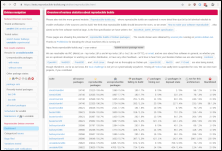 We operate a large and many-featured Jenkins-based testing framework that powers
tests.reproducible-builds.org that, amongst many other tasks, tracks the status of our reproducibility efforts as well as identifies any regressions that have been introduced.
-
Chris Lamb:
- Print the build environment prior to executing a build. [ ]
- Drop a misleading
disorderfs-debug prefix in log output when we change non-disorderfs things in the file and, as it happens, do not run disorderfs at all. [ ]
- The CSS for the package report pages added a margin to all
<a> HTML elements under <li> ones, which was causing a comma/bullet spacing issue. [ ]
- Tidy the copy in the project links sidebar. [ ]
-
Holger Levsen:
- General:
- Install
jekyll-redirect-from as it now needed by the reproducible-builds.org website. [ ]
- Improve/correct log parsing rules. [ ][ ]
-
Debian:
- Reduce scheduling frequency of the buster distribution on the
arm64 architecture, etc.. [ ][ ]
- Show builds per day on a per-architecture basis for the last year on the Debian dashboard. [ ]
- Drop the Subgraph OS package set as development halted in 2017 or 2018. [ ]
- Update
debrebuild to version from the latest version of devscripts. [ ][ ]
- Add or improve various parts of the documentation. [ ][ ][ ]
-
Work on a Debian rebuilder:
- Integrate
sbuild. [ ][ ][ ][ ][ ]
- Select a random
.buildinfo file and attempt to build and compare the result. [ ][ ][ ][ ]
- Improve output and related output formatting. [ ][ ][ ][ ][ ]
- Outline next steps for the development of the tool. [ ][ ][ ]
- Various refactoring and code improvements. [ ][ ][ ]
Lastly, Mattia Rizzolo fixed some log parsing code regarding potentially-harmless warnings from package installation [ ][ ] and the usual build node maintenance was performed by Holger Levsen [ ][ ][ ] and Mattia Rizzolo [ ][ ][ ].
Misc news
On our mailing list this month, Santiago Torres asked whether we were still publishing releases of our tools to our website and Chris Lamb replied that this was not the case and fixed the issue. Later in the month Santiago also reported that the signature for the disorderfs package did not pass its GPG verification which was also fixed by Chris Lamb.
Hans-Christoph Steiner of the Guardian Project asked whether there would be interest in making our website translatable which resulted in a WIP merge request being filed against the website and a discussion on how to track translation updates.
If you are interested in contributing to the Reproducible Builds project, please visit our Contribute page on our website. However, you can get in touch with us via:
-
IRC:
#reproducible-builds on irc.oftc.net.
-
Twitter: @ReproBuilds @reproducible_builds@fosstodon.org
-
Reddit: /r/ReproducibleBuilds
-
Mailing list:
rb-general@lists.reproducible-builds.org
In Debian this month, 89 reviews of Debian packages were added, 21 were updated and 33 were removed this month adding to our knowledge about identified issues. Many issue types were noticed, categorised and updated by Chris Lamb, including:
captures_build_path_in_hd5_database_filescargo_installs_crates2_jsonnondeterministic_devhelp_documentation_generated_by_gtk_docros_dynamic_reconfigure_captures_build_path
debrebuild, a tool for rebuilding a Debian package given a .buildinfo file, proposing to add --standalone or --one-shot-mode functionality.
In openSUSE, Bernhard M. Wiedemann made the following changes:
blender(sort Creaddircall, rejected upstream)guile/guix(parallelism race condition)mingw32-filesystem/mingw32-binutils(sortreaddir, filesystem, toolchain)mingw64-filesystem/mingw64-binutils(sortreaddir, filesystem, toolchain)musescore(non-deterministic.zipfiles)OBS(FTBFS in rebuild)perl-Image-Sane(report hung build on a single core VM)ruby2.7(date, already upstream)vtk(drop unreproducible.pycfile)
In Arch Linux, a rebuilder instance has been setup at reproducible.archlinux.org that is rebuilding Arch s [core] repository directly. The first rebuild has led to approximately 90% packages reproducible contrasting with 94% on the Reproducible Build s project own ArchLinux status page on tests.reproducible-builds.org that continiously builds packages and does not verify Arch Linux packages. More information may be found on the corresponding wiki page and the underlying decisions were explained on our mailing list.
Software development
diffoscope
Chris Lamb made the following changes to diffoscope, the Reproducible Builds project s in-depth and content-aware diff utility that can locate and diagnose reproducibility issues (including preparing and uploading versions 139, 140, 141, 142 and 143 to Debian which were subsequently uploaded to the backports repository):
-
Comparison improvements:
- Dalvik
.dex files can also serve as APK containers so restrict the narrower identification of .dex files to files ending with this extension and widen the identification of APK files to when file(1) discovers a Dalvik file. (#28)
- Add support for Hierarchical Data Format (HD5) files. (#95)
- Add support for
.p7c and .p7b certificates. (#94)
- Strip paths from the output of
zipinfo(1) warnings. (#97)
- Don t uselessly include the JSON similarity percentage if it is 0.0% . [ ]
- Render multi-line difference comments in a way to show indentation. (#101)
-
Testsuite improvements:
- Add
pdftotext as a requirement to run the PDF test_metadata text. (#99)
- apktool 2.5.0 changed the handling of output of XML schemas so update and restrict the corresponding test to match. (#96)
- Explicitly list
python3-h5py in debian/tests/control.in to ensure that we have this module installed during a test run to generate the fixtures in these tests. [ ]
- Correct parsing of
./setup.py test --pytest-args arguments. [ ]
-
Misc:
Michael Osipov created a well-researched merge request to return diffoscope to using zipinfo directly instead of piping input via /dev/stdin in order to ensure portability to the BSD operating system [ ]. In addition, Ben Hutchings documented how --exclude arguments are matched against filenames [ ] and Jelle van der Waa updated the LLVM test fixture difference for LLVM version 10 [ ] as well as adding a reference to the name of the h5dump tool in Arch Linux [ ].
Lastly, Mattia Rizzolo also fixed in incorrect build dependency [ ] and Vagrant Cascadian enabled diffoscope to locate the openssl and h5dump packages on GNU Guix [ ][ ], and updated diffoscope in GNU Guix to version 141 [ ] and 143 [ ].
strip-nondeterminism
strip-nondeterminism is our tool to remove specific non-deterministic results from a completed build. In April, Chris Lamb made the following changes:
- Add deprecation plans to all handlers documenting how or if they could be disabled and eventually removed, etc. (#3)
- Normalise
*.sym files as Java archives. (#15)
- Add support for custom
.zip filename filtering and exclude two patterns of files generated by Maven projects in fork mode. (#13)
disorderfs
disorderfs is our FUSE-based filesystem that deliberately introduces non-determinism into directory system calls in order to flush out reproducibility issues.
This month, Chris Lamb fixed a long-standing issue by not drop UNIX groups in FUSE multi-user mode when we are not root (#1) and uploaded version 0.5.9-1 to Debian unstable. Vagrant Cascadian subsequently refreshed disorderfs in GNU Guix to version 0.5.9 [ ].
Upstream patches
The Reproducible Builds project detects, dissects and attempts to fix as many currently-unreproducible packages as possible. We endeavour to send all of our patches upstream where appropriate. This month, we wrote a large number of such patches, including:
-
Bernhard M. Wiedemann:
elixir (parallelism)gnutls (build failure)moonjit/bcc (compile-time CPU-detection)openstack (backport of patch to drop unreproducible sphinx .pickle files)x3270 (merged, update date patch)
-
Chris Lamb:
- #958301 filed against
dh-cargo.
- #956549 filed against
gmap.
- #956591 filed against
gpick.
- #956477 filed against
herbstluftwm.
- #956304 filed against
libcamera.
- #956589 filed against
libctl.
- #956408 filed against
minetest-mod-xdecor.
- #955783 filed against
netgen-lvs.
- #958110 filed against
nickle.
- #958381 filed against
nmrpflash.
- #958382 filed against
node-mqtt.
- #956473 filed against
sprai.
- #955501 filed against
yaz.
- #956583 filed against
xxhash.
In addition, Bernhard informed the following projects that their packages are not reproducible:
acoular (report unknown non-determinism)cri-o (report a date issue)gnutls (report certtool being unable to extend certificates beyond 2049)gnutls (report copyright year variation)libxslt (report a bug about non-deterministic output from data corruption)python-astropy (report a future build failure in 2021)
Project documentation
This month, Chris Lamb made a large number of changes to our website and documentation in the following categories:
-
Community engagement improvements:
- Update instructions to register for Salsa on our Contribute page now that the signup process has been overhauled. [ ]
- Make it clearer that joining the
rb-general mailing list is probably a first step for contributors to take. [ ]
- Make our full contact information easier to find in the footer (#19) and improve text layout using bullets to separate sections [ ].
-
Accessibility:
-
General improvements:
- Add a new Academic publications page. (#22)
- Add Trezor to our list of affiliated projects. (#26)
- Add the JVM page to the documentation index (#17) and tidy the page itself a little [ ].
- Add a GNU Libtool pointer to the Archive metadata documentation page. [ ]
-
Internals:
- Move to using
jekyll-redirect-from over manual redirect pages [ ][ ] and add a redirect from /docs/buildinfo/ to /docs/recording/. (#23)
- Limit the website self-check to not scan generated files [ ] and remove the old layout checker now that I have migrated all them [ ].
- Move the news archive under the
/news/ namespace [ ] and improve formatting of archived news links [ ].
- Various improvements to the draft template generation. [ ][ ][ ][ ]
In addition, Holger Levsen clarified exactly which month we ceased to do weekly reports [ ] and Mattia Rizzolo adjusted the title style of an event page [ ].
Marcus Hoffman also started a discussion on our website s issue tracker asking for clarification on embedded signatures and Chris Lamb subsequently replied and asked Marcus to go ahead and propose a concrete change.
Testing framework
We operate a large and many-featured Jenkins-based testing framework that powers tests.reproducible-builds.org that, amongst many other tasks, tracks the status of our reproducibility efforts as well as identifies any regressions that have been introduced.
-
Chris Lamb:
- Print the build environment prior to executing a build. [ ]
- Drop a misleading
disorderfs-debug prefix in log output when we change non-disorderfs things in the file and, as it happens, do not run disorderfs at all. [ ]
- The CSS for the package report pages added a margin to all
<a> HTML elements under <li> ones, which was causing a comma/bullet spacing issue. [ ]
- Tidy the copy in the project links sidebar. [ ]
-
Holger Levsen:
- General:
- Install
jekyll-redirect-from as it now needed by the reproducible-builds.org website. [ ]
- Improve/correct log parsing rules. [ ][ ]
-
Debian:
- Reduce scheduling frequency of the buster distribution on the
arm64 architecture, etc.. [ ][ ]
- Show builds per day on a per-architecture basis for the last year on the Debian dashboard. [ ]
- Drop the Subgraph OS package set as development halted in 2017 or 2018. [ ]
- Update
debrebuild to version from the latest version of devscripts. [ ][ ]
- Add or improve various parts of the documentation. [ ][ ][ ]
-
Work on a Debian rebuilder:
- Integrate
sbuild. [ ][ ][ ][ ][ ]
- Select a random
.buildinfo file and attempt to build and compare the result. [ ][ ][ ][ ]
- Improve output and related output formatting. [ ][ ][ ][ ][ ]
- Outline next steps for the development of the tool. [ ][ ][ ]
- Various refactoring and code improvements. [ ][ ][ ]
Lastly, Mattia Rizzolo fixed some log parsing code regarding potentially-harmless warnings from package installation [ ][ ] and the usual build node maintenance was performed by Holger Levsen [ ][ ][ ] and Mattia Rizzolo [ ][ ][ ].
Misc news
On our mailing list this month, Santiago Torres asked whether we were still publishing releases of our tools to our website and Chris Lamb replied that this was not the case and fixed the issue. Later in the month Santiago also reported that the signature for the disorderfs package did not pass its GPG verification which was also fixed by Chris Lamb.
Hans-Christoph Steiner of the Guardian Project asked whether there would be interest in making our website translatable which resulted in a WIP merge request being filed against the website and a discussion on how to track translation updates.
If you are interested in contributing to the Reproducible Builds project, please visit our Contribute page on our website. However, you can get in touch with us via:
-
IRC:
#reproducible-builds on irc.oftc.net.
-
Twitter: @ReproBuilds @reproducible_builds@fosstodon.org
-
Reddit: /r/ReproducibleBuilds
-
Mailing list:
rb-general@lists.reproducible-builds.org
Chris Lamb made the following changes to diffoscope, the Reproducible Builds project s in-depth and content-aware diff utility that can locate and diagnose reproducibility issues (including preparing and uploading versions 139, 140, 141, 142 and 143 to Debian which were subsequently uploaded to the backports repository):
-
Comparison improvements:
- Dalvik
.dexfiles can also serve as APK containers so restrict the narrower identification of.dexfiles to files ending with this extension and widen the identification of APK files to when file(1) discovers a Dalvik file. (#28) - Add support for Hierarchical Data Format (HD5) files. (#95)
- Add support for
.p7cand.p7bcertificates. (#94) - Strip paths from the output of
zipinfo(1)warnings. (#97) - Don t uselessly include the JSON similarity percentage if it is 0.0% . [ ]
- Render multi-line difference comments in a way to show indentation. (#101)
- Dalvik
-
Testsuite improvements:
- Add
pdftotextas a requirement to run the PDFtest_metadatatext. (#99) - apktool 2.5.0 changed the handling of output of XML schemas so update and restrict the corresponding test to match. (#96)
- Explicitly list
python3-h5pyindebian/tests/control.into ensure that we have this module installed during a test run to generate the fixtures in these tests. [ ] - Correct parsing of
./setup.py test --pytest-argsarguments. [ ]
- Add
- Misc:
zipinfo directly instead of piping input via /dev/stdin in order to ensure portability to the BSD operating system [ ]. In addition, Ben Hutchings documented how --exclude arguments are matched against filenames [ ] and Jelle van der Waa updated the LLVM test fixture difference for LLVM version 10 [ ] as well as adding a reference to the name of the h5dump tool in Arch Linux [ ].
Lastly, Mattia Rizzolo also fixed in incorrect build dependency [ ] and Vagrant Cascadian enabled diffoscope to locate the openssl and h5dump packages on GNU Guix [ ][ ], and updated diffoscope in GNU Guix to version 141 [ ] and 143 [ ].
strip-nondeterminism
strip-nondeterminism is our tool to remove specific non-deterministic results from a completed build. In April, Chris Lamb made the following changes:
- Add deprecation plans to all handlers documenting how or if they could be disabled and eventually removed, etc. (#3)
- Normalise
*.sym files as Java archives. (#15)
- Add support for custom
.zip filename filtering and exclude two patterns of files generated by Maven projects in fork mode. (#13)
disorderfs
disorderfs is our FUSE-based filesystem that deliberately introduces non-determinism into directory system calls in order to flush out reproducibility issues.
This month, Chris Lamb fixed a long-standing issue by not drop UNIX groups in FUSE multi-user mode when we are not root (#1) and uploaded version 0.5.9-1 to Debian unstable. Vagrant Cascadian subsequently refreshed disorderfs in GNU Guix to version 0.5.9 [ ].
Upstream patches
The Reproducible Builds project detects, dissects and attempts to fix as many currently-unreproducible packages as possible. We endeavour to send all of our patches upstream where appropriate. This month, we wrote a large number of such patches, including:
-
Bernhard M. Wiedemann:
elixir (parallelism)gnutls (build failure)moonjit/bcc (compile-time CPU-detection)openstack (backport of patch to drop unreproducible sphinx .pickle files)x3270 (merged, update date patch)
-
Chris Lamb:
- #958301 filed against
dh-cargo.
- #956549 filed against
gmap.
- #956591 filed against
gpick.
- #956477 filed against
herbstluftwm.
- #956304 filed against
libcamera.
- #956589 filed against
libctl.
- #956408 filed against
minetest-mod-xdecor.
- #955783 filed against
netgen-lvs.
- #958110 filed against
nickle.
- #958381 filed against
nmrpflash.
- #958382 filed against
node-mqtt.
- #956473 filed against
sprai.
- #955501 filed against
yaz.
- #956583 filed against
xxhash.
In addition, Bernhard informed the following projects that their packages are not reproducible:
acoular (report unknown non-determinism)cri-o (report a date issue)gnutls (report certtool being unable to extend certificates beyond 2049)gnutls (report copyright year variation)libxslt (report a bug about non-deterministic output from data corruption)python-astropy (report a future build failure in 2021)
Project documentation
This month, Chris Lamb made a large number of changes to our website and documentation in the following categories:
-
Community engagement improvements:
- Update instructions to register for Salsa on our Contribute page now that the signup process has been overhauled. [ ]
- Make it clearer that joining the
rb-general mailing list is probably a first step for contributors to take. [ ]
- Make our full contact information easier to find in the footer (#19) and improve text layout using bullets to separate sections [ ].
-
Accessibility:
-
General improvements:
- Add a new Academic publications page. (#22)
- Add Trezor to our list of affiliated projects. (#26)
- Add the JVM page to the documentation index (#17) and tidy the page itself a little [ ].
- Add a GNU Libtool pointer to the Archive metadata documentation page. [ ]
-
Internals:
- Move to using
jekyll-redirect-from over manual redirect pages [ ][ ] and add a redirect from /docs/buildinfo/ to /docs/recording/. (#23)
- Limit the website self-check to not scan generated files [ ] and remove the old layout checker now that I have migrated all them [ ].
- Move the news archive under the
/news/ namespace [ ] and improve formatting of archived news links [ ].
- Various improvements to the draft template generation. [ ][ ][ ][ ]
In addition, Holger Levsen clarified exactly which month we ceased to do weekly reports [ ] and Mattia Rizzolo adjusted the title style of an event page [ ].
Marcus Hoffman also started a discussion on our website s issue tracker asking for clarification on embedded signatures and Chris Lamb subsequently replied and asked Marcus to go ahead and propose a concrete change.
Testing framework
We operate a large and many-featured Jenkins-based testing framework that powers tests.reproducible-builds.org that, amongst many other tasks, tracks the status of our reproducibility efforts as well as identifies any regressions that have been introduced.
-
Chris Lamb:
- Print the build environment prior to executing a build. [ ]
- Drop a misleading
disorderfs-debug prefix in log output when we change non-disorderfs things in the file and, as it happens, do not run disorderfs at all. [ ]
- The CSS for the package report pages added a margin to all
<a> HTML elements under <li> ones, which was causing a comma/bullet spacing issue. [ ]
- Tidy the copy in the project links sidebar. [ ]
-
Holger Levsen:
- General:
- Install
jekyll-redirect-from as it now needed by the reproducible-builds.org website. [ ]
- Improve/correct log parsing rules. [ ][ ]
-
Debian:
- Reduce scheduling frequency of the buster distribution on the
arm64 architecture, etc.. [ ][ ]
- Show builds per day on a per-architecture basis for the last year on the Debian dashboard. [ ]
- Drop the Subgraph OS package set as development halted in 2017 or 2018. [ ]
- Update
debrebuild to version from the latest version of devscripts. [ ][ ]
- Add or improve various parts of the documentation. [ ][ ][ ]
-
Work on a Debian rebuilder:
- Integrate
sbuild. [ ][ ][ ][ ][ ]
- Select a random
.buildinfo file and attempt to build and compare the result. [ ][ ][ ][ ]
- Improve output and related output formatting. [ ][ ][ ][ ][ ]
- Outline next steps for the development of the tool. [ ][ ][ ]
- Various refactoring and code improvements. [ ][ ][ ]
Lastly, Mattia Rizzolo fixed some log parsing code regarding potentially-harmless warnings from package installation [ ][ ] and the usual build node maintenance was performed by Holger Levsen [ ][ ][ ] and Mattia Rizzolo [ ][ ][ ].
Misc news
On our mailing list this month, Santiago Torres asked whether we were still publishing releases of our tools to our website and Chris Lamb replied that this was not the case and fixed the issue. Later in the month Santiago also reported that the signature for the disorderfs package did not pass its GPG verification which was also fixed by Chris Lamb.
Hans-Christoph Steiner of the Guardian Project asked whether there would be interest in making our website translatable which resulted in a WIP merge request being filed against the website and a discussion on how to track translation updates.
If you are interested in contributing to the Reproducible Builds project, please visit our Contribute page on our website. However, you can get in touch with us via:
-
IRC:
#reproducible-builds on irc.oftc.net.
-
Twitter: @ReproBuilds @reproducible_builds@fosstodon.org
-
Reddit: /r/ReproducibleBuilds
-
Mailing list:
rb-general@lists.reproducible-builds.org
*.sym files as Java archives. (#15).zip filename filtering and exclude two patterns of files generated by Maven projects in fork mode. (#13)0.5.9-1 to Debian unstable. Vagrant Cascadian subsequently refreshed disorderfs in GNU Guix to version 0.5.9 [ ].
Upstream patches
The Reproducible Builds project detects, dissects and attempts to fix as many currently-unreproducible packages as possible. We endeavour to send all of our patches upstream where appropriate. This month, we wrote a large number of such patches, including:
-
Bernhard M. Wiedemann:
elixir (parallelism)gnutls (build failure)moonjit/bcc (compile-time CPU-detection)openstack (backport of patch to drop unreproducible sphinx .pickle files)x3270 (merged, update date patch)
-
Chris Lamb:
- #958301 filed against
dh-cargo.
- #956549 filed against
gmap.
- #956591 filed against
gpick.
- #956477 filed against
herbstluftwm.
- #956304 filed against
libcamera.
- #956589 filed against
libctl.
- #956408 filed against
minetest-mod-xdecor.
- #955783 filed against
netgen-lvs.
- #958110 filed against
nickle.
- #958381 filed against
nmrpflash.
- #958382 filed against
node-mqtt.
- #956473 filed against
sprai.
- #955501 filed against
yaz.
- #956583 filed against
xxhash.
In addition, Bernhard informed the following projects that their packages are not reproducible:
acoular (report unknown non-determinism)cri-o (report a date issue)gnutls (report certtool being unable to extend certificates beyond 2049)gnutls (report copyright year variation)libxslt (report a bug about non-deterministic output from data corruption)python-astropy (report a future build failure in 2021)
Project documentation
This month, Chris Lamb made a large number of changes to our website and documentation in the following categories:
-
Community engagement improvements:
- Update instructions to register for Salsa on our Contribute page now that the signup process has been overhauled. [ ]
- Make it clearer that joining the
rb-general mailing list is probably a first step for contributors to take. [ ]
- Make our full contact information easier to find in the footer (#19) and improve text layout using bullets to separate sections [ ].
-
Accessibility:
-
General improvements:
- Add a new Academic publications page. (#22)
- Add Trezor to our list of affiliated projects. (#26)
- Add the JVM page to the documentation index (#17) and tidy the page itself a little [ ].
- Add a GNU Libtool pointer to the Archive metadata documentation page. [ ]
-
Internals:
- Move to using
jekyll-redirect-from over manual redirect pages [ ][ ] and add a redirect from /docs/buildinfo/ to /docs/recording/. (#23)
- Limit the website self-check to not scan generated files [ ] and remove the old layout checker now that I have migrated all them [ ].
- Move the news archive under the
/news/ namespace [ ] and improve formatting of archived news links [ ].
- Various improvements to the draft template generation. [ ][ ][ ][ ]
In addition, Holger Levsen clarified exactly which month we ceased to do weekly reports [ ] and Mattia Rizzolo adjusted the title style of an event page [ ].
Marcus Hoffman also started a discussion on our website s issue tracker asking for clarification on embedded signatures and Chris Lamb subsequently replied and asked Marcus to go ahead and propose a concrete change.
Testing framework
We operate a large and many-featured Jenkins-based testing framework that powers tests.reproducible-builds.org that, amongst many other tasks, tracks the status of our reproducibility efforts as well as identifies any regressions that have been introduced.
-
Chris Lamb:
- Print the build environment prior to executing a build. [ ]
- Drop a misleading
disorderfs-debug prefix in log output when we change non-disorderfs things in the file and, as it happens, do not run disorderfs at all. [ ]
- The CSS for the package report pages added a margin to all
<a> HTML elements under <li> ones, which was causing a comma/bullet spacing issue. [ ]
- Tidy the copy in the project links sidebar. [ ]
-
Holger Levsen:
- General:
- Install
jekyll-redirect-from as it now needed by the reproducible-builds.org website. [ ]
- Improve/correct log parsing rules. [ ][ ]
-
Debian:
- Reduce scheduling frequency of the buster distribution on the
arm64 architecture, etc.. [ ][ ]
- Show builds per day on a per-architecture basis for the last year on the Debian dashboard. [ ]
- Drop the Subgraph OS package set as development halted in 2017 or 2018. [ ]
- Update
debrebuild to version from the latest version of devscripts. [ ][ ]
- Add or improve various parts of the documentation. [ ][ ][ ]
-
Work on a Debian rebuilder:
- Integrate
sbuild. [ ][ ][ ][ ][ ]
- Select a random
.buildinfo file and attempt to build and compare the result. [ ][ ][ ][ ]
- Improve output and related output formatting. [ ][ ][ ][ ][ ]
- Outline next steps for the development of the tool. [ ][ ][ ]
- Various refactoring and code improvements. [ ][ ][ ]
Lastly, Mattia Rizzolo fixed some log parsing code regarding potentially-harmless warnings from package installation [ ][ ] and the usual build node maintenance was performed by Holger Levsen [ ][ ][ ] and Mattia Rizzolo [ ][ ][ ].
Misc news
On our mailing list this month, Santiago Torres asked whether we were still publishing releases of our tools to our website and Chris Lamb replied that this was not the case and fixed the issue. Later in the month Santiago also reported that the signature for the disorderfs package did not pass its GPG verification which was also fixed by Chris Lamb.
Hans-Christoph Steiner of the Guardian Project asked whether there would be interest in making our website translatable which resulted in a WIP merge request being filed against the website and a discussion on how to track translation updates.
If you are interested in contributing to the Reproducible Builds project, please visit our Contribute page on our website. However, you can get in touch with us via:
-
IRC:
#reproducible-builds on irc.oftc.net.
-
Twitter: @ReproBuilds @reproducible_builds@fosstodon.org
-
Reddit: /r/ReproducibleBuilds
-
Mailing list:
rb-general@lists.reproducible-builds.org
elixir(parallelism)gnutls(build failure)moonjit/bcc(compile-time CPU-detection)openstack(backport of patch to drop unreproducible sphinx.picklefiles)x3270(merged, update date patch)
- #958301 filed against
dh-cargo. - #956549 filed against
gmap. - #956591 filed against
gpick. - #956477 filed against
herbstluftwm. - #956304 filed against
libcamera. - #956589 filed against
libctl. - #956408 filed against
minetest-mod-xdecor. - #955783 filed against
netgen-lvs. - #958110 filed against
nickle. - #958381 filed against
nmrpflash. - #958382 filed against
node-mqtt. - #956473 filed against
sprai. - #955501 filed against
yaz. - #956583 filed against
xxhash.
acoular (report unknown non-determinism)cri-o (report a date issue)gnutls (report certtool being unable to extend certificates beyond 2049)gnutls (report copyright year variation)libxslt (report a bug about non-deterministic output from data corruption)python-astropy (report a future build failure in 2021)
This month, Chris Lamb made a large number of changes to our website and documentation in the following categories:
-
Community engagement improvements:
- Update instructions to register for Salsa on our Contribute page now that the signup process has been overhauled. [ ]
- Make it clearer that joining the
rb-generalmailing list is probably a first step for contributors to take. [ ] - Make our full contact information easier to find in the footer (#19) and improve text layout using bullets to separate sections [ ].
- Accessibility:
-
General improvements:
- Add a new Academic publications page. (#22)
- Add Trezor to our list of affiliated projects. (#26)
- Add the JVM page to the documentation index (#17) and tidy the page itself a little [ ].
- Add a GNU Libtool pointer to the Archive metadata documentation page. [ ]
-
Internals:
- Move to using
jekyll-redirect-fromover manual redirect pages [ ][ ] and add a redirect from/docs/buildinfo/to/docs/recording/. (#23) - Limit the website self-check to not scan generated files [ ] and remove the old layout checker now that I have migrated all them [ ].
- Move the news archive under the
/news/namespace [ ] and improve formatting of archived news links [ ]. - Various improvements to the draft template generation. [ ][ ][ ][ ]
- Move to using
Testing framework
We operate a large and many-featured Jenkins-based testing framework that powers tests.reproducible-builds.org that, amongst many other tasks, tracks the status of our reproducibility efforts as well as identifies any regressions that have been introduced.
-
Chris Lamb:
- Print the build environment prior to executing a build. [ ]
- Drop a misleading
disorderfs-debug prefix in log output when we change non-disorderfs things in the file and, as it happens, do not run disorderfs at all. [ ]
- The CSS for the package report pages added a margin to all
<a> HTML elements under <li> ones, which was causing a comma/bullet spacing issue. [ ]
- Tidy the copy in the project links sidebar. [ ]
-
Holger Levsen:
- General:
- Install
jekyll-redirect-from as it now needed by the reproducible-builds.org website. [ ]
- Improve/correct log parsing rules. [ ][ ]
-
Debian:
- Reduce scheduling frequency of the buster distribution on the
arm64 architecture, etc.. [ ][ ]
- Show builds per day on a per-architecture basis for the last year on the Debian dashboard. [ ]
- Drop the Subgraph OS package set as development halted in 2017 or 2018. [ ]
- Update
debrebuild to version from the latest version of devscripts. [ ][ ]
- Add or improve various parts of the documentation. [ ][ ][ ]
-
Work on a Debian rebuilder:
- Integrate
sbuild. [ ][ ][ ][ ][ ]
- Select a random
.buildinfo file and attempt to build and compare the result. [ ][ ][ ][ ]
- Improve output and related output formatting. [ ][ ][ ][ ][ ]
- Outline next steps for the development of the tool. [ ][ ][ ]
- Various refactoring and code improvements. [ ][ ][ ]
Lastly, Mattia Rizzolo fixed some log parsing code regarding potentially-harmless warnings from package installation [ ][ ] and the usual build node maintenance was performed by Holger Levsen [ ][ ][ ] and Mattia Rizzolo [ ][ ][ ].
Misc news
On our mailing list this month, Santiago Torres asked whether we were still publishing releases of our tools to our website and Chris Lamb replied that this was not the case and fixed the issue. Later in the month Santiago also reported that the signature for the disorderfs package did not pass its GPG verification which was also fixed by Chris Lamb.
Hans-Christoph Steiner of the Guardian Project asked whether there would be interest in making our website translatable which resulted in a WIP merge request being filed against the website and a discussion on how to track translation updates.
If you are interested in contributing to the Reproducible Builds project, please visit our Contribute page on our website. However, you can get in touch with us via:
-
IRC:
#reproducible-builds on irc.oftc.net.
-
Twitter: @ReproBuilds @reproducible_builds@fosstodon.org
-
Reddit: /r/ReproducibleBuilds
-
Mailing list:
rb-general@lists.reproducible-builds.org
- Print the build environment prior to executing a build. [ ]
- Drop a misleading
disorderfs-debugprefix in log output when we change non-disorderfs things in the file and, as it happens, do not run disorderfs at all. [ ] - The CSS for the package report pages added a margin to all
<a>HTML elements under<li>ones, which was causing a comma/bullet spacing issue. [ ] - Tidy the copy in the project links sidebar. [ ]
- General:
- Install
jekyll-redirect-fromas it now needed by the reproducible-builds.org website. [ ] - Improve/correct log parsing rules. [ ][ ]
- Install
-
Debian:
- Reduce scheduling frequency of the buster distribution on the
arm64architecture, etc.. [ ][ ] - Show builds per day on a per-architecture basis for the last year on the Debian dashboard. [ ]
- Drop the Subgraph OS package set as development halted in 2017 or 2018. [ ]
- Update
debrebuildto version from the latest version ofdevscripts. [ ][ ] - Add or improve various parts of the documentation. [ ][ ][ ]
- Reduce scheduling frequency of the buster distribution on the
-
Work on a Debian rebuilder:
- Integrate
sbuild. [ ][ ][ ][ ][ ] - Select a random
.buildinfofile and attempt to build and compare the result. [ ][ ][ ][ ] - Improve output and related output formatting. [ ][ ][ ][ ][ ]
- Outline next steps for the development of the tool. [ ][ ][ ]
- Various refactoring and code improvements. [ ][ ][ ]
- Integrate
disorderfs package did not pass its GPG verification which was also fixed by Chris Lamb.
Hans-Christoph Steiner of the Guardian Project asked whether there would be interest in making our website translatable which resulted in a WIP merge request being filed against the website and a discussion on how to track translation updates.
If you are interested in contributing to the Reproducible Builds project, please visit our Contribute page on our website. However, you can get in touch with us via:
-
IRC:
#reproducible-buildsonirc.oftc.net. - Twitter: @ReproBuilds @reproducible_builds@fosstodon.org
- Reddit: /r/ReproducibleBuilds
-
Mailing list:
rb-general@lists.reproducible-builds.org
This month s report was written by Bernhard M. Wiedemann, Chris Lamb, Daniel Shahaf, Holger Levsen, Jelle van der Waa, kpcyrd, Mattia Rizzolo and Vagrant Cascadian. It was subsequently reviewed by a bunch of Reproducible Builds folks on IRC and the mailing list.
 Today at the ACLU, we
 " 'Boa constrictors swallow their prey whole, without chewing it. After that they are not able to move, and they sleep through the six months that they need for digestion.'
I pondered deeply, then, over the adventures of the jungle. And after some work with a colored pencil I succeeded in making my first drawing.
My Drawing Number One.
It looked something like this:
 I showed my masterpiece to the grown-ups, and asked them whether the drawing frightened them.
But they answered: 'Frighten? Why should any one be frightened by a hat?'
My drawing was not a picture of a hat. It was a picture of a boa constrictor digesting an elephant. But since the grown-ups were not able to understand it, I made another drawing: I drew the inside of a boa constrictor, so that the grown-ups could see it clearly. They always need to have things explained.
My Drawing Number Two looked like this:
 The grown-ups' response, this time, was to advise me to lay aside my drawings of boa constrictors, whether from the inside or the outside, and devote myself instead to geography, history, arithmetic, and grammar.
That is why, at the age of six, I gave up what might have been a magnificent career as a painter. I had been disheartened by the failure of my Drawing Number One and my Drawing Number Two.
Grown-ups never understand anything by themselves, and it is tiresome for children to be always and forever explaining things to them."
from The Little Prince by Antoine de Saint Exup ry
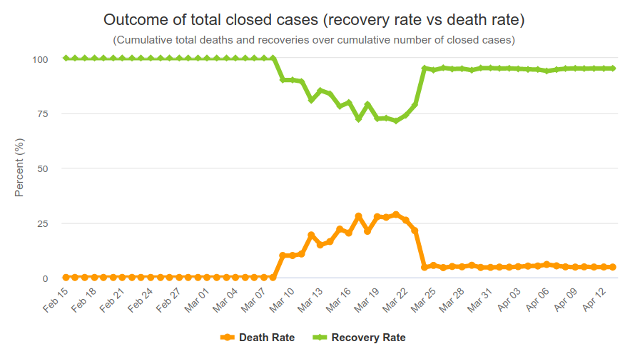 from the Corona Fun with Statistics department at Worldometers
(
 A new (upstream)
 This is my last Outreachy blogpost, as my internship unfortunately has come to an end. It was a blast!
Through the
 I have profited so much from other people s work, so I am very happy if community members can build on mine. Afterall sharing is caring!
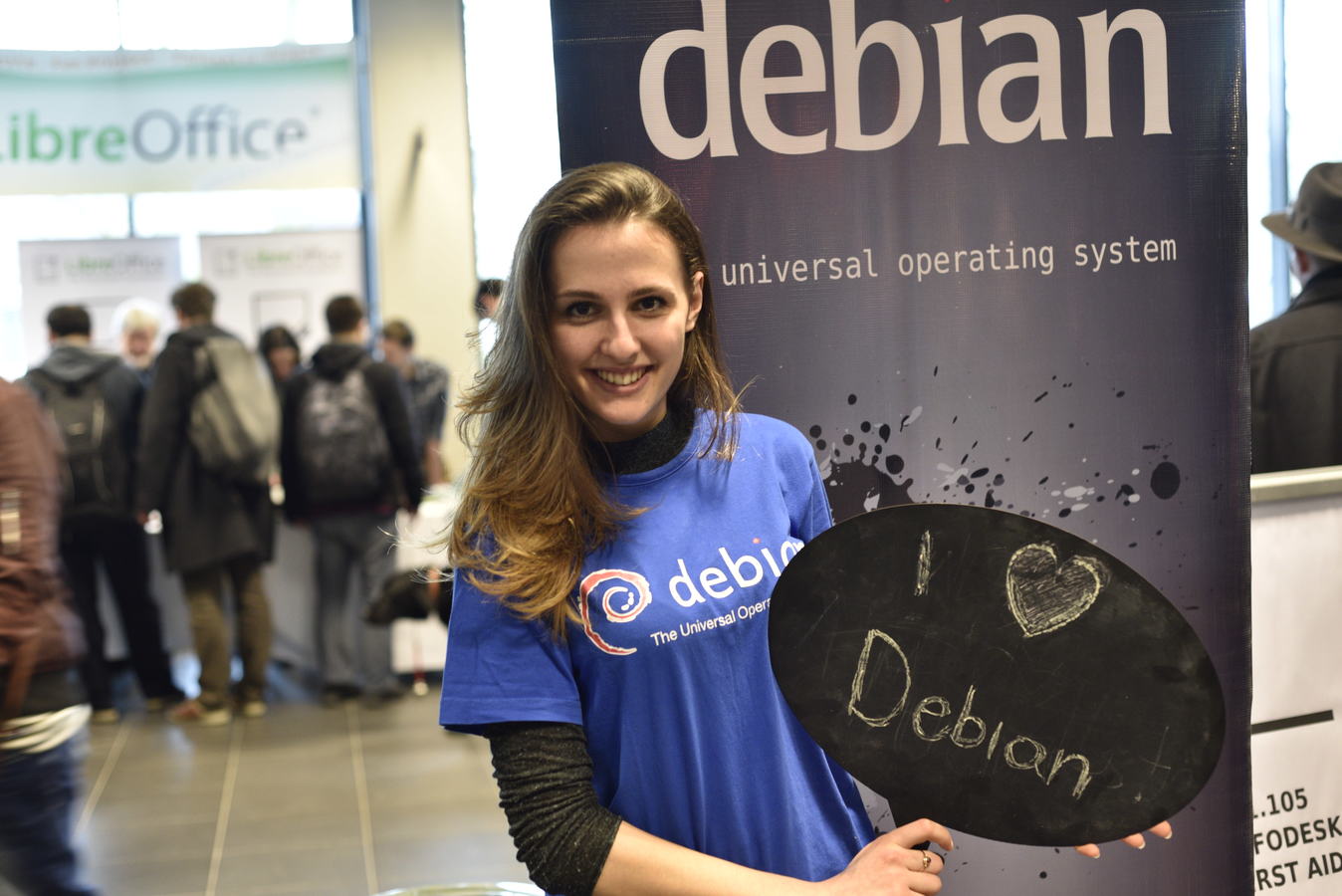
Through the Outreachy travel stipend I was able to
 I completed six email templates for the DebConf sponsor communication campaigns. While two of them have already been very useful, I hope my
other proposals will be the ones used for the next waves of sponsors contacting.
I committed them to the sponsors git repo so they can be easily accessible and well documented for other DebConf teams or can be recycled for
smaller Debian events.
Unfortunately, due to the insecurity about travel around the Corona virus pandemic, the third wave of communication, originally scheduled for
the end of my internship in March, has been held. I have committed to the team to do this once the travel restrictions have been lifted and we
know that DebConf20 can proceed as planned for August 2020.
So yeah, I am definitely going to stay around and continue to help with DebConf fundraising!
DebConf has been held for two decades and it also has a generic website, so I also updated the
 Liberation Mono
 Fira Mono


 It finally happened
On the 6th of April 2017, I finally took the plunge and

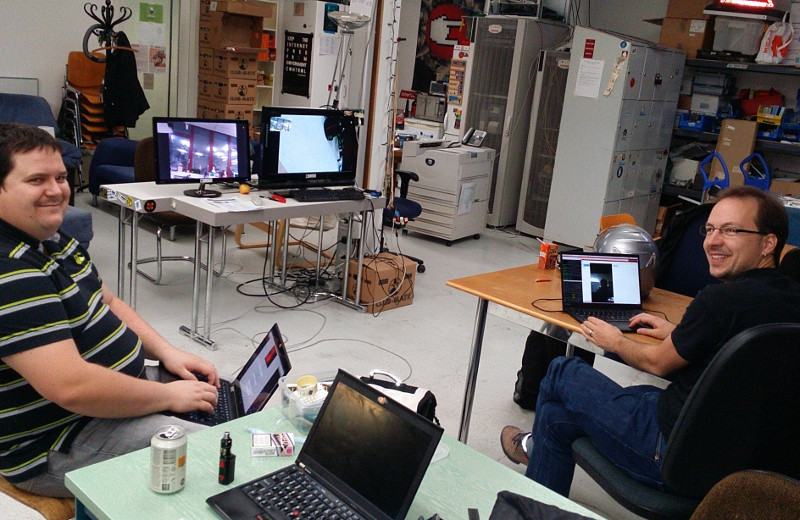 Francois is using Raspberry Pi and PiCam to develop a
 Previously:

 Debian
subversion
 Today
 For many years now, I have been driving a diesel based VW Passat Estate. It
has served me very well and been as reliable as I might have hoped given how
awful I am with cars. Sadly Gunther was reaching the point where it was
going to cost more per year to maintain than the car was worth, and also I've
been being more and more irked by not having a car from the future.
I spent many months doing spreadsheets, trying to convince myself I could
somehow afford a Tesla of some variety. Sadly I never quite managed it. As
such I set my sights on the more viable BEVs such as the Nissan Leaf. For a
while, nothing I saw was something I wanted. I am quite unusual it seems, in
that I don't want a car which is a "Look at me, I'm driving an electric car"
fashion statement. I felt like I'd never get something which looked like a
normal car, but happened to be a BEV.
Then along came the Hyundai Ioniq. Hybrid, Plug-in Hybrid, and BEV all looking
basically the same, and not in-your-face-special. I began to covet.
Eventually I caved and arranged a test drive of an Ioniq plug-in hybrid because
the BEV was basically on 9 month lead. I enjoyed the drive and was instantly
very sad because I didn't want a plug-in hybrid, I wanted a BEV. Despondent,
I left the dealership and went home.
I went online and found a small number of second-hand Ioniq BEVs but as I
scrolled through the list, none seemed to be of the right trim level. Then,
just as I was ready to give up hope, I saw a new listing, no photo, of the
right thing. One snag, it was 200 miles away. No matter, I rang the place,
confirmed it was available, and agreed to sleep on the decision.
The following morning, I hadn't decided to not buy, so I called them up, put
down a deposit to hold the car until I could test drive it, and then began the
long and awkward process of working out how I would charge the car given I have
no off-street parking so I can't charge at home. (Yeah yeah, you'd think I'd
have checked that first, but no I'm just not that sensible). Over the week
I convinced myself I could do it, I ordered RFID cards for various schemes,
signed up with a number of services, and then, on Friday last week, I drove
down to a hotel near the dealership and had a fitful night's sleep.
I rocked up to the dealership exactly as they opened for business, shook the
hand of the very helpful salesman who had gone through the purchase process
with me over the phone during the week, and got to see the car. Instant want
coursed through me as I sat in it and decided "Yes, this somehow feels right".
I took the car for about a 45 minute test drive just to see how it felt
relative to the plug-in hybrid I'd driven the week before and it was like night
and day. The BEV felt so much better to drive. I was hooked. Back to the
dealership and we began the paperwork. Emptying Gunther of all of the bits
and bobs scattered throughout his nooks and crannies took a while and gave me a
chance to say goodbye to a car which, on reflection, had actually been a
pleasure to own, even when its expensive things went wrong, more than once.
But once I'd closed the Passat for the last time, and handed the keys over, it
was quite a bittersweet moment as the salesman drove off in what still felt
like my car, despite (by this point) it not being so.
Sitting in the Ioniq though, I headed off for the 200 mile journey back home.
With about 90% charge left after the test drive, I had two stops planned at
rapid chargers and I headed toward my first.
Unfortunately disaster struck, the rapid (50KW) charger refused to initialise,
and I ended up with my car on the slower (7KW) charger to get enough juice into
it to drive on to the next rapid charger enabled service station. When I got
the message that my maximum charge period (45m) had elapsed, I headed back to
the car to discover I couldn't persuade it to unlock from the car. Much hassle
later, and an AA man came and together we learned that it takes 2 to tango, one
to pull the emergency release in the boot, the other to then unplug the cable.
Armed with this knowledge, I headed on my way to a rapid charger I'd found on
the map which wasn't run by the same company. Vainly hoping that this would
work better, I plugged the car in, set the charger going, and headed into the
adjacent shop for a rest break. I went back to the car about 20 minutes later
to see the charger wasn't running. Horror of horrors. I imagined maybe some
nasty little oik had pressed 'stop' so I started the charger up again, and sat
in the car to read my book. After about 3 minutes, the charge stopped. Turns
out that charger was slightly iffy and couldn't cope with the charge current
and kept emergency-stopping as a result. The lovely lady I spoke to about it
directed me to a nearby (12 miles or so, easily done with the charge I had)
charger in the grounds of a gorgeous chateau hotel. That one worked perfectly
and I filled up. I drove on to my second planned stop and that charge went
perfectly too. In fact, every charge since has gone flawlessly. So perhaps my
baptism of failed charges has hardened me to the problems with owning a BEV.
I've spent the past few days trying different charge points around Manchester
enjoying my free charge capability, and trying different names for the car
before I finally settled on which is a reasonable Korean boy's name
(since the car is Korean I even got to set that as the bluetooth ID) and it's
roughly pronounced sock/gin which are two wonderful things in life.
I'm currently sat in a pub, eating a burger, enjoying myself while suckles
on the teat of "free" electricity to make up for the fact that I've developed a
non-trivial habit of leaving Audi drivers in the dust at traffic lights.
Further updates may happen as I play with Android Auto and other toys in an
attempt to eventually be able to ask the car to please "freeze my buttocks"
(a feature it has in the form of air-conditioned seats.)
