Search Results: "bubulle"

25 April 2011

Christian Perrier: East Turkestan

In the announcement of availability of D-I in Uyghur, I made a mistake : Xinjiang is also known (indeed named by the Uyghur people) as "East Turkestan" and not Eastern Turkmenistan. These things can be sensitive, so apologies to Uyghur people for misnaming their region.

21 April 2011

Christian Perrier: New language in Debian Installer: Uyghur

I just activated a new language in Debian Installer: Uyghur. Uyghur is the language of Xinjiang or Eastern Turkmenistan. This part of the People's Republic of China is the homeland of the Uyghur people and the language is spoken by nearly 9 million people. The translation effort is driven by the Uyghur Computer Science Association (Uyghur Kompyut r Ilimi Jem'iyiti. The next D-I daily builds will offer Uyghur as a choice of language to install Debian. Given the way D-I packages are built, it will however take some time before the entire installation process can be performed by only displaying Uyghur and no more English. Indeed, the new language will appear for each D-I component when the relevant udeb package is built from GIT, which happens most of the time when a D-I developers wants a new feature or bug fix to be available. During the upcoming days, I'll try to rebuild a few packages, though, so that Uyghur users can still have a preview of what will be available when the first alpha or beta release of D-I is out. Moreover, that will help testing the translation and the possible glitches with rendering, fonts or any other display issue.

19 April 2011

Christian Perrier: [life] [running] Boston marathon 2011

For marathon freaks, Boston marathon is a mythical one. Probably more than New York marathon, because this is the world's oldest annual marathon. Also because is is quite difficult to register for it (this year, the 20,000 seats reserved for qualifiers were distributed in....8 hours). In order to qualify, runners must have a previous mark that depends on their age and gender. For instance, in my age category (50-54), the required mark for men is 3h30, something I never achieved yet. This is what's required for the 2013 race. For 2012, it will be still 3h35, but a rolling process will be held to give best runners priority. So, in short, it will probably stay among my dream marathons forever..:-) The 2011 race happened yesterday and was a great event. Kenyan runners Geoffrey Mutai and Moses Mosop even broke Haile Gebresselassie's world record, set in Berlin, back in 2008. The ran in 2h03'02" while Gebresselassie's mark is 2h03'59". However, this record will not become official because Boston's race is one-way (thus with a possibility of consistent tailwind) and has a too big altitude difference between start and finish. However, many consider that hills on the race compensate this quite strongly, so this year's time is a really great time. And, really, from all reports I read and all images I saw, the level of support you get from the crowd is incredible there, with world famous moments like Wellesley College "scream tunnel", or Kenmore Square where, traditionnaly, the Red Sox have a game prior to marathon and the crowd then goes from Fenway Park to Kenmore Square to cheer the runners for their final mile (I have no idea how they can manage the unpredictable length of a base-ball game). And I can't even mention the final mile on Commonwealth Av., then Bolston St. Everybody who ran this once says this is something you have to do once in your life. So, well, I'm still crossing fingers..:-)...Maybe, one day a miracle happens, I can qualify *and* I get a seat and I fly to Boston...

10 April 2011

Christian Perrier: [life] [running] 2nd step of my wspring challenge done

At about 12:45 today, I completed my third Paris Marathon and my 7th marathon overall (incl. 2 unofficial ones, ran alone). As I wrote earlier, the challenge this year was not breaking a record. I wanted to complete two long races in only two week, as a gift for my birthday that happened between both. So, after Paris Paris Ecotrail 55km race, I ran my beloved Paris Marathon. So, I ended up in 3h54'37", 5 minutes more than last year and 14 minutes more than my personal best The heat was the ennemy, today. A wonderful sun was shining over Paris, which is nice....but brings the temperature up to 23 C. So, the solution had to be "drink, drink, drink". I think I drank something like 4 liters, today. I was planning to start around 5'25/km but finally ended up with about 5'20", which I sustained up to km 25 and the terrible Louvre tunnel (1km in a tunnel on the right bank speedway, under Quai du Louvre). That one was a killer this year and many runners blew up in it. I then decided to use the opportunity to walk a little bit, eat my mid-marathon glucides and slow down slightly later on for the upcoming tunnels (two more...though less long). That was in some way the famous 30km wall, which, for me, was moved to km28..:-) Later on, as usual, courage enters the game and I roughly managed to keep a 5'30"-5'45" pace up to the end of the race. Cramps signs appeared around km 35 but, here again, a wise slowdown and some walking, a lot of drinking helped me in controlling them. Finally, the result is about what I intended to do. Over 4h, I would have been disappointed even if happy to finish (as everybody tells me that my challenge was kinda crazy). Abandoning would have been the real defeat. I did not..:-) And, thanks, of course, to my beloved Elizabeth who again managed to deal with his "Kiki" logistics, includiung waking up at 6am on a Sunday. Now, my running schedule will slow down a little with only training for 5 weeks. Next race: Trail des Cerfs, a 35km trail in Rambouillet Forest close to home. I may again schedule a solo marathon, at training pace, end of May, in Versailles Castle park. Next marathon: Berlin, Sept 25th. Here, the goal is breaking the personal best and head up to 3h35.

3 April 2011

Christian Perrier: [life] [running] Last week before Paris marathon

So, the last countdown to Paris marathon started today for me. One week left. Nearly last run before it, today, with a quiet 12.5km trail at marathon speed. The point was testing my legs one week after the Eco-Trail 55km run. I'm balanced. Things seem to be OK but running 42km two weeks after such a hard trail is really like jumping in unknown water. I feel a small pain in my right leg. Not something really worrying, just not perfect at all. The hard choice is the starting pace. I'll probably be as careful as possible, with something like 5'25"/km, which should end up in 3h48'. If things are OK at half-marathon distance (OK being "perfect"), then I'll try to speed up slightly to 5'20", trying to hit the 3h45' mark. This one is probably the very best I can do. If things aren't OK, then I'll probably slow down from km 15, or even before, and try to keep up with 5'40" and stay below 4h. Marathon start is 8h45 in Champs-Elys es. Eh, maybe Zack and Ralf will show up in Bastille neighbourhood, between km 23 and 24, as they did last year. I should be there between 10h50 and 11h05 (watch the red cap!). Now.....just rest, drink, eat pasta and sleep!

Christian Perrier: Debconf 11: booked

I hope that registration for Debconf 11 will open soon as....I just booked my flights..:-) I'll be leaving Paris on Monday July 18th with EasyJet (wish me luck...but they were noticeably less expensive than Air France) and be back on Sunday July 31st. See you in Banja Luka!

Christian Perrier: [life] Radio Bemba

There's nothing better than listening Manu Chao's "Radio Bemba Sound System" during a family meal at home. And, later on, while working on a new font package for Uyghur language. And, I say, Piwet.

2 April 2011

Christian Perrier: 50

This is not the number of kilometers I ran today.

29 March 2011

Christian Perrier: Bug #620000

Mike Gerber reported the Debian bug #620000 on Tuesday March 29th, against the imvirt package. Bug #610000 was reported as of January 14th. That makes 2.5 months for 10,000 bugs, a higher ratio than we had for 600000-610000. This is probably a consequence of the resumed development after the release of squeeze. And don't forget aboutthe bug prediction contest.

28 March 2011

Christian Perrier: [life] [running Post Eco-Trail update

So, the first half of my spring challenge is over. I managed to run the 50km version of Paris Eco-Trail on Saturday. 50km, this is what was advertized... The reality was 55km and, believe me, these extra 5K were worth a lot of pain..:-). I managed to complete the whole run in 6h36. As you can see, a lot slower (about 8.5km/h) than marathon races (where I managed to keep a 11.5 km/h pace) but, eh, marathons don't have 1000m positive slope! Eco-Trail is a great race. The start was in Versailles Castle park, with 5 kilometers around the Grand Canal and a few more in the castle's neighbourhood, so that the 1500-runners crowd can be a little bit dispersed before we start the forests' single track trails. Then, after 8K, we enter forests, which we won't leave until km 45, except a few street crossing here or there. Paris forests (Satory, Versailles, V lizy, Meudon, Fausses-Reposes, Saint-Cloud) are great in the springtime. The weather was a little bit "hot", which explains the quite high ratio of non finishers (11% for the 50K trail and nearly 15% for the 80K race). I managed well until KM44 where cramps began to appear. The difference between road races and trail races are rhythm differences: nobody (except the very first runners) is running when climbing hills, that would be virtual suicide. So, you have to manage this as well. My goal was keeping a 6'/km pace on the first 15K, which was quite achieved. Later on, the succession of hills makes it impossible to use one's pace as a reference. The point is mostly keeping things smooth, arrive at first food point on KM26 in very good shape and drink, drink, drink. After a 5mins stop at KM26, I started the hardest part of the trail, until KM44: this part is mostly made of ups and downs and is the real challenge: legs start burning, downhill running becomes harder and harder and you need to save some energy for the final kilometers. The second food point was in St-Cloud park, with a very nice view on the Eiffel Tower, far far away. That one is the Grail to reach...but, when here, we already have more than a marathon in our legs. So, the stop is quite longer (about 10 minutes), just to be sure about "drink, drink, drink" (eating is nearly a no-no at this point). The final 10K along river Seine, from Saint-Cloud to Eiffel Tower were really though. I was alternating walk and running, in attempts to avoid cramps (I still remember my 35K trail back in June, where I completed the last 3K with cramps in both legs, a real nightmare). I still managed to run most of the time, though very slowly. Most of us were indeed looking like zombies when crossing a small park on le Saint-Germain with kids playing football and families hanging around, enjoying the (still nice) weather. Now, even a 3-meter high climbing means walking..:-) The final kilometer was fun: at that point, you know you'll make it and you try to look proud and fine while running among the Eiffel Tower neighbourhood tourist crowd. And the applauses for the final 500meters are the real final gift with dozens of people yelling your name (it was written along with our numbers, of course!). Yay. I finally managed to finish 416th out of 1291 finishers, 50th in my age/gender category. Not that bad for the first test beyond 42K. Now the challenge is "rest, rest, rest" until April 10th and the Paris Marathon. The first marathon of my second half-century. I, of course, know that this one will be really hard. No idea, indeed, what goal I should set. Certainly not my marathon personal best (3h40'). I think I would probably already be happy to finish in less than 4 hours. If I feel really really well, I'll set 3h49' as my goal (that was my time in Paris Marathon last year). We'll see if that's crazy or not. Doh, I really have weird ideas for the gifts I offer myself for my birthday...

20 March 2011

Christian Perrier: Current work in Debian

Now that I sent an update about my running activities, I have to report about what I'm doing these weeks in Debian to try keeping a fair balance for those of you who read this blog through Planet Debian. Most January was spent in preparing the release of squeeze. Of course, I didn't work directly on the release, not being involved in the release team. However, last bits of preparation for Debian Installer as well as rushing out the last remaining bits of localization work took most of my time. After the release of squeeze, time came to resume back some activities. First of all, on the l10n front, I resumed the work on "l10n NMUs", trying to get old l10n bugs fixed. I restarted proposing NMUs or, more precisely, help to perform translation updates rounds to these maintainers. Most of them had "old" l10n bugs because of the freeze. So, I indeed did not end up in doing many NMUs...but got several l10n bugs closed anyway. Work being resumed in unstable also lead to many changes in packages' debconf templates (new packages using debconf, packages introducing new templates, etc.). As these are the trigger for Smith reviews (reviews of English in debconf templates and packages' description, this activity, which was very low during the freeze, resumed again (we'll soon celebrate the 4th anniversary of this project). I also decided to invest more time in D-I again. The D-I team is currently more active than it was last years. Thanks to a few individual, work resumed in some areas and bug triaging has been very active. I recently resyned a nice improvement which had been contributed by a user to iso-scan, then polished by Frans Pop. This will allow to choose among several different ISO images when installing Debian from a USB stick while, previously, only the first found was being used. I also worked with a new translator, to prepare the activation of Uyghur translation in D-I. Some work happend in the pkg-fonts team. I had a few fonts adopted by the team, as part of the general effort to get rid of defoma. I sent patches for a few others, but many remain. If you maintain font packages, please help us in getting rid of defoma. Changes are easy to do; ask the team if you need help (pkg-fonts-devel@lists.alioth.debian.org). Samba packages also ate a significant part of my time. First of all, DSA-2175 lead to prepare fixes for samba in squeeze and lenny. Then, upstream released samba 3.5.8 which I uploaded to unstable. I briefly considered trying to get the Stable Release managers approval to push that version in squeeze, but the number of fixes made by upstream was discouraging. So, I chose to examine them slowly and cherry-pick those I consider important enough to warrant an upload for squeeze. More git wizardry learned doing so (thanks to Julien Cristau for his help). And I now have a pending proposal for three of these fixes (that represent 14 atomic patches from upstream) to be included in squeeze.

Christian Perrier: [life] [running] Updates on running plans

The first two months of this year have seen me quite busy preparing for my March-April peak of activity. So, most of these were spent accumulating kilometers, mostly on trail runs with mud, slope, obstacles, etc. January was meant to accumulate kilometers, which succeeded quite well..:-). Not as crazy as November 2010 (close to 300km) but the point was also testing a few long runs, over 25km and up to 32. February saw my first official race, with Bullion half-marathon. This is a nice race which I already ran last year. It features small roads in the Rambouillet Forest. Not the best place to achieve a personal best because the race is not flat, with two hills in the first half. Moreover, I was just recovering from a small flu, so I wasn't really planning to achieve a PB. Still, I managed to do it in 1h39'49", two minutes more than my PB. Moreover, I managed to do it in a small negative split, with first half in 50'38" and second half in 49'11". More encouraging, I ran a 35km solo trail the next week-end after this and completed it fairly well with the pace I plan for the 50km Eco-Trail. Still, that flu introduced some minor perturbation in this preparation and, thus, I included more activity in early March. I was originally planning to run Paris half-marathon on 6th, but an invitation for a friends 50th birthday made me cancel that one. So, most of the first 3 weeks of March were spent in 15-18km style runs, plus running daily to go to and back from work. The last preparation was today with a short 12km run with all equipment needed for Eco-Trail (backpack, 2lit. waterbag) and the targeted pace (10km/h). So, on Saturday, will be the Paris Eco-trail 50km race from Versailles Castle to Eiffel Tower....through woods in the South and South-West neighbourhood, with 1000m positive slope. This will be my first ultra race, so I'm a little bit in a grey area, here. As a consequence, the only ambition is finishing. I expect it to be in aroung 5h30 or so. Most importantly, I have to keep reserves, as, two weeks later, I'll run my yearly Paris marathon. Two long distance races in two weeks...we'll see if I'm crazy or not..:-) Now, I'm heading for a quiet week: grow glucides reserves, eat pasta, do one or two footings...and wait for Saturday! You may want to watch my blog on Sunday to see whether I survived this first stage.

3 March 2011

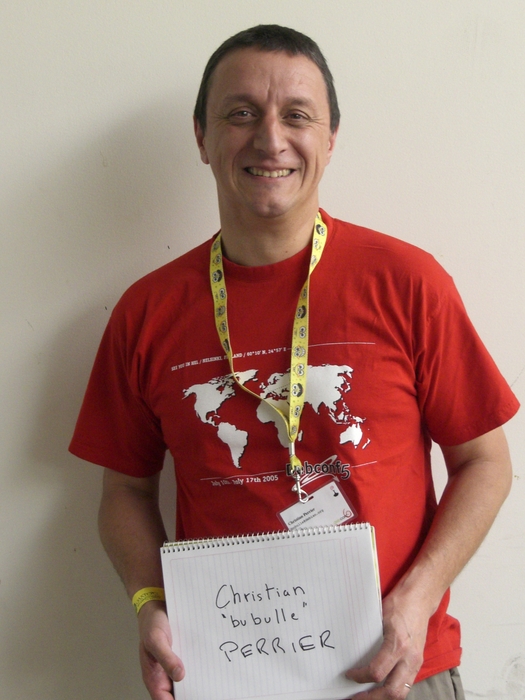
Raphaël Hertzog: People behind Debian: Christian Perrier, translation coordinator

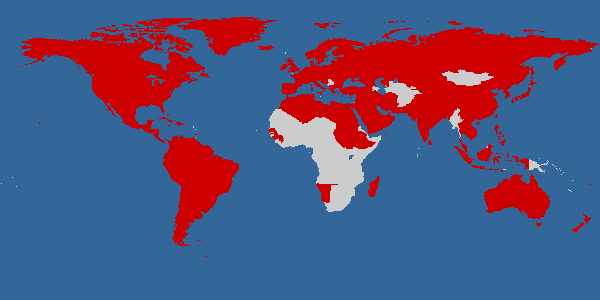
Christian is a figure of Debian, not only because of the tremendous coordination work that he does within the translation project, but also because he s very involved at the social level. He s probably in the top 5 of the persons who attended most often the Debian conference. Christian is a friend (thanks for hosting me so many times when I come to Paris for Debian related events) and I m glad that he accepted to be interviewed. He likes to speak and that shows in the length of his answers :-) but you ll be traveling the world while reading him. My questions are in bold, the rest is by Christian. Who are you? I am a French citizen (which is easy to guess unless you correct my usual mistakes in what follows). I m immensely proud of being married for nearly 26 years with Elizabeth (who deserves a statue from Debian for being so patient with my passion and my dedication to the project). I m also the proud father of 3 wonderful kids , aged 19 to 23. I work as team manager in the Networks and Computers Division of Onera the French Aerospace lab , a public research institute about Aeronautics, Space and Defense. My team provides computer management services for research divisions of Onera, with a specific focus put on individual computing. I entered the world of free software as one of the very first users of Linux in France. Back in the early 1990 s, I happened (though the BBS users communities) to be a friend of several early adopters of Linux and/or BSD386/FreeBSD/NetBSD in France. More specifically, I discovered Linux thanks with my friend Ren Cougnenc (all my free software talks are dedicated to Ren , who passed away in 1996). You re not a programmer, not even a packager. How did you come to Debian? I m definitely not a programmer and I never studied computing (I graduated in Materials Science and worked in that area for a few years after my PhD). However, my daily work always involved computing (I redesigned the creep testing laboratory and its acquisition system all by myself during my thesis research work). An my hobbies often involved playing with home computers, always trying to learn about something new. So, first learning about a new operating system then trying to figure out how to become involved in its development was quite a logical choice. Debian is my distro of choice since it exists. I used Slackware on work machines for a while, but my home server, kheops, first ran Debian 1.1 when I stopped running a BBS on an MS-DOS machine to host a news server. That was back in October 1996. I then happened to be a user, and more specifically a user of genealogy software, also participating very actively in Usenet from this home computer and server, that was running this Debian thing. So, progressively, I joined mailing lists and, being a passionate person, I tried to figure out how I could bring my own little contribution to all this. This is why I became a packager (yes, I am one!) by taking over the geneweb package, which I was using to publish my genealogy research. I applied as DD in January 2001, then got my account in July 2001. My first upload to the Debian archive occurred on August 22nd 2001: that was of course geneweb, which I still maintain. Quite quickly, I became involved in the work on French localization. I have always been a strong supporter of localized software (I even translated a few BBS software back in the early 90 s) as one of the way to bring the power and richness of free software to more users. Localization work lead me to work on the early version of Debian Installer, during those 2003-2005 years where the development of D-I was an incredibly motivating and challenging task, lead by Joey Hess and his inspiring ideas. From user to contributor to leader, I suddenly discovered, around 2004, that I became the coordinator of D-I i18n (internationalization) without even noticing :-) You re the main translation coordinator in Debian. What plans and goals have you set for Debian Wheezy? As always: paint the world in red. Indeed, this is my goal for years. I would like our favorite distro to be able to be used by anyone in the world, whether she speaks English, Northern Sami, Wolof, Uyghur or Secwepemcts n. As a matter of symbol, I use the installer for this. My stance is that one should be able to even install Debian in one s own language. So, for about 7 years, I use D-I as a way to attract new localization contributors. This progress is represented on this page where the world is gradually painted in red as long as the installer supports more languages release after release. The map above tries to illustrate this by painting in red countries when the most spoken language in the country is supported in Debian Installer. However, that map does not give enough reward to many great efforts made to support very different kind of languages. Not only various national languages, but also very different ones: all regional languages of Spain, many of the most spoken languages in India, minority languages such as Uyghur for which an effort is starting, Northern Sami because it is taught in a few schools in Norway, etc., etc. Still, the map gives a good idea of what I would like to see better supported: languages from Africa, several languages in Central Asia. And, as a very very personal goal, I m eagerly waiting for support of Tibetan in Debian Installer, the same way we support its sister language, Dzongkha from Bhutan. For this to happen, we have to make contribution to localization as easy as possible. The very distributed nature of Debian development makes this a challenge, as material to translate (D-I components, debconf screens, native packages, packages descriptions, website, documentation) is very widely spread. A goal, for years, is to set a centralized place where translators could work easily without even knowing about SVN/GIT/BZR or having to report bugs to send their work. The point, however, would be to have this without making compromises on translation quality. So, with peer review, use of thesaurus and translation memory and all such techniques. Tools for this exist: we, for instance, worked with the developers of Pootle to help making it able to cope with the huge amount of material in Debian (think about packages descriptions translations). However, as of now, the glue between such tools and the raw material (that often lies in packages) didn t come. So, currently, translation work in Debian requires a great knowledge of how things are organized, where is the material, how it can be possible to make contribution reach packages, etc. And, as I m technically unable to fulfill the goal of building the infrastructure, I m fulfilling that role of spreading out the knowledge. This is how I can define my coordinator role. Ubuntu uses a web-based tool to make it easy to contribute translations directly in Launchpad. At some point you asked Canonical to make it free software. Launchpad has been freed in the mean time. Have you (re)considered using it? Why not? After all, it more or less fills in the needs I just described. I still don t really figure out how we could have all Debian material gathered in Rosetta/Launchpad .and also how Debian packagers could easily get localized material back from the framework without changing their development processes. I have always tried to stay neutral wrt Ubuntu. As many people now in Debian, I feel like we have reached a good way to achieve our mutual development. When it comes at localization work, the early days where the everything in Rosetta and translates who wants stanza did a lot of harm to several upstream localization projects is, I think, way over. Many people who currently contribute to D-I localization were indeed sent to me by Ubuntu contributors .and by localizing D-I, apt, debconf, package descriptions, etc., they re doing translation work for Ubuntu as well as for Debian. Let s say I m a Debian user and I want to help translate Debian in my language. I can spend 1 hour per week on this activity. What should I do to start? Several language teams use Debian mailing lists to coordinate their work. If you re lucky enough to be a speaker of one of these languages, try joining debian-l10n-<yourlanguage> and follow what s happening there. Don t try to immediately jump in some translation work. First, participate to peer reviews: comment on others translations. Learn about the team s processes, jargon and habits. Then, progressively, start working on a few translations: you may want to start with translations of debconf templates: they are short, often easy to do. That s perfect if you have few time. If no language team exists for your language, try joining debian-i18n and ask about existing effort for your language. I may be able to point you to individuals working on Debian translations (very often along with other free software translation efforts). If I am not, then you have just been named coordinator for your language :-) I may even ask you if you want to work on translating the Debian Installer. What s the biggest problem of Debian? We have no problems, we only have solutions :-) We are maybe facing a growth problem for a few years. Despite the increased welcoming aspects of our processes (Debian Maintainers), Debian is having hard times in growing. The overall number of active contributors is probably stagnating for quite a while. I m still amazed, however, to see how we can cope with that and still be able to release over the years. So, after all, this is maybe not a problem :-) Many people would point communication problems here. I don t. I think that communication inside the Debian project is working fairly well now. Our famous flame wars do of course still happen from time to time, but what large free software project doesn t have flame wars? In many areas, we indeed improved communication very significantly. I want to take as an example the way the release of squeeze has been managed. I think that the release team did, even more this time, a very significant and visible effort to communicate with the entire project. And the release of squeeze has been a great success in that matter. So, there s nearly nothing that frustrates me in Debian. Even when a random developer breaks my beloved 100% completeness of French translations, I m not frustrated for more than 2 minutes. You re known in the Debian community as the organizer of the Cheese & Wine Party during DebConf. Can you tell us what this is about? This is an interesting story about how things build themselves in Debian. It all started in July 2005, before DebConf 5 in Helsinki. Denis Barbier, Nicolas Fran ois and myself agreed to bring at Debconf a few pieces of French cheese as well as 1 or 2 bottles of French wine and share them with some friends. Thus, we settled an informal meeting in the French room where we invited some fellows: from memory, Benjamin Mako Hill, Hannah Wallach, Matt Zimmermann and Moray Allan. All of us fond of smelly cheese, great wine plus some extra p t home-made by Denis in Toulouse. It finally happened that, by word of mouth, a few dozens of other people slowly joined in that French room and turned the whole thing into an improvized party that more or less lasted for the entire night. The tradition was later firmly settled in 2006, first in Debconf 6 in Mexico where I challenged the French DDs to bring as many great cheese as possible, then during the Debian i18n meeting in Extremadura (Sept 2006) where we reached the highest amount of cheese per participant ever. I think that the Creofonte building in Casar de C ceres hasn t fully recovered from it and is still smelling cheese 5 years after. This party later became a real tradition for DebConf, growing over and over each year. I see it as a wonderful way to illustrate the diversity we have in Debian, as well as the mutual enrichment we always felt during DebConfs. My only regret about it is that it became so big over the years that organizing it is always a challenge and I more and more feel pressure to make it successful. However, over the years, I always found incredible help by DebConf participants (including my own son, last year a moment of sharing which we will both remember for years, i think). And, really, in 2010, standing up on a chair, shouting (because the microphone wasn t working) to thank everybody, was the most emotional moment I had at Debconf 10. Is there someone in Debian that you admire for their contributions? So many people. So, just like it happens in many awards ceremonies, I will be very verbose to thank people, sorry in advance for this. The name that comes first is Joey Hess. Joey is someone who has a unique way to perceive what improvements are good for Debian and a very precise and meticulous way to design these improvements. Think about debconf. It is designed for so long now and still reaching its very specific goal. So well designed that it is the entire basis for Joey s other achievement: designing D-I. Moreover, I not only admire Joey for his technical work, but also for his interaction with others. He is not he loudest person around, he doesn t have to .just giving his point in discussion and, guess what? Most of the time, he s right. Someone I would like to name here, also, is Colin Watson. Colin is also someone I worked with for years (the D-I effect, again ) and, here again, the very clever way he works on technical improvements as well as his very friendly way to interact with others just make it. And, how about you, Rapha l? :-) I m really admirative of the way you work on promoting technical work on Debian. Your natural ability to explain things (as good in English as it is in French) and your motivation to share your knowledge are a great benefit for the project. Not to mention the technical achievements you made with Guillem on dpkg of course! Another person I d like to name here is Steve Langasek. We both maintain samba packages for years and collaboration with him has always been a pleasure. Just like Colin, Steve is IMHO a model to follow when it comes at people who work for Canonical while continuing their involvment in Debian. And, indeed, Steve is so patient with my mistakes and stupid questions in samba packaging that he deserves a statue. We re now reaching the end of the year where Stefano Zacchiroli was the Debian Project Leader. And, no offense intended to people who were DPL before him (all of them being people I consider to be friends of mine), I think he did the best term ever. Zack is wonderful in sharing his enthusiasm about Debian and has a unique way to do it. Up to the very end of his term, he has always been working on various aspects of the project and my only hope is that he ll run again (however, I would very well understand that he wants to go back to his hacking activities!). Hat off, Zack!I again have several other people to name in this Bubulle hall of Fame : Don Armstrong, for his constant work on improving Debian BTS, Margarita Manterola as one of the best successes of Debian Women (and the most geeky honeymoon ever), Denis Barbier and Nicolas Fran ois because i18n need really skilled people, Cyril Brulebois and Julien Cristau who kept X.org packaging alive in lenny and squeeze, Otavio Salvador who never gave up on D-I even when we were so few to care about it. I would like to make a special mention for Frans Pop. His loss in 2010 has been a shock for many of us, and particularly me. Frans and I had a similar history in Debian, both mostly working on so-called non technical duties. Frans has been the best release manager for D-I (no offense intended, at all, to Joey or Otavio .I know that both of them share this feeling with me). His very high involvment in his work and the very meticulous way he was doing it lead to great achievements in the installer. The Installation Guide work was also a model and indeed a great example of non technical work that requires as many skills as more classical technical work. So, and even though he was sometimes so picky and, I have to admit, annoying, that explains why I m still feeling sad and, in some way, guilty about Frans loss. One of my goals for wheezy is indeed to complete some things Frans left unachieved. I just found one in bug #564441: I will make this work reach the archive, benefit our users and I know that Frans would have liked that.

Thank you to Christian for the time spent answering my questions. I hope you enjoyed reading his answers as I did. Subscribe to my newsletter to get my monthly summary of the Debian/Ubuntu news and to not miss further interviews. You can also follow along on Identi.ca, Twitter and Facebook.

7 comments Liked this article? Click here. My blog is Flattr-enabled.

13 February 2011

Christian Perrier: Fonts week-end

I spent most of the week-end working in the pkg-fonts team SVN repository and uploading font packages. The main goal was implementing "Build-Depends:fontforge-nox fontforge" to make the build of fonts easier and faster when they're built from FontForge source files. While doing this, I updated a few of these fonts. I also completely revamped the linux-libertine package which was left pending for quite some time in our SVN (after initial work by Rog rio Brito). I also definitely adopted the ttf-sinhala-lklug font package (the only fonts we have for Sinhala language, so far). Finally, I started going through the list of packages that still depend on defoma. I prodded maintainers for several of these, the most outdated ones....to propose adopting the package under the team's umbrella. We'll see what happens. Quite productive week-end, indeed (and I even managed to watch the three 6 nations rugby games, plus running around 30 kilometers...doh).

6 February 2011

Christian Perrier: Squeeze released

This is the gazillionth entry on Planet Debian about Squeeze being released. If I had to say one thing about it, it would be that I think the way it was handled this time has been really great. The debian-publicity team, lead by the tireless Reichles, did great job in doing as many buzz as possible around that release....but managed to do it in the "spirit" of free software (pushing release parties, animating a feed on identi.ca, preparing press releases, etc.). The Release Team did a tremendous job during the 6 months of the freeze, by carefully balancing between conservatism and liberalism in accepting (or denying) our gazillion of request for freeze exceptions The FTP, CD, installer, website, documentation teams organized things really well for their respective fields of responsibility. A special mention to the tremendous effort done about the release notes, release announcements documents (and of course, their translators). I'm currently busy upgrading my servers (at home and at work) and things are going smoothly (except the first two I did without carefully reading warnings about missing firmwares...they're now waiting for me to provide them with the right non free firmware packages, 30km away from here). And, for myself, I celebrated the release this morning by squashing my personal best time on an half-marathon (officials races excepted) by nearly 7 minutes, bringing it just below 1h45 (PB in official races is 1h37). Release power! :) And, during that afternoon, I also had the please of having my pet package (geneweb) and my most important package (samba) having their first release in unstable, targeted for wheezy. Squeeeeeeze meeeeeeeeeeeee!

31 January 2011

Christian Perrier: Four languages reach 100% for debconf templates translation in squeeze

All translatable debconf templates for packages in squeeze are translated in Czech, German, French and Swedish. Two other language teams nearly reached that goal and failed to reach it because of flaws in communication with package maintainers: So, in my opinion, I will count SIX languages as reaching 100% in po-debconf. Another great effort is currently going on with the Squeeze Release Notes translation, where 8 languages are very likely to be complete (http://www.debian.org/releases/testing/statistics.html) and a strong last-minute effort by a motivated Danish team could likely add one. And, of course, you all know that Debian Installer supports 70 languages with 57 of them with a full translation.

16 January 2011

Christian Perrier: Berlin it will be

I just registered for the 38th Berlin marathon on September 25th 2011. We (Elizabeth and /me) will of course use this opportunity to visit the city (our first time in Berlin), coming on Thursday 22th and leaving on Monday 26th. I aim for 3h30. We'll see..:-)

14 January 2011

Christian Perrier: Bug #610000

Micah Veith reported the Debian bug #610000 on Friday January 14th, against the util-vserver package. Bug #600000 was reported as of October 12th. That makes 3 months for 10,000 bugs, one of the slowest ratio since I'm tracking these little things. We indeed had the same effect during lenny deep freeze, between bugs #500000 and #510000. So, that seems to be a proof that freezes also slowdown the bug reporting rate (or the prevalence of bugs...). As we're probably about to release, let's meet again in 2 months, to see if the bug rate increased again... See you for bug #620000. And don't forget aboutthe bug prediction contest.

10 January 2011

Christian Perrier: [life] How to discourage the use of public transport

As some of my readers may now, I'm a regular user of public transport. Even though I'm living in an area (far suburbs of Paris) where the use of cars for nearly everything is common, I managed up to now to not use my car for my daily commute. I was using the public bus line of our town, that starts close from our house and ends up at the local train station where I can commute to U line of Paris transport system (then C line, then another bus ride). You can compare this complicated 1h30 travel to the 35 minutes drive I would have if I was using my car. I *was*. I'll stop from tomorrow. The reason is simple: my U train start hour is 6h57. The bus formerly started at 6h36, then reached the train station at 6h51, which was a quite good commute. That made me leave our house at about 6h25, considering a 10min walk from the house to the bus stop. That's 32 minutes for....3 kilometers. Already needs some motivation, right? This changed today (with minimal notice). To catch the same train, I should have a bus at 6h31, thus leave 5 minutes earlier, so *nearly 40 minutes before the train schedule*. Considering that driving from our place to the train station is about 12 minutes, the deal is now made. I'll stop being the only non captive person using the bus in our neighbourhood (all others are people who can't use a car). So much for environment, etc. This is an 'interesting' way to understand why it is so easy to discourage proper use of public transport and minimize the impact on environment. A small change can lead to such effects. Of course, as you may expect, I won't stop there. Letters to the (public-funded) bus company and people in charge of public transport in our city (the bus line deficit is funded by the city), will follow very soon. Tehre are indeed many other reasons why people don't use our local buses that much. One being that, even though there are 2 trains every 15 minutes leaving the station (U and N lines), both alternated with a 7.5 minutes interval....there is only one bus every 15 minutes....on each bus line. Sometimes, even, you don't know why, there's a 23 minutes gap. Imagine waiting for your bus for more than 20 minutes at night in winter...when you're about 2-3 kilometers away from your home... Sure, that would need a lot of funding to have a really convenient system. But how about spending the billions of euros spent in super-highways, toll tunnels, etc., in public transport infrastructure? Funding my local bus line to have 2 buses every 15 minutes at peak hours would cost about the price of 100m of a 3-lane highway, for one year. Make the deal. (All that will indeed reinforce my backup system : run from my house to the train station, for 3km and 15 minutes...which involves another run at the end of my train ride, for 4km and 20 minutes. That, however, involves some "logistics" organization to be sure that I don't spend the day working in my stinking running suit. That also means up to 56km run every week, which I can't always do, particularly if I plan a race for the next week-end!) Another side effect: I will have less time for Debian as my bus commutes were used for hacking, while it will be much more difficult when driving my car to the train station, isn't it?

8 January 2011

Joerg Jaspert: Keyboard layout - 10 finger typing

For some reason, I don t really know why, I decided to switch my keyboard layout over to something weird. No, not the french brainfuck :) that is actually possible to type on in a halfway acceptable speed (shutup Bubulle), but the Neo thing for german keyboards. Hell. I didn t know how slow one can be typing. About a letter in 3 seconds, or something like it. I think, we should add something to our mandantory set of rules for anyone on any Debian Mailinglist: Whenever a flamewar starts, everyone who participates has to switch their keyboard layout to a random new layout. For every paragraph of every mail they write. Would stop the thread before it really happens. Ohwell, lets see where I stand in a week/month from now. Maybe I can actually use it then. And maybe I really type with 10 fingers then, and not something like the 3 til 8 i currenly use (depends on moon phase how many, i think). I m not slow with my current system, far from it, but I do sometimes have pain in my hands. Maybe that goes away too if I adopt something better, with less weird hand/finger movings. Though the way over will be painful in itself.

Next.

Previous.