Most of my Debian contributions this month were
sponsored by Freexian.
You can also support my work directly via
Liberapay.
OpenSSH
OpenSSH upstream released
9.9p2 with fixes for
CVE-2025-26465 and CVE-2025-26466. I got a heads-up on this in advance from
the Debian security team, and prepared updates for all of testing/unstable,
bookworm (Debian 12), bullseye (Debian 11), buster (Debian 10, LTS), and
stretch (Debian 9, ELTS). jessie (Debian 8) is also still in ELTS for a few
more months, but wasn t affected by either vulnerability.
Although I m not particularly active in the Perl team, I fixed a
libnet-ssleay-perl build failure because
it was blocking openssl from migrating to testing, which in turn was
blocking the above openssh fixes.
I also sent a minor sshd -T
fix upstream, simplified
a number of autopkgtests using the newish Restrictions:
needs-sudo facility, and prepared for
removing the obsolete slogin symlink.
PuTTY
I upgraded to the new upstream version
0.83.
GCC 15 build failures
I fixed build failures with GCC
15 in a few packages:
Python team
A lot of my Python team work is driven by its maintainer
dashboard.
Now that we ve finished the transition to Python 3.13 as the default
version, and inspired by a recent debian-devel thread started by
Santiago, I
thought it might be worth spending a bit of time on the uscan error
section. uscan is typically
scraping upstream web sites to figure out whether new versions are
available, and so it s easy for its configuration to become outdated or
broken. Most of this work is pretty boring, but it can often reveal
situations where we didn t even realize that a Debian package was out of
date. I fixed these packages:
cssutils (this in particular was very out of date due to a new and active
upstream maintainer since 2021)
In bookworm-backports, I updated python-django to 3:4.2.18-1 (issuing
BSA-121)
and added new backports of python-django-dynamic-fixture and
python-django-pgtrigger, all of which are dependencies of
debusine.
I went through all the build failures related to python-click 8.2.0 (which
was confusingly tagged but not fully released
upstream and posted an
analysis.
I fixed or helped to fix various other build/test failures:
by por Andrew Gon alves
Debian Day in Santa Maria - RS 2024 was held after a 5-year hiatus from the previous version of the event. It took
place on the morning of August 16, in the Blue Hall of the
Franciscan University (UFN) with support from the
Debian community and the Computing Practices Laboratory of UFN.
The event was attended by students from all semesters of the Computer Science,
Digital Games and Informational Systems, where we had the opportunity to talk to the participants.
Around 60 students attended a lecture introducing them to Free and Open Source
Software, Linux and were introduced to the Debian project, both about the
philosophy of the project and how it works in practice and the opportunities
that have opened up for participants by being part of Debian.
After the talk, a packaging demonstration was given by local DD Francisco
Vilmar, who demonstrated in practice how software packaging works in Debian.
I would like to thank all the people who helped us:
Debian Project
Professor Ana Paula Canal (UFN)
Professor Sylvio Andr Garcia (UFN)
Laboratory of Computing Practices
Francisco Vilmar (local DD)
And thanks to all the participants who attended this event asking intriguing
questions and taking an interest in the world of Free Software.
Photos:
by Thiago Pezzo and
Giovani Ferreira
Local celebrations of Debian 2024 Day
also happened on [Pouso Alegre, MG, Brazil] (https://www.openstreetmap.org/relation/315431). In this year we managed to organize two days of lectures!
On the 14th of August 2024, Wednesday morning, we were on the
[Federal Institute of Education, Science and Technology of the South of Minas Gerais] (https://portal.ifsuldeminas.edu.br/index.php), (IFSULDEMINAS), Pouso Alegre campus. We did an introductory presentation of the
Project Debian, operating system and community, for
the three years of the Technical Course in Informatics (professional high school). The event was closed to IFSULDEMINAS students and talked to 60 people.
On August 17th, 2024, a Saturday morning, we held the event open to the
community at the University of the Sapuca Valley (Univ s), with institutional support of the Information Systems Course. We speak about the Debian Project with Giovani Ferreira (Debian Developer); about the Debian pt_BR translation team with Thiago Pezzo; about everyday experiences using free software with Virginia
Cardoso; and on how to set up a development environment ready for production
using Debian and Docker with Marcos Ant nio dos Santos. After the lectures,
snacks, coffee and cake were served, while the participants talked, asked
questions and shared experiences.
We would like to thank all the people who have helped us:
Michelle Nery (IFSULDEMINAS) and Andr Martins (UNIV S) for the aid in the local organization - Paulo Santana (Debian Brazil) by the general organization
Virginia Cardoso, Giovani Ferreira, Marco Ant nio and Thiago Pezzo for the lectures - And a special thanks to all of you who participated in our celebratio
This year's Debian day was a pretty special one, we are celebrating 30 years! Giving the importance of this event, the Brazilian community planned a very
special week. Instead of only local gatherings, we had a week of online talks
streamed via Debian Brazil's youtube channel (soon the recordings will be uploaded to Debian's peertube instance). Nonetheless the local celebrations happened around the country and I've organized one in S o Carlos with the help
of GELOS, the FLOSS group at University of S o Paulo.
The event happened on August 19th and went on the whole afternoon. We had some
talks about Debian and free software (see table below), a coffee break where we
had the chance to talk, and finished with a group photo (check this one and
many others below). Actually, it wasn't the end, we carried on the conversation
about Debian and free software in a local bar :-)
We had around 30 people in the event and reached a greater audience via the
announcements across the university's press releases and emails sent to our
Brazilian mailing lists. You can check some of them below.
Time Author Title
----- -------- ------
14:10 GELOS Intro to GELOS
14:30 Carlos Melara (Charles) A ~~not so~~ Brief Introdution to the Debian Project 15:15 Guilherme Paix o Debian and the Free Culture
15:45 z Free Software: the paths to a free life
16:15 -- Coffee Break
17:15 Prof. Dr. Francisco Jos Monaco The FOSS Ecosystem and You
Here are some photos taken during the event!
Getting things ready for the event.
Intro to GELOS talk.
A ~~not so~~ Brief Introdution to the Debian Project talk.
Everyone already knew Debian!
Debian and the Free Culture talk
People in the auditorium space.
Free Software: the paths to a free life talk
Coffee Break.
The FOSS Ecosystem and You talk.
Group photo.
Celebration goes on in the bar.
title: Debian Day 30 years online in Brazil
description: by Paulo Henrique de Lima Santana (phls)
published: true
date: 2025-03-01T17:39:03.284Z
tags: blog, english
editor: markdown
dateCreated: 2023-08-25T16:00:00.000Z
In 2023 the traditional Debian Day is
being celebrated in a special way, after all on August 16th Debian turned 30
years old!
To celebrate this special milestone in the Debian's life, the
Debian Brasil community organized a week with
talks online from August 14th to 18th. The event was named
Debian 30 years.
Two talks were held per night, from 7:00 pm to 10:00 pm, streamed on the
Debian Brasil channel on YouTube totaling 10 talks. The recordings are also available on the
Debian Brazil channel on Peertube.
We had the participation of 9 DDs, 1 DM, 3 contributors in 10 activities.
The live audience varied a lot, and the peak was on the preseed talk with
Eriberto Mota when we had 47 people watching.
Thank you to all participants for the contribution you made to the success of
our event.
Antonio Terceiro
Aquila Macedo
Charles Melara
Daniel Lenharo de Souza
David Polverari
Eriberto Mota
Giovani Ferreira
Jefferson Maier
Lucas Kanashiro
Paulo Henrique de Lima Santana
Sergio Durigan Junior
Thais Araujo
Thiago Andrade
Veja abaixo as fotos de cada atividade:
Nova gera o: uma entrevista com iniciantes no projeto Debian
Instala o personalizada e automatizada do Debian com preseed
Manipulando patches com git-buildpackage
debian.social: Socializando Debian do jeito Debian
Proxy reverso com WireGuard
Celebra o dos 30 anos do Debian!
Instalando o Debian em disco criptografado com LUKS
O que a equipe de localiza o j conquistou nesses 30 anos
Debian - Projeto e Comunidade!
Design Gr fico e Software livre, o que fazer e por onde come ar
Since my motivation boost in the beginning of the month caused me
to wrap up a new release of
liboggz, I have used the
same boost to wrap up new editions of
libfishsound,
liboggplay
and
libkate
too. These have been tagged in upstream git, but not yet published on
the Xiph download location. I am waiting for someone with access to
have time to move the tarballs there, I hope it will happen in a few
days. The same is the case for a minor update of liboggz too.
As I was looking at Xiph packages lacking updates, it occurred to
me that there are packages in Debian that have not received a new
upload in a long time. Looking for a way to identify them, I came
across the ltnu script from the
devscripts
package. It can sort by last update, packages maintained by a single
user/group, and is useful to figure out which packages a single
maintainer should have a look at. But I wanted a archive wide
summary. Based on the UDD SQL
query used by ltnu, I ended up with the following command:
#!/bin/sh
env PGPASSWORD=udd-mirror psql --host=udd-mirror.debian.net --user=udd-mirror udd --command="
select source,
       max(version) as ver,
       max(date) as uploaded
from upload_history
where distribution='unstable' and
      source in (select source
                 from sources
                 where release='sid')
group by source
order by max(date) asc
limit 50;"
This will sort all source packages in Debian by upload date, and
list the 50 oldest ones. The end result is a list of packages I
suspect could use some attention:
So there are 8 packages last uploaded to unstable in 2011, 12
packages in 2012 and 26 packages in 2013. I suspect their maintainers
need help and we should all offer our assistance. I already contacted
two of them and hope the rest of the Debian community will chip in to
help too. We should ensure any Debian specific patches are passed
upstream if they still exist, that the package is brought up to speed
with the latest Debian policy, as well as ensure the source can built
with the current compiler set in Debian.
As usual, if you use Bitcoin and want to show your support of my
activities, please send Bitcoin donations to my address
15oWEoG9dUPovwmUL9KWAnYRtNJEkP1u1b.
Introduction
This is just a note-taking about how to upgrading Mozc package for up-coming trixie ready (with many restrictions) last year.
Maybe Mozc 2.29.5160.102+dfsg-1.3 will be shipped for Debian 13 (trixie).
FTBFS with Mozc 2.28.4715.102+dfsg-2.2
In May 2024, I've found that Mozc was removed from testing, and still in FTBFS.
#1068186 - mozc: FTBFS with abseil 20230802: ../../base/init_mozc.cc:90:29: error: absl::debian5::flags_internal::ArgvListAction has not been declared - Debian Bug report logs
That FTBFS was fixed in the Mozc upstream, but not applied for a while.
Not only upstream patch, but also additional linkage patch was required to fix it.
Mozc is the de-fact standard input method editor for Japanese.
Most of Japanese uses it by default on linux desktop.
(Even though frontend input method framework is different, the background engine is Mozc in most cases -
uim-mozc for task-japanese-desktop, ibus-mozc for task-japanese-gnome-desktop in Debian)
There is a case that Mozc was re-built locally with integrated external dictionary
to improve quantity of vocabulary. If FTBFS keep ongoing, it means that it blocks such a usage.
So I've sent patches to fix it and they were merged.
Motivation to update Mozc
With fixing #1068186, I've also found Mozc version is not synced to upstream for a long time.
At that time, Mozc in unstable was version 2.28.4715.102+dfsg, but upstream already released 2.30.5544.102.
It seems that Mozc's maintainer was too busy and can't afford to update it, so I've tried to do it.
The blockers for updating Mozc
But, it was not so easy task to do so.
If you want to package latest Mozc, there were many blockers.
Newer Mozc requires Bazel to build, but there is no Bazel package to fit it (There is bazel-bootstrap 4.x, but it's old. v6.x or newer one is required.)
Newer abseil and protobuf were required
Renderer was changed to Qt. GTK renderer was removed
Revise existing patchsets (e.g. for UIM, for Fcitx)
It was not all.
Road to latest Mozc
First, I knew the existence of debian-bazel, so I've posted about bazel-packaging progress.
Any updates about bazel packaging effort?
Sadly there was no response from it.
Thus, it was not realistic to adopt Bazel as build tool chain.
In other words, we need to keep GYP patch and maintain it.
And as another topic, upstream changed renderer from GTK+ to Qt.
Here are the major topics about each release of Mozc.
The internal renderer change are too big, and before GYP deprecation
in 2.29.5544.102, GYP support was already removed gradually.
As a result, target to 2.29.5160.102 was the practical approach to make it forward.
Revisit existing patchsets for 2.28.4715.102+dfsg
Second, need to revisit existing patchset to triage them.
UIM patch was maintained in third-party repository,
and directory structure was quite different from Mozc.
It seems that maintenance activity was too low, so it was not enough that picking changes
from macuim. It was required to fix FTBFS additionally.
Fcitx patch was also maintained in fcitx/mozc.
But it tracks only master branch, so it was hard to pick patchset for specific version of Mozc.
Finally, I could manage to refresh patchset for 2.29.5160.102.
OT: Hardware breakage
There was another blocker to do this task.
I've hit the situation that g++ cause SEGV during building Mozc randomly.
First, I wonder why it fails, but digging further more, finally I've found that
memory module was corrupted. Thus I've lost 32GB memory modules. :-<
Unexpected behaviour in uim-mozc
When uploaded Mozc 2.29.5160.102+dfsg-1 to experimental,
I've found that there is a case that uim-mozc behaves weird.
The candidate words were shown with flickering.
But it was not regression in this upload.
uim-mozc with Wayland cause that problem.
Thus GNOME and derivatives might not be affected because ibus-mozc will be used.
Mozc 2.29.5160.102+dfsg-1
As the patchset was matured, then uploaded 2.29.5160.102+dfsg-1 with --delayed 15 option.
$ dput --delayed 15 mozc_2.29.5160.102+dfsg-1_source.changes
Uploading mozc using ftp to ftp-master (host: ftp.upload.debian.org; directory: /pub/UploadQueue/DELAYED/15-day)
running allowed-distribution: check whether a local profile permits uploads to the target distribution
running protected-distribution: warn before uploading to distributions where a special policy applies
running checksum: verify checksums before uploading
running suite-mismatch: check the target distribution for common errors
running gpg: check GnuPG signatures before the upload
 signfile dsc mozc_2.29.5160.102+dfsg-1.dsc 719EB2D93DBE9C4D21FBA064F7FB75C566ED20E3
 fixup_buildinfo mozc_2.29.5160.102+dfsg-1.dsc mozc_2.29.5160.102+dfsg-1_amd64.buildinfo
 signfile buildinfo mozc_2.29.5160.102+dfsg-1_amd64.buildinfo 719EB2D93DBE9C4D21FBA064F7FB75C566ED20E3
 fixup_changes dsc mozc_2.29.5160.102+dfsg-1.dsc mozc_2.29.5160.102+dfsg-1_source.changes
 fixup_changes buildinfo mozc_2.29.5160.102+dfsg-1_amd64.buildinfo mozc_2.29.5160.102+dfsg-1_source.changes
 signfile changes mozc_2.29.5160.102+dfsg-1_source.changes 719EB2D93DBE9C4D21FBA064F7FB75C566ED20E3
Successfully signed dsc, buildinfo, changes files
Uploading mozc_2.29.5160.102+dfsg-1.dsc
Uploading mozc_2.29.5160.102+dfsg-1.debian.tar.xz
Uploading mozc_2.29.5160.102+dfsg-1_amd64.buildinfo
Uploading mozc_2.29.5160.102+dfsg-1_source.changes
Mozc 2.29.5160.102+dfsg-1 was landed to unstable at 2024-12-20.
Additional bug fixes
Additionally, the following bugs were also fixed.
These bugs were fixed in 2.29.5160.102+dfsg-1.1
And more, I've found that even though missing pristine-tar branch commit, salsa CI succeeds.
I've sent MR for this issue and already merged into.
Note that protobuf 3.25.4 on experimental depends on older absl
20230802, so it must be rebuilt against absl 20240722.0.
And more, we need to consider how to migrate from GTK renderer to
Qt renderer in the future.
Posted on February 23, 2025
Tags: madeof:atoms, craft:sewing, FreeSoftWear
Many years ago I made myself a vest with lots of pockets1 in a few layers of cheap cotton, and wore the hell out of it,
for the added warmth, but most importantly for the convenience provided
by the pockets.
Then a few years ago the cheap cotton had started to get worn, and I
decided I needed to replace it. I found a second choice (and thus
cheaper :) ) version of a water-repellent cotton
and made another vest, lined with regular cotton, for a total of just
two layers.
This time I skipped a few pockets that I had found I didn t use that
much, and I didn t add a hood, which didn t play that well when worn
over a hoodie, but I added some detached sleeves, for additional wind
protection.
This left about 60 cm and some odd pieces of leftover fabric in my
stash, for which I had no plan.
And then February2 came, and I needed a quick simple mindless
handsewing projects for the first weekend, I saw the vest (which I m
wearing as much as the old one), the sleeves (which have been used much
less, but I d like to change this) and thought about making a matching
hood for it, using my square hood pattern.
Since the etaproof is a bit stiff and not that nice to the touch I
decide to line3 it with the same cotton as the vest and
sleeves, and in the style of the pattern I did so by finishing each
panel with its own lining (with regular cotton thread) and then
whipstitching the panels together with the corespun cotton/poly thread
recommended by the seller of the fabric. I m not sure this is the best
way to construct something that is supposed to resist the rain, but if I
notice issues I can always add some sealing tape afterwards.
I do have a waterproof cape to wear in case of real rain, so this is
only supposed to work for light rain anyway, and it may prove not to be
an issue.
As something designed to be worn in light rain, this is also something
likely to be worn in low light conditions, where 100% black may not be
the wisest look. On the vest I had added reflective piping to the
armscyes, but I was out of the same piping.
I did however have a spool of reflector thread made of glass fibre by
Rico Design, which I think was originally sold to be worked into
knitting or crochet projects (it is now discontinued) and I had never
used.
I decided to try and sew a decorative blanket stitch border, a decision
I had reasons to regret, since the thread broke and tangled like crazy,
but in the end it was done, I like how it looks, and it seems pretty
functional. I hope it won t break with time and use, and if it does I ll
either fix it or try to redo with something else.
Of course, the day I finished sewing the reflective border it stopped
raining, so I haven t worn it yet, but I hope I ll be able to, and if it
is an horrible failure I ll make sure to update this post.
and I ve just realized that I haven t migrated that pattern
to my pattern website, and I should do that. just don t hold your
breath for it to happen O:-). And for the time being it will not have
step-by-step pictures, as I currently don t need another vest.
and February of course means a weekend in front of a
screen that is showing a live-streamed conference.
and of course I updated the pattern with instructions on
how to add a lining.
For my PhD, my colleagues/collaborators and I built a distributed
stream-processing system using Haskell.
There are several other Haskell stream-processing systems. How do they
compare?
First, let's briefly discuss and define streaming in this context.
Structure and Interpretation of Computer Programs introduces Streams
as an analogue of lists, to support delayed evaluation. In brief, the
inductive list type (a list is either an empty list or a head element
pre-pended to another list) is replaced with a structure with a head
element and a promise which, when evaluated, will generate the tail
(which in turn may have a head element and a promise to generate another
tail, culminating in the equivalent of an empty list.) Later on SICP
also covers lazy evaluation.
However, the streaming we're talking about originates in the relational
community, rather than the functional one, and is subtly different. It's
about building a pipeline of processing that receives and emits data but
doesn't need to (indeed, cannot) reference the whole stream (which may
be infinite) at once.
Haskell streaming systems
Now let's go over some Haskell streaming systems.
conduit (2011-)
Conduit is the oldest of the ones I am reviewing here, but I doubt it's
the first in the Haskell ecosystem. If I've made any obvious omissions,
please let me know!
Conduit provides a new set of types to model streaming data, and a completely
new set of functions which are analogues of standard Prelude functions, e.g.
sumC in place of sum. It provides its own combinator(s) such as . (
aka fuse)
which is like composition but reads left-to-right.
The motivation for this is to enable (near?) constant memory usage for
processing large streams of data -- presumably versus using a list-based
approach and to provide some determinism: the README gives the example of
"promptly closing file handles". I think this is another way of saying
that it uses strict evaluation, or at least avoids lazy evaluation for
some things.
Conduit offers interleaved effects: which is to say, IO can be performed
mid-stream.
Conduit supports distributed operation via Data.Conduit.Network in the
conduit-extra package. Michael Snoyman, principal Conduit author, wrote
up how to use it here: https://www.yesodweb.com/blog/2014/03/network-conduit-async
To write a distributed Conduit application, the application programmer must
manually determine the boundaries between the clients/servers and write specific
code to connect them.
pipes (2012-)
The Pipes
Tutorial
contrasts itself with "Conventional Haskell stream programming": whether that
means Conduit or something else, I don't know.
Paraphrasing their pitch: Effects, Streaming Composability: pick two. That's
the situation they describe for stream programming prior to Pipes. They argue
Pipes offers all three.
Pipes offers it's own combinators (which read left-to-right)
and offers interleaved effects.
At this point I can't really see what fundamentally distinguishes Pipes from
Conduit.
Pipes has some support for distributed operation via the sister library
pipes-network. It
looks like you must send and receive ByteStrings, which means rolling
your own serialisation for other types. As with Conduit, to send or receive
over a network, the application programmer must divide their program up
into the sub-programs for each node, and add the necessary ingress/egress
code.
io-streams (2013-)
io-streams emphasises simple primitives. Reading and writing is done
under the IO Monad, thus, in an effectful (but non-pure) context. The
presence or absence of further stream data are signalled by using the
Maybe type (Just more data or Nothing: the producer has finished.)
It provides a library of functions that shadow the standard Prelude, such
as S.fromList, S.mapM, etc.
It's not clear to me what the motivation for io-streams is, beyond
providing a simple interface. There's no declaration of intent that I can find
about (e.g.) constant-memory operation.
There's no mention of or support (that I can find) for distributed
operation.
streaming (2015-)
Similar to io-streams, Streaming emphasises providing a simple
interface that gels well with traditional Haskell methods. Streaming
provides effectful streams (via a Monad -- any Monad?) and a collection
of functions for manipulating streams which are designed to closely
mimic standard Prelude (and Data.List) functions.
Streaming doesn't push its own combinators: the examples provided
use $ and read right-to-left.
The motivation for Streaming seems to be to avoid memory leaks caused by
extracting pure lists from IO with traditional functions like mapM,
which require all the list constructors to be evaluated, the list to be
completely deconstructed, and then a new list constructed.
Like io-streams, the focus of the library is providing a low-level
streaming abstraction, and there is no support for distributed operation.
streamly (2017-)
Streamly appears to have the grand goal of providing a unified programming
tool as suited for quick-and-dirty programming tasks (normally the domain of
scripting languages) and high-performance work (C, Java, Rust, etc.). Their
intended audience appears to be everyone, or at least, not just existing
Haskell programmers. See their rationale
Streamly offers an interface to permit composing concurrent (note: not
distributed) programs via combinators. It relies upon fusing a streaming
pipeline to remove intermediate list structure allocations and de-allocations
(i.e. de-forestation, similar to GHC rewrite rules)
The examples I've seen use standard combinators (e.g. Control.Function.&,
which reads left-to-right, and Applicative).
Streamly provide benchmarks
versus Haskell pure lists, Streaming, Pipes and Conduit: these generally
show Streamly several orders of magnitude faster.
I'm finding it hard to evaluate Streamly. It's big, and it's focus is wide.
It provides shadows of Prelude functions, as many of these libraries do.
wrap-up
It seems almost like it must be a rite-of-passage to write a streaming system
in Haskell. Stones and glass houses, I'm guilty of that
too.
The focus of the surveyed libraries is mostly on providing a streaming
abstraction, normally with an analogous interface to standard Haskell lists.
They differ on various philosophical points (whether to abstract away the
mechanics behind type synonyms, how much to leverage existing Haskell idioms,
etc). A few of the libraries have some rudimentary support for distributed
operation, but this is limited to connecting separate nodes together: in some
cases serialising data remains the application programmer's job, and in all
cases the application programmer must manually carve up their processing
according to a fixed idea of what nodes they are deploying to. They all
define a fixed-function pipeline.
I can t remember exactly the joke I was making at the time in my
work s slack instance (I m sure it wasn t particularly
funny, though; and not even worth re-reading the thread to work out), but it
wound up with me writing a UEFI binary for the punchline. Not to spoil the
ending but it worked - no pesky kernel, no messing around with userland . I
guess the only part of this you really need to know for the setup here is that
it was a Severance joke,
which is some fantastic TV. If you haven t seen it, this post will seem perhaps
weirder than it actually is. I promise I haven t joined any new cults. For
those who have seen it, the payoff to my joke is that I wanted my machine to
boot directly to an image of
Kier Eagan.
As for how to do it I figured I d give the uefi
crate a shot, and see how it is to use,
since this is a low stakes way of trying it out. In general, this isn t the
sort of thing I d usually post about except this wound up being easier and
way cleaner than I thought it would be. That alone is worth sharing, in the
hopes someome comes across this in the future and feels like they, too, can
write something fun targeting the UEFI.
First thing s first gotta create a rust project (I ll leave that part to you
depending on your life choices), and to add the uefi crate to your
Cargo.toml. You can either use cargo add or add a line like this by hand:
uefi = version = "0.33", features = ["panic_handler", "alloc", "global_allocator"]
We also need to teach cargo about how to go about building for the UEFI target,
so we need to create a rust-toolchain.toml with one (or both) of the UEFI
targets we re interested in:
Unfortunately, I wasn t able to use the
image crate,
since it won t build against the uefi target. This looks like it s
because rustc had no way to compile the required floating point operations
within the image crate without hardware floating point instructions
specifically. Rust tends to punt a lot of that to libm usually, so this isnt
entirely shocking given we re nostd for a non-hardfloat target.
So-called softening requires a software floating point implementation that
the compiler can use to polyfill (feels weird to use the term polyfill here,
but I guess it s spiritually right?) the lack of hardware floating point
operations, which rust hasn t implemented for this target yet. As a result, I
changed tactics, and figured I d use ImageMagick to pre-compute the pixels
from a jpg, rather than doing it at runtime. A bit of a bummer, since I need
to do more out of band pre-processing and hardcoding, and updating the image
kinda sucks as a result but it s entirely manageable.
This will take our input file (kier.jpg), resize it to get as close to the
desired resolution as possible while maintaining aspect ration, then convert it
from a jpg to a flat array of 4 byte RGBA pixels. Critically, it s also
important to remember that the size of the kier.full.jpg file may not actually
be the requested size it will not change the aspect ratio, so be sure to
make a careful note of the resulting size of the kier.full.jpg file.
Last step with the image is to compile it into our Rust bianary, since we
don t want to struggle with trying to read this off disk, which is thankfully
real easy to do.
Remember to use the width and height from the final kier.full.jpg file as the
values for KIER_WIDTH and KIER_HEIGHT. KIER_PIXEL_SIZE is 4, since we
have 4 byte wide values for each pixel as a result of our conversion step into
RGBA. We ll only use RGB, and if we ever drop the alpha channel, we can drop
that down to 3. I don t entirely know why I kept alpha around, but I figured it
was fine. My kier.full.jpg image winds up shorter than the requested height
(which is also qemu s default resolution for me) which means we ll get a
semi-annoying black band under the image when we go to run it but it ll
work.
Anyway, now that we have our image as bytes, we can get down to work, and
write the rest of the code to handle moving bytes around from in-memory
as a flat block if pixels, and request that they be displayed using the
UEFI GOP. We ll just need to hack up a container
for the image pixels and teach it how to blit to the display.
/// RGB Image to move around. This isn't the same as an
/// image::RgbImage , but we can associate the size of
/// the image along with the flat buffer of pixels.
structRgbImage/// Size of the image as a tuple, as the
/// (width, height)
size: (usize, usize),
/// raw pixels we'll send to the display.
inner: Vec<BltPixel>,
impl RgbImage
/// Create a new RgbImage .
fnnew(width: usize, height: usize) -> Self
RgbImage
size: (width, height),
inner: vec![BltPixel::new(0, 0, 0); width * height],
/// Take our pixels and request that the UEFI GOP
/// display them for us.
fnwrite(&self, gop: &mut GraphicsOutput) -> Result
gop.blt(BltOp::BufferToVideo
buffer: &self.inner,
src: BltRegion::Full,
dest: (0, 0),
dims: self.size,
)
impl Index<(usize, usize)>for RgbImage
typeOutput= BltPixel;
fnindex(&self, idx: (usize, usize)) -> &BltPixellet (x, y) = idx;
&self.inner[y * self.size.0+ x]
impl IndexMut<(usize, usize)>for RgbImage
fnindex_mut(&mut self, idx: (usize, usize)) -> &mut BltPixel
let (x, y) = idx;
&mut self.inner[y * self.size.0+ x]
We also need to do some basic setup to get a handle to the UEFI
GOP via the UEFI crate (using
uefi::boot::get_handle_for_protocol
and
uefi::boot::open_protocol_exclusive
for the GraphicsOutput
protocol), so that we have the object we need to pass to RgbImage in order
for it to write the pixels to the display. The only trick here is that the
display on the booted system can really be any resolution so we need to do
some capping to ensure that we don t write more pixels than the display can
handle. Writing fewer than the display s maximum seems fine, though.
fnpraise() -> Result
let gop_handle = boot::get_handle_for_protocol::<GraphicsOutput>()?;
letmut gop = boot::open_protocol_exclusive::<GraphicsOutput>(gop_handle)?;
// Get the (width, height) that is the minimum of
// our image and the display we're using.
let (width, height) = gop.current_mode_info().resolution();
let (width, height) = (width.min(KIER_WIDTH), height.min(KIER_HEIGHT));
letmut buffer = RgbImage::new(width, height);
for y in0..height
for x in0..width
let idx_r = ((y * KIER_WIDTH) + x) * KIER_PIXEL_SIZE;
let pixel =&mut buffer[(x, y)];
pixel.red = KIER[idx_r];
pixel.green = KIER[idx_r +1];
pixel.blue = KIER[idx_r +2];
buffer.write(&mut gop)?;
Ok(())
Not so bad! A bit tedious we could solve some of this by turning
KIER into an RgbImage at compile-time using some clever Cow and
const tricks and implement blitting a sub-image of the image but this
will do for now. This is a joke, after all, let s not go nuts. All that s
left with our code is for us to write our main function and try and boot
the thing!
#[entry]fnmain() -> Status
uefi::helpers::init().unwrap();
praise().unwrap();
boot::stall(100_000_000);
Status::SUCCESS
If you re following along at home and so interested, the final source is over at
gist.github.com.
We can go ahead and build it using cargo (as is our tradition) by targeting
the UEFI platform.
Testing the UEFI Blob
While I can definitely get my machine to boot these blobs to test, I figured
I d save myself some time by using QEMU to test without a full boot.
If you ve not done this sort of thing before, we ll need two packages,
qemu and ovmf. It s a bit different than most invocations of qemu you
may see out there so I figured it d be worth writing this down, too.
$ doas apt install qemu-system-x86 ovmf
qemu has a nice feature where it ll create us an EFI partition as a drive and
attach it to the VM off a local directory so let s construct an EFI
partition file structure, and drop our binary into the conventional location.
If you haven t done this before, and are only interested in running this in a
VM, don t worry too much about it, a lot of it is convention and this layout
should work for you.
With all this in place, we can kick off qemu, booting it in UEFI mode using
the ovmf firmware, attaching our EFI partition directory as a drive to
our VM to boot off of.
If all goes well, soon you ll be met with the all knowing gaze of
Chosen One, Kier Eagan. The thing that really impressed me about all
this is this program worked first try it all went so boringly
normal. Truly, kudos to the uefi crate maintainers, it s incredibly
well done.
Booting a live system
Sure, we could stop here, but anyone can open up an app window and see a
picture of Kier Eagan, so I knew I needed to finish the job and boot a real
machine up with this. In order to do that, we need to format a USB stick.
BE SURE /dev/sda IS CORRECT IF YOU RE COPY AND PASTING. All my drives
are NVMe, so BE CAREFUL if you use SATA, it may very well be your
hard drive! Please do not destroy your computer over this.
$ doas fdisk /dev/sda
Welcome to fdisk (util-linux 2.40.4).
Changes will remain in memory only, until you decide to write them.
Be careful before using the write command.
Command (m for help): n
Partition type
p primary (0 primary, 0 extended, 4 free)
e extended (container for logical partitions)
Select (default p): p
Partition number (1-4, default 1):
First sector (2048-4014079, default 2048):
Last sector, +/-sectors or +/-size K,M,G,T,P  (2048-4014079, default 4014079):
Created a new partition 1 of type 'Linux' and of size 1.9 GiB.
Command (m for help): t
Selected partition 1
Hex code or alias (type L to list all): ef
Changed type of partition 'Linux' to 'EFI (FAT-12/16/32)'.
Command (m for help): w
The partition table has been altered.
Calling ioctl() to re-read partition table.
Syncing disks.
Once that looks good (depending on your flavor of udev you may or
may not need to unplug and replug your USB stick), we can go ahead
and format our new EFI partition (BE CAREFUL THAT /dev/sda IS YOUR
USB STICK) and write our EFI directory to it.
$ doas mkfs.fat /dev/sda1
$ doas mount /dev/sda1 /mnt
$ cp -r esp/efi /mnt
$ find /mnt
/mnt
/mnt/efi
/mnt/efi/boot
/mnt/efi/boot/bootx64.efi
Of course, naturally, devotion to Kier shouldn t mean backdooring your system.
Disabling Secure Boot runs counter to the Core Principals, such as Probity, and
not doing this would surely run counter to Verve, Wit and Vision. This bit does
require that you ve taken the step to enroll a
MOK and know how
to use it, right about now is when we can use sbsign to sign our UEFI binary
we want to boot from to continue enforcing Secure Boot. The details for how
this command should be run specifically is likely something you ll need to work
out depending on how you ve decided to manage your MOK.
I figured I d leave a signed copy of boot2kier at
/boot/efi/EFI/BOOT/KIER.efi on my Dell XPS 13, with Secure Boot enabled
and enforcing, just took a matter of going into my BIOS to add the right
boot option, which was no sweat. I m sure there is a way to do it using
efibootmgr, but I wasn t smart enough to do that quickly. I let er rip,
and it booted up and worked great!
It was a bit hard to get a video of my laptop, though but lucky for me, I
have a Minisforum Z83-F sitting around (which, until a few weeks ago was running
the annual http server to control my christmas tree
) so I grabbed it out of the christmas bin, wired it up to a video capture
card I have sitting around, and figured I d grab a video of me booting a
physical device off the boot2kier USB stick.
Attentive readers will notice the image of Kier is smaller then the qemu booted
system which just means our real machine has a larger GOP display
resolution than qemu, which makes sense! We could write some fancy resize code
(sounds annoying), center the image (can t be assed but should be the easy way
out here) or resize the original image (pretty hardware specific workaround).
Additionally, you can make out the image being written to the display before us
(the Minisforum logo) behind Kier, which is really cool stuff. If we were real
fancy we could write blank pixels to the display before blitting Kier, but,
again, I don t think I care to do that much work.
But now I must away
If I wanted to keep this joke going, I d likely try and find a copy of the
original
video when Helly 100%s her file
and boot into that or maybe play a terrible midi PC speaker rendition of
Kier, Chosen One, Kier after
rendering the image. I, unfortunately, don t have any friends involved with
production (yet?), so I reckon all that s out for now. I ll likely stop playing
with this the joke was done and I m only writing this post because of how
great everything was along the way.
All in all, this reminds me so much of building a homebrew kernel to boot a
system into but like, good, though, and it s a nice reminder of both how
fun this stuff can be, and how far we ve come. UEFI protocols are light-years
better than how we did it in the dark ages, and the tooling for this is SO
much more mature. Booting a custom UEFI binary is miles ahead of trying to
boot your own kernel, and I can t believe how good the uefi crate is
specifically.
Praise Kier! Kudos, to everyone involved in making this so delightful .
TL;DR
It's difficult to find the right Debian image. We have thousands of
ISO files and cloud images and we support multiple CPU architectures
and several download methods. The directory structure of our main image server
is like a maze, and our web pages for downloading are also confusing.
Most important facts from this blog post
The Debian maze
Did you ever searched for a specific Debian image which was not the
default netinst ISO for amd64? How long did it take to find it?
Debian is very good at hiding their images for downloading by
offering a huge amount of different versions and variants of images
and multiple methods how to download them. Debian also has multiple
web pages for
This is the secret Debian maze of images. It's currently filled with 8700+ different ISO images
and another 34.000+ files (raw and qcow2) for the cloud images.
The main URL for the server hosting all Debian images is https://cdimage.debian.org/cdimage/
There, you will find installer images, live images, cloud images.
Let's try to find the right image you need
We have three different types of images:
Installer images can be booted on a computer without any OS and then
the Debian installer can be started to perform a Debian installation
Live images boot a Debian desktop without installing anything to
the local disks. You can give Debian a try and if you like it you
can use the Calamers graphical installer for installing the same
desktop onto the local disk.
Cloud images are meant for running a virtual machine with Debian
using QEMU, KVM, OpenStack or in the Amazon AWS cloud or Microsoft
Azure cloud.
Images for the stable release
Almost always, you are probably looking for the image to install the
latest stable release. The URL https://cdimage.debian.org/cdimage/release/ shows:
12.9.0
12.9.0-live
current
current-live
but you cannot see that two are symlinks:
current -> 12.9.0/
current-live -> 12.9.0-live/
Here you will find the installer images and live images for the stable
release (currently Debian 12, bookworm).
If you choose https://cdimage.debian.org/cdimage/release/12.9.0/
you will see a list of CPU architectures:
(BTW source and trace are no CPU architectures)
The typical end user will not care about most architectures, because your
computer will actually always need images from the amd64 folder.
Maybe you have heard that your computer has a 64bit CPU and even if you
have an Intel processor we call this architecture amd64.
Let's see what's in the folder amd64:
Wow. This is confusing and there's no description what all those
folders mean.
bt = BitTorrent, a peer-to-peer file sharing protocol
iso = directories containing ISO files
jigdo = a very special download option only for experts who know they really want this
list = contains lists of the names of the .deb files which are included on the images
The first three are different methods how to download an image. Use
iso when a single network connection will be fast enough for
you. Using bt can result in a faster download, because it
downloads via a peer-to-peer file sharing protocol. You need an
additional torrent program for downloading.
Then we have these variants:
bd = Blu-ray disc (size up to 8GB)
cd = CD image (size up to 700MB)
dvd = DVD images (size up to 4.7GB)
16G = for an USB stick of 16GB or larger
dlbd = dual layer Blu-ray disc
16G and dlbd images are only available via jigdo.
All iso-xx and bt-xx folders provide the same images but with a
different access method.
Here are examples of images:
Fortunately the folder explains in very detail the differences between
these images and what you also find there.
You can ignore the SHA... files if you do not know what they are needed for.
They are not important for you.
These ISO files are small and contain only the core Debian installer
code and a small set of programs. If you install a desktop
environment, the other packages will be downloaded at the end of the installation.
The folders bt-dvd and iso-dvd only contain
debian-12.9.0-amd64-DVD-1.iso or the appropriate torrent file.
In bt-bd and iso-bd you will only find debian-edu-12.9.0-amd64-BD-1.iso.
These large images contain much more Debian packages, so you will not
need a network connection during the installation.
For the other CPU architectures (other than amd64) Debian provides less variants of images but
still a lot. In total, we have 44 ISO files (or torrents) for the current
release of the Debian installer for all architectures. When using
jigdo you can choose between 268 images.
And these are only the installer images for the stable release, no
older or newer version are counted here.
Take a breath before we're diving into.....
The live images
The live images in release/12.9.0-live/amd64/iso-hybrid/ are only available for the
amd64 architecture but for newer Debian releases there will be images also
for arm64.
We have 7 different live images containing one of the most common desktop
environments and one with only a text interface (standard).
The folder name iso-hybrid is the technology that you can use those ISO files for
burning them onto a CD/DVD/BD or writing the same ISO file to a USB stick.
bt-hybrid will give you the torrent files for downloading the
same images using a torrent client program.
More recent installer and live images (aka testing)
For newer version of the images we have currently these folders:
Here you see a new variant call debian-junior, which is a Debian
blend. BitTorrent files are not available for weekly builds.
The daily-builds folder structure is different and only provide the small network
install (netinst) ISOs but several versions of the last
days. Currently we have 55 ISO files available there.
If you like to use the newest installation image fetch this one:
https://cdimage.debian.org/cdimage/daily-builds/sid_d-i/arch-latest/amd64/iso-cd/debian-testing-amd64-netinst.iso
Debian stable with a backports kernel
Unfortunately Debian does not provide any installation media using the
stable release but including a backports kernel for newer hardware. This is
because our installer environment is a very complex mix of special
tools (like anna) and special .udeb versions of packages.
But the FAIme web service of my FAI
project can build a custom installation image using the backports
kernel. Choose a desktop environment, a language and add some packages
names if you like.
Then select Debian 12 bookworm and then enable backports
repository including newer kernel. After a short time you can
download your own installation image.
Older releases
Usually you should not use older releases for a new installation.
In our archive the folder
https://cdimage.debian.org/cdimage/archive/ contains 6163 ISO
files starting from Debian 3.0 (first release was in 2002) and including every point release.
The full DVD image for the oldstable release (Debian 11.11.0 including
non-free firmware) is here
https://cdimage.debian.org/cdimage/unofficial/non-free/cd-including-firmware/archive/latest-oldstable/amd64/iso-dvd/firmware-11.11.0-amd64-DVD-1.iso
the smaller netinst image is
https://cdimage.debian.org/cdimage/archive/11.10.0/amd64/iso-cd/debian-11.10.0-amd64-netinst.iso
The oldest ISO I could find is from 1999 using kernel 2.0.36
I still didn't managed to boot it in KVM.
UPDATE
I got a kernel panic because the VM had 4GB RAM. Reducing this to
500MB RAM (also 8MB works) started the installer of Debian 2.1
without any problems.
Anything else?
In this post, we still did not cover the ports folder (the non official
supported (older) hardware architectures) which contains around 760 ISO files
and the unofficial folder (1445 ISO files) which also provided the ISOs which included the
non-free firmware blobs in the past.
Then, there are more than 34.000 cloud images. But hey, no ISO
files are involved there. This may be part of a complete new posting.
Last November, the DebConf25 Team
asked
the community to help design the logo for the 25th
Debian Developers' Conference and the results
are in! The logo contest received
23 submissions
and we thank all the 295 people who took the time to participate in the
survey. There were several amazing proposals, so choosing was not easy.
We are pleased to
announce
that the winner of the logo survey is 'Tower with red Debian Swirl originating
from blue water' (option L), by Juliana Camargo and licensed CC BY-SA 4.0.
Juliana also shared with us a bit of her motivation, creative process and
inspiration when designing her logo:
The idea for this logo came from the city's landscape, the place where the
medieval tower looks over the river that meets the sea, almost like
guarding it. The Debian red swirl comes out of the blue water splash as a
continuous stroke, and they are also the French flag colours. I tried to
combine elements from the city when I was sketching in the notebook,
which is an important step for me as I feel that ideas flow much more
easily, but the swirl + water with the tower was the most refreshing
combination, so I jumped to the computer to design it properly. The water
bit was the most difficult element, and I used the Debian swirl as a base
for it, so both would look consistent. The city name font is a modern
calligraphy style and the overall composition is not symmetric but balanced
with the different elements. I am glad that the Debian community felt
represented with this logo idea!
Congratulations, Juliana, and thank you very much for your contribution to
Debian!
The DebConf25 Team would like to take this opportunity to remind you that
DebConf, the annual international Debian Developers Conference, needs your
help. If you want to help with the DebConf 25 organization, don't hesitate to
reach out to us via the #debconf-team
channel on OFTC.
Furthermore, we are always looking for sponsors. DebConf is run on a
non-profit basis, and all financial contributions allow us to bring together
a large number of contributors from all over the globe to
work collectively on Debian. Detailed information about the
sponsorship opportunities
is available on the DebConf 25 website.
See you in Brest!
Tired of waiting for apt to finish installing packages? Wish there were a way to make your installations blazingly fast without caring about minor things like, oh, data integrity? Well, today is your lucky day!
I m thrilled to introduce apt-eatmydata, now available for Debian and all supported Ubuntu releases!
What Is apt-eatmydata?
If you ve ever used libeatmydata, you know it s a nifty little hack that disables fsync() and friends, making package installations way faster by skipping unnecessary disk writes. Normally, you d have to remember to wrap apt commands manually, like this:
eatmydata apt install texlive-full
But who has time for that? apt-eatmydata takes care of this automagically by integrating eatmydata seamlessly into apt itself! That means every package install is now turbocharged no extra typing required.
How to Get It
Debian
If you re on Debian unstable/testing (or possibly soon in stable-backports), you can install it directly with:
sudo apt install apt-eatmydata
Ubuntu
Ubuntu users already enjoy faster package installation thanks to zstd-compressed packages and to switch to even higher gear I ve backported apt-eatmydata to all supported Ubuntu releases. Just add this PPA and install:
And boom! Your apt install times are getting serious upgrade. Let s run some tests
# pre-download package to measure only the installation
$ sudo apt install -d linux-headers-6.8.0-53-lowlatency
...
# installation time is 9.35s without apt-eatmydata:
$ sudo time apt install linux-headers-6.8.0-53-lowlatency
...
2.30user 2.12system 0:09.35elapsed 47%CPU (0avgtext+0avgdata 174680maxresident)k
32inputs+1495216outputs (0major+196945minor)pagefaults 0swaps
$ sudo apt install apt-eatmydata
...
$ sudo apt purge linux-headers-6.8.0-53-lowlatency
# installation time is 3.17s with apt-eatmydata:
$ sudo time eatmydata apt install linux-headers-6.8.0-53-lowlatency
2.30user 0.88system 0:03.17elapsed 100%CPU (0avgtext+0avgdata 174692maxresident)k
0inputs+205664outputs (0major+198099minor)pagefaults 0swaps
apt-eatmydata just made installing Linux headers 3x faster!
But Wait, There s More!
If you re automating CI builds, there s even a GitHub Action to make your workflows faster essentially doing what apt-eatmydata does, just setting it up in less than a second! Check it out here: GitHub Marketplace: apt-eatmydata
Should You Use It?
Warning: apt-eatmydata is not for all production environments. If your system crashes mid-install, you might end up with a broken package database. But for throwaway VMs, containers, and CI pipelines? It s an absolute game-changer. I use it on my laptop, too.
So go forth and install recklessly fast!
If you run into any issues, feel free to file a bug or drop a comment. Happy hacking!
(To accelerate your CI pipeline or local builds, check out Firebuild, that speeds up the builds, too!)
Recently createrepo-c on Debian unstable was updated from 0.17.3 to 1.2.0.
It introduces breaking compatibility about metadata (repodata/*).
In the previous versions, generated metadata was compressed in gz format, newer version use zst compression instead.
This kills some yum client to work because old yum client can't handle newer metadata format correctly.
At least, (as far as I know) it affects on AmazonLinux 2 for example.
To keep compatibility with such a old platform, need to specify --compatibility option for createrepo-c.
The Scavenger Door is a science fiction adventure and the third
book of the Finder Chronicles. While each of the books of this series
stand alone reasonably well, I would still read the series in order. Each
book has some spoilers for the previous book.
Fergus is back on Earth following the events of Driving the Deep, at loose ends and annoying his relatives. To
get him out of their hair, his cousin sends him into the Scottish hills to
find a friend's missing flock of sheep. Fergus finds things
professionally, but usually not livestock. It's an easy enough job,
though; the lead sheep was wearing a tracker and he just has to get close
enough to pick it up. The unexpected twist is also finding a metal
fragment buried in a hillside that has some strange resonance with the
unwanted gift that Fergus got in Finder.
Fergus's alien friend Ignatio is so alarmed by the metal fragment that he
turns up in person in Fergus's cousin's bar in Scotland. Before he
arrives, Fergus gets a mysteriously infuriating warning visit from alien
acquaintances he does not consider friends. He has, as usual, stepped into
something dangerous and complicated, and now somehow it's become his
problem.
So, first, we get lots of Ignatio, who is an enthusiastic large ball of
green fuzz with five limbs who mostly speaks English but does so from an
odd angle. This makes me happy because I love Ignatio and his tendency to
take things just a bit too literally.
SANTO'S, the sign read. Under it, in smaller letters, was CURIOSITIES
AND INCONVENIENCES FOR COMMENDABLE SUMS.
"Inconveniences sound just like my thing," Fergus said. "You
two want to wait in the car while I check it out?"
"Oh, no, I am not missing this," Isla said, and got out of the podcar.
"I am uncertain," Ignatio said. "I would like some curiouses, but not
any inconveniences. Please proceed while I decide, and if there is
also murdering or calamity or raisins, you will yell right away, yes?"
Also, if your story setup requires a partly-understood alien artifact that
the protagonist can get some explanations for but not have the mystery
neatly solved for them, Ignatio's explanations are perfect.
"It is a door. A doorbell. A... peephole? A key. A control light. A
signal. A stop-and-go sign. A road. A bridge. A beacon. A call. A map.
A channel. A way," Ignatio said. "It is a problem to explain. To say a
doorkey is best, and also wrong. If put together, a path may be
opened."
"And then?"
"And then the bad things on the other side, who we were trying to lock
away, will be free to travel through."
Second, the thing about Palmer's writing that continues to impress me is
her ability to take a standard science fiction plot, one whose variations
I've read probably dozens of times before, and still make it utterly
engrossing. This book is literally a fetch quest. There are a bunch of
scattered fragments, Fergus has to find them and keep them from being
assembled, various other people are after the same fragments, and Fergus
either has to get there first or get the fragments back from them. If you
haven't read this book before, you've played the video game or watched the
movie. The threat is basically a Stargate SG-1 plot. And yet, this
was so much fun.
The characters are great. This book leans less on found family than the
last one and a bit more on actual family. When I started reading this
series, Fergus felt a bit bland in the way that adventure protagonists
sometimes can, but he's fleshed out nicely as the series goes along. He's
not someone who tends to indulge in big emotions, but now the reader can
tell that's because he's the kind of person who finds things to do in
order to keep from dwelling on things he doesn't want to think about. He's
unflappable in a quietly competent way while still having a backstory and
emotional baggage and a rich inner life that the reader sees in glancing
fragments.
We get more of Fergus's backstory, particularly around Mars, but I like
that it's told in anecdotes and small pieces. The last thing Fergus wants
to do is wallow in his past trauma, so he doesn't and finds something to
do instead. There's just enough detail around the edges to deepen his
character without turning the book into a story about Fergus's emotions
and childhood. It's a tricky balancing act that Palmer handles well.
There are also more sentient ships, and I am so in favor of more sentient
ships.
"When I am adding a new skill, I import diagnostic and environmental
information specific to my platform and topology, segregate the skill
subroutines to a dedicated, protected logical space, run incremental
testing on integration under all projected scenarios and variables,
and then when I am persuaded the code is benevolent, an asset, and
provides the functionality I was seeking, I roll it into my primary
processing units," Whiro said. "You cannot do any of that,
because if I may speak in purely objective terms you may incorrectly
interpret as personal, you are made of squishy, unreliable
goo."
We get the normal pieces of a well-done fetch quest: wildly varying
locations, some great local characters (the US-based trauma surgeons on
vacation in Australia were my favorites), and believable antagonists.
There are two other groups looking for the fragments, and while one of
them is the standard villain in this sort of story, the other is an
apocalyptic cult whose members Fergus mostly feels sorry for and who add
just the right amount of surreality to the story. The more we find out
about them, the more believable they are, and the more they make this
world feel like realistic messy chaos instead of the obvious (and boring)
good versus evil patterns that a lot of adventure plots collapse into.
There are things about this book that I feel like I should be criticizing,
but I just can't. Fetch quests are usually synonymous with lazy plotting,
and yet it worked for me. The way Fergus gets dumped into the middle of
this problem starts out feeling as arbitrary and unmotivated as some video
game fetch quest stories, but by the end of the book it starts to make
sense. The story could arguably be described as episodic and cliched, and
yet I was thoroughly invested. There are a few pacing problems at the very
end, but I was too invested to care that much. This feels like a book
that's better than the sum of its parts.
Most of the story is future-Earth adventure with some heist elements. The
ending goes in a rather different direction but stays at the center of the
classic science fiction genre. The Scavenger Door reaches a
satisfying conclusion, but there are a ton of unanswered questions that
will send me on to the fourth (and reportedly final) novel in the series
shortly.
This is great stuff. It's not going to win literary awards, but if you're
in the mood for some classic science fiction with fun aliens and neat
ideas, but also benefiting from the massive improvements in
characterization the genre has seen in the past forty years, this series
is perfect. Highly recommended.
Followed by Ghostdrift.
Rating: 9 out of 10
20 years ago, I got my Debian Developer account. I was 18 at the time, it was Shrove Tuesday and - as is customary - I was drunk when I got the email. There was so much that I did not know - which is also why the process took 1.5 years from the time I applied. I mostly only maintained a package or two. I'm still amazed that Christian Perrier and Joerg Jaspert put sufficient trust in me at that time. Nevertheless now feels like a good time for a personal reflection of my involvement in Debian. During my studies I took on more things. In January 2008 I joined the Release
Team as an assistant, which taught me a lot of code review. I have been an Application Manager on the side. Going to my first Debconf was really a turning point. My first one was Mar del Plata in Argentina in August 2008, when I was 21. That was quite an excitement, traveling that far from Germany for the first time. The personal connections I made there made quite the difference. It was also a big boost for motivation. I attended 8 (Argentina), 9 (Spain), 10 (New York), 11 (Bosnia and Herzegovina), 12 (Nicaragua), 13 (Switzerland), 14 (Portland), 15 (Germany), 16 (South Africa), and hopefully I'll make it to this year's in Brest. At all of them I did not see much of the countries as I prioritized all of my time focused on Debian, even skipping some of the day trips in favor of team meetings. Yet I am very grateful to the project (and to my employer) for shipping me there.I ended up as Stable Release
Manager for a while, from August 2008 - when Martin Zobel-Helas moved
into DSA - until I got dropped in March 2020. I think my biggest achievements were pushing for the
creation of -updates in favor of a separate volatile archive and a
change of the update policy to allow for more common sense updates in
the main archive vs. the very strict "breakage or security" policy we
had previously. I definitely need to call out Adam D. Barratt for being the partner in crime, holding up the fort for even longer.In 2009 I got too annoyed at the existing wanna-build team not being responsive anymore and pushed for the system to be given to a new team. I did not build it and significant contributions were done by other people (like Andreas Barth and Joachim Breitner, and later Aurelien Jarno). I mostly reworked the way the system was triggered, investigated when it broke and was around when people wanted things merged. In the meantime I worked sys/netadmin jobs while at university, both paid and as a volunteer with the students' council. For a year or two I was the administrator of a System z mainframe IBM donated to my university. We had a mainframe course and I attended two related conferences. That's where my s390(x) interest came from, although credit for the port needs to go to Aurelien Jarno. Since completing university in 2013 I have been working for a company for almost 12 years. Debian experience was very relevant to the job and I went on maintaining a Linux distro or two at work - before venturing off into security hardening. People in megacorps - in my humble opinion - disappear from the volunteer projects because a) they might previously have been studying and thus had a lot more time on their hands and b) the job is too similar to the volunteer work and thus the same brain cells used for work are exhausted and can't be easily reused for volunteer work. I kept maintaining a couple of things (buildds, some packages) - mostly because of a sense of commitment and responsibility, but otherwise kind of scaled down my involvement. I also felt less connected as I dropped off IRC.Last year I finally made it to Debian events again: MiniDebconf in Berlin, where we discussed the aftermath of the xz incident, and the Debian BSP in Salzburg. I rejoined IRC using the Matrix bridge. That also rekindled my involvement, with me guiding a new DD through NM and ending up in DSA. To be honest, only in the last two or three years I felt like a (more) mature old-timer. I have a new gig at work lined up to start soon and next to that I have sysadmining for Debian. It is pretty motivating to me that I can just get things done - something that is much harder to achieve at work due to organizational complexities. It balances out some frustration I'd otherwise have. The work is different enough to be enjoyable and the people I work with are great.
The future I still think the work we do in Debian is important, as much as I see a lack of appreciation in a world full of containers. We are reaping most of the benefits of standing on the shoulders of giants and of great decisions made in the past (e.g. the excellent Debian policy, but also the organizational model) that made Debian what it is today.Given the increase in size and complexity of what Debian ships - and the somewhat dwindling resource of developer time, it would benefit us to have better processes for large-scale changes across all packages. I greatly respect the horizontal effects that are currently being driven and that suck up a lot of energy.A lot of our infrastructure is also aging and not super well maintained. Many take it for granted that the services we have keep existing, but most are only maintained by a person or two, if even. Software stacks are aging and it is even a struggle to have all necessary packages in the next release.Hopefully I can contribute a bit or two to these efforts in the future.
Azul s State-of-Java report is full of nonsense, and no worth looking at.
The report claims various stuff about the adoption of AI in the Java ecosystem.
But its results do not make any sense when looked at in detail.
For example (in the AI section):
Figure 21 ( which programming languages to code AI ) has more bars in the chart than labels.
Figure 22 ( which Java AI libraries ) clearly is nonsense, because, e.g.:
top-ranked JavaML is not even on maven, and has not received updates since 2016
second-ranked Deep Java Library (DIL) would correctly be abbreviated DJL
third-ranked OpenCL is not a Java library, but a language on its own
fourth-ranked is PyTorch. Clearly not Java either
fifth-ranked is Jvector. Which is a database
seventh-ranked is TensorFlow, again not Java
11th Apache Jena is a RDF app framework, not AI
13th Apache Mahout is dead, and has become a Python Quatum Computing POC, Qunat
I can only guess that people picked some random plausible answer, but were not actually using any of that.
Probably because of bad incentives:
Participants were offered token compensation for their participation.
Seems like Dimensional Research, the company who did that survey, screwed up badly.
Hi
In my last blog, I explained how we resolved a throttling issue involving Azure storage API. In the end, I mentioned that I was not sure of the root cause of the throttling issue.
Even though we no longer had any problem in dev and preprod cluster, we still faced throttling issue with prod. The main difference between these 2 environments is that we have about 80 PVs in prod versus 15 in the other environments. Given that we manage 1500 pods in prod, 80 PVs does not look like a lot.
To continue the investigation, I ve modified k8s-scheduled-volume-snapshotter to limit the number of snaphots done in a single cron run (see add maxSnapshotCount parameter pull request).
In prod, we used the modified snapshotter to trigger snapshots one by one.
Even with all previous snapshots cleaned up, we could not trigger a single new snapshot without being throttled. I guess that, in the cron job, just checking the list of PV to snapshot was enough to exhaust our API quota.
Azure doc mention that a leaky bucket algorithm is used for throttling. A full bucket holds tokens for 250 API calls, and the bucket gets 25 new tokens per second. Looks like that not enough.
I was puzzled and out of ideas .
I looked for similar problems in AKS issues on GitHub where I found this comment that recommend using useDataPlaneAPI parameter in the CSI file driver. That was it!
I was flabbergasted by this parameter: why is CSI file driver able to use 2 APIs ? Why is one on them so limited ? And more importantly, why is the limited API the default one ?
Anyway, setting useDataPlaneAPI: "true" in our VolumeSnapshotClass manifest was the right solution. This indeed solved the throttling issue in our prod cluster.
But not the snaphot issue . Amongst the 80 PV, I still had 2 snaphots failing.
Fortunately, the error was mentioned in the description of the failed snapshots: we had too many (200) snapshots for these shared volumes.
What ?? All these snapshots were cleaned up last week.
I then tried to delete these snaphots through azure console. But the console failed to delete these snapshot due to API throttling. Looks like Azure console is not using the right API.
Anyway, I went back to the solution explained in my previous blog, I listed all snapshots with az command. I indeed has a lot of snaphots, a lot of them dated Jan 19 and 20. There was often a new bogus snaphot created every minute.
These were created during the first attempt at fixing the throttling issue. I guess that even though CSI file driver was throttled, a snaphot was still created in the storage account, but the CSI driver did not see it and retried a minute later. What a mess.
Anyway, I ve cleaned up again these bogus snapshot , and now, snaphot creation is working fine .
For now.
All the best.
DeepSeek R1, the new entrant to the Large Language Model wars has created quite a splash over the last few weeks. Its entrance into a space dominated by the Big Corps, while pursuing asymmetric and novel strategies has been a refreshing eye-opener.GPT AI improvement was starting to show signs of slowing down, and has been observed to be reaching a point of diminishing returns as it runs out of data and compute required to train, fine-tune increasingly large models. This has turned the focus towards building "reasoning" models that are post-trained through reinforcement learning, techniques such as inference-time and test-time scaling and search algorithms to make the models appear to think and reason better. OpenAI&aposs o1-series models were the first to achieve this successfully with its inference-time scaling and Chain-of-Thought reasoning.
Intelligence as an emergent property of Reinforcement Learning (RL)Reinforcement Learning (RL) has been successfully used in the past by Google&aposs DeepMind team to build highly intelligent and specialized systems where intelligence is observed as an emergent property through rewards-based training approach that yielded achievements like AlphaGo (see my post on it here - AlphaGo: a journey to machine intuition).DeepMind went on to build a series of Alpha* projects that achieved many notable feats using RL:
AlphaGo, defeated the world champion Lee Seedol in the game of Go
AlphaZero, a generalized system that learned to play games such as Chess, Shogi and Go without human input
AlphaStar, achieved high performance in the complex real-time strategy game StarCraft II.
AlphaFold, a tool for predicting protein structures which significantly advanced computational biology.
AlphaCode, a model designed to generate computer programs, performing competitively in coding challenges.
AlphaDev, a system developed to discover novel algorithms, notably optimizing sorting algorithms beyond human-derived methods.
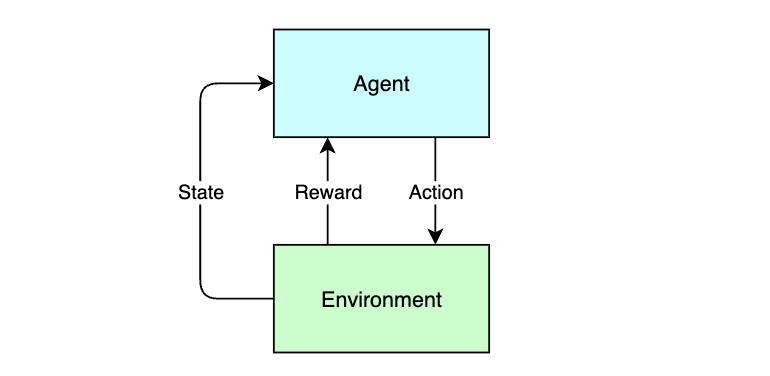
All of these systems achieved mastery in its own area through self-training/self-play and by optimizing and maximizing the cumulative reward over time by interacting with its environment where intelligence was observed as an emergent property of the system.The RL feedback loopRL mimics the process through which a baby would learn to walk, through trial, error and first principles.
R1 model training pipelineAt a technical level, DeepSeek-R1 leverages a combination of Reinforcement Learning (RL) and Supervised Fine-Tuning (SFT) for its training pipeline:DeepSeek-R1 Model Training PipelineUsing RL and DeepSeek-v3, an interim reasoning model was built, called DeepSeek-R1-Zero, purely based on RL without relying on SFT, which demonstrated superior reasoning capabilities that matched the performance of OpenAI&aposs o1 in certain benchmarks such as AIME 2024.The model was however affected by poor readability and language-mixing and is only an interim-reasoning model built on RL principles and self-evolution.DeepSeek-R1-Zero was then used to generate SFT data, which was combined with supervised data from DeepSeek-v3 to re-train the DeepSeek-v3-Base model.The new DeepSeek-v3-Base model then underwent additional RL with prompts and scenarios to come up with the DeepSeek-R1 model.The R1-model was then used to distill a number of smaller open source models such as Llama-8b, Qwen-7b, 14b which outperformed bigger models by a large margin, effectively making the smaller models more accessible and usable.
Key contributions of DeepSeek-R1
RL without the need for SFT for emergent reasoning capabilities
R1 was the first open research project to validate the efficacy of RL directly on the base model without relying on SFT as a first step, which resulted in the model developing advanced reasoning capabilities purely through self-reflection and self-verification.Although, it did degrade in its language capabilities during the process, its Chain-of-Thought (CoT) capabilities for solving complex problems was later used for further RL on the DeepSeek-v3-Base model which became R1. This is a significant contribution back to the research community.The below analysis of DeepSeek-R1-Zero and OpenAI o1-0912 shows that it is viable to attain robust reasoning capabilities purely through RL alone, which can be further augmented with other techniques to deliver even better reasoning performance.Source: https://github.com/deepseek-ai/DeepSeek-R1Its quite interesting, that the application of RL gives rise to seemingly human capabilities of "reflection", and arriving at "aha" moments, causing it to pause, ponder and focus on a specific aspect of the problem, resulting in emergent capabilities to problem-solve as humans do.
Model distillation
DeepSeek-R1 also demonstrated that larger models can be distilled into smaller models which makes advanced capabilities accessible to resource-constrained environments, such as your laptop. While its not possible to run a 671b model on a stock laptop, you can still run a distilled 14b model that is distilled from the larger model which still performs better than most publicly available models out there. This enables intelligence to be brought closer to the edge, to allow faster inference at the point of experience (such as on a smartphone, or on a Raspberry Pi), which paves way for more use cases and possibilities for innovation.Source: https://github.com/deepseek-ai/DeepSeek-R1Distilled models are very different to R1, which is a massive model with a completely different model architecture than the distilled variants, and so are not directly comparable in terms of capability, but are instead built to be more smaller and efficient for more constrained environments. This technique of being able to distill a larger model&aposs capabilities down to a smaller model for portability, accessibility, speed, and cost will bring about a lot of possibilities for applying artificial intelligence in places where it would have otherwise not been possible. This is another key contribution of this technology from DeepSeek, which I believe has even further potential for democratization and accessibility of AI.
Why is this moment so significant?DeepSeek-R1 was a pivotal contribution in many ways.
The contributions to the state-of-the-art and the open research helps move the field forward where everybody benefits, not just a few highly funded AI labs building the next billion dollar model.
Open-sourcing and making the model freely available follows an asymmetric strategy to the prevailing closed nature of much of the model-sphere of the larger players. DeepSeek should be commended for making their contributions free and open.
It reminds us that its not just a one-horse race, and it incentivizes competition, which has already resulted in OpenAI o3-mini a cost-effective reasoning model which now shows the Chain-of-Thought reasoning. Competition is a good thing.
We stand at the cusp of an explosion of small-models that are hyper-specialized, and optimized for a specific use case that can be trained and deployed cheaply for solving problems at the edge. It raises a lot of exciting possibilities and is why DeepSeek-R1 is one of the most pivotal moments of tech history.
 Most of my Debian contributions this month were
sponsored by Freexian.
You can also support my work directly via
Liberapay.
OpenSSH
OpenSSH upstream released
9.9p2 with fixes for
CVE-2025-26465 and CVE-2025-26466. I got a heads-up on this in advance from
the Debian security team, and prepared updates for all of testing/unstable,
bookworm (Debian 12), bullseye (Debian 11), buster (Debian 10, LTS), and
stretch (Debian 9, ELTS). jessie (Debian 8) is also still in ELTS for a few
more months, but wasn t affected by either vulnerability.
Although I m not particularly active in the Perl team, I fixed a
libnet-ssleay-perl build failure because
it was blocking openssl from migrating to testing, which in turn was
blocking the above openssh fixes.
I also sent a minor
 by por Andrew Gon alves
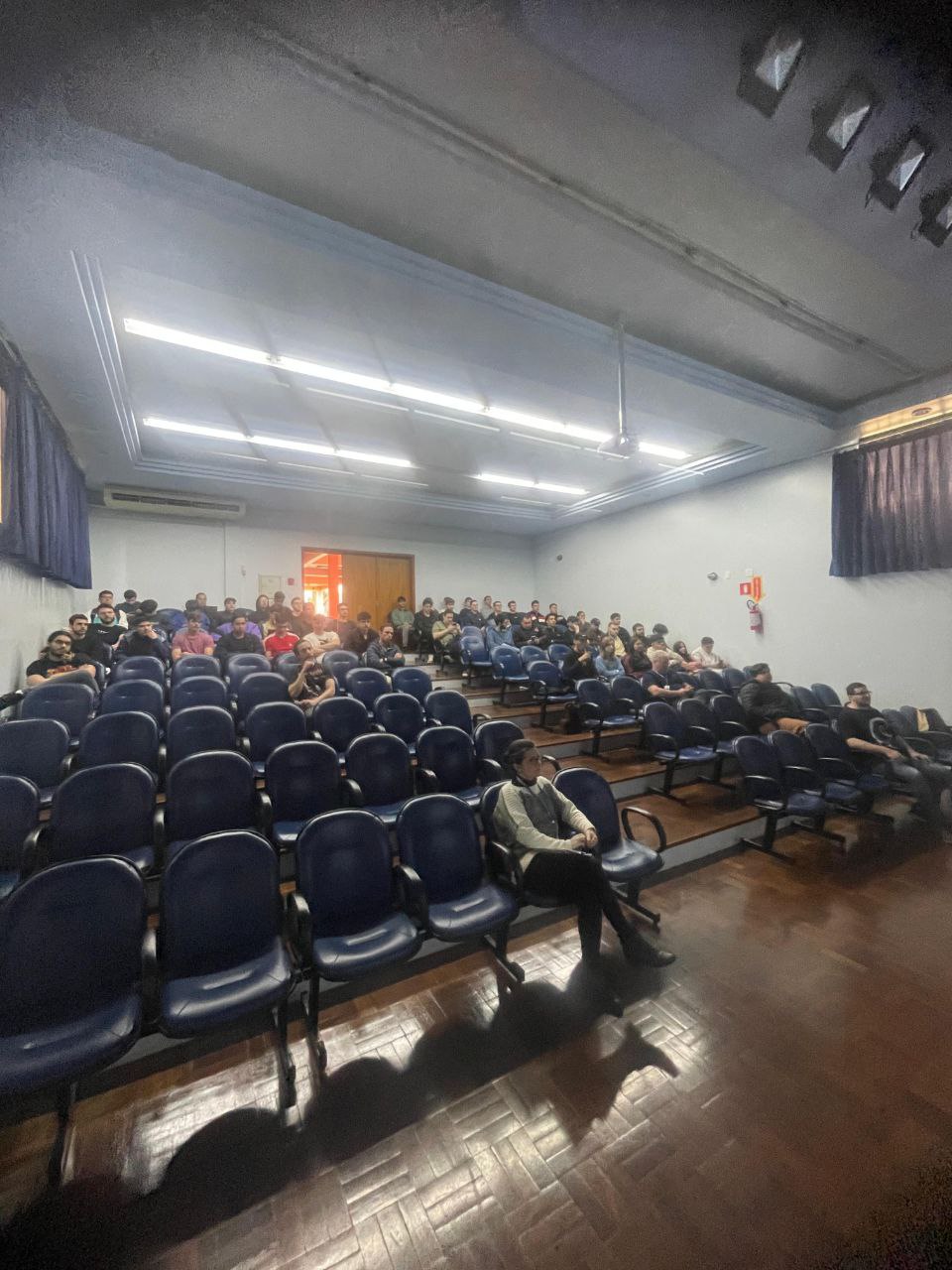
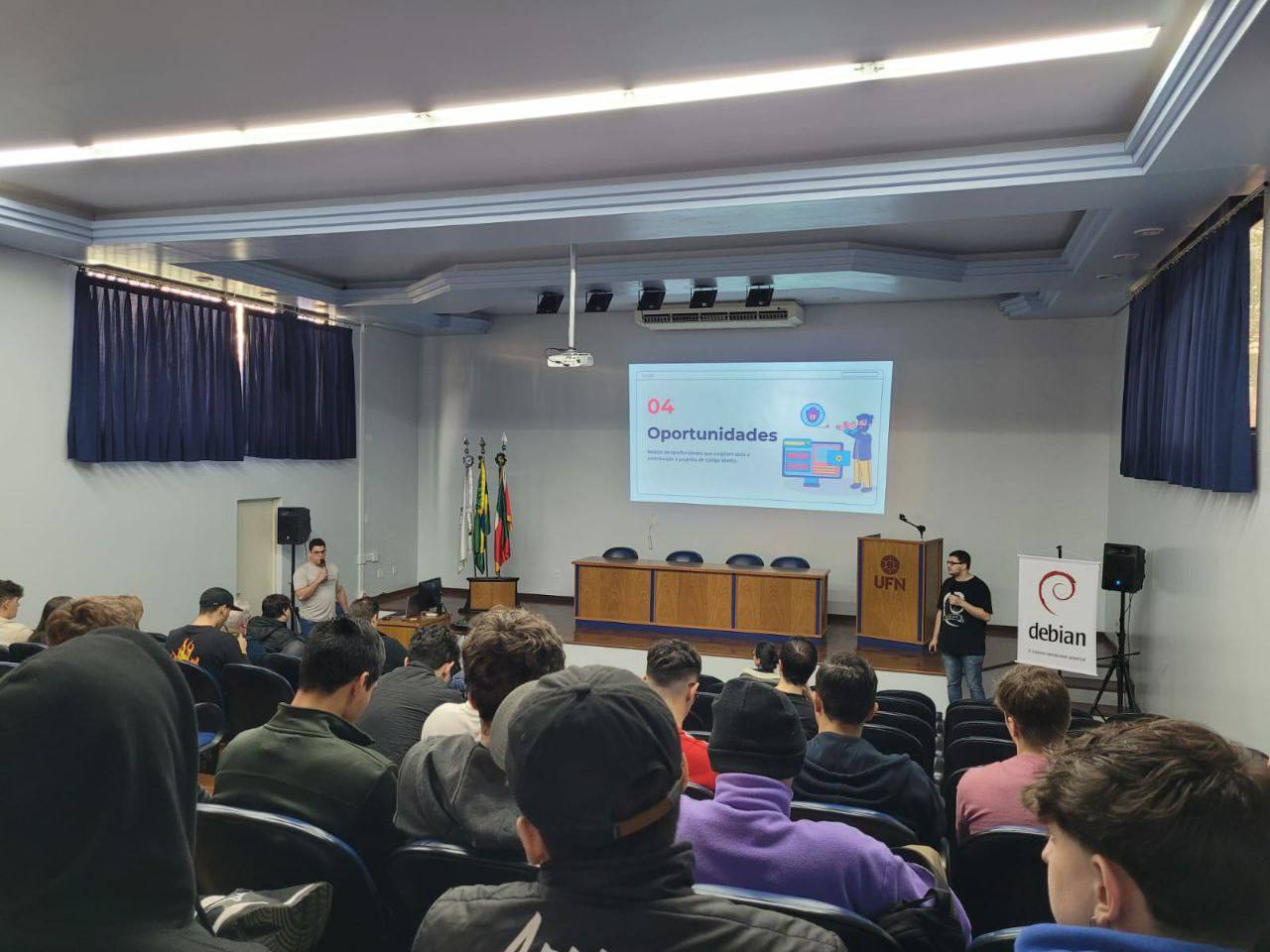
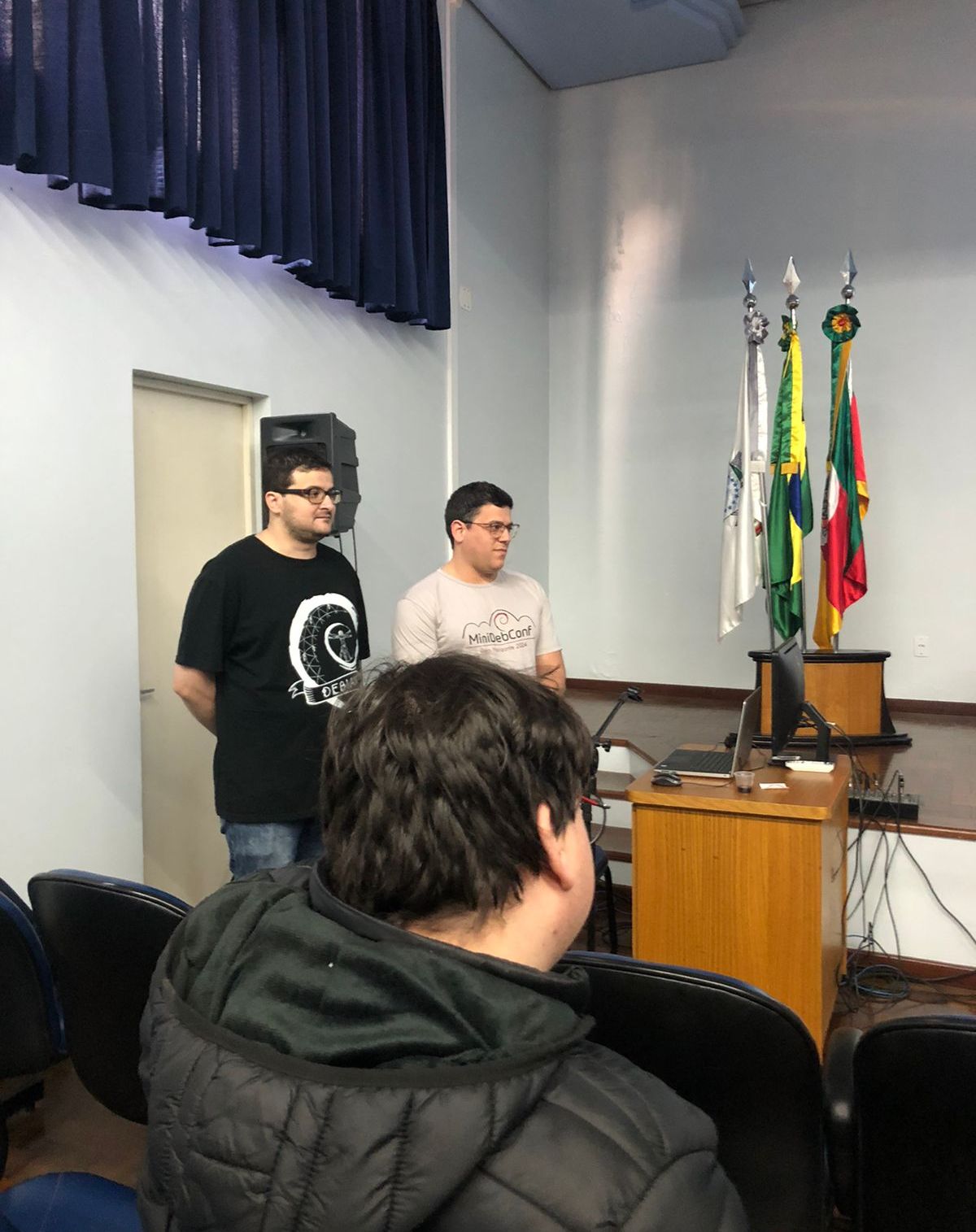
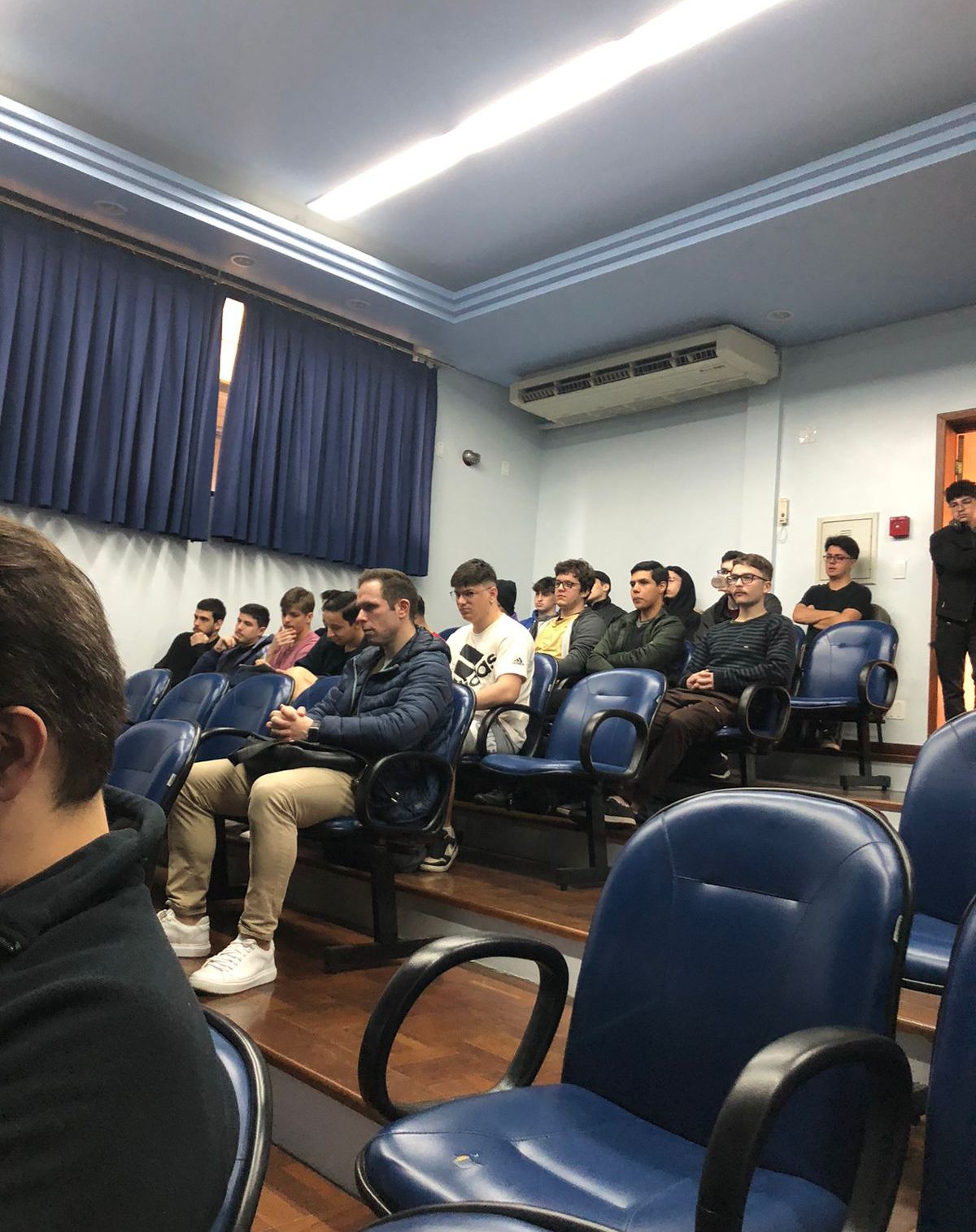
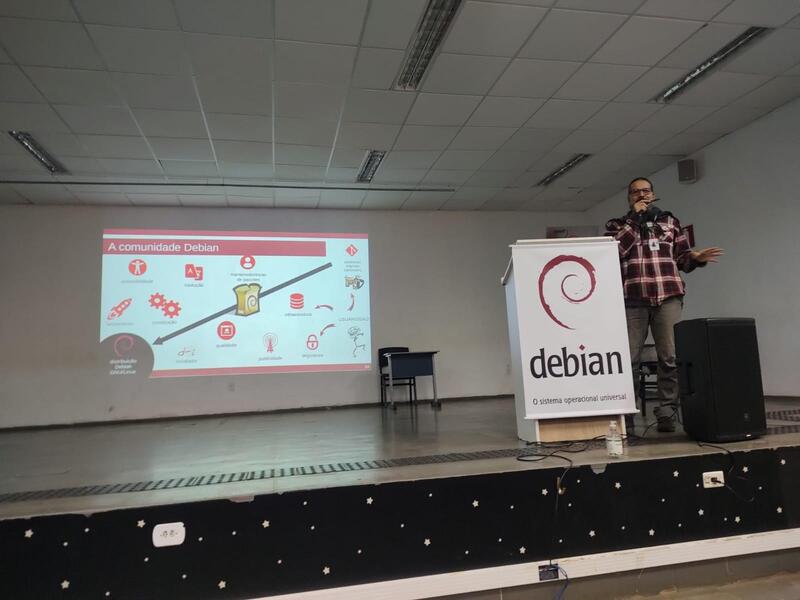
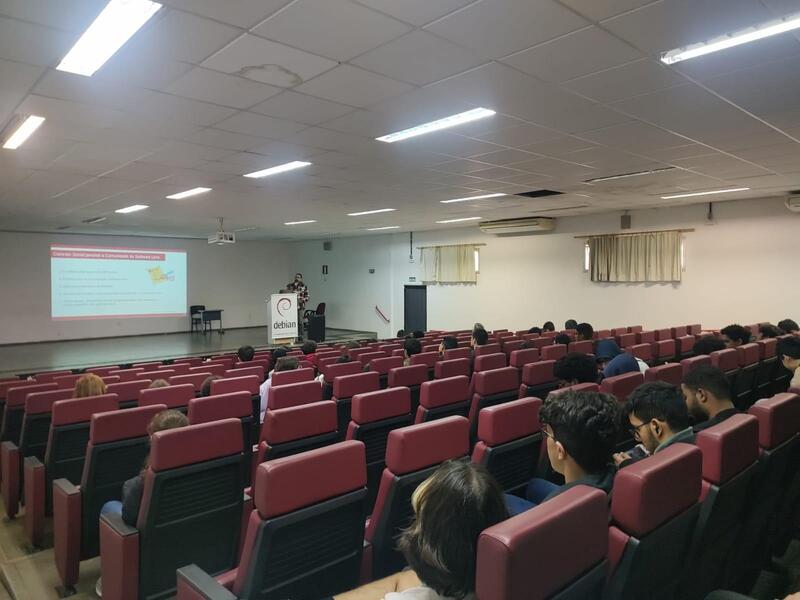
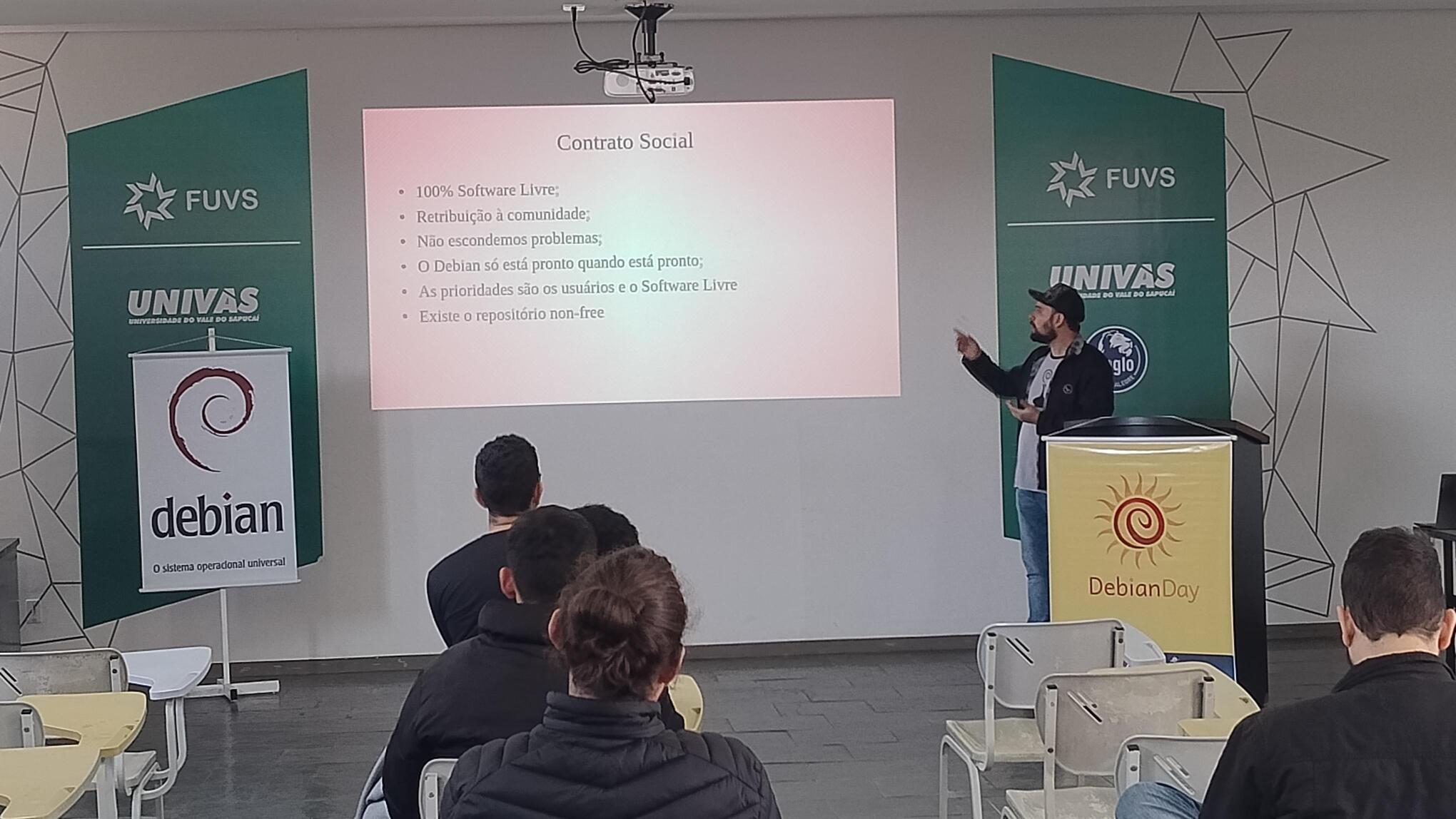
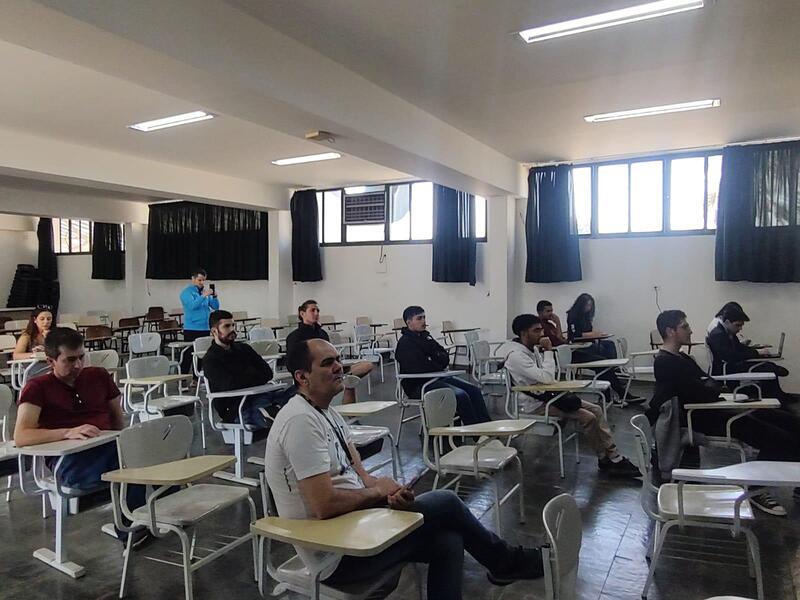
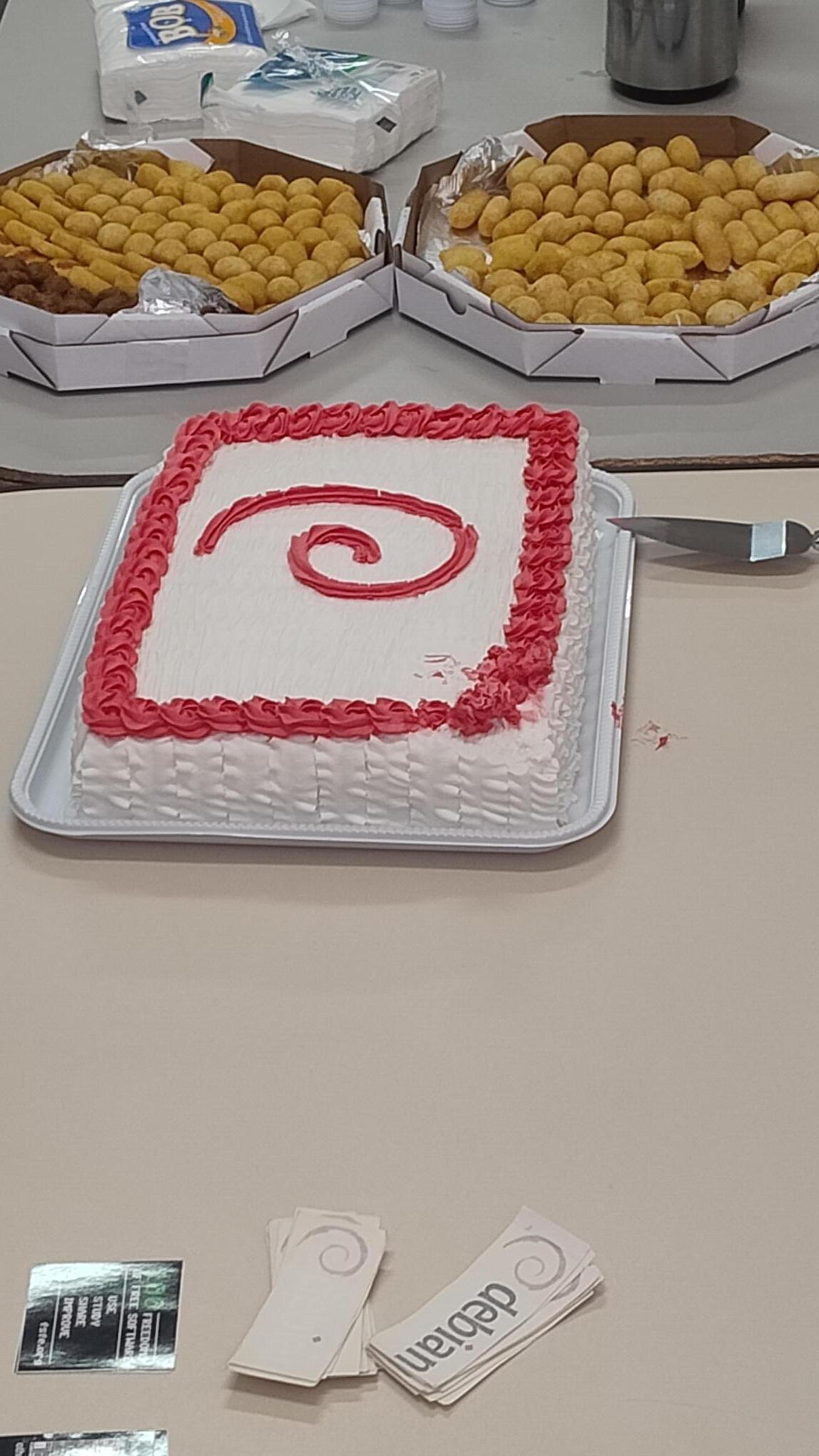
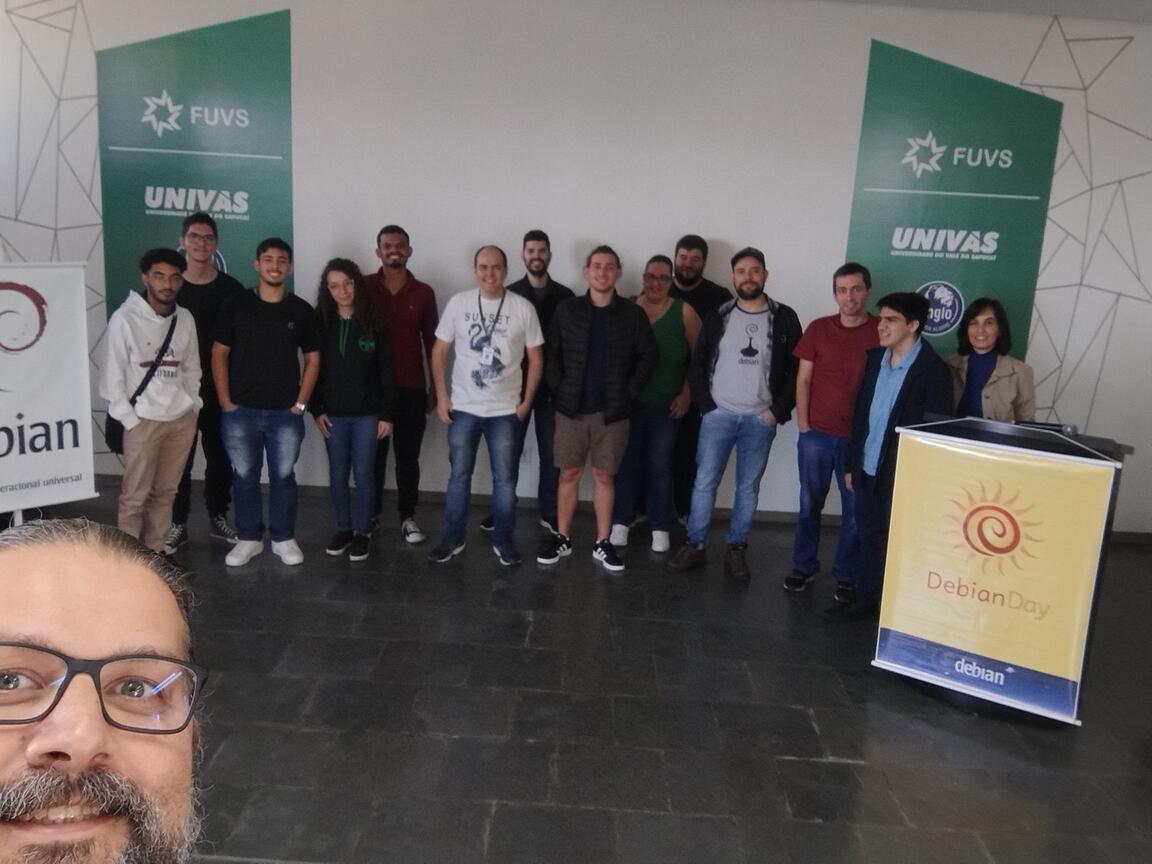
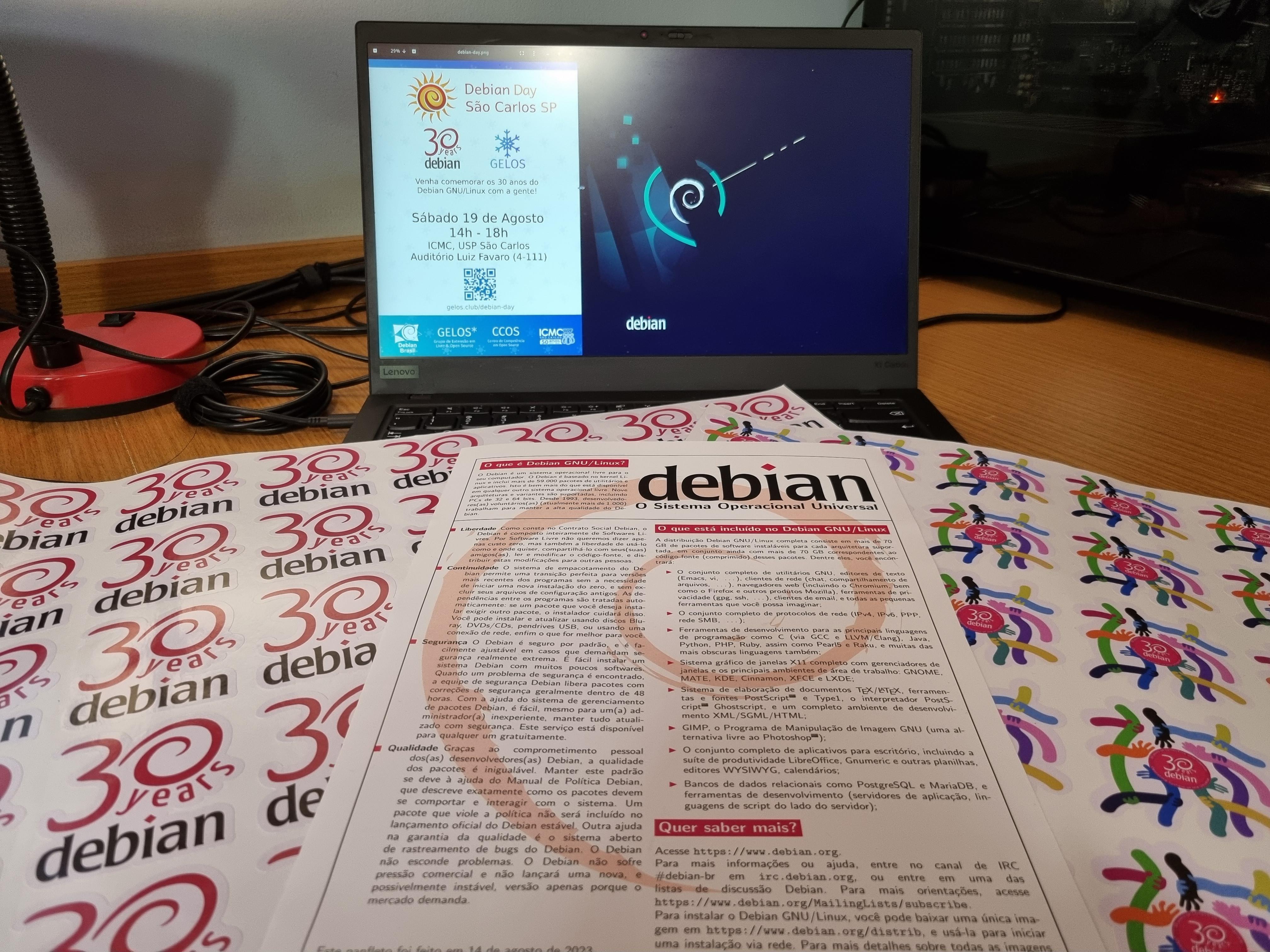 Getting things ready for the event.
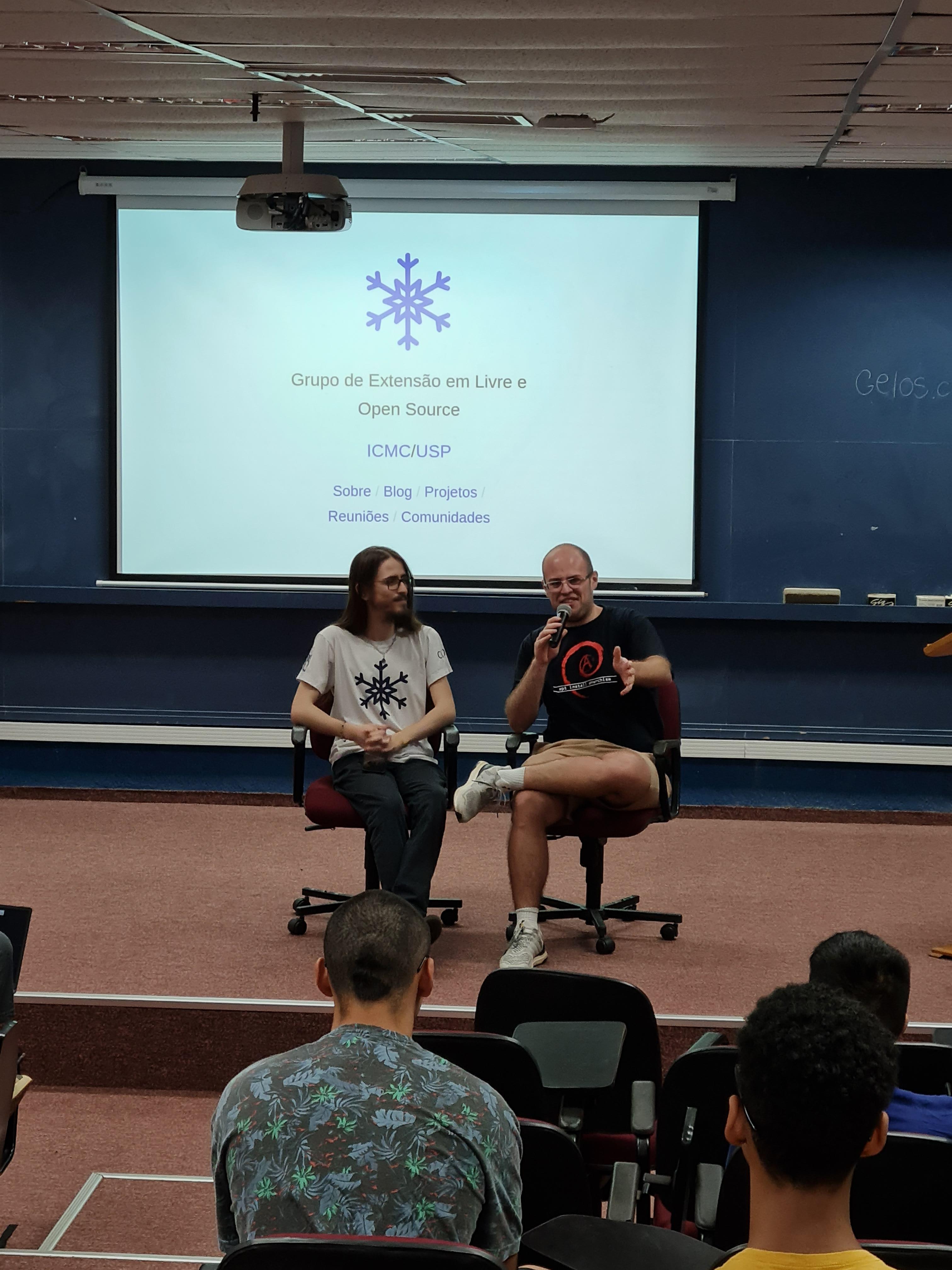 Intro to GELOS talk.
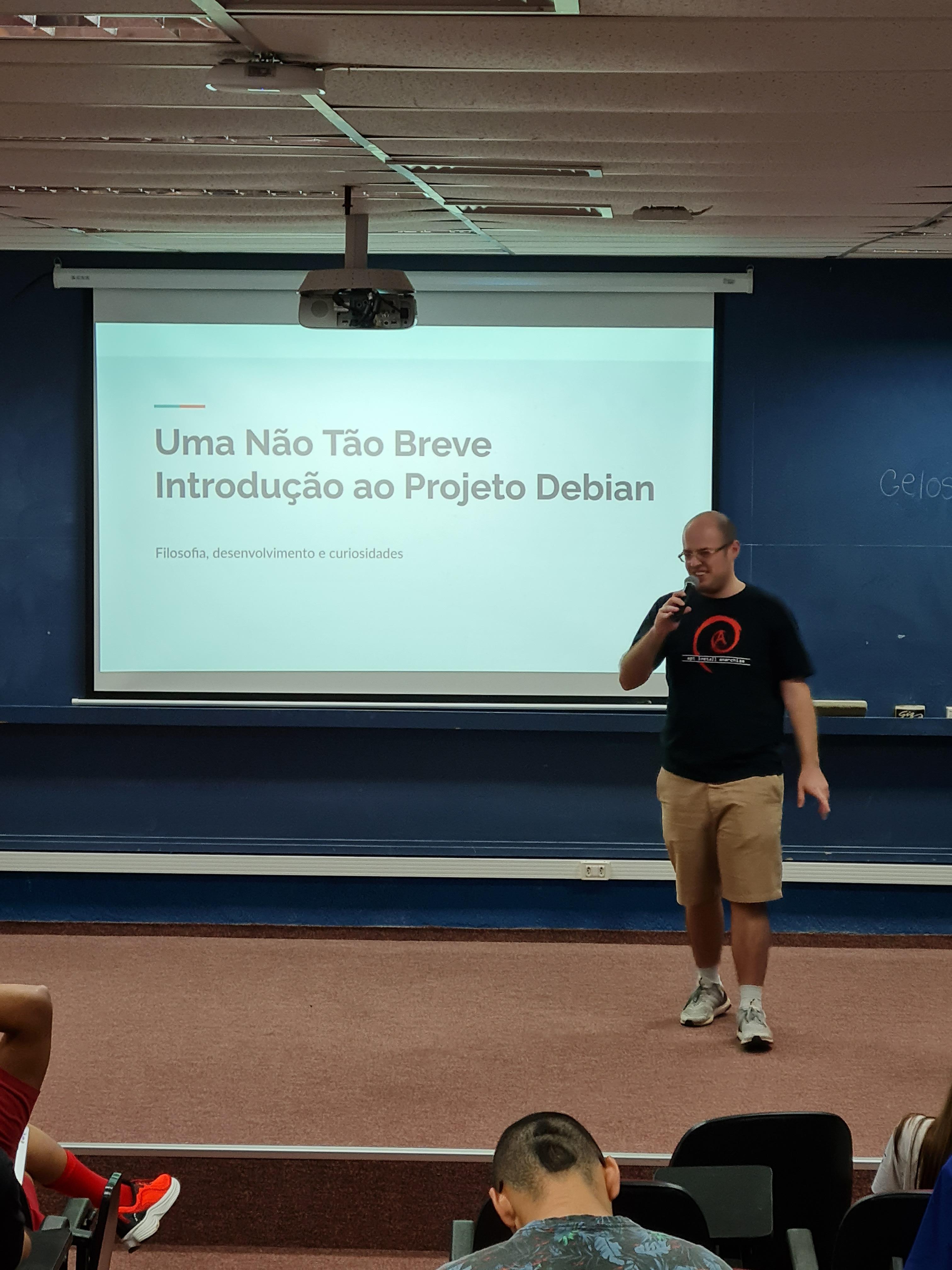 A ~~not so~~ Brief Introdution to the Debian Project talk.
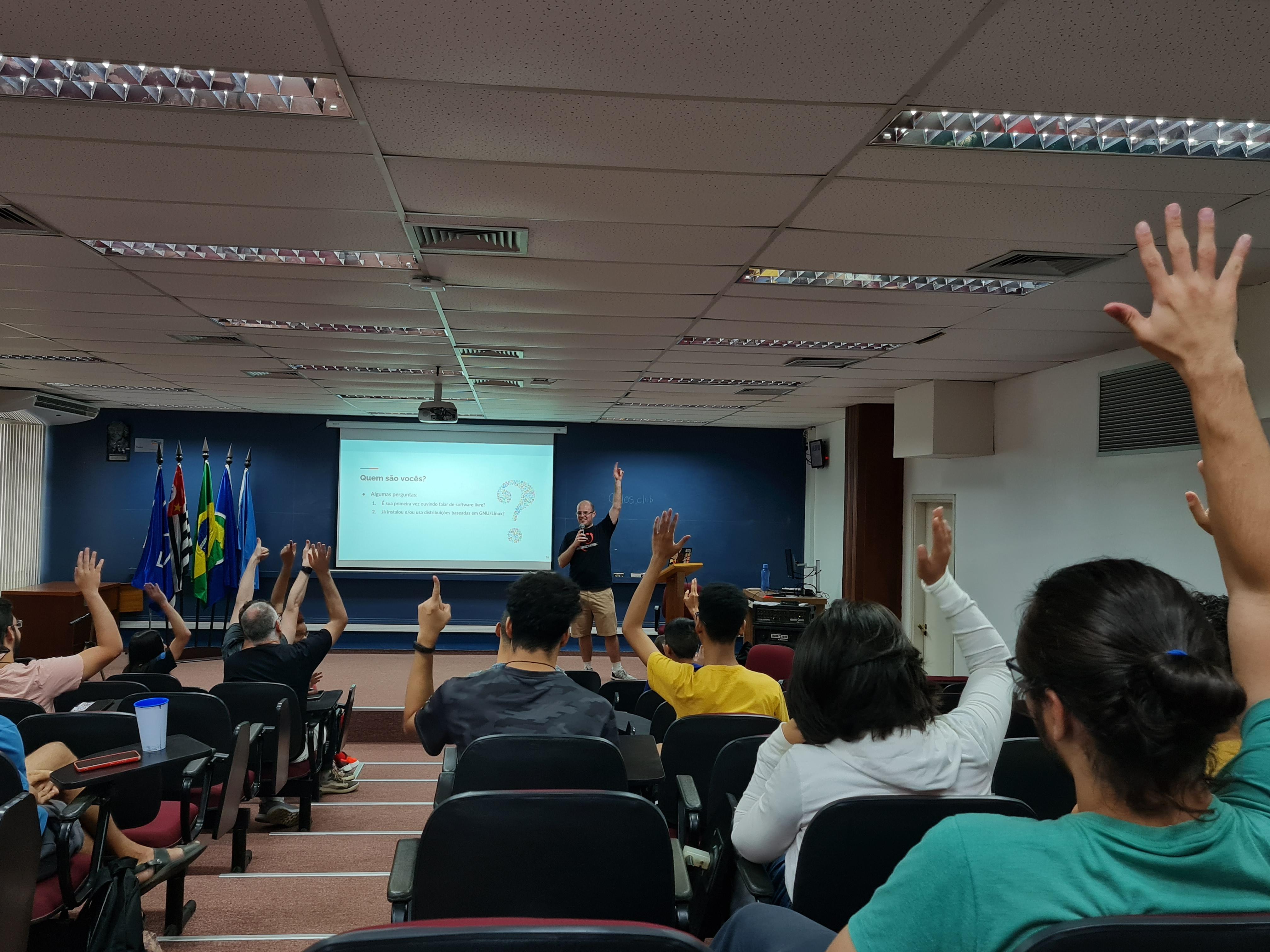 Everyone already knew Debian!
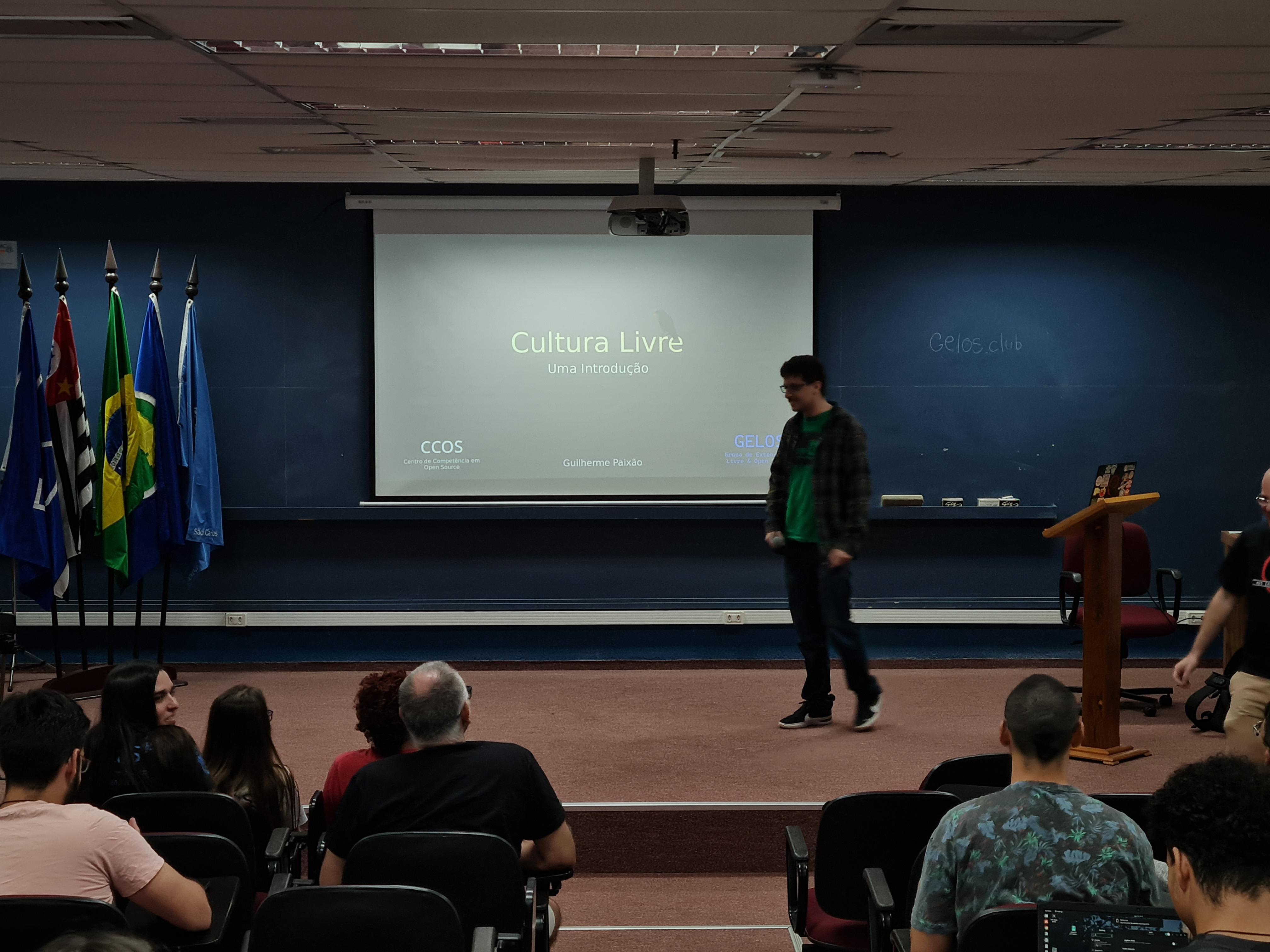 Debian and the Free Culture talk
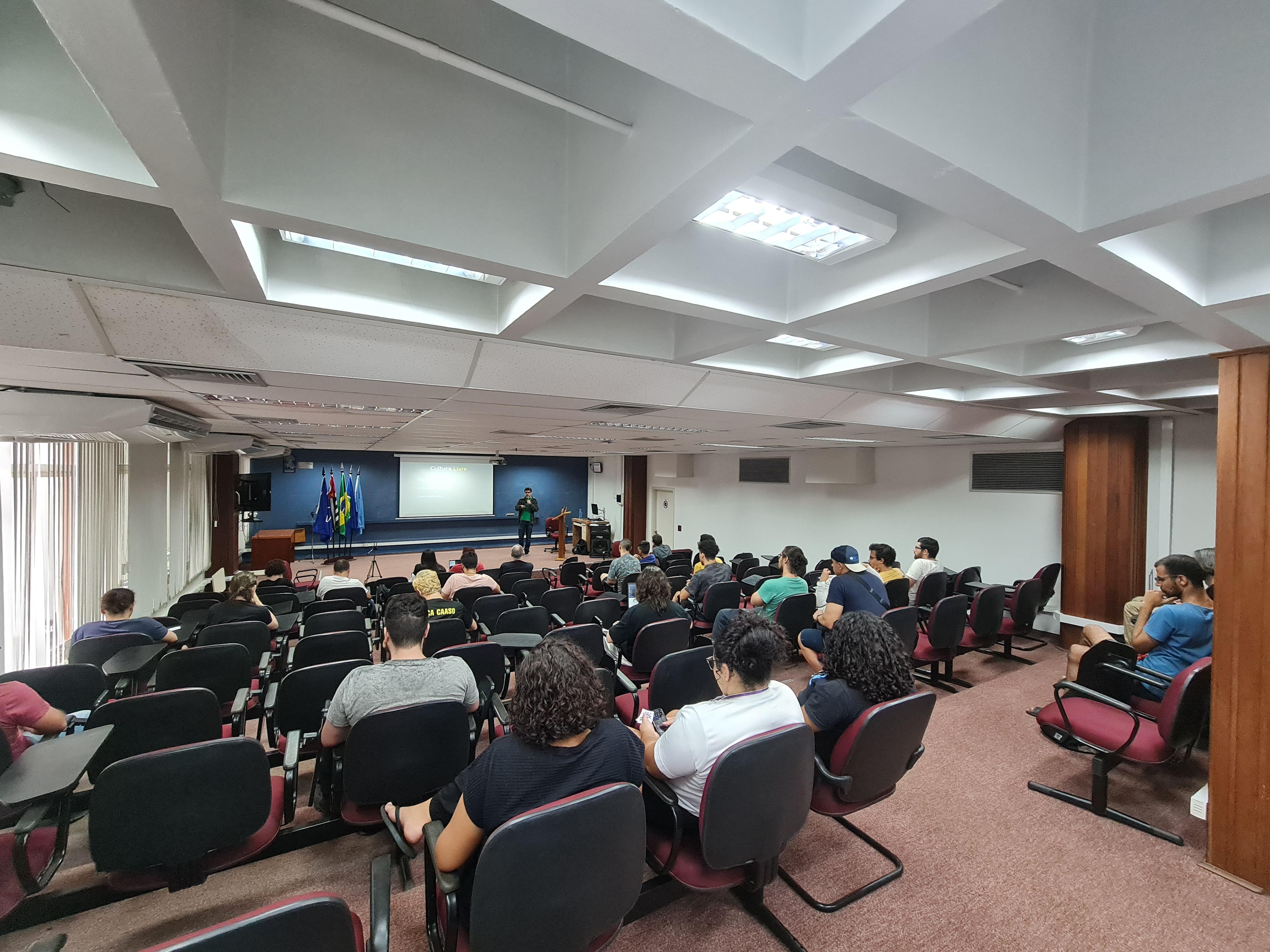 People in the auditorium space.
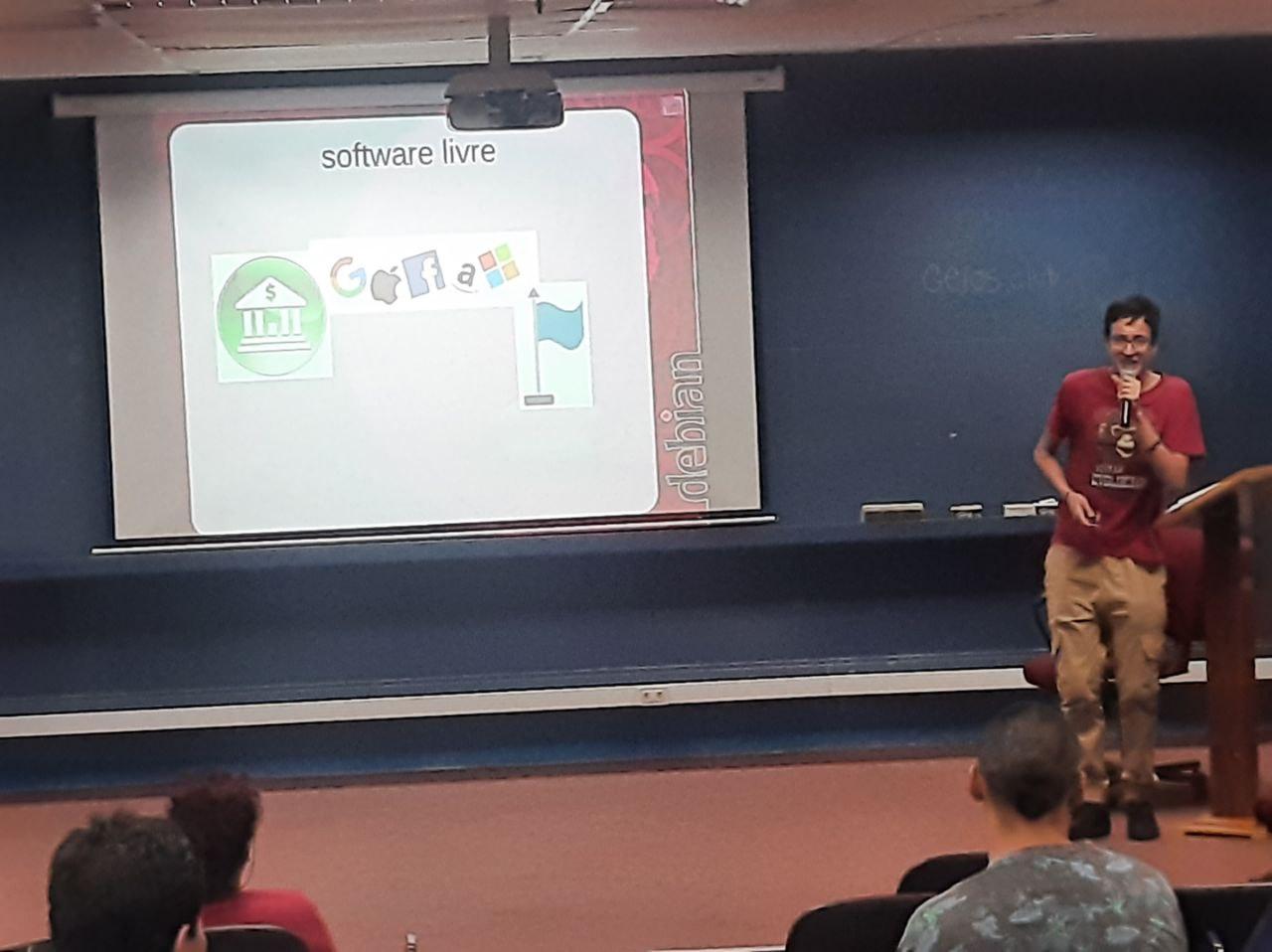 Free Software: the paths to a free life talk
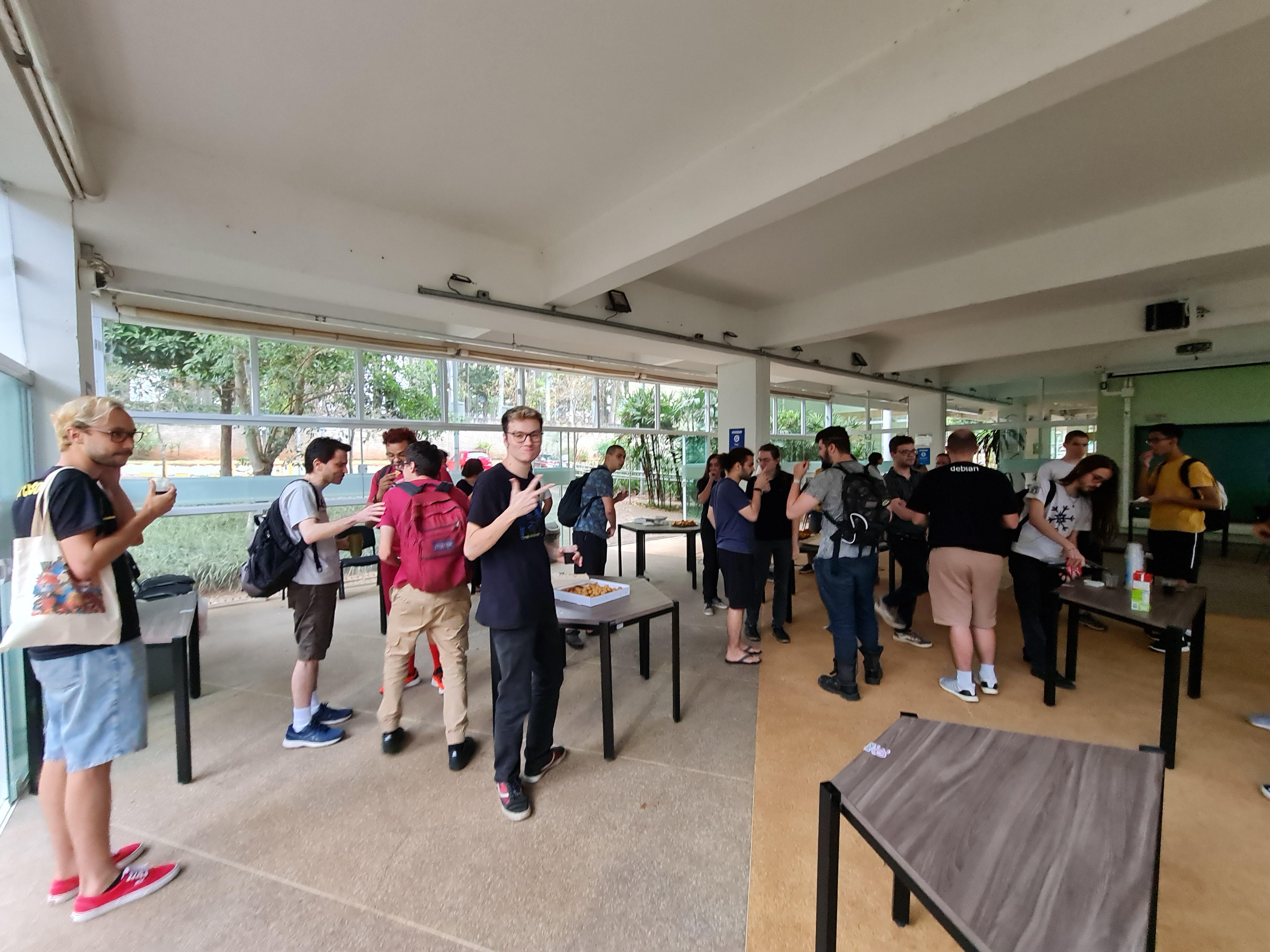 Coffee Break.
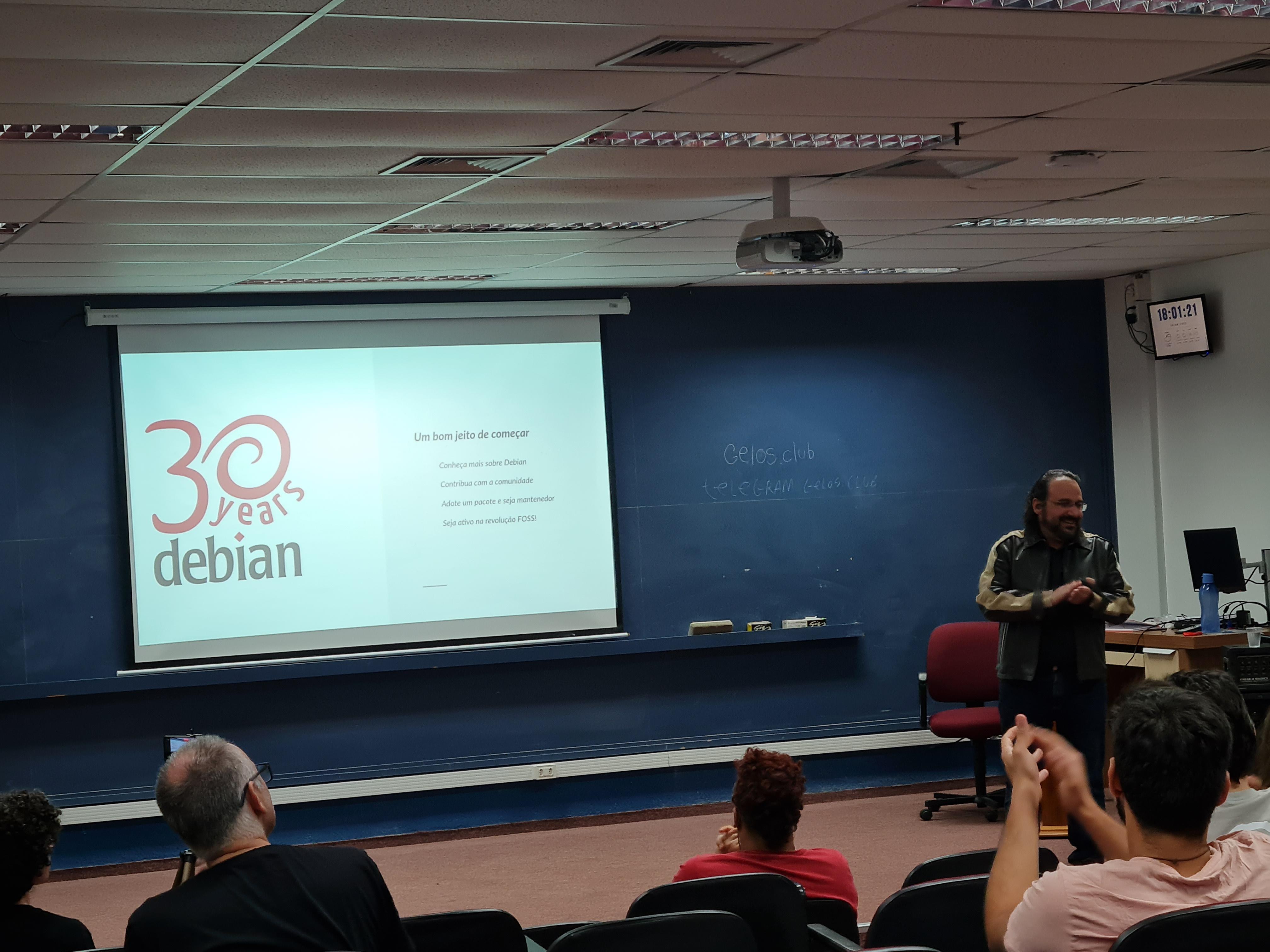 The FOSS Ecosystem and You talk.
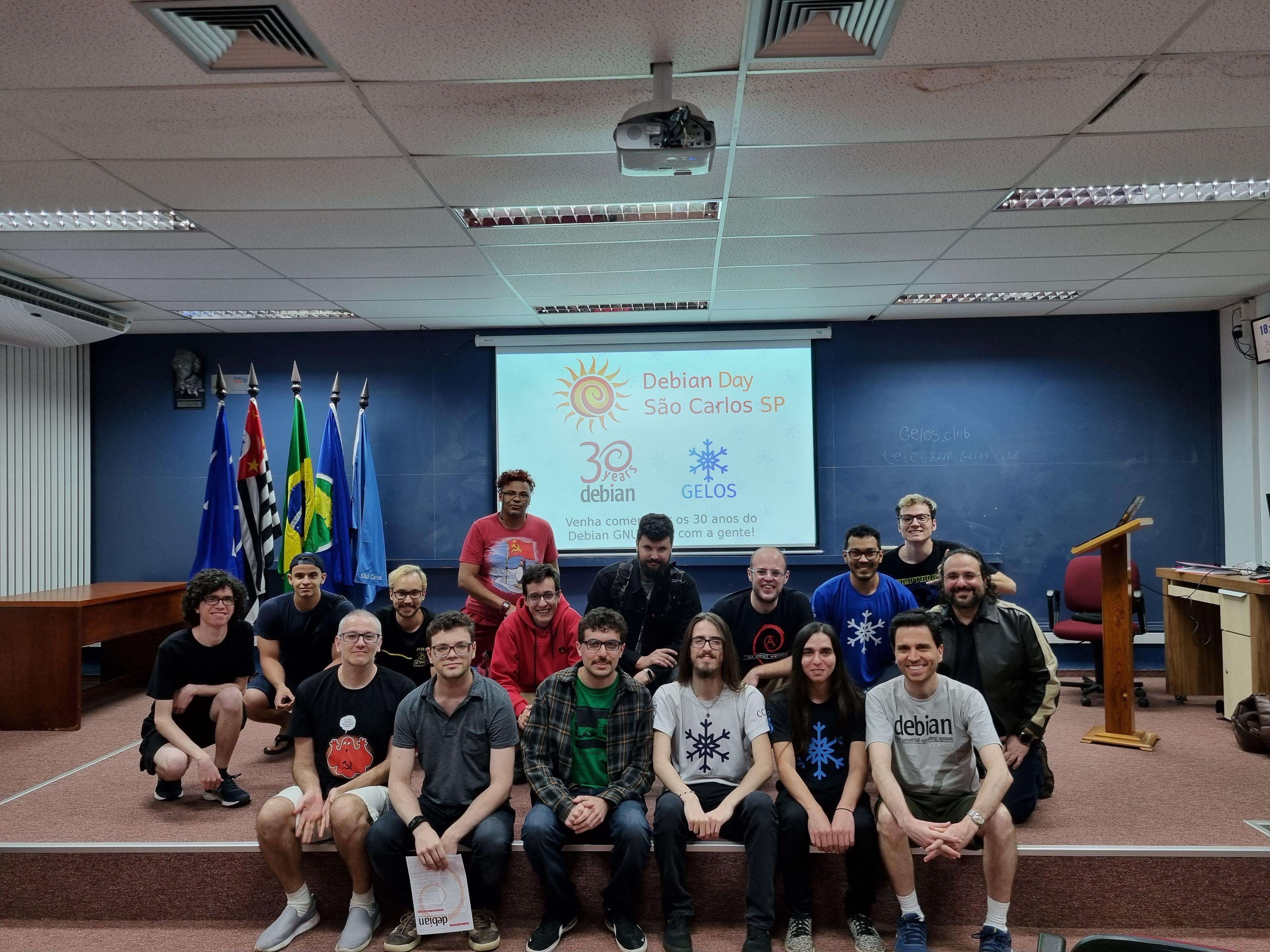 Group photo.
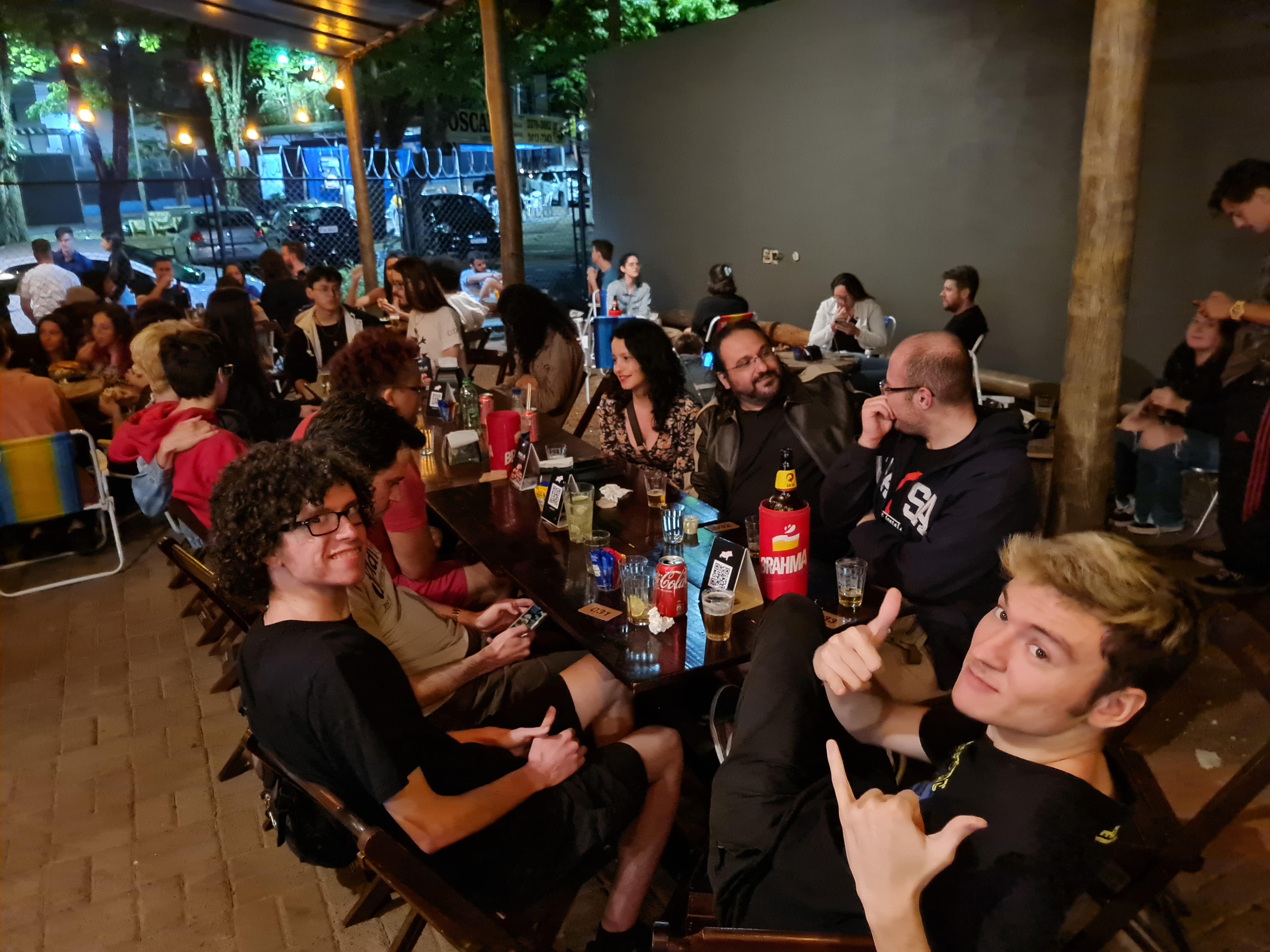 Celebration goes on in the bar.
 Nova gera o: uma entrevista com iniciantes no projeto Debian
 Instala o personalizada e automatizada do Debian com preseed
 Manipulando patches com git-buildpackage
 debian.social: Socializando Debian do jeito Debian
 Proxy reverso com WireGuard
 Celebra o dos 30 anos do Debian!
 Instalando o Debian em disco criptografado com LUKS
 O que a equipe de localiza o j conquistou nesses 30 anos
 Debian - Projeto e Comunidade!
 Design Gr fico e Software livre, o que fazer e por onde come ar

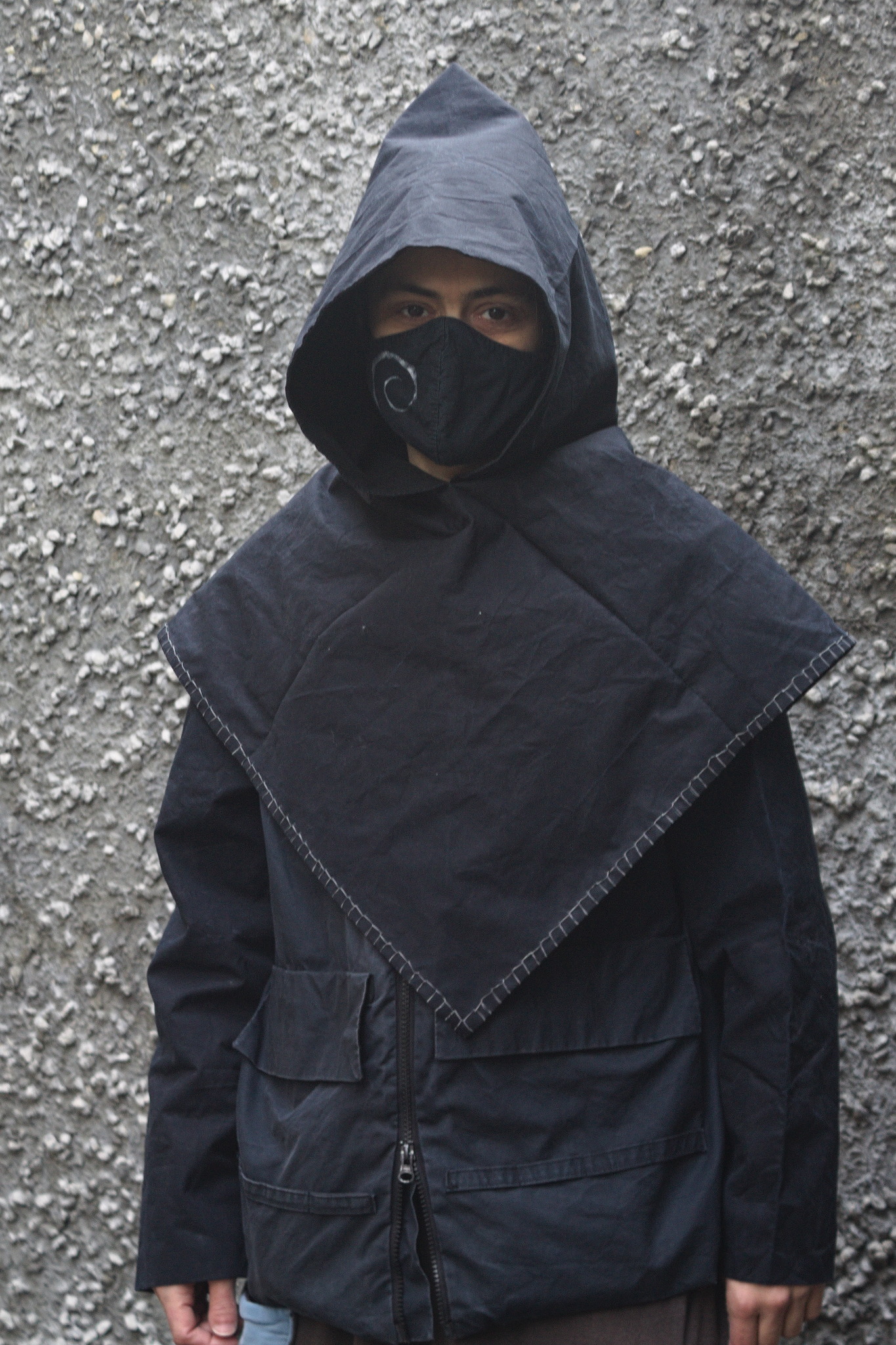 Many years ago I made myself a
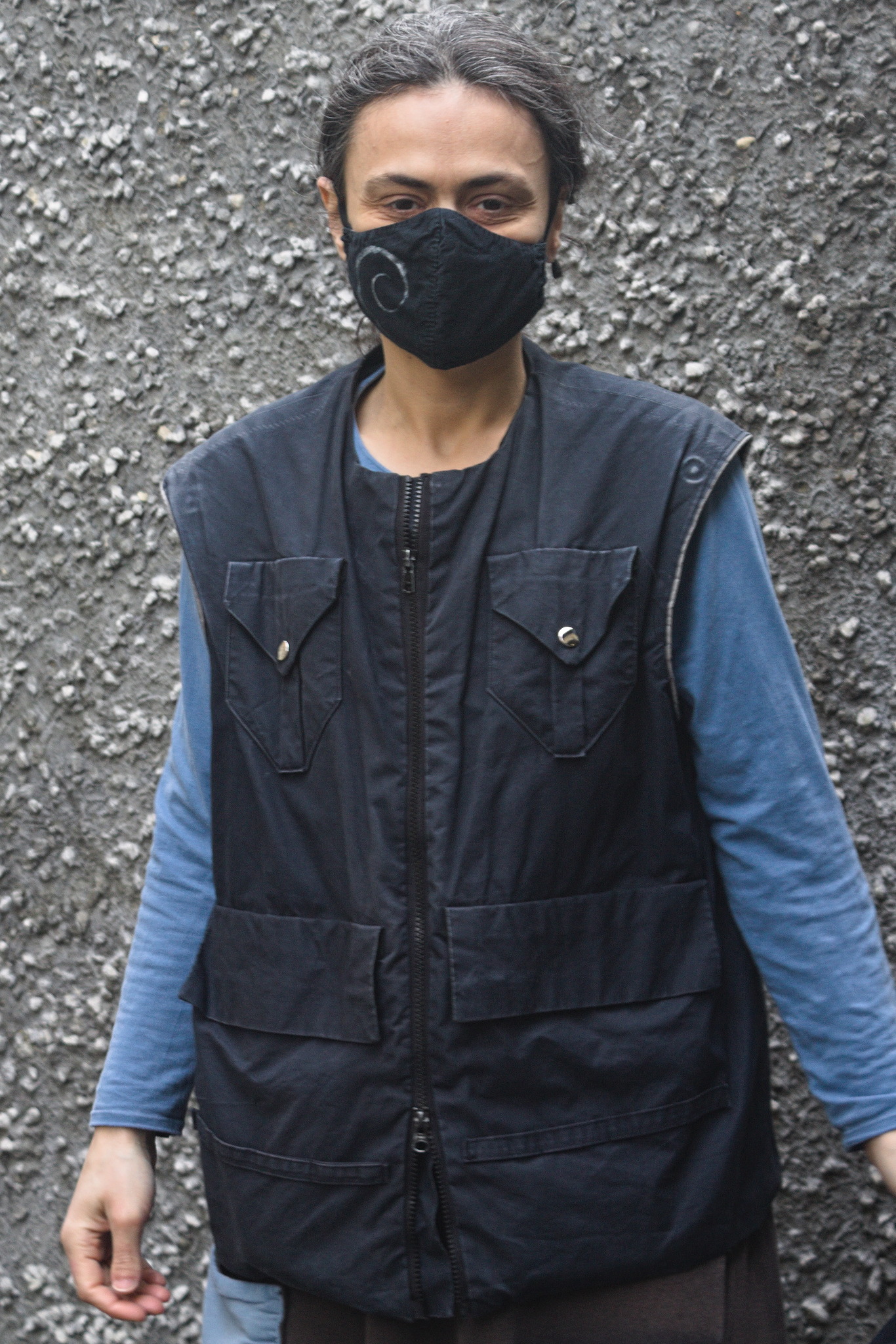 Then a few years ago the cheap cotton had started to get worn, and I
decided I needed to replace it. I found a second choice (and thus
cheaper :) ) version of a
 This time I skipped a few pockets that I had found I didn t use that
much, and I didn t add a hood, which didn t play that well when worn
over a hoodie, but I added some detached sleeves, for additional wind
protection.
This left about 60 cm and some odd pieces of leftover fabric in my
stash, for which I had no plan.
 And then February
 I did however have a spool of reflector thread made of glass fibre by
Rico Design, which I think was originally sold to be worked into
knitting or crochet projects (it is now discontinued) and I had never
used.
I decided to try and sew a decorative blanket stitch border, a decision
I had reasons to regret, since the thread broke and tangled like crazy,
but in the end it was done, I like how it looks, and it seems pretty
functional. I hope it won t break with time and use, and if it does I ll
either fix it or try to redo with something else.
Of course, the day I finished sewing the reflective border it stopped
raining, so I haven t worn it yet, but I hope I ll be able to, and if it
is an horrible failure I ll make sure to update this post.
 For my
 I can t remember exactly the joke I was making at the time in my
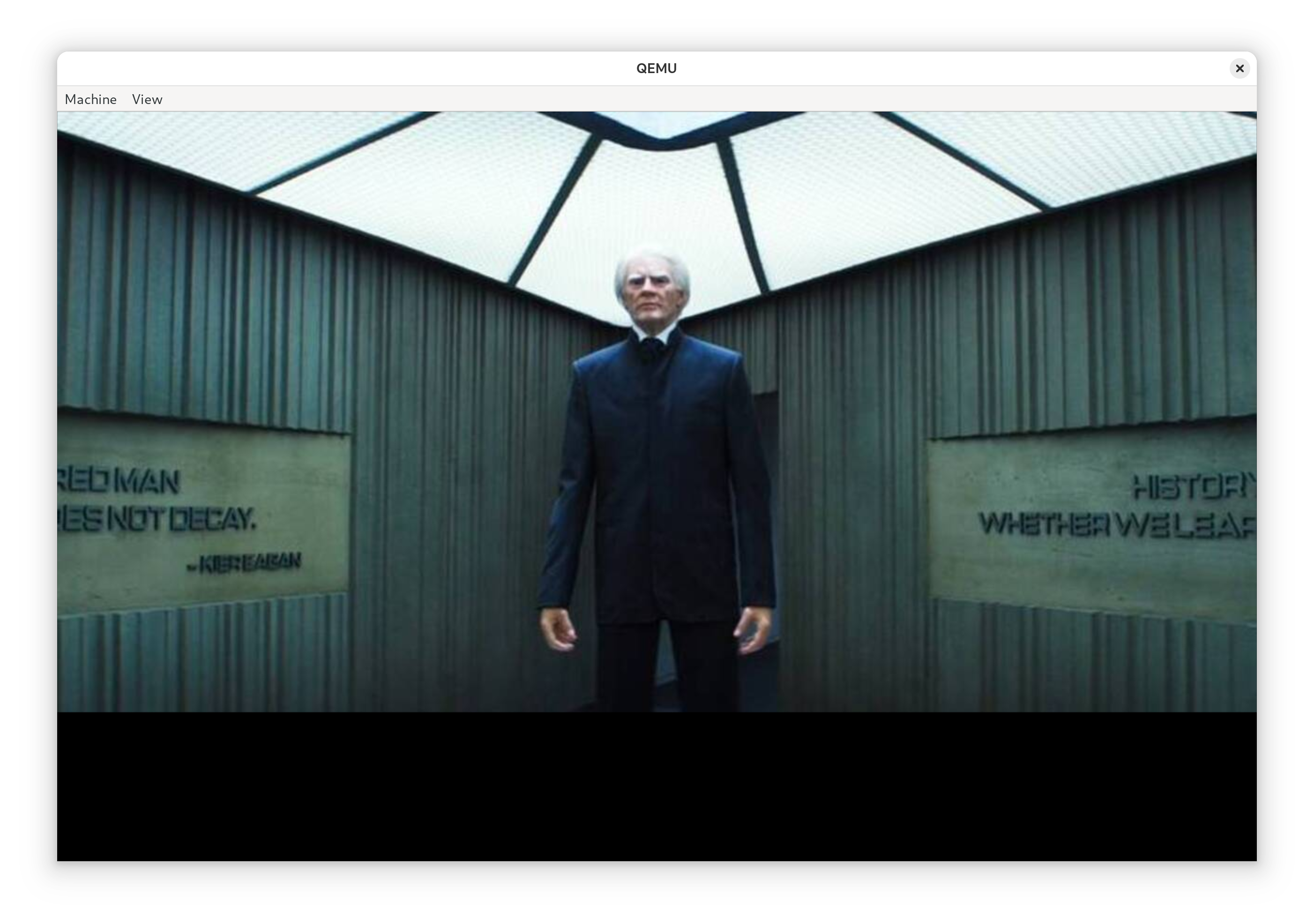
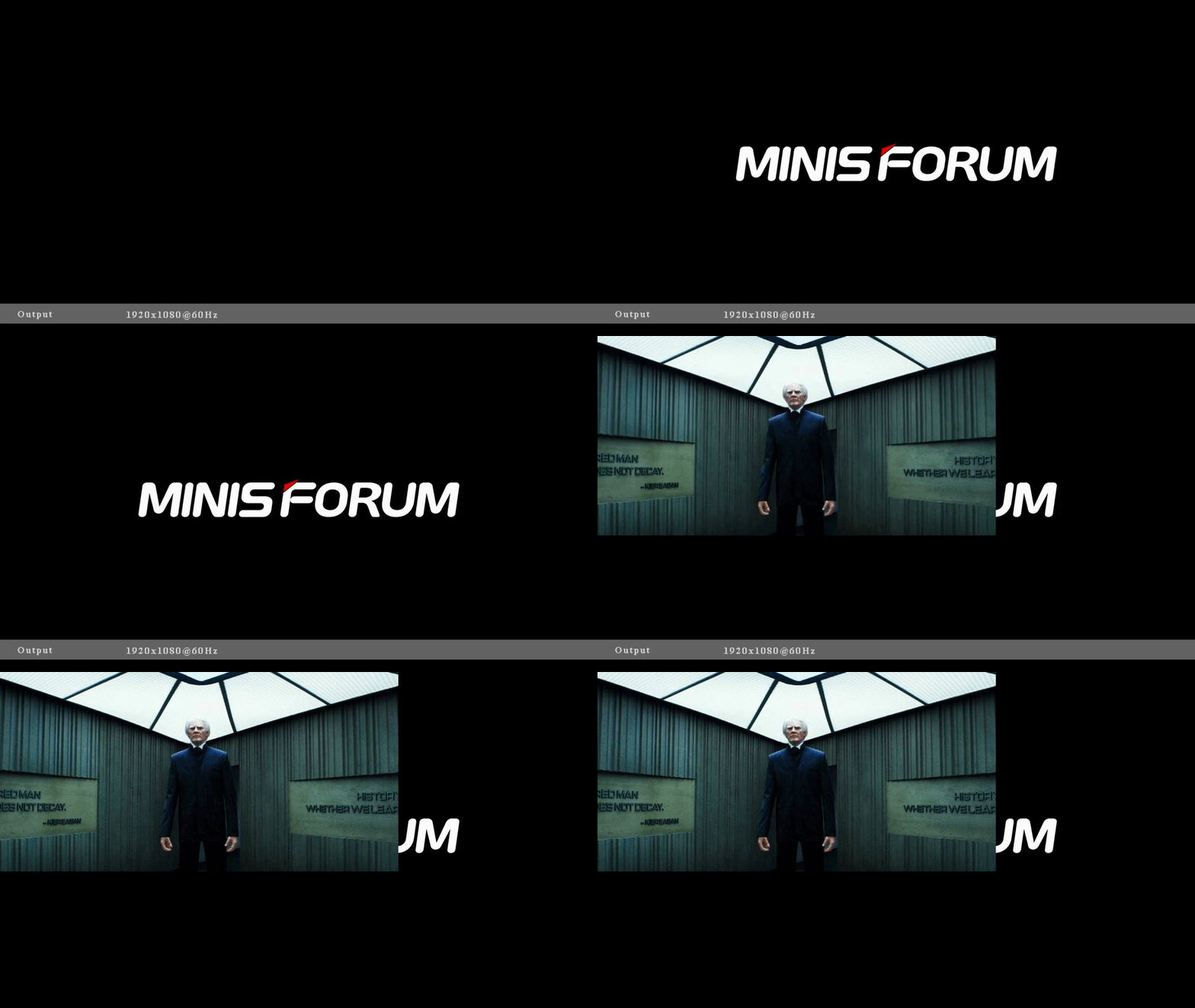
 TL;DR
It's difficult to find the right Debian image. We have thousands of
ISO files and cloud images and we support multiple CPU architectures
and several download methods. The directory structure of our main image server
is like a maze, and our web pages for downloading are also confusing.
Most important facts from this blog post

 Last November, the DebConf25 Team
 Juliana also shared with us a bit of her motivation, creative process and
inspiration when designing her logo:



 If you re automating CI builds, there s even a GitHub Action to make your workflows faster essentially doing what

 Warning:
 20 years ago, I got my Debian Developer account. I was 18 at the time, it was Shrove Tuesday and - as is customary - I was drunk when I got the email. There was so much that I did not know - which is also why the process took 1.5 years from the time I applied. I mostly only maintained a package or two. I'm still amazed that Christian Perrier and Joerg Jaspert put sufficient trust in me at that time. Nevertheless now feels like a good time for a personal reflection of my involvement in Debian.
 Azul s State-of-Java report is full of nonsense, and no worth looking at.
The report claims various stuff about the adoption of AI in the Java ecosystem.
But its results do not make any sense when looked at in detail.
For example (in the AI section):
 To continue the investigation, I ve modified
 . I guess that, in the cron job, just checking the list of PV to snapshot was enough to exhaust our API quota.
 Azure
 I was puzzled
 and out of ideas
 .
I looked for similar problems in
 I was flabbergasted
 by this parameter: why is CSI file driver able to use 2 APIs ? Why is one on them so limited ? And more importantly, why is the limited API the default one ?
Anyway, setting
 But not the snaphot issue
 . Amongst the 80 PV, I still had 2 snaphots failing.
 Fortunately, the error was mentioned in the description of the failed snapshots: we had too many (200) snapshots for these shared volumes.
What ??
 All these snapshots were cleaned up last week.
I then tried to delete these snaphots through azure console. But the console failed to delete these snapshot due to API throttling. Looks like Azure console is not using the right API.
 Anyway, I went back to the solution explained in my previous blog, I listed all snapshots with
 . What a mess.
Anyway, I ve cleaned up again these bogus snapshot
 , and now, snaphot creation is working fine
 .
For now.
All the best.
 DeepSeek R1, the new entrant to the Large Language Model wars has created quite a splash over the last few weeks. Its entrance into a space dominated by the Big Corps, while pursuing asymmetric and novel strategies has been a refreshing eye-opener.GPT AI improvement was starting to show signs of slowing down, and has been observed to be reaching a point of diminishing returns as it runs out of data and compute required to train, fine-tune increasingly large models. This has turned the focus towards building "reasoning" models that are post-trained through reinforcement learning, techniques such as inference-time and test-time scaling and search algorithms to make the models appear to think and reason better. OpenAI&aposs o1-series models were the first to achieve this successfully with its inference-time scaling and Chain-of-Thought reasoning.