Search Results: "anbe"

25 January 2024

Dirk Eddelbuettel: qlcal 0.0.10 on CRAN: Calendar Updates

The tenth release of the qlcal package arrivied at CRAN today. qlcal delivers the calendaring parts of QuantLib. It is provided (for the R package) as a set of included files, so the package is self-contained and does not depend on an external QuantLib library (which can be demanding to build). qlcal covers over sixty country / market calendars and can compute holiday lists, its complement (i.e. business day lists) and much more. Examples are in the README at the repository, the package page, and course at the CRAN package page. This releases synchronizes qlcal with the QuantLib release 1.33 and its updates to 2024 calendars.

Changes in version 0.0.10 (2024-01-24)
  • Synchronized with QuantLib 1.33

Courtesy of my CRANberries, there is a diffstat report for this release. See the project page and package documentation for more details, and more examples. If you like this or other open-source work I do, you can now sponsor me at GitHub.

This post by Dirk Eddelbuettel originated on his Thinking inside the box blog. Please report excessive re-aggregation in third-party for-profit settings.
24 January 2024

Dirk Eddelbuettel: RApiDatetime 0.0.9 on CRAN: Maintenance

A new maintenance release of our RApiDatetime package is now on CRAN RApiDatetime provides a number of entry points for C-level functions of the R API for Date and Datetime calculations. The functions asPOSIXlt and asPOSIXct convert between long and compact datetime representation, formatPOSIXlt and Rstrptime convert to and from character strings, and POSIXlt2D and D2POSIXlt convert between Date and POSIXlt datetime. Lastly, asDatePOSIXct converts to a date type. All these functions are rather useful, but were not previously exported by R for C-level use by other packages. Which this package aims to change. This release responds to a CRAN request to clean up empty macros and sections in Rd files. Moreover, because the windows portion of the corresponding R-internal code underwent some changes, our (#ifdef conditional) coverage here is a little behind and created a warning under the newer UCRT setup. So starting with this release we are back to OS_type: unix meaning there will not be any Windows builds at CRAN. If you would like that to change, and ideally can work in the Windows portion, do not hesitate to get in touch. Details of the release follow based on the NEWS file.

Changes in RApiDatetime version 0.0.9 (2024-01-23)
  • Replace auto-generated stale RApitDatetime-package.Rd with macro-filled stanza to satisfy CRAN request.

Courtesy of my CRANberries, there is also a diffstat report for this release. If you like this or other open-source work I do, you can sponsor me at GitHub.

This post by Dirk Eddelbuettel originated on his Thinking inside the box blog. Please report excessive re-aggregation in third-party for-profit settings.

Dirk Eddelbuettel: RcppAnnoy 0.0.22 on CRAN: Maintenance

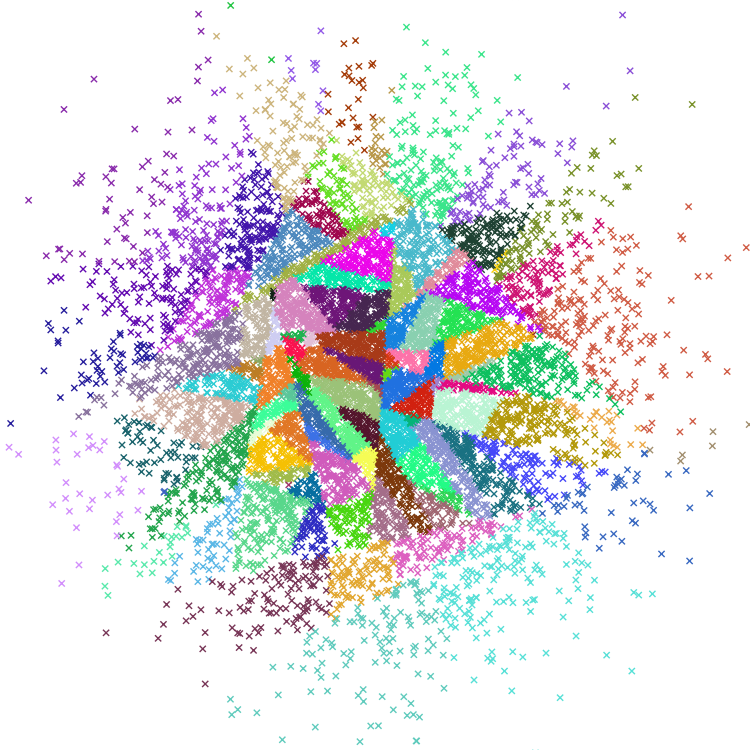
annoy image A very minor maintenance release, now at version 0.0.22, of RcppAnnoy has arrived on CRAN. RcppAnnoy is the Rcpp-based R integration of the nifty Annoy library by Erik Bernhardsson. Annoy is a small and lightweight C++ template header library for very fast approximate nearest neighbours originally developed to drive the Spotify music discovery algorithm. It had all the buzzwords already a decade ago: it is one of the algorithms behind (drum roll ) vector search as it finds approximate matches very quickly and also allows to persist the data. This release responds to a CRAN request to clean up empty macros and sections in Rd files. Details of the release follow based on the NEWS file.

Changes in version 0.0.22 (2024-01-23)
  • Replace empty examples macro to satisfy CRAN request.

Courtesy of my CRANberries, there is also a diffstat report for this release. If you like this or other open-source work I do, you can sponsor me at GitHub.

This post by Dirk Eddelbuettel originated on his Thinking inside the box blog. Please report excessive re-aggregation in third-party for-profit settings.

22 January 2024

Dirk Eddelbuettel: x13binary 1.1.60 on CRAN: Upstream Update, Updated Build

The x13binary team is thrilled to share the availability of Release 1.1.60-1 of the x13binary package providing the X-13ARIMA-SEATS program by the US Census Bureau which arrived on CRAN earlier today. This release brings the package up to speed with the most current release by the Census Bureau. More importantly, we finally made good on an old promise to ourselves and now install the binary by compiling from its Fortran sources! No more pre-made binaries. This required some work by Kirill, Michael, and Jeroen to finalize matter because, as we all know, the CRAN build processes and tool chains can be a little byzantine in their details. Use on platforms not covered by binaries from CRAN (or r-universe) should just work too as the demands on the (Fortran) compiler are fairly standard. All in all the build is fairly lightweight and quick even when rebuilding from source. Courtesy of my CRANberries, there is also a diffstat report for this release showing changes to the previous release. If you like this or other open-source work I do, you can sponsor me at GitHub.

This post by Dirk Eddelbuettel originated on his Thinking inside the box blog. Please report excessive re-aggregation in third-party for-profit settings.

Dirk Eddelbuettel: RProtoBuf 0.4.22 on CRAN: Updated Windows Support!

A new maintenance release 0.4.22 of RProtoBuf arrived on CRAN earlier today. RProtoBuf provides R with bindings for the Google Protocol Buffers ( ProtoBuf ) data encoding and serialization library used and released by Google, and deployed very widely in numerous projects as a language and operating-system agnostic protocol. This release matches the recent 0.4.21 release which enabled use of the package with newer ProtoBuf releases. Tomas has been updating the Windows / rtools side of things, and supplied us with simple PR that will enable building with those updated versions once finalised. The following section from the NEWS.Rd file has full details.

Changes in RProtoBuf version 0.4.22 (2022-12-13)
  • Apply patch by Tomas Kalibera to support updated rtools to build with newer ProtoBuf releases on windows

Thanks to my CRANberries, there is a diff to the previous release. The RProtoBuf page has copies of the (older) package vignette, the quick overview vignette, and the pre-print of our JSS paper. Questions, comments etc should go to the GitHub issue tracker off the GitHub repo. If you like this or other open-source work I do, you can sponsor me at GitHub.

This post by Dirk Eddelbuettel originated on his Thinking inside the box blog. Please report excessive re-aggregation in third-party for-profit settings.

12 January 2024

Dirk Eddelbuettel: RcppSpdlog 0.0.16 on CRAN: New Upstream

Version 0.0.16 of RcppSpdlog is now on CRAN and will be uploaded to Debian. RcppSpdlog bundles spdlog, a wonderful header-only C++ logging library with all the bells and whistles you would want that was written by Gabi Melman, and also includes fmt by Victor Zverovich. You can learn more at the nice package documention site. This releases updates the code to the version 1.13 of spdlog which was release this morning. The NEWS entry for this release follows.

Changes in RcppSpdlog version 0.0.16 (2024-01-12)
  • Upgraded to upstream releases spdlog 1.13.0

Courtesy of my CRANberries, there is also a diffstat report. More detailed information is on the RcppSpdlog page, or the package documention site. If you like this or other open-source work I do, you can sponsor me at GitHub.

This post by Dirk Eddelbuettel originated on his Thinking inside the box blog. Please report excessive re-aggregation in third-party for-profit settings.

Dirk Eddelbuettel: RDieHarder 0.2.6 on CRAN: Maintenance

An new version 0.2.6 of the random-number generator tester RDieHarder (based on the DieHarder suite developed / maintained by Robert Brown with contributions by David Bauer and myself along with other contributors) is now on CRAN (and to the day year after the previous release). This release contains changes to printf format strings to avoid new warnings on Windows. No functional changes have been made. Thanks to CRANberries, you can also look at the most recent diff to the previous release. If you like this or other open-source work I do, you can now sponsor me at GitHub.

This post by Dirk Eddelbuettel originated on his Thinking inside the box blog. Please report excessive re-aggregation in third-party for-profit settings.

Dirk Eddelbuettel: digest 0.6.34 on CRAN: Maintanance

Release 0.6.34 of the digest package arrived at CRAN today and has also been uploaded to Debian already. digest creates hash digests of arbitrary R objects. It can use a number different hashing algorithms (md5, sha-1, sha-256, sha-512, crc32, xxhash32, xxhash64, murmur32, spookyhash, blake3, and crc32c), and ebales easy comparison of (potentially large and nested) R language objects as it relies on the native serialization in R. It is a mature and widely-used package (with 63.8 million downloads just on the partial cloud mirrors of CRAN which keep logs) as many tasks may involve caching of objects for which it provides convenient general-purpose hash key generation to quickly identify the various objects. (Oh and we also just passed the 20th anniversary of the initial CRAN upload. Time flies, as they say.) This release contains small (build-focussed) enhancements contributed by Michael Chirico, and another set of fixed for printf format warnings this time on Windows. My CRANberries provides a summary of changes to the previous version. For questions or comments use the issue tracker off the GitHub repo. If you like this or other open-source work I do, you can now sponsor me at GitHub.

This post by Dirk Eddelbuettel originated on his Thinking inside the box blog. Please report excessive re-aggregation in third-party for-profit settings.

10 January 2024

Dirk Eddelbuettel: BH 1.84.0-1 on CRAN: New Upstream

Boost Boost is a very large and comprehensive set of (peer-reviewed) libraries for the C++ programming language, containing well over one hundred individual libraries. The BH package provides a sizeable subset of header-only libraries for (easier, no linking required) use by R. It is fairly widely used: the (partial) CRAN mirror logs (aggregated from the cloud mirrors) show over 35.7 million package downloads. Version 1.84.0 of Boost was released in December following the regular Boost release schedule of April, August and December releases. As the commits and changelog show, we packaged it almost immediately and started testing following our annual update cycle which strives to balance being close enough to upstream and not stressing CRAN and the user base too much. The reverse depends check revealed five packages requiring changes or adjustments which is a pretty good outcome given the over three hundred direct reverse dependencies. So we opened issue #100 to coordinate the issue over the winter break during which CRAN also closes (just as we did in previous years). Our sincere thanks to the two packages that already updated before, and to the one that updated today within hours (!!) of the BH uploaded it needed. There are very few actual changes. We honoured one request (in issue #97) to add Boost QVM bringing quarternion support to R. No other new changes needed to be made. A number of changes I have to make each time in BH, and it is worth mentioning them. Because CRAN cares about backwards compatibility and the ability to be used on minimal or older systems, we still adjust the filenames of a few files to fit a jurassic constraints of just over a 100 characters per filepath present in some long-outdated versions of tar. Not a big deal. We also, and that is more controversial, silence a number of #pragma diagnostic messages for g++ and clang++ because CRAN insists on it. I have no choice in that matter. One warning we suppressed last year, but no longer do, concerns the C++14 standard that some Boost libraries now default to. Packages setting C++11 explicitly will likely get a note from CRAN changing this; in most cases that should be trivial to remove as we only had to opt into (then) newer standards under old compilers. These days newer defaults help; R itself now defaults to C++17.

Changes in version 1.84.0-0 (2024-01-09)

Via my CRANberries, there is a diffstat report relative to the previous release. Comments and suggestions about BH are welcome via the issue tracker at the GitHub repo. If you like this or other open-source work I do, you can now sponsor me at GitHub.

This post by Dirk Eddelbuettel originated on his Thinking inside the box blog. Please report excessive re-aggregation in third-party for-profit settings.

Dirk Eddelbuettel: Rcpp 1.0.12 on CRAN: New Maintenance / Update Release

rcpp logo The Rcpp Core Team is once again thrilled to announce a new release 1.0.12 of the Rcpp package. It arrived on CRAN early today, and has since been uploaded to Debian as well. Windows and macOS builds should appear at CRAN in the next few days, as will builds in different Linux distribution and of course at r2u should catch up tomorrow. The release was uploaded yesterday, and run its reverse dependencies overnight. Rcpp always gets flagged nomatter what because the grandfathered .Call(symbol) but we had not single change to worse among over 2700 reverse dependencies! This release continues with the six-months January-July cycle started with release 1.0.5 in July 2020. As a reminder, we do of course make interim snapshot dev or rc releases available via the Rcpp drat repo and strongly encourage their use and testing I run my systems with these versions which tend to work just as well, and are also fully tested against all reverse-dependencies. Rcpp has long established itself as the most popular way of enhancing R with C or C++ code. Right now, 2791 packages on CRAN depend on Rcpp for making analytical code go faster and further, along with 254 in BioConductor. On CRAN, 13.8% of all packages depend (directly) on Rcpp, and 59.9% of all compiled packages do. From the cloud mirror of CRAN (which is but a subset of all CRAN downloads), Rcpp has been downloaded 78.1 million times. The two published papers (also included in the package as preprint vignettes) have, respectively, 1766 (JSS, 2011) and 292 (TAS, 2018) citations, while the the book (Springer useR!, 2013) has another 617. This release is incremental as usual, generally preserving existing capabilities faithfully while smoothing our corners and / or extending slightly, sometimes in response to changing and tightened demands from CRAN or R standards. The full list below details all changes, their respective PRs and, if applicable, issue tickets. Big thanks from all of us to all contributors!

Changes in Rcpp release version 1.0.12 (2024-01-08)
  • Changes in Rcpp API:
    • Missing header includes as spotted by some recent tools were added in two places (Michael Chirico in #1272 closing #1271).
    • Casts to avoid integer overflow in matrix row/col selections have neem added (Aaron Lun #1281).
    • Three print format correction uncovered by R-devel were applied with thanks to Tomas Kalibera (Dirk in #1285).
    • Correct a print format correction in the RcppExports glue code (Dirk in #1288 fixing #1287).
    • The upcoming OBJSXP addition to R 4.4.0 is supported in the type2name mapper (Dirk and I aki in #1293).
  • Changes in Rcpp Attributes:
    • Generated interface code from base R that fails under LTO is now corrected (I aki in #1274 fixing a StackOverflow issue).
  • Changes in Rcpp Documentation:
    • The caption for third figure in the introductory vignette has been corrected (Dirk in #1277 fixing #1276).
    • A small formatting issue was correct in an Rd file as noticed by R-devel (Dirk in #1282).
    • The Rcpp FAQ vignette has been updated (Dirk in #1284).
    • The Rcpp.bib file has been refreshed to current package versions.
  • Changes in Rcpp Deployment:
    • The RcppExports file for an included test package has been updated (Dirk in #1289).

Thanks to my CRANberries, you can also look at a diff to the previous release Questions, comments etc should go to the rcpp-devel mailing list off the R-Forge page. Bugs reports are welcome at the GitHub issue tracker as well (where one can also search among open or closed issues). If you like this or other open-source work I do, you can sponsor me at GitHub.

This post by Dirk Eddelbuettel originated on his Thinking inside the box blog. Please report excessive re-aggregation in third-party for-profit settings.

17 December 2023

Dirk Eddelbuettel: littler 0.3.19 on CRAN: Several Updates

max-heap image The twentieth release of littler as a CRAN package landed a few minutes ago, following in the now seventeen year history (!!) as a package started by Jeff in 2006, and joined by me a few weeks later. littler is the first command-line interface for R as it predates Rscript. It allows for piping as well for shebang scripting via #!, uses command-line arguments more consistently and still starts faster. It also always loaded the methods package which Rscript only began to do in recent years. littler lives on Linux and Unix, has its difficulties on macOS due to yet-another-braindeadedness there (who ever thought case-insensitive filesystems as a default were a good idea?) and simply does not exist on Windows (yet the build system could be extended see RInside for an existence proof, and volunteers are welcome!). See the FAQ vignette on how to add it to your PATH. A few examples are highlighted at the Github repo:, as well as in the examples vignette. This release contains a fair number of small changes and improvements to some of the example scripts is run daily. The full change description follows.

Changes in littler version 0.3.19 (2023-12-17)
  • Changes in examples scripts
    • The help or usage text display for r2u.r, ttt.r, check.r has been improved, expanded or corrected, respectively
    • installDeps.r has a new argument for dependency selection
    • An initial 'single test file' runner tttf.r has been added
    • r2u.r has two new options for setting / varying the Debian build version of package that is built, and one for BioConductor builds, one for a 'dry run' build, and a new --compile option
    • installRSPM.r, installPPM.r, installP3M.r have been updates to reflect the name changes
    • installRub.r now understands 'package@universe' too
    • tt.r flips the default of the --effects switch

My CRANberries service provides a comparison to the previous release. Full details for the littler release are provided as usual at the ChangeLog page, and also on the package docs website. The code is available via the GitHub repo, from tarballs and now of course also from its CRAN page and via install.packages("littler"). Binary packages are available directly in Debian as well as (in a day or two) Ubuntu binaries at CRAN thanks to the tireless Michael Rutter. Comments and suggestions are welcome at the GitHub repo. If you like this or other open-source work I do, you can sponsor me at GitHub.

This post by Dirk Eddelbuettel originated on his Thinking inside the box blog. Please report excessive re-aggregation in third-party for-profit settings.

14 December 2023

Dirk Eddelbuettel: RProtoBuf 0.4.21 on CRAN: Updated Upstream Support!

An exciting new release 0.4.21 of RProtoBuf arrived on CRAN earlier today. RProtoBuf provides R with bindings for the Google Protocol Buffers ( ProtoBuf ) data encoding and serialization library used and released by Google, and deployed very widely in numerous projects as a language and operating-system agnostic protocol. ProtoBuf development, following what seemed like a multi-year lull, all of a sudden picked up again with a vengeance a little while ago. And the library releases we rely on for convenience and provided by the Linux distributions are lagging. So last summer we received an excellent, and focussed, pull request #93 offering to update the package to the newer ProtoBuf 22.0 and beyond. (Aside: When a library ditches its numbering scheme you know changes are for real . My Ubuntu 23.10 box is still at 3.21 in a different counting scheme .) But it wasn t until last weekend the issue ticket #95 by Sebastian ran into the same issue, but recognized it and contained a container recipe! So now all of a sudden we were able to build under a newer ProtoBuf which made accepting the PR #93 much easier! We added this as an additional continuous unit test, and made a few other smaller updates to documentation and style. The following section from the NEWS.Rd file has full details.

Changes in RProtoBuf version 0.4.21 (2022-12-13)
  • Package now builds with ProtoBuf >= 22.x thanks to Matteo Gianella (#93 addressing #92).
  • An Alpine 3.19-based workflow was added to test this in continuous integration thanks to a suggestion by Sebastian Meyer.
  • A large number of old-style .Call were updated (#96).
  • Several packaging, dcoumentation and testing items were updated.

Thanks to my CRANberries, there is a diff to the previous release. The RProtoBuf page has copies of the (older) package vignette, the quick overview vignette, and the pre-print of our JSS paper. Questions, comments etc should go to the GitHub issue tracker off the GitHub repo. If you like this or other open-source work I do, you can sponsor me at GitHub.

This post by Dirk Eddelbuettel originated on his Thinking inside the box blog. Please report excessive re-aggregation in third-party for-profit settings.

9 December 2023

Dirk Eddelbuettel: RcppInt64 0.0.4 on CRAN: Minor Bugfix

The new-ish package RcppInt64 (announced earlier this fall in this post, with two small updates following) arrived on CRAN minutes ago as relase 0.0.4. RcppInt64 collects some of the previous conversions between 64-bit integer values in R and C++, and regroups them in a single package. It offers two interfaces: both a more standard as<>() converter from R values along with its companions wrap() to return to R, as well as more dedicated functions from and to . This release addresses an issues Sebastian reported a few hours and which is reported by newer, pickier compilers: We need to include <cstdint> so that int64_t is declared. CRAN was at its usual best processing this efficiently including tests of the by now two reverse dependencies. Twenty two minutes total, all automated: The brief NEWS entry follows:

Changes in version 0.0.4 (2023-12-09)
  • The cstdint header is now included (closes #1).

Courtesy of my CRANberries, there is a diffstat report relative to previous release. If you like this or other open-source work I do, you can sponsor me at GitHub.

This post by Dirk Eddelbuettel originated on his Thinking inside the box blog. Please report excessive re-aggregation in third-party for-profit settings.

6 December 2023

Reproducible Builds: Reproducible Builds in November 2023

Welcome to the November 2023 report from the Reproducible Builds project! In these reports we outline the most important things that we have been up to over the past month. As a rather rapid recap, whilst anyone may inspect the source code of free software for malicious flaws, almost all software is distributed to end users as pre-compiled binaries (more).

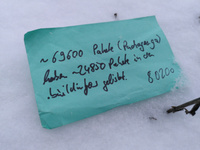
Reproducible Builds Summit 2023 Between October 31st and November 2nd, we held our seventh Reproducible Builds Summit in Hamburg, Germany! Amazingly, the agenda and all notes from all sessions are all online many thanks to everyone who wrote notes from the sessions. As a followup on one idea, started at the summit, Alexander Couzens and Holger Levsen started work on a cache (or tailored front-end) for the snapshot.debian.org service. The general idea is that, when rebuilding Debian, you do not actually need the whole ~140TB of data from snapshot.debian.org; rather, only a very small subset of the packages are ever used for for building. It turns out, for amd64, arm64, armhf, i386, ppc64el, riscv64 and s390 for Debian trixie, unstable and experimental, this is only around 500GB ie. less than 1%. Although the new service not yet ready for usage, it has already provided a promising outlook in this regard. More information is available on https://rebuilder-snapshot.debian.net and we hope that this service becomes usable in the coming weeks. The adjacent picture shows a sticky note authored by Jan-Benedict Glaw at the summit in Hamburg, confirming Holger Levsen s theory that rebuilding all Debian packages needs a very small subset of packages, the text states that 69,200 packages (in Debian sid) list 24,850 packages in their .buildinfo files, in 8,0200 variations. This little piece of paper was the beginning of rebuilder-snapshot and is a direct outcome of the summit! The Reproducible Builds team would like to thank our event sponsors who include Mullvad VPN, openSUSE, Debian, Software Freedom Conservancy, Allotropia and Aspiration Tech.

Beyond Trusting FOSS presentation at SeaGL On November 4th, Vagrant Cascadian presented Beyond Trusting FOSS at SeaGL in Seattle, WA in the United States. Founded in 2013, SeaGL is a free, grassroots technical summit dedicated to spreading awareness and knowledge about free source software, hardware and culture. The summary of Vagrant s talk mentions that it will:
[ ] introduce the concepts of Reproducible Builds, including best practices for developing and releasing software, the tools available to help diagnose issues, and touch on progress towards solving decades-old deeply pervasive fundamental security issues Learn how to verify and demonstrate trust, rather than simply hoping everything is OK!
Germane to the contents of the talk, the slides for Vagrant s talk can be built reproducibly, resulting in a PDF with a SHA1 of cfde2f8a0b7e6ec9b85377eeac0661d728b70f34 when built on Debian bookworm and c21fab273232c550ce822c4b0d9988e6c49aa2c3 on Debian sid at the time of writing.

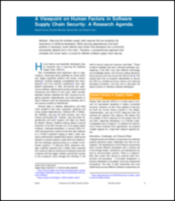
Human Factors in Software Supply Chain Security Marcel Fourn , Dominik Wermke, Sascha Fahl and Yasemin Acar have published an article in a Special Issue of the IEEE s Security & Privacy magazine. Entitled A Viewpoint on Human Factors in Software Supply Chain Security: A Research Agenda, the paper justifies the need for reproducible builds to reach developers and end-users specifically, and furthermore points out some under-researched topics that we have seen mentioned in interviews. An author pre-print of the article is available in PDF form.

Community updates On our mailing list this month:

openSUSE updates Bernhard M. Wiedemann has created a wiki page outlining an proposal to create a general-purpose Linux distribution which consists of 100% bit-reproducible packages albeit minus the embedded signature within RPM files. It would be based on openSUSE Tumbleweed or, if available, its Slowroll-variant. In addition, Bernhard posted another monthly update for his work elsewhere in openSUSE.

Ubuntu Launchpad now supports .buildinfo files Back in 2017, Steve Langasek filed a bug against Ubuntu s Launchpad code hosting platform to report that .changes files (artifacts of building Ubuntu and Debian packages) reference .buildinfo files that aren t actually exposed by Launchpad itself. This was causing issues when attempting to process .changes files with tools such as Lintian. However, it was noticed last month that, in early August of this year, Simon Quigley had resolved this issue, and .buildinfo files are now available from the Launchpad system.

PHP reproducibility updates There have been two updates from the PHP programming language this month. Firstly, the widely-deployed PHPUnit framework for the PHP programming language have recently released version 10.5.0, which introduces the inclusion of a composer.lock file, ensuring total reproducibility of the shipped binary file. Further details and the discussion that went into their particular implementation can be found on the associated GitHub pull request. In addition, the presentation Leveraging Nix in the PHP ecosystem has been given in late October at the PHP International Conference in Munich by Pol Dellaiera. While the video replay is not yet available, the (reproducible) presentation slides and speaker notes are available.

diffoscope changes diffoscope is our in-depth and content-aware diff utility that can locate and diagnose reproducibility issues. This month, Chris Lamb made a number of changes, including:
  • Improving DOS/MBR extraction by adding support for 7z. [ ]
  • Adding a missing RequiredToolNotFound import. [ ]
  • As a UI/UX improvement, try and avoid printing an extended traceback if diffoscope runs out of memory. [ ]
  • Mark diffoscope as stable on PyPI.org. [ ]
  • Uploading version 252 to Debian unstable. [ ]

Website updates A huge number of notes were added to our website that were taken at our recent Reproducible Builds Summit held between October 31st and November 2nd in Hamburg, Germany. In particular, a big thanks to Arnout Engelen, Bernhard M. Wiedemann, Daan De Meyer, Evangelos Ribeiro Tzaras, Holger Levsen and Orhun Parmaks z. In addition to this, a number of other changes were made, including:

Upstream patches The Reproducible Builds project detects, dissects and attempts to fix as many currently-unreproducible packages as possible. We endeavour to send all of our patches upstream where appropriate. This month, we wrote a large number of such patches, including:

Reproducibility testing framework The Reproducible Builds project operates a comprehensive testing framework (available at tests.reproducible-builds.org) in order to check packages and other artifacts for reproducibility. In October, a number of changes were made by Holger Levsen:
  • Debian-related changes:
    • Track packages marked as Priority: important in a new package set. [ ][ ]
    • Stop scheduling packages that fail to build from source in bookworm [ ] and bullseye. [ ].
    • Add old releases dashboard link in web navigation. [ ]
    • Permit re-run of the pool_buildinfos script to be re-run for a specific year. [ ]
    • Grant jbglaw access to the osuosl4 node [ ][ ] along with lynxis [ ].
    • Increase RAM on the amd64 Ionos builders from 48 GiB to 64 GiB; thanks IONOS! [ ]
    • Move buster to archived suites. [ ][ ]
    • Reduce the number of arm64 architecture workers from 24 to 16 in order to improve stability [ ], reduce the workers for amd64 from 32 to 28 and, for i386, reduce from 12 down to 8 [ ].
    • Show the entire build history of each Debian package. [ ]
    • Stop scheduling already tested package/version combinations in Debian bookworm. [ ]
  • Snapshot service for rebuilders
    • Add an HTTP-based API endpoint. [ ][ ]
    • Add a Gunicorn instance to serve the HTTP API. [ ]
    • Add an NGINX config [ ][ ][ ][ ]
  • System-health:
    • Detect failures due to HTTP 503 Service Unavailable errors. [ ]
    • Detect failures to update package sets. [ ]
    • Detect unmet dependencies. (This usually occurs with builds of Debian live-build.) [ ]
  • Misc-related changes:
    • do install systemd-ommd on jenkins. [ ]
    • fix harmless typo in squid.conf for codethink04. [ ]
    • fixup: reproducible Debian: add gunicorn service to serve /api for rebuilder-snapshot.d.o. [ ]
    • Increase codethink04 s Squid cache_dir size setting to 16 GiB. [ ]
    • Don t install systemd-oomd as it unfortunately kills sshd [ ]
    • Use debootstrap from backports when commisioning nodes. [ ]
    • Add the live_build_debian_stretch_gnome, debsums-tests_buster and debsums-tests_buster jobs to the zombie list. [ ][ ]
    • Run jekyll build with the --watch argument when building the Reproducible Builds website. [ ]
    • Misc node maintenance. [ ][ ][ ]
Other changes were made as well, however, including Mattia Rizzolo fixing rc.local s Bash syntax so it can actually run [ ], commenting away some file cleanup code that is (potentially) deleting too much [ ] and fixing the html_brekages page for Debian package builds [ ]. Finally, diagnosed and submitted a patch to add a AddEncoding gzip .gz line to the tests.reproducible-builds.org Apache configuration so that Gzip files aren t re-compressed as Gzip which some clients can t deal with (as well as being a waste of time). [ ]

If you are interested in contributing to the Reproducible Builds project, please visit our Contribute page on our website. However, you can get in touch with us via:

5 December 2023

Dirk Eddelbuettel: RcppArmadillo 0.12.6.6.1 on CRAN: No More Deprecation

armadillo image Armadillo is a powerful and expressive C++ template library for linear algebra and scientific computing. It aims towards a good balance between speed and ease of use, has a syntax deliberately close to Matlab, and is useful for algorithm development directly in C++, or quick conversion of research code into production environments. RcppArmadillo integrates this library with the R environment and language and is widely used by (currently) 1126 other packages on CRAN, downloaded 31.7 million times (per the partial logs from the cloud mirrors of CRAN), and the CSDA paper (preprint / vignette) by Conrad and myself has been cited 569 times according to Google Scholar. This release ends the practice on asking Armadillo to suppress deprecation warnings. RcppArmadillo, as noted, has a large user base. Sometimes Conrad sometimes made changes without too much of a heads-up so at times it was opportune to not bring those warnings to dozens (or maybe hundreds) of packages at CRAN. Yet we need to balance this with the demonstrable need to call out older deprecated code use. So sixteen months ago, with GitHub issue #391, we started to alert author of 30+ affected packages and supplied either pull requests or emailed patches to all. Eleven months ago GitHub issues #402 was added for a second deprecation. And the time of making the switch has come. Release 0.12.6.6.1 no longer defines ARMA_IGNORE_DEPRECATED_MARKER. So among the over 1100 packages using RcppArmadillo at CRAN, around a good dozen or so were flagged in the upload but CRAN concurred and let the package migrate to CRAN. If you maintain an affected package, consider applying the patch or pull request now. A simple stop-gap measure also exists by adding -DARMA_IGNORE_DEPRECATED_MARKER to src/Makevars as either PKG_CPPFLAGS or PKG_CXXFLAGS to reactivate it. But a proper code update, which is generally simple, may be better. If you are unsure, do not hesitate to get in touch. The set of changes since the last CRAN release follows.

Changes in RcppArmadillo version 0.12.6.6.1 (2023-12-03)
  • Following the extendeded transition in #391 and #402, this release no longer sets ARMA_IGNORE_DEPRECATED_MARKER. Maintainers of affected packages have received pull requests or patches and can set -DARMA_IGNORE_DEPRECATED_MARKER as PKG_CPPFLAGS.

Courtesy of my CRANberries, there is a diffstat report relative to previous release. More detailed information is on the RcppArmadillo page. Questions, comments etc should go to the rcpp-devel mailing list off the Rcpp R-Forge page. If you like this or other open-source work I do, you can sponsor me at GitHub.

This post by Dirk Eddelbuettel originated on his Thinking inside the box blog. Please report excessive re-aggregation in third-party for-profit settings.

3 December 2023

Dirk Eddelbuettel: dang 0.0.16: New Features, Some Maintenance

A new release of my mixed collection of things package dang package arrived at CRAN a little while ago. The dang package regroups a few functions of mine that had no other home as for example lsos() from a StackOverflow question from 2009 (!!), the overbought/oversold price band plotter from an older blog post, the market monitor blogged about as well as the checkCRANStatus() function tweeted about by Tim Taylor. And more so take a look. This release brings a number of updates, including a rather nice improvement to the market monitor making updates buttery smooth and not flickering (with big thanks to Paul Murrell who calmly pointed out once again that base R does of course have the functionality I was seeking) as well as three new functions (!!) and then a little maintenance on the -Wformat print format string issue that kept everybody busy this week. The NEWS entry follows.

Changes in version 0.0.16 (2023-12-02)
  • Added new function str.language() based on post by Bill Dunlap
  • Added new argument sleep in intradayMarketMonitor
  • Switched to dev.hold() and dev.flush() in intradayMarketMonitor with thanks to Paul Murrell
  • Updated continued integration setup, twice, and package badges
  • Added new function shadowedPackages
  • Added new function limitDataTableCores
  • Updated two error() calls to updated tidyCpp signature to not tickle -Wformat warnings under R-devel
  • Updated two URL to please link checks in R-devel
  • Switch two tests for variable of variable to is.* and inherits(), respectively

Courtesy of my CRANberries, there is a comparison to [the previous release][previous releases]. For questions or comments use the the issue tracker at the GitHub repo. If you like this or other open-source work I do, you can now sponsor me at GitHub.

This post by Dirk Eddelbuettel originated on his Thinking inside the box blog. Please report excessive re-aggregation in third-party for-profit settings.

2 December 2023

Dirk Eddelbuettel: tidyCpp 0.0.7 on CRAN: Maintenance

A maintenance release of the tidyCpp package arrived on CRAN this morning. The packages offers a clean C++ layer (as well as one small C++ helper class) on top of the C API for R which aims to make use of this robust (if awkward) C API a little easier and more consistent. See the vignette for motivating examples. This release follows a number of other releases this week in accomodating the recently added -Wformat -Wformat-security from the development branch of R. It also includes a new example snippet illustrating creation of a numeric matrix. The NEWS entry follows.

Changes in tidyCpp version 0.0.7 (2023-11-30)
  • Add an example for a numeric matrix creator
  • Update the continuous integration setup
  • Accomodate print format warnings from r-devel

Thanks to my CRANberries, there is also a diffstat report for this release. For questions, suggestions, or issues please use the issue tracker at the GitHub repo. If you like this or other open-source work I do, you can now sponsor me at GitHub.

This post by Dirk Eddelbuettel originated on his Thinking inside the box blog. Please report excessive re-aggregation in third-party for-profit settings.

1 December 2023

Dirk Eddelbuettel: RcppClassicExamples 0.1.3 on CRAN: Maintenance

Another upgrade triggered solely by changing CRAN standards (see previous one from five years ago). This time it concerns warnings under r-devel with -Wformat -Wformat-security so we injected a number of "%s" into Rf_error() calls. No new code or features. Full details below. And as a reminder, don t use the old RcppClassic use Rcpp instead.

Changes in version 0.1.3 (2023-11-30)
  • Update Rf_error() call to not tickle -Wformat
  • Minor other packaging and continuous integration tweaks

Thanks to CRANberries, you can also look at a diff to the previous release. If you like this or other open-source work I do, you can sponsor me at GitHub.

This post by Dirk Eddelbuettel originated on his Thinking inside the box blog. Please report excessive re-aggregation in third-party for-profit settings.

30 November 2023

Dirk Eddelbuettel: RcppSpdlog 0.0.15 on CRAN: Maintenance

Version 0.0.15 of RcppSpdlog is now on CRAN and will be uploaded to Debian. RcppSpdlog bundles spdlog, a wonderful header-only C++ logging library with all the bells and whistles you would want that was written by Gabi Melman, and also includes fmt by Victor Zverovich. You can learn more at the nice package documention site. This releases updates the code to address warning now shown under R-devel when -Wformat -Wformat-security are enabled. This amounted to re-generating RcppExports.cpp under an updated [Rcpp][rcpp] version. It also updates the package default help page by removing some stubs that were not filled in. The NEWS entry for this release follows.

Changes in RcppSpdlog version 0.0.15 (2023-11-29)
  • Correct default package help page slighly
  • RcppExports.cpp has been regenerated under an updated Rcpp to address a format string warning under R-devel

Courtesy of my CRANberries, there is also a diffstat report. More detailed information is on the RcppSpdlog page, or the package documention site. If you like this or other open-source work I do, you can sponsor me at GitHub.

This post by Dirk Eddelbuettel originated on his Thinking inside the box blog. Please report excessive re-aggregation in third-party for-profit settings.

Dirk Eddelbuettel: qlcal 0.0.9 on CRAN: Maintenance

The ninth release of the qlcal package arrivied at CRAN today. qlcal delivers the calendaring parts of QuantLib. It is provided (for the R package) as a set of included files, so the package is self-contained and does not depend on an external QuantLib library (which can be demanding to build). qlcal covers over sixty country / market calendars and can compute holiday lists, its complement (i.e. business day lists) and much more. This releases updates the code to address warning now shown under R-devel when -Wformat -Wformat-security are enabled. This amounted to re-generating RcppExports.cpp under an updated Rcpp version. We also no longer set C++14 explicitly as a compilation standard but rather determine at build time if it is needed or not.

Changes in version 0.0.9 (2023-11-29)
  • configure now uses a new helper script to only set a compilation standard when needed for R versions older than 4.2.0
  • The file RcppExports.cpp was regenerated to avoid a string format warning from R-devel

Courtesy of my CRANberries, there is a diffstat report for this release. See the project page and package documentation for more details, and more examples. If you like this or other open-source work I do, you can now sponsor me at GitHub.

This post by Dirk Eddelbuettel originated on his Thinking inside the box blog. Please report excessive re-aggregation in third-party for-profit settings.

Next.

Previous.