Search Results: "Norbert Preining"

10 August 2015

Norbert Preining: Debian/TeX Live 2015.20150810-1

For those who are starving for some updates while the big gcc5 transitions brings the rest of Debian/sid to a halt, here is some fresh meat, a new TeX Live checkout. Nothing spectacular new here, just the usual big bunch of updates of and several new packages. Maybe worthwhile mentioning is that luasseq has been reincorporated into the TeX Live packages. Thanks to the maintainer for his work till now! Debian - TeX Live 2015 From the long list of changes let me pick one update and one new package: pgf has been updated to 3.0.1, which is just a small change in number, but incorporates 1.5 years of fixes, and the list of fixes is long. And a very interesting newcomer is pdfpagediff by C. V. Rad hakr ish nan. It allows visual comparison of two pdf files by overlaying them in a transparent way, making even slight changes in the layout immediately visible. Of course, these are not the only updates and newcomers, see the list below. Updated packages academicons, addlines, algorithms, archaic, babel, babel-estonian, biber, biblatex-source-division, bidi, bxjscls, chronology, cjk-ko, conteq, csplain, csquotes, curve2e, datatool, doclicense, dvips, eledmac, enotez, esami, eso-pic, etex-pkg, etoolbox, exsheets, fandol, fithesis, fontawesome, fontspec, forest, glossaries, greek-inputenc, jslectureplanner, kotex-oblivoir, kotex-utf, l3build, l3experimental, l3kernel, l3packages, latex, leadsheets, ledmac, lshort-english, luamplib, luasseq, luatexko, maths-symbols, media9, memoir, metrix, mhchem, minitoc, moderncv, modiagram, morefloats, mptopdf, msu-thesis, nameauth, ndsu-thesis, newpx, newtx, newtxsf, newtxtt, notes, ocgx2, pageslts, pdfpages, pdftex, pgf, phonrule, plain, polyglossia, pstricks, ptex, pxchfon, reflectgraphics, rsfso, sectionbox, siunitx, skrapport, standalone, tcolorbox, tetex, tex4ht, texfot, texinfo, texlive-scripts, todonotes, translations, tudscr, ucbthesis, unicode-math, xcharter, xgreek. New packages alertmessage, bewerbung, bidihl, bxpdfver, cloze, comicneue, copyedit, fcavtex, gradstudentresume, make4ht, mcf2graph, multiaudience, nmbib, pdfpagediff, quran, reledmac, roundrect, screenplay-pkg, shapes, tex4ebook. Enjoy.

7 August 2015

Norbert Preining: Japanese-English dictionary for Kobo

Since ever the Kobo firmwares also allowed downloading of a bunch of dictionaries, most of which I don t need. As I am fluent in most languages I read and write, the only real dictionary I would like to see is a Japanese-English (I don t dare asking for a Japanese-German). Unfortunately, Kobo never shipped one. OTOH, starting with firmware 3.16.10 they ships two different English-Japanese dictionaries, one excellent Japanese-Japanese dictionary, but not one Japanese-English. So I took the liberty to write a script that allows everyone to enrich the shipped Japanese-Japanese dictionary with English definitions. Kobo Logo Till now I have used Tshering s excellent Japanese dictionary which was enriched with English definitions. It was based on the older Japanese-Japanese dictionary shipped with firmwares before 3.16.10. I didn t want to loose the more complete dictionary from the new firmware, so here is a script that updates the dictionary for you Prerequisites The script is neither fool-proof nor does everything by itself. Furthermore, it requires a set of programs. In details: Supported dictionaries At the moment the program can use the following two dictionaries as sources: Edict2 and Japanese3. Edict2 The Edict dictionary is a free dictionary which is the base of most other dictionaries. Created by the JMdict/EDICT Project it provides a very complete Japanese-English dictionary. To use the dict with the current program, one need to download the edict2.gz file and unpack it with gunzip edict2.gz. If you put it into the same directory as the Perl script, nothing else needs to be done, otherwise one can use the command line option --edict PATH-TO-EDICT to specify the location of the edict2 file. Japanese3 The Japanese3 is a dictionary application for iOS which provides another very complete Japanese-English dictionary. My feeling is that it is 90% and more based on Edict, so adding it will not buy you much, but still a bit (see below for how much!). If you have purchased this dictionary/application, and you manage to get access to your iOS device (via jailbreaking or some other tools), then you need to get the file Japanese3.db from the application folder, and then generate a file via sqlite3 as follows:
$ sqlite3 Japanese3.db
.output japanese3-data
select Entry, Furigana, Summary from entries;
If you save the generated file japanese3-data into the same directory as the Perl script, nothing else needs to be done, otherwise one can use the command line option --japanese3 PATH-TO-J3-DATA to specify the location of the Japanese3 data file. Command line options The program supports the following command line options: Note that in case you pass in the option --unpacked, the files should be properly named (encodings are a problem!). Furthermore, note that the unpacked directory contains lots of .gif and .html files that are actually gzip-compressed files, but lacking the .gz extension. If you want to unpack the dictionary, by advised that the file names in the Zip directory are already encoded in UTF-8, but normal programs (unzip, 7z) assume that they are encoded in some other encoding. Thus, if your are using UTF-8 locale, it is necessary to set LC_CTYPE to C to make sure that the encoding is used, as in
LC_CTYPE=C 7z x ...
Typical run In the following example we use both dict2 and Japanese3 dictionaries, and prefer Edict2:
$ perl enhance-dictionary.pl --dicts edict2 --dicts japanese3
Using the following dictionaries as source for translations: edict2 japanese3
loading edict2 ... done
loading Japanese3 data ... done
unpacking original dictionary ... done
loading dict files ... done
searching for words and updating ... done
total words 805521, matches: 130563 (edict: 123388, japanese3: 7175)
creating output html ... done
creating update dictionary in dicthtml-jaxxdjs-201508072201.zip ... done
$
Installing the dictionary After having created the enhanced dictionary, one can install the generated file as KOBO/.kobo/dicts/dicthtml-jaxxdjs.zip (where KOBO is the mount point of the eReader). The dictionary should be picked up automatically. And the next lookup should give you something like the following:
kobo-glohd-enhanced-ja-dict There is only one caveat: Syncing with Kobo will re-download the original dictionary and overwrite the enhanced one. There is at least one solution here, which I am employing, see this post on MobileRead. Download and development place I am using the github repository kobo-ja-dict-enhance to develop the program. Please report bugs, and feature requests there. The file for the last released version can be downloaded from here: enhance-dictionary.pl Future plans I am planning to get rid of the 7z dependency and use Archive::Zip for all the unpacking and packing. This would also allow to do everything in memory and thus make it faster. There is a branch on github with ongoing work on this matter. I also think about including translations for Hiragana words by providing the translations of all possible Kanji readings. Conclusions Even if Kobo does not provide us with a decent Japanese-English dictionary, adding at least a huge amount of translations to the current dictionary is now easily possible. For serious students of Japanese who are reading or starting to read Japanese eBooks, this will be of great help. Enjoy, and don t forget to give feedback, suggestions, and improvements either here or better via the Github page.

6 August 2015

Norbert Preining: Upgrading my eReader Kobo GloHD

After long time of dear service, I have decided to exchange my Kobo Glo to a new device, the Kob GloHD. The reasons are simple: higher resolution, better reading quality.
kobo-glohd-1 While the photos are not showing these details, the quality of the screen is definitely much better I have now read a few hours with the new device, both Japanese and English books, and the crispness of the letters has definitely improved. Very nice. Together with the new device came a new firmware, only released in Japan, 3.16.10. Of course it can be found on MobileRead. As with previous version, I will prepare a MegaPack containing nickel patches, ssh, custom dicts, etc etc, please wait a bit longer until KSM compatibility with the new firmware is perfect again. Talking of dictionaries: The new version brings a few more dicts, especially there are now two English-Japanese dictionaries, and a much more complete Japanese dictionary.
kobo-glohd-dictlist Unfortunately, as before, there is no Japanese-English dictionary. Till now I have used Tshering s excellent Japanese dictionary which was enriched with English definitions. But the new version brought a new dictionary that is much more complete:
kobo-glohd-dicsearch I have already a script ready that enriches this new big dictionary automatically with definitions from the Edict project, so everyone can now update his own dictionary easily. I will write a blog entry about this soon. That s it for the moment, back to reading. I love the new device, and will surely post many articles about it in the future!

28 July 2015

Norbert Preining: ePub editor Sigil landed in Debian

Long long time ago I wanted to have Sigil, an epub editor, to appear in Debian. There was a packaging wishlist bug from back in 2010 with intermittent activities. But thanks to concerted effort, especially by Mattia Rizzolo and Don Armstrong, packaging progressed to a state that I could sponsor the upload to experimental about 4 months ago. And yesterday, after long waiting, finally Sigil passed the watchful eyes of the Debian ftp-masters and has entered Debian/experimental. sigil-debian I have already updated the packaging for the latest version 0.8.7, which will be included in Debian/sid rather soon. Thanks again especially Mattia for his great work.
Email this to someonePrint this pageShare on FacebookShare on Google+Tweet about this on TwitterShare on LinkedInFlattr the author

26 July 2015

Norbert Preining: Challenging riddle from The Talos Principle

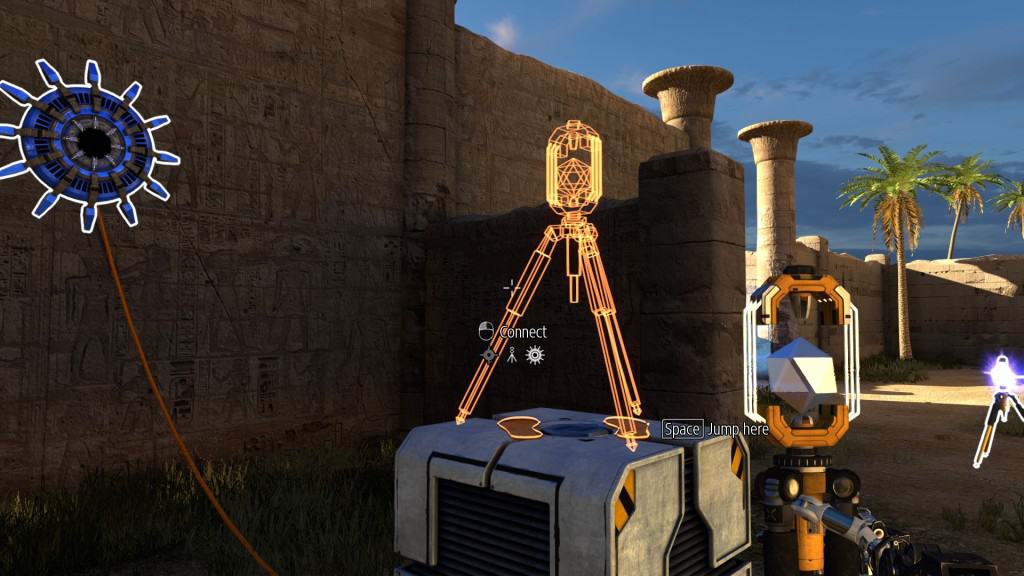
When I recently complained that Portal 2 was too easy, I have to say, The Talos Principle is challenging. For a solution that, if known, takes only a few seconds, I often have to wring my brain about the logistics for long long time. Here a nice screenshot from one of the easier riddles, but with great effect. TTP-screenshot A great game, very challenging. A more length review will come when I have finished the game.
Email this to someonePrint this pageShare on FacebookShare on Google+Tweet about this on TwitterShare on LinkedInFlattr the author

25 July 2015

Norbert Preining: PiwigoPress release 2.30

I just pushed a new release of PiwigoPress (main page, WordPress plugin dir) to the WordPress servers. This release incorporates some new features, mostly contributed by Anton Lavrov (big thanks!) piwigopress-logo The new features are: I also checked that the plugin runs with the soon to be released WordPress 4.3, and fixed a small problem with the setting of albumpicture not being saved. That s all, enjoy, and leave your wishlist items and complains at the issue tracker on the github project piwigopress.
Email this to someonePrint this pageShare on FacebookShare on Google+Tweet about this on TwitterShare on LinkedInFlattr the author

16 July 2015

Norbert Preining: Recent silence scientific freak weeks

If you wonder why it was so silent here over the last weeks, there is a simple explanation: I am on scientific freak weeks  As you might know, in my main profession I am logician, mathematician, computer scientist at the Japan Advanced Institute of Science and Technology (btw, searching urgently for a new job, in case someone is interested!!!). purity The last weeks have been very busy with attenting and presenting at LICS 2015 (Logic in Computer Science), followed by a workshop on Proofs as Processes organized by myself, then a presentation at CCA 2015 (Conference on Computability and Complexity in Analysis), and now working with visitors on our hyper natural deduction system. Above all that, there is also my lecture on Logical Decision Procedures at JAIST that a colleague and I a creating on the fly. All in all a very busy July, but I hope that after the weekend, and another workshop at JAIST, things settle down around beginning of August.
Email this to someonePrint this pageShare on FacebookShare on Google+Tweet about this on TwitterShare on LinkedInFlattr the author

10 July 2015

Norbert Preining: Gaming: Portal 2

It took me ages to finish Portal (1), but Portal 2 was different I moved through the games in high speed. Actually playing time was the same, but I played a bit more often then before  More details below, but tl;dr: Nice extension of Portal, which feels a bit different. Graphics are great, but for my feeling the chambers are too easy and too short. portal2-by-browen2o Image by user browen2o on the Steam Portal community center. Portal 2, the successor of Portal, brings not only many new levels (test chambers) interspersed with funny running sequences and out of normal problems to solve, but adds also a set of new devices to solve the problems. But the basic mechanics are the same: Shoot portals to solve puzzles. The added devices are as follows (thanks to this blog): portal2-devices They include light-rings that carry you over empty space, and also lift you up (first and second icon), light reflectors (forth), jumping and running color (9th and 10th), catapults (12th), light bands to walk on (lower left) and of course enough turrets and other devices that might find you smashed, shot, or drowned. Things I liked at Portal 2: and what I didn t like too much was What I haven t tried till now, unfortunately, is the cooperative mode. I need some partners, but my buddy is too many time zones away :-( All in all, a really great game, and I enjoyed it a lot.

3 July 2015

Norbert Preining: Debian/TeX Live 2015.20150703-1

The first upload of new packages after TeX Live 2015 hit unstable. Against my expectations, the bugs didn t come in in the thousands, more or less there were only some fixes necessary in the binary package, which lead to a few updates over the last week. This upload fixes an RC bug (missing replaces), and also takes a step further in the Debianization of the packages: I finally removed texconfig and texlinks programs, as they are not useful on Debian, and should actually not be used. Debian - TeX Live 2015 Besides a few other fixes, of course there was the usual chore of package updates. Updated packages babel-french, biblatex-fiwi, biblatex-opcit-booktitle, c90, chemformula, chemgreek, cjkutils, ctex, curve2e, dozenal, eledmac, elements, enotez, garuda-c90, koma-script, l3build, latex, leadsheets, norasi-c90, pkuthss, poemscol, pstricks, pst-solides3d, siunitx, termmenu, texlive-scripts, tudscr, upmethodology, xindy. New packages arabi-add, br-lex. Enjoy.

2 July 2015

Norbert Preining: An amusing lintian error Lenna

Well, there we are, trying to build another round of TeX Live packages for Debian, just to realize that the lintian error that should have been downgraded to warning (or removed) is still around, due to doubts about the license. Ok. Well, anyway, but what I found is even more funny:
E: texlive-extra source: license-problem-non-free-img-lenna texmf-dist/doc/latex/reflectgraphics/lenna.jpg
which is about one of the most used images in images processing courses, Lenna: who-is-lenna
Without comments, I just quote the lintian error it is a whole lot of fun to read.
Ref: https://en.wikipedia.org/wiki/Lenna, https://www.debian.org/vote/2012/vote_002, #771191
Info: The given source file is cropped from playboy centerfold. This image is a picture of Lena S derberg, shot by photographer Dwight Hooker, cropped from the centerfold of the November 1972 issue of Playboy magazine. According to Hutchison, Jamie (May June 2001). Culture, Communication, and an Information Age Madonna (PDF). IEEE Professional Communication Society Newsletter 45 (3). (page 5 second column second paragraph), this image is distributable but not free. Moreover, Lenna photo has been pointed to as an example of sexism in the sciences, reinforcing gender stereotypes. Please use well known and free test image. Please also submit md5sum, sha1sum, and sha256 of this file as a bug report for lintian.
How fortunate our generation is that we don t have anything else to care about Anyway, back to rebuilding orig.tars, source packages, and binary packages!

29 June 2015

Lunar: Reproducible builds: week 9 in Stretch cycle

What happened about the reproducible builds effort this week: Toolchain fixes Norbert Preining uploaded texinfo/6.0.0.dfsg.1-2 which makes texinfo indices reproducible. Original patch by Chris Lamb. Lunar submitted recently rebased patches to make the file order of files inside .deb stable. akira filled #789843 to make tex4ht stop printing timestamps in its HTML output by default. Dhole wrote a patch for xutils-dev to prevent timestamps when creating gzip compresed files. Reiner Herrmann sent a follow-up patch for wheel to use UTC as timezone when outputing timestamps. Mattia Rizzolo started a discussion regarding the failure to build from source of subversion when -Wdate-time is added to CPPFLAGS which happens when asking dpkg-buildflags to use the reproducible profile. SWIG errors out because it doesn't recognize the aforementioned flag. Trying to get the .buildinfo specification to more definitive state, Lunar started a discussion on storing the checksums of the binary package used in dpkg status database. akira discovered while proposing a fix for simgrid that CMake internal command to create tarballs would record a timestamp in the gzip header. A way to prevent it is to use the GZIP environment variable to ask gzip not to store timestamps, but this will soon become unsupported. It's up for discussion if the best place to fix the problem would be to fix it for all CMake users at once. Infrastructure-related work Andreas Henriksson did a delayed NMU upload of pbuilder which adds minimal support for build profiles and includes several fixes from Mattia Rizzolo affecting reproducibility tests. Neils Thykier uploaded lintian which both raises the severity of package-contains-timestamped-gzip and avoids false positives for this tag (thanks to Tomasz Buchert). Petter Reinholdtsen filled #789761 suggesting that how-can-i-help should prompt its users about fixing reproducibility issues. Packages fixed The following packages became reproducible due to changes in their build dependencies: autorun4linuxcd, libwildmagic, lifelines, plexus-i18n, texlive-base, texlive-extra, texlive-lang. The following packages became reproducible after getting fixed: Some uploads fixed some reproducibility issues but not all of them: Untested uploaded as they are not in main: Patches submitted which have not made their way to the archive yet: debbindiff development debbindiff/23 includes a few bugfixes by Helmut Grohne that result in a significant speedup (especially on larger files). It used to exhibit the quadratic time string concatenation antipattern. Version 24 was released on June 23rd in a hurry to fix an undefined variable introduced in the previous version. (Reiner Herrmann) debbindiff now has a test suite! It is written using the PyTest framework (thanks Isis Lovecruft for the suggestion). The current focus has been on the comparators, and we are now at 93% of code coverage for these modules. Several problems were identified and fixed in the process: paths appearing in output of javap, readelf, objdump, zipinfo, unsqusahfs; useless MD5 checksum and last modified date in javap output; bad handling of charsets in PO files; the destination path for gzip compressed files not ending in .gz; only metadata of cpio archives were actually compared. stat output was further trimmed to make directory comparison more useful. Having the test suite enabled a refactoring of how comparators were written, switching from a forest of differences to a single tree. This helped removing dust from the oldest parts of the code. Together with some other small changes, version 25 was released on June 27th. A follow up release was made the next day to fix a hole in the test suite and the resulting unidentified leftover from the comparator refactoring. (Lunar) Documentation update Ximin Luo improved code examples for some proposed environment variables for reference timestamps. Dhole added an example on how to fix timestamps C pre-processor macros by adding a way to set the build date externally. akira documented her fix for tex4ht timestamps. Package reviews 94 obsolete reviews have been removed, 330 added and 153 updated this week. Hats off for Chris West (Faux) who investigated many fail to build from source issues and reported the relevant bugs. Slight improvements were made to the scripts for editing the review database, edit-notes and clean-notes. (Mattia Rizzolo) Meetings A meeting was held on June 23rd. Minutes are available. The next meeting will happen on Tuesday 2015-07-07 at 17:00 UTC. Misc. The Linux Foundation announced that it was funding the work of Lunar and h01ger on reproducible builds in Debian and other distributions. This was further relayed in a Bits from Debian blog post.

Norbert Preining: The Talos Principle Solving puzzles using SAT solvers

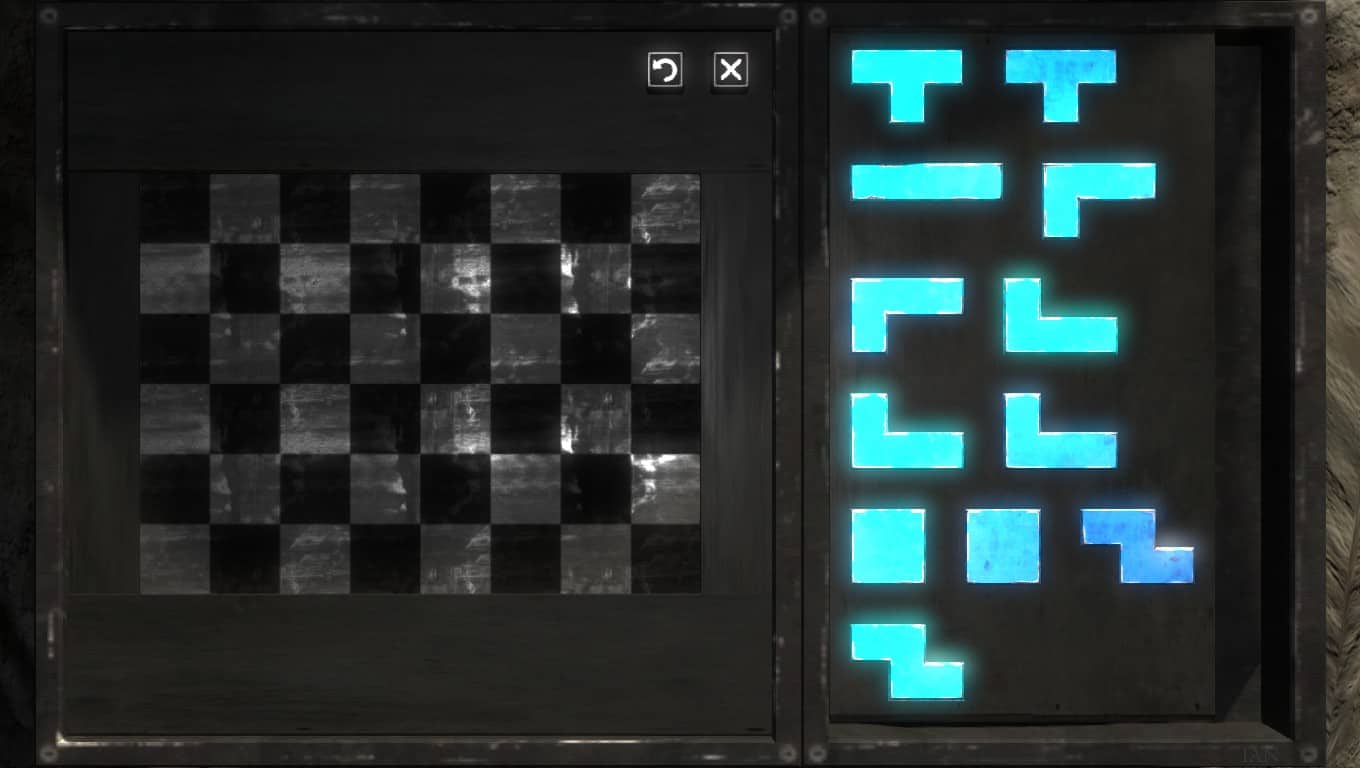
After my last post on Portal, there was a sale of The Talos Principle, so I got it and started playing. And soon I got stuck at these kind of puzzles where one has to fit in pieces into a frame. As a logician I hate to solve something by trial and error, so I decided I write a solver for these kind of puzzles, based on a propositional logic encoding and satisfiability solver. Sometimes it is good to be logician! Talos-Puzzles In the Talos Principle, access to new worlds and specific items is often blocked by gates that open by putting Sigils into the frame. Of course, collecting the sigils is the most challenging part, but that is often solvable by logical thinking. On the other hand, solving these fitting puzzles drove me crazy, so let us solve them with a SAT solver. Encoding I used a propositional encoding that for each combination of cells and sigils assigns a propositional variable, which is true if the specific sigil rests in on that cell in the final solution. That is, we have variable (encoded as x_i_j_n) where runs over the cells of the frame, and over the (numbered) sigils. Setup I have written a perl program that for a definition of a puzzle (see later), outputs SMT2 code, which then is checked for satisfiability and generation of model with the z3 solver (which is available in Debian). Necessary assertions We have to state relations between these propositional variables to obtain a proper solution, in particular we have added the following statements: Let us go through them one by one: Every field has at least on sigil on it That is an easy part by asserting

In the SMT2 code it would look like
(assert (or x_i_j_1 x_i_j_2 ... x_i_j_n))
Every field has at most one sigil on it This can be achieved by asserting for each tile and each pair of different sigil (numbers), that not both of the two hold:

and in SMT2 code:
(assert (and
  (not (and x_1_1_1 x_1_1_2))
  (not (and x_1_1_1 x_1_1_3))
...
(assert (and
  (not (and x_1_2_1 x_1_2_2))
  (not (and x_1_2_1 x_1_2_3))
...
Every sigil is used at least once This was a bit a tricky one. First I thought I want to express that every sigil is used exactly once by excluding that for one sigil there are more fields assigned to it then the sigil contains parts. So if a sigil occupies 4 tiles, then every combination of 5 tiles needs to evaluate to false. But with 8 8 or so frames, the number of combinations simply explodes to above several million, which brings my harddrive size and z3 to an end. The better idea was to say that every sigil was used at least once. Since all sigils together exactly fill the frame, this is enough. This can be done easily by assuming that for each sigil, at least one of the tiles is assigned to it:

or in SMT code for a 6 6 frame and the first sigil:
(assert (or x_1_1_n x_1_2_n ...  x_6_6_1))
Defining equations for the sigil s form Of course the most important part are the defining equations for the various sigils. Here I choose the following path: So for example for the top-most sigil in the above photo, I choose the anchor point to be the center, and if that was in , I need to assume that for the upright position

holds. In the same way, when rotated right, we need

All these options have to be disjunctively connected, in SMT code for the case where the anchor lies at (4,2).
(assert (or
  ...
  (and x_3_2_n x_4_2_n x_5_2_n x_4_3_n)
  (and x_3_3_n x_3_2_n x_3_1_n x_4_2_n)
  (and x_3_2_n x_4_2_n x_5_2_n x_4_1_n)
...
When generating these equations one has to be careful not to include rotated sigils that stick out of the frame, though. Although the above might not be the optimal encoding, the given assertions suffice to check for SAT and produce a model, which allows me to solve the riddles. Implementation in Perl To generate the SMT2 code, I used a Perl script, which is very quickly hacked together. The principle function is (already coded for the above riddle):
create_smt2_def(8,6,'a','a','b','cl','cl','cr','cr','cr','q','q','sl','sl');
where the first two arguments define the size of the frame, and the rest are codes for sigil types: This function first sets up the header of the smt2 file, followed by shipping out all the necessary variable definitions, in SMT these are defined as Boolean functions, and the other assertions (please see the Perl code linked below for details). The most interesting part are the definitions of the sigils:
  # for each piece, call the defining assertions
  for my $n (1..$nn)  
    my $p = $pieces[$n-1];
    print "(assert (or\n";
    for my $i (1..$xx)  
      for my $j (1..$yy)  
        if ($p eq 'q')   
          type_square($xx,$yy,$i,$j,$n); 
          elsif ($p eq 'a')  
          type_potest($xx,$yy,$i,$j,$n);
    ....
Every sigil type has its own definiton, in case of the a podest, the type_podest function:
sub type_potest  
  my ($xx,$yy,$i,$j,$n) = @_;
  my ($il, $jl, $ir, $jr, $iu, $ju);
  $il = $i - 1; $ir = $i + 1; $iu = $i;
  $jl = $jr = $j; $ju = $j + 1;
  do_rotate_shipout($xx,$yy, $i, $j, $n, $il, $jl, $ir, $jr, $iu, $ju);
 
This function is prototypical, one defines the tiles a sigil occupies if the anchor is placed on (i,j) for an arbitrary orientation of the sigil, and then calls do_rotate_shipout on the list of occupied tiles. This function in turn is very simple:
sub do_rotate_shipout  
  my ($xx,$yy, $i, $j, $n, @pairs) = @_ ;
  for my $g (0..3)  
    @pairs = rotate90($i, $j, @pairs);
    check_and_shipout($xx,$yy, $n, $i, $j, @pairs);
   
 
as it only rotates four times by 90 degrees, and then checks whether the rotated sigil is completely within the frame, and if yes ships out the assertion code. The rotation is done by multiplying the vector from (i,j) to the tile position with the (0 -1 1 0) matrix and adding it again to (i,j):
sub rotate90  
  my ($i, $j, @pairs) = @_ ;
  my @ret;
  while (@pairs)  
    my $ii = shift @pairs;
    my $jj = shift @pairs;
    my $ni = $i - ($jj - $j);
    my $nj = $j + ($ii - $i);
    push @ret, $ni, $nj;
   
  return @ret;
 
There are a few more functions, for those interested, the full Perl code is here: tangram.pl. There is no user interface or any config file reading done, I just edit the source code if I need to solve a riddle. Massaging the output Last but not least, the output of the z3 solver is a bit noisy, so I run the output through a few Unix commands to get only the true assignments, which gives me the location of the tiles. That is, I run the following pipeline:
perl tangram.pl   z3 -in   egrep 'define-fun true false'    sed -e 'h;s/.*//;G;N;s/\n//g'   grep true   sort
which produces a list like the following as output:
  (define-fun x_1_1_10 () Bool    true)
  (define-fun x_1_2_10 () Bool    true)
  (define-fun x_1_3_5 () Bool    true)
  (define-fun x_1_4_6 () Bool    true)
  (define-fun x_1_5_6 () Bool    true)
  (define-fun x_1_6_6 () Bool    true)
  (define-fun x_2_1_10 () Bool    true)
  (define-fun x_2_2_10 () Bool    true)
  (define-fun x_2_3_5 () Bool    true)
  ...
from which I can read up the solution that puts the tenth sigil (a square) in the lower left corner:
Talos-Puzzle-solved

25 June 2015

Norbert Preining: TeX Live 2015 hits Debian/unstable

Here we go, I just uploaded 15 packages to the Debian archive that brings TeX Live in Debian up to the 2015 release (and a bit newer)! Debian - TeX Live 2015 Uploaded packages are asymptote, biber, context, context-modules, jadetex, musixtex, pmx, tex-common, texinfo, texinfo-doc-nonfree, texlive-base, texlive-bin, texlive-extra, texlive-lang, xmltex. The packages are basically what has been in experimental for quite some time, plus a checkout of tlnet from yesterday. For details on the changes and the new packaging, please consult this post. So, now let the flood of bug reports begin, but in the mean time, enjoy!

24 June 2015

Norbert Preining: TeX Live Manager News June 2015

TeX Live 2015 has been released, and normal operation with daily updates has started. During the freeze time and afterwards I have made a few changes to the TeX Live Manager (tlmgr) that I want to highlight here. texlive-tlmgr The main changes are better error and return code handling (which should be hardly visible for the users), and more more informative output of the tlmgr info action, incorporating more data from the TeX Catalogue. Error handling With a program that started as an experiment that has grown into the central configuration and management program, there are lots of old code pieces that did not do proper error signaling via return values. That meant that the return value of a tlmgr run didn t have any meaning, mostly because it was 0 (success) most of the times. I have now tried to do proper return code handling throughout the tlmgr code base, that is the tlmgr.pl and the necessary Perl modules. While this should not be a user visible changes, it turned out that the MacOS TeX Live Utility by Adam Maxwell (btw, a great program, it would be nice to have something similar written for Unix replacing the bit clumsy tlmgr gui), got broken for paper configuration, due to forgotten return value fixes in the TLPaper.pm module. That is fixed now in our repository. All in all we do hope that the return value of a tlmgr run now gives proper information about success or error. I might add a bit more semantics by returning bit-values in case of errors, but this is in early stages of thinking. TeX Catalogue data in tlmgr info Since more or less the very beginning we incorporated information from the TeX Catalogue into our database. In particular did we carry over the license information, version, CTAN directory, and date of last change of information in the Catalogue. ctan-page-asana-mathRecently (or not so recently, I actually don t know), CTAN has enriched their package view with more information, in particular a list of topics, and a list of related packages. Take for example the Asana-math package. It s CTAN page now displays besides the previously available information also a list of topics and a list of related packages. The topic index can also be browsed directly when searching for a specific package. I have now added functionality in the TeX Live Manager that tlmgr info also prints out the topic names and related packages. In the case of Asana Math fonts, that would look like:
$ tlmgr info Asana-Math
package:     Asana-Math
category:    Package
shortdesc:   A font to typeset maths in Xe(La)TeX and Lua(La)TeX.
longdesc:    The Asana-Math font is an OpenType font that includes almost all mathematical Unicode symbols and it can be used to typeset mathematical text with any software that can understand the MATH OpenType table (e.g., XeTeX 0.997 and Microsoft Word 2007). The font is beta software. Typesetting support for use with LaTeX is provided by the fontspec and unicode-math packages.
installed:   Yes
revision:    37556
sizes:       doc: 9k, run: 1177k
relocatable: No
cat-version: 000.955
cat-date:    2015-06-02 20:04:19 +0200
cat-license: ofl
cat-topics:  font font-maths font-otf font-ttf
cat-related: stix xits
collection:  collection-fontsextra
GUIs could use the topic names and related packages to link directly to the CTAN page. At the moment the related packages are named according to CTAN standards, which are a bit different from what we use in TeX Live. I am not sure whether I will change that, or ship out both names. We will see.
The changes are currently in testing, see section about Test version here, and will be pushed out in due time, probably in the next week. As usual, in case of any problems or bugs, please contact us at the TeX Live mailing list. Enjoy.

20 June 2015

Norbert Preining: Localizing a WordPress Blog

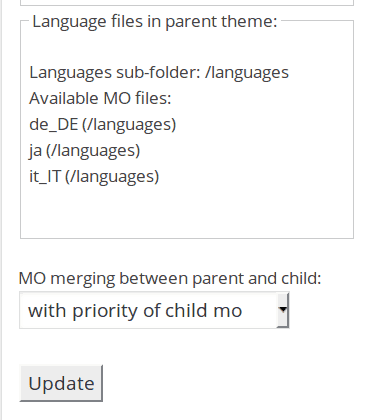
There are many translation plugins available for WordPress, and most of them deal with translations of articles. This might be of interest for others, but not for me. If you have a blog with visitors from various language background, because you are living abroad, or writing in several languages, you might feel tempted to provide visitors with a localized environment , meaning that as much as possible is translated into the native language of the visitor, without actually translating content but allowing to. xili-languages1 In my case I am writing mostly in English and Japanese, but sometimes (in former times) in Italian and now and then in my mother tongue, German. Visitors from my site are from all over the world, but at least for Japanese visitors I wanted to provide a localized environment. This blog describes how to get as much as possible translated of your blog, and here I mean not the actual articles, because this is the easy part and most translation plugins handle that fine, but the things around the articles (categories, tags, headers, ). Starting point and aims My starting point was a blog where I already had language added as extra taxonomy, and have tagged all articles with a language. But I didn t have any other translation plugin installed or used. Furthermore, I am using a child theme of the main theme in use (that is always a good idea anyway!). And of course, the theme you are using should be prepared for translation, that is that most literal strings in the theme source code are wrapped in __( ... ) or _e( ... ) calls. And by the way, if you don t have the language taxonomy, don t worry, that will come in automatically. One more thing: The following descriptions are not for the very beginner. I expect certain fluency with WordPress, where for example themese and plugins keep their files, as well as PHP programming experience is needed for some of the steps. With this starting point my aims were quite clear: Translation plugins There is a huge bunch of translation plugins, localization plugins, or internationalization plugins out there, and it is hard to select one. I don t say that what I propose here is the optimal solution, just one that I was pointed at by a colleague, namely utilizing the xili-language plugin. Installation and initial setup Not much to say here, just follow the usual procedure (search, install, activate), followed by the initial setup of xili-language. If you haven t had a language taxonomy by now, you can add languages from the preference page of xili-language, first tab. After having added some languages you should have something similar to the above screen shot. Having defined your languages, you can assign a language to your articles, but for now nothing has actually changed on the blog pages. xili-languages2As I already mentioned, I assume that you are using a child theme. In this case you should consult the fourth tab of the xili-language settings page, called Managing language files, where on the right you should see / set up things in a way that translations in the child theme override the ones in the main theme, see screen shot on the right. I just mention here that there is another xili plugin, xili-dictionary, that can do a lot of things for you when it comes to translation but I couldn t figure out its operation mode, so I switched back (i.e., uninstalled that plugin) and used normal .po/.mo files as described in the next section. Adding translations po and mo files Translations are handled in normal (at least for the Unix world) gettext format. Matthias wrote about this in this blog. In principle you have to: The contents of the po files are described in Matthias blog, and in the following when I say add a translation, then I mean: adding a stanza
msgid "some string"
msgstr "translation of some string"
to the po file, and not forgetting to recompile it to mo file. So let us go through a list of changes I made to translate various pieces of the blog appearance: Translation of categories This is the easiest part, simply throw in the names of your categories into the respective local-DD_LL.po file, and be ready. In my case I used local-ja.po which besides other categories contains stanzas like:
msgid "Travel"
msgstr " "
Translation of widget titles In most cases the widget titles are already automatically translated, if the plugin/widget author cared for it, meaning that he called the widget_title filter on the title. If this does not happen, please report this to the widget/plugin author. I have done this for example for the simple links plugin, which I use for various elements of the side-bar. The author was extremely responsive and the fix will be in the next release is already in the latest release big thanks! Translation of tags This is a bit a problem, as the tags appear in various places on my blog: next to the title line and the footer of each blog, as well as in the tag cloud in the side bar. Furthermore, I want to translate tags instead of having related tag groups as provided by xili tidy tags plugin, so we have to deal with the various appearances of tags one by one: Tags on the main page shown by the theme This is the easier part in my case I had already a customized content.php and content-single.php in my child theme folder. If not, you need to copy the one from the parent theme and change the appearance of it to translate tags. Since this is something that depends on the specific theme, I cannot give detailed advice, but if you see something like:
$tags_list = get_the_tag_list( '', __( ', ', 'mistylake' ) );
(here the get_the_tag_list is the important part), then you can replace this by the following code:
$posttags = get_the_tags();
$first = 1;
$tag_list = '';
if ($posttags)  
  foreach($posttags as $tag)  
    if ($first == 1)  
      $first = 0;
      else  
      $tag_list = $tag_list . __( ', ', 'mistylake' );
     
    $tag_list = $tag_list . '<a href="' . esc_url( home_url( '/tag/' . $tag->slug ) ) . '">' . __($tag->name, 'mistylake') . '</a>';
   
 
(there are for sure simpler ways ) This code loops over the tags and translates them using the __ function. Note that the second parameter must be the text domain of the parent theme. If you have done this right and the web site is still running (I recommend testing it on a test installation I had white pages many times due to php programming errors), and of course you have actual translations available and are looking at a localized version of the web site, then the list of tags as shown by your theme should be translated. Tag cloud widget This one is a tricky one: The tag cloud widget comes by default with WordPress, but doesn t translate the tags. I tried a few variants (e.g. creating a new widget as extension of the original tag cloud widget, and only changing the respective functions), but that didn t work out at all. I finally resorted to a trick: Reading the code of the original widget, I saw that it applies the tag-sort-filter filter on the array of tags. That allows us to hook into the tag cloud creating and translate the tags. You have to add the following code to your child theme s functions.php:
function translate_instead_of_sort($tags)  
  foreach ( (array) $tags as $tag )  
    $tag->name = __( $tag->name , 'mistylake' );
   
  return $tags;
 
add_action('tag_cloud_sort', 'translate_instead_of_sort');
xili-languages3(again, don t forget to change the text domain in the __(.., ..) call!) There might be some more things one could do, like changing the priority to be used after the sorting, or sort directly, but I haven t played around with that. Using the above code and translating several of the tags, the tag cloud now looks like the screenshot on the right I know, it could use some tweaking. Also, now the untranslated tags are sorted all before the translated, things one probably can address with the priority of the filter.
Having done the above things, my blog page when Japanese is selected is now mostly in Japanese, with of course the exception the actual articles, which are in a variety of languages. Open problems There are a few things I haven t managed till now to translate, and they are mostly related to the Jetpack plugin, but not only: I have a few ideas how to tackle this problem: With Jetpack the biggest problem seems that all the strings are translated in a different text domain. So one should be able to add some code to the functions.php to override/add translations to the jetpack text domain. But somehow it didn t work out in my case. The same goes for things that are in the WordPress core and use the translation functions without a text domain so I guess the translation function will use the main WordPress translation files/text domain. Conclusion The good thing of the xili-language plugin is that it does not change the actual posts (some plugins save the translations in the the post text), and is otherwise not too intrusive IMHO. Still, it falls short of allowing to translate various parts of the blog, including the widget areas. I am not sure whether there are better plugins for this usage scenario, I would be surprised if not, but all the plugins I have seen were doing a bit too much on the article translation side and not enough on the translation of the surroundings side. In any case, I would like to see more separation between the functionality of localization (translating the interface) and translation (translating the content). But at the moment I don t have enough impetus to write my own plugin for this. If you have any suggestions for improvement, please let me know! Enjoy.

17 June 2015

Norbert Preining: Gaming: Portal

Ok, I have to admit, I sometimes do game and recently I finished Portal. Quite old (released in 2007), but still lots of fun. I started playing it about one year ago, off and on, until I recently finished the last level. Took me about 1 year of playing to finish the actual playing time of about 10h I guess you can see how much an addict I am  portalhazards I have never been a gamer, and I think there are only three set of games I played for extended periods of time:
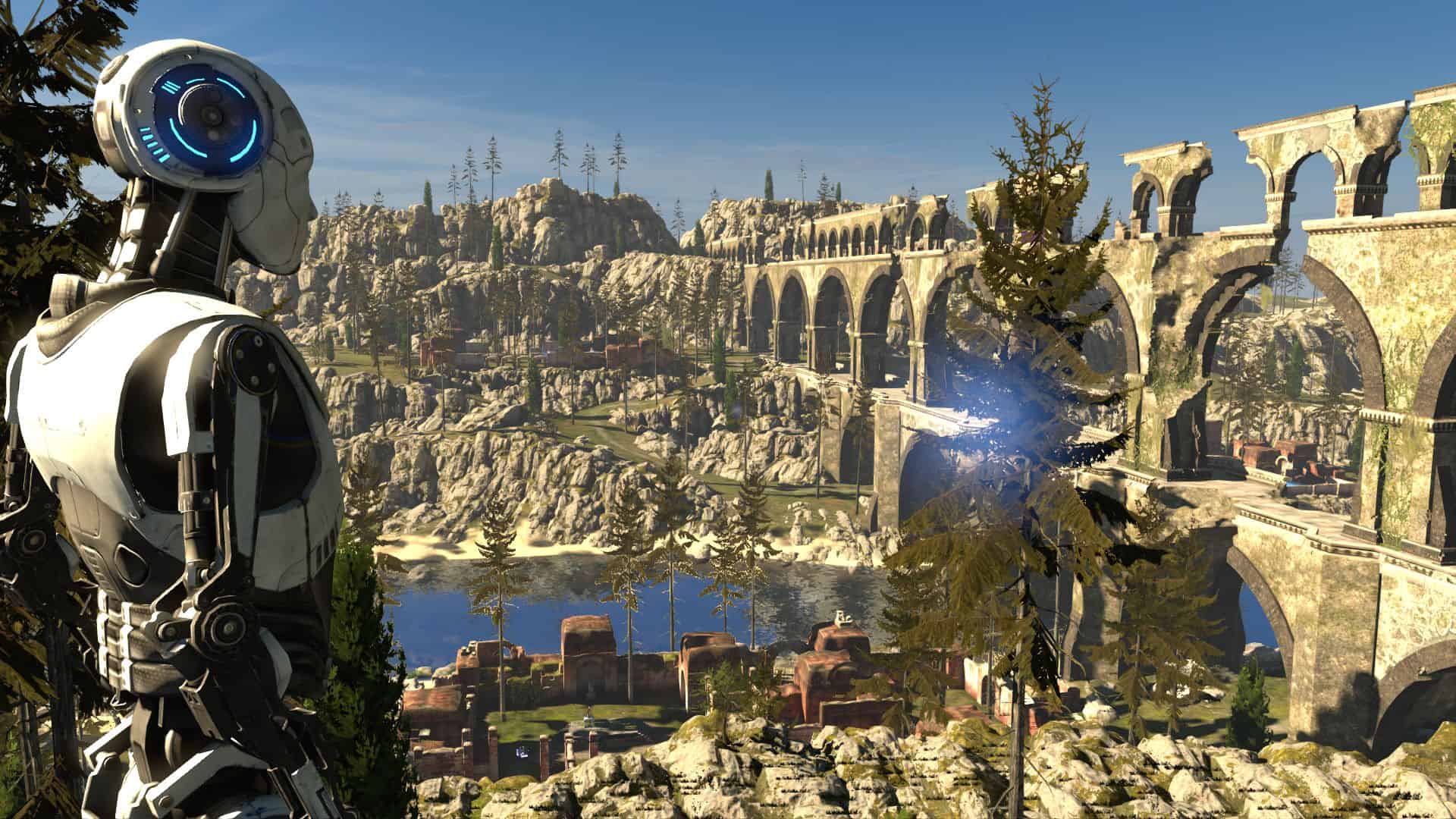
plus one more game, which got me hooked somehow: Hard-core board gamer who I am (I prefer playing with people real games without computer), I loved the Myst series for its crazy riddles, where solving them often needs a combination of logical thinking, recognizing patterns in images and sounds, and piecing together long list of hints. This is something a normal board game cannot provide. From the Descent series I loved the complete freedom of movement. Normal first-person shooters are just like humans running around, a bit of jumping and crouching, but Descent gives you 6D freedom which led to some people getting sick while watching me playing. From the Civilization series I don t know what I liked particularly, but it got you involved and allowed you to play long rounds. After these sins of youngsters, I haven t played for long long time, until a happy coincidence (of being Debian Developer) brought Steam onto my (Linux) machine together with a bunch of games I received for free. One of the games was Portal. Portal is in the style of Myst games one can place dual portals in various places, and by entering one of the portals, one leaves through the other. Using this one has to manage to solve loads of puzzle, evade being shot, dissolved in acid, crashed to death, etc etc, with the only aim to leave the underground station. portal-ex Besides shooting these portals there are some cubes that one can carry around and use for a variety of purposes, like putting them onto buttons, using them as stairs, protecting yourself from being shot, etc. But that s already all the tools one has. Despite of this, the levels pose increasingly difficult problems, and one is surprised how strange things one can achieve with these limited abilities and no, one cannot buy new power-ups, its not WoW. Logical thinking, tactic, and a certain level of reaction suffices. While not as philosophical as Myst, it was still a lot of fun. The only thing I am a bit unclear is, where to go from here. There are two possible successors: The logical one would be Portal 2. But I recently found a game that reminded me even more of the Myst series, combined with Portal: The Talos Principle, with stunning graphics: talos1 talos2 And filled with riddles again, maybe not as involved as in the Myst series (I don t know by now), but still a bit more challenging than Portal s one:
talos3 talos4 Difficult decision. If you have any other suggestions, please let me know!

16 June 2015

Norbert Preining: ptex2pdf release 0.8

I have uploaded ptex2pdf to CTAN. Changes are mainly about how files are searched and extensions are treated. ptex2pdf now follows the TeX standard, that is: This also made finding the .dvi file more robust. texworks-edit The files should be in today s TeX Live, and can be downloaded directly from here: ptex2pdf-0.8.zip, or only the lua scrip: ptex2pdf.lua. For more details, see the main description page: /software-projects/ptex2pdf (in Japanese) or see the github project.

15 June 2015

Lunar: Reproducible builds: week 7 in Stretch cycle

What happened about the reproducible builds effort for this week: Presentations On June 7th, Reiner Herrmann presented the project at the Gulaschprogrammiernacht 15 in Karlsruhe, Germany. Video and audio recordings in German are available, and so are the slides in English. Toolchain fixes Daniel Kahn Gillmor's report on help2man started a discussion with Brendan O'Dea and Ximin Luo about standardizing a common environment variable that would provide a replacement for an embedded build date. After various proposals and research by Ximin about date handling in several programming languages, the best solution seems to define SOURCE_DATE_EPOCH with a value suitable for gmtime(3).
  1. Martin Borgert wondered if Sphinx could be changed in a way that would avoid having to tweak debian/rules in packages using it to produce HTML documentation.
Daniel Kahn Gillmor opened a new report about icont producing unreproducible binaries. Packages fixed The following 32 packages became reproducible due to changes in their build dependencies: agda, alex, c2hs, clutter-1.0, colorediffs-extension, cpphs, darcs-monitor, dispmua, haskell-curl, haskell-glfw, haskell-glib, haskell-gluraw, haskell-glut, haskell-gnutls, haskell-gsasl, haskell-hfuse, haskell-hledger-interest, haskell-hslua, haskell-hsqml, haskell-hssyck, haskell-libxml-sax, haskell-openglraw, haskell-readline, haskell-terminfo, haskell-x11, jarjar-maven-plugin, kxml2, libcgi-struct-xs-perl, libobject-id-perl, maven-docck-plugin, parboiled, pegdown. The following packages became reproducible after getting fixed: Some uploads fixed some reproducibility issues but not all of them: Patches submitted which did not make their way to the archive yet: reproducible.debian.net A new variation to better notice when a package captures the environment has been introduced. (h01ger) The test on Debian packages works by building the package twice in a short time frame. But sometimes, a mirror push can happen between the first and the second build, resulting in a package built in a different build environment. This situation is now properly detected and will run a third build automatically. (h01ger) OpenWrt, the distribution specialized in embedded devices like small routers, is now being tested for reproducibility. The situation looks very good for their packages which seems mostly affected by timestamps in the tarball. System images will require more work on debbindiff to be better understood. (h01ger) debbindiff development Reiner Herrmann added support for decompling Java .class file and .ipk package files (used by OpenWrt). This is now available in version 22 released on 2015-06-14. Documentation update Stephen Kitt documented the new --insert-timestamp available since binutils-mingw-w64 version 6.2 available to insert a ready-made date in PE binaries built with mingw-w64. Package reviews 195 obsolete reviews have been removed, 65 added and 126 updated this week. New identified issues: Misc. Holger Levsen reported an issue with the locales-all package that Provides: locales but is actually missing some of the files provided by locales. Coreboot upstream has been quick to react after the announcement of the tests set up the week before. Patrick Georgi has fixed all issues in a couple of days and all Coreboot images are now reproducible (without a payload). SeaBIOS is one of the most frequently used payload on PC hardware and can now be made reproducible too. Paul Kocialkowski wrote to the mailing list asking for help on getting U-Boot tested for reproducibility. Lunar had a chat with maintainers of Open Build Service to better understand the difference between their system and what we are doing for Debian.

14 June 2015

Norbert Preining: Kobo firmware 3.16.0 mega update (KSM, nickel patch, ssh, fonts)

As with all the previous versions, I have prepared a mega update for the Kobo firmware 3.16.0, including all my favorite patches and features. Please see details for 3.15.0, 3.13.1 and 3.12.1. As before, the following addons are included: Kobo Start Menu, koreader, coolreader, pbchess, ssh access, custom dictionaries, plus as a new treat, some side-loaded fonts. What I dropped this time is most of the kobohack part, as the libraries seem to get outdated. But I included the dropbear ssh server from the kobohack package. Kobo Logo So what are all these items: Please see this post for details. Here is the combined Kobo-3.16.0-combined/KoboRoot.tgz Update procedure First install the normal firmware as obtained from above. Then, install the KoboRoot.tgz from above. WARNINGS Here a a few things you need to do after you have installed the mega update: The combined KoboRoot.tgz is provided without warranty. If you need to reset your device, don t blame me!

11 June 2015

Norbert Preining: TeX Live 2015 released

After long time of waiting we finally released TeX Live 2015. Get some champagne, and ready to party! texlive2015 Get it via downloading the net-installer, by obtaining a DVD, or downloading the iso. Besides the huge list up updates to packages and loads of bug fixes to all the programs, here are some notable news: Regular updates of the repository will start in due course. Thanks to all the contributors for the hard work. Let s have a party!

Next.

Previous.