Search Results: "az"

25 January 2013

Richard Hartmann: Release Critical Bug report for Week 04

The UDD bugs interface currently knows about the following release critical bugs: How do we compare to the Squeeze release cycle?
Week Squeeze Wheezy Diff
43 284 (213+71) 468 (332+136) +184 (+119/+65)
44 261 (201+60) 408 (265+143) +147 (+64/+83)
45 261 (205+56) 425 (291+134) +164 (+86/+78)
46 271 (200+71) 401 (258+143) +130 (+58/+72)
47 283 (209+74) 366 (221+145) +83 (+12/+71)
48 256 (177+79) 378 (230+148) +122 (+53/+69)
49 256 (180+76) 360 (216+155) +104 (+36/+79)
50 204 (148+56) 339 (195+144) +135 (+47/+90)
51 178 (124+54) 323 (190+133) +145 (+66/+79)
52 115 (78+37) 289 (190+99) +174 (+112/+62)
1 93 (60+33) 287 (171+116) +194 (111/+83)
2 82 (46+36) 271 (162+109) +189 (+116/+73)
3 25 (15+10) 249 (165+84) +224 (+150/+74)
4 14 (8+6) 244 (176+68) +230 (+168/+62)
5 2 (0+2)
6 release!
Graphical overview of bug stats thanks to azhag:

22 January 2013

John Goerzen: Today is Pretend St. Patrick s Day!

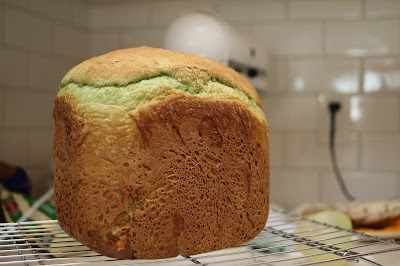
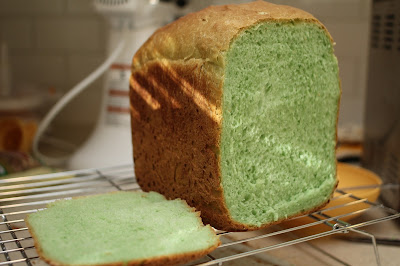
Today in the USA is Martin Luther King, Jr., day. But sometimes these holidays get confusing for a 6-year-old. I asked Jacob the other day if he knew what holiday was coming up. He thought about it for a second, then declared it would be St. Patrick s Day. He was excited because St. Patrick s Day is green. When he realized that it was really MLK Day, he was disappointed. That day isn t green. So I said, Jacob, how about we celebrate pretend St. Patrick s Day on Monday? His face lit up, he got a huge smile, and said, Oh yes! Great idea, dad! Oliver got all excited about it too. I was already planning on us doing some cooking, and thankfully had green food coloring already. So I sort of discarded my plans so each meal could have something green in it. When the boys woke up this morning, I wished each of them Happy Pretend St. Patrick s Day! We all wore green. Jacob put his shirt on backwards so the side with more green would be facing front. For breakfast, our green dish was green crepes with a succotash (based on baby lima beans and corn) filling. The boys were excited to discover that the crepes could be green on one side, and green and a little brown on the other. Jacob was unsure of the succotash idea, but after having a few bites, declared it excellent . After breakfast, we made bread. They loved watching the green food coloring disperse in the water. We checked on how green the dough looked periodically. We watched how it was rising and whether it was staying green. And we checked in on it backing, as the crust turned from green to brown. We discussed green bread over and over. Important questions were asked and answers were attempted. And then, of course, the moment of truth removing the loaf from the pan. The boys jabbered excitedly that there was some green peeking out. While we waited for it to cool, we went out to the creek. The creek is dry this year, so we got to walk in it. Jacob used his stick to make a line behind him. I asked him, Is that a line so we can find our way back? Oh! Uhm. Yes! And then he added arrows so we d know which way to go. Jacob stopped every 20 or so feet to collect pretend train tickets from Oliver and me. Oliver eventually grew tired of this, so Jacob started collecting Oliver s ticket from me. They climbed on some trees, managed to find some mud, drew outlines of train cars in the dirt, and then followed Jacob s line back down the creek bed. They pointed out any green things they saw. Then we went back to the house, took off our warm coats, and cut into the bread. Can you imagine the excitement? I hadn t realized green is a flavor, but it must have been somehow, because those boys absolutely loved this green bread. When we got out the jam, Jacob realized that it was red on the green bread, and that now his bread was Christmas-colored. All sorts of green bread discoveries were made, but the best among them was that if you hold a slice of green bread up to the bright sun, the sun makes it glow green and it looks like a stained-glass window. Sometimes a few drops of food coloring can add a ton of excitement to a day.

Russ Allbery: Review: Fantasy & Science Fiction, March/April 2011

Review: Fantasy & Science Fiction, March/April 2011
Editor: Gordon van Gelder
Issue: Volume 120, No. 3 & 4
ISSN: 1095-8258
Pages: 258
Charles de Lint's book review column sticks with the sorts of things he normally reviews: urban and contemporary fantasy and young adult. Predictably, I didn't find that much of interest. But I was happy to see that not all the reviews were positive, and he talked some about how a few books didn't work. I do prefer seeing a mix of positive and negative (or at least critical) reviews. James Sallis's review column focuses entirely on Henry Kuttner and C.L. Moore (by way of reviewing a collection). I'm always happy to see this sort of review. But between that and de Lint's normal subject matter, this issue of F&SF was left without any current science fiction reviews, which was disappointing. Lucius Shepard's movie review column features stunning amounts of whining, even by Shepard's standards. The topic du jour is how indie films aren't indie enough, mixed with large amounts of cane-shaking and decrying of all popular art. I find it entertaining that the F&SF film review column regularly contains exactly the sort of analysis that one expects from literary gatekeepers who are reviewing science fiction and fantasy. Perhaps David Langford should consider adding an "As We See Others" feature to Ansible cataloging the things genre fiction fans say about popular movies. "Scatter My Ashes" by Albert E. Cowdrey: The protagonist of this story is an itinerant author who has been contracted to write a family history (for $100K, which I suspect is a bit of tongue-in-cheek wish fulfillment) and has promptly tumbled into bed with his employer. But he is somewhat serious about the writing as well, and is poking around in family archives and asking relatives about past details. There is a murder (maybe) in the family history, not to mention some supernatural connections. Those familiar with Cowdrey's writing will recognize the mix of historical drama, investigation, and the supernatural. Puzzles are, of course, untangled, not without a bit of physical danger. Experienced fantasy readers will probably guess at some of the explanation long before the protagonist does. Like most Cowdrey, it's reliably entertaining, but I found it a bit thin. (6) "A Pocketful of Faces" by Paul Di Filippo: Here's a bit of science fiction, and another mystery, this time following the basic model of a police procedural. The police in this case are enforcing laws around acceptable use of "faces" in a future world where one can clone someone's appearance from their DNA and then mount it on a programmable android. As you might expect from that setup, the possibilities are lurid, occasionally disgusting, and inclined to give the police nightmares. After some scene-setting, the story kicks in with the discovery of the face of a dead woman who, at least on the surface, no one should have any motive to clone. There were a few elements of the story that were a bit too disgusting for me, but the basic mystery plot was satisfying. I thought the ending was a let-down, however. Di Filippo tries to complicate the story and, I thought, went just a little too far, leaving motives and intent more confusing than illuminating. (6) "The Paper Menagerie" by Ken Liu: Back to fantasy, this time using a small bit of magic to illustrate the emotional conflicts and difficulties of allegiance for second-generation immigrants. Jack is the son of an American farther and a Chinese mother who was a mail-order bride. He's young at the start of the story and struggling with the embarassment and humiliation that he feels at his mother's history and the difficulties he has blending in with other kids, leading to the sort of breathtaking cruelty that comes so easily from teenagers who are too self-focused and haven't yet developed adult empathy. I found this very hard to read. The magic is beautiful, personal, and very badly damaged by the cruelty in ways that can never really be fixed. It's a sharp reminder of the importance of being open-hearted, but it's also a devastating reminder that the lesson is normally learned too late. Not the story to read if you're prone to worrying about how you might have hurt other people. (6) "The Evening and the Morning" by Sheila Finch: This long novella is about a third of the issue and is, for once, straight science fiction, a somewhat rare beast in F&SF these days. It's set in the far future, among humans who are members of the Guild of Xenolinguists and among aliens called the Venatixi, and it's about an expedition back to the long-abandoned planet of Earth. I had a lot of suspension of disbelief problems with the setup here. While Earth has mostly dropped out of memory, there's a startling lack of curiosity about its current condition among the humans. Finch plays some with transportation systems and leaves humanity largely dependent on other races to explain the failure to return to Earth, but I never quite bought it. It was necessary to set up the plot, which is an exploration story with touches of first contact set on an Earth that's become alien to the characters, but it seemed remarkably artificial to me. But, putting that aside, I did get pulled into the story. Its emotional focus is one of decline and senescence, a growing sense of futility, that's halted by exploration, mystery, and analysis. The question of what's happened on Earth is inherently interesting and engaging, and the slow movement of the story provides opportunities to build up to some eerie moments. The problem, continuing a theme for this issue, is the ending. Some of the reader's questions are answered, but most of the answers are old, well-worn paths in science fiction. The emotional arc of the story is decidedly unsatisfying, at least to me. I think I see what Finch was trying to do: there's an attempted undermining of the normal conclusion of this sort of investigation to make a broader point about how to stay engaged in the world. But it lacked triumph and catharsis for me, partly because the revelations that we get are too pedestrian for the build-up they received. It's still an interesting story, but I don't think it entirely worked. (6) "Night Gauntlet" by Walter C. DeBill, Jr., et al.: The full list of authors for this story (Walter C. DeBill, Jr., Richard Gavin, Robert M. Price, W.H. Pugmire, Jeffrey Thomas, and Don Webb) provides one with the first clue that it's gone off the rails. Collaborative storytelling, where each author tries to riff off the work of the previous author while spinning the story in a different direction, is something that I think works much better orally, particularly if you can watch facial expressions while the authors try to stump each other. In written form, it's a recipe for a poorly-told story. That's indeed what we get here. The setup is typical Cthulhu mythos stuff: a strange scientist obsessed with conspiracy theories goes insane, leaving behind an office with a map of linkages between apparently unrelated places. The characters in the story also start going insane for similar reasons, leading up to a typical confrontation with things man was not meant to know, or at least pay attention to. If you like that sort of thing, you may like this story better than I did, but I thought it was shallow and predictable. (3) "Happy Ending 2.0" by James Patrick Kelly: More fantasy, this time of the time travel variety. (I call it fantasy since there's no scientific explanation for the time travel and it plays a pure fantasy role in the story.) That's about as much as I can say without giving away the plot entirely (it's rather short). I can see what Kelly was going for, and I think he was largely successful, but I'm not sure how to react to it. The story felt like it reinforced some rather uncomfortable stereotypes about romantic relationships, and the so-called happy ending struck me as the sort of situation that was going to turn very nasty and very uncomfortable about five or ten pages past where Kelly ended the story. (5) "The Second Kalandar's Tale" by Francis Marion Soty: The main question I have about this story is one that I can't answer without doing more research than I feel like doing right now: how much of this is original to Soty and how much if it is straight from Burton's translation of One Thousand and One Nights. Burton is credited for the story, so I suspect quite a lot of this is from the original. Whether one would be better off just reading the original, or if Soty's retelling adds anything substantial, are good questions that I don't have the background to answer. Taken as a stand-alone story, it's not a bad one. It's a twisting magical adventure involving a djinn, a captive woman, some rather predictable fighting over the woman, and then a subsequent adventure involving physical transformation and a magical battle reminiscent of T.H. White. (Although I have quite likely reversed the order of inspiration if as much of this is straight from Burton as I suspect.) Gender roles, however, are kind of appalling, despite the presence of a stunningly powerful princess, due to the amount of self-sacrifice expected from every woman in the story. Personally, I don't think any of the men in the story are worth anywhere near the amount of loyalty and bravery that the women show. Still, it was reasonably entertaining throughout, in exactly the way that I would expect a One Thousand and One Nights tale to be. Whether there's any point in reading it instead of the original is a question I'll leave to others. (7) "Bodyguard" by Karl Bunker: This is probably the best science fiction of the issue. The first person protagonist is an explorer living with an alien race, partly in order to flee the post-singularity world of uploaded minds and apparent stagnation that Earth has become. It's a personal story that uses his analysis of alien mindsets (and his interaction with his assigned alien bodyguard) to flesh out his own desires, emotional background, and reactions to the world. There are some neat linguistic bits here that I quite enjoyed, although I wish they'd been developed at even more length. (The alien language is more realistic than it might sound; there are some human languages that construct sentences in a vaguely similar way.) It's a sad, elegiac story, but it grew on me. (7) "Botanical Exercises for Curious Girls" by Kali Wallace: One has to count this story as science fiction as well, although for me it had a fantasy tone because the scientific world seems to play by fantasy rules from the perspective of the protagonist. Unpacking that perspective is part of the enjoyment of the story. At the start, she seems to be a disabled girl who is being cared for by a strange succession of nurses who vary by the time of day, but as the story progresses, it becomes clear that something much stranger is going on. There are moments that capture a sense of wonder, reinforced by the persistantly curious and happy narrative voice, but both are undercut by a pervasive sense of danger and dread. This is a light story written about rather dark actions. My biggest complaint with the story is that it doesn't so much end as wander off into the sunset. It set up conflict within a claustrophobic frame, so I can understand the thematic intent of breaking free of that frame, but in the process I felt like the story walked away from all of the questions and structure that it created and ended in a place that felt less alive with potential than formless and oddly pointless. I think I wanted it to stay involved and engaged with the environment it had created. (6) "Ping" by Dixon Wragg: I probably should just skip this, since despite the table of contents billing and the full title introduction, it's not a story. It's a two-line joke. But it's such a bad two-line joke that I had to complain about it. I have no idea why F&SF bothered to reprint it. (1) "The Ifs of Time" by James Stoddard: This certainly fits with the Arabian Nights story in this issue. The timekeeper of a vast and rambling castle (think Gormenghast taken to the extreme) wanders into a story-telling session in a distant part of the castle. The reader gets to listen to four (fairly good) short stories about time, knowledge, and memory, told in four very different genres. All of this does relate to why the timekeeper is there, and the frame story is resolved by the end, but the embedded stories are the best part; each of them is interesting in a different way, and none of them outlast their welcome. This was probably the strongest story of this issue. (7) Rating: 6 out of 10

20 January 2013

Russ Allbery: Review: How I Proposed to My Wife

Review: How I Proposed to My Wife, by John Scalzi
Publisher: Subterranean
Copyright: 2007
ISBN: 1-59606-480-3
Format: Kindle
Pages: 25
How I Proposed to My Wife: An Alien Sex Story is really a novelette, which I would normally give a paragraph review in a larger collection. But it was independently published and is independently purchasable, so it gets its own page. I read this as part of the Subterranean Scalzi Super Bundle, which collects a bunch of Scalzi's independently-published short fiction. It was originally a chapbook that accompanied Subterranean #4. Those familiar with Scalzi's other work should expect something more like Agent to the Stars than the Old Man's War series. The first-person protagonist is a new writer for New World Man think the sort of glossy magazine you see in supermarket racks. Every issue, they do an alien story; this issue, they decide to do an article on alien courtship and, of course, assign the new writer to it. Most of the story is a mildly entertaining series of arranged dates in which Charlie has somewhat awkward conversations with various aliens about how their date protocols work, and then ends up in situations that are sexual to the aliens but mostly just bizarre and embarassing. If you've read any other Scalzi humor, you know what to expect: good-natured, light, mild parody with a touch of slapstick. There is, of course, a twist that gets the story to the point foreshadowed in the title. I didn't find it particularly believable, but you don't read this story for its complex and realistic world-building. The ending joke, which is back onto the firmer ground of purely human romantic conventions, is probably the funniest moment in the story. If you like Scalzi's humor, you probably won't regret spending the $1 that the story currently costs on Amazon. (You can also still get it on a shareware basis direct from Scalzi, but given that the minimum useful donation is 30 cents, it's probably easier to just buy from Amazon unless you don't want Amazon's format or DRM.) On the other hand, you probably also won't regret forgetting this story exists and going on with the rest of your life. Rating: 6 out of 10

19 January 2013

Dirk Eddelbuettel: Sing The Truth at Symphony Center

Just back in from an amazing concert at the Chicago Symphony Center. Vocalists Angelique Kidjo, Dianne Reeves and Lizz Wright supported by all-star band of Geri Allen on piano, Romero Lubambo on electric and acoustic guitar, James Genus on electric bass guitar, Munyungo Jackson on percussion and Terri Lyne Carrington on drums (and musical director). The concert alternates between solos and joint pieces with more joy and soul than I heard in a long time. Great evening.

Charles Plessy: Debian-Installer in a Cloud, part 2.

I finally manage to create an image of the Debian Installer automatically, with no key or password transiting on the Cloud or the network, and without using the ec2-api-tools, which are non-Free. Thanks to Eucalyptus for implementing the attribute InstanceInitiatedShutdownBehavior in euca2ools 2.1.2. In brief, I start a micro-instance with an additional volume, and I pass it a script for cloud-init, which will download the Installer on the volume and shut down the instance. Then, I register the volume as a machine image. Those machine images of the Installer are to be preseeded via instance metadata to install Debian on another volume. I am still struggling with the pre-configuration. More details will follow in the next article. In the meantime, here are the commands I a using. On the local computer, start an instance on the Cloud. Until #696595 is fixed and cloud-init is installed by default, I use a Ubuntu image.
HELPER_AMI=ami-7609bb77 # Ubuntu 12.04 LTS Precise amd64 EBS (Asia North-East)
Start the instance with an extra volume of 1 GiB, which will persist after termination (/dev/sdb=:1:false). Pass the script debigen-install-installer-cloud (see below).
HELPER_INSTANCE=$( euca-run-instances \
        --instance-initiated-shutdown-behavior terminate \
        --instance-type t1.micro \
        --block-device-mapping /dev/sdb=:1:false \
        --user-data-file debigen-install-installer-cloud \
        $HELPER_AMI  
        tee /dev/stderr   grep INSTANCE   awk ' print $2 ')
Wait that the boot finished.
while [ ! $(euca-describe-instances $HELPER_INSTANCE   grep INSTANCE   cut -f 6   tee /dev/stderr) = "running" ]
    do sleep 30
done
Get the volume's identifier
TARGET_VOLUME=$( euca-describe-volumes  
        grep $HELPER_INSTANCE   grep '/dev/sdb'  
        tee /dev/stderr   awk ' print $2 ')
Wait that the scripts shuts down the instance.
while [ ! $(euca-describe-instances $HELPER_INSTANCE   grep INSTANCE   cut -f 6   tee /dev/stderr) = "terminated" ]
    do sleep 30
done
Snapshot the volume and register it as a machine image.
PV_KERNEL=aki-44992845 # Boot PV-Grub on hd0 (Asia North-East)
TARGET_SNAPSHOT=$( euca-create-snapshot $TARGET_VOLUME  
        tee /dev/stderr   awk ' print $2 ')
while euca-describe-snapshots $TARGET_SNAPSHOT   grep -q pending ; do sleep 30 ; done
euca-register \
    --name test_di \
    --description test_of_debian_installer \
    --snapshot $TARGET_SNAPSHOT \
    --kernel $PV_KERNEL \
    --architecture x86_64
Here is the script called debigen-install-installer-cloud, used above.
#!/bin/sh -ex    
mke2fs -L debian-installer /dev/xvdb -F
mount LABEL=debian-installer /mnt/
cd /mnt    
ARCH=amd64
DIST=squeeze
DI_VERSION=20110106+squeeze4+b2
MIRROR=jp
BASEURL=http://ftp.$MIRROR.debian.org/debian/dists/$DIST/main/installer-$ARCH/$DI_VERSION/images/netboot/xen
wget $BASEURL/initrd.gz $BASEURL/vmlinuz    
mkdir -p boot/grub    
cat > boot/grub/menu.lst <<__END__
default 0
timeout 3
title  Debian Installer ($DI_VERSION $ARCH)
root   (hd0)
kernel /vmlinuz root=LABEL=debian-installer ro console=hvc0 auto=true priority=critical url=http://169.254.169.254/latest/user-data DEBIAN_FRONTEND=text
initrd /initrd.gz
__END__
sleep 30     
halt

18 January 2013

Richard Hartmann: Release Critical Bug report for Week 03

The UDD bugs interface currently knows about the following release critical bugs: How do we compare to the Squeeze release cycle?
Week Squeeze Wheezy Diff
43 284 (213+71) 468 (332+136) +184 (+119/+65)
44 261 (201+60) 408 (265+143) +147 (+64/+83)
45 261 (205+56) 425 (291+134) +164 (+86/+78)
46 271 (200+71) 401 (258+143) +130 (+58/+72)
47 283 (209+74) 366 (221+145) +83 (+12/+71)
48 256 (177+79) 378 (230+148) +122 (+53/+69)
49 256 (180+76) 360 (216+155) +104 (+36/+79)
50 204 (148+56) 339 (195+144) +135 (+47/+90)
51 178 (124+54) 323 (190+133) +145 (+66/+79)
52 115 (78+37) 289 (190+99) +174 (+112/+62)
1 93 (60+33) 287 (171+116) +194 (111/+83)
2 82 (46+36) 271 (162+109) +189 (+116/+73)
3 25 (15+10) 249 (165+84) +224 (150/+74)
4 14 (8+6)
5 2 (0+2)
6 release!
Graphical overview of bug stats thanks to azhag:

Michael Banck: 18 Jan 2013

What I have been up to over the last couple of years

I have now worked at credativ for four years. A sizable part of that time I spent working with the Munich City Council's LiMux project. The focus of our work is helping them with their LDAP/web-based GOsa user and system installation(based on FAI)/configuration/management system. Personally, I mostly did project management and QA besides occasional coding, bug fixing and on-site consulting.

Contrary to a lot of our other customers, the Munich city council openly acknowledges the work by external companies and lets us talk about it as well. I wrote a lengthy blog post (now available in english) last month about our work. It explains how the LiMux project is using GOsa and FAI and work we did for them.

The project took a long time, but managed to pull off the mass migration over the last two years and reached their goal of 12000 migrated workstation last November. It is now widely regarded as a "success story" by german news sites, and I am glad to have had a small part in it. I really think this was (and still is) an important project, especially after several others backpedalled and Munich remained the last high-profile public sector migration in the german speaking countries.

Besides that, the LiMux project members are really nice people I get along with well both on working hours and during the Munich Debconf11 bid and organizing various BSPs at their office. It is a bit of a shame that not more of their work and customizations are available in Debian, but hopefully this well happen one day. At least our changes to GOsa are up on github.

Paul Tagliamonte: adventures in hy, part III

Over the last few days, I ve made some incremental improvements to Hy, but I ve been mostly preparing it for a small talk later on this next week. I am, however, already considering a bit of a rewrite there is a lot of code sitting in the Hy tree that was intended to use the old modfaker method of Python module generation (which sucked) I m most interested (I think) in bootstrapping Hy in Hy (no small task) and getting macros in early (really really needed), so, dear lazyweb: Has anyone split rpython out of PyPy yet? Are there any sort of docs on this? The idea of rHy is pretty intriguing, I d like to make it happen. More to come soon (including the slides!)

13 January 2013

Bernhard R. Link: some signature basics

While almost everyone has already worked with cryptographic signatures, they are usually only used as black boxes, without taking a closer look. This article intends to shed some lights behind the scenes. Let's take a look at some signature. In ascii-armoured form or behind a clearsigned message one often does only see something like this:
-----BEGIN PGP SIGNATURE-----
Version: GnuPG v1.4.12 (GNU/Linux)
iQIcBAABAgAGBQJQ8qxQAAoJEH8RcgMj+wLc1QwP+gLQFEvNSwVonSwSCq/Dn2Zy
fHofviINC1z2d/voYea3YFENNqFE+Vw/KMEBw+l4kIdJ7rii1DqRegsWQ2ftpno4
BFhXo74vzkFkTVjo1s05Hmj+kGy+v9aofnX7CA9D/x4RRImzkYzqWKQPLrAEUxpa
xWIije/XlD/INuhmx71xdj954MHjDSCI+9yqfl64xK00+8NFUqEh5oYmOC24NjO1
qqyMXvUO1Thkt6pLKYUtDrnA2GurttK2maodWpNBUHfx9MIMGwOa66U7CbMHReY8
nkLa/1SMp0fHCjpzjvOs95LJv2nlS3xhgw+40LtxJBW6xI3JvMbrNYlVrMhC/p6U
AL+ZcJprcUlVi/LCVWuSYLvUdNQOhv/Z+ZYLDGNROmuciKnvqHb7n/Jai9D89HM7
NUXu4CLdpEEwpzclMG1qwHuywLpDLAgfAGp6+0OJS5hUYCAZiE0Gst0sEvg2OyL5
dq/ggUS6GDxI0qUJisBpR2Wct64r7fyvEoT2Asb8zQ+0gQvOvikBxPej2WhwWxqC
FBYLuz+ToVxdVBgCvIfMi/2JEE3x8MaGzqnBicxNPycTZqIXjiPAGkODkiQ6lMbK
bXnR+mPGInAAbelQKmfsNQQN5DZ5fLu+kQRd1HJ7zNyUmzutpjqJ7nynHr7OAeqa
ybdIb5QeGDP+CTyNbsPa
=kHtn
-----END PGP SIGNATURE-----
This is actually only a form of base64 encoded data stream. It can be translated to the actual byte stream using gpg's --enarmor and --dearmour commands (Can be quite useful if some tool only expects one BEGIN SIGNATURE/END SIGNATURE block but you want to include multiple signatures but cannot generate them with a single gpg invocation because the keys are stored too securely in different places). Reading byte streams manually is not much fun, so I wrote gpg2txt some years ago, which can give you some more information. Above signature looks like the following:
89 02 1C -- packet type 2 (signature) length 540
        04 00 -- version 4 sigclass 0
        01 -- pubkey 1 (RSA)
        02 -- digest 2 (SHA1)
        00 06 -- hashed data of 6 bytes
                05 02 -- subpacket type 2 (signature creation time) length 4
                        50 F2 AC 50 -- created 1358081104 (2013-01-13 12:45:04)
        00 0A -- unhashed data of 10 bytes
                09 10 -- subpacket type 16 (issuer key ID) length 8
                        7F 11 72 03 23 FB 02 DC -- issuer 7F11720323FB02DC
        D5 0C -- digeststart 213,12
        0F FA -- integer with 4090 bits
                02 D0 [....]
Now, what does this mean. First all gpg data (signatures, keyrings, ...) is stored as a series of blocks (which makes it trivial to concatenate public keys, keyrings or signatures). Each block has a type and a length. A single signature is a single block. If you create multiple signatures at once (by giving multiple -u to gpg) there are simple multiple blocks one after the other. Then there is a version and a signature class. Version 4 is the current format, some really old stuff (or things wanting to be compatible with very old stuff) sometimes still have version 3. The signature class means what kind of signature it is. There are roughly two signature classes: A verbatim signature (like this one), or a signature of a clearsigned signature. With a clearsigned signature not the file itself is hashed, but instead a normalized form that is supposed to be invariant under usual modifications by mailers. (This is done so people can still read the text of a mail but the recipient can still verify it even if there were some slight distortions on the way.) Then the type of the key used and the digest algorithm used for creating this signature. The digest algorithm (together with the signclass, see above) describes which hashing algorithm is used. (You never sign a message, you only sign a hashsum. (Otherwise your signature would be as big as your message and it would take ages to create a signature, as asymetric keys are necessarily very slow)). This example uses SHA1, which is no longer recommended: As SHA1 has shown some weaknesses, it may get broken in the not too distant future. And then it might be possible to take this signature and claim it is the signature of something else. (If your signatures are still using SHA1, you might want to edit your key preferences and/or set a digest algorithm to use in your ~/.gnupg/gpg.conf. Then there are some more information about this signature: the time it was generated on and the key it was generated with. Then, after the first 2 bytes of the message digest (I suppose it was added in cleartext to allow checking if the message is OK before starting with expensive cryptograhic stuff, but it might not checked anywhere at all), there is the actual signature. Format-wise the signature itself is the most boring stuff. It's simply one big number for RSA or two smaller numbers for DSA. Some little detail is still missing: What is this "hashed data" and "unhashed data" about? If the signed digest would only be a digest of the message text, then having a timestamp in the signature would not make much sense, as anyone could edit it without making the signature invalid. That's why the digest is not only signed message, but also parts of the information about the signature (those are the hashed parts) but not everything (not the unhashed parts).

Russell Coker: Android Multitasking

My new Samsung Galaxy S3 has support for Multi Window Mode , here is a video which shows how to use this, Multi Window Mode starts at about 2:30 [1]. A common complaint about Android is the lack of multitasking, which is partly true and only slightly alleviated by Multi Window Mode. Running Multiple Programs Traditionally Android has multitasked with a similar ability to a Unix shell session, you can have applications running in the background and switch between them but you can t see multiple applications running at the same time (apart from seeing notification messages at the top of the screen). The new Multi Window Mode allows two or more applications to share a screen. But it only applies to a small number of applications which support it, on my phone that is applications shipped by Samsung and Google Chrome. Also I can t have multiple copies of Chrome open at the same time which means I can t do the things that I do on every PC that runs Chromium (the non-Google build of Chrome). I have not yet found a situation where Multi Window Mode has been useful to me, the applications I use for most tasks don t support it. So while Android being based on Linux does multitask really well in the technical computer-science definition it doesn t do so well in the user-centric definition. In practice Android multitasking is mostly about task switching and doing things like checking email in the background. Having multiple programs running at once is particularly difficult due to the Android model of applications sometimes terminating when they aren t visible. A common task is to view a message in a MUA and switch between that and another window (EG a web browser). K9 is my preferred MUA for Android which seems to have no option to switch back and still be viewing the same message as before the task switch so at least three actions need to be taken to get back to the same message after I resume K9. One major feature to make multitasking on Android more usable would be a way of rapidly switching between two applications and being certain that each one would be in the same state when the user switches back to it. Copy and Paste Another problem with Android multitasking is the difficulty in copying and pasting text. While copy/paste is not strictly required for multitasking it is a logical requirement when you have multiple applications running on behalf of a single user. For PCs everyone knows that you select text by holding down the SHIFT key while using the cursor control keys or by holding down the mouse button and swiping the mouse cursor over the text and you then use CTRL-C or the Edit menu to copy text. On Android it s a long press to select text which then gives you markers for the start and end, you drag those markers around and then select that you want to copy the text. This is at best a lot more inconvenient than using a high resolution input device like a mouse to select text. At worst it doesn t seem particularly reliable, K9 Mail for example won t let me copy text from a message for unknown reasons on a desktop OS such problems are vanishingly rare such that I can t think of an example of it happening. IO and Multitasking Multitasking for a user (as opposed to the multitasking needed to host dozens or hundreds of concurrent users) on Unix servers was very limited in the days of VT100 terminals and similar devices. Programs such as GNU Screen [2] allowed a text display to perform windowing functions that are similar to a modern GUI. But generally it seems that the ability for a user to run multiple programs at once is largely limited by their ability to see the output and to rapidly switch between programs or sessions. As a keyboard with ~100 keys and a text display with 80*25 characters is a major limitation it s obviously going to be a comparable (and often greater) limitation to have an on-screen keyboard that takes half the screen space, a single program taking all the screen, and a drop-down status bar that might be useful for multitasking. With Android 4.0 and above you can activate a task switcher by holding down the home button for two seconds [3]. There are also a variety of third party task switching programs on the Google Play store which all seem to start by holding down the home button. One problem with these options is that they require an extended press of the home button where the ideal is something that is as quick as ALT-TAB or a single mouse movement on a desktop system. One possible input action would be to switch between the most recent tasks with a palm swipe on the screen an operation that is quick and easy. Currently a palm swipe is used for a screen capture, but as there are four possible directions for swiping the screen one of them could be used for screen capture and another two for task switching. But this wouldn t do a lot of good without the ability to switch tasks without losing the context that either requires Android application changes or having the OS not tell an application that it was occluded. The iPaQ had interesting capabilities for input, it had a main button on the front that could be pushed in four directions (usually for cursor control) as well as being pushed in, four extra buttons on the front, and a button on the side [4]. I don t recall the methods that Familiar Linux on the iPaQ [5] used for task switching, but it was less of an issue as the iPaQ had less RAM, no Internet access and no telephony functions. I think that adding a bunch of extra buttons to an Android phone would make it a lot more useful. The iPaQ method of cursor control is one that could be considered (it could alleviate the copy/paste problems among other things). As an aside in two years of using Android phones I ve done less serious writing on Android than I did in my first two years of using Familiar on the iPaQ largely due to the lack of keys and a stylus on my Android phones. The screen size on Android phones is also a limit for multitasking. The earlier/cheaper phones that have small screens with resolutions such as 320*480 have very limited ability to display two programs at once. The 720*1280 display in the Galaxy S3 has a lot more potential in this regard and the Galaxy Note 2 and the HTC J Butterfly AKA Droid DNA have even more potential. In the future it seems that screen size limitations on phone multitasking will be a solved problem for everyone who can afford one of the high end phones which incidentally are much cheaper than the iPaQ was 10 years ago. Conclusion Checking email in the background etc is very useful on Android systems. But in terms of the user running two programs at once it seems very limited, and that situation seems likely to remain until the vendors adopt multi-window support. This could be difficult given that Google applied a lot of pressure to CyanogenMod to stop them from doing it [6]. Even when a system with a large display (particularly a tablet) runs a version of Android that supports multi-window mode that still won t entirely solve the problem. No matter how big your display is there are occasions when you need to use it all for a single application while still having the ability to rapidly switch to another application. User interface tweaks to allow rapid task switching without losing application context are necessary. Finally for the past two years that I ve been using Android devices I have been disappointed in the ways that they compare poorly to the iPaQ running Familiar I used 10 years ago. I once wrote a feature article for a magazine on an iPaQ while so far I haven t even written a blog post on an Android device. I think that some of the earlier Android devices might have been better in some ways, the trackball on the HTC Nexus One might have made it more suitable for writing long articles than more recent Android devices.

12 January 2013

Russ Allbery: Review: Asimov's, April/May 2011

Review: Asimov's Science Fiction, April/May 2011
Editor: Sheila Williams
Issue: Volume 35, No. 4 & 5
ISSN: 1065-2698
Pages: 192
Williams's editorial this issue is about the tendency of SF to take a rose-colored view of the world, which on the surface seems odd given the tendency of recent SF towards dystopia. But she makes a good point that the portrayal of the past is rose-colored, linking that into the current steampunk trend. She doesn't take the argument quite as far as I'd like, but I'm glad to see editorials raising points like this. I'm inclined to think that a lot of the rose-colored frame of the past is because few of us want to read about real historic conditions at any length, even for edification, because the stench and discomfort isn't fun to read about. Silverberg's column is another discussion of programmatic plot generators, which mostly makes the point that plot ideas are the easy part of writing. James Gunn contributes an extended biography of Isaac Asimov that probably won't be new to long-time genre readers but may fill in some details (although it politely sticks to mostly flattering material). Spinrad's book review column is one of his better ones; it looks at two novels by China Mi ville and two by Ian McDonald and explores differences in world-building. Spinrad predictably makes the case in favor of science fiction with rules and against the New Weird, but the discussion along the way was worth reading. "The Day the Wires Came Down" by Alexander Jablokov: Speaking of steampunk, here's an example. There is even an airship, although the primary technological focus is suspended street cars. Jablokov postulates a city-wide transportation network of suspended carriages called telpher cars, along with a city built around the telpher cables: stores on roofs, windows displaying merchandise to passing cars, and even a history of heated competition and dirty tricks between competing telpher networks. The story is set, as the title would indicate, on the last day of the network. It's being shut down for cost, with some hints that progress is destroying something precious. There is a plot here, revolving around some mysteries of the history of the telpher network and the roles of several people in that history. But the story is primarily a celebration of old technology. It's a rail fan's story recast with a steampunk technology, featuring the same mix of fascination with mechanics and a sense that the intricate details are falling out of common knowledge (and perhaps usefulness). As a story, it's a bit slow-moving, but I enjoyed the elegiac tone. (7) "An Empty House with Many Doors" by Michael Swanwick: This is a very short story, more of an emotional profile, involving a man's reaction to the death of his wife. Oh, and parallel universes. It's sort of the inverse of Niven's classic "All the Myriad Ways." Similar to Niven's story, I found the idea vaguely interesting but the conclusion and emotional reaction unbelievable and alien. (5) "The Homecoming" by Mike Resnick: Resnick tends to yank on the heart-strings rather sharply in his stories, so I knew roughly what to expect when a father comes home to find his son is visiting. A son who, rather against his father's wishes, has been significantly altered to be able to live with aliens. Throw in a mother with serious dementia, and you can probably predict what Resnick does with this. Still, most of the story is a two-sided conversation, and I thought he succeeded in doing justice to both sides, even though one of them was destined to lose. (6) "North Shore Friday" by Nick Mamatas: Illegal Greek immigrants, a family-run system for getting them married off before the INS catch them, government psi probes and eavesdropping on thoughts, joint projects between computer and religion departments, secret government experiments, and even ghosts... this story is a complex mess, with numerous thoughts stuck into small boxes and scattered through the surface story. It's one of those stories where figuring out what's going on, and even how to read the story in a sensible way, is much of the fun. If you find that fun, that is; if not, it will probably be frustrating. I wished there was a bit more plot, but there's something delightful about how much stuff Mamatas packs into it. (6) "Clockworks" by William Preston: This is a prequel to Preston's earlier "Helping Them Take the Old Man Down". Like that story, it's primarily a pulp adventure, but layered with another level of analysis and thoughtfulness that tries to embed the pulp adventure in our understanding of human behavior and the nature of the world, although this one stays a bit more pulp than its predecessor. As with Preston's other story, we don't get directly in the head of the Old Man (here, just called the man, but identifiable from clues in both stories as Doc Savage); instead, the protagonist is a former villain named Simon Lukic who the man hopes to have fixed by operating on his brain. The undercurrent that lies beneath a more typical pulp adventure is the question of whether Lukic is actually healed. I think there was a bit too much daring-do and human perfection, but it's a perfectly servicable pulp story with some depth. (6) "The Fnoor Hen" by Rudy Rucker: If you've read any of Rucker's work before, you probably know what to expect: a mind-boggling blizzard of mathematically-inspired technobabble that turns into vaguely coherent surrealism. (You can probably tell that I'm not much of a fan, although the clear good humor in these stories makes it hard to dislike them too much.) There's a mutated chicken and some sort of alternate mathematical space and then something that seems like magic... I'd be lying if I said that I followed this story. If you like Rucker, this seems like the sort of thing that you'd like. (4) "Smoke City" by Christopher Barzak: At the start of this story, I thought it was going to be an emotional parable about immigration. The progatonist lives two lives: one in our world, and one in the Smoke City of industry, a world of hard labor, pollution, and little reward, with families in both. But nearly all of the story is set within Smoke City, and the parable turns out to be a caustic indictment of industry and its exploitation of labor. I kind of wish Barzak hadn't used rape as a metaphor, but when the captains of industry show up, I can't argue with how deeply and accurately the story shoves in the knife. There isn't much subtlety here, but it's still one of the better stories in this issue. (7) "A Response from EST17" by Tom Purdom: I'm very happy to see Purdom's writing appearing regularly. His stories are always quiet and matter-of-fact, and at first seem to miss emotional zest, but they almost always grow on me. He lets the reader fill in their own emotional reactions to events, and there's always a lot going on. This story is a first-contact story, except that the "humans" here are not human at all. They're automated probes sent by two separate human civilizations, with different programming and different governance algorithms, and they quickly start competing negotiations. The aliens they've discovered similarly have factions, who start talking to the different probes in an elaborate dance of gathering information without giving too much away. The twist is that this pattern has replayed itself many times in the past, and information itself can be a weapon. I enjoyed this one from start to finish. (7) "The One That Got Away" by Esther M. Friesner: Friesner is best known, at least to me, for humorous fantasy, and this story is advertised as such from early on. The first-person protagonist is a prostitute in a seaside town. She's bemused to finally be invited over by a sailor who's been eyeing her all evening, but that sailor has something else in mind than normal business. For much of this story, the fantasy element is unclear; when it finally comes, it was an amusing twist. (7) "The Flow and Dream" by Jack Skillingstead: This is a mildly interesting variation on the old SF story of hibernating humans (on a generation ship or elsewhere) waking up to a transformed world. Here, it's not a ship, it's a planet, and the hiberation was to wait for terraforming rather than for transit. The twist comes from an excessively literal computer and the fun of putting together the pieces. Sadly, the story trails off at the end without much new to say. (5) "Becalmed" by Kristine Kathryn Rusch: "Becalmed" takes place immediately before "Becoming One with the Ghosts" and explains the incident that created the situation explored in that story. The first-person protagonist of "Becalmed" is a linguist, an expert in learning alien languages so that the Fleet can understand the civilizations that it runs across. But something went horribly wrong at their last stop, something that she's largely suppressed, and now she's confined to quarters and possibly in deep trouble. As is the ship; they're in foldspace, and they have been for days. "Becalmed" is structed like a mystery, centered around recovering the protagonist's memories. It's also a bit of a legal procedural; the ship is trying to determine what to do with her and to what degree she's responsible. But the heart of the story is a linguistic and cultural puzzle. This is another great SF story from Rusch, whose name on a cover will make me eager to start reading a new magazine. I love both angles on the universe she's built, but I think I like the Fleet even better than the divers. The Fleet captures some of the magic of the original Star Trek, but with much more mature characters, more believable situations, and a more sensible and nuanced version of the Prime Directive. Rusch writes substantial, interesting plots that hold my interest. I'd love to see more like this. (8) Rating: 7 out of 10

11 January 2013

Richard Hartmann: Release Critical Bug report for Week 02

The UDD bugs interface currently knows about the following release critical bugs: How do we compare to the Squeeze release cycle?
Week Squeeze Wheezy Diff
43 284 (213+71) 468 (332+136) +184 (+119/+65)
44 261 (201+60) 408 (265+143) +147 (+64/+83)
45 261 (205+56) 425 (291+134) +164 (+86/+78)
46 271 (200+71) 401 (258+143) +130 (+58/+72)
47 283 (209+74) 366 (221+145) +83 (+12/+71)
48 256 (177+79) 378 (230+148) +122 (+53/+69)
49 256 (180+76) 360 (216+155) +104 (+36/+79)
50 204 (148+56) 339 (195+144) +135 (+47/+90)
51 178 (124+54) 323 (190+133) +145 (+66/+79)
52 115 (78+37) 289 (190+99) +174 (+112/+62)
1 93 (60+33) 287 (171+116) +194 (+111/+83)
2 82 (46+36) 271 (162+109) +189 (+116/+73)
3 25 (15+10)
4 14 (8+6)
5 2 (0+2)
6 release!
Graphical overview of bug stats thanks to azhag:

Benjamin Mako Hill: Goodbye PyBlosxom, Hello WordPress

Since 2004, I ve used the blogging software PyBlosxom. Over that time, the software has served me well and I have even written a series of patches and plugins. PyBloxsom is blog software designed for hackers. It assumes you already have a text editor you love and relies on features of a POSIX filesystem instead of a relational database. It s designed so you can keep your blog under revision control (since 2004 I ve used GNU Arch, baz, bzr and now git). It is also hackers software in the sense that you should expect to write code to use it (e.g., the configuration is pure Python). I love it. What PyBlosxom does not have is a large community. This summer, the most recent long-time maintainer of the project, Will Kahn-Greene, stepped down. Although the project eventually found a new maintainer, the reality is the project entered maintenance mode years ago and many features available in more popular blogging platforms are unlikely to make it PyBlosxom. The situation with comment spam is particularly dire. I ve written several antispam plugins but time has shown that I don t have the either the expertise or the time to make them as awesome as they need to be to really work in today s web. So, after many months of weighing, waffling, and planning I ve switched to WordPress a great piece of free software with an enormous and established community As you ll know if you ve read my interview on The Setup, I think a lot about the technology I surround myself with. I considered WordPress when I started my blog back in 2004 and rejected it soundly. Eight years ago, I would have laughed at you if you told me I d be using it today; If PyBlosxom is for hackers, WordPress is designed for everyone else. But the way I evaluate software has changed over that period. In the nineties, I used to download every new version of the Linux kernel to compile it it took hours! to try out the latest features. Configurabilty, hackability, and the ability to write my own features was after a point more important than the features the software came with. Today, I m much more aware of the fact that for all the freedom that my software gives me, I simply do not have the time, energy, or inclination to take advantage of that freedom to hack very often. Today, I give much more value to software that is not just free, but that is maintained by a community of people who can do all the work that I would do if I had unlimited time. Although I don t have the time or experience to make WordPress do everything I would like, the collective of all WordPress users does. And they ve done a lot of it already! The flip side matters as well: Today, I give more value to other people using my software. When WordPress doesn t do something and I write a plugin or patch, there are tons of people ready to pick it up and use it and perhaps even to collaborate on it with me. Want to guess how many patches my PyBlosxom plugins have received? None, if my memory serves me. In the past, I ve written about how free software is a victory even when it doesn t build a community. I still believe that. But the large communities at the heart of the most successful free software communities (the promise of open source ) are deeply important in a way that I increasingly value. In that spirit: If you want to make the jump from PyBlosxom to WordPress, I ve shared a Git repository with the scripts I used and wrote for the transition.

7 January 2013

Bartosz Fe&#324;ski: talk about packaging

Dear lazyweb. I remember that not so long ago someone on planet.debian.org shared info about he/she s talk about packaging Debian with link to both video of the talk and sources of presentation. Since I would like to prepare similar talk for some local Polish OpenSource conference I d be thankful if someone could remind me a link in comments. TIA.

5 January 2013

Ian Wienand: Position Independent Code and x86-64 libraries

A comment pointed out that the original article from 2008 made a few simplifications that were a bit misleading, so I have taken some time to update this. Thanks for the feedback. If you've ever tried to link non-position independent code into a shared library on x86-64, you should have seen a fairly cryptic error about invalid relocations and missing symbols. Hopefully this will clear it up a little. Let's start with a small program to illustrate.
int global = 100;
int function(int i)  
    return i + global;
 
Firstly, inspect the disassembley of this function:
$gcc -c function.c
$objdump --disassemble function.o
0000000000000000 <function>:
   0:   55                      push   %rbp
   1:   48 89 e5                mov    %rsp,%rbp
   4:   89 7d fc                mov    %edi,-0x4(%rbp)
   7:   8b 05 00 00 00 00       mov    0x0(%rip),%eax        # d <function+0xd>
   d:   03 45 fc                add    -0x4(%rbp),%eax
  10:   c9                      leaveq
  11:   c3                      retq
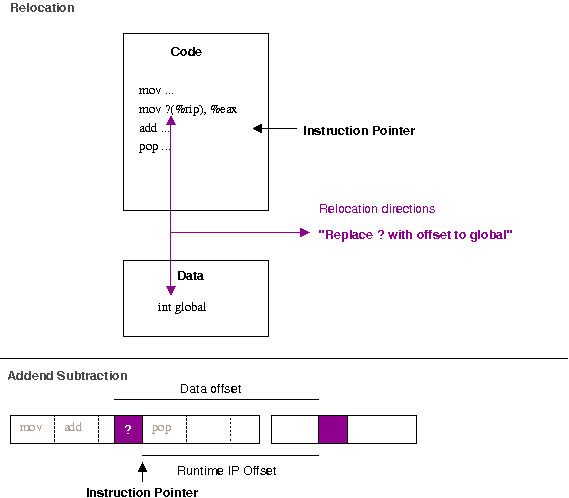
Lets just go through that for clarity: The IP relative move is really the trick here. We know from the code that it has to move the value of the global variable here. The zero value is simply a place holder - the compiler currently does not determine the required address (i.e. how far away from the instruction pointer the memory holding the global variable is). It leaves behind a relocation -- a note that says to the linker "you should determine the correct address of foo (global in our case), and then patch this bit of the code to point to that addresss". Relocations with addend The top portion of the image above gives some idea of how it works. We can examine relocations in binaries with the readelf tool.
$ readelf --relocs ./function.o
Relocation section '.rela.text' at offset 0x518 contains 1 entries:
  Offset          Info           Type           Sym. Value    Sym. Name + Addend
000000000009  000800000002 R_X86_64_PC32     0000000000000000 global + fffffffffffffffc
There are many different types of relocations for different situations; the exact rules for different relocation types are described in the ABI documentation for the architecture. The R_X86_64_PC32 relocation is defined as "the base of the section the symbol is within, plus the symbol value, plus the addend". The addend makes it look more tricky than it is; remember that when an instruction is executing the instruction pointer points to the next instruction to be executed. Therefore, to correctly find the data relative to the instruction pointer, we need to subtract the extra. This can be seen more clearly when layed out in a linear fashion (as in the bottom of the above diagram). If you try and build a shared object (dynamic library) with an object file with this type of relocation, you should get something like:
$ gcc -shared function.c
/usr/bin/ld: /tmp/ccQ2ttcT.o: relocation R_X86_64_32 against  a local symbol' can not be used when making a shared object; recompile with -fPIC
/tmp/ccQ2ttcT.o: could not read symbols: Bad value
collect2: ld returned 1 exit status
If you look back at the disassembly, we notice that the R_X86_64_32 relocation has left only 4-bytes (32-bits) of space left for the relocation entry (the zeros in 7: 8b 15 00 00 00 00). So why does this matter when you're creating a shared library? The first thing to remember is that in a shared library situation, we can not depend on the local value of global actually being the one we want. Consider the following example, where we override the value of global with a LD_PRELOAD library.
$ cat function.c
int global = 100;
int function(int i)  
    return i + global;
 
$ gcc -fPIC -shared -o libfunction.so function.c
$ cat preload.c
int global = 200;
$ gcc -shared preload.c -o libpreload.so
$ cat program.c
#include <stdio.h>
int function(int i);
int main(void)  
   printf("%d\n", function(10));
 
$ gcc -L. -lfunction program.c -o program
$ LD_LIBRARY_PATH=. ./program
110
$ LD_PRELOAD=libpreload.so LD_LIBRARY_PATH=. ./program
210
If the code in libfunction.so were to have a fixed offset into its own data section, it will not be able to be overridden at run-time by the value provided by libpreload.so. Additionally, there are only 4-bytes available to patch in for the address of global -- since a shared library could conceivably be loaded anywhere in the 64-bit (8-byte) address space we therefore need 8-bytes of space to cover ourselves for all possible addresses global might turn up at. The two basic possibilities for an object file are to be either linked into an executable or linked into a shared-library. In the executable case, the value of global will be in the exectuable's data section, which should definitely be reachable with a 32-bit offset of the current instruction-pointer. The instruction-pointer relative address can simply be patched in and the executable is finalised. But what about the shared-library case, where we know the value of global could essentially be anywhere within the 64-bit address space? It is possible to leave 8-bytes of space for the address of global, by telling gcc to use the large-code model. e.g.
$ gcc -c -mcmodel=large function.c
$ objdump --disassemble ./function.o
./function.o:     file format elf64-x86-64
Disassembly of section .text:
0000000000000000 <function>:
   0:  55                      push   %rbp
   1:  48 89 e5                mov    %rsp,%rbp
   4:  89 7d fc                mov    %edi,-0x4(%rbp)
   7:  48 b8 00 00 00 00 00    movabs $0x0,%rax
   e:  00 00 00
  11:  8b 10                   mov    (%rax),%edx
  13:  8b 45 fc                mov    -0x4(%rbp),%eax
  16:  01 d0                   add    %edx,%eax
  18:  5d                      pop    %rbp
  19:  c3                      retq
However, this creates a problem if you really want to share this code. By having to patch in an address of global directly, this means the run-time code above does not remain unchanged. Two separate processes therefore can't share this code -- they each need separate copies that are identical but for their own addresses of global patched into it. By enabling Position Independent Code (PIC, with the flag -fPIC) you can ensure the code remains share-able. PIC means that the output binary does not expect to be loaded at a particular base address, but is happy being put anywhere in memory (compare the output of readelf --segments on a binary such as /bin/ls to that of any shared library). This is obviously critical for implementing lazy-loading (i.e. only loaded when required) shared-libraries, where you may have many libraries loaded in essentially any order at any location. Of course, any problem in computer science can be solved with a layer of abstraction and that is essentially what is done when compiling with -fPIC. To examine this case, let's see what happens with PIC turned on.
$ gcc -fPIC -shared -c  function.c
$ objdump --disassemble ./function.o
./function.o:     file format elf64-x86-64
Disassembly of section .text:
0000000000000000 <function>:
   0:   55                      push   %rbp
   1:   48 89 e5                mov    %rsp,%rbp
   4:   89 7d fc                mov    %edi,-0x4(%rbp)
   7:   48 8b 05 00 00 00 00    mov    0x0(%rip),%rax        # e <function+0xe>
   e:   8b 00                   mov    (%rax),%eax
  10:   03 45 fc                add    -0x4(%rbp),%eax
  13:   c9                      leaveq
  14:   c3                      retq
It's almost the same! We setup the frame pointer with the first two instructions as before. We push the first argument into memory in the pre-allocated "red-zone" as before. Then, however, we do an IP relative load of an address into rax. Next we de-reference this into eax (e.g. eax = *rax in C) before adding the incoming argument to it and returning.
$ readelf --relocs ./function.o
Relocation section '.rela.text' at offset 0x550 contains 1 entries:
  Offset          Info           Type           Sym. Value    Sym. Name + Addend
00000000000a  000800000009 R_X86_64_GOTPCREL 0000000000000000 global + fffffffffffffffc
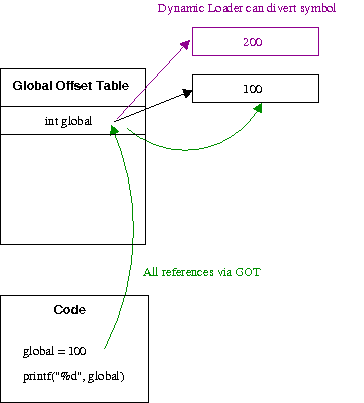
The magic here is again in the relocations. Notice this time we have a P_X86_64_GOTPCREL relocation. This says "replace the data at offset 0xa with the global offset table (GOT) entry of global. Global Offset Table operation with data variables As shown above, the GOT ensures the abstraction required so symbols can be diverted as expected. Each entry is essentially a pointer to the real data (hence the extra dereference in the code above). Since we can assume the GOT is at a fixed offset from the program code within plus or minus 2Gib, the code can use a 32-bit IP relative address to gain access to the table entries. So, taking a look a the final shared-library binary we see a final offset hard-coded
$ gcc -shared -fPIC -o libfunction.so function.c
$ objdump --disassemble ./libfunction.so
00000000000006b0 <function>:
 6b0:  55                      push   %rbp
 6b1:  48 89 e5                mov    %rsp,%rbp
 6b4:  89 7d fc                mov    %edi,-0x4(%rbp)
 6b7:  48 8b 05 8a 02 20 00    mov    0x20028a(%rip),%rax        # 200948 <_DYNAMIC+0x1d8>
 6be:  8b 10                   mov    (%rax),%edx
 6c0:  8b 45 fc                mov    -0x4(%rbp),%eax
 6c3:  01 d0                   add    %edx,%eax
 6c5:  5d                      pop    %rbp
 6c6:  c3                      retq
 6c7:  90                      nop
Every process who wants to share this code just needs to make sure they have their unique address of global at 0x20028a(%rip). Since each process has a separate address-space, this means they can all have different values for global but share the same code! Thus the default of the small-code model is sensible. It is exceedingly rare for an executable to need more than 4-byte offsets for a relative access to a variable in it's data region, so using a full 8-byte value would just be a waste of space. Although leaving 8-bytes would allow access to the variable anywhere in the 64-bit address space; when building a shared library, you really want to use -fPIC to ensure the library can actually be shared, which introduces a different relocation and access to data via the GOT. This should explain why gcc -shared function.c works on x86-32, but does not work on x86-64. Inspecting the code reveals why:
$ objdump --disassemble ./function.o
00000000 <function>:
   0:   55                      push   %ebp
   1:   89 e5                   mov    %esp,%ebp
   3:   a1 00 00 00 00          mov    0x0,%eax
   8:   03 45 08                add    0x8(%ebp),%eax
   b:   5d                      pop    %ebp
   c:   c3                      ret
$ readelf --relocs ./function.o
Relocation section '.rel.text' at offset 0x2ec contains 1 entries:
 Offset     Info    Type            Sym.Value  Sym. Name
00000004  00000701 R_386_32          00000000   global
We start out the same, with the first two instructions setting up the frame pointer. However, next we load a memory value into eax -- as we can see from the relocation information, the address of global. Next we add the incoming argument from the stack (0x8(%ebp)) to the value in this memory location; implicitly dereferencing it. But since we only have a 32-bit address-space, the 4-bytes allocated is enough to access any possible address. So while this can work, you're not creating position-independent code and hence not enabling code-sharing. The disadvantage of PIC code is that you require "bouncing" through the GOT, which requires more loads and reads to find an address than directly referencing it. However, if your program is at the point that this is becoming a performance issue you're probably not reading this blog! Hopefully, this helps clear up that possibly cryptic error message. Further searches around position-independent code, global-offset tables and code-sharing should also yield you more information if it remains unclear.

Ian Campbell: Debugging Initramfs Issues With No Console

The QNAP TS-XXX NAS boxes are nice little systems but one thing I really miss is a console. Martin Michlmayr has some instructions (TS-119, TS-219, TS-41x) on his excellent Debian On QNAP pages on how to build a suitable adaptor but sadly even though I've managed to get all the parts I've been too lazy to actually solder the thing together (it doesn't help that I nearly always burn myself when I use a soldering iron!). This became more pressing when someone reported that Debian bug #693263 in qcontrol was not fixed in Wheezy since the issue appeared to be in the initramfs hook. Worse it seemed like something in my proposed fix was causing the system to not boot at all! Having finally found the hardware needed to reproduce the issue my first thought was to try netconsole. To do this I edited /etc/initramfs-tools/modules to add:
      mv643xx_eth
      netconsole netconsole=@<IP>/eth0,@<DST-IP>/<DST-MAC>
The option syntax is described in netconsole.txt but briefly: <IP> is the address of the TS-419P II I'm debugging on, and <DST-IP> and <DST-MAC> are the IP and MAC address of another machine on the network. Having done that, running update-initramfs -u and rebooting I can use netcat -u -l -p 6666 on the other machine to see all the kernel messages. So far so good but this doesn't get me any debugging from the userspace portions of the initramfs. To get those we have to get a bit hacky by editing /usr/share/initramfs-tools/init, first to change:

     # Parse command line options
    -for x in $(cat /proc/cmdline); do
    +for x in $(cat /proc/cmdline) debug; do
            case $x in
and secondly:

             debug)
                     debug=y
                     quiet=n
    -                exec >/run/initramfs/initramfs.debug 2>&1
    +                exec >/dev/kmsg 2>&1
                     set -x
                     ;;
The first of these simulates adding debug to the kernel command line (which can't otherwise easily be edited on these systems) and the second redirects the initramfs process's output to the kernel log. The overall effect is that the output of the initramfs processes appears over netcat.

4 January 2013

Richard Hartmann: Release Critical Bug report for Week 01

Another gaffe Sorry for pushing this on Saturday, couldn't manage to do it earlier. I'm just glad that other than running my script, updating UDD source (the stats below) and then copying that one line over to here, there's no coherent thought required to publish this. Another gist The UDD bugs interface currently knows about the following release critical bugs: How do we compare to the Squeeze release cycle?
Week Squeeze Wheezy Diff
43 284 (213+71) 468 (332+136) +184 (+119/+65)
44 261 (201+60) 408 (265+143) +147 (+64/+83)
45 261 (205+56) 425 (291+134) +164 (+86/+78)
46 271 (200+71) 401 (258+143) +130 (+58/+72)
47 283 (209+74) 366 (221+145) +83 (+12/+71)
48 256 (177+79) 378 (230+148) +122 (+53/+69)
49 256 (180+76) 360 (216+155) +104 (+36/+79)
50 204 (148+56) 339 (195+144) +135 (+47/+90)
51 178 (124+54) 323 (190+133) +145 (+66/+79)
52 115 (78+37) 289 (190+99) +174 (+112/+62)
1 93 (60+33) 287 (171+116) +194 (111/+83)
2 82 (46+36)
3 25 (15+10)
4 14 (8+6)
5 2 (0+2)
6 release!
Graphical overview of bug stats thanks to azhag:

David Welton: The Software Millionaire Next Door

I've been reading "The Millionaire Next Door" and have so far found it to be a pleasant book with a good message: don't waste your money on silly things and appearance (fancy suits, fancy cars, expensive boats, etc...), save what you do earn consistently and constantly, invest wisely, and so on. Wikipedia has a good summary:
http://en.wikipedia.org/wiki/The_Millionaire_Next_Door
One of the things I like about it is that it focuses on "ordinary" wealthy people, those with a million or more in the bank, but not the Warren Buffets or Bill Gates types that are extreme statistical outliers. There are plenty of people in the US who have done well by themselves by slowly but surely putting together enough money to be financially independent, without, however, being in the spotlight. As the book says, these are the kind of people who maybe own a local chain of businesses doing something fairly ordinary, but doing it well enough to succeed. They may very well not live in a fancy house, nor drive an expensive car, or otherwise outwardly draw much attention to themselves. The world of software does not revolve around "dressing for success" (you noticed?), but we do tend to focus on the "big winners". Gates, Jobs, Zuckerberg, Larry & Sergey, Larry Ellison, and so on are the stars of the show. Of course, the economics of software being what they are, instances of winner-take-all markets with one big fish and a lot of also-rans are not uncommon. However, that is not the only story, and I think it'd be interesting to know more about those in our industry who have accumulated significant wealth, yet are not the guys with more money than they could possibly ever spend on things that aren't, say, country-sized chunks of real-estate. I'm guessing they'd fall into these categories: It'd be very interesting to gather some actual data on this, although I'm not in a position to do so myself - I wouldn't even really know where to start. As I age, I think the third category has begun to seem appealing in many ways - I'm simply not cut out for the Big Company life, and I'm not interested in living in Silicon Valley and going "all in" on the latest startup - I already did that, and while it was fun and I don't regret it, it's not the kind of thing I'd want to do now that I'm married and have kids. Incidentally, this more relaxed, under the radar approach is exactly what is expoused in one of my favorite books of the past few years, Start Small, Stay Small. Edit : I finished reading the book and reviewed it here: http://davids-book-reviews.blogspot.com/

Stefano Zacchiroli: bits from the DPL for December 2012

Happy new year, Debian! To celebrate, here are some freshly posted, bits from the DPL for December 2012.
Dear Project Members, happy new year! Here goes another report of DPL activities, this time for December 2012. This issue of the DPL-monthly is skinnier than usual: during the past month I've been struck by the catastrophe also known as "family holiday season", enjoying a solid 10 day break from computer-related activities. Talks Assets DPL helpers Collaboration with the outer world That's all for last year, enjoy the new one, which will soon see a new Debian release out of the door. And to make it happen sooner, let's go back fix RC bugs! Cheers.
PS the day-to-day activity log for December 2012 is available at the usual place master:/srv/leader/news/bits-from-the-DPL.txt.201212

Next.

Previous.