Search Results: "agi"

24 November 2015

Rhonda D'Vine: Salut Salon

I don't really remember where or how I stumbled upon this four women so I'm sorry that I can't give credit where credit is due, and I even do believe that I started writing a blog entry about them already somewhere. Anyway, I want to present you today Salut Salon. They might play classic instruments, but not in a classic way. But see and hear yourself: So like always, enjoy!

/music permanent link Comments: 1 Flattr this

23 November 2015

Jonathan Dowland: CDs should come with download codes

boxes of CDs & the same data on MicroSD boxes of CDs & the same data on MicroSD
There's a Vinyl resurgence going on, with vinyl record sales growing year-on-year. Many of the people buying records don't have record players. Many records are sold including a download code, granting the owner an (often one-time) opportunity to download a digital copy of the album they just bought. Some may be tempted to look down upon those buying vinyl records, especially those who don't have a means to play them. The record itself is, now more than ever, a physical totem rather than a media for the music. But is this really that different to how we've treated audio CDs this century? For at least 15 years, I've ripped every CD I've bought and then stored it in a shoebox. (I'm up to 10 shoeboxes). The ripped copy is the only thing I listen to. The CD is little more than a totem, albeit one which I have to use in a relatively inconvenient ritual in order to get something I can conveniently listen to. The process of ripping CDs has improved a lot in this time, but it's still a pain. CD-ROM drives are also becoming a lot more scarce. Ripping is not necessary reliable, either. The best tool to verify a rip is AccurateRip, a privately-owned database of track checksums. The private status is a problem for the community (Remember what happened to CDDB?) and is only useful if other people using an AccurateRip-supported ripper have already successfully ripped the CD. Then there's things like CD pre-emphasis. It turns out that the Red Book standard defines a rarely-used flag that means the CD (or individual tracks) have had pre-emphasis applied to the treble-end of the frequency spectrum. The CD player is supposed to apply de-emphasis on playback. This doesn't happen if you fetch the audio data digitally, so it becomes the CD rippers responsibility to handle this. CD rippers have only relatively recently grown support for it. Awareness has been pretty low, so low that nobody has a good idea about how many CDs actually have pre-emphasis set: it's thought to be very rare, but (as far as I know) MusicBrainz doesn't (yet) track it. So some proportion of my already-ripped CDs may have actually been ripped incorrectly, and I can't easily determine which ones without re-ripping them all. I know that at least my Quake computer game CD has it set, and I have suspicions about some other releases. Going forward, this could be avoided entirely if CDs were treated more like totems, as vinyl records are, than the media delivering the music itself, and if record labels routinely included download cards with audio CDs. For just about anyone, no matter how the music was obtained, media-less digital is the canonical form for engaging with it. Attention should also be paid to make sure that digital releases are of a high quality: but that's a topic for another blog post.

Thomas Goirand: OpenStack Liberty and Debian

Long over due post It s been a long time I haven t written here. And lots of things happened in the OpenStack planet. As a full time employee with the mission to package OpenStack in Debian, it feels like it is kind of my duty to tell everyone about what s going on. Liberty is out, uploaded to Debian Since my last post, OpenStack Liberty, the 12th release of OpenStack, was released. In late August, Debian was the first platform which included Liberty, as I proudly outran both RDO and Canonical. So I was the first to make the announcement that Liberty passed most of the Tempest tests with the beta 3 release of Liberty (the Beta 3 is always kind of the first pre-release, as this is when feature freeze happens). Though I never made the announcement that Liberty final was uploaded to Debian, it was done just a single day after the official release. Before the release, all of Liberty was living in Debian Experimental. Following the upload of the final packages in Experimental, I uploaded all of it to Sid. This represented 102 packages, so it took me about 3 days to do it all. Tokyo summit I had the pleasure to be in Tokyo for the Mitaka summit. I was very pleased with the cross-project sessions during the first day. Lots of these sessions were very interesting for me. In fact, I wish I could have attended them all, but of course, I can t split myself in 3 to follow all of the 3 tracks. Then there was the 2 sessions about Debian packaging on upstream OpenStack infra. The goal is to setup the OpenStack upstream infrastructure to allow packaging using Gerrit, and gating each git commit using the usual tools: building the package and checking there s no FTBFS, running checks like lintian, piuparts and such. I knew already the overview of what was needed to make it happen. What I didn t know was the implementation details, which I hoped we could figure out during the 1:30 slot. Unfortunately, this didn t happen as I expected, and we discussed more general things than I wished. I was told that just reading the docs from the infra team was enough, but in reality, it was not. What currently needs to happen is building a Debian based image, using disk-image-builder, which would include the usual tools to build packages: git-buildpackage, sbuild, and so on. I m still stuck at this stage, which would be trivial if I knew a bit more about how upstream infra works, since I already know how to setup all of that on a local machine. I ve been told by Monty Tailor that he would help. Though he s always a very busy man, and to date, he still didn t find enough time to give me a hand. Nobody replied to my request for help in the openstack-dev list either. Hopefully, with a bit of insistence, someone will help. Keystone migration to Testing (aka: Debian Stretch) blocked by python-repoze.who Absolutely all of OpenStack Liberty, as of today, has migrated to Stretch. All? No. Keystone is blocked by a chain of dependency. Keystone depends on python-pysaml2, itself blocked by python-repoze.who. The later, I upgraded it to version 2.2. Though python-repoze.what depends on version <= 1.9, which is blocking the migration. Since python-repoze.who-plugins, python-repoze.what and python-repoze.what-plugins aren t used by any package anymore, I asked for them to be removed from Debian (see #805407). Until this request is processed by the FTP masters, Keystone, which is the most important piece of OpenStack (it does the authentication) will be blocked for migration to Stretch. New OpenStack server packages available On my presentation at Debconf 15, I quickly introduced new services which were released upstream. I have since packaged them all: Congress, unfortunately, was not accepted to Sid yet, because of some licensing issues, especially with the doc of python-pulp. I will correct this (remove the non-free files) and reattempt an upload. I hope to make them all available in jessie-backports (see below). For the previous release of OpenStack (ie: Kilo), I skipped the uploads of services which I thought were not really critical (like Ironic, Designate and more). But from the feedback of users, they would really like to have them all available. So this time, I will upload them all to the official jessie-backports repository. Keystone v3 support For those who don t know about it, Keystone API v3 means that, on top of the users and tenant, there s a new entity called a domain . All of the Liberty is now coming with Keystone v3 support. This includes the automated Keystone catalog registration done using debconf for all *-api packages. As much as I could tell by running tempest on my CI, everything still works pretty well. In fact, Liberty is, to my experience, the first release of OpenStack to support Keystone API v3. Uploading Liberty to jessie-backports I have rebuilt all of Liberty for jessie-backports on my laptop using sbuild. This is more than 150 packages (166 packages currently). It took me about 3 days to rebuild them all, including unit tests run at build time. As soon as #805407 is closed by the FTP masters, all what s remaining will be available in Stretch (mostly Keystone), and the upload will be possible. As there will be a lot of NEW packages (from the point of view of backports), I do expect that the approval will take some time. Also, I have to warn the original maintainers of the packages that I don t maintain (for example, those maintained within the DPMT), that because of the big number of packages, I will not be able to process the usual communication to tell that I m uploading to backports. However, here s the list of package. If you see one that you maintain, and that you wish to upload the backport by yourself, please let me know. Here s the list of packages, hopefully, exhaustive, that I will upload to jessie-backports, and that I don t maintain myself: alabaster contextlib2 kazoo python-cachetools python-cffi python-cliff python-crank python-ddt python-docker python-eventlet python-git python-gitdb python-hypothesis python-ldap3 python-mock python-mysqldb python-pathlib python-repoze.who python-setuptools python-smmap python-unicodecsv python-urllib3 requests routes ryu sphinx sqlalchemy turbogears2 unittest2 zzzeeksphinx. More than ever, I wish I could just upload these to a PPA^W Bikeshed, to minimize the disruption for both the backports FTP masters, other maintainers, and our OpenStack users. Hopefully, Bikesheds will be available soon. I am sorry to give that much approval work to the backports FTP masters, however, using the latest stable system with the latest release, is what most OpenStack users really want to do. All other major distributions have specific repositories too (ie: RDO for CentOS / Red Hat, and cloud archive for Ubuntu), and stable-backports is currently the only place where I can upload support for the Stable release. Debian listed as supported distribution on openstack.org Good news! If you go at http://www.openstack.org/marketplace/distros/ you will see a list of supported distributions. I am proud to be able to tell that, after 6 months of lobbying from my side, Debian is also listed there. The process of having Debian there included talking with folks from the OpenStack foundation, and having Bdale to sign an agreement so that the Debian logo could be reproduced on openstack.org. Thanks to Bdale Garbee, Neil McGovern, Jonathan Brice, and Danny Carreno, without who this wouldn t have happen.

20 November 2015

Daniel Pocock: Databases of Muslims and homosexuals?

One US presidential candidate has said a lot recently, but the comments about making a database of Muslims may qualify as the most extreme. Of course, if he really wanted to, somebody with this mindset could find all the Muslims anyway. A quick and easy solution would involve tracing all the mobile phone signals around mosques on a Friday. Mr would-be President could compel Facebook and other social networks to disclose lists of users who identify as Muslim. Databases are a dangerous side-effect of gay marriage In 2014 there was significant discussion about Brendan Eich's donation to the campaign against gay marriage. One fact that never ranked very highly in the debate at the time is that not all gay people actually support gay marriage. Even where these marriages are permitted, not everybody who can marry now is choosing to do so. The reasons for this are varied, but one key point that has often been missed is that there are two routes to marriage equality: one involves permitting gay couples to visit the register office and fill in a form just as other couples do. The other route to equality is to remove all the legal artifacts around marriage altogether. When the government does issue a marriage certificate, it is not long before other organizations start asking for confirmation of the marriage. Everybody from banks to letting agents and Facebook wants to know about it. Many companies outsource that data into cloud CRM systems such as Salesforce. Before you know it, there are numerous databases that somebody could mine to make a list of confirmed homosexuals. Of course, if everybody in the world was going to live happily ever after none of this would be a problem. But the reality is different. While discrimination: either against Muslims or homosexuals - is prohibited and can even lead to criminal sanctions in some countries, this attitude is not shared globally. Once gay people have their marriage status documented in the frequent flyer or hotel loyalty program, or in the public part of their Facebook profile, there are various countries where they are going to be at much higher risk of prosecution/persecution. The equality to marry in the US or UK may mean they have less equality when choosing travel destinations. Those places are not as obscure as you might think: even in Australia, regarded as a civilized and laid-back western democracy, the state of Tasmania fought tooth-and-nail to retain the criminalization of virtually all homosexual conduct until 1997 when the combined actions of the federal government and high court compelled the state to reform. Despite the changes, people with some of the most offensive attitudes are able to achieve and retain a position of significant authority. The same Australian senator who infamously linked gay marriage with bestiality has successfully used his position to set up a Senate inquiry as a platform for conspiracy theories linking Halal certification with terrorism. There are many ways a database can fall into the wrong hands Ironically, one of the most valuable lessons about the risk of registering Muslims and homosexuals was an injustice against the very same tea-party supporters a certain presidential candidate is trying to woo. In 2013, it was revealed IRS employees had started applying a different process to discriminate against groups with Tea party in their name. It is not hard to imagine other types of rogue or misinformed behavior by people in positions of authority when they are presented with information that they don't actually need about somebody's religion or sexuality. Beyond this type of rogue behavior by individual officials and departments, there is also the more sinister proposition that somebody truly unpleasant is elected into power and can immediately use things like a Muslim database, surveillance data or the marriage database for a program of systematic discrimination. France had a close shave with this scenario in the 2002 presidential election when
Jean-Marie Le Pen, who has at least six convictions for racism or inciting racial hatred made it to the final round in a two-candidate run-off with Jacques Chirac. The best data security The best way to be safe- wherever you go, both now and in the future - is not to have data about yourself on any database. When filling out forms, think need-to-know. If some company doesn't really need your personal mobile number, your date of birth, your religion or your marriage status, don't give it to them.

Gergely Nagy: Looking for a keyboard

Even though I spend more time staring at the screen than typing, there are times when I - after lots and lots of prior brain work - sit down and start typing, a lot. A couple of years ago, I started to feel pain in my wrists, and there were multiple occasions when I had to completely stop writing for longer periods of time. These were situations I obviously did not want repeated, so I started to look for remedies. First, I bought a new keyboard, a TypeMatrix 2300, which while not ergonomic, was a huge relief for my hands and wrists. I also started to learn Dvorak, but that's still something that is kind-of in progress: my left hand can write Dvorak reasonably fast, but my right one seems to be Qwerty-wired, even after a month of typing Dvorak almost exclusively.This keyboard served me well for the past five year or so. But recently, I started to look for a replacement, partly triggered by a Clojure/conj talk I watched. I got as far as assembling a list of keyboards I'm interested in, but I have a hard time choosing. This blog post here serves two purposes then: first to make a clear pros/cons list for myself, second, to solicit feedback from others who may have more experience with any of the options below.Update: There is a [follow up post], with a few more keyboards explored, and a semi-final verdict. Thanks everyone for the feedback and help, much appreciated!Lets start with the current keyboard!TypeMatrix 2030TypeMatrix 2030Pros Cons SummaryAll in all, this is a keyboard I absolutely love, and am very happy with. Yet, I feel I'm ready to try something different. With my skins aging, and the aforementioned Clojure/conj talk, the desire to switch has been growing for a while now.Desired propertiesThere are a few desired properties of the keyboard I want next. The perfect keyboard need not have all of these, but the more the merrier. I plan to buy one keyboard for a start, but may end up buying another to bring to work (like I did with the TypeMatrix, except my employer at the time bought the second one for me). At work, I will continue using the TypeMatrix, most likely, but I'm not sure yet.Anyhow, there are a number of things I do with my computer that require a keyboard: I am looking for a keyboard that helps me do these things. A keyboard that will stay with me not for five years or a decade, but pretty much forever.The optionsUltimate Hacking KeyboardUltimate Hacking KeyboardPros Cons SummaryThe keyboard looks nice, has a lot of appealing features. It is programmable, so much so that by the looks of it, I could emulate the hardware dvorak switch my TypeMatrix has. However, I'm very unhappy with the addons, so there's that too.All in all, this would cost me about $304 (base keyboard, modules, palm rest and shipping). Not too bad, certainly a strong contender, despite the shortcomings.ErgoDoxErgoDoxPros Cons SummaryThe keyboard looks interesting, primarily due to the thumb keys. From the ErgoDox EZ campaign, I'm looking at $270. That's friendly, and makes ErgoDox a viable option! (Thanks @miffe!)Kinesis AdvantageKinesis AdvantagePros Cons SummaryThe key wells look interesting, but it's not a split keyboard, nor is it open source. The cost come out about $325 plus shipping and VAT and so on, so I'm probably looking at something closer to $400. Nah. I'm pretty sure I can rule this out.Kinesis FreeStyle2Kinesis FreeStyle2Pros Cons SummaryWhile a split keyboard, at a reasonably low cost ($149 + shipping + VAT), it lacks too many things to be considered a worthy contender.MaltronMaltronPros Cons SummaryWithout shipping, I'm looking at 450. That's a very steep price. I love the wells, and the thumb keys, but it's not split, and customisability is a big question here.AtreusAtreusPros Cons SummaryWhile not a split keyboard, it does look very interesting, and the price is much lower than the rest: $149 + shipping ($50 or so). It is similar - in spirit - to my existing TypeMatrix. It wouldn't take much to get used to, and is half the price of the alternatives. A strong option, for sure.Keyboardio M01Keyboardio Model 01Pros Cons SummaryWith shipping cost and whatnot, I'm looking at something in the $370 ballpark, which is on the more expensive side. On the other hand, I get a whole lot of bang for my buck: LEDs, two center bars (tripod mounting sounds really awesome!), hardwood body, and a key layout that is very similar to what I came to love on the TypeMatrix.I also have a thing for wooden stuff. I like the look of it, the feel of it.The Preference ListAfter writing this all up, I think I prefer the Model 01, but the UHK and ErgoDox come close too!The UHK is cheaper, but not by a large margin. It lacks the thumb keys and the palm key the M01 has. It also looks rather dull (sorry). They'd both ship about the same time, but, the M01 is already funded, while the UHK is not (mind you, there's a pretty darn high chance it will be).The ErgoDox has thumb keys, split keyboard, and is open source. Compared to the UHK, we have the thumb keys, and less distraction, for a better price. But the case is not so nice. Compared to the Model 01: no leds, or center bar, and an inferior case. But, much better price, which is an important factor too.Then, there's the Atreus. While it's a DIY kit, it is much more affordable than the rest, and I could have it far sooner. Yet... it doesn't feel like a big enough switch from my current keyboard. I might as well continue using the TypeMatrix then, right?The rest, I ruled out earlier, while I was reviewing them anyway.So, the big question is: should I invest close to $400 into a keyboard that looks stunning, and will likely grow old with me? Or should I give up some of the features, and settle for one of the $300 ones, that'll also grow old with me. Or is there an option I did not consider, that may match my needs and preferences better?If you, my dear reader, got this far, and have a suggestion, please either tweet at me, or write an email, or reach me over any other medium I am reachable at (including IRC, hanging out as algernon on FreeNode and OFTC).Thank you in advance, to all of you who contact me, and help me choose a keyboard!

Sylvain Beucler: Meritous: Free game ported on Android

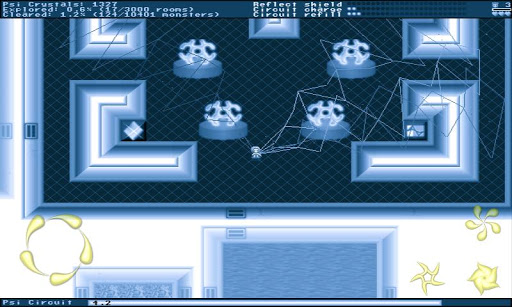
Base attack Meritous is a nice, addictive action-adventure dungeon crawl game. Each new game is unique since the dungeon is built in a semi-random fashion. Last but not least, the engine, graphics and sound effects are GPL'd :) The game is based on SDL 1.2, which has an unofficial Android variant, so I decided to try and port it on my cell phone! The port was surprinsingly smooth and only non-SDL fixes (move big stack allocation to heap) were necessary. Who said it was difficult to program in C on Android? ;) It was also an opportunity to study the build system for F-Droid, an app market for free software apps, where APKs are rebuilt from source. The spec-like file is here. The game packaging is also being ressurected for Debian but is being distressfully held hostage in the NEW queue for 2 weeks! You can download the very first (aka beta) Android version: Comments welcome!

19 November 2015

Miriam Ruiz: Projects, Conflicts and Emotions

The Debian Project includes many people, groups and teams with different goals, priorities and ways of doing things. Diversity is a good thing, and the results of the continuous interaction, cooperation and competition among different points of view and components make up a successful developing framework both in Debian and in other Free / Libre / Open Source Software communities. The cost of this evolutionary paradigm is that sometimes there are subprojects that might have been extremely successful and useful that are surpassed by newer approaches, or that have to compete with alternative approaches that were not there before, and which might pursue different goals or have a different way of doing things that their developers find preferable in terms of modularity, scalability, stability, maintenance, aesthetics or any other reason. Whenever this happens, the emotional impact on the person or group of people that are behind the established component (or process, or organizational structure), that is being questioned and put under test by the newer approach can be important, particularly when they have invested a lot of time and effort and a considerable amount of emotional energy doing a great job for many years. Something they should be thanked for. This might be particularly hard when -for whatever reason- the communication between both teams is not too fluent or constant, and sometimes the author or authors of the solution that was considered mainstream until then might feel left out and their territory stolen. As generally development teams and technical people in the Free / Libre / Open Source world are more focused on results than on relationships, projects are generally not too good at managing this (emotional, relational) situations, even though they (we) are gradually learning and improving. What has happened with the Debian Live Project is indeed a hurtful situation, even though it s probably an unavoidable one. The Debian Live Project has done a great job for many years and it is sad to see it dying abruptly. A new competing approach is on its way with a different set of priorities and different way of doing things, and all that can be done at the moment is to thank Daniel for all his work, as well as everyone who has made the Debian Live Project successful for so many years, also thank the people who are investing their time and effort in developing something that might be even better. Lets wait and see. Source of the image: Conflict Modes and Managerial Styles by Ed Batista

16 November 2015

Steve Kemp: lumail2 nears another release

I'm pleased with the way that Lumail2 development is proceeding, and it is reaching a point where there will be a second source-release. I've made a lot of changes to the repository recently, and most of them boil down to moving code from the C++ side of the application, over to the Lua side. This morning, for example, I updated the handing of index.limit to be entirely Lua based.
When you open a Maildir folder you see the list of messages it contains, as you would expect. The notion of the index.limit is that you can limit the messages displayed, for example:
  • See all messages: Config:set( "index.limit", "all")
  • See only new/unread messages: Config:set( "index.limit", "new")
  • See only messages which arrived today: Config:set( "index.limit", "today")
  • See only messages which contain "Steve" in their formatted version: Config:set( "index.limit", "steve")
These are just examples that are present as defaults, but they give an idea of how things can work. I guess it isn't so different to Mutt's "limit" facilities - but thanks to the dynamic Lua nature of the application you can add your own with relative ease.
One of the biggest changes, recently, was the ability to display coloured text! That was always possible before, but a single line could only be one colour. Now colours can be mixed within a line, so this works as you might imagine: Panel:append( "$[RED]This is red, $[GREEN]green, $[WHITE]white, and $[CYAN]cyan!" ) Other changes include a persistant cache of "stuff", which is Lua-based, the inclusion of at least one luarocks library to parse Date: headers, and a simple API for all our objects. All good stuff. Perhaps time for a break in the next few weeks, but right now I think I'm making useful updates every other evening or so.

Julien Danjou: Profiling Python using cProfile: a concrete case

Writing programs is fun, but making them fast can be a pain. Python programs are no exception to that, but the basic profiling toolchain is actually not that complicated to use. Here, I would like to show you how you can quickly profile and analyze your Python code to find what part of the code you should optimize. What's profiling? Profiling a Python program is doing a dynamic analysis that measures the execution time of the program and everything that compose it. That means measuring the time spent in each of its functions. This will give you data about where your program is spending time, and what area might be worth optimizing. It's a very interesting exercise. Many people focus on local optimizations, such as determining e.g. which of the Python functions range or xrange is going to be faster. It turns out that knowing which one is faster may never be an issue in your program, and that the time gained by one of the functions above might not be worth the time you spend researching that, or arguing about it with your colleague. Trying to blindly optimize a program without measuring where it is actually spending its time is a useless exercise. Following your guts alone is not always sufficient. There are many types of profiling, as there are many things you can measure. In this exercise, we'll focus on CPU utilization profiling, meaning the time spent by each function executing instructions. Obviously, we could do many more kind of profiling and optimizations, such as memory profiling which would measure the memory used by each piece of code something I talk about in The Hacker's Guide to Python. cProfile Since Python 2.5, Python provides a C module called cProfile which has a reasonable overhead and offers a good enough feature set. The basic usage goes down to:
>>> import cProfile
>>> cProfile.run('2 + 2')
2 function calls in 0.000 seconds

Ordered by: standard name

ncalls tottime percall cumtime percall filename:lineno(function)
1 0.000 0.000 0.000 0.000 <string>:1(<module>)
1 0.000 0.000 0.000 0.000 method 'disable' of '_lsprof.Profiler' objects

Though you can also run a script with it, which turns out to be handy:
$ python -m cProfile -s cumtime lwn2pocket.py
72270 function calls (70640 primitive calls) in 4.481 seconds

Ordered by: cumulative time

ncalls tottime percall cumtime percall filename:lineno(function)
1 0.004 0.004 4.481 4.481 lwn2pocket.py:2(<module>)
1 0.001 0.001 4.296 4.296 lwn2pocket.py:51(main)
3 0.000 0.000 4.286 1.429 api.py:17(request)
3 0.000 0.000 4.268 1.423 sessions.py:386(request)
4/3 0.000 0.000 3.816 1.272 sessions.py:539(send)
4 0.000 0.000 2.965 0.741 adapters.py:323(send)
4 0.000 0.000 2.962 0.740 connectionpool.py:421(urlopen)
4 0.000 0.000 2.961 0.740 connectionpool.py:317(_make_request)
2 0.000 0.000 2.675 1.338 api.py:98(post)
30 0.000 0.000 1.621 0.054 ssl.py:727(recv)
30 0.000 0.000 1.621 0.054 ssl.py:610(read)
30 1.621 0.054 1.621 0.054 method 'read' of '_ssl._SSLSocket' objects
1 0.000 0.000 1.611 1.611 api.py:58(get)
4 0.000 0.000 1.572 0.393 httplib.py:1095(getresponse)
4 0.000 0.000 1.572 0.393 httplib.py:446(begin)
60 0.000 0.000 1.571 0.026 socket.py:410(readline)
4 0.000 0.000 1.571 0.393 httplib.py:407(_read_status)
1 0.000 0.000 1.462 1.462 pocket.py:44(wrapped)
1 0.000 0.000 1.462 1.462 pocket.py:152(make_request)
1 0.000 0.000 1.462 1.462 pocket.py:139(_make_request)
1 0.000 0.000 1.459 1.459 pocket.py:134(_post_request)
[ ]

This prints out all the function called, with the time spend in each and the number of times they have been called. Advanced visualization with KCacheGrind While being useful, the output format is very basic and does not make easy to grab knowledge for complete programs. For more advanced visualization, I leverage KCacheGrind. If you did any C programming and profiling these last years, you may have used it as it is primarily designed as front-end for Valgrind generated call-graphs. In order to use, you need to generate a cProfile result file, then convert it to KCacheGrind format. To do that, I use pyprof2calltree.
$ python -m cProfile -o myscript.cprof myscript.py
$ pyprof2calltree -k -i myscript.cprof

And the KCacheGrind window magically appears!
Concrete case: Carbonara optimization I was curious about the performances of Carbonara, the small timeserie library I wrote for Gnocchi. I decided to do some basic profiling to see if there was any obvious optimization to do. In order to profile a program, you need to run it. But running the whole program in profiling mode can generate a lot of data that you don't care about, and adds noise to what you're trying to understand. Since Gnocchi has thousands of unit tests and a few for Carbonara itself, I decided to profile the code used by these unit tests, as it's a good reflection of basic features of the library. Note that this is a good strategy for a curious and naive first-pass profiling. There's no way that you can make sure that the hotspots you will see in the unit tests are the actual hotspots you will encounter in production. Therefore, a profiling in conditions and with a scenario that mimics what's seen in production is often a necessity if you need to push your program optimization further and want to achieve perceivable and valuable gain. I activated cProfile using the method described above, creating a cProfile.Profile object around my tests (I actually started to implement that in testtools). I then run KCacheGrind as described above. Using KCacheGrind, I generated the following figures.
The test I profiled here is called test_fetch and is pretty easy to understand: it puts data in a timeserie object, and then fetch the aggregated result. The above list shows that 88 % of the ticks are spent in set_values (44 ticks over 50). This function is used to insert values into the timeserie, not to fetch the values. That means that it's really slow to insert data, and pretty fast to actually retrieve them. Reading the rest of the list indicates that several functions share the rest of the ticks, update, _first_block_timestamp, _truncate, _resample, etc. Some of the functions in the list are not part of Carbonara, so there's no point in looking to optimize them. The only thing that can be optimized is, sometimes, the number of times they're called.
The call graph gives me a bit more insight about what's going on here. Using my knowledge about how Carbonara works, I don't think that the whole stack on the left for _first_block_timestamp makes much sense. This function is supposed to find the first timestamp for an aggregate, e.g. with a timestamp of 13:34:45 and a period of 5 minutes, the function should return 13:30:00. The way it works currently is by calling the resample function from Pandas on a timeserie with only one element, but that seems to be very slow. Indeed, currently this function represents 25 % of the time spent by set_values (11 ticks on 44). Fortunately, I recently added a small function called _round_timestamp that does exactly what _first_block_timestamp needs that without calling any Pandas function, so no resample. So I ended up rewriting that function this way:
def _first_block_timestamp(self):
- ts = self.ts[-1:].resample(self.block_size)
- return (ts.index[-1] - (self.block_size * self.back_window))
+ rounded = self._round_timestamp(self.ts.index[-1], self.block_size)
+ return rounded - (self.block_size * self.back_window)

And then I re-run the exact same test to compare the output of cProfile.
The list of function seems quite different this time. The number of time spend used by set_values dropped from 88 % to 71 %.
The call stack for set_values shows that pretty well: we can't even see the _first_block_timestamp function as it is so fast that it totally disappeared from the display. It's now being considered insignificant by the profiler. So we just speed up the whole insertion process of values into Carbonara by a nice 25 % in a few minutes. Not that bad for a first naive pass, right?

15 November 2015

Manuel A. Fernandez Montecelo: Work on aptitude

Midsummer for me is also known as Noite do Lume Novo (literally New Fire Night ), one of the big calendar events of the year, marking the end of the school year and the beginning of summer. On this day, there are celebrations not very unlike the bonfires in the Guy Fawkes Night in England or Britain [1]. It is a bit different in that it is not a single event for the masses, more of a friends and neighbours thing, and that it lasts for a big chunk of the night (sometimes until morning). Perhaps for some people, or outside bigger towns or cities, Guy Fawkes Night is also celebrated in that way and that's why during the first days of November there are fireworks rocketing and cracking in the neighbourhoods all around. Like many other celebrations around the world involving bonfires, many of them also happening around the summer solstice, it is supposed to be a time of renewal of cycles, purification and keeping the evil spirits away; with rituals to that effect like jumping over the fire when the flames are not high and it is safe enough. So it was fitting that, in the middle of June (almost Midsummer in the northern hemisphere), I learnt that I was about to leave my now-previous job, which is a pretty big signal and precursor for renewal (and it might have something to do with purifying and keeping the evil away as well ;-) ). Whatever... But what does all of this have to do with aptitude or Debian, anyway? For one, it was a question of timing. While looking for a new job (and I am still at it), I had more spare time than usual. DebConf 15 @ Heidelberg was within sight, and for the first time circumstances allowed me to attend this event. It also coincided with the time when I re-gained access to commit to aptitude on the 19th of June. Which means Renewal. End of June was also the time of the announcement of the colossal GCC-5/C++11 ABI transition in Debian, that was scheduled to start on the 1st of August, just before the DebConf. Between 2 and 3 thousand source packages in Debian were affected by this transition, which a few months later is not yet finished (although the most important parts were completed by mid-end September). aptitude itself is written in C++, and depends on several libraries written in C++, like Boost, Xapian and SigC++. All of them had to be compiled with the new C++11 ABI of GCC-5, in unison and in a particular order, for aptitude to continue to work (and for minimal breakage). aptitude and some dependencies did not even compile straight away, so this transition meant that aptitude needed attention just to keep working. Having recently being awarded again with the Aptitude Hat, attending DebConf for the first time and sailing towards the Transition Maelstrom, it was a clear sign that Something Had to Be Done (to avoid the sideways looks and consequent shame at DebConf, if nothing else). Happily (or a bit unhappily for me, but let's pretend...), with the unexpected free time in my hands, I changed the plans that I had before re-gaining the Aptitude Hat (some of them involving Debian, but in other ways maybe I will post about that soon). In July I worked to fix the problems before the transition started, so aptitude would be (mostly) ready, or in the worst case broken only for a few days, while the chain of dependencies was rebuilt. But apart from the changes needed for the new GCC-5, it was decided at the last minute that Boost 1.55 would not be rebuilt with the new ABI, and that the only version with the new ABI would be 1.58 (which caused further breakage in aptitude, was added to experimental only a few days before, and was moved to unstable after the transition had started). Later, in the first days of the transition, aptitude was affected for a few days by breakage in the dependencies, due to not being compiled in sequence according to the transition levels (so with a mix of old and new ABI). With the critical intervention of Axel Beckert (abe / XTaran), things were not so bad as they could have been. He was busy testing and uploading in the critical days when I was enjoying a small holiday on my way to DebConf, with minimal internet access and communicating almost exclusively with him; and he promptly tended the complaints arriving in the Bug Tracking System and asked for rebuilds of the dependencies with the new ABI. He also brought the packaging up to shape, which had decayed a bit in the last few years. Gruesome Challenges But not all was solved yet, more storms were brewing and started to appear in the horizon, in the form of clouds of fire coming from nearby realms. The APT Deities, which had long ago spilled out their secret, inner challenge (just the initial paragraphs), were relentless. Moreover, they were present at Heidelberg in full force, in or close to their home grounds, and they were Marching Decidedly towards Victory: apt BTS Graph, 2015-11-15 In the talk @ DebConf This APT has Super Cow Powers (video available), by David Kalnischkies, they told us about the niceties of apt 1.1 (still in experimental but hopefully coming to unstable soon), and they boasted about getting the lead in our arms race (should I say bugs race?) by a few open bug reports. This act of provocation further escalated the tensions. The fierce competition which had been going on for some time gained new heights. So much so that APT Deities and our team had to sit together in the outdoor areas of the venue and have many a weissbier together, while discussing and fixing bugs. But beneath the calm on the surface, and while pretending to keep good diplomatic relations, I knew that Something Had to Be Done, again. So I could only do one thing jump over the bonfire and Keep the Evil away, be that Keep Evil bugs Away or Keep Evil APT Deities Away from winning the challenge, or both. After returning from DebConf I continued to dedicate time to the project, more than a full time job in some weeks, and this is what happened in the last few months, summarised in another graph, showing the evolution of the BTS for aptitude: aptitude BTS Graph, 2015-11-15 The numbers for apt right now (15th November 2015) are: The numbers for aptitude right now are: The Aftermath As we can see, for the time being I could keep the Evil at bay, both in terms of bugs themselves and re-gaining the lead in the bugs race the Evil APT Deities were thwarted again in their efforts. ... More seriously, as most of you suspected, the graph above is not the whole truth, so I don't want to boast too much. A big part of the reduction in the number of bugs is because of merging duplicates, closing obsolete bugs, applying translations coming from multiple contributors, or simple fixes like typos and useful suggestions needing minor changes. Many of remaining problems are comparatively more difficult or time consuming that the ones addressed so far (except perhaps avoiding the immediate breakage of the transition, that took weeks to solve), and there are many important problems still there, chief among those is aptitude offering very poor solutions to resolve conflicts. Still, even the simplest of the changes takes effort, and triaging hundreds of bugs is not fun at all and mostly a thankless effort althought there is the occasionally kind soul that thanks you for handling a decade-old bug. If being subjected to the rigours of the BTS and reading and solving hundreds of bug reports is not Purification, I don't know what it is. Apart from the triaging, there were 118 bugs closed (or pending) due to changes made in the upstream part or the packaging in the last few months, and there are many changes that are not reflected in bugs closed (like most of the changes needed due to the C++11 ABI transition, bugs and problems fixed that had no report, and general rejuvenation or improvement of some parts of the code). How long this will last, I cannot know. I hope to find a job at some point, which obviously will reduce the time available to work on this. But in the meantime, for all aptitude users: Enjoy the fixes and new features! Notes [1] ^ Some visitors of the recent mini-DebConf @ Cambridge perhaps thought that the fireworks and throngs gathered were in honour of our mighty Universal Operating System, but sadly they were not. They might be, some day. In any case, the reports say that the visitors enjoyed the fireworks.

13 November 2015

Francois Marier: How Tracking Protection works in Firefox

Firefox 42, which was released last week, introduced a new feature in its Private Browsing mode: tracking protection. If you are interested in how this list is put together and then used in Firefox, this post is for you.

Safe Browsing lists There are many possible ways to download URL lists to the browser and check against that list before loading anything. One of those is already implemented as part of our malware and phishing protection. It uses the Safe Browsing v2.2 protocol. In a nutshell, the way that this works is that each URL on the block list is hashed (using SHA-256) and then that list of hashes is downloaded by Firefox and stored into a data structure on disk:
  • ~/.cache/mozilla/firefox/XXXX/safebrowsing/mozstd-track* on Linux
  • ~/Library/Caches/Firefox/Profiles/XXXX/safebrowsing/mozstd-track* on Mac
  • C:\Users\XXXX\AppData\Local\mozilla\firefox\profiles\XXXX\safebrowsing\mozstd-track* on Windows
This sbdbdump script can be used to extract the hashes contained in these files and will output something like this:
$ ~/sbdbdump/dump.py -v .
- Reading sbstore: mozstd-track-digest256
[mozstd-track-digest256] magic 1231AF3B Version 3 NumAddChunk: 1 NumSubChunk: 0 NumAddPrefix: 0 NumSubPrefix: 0 NumAddComplete: 1696 NumSubComplete: 0
[mozstd-track-digest256] AddChunks: 1445465225
[mozstd-track-digest256] SubChunks:
...
[mozstd-track-digest256] addComplete[chunk:1445465225] e48768b0ce59561e5bc141a52061dd45524e75b66cad7d59dd92e4307625bdc5
...
[mozstd-track-digest256] MD5: 81a8becb0903de19351427b24921a772
The name of the blocklist being dumped here (mozstd-track-digest256) is set in the urlclassifier.trackingTable preference which you can find in about:config. The most important part of the output shown above is the addComplete line which contains a hash that we will see again in a later section.

List lookups Once it's time to load a resource, Firefox hashes the URL, as well as a few variations of it, and then looks for it in the local lists. If there's no match, then the load proceeds. If there's a match, then we do an additional check against a pairwise allowlist. The pairwise allowlist (hardcoded in the urlclassifier.trackingWhitelistTable pref) is designed to encode what we call "entity relationships". The list groups related domains together for the purpose of checking whether a load is first or third party (e.g. twitter.com and twimg.com both belong to the same entity). Entries on this list (named mozstd-trackwhite-digest256) look like this:
twitter.com/?resource=twimg.com
which translates to "if you're on the twitter.com site, then don't block resources from twimg.com. If there's a match on the second list, we don't block the load. It's only when we get a match on the first list and not the second one that we go ahead and cancel the network load. If you visit our test page, you will see tracking protection in action with a shield icon in the URL bar. Opening the developer tool console will expose the URL of the resource that was blocked:
The resource at "https://trackertest.org/tracker.js" was blocked because tracking protection is enabled.

Creating the lists The blocklist is created by Disconnect according to their definition of tracking. The Disconnect list is on their Github page, but the copy we use in Firefox is the copy we have in our own repository. Similarly the Disconnect entity list is from here but our copy is in our repository. Should you wish to be notified of any changes to the lists, you can simply subscribe to this Atom feed. To convert this JSON-formatted list into the binary format needed by the Safe Browsing code, we run a custom list generation script whenever the list changes on GitHub. If you run that script locally using the same configuration as our server stack, you can see the conversion from the original list to the binary hashes. Here's a sample entry from the mozstd-track-digest256.log file:
[m] twimg.com >> twimg.com/
[canonicalized] twimg.com/
[hash] e48768b0ce59561e5bc141a52061dd45524e75b66cad7d59dd92e4307625bdc5
and one from mozstd-trackwhite-digest256.log:
[entity] Twitter >> (canonicalized) twitter.com/?resource=twimg.com, hash a8e9e3456f46dbe49551c7da3860f64393d8f9d96f42b5ae86927722467577df
This in combination with the sbdbdump script mentioned earlier, will allow you to audit the contents of the local lists.

Serving the lists The way that the binary lists are served to Firefox is through a custom server component written by Mozilla: shavar. Every hour, Firefox requests updates from shavar.services.mozilla.com. If new data is available, then the whole list is downloaded again. Otherwise, all it receives in return is an empty 204 response. Should you want to play with it and run your own server, follow the installation instructions and then go into about:config to change these preferences to point to your own instance:
browser.trackingprotection.gethashURL
browser.trackingprotection.updateURL
Note that on Firefox 43 and later, these prefs have been renamed to:
browser.safebrowsing.provider.mozilla.gethashURL
browser.safebrowsing.provider.mozilla.updateURL

Learn more If you want to learn more about how tracking protection works in Firefox, you can find all of the technical details on the Mozilla wiki or you can ask questions on our mailing list. Thanks to Tanvi Vyas for reviewing a draft of this post.

Daniel Pocock: Building teams around SIP and XMPP in Debian and Fedora

I've recently started a discussion on the Fedora devel mailing list about building a team to collaborate on RTC services (SIP, XMPP, TURN and WebRTC) for the Fedora community. We already started a similar team within Debian. This isn't only for developers or package maintainers and virtually anybody with a keen interest in free software can help. Testing different softphones and putting screenshots on the wiki can help a lot (the Debian wiki already provides some examples). The FedRTC.org site is not intended to be an advertisement for my web design skills and anybody with expertise in design would be very welcome to contribute. Teamwork in this endeavor can provide many benefits:
  • Sharing knowledge about RTC, for use within our communities and also for other communities using the free and open technology
  • Engaging with collaborators who are not involved in packaging teams, for example, the Debian RTC team has also had interest from upstream developers who are not on other Debian or Fedora mailing lists
  • Minimizing the effort required by the system administrators (the DSA team in Debian or Infrastructure team in Fedora) by triaging user problems and planning and testing any proposed changes.
  • Freeing up developer time to work on new features, such as the exciting work I'm doing on telepathy-resiprocate.
There are also many opportunities for project work that go beyond traditional packaging responsibilities. Wouldn't it be interesting to find ways to integrate the publish/subscribe capabilities of SIP and XMPP with the Fedmsg infrastructure? Bringing XMPP to FedoraProject.org We recently launched XMPP for debian.org and it would not be hard to replicate for FedoraProject.org users. Sure, some people are happy running their own XMPP servers. There are just as many people who prefer to focus on development and have something like XMPP provided for them. With the strong emphasis on building a roster/buddy-list, XMPP can also help to facilitate long-term engagement in the community and users may identify more closely with the project. I haven't offered XMPP on the FedRTC.org trial service because it would be inconvenient for people to migrate buddy lists to the FedoraProject.org domain when the service is officially adopted. Collaboration across communities There are various other places where we can share knowledge between teams in different communities and people are invited to participate. The Free-RTC mailing list is a great place to discuss free RTC strategies and initiatives. The XMPP operators mailing list provides a forum to discuss operational issues in the XMPP space, such as keeping out the spammers. Would you like to participate? Please consider joining some of the mailing lists I've mentioned, replying to the thread on the Fedora devel mailing list, volunteering for the Debian RTC team or emailing me personally.

Jaldhar Vyas: New Year Resolutions

Now this could just be the prodigious amounts of sugar and ghee I've been eating the past few days, but I'm bursting with energy for working on Debian so here is a list of things I want to do in the upcoming year. This will happen soon. Sooner if you people will stop filing bugs all the time. The rest of the items are more long term. To keep all of this on track, I shall adopt the practice lately seen on Debian Planet of periodically posting a report of my Debian activities.
11 November 2015

Jonathan Dowland: Useful Mac programs

A little over a year ago I wrote about how I'd been using a Mac as my main work machine. I hadn't written anything on the subject since. Here are four useful Mac programs that I can recommend to people. Sizeup, from Irradiated Software. A bit Like Windows' aero snap, but on steroids. I love this. I regularly move windows between two desktops (external and internal display), resize and centre them or put them in one quarter of the screen with just a few presses. The "snapback" feature is also great. X Lossless Decoder (XLD). A handy transcoder that can use QuickTime encoders and so can write out Apple/Quicktime/iTunes-encoded AAC/MP4 files en-mass, translating file meta-data.
LimeChat LimeChat
LimeChat, an IRC client. I theme it to look like Colloquy. The net result is pretty clean. I like using a proportional-font for text things, so getting IRC out of a terminal is a win for me. LimeChat automatically fetches and thumbnails URIs to images that people paste in channels, which is either incredibly convenient or a curse, depending on the channel. You can toggle that behaviour but only across the whole client, not on a channel or network basis. Finally, 1Password is an incredibly slick password manager. I use it in a very basic fashion: no mobile client, no syncing to anything outside of my workstation. You could also use LastPass which is similar and has a Linux client. I haven't tried it, but there's a third party tool to read 1Password password stores on Linux written by Ryan Coleman of SDL fame called 1pass.

10 November 2015

John Goerzen: Wow. I did that!

It s now official: I m a pilot. This has been one of the most challenging, and also most rewarding, journeys I ve been on. It had its moments of struggle, moments of joy, moments of poetry. I wrote about the poetry of flying at night recently. Here is the story of my first landing on a grass runway, a few months ago. Grass
Where the air is so pure, the zephyrs so free,
The breezes so balmy and light,
That I would not exchange my home on the range
For all of the cities so bright. John A. Lomax
We are used to seeing planes in these massive palaces of infrastructure we call airports. We have huge parking garages, giant terminals, security lines hundreds of people deep, baggage carts, jetways, video screens, restaurants, and miles and miles of concrete. But most of the world s airports are not like that. A pilot of a small plane gets to see the big airports, sure, but we also get to use the smaller airports hidden in plain sight to most. Have you ever taken off from a strip of grass? As I told my flight instructor when I tried it for the first time, I know this will work, but somehow I will still be amazed if it actually does. I took off from a strip of grass not long ago. The airport there had one paved runway, and the rest were grass. Short runways, narrow runways, grass runways. No lights. No paint. No signs. No trucks, no jetways, nothing massive. In fact, no people. Just a mowed path and a couple of yellow or white markers. I taxied down the grass runway, being careful to never let the plane s wheels stop moving lest the nose gear get stuck in a pothole. I felt all the bumps in the ground as we moved. End of runway. Turn the plane around. A little bit of flap for more lift, full throttle, mind the centerline imaginary centerline, this time. It starts picking up speed, slower than usual, bump bump bump. Those buildings at the end of the runway are staring me down. More speed, and suddenly the runway feels smooth; it has enough lift to keep from falling into every bump. Then we lift off just a touch; I carefully keep the plane down until we pick up enough speed to ascend farther, then up we go. I keep a watchful eye on those buildings straight ahead and that water tower just slightly off to the one side. We climb over a lake as I watch that water tower pass safely below and to the side of the plane. It had worked, and I had a smile of amazement. With a half mile of grass, you really can go anywhere. Many times I had driven within half a mile of that runway, but never seen it. Never wondered where people go after using it. Never realizing that, although it s a 45-minute drive from my house, it s really pretty close. Never understanding that where people go after taking off from that runway is everywhere .

Daniel Pocock: Aggregating tasks from multiple issue trackers

After my experiments with the iCalendar format at the beginning of 2015, including Bugzilla feeds from Fedora and reSIProcate, aggregating tasks from the Debian Maintainer Dashboard, Github issue lists and even unresolved Nagios alerts, I decided this was fertile ground for a GSoC student. In my initial experiments, I tried using the Mozilla Lightning plugin (Iceowl-extension on Debian/Ubuntu) and GNOME Evolution's task manager. Setting up the different feeds in these clients is not hard, but they have some rough edges. For example, Mozilla Lightning doesn't tell you if a feed is not responding, this can be troublesome if the Nagios server goes down, no alerts are visible, so you assume all is fine. To take things further, Iain Learmonth and I proposed a GSoC project for a student to experiment with the concept. Harsh Daftary from Mumbai, India was selected to work on it. Over the summer, he developed a web application to pull together issue, task and calendar feeds from different sources and render them as a single web page. Harsh presented his work at DebConf15 in Heidelberg, Germany, the video is available here. The source code is in a Github repository. The code is currently running as a service at horizon.debian.net although it is not specific to Debian and is probably helpful for any developer who works with more than one issue tracker.

Norbert Preining: Music check: Google versus Apple Is that all? You can do better, Google!

Ok, I have been an iPhone user since I moved to Japan and got my first smart-phone ever. First a 3s, then a 4s, then a 5s that I dropped into the toilet, so I switched the SIM back into the 4s to have a working phone. Furthermore, I am a heavy music listener and used iTunes Radio for 3 months. Since I am planning to change phones to an Android phone (being fed up with Apple s super-closed environment), I tried out Google Music Plus for about 3 months, too. Here is my verict Google Music is a big pain, far from iTunes in comfort and user friendliness. music-check-google-vs-apple My move to Android is not very much in danger. General description of the service In principle, iTunes Radio and Google Music Subscription do the same things: There are slight differences, that often create confusion, especially with Apple s services: If you are only signed in, you can listen to music stations and can skip some music (limited), but you cannot listen to arbitrary songs from the whole Apple Music library. Then there is another service from Apple, called iTunes Match, that only allows you to upload your music library to the cloud, but other than that again only listening to normal radio stations. Google Music is much simpler, there are only two options: By default it is free to have your music (up to 25000 songs) in the cloud, but if you want to listen to radio stations or any other music in the Google music store, you need a subscription. Prizes and features overview:
Apple Google
No subscription iTunes Match iTunes Radio No subscription With subscription
Prize 0 25$/year 10$/month 0 10$/month
(early access 8$)
Cloud space 0 100000 25000
Extra service Radio stations Radio stations Radio/all music Nothing Radio/all music
Music on the go the application Let us first consider the applications provided to listen to music on your smart phone: Apple Music can of course only be used on Apple devices, and uses the built-in Music application. Start up time is about a few seconds after a cold boot (all on my 4s), and music streaming starts with hardly any delay. Responsiveness is good, and the user interface is clear and easy. Google s application is available on iOS and Android. I have tested the latest version on iOS, but it is a pain in the butt: Managing your library Here iTunes is the way to go, bit of a pain when using Linux, but there are other reasons I have a Windows installation in parallel, so I don t mind to boot now and then into Windows. iTunes gives you very powerful tools to change all kind of data. Google gives you a few options: Use your iTunes library in this case all your playlists and ratings (but see later) are also uploaded. I am not sure what happens if I retag a song in iTunes, or change anything else in there. I guess the song will not be re-uploaded, but who knows for sure. Furthermore, you can edit your library via the web interface, but this is rather poor. Searching your library Over times your library grows and there are hundreds if not thousands of artists. So you want to search them. The natural way would be to scroll to the first letter of the artist you are searching, and then look it up. Well, that works perfectly in both Apple s and Google s application unless you are having artists written in some strange script like Japanese or Korean. iTunes allows you to set a field called something like Artist name for sorting , which allows me to put for example or into the artist field, and into the sort field Tomokawa Kazuki and Kim Doo Soo . This way I find the artists in the correct place. Google on the other hand uses simple Unicode order sorting how could you do that? This is simply plain wrong, and everyone should know that by now. Japanese people will never be able to find anything in their list. And in contrast to Goole Contacts Google Music does not support phonetic name fields (similar to the order sort artist) for artists. What I had to do now is to rename all the artists to include first the phonetic name, followed by the proper name, like in Tomokawa Kazuki ( ) . Something I strongly detest! Radio stations I might have a slightly peculiar music taste, but the radio stations mixed by Google are simply a pain. The reason is easy to explain: I live in Japan, and so what Google does is mixing about 80% of J-Pop into the radio, all those happy yodeling girlies I really dislike (see my Anti J-Pop campaign for alternatives yes, they do exist also in Japan!). iTunes radio is here more relaxed it seems. I appreciate Google s trial to cater to local (dis)taste, but besides voting down each and every song I hear I don t see any other option. And honestly, I cannot go through all this voting down without dying from pain inflicted by J-Pop. Other than this, the two radio stations are probably more or less the same but as I said, due to the local colorit it is hard to compare. Rating Ohhh, what a dire point. So there you have you well curated iTunes library with 5-star ratings. I used the ratings in a way that those songs I like get 1 star, those I even like more get 2 stars, and my absolute favorites got 5 stars. I didn t do any negative ratings. iTunes/iOS Music app allows you to easily adjust rating, and they are synced between devices. All as you would expect. Now for Google they did have a 5-star rating system at some time, but:
Thank you for your feedback. We ve decided to remove the 5-star Rating lab. This decision wasn t made lightly, but Thumbs Up/Down is integral for the future vision for Play Music and will be a central design point for our future releases. Please note that we ll continue to store your ratings that you ve set via the star lab or via iTunes, and we ll translate them to thumbs up/down (1-2 stars = thumbs down, 4-5 stars = thumbs up).
Here we go with the move to a new design they threw away the 5-star system, without any reason but integral for future vision rubbish sales speak. Besides being a very very poor rating system to have only an up and down (good-bad-don t care), the translation from my rating system to the thumbs up-down is just plain wrong. <rant>
Why on earth is the current movement to reduce functionality and rob users of control? Gnome 3 is the prime example of how we stupiditize users by taken any freedom from them in the name of simple design. Google now does the same. I am so sick of getting patronized this way, so Gnome3 was completely banished from my computer and replaced by Cinnamon, which uses the same (good) underlying technique, but takes users seriously!
</rant> Overall verdict As much as I would like to see Google Music a valid alternative to iTunes, by now it makes the impression of a quickly hacked together rotten piece of code that tries to get a share of the market without providing equivalent service. Google is using its market presence and convenience to convert people, not features and quality. I can only hope that this changes in the future. That still leaves me with the question move to Android or remain with iOS

9 November 2015

Mike Gabriel: Making appindicators available for non-Ubuntu platforms

As many (Debianic) people possibly know, the appindicator support (libindicator, libappindicator, etc.) in Debian is very weak and outdated. Various native indicators (e.g. indicator-* packages , where * is "datetime", "sound", "session", etc.) are missing or unmaintained in Debian and neither is the indicator-application service available (a service that allows other applications e.g., like the nm-applet tool to dock to the indicator area of the desktop's panel bar). Furthermore, no recent appindicator related uploads have been seen in Debian (last seen uploads are from 2013). I recently e-mailed with Andrew Starr-Bochicchio, one of the Ayatana Packaging team members, about the current Debian status of indicator packages specifically and Ayatana packages [1] in general. The below information summarizes (I hope) what I got from the mail exchange: read more

Lunar: Reproducible builds: week 28 in Stretch cycle

What happened in the reproducible builds effort this week: Toolchain fixes Chris Lamb filled a bug on python-setuptools with a patch to make the generated requires.txt files reproducible. The patch has been forwarded upstream. Chris also understood why the she-bang in some Python scripts kept being undeterministic: setuptools as called by dh-python could skip re-installing the scripts if the build had been too fast (under one second). #804339 offers a patch fixing the issue by passing --force to setup.py install. #804141 reported on gettext asks for support of SOURCE_DATE_EPOCH in gettextize. Santiago Vila pointed out that it doesn't felt appropriate as gettextize is supposed to be an interactive tool. The problem reported seems to be in avahi build system instead. Packages fixed The following packages became reproducible due to changes in their build dependencies: celestia, dsdo, fonts-taml-tscu, fte, hkgerman, ifrench-gut, ispell-czech, maven-assembly-plugin, maven-project-info-reports-plugin, python-avro, ruby-compass, signond, thepeg, wagon2, xjdic. The following packages became reproducible after getting fixed: Some uploads fixed some reproducibility issues but not all of them: Patches submitted which have not made their way to the archive yet: Chris Lamb closed a wrongly reopened bug against haskell-devscripts that was actually a problem in haddock. reproducible.debian.net FreeBSD tests are now run for three branches: master, stable/10, release/10.2.0. (h01ger) diffoscope development Support has been added for Free Pascal unit files (.ppc). (Paul Gevers) The homepage is now available using HTTPS, thanks to Let's Encrypt!. Work has been done to be able to publish diffoscope on the Python Package Index (also known as PyPI): the tlsh module is now optional, compatibility with python-magic has been added, and the fallback code to handle RPM has been fixed. Documentation update Reiner Herrmann, Paul Gevers, Niko Tyni, opi, and Dhole offered various fixes and wording improvements to the reproducible-builds.org. A mailing-list is now available to receive change notifications. NixOS, Guix, and Baserock are featured as projects working on reproducible builds. Package reviews 70 reviews have been removed, 74 added and 17 updated this week. Chris Lamb opened 22 new fail to build from source bugs. New issues this week: randomness_in_ocaml_provides, randomness_in_qdoc_page_id, randomness_in_python_setuptools_requires_txt, gettext_creates_ChangeLog_files_and_entries_with_current_date. Misc. h01ger and Chris Lamb presented Beyond reproducible builds at the MiniDebConf in Cambridge on November 8th. They gave an overview of where we stand and the changes in user tools, infrastructure, and development practices that we might want to see happening. Feedback on these thoughts are welcome. Slides are already available, and the video should be online soon. At the same event, a meeting happened with some members of the release team to discuss the best strategy regarding releases and reproducibility. Minutes have been posted on the Debian reproducible-builds mailing-list.

Daniel Pocock: debian.org RTC: announcing XMPP, SIP presence and more

Announced 7 November 2015 on the debian-devel-announce mailing list. The Debian Project now has an XMPP service available to all Debian Developers. Your Debian.org email identity can be used as your XMPP address. The SIP service has also been upgraded and now supports presence. SIP and XMPP presence, rosters and messaging are not currently integrated. The Lumicall app has been improved to enable rapid setup for Debian.org SIP users. This announcement concludes the maintenance window on the RTC services. All services are now running on jessie (using packages from jessie-backports). XMPP and SIP enable a whole new world of real-time multimedia communications possibilities: video/webcam, VoIP, chat messaging, desktop sharing and distributed, federated communication are the most common use cases. Details about how to get started and get support are explained in the User Guide in the Debian wiki. As it is a wiki, you are completely welcome to help it evolve. Several of the people involved in the RTC team were also at the Cambridge mini-DebConf (7-8 November). The password for all these real time communication services can be set via the LDAP control panel. Please note that this password needs to be different to any of your other existing debian.org passwords. Please use a strong password and please keep it secure. Some of the infrastructure, like the TURN server, is shared by clients of both SIP and XMPP. Please configure your XMPP and SIP clients to use the TURN server for audio or video streaming to work most reliably through NAT. A key feature of both our XMPP and SIP services is that they support federated inter-connectivity with other domains. Please try it. The FedRTC service for Fedora developers is one example of another SIP service that supports federation. For details of how it works and how we establish trust between domains, please see the RTC Quick Start Guide. Please reach out to other communities you are involved with and help them consider enabling SIP and XMPP federation of their own communities/domains: as Metcalfe's law suggests, each extra person or community who embraces open standards like SIP and XMPP has far more than just an incremental impact on the value of these standards and makes them more pervasive. If you are keen to support and collaborate on the wider use of Free RTC technology, please consider joining the Free RTC mailing list sponsored by FSF Europe. There will also be a dedicated debian-rtc list for discussion of these technologies within Debian and derivatives. This service has been made possible by the efforts of the DSA team in the original SIP+WebRTC project and the more recent jessie upgrades and XMPP project. Real-time communications systems have specific expectations for network latency, connectivity, authentication schemes and various other things. Therefore, it is a great endorsement of the caliber of the team and the quality of the systems they have in place that they have been able to host this largely within their existing framework for Debian services. Feedback from the DSA team has also been helpful in improving the upstream software and packaging to make them convenient for system administrators everywhere. Special thanks to Peter Palfrader and Luca Filipozzi from the DSA team, Matthew Wild from the Prosody XMPP server project, Scott Godin from the reSIProcate project, Juliana Louback for her contributions to JSCommunicator during GSoC 2014, Iain Learmonth for helping get the RTC team up and running, Enrico Tassi, Sergei Golovan and Victor Seva for the Prosody and prosody-modules packaging and also the Debian backports team, especially Alexander Wirt, helping us ensure that rapidly evolving packages like those used in RTC are available on a stable Debian system.

Next.

Previous.