Search Results: "ag"

25 March 2009

Alastair McKinstry: Compulsory Patent Education

While everybody agrees the current patenting system (especially software patents) is broken, there is little agreement about what to do about it. Many would like to return to some earlier state "when patents worked properly". So here is a proposal, not necessarily a magic bullet, but a step. The point of patents is/was to make a process "patently clear". Anyone who has read modern patents knows they are anything but clear: they are written in legalese, and engineers and inventors are recommended not to read them: it is both pointless, and dangerous: dangerous, because wilfully infringing patents triples the damages awarded compared to just being ignorant. In other words, you are unlikely to realise that you are infringing a patent (it is so poorly worded) and will accidentally infringe it, earning extra penalties for you diligence in checking. So the solution: Explicitly make patents something "a person with ordinary skill in the art" shall be expected to have read.

read more

Tags ,

Daniel Kahn Gillmor: Leslie Pack Kaelbling for Ada Lovelace Day

So i'm a couple hours late for Ada Lovelace Day (in my time zone at least), but i wanted to mention Leslie Pack Kaelbling, an excellent technologist who has also had a significant impact on my life. Her extremely short biography says (in full):
Leslie Pack Kaelbling is Professor of Computer Science and Engineering at the Computer Science and Artificial Intelligence Laboratory (CSAIL) at the Massachusetts Institute of Technology. Her research focuses on decision-making under uncertainty, learning, and sensing with applications to robotics.
She is also the founder and co-editor-in-chief of the Journal of Machine Learning Research, an active open-access academic collection which encourages the development of open source software for the field of machine learning. Cool stuff! lpk was my professor when i was an undergraduate (before she went to MIT), and she opened my mind to a lot of great ideas about artificial intelligence, machine learning, robotics, and computation in general. Beyond the specifics that she taught, though, she also demonstrated what it means to be a spirited and engaged academic, both in research and in teaching. I think i first read Stanslaw Lem in one of her robotics classes (it was one of the stories from The Cyberiad), where she encouraged us to think not just about the technical possibilities of machinery, but also about the social possibilities. And it wasn't just theorizing: I also had the chance to do significant work with robotics hardware (both real and emulated) in a lab under her friendly and open supervision. She developed a new introductory series of two classes for the school's Computer Science department, which i was unfortunately too late to take. They're designed to reach students who were discouraged by the traditional programming-heavy approach, and focus instead on the issues of theory, abstraction, and collaboration, with programming taking a subordinate place to understanding the nature of computation itself. Later in my scholastic career, I had the privilege of helping her out as a teaching assistant, working with her on various robotics projects, advising a handful of younger students with her, and having her advise my final-year project, where i tested and evaluated variants of the boosting machine-learning algorithm. Throughout all of this, and despite my typical collegiate distractions, Leslie helped me understand technical details and nuance about the possibilities that we have with these incredible machines, and how they might be made to interact with the real world with all of its contradictory input and uncertainty. So here's to Leslie Pack Kaelbling: thank you for all your amazing contributions to our field, and for the things you taught me and the opportunities you shared!Tags: adalovelaceday09

Martin F. Krafft: The demise of the Swiss train experience

On trains from Germany to Switzerland you used to notice the crossing of the border not only due to the appearance of the passport control folks in the train: once the Swiss train team replaced their German colleagues, passengers were finally able to travel in peace. Once you crossed the border, there would be no more almost-continuous blather through the speakers about where to find the restaurant, how lovely and relaxing it would be to enjoy fine cuisine there (I bet they never actually ate there themselves), and that the train crew regrets that some passengers are going to leave at the next stop, how much they hope that they ll soon come back, and how happy they are to welcome new passengers. Each announcement would last somewhere around 30 long seconds, and when it was finally over, they d repeat it in horrific English: wrong words, bad grammar, and pronunciation that made me cringe every time. But apparently, the German railway needs more business and their PR department seems to think that this is the way forward. Not the Swiss, or at least I thought until today. Heck, I even gave myself a GA for my 30th birthday, a year subscription for all Swiss public transport, because I enjoy travelling in Switzerland, and even if it s just to get work done. But just now, on the train from Fribourg back home, the productive and calm silence was interrupted by an announcement where to find the restaurant in four languages, and when the minibar passed the upper deck of our wagon, the voice again made sure we knew. It seems that the days on Swiss trains are gone, when short, smooth, and unobtrusive announcements would let you know about the next station, just in time for you to pack up and get ready to go, or a similarly pleasant message greeted you as you boarded the train, allowing you to make sure that you got on the right line. What a shame.

Kartik Mistry: [VAC] 26th March - 4th April


* We (3Ks) will be at Mumbai from tomorrow till 4th April. Initially, I adjusted my vacation (& paid leaves ;) ) along with 3rd Indic Developers Meet - but somehow it is not going to happen within this timeframe - So, I have big vacation where I have nothing to do apart from spending time with family, watching TV and reading unfinished wishlist books. I will check mails once or twice in a day, will hack something at night, will do KDE Gujarati work - but, can t upload packages on slow connection there (or may be I can?). Feel free to do NMU - at moment, nothing seems serious in my packages (yep, speech-tools need to fix! Thank God, Kumar is there to take care :P ) C ya, soon!

Tiago Bortoletto Vaz: can I haz sponzer?


Looking for reviewer and uploader for #490705 and #521039. Both packages are in git collab-maint. My usual sponsor has been too busy these days. Obrigado! Posted in english

Neil Williams: cross-building is still hard

OK, it's gone 2am and I'm still battling with what was meant to be a simple task - check the latest (unreleased) changes in tslib on my touchscreen device.

First problem was that I forgot that the balloon is running Lenny, so I suddenly needed the armel libc6 from Sid. OK, that's not bad, a bit of a pain to have to install it but less pain than creating a Lenny chroot to cross-build tslib - marginally.

Second problem was more awkward - turns out that emdebian-tools 1.6.1 has broken the more fragile cross-build support which carefully wraps broken libtool installations. I was intending to work out how to fix each one of those before Squeeze anyway. The fix for the workaround was relatively straightforward and will be in 1.6.2, due for release once I've had some sleep.

Third problem was something much older - turns out that this broken libtool wrapper had only been able to work for the default cross-building architecture since about emdebian-tools 1.4 or 1.5 and if asked to build for a different arch, it got the wrong symbols. Hmm.

The diffs for each of these changes appear simple but, as ever, identifying the cause of the bug was harder. (In this case, sometimes the error showed up as "C++ compiler unable to create executables" - thanks autotools, that's really handy to know; other times it showed up as ERROR, symbols from ./.libs/libfoo are ABI 4 but symbols from libc are ABI version 0 - still cryptic but at least it is entirely accurate.)

Still, I've now been able to test tslib 1.0-7 and it works just fine and I've got an extra upload of emdebian-tools 1.6.2 to make tomorrow. Ah well.

Ana Beatriz Guerrero Lopez: Are you from the past?

I have found today someone who spents an average of 12 hours every day working with the computer, and who has never heard about twitter. He keeps insisting he comes from the future.

Cyril Brulebois: Things I love

A couple of things I loved in the past few days: : Unfortunately, I can't seem able to find a related webpage. Its member: Inge Hager (violin), Elke Hager (cello), and Enrico Pompili (piano).

Francois Marier: Promoting your Free Software Project

After spending a considerable amount of time releasing your Free Software project to the public, you will probably want to make sure that it reaches as many of the people it could be useful to as possible. Here are a few tips to get you started.
Homepage: Is this software for me?The first thing you will probably think about is to create a homepage promoting your project. There are a lot of good tips on how to create an effective homepage, but I will focus here on the contents that you should include.

Screenshots are one of the most important elements you can include on your homepage. First-time visitors will only spend a few seconds on your site before deciding whether or not the information is relevant to them. You need to be able to summarize in a few pictures what your project is all about.

Would you be willing to read long white papers or to go through long build instructions just to find out that this software isn't going to be useful to you after all? Probably not. Make sure you can help users figure this out in a few seconds, even if your software lacks a graphical user interface.

Of course you will also want to describe the project in a few words and provide links to the source code and other services you may have available.
Hosting ChoicesWhere to put your contents is somewhat of a personal choice but there are a few things to keep in mind.

First of all, depending on the size of your project and its related data, the hosting site should may need a significant amount of storage and bandwidth. Furthermore, you should check whether download statistics are collected by your hosting provider. While not strictly necessary, it can be very motivating to watch these numbers go up!

Free Software hosting sites like Google Code, Source Forge and LaunchPad also provide different services like bug trackers and source control repositories.

Some people prefer a distributed approach to source control and issue tracking to avoid trusting their master copy of the data to a third party. Setting up a separate code repository on sites like Github or Gitorious is an option to consider.

All of these hosting providers promote the software they host to varying degrees. Have a look around before deciding where you should park your project.
Announcing your ReleaseFinally, what would a website be without other sites linking to it? The obvious place to start would be the main search engines, but that in itself is unlikely to bring much traffic in the early days of your project.

Sites dedicated to Free Software are more likely to bring visitors to your shiny new project. The most famous place for Free Software release news is Freshmeat. Whether or not you visit this site regularly, you should know that its contents is widely read and syndicated and you should not pass on this great opportunity to let people know about your software.

Other directories that may be of interest include the Free Software Foundation Directory and Ohloh (especially if you offer a publicly available source code repository).

Now that the word is getting out, it's time to start thinking about supporting these new users!

24 March 2009

Matthew Garrett

Today is Ada Lovelace day, a project to celebrate the women involved in technology and make it easier to give examples of female role models in the industry. I've had the opportunity to meet many women working on Linux over the past few years, and if there's one thing that's tended to overshadow the achievements and dedication to their work it's the sheer amount of effort they've had to go to in order to gain equal recognition. And that made me realise that in many ways, the woman who's had the greatest impact on my career is Hanna Wallach[1]. About ten years ago she spent a ridiculous amount of effort teaching me that it didn't matter how much I professed to be entirely free of sexism if I then proceeded to do things that implicitly excluded women from being involved in computing communities. I've gone to some amount of effort to repay that (contains profanity and a man with a raccoon tail covering his crotch), but I'm very aware of how different my life might have been if Hanna hadn't gone to the trouble of ensuring that I knew not to be a dick.

I think the Linux community has become more welcoming since then, and Hanna and people like her have been instrumental in helping that happen. However, we still have people being driven away by the behaviour of others or arguments that technical contributions are more important than social behaviour, and while that's true we need role models for social change just as much as we need role models for technical achievement. Thanks, Hanna[2]. The Linux world's a better place because of you.

[1] And while she's a role model of mine for social reasons, she's also got a PhD in machine learning, was British computer science student of the year in 2001 and came top of her MSc class at Edinburgh. So there.

[2] "Thanna"

Jordi Mallach: GNOME 2.24 in Debian unstable, and the road ahead

GNOME 2.26 was released last week, and I couldn't help adding myself to the long list of celebrating posts in Planet GNOME. Looking at the release notes, it looks like this release adds a good number of very visible features, and also keeps improving on ongoing transitions like gvfs.

The Debian GNOME team is obviously not ignoring this fact and started to work very hard on updating GNOME for squeeze as soon as the lenny freeze was over. First, the new versions of GLib and GTK+ were uploaded to unstable, and managed to transition to testing very easily. The rest of GNOME 2.24 bits, which had been patiently waiting on experimental for months, has been uploaded with care not to disrupt any of the many transitions the Debian release team is currently dealing with. You can have a quick glance at how things are going in our 2.24 status page, but the summary is that most of GNOME 2.24 is in unstable, with a few notable exceptions which are held back by ongoing testing transitions. Namedly, evolution-data-server is trying to trickle into testing, which is in turn holding the final bits: gnome-panel, nautilus and related packages, but we think this will be over soon. As soon as GNOME 2.24 is safe in squeeze, we'll immediately turn our focus to the new GNOME 2.26 release. Our initial plan is to package the trivial bits and leaf packages which can't break stuff for unstable, and herd the more complex modules via experimental, to avoid breaking unstable at all. There are some exceptions; we plan to keep gnome-session 2.22 in unstable/testing until 2.26.1 is released to avoid getting a broken session saving in Debian. People might wonder why we insist on hitting what would seem a dead horse by first dealing with 2.24 and not 2.26 directly. The main reason is that these packages had been ready for a long time, and were in good shape to transition to testing quickly and with little pain. Preparing 2.26 directly would mean throwing away a lot of hours of packaging and polishing effort, and it's not like we're releasing squeeze any time soon anyway. Enjoy the hopefully not too bumpy road to 2.26!

Adeodato Sim : Microblogging

I ll take chance now that microblogging seems to be fashionable in Debian to comment this. Luk did create a while ago an Identi.ca account to send updates about his work on Debian, eg. updated chroots for goetz (official alpha buildd) . I ve created an account for myself, and intend to send there the same kind of Debian-related updates let s see how it goes. We ve also talked about setting up one for the release team as a whole, but we ll see about that. Relatedly, now that I m a tircd user and Twitter lives now on my Irssi (thanks, Decklin!), I can say it ll be easier to update my account there, which I ve had for a while. It ll be personal stuff, mainly, i.e. not intersect with the Identi.ca one. P.S.: Apologies for today s post in Spanish in Planet Debian. I realized right after Planet software had fetched it, and albeit I removed it from the feed I send to planet immediately, Planet seemed not to pick up the removal.

John Goerzen: Review: David Copperfield

I finished reading David Copperfield on the Kindle a few days ago. This is a review of the novel, not the Kindle. I m not an English major, and so I m not going to pretend to be one. I m not going to discuss what themes the book touches on, what category it fits in, or generally dissect it to the point where it s more monotonous than fun. I read the book because I wanted to, not because I had to write a paper about it. I must say, first of all, that this has got to be one of the best books I ve ever read. The vivid descriptions of the characters were just fun to read. One particularly meek man was described like this: He was so extremely conciliatory in his manner that he seemed to apologize to the very newspaper for taking the liberty of reading it. Some of the scenes in the novel are amazingly vivid and memorable. The hilarious and tense scene towards the end where one of the main villains is taken down was one, and of course just about every scene involving David s aunt is too. Dickens is a master of suspense. He does it through subtle premonitions in the book. You might not even really notice them as you re reading. But it sure had an effect on me: I had trouble putting the book down, and stayed up later than I should have on more than one night to keep reading another chapter or three. Like any good book, this one left me to think even after I was done reading it, and left me wanting to read it again. Right now. There are some practical downsides to it, though. It was written in the 1850s, and some of the vocabulary and British legal, business, and monetary discussions are strange to a modern American audience. Nevertheless, with the exception of the particularly verbose Mr. Micawber, you can probably make it through without a dictionary, though one will be handy. I read it on the Kindle, which integrates a dictionary and makes it very easy to look up words. I learned that a nosegay is a bouquet of showy flowers. And that Mr. Micawber was fond of using words obsolete since the 17th century, according to the Kindle. If you remember that pecuniary emoluments refers to a salary, you ll be doing OK. The other thing that occasionally bugged me was that the narrator (David) would comment on some sort of gesture, or comment that wasn t very direct, and then say something like, But she didn t need to be more explicit, because I understood the meaning perfectly. Well, sometimes I didn t. Though I usually figured it out after a bit. I was never quite sure if Dickens was being intentionally needling to the reader, or if an 1850s British reader would have figured out the meaning perfectly well. But that was part of the fun of it, I think.

Jordi Mallach: Stepping down as the GNOME Catalan translations coordinator

As of this morning, Damned Lies finally reflects what has been the de-facto reality for at least four major GNOME releases. I started to invest a lot of time on translating GNOME to Catalan in the middle of the long 1.5 journey towards GNOME 2.0. That was a long time ago, and somehow was the way I ended being abduced by Softcatal to eventually work with them on the localisation of some other projects. However, I've been watching how my free time and motivation has been slowly shrinking, until the point I was no longer doing some of the stuff I was expected to do, or was doing it badly and late. Luckily, Softcatal 's GNOME team, a model for our organisation, has been able to smoothly replace heavily contributing members with a constant stream of new blood. In my case, I first stopped having that many modules assigned, then focused on coordination and finally stopped doing even that. Gil Forcada has filled the gap perfectly and has been the main lead of effort for a pair of years. Passing the baton was long overdue; I think GNOME is lucky to count on Gil's amazing drive and motivation. Gil, congrats on earning yet another marronet! ;)

Sandro Tosi: Reportbug 4.0 is born

I've just uploaded reportbug 4.0 in Sid (wait for the usual replication delay to have it on your machine). There are several changes in it (sadly, always too few than what I wanted):
I hope you'll be satisfied by that; sadly not all the promises are respected, let's hope we can deal with them in the next periods.Link

Evan Prodromou: 4 Germinal CCXVII

Identi.ca is one of the contestants in the Internet March Mayhem e-Tournament. We're up against LinkedIn in the first round. Help us out by clicking the "Identi.ca" link in the lower left-hand part of the tree. tags

Ada Lovelace Day FAIL Updated. I signed up for the Ada Lovelace Day pledge a few months ago, so I wrote a churlish, short, and ill-tempered blog post on the subject. (Since redacted.) Among other things, I said, "I dislike the canonization of Ada Lovelace as a patron saint of women in computing. [...] Hundreds of thousands if not millions of women have written more code that mattered more for people's real lives than anything Ada Lovelace did. [...] Maybe instead of honoring Ada Lovelace, we need to honor these other women instead." But on re-reading the pledge, I realized that I totally missed the point of Ada Lovelace Day, and that this is exactly what people are supposed to do. Oops. See #ald09 for some nice posts about women in computing. Oh, and to pick a woman in technology I admire: Eve Maler, one of the co-creators of XML. I met her when she was chairing the SAML committee, and she led that group of competitive egos through some very difficult security and protocol design issues with great intelligence and diplomacy. tags:

Michal Čihař: URL change for phpMyAdmin demo and wiki

Today we finally got to setup official URLs for phpMyAdmin wiki - http://wiki.phpmyadmin.net/ and demo server - http://demo.phpmyadmin.net/. Now I should find time to match demo server look and feel with rest of phpmyadmin.net website, just make people feel they are still on our official pages. Update: http://demo.phpmyadmin.net/ layout now matches http://www.phpmyadmin.net/!

MJ Ray: Making infrastructure organisations more resilient Taunton 20 March 2009

Last Friday, I spent most of the day at this NAVCA ICT event in Taunton. (There s another similar one in York this Friday if you re interested.) The event was a sandwich, with a Steve Bridger social media session as the filling between workshop halves.
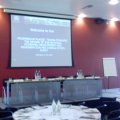
platform
Conference I went to the workshop for support workers. I m not sure whether it was quite the right label, but the others were for managers/trustees and for accidental technical supporters, which definitely weren t. There seemed to be at least three other ICT specialists there, so I wasn t the only one. The best thing about the workshop was the mix of specialists and generalists. I was really interested in what the generalists had to say, but sadly the workshop was more of a lecture and I don t feel I got as much out as I could. I d be interested to know if that was the same for other participants. I m not sure what I thought of Steve Bridger s session. It was a difficult one: the strange mix of an audience was all together, the room felt pretty warm and it stood between us and lunch. I had trouble concentrating but posted a few updates to identi.ca about it. The worst thing was all the needless promotion of certain companies products. They didn t talk about blogging and syndication, they talked about Blogger and Google Reader; they didn t talk about photo-sharing, they talked about Flickr; they didn t talk about spreadsheets, they talked about Excel. Nevertheless, I left the event feeling really positive about other ICT specialists, with some hope that the generalists were getting it and quite impressed by the people I met from the other tracks. It was pretty good to help someone towards the autosuspend setting on their GNOME-based netbook within ten minutes of arriving, too. I ve just updated software.coop with Richard Stallman s explanation of why proprietary software is a social problem, to see if that helps put the community-based view across. I ll look again at some of the grant-funded resources mentioned and see if we can improve them, but I d welcome any comments from the voluntary and community sector about how best to do that.

Biella Coleman: Memefactory

Memefactory! :
What do you get when you combine a lecture, vaudeville and Double Dare? Memefactory! Three gentlemen with five computers and three projectors take the audience on a fast-paced, whirlwind tour of every major Internet meme, famous piece of Internet media and YouTube footage imaginable. The modus is not depth, but breadth, and constant audience participation is required. Over the course of the evening, the audience will produce an entry for every internet phenomenon possible, including but not limited to: LOLCats, Bouncing GIFs, Me Singing [blank], Reaction Videos, Folk Covers of Hip Hop Classics, FAILs, Redubbed music videos, and more. Some will become famous like Boxxy, most will drink beers and a brave few will be nude.

Next.

Previous.