Search Results: "sf"

6 September 2014

Russ Allbery: Accumulated hauls

I haven't made one of these in a long time, so I have some catching from random purchases to do, which includes a (repurposed) nice parting gift from my previous employer and a trip to Powell's since I was in the area for DebConf14. This also includes the contents of the Hugo voter's packet, which contained a wide variety of random stuff even if some of the novels were represented only by excerpts. John Joseph Adams (ed.) The Mad Scientist's Guide to World Domination (sff anthology)
Roger McBride Allen The Ring of Charon (sff)
Roger McBride Allen The Shattered Sphere (sff)
Iain M. Banks The Hydrogen Sonata (sff)
Julian Barnes The Sense of an Ending (mainstream)
M. David Blake (ed.) 2014 Campbellian Anthology (sff anthology)
Algis Budrys Benchmarks Continued (non-fiction)
Algis Budrys Benchmarks Revisited (non-fiction)
Algis Budrys Benchmarks Concluded (non-fiction)
Edgar Rice Burroughs Carson of Venus (sff)
Wesley Chu The Lives of Tao (sff)
Ernest Cline Ready Player One (sff)
Larry Correia Hard Magic (sff)
Larry Correia Spellbound (sff)
Larry Correia Warbound (sff)
Sigrid Ellis & Michael Damien Thomas (ed.) Queer Chicks Dig Time Lords (non-fiction)
Neil Gaiman The Ocean at the End of the Lane (sff)
Max Gladstone Three Parts Dead (sff)
Max Gladstone Two Serpents Rise (sff)
S.L. Huang Zero Sum Game (sff)
Robert Jordan & Brandon Sanderson The Wheel of Time (sff)
Drew Karpyshyn Mass Effect: Revelation (sff)
Justin Landon & Jared Shurin (ed.) Speculative Fiction 2012 (non-fiction)
John J. Lumpkin Through Struggle, the Stars (sff)
L. David Marquet Turn the Ship Around! (non-fiction)
George R.R. Martin & Raya Golden Meathouse Man (graphic novel)
Ramez Naam Nexus (sff)
Eiichiro Oda One Piece Volume 1 (manga)
Eiichiro Oda One Piece Volume 2 (manga)
Eiichiro Oda One Piece Volume 3 (manga)
Eiichiro Oda One Piece Volume 4 (manga)
Alexei Panshin New Celebrations (sff)
K.J. Parker Devices and Desires (sff)
K.J. Parker Evil for Evil (sff)
Sofia Samatar A Stranger in Olondria (sff)
John Scalzi The Human Division (sff)
Jonathan Straham (ed.) Fearsome Journeys (sff anthology)
Vernor Vinge The Children of the Sky (sff)
Brian Wood & Becky Cloonan Demo (graphic novel)
Charles Yu How to Live Safely in a Science Fictional Universe (sff) A whole bunch of this is from the Hugo voter's packet, and since the Hugos are over, much of that probably won't get prioritized. (I was very happy with the results of the voting, though.) Other than that, it's a very random collection of stuff, including a few things that I picked up based on James Nicoll's reviews. Now that I have a daily train commute, I should pick up the pace of reading, and as long as I can find enough time in my schedule to also write reviews, hopefully there will be more content in this blog shortly.

2 September 2014

Mario Lang: exercism.io C++ track

exercism.io is a croud-sourced mentorship platform for learning to program. In my opinion, they do a lot of things right. In particular, an exercise on exercism.io consists of a descriptive README file and a set of test cases implemented in the target programming language. The tests have two positive sides: You learn to do test-driven development, which is good. And you also have an automated validation suite. Of course, a test can not give you feedback on your actual implementation, but at least it can give you an idea if you have managed to implement what was required of you. But that is not the end of it. Once you have submitted a solution to a particular exercise, other users of exercism.io can comment on your implementation. And you can, as soon as you have submitted the first implementation, look at the solutions that other people have submitted to that particular problem. So knowledge transfer can happen both ways from there on: You can learn new things from how other people have solved the same problem, and you can also tell other people about things they might have done in a different way. These comments are, somewhat appropriately, called nitpicks on exercism.io. Now, exercism has recently gained a C++ track. That track is particularily fun, because it is based on C++11, Boost, and CMake. Things that are quite standard to C++ development these days. And the use of C++11 and Boost makes some solutions really shine.

Antonio Terceiro: DebConf 14: Community, Debian CI, Ruby, Redmine, and Noosfero

This time, for personal reasons I wasn t able to attend the full DebConf, which started on the Saturday August 22nd. I arrived at Portland on the Tuesday the 26th by noon, at the 4th of the conference. Even though I would like to arrive earlier, the loss was alleviated by the work of the amazing DebConf video team. I was able to follow remotely most of the sessions I would like to attend if I were there already. As I will say to everyone, DebConf is for sure the best conference I have ever attended. The technical and philosophical discussions that take place in talks, BoF sessions or even unplanned ad-hoc gathering are deep. The hacking moments where you have a chance to pair with fellow developers, with whom you usually only have contact remotely via IRC or email, are precious. That is all great. But definitively, catching up with old friends, and making new ones, is what makes DebConf so special. Your old friends are your old friends, and meeting them again after so much time is always a pleasure. New friendships will already start with a powerful bond, which is being part of the Debian community. Being only 4 hours behind my home time zone, jetlag wasn t a big problem during the day. However, I was waking up too early in the morning and consequently getting tired very early at night, so I mostly didn t go out after hacklabs were closed at 10PM. Despite all of the discussion, being in the audience for several talks, other social interactions and whatnot, during this DebConf I have managed to do quite some useful work. debci and the Debian Continuous Integration project I gave a talk where I discussed past, present, and future of debci and the Debian Continuous Integration project. The slides are available, as well as the video recording. One thing I want you to take away is that there is a difference between debci and the Debian Continuous Integration project: A few days before DebConf, C dric Boutillier managed to extract gem2deb-test-runner from gem2deb, so that autopkgtest tests can be run against any Ruby package that has tests by running gem2deb-test-runner --autopkgtest. gem2deb-test-runner will do the right thing, make sure that the tests don t use code from the source package, but instead run them against the installed package. Then, right after my talk I was glad to discover that the Perl team is also working on a similar tool that will automate running tests for their packages against the installed package. We agreed that they will send me a whitelist of packages in which we could just call that tool and have it do The Right Thing. We might be talking here about getting autopkgtest support (and consequentially continuous integration) for free for almost 2000 4000 packages. The missing bits for this to happen are: During a few days I have mentored Lucas Kanashiro, who also attended DebConf, on writing a patch to add support for email notifications in debci so maintainers can be pro-actively notified of status changes (pass/fail, fail/pass) in their packages. I have also started hacking on the support for distributed workers, based on the initial work by Martin Pitt: Ruby I had some discusion with Christian about making Rubygems install to $HOME by default when the user is not root. We discussed a few implementation options, and while I don t have a solution yet, we have a better understanding of the potential pitfalls. The Ruby BoF session on Friday produced a few interesting discussions. Some take away point include, but are not limited to: Redmine I was able to make Redmine work with the Rails 4 stack we currently have in unstable/testing. This required using a snapshot of the still unreleased version 3.0 based on the rails-4.1 branch in the upstream Subversion repository as source. I am a little nervous about using a upstream snapshot, though. According to the "roadmap of the project ":http://www.redmine.org/projects/redmine/roadmap the only purpose of the 3.0 release will be to upgrade to Rails 4, but before that happens there should be a 2.6.0 release that is also not released yet. 3.0 should be equivalent to that 2.6.0 version both feature-wise and, specially, bug-wise. The only problem is that we don t know what that 2.6.0 looks like yet. According to the roadmap it seems there is not much left in term of features for 2.6.0, though. The updated package is not in unstable yet, but will be soon. It needs more testing, and a good update to the documentation. Those interested in helping to test Redmine on jessie before the freeze please get in touch with me. Noosfero I gave a lighting talk on Noosfero, a platform for social networking websites I am upstream for. It is a Rails appplication licensed under the AGPLv3, and there are packages for wheezy. You can checkout the slides I used. Video recording is not available yet, but should be soon. That s it. I am looking forward to DebConf 15 at Heidelberg. :-)

1 September 2014

Juliana Louback: Debconf 2014 and How I Became a Debian Contributor

Part 1 - Debconf 2014 This year I went to my first Debconf, which took place in Portland, OR during the last week of August 2014. All in all I have to rate my experience as very enlightening and in the end quite fun. First of all, it was a little daunting to go to a conference in 1 - A city I d never been to before; 2 - A conference with 300+ people, only 3 of which I knew and even then I only knew them virtually. Not to mention I was in the presence of some extremely brilliant and known contirbutors in the Debian community which was somewhat intimidating. Just to give you an idea, Linus Torvalds showed up for a Q&A session last Friday morning! Jealous? Actually I missed that too. It was kind of a last minute thing, booked for coincidentally the exact time I d be flying out of Portland. I found out about it much too late. But luckily for me and maybe you, the session was filmed and can be seen here. Isn t that a treat? Point made, there are lots of really talented people there, both techies and non-techies. It s easy to feel you re out of league, at least I did. But I d highly encourage you to ignore such feelings if you re ever in the same situation. Debian has been built on for a long time now, but although a lot has been done, a lot still needs to be done. The Debian community is very welcoming of new contributors and users, regardless of the level of expertise. So far I haven t been snubbed by anyone. To the contrary, all my interactions with the Debian community members has been extremely positive. So go ahead and attend the meetings and presentations, even if you think it s not your area of expertise. Debconf was organized (or at least this one was) as a series of talks, meet ups and ad hoc sessions, some of which occured simultaneously. The sessions were all about different components of the Debian universe, from presenting new features to overviews of accomplishments to discussing issues and how to fix them. A schedule with the location and description of each session was posted on the Debconf wiki. Sometimes none of the sessions at a certain time was on a topic I knew very much about. But I d sit in anyways. There s no rule to attending the sessions, no minimum qualifications required. You ll likely learn something new and you just might find out there is something you can do to contribute. There are also hackathons that are quite the thing or so I heard. Or you could walk about and meet new people, do some networking. I have to say networking was the highlight of the Debconf for me. Remember I said I knew about 3 people who were at the conference? Well, I had actually just corresponded with those people. I didn t really know them. So on my first day I spent quite some time shyly peeking at people s name tags, trying to recognize someone I had met over email or IRC. But with 300 or so people at the conference, I was unsuccessful. So I finally gave up on that strategy and walked up to a random person, stuck out my hand and said, Hi. My name is Juliana. This is my first Debconf. What s your name and what do you do for Debian? This may not be according to protocol, but it worked for me. I got to meet lots of people that way, met some Debian contributos from my home country (Brazil), some from my current city (NYC), and yet others that had similar interests as I do who I might work with in the near future. For example, I love Machine Learning, I m currently beginning my graduate studies on that track. Several Debian contributors offered to introduce me to a well known Machine Learning researcher and Debian contributor who is in NYC. Others had tried out JSCommunicator and had lots of suggestions for new features and fixes, or wanted to know more about the project and WebRTC in general. Also, not everyone there is a super experienced Debian contributor or user. There are a lot of newbies like me. I got to do a quick 20-min presentation and demo of the work I had done on JSCommunicator during GSoC 2014. Oh my goodness that was nerve-wracking, but not half as painful as I expected. My mentor (Daniel Pocock) wisely suggested that when confronted with a question I didn t know how to answer, to redirect the question to to the audience. Chances are, there is someone there that knows the answer. If not, it will at least spark a good discussion. When meeting new people at Debian, a question almost everyone asked is How did you start working with/for Debian? . So I thought it would be a good topic to post about. Part 2 - How I Became a Debian Contributor Sometime in late October of 2013 (I think) I received an email from one of my professors at UNIRIO forwarding a description of the Outreach Program for Women. OPW is a program organized by the GNOME which endeavors to get more women involved in FOSS. OPW is similar to Google Summer of Code; you work remotely from home, guided by an assigned mentor. Debian was one of the 8 participating organizations that year. There was a list of project proposals which I perused, a few of them caught my eye and these projects were all Debian. I d already been a fan of FOSS before. I had used the Ubuntu and Debian OS, I d migrated to GIMP from Photoshop and to Open Office from Microsoft Office, for example. I d strongly advocated the use of some of my prefered open source apps and programs to my friends and family. But I hadn t ever contributed to a FOSS project. There s no time like the present, so I reached out the the mentor responsible for one of the projects I was interested in, Daniel Pocock. Daniel guided me through making a small contribution to a FOSS project, which serves as a token demonstration of my abilities and is part of the application process. I added a small feature to JMXetric and suggested a fix for an issue in the xTuple project. Actually, I had forgotten about this. Recently I made another contribution to xTuple, it s funny to see things come full circle. I also had to write a profile-ish description of my experience and how I intended on contributing during OPW on the Debian wiki, if you d like you can check it out here. I wouldn t follow my example to a T, because in the end I didn t make the OPW selection. Actually, I take that back. The fact I wasn t chosen for OPW that year doesn t mean I was incompetent or incapable of making a valuable contribution. OPW and GSoC do not have unlimited resources; they can t include everyone they d like to. They receive thousands of proposals from very talented engineers and not everyone can participate at a given moment. But even though I wasn t selected, like I said, I could still pitch in. It s good to keep in mind that people usually aren t paid to contribute to FOSS. It s usually volunteer based, which I think is one of the beauties of the FOSS community and in my opinion one of the causes of it s success and great quality. People contribute because they want to, not because they have to. I will say I was a little disappointed at not being chosen. But after being reassured that this rejection wasn t due to any lack on my part, I decided to continue contributing to the Debian project I d applied to. I was begining the final semester of my undergraduate studies which included writing a thesis. To be able to focus on my thesis and graduate on time, I d stopped working temporarily and was studying full time. But I didn t want to lose practice and contributing to a FOSS project is a great way to stay in coding shape while doing something useful. So continue contributing I did. It paid off. I gained experience, added value to a FOSS project and I think my previous contributions added weight to the application I later made for GSoC 2014. I passed this time. To be honest, I really wasn t counting on it. Actually, I was certain I wouldn t pass for some reason - insecure much? But with GSoC I wasn t too anxious about it as I was with the OPW application because by then, I was already hooked . I d learned about all the benefits of becoming a FOSS contributor and I wasn t stopping anytime soon. I had every intention of still working on my FOSS project with or without GSoC. GSoC 2014 ended a week ago (August 18th 2014). There s a list of things I still want to do with JSCommunicator and you can be sure I ll keep working on them. P.S. This is not to say that programs like OPW and GSoC aren t amazing programs. Try it out if you can, it s really a great experience.

31 August 2014

Steve Kemp: A diversion - The National Health Service

Today we have a little diversion to talk about the National Health Service. The NHS is the publicly funded healthcare system in the UK.
Actually there are four such services in the UK, only one of which has this name:
  • The national health service (England)
  • Health and Social Care in Northern Ireland.
  • NHS Scotland.
  • NHS Wales.
In theory this doesn't matter, if you're in the UK and you break your leg you get carried to a hospital and you get treated. There are differences in policies because different rules apply, but the basic stuff "free health care" applies to all locations. (Differences? In Scotland you get eye-tests for free, in England you pay.)
My wife works as an accident & emergency doctor, and has recently changed jobs. Hearing her talk about her work is fascinating. The hospitals she's worked in (Dundee, Perth, Kirkcaldy, Edinburgh, Livingstone) are interesting places. During the week things are usually reasonably quiet, and during the weekend things get significantly more busy. (This might mean there are 20 doctors to hand, versus three at quieter times.) Weekends are busy largely because people fall down hills, get drunk and fight, and are at home rather than at work - where 90% of accidents occur. Of course even a "quiet" week can be busy, because folk will have heart-attacks round the clock, and somebody somewhere will always be playing with a power tool, a ladder, or both! So what was the point of this post? Well she's recently transferred to working for a childrens hospital (still in A&E) and the patiences are so very different. I expected the injuries/patients she'd see to differ. Few 10 year olds will arrive drunk (though it does happen), and few adults fall out of trees, or eat washing machine detergent, but talking to her about her day when she returns home is fascinating how many things are completely different from how I expected. Adults come to hospital mostly because they're sick, injured, or drunk. Children come to hospital mostly because their parents are paranoid. A child has a rash? Doctors are closed? Lets go to the emergency ward! A child has fallen out of a tree and has a bruise, a lump, or complains of pain? Doctors are closed? Lets go to the emergency ward! I've not kept statistics, though I wish I could, but it seems that she can go 3-5 days between seeing an actually injured or chronicly-sick child. It's the first-time-parents who bring kids in when they don't need to. Understandable, completely understandable, but at the same time I'm sure it is more than a little frustrating for all involved. Finally one thing I've learned, which seems completely stupid, is the NHS-Scotland approach to recruitment. You apply for a role, such as "A&E doctor" and after an interview, etc, you get told "You've been accepted - you will now work in Glasgow". In short you apply for a post, and then get told where it will be based afterward. There's no ability to say "I'd like to be a Doctor in city X - where I live", you apply, and get told where it is post-acceptance. If it is 100+ miles away you either choose to commute, or decline and go through the process again. This has lead to Kirsi working in hospitals with a radius of about 100km from the city we live in, and has meant she's had to turn down several posts. And that is all I have to say about the NHS for the moment, except for the implicit pity for people who have to pay (inflated and life-changing) prices for things in other countries.

30 August 2014

Francois Marier: Outsourcing your webapp maintenance to Debian

Modern web applications are much more complicated than the simple Perl CGI scripts or PHP pages of the past. They usually start with a framework and include lots of external components both on the front-end and on the back-end. Here's an example from the Node.js back-end of a real application:
$ npm list   wc -l
256
What if one of these 256 external components has a security vulnerability? How would you know and what would you do if of your direct dependencies had a hard-coded dependency on the vulnerable version? It's a real problem and of course one way to avoid this is to write everything yourself. But that's neither realistic nor desirable. However, it's not a new problem. It was solved years ago by Linux distributions for C and C++ applications. For some reason though, this learning has not propagated to the web where the standard approach seems to be to "statically link everything". What if we could build on the work done by Debian maintainers and the security team?

Case study - the Libravatar project As a way of discussing a different approach to the problem of dependency management in web applications, let me describe the decisions made by the Libravatar project.

Description Libravatar is a federated and free software alternative to the Gravatar profile photo hosting site. From a developer point of view, it's a fairly simple stack: The service is split between the master node, where you create an account and upload your avatar, and a few mirrors, which serve the photos to third-party sites. Like with Gravatar, sites wanting to display images don't have to worry about a complicated protocol. In a nutshell, all that a site needs to do is hash the user's email and add that hash to a base URL. Where the federation kicks in is that every email domain is able to specify a different base URL via an SRV record in DNS. For example, francois@debian.org hashes to 7cc352a2907216992f0f16d2af50b070 and so the full URL is:
http://cdn.libravatar.org/avatar/7cc352a2907216992f0f16d2af50b070
whereas francois@fmarier.org hashes to 0110e86fdb31486c22dd381326d99de9 and the full URL is:
http://fmarier.org/avatar/0110e86fdb31486c22dd381326d99de9
due to the presence of an SRV record on fmarier.org.

Ground rules The main rules that the project follows is to:
  1. only use Python libraries that are in Debian
  2. use the versions present in the latest stable release (including backports)

Deployment using packages In addition to these rules around dependencies, we decided to treat the application as if it were going to be uploaded to Debian:
  • It includes an "upstream" Makefile which minifies CSS and JavaScript, gzips them, and compiles PO files (i.e. a "build" step).
  • The Makefile includes a test target which runs the unit tests and some lint checks (pylint, pyflakes and pep8).
  • Debian packages are produced to encode the dependencies in the standard way as well as to run various setup commands in maintainer scripts and install cron jobs.
  • The project runs its own package repository using reprepro to easily distribute these custom packages.
  • In order to update the repository and the packages installed on servers that we control, we use fabric, which is basically a fancy way to run commands over ssh.
  • Mirrors can simply add our repository to their apt sources.list and upgrade Libravatar packages at the same time as their system packages.

Results Overall, this approach has been quite successful and Libravatar has been a very low-maintenance service to run. The ground rules have however limited our choice of libraries. For example, to talk to our queuing system, we had to use the raw Python bindings to the C Gearman library instead of being able to use a nice pythonic library which wasn't in Debian squeeze at the time. There is of course always the possibility of packaging a missing library for Debian and maintaining a backport of it until the next Debian release. This wouldn't be a lot of work considering the fact that responsible bundling of a library would normally force you to follow its releases closely and keep any dependencies up to date, so you may as well share the result of that effort. But in the end, it turns out that there is a lot of Python stuff already in Debian and we haven't had to package anything new yet. Another thing that was somewhat scary, due to the number of packages that were going to get bumped to a new major version, was the upgrade from squeeze to wheezy. It turned out however that it was surprisingly easy to upgrade to wheezy's version of Django, Apache and Postgres. It may be a problem next time, but all that means is that you have to set a day aside every 2 years to bring everything up to date.

Problems The main problem we ran into is that we optimized for sysadmins and unfortunately made it harder for new developers to setup their environment. That's not very good from the point of view of welcoming new contributors as there is quite a bit of friction in preparing and testing your first patch. That's why we're looking at encoding our setup instructions into a Vagrant script so that new contributors can get started quickly. Another problem we faced is that because we use the Debian version of jQuery and minify our own JavaScript files in the build step of the Makefile, we were affected by the removal from that package of the minified version of jQuery. In our setup, there is no way to minify JavaScript files that are provided by other packages and so the only way to fix this would be to fork the package in our repository or (preferably) to work with the Debian maintainer and get it fixed globally in Debian. One thing worth noting is that while the Django project is very good at issuing backwards-compatible fixes for security issues, sometimes there is no way around disabling broken features. In practice, this means that we cannot run unattended-upgrades on our main server in case something breaks. Instead, we make use of apticron to automatically receive email reminders for any outstanding package updates. On that topic, it can occasionally take a while for security updates to be released in Debian, but this usually falls into one of two cases:
  1. You either notice because you're already tracking releases pretty well and therefore could help Debian with backporting of fixes and/or testing;
  2. or you don't notice because it has slipped through the cracks or there simply are too many potential things to keep track of, in which case the fact that it eventually gets fixed without your intervention is a huge improvement.
Finally, relying too much on Debian packaging does prevent Fedora users (a project that also makes use of Libravatar) from easily contributing mirrors. Though if we had a concrete offer, we would certainly look into creating the appropriate RPMs.

Is it realistic? It turns out that I'm not the only one who thought about this approach, which has been named "debops". The same day that my talk was announced on the DebConf website, someone emailed me saying that he had instituted the exact same rules at his company, which operates a large Django-based web application in the US and Russia. It was pretty impressive to read about a real business coming to the same conclusions and using the same approach (i.e. system libraries, deployment packages) as Libravatar. Regardless of this though, I think there is a class of applications that are particularly well-suited for the approach we've just described. If a web application is not your full-time job and you want to minimize the amount of work required to keep it running, then it's a good investment to restrict your options and leverage the work of the Debian community to simplify your maintenance burden. The second criterion I would look at is framework maturity. Given the 2-3 year release cycle of stable distributions, this approach is more likely to work with a mature framework like Django. After all, you probably wouldn't compile Apache from source, but until recently building Node.js from source was the preferred option as it was changing so quickly. While it goes against conventional wisdom, relying on system libraries is a sustainable approach you should at least consider in your next project. After all, there is a real cost in bundling and keeping up with external dependencies. This blog post is based on a talk I gave at DebConf 14: slides, video.

Joachim Breitner: DebConf 14

I m writing this blog post on the plane from Portland towards Europe (which I now can!), using the remaining battery live after having watched one of the DebConf talks that I missed. (It was the systemd talk, which was good and interesting, but maybe I should have watched one of the power management talks, as my battery is running down faster than it should be, I believe.) I mostly enjoyed this year s DebConf. I must admit that I did not come very prepared: I had neither something urgent to hack on, nor important things to discuss with the other attendees, so in a way I had a slow start. I also felt a bit out of touch with the project, both personally and technically: In previous DebConfs, I had more interest in many different corners of the project, and also came with more naive enthusiasm. After more than 10 years in the project, I see a few things more realistic and also more relaxed, and don t react on Wouldn t it be cool to have crazy idea very easily any more. And then I mostly focus on Haskell packaging (and related tooling, which sometimes is also relevant and useful to others) these days, which is not very interesting to most others. But in the end I did get to do some useful hacking, heard a few interesting talks and even got a bit excited: I created a new tool to schedule binNMUs for Haskell packages which is quite generic (configured by just a regular expression), so that it can and will be used by the OCaml team as well, and who knows who else will start using hash-based virtual ABI packages in the future... It runs via a cron job on people.debian.org to produce output for Haskell and for OCaml, based on data pulled via HTTP. If you are a Debian developer and want up-to-date results, log into wuiet.debian.org and run ~nomeata/binNMUs --sql; it then uses the projectb and wanna-build databases directly. Thanks to the ftp team for opening up incoming.debian.org, by the way! Unsurprisingly, I also held a talk on Haskell and Debian (slides available). I talked a bit too long and we had too little time for discussion, but in any case not all discussion would have fitted in 45 minutes. The question of which packages from Hackage should be added to Debian and which not is still undecided (which means we carry on packaging what we happen to want in Debian for whatever reason). I guess the better our tooling gets (see the next section), the more easily we can support more and more packages. I am quite excited by and supportive of Enrico s agenda to remove boilerplate data from the debian/ directories and relying on autodebianization tools. We have such a tool for Haskell package, cabal-debian, but it is unofficial, i.e. neither created by us nor fully endorsed. I want to change that, so I got in touch with the upstream maintainer and we want to get it into shape for producing perfect Debian packages, if the upstream provided meta data is perfect. I d like to see the Debian Haskell Group to follows Enrico s plan to its extreme conclusion, and this way drive innovation in Debian in general. We ll see how that goes. Besides all the technical program I enjoyed the obligatory games of Mao and Werewolves. I also got to dance! On Saturday night, I found a small but welcoming Swing-In-The-Park event where I could dance a few steps of Lindy Hop. And on Tuesday night, Vagrant Cascadian took us (well, three of us) to a blues dancing night, which I greatly enjoyed: The style was so improvisation-friendly that despite having missed the introduction and never having danced Blues before I could jump right in. And in contrast to social dances in Germany, where it is often announced that the girls are also invited to ask the boys, but then it is still mostly the boys who have to ask, here I took only half a minute of standing at the side until I got asked to dance. In retrospect I should have skipped the HP reception and went there directly... I m not heading home at the moment, but will travel directly to G teborg to attend ICFP 2014. I hope the (usually worse) west-to-east jet lag will not prevent me from enjoying that as much as I could.

29 August 2014

Jakub Wilk: More spell-checking

Have you ever wanted to use Lintian's spell-checker against arbitrary files? Now you can do it with spellintian:
$ zrun spellintian --picky /usr/share/doc/RFC/best-current-practice/rfc*
/tmp/0qgJD1Xa1Y-rfc1917.txt: amoung -> among
/tmp/kvZtN435CE-rfc3155.txt: transfered -> transferred
/tmp/o093khYE09-rfc3481.txt: unecessary -> unnecessary
/tmp/4P0ux2cZWK-rfc6365.txt: charater -> character
mwic (Misspelled Words In Context) takes a different approach. It uses classic spell-checking libraries (via Enchant), but it groups misspellings and shows them in their contexts. That way you can quickly filter out false-positives, which are very common in technical texts, using visual grep:
$ zrun mwic /usr/share/doc/debian/social-contract.txt.gz
DFSG:
   an Free Software Guidelines (DFSG)
   an Free Software Guidelines (DFSG) part of the
                                ^^^^
Perens:
     Bruce Perens later removed the Debian-spe 
  by Bruce Perens, refined by the other Debian 
           ^^^^^^
Ean, Schuessler:
  community" was suggested by Ean Schuessler. This document was drafted
                              ^^^ ^^^^^^^^^^
GPL:
  The "GPL", "BSD", and "Artistic" lice 
       ^^^
contrib:
  created "contrib" and "non-free" areas in our 
           ^^^^^^^
CDs:
  their CDs. Thus, although non-free wor 
        ^^^

24 August 2014

Noah Meyerhans: Debconf by train

Today is the first time I've taken an interstate train trip in something like 15 years. A few things about the trip were pleasantly surprising. Most of these will come as no surprise:
  1. Less time wasted in security theater at the station prior to departure.
  2. On-time departure
  3. More comfortable seats than a plane or bus.
  4. Quiet.
  5. Permissive free wifi
Wifi was the biggest surprise. Not that it existed, since we're living in the future and wifi is expected everywhere. It's IPv4 only and stuck behind a NAT, which isn't a big surprise, but it is reasonably open. There isn't any port filtering of non-web TCP ports, and even non-TCP protocols are allowed out. Even my aiccu IPv6 tunnel worked fine from the train, although I did experience some weird behavior with it. I haven't used aiccu much in quite a while, since I have a native IPv6 connection at home, but it can be convenient while travelling. I'm still trying to figure out happened today, though. The first symptoms were that, although I could ping IPv6 hosts, I could not actually log in via IMAP or ssh. Tcpdump showed all the standard symptoms of a PMTU blackhole. Small packets flow fine, large ones are dropped. The interface MTU is set to 1280, which is the minimum MTU for IPv6 and any path on the internet is expected to handle packets of at least that size. Experimentation via ping6 reveals that the largest payload size I can successfully exchange with a peer is 820 bytes. Add 8 bytes for the ICMPv6 header for 828 bytes of payload, plus 40 bytes for the IPv6 header gives an 868 byte packet, which is well under what should be the MTU for this path. I've worked around this problem with an ip6tables rule to rewrite the MSS on outgoing SYN packets to 760 bytes, which should leave 40 for the IPv6 header and 20 for any extension headers:
sudo ip6tables -t mangle -A OUTPUT -p tcp --tcp-flags SYN,RST SYN -j TCPMSS --set-mss 760
It is working well and will allow me to publish this from the train, which I'd otherwise have been unable to do. But... weird.

Lucas Nussbaum: on the Dark Ages of Free Software: a Free Service Definition ?

Stefano Zacchiroli opened DebConf 14 with an insightful talk titled Debian in the Dark Ages of Free Software (slides available, video available soon). He makes the point (quoting slide 16) that the Free Software community is winning a war that is becoming increasingly pointless: yes, users have 100% Free Software thin client at their fingertips [or are really a few steps from there]. But all their relevant computations happen elsewhere, on remote systems they do not control, in the Cloud. That give-up on control of computing is a huge and important problem, and probably the largest challenge for everybody caring about freedom, free speech, or privacy today. Stefano rightfully points out that we must do something about it. The big question is: how can we, as a community, address it? Towards a Free Service Definition? I believe that we all feel a bit lost with this issue because we are trying to attack it with our current tools & weapons. However, they are largely irrelevant here: the Free Software Definition is about software, and software is even to be understood strictly in it, as software programs. Applying it to services, or to computing in general, doesn t lead anywhere. In order to increase the general awareness about this issue, we should define more precisely what levels of control can be provided, to understand what services are not providing to users, and to make an informed decision about waiving a particular level of control when choosing to use a particular service. Benjamin Mako Hill pointed out yesterday during the post-talk chat that services are not black or white: there aren t impure and pure services. Instead, there s a graduation of possible levels of control for the computing we do. The Free Software Definition lists four freedoms how many freedoms, or types of control, should there be in a Free Service Definition, or a Controlled-Computing Definition? Again, this is not only about software: the platform on which a particular piece of software is executed has a huge impact on the available level of control: running your own instance of WordPress, or using an instance on wordpress.com, provides very different control (even if as Asheesh Laroia pointed out yesterday, WordPress does a pretty good job at providing export and import features to limit data lock-in). The creation of such a definition is an iterative process. I actually just realized today that (according to Wikipedia) the very first occurrence of an attempt at a Free Software Definition was published in 1986 (GNU s bulletin Vol 1 No.1, page 8) I thought it happened a couple of years earlier. Are there existing attempts at defining such freedoms or levels of controls, and at benchmarking such criteria against existing services? Such criteria would not only include control over software modifications and (re)distribution, but also likely include mentions of interoperability and open standards, both to enable the user to move to a compatible service, and to avoid forcing the user to use a particular implementation of a service. A better understanding of network effects is also needed: how much and what type of service lock-in is acceptable on social networks in exchange of functionality? I think that we should inspire from what was achieved during the last 30 years on Free Software. The tools that were produced are probably irrelevant to address this issue, but there s a lot to learn from the way they were designed. I really look forward to the day when we will have: Exciting times!

Gregor Herrmann: Debian Perl Group Micro-Sprint

DebConf 14 has started earlier today with the first two talks in sunny portland, oregon. this year's edition of DebConf didn't feature a preceding DebCamp, & the attempts to organize a proper pkg-perl sprint were not very successful. nevertheless, two other members of the Debian Perl Group & me met here in PDX on wednesday for our informal unofficial pkg-perl -sprint, & as intended, we've used the last days to work on some pkg-perl QA stuff: as usual, having someone to poke besides you, & the opportunity to get a second pair of eyes quickly was very beneficial. & of course, spending time with my nice team mates is always a pleasure for me!

23 August 2014

Antti-Juhani Kaijanaho: A milestone toward a doctorate

Yesterday I received my official diploma for the degree of Licentiate of Philosophy. The degree lies between a Master s degree and a doctorate, and is not required; it consists of the coursework required for a doctorate, and a Licentiate Thesis, in which the student demonstrates good conversance with the field of research and the capability of independently and critically applying scientific research methods (official translation of the Government decree on university degrees 794/2004, Section 23 Paragraph 2). The title and abstract of my Licentiate Thesis follow:
Kaijanaho, Antti-Juhani
The extent of empirical evidence that could inform evidence-based design of programming languages. A systematic mapping study.
Jyv skyl : University of Jyv skyl , 2014, 243 p.
(Jyv skyl Licentiate Theses in Computing,
ISSN 1795-9713; 18)
ISBN 978-951-39-5790-2 (nid.)
ISBN 978-951-39-5791-9 (PDF)
Finnish summary Background: Programming language design is not usually informed by empirical studies. In other fields similar problems have inspired an evidence-based paradigm of practice. Central to it are secondary studies summarizing and consolidating the research literature. Aims: This systematic mapping study looks for empirical research that could inform evidence-based design of programming languages. Method: Manual and keyword-based searches were performed, as was a single round of snowballing. There were 2056 potentially relevant publications, of which 180 were selected for inclusion, because they reported empirical evidence on the efficacy of potential design decisions and were published on or before 2012. A thematic synthesis was created. Results: Included studies span four decades, but activity has been sparse until the last five years or so. The form of conditional statements and loops, as well as the choice between static and dynamic typing have all been studied empirically for efficacy in at least five studies each. Error proneness, programming comprehension, and human effort are the most common forms of efficacy studied. Experimenting with programmer participants is the most popular method. Conclusions: There clearly are language design decisions for which empirical evidence regarding efficacy exists; they may be of some use to language designers, and several of them may be ripe for systematic reviewing. There is concern that the lack of interest generated by studies in this topic area until the recent surge of activity may indicate serious issues in their research approach. Keywords: programming languages, programming language design, evidence-based paradigm, efficacy, research methods, systematic mapping study, thematic synthesis
A Licentiate Thesis is assessed by two examiners, usually drawn from outside of the home university; they write (either jointly or separately) a substantiated statement about the thesis, in which they suggest a grade. The final grade is almost always the one suggested by the examiners. I was very fortunate to have such prominent scientists as Dr. Stefan Hanenberg and Prof. Stein Krogdahl as the examiners of my thesis. They recommended, and I received, the grade very good (4 on a scale of 1 5). The thesis has been accepted for publication published in our faculty s licentiate thesis series and will in due course appear has appeared in our university s electronic database (along with a very small number of printed copies). In the mean time, if anyone wants an electronic preprint, send me email at antti-juhani.kaijanaho@jyu.fi.
Figure 1 of the thesis: an overview of the mapping processFigure 1 of the thesis: an overview of the mapping process
As you can imagine, the last couple of months in the spring were very stressful for me, as I pressed on to submit this thesis. After submission, it took me nearly two months to recover (which certain people who emailed me on Planet Haskell business during that period certainly noticed). It represents the fruit of almost four years of work (way more than normally is taken to complete a Licentiate Thesis, but never mind that), as I designed this study in Fall 2010.
Figure 8 of the thesis: Core studies per publication yearFigure 8 of the thesis: Core studies per publication year
Recently, I have been writing in my blog a series of posts in which I have been trying to clear my head about certain foundational issues that irritated me during the writing of the thesis. The thesis contains some of that, but that part of it is not very strong, as my examiners put it, for various reasons. The posts have been a deliberately non-academic attempt to shape the thoughts into words, to see what they look like fixed into a tangible form. (If you go read them, be warned: many of them are deliberately provocative, and many of them are intended as tentative in fact if not in phrasing; the series also is very incomplete at this time.) I closed my previous post, the latest post in that series, as follows:
In fact, the whole of 20th Century philosophy of science is a big pile of failed attempts to explain science; not one explanation is fully satisfactory. [...] Most scientists enjoy not pondering it, for it s a bit like being a cartoon character: so long as you don t look down, you can walk on air.
I wrote my Master s Thesis (PDF) in 2002. It was about the formal method called B ; but I took a lot of time and pages to examine the history and content of formal logic. My supervisor was, understandably, exasperated, but I did receive the highest possible grade for it (which I never have fully accepted I deserved). The main reason for that digression: I looked down, and I just had to go poke the bridge I was standing on to make sure I was not, in fact, walking on air. In the many years since, I ve taken a lot of time to study foundations, first of mathematics, and more recently of science. It is one reason it took me about eight years to come up with a doable doctoral project (and I am still amazed that my department kept employing me; but I suppose they like my teaching, as do I). The other reason was, it took me that long to realize how to study the design of programming languages without going where everyone has gone before. Debian people, if any are still reading, may find it interesting that I found significant use for the dctrl-tools toolset I have been writing for Debian for about fifteen years: I stored my data collection as a big pile of dctrl-format files. I ended up making some changes to the existing tools (I should upload the new version soon, I suppose), and I wrote another toolset (unfortunately one that is not general purpose, like the dctrl-tools are) in the process. For the Haskell people, I mainly have an apology for not attending to Planet Haskell duties in the summer; but I am back in business now. I also note, somewhat to my regret, that I found very few studies dealing with Haskell. I just checked; I mention Haskell several times in the background chapter, but it is not mentioned in the results chapter (because there were not studies worthy of special notice). I am already working on extending this work into a doctoral thesis. I expect, and hope, to complete that one faster.

Daniel Pocock: Want to be selected for Google Summer of Code 2015?

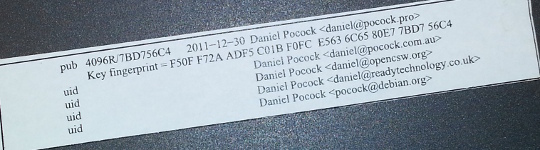
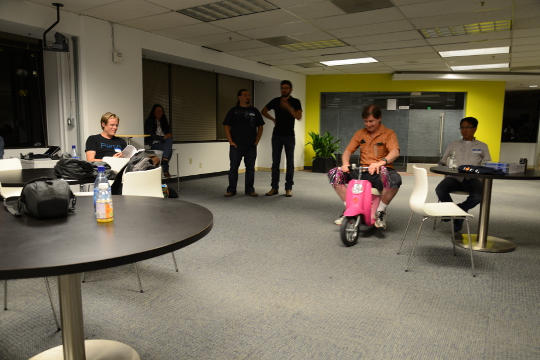
I've mentored a number of students in 2013 and 2014 for Debian and Ganglia and most of the companies I've worked with have run internships and graduate programs from time to time. GSoC 2014 has just finished and with all the excitement, many students are already asking what they can do to prepare and be selected in 2015. My own observation is that the more time the organization has to get to know the student, the more confident they can be selecting that student. Furthermore, the more time that the student has spent getting to know the free software community, the more easily they can complete GSoC. Here I present a list of things that students can do to maximize their chance of selection and career opportunities at the same time. These tips are useful for people applying for GSoC itself and related programs such as GNOME's Outreach Program for Women or graduate placements in companies. Disclaimers There is no guarantee that Google will run the program again in 2015 or any future year. There is no guarantee that any organization or mentor (including myself) will be involved until the official list of organizations is published by Google. Do not follow the advice of web sites that invite you to send pizza or anything else of value to prospective mentors. Following the steps in this page doesn't guarantee selection. That said, people who do follow these steps are much more likely to be considered and interviewed than somebody who hasn't done any of the things in this list. Understand what free software really is You may hear terms like free software and open source software used interchangeably. They don't mean exactly the same thing and many people use the term free software for the wrong things. Not all open source projects meet the definition of free software. Those that don't, usually as a result of deficiencies in their licenses, are fundamentally incompatible with the majority of software that does use genuinely free licenses. Google Summer of Code is about both writing and publishing your code and it is also about community. It is fundamental that you know the basics of licensing and how to choose a free license that empowers the community to collaborate on your code well after GSoC has finished. Please review the definition of free software early on and come back and review it from time to time. The The GNU Project / Free Software Foundation have excellent resources to help you understand what a free software license is and how it works to maximize community collaboration. Don't look for shortcuts There is no shortcut to GSoC selection and there is no shortcut to GSoC completion. The student stipend (USD $5,500 in 2014) is not paid to students unless they complete a minimum amount of valid code. This means that even if a student did find some shortcut to selection, it is unlikely they would be paid without completing meaningful work. If you are the right candidate for GSoC, you will not need a shortcut anyway. Are you the sort of person who can't leave a coding problem until you really feel it is fixed, even if you keep going all night? Have you ever woken up in the night with a dream about writing code still in your head? Do you become irritated by tedious or repetitive tasks and often think of ways to write code to eliminate such tasks? Does your family get cross with you because you take your laptop to Christmas dinner or some other significant occasion and start coding? If some of these statements summarize the way you think or feel you are probably a natural fit for GSoC. An opportunity money can't buy The GSoC stipend will not make you rich. It is intended to make sure you have enough money to survive through the summer and focus on your project. Professional developers make this much money in a week in leading business centers like New York, London and Singapore. When you get to that stage in 3-5 years, you will not even be thinking about exactly how much you made during internships. GSoC gives you an edge over other internships because it involves publicly promoting your work. Many companies still try to hide the potential of their best recruits for fear they will be poached or that they will be able to demand higher salaries. Everything you complete in GSoC is intended to be published and you get full credit for it. Imagine a young musician getting the opportunity to perform on the main stage at a rock festival. This is how the free software community works. It is a meritocracy and there is nobody to hold you back. Having a portfolio of free software that you have created or collaborated on and a wide network of professional contacts that you develop before, during and after GSoC will continue to pay you back for years to come. While other graduates are being screened through group interviews and testing days run by employers, people with a track record in a free software project often find they go straight to the final interview round. Register your domain name and make a permanent email address Free software is all about community and collaboration. Register your own domain name as this will become a focal point for your work and for people to get to know you as you become part of the community. This is sound advice for anybody working in IT, not just programmers. It gives the impression that you are confident and have a long term interest in a technology career. Choosing the provider: as a minimum, you want a provider that offers DNS management, static web site hosting, email forwarding and XMPP services all linked to your domain. You do not need to choose the provider that is linked to your internet connection at home and that is often not the best choice anyway. The XMPP foundation maintains a list of providers known to support XMPP. Create an email address within your domain name. The most basic domain hosting providers will let you forward the email address to a webmail or university email account of your choice. Configure your webmail to send replies using your personalized email address in the From header. Update your ~/.gitconfig file to use your personalized email address in your Git commits. Create a web site and blog Start writing a blog. Host it using your domain name. Some people blog every day, other people just blog once every two or three months. Create links from your web site to your other profiles, such as a Github profile page. This helps reinforce the pages/profiles that are genuinely related to you and avoid confusion with the pages of other developers. Many mentors are keen to see their students writing a weekly report on a blog during GSoC so starting a blog now gives you a head start. Mentors look at blogs during the selection process to try and gain insight into which topics a student is most suitable for. Create a profile on Github Github is one of the most widely used software development web sites. Github makes it quick and easy for you to publish your work and collaborate on the work of other people. Create an account today and get in the habbit of forking other projects, improving them, committing your changes and pushing the work back into your Github account. Github will quickly build a profile of your commits and this allows mentors to see and understand your interests and your strengths. In your Github profile, add a link to your web site/blog and make sure the email address you are using for Git commits (in the ~/.gitconfig file) is based on your personal domain. Start using PGP Pretty Good Privacy (PGP) is the industry standard in protecting your identity online. All serious free software projects use PGP to sign tags in Git, to sign official emails and to sign official release files. The most common way to start using PGP is with the GnuPG (GNU Privacy Guard) utility. It is installed by the package manager on most Linux systems. When you create your own PGP key, use the email address involving your domain name. This is the most permanent and stable solution. Print your key fingerprint using the gpg-key2ps command, it is in the signing-party package on most Linux systems. Keep copies of the fingerprint slips with you. This is what my own PGP fingerprint slip looks like. You can also print the key fingerprint on a business card for a more professional look. Using PGP, it is recommend that you sign any important messages you send but you do not have to encrypt the messages you send, especially if some of the people you send messages to (like family and friends) do not yet have the PGP software to decrypt them. If using the Thunderbird (Icedove) email client from Mozilla, you can easily send signed messages and validate the messages you receive using the Enigmail plugin. Get your PGP key signed Once you have a PGP key, you will need to find other developers to sign it. For people I mentor personally in GSoC, I'm keen to see that you try and find another Debian Developer in your area to sign your key as early as possible. Free software events Try and find all the free software events in your area in the months between now and the end of the next Google Summer of Code season. Aim to attend at least two of them before GSoC. Look closely at the schedules and find out about the individual speakers, the companies and the free software projects that are participating. For events that span more than one day, find out about the dinners, pub nights and other social parts of the event. Try and identify people who will attend the event who have been GSoC mentors or who intend to be. Contact them before the event, if you are keen to work on something in their domain they may be able to make time to discuss it with you in person. Take your PGP fingerprint slips. Even if you don't participate in a formal key-signing party at the event, you will still find some developers to sign your PGP key individually. You must take a photo ID document (such as your passport) for the other developer to check the name on your fingerprint but you do not give them a copy of the ID document. Events come in all shapes and sizes. FOSDEM is an example of one of the bigger events in Europe, linux.conf.au is a similarly large event in Australia. There are many, many more local events such as the Debian France mini-DebConf in Lyon, 2015. Many events are either free or free for students but please check carefully if there is a requirement to register before attending. On your blog, discuss which events you are attending and which sessions interest you. Write a blog during or after the event too, including photos. Quantcast generously hosted the Ganglia community meeting in San Francisco, October 2013. We had a wild time in their offices with mini-scooters, burgers, beers and the Ganglia book. That's me on the pink mini-scooter and Bernard Li, one of the other Ganglia GSoC 2014 admins is on the right. Install Linux GSoC is fundamentally about free software. Linux is to free software what a tree is to the forest. Using Linux every day on your personal computer dramatically increases your ability to interact with the free software community and increases the number of potential GSoC projects that you can participate in. This is not to say that people using Mac OS or Windows are unwelcome. I have worked with some great developers who were not Linux users. Linux gives you an edge though and the best time to gain that edge is now, while you are a student and well before you apply for GSoC. If you must run Windows for some applications used in your course, it will run just fine in a virtual machine using Virtual Box, a free software solution for desktop virtualization. Use Linux as the primary operating system. Here are links to download ISO DVD (and CD) images for some of the main Linux distributions: If you are nervous about getting started with Linux, install it on a spare PC or in a virtual machine before you install it on your main PC or laptop. Linux is much less demanding on the hardware than Windows so you can easily run it on a machine that is 5-10 years old. Having just 4GB of RAM and 20GB of hard disk is usually more than enough for a basic graphical desktop environment although having better hardware makes it faster. Your experiences installing and running Linux, especially if it requires some special effort to make it work with some of your hardware, make interesting topics for your blog. Decide which technologies you know best Personally, I have mentored students working with C, C++, Java, Python and JavaScript/HTML5. In a GSoC program, you will typically do most of your work in just one of these languages. From the outset, decide which language you will focus on and do everything you can to improve your competence with that language. For example, if you have already used Java in most of your course, plan on using Java in GSoC and make sure you read Effective Java (2nd Edition) by Joshua Bloch. Decide which themes appeal to you Find a topic that has long-term appeal for you. Maybe the topic relates to your course or maybe you already know what type of company you would like to work in. Here is a list of some topics and some of the relevant software projects:


  • System administration, servers and networking: consider projects involving monitoring, automation, packaging. Ganglia is a great community to get involved with and you will encounter the Ganglia software in many large companies and academic/research networks. Contributing to a Linux distribution like Debian or Fedora packaging is another great way to get into system administration.
  • Desktop and user interface: consider projects involving window managers and desktop tools or adding to the user interface of just about any other software.
  • Big data and data science: this can apply to just about any other theme. For example, data science techniques are frequently used now to improve system administration.
  • Business and accounting: consider accounting, CRM and ERP software.
  • Finance and trading: consider projects like R, market data software like OpenMAMA and connectivity software (Apache Camel)
  • Real-time communication (RTC), VoIP, webcam and chat: look at the JSCommunicator or the Jitsi project
  • Web (JavaScript, HTML5): look at the JSCommunicator
Before the GSoC application process begins, you should aim to learn as much as possible about the theme you prefer and also gain practical experience using the software relating to that theme. For example, if you are attracted to the business and accounting theme, install the PostBooks suite and get to know it. Maybe you know somebody who runs a small business: help them to upgrade to PostBooks and use it to prepare some reports. Make something Make some small project, less than two week's work, to demonstrate your skills. It is important to make something that somebody will use for a practical purpose, this will help you gain experience communicating with other users through Github. For an example, see the servlet Juliana Louback created for fixing phone numbers in December 2013. It has since been used as part of the Lumicall web site and Juliana was selected for a GSoC 2014 project with Debian. There is no better way to demonstrate to a prospective mentor that you are ready for GSoC than by completing and publishing some small project like this yourself. If you don't have any immediate project ideas, many developers will also be able to give you tips on small projects like this that you can attempt, just come and ask us on one of the mailing lists. Ideally, the project will be something that you would use anyway even if you do not end up participating in GSoC. Such projects are the most motivating and rewarding and usually end up becoming an example of your best work. To continue the example of somebody with a preference for business and accounting software, a small project you might create is a plugin or extension for PostBooks. Getting to know prospective mentors Many web sites provide useful information about the developers who contribute to free software projects. Some of these developers may be willing to be a GSoC mentor. For example, look through some of the following: Getting on the mentor's shortlist Once you have identified projects that are interesting to you and developers who work on those projects, it is important to get yourself on the developer's shortlist. Basically, the shortlist is a list of all students who the developer believes can complete the project. If I feel that a student is unlikely to complete a project or if I don't have enough information to judge a student's probability of success, that student will not be on my shortlist. If I don't have any student on my shortlist, then a project will not go ahead at all. If there are multiple students on the shortlist, then I will be looking more closely at each of them to try and work out who is the best match. One way to get a developer's attention is to look at bug reports they have created. Github makes it easy to see complaints or bug reports they have made about their own projects or other projects they depend on. Another way to do this is to search through their code for strings like FIXME and TODO. Projects with standalone bug trackers like the Debian bug tracker also provide an easy way to search for bug reports that a specific person has created or commented on. Once you find some relevant bug reports, email the developer. Ask if anybody else is working on those issues. Try and start with an issue that is particularly easy and where the solution is interesting for you. This will help you learn to compile and test the program before you try to fix any more complicated bugs. It may even be something you can work on as part of your academic program. Find successful projects from the previous year Contact organizations and ask them which GSoC projects were most successful. In many organizations, you can find the past students' project plans and their final reports published on the web. Read through the plans submitted by the students who were chosen. Then read through the final reports by the same students and see how they compare to the original plans. Start building your project proposal now Don't wait for the application period to begin. Start writing a project proposal now. When writing a proposal, it is important to include several things:
  • Think big: what is the goal at the end of the project? Does your work help the greater good in some way, such as increasing the market share of Linux on the desktop?
  • Details: what are specific challenges? What tools will you use?
  • Time management: what will you do each week? Are there weeks where you will not work on GSoC due to vacation or other events? These things are permitted but they must be in your plan if you know them in advance. If an accident or death in the family cut a week out of your GSoC project, which work would you skip and would your project still be useful without that? Having two weeks of flexible time in your plan makes it more resilient against interruptions.
  • Communication: are you on mailing lists, IRC and XMPP chat? Will you make a weekly report on your blog?
  • Users: who will benefit from your work?
  • Testing: who will test and validate your work throughout the project? Ideally, this should involve more than just the mentor.
If your project plan is good enough, could you put it on Kickstarter or another crowdfunding site? This is a good test of whether or not a project is going to be supported by a GSoC mentor. Learn about packaging and distributing software Packaging is a vital part of the free software lifecycle. It is very easy to upload a project to Github but it takes more effort to have it become an official package in systems like Debian, Fedora and Ubuntu. Packaging and the communities around Linux distributions help you reach out to users of your software and get valuable feedback and new contributors. This boosts the impact of your work. To start with, you may want to help the maintainer of an existing package. Debian packaging teams are existing communities that work in a team and welcome new contributors. The Debian Mentors initiative is another great starting place. In the Fedora world, the place to start may be in one of the Special Interest Groups (SIGs). Think from the mentor's perspective After the application deadline, mentors have just 2 or 3 weeks to choose the students. This is actually not a lot of time to be certain if a particular student is capable of completing a project. If the student has a published history of free software activity, the mentor feels a lot more confident about choosing the student. Some mentors have more than one good student while other mentors receive no applications from capable students. In this situation, it is very common for mentors to send each other details of students who may be suitable. Once again, if a student has a good Github profile and a blog, it is much easier for mentors to try and match that student with another project. GSoC logo generic Conclusion Getting into the world of software engineering is much like joining any other profession or even joining a new hobby or sporting activity. If you run, you probably have various types of shoe and a running watch and you may even spend a couple of nights at the track each week. If you enjoy playing a musical instrument, you probably have a collection of sheet music, accessories for your instrument and you may even aspire to build a recording studio in your garage (or you probably know somebody else who already did that). The things listed on this page will not just help you walk the walk and talk the talk of a software developer, they will put you on a track to being one of the leaders. If you look over the profiles of other software developers on the Internet, you will find they are doing most of the things on this page already. Even if you are not selected for GSoC at all or decide not to apply, working through the steps on this page will help you clarify your own ideas about your career and help you make new friends in the software engineering community.


21 August 2014

Gunnar Wolf: Walking without crutches

Walking without crutches
I still consider myself a newbie teacher. I'm just starting my fourth semester. And yes, I really enjoy it. Now, how did I come to teaching? Well, my training has been mostly on stages for different conferences. More technical, more social, whatever I have been giving ~10 talks a year for ~15 years, and I must have learnt something from that. Some good things, some bad habits. When giving presentations, a most usual technique is to prepare a set of slides to follow/support the ideas. And yes, that's what I did for my classes: Since my first semester, I prepared a nice set of slides, thematically split in 17 files, with ~30 to ~110 pages each (yes, huge variation). Given the course spans 32 classes (72 hours, 2 hours per class), each slide lasts for about two classes. But, yes, this tends to make the class much less dynamic, much more scripted, rigid, and... Boring. From my feedback, I understand the students don't think I am a bad teacher, but still, I want to improve! So, today I was to give the introduction to memory management. Easy topic, with few diagrams and numbers, mostly talking about the intuitive parts of a set of functions. I started scribbling and shortening the main points on a piece of paper (yes, the one on the picture). I am sure I can get down to more reduction But this does feel like an improvement! The class was quite successful. I didn't present the 100% of the material (which is one of the reasons I cling to my presentations I don't want to skip important material), and at some point I do feel I was a bit going in circles. However, Operating Systems is a very intuitive subject, and getting the students to sketch by themselves the answers that describe the working of real operating systems was a very pleasant experience! Of course, when I use my slides I do try to make it as interactive and collaborative as possible. But it is often unfeasible when I'm following a script. Today I was able to go around with the group's questions, find my way back to the outline I prepared. I don't think I'll completely abandon my slides, specially for some subjects which include many diagrams or pictures. But I'll try to have this alternative closer to my mind.

20 August 2014

Holger Levsen: 20140819-lts-july-2014

Debian LTS - impressions and thoughts from my first month involvement About LTS - we want feedback and more companies supporting it financially Squeeze LTS, and even more Debian LTS, is a pretty young project, started in May 2014, so it's still a bit unclear where exactly we'll be going :) One purpose of this post is to spread some information about the initiative and invite you to tell us what you think about it or what your needs are. LTS stands for "Long Term Support" and the goal of the project is to extend the security support for Squeeze (aka the current oldstable distribution) by two years. If it weren't for Squeeze LTS, the security support for it would have been stopped in May 2014 (=one year after the release of the current stable distribution), which for many is a too short timespan after it's release in February 2011. It's an experiment, we hope that there will be a similar Wheezy LTS initiative in future, but the future is unwritten and things will change based on our experiences and your needs. If you have feedback on the direction LTS should take (or anything else LTS related), please comment on the lts mailing list. For immediate feedback there is also the #debian-lts IRC channel. Another quite pragmatic way to express your needs is to read more about how to financially contribute to LTS and then doing exactly that - and unsurprisingly we are prioritizing the updates based on the needs expressed from our paying customers. My LTS work in July 2014 So, "somehow" I started working for money on Debian LTS in July, which means there were 10h I got paid, and probably another 10h where I did LTS related work unpaid. I used those to release four updates for squeeze-lts (linux-2.6, file, munin and reportbug) fixing 22 CVEs in total. The unpaid work was mostly spent on unsuccessfully working on security updates and on adding support for LTS to the security team tracker, which I improved but couldn't fully address and which I haven't properly shared / committed yet... but at least I have a local instance of the tracker now, which - for LTS - is more useful than the .debian.org one. Hopefully during DebConf14 we'll manage to fix the tracker for good. Without success I've looked at libtasn1-3 (where the first fixes applied easily but then the code had changed too much from what was in squeeze compared to the available patches that I gave up) and libxstream-java (which is at version 1.3, while patches exist for upstream branches 1.4 and 2.x, but those need newer java to build and maybe if I'll spend two more hours I'll can get it build and then I'll have to find a useful test case, which looked quite difficult on a brief look.. so maybe I give up on libxstream-java too.... OTOH, if you use it and can do some testing, please do tell me. Working on all these updates turned out to be more team work than expected and a lot of work involving code (which I did expect), and often code which I'd normally not look at... similarily with tools: one has to deal with tools one doesnt like, eg I had to install cdbs... :-) And as I usually like challenges, this has actually been a lot of fun! Though it's also pretty cool to use common best practices, easy and understandable workflows. I love README.Source (or better yet, when it's not needed). And while git is of course really really great, it's still very desirable if your package builds twice (=many times) in a row, without resetting it via git. Some more observations The first 16 updates (until July 19th) didn't have a DLA ID, until I suggested to introduce them and insisted until we agreed. So now we agreed to put the DLA ID in the subject of the announcement mails and there is also some tool support for generating the templates/mails, but enforcing proper subjects is not done, as silent bounces are useless (and non silent ones can be abused too easily). I'm not really happy about this, but who is happy with the way email works today? And I agree, it's not the end of the world if an LTS announcement is done without a proper ID, but it looks unprofessional and could be avoided, but we have more important work to do. But one day we should automate this better. Another detail I'm not entirely happy is the policy/current decision that "almost everything is fine to upload if deemed sensible by the uploader" (which is everyone in the Debian upload keyring(s)). In discussions before actually having the archive some people suggested the desire to upload new upstream versions too (eg newer kernels, iceweasel or other software to keep running a squeeze desktop in the modern world were discussed). I sincerely hope for most intrusive new upstream versions squeeze-(sloppy-)backports is used instead, and squeeze-lts rather not. Luckily so far all uploads were (IMHO) sensible and so, right now, I will just say that I hope it will stay this way. And it's true, one also has to install these upgrades in the first place. But people do that blindly all the time... So by design/desire currently there is no gatekeeping mechanism whatsover (no NEW, no proposed updates), except that only some selected "few" can upload. What is uploaded (and signed correctly), gets pushed to archive, buildds and the mirrors, and hopefully maybe someone will send an announcement. So far this has worked remarkedly well - and it's also the way the Debian Security team works, as I'm told. Looking at this from a process quality / automatisation perspective, all this manual and errorprone labour seems very strange to me. ;-) And then there is another thing: as already mentioned, the people working paid hours for this, are prioritizing their work based on customer requests. So we did two updates (python-scipy and file), which are not fixed in wheezy yet. I think this is unfortunate and while I could probably prepare the wheezy DSA for file, I don't really want to join the Security Team... or maybe I want/should join the Security Team and be a seldomly active member (eg fixing file in wheezy now....) A note related to this: out of those 37 uploads done until today, 16 were done by those two people being paid, while the other 21 uploads were done by 10 volunteers (or at least not paid by Debian LTS). It will be interesting to see how this statistics evolves over time. Last, but not least, there is also this can of worms (aka: the discussion) about paying people to work on Debian... I do agree it's work we didnt find volunteers for and I also see how the (financial side of the) setup is done outside of Debian (and well too, btw!), but... then we also use Debian ressources like buildds, the archive itself and official mailing lists. Also I'm currently biased in this discussion, as I directly (and happily) profit from it. I'm mentioning this here, because I believe it's important we discuss this and come to both good and practical conclusions. FWIW, we have also discussed this on the list, feel free to search the archives for it. To bring this post to an end: for those attending DebConf14 (directly or thanks to some ninjas), there will be an event about LTS in Portland, though I'm not sure yet what I will have to talk about what hasn't been already covered here :-) But this probably means that will be a good opportunity for you to do lots of talking instead! I'm curious what you will have to say! Thanks for reading this far. I think I can promise that my next LTS report will be shorter :-D

18 August 2014

Julien Danjou: OpenStack Ceilometer and the Gnocchi experiment

A little more than 2 years ago, the Ceilometer project was launched inside the OpenStack ecosystem. Its main objective was to measure OpenStack cloud platforms in order to provide data and mechanisms for functionalities such as billing, alarming or capacity planning. In this article, I would like to relate what I've been doing with other Ceilometer developers in the last 5 months. I've lowered my involvement in Ceilometer itself directly to concentrate on solving one of its biggest issue at the source, and I think it's largely time to take a break and talk about it. Ceilometer early design For the last years, Ceilometer didn't change in its core architecture. Without diving too much in all its parts, one of the early design decision was to build the metering around a data structure we called samples. A sample is generated each time Ceilometer measures something. It is composed of a few fields, such as the the resource id that is metered, the user and project id owning that resources, the meter name, the measured value, a timestamp and a few free-form metadata. Each time Ceilometer measures something, one of its components (an agent, a pollster ) constructs and emits a sample headed for the storage component that we call the collector. This collector is responsible for storing the samples into a database. The Ceilometer collector uses a pluggable storage system, meaning that you can pick any database system you prefer. Our original implementation has been based on MongoDB from the beginning, but we then added a SQL driver, and people contributed things such as HBase or DB2 support. The REST API exposed by Ceilometer allows to execute various reading requests on this data store. It can returns you the list of resources that have been measured for a particular project, or compute some statistics on metrics. Allowing such a large panel of possibilities and having such a flexible data structure allows to do a lot of different things with Ceilometer, as you can almost query the data in any mean you want. The scalability issue We soon started to encounter scalability issues in many of the read requests made via the REST API. A lot of the requests requires the data storage to do full scans of all the stored samples. Indeed, the fact that the API allows you to filter on any fields and also on the free-form metadata (meaning non indexed key/values tuples) has a terrible cost in terms of performance (as pointed before, the metadata are attached to each sample generated by Ceilometer and is stored as is). That basically means that the sample data structure is stored in most drivers in just one table or collection, in order to be able to scan them at once, and there's no good "perfect" sharding solution, making data storage scalability painful. It turns out that the Ceilometer REST API is unable to handle most of the requests in a timely manner as most operations are O(n) where n is the number of samples recorded (see big O notation if you're unfamiliar with it). That number of samples can grow very rapidly in an environment of thousands of metered nodes and with a data retention of several weeks. There is a few optimizations to make things smoother in general cases fortunately, but as soon as you run specific queries, the API gets barely usable. During this last year, as the Ceilometer PTL, I discovered these issues first hand since a lot of people were feeding me back with this kind of testimony. We engaged several blueprints to improve the situation, but it was soon clear to me that this was not going to be enough anyway.
Thinking outside the box Unfortunately, the PTL job doesn't leave him enough time to work on the actual code nor to play with anything new. I was coping with most of the project bureaucracy and I wasn't able to work on any good solution to tackle the issue at its root. Still, I had a few ideas that I wanted to try and as soon as I stepped down from the PTL role, I stopped working on Ceilometer itself to try something new and to think a bit outside the box. When one takes a look at what have been brought recently in Ceilometer, they can see the idea that Ceilometer actually needs to handle 2 types of data: events and metrics. Events are data generated when something happens: an instance start, a volume is attached, or an HTTP request is sent to an REST API server. These are events that Ceilometer needs to collect and store. Most OpenStack components are able to send such events using the notification system built into oslo.messaging. Metrics is what Ceilometer needs to store but that is not necessarily tied to an event. Think about an instance CPU usage, a router network bandwidth usage, the number of images that Glance is storing for you, etc These are not events, since nothing is happening. These are facts, states we need to meter. Computing statistics for billing or capacity planning requires both of these data sources, but they should be distinct. Based on that assumption, and the fact that Ceilometer was getting support for storing events, I started to focus on getting the metric part right. I had been a system administrator for a decade before jumping into OpenStack development, so I know a thing or two on how monitoring is done in this area, and what kind of technology operators rely on. I also know that there's still no silver bullet this made it a good challenge. The first thing that came to my mind was to use some kind of time-series database, and export its access via a REST API as we do in all OpenStack services. This should cover the metric storage pretty well. Cooking Gnocchi
A cloud of gnocchis!
At the end of April 2014, this led met to start a new project code-named Gnocchi. For the record, the name was picked after confusing so many times the OpenStack Marconi project, reading OpenStack Macaroni instead. At least one OpenStack project should have a "pasta" name, right? The point of having a new project and not send patches on Ceilometer, was that first I had no clue if it was going to make something that would be any better, and second, being able to iterate more rapidly without being strongly coupled with the release process. The first prototype started around the following idea: what you want is to meter things. That means storing a list of tuples of (timestamp, value) for it. I've named these things "entities", as no assumption are made on what they are. An entity can represent the temperature in a room or the CPU usage of an instance. The service shouldn't care and should be agnostic in this regard. One feature that we discussed for several OpenStack summits in the Ceilometer sessions, was the idea of doing aggregation. Meaning, aggregating samples over a period of time to only store a smaller amount of them. These are things that time-series format such as the RRDtool have been doing for a long time on the fly, and I decided it was a good trail to follow. I assumed that this was going to be a requirement when storing metrics into Gnocchi. The user would need to provide what kind of archiving it would need: 1 second precision over a day, 1 hour precision over a year, or even both. The first driver written to achieve that and store those metrics inside Gnocchi was based on whisper. Whisper is the file format used to store metrics for the Graphite project. For the actual storage, the driver uses Swift, which has the advantages to be part of OpenStack and scalable. Storing metrics for each entities in a different whisper file and putting them in Swift turned out to have a fantastic algorithm complexity: it was O(1). Indeed, the complexity needed to store and retrieve metrics doesn't depends on the number of metrics you have nor on the number of things you are metering. Which is already a huge win compared to the current Ceilometer collector design. However, it turned out that whisper has a few limitations that I was unable to circumvent in any manner. I needed to patch it to remove a lot of its assumption about manipulating file, or that everything is relative to now (time.time()). I've started to hack on that in my own fork, but then everything broke. The whisper project code base is, well, not the state of the art, and have 0 unit test. I was starring at a huge effort to transform whisper into the time-series format I wanted, without being sure I wasn't going to break everything (remember, no test coverage). I decided to take a break and look into alternatives, and stumbled upon Pandas, a data manipulation and statistics library for Python. Turns out that Pandas support time-series natively, and that it could do a lot of the smart computation needed in Gnocchi. I built a new file format leveraging Pandas for computing the time-series and named it carbonara (a wink to both the Carbon project and pasta, how clever!). The code is quite small (a third of whisper's, 200 SLOC vs 600 SLOC), does not have many of the whisper limitations and it has test coverage. These Carbonara files are then, in the same fashion, stored into Swift containers. Anyway, Gnocchi storage driver system is designed in the same spirit that the rest of OpenStack and Ceilometer storage driver system. It's a plug-in system with an API, so anyone can write their own driver. Eoghan Glynn has already started to write a InfluxDB driver, working closely with the upstream developer of that database. Dina Belova started to write an OpenTSDB driver. This helps to make sure the API is designed directly in the right way. Handling resources Measuring individual entities is great and needed, but you also need to link them with resources. When measuring the temperature and the number of a people in a room, it is useful to link these 2 separate entities to a resource, in that case the room, and give a name to these relations, so one is able to identify what attribute of the resource is actually measured. It is also important to provide the possibility to store attributes on these resources, such as their owners, the time they started and ended their existence, etc.
Relationship of entities and resources
Once this list of resource is collected, the next step is to list and filter them, based on any criteria. One might want to retrieve the list of resources created last week or the list of instances hosted on a particular node right now. Resources also need to be specialized. Some resources have attributes that must be stored in order for filtering to be useful. Think about an instance name or a router network. All of these requirements led to to the design of what's called the indexer. The indexer is responsible for indexing entities, resources, and link them together. The initial implementation is based on SQLAlchemy and should be pretty efficient. It's easy enough to index the most requested attributes (columns), and they are also correctly typed. We plan to establish a model for all known OpenStack resources (instances, volumes, networks, ) to store and index them into the Gnocchi indexer in order to request them in an efficient way from one place. The generic resource class can be used to handle generic resources that are not tied to OpenStack. It'd be up to the users to store extra attributes. Dropping the free form metadata we used to have in Ceilometer makes sure that querying the indexer is going to be efficient and scalable.
The indexer classes and their relations
REST API All of this is exported via a REST API that was partially designed and documented in the Gnocchi specification in the Ceilometer repository; though the spec is not up-to-date yet. We plan to auto-generate the documentation from the code as we are currently doing in Ceilometer. The REST API is pretty easy to use, and you can use it to manipulate entities and resources, and request the information back.
Macroscopic view of the Gnocchi architecture
Roadmap & Ceilometer integration All of this plan has been exposed and discussed with the Ceilometer team during the last OpenStack summit in Atlanta in May 2014, for the Juno release. I led a session about this entire concept, and convinced the team that using Gnocchi for our metric storage would be a good approach to solve the Ceilometer collector scalability issue. It was decided to conduct this project experiment in parallel of the current Ceilometer collector for the time being, and see where that would lead the project to. Early benchmarks Some engineers from Mirantis did a few benchmarks around Ceilometer and also against an early version of Gnocchi, and Dina Belova presented them to us during the mid-cycle sprint we organized in Paris in early July. The following graph sums up pretty well the current Ceilometer performance issue. The more you feed it with metrics, the more slow it becomes.
For Gnocchi, while the numbers themselves are not fantastic, what is interesting is that all the graphs below show that the performances are stable without correlation with the number of resources, entities or measures. This proves that, indeed, most of the code is built around a complexity of O(1), and not O(n) anymore.
Next steps
Cl ment drawing the logo
While the Juno cycle is being wrapped-up for most projects, including Ceilometer, Gnocchi development is still ongoing. Fortunately, the composite architecture of Ceilometer allows a lot of its features to be replaced by some other code dynamically. That, for example, enables Gnocchi to provides a Ceilometer dispatcher plugin for its collector, without having to ship the actual code in Ceilometer itself. That should help the development of Gnocchi to not be slowed down by the release process for now. The Ceilometer team aims to provide Gnocchi as a sort of technology preview with the Juno release, allowing it to be deployed along and plugged with Ceilometer. We'll discuss how to integrate it in the project in a more permanent and strong manner probably during the OpenStack Summit for Kilo that will take place next November in Paris.

17 August 2014

Francesca Ciceri: Adventures in Mozillaland #4

Yet another update from my internship at Mozilla, as part of the OPW. An online triage workshop One of the most interesting thing I've done during the last weeks has been to held an online Bug Triage Workshop on the #testday channel at irc.mozilla.org.
That was a first time for me: I had been a moderator for a series of training sessions on IRC organized by Debian Women, but never a "speaker".
The experience turned out to be a good one: creating the material for the workshop had me basically summarize (not too much, I'm way too verbose!) all what I've learned in this past months about triaging in Mozilla, and speaking of it on IRC was a sort of challenge to my usual shyness. And I was so very lucky that a participant was able to reproduce the bug I picked as example, thus confirming it! How cool is that? ;) The workshop was about the very basics of triaging for Firefox, and we mostly focused on a simplified lifecycle of bugs, a guided tour of bugzilla (including the quicksearch and the advanced one, the list view, the individual bug view) and an explanation of the workflow of the triager. I still have my notes, and I plan to upload them to the wiki, sooner or later. I'm pretty satisfied of the outcome: the only regret is that the promoting wasn't enough, so we have few participants.
Will try to promote it better next time! :) about:crashes Another thing that had me quite busy in the last weeks was to learn more about crashes and stability in general.
If you are unfortunate enough to experience a crash with Firefox, you're probably familiar with the Mozilla Crash Reporter dialog box asking you to submit the crash report. But how does it works? From the client-side, Mozilla uses Breakpad as set of libraries for crash reporting. The Mozilla specific implementation adds to that a crash-reporting UI, a server to collect and process crash reported data (and particularly to convert raw dumps into readable stack traces) and a web interface, Socorro to view and parse crash reports. Curious about your crashes? The about:crashes page will show you a list of the submitted and unsubmitted crash reports. (And by the way, try to type about:about in the location bar, to find all the super-secret about pages!) For the submitted ones clicking on the CrashID will take you to the crash report on crash-stats, the website where the reports are stored and analyzed. The individual crash report page on crash-stats is awesome: it shows you the reported bug numbers if any bug summaries match the crash signature, as well as many other information. If crash-stats does not show a bug number, you really should file one! The CrashKill team works on these reports tracking the general stability of the various channels, triaging the top crashes, ensuring that the crash bugs have enough information and are reproducible and actionable by the devs.
The crash-stats site is a mine of information: take a look at the Top Crashes for Firefox 34.0a1.
If you click on a individual crash, you will see lots of details about it: just on the first tab ("Signature Summary") you can find a breakdown of the crashes by OS, by graphic vendors or chips or even by uptime range.
A very useful one is the number of crashes per install, so that you know how widespread is the crashing for that particular signature. You can also check the comments the users have submitted with the crash report, on the "Comments" tab. One and Done tasks review Last week I helped the awesome group of One and Done developers, doing some reviewing of the tasks pages. One and Done is a brilliant idea to help people contribute to the QA Mozilla teams.
It's a website proposing the user a series of tasks of different difficulty and on different topics to contribute to Mozilla. Each task is self-contained and can last few minutes or be a bit more challenging. The team has worked hard on developing it and they have definitely done an awesome job! :) I'm not a coding person, so I just know that they're using Django for it, but if you are interested in all the dirty details take a look at the project repository. My job has been only to check all the existent tasks and verify that the description and instruction are correct, that the task is properly tagged and so on. My impression is that this an awesome tool, well written and well thought with a lot of potential for helping people in their first steps into Mozilla. Something that other projects should definitely imitate (cough Debian cough). What's next? Next week I'll be back on working on bugs. I kind of love bugs, I have to admit it. And not squashing them: not being a coder make me less of a violent person toward digital insects. Herding them is enough for me. I'm feeling extremely non-violent toward bugs. I'll try to help Liz with the Test Plan for Firefox 34, on the triaging/verifying bugs part.
I'll also try to triage/reproduce some accessibility bugs (thanks Mario for the suggestion!).

16 August 2014

Ian Donnelly: How-To: Integrate elektra-merge Into a Debian Package

Hi Everybody, So I already explained that we decided to go in a new direction and patch ucf to allow automatic configuration file merging with any custom command. Today I wanted to explain how to use ucf s new three-way-merge-command functionality in
conjunction with Elektra in order to ultilize Elektra s powerful tools in order to allow automatic three-way merges of your package s configuration during upgrades in a way that is more reliable than a diff3 merge. This guide assumes that you are fimilar with ucf already and are just trying to impliment the --three-way-merge-command option using Elektra. The addition of the --three-way-merge-command option was a part of my Google Summer of Code Project. This option takes the form:

--three-way-merge-command command [New File] [Destination]

Where command is the command you would like to use for the merge. New File and Destination are the same as always. We added a new script to Elektra called elektra-merge for use with this new option in ucf. This script acts as a liaison between ucf and Elektra, allowing a regular ucf command to run a kdb merge even though ucf commands only pass New File and Destination whereas kdb merge requires ourpath, theirpath, basepath, and resultpath. Since ucf already performs a three-way merge, it keeps track of all the necessary files to do so, even though it only takes in New File and Destination. In order to use elektra-merge, the current configuration file must be mounted to KDB to serve as ours in the merge. The script automatically mounts theirs, base, and result using the kdb remount command in order to use the same backend as ours (since all versions of the same file should use the same backend anyway) and this way users don t need to worry about specifying the backend for each version of the file. Then the script attempts a merge on the newly mounted KeySets. Once this is finished, either on success or not, the script finishes by unmouting all but our copy of the file to cleanup KDB. Then, if the merge was successful ucf will replace ours with the result providing the package with an automatically merged configuration which will also be updated in KDB itself. Additionally, we added two other scripts, elektra-mount and elektra-umount which act as simple wrappers for kdb mount and kdb umount. That work identically but are more script friendly The full command to use elektra-merge to perform a three-way merge on a file managed by ucf is:

ucf --three-way --threeway-merge-command elektra-merge [New File] [Destination]

Thats it! As described above, elektra-merge is smart enough to run the whole merge off of the information from that command and utilizes the new kdb remount command to do so. Integrating elektra-merge into a package that already uses ucf is very easy! In postinst you should have a line similar to:

ucf [New File] [Destination]

or perhaps:

ucf --three-way [New File] [Destination]
All you must do is in postinst, when run with the configure option you must mount the config file to Elektra:

kdb elektra-mount [New File] [Mounting Destination] [Backend]
Next, you must update the line containing ucf with the options --three-way and --threeway-merge-command like so:

ucf --three-way --threeway-merge-command elektra-merge [New File] [Destination]
Then, in your postrm script, during a purge, you must umount the config file before deleting it:

kdb lektra-umount [Name]
That s it! With those small changes you can use Elektra to perform automatic three-way merges on any files that your package uses ucf to handle! I just wanted to show a quick example, below is a diff representing the changes we made to the samba-common package in order to allow automatic configuration merging for smb.conf using Elektra. We chose this package because it already
uses ucf to handle smb.conf but it frequently requires users to manually merge changes across versions. Here is the patch showing what we changed:

diff samba_orig/samba-3.6.6/debian/samba-common.postinst samba/samba-3.6.6/debian/samba-common.postinst
92c92,93
< ucf --three-way --debconf-ok "$NEWFILE" "$CONFIG"
---
> kdb elektra-mount "$CONFIG" system/samba/smb ini
> ucf --three-way --threeway-merge-command elektra-merge --debconf-ok "$NEWFILE" "$CONFIG"
Only in samba/samba-3.6.6/debian/: samba-common.postinst~
diff samba_orig/samba-3.6.6/debian/samba-common.postrm samba/samba-3.6.6/debian/samba-common.postrm
4a5
> kdb elektra-umount system/samba/smb
As you can see, all we had to do was add the line to mount smb.conf during install, update the ucf command to include the new --threeway-merge-command option, and unmount system/samba/smb during a purge. It really is that easy! Sincerely,
Ian S. Donnelly

Daniel Pocock: WebRTC: what works, what doesn't

With the release of the latest rtc.debian.org portal update, there are numerous improvements but there are still some known problems too. The good news is that if you have a web browser, you can probably make successful WebRTC calls from one developer to another without any need to install or configure anything else. The bad news is that not every permutation of browser and client will work. Here I list some of the limitations so people won't waste time on them. The SIP proxy supports any SIP client Just about any SIP client can connect to the proxy server and register. This does not mean that every client will be able to call each other. Generally speaking, modern WebRTC clients will be able to call each other. Standalone softphones or deskphones will call each other. Calling from a normal softphone or deskphone to a WebRTC browser, or vice-versa, will not work though. Some softphones, like Jitsi, have implemented most of the protocols to communicate with WebRTC but they are yet to put the finishing touches on it. Chat should just work for any combination of clients The new WebRTC frontend supports SIP chat messaging. There is no presence or buddy list support yet. You can even use a tool like sipsak to accept or send SIP chats from a script. Chat works for any client new or old. Although a WebRTC user can't call a softphone user, for example, they can send chats to each other. WebRTC support in Iceweasel 24 on wheezy systems is very limited On a wheezy system, the most recent Iceweasel update is version 24.7. This version supports most of WebRTC but does not support TURN relay servers to help you out of a NAT network. If you call between two wheezy machines on the same NAT network it will work. If the call has to traverse a NAT boundary it will not work. Wheezy users need to either download a newer Firefox version or use Chromium. JsSIP doesn't handle ICE elegantly Internet Connectivity Establishment (ICE, RFC 5245) is meant to prevent calls from being answered with missing audio or video streams. ICE is a mandatory part of WebRTC. When correctly implemented, the JavaScript application will exchange ICE candidates and run the connectivity checks before alerting anybody that a call is ringing. If the checks fail (for example, with Iceweasel 24 and NAT), the caller should be told the call can't be made and the callee shouldn't be disturbed at all. JsSIP is not operating in this manner though. It alerts the callee before telling the browser to start the connectivity checks. Then it even waits for the callee to answer. Only then does it tell the browser to start checking connectivity. This is not a fault with the ICE standard or the browser, it is an implementation problem. Therefore, until this is fully fixed, people may still see some calls that appear to answer but don't have any media stream. After this is fixed, such calls really will be a thing of the past. Debian RTC testing is more than just a pipe dream Although these glitches are not ideal for end users, there is a clear roadmap to resolve them. There are also a growing collection of workarounds to minimize the inconvenience. For example, JSCommunicator has a hack to detect when somebody is using Iceweasel 24 and just refuse to make the call. See the option require_relay_candidate in the config.js settings file. This also ensures that it will refuse to make a call if the TURN server is offline. Better to give the user a clear error than a call without any audio or video stream. require_relay_candidate is enabled on freephonebox.net because it makes life easier for end users. It is not enabled on rtc.debian.org because some DDs may be willing to tolerate this issue when testing on a local LAN. To find out more about practical integration of WebRTC into free software solutions, consider coming to my talk at xTupleCon in October.

9 August 2014

Russ Allbery: A new challenge

Those reading this journal may have noticed that my rate of posting has dropped a bit in the past few years, and quite a lot in the past year. One of the major reasons for this was work, which had been getting more bureaucratic, more stressful, less trusting, and more fearful. After this got drastically worse in the past six months, I finally decided enough was enough and took advantage of a good opportunity to do something different. I will be joining Dropbox's site reliability engineering team in a week and a half (which means that I'll be working on their servers, not on the product itself). It will take a few months to settle in, but hopefully this will mean a significant improvement to my stress levels and a lot of interesting projects to work on. I'm taking advantage of this change to inventory the various things I'm currently committed to and let go of some projects to make more space in my life. There are also a variety of software projects that I was maintaining as part of my job at Stanford, and I will be orphaning many of those packages. I'll make another journal post about that a bit later. For Debian folks, I am going to be at Debconf, and hope to meet many of you there. (It's going to sort of be my break between jobs.) In the long run, I'm hoping this move will let me increase my Debian involvement. In the long run, I expect most of my free software work, my reviews, and the various services I run to continue as before, or even improve as my stress drops. But I've been at Stanford for a very long time, so this is quite the leap into the unknown, and it's going to take a while before I'm sure what new pattern my life will fall into.

Next.

Previous.
