Search Results: "az"

8 February 2013

Richard Hartmann: Release Critical Bug report for Week 06

Only a few minutes too late; this blog post is sponsored by the word "meh"... The UDD bugs interface currently knows about the following release critical bugs: How do we compare to the Squeeze release cycle?
Week Squeeze Wheezy Diff
43 284 (213+71) 468 (332+136) +184 (+119/+65)
44 261 (201+60) 408 (265+143) +147 (+64/+83)
45 261 (205+56) 425 (291+134) +164 (+86/+78)
46 271 (200+71) 401 (258+143) +130 (+58/+72)
47 283 (209+74) 366 (221+145) +83 (+12/+71)
48 256 (177+79) 378 (230+148) +122 (+53/+69)
49 256 (180+76) 360 (216+155) +104 (+36/+79)
50 204 (148+56) 339 (195+144) +135 (+47/+90)
51 178 (124+54) 323 (190+133) +145 (+66/+79)
52 115 (78+37) 289 (190+99) +174 (+112/+62)
1 93 (60+33) 287 (171+116) +194 (+111/+83)
2 82 (46+36) 271 (162+109) +189 (+116/+73)
3 25 (15+10) 249 (165+84) +224 (+150/+74)
4 14 (8+6) 244 (176+68) +230 (+168/+62)
5 2 (0+2) 224 (132+92) +222 (+132/+90)
6 release! 212 (129+83) +212 (+129/+83)
Graphical overview of bug stats thanks to azhag:

7 February 2013

Russell Coker: Links February 2013

Aaron on Software wrote an interesting series of blog posts about psychology and personal development collectively Titled Raw Nerve , here s a link to part 2 [1]. The best sections IMHO are 2, 3, and 7. The Atlantic has an insightful article by Thomas E. Ricks about the failures in leadership in the US military that made the problems in Afghanistan and Iraq a lot worse than they needed to be [2] Kent Larson gave an interesting TED talk about how to fit more people in cities [3]. He covers issues of power use, transport, space use, and sharing. I particularly liked the apartments that transform and the design for autonomous vehicles that make eye contact with pedestrians. Andrew McAfee gave an interesting TED talk titled Are Droids Taking Our Jobs [4]. I don t think he adequately supported his conclusion that computers and robots are making things better for everyone (he also presented evidence that things are getting worse for many people), but it was an interesting talk anyway. I Psychopath is an interesting documentary about Sam Vaknin who is the world s most famous narcissist [5]. The entire documentary is available from Youtube and it s really worth watching. The movie Toy Story has been recreated in live action by a couple of teenagers [6]. That s a huge amount of work. Rory Stewart gave an interesting TED talk about how to rebuild democracy [7]. I think that his arguments against using the consequences to argue for democracy and freedom (he suggests not using the torture doesn t work and women s equality doubles the workforce arguments) are weak, but he made interesting points all through his talk. Ernesto Sirolli gave an interesting TED talk about aid work and development work which had a theme of Want to help someone? Shut up and listen! [8]. That made me think of Mary Gardiner s much quoted line from the comments section of her Wikimania talk which was also shut up and listen . Waterloo Labs has some really good engineering Youtube videos [9]. The real life Mario Kart game has just gone viral but there are lots of other good things like the iPhone controlled car and eye controlled Mario Brothers. Robin Chase of Zipcar gave an interesting TED talk about various car sharing systems (Zipcar among others), congestion taxes, the environmental damage that s caused by cars, mesh networks, and other things [10]. She has a vision of a future where most cars are shared and act as nodes in a giant mesh network. Madeleine Albright gave an interesting TED talk about being a female diplomat [11]. She s an amazing speaker. Ron Englash gave an interesting TED talk about the traditional African use of fractals [12]. Among the many interesting anecdotes concerning his research in Africa he was initiated as a priest after explaining Georg Cantor s set theories. Racialicious has an insightful article about the low expectations that members of marginalised groups have of members of the privileged groups [13]. Rick Falkvinge has a radical proposal for reforming copyrights with a declared value system [14]. I don t think that this will ever get legislative support, but if it did I think it would work well for books and songs. I think that some thought should be given to how this would work for Blogs and other sources of periodical content. Obviously filing for every blog post would be an unreasonable burden. Maybe aggregating a year of posts into one copyright assignment block would work. Scott Fraser gave an interesting TED talk about the problem with eyewitness testimony [15]. He gave a real-world example of what had to be done to get an innocent man acquitted, it s quite amazing. Sarah Kendzior wrote an interesting article for al Jazeera about the common practice in American universities to pay Adjunct Professors wages that are below the poverty line [16]. That s just crazy, when students pay record tuition fees there s more than enough money to pay academics decent wages, where does all the money go to anyway?

Craig Sanders: Dead Can Dance

I saw Dead Can Dance at the Palais in St Kilda last night their first tour back in Australia in over 20 years. I ve wanted to see them perform live since I first discovered their music in the dim dark past bought the tickets as soon as the tour was announced last year and have been waiting impatiently ever since. The first act was percussionist David Kuckhermann who played solo and then joined DCD for the main act. He mostly played the handpan, which looks a lot like an upside-down wok with dimples on it. His tambourine solo was oustanding. Overall, a great start to the evening. I hadn t heard of him before, but I think I ll be ordering some of his CDs. Lisa Gerrard s voice was, as always, trance-inducingly sublime and Brendan Perry with a fine voice of his own really shines in a live performance. Definitely not a disappointment around three hours of amazing performance, old favourites and new, and the discovery (for me) of a new performer. If I have one (minor) complaint, it s that the volume was a little too loud, causing occasional distortion and difficulty distinguishing the lyrics on some of Brendan Perry s singing. Lisa Gerrard sings without words glossolalia and much higher than Perry so wasn t affected as much. If you haven t heard DCD or Lisa Gerrard s solo albums before, do so you re in for a treat labelled as world fusion , they re impossible to describe accurately while they started out as Dark Wave or as-goth-as-it-gets in the early 80s, they play across many genres and have strong influences from Middle Eastern, Mediaeval, world music, ambient, and more, they re in a genre of their own. You can t even say they re a bit like so-and-so because they aren t. Dead Can Dance is a post from: Errata

6 February 2013

Aigars Mahinovs: Pensijas prognoze 18.43

Update: I apologise for spamming all the nice people on Planet Debian with this unrelated post in foreign language it got mis-tagged and (although I tried classifying it correctly and removing it from the separate Debian-only RSS feed going to the Debian Planet) Planet software just keeps it around until admins get a spare moment to remove it manually. The basic idea of the post is that there is a e-government service by the Latvian government that provides any citizen a way to check what their pension would be, but it is kinda useless, because it calculates what you pension would be if you decided to retire right now. So in the post below I provide a few simple steps on how to estimate what the real pension could be (in todays currency values) if a person kept paying into the system at the same rate until the normal retirement age. Latvija.lv ir r ks savas n kotnes pensijas prognoz anai, ta u tas ir, maigi izsakoties, bezj dz gs tiem, kas nepl no iet pensij tuv k gada laik . tri apskatoties atteic gos likumus un noteikumus es nonacu pie lietder g kas metodes. Vispirms m s varam dro i ignor t pensiju indeks ciju un visas ar to saist t s pensiju kapit la p rr in anas vai iemaksu palielin anos ir skaidrs, ka gadiem ejot uz priek u b s kaut k ds infl cijas procents, kura d palielin sies algas, palielin sies iemaksas pensiju kapit l un tiks p rr in tas vis das izmaksas, ta u t pati infl cija tie i ietekm s ar to cik v rt gs b s katrs gala pensijas lats taj br d , kad pensija tiks sa emta, l dz ar to infl cijas efekts tiek neitraliz ts, ja m s v rt jam gala ciparu br a cenu kontekst t.i. ja gal san ks, ka pensija b s 400Ls, tad to vai tas ir daudz vai maz j dom br a cen s, nevis m inot izdom t k das b cenas p c 30 gadiem. To visu emot v r pensijas apr ins stipri vienk r ojas:
  1. Pa emam atskaiti no t Latvija.lv pakalpojuma. Tas mums dos uz o br di uzkr to pensijas kapit lu (U) un aptuvenu ciparu par to k ds ir kapit la ikgad jais piaugums (P)
  2. Apr inam cik v l gadi ir paliku i l dz pension an s vecumam (t) t.i. l dz 62 gadiem. Es pat r in tos ar to, ka ap to laiku m r a vecums jau b s 65.
  3. Sar inam to cik b s aptuvenais pensijas kapit ls pension anas vecuma, ja m s turpinam iemaksas k tagad K = U + ( P * t )
  4. Apr inam k da san k ikm ne a pensija no da pensijas kapit la Pensija = K / G / 12, kur G ir emts no pension an s vecumam atbilsto s rindi as MK noteikumos, piem ram 62 gadiem tas ir 18.43
Piez me: G ir statisti u apr in ta prognoze par to cik vid ji gadus Latvijas iedz vot ji nodz vo ja vi i ir sasniegu i attiec go pension an s vecumu, t.i. t ir prognoze par to cik gadus vid ji jums b s tas prieks baud t pensiju. Ja rezult ts san k par k mazs, tad j em v r , ka summa neiek auj dividendes no 2 un 3 pensijas l me a, kas p ris gadu desmitu laik var b t t ri iespaid gs. Da as prognozes ir t das, ka 2ais un 3ais pensijas l menis kop var tu dod v l aptuveni t du pa u pensiju kl t k 1ais l menis. Ta u tas ir stipri atkar gs no fondu tirgus ilglaic gas dinamikas. Man to visu apr inot san k ap 400 Ls pensijas prognoze. Ja piepild s paredz jumi par 2o un 3o pensijas l meni, tad, ja es iedom jos sevi tagad k pension ru ar 600-800 Ls pensiju zin nav ne vainas. :)

Biella Coleman: Edward Tufte was a phreak

It has been so very long since I have left a trace here. I guess moving to two new countries (Canada and Quebec), starting a new job, working on Anonymous, and finishing my first book was a bit much. I miss this space, not so much because what I write here is any good. But it a handy way for me to keep track of time and what I do and even think. My life feels like a blur at times and hopefully here I can see its rhythms and changes a little more clearly if I occasionally jot things down here. So I thought it would nice to start with something that I found surprising: famed information designer, Edward Tufte, a professor emeritus at Yale was a phone phreak (and there is a stellar new book on the topic by former phreak Phil Lapsley. He spoke about his technological exploration during a sad event, a memorial service in NYC which I attended for the hacker and activist Aaron Swartz. I had my wonderful RA transcribe the speech, so here it is [we may not have the right spelling for some of the individuals so please let us know of any mistakes]:
Edward Tufte s Speech From Aaron Swartz s Memorial
Speech starts 41:00 [video cuts out in beginning]
We would then meet over the years for a long talk every now and then, and my responsibility was to provide him with a reading list, a reading list for life and then about two years ago Quinn had Aaron come to Connecticut and he told me about the four and a half million downloads of scholarly articles and my first question is, Why isn t MIT celebrating this? .
[Video cuts out again]
Obviously helpful in my career there, he then became president of the Mellon foundation, he then retired from the Mellon foundation, but he was asked by the Mellon foundation to handle the problem of JSTOR and Aaron. So I wrote Bill Bullen(sp?) an email about it, I said first that Aaron was a treasure and then I told a personal story about how I had done some illegal hacking and been caught at it and what happened. In 1962, my housemate and I invented the first blue box, that s a device that allows for free, undetectable, unbillable long distance telephone calls. And we got this up and played around with it and the end of our research came when we concluded what was the longest long distance call ever made, which was from Palo Alto to New York time-of-day via Hawaii, well during our experimentation, AT&T, on the second day it turned out, had tapped our phone and uh but it wasn t until about 6 months later when I got a call from the gentleman, AJ Dodge, senior security person at AT&T and I said, I know what you re calling about. and so we met and he said You what you are doing is a crime that would , you know all that. But I knew it wasn t serious because he actually cared about the kind of engineering stuff and complained that the tone signals we were generating were not the standard because they record them and play them back in the network to see what numbers they we were that you were trying to reach, but they couldn t break though the noise of our signal. The upshot of it was that uh oh and he asked why we went off the air after about 3 months, because this was to make long distance telephone calls for free and I said this was because we regarded it as an engineering problem and we made the longest long distance call and so that was it. So the deal was, as I explained in my email to Bill Bullen, that we wouldn t try to sell this and we were told, I was told that crime significance would pay a great deal for this, we wouldn t do any more of it and that we would turn our equipment over to AT&T, and so they got a complete vacuum tube isolator kit for making long distance phone calls. But I was grateful for AJ Dodge and I must say, AT&T that they decided not to wreck my life. And so I told Bill Bullen that he had a great opportunity here, to not wreck somebody s life, course he thankfully did the right thing.
Aaron s unique quality was that he was marvelously and vigorously different. There is a scarcity of that. Perhaps we can be all a little more different too.
Thank you very much.

Michal Čihař: phpMyAdmin translations status

Next round of phpMyAdmin 4.0 translation status report is coming. So let's look at which translations are at 100% right now (no change this week): There are also several languages which need just few strings to be complete: As you can see, there is still lot of languages missing, this might be your opportunity to contribute to phpMyAdmin. Also you are welcome to translate phpMyAdmin 4.0 using translation server. If your language is already fully translated and you want to help as well, you can translate our documentation as well.

Filed under: English Phpmyadmin 0 comments Flattr this!

Joachim Breitner: Evaluation-State Assertions in Haskell

I have just uploaded a new version of ghc-heap-view to Hackage that provides Evaluation state assertions in the module GHC.AssertNF. Imagine you are writing a web application in Haskell that sports a global number-of-visitors counter in an IORef Int. For every request, you call modifyIORef (+1). Eventually, you notice your very popular web site to hog more and more memory. So you browse to the internal page that shows the counter, and you have to wait for a long time until you eventually see the result (or get a stack overflow). The reason: The applications of (+1) were not performed until you looked at the number; instead, a long chain of such computation first filled your heap and then your stack. So you have learned the hard way that you might want to avoid space leaks, and want calculations to be done during the request that caused them, and want the IORef to always contain fully evaluated data. So you stumble about modifyIORef' in Data.IORef and indeed, this fixes your problem. Later, you notice that you want to count POST and GET requests separately. You change the type to IORef (Int, Int) and call modifyIORef' (first (+1)) or modifyIORef' (second (+1)). And suddenly, the space leak is back (which you only notice after the next push to the real site, because your local tests never caused enough requests to make it noticeable). So you not only want to fix it, you also want to ensure that it does not break again. In other words, you want to ensure the policy that values stored in an IORef are always in normal form. You achieve this with the following alternative to modifyIORef':
modifyIORef'Assert :: IORef a -> (a -> a) -> IO ()
modifyIORef'Assert ref f = do
    x <- readIORef ref
    let x' = f x
    x'  seq  return ()
    assertNF x'
    writeIORef ref x'
Using this instead of modifyIORef' will print this warning to standard error output right the first time you call modifyIORef'Assert (first (+1)):
Parameter not in normal form: 2 thunks found:
let x1 = (S# 1,S# 1)
in _bh (_thunk x1 (_bco (S# 1)),_sel x1)
(Otherwise, the program runs as usual.) So obviously, you need to use a strict variant of first (or strict pairs):
first' :: (a -> b) -> (a, c) -> (b, c)
first' f (x,y) = let   x' = f x; r = (x', y)   in x'  seq  r  seq  r
With this, the warning goes away. Whenever you now change the type of the IORef or modify it in a too-lazy-way, you can be sure that you ll be warned about it, before the space leak itself becomes noticeable. In the production code, you might want to disable the check. For that, simply put disableAssertNF somewhere in your main function. Why is this better than just calling deepseq in modifyIORef'Assert? Because this way, the code still creates unwanted thunks that are then evaluated before storing them in the IORef, whereas with assertNF you are told about the thunks and can prevent them from being created in the first place. Also, assertNF does not add a type class constraint. This is just one example application for assertNF (and its variants assertNFNamed, which includes a name in the warning to better spot the cause, and $assertNFHere, which uses Template Haskell to include the current source code position in the warning), and I hope that there are more. If you happen to make use of it, I d like to hear your story.

Lior Kaplan: RTL status for Libre Office 4.0.0

LibreOffice 4.0.0 will be released soon, and it s a good time to summarize its RTL status. Similar to 3.5.0, the RTL work started with LibreOffice conference in October, showing the current state (see LibreOffice RTL status 2012 presentation) and listing the top problems. The main goal of this talk is to raise awareness to RTL issues and recruit developer to help fix them. This was exactly what happened with fdo#44657 which is about Calc not having a scroll bar in RTL user interface. This way RTL bug #1 for almost a year. In total, version 4.0.0 has 8 bugs fixed (mainly Calc, Presenter Console and toolbars). In addition it has 5 language specific bugs fixed. Full lists are at https://wiki.documentfoundation.org/RTL_Bugs#4.0.0 and https://wiki.documentfoundation.org/RTL_Bugs#4.0.0_2. Beside working on fixing bugs for the 4.0.0, another focus was put on making sure the fixes are available for the 3.6.x users. This resulted with cherry picking 11 out of 13 bug fixes (part of 3.6.4 and 3.6.5 releases). More fixes are already underway in the master branch, and will also be part of 4.0.1 maintenance release (full list at https://wiki.documentfoundation.org/RTL_Bugs#4.0.1). Beside thanking the core developers for their help (patches, code review), I d like to thank the guys from The National Program for Free and Open Source Software Technologies (Motah) at King Abdulaziz City for Science and Technology (KACST) in Saudi Arabia, which have joined the RTL team during this release, and their effect is well noticed. Despite all the work done, we still have a share of RTL bugs for the next release, these are the 7 top priority RTL bugs, any help would be appreciated.
  1. fdo#33302 Brackets inverted in rtl text (mac only)
  2. fdo#53030 Calc deletes current sheet, not right-clicked on sheet when trying to delete opposite directionality sheets
  3. fdo#56403 RTL UI: with RTL locales presentations appear with text align to the right instead of to the left
  4. fdo#37128 Writer saves text alignment of RTL paragraph not according to the ODF specification
  5. fdo#44029 docx files with RTL paragraphs aren t compatible with Word
  6. fdo#43093 FILEOPEN: [docx] MS Office documents opens with wrong alignment and directionality
  7. fdo#56408 Brackets are not handled correctly with mixed English/Latin and Hebrew/Arabic texts

Filed under: i18n & l10n, LibreOffice

5 February 2013

Michal &#268;iha&#345;: FOSDEM 2013 summary (Sunday)

FOSDEM 2013 is over and it's time to look what interesting I have seen there on Sunday. Sunday was supposed to start for me with L20N, but it was postponed to 13:00 as the presenters weren't on time. I could have used one more hour of sleep, but at least I spent some time on coding. Detect merge conflicts in realtime was quite interesting talk, though I was pretty surprised that the conflict detecting does not at all care about underlying version control system, but does purely file based guesses. The Hardening MySQL talk pretty much described why security in MySQL sucks and what you should do to make it secure. Quite good introduction to the topic, but not much new information for me. Introduction of Firefox OS, was quite nice demo showing they have something working, though it had some problems with flaky network on FOSDEM. Looking forward to see phone being sold, though it will probably not be something I'd buy. To add some fun, I've stayed on systemd, Two Years Later presentation, which gave some summary of what is currently in systemd and where it wants to go. Still it did not move systemd from category of "I don't care as long as it works". Now followed delayed L20N talk - it showed new Mozilla's effort for localization. Which is quite powerful and has nice features, on the other side it put's quite more load to translators - now they would have to understand some basics of programming as well to be able to use the new features (or not so new ones as plurals). Their motivation is to remove localization effort from developers, but I'm not really convinced it will work nicely. After some meetings and lunch, I went to LibreOffice: cleaning and re-factoring a giant code-base, which showed some challenges LibreOffice has to take and how they dealt with that. I think it's pretty great job done and I'm looking forward to new releases. Being GNOME user, I could not skip Has the GNOME community gone crazy?. It of course tried to tell that they did not :-). Last, but not least my friend Dieter from phpMyAdmin had talk Present and future of phpMyAdmin. He listed some of the new features, demoed 3.5 and 4.0 version (of course the demo of 4.0 version broke due to some caching). Even when the talk had quite unpleasant timing, it has attracted some people and they even asked few questions. This years FOSDEM was again great and looking forward to be there next year.

Filed under: Debian English Phpmyadmin Suse Weblate 2 comments Flattr this!

Paul Tagliamonte: Hy: The Next Generation

As many of you know, I ve been spending some time hacking on a Lisp variant that s fully hosted in Python. If you want to read more about it, check out the slides I prepared for Boston Python s meetup in particular, pay attention to the magic REPL . I ve been pondering what to do next, and the natural instinct is for me to take a step back, and properly implement a few things I ve forgotten. Namely: Macros. Yes. Macros. It s a Lisp without Macros. I ve hit a few stumbling blocks in it s implementation, and it s been holding me up. I m mostly concerned with how Hy should treat quoted forms, in particular I m concerned about loosing the distinction between a vector and a list, since both convert into Python lists. There is of course the option to encode Lists as:
 (list foo bar baz)
but that seems wrong. I ve also got some concerns about derefing values in a quoted form I think this is just going to result in a lot of special casing for Macros. More to come soon.

4 February 2013

Michal &#268;iha&#345;: FOSDEM 2013 summary (Saturday)

FOSDEM 2013 is over and it's time to look what interesting I have seen there on Saturday. First of all the most important for me is to meet people. As usual, I came with SUSE folks, but it's not that unusual to meet people from company where you work :-). I've met some current and former phpMyAdmin developers and surprisingly I've met few Weblate users or people who consider using it on their project. This gave me some important feedback and one of first thing you will see in near future is remade Weblate website to give more information about some of it's unique features. As for the talks, I think I've managed to visit quite lot of them. How we made the Jenkins community explained some ways Jenkins has used to build good community - mostly focused on extensibility of the code and having everything as an extension, but with some focus on social things as well (and important thing that with Git people are not that motivated to join the team). Better software through user research was about various way to gather information of what your users hate on the software. It was pretty interesting, though many of that can not easily be used on small scale free software product. OSS code goes in and never comes out talk focused about licensing issues of various software as a service platforms. As I've never used Amazon cloud or such, it was quite surprising how these behave in relation to GPL and actually made me thing more about AGPL and attend related panel discussion later. An Integrated Localization Environment is Mozilla approach to online translation, quite different than anything we have before, but mostly for reasons which were explained later on Sunday talk on l20n. Maybe reverse ordering of these would make it easier to understand the motivation. Scale your Jenkins build pipeline automatically to minimize test time was not that useful as I thought - increasing test speed by buying EC2 instances and pushing part of the work to them is not something what will help me in near future. Trends in Open Source Security explained what is going on in distributions security, mostly focused on Redhat (but touching Debian as well). It has some interesting thoughts about sharing the information between vendors, so let's see if it will really work in future. QML s many faces showed some other ways to use QML besides using QtQuick. Some uses were quite interesting, though I'm not really fan of creating yet another buildsystem based on it. Panel Discussion: GNU Affero General Public License, version 3 was last thing I've visited on Sunday and it was really interesting to listen all that opinions on AGPL. Still I was not confirmed to consider switching to this license.

Filed under: Debian English Phpmyadmin Suse Weblate 0 comments Flattr this!

Antoine Beaupr : Live radio streaming with MPD, part 2: multicast RTP

The previous article was introducing basic streaming principles based on Icecast. The issue with this, of course, is lag and overhead of HTTP-based connexions. In this article we introduce RTP-based streaming system, (unfortunately) based on Pulseaudio and multicast. (Update: there was a rant here about Pulseaudio (PA) that I have moved out of this post because it's not what I was aiming to talk about. Those wanting to answer that troll are welcome to join the flamewar here.)

A word on multicast I took the opportunity of trying out Multicast (it's actually IP multicast, to be more precise), since I wanted to have only minimal configuration to perform on the client side. Plus, since the RTP frames are raw 44khz 16 bit audio, the traffic is actually quite heavy, 1.4mbps, to be more precise (punch in 44kHz * 16bit/Hz * 2 in the excellent Qalculate to see why), so I didn't want bandwidth to explode as more listeners joined in. As a comparison, also note that the Icecast Vorbis stream is around 64 or 128kbps depending on quality. Multicast allows packets to be sent only once for multiple listeners on the same network. It's actually quite cool, but doesn't work very well over the wider internet, for reasons that are still unclear to me. I presume that the fact there is virtual monopoly over traditional broadcasting systems (e.g. television and radio) means that multicast hasn't really kicked in yet... I hope this will make sense over the Montreal mesh, although the quality would probably need to be dialed down, or the audio streamed encoded instead of be sent as raw samples.

So why PA? VLC/pipe failures That aside, it seems that to stream through RTP, I have no choice. I have tried to use VLC as a pipe to stream data out of MPD as RTP, but somehow this config snippet just failed:
audio_output  
   type            "pipe"
   name            "RTP"
   command         "cvlc -q - --sout '#rtp dst=239.72.72.144,port=5004 '"
   encoder         "vorbis"                # optional, vorbis or lame
   format          "44100:16:2"
 
I don't know why - the multicast port wouldn't open properly and MPD would even hang when restarting. It seems the pipe plugin is somewhat broken. Note that the vlc command above actually works fine to stream audio content out through multicast, which is a good way to test if multicast works in the first place...

Shoving PA down MPD's throat Instead, I had to go to the clunky PA-way (also know as "my way or the highway"). The first step was to configure the default.pa to enable RTP streaming. I copied over the default /etc/pulse/default.pa file into ~mpd/.pulse/default.pa and uncommented the following lines:
# just to get the PA announced
load-module module-zeroconf-publish
# we need a null sink, no clue why, but without this glue, it fails
load-module module-null-sink sink_name=rtp format=s16be channels=2 rate=44100 sink_properties="device.description='RTP Multicast Sink'"
# port is specified otherwise it is random (?!)
# loop=1 is to broadcast locally too
# other useful setting: destination (defaults to 224.0.0.56)
load-module module-rtp-send source=rtp.monitor port=5004 loop=1
See the rtp-send module documentation for more information here. Then we need MPD to connect to that sink:
audio_output  
    type            "pulse"
    name            "Pulsaudio RTP"
    sink            "rtp"
 
Also, now that we got into the PA kitchen sink, we are kind of forced to use it for the local sound card output too, so we'll add this as a sink to:
audio_output  
    type            "pulse"
    name            "Pulseaudio sound card"
    sink            "alsa_output.pci-0000_00_1b.0.analog-stereo"
 
(Take a moment to admire the nice sink name. Yours may be different, have fun finding it in the output of pacmd list-sinks, but that works only once PA is started!) So now you need to restart MPD for those changes to take effect. Note that if the mpd user has already started PA, you're in luck: it won't restart it by itself, and you need to:
service mpd stop
killall pulseaudio
service mpd start
... yep. Basically because pulseaudio just detaches completely from the parent process when spawned automatically. Lots of fun.

Testing and listening Of course, you can listen to the stream using... Pulseaudio. I assume this would magically show up on the network thanks to avahi, if you run Pulseaudio on (say) your laptop. Since I still want to stay away from it, I would rather use a straight commandline tool to listen to the stream. According to this page, there aren't that many clients that could listen to such a funky stream. I chose VLC, since its commandline options actually make sense. Here's the magic mantra to repeat every night before you go to bed:
cvlc rtp://@224.0.0.56:5004
Yes, that's all. Drop the c if you want a GUI. With mplayer, it's more complicated - you need to specify a bitmask using a hexadecimal string (fun stuff):
mplayer -demuxer rawaudio -rawaudio format=0x20776172 rtp://224.0.0.56:5004
Yes, good old 0x20776172...

Results! We want results! All this work reduced the lag from 15 seconds to around 1 second. It's still present, and confusing to listen to, but maybe more acceptable. It seems most of the lag is in the vlc client buffering, when I enable debugging, I see:
[0x963c7bc] main input debug: Stream buffering done (1001 ms in 976 ms)
I was able to reduce that delay significantly by using the --rtp-caching option of vlc, as such:
cvlc --rtp-caching=48  rtp://@224.0.0.56:5004
The value is in miliseconds. Anything below 48ms introduces audible artifacts (probably buffer underruns). With that setting, there's still a noticeable delay, especially with isolated sounds that are naturally more noticeable. With more harmonious music, it sounds more like an echo. I have also tried to fiddle with similar settings with mplayer and simply failed to get any results. --no-cache simply drops samples like crazy. --cache 64 is the lowest I could push it down to, and it still has noticeable delay, which I couldn't measure, but I would assume would be around 400ms at least. Also note that contrarily to the previous setup I had, based on Icecast, VLC will automatically resume streaming from the RTP stream as it is stopped or started, which is also very nice - as it allows me to disable remote RTP streams easily and harmlessly.

Troubled areas Speaking of insane nonsense, here are a few pitfalls to avoid. Take care to disable the ALSA output, if it's not yet commented out, because MPD will freak out with the following error message:
Feb 03 20:25 : output: "Sound card" [alsa] failed to play: Resource temporarily unavailable
I have not been able to find a way to make PA let go of the audio sound card. I would have prefered MPD to open ALSA directly if PA wasn't needed (I need it only for RTP streaming), but it seems that PA assumes you'll want to play stuff locally. I have tried commenting out the following in default.pa:
load-module module-udev-detect
Seems like it's not enough. Also note that PA is designed with "dumb users" in mind (read: you need a GUI to operate it), so in the context of MPD, it's really annoying to debug things unless you can actually fire up a X11 session as the MPD user (which strikes me as a crazy idea) to configure PA properly with paprefs and all the graphical gizmos. I just gave up and went with PA all the way, and just added the RTP sink through the commandlines. Other guides can show you screenshots to clikety your way through inane graphical interfaces to do the above, if you are into that kind of stuff. With PA, you will want to get familiar with the pacmd and pactl commands. Why there are two different commands to basically do the same thing is completely beyond me.

Reference and more reading I got a lot of information in the Pulseaudio MPD wiki page and the Pulseaudio user documentation. The VLC manual about RTP streaming (server) (client) was also useful for debugging. The Pulseaudio Network documentation has a set of recipes for using pulseaudio for everything. This Ask Ubuntu question explains how to clikety your way through paprefs to essentially do the above.

2 February 2013

Richard Hartmann: Release Critical Bug report for Week 05

This is the "too late because FOSDEM" edition. On the plus side, we will be ready to release Squeeze next week... The UDD bugs interface currently knows about the following release critical bugs: How do we compare to the Squeeze release cycle?
Week Squeeze Wheezy Diff
43 284 (213+71) 468 (332+136) +184 (+119/+65)
44 261 (201+60) 408 (265+143) +147 (+64/+83)
45 261 (205+56) 425 (291+134) +164 (+86/+78)
46 271 (200+71) 401 (258+143) +130 (+58/+72)
47 283 (209+74) 366 (221+145) +83 (+12/+71)
48 256 (177+79) 378 (230+148) +122 (+53/+69)
49 256 (180+76) 360 (216+155) +104 (+36/+79)
50 204 (148+56) 339 (195+144) +135 (+47/+90)
51 178 (124+54) 323 (190+133) +145 (+66/+79)
52 115 (78+37) 289 (190+99) +174 (+112/+62)
1 93 (60+33) 287 (171+116) +194 (+111/+83)
2 82 (46+36) 271 (162+109) +189 (+116/+73)
3 25 (15+10) 249 (165+84) +224 (+150/+74)
4 14 (8+6) 244 (176+68) +230 (+168/+62)
5 2 (0+2) 224 (132+92) +222 (+132/+90)
6 release!
Graphical overview of bug stats thanks to azhag:

1 February 2013

Matthew Garrett: The current state of UEFI and Linux

Executive summary: Most things work fine.

Things we know are broken:
Not an amazingly positive list, but as far as I know that's about it - other than some Samsungs, one range of Toshibas and one range of Lenovo desktops, Linux should be fine. If you have any other UEFI system that's unable to install Fedora 18, let me know and we'll do our best to work out what's going on.

comment count unavailable comments

30 January 2013

James Morrison: Issues with Appengine

I like App Engine, my wedding website runs on App Engine as well as a couple recent commercial projects. However, there are some annoyances that make a lot of the useful things I learned at Google not applicable.

  1. Chunked responses
    App Engine doesn't have a way of doing chunked responses.
    1.5. Processing after sending the response My annoyance here is that I can't send an early response and wait for some resource. Say I want to do 5 url fetches that I cache for a short period of time. If I want to reply in 250ms, I want to use any of the results I've gotten and reply to the user. Then once the rest of the fetches come in, I want to put them in the cache, so they will come back quickly the next time.
  2. Counters
    App Engine has crappy support for counters. You can shard your counters into the datastore: https://developers.google.com/appengine/articles/sharding_counters#counter_python or you can use taskqueues: http://blog.appenginefan.com/2009/10/non-sharded-counters-part-2-using-task.html . Now, how do you graph these counters over time, well, that is left as an exercise for the reader. Google has special datastores for stores and retrieving counters.
  3. Backends
    Backends in appengine are versioned separately from frontends. This sounds like a good idea, but to run the devserver with backends, the backends need to be in the same source tree. Thus backends share the same url space. Backends also share the same app.yaml, so again the url space is shared. Thus, if you make a change that you want to coordinate between the frontend and the backend, you need to change the application version in app.yaml, then rename all the backends in backends.yaml. If backends are supposed to be in the same source tree as frontends, then they should be prefixed with the application version. If backends should be versioned separately from frontends, then they shouldn't share url handlers from app.yaml.
    3.5 Uploading backends is slow
    Each backend is uploaded through appcfg.py separately. So if you are crazy and have one backend per backend level, then you need to upload 4 copies of the source code each time the backends get updated.
  4. Logging
    I want structured logs. Instead what you have to do is use the python logging module to write out human readable logs, then parse them out into the structure you want.
    http://code.google.com/p/google-app-engine-samples/source/browse/trunk/logparser/logparser.py

As a preemptive counter, 1.5 could be dealt with using backends and a background thread, except backends don't scale to the number of queries, so my use case above isn't fixed.

Michal &#268;iha&#345;: phpMyAdmin translations status

Next round of phpMyAdmin 4.0 translation status report is coming. So let's look at which translations are at 100% right now: There are also several languages which need just few strings to be complete: As you can see, there is still lot of languages missing, this might be your opportunity to contribute to phpMyAdmin. Also you are welcome to translate phpMyAdmin 4.0 using translation server. If your language is already fully translated and you want to help as well, you can translate our documentation as well.

Filed under: English Phpmyadmin 0 comments Flattr this!

Bastian Venthur: Synchronizing Google Mail Contacts with Thunderbird

Dear Lazyweb, can anyone recommend a good Thunderbird extension which allows for synchronizing the address book with Google mail? So far I tried Google Contacts, but something went wrong with the syncing and some contacts where deleted on both sides. To avoid this problem, one can use Google Contacts in read-only mode (it will only fetch contacts from Google, but never write to it) but then you have to import new Thunderbird contacts to Google mail manually. Google introduced CardDav in December 2012, which allows for syncing of contacts, but since Thunderbird s development is apparently on hold this is probably not gonna be supported out-of-the-box. There are some other extensions for Thunderbird, but since synchronization is hard and a lot more complicated than: replace newer version with older one I m looking for something mature and well tested. Before someone suggests it, I know Evolution has this feature built-in. I gave it a try last week and found so many other grave bugs with the calendar and newsgroups that Evolution is simply unfit for my needs. I really like Thunderbird and want to stick with it for a few more years until I have to look for something else. Yours truly, Basti

Rog rio Brito: Looking for (Free) a Video Editor

Let's suppose that you went to a show of your favourite some time ago and you were able to sneak in a camera (well, in those times, cell phones weren't able to record much more than 176x144 pixels at 12fps). But, then, you suddenly found that some people uploaded (short) fragments of that very same show to youtube and, collecting those, you may be able to create a "multi-camera" version of the video that you can record to keep of your memorable concert. The multi-camera, in the sense above, is not the same as multiple angles (like some DVDs), but something like a TV broadcast, where the stage is filmed by cameras positioned at some places and the image that is broadcast is switched from time to time according to that who is singing, or playing etc. So, Dear Lazyweb, do we happen to have any Free Software (preferably already packaged in Debian) that is able to help with the task of "aligning" (in time) videos from various (different) sources so as to produce one multi-camera video? What would my options be? I asked this on youtube for a person that did exactly what I want and their answer was Sony Vegas, which I fear that does not exactly would be allowed in Debian. :) Any comments are welcome, thanks, and if I am successful, I will upload the final video. :)

29 January 2013

Jonathan Carter: Ubuntu Developer Summit for 13.04 (Raring)

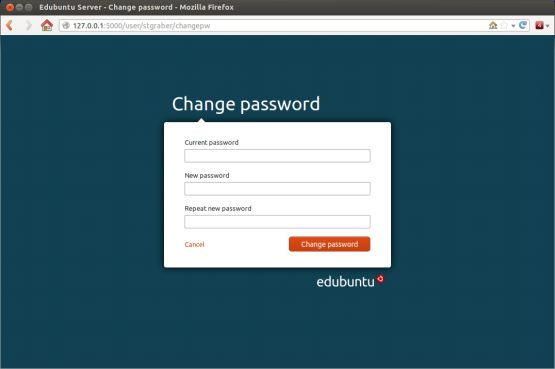
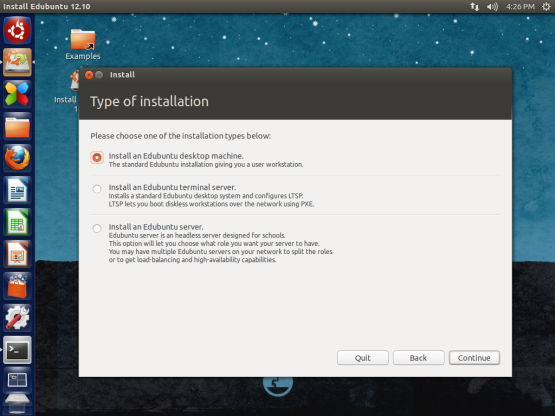
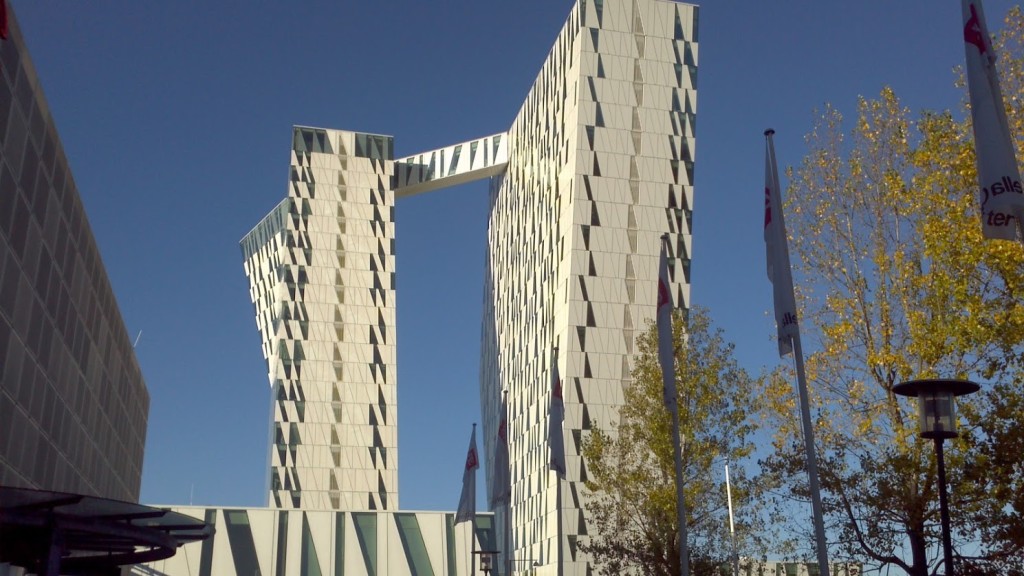
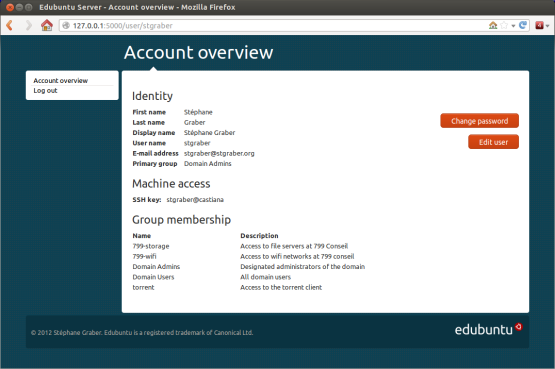
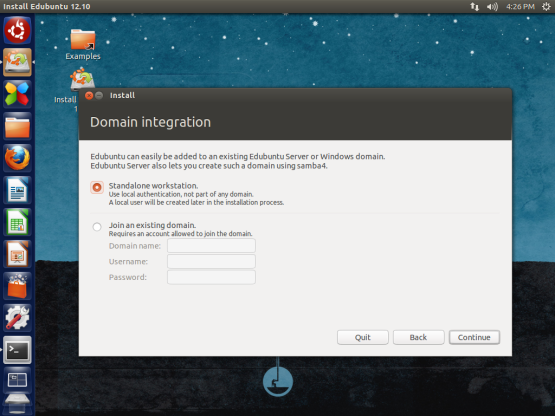
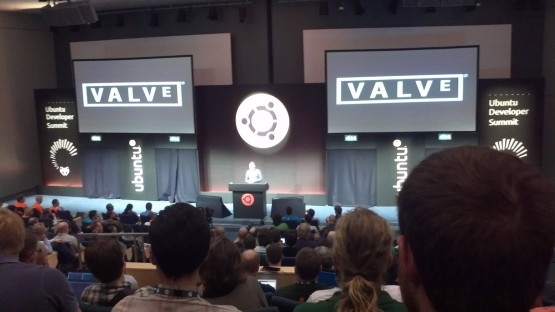
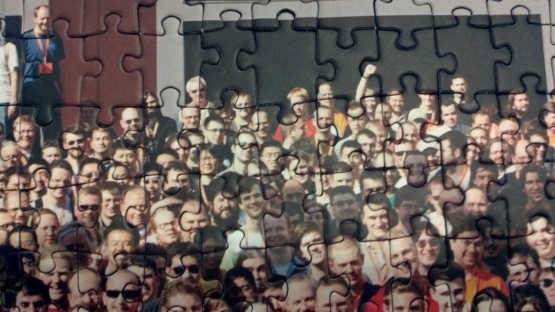
The War on Time Whoosh! I ve been incredibly quiet on my blog for the last 2-3 months. It s been a crazy time but I ll catch up and explain everything over the next few entries. Firstly, I d like to get out a few details about the last Ubuntu Developer Summit that took place in Copenhagen, Denmark in October. I m usually really good at getting my blog post out by the end of UDS or a day or two after, but this time it just flew by so incredibly fast for me that I couldn t keep up. It was a bit shorter than usual at 4 days, as apposed to the usual 5. The reason I heard for that was that people commented in previous post-UDS surveys that 5 days were too long, which is especially understandable for Canonical staff who are often in sprints (away from home) for the week before the UDS as well. I think the shorter period works well, it might need a bit more fine-tuning, I think the summary session at the end wasn t that useful because, like me, there wasn t enough time for people to process the vast amount of data generated during UDS and give nice summaries on it. Overall, it was a great get-together of people who care about Ubuntu and also many areas of interest outside of Ubuntu. Copenhagen, Denmark I didn t take many photos this UDS, my camera is broken and only takes blurry pics (not my fault I swear!). So I just ended up taking a few pictures with my phone. Go tag yourself on Google+ if you were there. One of the first interesting things I saw when arriving in Copenhagen was the hotel we stayed in. The origami-like design reminded me of the design of the Quantal Quetzel logo that is used for the current stable Ubuntu release. 2012-10-28_05-50-14_21 quantal The Road ahead for Edubuntu to 14.04 and beyond St phane previously posted about the vision we share for Edubuntu 14.04 and beyond, this was what was mostly discussed during UDS and how we ll approach those goals for the 13.04 release. This release will mostly focus on the Edubuntu Server aspect. If everything works out, you will be able to use the standard Edubuntu DVD to also install an Edubuntu Server system that will act as a Linux container host as well as an Active Directory compatible directory server using Samba 4. The catch with Samba 4 is that it doesn t have many administration tools for Linux yet. St phane has started work on a web interface for Edubuntu server that looks quite nice already. I m supposed to do some CSS work on it, but I have to say it looks really nice already, it s based on the MAAS service theme and St phane did some colour changes and fixes on it already. edu-server-account edu-server-password From the Edubuntu installer, you ll be able to choose whether this machine should act as a domain server, or whether you would like to join an existing domain. Since Edubuntu Server is highly compatible with Microsoft Active Directory, the installer will connect to it regardless of whether it s a Windows Domain or Edubuntu Domain. This should make it really easy for administrators in schools with mixed environments and where complete infrastructure migrations are planned. Authentication Options Choosing machine role You will be able to connect to the same domain whether you re using Edubuntu on thin clients, desktops or tablets and everything is controllable using the Epoptes administration tool. Many people are asking whether this is planned for Ubuntu / Ubuntu Server as well, since this could be incredibly useful in other organisations who have a domain infrastructure. It s currently meant to be easily rebrandable and the aim is to have it available as a general solution for Ubuntu once all the pieces work together. Empowering Ubuntu Flavours This cycle, Ubuntu is making some changes to the release schedule. One of the biggest changes made this cycle is that the alpha and beta releases are being dropped for the main Ubunut product. This session was about establishing how much divergence and changes the Ubuntu Flavours (Ubuntu Studio, Mythbuntu, Kubuntu, Lubuntu and Edubuntu) could have from the main release cycle. Edubuntu and Kubuntu decided to be a bit more conservative and maintain the snapshot releases. For Edubuntu it has certainly helped so far in identifying and finding some early bugs and I m already glad that we did that. Mythbuntu is also a notable exception since it will now only do LTS releases. We re tempted to change Edubuntu s official policy that the LTS releases are the main releases and treat the releases in between more like technology previews for the next LTS. It s already not such a far stretch from the truth, but we ll need to properly review and communicate that at some point. Valve at UDS and Steam for Linux One of the first plenaries was from Valve where Drew Bliss talked about Steam on Linux. Steam is one of the most popular publishing and distribution systems for games and up until recently it has only been available on Windows and Mac. Valve (the company behind Steam and many popular games such as Half Life and Portal) are actively working on porting games to run natively on Linux as well. Some people have asked me what I think about it, since the system is essentially using a free software platform to promote a lot of non-free software. My views on this is pretty simple, I think it s an overwhelmingly good thing for Linux desktop adoption and it s been proven to be a good thing for people who don t even play games. Since the announcement from Valve, Nvidia has already doubled perfomance in many cases for its Linux drivers. AMD, who have been slacking on Linux support the last few years have beefed up their support drastically with the announcement of new drivers that were released earlier this month. This new collection of AMD drivers also adds support for a range of cards where the drivers were completely discontinued, giving new life to many older laptops and machines which would be destined for the dumpster otherwise. This benefits not only gamers, but everyone from an average office worker who wants snappy office suite performance and fast web browsing to designers who work with graphics, videos and computer aided design. Also, it means that many home users who prefer Linux-based systems would no longer need to dual-boot to Windows or OS X for their games. While Steam will actively be promoting non-free software, it more than makes up for that by the enablement it does for the free software eco-system. I think anyone who disagrees with that is somewhat of a purist and should be more willing to make compromises in order to make progress. Ubuntu Release Changes Last week, there was a lot of media noise stating that Ubuntu will no longer do releases and will become a rolling release except for the LTS releases. This is certainly not the case, at least not any time soon. One meme that I ve noticed increasingly over the last UDSs was that there s an increasing desire to improve the LTS releases and using the usual Ubuntu releases more and more for experimentation purposes. I think there s more and more consensus that the current 6 month cycle isn t really optimal and that there must be a better way to get Ubuntu to the masses, it s just the details of what the better way is that leaves a lot to be figured out. There s a desire between developers to provide better support (better SRUs and backports) for the LTS releases to make it easier for people to stick with it and still have access to new features and hardware support. Having less versions between LTS releases will certainly make that easier. In my opinion it will probably take at least another 2 cycles worth of looking at all the factors from different angles and getting feedback from all the stakeholders before a good plan will have formed for the future of Ubuntu releases. I m glad to see that there is so much enthusiastic discussion around this and I m eager to see how Ubuntu s releases will continue to evolve. Lightning Talks Lightning talks are a lot like punk-rock songs. When it s good, it s really, really amazingly good and fun. When it s bad, at least it will be over soon :) Unfortunately, since it s been a few months since the UDS, I can t remember all the details of the lightning talks, but one thing that I find worth mentioning is that they re not just awesome for the topic they aim to produce (for example, the one lightning talks session I attended was on the topic of Tests in your software ), but since they are more demo-like than presentation-like, you get to learn a lot of neat tricks and cool things that you didn t know before. Every few minutes someone would do something and I d hear someone say something like Awesome! I didn t know you could do that with apt-daemon! . It s fun and educational and I hope lightning talks will continue to be a tradition at future UDSs. Social Stefano Rivera (fellow MOTU, Debianista, Capetonian, Clugger) wins the prize for person I ve seen in the most countries in one year. In 2012, I saw him in Cape Town for Scaleconf, Managua during Debconf, Oakland for a previous UDS and Copenhagen for this UDS. Sometimes when I look at silly little statistics like that I realise what a great adventure the year was! Between the meet n greet, an evening of lightning talks and the closing party (which was viking themed and pretty awesome) there was just one free evening left. I used it to gather with the Debian folk who were at UDS. It was great to see how many Debian people were attending, I think we had around a dozen or so people at the dinner and there were even more who couldn t make it since they work for Canonical or Linaro and had to attend team dinners the same evening. It was as usual, great to put some more faces to names and get to know some people better. It was also great to have a UDS with many strong technical community folk present who is willing to engage in discussion. There were still a few people who felt missing but it was less than at some previous UDSs. I also discovered my face on a few puzzles! They were a *great* idea, I saw a few people come and go to work on them during the week, they seem to have acted as good menial activities for people to fix their brains when they got fried during sessions :) 2012-10-31_14-32-28_374 Overall, this was a good and punchy UDS. I ll probably not make the next one in Oakland due to many changes in my life currently taking place (although I will remotely participate), but will probably make the one later this year, especially if it s in Europe. I ll also make a point of live-blogging a bit more, it s just so hard remembering all the details a few months after the fact. Thanks to everyone who contributed their piece in making it a great week!

26 January 2013

Vipin Nair: Final Project (1/N): Introducing Simple Realtime Notification Service

I am building a realtime notification system as my final semester project. The end product is a simple API that can be used by third party to push real time notification to client applications running on multiple platforms that include browsers and devices. Ideally, if your device can connect to the internet, it should be able to receive notifications. The non functional system requirements are pretty ambitious with scalability, availability and latency guarantees being the most important. Maybe little too ambitious for someone like me but then I will learn a lot in this process and its more fun when its challenging. To address the scalability issues, we ll have to distribute the system. A single system will not scale beyond a point and we need to be able to distribute the load over nodes effectively to be able to serve clients while maintaining the quality of service guarantees. With distribution comes a whole lot of other problems like latency, coordination and handling failures. We have a theorem that officially states that you cannot have the pie and eat it too; its called the CAP theorem. It says that you cannot have have a system that is Consistent, Available and Partition tolerant at the same time (Partition tolerance here refers to the ability of a system to continue operating in the event of partial failures). You can have any two but not all three in varying degrees. In a way this is good because you do not go chasing the holy grail because you know it doesn t exist. CAP Twelve Years Later: How the Rules Have Changed is a good read for some sensible advice when applying CAP theorem to real world scenarios. Reading Notes on Distributed Systems for Young Bloods by Jeff Hodges is highly recommended for anyone starting to work on distributed systems. All the commons assumptions that you may have when you are building a distributed system is wrong, so wrong that it is sort of standardized now under the title Fallacies of Distributed Computing. A more detailed article is available here. I will be using concepts as given in the Amazon Dynamo paper to make the system highly available. This one is big and will a get a blog post of its own. The notification service that I am building at its core is a Publish/Subscribe system with soft real time guarantees. Right now I am clueless about how to deal with latency guarantees but I hope to figure it out soon. Websockets will be the application layer protocol that ll be used to push to browsers and for the trasport layer protocol I hear the MQTT protocol fits to a T. More on this later. I will updating my blog as the project progresses, documenting all the design decisions and the rationale behind them. The code will be available online. This is not something new and I am aware of tools that can do this. While I will try to improve on what already exists, the point is, as mentioned earlier, to learn something new and build what will be considered good software. I have never attended a distributed systems theory class, so I am reading up on that as well. Vector clocks are really cool, if you ask me. If you think this is too big, to be accomplished by a single student programmer in a semester s worth of effort, I wouldn t deny that but then when you pick the right tools for a job, things become a lot more easier and you can afford to be ambitious. Erlang for the win! Feel free to comment on what I am building as I may be potentially unaware of a lot of things I should be knowing. I could use all your suggestions/advice to make things better.

Next.

Previous.