Search Results: "reg"

8 October 2017

Daniel Pocock: A step change in managing your calendar, without social media

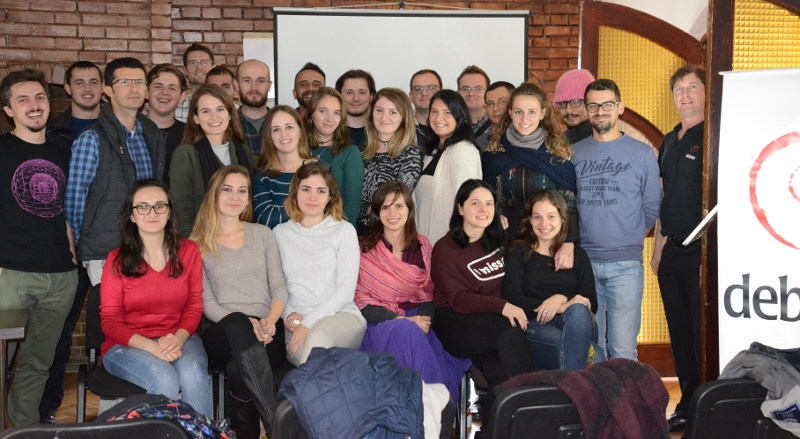
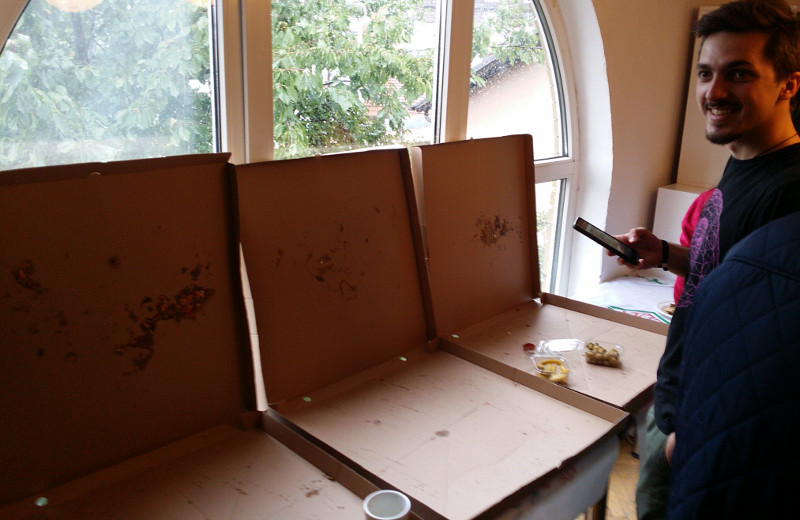
Have you been to an event recently involving free software or a related topic? How did you find it? Are you organizing an event and don't want to fall into the trap of using Facebook or Meetup or other services that compete for a share of your community's attention? Are you keen to find events in foreign destinations related to your interest areas to coincide with other travel intentions? Have you been concerned when your GSoC or Outreachy interns lost a week of their project going through the bureaucracy to get a visa for your community's event? Would you like to make it easier for them to find the best events in the countries that welcome and respect visitors? In many recent discussions about free software activism, people have struggled to break out of the illusion that social media is the way to cultivate new contacts. Wouldn't it be great to make more meaningful contacts by attending more a more diverse range of events rather than losing time on social media? Making it happen There are already a number of tools (for example, Drupal plugins and Wordpress plugins) for promoting your events on the web and in iCalendar format. There are also a number of sites like Agenda du Libre and GriCal who aggregate events from multiple communities where people can browse them. How can we take these concepts further and make a convenient, compelling and global solution? Can we harvest event data from a wide range of sources and compile it into a large database using something like PostgreSQL or a NoSQL solution or even a distributed solution like OpenDHT? Can we use big data techniques to mine these datasources and help match people to events without compromising on privacy? Why not build an automated iCalendar "to-do" list of deadlines for events you want to be reminded about, so you never miss the deadlines for travel sponsorship or submitting a talk proposal? I've started documenting an architecture for this on the Debian wiki and proposed it as an Outreachy project. It will also be offered as part of GSoC in 2018. Ways to get involved If you would like to help this project, please consider introducing yourself on the debian-outreach mailing list and helping to mentor or refer interns for the project. You can also help contribute ideas for the specification through the mailing list or wiki. Mini DebConf Prishtina 2017 This weekend I've been at the MiniDebConf in Prishtina, Kosovo. It has been hosted by the amazing Prishtina hackerspace community. Watch out for future events in Prishtina, the pizzas are huge, but that didn't stop them disappearing before we finished the photos:

Ricardo Mones: Cannot enable. Maybe the USB cable is bad?

One of the reasons which made me switch my old 17" BenQ monitor for a Dell U2413 three years ago was it had an integrated SD card reader. I find very convenient to take camera's card out, plug the card into the monitor and click on KDE device monitor's option Open with digiKam to download the photos or videos.

But last week, when trying to reconnect the USB cable to the new board just didn't work and the kernel log messages were not very hopeful:

[190231.770349] usb 2-2.3.3: new SuperSpeed USB device number 15 using xhci_hcd
[190231.890439] usb 2-2.3.3: New USB device found, idVendor=0bda, idProduct=0307
[190231.890444] usb 2-2.3.3: New USB device strings: Mfr=1, Product=2, SerialNumber=3
[190231.890446] usb 2-2.3.3: Product: USB3.0 Card Reader
[190231.890449] usb 2-2.3.3: Manufacturer: Realtek
[190231.890451] usb 2-2.3.3: SerialNumber: F141000037E1
[190231.896592] usb-storage 2-2.3.3:1.0: USB Mass Storage device detected
[190231.896764] scsi host8: usb-storage 2-2.3.3:1.0
[190232.931861] scsi 8:0:0:0: Direct-Access     Generic- SD/MMC/MS/MSPRO  1.00 PQ: 0 ANSI: 6
[190232.933902] sd 8:0:0:0: Attached scsi generic sg5 type 0
[190232.937989] sd 8:0:0:0: [sde] Attached SCSI removable disk
[190243.069680] hub 2-2.3:1.0: hub_ext_port_status failed (err = -71)
[190243.070037] usb 2-2.3-port3: cannot reset (err = -71)
[190243.070410] usb 2-2.3-port3: cannot reset (err = -71)
[190243.070660] usb 2-2.3-port3: cannot reset (err = -71)
[190243.071035] usb 2-2.3-port3: cannot reset (err = -71)
[190243.071409] usb 2-2.3-port3: cannot reset (err = -71)
[190243.071413] usb 2-2.3-port3: Cannot enable. Maybe the USB cable is bad?
...

I was sure USB 3.0 ports were working, because I've already used them with a USB 3.0 drive, so first thought was the monitor USB hub had failed. It seemed unlikely that a cable which has not been moved in 3 years was suddenly failing, is that even possible?

But a few moments later the same cable plugged into a USB 2.0 worked flawlessly and all photos could be downloaded, just noticeably slower.

A bit confused, and thinking that, since everything else was working maybe the cable had to be replaced, it happened I upgraded the system in the meantime. And luck came into rescue, because now it works again in 4.9.30-2+deb9u5 kernel. Looking at the package changelog it seems the fix was this usb:xhci:Fix regression when ATI chipsets detected . So, not a bad cable but a little kernel bug ;-)

Thanks to all involved, specially Ben for the package update!

Iain R. Learmonth: Tor Relays on Twitter

A while ago I played with a Twitter bot that would track radio amateurs using a packet radio position reporting system, tweet their location and a picture from Flickr that was taken near to their location and a link to their packet radio activity on aprs.fi. It s really not that hard to put these things together and they can be a lot of fun. The tweets looked like this: This isn t about building a system that serves any critical purpose, it s about fun. As the radio stations were chosen essentially at random, there could be some cool things showing up that you wouldn t otherwise have seen. Maybe you d spot a callsign of a station you ve spoken to before on HF or perhaps you d see stations in areas near you or in cool places. On Friday evening I took a go at hacking together a bot for Tor relays. The idea being to have regular snippets of information from the Tor network and perhaps you ll spot something insightful or interesting. Not every tweet is going to be amazing, but it wasn t running for very long before I spotted a relay very close to its 10th birthday: The relays are chosen at random, and tweet templates are chosen at random too. So far, tweets about individual relays can be about age or current bandwidth contribution to the Tor network. There are also tweets about how many relays run in a particular autonomous system (again, chosen at random) and tweets about the total number of relays currently running. The total relays tweets come with a map: The maps are produced using xplanet. The Earth will rotate to show the current side in daylight at the time the tweet is posted. Unfortunately, the bot currently cannot tweet as the account has been suspended. You should still be able to though and tweets will begin appearing again once I ve resolved the suspension. I plan to rewrite the mess of cron-activated Python scripts into a coherent Python (maybe Java) application and publish the sources soon. There are also a number of new templates for tweets I d like to explore, including number of relays and bandwidth contributed per family and statistics on operating system diversity. Update (2017-10-08): The @TorAtlas account should now be unsuspended.

4 October 2017

Daniel Silverstone: F/LOSS (in)activity, September 2017

In the interests of keeping myself "honest" regarding F/LOSS activity, here's a report, sadly it's not very good.
Unfortunately, September was a poor month for me in terms of motivation and energy for F/LOSS work. I did some amount of Gitano work, merging a patch from Richard Ipsum for help text of the config command. I also submitted another patch to the STM32F103xx Rust repository, though it wasn't a particularly big thing. Otherwise I've been relatively quiet on the Rust/USB stuff and have otherwise kept away from projects. Sometimes one needs to take a step away from things in order to recuperate and care for oneself rather than the various demands on ones time. This is something I had been feeling I needed for a while, and with a lack of motivation toward the start of the month I gave myself permission to take a short break. Next weekend is the next Gitano developer day and I hope to pick up my activity again then, so I should have more to report for October.

Dirk Eddelbuettel: RProtoBuf 0.4.11

RProtoBuf provides R bindings for the Google Protocol Buffers ("ProtoBuf") data encoding and serialization library used and released by Google, and deployed fairly widely in numerous projects as a language and operating-system agnostic protocol. A new releases RProtoBuf 0.4.11 appeared on CRAN earlier today. Not unlike the other recent releases, it is mostly a maintenance release which switches two of the vignettes over to using the pinp package and its template for vignettes.

Changes in RProtoBuf version 0.4.11 (2017-10-03)
  • The RProtoBuf-intro and RProtoBuf-quickref vignettes were converted to Rmarkdown using the templates and style file from the pinp package.
  • A few minor internal upgrades

CRANberries also provides a diff to the previous release. The RProtoBuf page has copies of the (older) package vignette, the 'quick' overview vignette, a unit test summary vignette, and the pre-print for the JSS paper. Questions, comments etc should go to the GitHub issue tracker off the GitHub repo.

This post by Dirk Eddelbuettel originated on his Thinking inside the box blog. Please report excessive re-aggregation in third-party for-profit settings.

3 October 2017

Christoph Egger: Observations on Catalunya

Some things I don't really understand reading in German media Too bad I didn't keep the links / articles from Sunday night.

Christoph Egger: Looking for a mail program + desktop environment

Seems it is now almost a decade since I migrated from Thunderbird to GNUS. And GNUS is an awesome mail program that I still rather like. However GNUS is also heavily quirky. It's essentially single-threaded and synchronous which means you either have to wait for the "IMAP check for new mails" to finish or you have to C-g abort it if you want the user interface to work; You have to wait for the "Move mail" to complete (which can take a while -- especially with dovecot-antispam training the filter) before you can continue working. It has it's funny way around TLS and certificate validation. And it seems to hang from time to time until it is C-g interrupted. So when I set up my new desktop machine I decided to try something else. My first try was claws-mail which seems OK but totally fails in the asynchronous area. While the GUI stays reactive, all actions that require IMAP interactions become incredibly slow when a background IMAP refresh is running. I do have quite some mailboxes and waiting the 5+ minutes after opening claws or whenever it decides to do a refresh is just to much. Now my last try has been Kmail -- also driven by the idea of having a more integrated setup with CalDAV and CardDAV around and similar goodies. And Kmail really compares nicely to claws in many ways. After all, I can use it while it's doing its things in the background. However the KDE folks seem to have dropped all support for the \recent IMAP flag which I heavily rely on. I do -- after all -- keep a GNUS like workflow where all unread mail (ref \seen) needs to still be acted upon which means there can easily be quite a few unread messages when I'm busy at the moment and just having a quick look at the new (ref \recent) mail to see if there's something super-urgent is essential. So I'm now looking for useful suggestions for a mail program (ideally with desktop integration) with the following essential features:

Dimitri John Ledkov: An interesting bug - network-manager, glibc, dpkg-shlibdeps, systemd, and finally binutils

Not so long ago I went to effectively recompile NetworkManager and fix up minor bug in it. It built fine across all architectures, was considered to be installable etc. And I was expecting it to just migrate across. At the time, glibc was at 2.26 in artful-proposed and NetworkManager was built against it. However release pocket was at glibc 2.24. In Ubuntu we have a ProposedMigration process in place which ensures that newly built packages do not regress in the number of architectures built for; installable on; and do not regress themselves or any reverse dependencies at runtime.

Thus before my build of NetworkManager was considered for migration, it was tested in the release pocket against packages in the release pocket. Specifically, since package metadata only requires glibc 2.17 NetworkManager was tested against glibc currently in the release pocket, which should just work fine....
autopkgtest [21:47:38]: test nm: [-----------------------
test_auto_ip4 (__main__.ColdplugEthernet)
ethernet: auto-connection, IPv4 ... FAIL ----- NetworkManager.log -----
NetworkManager: /lib/x86_64-linux-gnu/libc.so.6: version GLIBC_2.25' not found (required by NetworkManager)
At first I only saw failing tests, which I thought is transient failure. Thus they were retried a few times. Then I looked at the autopkgtest log and saw above error messages. Perplexed, I have started a lxd container with ubuntu artful, enabled proposed and installed just network-manager from artful-proposed and indeed a simple NetworkManager --help failed with above error from linker.

I am too young to know what dependency-hell means, since ever since I used Linux (Ubuntu 7.04) all glibc symbols were versioned, and dpkg-shlibdeps would generate correct minimum dependencies for a package. Alas in this case readelf confirmed that indeed /usr/sbin/NetworkManager requires 2.25 and dpkg depends is >= 2.17.

Further reading readelf output I checked that all of the glibc symbols used are 2.17 or lower, and only the "Version needs section '.gnu.version_r'" referenced GLIBC_2.25 symbol. Inspecting dpkg-shlibdeps code I noticed that it does not parse that section and only searches through the dynamic symbols used to establish the minimum required version.

Things started to smell fishy. On one hand, I trust dpkg-shlibdeps to generate the right dependencies. On the other hand I also trust linker to not tell lies either. Hence I opened a Debian BTS bug report about this issue.

At this point, I really wanted to figure out where the reference to 2.25 comes from. Clearly it was not from any private symbols as then the reference would be on 2.26. Checking glibc abi lists I found there were only a handful of symbols marked as 2.25
$ grep 2.25 ./sysdeps/unix/sysv/linux/x86_64/64/libc.abilist
GLIBC_2.25 GLIBC_2.25 A
GLIBC_2.25 __explicit_bzero_chk F
GLIBC_2.25 explicit_bzero F
GLIBC_2.25 getentropy F
GLIBC_2.25 getrandom F
GLIBC_2.25 strfromd F
GLIBC_2.25 strfromf F
GLIBC_2.25 strfroml F
Blindly grepping for these in network-manager source tree I found following:
$ grep explicit_bzero -r configure.ac src/
configure.ac: explicit_bzero],
src/systemd/src/basic/string-util.h:void explicit_bzero(void *p, size_t l);
src/systemd/src/basic/string-util.c:void explicit_bzero(void *p, size_t l)
src/systemd/src/basic/string-util.c: explicit_bzero(x, strlen(x));
First of all it seems like network-manager includes a partial embedded copy of systemd. Secondly that code is compiled into a temporary library and has autconf detection logic to use explicit_bzero. It also has an embedded implementation of explicit_bzero when it is not available in libc, however it does not have FORTIFY_SOURCES implementation of said function (__explicit_bzero_chk) as was later pointed out to me. And whilst this function is compiled into an intermediary noinst library, no functions that use explicit_bzero are used in the end by NetworkManger binary. To proof this, I've dropped all code that uses explicit_bzero, rebuild the package against glibc 2.26, and voila it only had Version reference on glibc 2.17 as expected from the end-result usage of shared symbols.

At this point toolchain bug was a suspect. It seems like whilst explicit_bzero shared symbol got optimised out, the version reference on 2.25 persisted to the linked binaries. At this point in the archive a snapshot version of binutils was in use. And in fact forcefully downgrading bintuils resulted in correct compilation / versions table referencing only glibc 2.17.

Mathias then took over a tarball of object files and filed upstream bug report against bintuils: "[2.29 Regression] ld.bfd keeps a version reference in .gnu.version_r for symbols which are optimized out". The discussion in that bug report is a bit beyond me as to me binutils is black magic. All I understood there was "we moved sweep and pass to another place due to some bugs", doing that introduced this bug, thus do multiple sweep and passes to make sure we fix old bugs and don't regress this either. Or something like that. Comments / Better description of the bintuils fix are welcomed.

Binutils got fixed by upstream developers, cherry-picked into debian, and ubuntu, network-manager got rebuild and everything is wonderful now. However, it does look like unused / deadend code paths tripped up optimisations in the toolchain which managed to slip by distribution package dependency generation and needless require a higher up version of glibc. I guess the lesson here is do not embed/compile unused code. Also I'm not sure why network-manager uses networkd internals like this, and maybe systemd should expose more APIs or serialise more state into /run, as most other things query things over dbus, private socket, or by establishing watches on /run/systemd/netif. I'll look into that another day.

Thanks a lot to Guillem Jover, Matthias Klose, Alan Modra, H.J. Lu, and others for getting involved. I would not be able to raise, debug, or fix this issue all by myself.

2 October 2017

Antoine Beaupr : My free software activities, September 2017

Debian Long Term Support (LTS) This is my monthly Debian LTS report. I mostly worked on the git, git-annex and ruby packages this month but didn't have time to completely use my allocated hours because I started too late in the month.

Ruby I was hoping someone would pick up the Ruby work I submitted in August, but it seems no one wanted to touch that mess, understandably. Since then, new issues came up, and not only did I have to work on the rubygems and ruby1.9 package, but now the ruby1.8 package also had to get security updates. Yes: it's bad enough that the rubygems code is duplicated in one other package, but wheezy had the misfortune of having two Ruby versions supported. The Ruby 1.9 also failed to build from source because of test suite issues, which I haven't found a clean and easy fix for, so I ended up making test suite failures non-fatal in 1.9, which they were already in 1.8. I did keep a close eye on changes in the test suite output to make sure tests introduced in the security fixes would pass and that I wouldn't introduce new regressions as well. So I published the following advisories:
  • ruby 1.8: DLA-1113-1, fixing CVE-2017-0898 and CVE-2017-10784. 1.8 doesn't seem affected by CVE-2017-14033 as the provided test does not fail (but it does fail in 1.9.1). test suite was, before patch:
    2199 tests, 1672513 assertions, 18 failures, 51 errors
    
    and after patch:
    2200 tests, 1672514 assertions, 18 failures, 51 errors
    
  • rubygems: uploaded the package prepared in August as is in DLA-1112-1, fixing CVE-2017-0899, CVE-2017-0900, CVE-2017-0901. here the test suite passed normally.
  • ruby 1.9: here I used the used 2.2.8 release tarball to generate a patch that would cover all issues and published DLA-1114-1 that fixes the CVEs of the two packages above. the test suite was, before patches:
    10179 tests, 2232711 assertions, 26 failures, 23 errors, 51 skips
    
    and after patches:
    1.9 after patches (B): 10184 tests, 2232771 assertions, 26 failures, 23 errors, 53 skips
    

Git I also quickly issued an advisory (DLA-1120-1) for CVE-2017-14867, an odd issue affecting git in wheezy. The backport was tricky because it wouldn't apply cleanly and the git package had a custom patching system which made it tricky to work on.

Git-annex I did a quick stint on git-annex as well: I was able to reproduce the issue and confirm an approach to fixing the issue in wheezy, although I didn't have time to complete the work before the end of the month.

Other free software work

New project: feed2exec I should probably make a separate blog post about this, but ironically, I don't want to spend too much time writing those reports, so this will be quick. I wrote a new program, called feed2exec. It's basically a combination of feed2imap, rss2email and feed2tweet: it allows you to fetch RSS feeds and send them in a mailbox, but what's special about it, compared to the other programs above, is that it is more generic: you can basically make it do whatever you want on new feed items. I have, for example, replaced my feed2tweet instance with it, using this simple configuration:
[anarcat]
url = https://anarc.at/blog/index.rss
output = feed2exec.plugins.exec
args = tweet "%(title)0.70s %(link)0.70s"
The sample configuration file also has examples to talk with Mastodon, Pump.io and, why not, a torrent server to download torrent files available over RSS feeds. A trivial configuration can also make it work as a crude podcast client. My main motivation to work on this was that it was difficult to extend feed2imap to do what I needed (which was to talk to transmission to download torrent files) and rss2email didn't support my workflow (which is delivering to feed-specific mail folders). Because both projects also seemed abandoned, it seemed like a good idea at the time to start a new one, although the rss2email community has now restarted the project and may produce interesting results. As an experiment, I tracked my time working on this project. It turns out it took about 45 hours to write that software. Considering feed2exec is about 1400 SLOC, that's 30 lines of code per hour. I don't know if that's slow or fast, but it's an interesting metric for future projects. It sure seems slow to me, but we need to keep in mind those 30 lines of code don't include documentation and repeated head banging on the keyboard. For example, I found two issues with the upstream feedparser package which I use to parse feeds which also seems unmaintained, unfortunately. Feed2exec is beta software at this point, but it's working well enough for me and the design is much simpler than the other programs of the kind. The main issue people can expect from it at this point is formatting issues or parse errors on exotic feeds, and noisy error messages on network errors, all of which should be fairly easy to fix in the test suite. I hope it will be useful for the community and, as usual, I welcome contributions, help and suggestions on how to improve the software.

More Python templates As part of the work on feed2exec, I did cleanup a few things in the ecdysis project, mostly to hook tests up in the CI, improve on the advancedConfig logger and cleanup more stuff. While I was there, it turns out that I built a pretty decent basic CI configuration for Python on GitLab. Whereas the previous templates only had a non-working Django example, you should now be able to chose a Python template when you configure CI on GitLab 10 and above, which should hook you up with normal Python setup procedures like setup.py install and setup.py test.

Selfspy I mentioned working on a monitoring tool in my last post, because it was a feature from Workrave missing in SafeEyes. It turns out there is already such a tool called selfspy. I did an extensive review of the software to make sure it wouldn't leak out confidential information out before using it, and it looks, well... kind of okay. It crashed on me at least once so far, which is too bad because then it loses track of the precious activity. I have used it at least once to figure out what the heck I worked on during the day, so it's pretty useful. I particularly used it to backtrack my work on feed2exec as I didn't originally track my time on the project. Unfortunately, selfspy seems unmaintained. I have proposed a maintenance team and hopefully the project maintainer will respond and at least share access so we don't end up in a situation like linkchecker. I also sent a bunch of pull requests to fix some issues like being secure by default and fixing the build. Apart from the crash, the main issue I have found with the software is that it doesn't detect idle time which means certain apps are disproportionatly represented in statistics. There are also some weaknesses in the crypto that should be adressed for people that encrypt their database. Next step is to package selfspy in Debian which should hopefully be simple enough...

Restic documentation security As part of a documentation patch on the Restic backup software, I have improved on my previous Perl script to snoop on process commandline arguments. A common flaw in shell scripts and cron jobs is to pass secret material in the environment (usually safe) but often through commandline arguments (definitely not safe). The challenge, in this peculiar case, was the env binary, but the last time I encountered such an issue was with the Drush commandline tool, which was passing database credentials in clear to the mysql binary. Using my Perl sniffer, I could get to 60 checks per second (or 60Hz). After reimplementing it in Python, this number went up to 160Hz, which still wasn't enough to catch the elusive env command, which is much faster at hiding arguments than MySQL, in large part because it simply does an execve() once the environment is setup. Eventually, I just went crazy and rewrote the whole thing in C which was able to get 700-900Hz and did catch the env command about 10-20% of the time. I could probably have rewritten this by simply walking /proc myself (since this is what all those libraries do in the end) to get better result, but then my point was made. I was able to prove to the restic author the security issues that warranted the warning. It's too bad I need to repeat this again and again, but then my tools are getting better at proving that issue... I suspect it's not the last time I have to deal with this issue and I am happy to think that I can come up with an even more efficient proof of concept tool the next time around.

Ansible 101 After working on documentation last month, I ended up writing my first Ansible playbook this month, converting my tasksel list to a working Ansible configuration. This was a useful exercise: it allow me to find a bunch of packages which have been removed from Debian and provides much better usability than tasksel. For example, it provides a --diff argument that shows which packages are missing from a given setup. I am still unsure about Ansible. Manifests do seem really verbose and I still can't get used to the YAML DSL. I could probably have done the same thing with Puppet and just run puppet apply on the resulting config. But I must admit my bias towards Python is showing here: I can't help but think Puppet is going to be way less accessible with its rewrite in Clojure and C (!)... But then again, I really like Puppet's approach of having generic types like package or service rather than Ansible's clunky apt/yum/dnf/package/win_package types...

Pat and Ham radio After responding (too late) to a request for volunteers to help in Puerto Rico, I realized that my amateur radio skills were somewhat lacking in the "packet" (data transmission in ham jargon) domain, as I wasn't used to operate a Winlink node. Such a node can receive and transmit actual emails over the airwaves, for free, without direct access to the internet, which is very useful in disaster relief efforts. Through summary research, I stumbled upon the new and very promising Pat project which provides one of the first user-friendly Linux-compatible Winlink programs. I provided improvements on the documentation and some questions regarding compatibility issues which are still pending. But my pet issue is the establishment of pat as a normal internet citizen by using standard protocols for receiving and sending email. Not sure how that can be implemented, but we'll see. I am also hoping to upload an official Debian package and hopefully write more about this soon. Stay tuned!

Random stuff I ended up fixing my Kodi issue by starting it as a standalone systemd service, instead of gdm3, which is now completely disabled on the media box. I simply used the following /etc/systemd/service/kodi.service file:
[Unit]
Description=Kodi Media Center
After=systemd-user-sessions.service network.target sound.target
[Service]
User=xbmc
Group=video
Type=simple
TTYPath=/dev/tty7
StandardInput=tty
ExecStart=/usr/bin/xinit /usr/bin/dbus-launch --exit-with-session /usr/bin/kodi-standalone -- :1 -nolisten tcp vt7
Restart=on-abort
RestartSec=5
[Install]
WantedBy=multi-user.target
The downside of this is that it needs Xorg to run as root, whereas modern Xorg can now run rootless. Not sure how to fix this or where... But if I put needs_root_rights=no in Xwrapper.config, I get the following error in .local/share/xorg/Xorg.1.log:
[  2502.533] (EE) modeset(0): drmSetMaster failed: Permission denied
After fooling around with iPython, I ended up trying the xonsh shell, which is supposed to provide a bash-compatible Python shell environment. Unfortunately, I found it pretty unusable as a shell: it works fine to do Python stuff, but then all my environment and legacy bash configuration files were basically ignored so I couldn't get working quickly. This is too bad because the project looked very promising... Finally, one of my TLS hosts using a Let's Encrypt certificate wasn't renewing properly, and I figured out why. It turns out the ProxyPass command was passing everything to the backend, including the /.well-known requests, which obviously broke ACME verification. The solution was simple enough, disable the proxy for that directory:
ProxyPass /.well-known/ !

James McCoy: Monthly FLOSS activity - 2017/09 edition

Debian devscripts Before deciding to take an indefinite hiatus from devscripts, I prepared one more upload merging various contributed patches and a bit of last minute cleanup. I also setup integration with Travis CI to hopefully catch issues sooner than "while preparing an upload", as was typically the case before. Anyone with push access to the Debian/devscripts GitHub repo can take advantage of this to test out changes, or keep the development branches up to date. In the process, I was able to make some improvements to travis.debian.net, namely support for DEB_BUILD_PROFILES and using a separate, minimal docker image for running autopkgtests. unibilium neovim Oddly, the mips64el builds were in BD-Uninstallable state, even though luajit's buildd status showed it was built. Looking further, I noticed the libluajit-5.1 ,-dev binary packages didn't have the mips64el architecture enabled, so I asked for it to be enabled. msgpack-c There were a few packages left which would FTBFS if I uploaded msgpack-c 2.x to unstable. All of the bug reports had either trivial work arounds (i.e., forcing use of the v1 C++ API) or trivial patches. However, I didn't want to continue waiting for the packages to get fixed since I knew other people had expressed interest in the new msgpack-c. Trying to avoid making other packages insta-buggy, I NMUed autobahn-cpp with the v1 work around. That didn't go over well, partly because I didn't send a finalized "Hey, I'd like to get this done and here's my plan to NMU" email. Based on that feedback, I decided to bump the remaining bugs to "serious" instead of NMUing and upload msgpack-c. Thanks to Jonas Smedegaard for quickly integrating my proposed fix for libdata-messagepack-perl. Hopefully, upstream has some time to review the PR soon. vim subversion
neovim

30 September 2017

Chris Lamb: Free software activities in September 2017

Here is my monthly update covering what I have been doing in the free software world in September 2017 (previous month):
Reproducible builds

Whilst anyone can inspect the source code of free software for malicious flaws, most software is distributed pre-compiled to end users. The motivation behind the Reproducible Builds effort is to allow verification that no flaws have been introduced either maliciously or accidentally during this compilation process by promising identical results are always generated from a given source, thus allowing multiple third-parties to come to a consensus on whether a build was compromised. I have generously been awarded a grant from the Core Infrastructure Initiative to fund my work in this area. This month I:
  • Published a short blog post about how to determine which packages on your system are reproducible. [...]
  • Submitted a pull request for Numpy to make the generated config.py files reproducible. [...]
  • Provided a patch to GTK upstream to ensure the immodules.cache files are reproducible. [...]
  • Within Debian:
    • Updated isdebianreproducibleyet.com, moving it to HTTPS, adding cachebusting as well as keeping the number up-to-date.
    • Submitted the following patches to fix reproducibility-related toolchain issues:
      • gdk-pixbuf: Make the output of gdk-pixbuf-query-loaders reproducible. (#875704)
      • texlive-bin: Make PDF IDs reproducible. (#874102)
    • Submitted a patch to fix a reproducibility issue in doit.
  • Categorised a large number of packages and issues in the Reproducible Builds "notes" repository.
  • Chaired our monthly IRC meeting. [...]
  • Worked on publishing our weekly reports. (#123, #124, #125, #126 & #127)


I also made the following changes to our tooling:
reproducible-check

reproducible-check is our script to determine which packages actually installed on your system are reproducible or not.

  • Handle multi-architecture systems correctly. (#875887)
  • Use the "restricted" data file to mask transient issues. (#875861)
  • Expire the cache file after one day and base the local cache filename on the remote name. [...] [...]
I also blogged about this utility. [...]
diffoscope

diffoscope is our in-depth and content-aware diff utility that can locate and diagnose reproducibility issues.

  • Filed an issue attempting to identify the causes behind an increased number of timeouts visible in our CI infrastructure, including running a number of benchmarks of recent versions. (#875324)
  • New features:
    • Add "binwalking" support to analyse concatenated CPIO archives such as initramfs images. (#820631).
    • Print a message if we are reading data from standard input. [...]
  • Bug fixes:
    • Loosen matching of file(1)'s output to ensure we correctly also match TTF files under file version 5.32. [...]
    • Correct references to path_apparent_size in comparators.utils.file and self.buf in diffoscope.diff. [...] [...]
  • Testing:
    • Make failing some critical flake8 tests result in a failed build. [...]
    • Check we identify all CPIO fixtures. [...]
  • Misc:
    • No need for try-assert-except block in setup.py. [...]
    • Compare types with identity not equality. [...] [...]
    • Use logging.py's lazy argument interpolation. [...]
    • Remove unused imports. [...]
    • Numerous PEP8, flake8, whitespace, other cosmetic tidy-ups.

strip-nondeterminism

strip-nondeterminism is our tool to remove specific non-deterministic results from a completed build.

  • Log which handler processed a file. (#876140). [...]

disorderfs

disorderfs is our FUSE-based filesystem that deliberately introduces non-determinism into directory system calls in order to flush out reproducibility issues.


Debian My activities as the current Debian Project Leader are covered in my monthly "Bits from the DPL" email to the debian-devel-announce mailing list.
Lintian I made a large number of changes to Lintian, the static analysis tool for Debian packages. It reports on various errors, omissions and general quality-assurance issues to maintainers: I also blogged specifically about the Lintian 2.5.54 release.

Patches contributed
  • debconf: Please add a context manager to debconf.py. (#877096)
  • nm.debian.org: Add pronouns to ALL_STATUS_DESC. (#875128)
  • user-setup: Please drop set_special_users hack added for "the convenience of heavy testers". (#875909)
  • postgresql-common: Please update README.Debian for PostgreSQL 10. (#876438)
  • django-sitetree: Should not mask test failures. (#877321)
  • charmtimetracker:
    • Missing binary dependency on libqt5sql5-sqlite. (#873918)
    • Please drop "Cross-Platform" from package description. (#873917)
I also submitted 5 patches for packages with incorrect calls to find(1) in debian/rules against hamster-applet, libkml, pyferret, python-gssapi & roundcube.

Debian LTS

This month I have been paid to work 15 hours on Debian Long Term Support (LTS). In that time I did the following:
  • "Frontdesk" duties, triaging CVEs, etc.
  • Documented an example usage of autopkgtests to test security changes.
  • Issued DLA 1084-1 and DLA 1085-1 for libidn and libidn2-0 to fix an integer overflow vulnerabilities in Punycode handling.
  • Issued DLA 1091-1 for unrar-free to prevent a directory traversal vulnerability from a specially-crafted .rar archive. This update introduces an regression test.
  • Issued DLA 1092-1 for libarchive to prevent malicious .xar archives causing a denial of service via a heap-based buffer over-read.
  • Issued DLA 1096-1 for wordpress-shibboleth, correcting an cross-site scripting vulnerability in the Shibboleth identity provider module.

Uploads
  • python-django:
    • 1.11.5-1 New upstream security release. (#874415)
    • 1.11.5-2 Apply upstream patch to fix QuerySet.defer() with "super" and "subclass" fields. (#876816)
    • 2.0~alpha1-2 New upstream alpha release of Django 2.0, dropping support for Python 2.x.
  • redis:
    • 4.0.2-1 New upstream release.
    • 4.0.2-2 Update 0004-redis-check-rdb autopkgtest test to ensure that the redis.rdb file exists before testing against it.
    • 4.0.2-2~bpo9+1 Upload to stretch-backports.
  • aptfs (0.11.0-1) New upstream release, moving away from using /var/lib/apt/lists internals. Thanks to Julian Andres Klode for a helpful bug report. (#874765)
  • lintian (2.5.53, 2.5.54) New upstream releases. (Documented in more detail above.)
  • bfs (1.1.2-1) New upstream release.
  • docbook-to-man (1:2.0.0-39) Tighten autopkgtests and enable testing via travis.debian.net.
  • python-daiquiri (1.3.0-1) New upstream release.

I also made the following non-maintainer uploads (NMUs):

Debian bugs filed
  • clipit: Please choose a sensible startup default in "live" mode. (#875903)
  • git-buildpackage: Please add a --reset option to gbp pull. (#875852)
  • bluez: Please default Device "friendly name" to hostname without domain. (#874094)
  • bugs.debian.org: Please explicitly link to packages,tracker .debian.org. (#876746)
  • Requests for packaging:
    • selfspy log everything you do on the computer. (#873955)
    • shoogle use the Google API from the shell. (#873916)

FTP Team

As a Debian FTP assistant I ACCEPTed 86 packages: bgw-replstatus, build-essential, caja-admin, caja-rename, calamares, cdiff, cockpit, colorized-logs, comptext, comptty, copyq, django-allauth, django-paintstore, django-q, django-test-without-migrations, docker-runc, emacs-db, emacs-uuid, esxml, fast5, flake8-docstrings, gcc-6-doc, gcc-7-doc, gcc-8, golang-github-go-logfmt-logfmt, golang-github-google-go-cmp, golang-github-nightlyone-lockfile, golang-github-oklog-ulid, golang-pault-go-macchanger, h2o, inhomog, ip4r, ldc, libayatana-appindicator, libbson-perl, libencoding-fixlatin-perl, libfile-monitor-lite-perl, libhtml-restrict-perl, libmojo-rabbitmq-client-perl, libmoosex-types-laxnum-perl, libparse-mime-perl, libplack-test-agent-perl, libpod-projectdocs-perl, libregexp-pattern-license-perl, libstring-trim-perl, libtext-simpletable-autowidth-perl, libvirt, linux, mac-fdisk, myspell-sq, node-coveralls, node-module-deps, nov-el, owncloud-client, pantomime-clojure, pg-dirtyread, pgfincore, pgpool2, pgsql-asn1oid, phpliteadmin, powerlevel9k, pyjokes, python-evdev, python-oslo.db, python-pygal, python-wsaccel, python3.7, r-cran-bindrcpp, r-cran-dotcall64, r-cran-glue, r-cran-gtable, r-cran-pkgconfig, r-cran-rlang, r-cran-spatstat.utils, resolvconf-admin, retro-gtk, ring-ssl-clojure, robot-detection, rpy2-2.8, ruby-hocon, sass-stylesheets-compass, selinux-dbus, selinux-python, statsmodels, webkit2-sharp & weston. I additionally filed 4 RC bugs against packages that had incomplete debian/copyright files against: comptext, comptext, ldc & python-oslo.concurrency.

29 September 2017

Dirk Eddelbuettel: Rcpp 0.12.13: Updated vignettes, and more

The thirteenth release in the 0.12.* series of Rcpp landed on CRAN this morning, following a little delay because Uwe Ligges was traveling and whatnot. We had announced its availability to the mailing list late last week. As usual, a rather substantial amount of testing effort went into this release so you should not expect any surprise. This release follows the 0.12.0 release from July 2016, the 0.12.1 release in September 2016, the 0.12.2 release in November 2016, the 0.12.3 release in January 2017, the 0.12.4 release in March 2016, the 0.12.5 release in May 2016, the 0.12.6 release in July 2016, the 0.12.7 release in September 2016, the 0.12.8 release in November 2016, the 0.12.9 release in January 2017, the 0.12.10.release in March 2017, the 0.12.11.release in May 2017, and the 0.12.12 release in July 2017 making it the seventeeth release at the steady and predictable bi-montly release frequency. Rcpp has become the most popular way of enhancing GNU R with C or C++ code. As of today, 1069 packages (and hence 73 more since the last release) on CRAN depend on Rcpp for making analytical code go faster and further, along with another 91 in BioConductor. This releases contains a large-ish update to the documentation as all vignettes (apart from the unit test one, which is a one-off) now use Markdown and the (still pretty new) pinp package by James and myself. There is also a new vignette corresponding to the PeerJ preprint James and I produced as an updated and current Introduction to Rcpp replacing the older JSS piece (which is still included as a vignette too). A few other things got fixed: Dan is working on const iterators you would expect with modern C++, Lei Yu spotted error in Modules, and more. See below for details.

Changes in Rcpp version 0.12.13 (2017-09-24)
  • Changes in Rcpp API:
    • New const iterators functions cbegin() and cend() have been added to several vector and matrix classes (Dan Dillon and James Balamuta in #748) starting to address #741).
  • Changes in Rcpp Modules:
    • Misplacement of one parenthesis in macro LOAD_RCPP_MODULE was corrected (Lei Yu in #737)
  • Changes in Rcpp Documentation:
    • Rewrote the macOS sections to depend on official documentation due to large changes in the macOS toolchain. (James Balamuta in #742 addressing issue #682).
    • Added a new vignette Rcpp-introduction based on new PeerJ preprint, renamed existing introduction to Rcpp-jss-2011 .
    • Transitioned all vignettes to the 'pinp' RMarkdown template (James Balamuta and Dirk Eddelbuettel in #755 addressing issue #604).
    • Added an entry on running 'compileAttributes()' twice to the Rcpp-FAQ (##745).

Thanks to CRANberries, you can also look at a diff to the previous release. As always, even fuller details are on the Rcpp Changelog page and the Rcpp page which also leads to the downloads page, the browseable doxygen docs and zip files of doxygen output for the standard formats. A local directory has source and documentation too. Questions, comments etc should go to the rcpp-devel mailing list off the R-Forge page.

This post by Dirk Eddelbuettel originated on his Thinking inside the box blog. Please report excessive re-aggregation in third-party for-profit settings.

28 September 2017

Matthias Klumpp: Adding fonts to software centers

Last year, the AppStream specification gained proper support for adding metadata for fonts, after Richard Hughes did some work on it years ago. We weren t happy with how fonts were handled at that time, so we searched for better solutions, which is why this took a bit longer to be done. Last year, I was implementing the final support for fonts in both appstream-generator (the metadata extractor used by Debian and a few others) as well as the AppStream specification. This blogpost was sitting on my todo list as a draft for a long time now, and I only just now managed to finish it, so sorry for announcing this so late. Fonts are already available via AppStream for a year, and this post just sums up the status quo and some neat tricks if you want to write metainfo files for fonts. If you are following AppStream (or the Debian fonts list), you know everything already  . Both Richard and I first tried to extract all the metadata to display fonts in a proper way to the users from the font files directly. This turned out to be very difficult, since font metadata is often wrong or incomplete, and certain desirable bits of metadata (like a longer description) are missing entirely. After messing around with different ways to solve this for days (afterall, by extracting the data from font files directly we would have hundreds of fonts directly available in software centers), I also came to the same conclusion as Richard: The best and easiest solution here is to mandate the availability of metainfo files per font. Which brings me to the second issue: What is a font? For any person knowing about fonts, they will understand one font as one font face, e.g. Lato Regular Italic or Lato Bold . A user however will see the font family as a font, e.g. just Lato instead of all the font faces separated out. Since AppStream data is used primarily by software centers, we want something that is easy for users to understand. Hence, an AppStream font components really describes a font family or collection of fonts, instead of individual font faces. We do also want AppStream data to be useful for system components looking for a specific font, which is why font components will advertise the individual font face names they contain via a
<provides/>
-tag. Naming fonts and making them identifiable is a whole other issue, I used a document from Adobe on font naming issues as a rough guideline while working on this. How to write a good metainfo file for a font is best shown with an example. Lato is a well-looking font family that we want displayed in a software center. So, we write a metainfo file for it an place it in
/usr/share/metainfo/com.latofonts.Lato.metainfo.xml
for the AppStream metadata generator to pick up:
<?xml version="1.0" encoding="UTF-8"?>
<component type="font">
  <id>com.latofonts.Lato</id>
  <metadata_license>FSFAP</metadata_license>
  <project_license>OFL-1.1</project_license>
  <name>Lato</name>
  <summary>A sanserif type face fam ily</summary>
  <description>
    <p>
      Lato is a sanserif type face fam ily designed in the Sum mer 2010 by Warsaw-based designer
       ukasz Dziedzic ( Lato  means  Sum mer  in Pol ish). In Decem ber 2010 the Lato fam ily
      was pub lished under the open-source Open Font License by his foundry tyPoland, with
      sup port from Google.
    </p>
  </description>
  <url type="homepage">http://www.latofonts.com/</url>
  <provides>
    <font>Lato Regular</font>
    <font>Lato Black Italic</font>
    <font>Lato Black</font>
    <font>Lato Bold Italic</font>
    <font>Lato Bold</font>
    <font>Lato Hairline Italic</font>
    ...
  </provides>
</component>
When the file is processed, we know that we need to look for fonts in the package it is contained in. So, the appstream-generator will load all the fonts in the package and render example texts for them as an image, so we can show users a preview of the font. It will also use heuristics to render an icon for the respective font component using its regular typeface. Of course that is not ideal what if there are multiple font faces in a package? What if the heuristics fail to detect the right font face to display? This behavior can be influenced by adding
<font/>
tags to a
<provides/>
tag in the metainfo file. The font-provides tags should contain the fullnames of the font faces you want to associate with this font component. If the font file does not define a fullname, the family and style are used instead. That way, someone writing the metainfo file can control which fonts belong to the described component. The metadata generator will also pick the first mentioned font name in the
<provides/>
list as the one to render the example icon for. It will also sort the example text images in the same order as the fonts are listed in the provides-tag. The example lines of text are written in a language matching the font using Pango. But what about symbolic fonts? Or fonts where any heuristic fails? At the moment, we see ugly tofu characters or boxes instead of an actual, useful representation of the font. This brings me to an inofficial extension to font metainfo files, that, as far as I know, only appstream-generator supports at the moment. I am not happy enough with this solution to add it to the real specification, but it serves as a good method to fix up the edge cases where we can not render good example images for fonts. AppStream-Generator supports the FontIconText and FontSampleText custom AppStream properties to allow metainfo file authors to override the default texts and autodetected values. FontIconText will override the characters used to render the icon, while FontSampleText can be a line of text used to render the example images. This is especially useful for symbolic fonts, where the heuristics usually fail and we do not know which glyphs would be representative for a font. For example, a font with mathematical symbols might want to add the following to its metainfo file:
<custom>
  <value key="FontIconText"> </value>
  <value key="FontSampleText">       ...         </value>
</custom>
Any unicode glyphs are allowed, but asgen will but some length restrictions on the texts. So, In summary:

Russell Coker: Process Monitoring

Since forking the Mon project to etbemon [1] I ve been spending a lot of time working on the monitor scripts. Actually monitoring something is usually quite easy, deciding what to monitor tends to be the hard part. The process monitoring script ps.monitor is the one I m about to redesign. Here are some of my ideas for monitoring processes. Please comment if you have any suggestions for how do do things better. For people who don t use mon, the monitor scripts return 0 if everything is OK and 1 if there s a problem along with using stdout to display an error message. While I m not aware of anyone hooking mon scripts into a different monitoring system that s going to be easy to do. One thing I plan to work on in the future is interoperability between mon and other systems such as Nagios. Basic Monitoring
ps.monitor tor:1-1 master:1-2 auditd:1-1 cron:1-5 rsyslogd:1-1 dbus-daemon:1- sshd:1- watchdog:1-2
I m currently planning some sort of rewrite of the process monitoring script. The current functionality is to have a list of process names on the command line with minimum and maximum numbers for the instances of the process in question. The above is a sample of the configuration of the monitor. There are some limitations to this, the master process in this instance refers to the main process of Postfix, but other daemons use the same process name (it s one of those names that s wrong because it s so obvious). One obvious solution to this is to give the option of specifying the full path so that /usr/lib/postfix/sbin/master can be differentiated from all the other programs named master. The next issue is processes that may run on behalf of multiple users. With sshd there is a single process to accept new connections running as root and a process running under the UID of each logged in user. So the number of sshd processes running as root will be one greater than the number of root login sessions. This means that if a sysadmin logs in directly as root via ssh (which is controversial and not the topic of this post merely something that people do which I have to support) and the master process then crashes (or the sysadmin stops it either accidentally or deliberately) there won t be an alert about the missing process. Of course the correct thing to do is to have a monitor talk to port 22 and look for the string SSH-2.0-OpenSSH_ . Sometimes there are multiple instances of a daemon running under different UIDs that need to be monitored separately. So obviously we need the ability to monitor processes by UID. In many cases process monitoring can be replaced by monitoring of service ports. So if something is listening on port 25 then it probably means that the Postfix master process is running regardless of what other master processes there are. But for my use I find it handy to have multiple monitors, if I get a Jabber message about being unable to send mail to a server immediately followed by a Jabber message from that server saying that master isn t running I don t need to fully wake up to know where the problem is. SE Linux One feature that I want is monitoring SE Linux contexts of processes in the same way as monitoring UIDs. While I m not interested in writing tests for other security systems I would be happy to include code that other people write. So whatever I do I want to make it flexible enough to work with multiple security systems. Transient Processes Most daemons have a second process of the same name running during the startup process. This means if you monitor for exactly 1 instance of a process you may get an alert about 2 processes running when logrotate or something similar restarts the daemon. Also you may get an alert about 0 instances if the check happens to run at exactly the wrong time during the restart. My current way of dealing with this on my servers is to not alert until the second failure event with the alertafter 2 directive. The failure_interval directive allows specifying the time between checks when the monitor is in a failed state, setting that to a low value means that waiting for a second failure result doesn t delay the notification much. To deal with this I ve been thinking of making the ps.monitor script automatically check again after a specified delay. I think that solving the problem with a single parameter to the monitor script is better than using 2 configuration directives to mon to work around it. CPU Use Mon currently has a loadavg.monitor script that to check the load average. But that won t catch the case of a single process using too much CPU time but not enough to raise the system load average. Also it won t catch the case of a CPU hungry process going quiet (EG when the SETI at Home server goes down) while another process goes into an infinite loop. One way of addressing this would be to have the ps.monitor script have yet another configuration option to monitor CPU use, but this might get confusing. Another option would be to have a separate script that alerts on any process that uses more than a specified percentage of CPU time over it s lifetime or over the last few seconds unless it s in a whitelist of processes and users who are exempt from such checks. Probably every regular user would be exempt from such checks because you never know when they will run a file compression program. Also there is a short list of daemons that are excluded (like BOINC) and system processes (like gzip which is run from several cron jobs). Monitoring for Exclusion A common programming mistake is to call setuid() before setgid() which means that the program doesn t have permission to call setgid(). If return codes aren t checked (and people who make such rookie mistakes tend not to check return codes) then the process keeps elevated permissions. Checking for processes running as GID 0 but not UID 0 would be handy. As an aside a quick examination of a Debian/Testing workstation didn t show any obvious way that a process with GID 0 could gain elevated privileges, but that could change with one chmod 770 command. On a SE Linux system there should be only one process running with the domain init_t. Currently that doesn t happen in Stretch systems running daemons such as mysqld and tor due to policy not matching the recent functionality of systemd as requested by daemon service files. Such issues will keep occurring so we need automated tests for them. Automated tests for configuration errors that might impact system security is a bigger issue, I ll probably write a separate blog post about it.

Dirk Eddelbuettel: RcppZiggurat 0.1.4

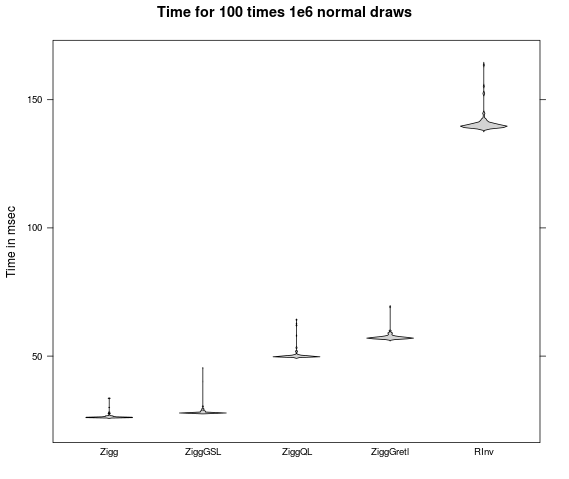
ziggurats A maintenance release of RcppZiggurat is now on the CRAN network for R. It switched the vignette to the our new pinp package and its two-column pdf default. The RcppZiggurat package updates the code for the Ziggurat generator which provides very fast draws from a Normal distribution. The package provides a simple C++ wrapper class for the generator improving on the very basic macros, and permits comparison among several existing Ziggurat implementations. This can be seen in the figure where Ziggurat from this package dominates accessing the implementations from the GSL, QuantLib and Gretl---all of which are still way faster than the default Normal generator in R (which is of course of higher code complexity). The NEWS file entry below lists all changes.

Changes in version 0.1.4 (2017-07-27)
  • The vignette now uses the pinp package in two-column mode.
  • Dynamic symbol registration is now enabled.

Courtesy of CRANberries, there is also a diffstat report for the most recent release. More information is on the RcppZiggurat page.

This post by Dirk Eddelbuettel originated on his Thinking inside the box blog. Please report excessive re-aggregation in third-party for-profit settings.

27 September 2017

Dirk Eddelbuettel: RcppAnnoy 0.0.10

A few short weeks after the more substantial 0.0.9 release of RcppAnnoy, we have a quick bug-fix update. RcppAnnoy is our Rcpp-based R integration of the nifty Annoy library by Erik. Annoy is a small and lightweight C++ template header library for very fast approximate nearest neighbours. Micha l Benesty noticed that our getItemsVector() function didn't, ahem, do much besides crashing. Simple bug, they happen--now fixed, and a unit test added. Changes in this version are summarized here:

Changes in version 0.0.10 (2017-09-25)
  • The getItemsVector() function no longer crashes (#24)

Courtesy of CRANberries, there is also a diffstat report for this release.

This post by Dirk Eddelbuettel originated on his Thinking inside the box blog. Please report excessive re-aggregation in third-party for-profit settings.

26 September 2017

Iain R. Learmonth: SMS Verification

I ve received an email today from Barclaycard with the following:
From time to time, to make sure it s you who s using your Barclaycard online, we ll send you a text with a verification code for you to use on the Verified by Visa screen that ll pop up on your payment page.
The proprietary nature of mobile phones with the hardware specifications and the software being closed off from inspection or audit and considered to be trade secrets make my phone and my tablet the least trusted devices I own and use. Due to this lack of trust, I ve often held back from using my phone or tablet for certain tasks where I can still get away with not doing so. I have experimented with having read-only access to my calendars and contacts to ensure that if my phone is compromised they can t just be wiped out, though in the end I had to give in as my calendar was becoming too difficult to manage using a paper system as part of entry for new events. I wanted to try to reduce the attractiveness of compromising my phone. Anyone that really wants to have a go at my phone could probably get in. It s an older Samsung Android phone on a UK network and software updates rarely come through in a timely manner. Anything that I give my phone access to is at risk and that risk needs to be balanced by some real world benefits. These are just the problems with the phone itself. When you re using SMS authentication, even with the most secure phone ever, you re still going to be using the phone network. SMS authentication is about equivalent, in terms of the security it really offers, to your mobile phone number being your password when it comes to an even mildly motivated attacker. You probably don t treat your mobile phone number as a password, nor does the provider or anyone you ve given it to, so you can assume that it s compromised. Why are mobile phones so popular for two factor (on in increasing numbers of cases, single factor) authentication? Not because they improve security but because they re convenient and everyone has one. This seems like a bad plan.

25 September 2017

Steve Kemp: Started work on an internet-of-things Radio

So recently I was in York at the Bytemark office, and I read a piece about building a radio in a Raspberry Pi magazine. It got me curious, so when I got home to sunny Helsinki I figured I'd have a stab at it. I don't have fixed goal in mind, but what I do have is: The initial goal is simple wire the receiver/decoder to the board, and listen to the radio. After that there are obvious extenstions, such as adding an LCD display to show the frequency (What's the frequency Kenneth), and later to show the station details, via RDS. Finally I could add some buttons/switches/tweaks for selecting next/previous stations, and adjusting the volume. Initially that'll be handled by pointing a browser at the IP-address of the device. The first attempt at using the RDA5807M chip was a failure, as the thing was too damn small and non-standardly sized. Adding header-pins to the chips was almost impossible, and when I did get them soldered on the thing just gave me static-hisses. However I later read the details of the chip more carefully and realized that it isn't powerfull enough to drive (even) headphones. It requires an amp of some kind. With that extra knowledge I was able to send the output to the powered-speakers I have sat beside my PC. My code is basic, it sets up the FM-receiver/decoder, and scans the spectrum. When it finds a station it outputs the name over the serial console, via RDS, and then just plays it. I've got an PAM8403-based amplifier board on-order, when that arrives I'll get back to the project, and hookup WiFi and a simple web-page to store stations, tuning, etc. My "token goal" at the moment is a radio that switches on at 7AM and switches off at 8AM. In addition to that it'll serve a web-page allowing interactive control, regardless of any buttons that are wired in. I also have another project in the wings. I've ordered a software-defined radio (USB-toy) which I'm planning to use to plot aircraft in real-time, as they arrive/depart/fly over Helsinki. No doubt I'll write that up too.

Chris Lamb: Lintian: We are all Perl developers now

Lintian is a static analysis tool for Debian packages, reporting on various errors, omissions and general quality-assurance issues to maintainers. I've previously written about my exploits with Lintian as well as authoring a short tutorial on how to write your own Lintian check. Anyway, I recently uploaded version 2.5.53 about two months since previous release. The biggest changes you may notice are supporting the latest version of the Debian Policy as well the addition of checks to encourage the migration to Python 3. Thanks to all who contributed patches, code review and bug reports to this release. The full changelog is as follows:
lintian (2.5.53) unstable; urgency=medium
  The "we are all Perl developers now" release.
  * Summary of tag changes:
    + Added:
      - alternatively-build-depends-on-python-sphinx-and-python3-sphinx
      - build-depends-on-python-sphinx-only
      - dependency-on-python-version-marked-for-end-of-life
      - maintainer-script-interpreter
      - missing-call-to-dpkg-maintscript-helper
      - node-package-install-in-nodejs-rootdir
      - override-file-in-wrong-package
      - package-installs-java-bytecode
      - python-foo-but-no-python3-foo
      - script-needs-depends-on-sensible-utils
      - script-uses-deprecated-nodejs-location
      - transitional-package-should-be-oldlibs-optional
      - unnecessary-testsuite-autopkgtest-header
      - vcs-browser-links-to-empty-view
    + Removed:
      - debug-package-should-be-priority-extra
      - missing-classpath
      - transitional-package-should-be-oldlibs-extra
  * checks/apache2.pm:
    + [CL] Fix an apache2-unparsable-dependency false positive by allowing
      periods (".") in dependency names.  (Closes: #873701)
  * checks/binaries.pm:
    + [CL] Apply patches from Guillem Jover & Boud Roukema to improve the
      description of the binary-file-built-without-LFS-support tag.
      (Closes: #874078)
  * checks/changes. pm,desc :
    + [CL] Ignore DFSG-repacked packages when checking for upstream
      source tarball signatures as they will never match by definition.
      (Closes: #871957)
    + [CL] Downgrade severity of orig-tarball-missing-upstream-signature
      from "E:" to "W:" as many common tools do not make including the
      signatures easy enough right now.  (Closes: #870722, #870069)
    + [CL] Expand the explanation of the
      orig-tarball-missing-upstream-signature tag to include the location
      of where dpkg-source will look. Thanks to Theodore Ts'o for the
      suggestion.
  * checks/copyright-file.pm:
    + [CL] Address a number of issues in copyright-year-in-future:
      - Prevent false positives in port numbers, email addresses, ISO
        standard numbers and matching specific and general street
        addresses.  (Closes: #869788)
      - Match all violating years in a line, not just the first (eg.
        "2000-2107").
      - Ignore meta copyright statements such as "Original Author". Thanks
        to Thorsten Alteholz for the bug report.  (Closes: #873323)
      - Expand testsuite.
  * checks/cruft. pm,desc :
    + [CL] Downgrade severity of file-contains-fixme-placeholder
      tag from "important" (ie. "E:") to "wishlist" (ie. "I:").
      Thanks to Gregor Herrmann for the suggestion.
    + [CL] Apply patch from Alex Muntada (alexm) to use "substr" instead
      of "substring" in mentions-deprecated-usr-lib-perl5-directory's
      description.  (Closes: #871767)
    + [CL] Don't check copyright_hints file for FIXME placeholders.
      (Closes: #872843)
    + [CL] Don't match quoted "FIXME" variants as they are almost always
      deliberate. Thanks to Adrian Bunk for the report.  (Closes: #870199)
    + [CL] Avoid false positives in missing source checks for "CSS Browser
      Selector".  (Closes: #874381)
  * checks/debhelper.pm:
    + [CL] Prevent a false positive of
      missing-build-dependency-for-dh_-command that can be exposed by
      following the advice for the recently added
      useless-autoreconf-build-depends tag.  (Closes: #869541)
  * checks/debian-readme. pm,desc :
    + [CL] Ensure readme-debian-contains-debmake-template also checks
      for templates "Automatically generated by debmake".
  * checks/description. desc,pm :
    + [CL] Clarify explanation of description-starts-with-leading-spaces
      tag. Thanks to Taylor Kline  for the report
      and patch.  (Closes: #849622)
    + [NT] Skip capitalization-error-in-description-synopsis for
      auto-generated packages (such as dbgsym packages).
  * checks/fields. desc,pm :
    + [CL] Ensure that python3-foo packages have "Section: python", not
      just python2-foo.  (Closes: #870272)
    + [RG] Do no longer require debug packages to be priority extra.
    + [BR] Use Lintian::Data for name/section mapping
    + [CL] Check for packages including "?rev=0&sc=0" in Vcs-Browser.
      (Closes: #681713)
    + [NT] Transitional packages should now be "oldlibs/optional" rather
      than "oldlibs/extra".  The related tag has been renamed accordingly.
  * checks/filename-length.pm:
    + [NT] Skip the check on auto-generated binary packages (such as
      dbgsym packages).
  * checks/files. pm,desc :
    + [BR] Avoid privacy-breach-generic false positives for legal.xml.
    + [BR] Detect install of node package under /usr/lib/nodejs/[^/]*$
    + [CL] Check for packages shipping compiled Java class files. Thanks
      Carn  Draug .  (Closes: #873211)
    + [BR] Privacy breach is no longer experimental.
  * checks/init.d.desc:
    + [RG] Do not recommend a versioned dependency on lsb-base in
      init.d-script-needs-depends-on-lsb-base.  (Closes: #847144)
  * checks/java.pm:
    + [CL] Additionally consider .cljc files as code to avoid false-
      positive codeless-jar warnings.  (Closes: #870649)
    + [CL] Drop problematic missing-classpath check.  (Closes: #857123)
  * checks/menu-format.desc:
    + [CL] Prevent false positives in desktop-entry-lacks-keywords-entry
      for "Link" and "Directory" .desktop files.  (Closes: #873702)
  * checks/python. pm,desc :
    + [CL] Split out Python checks from "scripts" check to a new, source
      check of type "source".
    + [CL] Check for python-foo without corresponding python3-foo packages
      to assist in Python 2.x deprecation.  (Closes: #870681)
    + [CL] Check for packages that Build-Depend on python-sphinx only.
      (Closes: #870730)
    + [CL] Check for packages that alternatively Build-Depend on the
      Python 2 and Python 3 versions of Sphinx.  (Closes: #870758)
    + [CL] Check for binary packages that depend on Python 2.x.
      (Closes: #870822)
  * checks/scripts.pm:
    + [CL] Correct false positives in
      unconditional-use-of-dpkg-statoverride by detecting "if !" as a
      valid shell prefix.  (Closes: #869587)
    + [CL] Check for missing calls to dpkg-maintscript-helper(1) in
      maintainer scripts.  (Closes: #872042)
    + [CL] Check for packages using sensible-utils without declaring a
      dependency after its split from debianutils.  (Closes: #872611)
    + [CL] Warn about scripts using "nodejs" as an interpreter now that
      nodejs provides /usr/bin/node.  (Closes: #873096)
    + [BR] Add a statistic tag giving interpreter.
  * checks/testsuite. desc,pm :
    + [CL] Remove recommendations to add a "Testsuite: autopkgtest" field
      to debian/control as it is added when needed by dpkg-source(1)
      since dpkg 1.17.1.  (Closes: #865531)
    + [CL] Warn if we see an unnecessary "Testsuite: autopkgtest" header
      in debian/control.
    + [NT] Recognise "autopkgtest-pkg-go" as a valid test suite.
    + [CL] Recognise "autopkgtest-pkg-elpa" as a valid test suite.
      (Closes: #873458)
    + [CL] Recognise "autopkgtest-pkg-octave" as a valid test suite.
      (Closes: #875985)
    + [CL] Update the description of unknown-testsuite to reflect that
      "autopkgtest" is not the only valid value; the referenced URL
      is out-of-date (filed as #876008).  (Closes: #876003)
  * data/binaries/embedded-libs:
    + [RG] Detect embedded copies of heimdal, libgxps, libquicktime,
      libsass, libytnef, and taglib.
    + [RG] Use an additional string to detect embedded copies of
      openjpeg2.  (Closes: #762956)
  * data/fields/name_section_mappings:
    + [BR] node- package section is javascript.
    + [CL] Apply patch from Guillem Jover to add more section mappings.
      (Closes: #874121)
  * data/fields/obsolete-packages:
    + [MR] Add dh-systemd.  (Closes: #872076)
  * data/fields/perl-provides:
    + [CL] Refresh perl provides.
  * data/fields/virtual-packages:
    + [CL] Update data file from archive. This fixes a false positive for
      "bacula-director".  (Closes: #835120)
  * data/files/obsolete-paths:
    + [CL] Add note to /etc/bash_completion.d entry regarding stricter
      filename requirements.  (Closes: #814599)
  * data/files/privacy-breaker-websites:
    + [BR] Detect custom donation logos like apache.
    + [BR] Detect generic counter website.
  * data/standards-version/release-dates:
    + [CL] Add 4.0.1 and 4.1.0 as known standards versions.
      (Closes: #875509)
  * debian/control:
    + [CL] Mention Debian Policy v4.1.0 in the description.
    + [CL] Add myself to Uploaders.
    + [CL] Drop unnecessary "Testsuite: autopkgtest"; this is implied from
      debian/tests/control existing.
  * commands/info.pm:
    + [CL] Add a --list-tags option to print all tags Lintian knows about.
      Thanks to Rajendra Gokhale for the suggestion.  (Closes: #779675)
  * commands/lintian.pm:
    + [CL] Apply patch from Maia Everett to avoid British spelling when
      using en_US locale.  (Closes: #868897)
  * lib/Lintian/Check.pm:
    + [CL] Stop emitting  maintainer,uploader -address-causes-mail-loops
      for @packages.debian.org addresses.  (Closes: #871575)
  * lib/Lintian/Collect/Binary.pm:
    + [NT] Introduce an "auto-generated" argument for "is_pkg_class".
  * lib/Lintian/Data.pm:
    + [CL] Modify Lintian::Data's "all" to always return keys in insertion
      order, dropping dependency on libtie-ixhash-perl.
  * helpers/coll/objdump-info-helper:
    + [CL] Apply patch from Steve Langasek to accommodate binutils 2.29
      outputting symbols in a different format on ppc64el.
      (Closes: #869750)
  * t/tests/fields-perl-provides/tags:
    + [CL] Update expected output to match new Perl provides.
  * t/tests/files-privacybreach/*:
    + [CL] Add explicit test for packages including external fonts via
      the Google Font API. Thanks to Ian Jackson for the report.
      (Closes: #873434)
    + [CL] Add explicit test for packages including external fonts via
      the Typekit API via <script/> HTML tags.
  * t/tests/*/desc:
    + [CL] Add missing entries in "Test-For" fields to make
      development/testing workflow less error-prone.
  * private/generate-tag-summary:
    + [CL] git-describe(1) will usually emit 7 hexadecimal digits as the
      abbreviated object name,  However, as this can be user-dependent,
      pass --abbrev=0 to ensure it does not vary between systems.  This
      also means we do not need to strip it ourselves.
  * private/refresh-*:
    + [CL] Use deb.debian.org as the default mirror.
    + [CL] Update locations of Contents-<arch> files; they are now
      namespaced by distribution (eg. "main").
 -- Chris Lamb <lamby@debian.org>  Wed, 20 Sep 2017 09:25:06 +0100

Next.

Previous.