Note: all this is my personal experience, on my personal machines, and I don t claim it to be the absolute truth. Also, I don t directly call out names, although if you live in Switzerland it s pretty easy to guess who the old provider is from some hints.
For a long time, I wanted to move away from my current (well, now past) provider, for a multitude of reasons. The main being that the company is very classic company, with classic support system, that doesn t work very well - I had troubles with their billing system that left me out cold without internet for 15 days, but for the recent few years, they were mostly OK, and changing to a different provider would have meant me routing a really long Ethernet cable around the apartment, so I kept postponing it. Yes, self-inflicted pain, I know.
Until the entire work-from-home thing, when the usually stable connection start degrading in a very linear fashion day-by-day (this is a graph that basically reflects download bandwidth):
1+ month download bandwidth test
At first, I didn t realise this, as even 100Mbps is still fast enough. But once the connection went below (I believe) 50Mbps, it became visible in day to day work. And since I work daily from home yeah. Not fun.
So I started doing speedtest.net - and oh my, ~20Mbps was a good result, usually 12-14Mbps. On a wired connection. On a connection that officially is supposed to be 600Mbps down. The upload speed was spot on, so I didn t think it was my router, but:
rebooted everything; yes, including the cable modem.
turned off firewall. and on. and off. of course, no change.
changed the Ethernet port used on my firewall.
changed firewall rules.
rebooted again.
Nothing helped. Once in a blue moon, speedtest would give me 100Mbps, but like once every two days, then it would be back and showing 8Mbps. Eight! It ended up as even apt update was tediously slow, and kernel downloads took ages
The official instructions for dealing with bad internet are a joke:
turn off everything.
change cable modem from bridged mode to router mode - which is not how I want the modem to work, so the test is meaningless; also, how can router mode be faster
disconnect everything else than the test computer.
download a program from somewhere (Windows/Mac/iOS, with a browser version too), and run it. yay for open platform!
And the best part: If you are not satisfied with the results, read our internet optimisation guide. If you are still not happy, use our community forums or our social platforms.
Given that it was a decline over 3-weeks, that I don t know of any computer component that would degrade this steadily but not throw any other errors, and that my upload speed was all good, I assumed it s the provider. Maybe I was wrong, but I wanted to do this anyway for a long while, so I went through the find how to route cable, check if other provider socket is good, order service, etc. dance, and less than a week later, I had the other connection.
Now, of course, bandwidth works as expected:
1+ month updated bandwidth test
Both download and upload are fine (the graph above is just download). Latency is also much better, towards many parts of the internet that matter. But what is shocking is the difference in jitter to some external hosts I care about. On the previous provider, a funny thing was that both outgoing and incoming pings had both more jitter and packet loss when done directly (IPv4 to IPv4) than when done over a VPN. This doesn t make sense, since VPN is just overhead over IPv4, but the graphs show it, and what I think happens is that a VPN flow is cached in the provider s routers, whereas a simple ping packet not. But, the fact that there s enough jitter for a ping to a not-very-far host doesn t make me happy.
Examples, outgoing:
Outgoing smokeping to public IPv4
Outgoing smokeping over VPN
And incoming:
Incoming smokeping to public IPv4
Incoming smokeping over VPN
Both incoming and outgoing show this weirdness - more packet loss and more jitter over VPN. Again, this is not a problem in practice, or not much, but makes me wonder what other shenanigans happen behind the scenes. You can also see clearly when the work from home traffic entered the picture and started significantly degrading my connection, even over the magically better VPN connection.
Switching to this week s view shows the (in my opinion) dramatic improvement in consistency of the connection:
Outgoing current week smokeping to public IPv4
Outgoing current week smokeping over VPN
No more packet loss, no more jitter. You can also see my VPN being temporarily down during provider switchover because my firewall was not quite correct for a moment.
And the last drill down, at high resolution, one day before and one day after switchover. Red is VPN, blue is plain IPv4, yellow is the missing IPv6 connection :)
Incoming old:
Incoming 1-day smokeping, old provider
and new:
Incoming 1-day smokeping, new provider
Outgoing old:
Outgoing 1-day smokeping, old provider
and new:
Outgoing 1-day smokeping, new provider
This is what I expect, ping-over-VPN should of course be slower than plain ping. Note that incoming and outgoing have slightly different consistency, but that is fine for me :) The endpoints doing the two tests are different, so this is expected. Reading the legend on the graphs for the incoming connection (similar story for outgoing):
before/after latency standard deviation: ~2.1ms 0.0ms.
before/after direct-vs-VPN difference: inconsistent consistent 0.4ms faster for direct ping.
So to my previous provider: it can be done better. Or at least, allow people easier ways to submit performance issue problems.
For me, the moral of the story is that I should have switched a couple of years ago, instead of being lazy. And that I m curious to see how IPv6 traffic will differ, if at all :)
Take care, everyone! And thanks for looking at these many graphs :)
Last night, Lars, Mark, and I discussed Jeremy Kun's The communicative value
of using Git well post. While a lot of our discussion was spawned by
the article, we did go off-piste a little, and I hope that my notes below will
enlighten you all as to a bit of how we see revision control these days. It
was remarkably pleasant to read an article where the comments section wasn't a
cesspool of horror, so if this posting encourages you to go and read the
article, don't stop when you reach the bottom -- the comments are good and
useful too.
This was a fairly non-contentious article for us though each of us had points
we wished to bring up and chat about it turned into a very convivial chat.
We saw the main thrust of the article as being about using the metadata of
revision control to communicate intent, process, and decision making. We
agreed that it must be possible to do so effectively with Mercurial (thus
deciding that the mention of it was simply a bit of clickbait / red herring)
and indeed Mark figured that he was doing at least some of this kind of thing
way back with CVS.
We all discussed how knowing the fundamentals of Git's data model improved our
ability to work wih the tool. Lars and I mentioned how jarring it has originally
been to come to Git from revision control systems such as Bazaar (bzr) but
how over time we came to appreciate Git for what it is. For Mark this was less
painful because he came to Git early enough that there was little more than the
fundamental data model, without much of the porcelain which now exists.
One point which we all, though Mark in particular, felt was worth considering
was that of distinguishing between published and unpublished changes. The
article touches on it a little, but one of the benefits of the workflow which
Jeremy espouses is that of using the revision control system as an integral
part of the review pipeline. This is perhaps done very well with Git based
workflows, but can be done with other VCSs.
With respect to the points Jeremy makes regarding making commits which are good
for reviewing, we had a general agreement that things were good and sensible,
to a point, but that some things were missed out on. For example, I raised
that commit messages often need to be more thorough than one-liners, but
Jeremy's examples (perhaps through expedience for the article?) were all pretty
trite one-liners which perhaps would have been entirely obvious from the commit
content. Jeremy makes the point that large changes are hard to review, and
Lars poined out that Greg Wilson did research in this area, and at
least one article mentions 200 lines as a maximum size of a
reviewable segment.
I had a brief warble at this point about how reviewing needs to be able to
consider the whole of the intended change (i.e. a diff from base to tip) not
just individual commits, which is also missing from Jeremy's article, but that
such a review does not need to necessarily be thorough and detailed since the
commit-by-commit review remains necessary. I use that high level diff as a way
to get a feel for the full shape of the intended change, a look at the end-game
if you will, before I read the story of how someone got to it. As an aside at
this point, I talked about how Jeremy included a 'style fixes' commit in his
example, but I loathe seeing such things and would much rather it was
either not in the series because it's unrelated to it; or else the style fixes
were folded into the commits they were related to.
We discussed how style rules, as well as commit-bisectability, and other rules
which may exist for a codebase, the adherence to which would form part of the
checks that a code reviewer may perform, are there to be held to when they
help the project, and to be broken when they are in the way of good
communication between humans.
In this, Lars talked about how revision control histories provide high level
valuable communication between developers. Communication between humans is
fraught with error and the rules are not always clear on what will work and
what won't, since this depends on the communicators, the context, etc. However
whatever communication rules are in place should be followed. We often say
that it takes two people to communicate information, but when you're writing
commit messages or arranging your commit history, the second party is often
nebulous "other" and so the code reviewer fulfils that role to concretise it
for the purpose of communication.
At this point, I wondered a little about what value there might be (if any) in
maintaining the metachanges (pull request info, mailing list discussions, etc)
for historical context of decision making. Mark suggested that this is useful
for design decisions etc but not for the style/correctness discussions which
often form a large section of review feedback. Maybe some of the metachange
tracking is done automatically by the review causing the augmentation of the
changes (e.g. by comments, or inclusion of design documentation changes) to
explain why changes are made.
We discussed how the "rebase always vs. rebase never" feeling flip-flopped in
us for many years until, as an example, what finally won Lars over was that he
wants the history of the project to tell the story, in the git commits, of how
the software has changed and evolved in an intentional manner. Lars said
that he doesn't care about the meanderings, but rather about a clear story
which can be followed and understood.
I described this as the switch from "the revision history is about what I did
to achieve the goal" to being more "the revision history is how I would hope
someone else would have done this". Mark further refined that to "The revision
history of a project tells the story of how the project, as a whole, chose to
perform its sequence of evolution."
We discussed how project history must necessarily then contain issue tracking,
mailing list discussions, wikis, etc. There are exist free software projects
where part of their history is forever lost because, for example, the project
moved from Sourceforge to Github, but made no effort (or was unable) to migrate
issues or somesuch. Linkages between changes and the issues they relate to
can easily be broken, though at least with mailing lists you can often rewrite
URLs if you have something consistent like a Message-Id.
We talked about how cover notes, pull request messages, etc. can thus also be
lost to some extent. Is this an argument to always use merges whose message
bodies contain those details, rather than always fast-forwarding? Or is it a
reason to encapsulate all those discussions into git objects which can be
forever associated with the changes in the DAG?
We then diverted into discussion of CI, testing every commit, and the benefits
and limitations of automated testing vs. manual testing; though I think that's
a little too off-piste for even this summary. We also talked about how commit
message audiences include software perhaps, with the recent movement toward
conventional commits and how, with respect to commit messages for
machine readability, it can become very complex/tricky to craft good commit
messages once there are multiple disparate audiences. For projects the size of
the Linux kernel this kind of thing would be nearly impossible, but for smaller
projects, perhaps there's value.
Finally, we all agreed that we liked the quote at the end of the article, and so
I'd like to close out by repeating it for you all...
Hal Abelson famously said:
Programs must be written for people to read, and only incidentally for
machines to execute.
Jeremy agrees, as do we, and extends that to the metacommit information as
well.
It has been way too long since my last interview, but as the
Debian Edu / Skolelinux
community is still active, and new people keep showing up on the IRC
channel #debian-edu and
the debian-edu mailing
list, I decided to give it another go. I was hoping someone else
might pick up the idea and run with it, but this has not happened as
far as I can tell, so here we are This time the announcement of a new
free software tool to
create a school year
book triggered my interest, and I decided to learn more about its
author.
Who are you, and how do you spend your days?
My name is Yvan MASSON, I live in France. I have my own one person
business in computer services. The work consist of visiting my
customers (person's home, local authority, small business) to give
advise, install computers and software, fix issues, and provide
computing usage training. I spend the rest of my time enjoying my
family and promoting free software.
What is your approach for promoting free
software?
When I think that free software could be suitable for someone, I
explain what it is, with simple words, give a few known examples, and
explain that while there is no fee it is a viable alternative in many
situations. Most people are receptive when you explain how it is
better (I simplify arguments here, I know that it is not so simple):
Linux works on older hardware, there are no viruses, and the software
can be audited to ensure user is not spied upon. I think the most
important is to keep a clear but moderated speech: when you try to
convince too much, people feel attacked and stop listening.
How did you get in contact with the Skolelinux / Debian Edu
project?
I can not remember how I first heard of Skolelinux / Debian Edu,
but probably on planet.debian.org. As I have been working for a
school, I have interest in this type of project.
The school I am involved in is a school for "children" between 14
and 18 years old. The French government has recommended free software
since 2012, but they do not always use free software themselves. The
school computers are still using the Windows operating system, but all
of them have the classic set of free software: Firefox ESR,
LibreOffice (with the excellent extension Grammalecte that indicates
French grammatical errors), SumatraPDF, Audacity, 7zip, KeePass2, VLC,
GIMP, Inkscape
What do you see as the advantages of Skolelinux / Debian
Edu?
It is free software! Built on Debian, I am sure that users are not
spied upon, and that it can run on low end hardware. This last point
is very important, because we really need to improve "green IT". I do
not know enough about Skolelinux / Debian Edu to tell how it is better
than another free software solution, but what I like is the "all in
one" solution: everything has been thought of and prepared to ease
installation and usage.
I like Free Software because I hate using something that I can not
understand. I do not say that I can understand everything nor that I
want to understand everything, but knowing that someone / some company
intentionally prevents me from understanding how things work is really
unacceptable to me.
Secondly, and more importantly, free software is a requirement to
prevent abuses regarding human rights and environmental care.
Humanity can not rely on tools that are in the hands of small group of
people.
What do you see as the disadvantages of Skolelinux / Debian
Edu?
Again, I don't know this project enough. Maybe a dedicated website?
Debian wiki works well for documentation, but is not very appealing to
someone discovering the project. Also, as Skolelinux / Debian Edu uses
OpenLDAP, it probably means that Windows workstations cannot use
centralized authentication. Maybe the project could use Samba as an
Active Directory domain controller instead, allowing Windows desktop
usage when necessary.
(Editors note: In fact Windows workstations can
use
the centralized authentication in a Debian Edu setup, at least for
some versions of Windows, but the fact that this is not well known can
be seen as an indication of the need for better documentation and
marketing. :)
Which free software do you use daily?
Nothing original: Debian testing/sid with Gnome desktop, Firefox,
Thunderbird, LibreOffice
Which strategy do you believe is the right one to use to
get schools to use free software?
Every effort to spread free software into schools is important,
whatever it is. But I think, at least where I live, that IT
professionals maintaining schools networks are still very "Microsoft
centric". Schools will use any working solution, but they need people
to install and maintain it. How to make these professionals sensitive
about free software and train them with solutions like Debian Edu /
Skolelinux is a really good question :-)
After losing a fair bit of hair due to quality and reliability issues
with our home laser multifunctional (Brother
DCP1600-series,
which we bought after checking it was meant to work on Linux And it
does, but with a very buggy, proprietary driver Besides being the
printer itself of quite low quality), we decided it was time to survey
the market again, and get a color inkjet printer. I was not very much
an enthusiast of the idea, until I found all of the major
manufacturers now offer refillable ink tanks instead of the darn
expensive cartridges of past decades. Lets see how it goes!
Of course, with over 20 years of training, I did my homework. I was
about to buy an Epson printer, but decided for an HP Ink Tank 410
Wireless
printer. The day it arrived, not wanting to fuss around too much to
get to see the results, I connected it to my computer using the USB
cable. Everything ran smoothly and happily! No driver hunting needed,
print quality is superb I hope, years from now, we stay with this
impression.
Next day, I tried to print over WiFi. Of course, it requires
configuration. And, of course, configuration strongly wants you to
do it from a Windows or MacOS machine which I don t have. OK, fall
back to Android For which an app download is required (and does not
thrill me, but what can I say. Oh and the app needs location
services to even run. Why Maybe because it interacts with the
wireless network in WiFi Direct, non-authenticated way?)
Anyway, things seem to work. But they don t My computers can
identify and connect with the printer from CUPS, but nothing ever
comes out. Printer paused, they say. Entering the printer s web
interface is somewhat ambiguous Following the old HP practices, I
tried http://192.168.1.75:9100/ (no point in hiding my internal IP),
and got a partial webpage sometimes (and nothing at all
othertimes). Seeing the printer got detected over ipps://, my
immediate reaction was to try pointing the browser to port 631. Seems
to work! Got some odd messages But it seems I ll soon debug the
issue away. I am not a familiar meddler in the dark lands of cups,
our faithful print server, but I had to remember my toolkit..
Sucess in enabling, but self-auto-disabled right away lpstat -t
was not more generous, reporting only it was still paused.
Some hours later (mix in attending kids and whatnot), I finally
remember to try cupsctl --debug-logging, and magically,
/var/log/cups/error_log turns from being quiet to being quite
chatty. And, of course, my first print job starts being processed:
D [10/May/2020:23:07:20 -0500] Report: jobs-active=1
(...)
D [10/May/2020:23:07:25 -0500] [Job 174] Start rendering...
(...)
D [10/May/2020:23:07:25 -0500] [Job 174] STATE: -connecting-to-device
(...)
Everything looks fine and dandy so far! But, hey, given nothing came
out of the printer keep reading one more second of logs (a couple
dozen lines)
D [10/May/2020:23:07:26 -0500] [Job 174] Connection is encrypted.
D [10/May/2020:23:07:26 -0500] [Job 174] Credentials are expired (Credentials have expired.)
D [10/May/2020:23:07:26 -0500] [Job 174] Printer credentials: HPC37468 / Thu, 01 Jan 1970 00:00:00 GMT / 28A59EF511A480A34798B6712DEEAE74
D [10/May/2020:23:07:26 -0500] [Job 174] No stored credentials.
D [10/May/2020:23:07:26 -0500] [Job 174] update_reasons(attr=0(), s=\"-cups-pki-invalid,cups-pki-changed,cups-pki-expired,cups-pki-unknown\")
D [10/May/2020:23:07:26 -0500] [Job 174] STATE: -cups-pki-expired
(...)
D [10/May/2020:23:08:00 -0500] [Job 174] envp[16]="CUPS_ENCRYPTION=IfRequested"
(...)
D [10/May/2020:23:08:00 -0500] [Job 174] envp[27]="PRINTER_STATE_REASONS=cups-pki-expired"
My first stabs were attempts to get CUPS not to care about expired
certificates, but it seems to have been hidden or removed from its
usual place. Anyway, I was already frustrated.
WTF Well, yes, turns out that from the Web interface, I paid some
attention to this the first time around, but let it pass (speaks
wonders about my security practices!):
So, the self-signed certificate the printer issued at itself expired
116 years before even being issued. (is this maybe a Y2k38 bug?
Sounds like it!) Interesting thing, my CUPS log mentions the printer
credentials to expire at the beginning of the Unix Epoch
(01 Jan 1970 00:00:00 GMT).
OK, lets clickety-click away on the Web interface Didn t take me
long to get to Network Advanced settings Certificates:
However, clicking on Configure leads me to the not very
reassuring
I don t remember what I did for the next couple of minutes. Kept
fuming Until I parsed again the output of lpstat -t, and found
that:
# lpstat -t
(...)
device for HP_Ink_Tank_Wireless_410_series_C37468_: ipps://HPF43909C37468.local:443/ipp/print
(...)
Hmmmm CUPS is connecting using good ol port 443, as if it were a
Web thingy What if I do the same?
Click on New self-signed certificate , click on Next, a couple of
reloads And a very nice color print came out of the printer, yay!
Now, it still baffles me (of course I checked!): The self-signed
certificate is now said to come from
Issuer : CN=HPC37468, L=Vancouver, ST=Washington, C=US, O=HP,OU=HP-IPG,
alright not that it matters (I can import a more meaningful one if I really feel like
it), but, why is it Issued On: 2019-06-14 and set to
Expires On: 2029-06-11?
Anyway, print quality is quite nice. I hope to keep the printer long
enough to rant at the certificate being expired in the future!
Comments
Jeff Epler (Adafruit) 2020-05-11 20:39:17 -0500
why is it Issued On: 2019-06-14 and set to Expires On: 2029-06-11?
Because it s 3650 days
Gunnar Wolf 2020-05-11 20:39:17 -0500
Nice catch! Thanks for doing the head-scratching for me
Adelheid Luise "Adele" Spitzeder ([ a dl ha t a de l p t tse d ]; 9 February 1832 27 or 28 October 1895), also known by her stage name Adele Vio, was a German actress, folk singer, and con artist. Initially a promising young actress, Spitzeder became a well-known private banker in 19th-century Munich when her theatrical success dwindled. Running what was possibly the first recorded Ponzi scheme, she offered large returns on investments by continually using the money of new investors to pay back the previous ones. At the height of her success, contemporary sources considered her the wealthiest woman in Bavaria.
Anne Bonny (possibly 1697 possibly April 1782)[1][2] was an Irish pirate operating in the Caribbean, and one of the most famous female pirates of all time.[3] The little that is known of her life comes largely from Captain Charles Johnson's A General History of the Pyrates.
Mary Read (1685 28 April 1721), also known as Mark Read, was an English pirate. She and Anne Bonny are two of the most famed female pirates of all time, and among the few women known to have been convicted of piracy during the early 18th century, at the height of the "Golden Age of Piracy".
While piracy was predominantly a male occupation, a minority of pirates were women.[1] On many ships, women (as well as young boys) were prohibited by the ship's contract, which all crew members were required to sign.[2] :303
In my last full-time position I managed the asset tracking database for my employer. It was one of those things that someone needed to do, and it seemed that only way that someone wouldn t equate to no-one was for me to do it which was ok. We used Snipe IT [1] to track the assets. I don t have enough experience with asset tracking to say that Snipe is better or worse than average, but it basically did the job. Asset serial numbers are stored, you can have asset types that allow you to just add one more of the particular item, purchase dates are stored which makes warranty tracking easier, and every asset is associated with a person or listed as available. While I can t say that Snipe IT is better than other products I can say that it will do the job reasonably well.
One problem that I didn t discover until way too late was the fact that the finance people weren t tracking serial numbers and that some assets in the database had the same asset IDs as the finance department and some had different ones. The best advice I can give to anyone who gets involved with asset tracking is to immediately chat to finance about how they track things, you need to know if the same asset IDs are used and if serial numbers are tracked by finance. I was pleased to discover that my colleagues were all honourable people as there was no apparent evaporation of valuable assets even though there was little ability to discover who might have been the last person to use some of the assets.
One problem that I ve seen at many places is treating small items like keyboards and mice as assets . I think that anything that is worth less than 1 hour s pay at the minimum wage (the price of a typical PC keyboard or mouse) isn t worth tracking, treat it as a disposable item. If you hire a programmer who requests an unusually expensive keyboard or mouse (as some do) it still won t be a lot of money when compared to their salary. Some of the older keyboards and mice that companies have are nasty, months of people eating lunch over them leaves them greasy and sticky. I think that the best thing to do with the keyboards and mice is to give them away when people leave and when new people join the company buy new hardware for them. If a company can t spend $25 on a new keyboard and mouse for each new employee then they either have a massive problem of staff turnover or a lack of priority on morale.
This review, for reasons that will hopefully become clear later, starts
with a personal digression.
I have been interested in political theory my entire life. That sounds
like something admirable, or at least neutral. It's not. "Interested"
means that I have opinions that are generally stronger than my depth of
knowledge warrants. "Interested" means that I like thinking about and
casting judgment on how politics should be done without doing the work of
politics myself. And "political theory" is different than politics in
important ways, not the least of which is that political actions have
rarely been a direct danger to me or my family. I have the luxury of
arguing about politics as a theory.
In short, I'm at high risk of being one of those people who has an opinion
about everything and shares it on Twitter.
I'm still in the process (to be honest, near the beginning of the process)
of making something useful out of that interest. I've had some success
when I become enough a part of a community that I can do some of the
political work, understand the arguments at a level deeper than theory,
and have to deal with the consequences of my own opinions. But those
communities have been on-line and relatively low stakes. For the big
political problems, the ones that involve governments and taxes and laws,
those that decide who gets medical treatment and income support and who
doesn't, to ever improve, more people like me need to learn enough about
the practical details that we can do the real work of fixing them, rather
than only making our native (and generally privileged) communities better
for ourselves.
I haven't found my path helping with that work yet. But I do have a
concrete, challenging, local political question that makes me coldly
furious: housing policy. Hence this book.
Golden Gates is about housing policy in the notoriously underbuilt
and therefore incredibly expensive San Francisco Bay Area, where I live.
I wanted to deepen that emotional reaction to the failures of housing
policy with facts and analysis. Golden Gates does provide some of
that. But this also turns out to be a book about the translation of
political theory into practice, about the messiness and conflict that
results, and about the difficult process of measuring success. It's also
a book about how substantial agreement on the basics of necessary
political change can still founder on the shoals of prioritization,
tribalism, and people who are interested in political theory.
In short, it's a book about the difficulty of changing the world instead
of arguing about how to change it.
This is not a direct analysis of housing policy, although Dougherty
provides the basics as background. Rather, it's the story of the
political fight over housing told primarily through two lenses: Sonja
Trauss, founder of BARF (the Bay Area Renters' Federation); and a Redwood
City apartment complex, the people who fought its rent increases, and the
nun who eventually purchased it. Around that framework, Dougherty writes
about the Howard Jarvis Taxpayers Association and the history of
California's Proposition 13, a fight over a development in Lafayette, the
logistics challenge of constructing sufficient housing even when approved,
and the political career of Scott Wiener, the hated opponent of every city
fighting for the continued ability to arbitrarily veto any new housing.
One of the things Golden Gates helped clarify for me is that there
are three core interest groups that have to be part of any discussion of
Bay Area housing: homeowners who want to limit or eliminate local change,
renters who are vulnerable to gentrification and redevelopment, and the
people who want to live in that area and can't (which includes people who
want to move there, but more sympathetically includes all the people who
work there but can't afford to live locally, such as teachers, day care
workers, food service workers, and, well, just about anyone who doesn't
work in tech). (As with any political classification, statements about
collectives may not apply to individuals; there are numerous people who
appear to fall into one group but who vote in alignment with another.)
Dougherty makes it clear that housing policy is intractable in part
because the policies that most clearly help one of those three groups hurt
the other two.
As advertised by the subtitle, Dougherty's focus is on the fight for more
housing. Those who already own homes whose values have been inflated by
artificial scarcity, or who want to preserve such stratified living
conditions as low-density, large-lot single-family dwellings within short
mass-transit commute of one of the densest cities in the United States,
don't get a lot of sympathy or focus here except as opponents. I
understand this choice; I also don't have much sympathy. But I do wish
that Dougherty had spent more time discussing the unsustainable promise
that California has implicitly made to homeowners: housing may be
impossibly expensive, but if you can manage to reach that pinnacle of
financial success, the ongoing value of your home is guaranteed. He does
mention this in passing, but I don't think he puts enough emphasis on the
impact that a single huge, illiquid investment that is heavily encouraged
by government policy has on people's attitude towards anything that
jeopardizes that investment.
The bulk of this book focuses on the two factions trying to make housing
cheaper: Sonja Trauss and others who are pushing for construction of more
housing, and tenant groups trying to manage the price of existing housing
for those who have to rent. The tragedy of Bay Area housing is that even
the faintest connection of housing to the economic principle of supply and
demand implies that the long-term goals of those two groups align.
Building more housing will decrease the cost of housing, at least if you
build enough of it over a long enough period of time. But in the short
term, particularly given the amount of Bay Area land pre-emptively
excluded from housing by environmental protection and the actions of the
existing homeowners, building more housing usually means tearing down
cheap lower-density housing and replacing it with expensive higher-density
housing. And that destroys people's lives.
I'll admit my natural sympathy is with Trauss on pure economic grounds.
There simply aren't enough places to live in the Bay Area, and the number
of people in the area will not decrease. To the marginal extent that
growth even slows, that's another tale of misery involving "super
commutes" of over 90 minutes each way. But the most affecting part of
this book was the detailed look at what redevelopment looks like for the
people who thought they had housing, and how it disrupts and destroys
existing communities. It's impossible to read those stories and not be
moved. But it's equally impossible to not be moved by the stories of
people who live in their cars during the week, going home only on weekends
because they have to live too far away from their jobs to commute.
This is exactly the kind of politics that I lose when I take a superficial
interest in political theory. Even when I feel confident in a guiding
principle, the hard part of real-world politics is bringing real people
with you in the implementation and mitigating the damage that any choice
of implementation will cause. There are a lot of details, and those
details matter. Without the right balance between addressing a long-term
deficit and providing short-term protection and relief, an attempt to
alleviate unsustainable long-term misery creates more short-term misery
for those least able to afford it. And while I personally may have less
sympathy for the relatively well-off who have clawed their way into their
own mortgage, being cavalier with their goals and their financial needs is
both poor ethics and poor politics. Mobilizing political opponents who
have resources and vote locally isn't a winning strategy.
Dougherty is a reporter, not a housing or public policy expert, so
Golden Gates poses problems and tells stories rather than describes
solutions. This book didn't lead me to a brilliant plan for fixing the
Bay Area housing crunch, or hand me a roadmap for how to get effectively
involved in local politics. What it did do is tell stories about what
political approaches have worked, how they've worked, what change they've
created, and the limitations of that change. Solving political problems
is work. That work requires understanding people and balancing concerns,
which in turn requires a lot of empathy, a lot of communication, and
sometimes finding a way to make unlikely allies.
I'm not sure how broad the appeal of this book will be outside of those
who live in the region. Some aspects of the fight for housing generalize,
but the Bay Area (and I suspect every region) has properties specific to
it or to the state of California. It has also reached an extreme of
housing shortage that is rivaled in the United States only by New York
City, which changes the nature of the solutions. But if you want to
seriously engage with Bay Area housing policy, knowing the background
explained here is nearly mandatory. There are some flaws I wish
Dougherty would have talked more about traffic and transit policy,
although I realize that could be another book but this is an important
story told well.
If this somewhat narrow topic is within your interests, highly
recommended.
Rating: 8 out of 10
Lots of hard work going on. schweer has just validated all of the Debian Edu images. Most of the normal install images have gone through tests with only a few minor hitches. Now moving on to the Live images. These take longer to download and test but we're working through them gradually.
As ever: a point release doesn't mean that the Debian you have is now obsolete - an apt-get / aptitude update will bring you up to the latest release very quickly. If you are updating regularly, you will have most of these files anyway. One small thing: the tools may report that the release version has changed. This is quite normal - base files have changed to reflect the new point release and this causes the notification. The notification is a small warning so that you are not taken by complete surprise but it is quite normal in the circumstances of a Debian point release.
Thanks to the other folk doing the hard work: 10+ hours and continuing.
Currently there is political debate about when businesses should be reopened after the Covid19 quarantine.
Small Businesses
One argument for reopening things is for the benefit of small businesses. The first thing to note is that the protests in the US say I need a haircut not I need to cut people s hair . Small businesses won t benefit from reopening sooner.
For every business there is a certain minimum number of customers needed to be profitable. There are many comments from small business owners that want it to remain shutdown. When the government has declared a shutdown and paused rent payments and provided social security to employees who aren t working the small business can avoid bankruptcy. If they suddenly have to pay salaries or make redundancy payouts and have to pay rent while they can t make a profit due to customers staying home they will go bankrupt.
Many restaurants and cafes make little or no profit at most times of the week (I used to be 1/3 owner of an Internet cafe and know this well). For such a company to be viable you have to be open most of the time so customers can expect you to be open. Generally you don t keep a cafe open at 3PM to make money at 3PM, you keep it open so people can rely on there being a cafe open there, someone who buys a can of soda at 3PM one day might come back for lunch at 1:30PM the next day because they know you are open. A large portion of the opening hours of a most retail companies can be considered as either advertising for trade at the profitable hours or as loss making times that you can t close because you can t send an employee home for an hour.
If you have seating for 28 people (as my cafe did) then for about half the opening hours you will probably have 2 or fewer customers in there at any time, for about a quarter the opening hours you probably won t cover the salary of the one person on duty. The weekend is when you make the real money, especially Friday and Saturday nights when you sometimes get all the seats full and people coming in for takeaway coffee and snacks. On Friday and Saturday nights the 60 seat restaurant next door to my cafe used to tell customers that my cafe made better coffee. It wasn t economical for them to have a table full for an hour while they sell a few cups of coffee, they wanted customers to leave after dessert and free the table for someone who wants a meal with wine (alcohol is the real profit for many restaurants).
The plans of reopening with social distancing means that a 28 seat cafe can only have 14 chairs or less (some plans have 25% capacity which would mean 7 people maximum). That means decreasing the revenue of the most profitable times by 50% to 75% while also not decreasing the operating costs much. A small cafe has 2-3 staff when it s crowded so there s no possibility of reducing staff by 75% when reducing the revenue by 75%.
My Internet cafe would have closed immediately if forced to operate in the proposed social distancing model. It would have been 1/4 of the trade and about 1/8 of the profit at the most profitable times, even if enough customers are prepared to visit and social distancing would kill the atmosphere. Most small businesses are barely profitable anyway, most small businesses don t last 4 years in normal economic circumstances.
This reopen movement is about cutting unemployment benefits not about helping small business owners. Destroying small businesses is also good for big corporations, kill the small cafes and restaurants and McDonald s and Starbucks will win. I think this is part of the motivation behind the astroturf campaign for reopening businesses.
Forbes has an article about this [1].
Psychological Issues
Some people claim that we should reopen businesses to help people who have psychological problems from isolation, to help victims of domestic violence who are trapped at home, to stop older people being unemployed for the rest of their lives, etc.
Here is one article with advice for policy makers from domestic violence experts [2]. One thing it mentions is that the primary US federal government program to deal with family violence had a budget of $130M in 2013. The main thing that should be done about family violence is to make it a priority at all times (not just when it can be a reason for avoiding other issues) and allocate some serious budget to it. An agency that deals with problems that affect families and only has a budget of $1 per family per year isn t going to be able to do much.
There are ongoing issues of people stuck at home for various reasons. We could work on better public transport to help people who can t drive. We could work on better healthcare to help some of the people who can t leave home due to health problems. We could have more budget for carers to help people who can t leave home without assistance. Wanting to reopen restaurants because some people feel isolated is ignoring the fact that social isolation is a long term ongoing issue for many people, and that many of the people who are affected can t even afford to eat at a restaurant!
Employment discrimination against people in the 50+ age range is an ongoing thing, many people in that age range know that if they lose their job and can t immediately find another they will be unemployed for the rest of their lives. Reopening small businesses won t help that, businesses running at low capacity will have to lay people off and it will probably be the older people. Also the unemployment system doesn t deal well with part time work. The Australian system (which I think is similar to most systems in this regard) reduces the unemployment benefits by $0.50 for every dollar that is earned in part time work, that effectively puts people who are doing part time work because they can t get a full-time job in the highest tax bracket! If someone is going to pay for transport to get to work, work a few hours, then get half the money they earned deducted from unemployment benefits it hardly makes it worthwhile to work. While the exact health impacts of Covid19 aren t well known at this stage it seems very clear that older people are disproportionately affected, so forcing older people to go back to work before there is a vaccine isn t going to help them.
When it comes to these discussions I think we should be very suspicious of people who raise issues they haven t previously shown interest in. If the discussion of reopening businesses seems to be someone s first interest in the issues of mental health, social security, etc then they probably aren t that concerned about such issues.
I believe that we should have a Universal Basic Income [3]. I believe that we need to provide better mental health care and challenge the gender ideas that hurt men and cause men to hurt women [4]. I believe that we have significant ongoing problems with inequality not small short term issues [5]. I don t think that any of these issues require specific changes to our approach to preventing the transmission of disease. I also think that we can address multiple issues at the same time, so it is possible for the government to devote more resources to addressing unemployment, family violence, etc while also dealing with a pandemic.
It's been a while since I've reported on my
Amiga floppy recovery project. With my bulky Philips CRT attached
I slowly ground through the process of importing all my floppy disks, which
is now done. The majority of disks were imported without errors. Commercial
disks were the most likely to fail to import. Possibly I'd have more success
with them if I used a different copying technique than X-COPY's default, but
my focus was not on the commercial disks.
I have not yet restored the use of my LCD TV with the Amiga. I was waiting to
hear back from Amiga Kit about an agreed
return, but despite their web store claiming they're still open for business, I
haven't been able to get any response to my emails to them since mid-February.
I've given up, written off that order and bought an RGB/SCART adaptor
elsewhere instead. Meanwhile my bulky CRT has returned to the loft.
The next step is pretty boring: time to check over my spreadsheet of disks,
the imported copies of them, make sure everything is accounted for and decide
whether to make further attempts for any that failed or write them off. For
commercial disks it's almost certainly less effort to track down someone else's
rip than to try mine again.
After that I can return to moving the Gotek floppy adaptor inside the Amiga
case, as described in the last entry, and start playing.
The apt.postgresql.org repository has been extended
to cover the arm64 architecture.
We had occasionally received user request to add "arm" in the past, but it was
never really clear which kind of "arm" made sense to target for PostgreSQL. In
terms of Debian architectures, there's (at least) armel, armhf, and arm64.
Furthermore, Raspberry Pis are very popular (and indeed what most users seemed
to were asking about), but the raspbian "armhf" port is incompatible with the
Debian "armhf" port.
Now that most hardware has moved to 64-bit, it was becoming clear that "arm64"
was the way to go. Amit Khandekar made it happen that
HUAWEI Cloud Services
donated a arm64 build host with enough resources to build the arm64 packages
at the same speed as the existing amd64, i386, and ppc64el architectures.
A few days later, all the build jobs were done, including passing all
test-suites. Very few arm-specific issues were encountered which makes me
confident that arm64 is a solid architecture to run PostgreSQL on.
We are targeting Debian buster (stable), bullseye (testing), and sid
(unstable), and Ubuntu bionic (18.04) and focal (20.04). To use the arm64
archive, just add the normal sources.list entry:
deb https://apt.postgresql.org/pub/repos/apt buster-pgdg main
Ubuntu focal
At the same time, I've added the next Ubuntu LTS release to apt.postgresql.org:
focal (20.04). It ships amd64, arm64, and ppc64el binaries.
deb https://apt.postgresql.org/pub/repos/apt focal-pgdg main
Old PostgreSQL versions
Many PostgreSQL extensions are still supporting older server versions that are
EOL. For testing these extension, server packages need to be available. I've
built packages for PostgreSQL 9.2+ on all Debian distributions, and all Ubuntu
LTS distributions. 9.1 will follow shortly.
This means people can move to newer base distributions in their .travis.yml,
.gitlab-ci.yml, and other CI files.
For way too long now something I had meant to start was a little series about tips, tricks, tools, and toys. I had mentioned the idea a few times to a friend or two, and generally received a thumbs up or a go for it . But it takes a little to get over the humb and get going. And it turns out that last week s r^4 talk on upgrading to R 4.0.0 hit some latent demand as we are now at 1400 views on YouTube. Wowser.
So hence without further ado, let s kick off T^4. Similar in spirit to R^4, but broader in scope and going beyond R. The opening slides explaining what we plan to do are here, and the video link follows below:
I realised this week that for some years I have been applying Inbox
Zero
indiscriminately to all e-mail that I receive, but this does not make
sense, and has some downsides.
My version of Inbox Zero works very well when applied to mail
addressed directly to me, and for mail to certain mailing lists, where
each post to the list might as well be addressed directly to me, in
addition to the list. However, I also receive by e-mail the following
things to which I now believe Inbox Zero should not be applied:
discussion lists like debian-devel, notmuch@notmuchmail.org, etc.
mail to aliases like ftpmaster@debian.org (except when that mail is
in reply to mail written by me from that address)
automated notifications received via Debian team mailing lists,
where I m not solely responsible for the Debian package in question,
such as notifications received via the Debian Perl Group s mailing
list
RSS feed articles supplied by my (years old but still going strong)
rss2email cronjob.
I believe that applying Inbox Zero to these sorts of things is not
only incorrect but is actually harming my engagement with these
mediums. Let us distinguish
processing e-mail this means applying the Inbox Zero decision
procedure to incoming messages, at set times during the day (I do it
once, around 4pm)
browsing and sometimes catching up RSS articles and list mail
looking through unread items, replying if I think I have
something useful to say, leaving things for later, and
occasionally marking all as read if I ve not had time for that
group of lists lately.
These should be kept apart. The easy case to see is why you shouldn t
apply the browsing/catching up approach to e-mail which should rather
be processed that s just the original wisdom of Inbox Zero. And
clearly you don t want ever to have to resort to just marking all mail
addressed directly to you as read.
What goes wrong, then, if you misapply the processing mentality to
e-mail which should, rather, be browsed/caught up? Well, the core of
Inbox Zero is deciding whether to read and reply to something right
now, add it to your todo list to handle later, or decide the mail
cannot be dealt with quickly but is not important enough to go on that
todo list. If you apply this to RSS articles and discussion list
mail, then the third option is basically ruled out, because almost
nothing on mailing lists or on blogs that I follow is important enough
to go on my list of Real Tasks. But then you re faced with either
reading the article/post right now, or discarding it. There is no
option to leave the item marked as unread and then maybe come back to
it, or postpone discarding it until you ve decided to catch up the
group. Applying Inbox Zero to discussion lists and RSS feeds creates
a false sense of urgency.
I ve realised that my implicit response to this has been reluctance to
subscribe to new mailing lists and feeds, because I don t have things
set up to allow me to read them in a leisurely way. But then I m
missing out on discussions and writing that might be relevant and
beneficial to me if I could only approach them when I m in a frame of
mind other than time to get my inbox down to zero .
This also means that subscribing to new mailing lists just in order to
post something has an unreasonably high cost: introducing all mail on
those lists into my Inbox Zero processing window.
So, what s needed is to make the virtual folder views which I use to
read new mail correspond cleanly to the distinction between mail to be
processed and mail to be browsed. I.e. for each virtual folder it
should be clear whether mail there is to be processed or to be
browsed. Then I can continue to use my processing views once per day,
and access the browsing views at leisure. (Indeed, I ve created a
keybinding to cycle through the new browsing views, and another to
catch them up.)
As I mentioned, some list mail ought to be processed. For example, I
want to process rather than browse the debian-policy mailing list, as
one of the Policy Editors. With notmuch, it s easy to include this
mail in the relevant processing views (I ve long had one processing
view for weekdays and another for weekends).
Additionally, I ve used a bit of Emacs Lisp to create a dynamic
uncategorised unread view which catches mail to be browsed which (i)
doesn t show up in one of the other virtual folders for mail to be
browsed, and (ii) doesn t show up in one of the processing views. So
now subscribing to a mailing list is cheap: mail will end up in the
uncategorised view, and I can decide whether to leave it there for a
low traffic list; create a new virtual folder for the list (trivial as
it s all just more Emacs Lisp, no actual moving of files required); or
unsubscribe.
I ve been experiencing nostalgia for my time in secondary school when
my friends and I had all sorts of interesting stuff flowing into our
mailstores, from RSS feeds to each other s blogs where we d post both
our own content and links elsewhere, RSS feeds to stranger s blogs,
and e-mails sent to each other with links. We didn t have to worry
about processing anything back then, as our e-mail accounts were used
for intellectual enrichment but not the completion of tasks. I think
I can recapture something of that with my new virtual folders for
browsing.
and then installed the avahi-daemon package to be able to reach this box
using foobar.local.
I noticed the presence of a world-writable
directory and so I
tightened the security of some of the default mount points by putting the following
in /etc/rc.local:
mount -o remount,nodev,nosuid /etc/network
mount -o remount,nodev,nosuid /lib/modules
chmod 755 /etc/network
exit 0
Hardware setup
My OS drive (/dev/sda) is a small SSD so that the GnuBee can run silently when the
spinning disks aren't needed. To hold the backup data on the other hand, I
got three 4-TB drives drives which I setup in a
RAID-5 array.
If the data were valuable, I'd use
RAID-6 instead
since it can survive two drives failing at the same time, but in this case
since it's only holding backups, I'd have to lose the original machine at
the same time as two of the 3 drives, a very unlikely scenario.
I created new gpt partition tables on /dev/sdb, /dev/sdbc, /dev/sdd
and used fdisk to create a single partition of type 29 (Linux RAID) on
each of them.
Then I created the RAID array:
mdadm /dev/md127 --create -n 3 --level=raid5 -a /dev/sdb1 /dev/sdc1 /dev/sdd1
and waited more than 24 hours for that operation to finish. Next, I
formatted the array:
mkfs.ext4 -m 0 /dev/md127
and added the following to /etc/fstab:
/dev/md127 /mnt/data/ ext4 noatime,nodiratime 0 2
To reduce unnecessary noise and reduce power consumption, I also installed
hdparm:
apt install hdparm
and configured all spinning drives to spin down after being idle for 10
minutes by putting the following in /etc/hdparm.conf:
Finally I setup smartmontools by putting
the following in /etc/smartd.conf:
/dev/sda -a -o on -S on -s (S/../.././02 L/../../6/03)
/dev/sdb -a -o on -S on -s (S/../.././02 L/../../6/03)
/dev/sdc -a -o on -S on -s (S/../.././02 L/../../6/03)
/dev/sdd -a -o on -S on -s (S/../.././02 L/../../6/03)
and restarting the daemon:
systemctl restart smartd.service
Backup setup
I started by using duplicity since I have
been using that tool for many years, but a 190GB backup took around 15 hours
on the GnuBee with gigabit ethernet.
After a friend suggested it, I took a look at
restic and I have to say that I am impressed. The
same backup finished in about half the time.
User and ssh setup
After hardening the ssh
setup as I
usually do, I created a user account for each machine needing to backup onto
the GnuBee:
Restic script
After reading through the excellent restic
documentation, I wrote the
following backup script, based on my old duplicity
script,
to reuse on all of my computers:
# Configure for each host
PASSWORD="XXXX"  # use  pwgen -s 64  to generate a good random password
BACKUP_HOME="/root/backup"
REMOTE_URL="sftp:foobar.local:"
RETENTION_POLICY="--keep-daily 7 --keep-weekly 4 --keep-monthly 12 --keep-yearly 2"
# Internal variables
SSH_IDENTITY="IdentityFile=$BACKUP_HOME/foobar_backups"
EXCLUDE_FILE="$BACKUP_HOME/exclude"
PKG_FILE="$BACKUP_HOME/dpkg-selections"
PARTITION_FILE="$BACKUP_HOME/partitions"
# If the list of files has been requested, only do that
if [ "$1" = "--list-current-files" ]; then
    RESTIC_PASSWORD=$PASSWORD restic --quiet -r $REMOTE_URL ls latest
    exit 0
# Show list of available snapshots
elif [ "$1" = "--list-snapshots" ]; then
    RESTIC_PASSWORD=$GPG_PASSWORD restic --quiet -r $REMOTE_URL snapshots
    exit 0
# Restore the given file
elif [ "$1" = "--file-to-restore" ]; then
    if [ "$2" = "" ]; then
        echo "You must specify a file to restore"
        exit 2
    fi
    RESTORE_DIR="$(mktemp -d ./restored_XXXXXXXX)"
    RESTIC_PASSWORD=$PASSWORD restic --quiet -r $REMOTE_URL restore latest --target "$RESTORE_DIR" --include "$2"   exit 1
    echo "$2 was restored to $RESTORE_DIR"
    exit 0
# Delete old backups
elif [ "$1" = "--prune" ]; then
    # Expire old backups
    RESTIC_PASSWORD=$PASSWORD restic --quiet -r $REMOTE_URL forget $RETENTION_POLICY
    # Delete files which are no longer necessary (slow)
    RESTIC_PASSWORD=$PASSWORD restic --quiet -r $REMOTE_URL prune
    exit 0
# Catch invalid arguments
elif [ "$1" != "" ]; then
    echo "Invalid argument: $1"
    exit 1
fi
# Check the integrity of existing backups
RESTIC_PASSWORD=$PASSWORD restic --quiet -r $REMOTE_URL check   exit 1
# Dump list of Debian packages
dpkg --get-selections > $PKG_FILE
# Dump partition tables from harddrives
/sbin/fdisk -l /dev/sda > $PARTITION_FILE
/sbin/fdisk -l /dev/sdb > $PARTITION_FILE
# Do the actual backup
RESTIC_PASSWORD=$PASSWORD restic --quiet --cleanup-cache -r $REMOTE_URL backup / --exclude-file $EXCLUDE_FILE
I run it with the following cronjob in /etc/cron.d/backups:
Debian project leader
This month contained the first week and a half or so of my term as Debian Project Leader. So far my focus has been getting up to speed and keeping the gears turning with day to day DPL tasks. The updates listed here will also be available on the DPL blog, where I aim to make more frequent updates.
During May, Debian Brazil will host Debian talks throughout the month which they will stream to their YouTube channel. You can find the schedule in this git repository, most of the talks will be in Portuguese, but on the 4th of May at 21:00 UTC, I ll be covering some Debian project topics for an hour or so and take some questions if there s time left.
2020-04-19: Handover session with Sam, our outgoing DPL. We covered a lot of questions I had and main areas that the DPL works in. Thanks to Sam for having taken the time to do this.
2020-04-21: First day of term! Thank you to everybody who showed support and have offered to help!
2020-04-21: Request feedback from the trademark team on an ongoing trademark dispute.
2020-04-21: Join the GNOME Advisory Board as a representative from Debian.
2020-04-21: Reply on an ongoing community conflict issue.
2020-04-21: Update Debian project summary for SPI annual report.
2020-04-21: Received a great e-mail introduction from Debian France and followed up on that.
2020-04-21: Posted Bits from the new DPL to debian-devel-announce.
2020-04-22: Became Debian s OSI Affilliate representative.
2020-04-22: Reply to a bunch of media inquiries for interviews, will do them later when initial priorities are on track.
2020-04-23: Resign as Debian FTP team trainee and mailing list moderator. In both these areas there are enough people taking care of it and I intend to maximise available time for DPL and technical areas in the project.
2020-04-25: Review outgoing mail for trademark team.
2020-04-25: Answer some questions in preparation for DAM/Front Desk delegation updates.
2020-04-26: Initiated wiki documentation for delegation updates process.
2020-04-27: Update delegation for the Debian Front Desk team.
2020-04-29: Schedule video call with Debian treasurer team.
2020-04-29: OSI affiliate call. Learned about some Open Source projects including OpenDev, OpenSourceMatters, FOSS Responders and Democracy Labs.
Debian Social
Work on the Debian Social project is progressing, we plan to start a separate blog syndicated to Planet Debian that contains progress and status updates. I ve been terrible at tracking the work we ve been doing on this, so for now, here are some micro updates:
We currently have more than 30 beta testers using and testing the Debian Social services.
PeerTube seems to be working quite well for the kind of needs Debian has for a video platform, our instance currently hosts 1379 videos (most of it being from DebConf and other Debian meetings) with a video archive source size of 449.9GB (videos are also re-encoded to other resolutions which uses additional space) and with 2 093 170 total views. We currently follow 9 other instances and have 2 users who have added non-DebConf content.
We set up a Jitsi instance for testing. After a bunch of initial hick-ups it seems to be very stable now. By default videos are 720p, but we capped it down to 480p so that it works better for people who have weaker connections. Please avoid using FireFox with this service for now, since it doesn t support some features that reduce bandwidth which leads to a drastically worse experience for other participants in the call. This should get better with some experimental new features in FireFox that should land in version 76 and that can be enabled in configuration flags. In the meantime, please use Chromium or another webkit(ish) based browser. We changed also changed from using Google s STUN servers (which brokers P2P connections when there are just two participants in a call) to using upstream s STUN servers which should result in some better privacy.
It s now possible for Debian projects to authenticate against Salsa, as nm.debian.org now does, although not all the sites we host yet supports that. We ve filed some bugs with upstream too with promising results so far. In the meantime, Debian is also looking at other solutions for identity management, like Keycloak and LemonLDAP NG. It will probably be a significant amount of time before this problem is completely solved, so at some point we re going to have to decide whether we want to keep authentication using Debian services as a must-have for our services in order to leave their beta state (otherwise they seem to be working fine).
MiniDebConf Online
In the DebConf video team, we ve been wondering whether we have all the tools required to successfully host a DebConf (or even a mini DebConf) entirely online. There s really just one way to know for sure, so we re going to host MiniDebConf Online from 28 May to 31 May. The first two days will be an online MiniDebCamp, where we can try to hold online spints, meetings and general chit-chat. The last two days will be for talks and lightnight talks, with BoFs likely to take place throughout the 4 days (this will probably be decided once we have a content team). Announcements should go out within the next week, in the meantime, save the dates.
Debian package uploads
2020-04-07: Upload package flask-autoindex (0.6.6-1) to Debian unstable.
2020-04-07: Upload package gamemode (1.5.1-1) to Debian unstable.
2020-04-08: Accept MR#2 for live-tasks (add usbutils to live-task-standard).
2020-04-08: Upload package live-tasks (11.0.2) to Debian unstable (Closes: #955526, #944578, #942837, #942834).
2020-04-08: Close live-config bug #655198 (Only affects squeeze which is no longer supported).
2020-04-08: Upload package live-config (11.0.1) to Debian unstable.
2020-04-08: Upload package calamares (3.2.22-1) to Debian unstable.
2020-04-15: Upload package xabacus (8.2.6-1) to Debian unstable.
2020-04-16: Merge MR#1 for gnome-shell-extension-dashtodock (new upstream release).
2020-04-16: Upload package gnome-shell-extension-dashtodock (67+git20200225-1) to Debian unstable.
2020-04-16: Merge MR#1 for gnome-shell-extension-hard-disk-led (fix some lintian issues).
2020-04-16: Merge MR#1 for gnome-shell-extension-system-monitor (fix some lintian issues).
2020-04-17: Upload package calamares (3.2.23-1) to Debian unstable.
2020-04-17: Upload package catimg (2.6.0-1) to Debian unstable (Closes: #956150).
2020-04-17: Upload package fabulous (0.3.0+dfsg1-7) to Debian unstable (Closes: #952242).
2020-04-17: Upload package gnome-shell-extension-system-monitor (38+git20200414-32cc79e-1) to Debian unstable (Closes: #956656, #956171).
2020-04-17: Upload package gnome-shell-extension-arc-menu (45-1) to Debian unstable (Closes: #956168).
2020-04-18: Upload package toot (0.26.0-1) to Debian unstable.
2020-04-23: Update packaging for gnome-shell-extension-tilix-shortcut, upstream section needs some additional work before release is possible.
2020-04-23: Upload package xabacus (8.2.7-1) to Debian unstable.
2020-04-27: Upload package gnome-shell-extension-dash-to-panel (37-1) to Debian unstable (Closes: #956162, #954978).
2020-04-27: Upload package gnome-shell-extension-dash-to-panel (37-2) to Debian unstable.
2020-04-27: Upload package gnome-shell-extension-dashtodock (68-1) to Debian unstable.
2020-04-30: Merge MR#8 for gamemode (add symbol files) (Closes: #952425).
2020-04-30: Merge MR#9 for gamemode (reduce number of -dev packages generated).
2020-04-30: Merge MR#10 for gamemode (deal better with upgrades on a buggy version).
2020-04-30: Manually merge changes from MR#11 for gamemode (packaging fixes).
2020-04-30: Upload package gamemode (1.5.1-2) to Debian unstable.
A SYNCNI article passed by on my Twitter feed this morning, talking about balancing work life balance while working from home in these times of COVID-19 inspired lock down. The associated Twitter thread expressed an interest in some words of advice from men to other men (because of course the original article has the woman having to do all the balancing).
This post does not contain the words of advice searched for, but it hopefully at least offers some reassurance that if you re finding all of this difficult you re not alone. From talking to others I don t think there s anything particularly special we re doing in this house; a colleague is taking roughly the same approach, and some of the other folk I ve spoken to in the local tech scene seem to be doing likewise.
First, the situation. Like many households both my wife and I work full time. We have a small child (not even a year and a half old yet). I work for a software startup, my wife is an HR business partner for a large multinational, dealing with employees all over the UK and Ireland. We re both luckily able to work from home easily - our day to day work machines are laptops, our employers were already setup with the appropriate VPN / video conferencing etc facilities. Neither of us has seen any decrease in workload since lock down; there are always more features and/or bugs to work on when it comes to a software product, and, as I m sure you can imagine, there has been a lot more activity in the HR sphere over the past 6 weeks as companies try to work out what to do.
On top of this our childcare arrangements, like everyone else s, are completely gone. Nursery understandably shut down around the same time as the schools (slightly later, but not by much) and contact with grandparents is obviously out (which they re finding hard). So we re left with trying to fit 2 full time jobs in with full time childcare, of a child who up until recently tried to go down stairs by continuing to crawl forward.
Make no mistake, this is hard. I know we are exceptionally lucky in our situation, but that doesn t mean we re finding it easy. We ve adopted an approach of splitting the day up. I take the morning slot (previously I would have got up with our son anyway), getting him up and fed while my wife showers. She takes over for a bit while I shower and dress, then I take over again in time for her to take her daily 8am conference call.
My morning is mostly taken up with childcare until nap time; I try to check in first thing to make sure there s nothing urgent, and get a handle on what I might have to work on later in the day. My local team mates know they re more likely to get me late morning and it s better to arrange meetings in the afternoon. Equally I work with a lot of folk on the US West coast, so shifting my hours to be a bit later is not a problem there.
After nap time (which, if we re lucky, takes us to lunch) my wife takes over. As she deals with UK/Ireland folk she often ends up having to take calls even while looking after our son; generally important meetings can be moved to the morning and meetings with folk who understand there might be a lot of pot banging going on in the background can happen in the afternoon.
Having started late I generally work late - past the point where I d normally get home; if I m lucky I pop my head in for bath time, but sometimes it s only for a couple of minutes. We alternate cooking; usually based on work load + meetings. For example tonight I m cooking while my wife catches up on some work after having put our son to bed. Last night I had a few meetings so my wife cooked.
So what s worked for us? Splitting the day means we can plan with our co-workers. We always make sure we eat together in the evening, and that generally is the cut-off point for either of us doing any work. I m less likely to be online in the evening because my study has become the place I work. That means I m not really doing any of my personal projects - this definitely isn t a case of being at home during lock down and having lots of time to achieve new things. It s much more of case of trying to find a sustainable way to get through the current situation, however long it might last.
For the foreseeable future I'm working for myself, as a contractor, here in sunny Helsinki, Finland.
My existing contract only requires me to work 1.5-2.0 days a week, meaning my week looks something like this:
Monday & Tuesday
I work for the client.
Wednesday - Friday
I act as a stay-at-home dad.
It does mean that I'm available for work Wednesday-Friday though, in the event I can find projects to work upon, or companies who would be willing to accept my invoices.
I think of myself as a sysadmin, but I know all about pipelines, automation, system administration, and coding in C, C++, Perl, Ruby, Golang, Lua, etc.
On the off-chance anybody reading this has a need for small projects, services, daemons, or APIs to be implemented then don't hesitate to get in touch.
I did manage to fill a few days over the past few weeks completing an online course from Helsinki Open University, Devops with Docker, it is possible I'll find some more courses to complete in the future. (There is an upcoming course Devops with Kubernetes which I'll definitely complete.)
Artemisia Lomi or Artemisia Gentileschi (US: / d nt l ski, -ti -/, Italian: [arte mi zja d enti leski]; July 8, 1593 c. 1656) was an Italian Baroque painter, now considered one of the most accomplished seventeenth-century artists working in the dramatic style of Caravaggio. In an era when women had few opportunities to pursue artistic training or work as professional artists, Artemisia was the first woman to become a member of the Accademia di Arte del Disegno in Florence and had an international clientele.
Maria Pellegrina Amoretti (1756 1787), was an Italian lawyer. She is referred to as the first woman to graduate in law in Italy, and the third woman to earn a degree.
Laura Maria Caterina Bassi (October 1711 20 February 1778) was an Italian physicist and academic. She received a doctoral degree in Philosophy from the University of Bologna in May 1732. She was the first woman to earn a professorship in physics at a university. She is recognized as the first woman in the world to be appointed a university chair in a scientific field of studies. Bassi contributed immensely to the field of science while also helping to spread the study of Newtonian mechanics through Italy.
Maria Gaetana Agnesi (UK: / n je zi/ an-YAY-zee,[1] US: / n -/ ahn-,[2][3] Italian: [ma ri a ae ta na a zi, - e z-];[4] 16 May 1718 9 January 1799) was an Italian mathematician, philosopher, theologian, and humanitarian. She was the first woman to write a mathematics handbook and the first woman appointed as a mathematics professor at a university.[5]
Elena Lucrezia Cornaro Piscopia (US: /k r n ro p sko pi /,[4] Italian: [ lena lu kr ttsja kor na ro pi sk pja]) or Elena Lucrezia Corner (Italian: [kor n r]; 5 June 1646 26 July 1684), also known in English as Helen Cornaro, was a Venetian philosopher of noble descent who in 1678 became one of the first women to receive an academic degree from a university, and the first to receive a Doctor of Philosophy degree.
Maria Tecla Artemisia Montessori (/ m nt s ri/ MON-tiss-OR-ee, Italian: [ma ri a montes s ri]; August 31, 1870 May 6, 1952) was an Italian physician and educator best known for the philosophy of education that bears her name, and her writing on scientific pedagogy. At an early age, Montessori broke gender barriers and expectations when she enrolled in classes at an all-boys technical school, with hopes of becoming an engineer. She soon had a change of heart and began medical school at the Sapienza University of Rome, where she graduated with honors in 1896. Her educational method is still in use today in many public and private schools throughout the world.
Rita Levi-Montalcini OMRI OMCA (US: / le vi mo nt l t i ni, l v-, li vi
m nt l -/, Italian: [ ri ta l vi montal t i ni]; 22 April 1909 30 December
2012) was an Italian Nobel laureate, honored for her work in neurobiology. She
was awarded the 1986 Nobel Prize in Physiology or Medicine jointly with colleague
Stanley Cohen for the discovery of nerve growth factor (NGF). From 2001 until
her death, she also served in the Italian Senate as a Senator for Life. This
honor was given due to her significant scientific contributions. On 22 April
2009, she became the first Nobel laureate ever to reach the age of 100, and
the event was feted with a party at Rome's City Hall. At the time of her
death, she was the oldest living Nobel laureate.
Margherita Hack Knight Grand Cross OMRI (Italian: [mar e ri ta (h)ak]; 12 June 1922 29 June 2013) was an Italian astrophysicist and scientific disseminator. The asteroid 8558 Hack, discovered in 1995, was named in her honour.
Samantha Cristoforetti (Italian pronunciation: [sa manta kristofo retti]; born 26 April 1977, in Milan) is an Italian European Space Agency astronaut, former Italian Air Force pilot and engineer. She holds the record for the longest uninterrupted spaceflight by a European astronaut (199 days, 16 hours), and until June 2017 held the record for the longest single space flight by a woman until this was broken by Peggy Whitson and later by Christina Koch. She is also the first Italian woman in space. Samantha Cristoforetti is also known as the first person who brewed an espresso in space.
Building packages in Debian seems to be a solved problem. But is it? At the bottom, installing the dpkg-dev package provides all the basic tools needed. Assuming that you already succeeded with creating the necessary packaging metadata (i.e., debian/changelog, debian/control, debian/copyright, etc., and there are great helper tools for this such ash dh-make, dh-make-golang, etc.,) it should be as simple as invoking the dpkg-buildpackage tool. So what's the big deal here?
The issue is that dpkg-buildpackage expects to be called with an appropriately setup build context, that is, it needs to be called in an environment that satisfies all build dependencies on the system. Let's say you are building a package for Debian unstable on your Debian stable system (this is the common scenario for the official Debian build machines), you would need your build to link against libraries in unstable, not stable. So how to tell the package build process where to find its dependencies?
The answer (in Debian and many other Linux distributions) is you do not at all. This is actually a somewhat surprising answer for software developers without a Linux distribution development background1. Instead, chroots "simulate" an environment that has all dependencies that we want to build against at the system locations, that is. /usr/lib, etc.
Chroots are basically full system installations in a subdirectory that includes system and application libraries. In order to use them, a package build needs to use the chroot(2) system call, which is a privileged operation. Also creating these system installations is a somewhat finicky process. In Debian, we have tools that make this process easier, the most popular ones are probably pbuilder(1)2 and sbuild(1)3. Still, they are somewhat clumsy to use, add significant levels of abstraction in the sense that they do quite a bit of magic behind the scenes to work hide the fact that privileged operations (need root to run chroot(2), etc.) are required. They are also somewhat brittle, for instance, if a build process is aborted (SIGKILL, or system crash), you may end up with temporary directories and files under userids other than your own that again may require root-privileges to cleanup.
What if there was an easy way to do all of the above without any process running as root? Enter rootless buildah.
Modern Linux container technologies allow unprivileged users to "untie" a process from the system (cf. the unshare(2) system call). This means that a regular user may run a process (and its child processes) in an "environment" where system calls behave differently and provide a configurable amount of isolation levels. This article demonstrates a novel build tool buildah, which is:
easy to setup build environment from the command line
secure, as no process needs to run as root
simple in architecture, requires no running daemon like for example docker
convenient to use: you can debug your debian/rules interactively
Architecturally, buildah is written in golang and compiled as a (mostly) statically linked executable. It builds on top a number of libraries written in golang, including github.com/containers/storage and github.com/containers/image. The overlay functionality is provided by the fuse-overlayfs(1) utility.
1.1 Preparation:
The Kernel in Debian bullseye (and in buster, and recent Ubuntu kernels to the best of my knowledge) do support usernamespaces, but leave them disabled by default. Here is how to enable them:
echo kernel.unprivileged_userns_clone = 1   sudo tee -a /etc/sysctl.d/containers.conf
systemctl -p /etc/sysctl.d/containers.conf
I have to admit that I'm not entirely sure why the Debian kernels don't enable usernamespaces by default. I've found a reference on stackexchange4 that claims this disables some "hardening" features in the Debian kernel. I also understand this step is not necessary if you chose to compile and run a vanilla upstream kernel. I'd appreciate a better reference and am happy to update this text.
This command downloads the image from docker.io and stores it locally in your home directory. Let's install essential utilities for building Debian packages:
The command on line 1 and 2 execute the installation of compilers and dpkg development tools such as dpkg-buildpackage, etc. The buildah config command in line 4 arranges that whenever you start a shell in the container, the current working directory in the container is in /src. Don't worry about this location not existing yet, we will make sources from your host system available there. The last command creates an OCI image with the name dpkg-dev. BTW, the name you use for the image in the commit command can be used in podman (but not the "containers"). See 5 and 6 for a comparison between podman and buildah.
buildah images -a
This output might look like this:
  REPOSITORY                 TAG      IMAGE          ID   CREATED   SIZE
  localhost/dpkg-dev         latest   b85c34f95d3e   16   seconds   ago    406   MB
  docker.io/library/debian   sid      9b90abe801db   11   hours     ago    124   MB
1.2 Running a package build
Now we have a working container with the reference in the variable $c. To use it conveniently with source packages that I have stored in /srv/scratch/packages/containers, let's introduce a shell alias r like this:
alias r='buildah run --tty -v /srv/scratch/packages/containers:/src $c '
This allows you to easily execute commands in that container:
r pwd
r bash
The last command will give you an interactive shell that we'll be using for building packages!
siretart@x1:~/scratch/packages/containers/libpod$ r bash
root@x1:/src# cd golang-github-openshift-imagebuilder
root@x1:/src/golang-github-openshift-imagebuilder# apt-get build-dep -y . Note, using directory '.' to get the build dependencies Reading package lists... Done Building dependency tree Reading state information... Done The following NEW packages will be installed: [...]
Assuming the package builds, the package build results are placed in /src inside the container, and are visible at ~/scratch/packages/containers on the host. There you can inspect, extract or even install them. The latter part allows you to interactively rebuild packages against updated dependencies, without the need of setting up an apt archive or similar.
2 Availability
The buildah(1) tool is available in debian/bullseye since 2019-12-17. Since is a golang binary, it only links dynamically against system libraries such as libselinux and libseccomp, which are all available in buster-backports. I'd expect buildah to just work on a debian/buster system as well provided you install those system libraries and possibly the backported Linux kernel.
Keeping the package at the latest upstream version is challenging because of its fast development pace that picks up new dependencies on golang libraries and new versions of existing libraries with every new upstream release. In general, this requires updating several source packages, and in many cases also uploading new source packages to the Debian archive that need to be processed by the Debian ftp-masters.
The Debian packages have not swept into the Ubuntu distributions yet, but I expect them to be included in the Ubuntu 20.10 release. In the mean time, ubuntu users can install the package that are provided by the upstream maintainers in the "Project Atomic" PPA at https://launchpad.net/~projectatomic/+archive/ubuntu/ppa
3 Related Tools
The buildah tool is accompanied with two "sister" tools:
The Skopeo package provides tooling to work with remote images registries. This allows you download, upload images to remote registries, convert container images between different formats. It has been available in Debian since 2020-04-20.
The podman tool is a 'docker' replacement. It provides a command-line interface that mimics the original docker command to an extend that a user familiar with docker might want to place this in their ~/.bashrc file:
alias docker='podman'
Unfortunately, at the time of writing podman is still being processed by the ftp-masters since 01-03-2020. At this point, I recommend building the package from our salsa repository at https://salsa.debian.org/debian/libpod
4 Conclusion
Building packages in the right build context is a fairly technical issue for which many tools have been written for. They come with different trade-off when it comes to usability. Containers promise a secure alternative to the tried and proven chroot-based approaches, and the buildah makes using this technology very easy to use.
I'd love to get into a conversation with you on how these tools work for you, and would like to encourage participation and assistance with keeping the complicated software stack up-to-date in Debian (and by extension, in derived distribution such as Ubuntu, etc.).
At my day-job, we build millions of lines of C++ code on Solaris10 and AIX6, where concepts such as "chroots" are restricted to the super user 'root' and is therefore not available to developers, not even through wrappers. Instead, libraries and headers are installed into "refroots", that is, subdirectories that mimic the structure of the "sysroot" directories that are used in the embedded Linux community for cross-compiling packages, and we use Makefiles that set include flags (-I rules and -L flags) to tell the compiler and linker where to look.
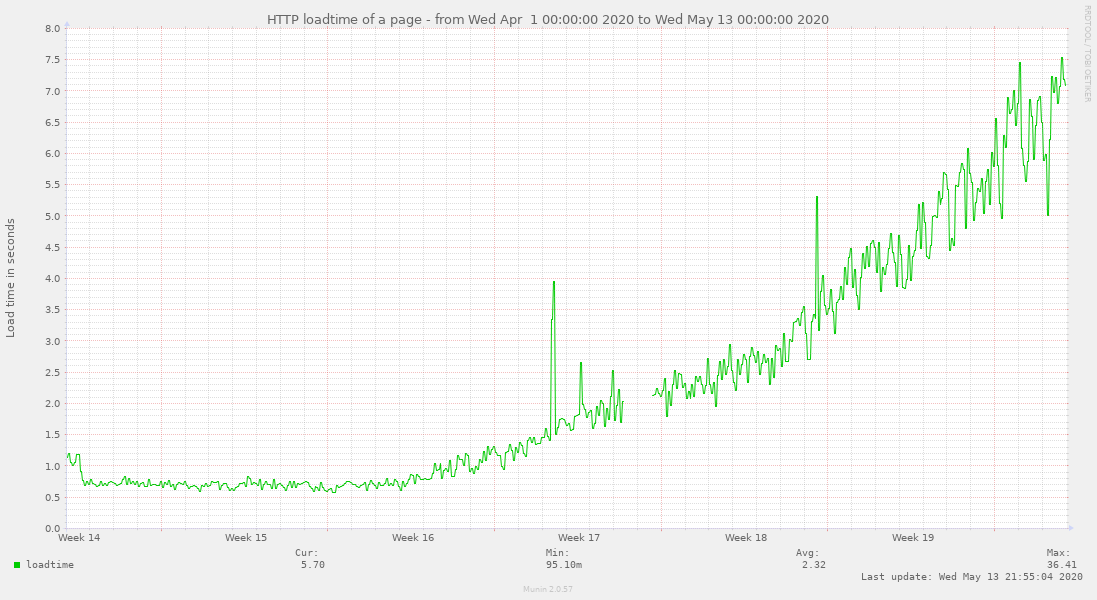 1+ month download bandwidth test
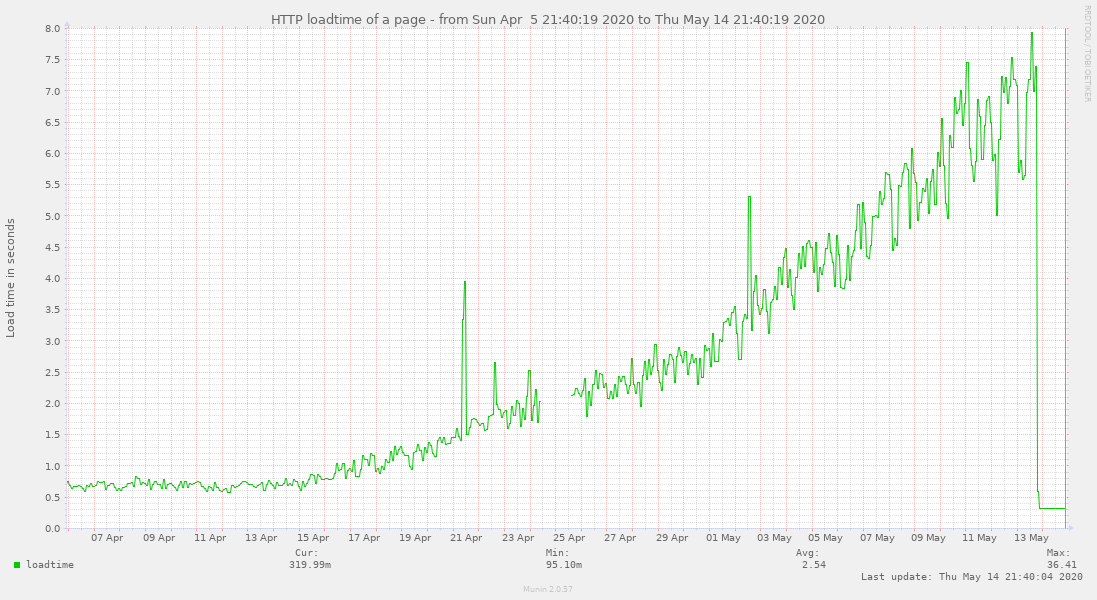 1+ month updated bandwidth test
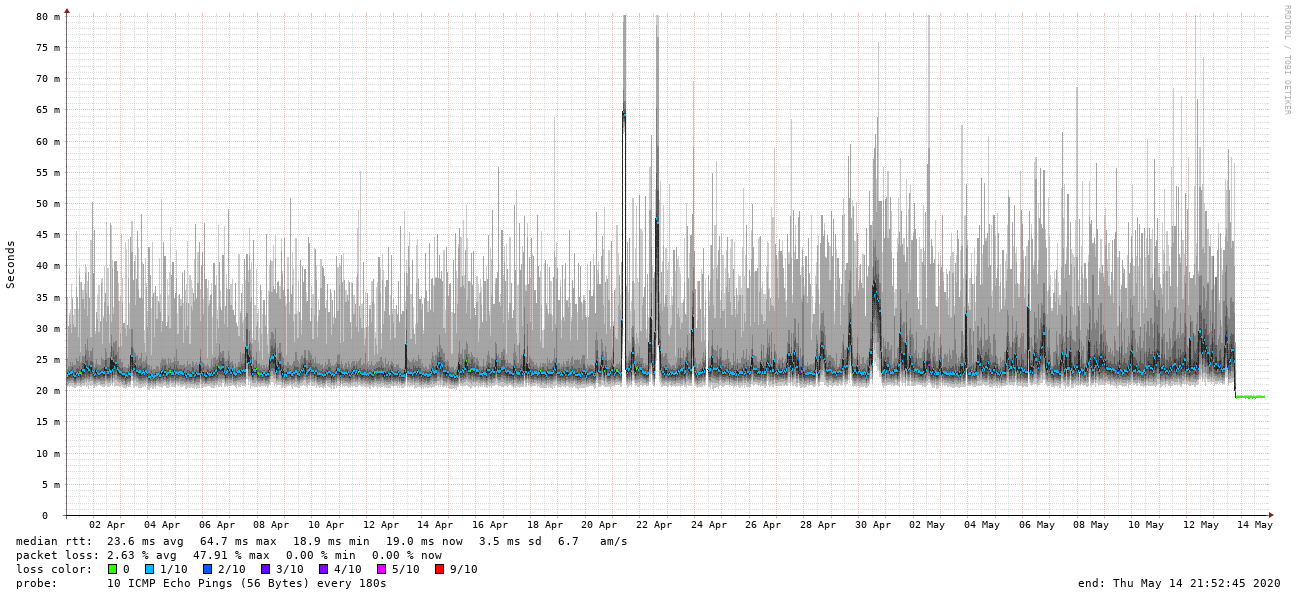 Outgoing smokeping to public IPv4
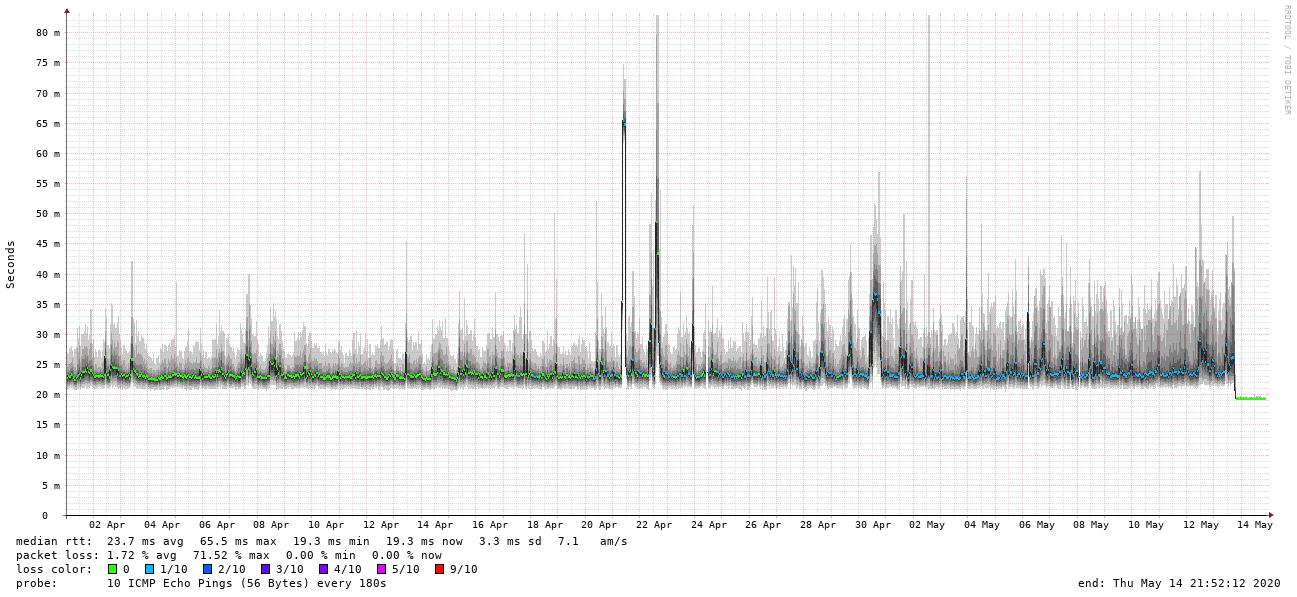 Outgoing smokeping over VPN
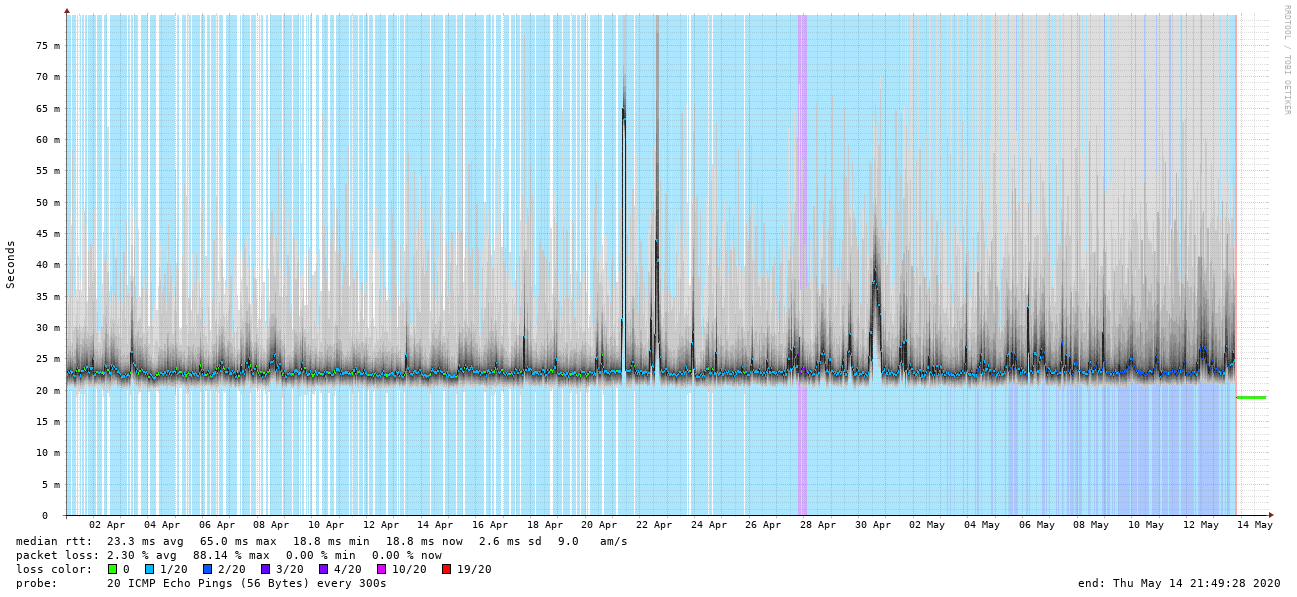 Incoming smokeping to public IPv4
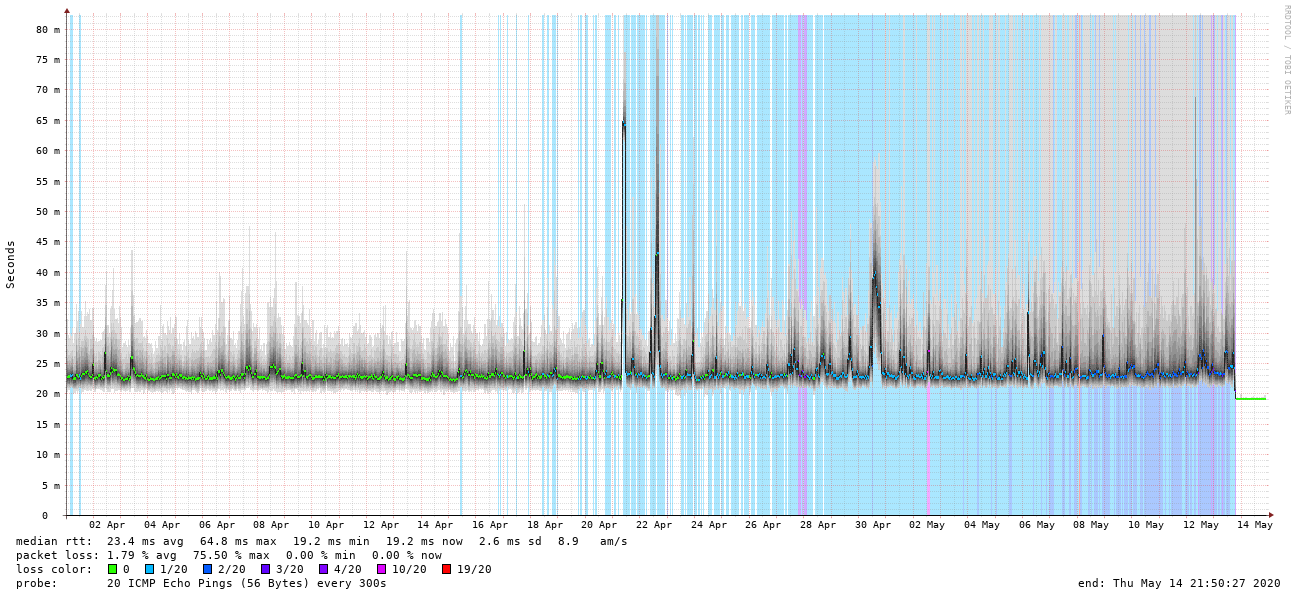 Incoming smokeping over VPN
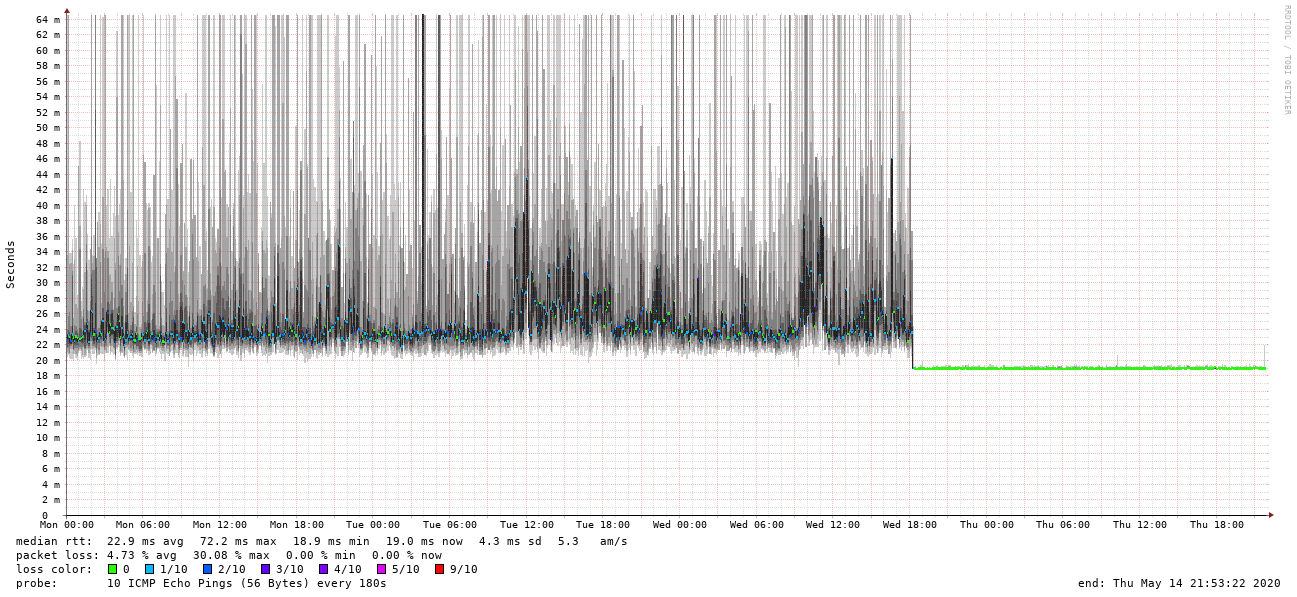 Outgoing current week smokeping to public IPv4
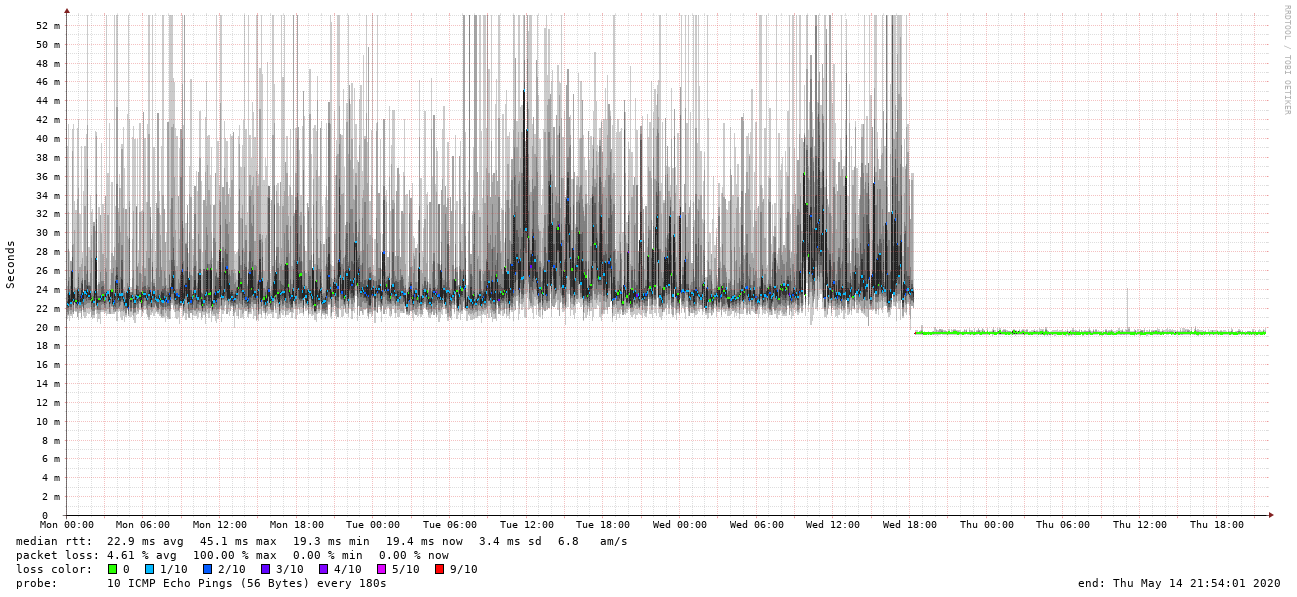 Outgoing current week smokeping over VPN
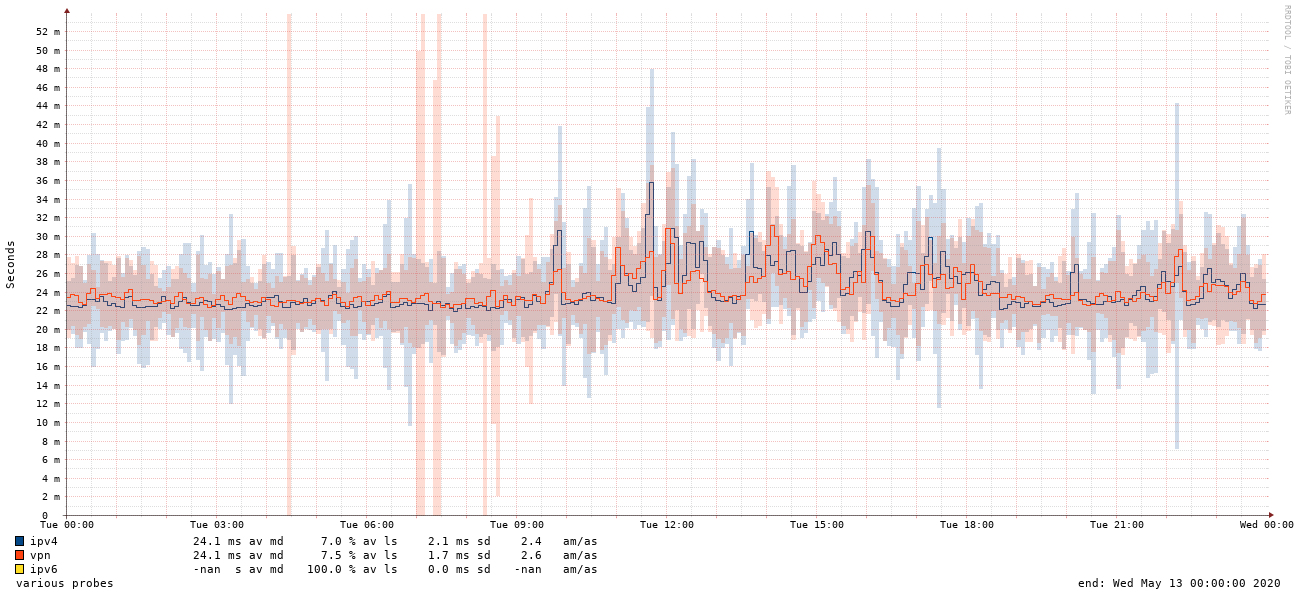 Incoming 1-day smokeping, old provider
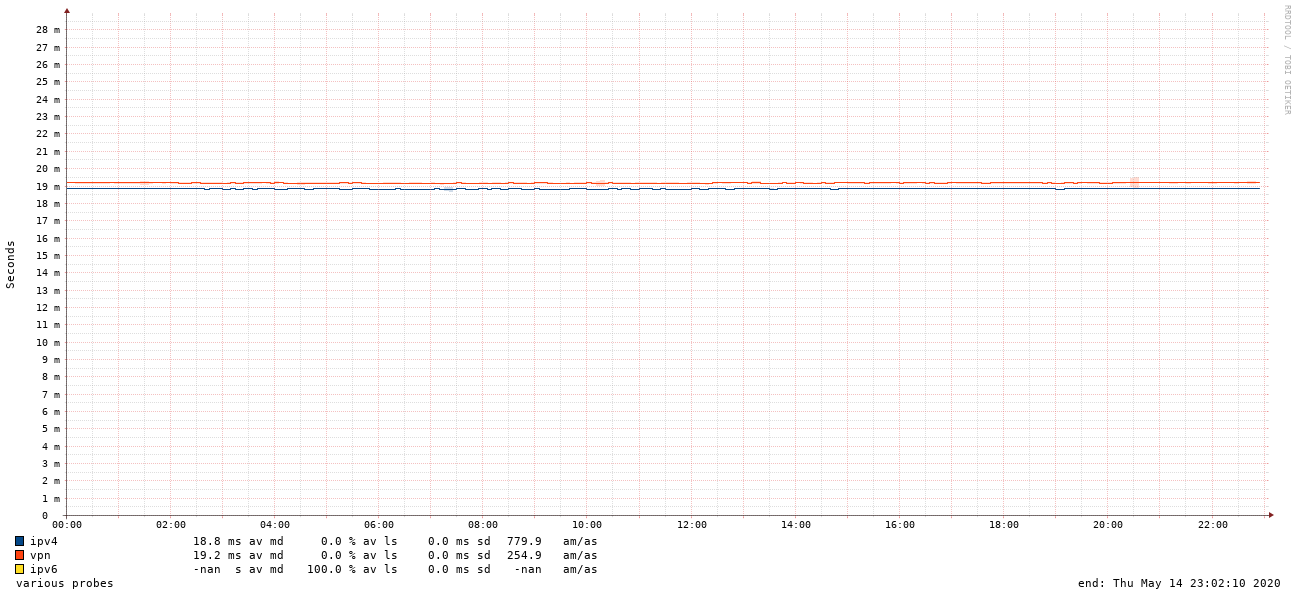 Incoming 1-day smokeping, new provider
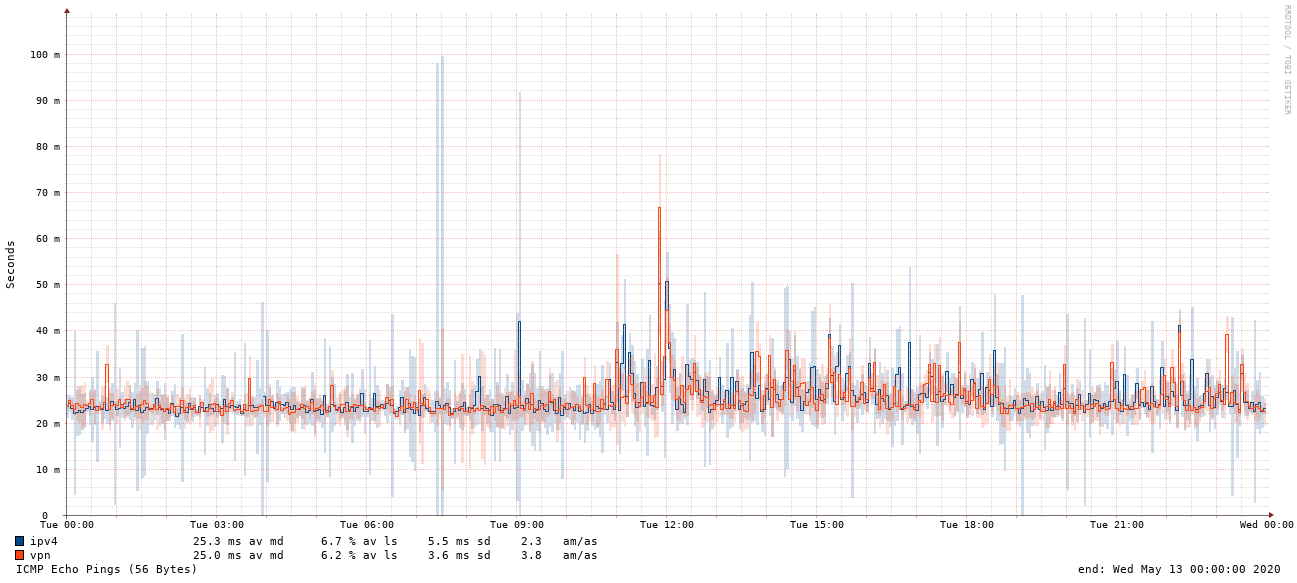 Outgoing 1-day smokeping, old provider
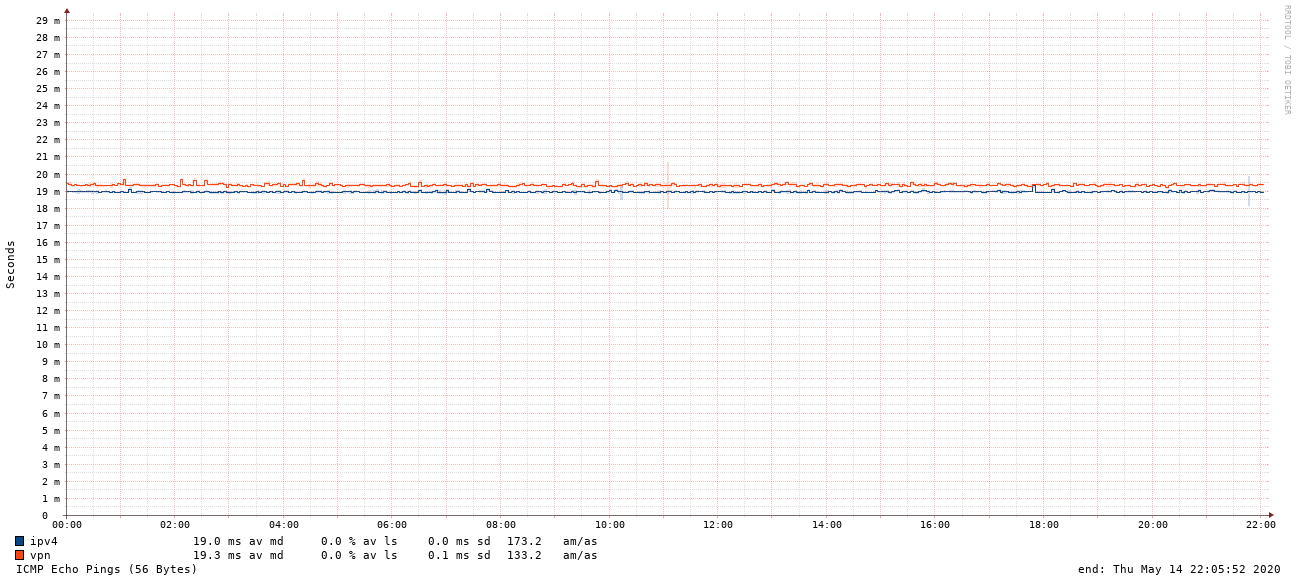 Outgoing 1-day smokeping, new provider
 Last night,
 After losing a fair bit of hair due to quality and reliability issues
with our home laser multifunctional (
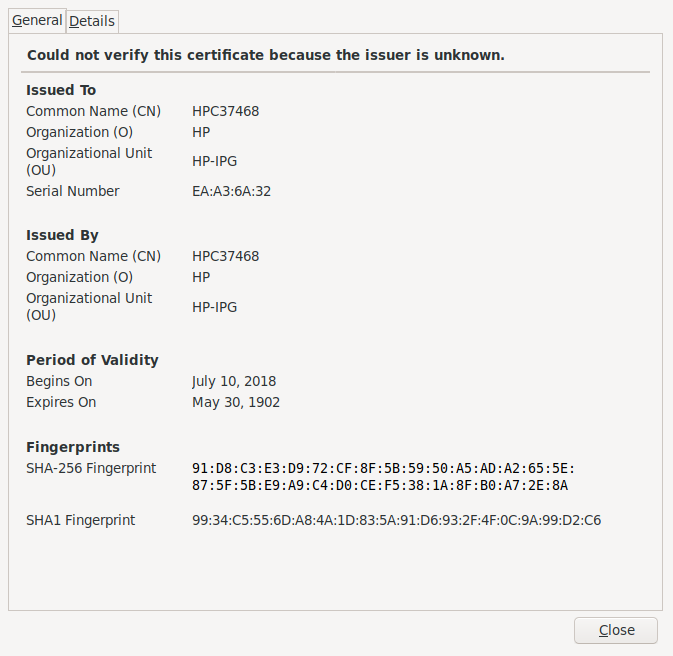 So, the self-signed certificate the printer issued at itself expired
116 years before even being issued. (is this maybe a Y2k38 bug?
Sounds like it!) Interesting thing, my CUPS log mentions the printer
credentials to expire at the beginning of the Unix Epoch
(
 However, clicking on Configure leads me to the not very
reassuring
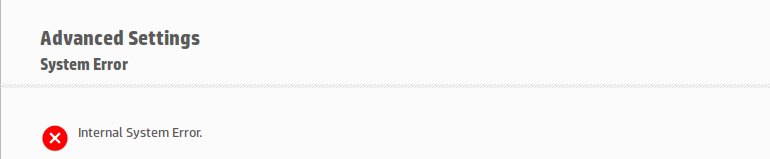 I don t remember what I did for the next couple of minutes. Kept
fuming Until I parsed again the output of
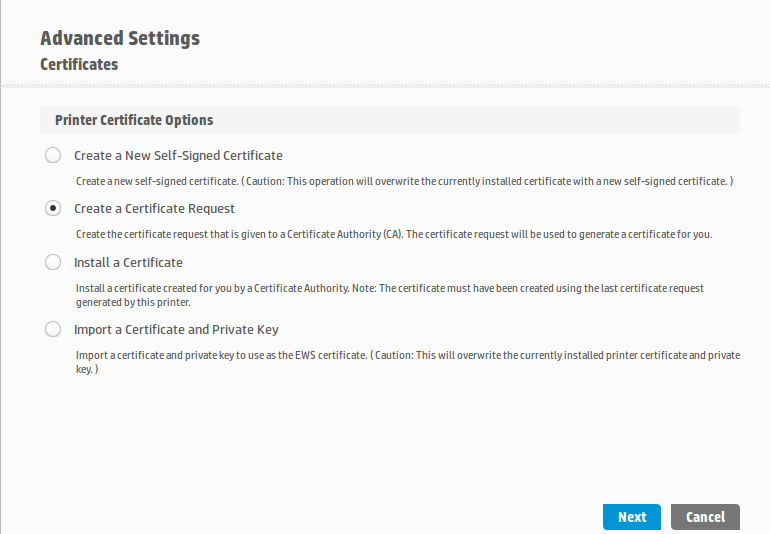 Click on New self-signed certificate , click on Next, a couple of
reloads And a very nice color print came out of the printer, yay!
Now, it still baffles me (of course I checked!): The self-signed
certificate is now said to come from

 The
 For way too long now something I had meant to start was a little series about tips, tricks, tools, and toys. I had mentioned the idea a few times to a friend or two, and generally received a thumbs up or a go for it . But it takes a little to get over the humb and get going. And it turns out that last week s
 I realised this week that for some years I have been applying

 A
 For the foreseeable future I'm working for myself, as a contractor, here in sunny Helsinki, Finland.
My existing contract only requires me to work 1.5-2.0 days a week, meaning my week looks something like this: