Search Results: "bod"

23 January 2014

Daniel Pocock: Test numbers for SIP and WebRTC

Want to test or troubleshoot WebRTC calling or SIP calling without bothering anybody? Now there are some test numbers you can call by just clicking in your desktop or mobile web browser. This can give you instant feedback about whether your SIP device, sound drivers, softphone and/or browser are in a good state. If using WebRTC, you can make calls to this service while studying the JavaScript console logs in your browser to see exactly how the protocol works. I hope this well help further increase the rate of positive outcomes for RTC projects using free software and open standards. Please feel free to provide any feedback about this service.

22 January 2014

Erich Schubert: The init wars

The init wars have recently caught a lot of media attention (e.g. heise, prolinux, phoronix). However, one detail that is often overlooked: Debian is debating over the default, while all of them are already supported to a large extend, actually. Most likely, at least two of them will be made mandatory to support IMHO.
The discussion seems to be quite heated, with lots of people trying to evangelize for their preferred system. This actually only highlights that we need to support more than one, as Debian has always been about choice. This may mean some extra work for the debian-installer developers, because choosing the init system at install time (instead of switching later) will be much easier. More often than not, when switching from one init system to another you will have to perform a hard reset.
If you want to learn about the options, please go to the formal discussion page, which does a good job at presenting the positions in a neutral way.
Here is my subjective view of the init systems:
  • SysV init is the current default, and thus deserves to be mentioned first. It is slow, because it is based on a huge series of shell scripts. It can often be fragile, but at the same time it is very transparent. For a UNIX system administrator, SysV init is probably the preferred choice. You only reboot your servers every year anyway.
  • upstart seems to be a typical Canonical project. It solves a great deal of problems, but apparently isn't good enough at it for everybody, and they fail at including anyone in their efforts. Other examples of these fails include Unity and Mir, where they also announced the project as-is, instead of trying to get other supporters on board early (AFAICT). The key problem to widespread upstart acceptance seems to be the Canonical Contributor License Agreement that many would-be contributors are unwilling to accept. The only alternative would be to fork upstart completely, to make it independent of Canonical. (Note that upstart nevertheless is GPL, which is why it can be used by Debian just fine. The CLA only makes getting patches and enhancements included in the official version hard.)
  • systemd is the rising star in the init world. It probably has the best set of features, and it has started to incorporate/replace a number of existing projects such as ConsoleKit. I.e. it not only manages services, but also user sessions. It can be loosely tied to the GNOME project which has started to rely on it more and more (much to the unhappyness of Canonical, who used to be a key player for GNOME; note that officially, GNOME chose to not depend on systemd, yet I see this as the only reliable combination to get a complete GNOME system running, and since "systemd can eventually replace gnome-session" I foresee this tie to become closer). As the main drawback, systemd as is will (apparently) only work with the Linux kernel, whereas Debian has to also support kFreeBSD, NetBSD, Hurd and the OpenSolaris kernels (some aren't officially supported by Debian, but by separate projects).
So my take: I believe the only reasonable default is systemd. It has the most active development community and widest set of features. But as it cannot support all architectures, we need mandatory support for an alternative init system, probably SysV. Getting both working reliably will be a pain, in particular since more and more projects (e.g. GNOME) tie themselves closely to systemd, and would then become Linux-only or require major patches.
I have tried only systemd on a number of machines, and unfortunately I cannot report it as "prime time ready" yet. You do have the occasional upgrade problems and incompatibilities, as it is quite invasive. From screensavers activating during movies to double suspends, to being unable to shutdown my system when logged in (systemd would treat the login manager as separate session, and not being the sole user it would not allow me to shut down), I have seen quite a lot of annoyances happen. This is an obvious consequence of the active development on systemd. This means that we should make the decision early, because we will need a lot of time to resolve all these bugs for the release.
There are more disruptions coming on the way. Nobody seems to have talked about kDBUS yet, the integration of an IPC mechanism like DBUS into the Linux kernel. It IMHO has a good chance of making it into the Linux kernel rather soon, and I wouldn't be surprised if it became mandatory for systemd soon after. Which then implies that only a recent kernel (say, mid-2014) version might be fully supported by systemd soon.
I would also like to see less GNOME influence in systemd. I have pretty much given up on the GNOME community, which is moving into a UI direction that I hate: they seem to only care about tablet and mobile phones for dumb users, and slowly turn GNOME into an android UI; selling black background as major UI improvements. I feel that the key GNOME development community does not care about developers and desktop users like me anymore (but dream of being the next Android), and therefore I have abandoned GNOME and switched to XFCE.
I don't give upstart much of a chance. Of course there are some Debian developers already involved in its development (employed by Canonical), so this will cause some frustration. But so far, upstart is largely an Ubuntu-only solution. And just like Mir, I don't see much future in it; instead I foresee Ubuntu going systemd within a few years, because it will want to get all the latest GNOME features. Ubuntu relies on GNOME, and apparently GNOME already has chosen systemd over upstart (even though this is "officially" denied).
Sticking with SysV is obviously the easiest choice, but it does not make a lot of sense to me technically. It's okay for servers, but more and more desktop applications will start to rely on systemd. For legacy reasons, I would however like to retain good SysV support for at least 5-10 more years.

But what is the real problem? After all, this is a long overdue decision.
  • There is too much advocacy and evangelism, from either side. The CTTE isn't really left alone to do a technical decision, but instead the main factors have become of political nature, unfortunately. You have all kinds of companies (such as Spotify) weigh in on the debate, too.
  • The tone has become quite aggressive and emotional, unfortunately. I can already foresee some comments on this blog post "you are a liar, because GNOME is now spelled Gnome!!1!".
  • Media attention. This upcoming decision has been picked up by various Linux media already, increasing the pressure on everybody.
  • Last but not least, the impact will be major. Debian is one of the largest distributions, last but not least used by Ubuntu and Steam, amongst others. Debian preferring one over the other will be a slap in somebodys face, unfortunately.
So how to solve it? Let the CTTE do their discussions, and stop flooding them with mails trying to influence them. There has been so much influencing going on, it may even backfire. I'm confident they will find a reasonable decision, or they'll decide to poll all the DDs. If you want to influence the outcome provide patches to anything that doesn't yet fully support your init system of choice! I'm sure there are hundreds of packages which do neither have upstart nor systemd support yet (as is, I currently have 27 init.d scripts launched by systemd, for example). IMHO, nothing is more convincing than have things just work, and of course, contributing code. We are in open source development, and the one thing that gets you sympathy in the community is to contribute code to someone elses project. For example, contribute full integrated power-management support into XFCE, if you include power management functionality.
As is, I have apparently 7 packages installed with upstart support, and 25 with systemd support. So either, everybody is crazy about systemd, or they have the better record of getting their scripts accepted upstream. (Note that this straw poll is biased - with systemd, the benefits of not using "legacy" init.d script may just be larger).

Daniel Pocock: Launching FreePhoneBox.net

The https://freephonebox.net service has now gone live. This is a great way for people without a SIP account to call those who do have one (like all the Debian Developers who got SIP on Saturday) using nothing more than a web browser (no plugin required). Not just voice, webcams too The freephonebox.net supports voice and video calls from leading web browsers with WebRTC support. Free calls made possible by free software The service itself runs on free software, including some of the following components: SIP users who want to receive calls from freephonebox.net users simply need to make sure they have SIP over TLS enabled for their domain. Calls from the phone box are anonymous but will always appear to come from the SIP address sip:anonymous@freephonebox.net. For Debian SIP users To make and receive WebRTC calls quickly and reliably:

20 January 2014

Matthew Garrett: Not all CLAs are equal

Contributor License Agreements ("CLAs") are a mechanism for an upstream software developer to insist that contributors grant the upstream developer some additional set of rights. These range in extent - some CLAs require that the contributor reassign their copyright over the contribution to the upstream developer, some merely provide the upstream developer with a grant of rights that aren't explicit in the software license (such as an explicit patent grant for a contribution licensed under a BSD-style license).

CLAs aren't new. FSF-copyrighted projects have been using copyright assignment since at least 1985 - in return, the FSF promise that the software will always be distributed under a copyleft-style license. For over a decade, Apache Software Foundation projects have required that contributors sign a CLA that allows them to retain copyright, but grants the ASF the right to relicense the work as it wishes. For the most part, this hasn't been terribly controversial.

So why do people object so much when Canonical do it? I've written about this in the context of Mir before, but it's worth expanding on the general case. The FSF's copyright assignment ensures that contributions to GPLed software will only be distributed under GPL-style licenses. The Apache CLA permits the ASF to relicense a contribution under a proprietary license, but the Apache license allows anyone to do that anyway. Going through Wikipedia's list of CLA users, the majority cover projects that are under BSD- or Apache-style licenses, with a couple of cases covering GPLed projects with a promise that any contributions will only be distributed under GPL-like licenses[1]. Either everyone can produce proprietary derivative works, or nobody can.

In contrast, Canonical ship software under the GPLv3 family of licenses (GPL, AGPL and LGPL) but require that contributors sign an agreement that permits Canonical to relicense their contributions under a proprietary license. This is a fundamentally different situation to almost all widely accepted CLAs, and it's disingenuous for Canonical to defend their CLA by pointing out the broad community uptake of, for instance, the Apache CLA.

Canonical could easily replace their CLA with one that removed this asymmetry - Project Harmony, the basis of Canonical's CLA, permits you to specify an "inbound equals outbound" agreement that prevents upstream from relicensing under a proprietary license[2]. Canonical's deliberate choice not to do so just strengthens the argument that the CLA is primarily about wanting to produce proprietary versions of software rather than wanting to strengthen their case in any copyright or patent disputes. It's unsurprising that people feel disinclined to contribute to projects under those circumstances, and it's difficult to understand why Canonical simultaneously insist on this hostile behaviour and bemoan the lack of community contribution to Canonical projects.

[1] The one major exception is the Digia/Qt project CLA, which covers an LGPLed work but makes it entirely clear that Digia will ship your contributions under proprietary licenses as well. At least they're honest.

[2] See the various options in section 2.1(d) here. Canonical chose option five. If they'd chosen option one instead, this wouldn't be a problem.

comment count unavailable comments

Dirk Eddelbuettel: RProtoBuf 0.4.0: A whole lot of goodies and Windoze support

A new major release 0.4.0 of RProtoBuf, is now on CRAN. RProtoBuf provides GNU R bindings for the Google Protocol Buffers ("Protobuf") data encoding library used and released by Google, and deployed as a language and operating-system agnostic protocol by numerous projects. With this release, we are welcoming Jeroen Ooms to the team. Jeroen had already worked on some RProtoBuf extensions in the context of his OpenCPU project; we have now integrated those Protocol Buffers functions. And Jeroen pushed all the right buttons to finally get RProtoBuf built on everybody's least-favourite operating system by provding a static library for use by win-builder and CRAN. Murray once again did a lot of work on internals. His use of the LLVM tool llvm-format was particular helpful to make our coding style a little more consistent. The complete NEWS file entry for this release follows:
Changes in RProtoBuf version 0.4.0 (2014-01-14)
  • Changes to support CRAN builds for MS Windows.
  • Added functions serialize_pb, unserialize_pb, and can_serialize_pb plus documentation from Jeroen Ooms RProtoBufUtils package.
  • New dir inst/python with some Python examples.
  • Added Jeroen Ooms as author.
  • Vignettes have been converted to the R 3.0.0 or later use of external vignette builders, no longer need a Makefile
  • Added missing methods to dollar completion list for Message, Descriptor, EnumValueDescriptor, and FileDescriptor classes.
  • Add missing export for .DollarNames EnumValueDescriptor to allow completion on that class.
  • Add more than 15 additional pages to the main Intro vignette documenting better all of the S4 classes implemented by RProtoBuf, updating the type mapping tables to take into account 64-bit support, and documenting advanced features such as Extensions.
  • Added better error checking in EnumDescriptors to catch the case when wrong types are provided.
  • Updated the FileDescriptor name() method to accept a boolean for full paths just like the generic name() method.
  • Correct a bug that incorrectly dispatched as.character() when as.list() was called on Descriptor objects.
  • Update FileDescriptor $ dispatch to work properly for the names of fields defined in the FileDescriptor, instead of just returning NULL even for types returned by $ completion.
  • Added a reservation for extension fields in the example tutorial.Person schema.
  • Support setting int32 fields with character representations and raise an R-level stop() error if the provided string can not be parsed as a 32-bit integer, rather than crashing the R instance.
  • Update the project TODO file.
  • Add better documentation and tests for all of the above.
  • Corrected the handling of uint32 and fixed32 types in protocol buffers to ensure that they work with numbers as large as 2^32 - 1, which is larger than an integer can hold in R since R does not have an unsigned integer class. These values are stored as doubles internally now to avoid losing precision.
  • Added unit tests to verify behavior of RProtoBuf with extreme values for uint32 types.
  • Removed old exception handling code and instead rely on the more modern Rcpp::stop method maintained in Rcpp.
  • Add better error messages when setting a repeated field of messages to inform the user which element index was of the wrong type and what the expected type was.
  • Add an optional 'partial' argument to readASCII allowing uninitialized message fragments to be read in.
  • (internal) Added const qualifiers in more places throughout the C++ code for type safety.
  • (internal) Standardize coding conventions of the C++ files and run them through clang-format for consistency. A STYLE file has been submitted to R-Forge with details about the coding standards and how they are enforced with Emacs and clang-format.
  • Applied changes suggested by Kevin Ushey to the S4 class handling to support both the currently released Rcpp as well as the currently pending next version.
CRANberries also provides a diff to the previous release 0.3.2. More information is at the RProtoBuf page which has a draft package vignette, a 'quick' overview vignette and a unit test summary vignette. Questions, comments etc should go to the rprotobuf mailing list off the RProtoBuf page at R-Forge.

This post by Dirk Eddelbuettel originated on his Thinking inside the box blog. Please report excessive re-aggregation in third-party for-profit settings.

19 January 2014

Daniel Pocock: Debian solving Drupal's third-party library challenge

The tremendously successful Drupal community observes stringent requirements about many things, in particular, licensing and the prohibition of bundling third-party JavaScript. While these policies may seem onerous at first glance, it turns out there is another project with a written guarantee to provide third-party code in a form that meets the expectations of Drupal and does so in a way that completely automates all that tedious effort into one-click oblivion. I'm talking about the Debian GNU/Linux operating system. Drupal's libraries module The libraries module for Drupal appeared as an initial attempt to help track third-party JavaScript. The module has been available in Debian for almost a year and has recently been provided in the wheezy-backports distribution for people running the stable version of Debian. The library provides a standard way for other modules to reference third-party JavaScript but it still leaves the web master with some manual work to go out and download all the necessary JavaScript and copy it into the right place. This is where Debian comes to the rescue. Using the module in practice I've recently uploaded JSCommunicator to Debian and wanted to provide a convenient way for people to get it in Drupal. Therefore, in addition to providing the JSCommunicator packages, I created an extra package, drupal7-mod-jscommunicator. JSCommunicator itself depends on other JavaScript, specifically, the JsSIP library. I repeated the same process for JsSIP. This gives us the following collection of four related packages:
Third-party library Library itself Drupal module, packaged
JSCommunicator libjs-jscommunicator drupal7-mod-jscommunicator
JsSIP libjs-jssip drupal7-mod-jssip
If you explore the package details in Debian's package catalog you will notice that each package depends on the other packages it requires. Debian's package management utility, apt-get, can transitively resolve all the relationships between this set of packages. In fact, on a newly built server, you can simply run the command:
apt-get install drupal7-mod-jscommunicator
and the apt-get utility will install Apache, MySQL, Drupal itself, the libraries module, all the related JavaScript libraries and the final Drupal module of JSCommunicator itself. It really is that easy. Here is an example of the output displayed by the command on a freshly built server:
# apt-get -d install drupal7-mod-jscommunicator
Reading package lists... Done
Building dependency tree       
Reading state information... Done
The following extra packages will be installed:
  apache2 apache2-bin apache2-data curl dbconfig-common drupal7
  drupal7-mod-jssip drupal7-mod-libraries fontconfig-config fonts-dejavu-core
  javascript-common libaio1 libapache2-mod-php5 libapr1 libaprutil1
  libaprutil1-dbd-sqlite3 libaprutil1-ldap libarchive-extract-perl libc6
  libcurl3 libdbd-mysql-perl libdbi-perl libedit2 libfontconfig1 libgcrypt11
  libgd3 libhtml-template-perl libjbig0 libjpeg8 libjs-jssip libjson-c2
  liblocale-gettext-perl liblog-message-simple-perl liblua5.1-0
  libmodule-pluggable-perl libmysqlclient18 libonig2 libperl4-corelibs-perl
  libpng12-0 libpod-latex-perl libqdbm14 librtmp0 libssh2-1 libterm-ui-perl
  libtext-charwidth-perl libtext-iconv-perl libtext-soundex-perl libtiff5
  libuuid-perl libvpx1 libxml2 libxpm4 locales mysql-client mysql-client-5.5
  mysql-common mysql-server mysql-server-5.5 mysql-server-core-5.5 perl
  perl-base perl-modules php5 php5-cli php5-common php5-gd php5-json
  php5-mysql php5-readline ssl-cert wwwconfig-common
Suggested packages:
  apache2-doc apache2-suexec-pristine apache2-suexec-custom apache2-utils
  php-pear glibc-doc libclone-perl libmldbm-perl libnet-daemon-perl
  libplrpc-perl libsql-statement-perl rng-tools libgd-tools
  libipc-sharedcache-perl libterm-readkey-perl tinyca perl-doc
  libterm-readline-gnu-perl libterm-readline-perl-perl make libb-lint-perl
  libcpanplus-dist-build-perl libcpanplus-perl libfile-checktree-perl
  liblog-message-perl libobject-accessor-perl php5-user-cache
  openssl-blacklist postgresql-client
The following NEW packages will be installed:
  apache2 apache2-bin apache2-data curl dbconfig-common drupal7
  drupal7-mod-jscommunicator drupal7-mod-jssip drupal7-mod-libraries
  fontconfig-config fonts-dejavu-core javascript-common libaio1
  libapache2-mod-php5 libapr1 libaprutil1 libaprutil1-dbd-sqlite3
  libaprutil1-ldap libarchive-extract-perl libcurl3 libdbd-mysql-perl
  libdbi-perl libfontconfig1 libgd3 libhtml-template-perl libjbig0 libjpeg8
  libjs-jssip libjson-c2 liblog-message-simple-perl liblua5.1-0
  libmodule-pluggable-perl libmysqlclient18 libonig2 libperl4-corelibs-perl
  libpng12-0 libpod-latex-perl libqdbm14 librtmp0 libssh2-1 libterm-ui-perl
  libtext-soundex-perl libtiff5 libvpx1 libxpm4 mysql-client mysql-client-5.5
  mysql-common mysql-server mysql-server-5.5 mysql-server-core-5.5 php5
  php5-cli php5-common php5-gd php5-json php5-mysql php5-readline ssl-cert
  wwwconfig-common
The following packages will be upgraded:
  libc6 libedit2 libgcrypt11 liblocale-gettext-perl libtext-charwidth-perl
  libtext-iconv-perl libuuid-perl libxml2 locales perl perl-base perl-modules
12 upgraded, 60 newly installed, 0 to remove and 222 not upgraded.
Need to get 37.2 MB of archives.
After this operation, 152 MB of additional disk space will be used.
Do you want to continue [Y/n]? 
Libraries API in Drupal 8 Contrary to an earlier version of this blog, the libraries module is not joining the core in Drupal 8 however its use has been strongly encouraged for any new modules submitted through the Drupal community approval process. This means there will be further opportunity for Drupal users to consolidate on their use of Debian to completely automate the management of all third-party libraries and modules throughout their Drupal system(s).

18 January 2014

Daniel Pocock: Debian.org enabled for SIP federation, who will be next?

The Debian community has announced the availability of SIP for all of approximately 1,000 Debian Developers who comprise the membership of the organisation. Benefits for the wider free software community This means packages providing SIP (and soon XMPP/Jabber) will hopefully be under much more scrutiny from developers in the lead up to the next major Debian release, codename jessie, expected early 2015. Although the user guide provides setup details for several packages and softphones, including Jitsi and Lumicall, the developers of the core SIP server have not indicated that any specific package should be preferred and it is up to each user to choose the client that best suits their needs. Who will be next? Discussion has already started about replicating this technology for the Fedora community. Users of the Lumicall softphone on Android are already able to make federated SIP calls, so just dialing username@debian.org from Lumicall is sufficient to make a call to a Debian Developer and see federated SIP working. People who want to try SIP federation for their workplace or any other organisation are encouraged to see the Real-time Communications (RTC) Quick start guide

Steve Kemp: Some software releases to change the topic.

Now it is time for me to go silent for a while, and not talk about jobs, unemployment, or puppies. This past week has also been full of software releases. Some of the public ones include:
Lumail - My console mail client, with integrated lua scripting
After three months of slow work I've issued a new release today. This release features several bugfixes for dealing with malformed MIME messages, and similar fun. The core set of lua primitives hasn't changed very much for a good six months now, which means I guess rightly what kind of things would be useful.
Templer - My perl-based static-site generator.
This was recently updated to add two new plugins to the core:
  • A redis plugin to allow you to set variables to values retrieved from redis.
  • An RSS plugin to allow you to inline (remote) RSS feeds into your static HTML. Useful for building news-pages, etc.
Although there are a million static-site generators I still think mine has value, and I am consistently using it.
Months ago when I said "I'm writing a mail-client", all I need to do is handle three cases: Then some new things like "Compose", "Reply", "Forward", I remember somebody commented along the lines of "Yeah, but MIME will make you hate your life" I laughed. Now I know better. Still it works, it works well, and I'm glad I did it.

17 January 2014

Chris Lamb: Captain Phillips: Pontius Pirate

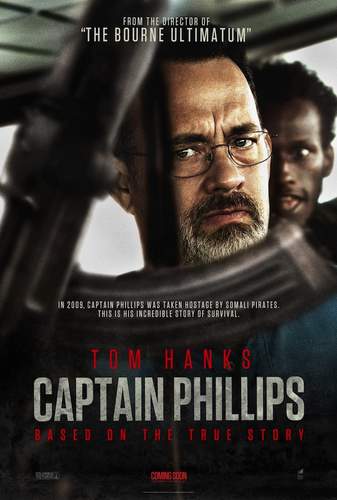
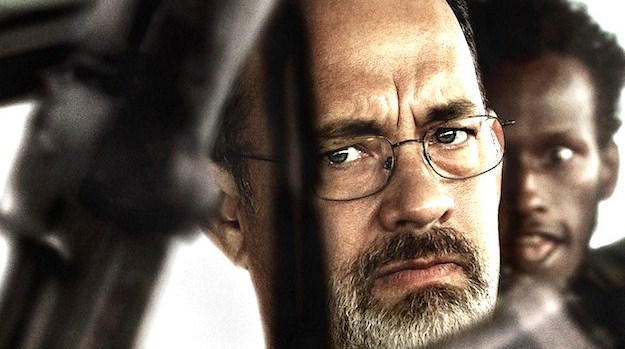
https://chris-lamb.co.uk/wp-content/2014/phillips_b.jpg Somalia's chief exports appear to be morally-ambiguous Salon articles about piracy and sophomoric evidence against libertarianism. However, it is the former topic that Captain Phillips concerns itself with, inspired by the hijacking of the Maersk Alabama container ship in 2009. What is truth? In the end, Captain Phillips does not rise above Pontius Pilate in providing an answer, but it certainly tries using more refined instruments than irony or leaden sarcasm. This motif pervades the film. Obviously, it is based on a "true story" and brings aboard that baggage, but it also permeates the plot in a much deeper sense. For example, Phillips and the US Navy lie almost compulsively to the pirates, whilst the pirates only really lie once (where they put Phillips in greater danger). Notice further that Phillips only starts to tell the truth when he thinks all hope is lost. These telling observations become even more fascinating when you realise that they must be based on the testimony of the, well, liars. Clearly, deception is a weapon to be monopolised and there are few limits on what good guys can or should lie about if they believe they can save lives.
https://chris-lamb.co.uk/wp-content/2014/phillips_c.jpg

Even Phillip's nickname ("Irish") is a falsehood he straight-up admits he is an American citizen.

Futhermore, there is an utterly disarming epilogue where Phillips is being treated for shock by clinical efficient medical staff. Not only will this scuttle any "blanket around the shoulders" clich but is probably a highly accurate portrayal of what actually happens post-trauma. This echoes the kind of truth Werner Herzog aims for in his filmmaking as well his guilt-inducing duality between uncomfortable lingering and compulsive viewing. Lastly, a starter for a meta-discussion: can a film based on real-world events even be "spoilered"? Hearing headlines on the radio before you read your newspaper hardly robs you of a literary journey... Captain Phillips does have some quotidian problems. Firstly, the only tool for ratcheting up tension is for the Somalians to launch verbal broadsides at the Americans, with each compromise somehow escalating the situation. This technique is effective but well before the climatic rescue scene where it is really needed it has been subject to the most extreme diminishing returns. (I cannot be the first to notice the "Africans festooned with guns shouting incomphensively" trope I hope it is based on a Babel-esque mechanism of disorientation from miscommunication rather than anything more unsavoury.)
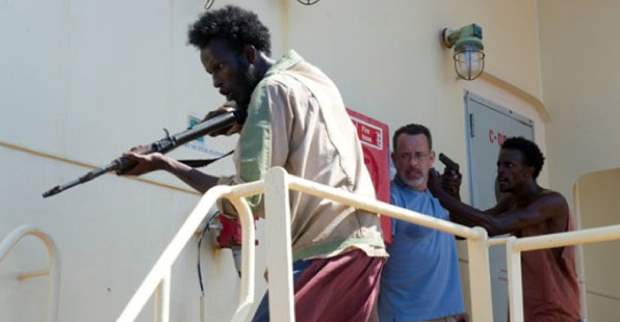
https://chris-lamb.co.uk/wp-content/2014/phillips_a.jpg

The racist idea that Africans prefer an AK-47 rotated about the Z-axis is socially constructed.

Secondly, the US Navy acts like a teacher with an Ofsted inspector observing quietly from the corner of the classroom; far too well-behaved it suspends belief, with no post-kill gloating or even the tiniest of post-arrest congratulations. Whilst nobody wants to see the Navy overreact badly to other military branches getting all the glory, nobody wants to see a suspiciously bland recruitment vehicle either. Paradoxically, this hermetic treatment made me unduly fascinated by them as if they were part of some military "uncanny valley". Two quick observations:
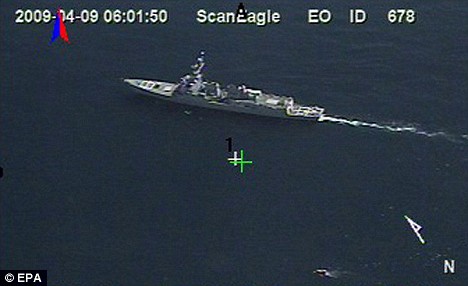
https://chris-lamb.co.uk/wp-content/2014/phillips_d.jpg

The drone footage: I'd love to write an essay about how Call of Duty might have influenced (or even be) cinema.

Finally, despite the title, the film is actually about two captains; the skillful liar Phillips and ... well, that's the real problem. Whilst Captain Muse is certainly no caricatured Hook, we are offered little depth beyond a "You're not just a fisherman" faux-revelation that leads nowhere. I was left inventing reasons for his akrasia so that he made any sense whatsoever. One could charitably argue that the film attempts to stay objective on Muse, but the inability for the film to take any obvious ethical stance actually seems to confuse and then compromise the narrative. What deeper truth is actually being revealed? Is this film or documentary? Worse still, the moral vacuum is invariably filled by the viewer's existing political outlook: are Somali pirates victims of circumstance who are forced into (alas, regrettable) swashbuckling adventures to pacify plank-threatening warlords? Or are they violent and dangerous criminals who habour an irrational resentment against the West, flimsily represented by material goods in shipping containers? Your improvised answer to this Rorschach test will always sit more haphazardly in the film than any pre-constructed treatment ever could. 6/10

Chris Lamb: Review: Captain Phillips (2013)

https://chris-lamb.co.uk/wp-content/2014/phillips_b.jpg Somalia's chief exports appear to be morally-ambiguous Salon articles about piracy and sophomoric evidence against libertarianism. However, it is the former topic that Captain Phillips concerns itself with, inspired by the hijacking of the Maersk Alabama container ship in 2009. What is truth? In the end, Captain Phillips does not rise above Pontius Pilate in providing an answer, but it certainly tries using more refined instruments than irony or leaden sarcasm. This motif pervades the film. Obviously, it is based on a "true story" and brings aboard all that well-travelled baggage, but it also permeates the plot in a much deeper sense. For example, Phillips and the US Navy lie almost compulsively to the pirates, whilst the pirates only really lie once where they put Phillips in greater danger. Notice further that Phillips only starts to tell the truth when he thinks all hope is lost. These telling observations become even more fascinating when you realise that they must be based on the testimony of the, well, liars. Clearly, deception is a weapon to be monopolised and there are few limits on what good guys can or should lie about if they believe they can save lives.
https://chris-lamb.co.uk/wp-content/2014/phillips_c.jpg

Even Phillip's nickname ("Irish") is a falsehood he straight-up admits he is an American citizen.

Lastly, there is an utterly disarming epilogue where Phillips is being treated for shock by clinical efficient medical staff. Not only will it scuttle any "blanket around the shoulders" clich but is probably a highly accurate portrayal of what actually happens post-trauma. This echoes the kind of truth Werner Herzog often aims for in his filmmaking as well his guilt-inducing duality between uncomfortable lingering and compulsive viewing. Another angle worthy of discussion: can a film based on real-world events even be "spoilered"? Hearing headlines on the before you read the newspaper hardly robs you of a literary journey... Captain Phillips does have some quotidian problems. Firstly, the only tool for ratcheting up tension is for the Somalians to launch verbal broadsides at the Americans, with each compromise somehow escalating the situation further. This technique is genuinely effective but well before the climatic rescue scene where it is really needed it has been subject to the most extreme diminishing returns. (I cannot be the first to notice the "Africans festooned with guns shouting incomphensively" trope I hope it is based on a Babel-esque mechanism of disorientation and miscommunication rather than anything, frankly, unsavoury.)
https://chris-lamb.co.uk/wp-content/2014/phillips_a.jpg

The racist idea that Africans prefer a AK-47 rotated about the Z-axis is socially constructed.

Secondly, the US Navy acts like a teacher with an Ofsted inspector observing quietly from the corner of the classroom; far too well-behaved it suspends belief, with no post-kill gloating or even the tiniest of post-arrest congratulations. Whilst nobody wants to see the Navy overreact badly to other military branches getting all the glory, nobody wants to see a suspiciously bland recruitment vehicle either. Paradoxically, this hermetic treatment made me unduly fascinated by them, as if they were part of some military "uncanny valley". Two quick observations:
https://chris-lamb.co.uk/wp-content/2014/phillips_d.jpg

The drone footage: I'd love to read (or write) an essay about how Call of Duty might have influenced cinema.

Finally, despite the title, the film is actually about two captains; the skillful liar Phillips and ... well, that's the real problem. Whilst Captain Muse is certainly no caricatured Hook, we are offered little depth beyond a "You're not just a fisherman" faux-revelation that leads nowhere. I was left inventing reasons for his akrasia so that he made any sense whatsoever. One could charitably argue that the film attempts to stay objective on Muse, but the inability for the film to take any obvious ethical stance actually seems to confuse and then compromise the narrative. What deeper truth is actually being revealed? Is this film or documentary? Worse still, the moral vacuum is invariably filled by the viewer's existing political outlook: are Somali pirates victims of circumstance who are forced into (alas, regrettable) swashbuckling adventures to pacify plank-threatening warlords? Or are they violent and dangerous criminals who habour an irrational resentment against the West, flimsily represented by material goods in shipping containers? Your improvised answer to this Rorschach test will always sit more haphazardly in the film than any pre-constructed treatment ever could. 6/10

16 January 2014

Daniel Pocock: Get ready to try Debian SIP

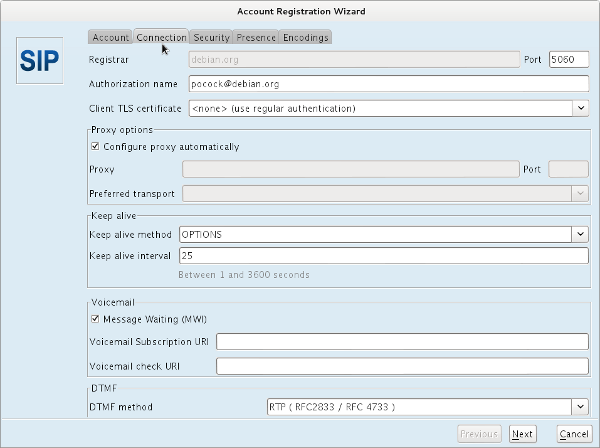
Before going on to talk about SIP, there is one really important thing that must be emphasized: XMPP/Jabber is also in the roadmap. Some of the infrastructure that has already been deployed (the new RTC passwords in ud-ldap, the TURN server and the RADIUS server) is good for both SIP and XMPP use cases. All to be revealed on Sunday As mentioned in my recent blog about the Debian.org NAPTR record, more details will be coming in my talk at mini-DebConf Paris this weekend. Today I'm just going to describe some things to install for those who want a head start. Jitsi Jitsi has been around for many years (originally as SIP Communicator) and it is probably the most advanced desktop softphone in the free software world. Jitsi packages are in jessie and sid - why not install them now. If you don't want to pull in dependencies from jessie on your wheezy system, you can also download from upstream and run it standalone. WebRTC browsers I've prepared a JSCommunicator implementation based on the jscommunicator-web-phone package. To use it, you need the latest version of Iceweasel/Firefox or Chromium. As HTML5 WebRTC / RTCPeerConnection is an evolving standard, using a recent browser is essential. Jitsi configuration for sip:debian.org It is not open for users just yet, but this is how you will configure it when it is available. More details to come...
AttachmentSize
step-4-setup-connection-scaled.png59.66 KB

15 January 2014

Daniel Pocock: NAPTR record for Debian.org

The debian.org domain got a new NAPTR record this week.
$ dig -t naptr debian.org
;; QUESTION SECTION:
;debian.org.			IN	NAPTR
;; ANSWER SECTION:
debian.org.		3600	IN	NAPTR	10 0 "s" "SIPS+D2T" "" _sips._tcp.debian.org.
If you would like to find out more, please come to the mini DebConf in Paris this weekend where the debian.org federated SIP deployment will be discussed, along with some of the benefits it brings for both human and automated communication. There are also many other great talks on the schedule and it looks like it will be a fun weekend. Some details have also been published on the Debian wiki recently.

14 January 2014

Daniel Pocock: PostFinance gives back my money

14 days with no response to written requests for a refund of the error. After a few hours of objective scrutiny on this blog, however, the money was put back: Thanks to all those who provided comments, especially Philipp Kern who found the paper form that reveals how bad the online standing order form really is, it is quite possible that was a factor in convincing PostFinance to take some responsibility. It is also possible that the contact center staff were not even aware of the way the standing order form is viewed by the customer, they may have been looking at some alternative form that had been generated by regurgitating the user input. These are just some examples of the problems that occur (and require thorough and professional analysis) when business processes go online and nobody has a paper trail to prove what they really meant.

Daniel Pocock: Blog comments working again

Blog comments have been problematic on this site for some months now. I finally had a look into the problem last night and identified the cause of the problem and implemented a workaround which other Drupal Blogspam module users are welcome to copy. Thanks to Steve Kemp for providing the Blogspam service. Anything but thanks to those who provide the spam.

13 January 2014

Daniel Pocock: PostFinance, where is my money?

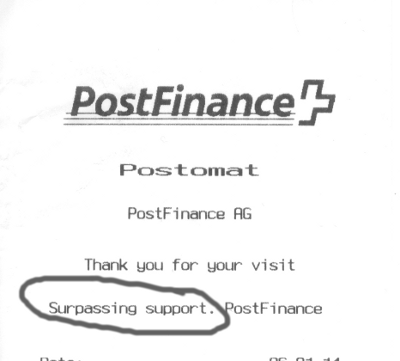
Update: my money has been returned by PostFinance very soon after this blog appeared There's no better way to get the year off to a good start than finding money has gone missing from your bank account. Where I live in Switzerland, it is mandatory for everybody to make a monthly payment for health insurance (as it is mandatory, it is basically a tax, like the monthly council tax in England). Just like British council tax, the premiums go up each year and every person in the country has to log into their bank's web site and change their standing order. A few days after doing just that, I went back in to the web site to make another payment and noticed that the first health insurance payment for 2014 had been duplicated on two consecutive days, the 30th and 31st of December: I immediately sent them an email to alert them to the fault and ask for the duplicate transaction to be corrected. Normally, when a company makes a mistake, it would be fixed within a couple of days and certainly never reach my blog. Instead of getting a helpful reply, I was astonished to receive this:
There has been a misunderstanding when you have set up your standing order.
You selected "First execution" December 30, 2013 and then "monthly execution" 31. The system has followed your instruction and it results a double execution December 30 and 31.
Unfortunately, we are not able to return you the amount.
Great, apparently it is all my own fault. I thought "monthly" would mean one payment in each one month but apparently not everybody uses the same definition of monthly. (Actually, banks do have systems such as the 360 day calendar but that is another story). So let's look at these faulty instructions I supposedly gave. I immediately went back to the standing order page to take a screenshot. I even compared the page in English (my default language, which they are kind enough to let me use) and French (one of the four official languages of the Swiss Confederation) and I found they say much the same thing: Note: exact amounts and account numbers concealed The form is relatively clear: I authorised a monthly payment (Periodicite: mensuel) with the first (Premiere) payment on 30.12.2013 and then, or so I believed (and still do) a following payment (ensuite) on the 31st of each month, with the last payment at the end of November, for 12 payments in total. Simple, right? Where it says ensuite le 31, I sincerely believe that means the second payment is on 31 January, but Postfinance seem to be arguing that I meant the 31 December: just one day, rather than one month, after the first payment. Delaying tactics I replied to their email, telling them explicitly that I had authorized a monthly payment only and demanding the immediate return of the duplicate payment. When I got their next reply, I didn't know what to think:
We are pleased to do the necessary to revoke the transfer to SWICA. This will take at least two weeks.
On the one hand, it appears they are now starting to accept they may have made a blunder. But two more weeks? This was already 10 days after the money went missing. Do they even know what is wrong with their system? It doesn't give me confidence. I wrote back again and insisted that this is their error and that an immediate correction is required. Pass the buck, take three Today, another reply came back. After almost 14 days, I've now got three fob-off excuse mails and none of my money returned:
We did the request at SWICA to send back the money on your account on the 8th January 2014. The decision will be taken by them if they agree to send back this amount.
Unfortunately, we cannot do more except waiting their answer. You can call them and explain them the situation. With your call, maybe the reimbursement could be faster.
Why is it in the hands of the health insurance company? It is not their fault that Postfinance has a problem processing standing orders. Why do I have to waste my time chasing people, will I get compensation for that? Am I the only victim? With many people configuring their new health insurance payments at this time of the year, I can imagine that there may be other victims of this fault too. Are they all being fobbed off with these excuses? Some may not even realize if they don't check their account closely. What next? Sure, maybe I can just cancel the next health insurance payment: but why should I have that inconvenience? What exactly was I supposed to put on that form to not make this mistake they suggest I made? If I cancel the next payment like they suggest and then set up the payment again from March, how can I be sure the same duplication won't happen again? Using customers as unpaid QA testers Many leading financial organisations have experienced teams of developers, QA testers, and comprehensive regime of simulation/testing with paid participants to ensure their systems are reliable and as friendly and accurate as possible. Here, it feels like PostFinance has skipped all that, deploying a form that is ambiguous at best and they are using real customers like me to test the system and report the bugs. Normally organisations pay me for doing that very same task as part of my job as a software engineer. Not only have Postfinance taken almost 200 CHF of my money, but they have wasted my time with their strategy of fobbing me off and at the same time they are probably sending my feedback to their developers instead of paying a QA tester to check their systems. You be the judge What is your opinion?
  • Daniel can't use a web form, it is definitely Daniel's mistake, nobody else would make a mistake like that
  • The Postfinance form is ambiguous and so it is probably their fault and they should give back the money, it is likely these are cut and paste emails they send to all the customers who are duped by the form
  • Postfinance is completely wrong. Monthly means one payment each month.

11 January 2014

Johannes Schauer: Why do I need superuser privileges when I just want to write to a regular file

I have written a number of scripts to create Debian foreign architecture (mostly armel and armhf) rootfs images for SD cards or NAND flashing. I started with putting Debian on my Openmoko gta01 and gta02 and continued with devices like the qi nanonote, a marvel kirkwood based device, the Always Innovating Touchbook (close to the Beagleboard), the Notion Ink Adam and most recently the Golden Delicious gta04. Once it has been manufactured, I will surely also get my hands dirty with the Neo900 whose creators are currently looking for potential donors/customers to increase the size of the first batch and get the price per unit further down. Creating a Debian rootfs disk image for all these devices basically follows the same steps:
  1. create an disk image file, partition it, format the partitions and mount the / partition into a directory
  2. use debootstrap or multistrap to extract a selection of armel or armhf packages into the directory
  3. copy over /usr/bin/qemu-arm-static for qemu user mode emulation
  4. chroot into the directory to execute package maintainer scripts with dpkg --configure -a
  5. copy the disk image onto the sd card
It was not long until I started wondering why I had to run all of the above steps with superuser privileges even though everything except the final step (which I will not cover here) was in principle nothing else than writing some magic bytes to files I had write access to (the disk image file) in some more or less fancy ways. So I tried using fakeroot+fakechroot and after some initial troubles I managed to build a foreign architecture rootfs without needing root priviliges for steps two, three and four. I wrote about my solution which still included some workarounds in another article here. These workarounds were soon not needed anymore as upstream fixed the outstanding issues. As a result I wrote the polystrap tool which combines multistrap, fakeroot, fakechroot and qemu user mode emulation. Recently I managed to integrate proot support in a separate branch of polystrap. Last year I got the LEGO ev3 robot for christmas and since it runs Linux I also wanted to put Debian on it by following the instructions given by the ev3dev project. Even though ev3dev calls itself a "distribution" it only deviates from pure Debian by its kernel, some configuration options and its initial package selection. Otherwise it's vanilla Debian. The project also supplies some multistrap based scripts which create the rootfs and then partition and populate an SD card. All of this is of course done as the superuser. While the creation of the file/directory structure of the foreign Debian armel rootfs can by now easily be done without superuser priviliges by running multistrap under fakeroot/fakechroot/proot, creating the SD card image still seems to be a bit more tricky. While it is no problem to write a partition table to a regular file, it turned out to be tricky to mount these partition because tools like kpartx and losetup require superuser permissions. Tools like mkfs.ext3 and fuse-ext2 which otherwise would be able to work on a regular file without superuser privileges do not seem to allow to specify the required offsets that the partitions have within the disk image. With fuseloop there exists a tool which allows to "loop-mount" parts of a file in userspace to a new file and thus allows tools like mkfs.ext3 and fuse-ext2 to work as they normally do. But fuseloop is not packaged for Debian yet and thus also not in the current Debian stable. An obvious workaround would be to create and fill each partition in a separate file and concatenate them together. But why do I have to write my data twice just because I do not want to become the superuser? Even worse: because parted refuses to write a partition table to a file which is too small to hold the specified partitions, one spends twice the disk space of the final image: the image with the partition table plus the image with the main partition's content. So lets summarize: a bootable foreign architecture SD card disk image is nothing else than a regular file representing the contents of the SD card as a block device. This disk image is created in my home directory and given enough free disk space there is nothing stopping me from writing any possible permutation of bits to that file. Obviously I'm interested in a permutation representing a valid partition table and file systems with sensible content. Why do I need superuser privileges to generate such a sensible permutation of bits? Gladly it seems that the (at least in my opinion) hardest part of faking chroot and executing foreign architecture package maintainer scripts is already possible without superuser privileges by using fakeroot and fakechroot or proot together with qemu user mode emulation. But then there is still the blocker of creating the disk image itself through some user mode loop mounting of a filesystem occupying a virtual "partition" in the disk image. Why has all this only become available so very recently and still requires a number of workarounds to fully work in userspace? There exists a surprising amount of scripts which wrap debootstrap/multistrap. Most of them require superuser privileges. Does everybody just accept that they have to put a sudo in front of every invocation and hope for the best? While this might be okay for well tested code like debootstrap and multistrap the countless wrapper scripts might accidentally (be it a bug in the code or a typo in the given command line arguments) write to your primary hard disk instead of your SD card. Such behavior can easily be mitigated by not executing any such script with superuser privileges in the first place. Operations like loop mounting affect the whole system. Why do I have to touch anything outside of my home directory (/dev/loop in this case) to populate a file in it with some meaningful bits? Virtualization is no option because every virtualization solution again requires root privileges. One might argue that a number of solutions just require some initial setup by root to then later be used by a regular user (for example /etc/fstab configuration or the schroot approach). But then again: why do I have to write anything outside of my home directory (even if it is only once) to be able to write something meaningful to a file in it? The latter approach also does not work if one cannot become root in the first place or is limited by a virtualized environment. Imagine you are trying to build a Debian rootfs on a machine where you just have a regular user account. Or a situation I was recently in: I had a virtual server which denied me operations like loop mounting. Given all these downsides, why is it still so common to just assume that one is able and willing to use sudo and be done with it in most cases? I really wonder why technologies like fakeroot and fakechroot have only been developed this late. Has this problem not been around since the earliest days of Linux/Unix? Am I missing something and rambling around for nothing? Is this idea a lost cause or something that is worth spending time and energy on to extend and fix the required tools?

9 January 2014

Daniel Pocock: JSCommunicator to power DruCall 2.x

JSCommunicator 1.0.0 appeared over the festive season, making it even easier for people to build WebRTC real-time voice and video capabilities into their web sites. In fact, it is so easy to use that I was simply able to drop it over the top of the drupal-phone.tpl.php template file in DruCall, tweak the drucall.js module to call JSCommManager.init() and DruCall is now the first solid implementation of JSCommunicator. Put it to the test Before pushing this new version out to the community, it is undergoing some testing / baptism by fire. Lumicall recently announced free calling from desktop browser to mobile app powered by JsSIP's "tryit" demo code. The DruCall module has now been deployed here on the Lumicall website as a parallel solution to access the same free calling service. Browser version sensitivity WebRTC is the next big thing: it won't work in old browsers. It depends on JavaScript. At best, we aim to give some helpful error when it can not run. CSS styling opportunity JSCommunicator comes from server-side developers rather than web developers. It provides a solid communications tool but it doesn't look great. The project aims to be a HTML fragment that can drop into just about any page on any web site, so it has been designed to be as raw as possible and allow the styling of the existing web site to influence it. Nonetheless, it could still look a little bit nicer and I would be delighted to see any CSS-based skins that people may develop to enhance it. This is a phone: and now this is too:


and here it is in HTML

Russ Allbery: Review: Honeyed Words

Review: Honeyed Words, by J.A. Pitts
Series: Sarah Beauhall #2
Publisher: Tor
Copyright: July 2011
ISBN: 0-7653-2907-7
Format: Trade paperback
Pages: 412
Honeyed Words is a direct sequel to Black Blade Blues and probably doesn't make sense to read out of order. Sarah, Katie, their friends, and Katie's family are still recovering from the climactic events of Black Blade Blues and licking their wounds, but things are slowly looking up. Sarah is getting more comfortable openly expressing her sexuality, although there are still tensions, and her relationships are improving. The city of Vancouver also seems to be recovering. But major political shifts among the nonhuman races have echoes and ramifications, and after a kidnapped singer and a murdered dwarf, Sarah is pulled back into the turmoil. If you liked the world-building in Black Blade Blues, Honeyed Words is more of the same, but with more variety. Pitts adds elves to dwarves and dragons, shows considerably more of the supernatural world beneath the surface of human cities, and introduces Sarah to some new types of danger. There are a few more glimmers of the history of Sarah's sword and the nature of the gods in this universe, but still nothing conclusive. Pitts broadens the world-building rather than deepening it. But I liked the new characters. Teenage elves with obsessions make for great characters, and the demon who shows up about halfway through is delightful. As with the first book, this is mostly a story of things happening to Sarah while she tries to muddle through as best she can. There isn't much in the way of grand strategy or of seizing control of the plot. She just tries to do the right thing and gets lots of help from lots of friends. But the plot moves right along, and it's mixed with a healthy sense of normality that I find refreshing. She needs work as a blacksmith, she's trying to support a friend without having much money of her own, the living arrangements this forces are a bit of a strain for her own relationships, and her broken relationship with her family continues to lurk. Much urban fantasy is built around the premise of a regular person thrust into a fantasy world, but much of it then discards normal life once the supernatural starts. I think Pitts does a particularly good job of keeping his protagonist's life grounded in the ongoing mundane problems of living. It's also more fun to read about Sarah when she isn't quite as angstful. Over the course of Honeyed Words, she seems to be growing into a person who can accept who she is and feel secure about her place in the world. That's nice to see. The downside to this book is that, while it's full of quite a lot of stuff, not all of it coheres that horribly well. It has a certain "middle book" feel. The major plot resolves, but with some significant lingering consequences and something of a cliff-hanger last chapter. Most of the threads left open by the first book are still open here. There's character growth, and setup for some resolution, but not a lot of actual resolution. I still like this series, though. I like urban fantasy that isn't about vampires and werewolves; berserker blacksmiths and Norse legend has much more appeal, and I want to read more of it. Pitts's writing is a bit clunky and probably won't win many rewards, but it's serviceable and I think improving. If you enjoyed the first book, it's worth looking for this one as well. Followed by Forged in Fire. Rating: 7 out of 10

8 January 2014

Pau Garcia i Quiles: FOSDEM Desktops DevRoom 2014: looking for volunteers for video recordings

Qt and KDE will be present at FOSDEM, the largest open-source event in Europe. One more year, we will be sharing the Desktops DevRoom with Gnome, Unity, Enlightenment, LXQt and Hawaii (a Qt Quick desktop environment). We recently published the schedule for the devroom, which will be also available in the printed booklet available at the front desk. fosdem-logo For the 2014 edition, the FOSDEM organization wants to achieve 100% recording of presentations. That means every presentation, in every room (devroom, lightning talk, main conference, etc) must be recorded. That s hundreds of talks. While the FOSDEM and devrooms organization teams comprise a lot of people, we are far too busy already with the organizative stuff and cannot spend time doing the actual recordings. Good thing is, you can help! Do you want to join the FOSDEM Video Team and receive the t-shirt? We are now looking for volunteer cameramen (and camerawomen, of course :-) ). FOSDEM will provide you with equipment and training, you only need to start recording, focus, make sure nobody gets between the camera and the speaker/stage, etc. You do NOT need to record the whole track, even one talk recording would help. More details on what will be required from you are available in this e-mail from Wouter. Please contact me (pgquiles at elpauer dot org) if you are interested in recording one or more presentations from the Desktops DevRoom.

6 January 2014

Raphaël Hertzog: My Free Software Activities in December 2013

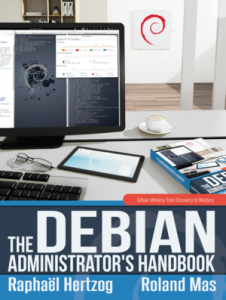
This is my monthly summary of my free software related activities. If you re among the people who made a donation to support my work (147.56 , thanks everybody!), then you can learn how I spent your money. Otherwise it s just an interesting status update on my various projects. The Debian Administrator s Handbook Cover of the Debian Administrator's Handbook (Wheezy edition)I spent a good chunk of December on the book. First finalizing the English version and getting it out (BTW, just for the launch, there s a 10% discount on the paperback that lasts only until January 9th!). Then working on updating the French translation. Eyrolles will publish a new edition of the French book based on this translation. Expect some further news about this during January! Debian France I contributed to many discussions within Debian France. Starting with a complaint that most events are organized in Paris, I proposed to map the location of Debian France members. We added new fields in the membership management page so that members can add their GPS coordinates and Fr d ric Decou made some experiments with Openstreetmap. Someone else (Kiriarat) volunteered to write the required glue code. A manual map is currently maintained on the website. Sample logo receivedIn the discussions about the setup of the Debian France shop, I suggested to update our logo with a nicer looking one. We got a few suggestions and after further discussions with Alexandre Delano and Sylvestre Ledru, we organized a small contest to entice designers to submit a logo proposal to us (the winner earns a set of Debian goodies). We got 46 proposals (see my favorite on the right)! The board is currently pre-selecting the logos and setting up the final vote for our members. The winner shall be announced at the end of the upcoming mini-debconf in Paris. I also continued the work to finalize new bylaws and new internal rules. They shall be adopted during the next general assembly which will happen during the mini-debconf. Misc Debian Work WordPress maintenance. I mentored Pablo Vasquez to do his first small contribution to the WordPress packaging. I really appreciate this but he s not yet ready to assume maintenance of a big package like WordPress on his own. I got multiple other offers of help and pinged them all while filing #733726 to coordinate the work on the new upstream version. But I got no reply :-( Handing over packages to new maintainers is hard Init system discussion. The technical committee has the hard task of picking the default init system that will replace the traditional System V init (see #727708). I followed this huge discussion closely and contributed a bit where I add something meaningful to say. Final decision is expected sometimes in January. FWIW, I share entirely Russ Allbery s point of view in those discussions. I have been running systemd on some of my computers for a few months already. Fixing lxc in stable. The lxc package in stable has a non-working debian template. I really dislike documenting that things are broken so instead of doing that in the Debian Administrator s Handbook, I opted to do something about it. I prepared a non maintainer upload for stable (see #680469 for the problem and #732358 for the stable update request). Misc stuff. I sponsored a tcpdf upload. I filed an enhancement request on Publican to have it keep processing instructions present in translations. I uploaded new versions of publican-librement and debian-handbook. I filed #732678 against git-buildpackage because it failed to properly call lintian when given the -A dpkg-buildpackage argument. Thanks See you next month for a new summary of my activities.
No comment Liked this article? Click here. My blog is Flattr-enabled.

Next.

Previous.