
Search Results: "ag"

9 May 2009

David Paleino: OpenPGP key transition announcement

Because of the recently announced attack against the SHA-1 digest algorithm, I finally decided to move away from my old 1024-bit DSA OpenPGP key, landing to a shiny new 4096-bit RSA one. The old key will continue to be valid for some time, but I prefer all future correspondence to come to the new one. I would also like this new key to be re-integrated into the web of trust. I'm attaching a file with
the complete text of the transition, clearsigned by both keys to certify the transition. You can find the transition statement also on http://www.hanskalabs.net/key-transition_20090509.txt . You can check the validity of the file with something like:
$ gpg --decrypt key-transition_20090509.txt   gpg --decrypt
If you need to transition your key too, and you're one of my signees, then let's please coordinate, so that we have the new keys cross-signed, without spurious signatures fromgoing-to-be-revoked keys Smile Thank you for your help.
AttachmentSize
key-transition_20090509.txt4.03 KB

Jan Hauke Rahm: HoldingNuts

ITP: #525841 I know there already is a poker client and server application in Debian but I do like the simplicity of this one. So, until it s officially uploaded beta testing is appreciated. Download packages for sid at http://downloads.jhr-online.de/holdingnuts/sid/. Packages for M$ Win and Gentoo are upstream available at http://www.holdingnuts.net/download. The best part: upstream has a running server instance which you can connect to for testing (and playing of course). It s the default connection when you start the client the first time. Go for it! Let s play poker

Andrew Pollock: [life] A few days in British Columbia

We got back from our brief visit to Canada last night. We had a great time, Vancouver and Victoria were both very nice. YVR (Vancouver Airport) This airport has to win the award for nicest airport I've seen. Clearly they pulled out all the stops in preparation for the Winter Olympics next year. The airport is very bright, airy and open. Before you even hit the immigration line, you pass through a couple of water features, some indigenous art, all of that jazz. Immigration is done in the open in a huge hall, instead of in the dark bowels of the airport, which was a pleasant change from the usual US airport immigration experience. (That said, Houston airport had a pretty nice immigration experience). Oh, and it was blanketed with free WiFi, which was a nice touch. Ferry to Victoria The brief geography lesson I got was that Victoria is on Vancouver Island, and Vancouver (the city) is not on Vancouver (the island). Go figure. Getting to Victoria from the airport via BC Ferries was a very seamless experience. You board a bus from the side of the airport terminal, and it drives to Tsawwassen, drives onto the ferry, and then you get off the bus and go sit on one of the passenger levels of the ferry. BC Ferries BC Ferries deserves special mention. The ferry itself is huge - 7 decks (three of them for vehicles). It's a veritable shopping mall on water. It's got some stores, buffets, exclusive $10 entry lounges, video arcades, cellular payphones, the works. The trip to Victoria The ferry ride took about 1.5 hours, and was very scenic. We passed by a few smaller islands, and I had an instant flashback to the TV show The Beachcombers that I used to watch as a kid, particularly the opening sequence. Victoria Victoria is a beautiful city. It's the capital of the province of British Columbia, and I likened it to Canberra in a lot of ways. It had more modern conveniences than a town with a population of its size would otherwise normally have. It was a government and university town. Nice houses, very green in general, and being an island, there was water everywhere. It seemed to have lots of bays, and harbours and rivers. It was very nice. Flight back to Vancouver We took a Harbour Air seaplane back to Vancouver on Sunday afternoon. That was fun. I've never been on a seaplane before. It took about 35 minutes. Vancouver First order of business in Vancouver was the purpose of the whole trip: renewing our visas. That went fine, I'll write a separate post about the process. Afterwards, we bought tickets for the Big Bus, and toured the city for the remainder of Monday and Tuesday. Drive to Whistler For Wednesday and Thursday, we hired a car, and went a bit further afield. On Wednesday, we drove up to Whistler to check it out. The drive up took about 5 hours, because we stopped at every scenic spot we came by. Waterfalls abounded. There was a lot of work being done on the roads between Vancouver and Whistler, upgrading them for the Olympics. Whistler itself was pretty spectacular. Some crazy looking ski runs. The village looked like Squaw Village on steroids. The drive back only took about 2 hours. Cleveland Dam, Lynn Canyon suspension bridge For the last day, we drove to Cleveland Dam, where there was a salmon hatchery, and checked out the dam, hatchery and surrounding area. It was lovely and green. After that, we drove to Lynn Canyon to check out the suspension bridge there (unlike the Capilano Suspension Bridge, which costs $26 a pop, the Lynn Canyon one is free). That was all we had time for really. The weather wasn't fantastic during our stay, but it didn't really prevent us from doing anything either. I'd have liked to have checked out Stanley Park if we had more time, and Sarah wanted to go to Grouse Mountain. We had a near-100% success rate at being picked as Australians, unlike when we're in the US, where more often than not, people ask us if we're British. Apparently this is mainly attributed to the fact that Australians run all of the ski lifts at Whistler. We certainly heard a lot of Australian accents while we were getting around. I'd also never seen such a saturation of Starbucks before. In Vancouver, there were literally Starbucks across the road from Starbucks, and around the corner from another one. Whistler village had two. The Canadian accent is cute. They really do tack "eh?" on the end of everything, although it's phonetically more like "ay?". "House" and "about" are also pronounced distinctively differently. Overall, Vancouver wasn't what I'd call bursting at the seams with tourist attractions, but seemed like a nice city. It was fairly flat. The beggars were well dressed. Everyone was very friendly. A lot of the taxis were Priuses. It seemed pretty clean. I could handle living there. Not sure how bad it gets in winter.

8 May 2009

Jaldhar Vyas: New GnuPG Key

-----BEGIN PGP SIGNED MESSAGE-----
Hash: SHA1 - -----BEGIN PGP SIGNED MESSAGE-----
Hash: SHA256 Recently there has been some brouhaha about migrating away from SHA-1 digests as used in GnuPG and to this end I followed the procedure described by Daniel Kahn Gillmor and created a new key which I will get signed at the Debian NYC meetup tonight and use to replace my existing key for signing packages. The old key (which is still valid btw) is: pre. pub 1024D/EE6DC66A 1999-12-16
Key fingerprint = 48DF D000 3BE7 1FF8 D9C1 5832 DA46 0E47 EE6D C66A And the new key is: pre. pub 2048R/C4794DAF 2009-05-08
Key fingerprint = 37EF 5B02 19C3 0C6E 47B2 51D0 EAA6 38FA C479 4DAF You can fetch the new key from http://people.debian.org/~jaldhar/gpg.txt or from the public keyservers (I don't know if there is a lag in how quickly new keys are made available.) This message has been signed with both the old and new keys.
- -----BEGIN PGP SIGNATURE-----
Version: GnuPG v1.4.9 (GNU/Linux) iQEcBAEBCAAGBQJKBLrsAAoJEOqmOPrEeU2vfzIH/A99fMg6fC30GEm6SavJY4lt
hNS7N95dAn8iSGWfWgRv7t3ePAwmiIAZrcsFsjFgpS5IlZOTj9cFjTTz9Tgj030V
s55BSiM8yVrwnsgmZOHoVcQitS7i3b/I4AD/7Nrgx711GEIKesi1/O7eY1h0NaBM
kKlgIxg4GW1BFWd6P6XGtquO5ERYKUAkWRuPpxwUThlLbkXt0AOkWD13pmVD6adw
ZZwTPbFHQ/xvdYLwwSCZWXoPsrmuYcxlTcCzGkWISBPof6wmOkVshUAO6flVqKJ/
lm6rhpDKVgC/M1dOyDR9yh+Na3rgBFP0lOrJZpjW93Wld19v/yY6DSyZdJZoIOE=
=mDg8
- -----END PGP SIGNATURE-----
-----BEGIN PGP SIGNATURE-----
Version: GnuPG v1.4.9 (GNU/Linux) iEYEARECAAYFAkoEuwsACgkQ2kYOR+5txmp31gCgjoG/Y5W0QMkVY9fafZPb5SUb
MzEAn253UwCq+8UbdyD+ls7ZAcSvSt4h
=/lhN
-----END PGP SIGNATURE-----

Florian Ragwitz: MongoDB on CPAN

I've been doing some contracting work for 10gen recently. They have that rather cool open source document database called MongoDB and they wanted me to write a module to use that from Perl. I did that and the code is now available on CPAN and github. Writing that was fun, and I'm already looking forward to be able to use MongoDB as a backend for KiokuDB. I started writing code for that and put it on github, but isn't passing all the tests just yet. In related news, after finishing the MongoDB module, I'm available for other things again. So if you're looking for a Perl telecommuter, let me know.

Christoph Haas: Thanks for the great time, KDE

After years of being a dedicated KDE user it seems like it s finally time for me to go back to Gnome. I once tried KDE 4.x from the Debian experimental branch knowing that it s probably unstable and will require a lot of patience. But I was willing to report bugs and dive into new things. It didn t take long though to find out that graphics were extraordinarily slow with the new desktop effects . The worst was resizing a konsole (KDE terminal window). It took 25 seconds until the window was resized and redrawn! On the interweb I found KDE developers rant about NVidia who didn t support some special extension they needed. They suggested to get an ATI card instead. (No, thanks, I was struggling with the crappy radeon and fglrx drivers on my new work laptop and am sick of ATI for Xorg.) Or I could use a bare XTerm instead. Yeah, right. So I couldn t use the desktop effects. After all I used the non-free NVidia driver for years and it never let me down. I don t mind doing without eye candy. But the desktop effects were about the only serious way to switch between virtual desktops. Point the mouse into a corner or edge of the screen and get a zoom-out bird s view of the virtual desktops. Nice but quickly annoying. Besides you had to push the mouse pointer a few pixels into the edge (it s not sufficient to just hit the edge) which means that after 10 desktop switches I had to lift the mouse and set it back on the mousepad. Another annoying issue is that up to now I can t assign functionality to every key on my keyboard any more. I had a neat trick by having 3 3=9 virtual desktops and use my numpad keys 1 to 9 to page through them. 0 on the numpad opened a new shell window. + on the numpad maximized a window. But now I couldn t assign any of those numpad keys. I pressed the 1 but KDE didn t detect Numpad_1 but just 1 . Guess how useful it is to not be able to type the 1 any more. There is a low-priority bug report for KDE from users who want this fixed but it will likely not happen any time soon. So the only way to switch desktops was to poke on the tiny pager widget in my panel. Yuk. Not to mention that I couldn t put icons on the desktop any longer. There was just a sissy widget that I could use for that purpose but it didn t work like a conqueror or dolphin at all. It was pretty amusing when in KDE 4.2 there was suddenly a feature to re-enable the old behavior. Let me guess, KDE developers - I wasn t the only user you couldn t persuade of the new paradigm? Next evil thing was performance. KDE 4 takes ages to load. Simple window managers get me started within seconds. Even Gnome. But KDE takes 30 seconds until it s loaded plus some disk grinding in the background. And memory usage wasn t nice either. And what finally made me mad was stabilty - or rather lack thereof. Everytime the screen saver ran my kbluetooth module crashed. kmail crashed even more frequently than before. (I loved kmail for it s great customizability and feature set.) plasma (the actual window manager) died at least twice a day. Suddenly the panels were looking ugly or crashing. As a Debian developer I have to follow the unstable branch on my workstation. And there is no distinction between KDE 3 and KDE 4 any more so a dist-uprade inevitably gets all of my applications upgraded to KDE 4 (plus an hour of manual engineering in aptitude because half of my applications weren t upgraded automatically due to different application names and I had a mixed environment). So there I was with KDE 4.2. I really worked with it for a month. I tried hard to get acquainted to its bloatedness and instability. It s really a nice technological preview of what might be possible in the future. Everything is really automatic. Mounting external media. New ways to find programs (although I m not happy with the new K start menu). Funny effects and nice eye candy. But it s far from the rock solid desktop environment that I was used from KDE 3.5.8. So there I am on Gnome now. I was switching back and forth. One day working on KDE 4.2 and the other day using Gnome 2.26. And although it makes me feel sad I think it s finally time to say goodbye to KDE 4. I have invested a good amount of time and energy into it - even just from a user perspective. But it s not ready. And I finally need to get some work done. A number of projects suffered from my playfulness (my ispmail tutorial, screenshots.debian.net, debexpo, my kids) and it s time to get back to work. And Gnome was pretty surprising. With compiz I have the KDE desktop effects working (here they really do) and they are all customizable. I can assign keys properly again (even the numpad). Everything is pretty fast and stable. I have replaced kmail and its buggy shared calendar feature by Icedove (aka Thunderbird) with the Lightning plugin. Worked from the first minute and hasn t crashed in a week (just have to remember next time to install libstdc++5 to be able to use Lightning). With enigmail I finally have a proper simple working PGP key management that doesn t die and is buggy like hell like in kgpg. And there s the nice Nostalgy add-on that allows me to file emails into IMAP folder quickly again - a feature that just kmail seemed to support so far. Oh, and I see new mail instantly because Icedove supports the IDLE command while kmail has never learned that neat little trick. The Gnome file manager isn t really great for my taste but it s doing its job (dolphin is just much nicer). It s not as nice as KDE but I had to learn that working and stable weighs more than nice. The hard way. And many things I liked about KDE 4 (like starting a new program with Alt-F2 and having a smart application finder and simple calculator in one) are built into Gnome, too. So why bother. Thanks, KDE, for the years of fun and service. I ll surely miss you. Get back to me should you grow up one day.

Lior Kaplan: Openoffice.org User Survey 2009


I found out that openoffice.org are running a user survey, and thought that should be more public.
Please help improve the OpenOffice.org office suite by completing this survey. It will take about 15 minutes and will increase our understanding of your requirements and expectations for the OpenOffice.org software. You will have the opportunity to make comments or suggestions at the end of the survey.
So, please help and fill the survey (it realy doesn t take 15 minutes) Posted in Openoffice.org, QA stuff Tagged: openoffice

Antti-Juhani Kaijanaho: Star Trek

It is curious to see that the eleventh movie in a series is the first to bear the series name with no adornment. It is apt, however: Star Trek is a clear attempt at rebooting the universe and basically forgetting most of the decades-heavy baggage. It seems to me that the reboot was fairly well done, too. The movie opens with the birth of James Tiberius Kirk, and follows his development into the Captain of the Enterprise. Along the way, we also see the growth of Spock from adolescence into Kirk s trusted sidekick and also into well. Despite the fact that the action plot macguffins are time travel and planet-killer weaponry, it is mainly a story of personal vengeance, personal tragedy, and personal growth. Curiously enough, although Kirk gets a lot of screen time, it is really the personal story of Spock. Besides Kirk and Spock, we also get to meet reimagined versions of Uhura (I like!), McCoy, Sulu, Chekov and Scott. And Christopher Pike, the first Captain of the Enterprise. The appearance of Leonard Nimoy as the pre-reboot Spock merits a special mention and a special thanks. I overheard someone say in the theatre, after the movie ended, that the movie was a ripoff and had nothing to do with anything that had gone before. I respectfully disagree. The old Star Trek continuum had been weighed down by all the history into being a 600-pound elderly man who is unable to leave the couch on his own. This movie provided a clearn reboot, ripping out most of the baggage, retaining the essence of classic Star Trek and giving a healthy, new platform for good new stories. One just hopes Paramount is wise enough not to foul it up again. It was worth it, I thought.

Alastair McKinstry: Funding Public Health care : the bigger picture

Adrian von Bidder raises an interesting discussion on why public health care is difficult. Basically, it comes back to the challenge:
How much money should be spent on this person's illness? which is a very, very bad question. We try to sidestep it by only taking about statistics etc., but no matter how you look at it, you either do 20'000  per week medications for 80 year old patients who will die soon anyway and get a system society can't pay, or you don't and you get a system where the rich are better off than the poor.
The problem is, the majority of health costs are in the last few years of a persons life: when the body is breaking down. If viewed from the problem of health-care funding vs. eg. education, you have an ethical dilemma: is it worth it ? Here there are no easy answers. Nick Bostrom wrote a very interesting and persuasive essay a while back, The fable of the Dragon Tyrant. In short, we are getting somewhere with regenerative medicine While cures are hard to come by at this stage, there is a growing realization in medicine that senesence, what we used to call "old age", is curable. But we have a lot of psychological defensive mechanisms to help us cope with the carnage of old age that make us deny the problem: if we look afresh at "old age" knowing it to be curable, any delay in doing so is abhorrent. From a public, societal perspective, we spend a fortune every year on health. But we do so in a very disjointed way: we pay colossal amounts for health care, but also for basic health science: in the US, for example, the budget for the National Institutes of Health is about 30 billion dollars. Nearly twice that of NASA. Similar figures are spent in Europe, but there is this strange gap in the middle: the drug companies and medical industry. We start the development of new drugs with public money, and we buy the drugs with public money, but the choice of what drugs and treatments are developed are left to private industry, that is, a profit motive. This results in many cases in expensive treatments to treat symptoms rather than necessarily cure the problem. Faced with the huge costs of geriatric medicine and senesence, the response should be co-ordinated: funding a cure will be expensive, but save a fortune (Think, instead of a pensioner slowly dying and 'being a drain on resources', of 'experienced citizen in the prime of their productive, tax-paying years'). Instead of funding the basic science alone, we should be funding the complete drug and treatment development publically, only farming out the actual manufacture to private industry. It is silly to spend a fortune to keep merely keep someone alive at the age of eighty or so, when we know for a larger investment (bigger than a private company can do), we can cure them properly. The solution to the dilemma, then, is to stop thinking of the elderly being a drain, but actually applying our public efforts in a co-ordinated manner to solving the carnage of old age. Tags ,

Sandro Tosi: Oh GMail, where did you put my colors?

After the short outage of GMail just suffered, all my colored labels are gone. Oh what a PITA! I love all those colors in my window, and they help a lot focus on important stuff.

Ok, it's an extension in GMail Labs that enables them, but I hope they'll be restored (yeah, the same I had before) really soon! It would be very boring to redefine them all.

/me crossing fingers

UPDATE: colors are back now \o/

Julien Valroff: Renewing my GnuPG keys

gnupgFollowing to the recent announce of a serious possible attack against the SHA-1 digest algorithm, I have just generated new GPG keys. My personal key 9F71D449 will hence be progressively replaced by my new key: 290D20C5

Its fingerprint is:
092F 4CB5 5F19 E006 1CFD  B489 D32B 8D66 290D 20C5
The old key will continue to be valid for some time (at least until the new one get signed by a Debian Developer, in order to be included in the DM keyring), but I prefer all future correspondence to come to the new one. Transition statement signed by both keys is available at: http://www.kirya.net/~julien/GPG-key-transition_20090508.txt They key used for my personal package repository (FBABB737) has already been revoked and replaced by E435C74B, with the following fingerprint:
D17A A78F 7992 A07D 9D85  517C C3E1 8B20 E435 C74B
You have to make apt-key aware of this change:
wget -O - http://packages.kirya.net/Kirya.netDebianpackagesVerificationKey.asc   apt-key add -
Transition statement signed by both keys is available at: http://packages.kirya.net/GPG-key-transition_20090508.txt Also note I have generated the key with ID 90A9E71B and got it sent to public servers by mistake. I do not own the private key hence I cannot revoke it: make sure you do not use it!

David Welton: Ruby, Soap4R, WSSE Authentication

I've been doing some work for a client, where we have to interact with a web service front end for Oracle (which also means that everything reflects Oracle's "delightful" shortened table names, like UsrAddrsPhn...). I didn't find a lot out there to do this in Ruby, except this helpful post: http://willcannings.wordpress.com/2008/07/06/wsse-authentication-in-ruby-soap4r/ However, it wasn't quite enough for what we're doing, as we have to deal with a nonce parameter as well. Here's the snippet of code I created:
require 'rubygems'
gem 'soap4r'
require 'base64'
require 'soap/rpc/driver'
require 'soap/wsdlDriver'
wsdl_url = ARGV.shift
proxy    = SOAP::WSDLDriverFactory.new(wsdl_url).create_rpc_driver
# run ruby with -d to see SOAP wiredumps.
proxy.wiredump_dev = STDERR if $DEBUG
require 'soap/header/simplehandler'
require 'soap/element'
require 'xsd/datatypes'
class WsseAuthHeader < SOAP::Header::Handler
  NAMESPACE= 'http://docs.oasis-open.org/wss/2004/01/oasis-200401-wss-wssecurity-secext-1.0.xsd'
  USERNAME  = 'Not really the username'
  PASSWORD  = 'Put your own password here'
  def initialize()
    super(XSD::QName.new(NAMESPACE, 'Security'))
  end
  def on_outbound
    security = SOAP::SOAPElement.new('wsse:Security')
    security.extraattr['xmlns:wsse'] =
      'http://docs.oasis-open.org/wss/2004/01/oasis-200401-wss-wssecurity-secext-1.0.xsd'
    unt = SOAP::SOAPElement.new('wsse:UsernameToken')
    unt.extraattr['xmlns:wsu'] =
      'http://docs.oasis-open.org/wss/2004/01/oasis-200401-wss-wssecurity-utility-1.0.xsd'
    un = SOAP::SOAPElement.new('wsse:Username', USERNAME)
    unt.add(un)
    pw = SOAP::SOAPElement.new('wsse:Password', PASSWORD)
    pw.extraattr['Type'] =
      'http://docs.oasis-open.org/wss/2004/01/oasis-200401-wss-username-token-profile-1.0#PasswordText'
    unt.add(pw)
    # Create a nonce...
    nonce = SOAP::SOAPElement.new('wsse:Nonce', Base64.encode64((rand() * 1000000000).to_i.to_s))
    nonce.extraattr['EncodingType'] =
      'http://docs.oasis-open.org/wss/2004/01/oasis-200401-wss-soap-message-security-1.0#Base64Binary'
    unt.add(nonce)
    # The time format returned by XSDDateTime isn't quite right, so we
    # fiddle with it a bit.
    unt.add(SOAP::SOAPElement.new('wsu:Created',
                                  XSD::XSDDateTime.new(Time.now.utc - 30).to_s.gsub(/..*/, "") + "Z"))
    security.add(unt)
    return SOAP::SOAPHeaderItem.new(security, true)
  end
end
proxy.headerhandler << WsseAuthHeader.new()
... call proxy methods to interact with web service ...
The key thing is to dress up the outgoing header with all the right XML, including Nonce and Created parameters. This code was created by matching the XML generated by the Java code used to interact with this "JAX-WS" web service. All in all, it's a bit of a mess compared to a nice REST style web service. Hopefully the above code will be useful to others who are in a similar situation.

Eddy Petri&#537;or: I bought a folding bicycle

For some time I've been pondering about buying a bicycle since it seems my weight has been increasing lately up to about 90 kg, which, for my height and age, is about 20 kilograms too much.

But since I am living in a rented apartment, storing the bicycle was a problem, until I realized I could buy a folding bicycle. When that idea hit me, I literally couldn't sleep until about 6 am and I searched the internet about the options, issues to expect, things to check.

In the end I found a Dahon Mu P8 bicycle someone was selling on a bidding site and, after seeing it I concluded that was in mint shape, so there was no reason not to buy it since the price was half of a new one, while this one was only a year old.

I bought the bike yesterday and rode it to work from the place where I met the person who sold it to me and it was quite an enjoyable experience. I still have to do some minor adjustments (saddle is a little bit loose and folding could be better if the handle bar was in another position) before I can ride it regularly to work, but that's just, well, a minor problem :-P.


Now I have a way to do regular exercise without feeling is a drag, so I expect to lose some weight soon after I start riding it to work regularly :-) . Maybe I'll manage to lose about 5 kilos until DebConf, which would be great.

Asheesh Laroia: What is open source (and Free Software) missing? / Moving to Atlanta

Tim and my mother are both neonatologists at the Golisano Children's Hospital inside the University of Rochester. Earlier today, they had this conversation:
My mother: My son Asheesh is moving to Atlanta.
Tim: Is it for a girl?
My mother: I don't really know what the kids are doing as far as girls, but no....
In fact, I'm moving to Atlanta because Shotput Ventures funded me, Nelson Pavlosky, and my friend Raphael Krut-Landau to start a company to improve interactions in the open source / free software world. We get enough money to live in Atlanta from May 18 to August 6, and after that, we have to seek more funding. This has led to a series of ironies. The first is that I am working on a startup. The second is that I left San Francisco to do it. But I have already moved out of San Franisco, and I have left my job at Creative Commons. (Feel free to get in touch with me (outside my website's comments) about filling my shoes there.) Thanks, Nathan and Mike, for giving me the chance to contribute to CC, an organization and project that I have always had a great passion for. For a while, I may seem vague about the project I am about to undertake; it's because I still want to nail down some details between the three of us. When Nelson, Raphael, and I arrive in person, we're going to kick into gear. I've been chatting with a few of you over the past few months about ideas, and I do want to especially thank Karl Fogel and Mako Hill for helping the three of us think through what could be done. Some questions for readers: Feel free to email me (asheesh at asheesh.org) if you'd rather not comment publicly. I have a few ideas of my own, and I hope to be tossing them up for everyone to bat at soon! P.S. Noisebridge, I will miss you!

MJ Ray: Enterprise Hubs, Societies, Newsletter and AGM

Cooperatives-SW (which I m currently helping to direct) has been approved for Co-operative Enterprise Hub funding for 2009. Well done to Viv and the rest of the hard-working team who have been doing miracles for co-ops in this region with relatively little funding for so long now. (But if you ve got a pot of money to donate, let me know, please.) Industrial and Provident Societies are the traditional form for registering UK Co-operatives, but there are a number of things in its 1960s law which aren t reflected in general company law (which was mostly updated since the mid-1980s). For starters, IPSes are registered with the FSA, whose website isn t as good as Companies-House WebCHeck for Limited companies. Cooperatives-UK are pressing for the law to be modernised. C-UK sent us a status update (which I can t find on their website yet) this week. Amongst other things, they re seeking to introduce provisions to allow online registration and filing for IPSes. I ve asked them to take the opportunity to press for similar provisions for LLP Co-ops, or directing Companies House to act on any such existing provisions. At the moment, it seems unfair that LLPs are excluded from online filing, so paying double for routine administrative filings and relying on the increasingly dysfunctional Royal Mail. Finally, the next Cooperatives-SW print/PDF newsletter should be out next week. Hope to see lots of you at the AGM in Plymouth on 23 June!

7 May 2009

Steve Kemp: I'm fireproof, you're not

I've mostly been avoiding the computer this evening, but I did spend the last hour working on attempt #2 at distributed monitoring. The more I plot, plan & ponder the more appealing the notion becomes. Too many ideas to discuss, but in brief:
My previous idea of running tests every few minutes on each node scaled badly when the number of host+service pairs to be tested grew. This lead to the realisation that as long as some node tests each host+service pair you're OK. Every node need not check each host on every run - this was something I knew, and had discussed, but I assumed that would be a nice optimisation later rather than something which is almost mandatory. My previous idea of testing for failures on other nodes after seeing a local failure was similarly flawed. It introduces too many delays:
  • Node 1 starts all tests - notices a failure. Records it
    • Fetches current results from all neighbour nodes.
    • Sees they are OK - the remote server only just crashed. Oops.
  • Node 2 starts all tests - notices a failure. Records it.
    • Fetches current results from all neighbour nodes.
    • Sees they are OK - the remote server only just crashed. Oops.
In short you have a synchronisation problem which coupled with the delay of making a large number of tests soon grows. Given a testing period of five minutes, ten testing nodes, and 150 monitored hosts+services, you're looking at delays of 8-15 minutes. On average. (Largely depends on where in the cycle the failing host is, and how many nodes must see a failure prior to alerting.) So round two has each node picking tests at "random" (making sure no host+service was tested more than 5 minutes ago) and at the point a failure is detected the neighbour nodes are immediately instructed to test and report their results (via XML::RPC). The new code is simpler, more reliable, and scales better. Plus it doesn't need Apache/CGI.
Anyway bored now. Hellish day. MySQL blows goats. ObFilm: Hellboy

Biella Coleman: Open Video Conference

The Open Video Conference is happening in NYC/NYU in June and registration now open. The line-up looks fantastic so if you are inclined and are in the area, do drop by.

Biella Coleman: Open Video Conference

The Open Video Conference is happening in NYC/NYU in June and registration now open. The line-up looks fantastic so if you are inclined and are in the area, do drop by.

Jan Hauke Rahm: Drawing in LaTeX

Just recently I convinced a friend of mine to use LaTeX for her papers. A huge step for her and a small one for me as I just had to copy my templates and show her a few hints about LaTeX. Well, that s what I thought. It was actually even the very same day when she asked me for help: she needed an image in there. That was of course easy but when I saw it I felt like I needed to replace it (it was seriously awfull). So, drawing She needed three rectangles connected with arrows. Easy thing with pstricks one might think but then pstricks is a PITA when you need a pdf document. So I tried tikz (of course, Debian delivers it right away). And see how easy that looks like:
\begin figure [htbp]
    \centering
    \begin tikzpicture 
    [<->, auto,
    block/.style =  rectangle, draw=blue, thick, fill=blue!20,
                    text width=3.5cm, text centered, rounded corners,
                    minimum height=2cm, font=\sffamily ,
    line/.style  =  draw, thick ]
    \matrix [column sep=5mm, row sep=2cm]
     
        % row 1
        & \node [block] (top)  Rectangle A ; \\
        % row 2
        \node [block] (left)  Rectangle B ; &
        & \node [block] (right)  Rectangle C ; & \\
     ;
    \begin scope [every path/.style=line]
        \path   (left) -- node [midway,font=\sffamily\footnotesize]  Arrow desc 1  (top);
        \path   (left) -- node [midway,font=\sffamily\footnotesize]  Arrow desc 2  (right);
        \path   (top)  -- node [midway,font=\sffamily\footnotesize]  Arrow desc 3  (right);
    \end scope 
    \end tikzpicture 
 
    \caption My fancy image 
    \label fancyimage 
\end figure 
Don t you like it that way?

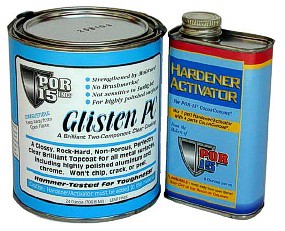
Biella Coleman: Make our words glisten


glisten vs hardened words, originally uploaded by the biella.
Now that I am (thankfully) done teaching until September, I have time to devour two small mountains of readings that I need to finish before I return to my manuscript, which I will be working on, I hope uber-productively, all summer long. One pile of readings deals with coding, open source, and the commons, such as Scott Rosenberg s Dreaming in Code and David Bollier s Viral Spiral. Another pile of reading edges toward the theoretical side of things, having to do with craft, pleasure, and humor, since it is pleasure in its many many many guises from from the calm feeling of self-satisfaction that underlies pride in one s craft, to the more sublime feeling of ecstatic bliss that powers many creative sprints. If one entertains pleasure, one must also entertain its darker side, for all of this feel good stuff is nonetheless often springs forth from a deep sea of passionate frustration. This seems to be the driving theme of Dreaming in Code and it is also what animates Ellen Ullman s fictional account of pure frustration, The Bug. I am quite fond of native expressions of geek frustration and recently was provided with an exquisite example a rant against the Adobe PSD format. The author of Xee, A light-weight, fast and convenient image viewer for Mac OS X explained his utter contempt for the Adobe PSD in the following way:
At this point, I d like to take a moment to speak to you about the Adobe PSD format. PSD is not a good format. PSD is not even a bad format. Calling it such would be an insult to other bad formats, such as PCX or JPEG. No, PSD is an abysmal format. Having worked on this code for several weeks now, my hate for PSD has grown to a raging fire that burns with the fierce passion of a million suns. If there are two different ways of doing something, PSD will do both, in different places. It will then make up three more ways no sane human would think of, and do those too. PSD makes inconsistency an art form. Why, for instance, did it suddenly decide that *these* particular chunks should be aligned to four bytes, and that this alignement should *not* be included in the size? Other chunks in other places are either unaligned, or aligned with the alignment included in the size. Here, though, it is not included. Were it within my power, I would gather every single copy of those specs, and launch them on a spaceship directly into the sun.
Even if this account represents unadulterated irritation, he leaves us, the reader, with nothing of the irritation, only pleasure. This aftermath of frustration is delivered through the vehicle of humor, which within the hacker context, is the cultural container that best captures the spirit of hacker pleasure or so I will be arguing. Like many humorous rants from the world of hacking (and please send me any others you know of), this text dances with liveliness; it exudes its own rhythm; it glistens to use Ronald Barthes apt phrasing from his short book The Pleasure of Text, which I just finished as part of my theoretical escape into the pleasure-dome. Although there are parts of his book which are to be frank, *really* *not* *pleasurable*, partly due to obscure references to High French Theory, which elide even an academic pair of eyes, the book generally pleases. And one of the most pleasing chunks is his definition of a stereotype:
The stereotype is the word repeated without any magic, any enthusiasm, as though it were natural, as though by some miracle this recurring words were adequate on each occasion for different reasons, as though to imitate could no longer be sensed as an imitation: an unconstrained word that claims consistency and is unaware of its own insistence
In contrast to the stereotype, a string of words that enchants does so by slipping off the page to hit you squarely in the heart or the gut. Unfortunately, while academic writing steers clear of stereotypes, often trying to present the detailed singularity of a phenomena (even when conditioned by social forces), it does not exactly glisten, though there are a handful of exceptions. I think we need more texts that glisten, even if only during sections or parts of our books and articles (much like the rant helped enliven the more staid technical document). In recent years, in large part due to the influence of free software, there has been an explosion, a move toward going open access. All of this is laudable and I fully embrace it (and have gotten into some small battles over it). But without an aesthetic politics that values pleasure in reading and writing we are doomed to obscurity anyway. A move toward making our knowledge public also required a move toward thinking about the literary aesthetics of pleasure.

Next.

Previous.
