Search Results: "hug"

28 November 2006

Matthew Palmer: VLAN adventures

Have you ever had a need for a large number of "real" network interfaces on a Linux box? For security reasons, you don't just want to hook everyone up to a single switch and use virtual interfaces (because it's too easy for one of the connected devices to play silly buggers with his neighbours). Up to a certain point, you can stuff more NICs into a box, and when it fills up you can switch to those outrageously expensive 2- and 4-port NICs. But eventually you're going to run out of space[1] or money. At that point, you need something more interesting. For me, this week, that "more interesting" has been Ethernet VLANs. Linux Journal has a good intro to the technical aspects of how to setup VLANs and Linux. VLANs are some crazy stuff. They're implemented by wrapping a little number around every Ethernet frame indicating which VLAN the packet is "on", and the switch (you need a higher-end device, appropriately configured) makes sure that packets don't roam onto ports they're not meant to be on. For a single switch, this isn't very interesting, and you don't really need an IEEE standard to make it work -- just a lot of little jumpers. However, VLANs are mostly useful on larger networks, which tend to use more than one switch. So you need a way for your VLANs to roam amongst your switches -- hence the packet tagging. You stick the tag onto the packets and fling them off to another switch, and packets coming in with the tag are corraled into their VLAN. Naturally, you don't want end-user devices whacking their own VLAN tags onto packets (untrusted data, and all that), so you define most of your ports as being "untagged". Packets that come in on these ports are treated as regular ethernet frames and tagged with the appropriate VLAN ID, and packets that go out have their VLAN IDs stripped before being sent. (This implies that you can tunnel VLANs in VLANs, and I'm pretty sure that is doable in most switches, modulo some nasty problems that can, and probably will, occur). The ports that aren't designated "untagged" spit out tagged packets -- and this is where my interest lies. Like most every other computer-related standard, Linux can decipher and work with VLAN tags (the 8021q module is what you're looking for). You just load up the module, hook your NIC into the appropriate port on your very expensive switch, define your VLAN tags with vconfig, and suddenly you've got vlanN interfaces, which map to real RJ-45 ports, and you can hang network devices off these and get lots and lots of "real" network interfaces on your Linux router. It's all so simple, right? Nothing ever is, of course. The trials and tribulations I've had over the past two days have included: Thankfully, once all those dramas were done, the whole thing just kind of fell into place, and now I've got a machine which has up to 2048(ish) network interfaces (with huge, glaring caveats on that upper bound, of course). With a bit of luck, the live installation in a couple of days will go smoothly. You can stop sniggering now.
1. In this case, there wasn't a lot of space to begin with, as it's a 1RU box I'm working on, and the 4-port NIC didn't want to place nice with me for some reason anyway.
23 November 2006

David Welton: Playing fetch

We had some friends once, who had a dog that would run after anything that you threw for it to fetch. It would run up hills, down hills, through bushes, jump into water...absolutely anything to bring that stick back to you. Sometimes, I have a sneaking suspicion that certain programming systems are sticks that you simply shouldn't chase after, unless you want to end up like that poor dog, crashing down the hill. I'm not an economist, but I suspect that companies, like countries or other entities that participate in trade, in some ways adhere to the principle of comparative advantage, in the sense that they do some things relatively better than others. For instance, big companies are probably better at slogging through big huge API's in more tedious languages like Java. And that's where the chasing the stick idea comes in. If you're a small company, you're going to get beat up if you chase after the stick, trying to keep up with IBM in grinding out Java WS-* code. That's something they're better at, because they have lots of people to throw at any problem. You had best stick to something where having a few bright people makes more of a difference. At times, I wonder if some of these ideas are thrown out there on purpose, to try and get people chasing after them, and compete with big companies on terrain that the big companies are guaranteed to win on.

22 November 2006

Evan Prodromou: 1 Frimaire CCXV

I was sorry to see the announcement by Danny O'Brien of among other things Need To Know that he's been doing poorly. Danny's a stand-up guy of the old school, and although we've never been hugging friends I consider him a pal of some sort. So it's bad to hear that he's Down and Out. I hope that he gets back Up and In, and returns to his m tier of stickin' it to the Man. tags:

Aubanerie Amita June and I took a walk up to the Aubanerie on Mont-Royal to get some winter accessories. Winter in a snowy country means that you have to have a large stock of the little bits of knitted cloth that keep the ambient air from freezing the skin off of your bones: hats, gloves, scarves, woolly socks, ear muffs, long underwear. Our first winter in Montreal, I had like 1 hat, 1 pair of gloves, 1 scarf, etc. I spent maybe 30 minutes a day wandering around the house looking for one or the other of them before going outside. Given that when it's -20C outside, you just can't leave the house without any of these accessories, it was kind of a big waste of time. So now we have a common pool of wintery clothes for the household. 5-6 toques, a few scarves, a vaguely sinister basket of gloves that look like severed hands, a ton of socks, etc. Sometimes I leave the house with two toques -- one in my pocket and one on my head -- Just In Case. The Aubanerie up the street is pretty great for buying cheap-o accessories. They have some stuff at Dollarama and other $1 stores, but they tend to be either really thin, really small, or sold in separate chunks so each item costs only a dollar. The Aub has OK stuff that doesn't look too ridiculous. Amita June is getting to be quite a walker -- we didn't bring the stroller for this trip. She just toddled up the street, and although we stopped and looked at a lot of sticks and pebbles and porches, we made pretty decent time for a 15-month-old and her papa. On the way home I wore a new toque and Amita June had a new pair of mittens linked with string, as if one were the astral projection of the other. Now she's asleep -- shopping is hard work -- and papa gets to work a little more on trying to make Wikiwyg work. tags:

Mon Qu bec While searching for info on the Aubanerie on Google, I stumbled across Wiki Mon Qu bec, a Russian-language wiki about Montreal and Quebec. Fantastic. tags:

19 November 2006

Jos Parrella: Elections in Venezuela

In two weeks (Dec 3rd) there will be presidential elections in Venezuela. This will be the third time where Hugo Chavez, the current President, will be participating in the elections. The first time, in 1998, he won by 62%, then dropped to 59% in 2000 and currently some polls are giving him between 50 and 60 percent of vote intention. Since 1998, we’ve got a very active electoral movement and controversial situations which have raised very diverse opinions about our electoral system. If I recall correctly, in 1998 people voted using optic forms. In that moment, spanish Indra was the company in charge for the machines and most of the technology used in the elections. That was the time where the Supreme Electoral Council depended on the Executive power, i.e., the President. In 1999, Chavez proposed to rewrite the Constitution, and the National Electoral Council became an independent power. This Constitution was approved in two referenda in 1999, where touchscreen machines were used. In 2000, after the new Constitution was approved, new presidential elections were made. The same touchscreen machines were used and we made a transition between Indra and a multinational holding named Smartmatic. In 2004, after two millions and a half of signatures were gathered to recall Chavez presidency, the revocatory referendum was made, using the Smartmatic machines. Almost six million people voted to maintain Chavez in power. Of course, after eight years of the same party in the power, as well as other problems (namely a national strike and a Coup d’Etat in 2002), several ideas arised regarding the legitimacy of the election process.
Today, the National Electoral Council released a flyer in the press, where they try to issue these topics. I must recognize that, being a newbie voter, I was unaware of several of the things they published today. For example, 8 of every 10 venezuelans over 18 are signed for voting in the elections. That’s one of the higher percentages of public awareness about elections in Latin America, higher than, for example, Colombia. That means 16 million people are able to vote, and we’re used to get around 60 percent of participation. We do vote with touchscreen machines, and the results are completely computerized. The military guards all the equipment, and provides security to the randomly elected civilian which work as temporary personnel. Members of every involved party are present in all the election centers, as well as national and international observers. After you’re checked to vote, you have to give your fingerprint in a special biometric device. This is transmitted live, were possible, avoiding two people voting in the same day. After you vote, your finger is marked with silver nitrate, which goes away after two days or so. Of course, you’re only allowed to vote if you don’t have the mark in your fingers. The touchscreen machines prints a paper which you put into the traditional box. After the voting has concluded, more than half of the boxes will be opened and checked against the information in the machine. The boxes subject to this check are randomly selected, as well. A brief thought about the software used in the machines. In 2004 or so, we (the Free Software Community in Venezuela) struggled and made pressure to the National Electoral Council to reveal the code and publish it wide open. This has been achieved until some point, since every interested person or organization is allowed to take a peek at the code. Dozens of organizations have already done so and are impressed by the features that are now present in the code. Before the first vote is registered, the machine prints a zero-vote confirmation, and then subsequently randomizes the order of the votes registered in memory. Only after all the election centers are closed, the machines start transmitting information. This year, three hours past the closing time we’ll have the results. The final and most important, from my point of view, argument held to support our election system is the random queue organization at the election centres. The registry is sorted by ID number, the votes are randomly stored in the memory and the biometric device is used in a per-arrival basis. Therefore, since nobody takes the same time to vote, the queues will be unarranged therefore making it quite difficult to determine a possible vote sequence. This has been certified lately by the European Union, the Organization of American States and other organizations. Whoever wins this election, I’m quite confident about our election system. I just hope that other institutions in our Country start using reliable systems (for example, the national ID office) in order to give at least the feeling of being in a rightful State.

18 November 2006

Andreas Metzler: anti RFID wallet

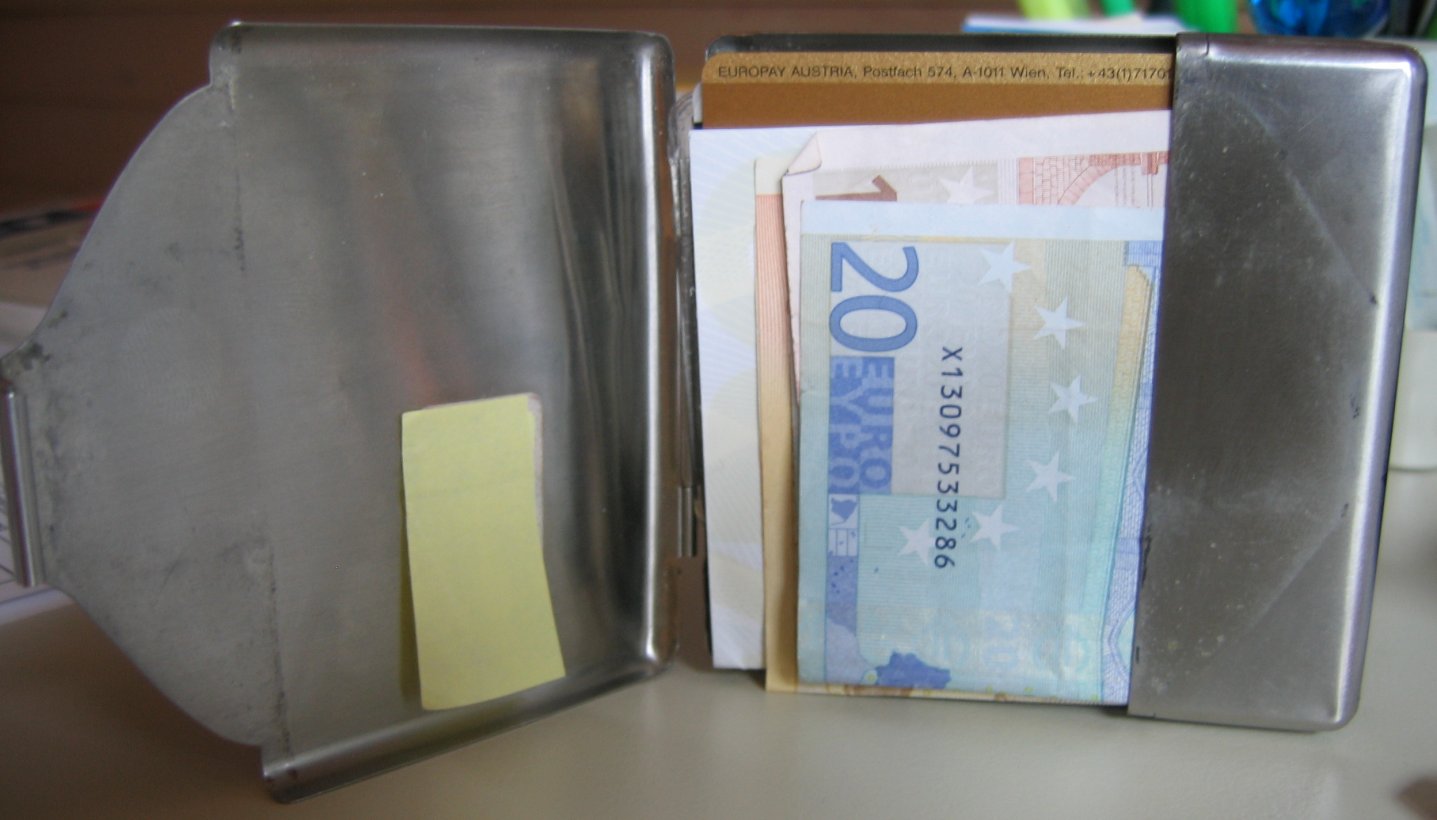
Mako asks for a RFID-proof, vegan wallet. This is what I have been using for a couple of years:
cigarette case I started using it since my maestro/credit/whatever cards broke frequently, being RFID proof is just a nice side effect. The obvious downside is that I need to carry change separately in my pocket, but I wouldn't want a wallet big enough to carry the huge Euro coinage anyway.

16 November 2006

Stefano Zacchiroli: cdbs relevance

/me on the Relevance of CDBS Whoa, people discussing about CDBS, I can't help joining them. My position: I love CDBS. I started switching my packages to CDBS an year ago or so and nowadays I've almost finished. I understand that people not knowing CDBS might have trouble fixing bugs in my packages, but that's life and it's the same as having to fix a bug in a software written in a programming language you are not fond of. It's just a matter of setting a minimal standard: today people in the NM have to learn debhelper, tomorrow they will have to learn CDBS too. I think it's worth the effort, because CDBS, if used extensively in our archive, has the benefit of providing a single place where to massively make changes to potentially all packages of the archive. That's a huge win for QA in Debian. The same does debhelper, but it only takes care of technical aspects in the packaging process while CDBS also takes care of behavioural aspects. Of course CDBS has drawbacks and nuisances (the available hooks for examples are not properly standardized nor documented IMO), but I think it's a step in the right direction. In Debian we should push more and more toward the possibility of making changes in a centralized/batch manner, so that when maintainers tend to get MIA we have a quick and easy way to take over their unfulfilled duties. Collaborative maintenance is a social step in that direction, CDBS is a technical one.

15 November 2006

Erich Schubert: CDBS is NMU-friendly

Steinar H. Gunderson even threatens kittens because of it, and Steve McIntyre ranted against using CDBS for packaging, claiming that it's much harder to fix bugs in packages that use CDBS. I have to disagree. More than once I've given up on fixing a bug in a package because I couldn't decrypt the huge makefiles used for building the package. For private packages I often switch over packages to CDBS then, so I don't have to fiddle around with a build system noone except the original maintainer understands. And every now and then I fix a bug in Debian, but don't upload it because I replaced the "magic" build system with CDBS magic... While CDBS does a lot of "black magic" to build packages, it usually does quite a good job. If it doesn't, it maybe even is a bug in CDBS, that happens. debian/rules files that use CDBS are usually quite easy to read, even easier than traditional debhelper template-based scripts. And that is why I think that CDBS is a good thing: it does a good job at separating package-specific and package-independendant build scripting. Maybe all we need is more documentation on how to properly fix common issues in CDBS, starting with misplaced or misnamed files etc. CDBS has a lot of hooks, but it's not obvious which hooks to use for which fixes. (Note that sometimes the fix should maybe be done in the upstream makefile instead.) On the long run, Debian could use a more unified way of packaging. Debhelper has already unified package building a lot, and CDBS maybe goes one step too far, but ideally we would all be able to understand each others debian/rules.

Erich Schubert: Third party software

Ubuntu has been attracting "newbie" users, and also has drawn users away from Debian. Some people are annoyed by Ubuntu because of this - I am not. Ubuntu users have been happily collecting third-party repositories to get the latest glitz like beryl. Trevi o compiled a huge list of them, and made it easy to install (DON'T USE THIS!). Everybody concerned with security must go mad with just the throught of collecting thrid party repositories for the fun of it. To most of us, it's bad if we have to use any third party repositories... However, Johan Kiviniemi reacted in an interesting way. His highly experimental repository - setup for some 5 users or so, on his home DSL line - was included in this stupid "every repository I could find" list. Noticing this increase in users, he found out about this madness - and made a package to replace the default wallpapers (and disable wallpaper changing) with this scary warning message. Sounds like a good plan to me, however many users were pissed by being warned that they've done something stupid... So: thank you, Ubuntu community, for helping teaching new users that they shouldn't just blindly install software from the internet. :-) and for keeping these users away from Debian.

14 November 2006

Lucas Nussbaum: When Ubuntu users discover that unofficial repositories can be harmful

Unofficial APT repositories are a PITA in the Ubuntu community. Most users use stable release (see previous post about that) since Ubuntu development releases tend to be much more bleeding edge than Debian unstable. But users still want the newest software, so they use unofficial repositories. There are lots of posts about private repositories on Planet.ubuntu-fr.org, and it seems to be the same on other local planets. Recently, somebody posted a sources.list file with a huge list of unofficial repositories. The maintainer of one of these repositories, J han Kiviniemi, was surprised to be in this list without even being contacted first. He chose a good answer: he uploaded a package with cool new default wallpapers. He also wrote a detailed explanation, with which I couldn’t agree more. But this story raises a question: why do all these people work on their unofficial repositories, instead of filing and fixing bugs, improving the official packages, and getting their packages into Ubuntu ? It’s a shame that so much manpower is lost on such stuff. PS: Johan Kiviniemi seems to have a lot of good opinions. :-)

13 November 2006

Evan Prodromou: 21 Brumaire CCXV

Long day today (yesterday, actually, but I'm post-dating this in the interest of chronological flow). The baby's having a hard time coming off of West Coast time; she got up late and took a loooong nap till half-past three. Which was fine, because I needed the time to work on my NSLU2, which needed some attention. The NSLU2, or "Slug", is a tiny Linux computer from Linksys, about the size of a two packs of Marlboros laid side-by-side. My brother Nate gave me one last year for Christmas (thanks, nate), and I've been using it for network backups, but on our trip to SF Nate showed me that he's running all kinds of wild services off of his. So I decided to start shifting over some responsibilities to the little bugger. Which was just about time. Sometime during our trip to San Francisco, my main home server started having fan problems; it kept overheating and shutting itself down. It's going to take some time to diagnose the problem, but I figured that this was as good a time as any to move the critical services over to the Slug. The main one that needed budging was DNS. Maj's main domain, as well as my two .san-francisco.ca.us domains, run from home, because it's too hard to get the registrar to change them. The Unslung system I use for the Slug has a BIND package, which is a good thing to run, anyways. I was running MaraDNS on the big server, because I always root for the underdog, but there wasn't a MaraDNS package for the Slug. So I rewrote my zone files and things are up and running now. I don't know what else I'm going to put on there. Jabberd? Asterisk? A home wiki? Just not sure. tags:

Blah blah blah When the baby got up, we went to our local Loblaws, out towards the end of rue Rachel across from Canadian Tire. It's a pretty fantastic place to buy groceries -- it's the old CPR Angus Shops, a repair and maintenance facility for the Canadian Pacific Railway. The building is huge, with giant cranes and beams still attached to the roof. Amita and I grabbed a crapload of groceries and brought them home to Maj, who'd just had a massage at the centre around the corner and was feeling really good. She'd rented Tristram Shandy, the 2005 movie based on the 18th-century level-twisting novel. Me and Amita June made some baked potatoes, and we all watched the movie, and a good time was had. tags:
 

H****e en vrac One thing I always want to buy when I'm at the store in Quebec is the quite commonly available communion wafers. Yeah, really! big ol' 5-inches-diameter communion wafers, in the snack section next to the Doritos and the Humpty Dumpty potato chips. Quebec society has a had a precipitous secularization -- from around 90% church attendance in the 1950s to less than 10% today. But Catholicism still infuses all parts of life. For example, in Quebec, you cuss by using words from the church, including, of course, hostie ("the host"). So I can't figure out why hostie are a tasty snack treat. Is it a deliberate snub to the sacrament of communion by a secular society? Or did the practice antedate the Quiet Revolution, and did the formerly religious Quebecois eat communion wafers for fun? Or is it just a snork-snork funny thing to do, when the name of the food is actually a naughty word? I dunno. I'm fascinated, but not enough to buy a big bag of communion wafers to eat. (They're never cheese- or BBQ-flavored, by the way; they have a pristine seriousness to them.) More info solicited. tags:

Opinity One of the services mentioned in the Web 2.0 Summit infrastructure workshop was Opinity. Opinity seems to be a distributed reputation system, kind of like claimID but with a little more soft information. I think it looks pretty cool, and I'm glad to see another addition to the growing OpenID identity provider market. tags:

11 November 2006

Andrew Pollock: [tech] What, no abstracts?!

I'm currently debating whether to go to linux.conf.au or not. I'd really like to go, because I didn't make it to Dunedin last year, and it really is the most rocking conference in the world. The catch is, I've already scored two work-funded trips this year, and I will have only barely returned from the second one by the time I'd be wanting to head off to Sydney again, so I don't feel right about asking for work to fork out for this, even though it's reasonably justifiable. I also want to go to Debconf in 2007, and I'd rather that one be covered. So I'll feel more comfortable forking out for it myself. So I now have to decide whether it's worth the airfare, the negative vacation balance, the two 20 hour flights in a week joy that is flying from San Francisco to Sydney and back again. And all I have to base this on is the title of the presentation and the presenter's name. Oh, the huge manatee! That said, on the face of it, there's enough tracks with at least one presentation that look like they whet my appetite that I would be prepared to go based on the face value of the program. I'll mull it over some more.

10 November 2006

Michael Janssen: It's too late baby, now it's too late

Getting to the gym consistently is one of the biggest hurdles that I have stuck to jumping over while I'm trying to lose a bit more than a few. I seem to have no consistent schedule, except that I do end up doing it every day that I can. One downside of this is that I tend to work out late at night, almost always an hour or less before I go to bed. I've heard that this is not the best for the sleep, but I suspect it is actually better than nothing, so I continue to get to the gym at 11pm or 12pm. Unfortunately, I found myself with some extra roadblocks this week: the exercise room was half broken. The breakers on one half of the room tend to trip when the air conditioner and two machines that are on that circuit are all in use. This means that no one can use those machines until someone from the coop management goes and resets the switch. The treadmill machine, my weapon of choice for shedding a few pounds, is inconveniently on this circuit, and can't be plugged in anywhere else. This happened 3 times this week, Wed-Fri. I'm calling the office for the second time tomorrow.

It is significantly harder to exercise when I don't have the treadmill handy — the stepping machine works on semi-powered days, but it tires me out much too quickly and I cannot get enough exercise in. I'm not the kind of person to reliably run in place or do jumping jacks. My solution was to move the exercise bike to the powered side of the room. The biggest problem with semi-powered days is motivation. Usually I have the motivation to get to the exercise room and start the machine, and once I've started I can stop. Opening the door to a bunch of non-working machines is a huge motivation hit though. It's so much easier to take a roadblock like this and skip a day — in fact I did this week once. Luckily I discovered that the bike is on wheels on one side so it is easy to move to the other side of the room. However, I'd like to solicit suggestions for alternate exercises for semi-power days. The things that work in the room are a weight machine with a bunch of attachments, the stepping machine, and the exercise bike. I can't really go outside and exercise, because of the late hour and neighborhood that I live in, so it needs to be an inside task. The last requirement is that it focuses on losing weight, not gaining muscle. I'm fairly sure that I'll be gaining some muscle along this process, but the goal is to drop the weight.

I have taken Saturdays to be my day off, so that I can get a little rest and not be so stressed about things, but I'm not taking it this week as I need to "make up" for the skipped day.

This week (Nov 3 - Nov 9):
Minimum: 338.0 (-0.5) (Nov 7)
Maximum: 340.0 (-1.0) (Nov 4)
Average: 339.25 (-0.35) (139.25 to goal)
Exercise Calories: 2314 on 5 days
Average Calories per session: 462.8

7 November 2006

Evan Prodromou: 16 Brumaire CCXV

I'm sitting in the keynote for the Web 2.0 Conference and realizing that it's been far too long since I made an entry on my blog. It's been a huge week for me since I last posted. Whew. OK, so, I think I'm caught up. There's probably a lot of stuff that I missed, but I don't feel like I have to fill in any more. The next 3 days at Web 2.0 are going to be busy, so I really want to be able to blog without guilt. tags:

5 November 2006

Aigars Mahinovs: Game On!

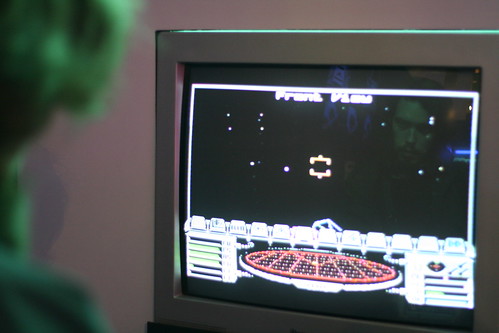
For the last couple weeks I have been concentrating on things related to my studies and on some events related to it. I posted pictures from these events on my Flickr photostream: a colleague from the institute finished his PhD and we had a goodbye dinner, my supervisor invited me to his son’s first birthday party. Also my friends Bunja and lastguru came to UK. With one I took photos of a night playground and squirrels and with other one some photos of the Eye and Babbage’s brain. However the main theme of this post is the Game On! exhibition in the London’s Science Museum. They have the best games playable there starting with the classic Pong, Lara Croft, Bomberman, Mortal Combat and up to Halo 2 on XBox 360. Even my non-gamer friend lastguru found a thing to drool upon - his childhood obsession: Elite. Elite! Update: Almost forgot to mention - the exhibition is great: it shows the evolution of gaming and allows to experience the most important games again and it also brings a huge amount of joy to anyone who has ever played these games before - the return to childhood is imminent. I never expected that something as simple as the original Pong can be so exciting in a good company. Very recommended!

3 November 2006

Maximilian Attems: Early Userspace Fun

History
For the sarge release official kernel-images from the newly formed Debian kernel team came together with initrd-tools. initrd-tools Maintainer was jbailey. It saw some care from tbm, vorlon and me before the actual release. Remembering the flow of bugs and installation-reports it accounted for a huge number of install failures plus lacked many features the Red Hat mkinitrd had. Ubuntu got hit more directly as hoary released with a newer kernel than 2.6.8 and due to the initrd-tools devfs requirement.
initramfs-tools originated out of the need of a direct replacement. Inspired by an initramfs OLS talk jbailey had the goals of boot-time hardware detection using the nice and neat features the Linux 2.5 branch incorporated: The sysfs support of the Linux drivers allows an neat userspace daemon aka udev to coldplug them. udev is the replacement of a maze of slow shell scripts called hotplug package. The second big feature is the new initramfs format (the curious may want to read Documentation/filesystems/ramfs-rootfs-initramfs.txt of any current linux-2.6 source). For a boot loader initramfs or initrd is the same fish. The smaller and more efficient in kernel code makes the difference. The initramfs gets loaded much earlier, due to being only an cpio archive and not an fs allowing it to completely rule the rootfs search and mount. One initial assigned spec had the name "easy NFS root". The LTSP guys joined in and showed interest in incorporating their work.
Technology
initramfs-tools got default in Debian together when the first common linux-2.6 (2.6.15) package reached etch, powered all the Ubuntu releases from Breezy on and is used by the grml live-cd. Since archive inclusion almost a year ago it got much better support of all the various linux boot parameters (see man initramfs-tools or the "official" Documentation/kernel-parameters.txt), keeps an backup initrd around and has better block-based bootloader support (lilo, ..). klibc has been ported to _all_ the Debian release archs where it is in use and compiles fine on m68k and sh.
The initramfs-tools early userspace is very flexible based on it's hooks for initramfs build and boot. Thanks to alphix for the help on shaping the building blocks. There are initramfs hooks in cryptsetup, evms, dmraid, firmware-qlogic, lvm2 multipath, mdadm, usplash, .. Reviewers, uploaders and sponsors included fs, jbailey and Sesse. Most of the time it is sufficient and easy to test changes in qemu images (See slides workshop early userspace). The best wish of an early userspace is not to be remarked - aka happy booting. Nevertheless thanks a lot for the public support: Achieving Xen Disk encryption support in Etch, Popping my initramfs cherry, ..
Future
The latest initramfs-tools release seems almost ready for the upcoming etch release. The bug reports coming over from installation-reports are happily rare. Although the uuid based fstab generation solution is not yet integrated in the debian-installer. There are one or two known nitpicks left-over in the bts plus one bugger: udevsettle may exit to early, when not all the discs are ready for use. For grub there is a fail-over net, but which does not account for a to early md or lvm2 boot hook. Future initramfs-tools development will focus on an optional small klibc based Modules=dep hand walking /sys initramfs generation allowing better embedded support. grub2 will present run-time assembly challenges for the initramfs.

2 November 2006

Daniel Stone: input hotplug merged to master

So, I finally merged the input-hotplug branches on master. Basically, this means that instead of attempting to hide behind one device (/dev/input/mice, the console keyboard), and hacking around it with gash and tape when we actually expose multiple devices[0], we finally expose multiple devices in a useful way. This is consistent through out the Xorg and KDrive servers; Xnest and Xvfb also have support, but that's not the most useful thing ever.

This required a huge overhaul of the old input code, much of which dates back to the mid-80s; the bits that don't were sticky-taped on the side, working more in spite of our core input code than with it. So, in addition to being generally useful and providing things like multiple keymaps on different keyboards and different acceleration (and so) on different pointer devices, it also actually caused a net removal of code.

So, once you've set yourself using evdev for the drivers, you can also now dynamically add and remove devices. Last night, not long before I released all the components, I removed all the input devices from my configuration file, told X not to add any, and added 'respeclaration --daemon' to my session: completely dynamic input. I've been using the core bits (the whole input API rework) for quite a long time, along with Zepheniah's evdev driver, but this is the first time I've been using a session with completely hotplugged input, as opposed to adding and removing devices every now and then to test the hotplug capabilities, which was actually a piece of cake, compared to reworking all our core input code to deal with devices appearing and disappearing.

Still, this all needs good desktop integration. Keyboard and mouse applets need to become aware of multiple devices[1], and allow people to configure them separately. The desktop should also take over the role currently filled by respeclaration, which works perfectly well, but shouldn't be generally deployed; management of input devices thus turns into a session management issue, which leaves the desktop to dictate policy.

There are still some nits in the D-BUS policy to sort out (right now, only root can reconfigure the devices), but I believe it's fundamentally the right model: it's machine-oriented, rather than session-oriented. There are still some minor changes that need to be made, but working out who should be trusted to add input devices was more or less impossible in the X security model.

xserver 1.3 (for Xorg 7.3) should be good fun.

[0]: Key presses/releases from your second device will just magically appear from your first device. Useful, huh?
[1]: In brief: check for inputproto 1.4 at build time, check DEVICE_CORE on whatever appears as the core pointer, and if 'iscore' is 1, then you have a virtual core pointer. Anything that sets status to 1 for DEVICE_CORE will also generate core events. Setting controls on the core keyboard or pointer will propagate those changes down to all the devices which also send core events. I'm going to document this soon.

29 October 2006

Evan Prodromou: 7 Brumaire CCXV

It's a beautiful day here in wt:Los Altos Hills, wt:California, where my parents live. It's been unseasonably warm this week, ever since we hit the ground on Thursday, and we've been enjoying the warm weather to the fullest. Amita June is storing up vitamin D (a precious commodity in the Canadian north) for use during the rest of the autumn and winter. We had an early flight into wt:San Francisco from Montreal on Thursday. There's only one direct flight from Trudeau airport to SFO on Air Canada per day, and it takes off at 8:30AM. Maj is pretty convinced that we need to take direct flights with no stops while we have the baby; I'm mixed on the issue. I think a break every 2-3 hours makes it easier on all of us -- everybody gets some exercise and a little change of scenery. But Maj wisely points out that the takeoff and landing is the hardest part of flying with a little one, so direct flights minimize those. I dunno. Anyways, the 6 hour flight was uneventful, except for people coming up to us to comment on how good our baby is. The movie was "Click", which as I've mentioned before is the worst movie of 2006 bar none. It was pretty disappointing to see it come on -- I like watching movies on the plane. It was bright and sunny at SFO when we landed, and my mom met us at the baggage claim. We had a bit of a struggle getting out to the short-term parking -- for some reason the elevator queue at SFO is out of control; probably all the people loading and unloading luggage from the elevator. In any event, they now have elevator attendants and structured lines to make sure things go in an orderly, if slow, fashion. Back at the house, we had a late lunch of tuna salad and then Maj, Amita June and I did a big group nap. My mom had set up a toddler bed for AJ, and she's been sleeping in it since we got her. I think she's just turning the corner where having a little more space in the bed for herself is more important than nursing all night. Which I think is better for all three of us. Thursday night my dad came home from work in wt:Morgan Hill and we had take-out burritos with my parents, my sister-in-law Pam and Amita's two cousins Elena (3) and Tessa (10 months). The three girls got along like gang-busters; Elena seems to like being the older sister showing the younger girls what to do. tags:

Jagi's Birthday Party Friday night we went up to the City for my brother Nate's annual Halloween party. Nate lives on a precipitous incline in North Beach, the Italian-Beatnik section in the northeast of San Francisco with steep hills, great caf s and a significant dearth of parking. We managed to get Amita June down to bed for the night, gave her grandparents far more instructions than were actually needed, and then sped off into the night. We were running late, but we stopped on the way to pick up Maj's brother Brian, who lives in Noe Valley. It was the first time we'd seen his new apartment and we probably took longer than necessary there, but we finally got off towards North Beach around 7:30PM. And... we drove and drove. Every street I drove down was packed, and I kept doing U-turns and trying alternate routes to get where we were going. Finally, on Van Ness Avenue at California Street, we got stuck in a gridlock that wouldn't move at all. Friday nights are pretty bad for traffic in San Francisco, but at this point we sat through 5 red-and-green light cycles without any motion whatsoever. Unable to turn, unable to go forward, unable to go back. When traffic finally started moving again, we saw what the problem was: the last dregs of the Critical Mass rally were just passing through. Critical Mass is a bike rally that happens on the last Friday of each month in San Francisco and elsewhere; hundreds of bike riders take over streets and block traffic. It's really fun if you're riding; it's infuriating if you're driving. We drove down further on Van Ness to go through the Broadway Tunnel into North Beach, but it was blocked by... Critical Mass! They'd turned about and come to block our way again. This time, I was able to do a U-turn and get over to Nate's house through side streets. We had a good time at the party itself. Nate and his roommates have been having a Halloween party for years, but increased size and complaints from landlord and neighbors have made them move the party to a nearby bar, Woody Zip's. With two stories, two bars and a dance floor, it was just about the right size for their event. Nate was dressed up as Buzz Lightyear from "Toy Story"; Brian had a huge fat suit and a sumo-wrestler outfit. Maj and I were millionaires, with tiaras and top-hats. We all looked pretty good. Woody Zip's even let the guys bring their own Jagermeister machine, affectionately known as "Jagi". They got the machine for one of their Halloween parties a few years ago, and they've made special costumes for it each year (this year: Spongebob Squarepants). We had a shot of Jager and toasted the machine's maturity, then moved on to karaoke and dancing. But only for a while; by 10PM we had to start heading home. We worried quite a bit about Amita June, but when we got back she was asleep in the arms of her Pappou in the TV room. The "parent curfew" is a little hard to deal with, but on the bright side it makes sure you can find babysitters so you can go out in the future. tags:

Baby Circus Last night we went to visit our friends Zach and Wendy in wt:El Cerrito, in the East Bay. Zach and Wendy have been our friends for... oh, more than 10 years now, I guess. They had a handsome little cowboy son two years ago, on the same weekend as my bachelor party in wt:Las Vegas (making it easy to remember his birthday... better than I remember that weekend, is for sure). They have a nice house just near the BART station, with lots of room... although about 2/3 of it is taken up with Wyatt's toys. Wendy is a Web developer for Nolo Press, the do-it-yourself law book publisher. Zach is a hard-working computer genius, one of my favorite people to work with, but he's hung up his spurs to be a full-time stay-at-home dad and go back to school. We had dinner at the Kensington Circus Pub, just up the hill from Wendy and Zach's house. It was a great place; an English-style pub with Fuller's ESB on tap, and a kids' play area underneath the dartboard. Amita June and Wyatt ran around playing while we had fish-and-chips and burgers. It's a great recipe for getting young parents to come to your restaurant; I wish more places would use it. We spent the rest of the night talking about wikis and web sites and all the opportunities there are available to share information in creative ways. We dragged home after Wyatt's bedtime, and Amita fell asleep in the car on the way back home. Greatest thing in the world! tags:

I learn fire I had drinks with Hugh McGuire, founder of Librivox, at La ka on St. Laurent last Wednesday. It was a real good time -- Hugh has had similar experiences "leading" that public domain audiobook project that Maj and I have had with Wikitravel. Another project he's working on Collectik.net, an interesting tool for sorting and organizing podcast streams. I have to admit that I've been skipping the podcast wave -- much like I skipped blogging before it -- and I don't listen to a lot of podcasts. But Hugh got me interested, and now I'm looking around at it. I find there are a lot of interesting tools for podcast catching for Linux; even Rhythmbox, the Gnome music player, can handle podcasts. I'm finding it interesting to listen to them; DestinyLand and Chris DiBona's FLOSS TV are both interesting, as well as the CBC podcasts. I haven't figured out how to listen to Vu d'ici, though -- m-c doesn't seem to have an RSS feed with just the podcasts in it. Or am I missing something? tags:

Erich Schubert: Link farming, YouTube style

Apparently (unless they already have some spam filters in place; I'm surprised they don't use rel="nofollow") you can turn YouTube into a huge link farm. You won't be able to inject links into non-youtube-sites, but maybe (I didn't test that) it's possible to inject at least a link from every single youtube video page to yours... And it's not even a new thing. I mean, referrer spam is old. Really old. Sure, they might have filters, I havn't tested, but I'm not sure you can reliably filter this unless the "attacker" seriously overdoes it. I'll try it with this blog entry. Maybe I can become a top result for "youtube chad steve" this way? Not that I'd have any benefits from that. (And no, it's not funny if you prove me correct by sabotaging my attemt using the same technique. Be more creative than that, please.)

28 October 2006

Daniel Burrows: Things that Don't Suck and Things that Do

Since I sometimes worry that my blog is turning into a gripelog, I'd like to highlight a very positive experience I recently had with a company. I wanted to buy some decent desk chairs for my apartment, and due to getting a higher-than-average computer desk, I needed chairs that were fairly tall (seats around 30" from the floor).

I finally converged on a lab-stool that I found at office-chairs-discount.com and placed an order for two instances of it. They arrived a few weeks later in boxes with fairly simple assembly instructions. Unfortunately, and here's where it gets interesting, one of the chairs was broken -- the ring of plastic that was supposed to secure the foot-rest to the chair's main support was broken. After I sent an email describing the problem to their support address, they said that all I needed to do was take a picture of the broken part and they'd mail out a replacement. A few weeks later, the replacement arrived and I was able to assemble the second chair. They even were very polite when I bugged them about why the part hadn't arrived when it already had (UPS apparently didn't leave a notice for me). All in all, I was quite impressed with this company and I'd definitely buy from them again if I needed more chairs.


So, now on to less happy things. People with a mathematical background are familiar with the principle of transitivity; basically, this says that if A is less than B and B is less than C, then A is less than C. This isn't just an arcane mathematical property, though; it has important practical consequences. For instance, if you want to quickly find a word in a list of words, having the words in sorted order is a huge benefit. You can do this because, among other things, the "less-than" relationship between words is transitive (without transitivity, even the idea of a "sorted order" is somewhat peculiar).

Why do I mention this? Well, because in C#, the following inequality holds:

"Y-" < "Y'" < "-Y-" < "Y-"

That's right: by default, Microsoft's C# implementation compares strings in a non-transitive manner, contrary to all expectations that any sane programmer would have. This bit me yesterday, when I was trying to sort a rather large array of strings and then perform searches in the array. Words that I knew perfectly well were in the array (I could even see them in the debugger!) weren't being found by the search. Why? Because the list wasn't in sorted order, even after calling Array.Sort() on it. Why? Because (see above) there is no such thing as a sorted order using the default C# comparator!

At first, I hoped this might just be a bug. But in the manual, I found a nice little explanation that the default sort doesn't perform a standard lexicographic comparison, in an attempt to provide a more "human-friendly" sorting. (they give the example of sorting "coop" next to "co-op", which confuses me since those two sort next to each other in any even. But whatever.) Instead, you have to use a method which is confusingly called "CompareOrdinal" instead of "DontSuckCompare".

Of course, after reading this, I guess nothing Microsoft does can really surprise me any more. Interestingly, Mono doesn't seem to have copied this particular "bug" (although I only tested one case with it). I don't know if this is good or bad: after all, it's probably only a matter of time before a piece of software that unintentionally depends on .NET's weird string comparisons comes into being.

27 October 2006

Jonathan McDowell: Another year, Another Expo

I spent the past couple of days at LinuxWorld UK, mostly on the Debian stand. I'm not sure I'd go as a punter these days; I don't think a lot changes year on year. However I do think it's good for us to turn up and show our faces so people can come and talk to us and realise we're wonderful people. Plus it's always good to see people I haven't seen in ages. We sold a lot of T-Shirts (even the red one with yellow writing that looks like something Phil would come up with after too much vodka [I bought one of these myself]). We didn't sell a lot of DVDs, but that's been happening since broadband became more pervasive. There were a reasonable number of people who just stopped to chat (shouting "Use Debian, it's great!" at people as they walked by was surprisingly effective). Lots of questions about how we felt about Ubuntu. Not really many about why we hadn't released yet which is a change! I also found a new toy I think I want; the Nokia E70. Steve has one of these and it looks pretty sweet; 3G+WLAN, a keyboard and a screen that, while not that big, manages a pretty good PuTTY session in 80x43 or so. And all of this in something not that much larger than a normal phone. That's appealing. I'd been sort of lusting after an HTC TyTN, but reports of poor reliability have put me off. And Simon has put me off the 9300i by saying it's quite slow as a phone. Finally, courtesy of Trexy, I present a new, work safe, goat sex: Goat Sex And now I will spend the next week sleeping I think.

Next.

Previous.