Search Results: "ah"

9 March 2012

John Goerzen: Dear FedEx: I Live Here

FedEx has had some issues in my area. There for awhile, they kept returning packages as undeliverable, saying the address was bad. It wasn t. Just because their GPS can t find it or their driver doesn t know it doesn t mean it doesn t exist. A map, a real map, would have done it. I had this kind of conversation with them once. Me: So you re returning my package to the sender. FedEx: Yes sir, the address was wrong. Me: No, it wasn t. [ we confirm we're talking about the same address. ] FedEx: Our driver says it doesn t exist. Me: I ve lived here for [x] years. I do know my address. FedEx: Maybe it s just new. Me: Someone has lived at this spot since the 1890s. FedEx: Hmm. I don t know then. Me: How about I give you directions? FedEx: Well, OK, I guess I could send directions. But they probably won t see them for three days. Me: Where will my package be by then? FedEx: Hard to say. Me: Do you people have cell phones maybe? FedEx: No. Me: Well, OK then Lately we have been noticing that the driver throws the package from the truck without stopping. We find them all over the yard. Unless it s big, in which case he puts it on the porch, puts a completely useless sticker on the door saying We delivered your package to right here! , and doesn t ring the doorbell. And panics due to the muddy road. The FedEx driver once told Terah, I almost got stuck on that muddy road! What s the good one? Terah: Well, which one did you take? [ he describes ] Terah: [ serious ] That IS the good road. FedEx: [ turning pale ] Oh my. I don t know if I can make it back to the highway. Terah: Well, I suppose I could get the boys in the car and drive you into town FedEx: [ embarrassed and more pale ] Uhm that s OK uhm I think A *month* later, we got another FedEx package. The driver called me at work, saying, I just don t know how I m going to get down those roads. Can I deliver the package to you here? (10 miles away). I said yes, and managed to suppress a significant snicker at his obvious relief. FedEx drivers seem to come and go. The UPS driver, on the other hand, knows the names of our boys, our cat, and puts anything small behind the storm door so it won t blow away if we re not home. And he gets a great big laugh when I tell him that the FedEx drivers are afraid of our roads. Haha, he thinks THAT S mud? Obviously he never drives in Butler County.

8 March 2012

Raphaël Hertzog: People Behind Debian: Gregor Herrmann, member of the Perl team

Photo by Aigars Mahinovs

I followed Gregor s evolution within Debian because I used to be somewhat active in the Perl team. His case is exemplar because it shows that you don t need to be an IT professional to join Debian and to make a difference. His QA page is impressive with hundreds of packages maintained and hundreds of non-maintainer uploads too. While he started out slowly, I remember meeting him at Debconf 7 in Edinburgh and after that he really got more implicated. Again a case of someone joining for technical reasons but getting more involved and staying there for social reasons! :-) Let s jump into the interview and learn more about him. Raphael: Who are you? Gregor: I m 41 years old, and I live in Innsbruck, Austria, in a shared apartment with a friend of mine. In my day job, I m working at the regional addiction prevention agency, so I m one of the few Debian guys who s not an IT student or professional. I started maintaining packages in 2006, and I am a DD since April 2008. Raphael: How did you start contributing to Debian? Gregor: After having used Debian on servers for some years, I finally switched to it on the desktop after some procrastinating. Soon afterwards I wanted to know more about the making-of , started to join mailing lists, filed bugs, and tried to learn packaging. Luckily I quickly found a permanent sponsor Tony Mancill, and we re still co-maintaining each others packages. And when I packaged my first Perl modules, Gunnar Wolf invited me to join the Debian Perl Group, an offer I accepted a few days later. And I m still there :) Later, the NM process, although it involved some waiting times, was also a good learning experience due to my AM Wouter Verhelst. (And in the meantime the organization of the NM process has vastly improved, from what I hear.) So my starting point for joining Debian was my curiosity but what really helped me to find my way into the project was the support of the people who invited and helped me. Raphael: What s your biggest achievement within Debian or Ubuntu? Gregor: I m not sure I can name a single big achievement but I guess I can say that my contributions to the Debian Perl Group have helped to make and keep the team a success story. Raphael: The pkg-perl team seems to work very well. As an active member, can you explain us how it is organized? How do you explain its success? In particular it seems to be a great entry point for new contributors. Gregor: The team is huge, both in numbers of members and packages (over 2200). Since last DebConf we manage our source packages in git, we have 2 mailing lists and an IRC channel, and we manage to keep an overview by using PET, the Package Entropy Tracker. It s true that we get new members on a regular basis; we try to invite people (like it happened to me 6 years ago :) ) but there are also quite a few new contributors who find our docs and introduce themselves on the mailing list. Maybe someone should conduct a study and ask them what motivated them to join. :) We hand out group membership/commit access quickly, and we try to mentor new contributors actively during their early times in the group. Some of them leave for other projects after some time, but many also stay and become DDs later. I m not sure what the reasons for the group s success are, maybe a combination of: For everyone interested in joining the Debian Perl Group, our Welcome page on the wiki is a good starting point. Raphael: What are your plans for Debian Wheezy? Gregor: Nothing overly exciting. What I should do is getting a newer JabRef into Debian (which involves packaging some new Java libraries any takers?). A solution for libdatetime-timezone-perl (which ships timezone data converted to Perl modules and tends to get outdated when the timezone data change) would be nice; let s see if #660404 leads to some results And some Perl packages will also need a bit of work for the hardening build flags release goal (cf. #657853). Raphael: What s the biggest problem of Debian? Gregor: Inertia. While I really like the fact that Debian is a volunteer project, and that every contributor works when and on what they decide to work on, I get the feeling that Debian could do better in moving forward, innovating, taking decisions. I also think that more uniformity in managing source packages would make things easier; it s quite amazing to see how many source formats, packaging helpers, patch systems, RCSs etc. are used all over the archive. I m not advocating for mono-cultures, and I consider this diversity a strength in general, but having to find out first how this particular package works when preparing a bug fix can be annoying. On the bright side, I think that the myth Debian and its mailing lists are mostly about flames can be seen as dispelled in the meantime. Sure, sometimes the tone could be a bit more civil, but in general most of the interactions I ve seen in the last years were friendly and helpful. IMO, the Debian Project consists of mostly nice and cooperative people, and that s what makes it fun for me. Raphael: You re one of the most dedicated participants to RCBW (Release Critical Bugs of the Week), an initiative to fix RC bugs every week. How much time do you spend on it? What would you advise to people who are considering to join the movement? Gregor: I got into the habit of fixing RC bugs after having been invited to my first Bug Squashing Party in Munich some years ago. During this weekend I saw that fixing RC bugs can be fun, is often not that difficult, and gives a warm fuzzy feeling :) I can definitely recommend attending a BSP if one happens to be organized near you. After tasting blood at this first BSP I tried to continue looking at RC bugs, and I guess I spend something around half an hour per day on it. I usually blog about it once a week, in order to motivate others to join in. And joining is easy: just take a look at the tips people like Zack, Vorlon, or me have written. You don t have to be a DD to help, many of my NMUs are based on patches that others kindly prepare and send to the BTS kudos! Another nice aspect is that the RC bug list contains problems from different fields: general packaging problems, language-specific issues, policy violations, etc. So there s something for everybody, and you don t have to be an expert in all fields to fix a specific bug. What s rewarding about fixing RC bugs is not only the feeling of accomplishment and the knowledge about having helped the next release I also received quite a few Thank you mails from maintainers who were busy at that time and appreciated the help. Raphael: Do you have wishes for Debian Wheezy? Gregor: Well, there s not so much left of the Wheezy release cycle if we manage to freeze in June :) Some quick thoughts for Wheezy and Wheezy+1: Raphael: Is there someone in Debian that you admire for their contributions? Gregor: There are many people in Debian I admire, too many to name them all. The first one that comes to my mind is Russ Allbery who not only does great work from lintian to Debian policy but who also sets a great example of communicating in a perfectly polite and respectful way even in heated discussions.
Thank you to Gregor for the time spent answering my questions. I hope you enjoyed reading his answers as I did. Note that older interviews are indexed on wiki.debian.org/PeopleBehindDebian.

Subscribe to my newsletter to get my monthly summary of the Debian/Ubuntu news and to not miss further interviews. You can also follow along on Identi.ca, Google+, Twitter and Facebook.

2 comments Liked this article? Click here. My blog is Flattr-enabled.

7 March 2012

Michal Čihař: Contest for phpMyAdmin books

Packt Publishing has offered phpMyAdmin to sponsor some coding contest with books. The contest is already running since Monday and we have first winner, but still, your chances are pretty high. So in case you are interested in having Mastering phpMyAdmin 3.4 for Effective MySQL Management, go ahead and check out the contest rules.

Filed under: English Phpmyadmin 0 comments Flattr this!

6 March 2012

Benjamin Mako Hill: Half the Battle Against DRM

As the free software and free culture movements have sat quietly by, DRM is now well on its way to becoming the norm in the electronic book publishing industry. The free culture movement has failed to communicate the reality of DRM and, as a result, millions of people are buying books that they won't be able to read when they switch to a different model of ebook reader in the future. They are buying books that will become inaccessible when the DRM system that supports them is shut down -- as we've already seen with music from companies including Wal*Mart, Yahoo, and Microsoft. They are buying books that require that readers use proprietary tools that lock them out from doing basic things that have always been the right of a book owner. Some anti-DRM advocates are, indirectly, part of this problem as they buy these books and turn to shady methods of stripping the DRM. Buying DRMed books is voting with your wallet for a system that criminalizes those that insist on living in freedom and will screw us all in the long run when DRM is the only choice we are offered and removing the DRM is difficult, unsafe, and illegal. Buying non-DRMed e-books is a more freedom-friendly alternative for those that, like me, are excited about not lugging kilograms of paper around our cities and the world. We can do this at "non-mainstream" publishers like Smashwords who explicitly reject DRM. Of course, the big ebook sellers like Amazon, and Barnes and Nobel, and Google all offer non-DRMed books. But none of the major ebook retailers explicitly reveal the DRM status of locked down books before purchase. On Amazon, there are some cryptic signs and signals that, if you understand them, suggest the absence of DRM. Google and Barnes and Nobel currently offer no way to know if a book is DRMed without buying it first and questions in their support forums go unanswered. It's hard to support non-DRM alternatives when we can't recognize them. It's hard to tell people to not buy DRM ebooks if we can't even tell them apart. Getting this message through to book buyers -- and perhaps even to ebook retailers -- seems like a critical first step.

4 March 2012

Stefano Zacchiroli: bits from the DPL for February 2012

Released a few hours ago, here is the monthly report of DPL activities for February 2012.
Howdy, dear Project Members,
here's another round of updates about what has happened in DPL land, this time during February 2012. Highlights Quit a bit of highlights for this month: Talks, interviews, and the like Sprints Plenty of sprints related news! It would be amazing to have an average of one sprint per month for 2012, and we're on good track for it. If you want to help, organize one for your team as documented on the wiki. Legal stuff Appointments In addition to the GSoC admins delegation (see above), I've agreed with former secretary Kurt Roeckx to reappoint him as a secretary for another year. Many thanks, Kurt! Miscellaneous Happy Debian hacking.
PS as usual, the boring day-to-day activity log is available at master:/srv/leader/news/bits-from-the-DPL.*

Joey Hess: case study: adding box.com support to git-annex

git-annex has special remotes that allow large files checked into git to be stored in arbitrary places, that are not proper git remotes. One key use of the special remotes is to store files in The Cloud. Until now the flagship special remote used Amazon S3, although a few other things like Archive.org, rsync.net, and Tahoe-Laffs can be made to work too. One of my goals is to add as many cloud storage options to git-annex as possible. Box.com came to my attention because they currently have a promotion that provides 50 gigabytes of free "lifetime" service. Which is a nice amount of cloud storage to have for free. I decided that I didn't want to spend more than 4 hours of my time to make git-annex use it though. (I probably have spent a week on the S3 support by contrast.) So, this is a case study in quickly adding support for one cloud storage provider to git-annex. The end result is that there are detailed instructions for using box.com as a special remote. And it seems to work quite well now. I just set up my production box.com special remote. All content written to it is gpg encrypted, and various of my computers have access to it, each using their own gpg key to decrypt the files uploaded by the others. (git-annex's encryption feature makes this work really well!) So..
There is a DropBox API for haskell. But as I'm not a customer, the 2 gb free account hardly makes it worth my while to make git-annex use it. Would someone like to fund my time to add a dropbox special remote to git-annex?

Vasudev Kamath: Lato Fonts for Debian

For giving new look to my blog I was trying out a lot of fonts from the FontSquirrel website but none of them satisfied my taste. While searching for the fonts identi.ca website fonts attracted my notice and the font used was Lato. I found it and used in this website. I was wondering why such a nice font is not present on Debian. Since it was on FontSquirrel that means the license should be friendly. So searched for the font in DuckDuckGo and found their website. So after all Lato fonts where under Open Font License which is DFSG compilant. That was sufficient for me to package it for Debian. Here is the ITP for fonts-lato and its already uploaded to Debian and waiting in the NewQueue Thanks to bubulle for uploading it quickly. Hope Debian users will love this new font. And yeah I packaged it using dh-make-font which I wrote majorly with help of my friends. And one more news is its waiting to be added into dh-make package here.

Craig Small: JFFNMS 0.9.2 Released

JFFNMS version 0.9.2 was released today both as an upstream tar.gz file and a new debian package. This version fixes some bugs including making sure it works with PHP5.4. The biggest change in PHP 5.4 is that you can no longer call by reference. Previously you could call a function like myfunc(&blah); which would send a pointer to blah and not the item itself. Now the function definition needs to define what it wants rather than change it each time.

2 March 2012

Don Armstrong: Debian R Archive

For those of you were were in the various Debian infrastructure channels, you might have noticed that I was playing around with wanna-build, dak, sbuild, and buildd and friends. [Thanks to everyone who answered questions, btw.] Over the past week, I've been building most of CRAN, Bioconductor, and omegahat for unstable, amd64. I plan to build the same set of packages for i386, and will start a build shortly for stable as well. This effort builds on top of Charles Blundell and Dirk Eddelbuettel's cran2deb, which does most of the heavy lifting. If you're like me, and use lots of different R packages, or already use some of the R packages available on the previous build, you can simply point your sources.list to the [http://debian-r.debian.net] archive, load the appropriate GPG key, and away you go. I have a bit more information available here and I will try to keep that page updated as I build other architectures and build out for stable.

1 March 2012

Roland Mas: Looking for the ultimate distributed filesystem, take 2

This follows up on a previous post, and tries to summarize the corrections and suggestions I received. First, a reminder: yes, I'm really looking for a filesystem, not a storage system. Even if I only consider the music files use case, there are just too many things that want to access the files, and there's no way I'm going to port these things to use the storage system's API instead of plain old file access. Examples? The Rhythmbox player. The XMMS2 player. The mt-daapd/forked-daapd DAAP server. My script to backup or restore metadata (tags). Ex-Falso, to do mass edits on these tags. abcde, to add new files when I buy a new CD. Any kind of shell one-liners I currently do without thinking because find, xargs, cp, ln, and so on all operate on files. I understand that providing filesystem semantics on top of a storage system is hard, but that doesn't change my requirements, and saying otherwise is patronising. So, on to the meat of the matter. Apparently my understanding of Tahoe-LAFS was mostly correct. It seems that multiple introducers are on their way to become a reality, which would mean the one remaining central point would go away. Most of my other complaints seem to be on their way to be resolved, too, except that it's still targeted as a storage system, and the FUSE/sshfs layer on top still has its drawbacks (quoting from the wiki, Before uploading a file to a Tahoe filesystem, the whole file has to be available , mutable parts of a filesystem should only be accessed via a single sshfs mount [...] data loss may result for concurrently accessed files if this restriction is not followed and so on). From what I read, the position is that nobody publicly uses Tahoe's filesystem integration, therefore there's no need to fix its shortcomings; my understanding is that nobody uses it precisely because of its shortcomings. Ceph: apparently does repair/rebalance automatically contrary to what I thought. However, two persons told me that it's really expecting all nodes on the same LAN, and geographically distributed setups aren't really targeted. XtreemFS: I don't think I got any comments on my evaluation, so I'll assume it still stands. git-annex: storage system, not a filesystem. Yes, the files can be made available in the filesystem, but if I need to manually retrieve them before accessing them, this doesn't work. GlusterFS: I'd like to read more docs on how it works, but I haven't been able to find them. Apart from the installation manuals, the only documentation I found was a very short Concepts page, which described some of the concepts but didn't give me the big picture on how the who thing works. (I'm turning a blind eye on the Red Had advertisements and the requiremets that everything be installed on RH machines; the hardware requirements are also quite out of line with what I want to do.) HekaFS (aka CloudFS): I found even fewer docs about this one than about GlusterFS, and apparently HekaFS is on its way to being merged into GlusterFS anyway. PlasmaFS: I didn't know about this one previously, but the one email I got about it was mainly full of this won't work and this won't work either . I didn't feel inclined to read further docs after that. In summary, I guess the replies I got didn't cause me to change my mind too much. Tahoe-LAFS still seems to be, if not the best solution, then at least the least bad . Hopefully the drawbacks will be fixed soonish; the main sticking point (at least from my point of view) still seems to be the lack of focus on proper filesystem integration. I'll try setting it all up at some point; I may report further if I end up finding interesting things. Thanks to all who responded!

Raphaël Hertzog: My Debian Activities in February 2012

This is my monthly summary of my Debian related activities. If you re among the people who made a donation to support my work (384.14 , thanks everybody!), then you can learn how I spent your money. Otherwise it s just an interesting status update on my various projects. Dpkg and multiarch The month started with a decision of the technical committee which allowed me to proceed with an upload of a multiarch dpkg even if Guillem had not yet finished his review (and related changes). Given this decision, Guillem made the experimental upload himself. I announced the availability of this test version and invited people to test it. This lead to new discussions on debian-devel. We learned in those discussions that Guillem changed his mind about the possibility of sharing (identical) files between multiple Multi-Arch: same packages, and that he dropped that feature. But if this point of the multiarch design had been reverted, it would mean that we had to update again all library packages which had already been updated for multi-arch. The discussions mostly stalled at this point with a final note of Guillem explaining that there was a tension between convenience and doing the right things every time that we discuss far-reaching changes. After a few weeks (and a helpful summary from Russ Allbery), Guillem said that he remained unconvinced but that he put back the feature. He also announced that he s close to having completed the work and that he would push the remaining parts of the multiarch branch to master this week (with the 1.16.2 upload planned next week). That s it for the summary. Obviously I participated in the discussions but I didn t do much besides this I have a mandate to upload a multiarch dpkg to sid but I did not want to make use of it while those discussions remained pretty unconclusive. Also Guillem made it pretty clear that the multiarch implementation was buggy , not right and not finished and that he had reworked code fixing at least some of the issues since he never shared that work in progress, I also had no way to help even just by reviewing what he s doing. We also got a few multiarch bug reports, but I couldn t care to get them fixed since Guillem clearly held a lock on the codebase having done many private changes it s not quite like this that I expect to collaborate on a free software project but life is full of surprises! I ll be relieved once this story is over. In the mean time, I have added one new thing on my TODO list since I made a proposal to handle bin-nmu changelogs and it s something that could also fix #440094. Misc dpkg stuff After a discussion with Guillem, we agreed that copyright notices should only appear in the sources and not in manual pages or --version output, both of which are translated and cause useless work to translators when updated. Guillem already had some code to do it for --version strings, and I took care of the changes for the manual pages. I merged some minor documentation updates, fixed a bug with a missing manpage. Later I discovered that some recent changes lead to the loss of all the translated manual pages. I suggested an improvement to dh_installman to fix this (and even prepared a patch). In the end, Guillem opted for another way of installing translated manual pages. Triggered by a discussion on debian-devel, I added a new entry to my TODO list: implementing dpkg-maintscript-helper rm_conffile_if_owner to deal with the case where a conffile is taken over by another package which might (or might not) be installed. Misc packaging At the start of the month, I packaged quilt 0.51. The number of Debian specific patches is slowly getting down. With version 0.51, we dropped 5 patches and introduced a new one. Later in the month I submitted 4 supplementary patches upstream which have been accepted for version 0.60. This new version (just released, I will package it soon) is an important milestone since it s the first version without any C code (Debian had this for a long time but we were carrying an intrusive patch for this). Upstream developer Jean Delvare worked on this and based his work on our patch, but he went further to make it much more efficient. Besides quilt, I also uploaded dh-linktree 0.2 (minor doc update), sql-ledger 2.8.36 (new upstream version), logidee-tools 1.2.12 (minor fixes) and publican 2.8-2 (to fix release critical bug #660795). Debian Consultants The Debian Project Leader is working on federating Debian Companies. As the owner of Freexian SARL, I was highly interested in it since Freexian contributes to Debian, offers support for Debian and has a strategic interest in Debian . There s only one problem, you need to have at least 2 Debian developers on staff but I have no employees (it s me only). I tried to argue that I have already worked with multiple Debian developers (as contractors) when projects were too big for me alone (or when I did not have enough time). Alas this argument was not accepted. Instead, and since our fearless leader is never afraid to propose compromises, he suggested me (and MJ Ray who argued something similar than me) to try to bring life to the Debian Consultants list which (in his mind) would be more appropriate for one-man companies like mine. I accepted to help animate the list, and on his side, he s going to promote both the Debian Companies and the Debian Consultants lists. In any case, the list has seen some traffic lately and you re encouraged to join if you re a freelancer offering services around Debian. The most promising thing is that James Bromberger offered to implement a real database of consultants instead of the current static page. Book update We made quite some progress this month. There s only one chapter left to translate. I thus decided to start with proofreading. I made a call for volunteers and I submitted one (different) chapter to 5 proofreaders. The liberation campaign made a nice leap forwards thanks to good coverage on barrapunto.com. We have reached 80% while we were only at 72% at the start of the month (thanks to the 113 new supporters!). There s thus less than 5000 EUR to raise before the book gets published under a free license. Looking at the progression in the past months, this is unlikely to be completed on time for the release of the book in April. It would be nice though so please share the news around you. Speaking of the book s release, I m slowly preparing it. Translating docbook files is not enough, I must be able to generate HTML, ePub and PDF versions of the book. I m using Publican for most formats, but for the PDF version Publican is moving away of fop and the replacement (webkit-based) is far from being satisfactory to generate a book ready for print. So I plan to use dblatex and get Publican to support dblatex as a backend. I have hired Beno t Guillon, the upstream author of dblatex, to fix some annoying bugs and to improve it to suit my needs for the book (some results are already in the upstream CVS repository). I m also working with a professional book designer to get a nice design. I have also started to look for a Python Django developer to build the website that I will use to commercialize the book. The website will have a larger goal than just this though ( helping to fund free software developers ) but in free software it s always good to start with your own case. :-) Hopefully everything will be ready in April. I m working hard to meet that deadline (you might have noticed that my blog has been relatively quiet in the last month ). Thanks See you next month for a new summary of my activities.

No comment Liked this article? Click here. My blog is Flattr-enabled.

29 February 2012

Kartik Mistry: Updates

* In case of you ve noticed, this blog has new URL: http://0x1f1f.wordpress.com, reading from Planet Debian doesn t harm your feed reader (if any readers left ;) ). * On Debian front, I m mostly helping Debian-IN-Workers team to finish ttf->fonts naming transition and moving rest of packages to Git. Vasudev and Muneeb has done most of these work, well done! Rest of my time with Debian goes to usual updates of packages and in reading debian-devel during weekends. It is still fun, yeah. * And, illumian is born. * On personal side, life is great as usual. It looks that couple of dentist visit is coming soon. I also started jogging/running regularly since couple of months. In case you re interested, I m on dailymile too.

28 February 2012

Aigars Mahinovs: Gnome thumbnails size

I wonder am I the only one who feels that Gnome default thumbnail size is way too small? See the bug report for the background, motivation and a comparison screenshot :) P.S. The fix is simple dconf write /org/gnome/nautilus/icon-view/thumbnail-size 128; rm -r ~/.thumbnails/* and then close and restart your nautilus file browser. ;)

27 February 2012

Mark Brown: Yahoo! Groups spam

Yahoo! Groups have for a long time had big problems with allowing people to create obvious spam groups (randomly generated names, no meaningful description and so on) and then add people without any confirmation. This was annoying but at least they have an obvious abuse reporting link in the subscription mails. Sadly rather than improve the situation they appear to have just changed the link to not be a direct link to the reporting form but instead to be a generic help page. The link didn t change, the content just got even less useful. I m strongly tempted to just block all of Yahoo! from the mail systems I control.

26 February 2012

John Goerzen: Timelessness of an Old Pickup

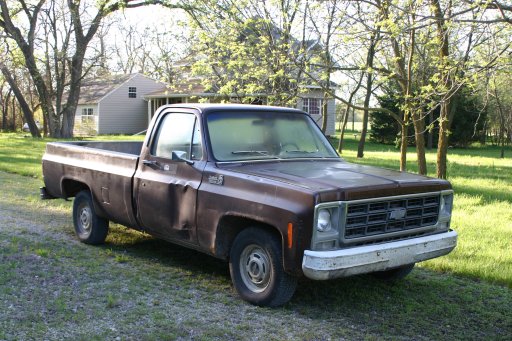
Our society is one that is pretty well defined by timeliness. TV programs start at a precise time, down to the second. Schools have elaborate timekeeping systems. Even church services are carefully timed. We know how fast we re going, and our GPS or phones tell us when we ll get there. And we re pretty confident that we will, in fact, get there. Somehow this doesn t apply to our pickup. This pickup, in case you re wondering, is a thing of stories, shall we say. After a particularly frustrating experience with it one week (oh yes, the battle extended several days), I likened it to the Greek gods. And Terah had a good laughing fit when I began a sentence with The reason there s a towel connecting the brake pedal to the steering wheel But I guess the thrifty side of me won out, and somewhere along the line, I relented. My brother fixed up the carburetor. I got it a new battery. The flat tire is repaired. The starter broke, and I got it replaced. And I even got an oil change. Fancy, I know. So today, when I needed to take some backbreaking junk off the yard, I was hoping the pickup would work. I hadn t driven it in months, and any manner of catastrophe could have struck it in that time. So I was mildly relieved when it started on the 6th try. That is, quite seriously, quite the improvement, and shows how skilled a mechanic my brother is. The speedometer, of course, isn t working. The odometer stupidly reads 21531 or something like that (it was only a 5-digit odometer, broke long ago, so who knows how many miles it really has.) And I like to keep things like grease and heavy ancient air conditioners (one of the things I was hauling) away from my watch, so I wasn t wearing it. The result: I have no idea what time it is, how fast I m going, when I ll get there, IF I ll get there, or all those things. I set out, and made it a good half mile before it died as I was rounding a corner at the bottom of the hill. Always a great place for a finicky old stick-shift vehicle to die, right? Anyhow, a few random adjustments to the choke later, and the thing sputtered then roared (and I do mean roared) back to life. A little lurching up the hill and I was back on my way. Now, I was stuck there in the middle of the road, but it was a country road, so I d have probably had a good hour to get it fixed before worrying about blocking anybody s way. My first stop: my great uncle s place. He has a scrap metal for charity project going on. He is looking for old motors, air conditioners, dehumidifiers, etc. He takes them apart, separates out the metals, sells them, and donates the result to MCC, a world relief agency. I knew I had an old dehumidifier in the basement, and thought I remembered seeing an old window air conditioner in the elevator. That thing is probably the single heaviest object I have ever moved without help. I have a bandaid to prove it. It was way too heavy to carry, so I kind of rolled it, side to side, from the side of the elevator on to the pickup. If you were watching, you d have heard me making struggling noises, followed by BANG rattle rattle rattle pause struggling noises . BANG rattle rattle rattle as I rolled it along the ground, and waited for the internal bits to settle after each quarter turn. So anyway, eventually I got it to the pickup, and then had the sickening realization: I have no way to get this thing up there. Oops. I eventually placed it on top of an old tire rim, balanced it there as I knelt down, and somehow still not quite sure how managed to lift the entire thing a few feet until I could get some leverage to shove it onto the pickup. I later commented to my dad that it was a Chrysler brand air conditioner, somewhat to my surprise, and he said that it was probably my great-grandpa s. That was a surprise. Anyhow, back to the pickup. I drove down the few miles to my great grandpa s place, not really knowing how fast I was going. I smelled the familiar smells of the old pickup: exhaust fumes, oil on hot surfaces it shouldn t be on, a touch of hot antifreeze. You never have any doubt about whether the engine is running. It was sort of nice to not know, or particularly care, how fast I was going, or what time it was. Sometimes I d idly wonder, but you know, it didn t really matter and there wasn t a thing I could do about it anyhow. I got to uncle s place, unloaded the junk sorta dropped the air conditioner off the back of the pickup with a terrific BANG, then rolled it all the way to his trailer and got back in. On to town. I hadn t put gas in the pickup in a few years, and I suspected it was getting low. (The gas gauge, you guessed it, doesn t work right either.) Plus we had some large recyclables built up and it was time to get rid of them. And for that, I had to drive on the highway a ways. The speed limit there is 65MPH. I have no idea how fast I was going, but it wasn t 65. Maybe it was 45. I got passed a lot, but nobody looked particularly surprised that a pickup that looks like mine wasn t going 65. Partway there, I smelled a different smoke smell. Not an oil smoke, but more of a grassy or wood smoke. Hmm, I thought. That s odd. Hope it s not coming from the pickup. I didn t really see smoke anywhere else, so I just drove on until I couldn t smell it anymore. I unloaded the recyclables, then went to the gas station. As the pump readout neared $50, I decided: 1) the gas tank really was pretty empty, and 2) I just can t put more gas in it anymore. That would be more than the truck s worth. So I drove home. The drive home was into the wind. My face got pretty cold I always drive with the windows open to prevent carbon monoxide poisoning (remember the fumes?) I got home and prepared to pack up the pickup close the windows, replace the bungee cord holding the brake pedal up, etc. I then thought I d have a look under the hood to see if there was anything, well, on fire. Nope, but there was a packrat nest that fell down as soon as the wind hit it. Source of grassy-smelling smoke identified. It s amazing what difference simple lack of knowledge makes sometimes. Not knowing what time it is or how fast I m going means I don t have to worry about those things. I wonder how society has changed simply because accurate and cheap watches are available. I kind of like driving the old truck. It s a bit of an adventure, a bit of a challenge, a bit of randomness, and a bit of an escape from the normal and predictable. Not a bad deal for a $75 vehicle.

Iustin Pop: First running event of 2012

Today I had the first running race of 2012. Well, actually, it was my first race in Switzerland ever so double first. And, if I have to be precise, it was my first run with a shiny new Garmin 910XT; while I had it ordered for more than a month, out-of-stock and other delays converged such that I received the new toy the evening before the run. After getting it, I walked around a bit to confirm it's not DOA, read the manual, and hoped it's not too different in basic operation to my old Garmin. So a triple first. Also, (this is the last one, I promise!) this was the first time I ran with a foot pod (pedometer), so it was the first time I got actual cadence measurements. The run I went to the Bremgarter Reusslauf, which is an 11km flat run held in the woods near Bremgarten, a very very nice small town. I have never before visited it (even though it's quite close to Z rich), and I was pleasantly surprised by it. I should go sometimes back and visit a bit more. The weather was cloudy (and just a tiny bit foggy), a bit cold but not much. From this point of view, it was good running weather, but it detracted from the scenery. Otherwise, the course itself was very very enjoyable, I could have used a camera lots. At one point, in the middle of the (light, not dense) woods, the course passed beneath the arm of an excavator which was like a mechanical arch (in the middle of nature); at another point, we crossed the river, and the sight was so nice I had to stop myself from stopping and admiring the view . The course is marked as a 'flat' one, but I've read some blog posts saying that this is not entirely true, so I was prepared for 'the worst'. Actually, I found it to be surprisingly well behaved; even though the finish was near the start, it seemed to me to be 60% downhill, 30% flat and only 10% somewhat-uphill. Garmin 910XT I didn't quite know what to expect, upgrading from my Forerunner 205. I read the very nice review on dcrainmaker, but in practice I didn't know what to expect (review awesome, but soo detailed). The new toy seems more stylish, so I expected worse UI or behaviour. On the contrary, it worked very well; much more responsive to changes in direction/pace (my 205 used to delays tens before adjusting the pace, the 910 is very fast), and new minor features (like auto-lap) were nice (I was able to track average speed on each 1KM lap, very useful). It's a ++ on the upgrade, with the big downside that so far it doesn't seem to work under Linux . It also has a barometric altimeter, but I didn't calibrate it (explicitly); so while the absolute measurements might be off, the relative elevation changes were much more sane than with 205 (GPS is not too good at elevation changes, as far as I know). One funny thing about the delays in getting the device: before the race, another runner asks me (note: the conversation was in German, accuracy not guaranteed):
Is that the new Garmin? Yes, it is, just got it last evening. (showing me his identical watch) Ha! Me too, I got this only two days ago!
So yes, I think a few people were happy to get their new toy before the race. I also have now a heartbeat sensor, but as I never used one before, I didn't want to try it the first time during a race; so I skipped on that. The foot pod on the other hand is practically ignorable, so I took that along (sometime I think I run just because there are nice running toys ). As to accuracy, it was quite OK; it measured 10.86 km instead of the official 11 km, but most/all of the difference was in the first km of the run (inaccuracy while starting to run? who knows). I'll have to see how the watch performs while cycling (uh, I didn't do that in a long while) or swimming ( I didn't do that in an even longer while), but for running it's a good upgrade from my old watch. Results My normal run pace is about 6min/km, which is quite slow. So I didn't expect anything of the race, except to finish it. There were lots of people participating (> 2,600 in the main 11km category). I started slow, because I know I usually start too fast and get tired quickly. This allowed me to not feel the first, and only, significant hill, and after that it was or seemed all downhill (literally, I mean, not figuratively), so in the end I had (for me) a very good time. By the Garmin, I run 10.86 km in 59:01, to an average 5.26 min/km. By the official results, I had 11 km in 58:56, with a pace of 5.21 min/km. I have never before run 10k faster than 5:30, so I was very very happy. As for individual laps (1 km) as recorded by the Garmin: On the overall ranking, I ended up 362 out of 394 in my category. Hah! I'll try to remember this race simply for my own pace results, and ignore the ranking . Honestly I'm not sure how people can run twice as fast need to train more! The foot pod gave me a cadence of 83 steps per minute (average, max 88). This was quite surprising for me, I expected to be significantly below the much talked about 90 steps per minute. But anyway, I have lots of work ahead of me to improve my running speed. Overall, it was an excellent day, and I'm looking forward to the next races in/around Z rich. But I should be careful not to overdo-it, like I do whenever I get excited about something .

25 February 2012

Andreas Barth: Traveling to DebConf 11 - M nchen to Zagreb

These articles cover my way to DebConf 11 through Hrvatska and Bosna i Hercegovina. After telling my initial plans to go by train (mostly) and bus (where it couldn't be avoided) on IRC, I was warned that public transport is quite bad and unreliable. Also, as I live in M nchen, of course this part of Europe was always known as "near" and "could be visited any time" (which means "one never gets to it"; and I can still remember the time when it was Yugoslavia - there are and always were many people living here from that part of Europe; in fact, it's nearer than some parts of Germany). I plan to publish more parts of my way within the next days. Already at home I also learned that most trains in Hrvatska (and all in Bosna i Hercegovina) are not part of the usual train information system, so it was a bit more advanced to find out the appropriate connections. And in both countries there are only a few trains running, so one shouldn't miss a train ("few" means e.g. two per day and direction - but one at most unappropriate times, so really only one suiteable). The first day saw me boarding the Suburban train (S-Bahn) at my usual station, changing platforms and trains at M nchen Ost station and then I was sitting in a train to Zagreb. Nothing strange there, except that the coach I had an seat reserved in was missing. I learned later on that it happens more often that the coach from Serbia is not there because it's technically too unfit to send it to Germany -- and usually, there will be more coaches added in Ljubljana. Border checks were uneventfull but at the slovenijan border my passport was stamped (not sure why, didn't happen on the way back).
Train in sterreich After arriving in Zagreb and dropping off my luggage in the hotel, I first got some Kunas and then bought my ticket to Split for the next day (as a direct ticket from M nchen to Split was not available). After having done that, I took a brief tour through Zagreb until it became dark, with visiting some of the tourist places.
Zagreb

24 February 2012

Julien Danjou: 10 years as a Debian developer

Ten years ago, I joined the Debian project as a developer. At that time, I was 18 and in my first year at university, hanging out with the TuxFamily system administrators, which included 3 french Debian developers (sjg, igenibel and creis). I was learning Debian packaging while working on VHFFS, and decided to package one or two non-yet-packaged software for Debian. My friends pushed me into the NM process, and less than 2 months later I was a Debian developer. One have to admit that back in the days, the NM process was really fast if you were able to reply to the questions quickly. :-) I think I became the youngest developer among Debian's ones. That was my first steps in a Free Software project, and it was really exciting. In 10 years, I've been doing a lot of different things for Debian. Sure, I've been using it all the years long, but let's recap a bit what I did, from what I recall. My first Debian only project was apt-build around 2003, and later rebuildd in 2007. I built the Xen packaging team in 2005, I've been a Stable Release Manager for a year in 2006, and did heavy bug squashing to release Etch that same year. I also was an Application Manager in 2006 and managed the application of 2 Debian developers (Jose Parrella and Dami n Viano). I admit I've been less active in Debian after 2007, mainly because I was busy working on awesome, GNU Emacs and others software. Since 2011, I joined the OpenStack packaging team and I'm working on OpenStack on a (almost) daily basis. I don't know how many packages I touched, managed or updated, but that should be one or two hundreds. I still maintain 53 of them. After all, the adventure has been really pleasant, and I had the chance to work with and meet fabulous and smart people. I always liked this project and what it's trying to do. After all these years, I'm definitively staying! See you in another 10 years, folks! :)

21 February 2012

Aigars Mahinovs: Le Camp Le DebConf Le 2013!

The meeting was as long as the kernel changelog, the decision was as difficult as a Debian release, but in the end Le Camp has won in the voting 5 to 4. It was lucky that one member of the 10 man committee was not present or we could have had a tie, just like there was one in the first round of voting. Well, congratulations to the poor sods of the Swiss team, who will now have to fulfil what they promised and also all the small things that everyone always forgets that also need to be done for every Debconf! I think that I will try again for 2015, but before that we will try to get a few people from Latvian community to go to Debconf13 to get the Debconf and Debian experience and exposure. Meanwhile, it looks like I will be skipping this years Debconf12 it is very far away for me and as I could not find a reasonable business rationale for me being there, it would be a far and expensive vacation for me. I don t think there is enough benefit from me being there to ask for any Debian funds for this either, especially hearing how tight money is this year. So if you re going, make sure to take a camera and take a bunch of pictures, so we at home can see it too :)

Francois Marier: Putting a limit on Apache and PHP memory usage

A little while ago, we ran into memory problems on mahara.org. It turned out to be due to the GD library having issues with large (as in height and width, not file size) images.

What we discovered is that the PHP memory limit (which is set to a fairly low value) only applies to actual PHP code, not C libraries like GD that are called from PHP. It's not obvious what PHP libraries are implemented as external C calls, which fall outside of the control of the interpreter, but anything that sounds like it's using some other library is probably not in PHP and is worth looking at.

To put a cap on the memory usage of Apache, we set process limits for the main Apache process and all of its children using ulimit.

Unfortunately, the limit we really wanted to change (resident memory or "-m") isn't implemented in the Linux kernel. So what we settled on was to limit the total virtual memory that an Apache process (or sub-process) can consume using "ulimit -v".

On a Debian box, this can be done by adding this to the bottom of /etc/default/apache2:
ulimit -v 1048576
for a limit of 1GB of virtual memory.

You can ensure that it works by setting it first to a very low value and then loading one of your PHP pages and seeing it die with some kind of malloc error.

I'm curious to know what other people do to prevent runaway Apache processes.

Next.

Previous.