Search Results: "ed"

1 April 2024

Colin Watson: Free software activity in March 2024

My Debian contributions this month were all sponsored by Freexian.

Simon Josefsson: Towards reproducible minimal source code tarballs? On *-src.tar.gz

While the work to analyze the xz backdoor is in progress, several ideas have been suggested to improve the software supply chain ecosystem. Some of those ideas are good, some of the ideas are at best irrelevant and harmless, and some suggestions are plain bad. I d like to attempt to formalize two ideas, which have been discussed before, but the context in which they can be appreciated have not been as clear as it is today.
  1. Reproducible tarballs. The idea is that published source tarballs should be possible to reproduce independently somehow, and that this should be continuously tested and verified preferrably as part of the upstream project continuous integration system (e.g., GitHub action or GitLab pipeline). While nominally this looks easy to achieve, there are some complex matters in this, for example: what timestamps to use for files in the tarball? I ve brought up this aspect before.
  2. Minimal source tarballs without generated vendor files. Most GNU Autoconf/Automake-based tarballs pre-generated files which are important for bootstrapping on exotic systems that does not have the required dependencies. For the bootstrapping story to succeed, this approach is important to support. However it has become clear that this practice raise significant costs and risks. Most modern GNU/Linux distributions have all the required dependencies and actually prefers to re-build everything from source code. These pre-generated extra files introduce uncertainty to that process.
My strawman proposal to improve things is to define new tarball format *-src.tar.gz with at least the following properties:
  1. The tarball should allow users to build the project, which is the entire purpose of all this. This means that at least all source code for the project has to be included.
  2. The tarballs should be signed, for example with PGP or minisign.
  3. The tarball should be possible to reproduce bit-by-bit by a third party using upstream s version controlled sources and a pointer to which revision was used (e.g., git tag or git commit).
  4. The tarball should not require an Internet connection to download things.
    • Corollary: every external dependency either has to be explicitly documented as such (e.g., gcc and GnuTLS), or included in the tarball.
    • Observation: This means including all *.po gettext translations which are normally downloaded when building from version controlled sources.
  5. The tarball should contain everything required to build the project from source using as much externally released versioned tooling as possible. This is the minimal property lacking today.
    • Corollary: This means including a vendored copy of OpenSSL or libz is not acceptable: link to them as external projects.
    • Open question: How about non-released external tooling such as gnulib or autoconf archive macros? This is a bit more delicate: most distributions either just package one current version of gnulib or autoconf archive, not previous versions. While this could change, and distributions could package the gnulib git repository (up to some current version) and the autoconf archive git repository and packages were set up to extract the version they need (gnulib s ./bootstrap already supports this via the gnulib-refdir parameter), this is not normally in place.
    • Suggested Corollary: The tarball should contain content from git submodule s such as gnulib and the necessary Autoconf archive M4 macros required by the project.
  6. Similar to how the GNU project specify the ./configure interface we need a documented interface for how to bootstrap the project. I suggest to use the already well established idiom of running ./bootstrap to set up the package to later be able to be built via ./configure. Of course, some projects are not using the autotool ./configure interface and will not follow this aspect either, but like most build systems that compete with autotools have instructions on how to build the project, they should document similar interfaces for bootstrapping the source tarball to allow building.
If tarballs that achieve the above goals were available from popular upstream projects, distributions could more easily use them instead of current tarballs that include pre-generated content. The advantage would be that the build process is not tainted by unnecessary files. We need to develop tools for maintainers to create these tarballs, similar to make dist that generate today s foo-1.2.3.tar.gz files. I think one common argument against this approach will be: Why bother with all that, and just use git-archive outputs? Or avoid the entire tarball approach and move directly towards version controlled check outs and referring to upstream releases as git URL and commit tag or id. One problem with this is that SHA-1 is broken, so placing trust in a SHA-1 identifier is simply not secure. Another counter-argument is that this optimize for packagers benefits at the cost of upstream maintainers: most upstream maintainers do not want to store gettext *.po translations in their source code repository. A compromise between the needs of maintainers and packagers is useful, so this *-src.tar.gz tarball approach is the indirection we need to solve that. Update: In my experiment with source-only tarballs for Libntlm I actually did use git-archive output. What do you think?

Arturo Borrero Gonz lez: Kubecon and CloudNativeCon 2024 Europe summary

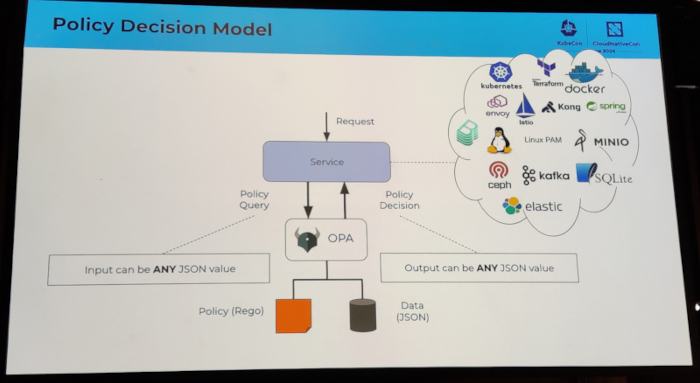
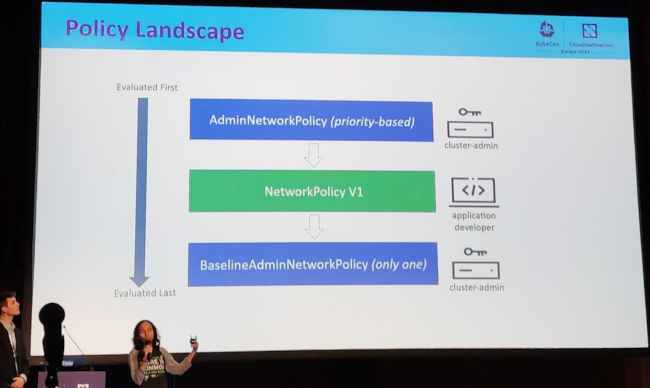
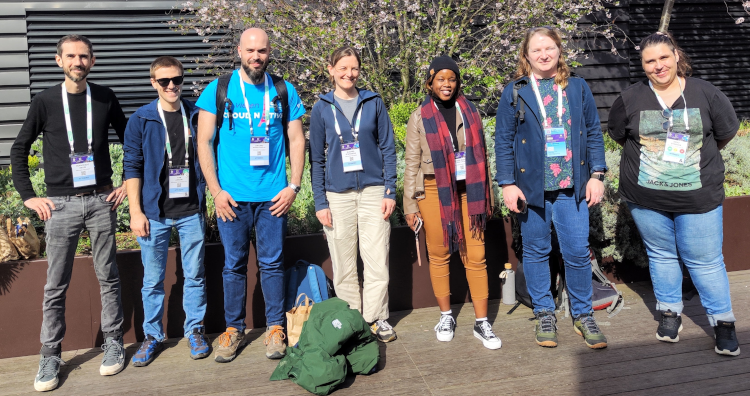
Kubecon EU 2024 Paris logo This blog post shares my thoughts on attending Kubecon and CloudNativeCon 2024 Europe in Paris. It was my third time at this conference, and it felt bigger than last year s in Amsterdam. Apparently it had an impact on public transport. I missed part of the opening keynote because of the extremely busy rush hour tram in Paris. On Artificial Intelligence, Machine Learning and GPUs Talks about AI, ML, and GPUs were everywhere this year. While it wasn t my main interest, I did learn about GPU resource sharing and power usage on Kubernetes. There were also ideas about offering Models-as-a-Service, which could be cool for Wikimedia Toolforge in the future. See also: On security, policy and authentication This was probably the main interest for me in the event, given Wikimedia Toolforge was about to migrate away from Pod Security Policy, and we were currently evaluating different alternatives. In contrast to my previous attendances to Kubecon, where there were three policy agents with presence in the program schedule, Kyverno, Kubewarden and OpenPolicyAgent (OPA), this time only OPA had the most relevant sessions. One surprising bit I got from one of the OPA sessions was that it could work to authorize linux PAM sessions. Could this be useful for Wikimedia Toolforge? OPA talk I attended several sessions related to authentication topics. I discovered the keycloak software, which looks very promising. I also attended an Oauth2 session which I had a hard time following, because I clearly missed some additional knowledge about how Oauth2 works internally. I also attended a couple of sessions that ended up being a vendor sales talk. See also: On container image builds, harbor registry, etc This topic was also of interest to me because, again, it is a core part of Wikimedia Toolforge. I attended a couple of sessions regarding container image builds, including topics like general best practices, image minimization, and buildpacks. I learned about kpack, which at first sight felt like a nice simplification of how the Toolforge build service was implemented. I also attended a session by the Harbor project maintainers where they shared some valuable information on things happening soon or in the future , for example: On networking I attended a couple of sessions regarding networking. One session in particular I paid special attention to, ragarding on network policies. They discussed new semantics being added to the Kubernetes API. The different layers of abstractions being added to the API, the different hook points, and override layers clearly resembled (to me at least) the network packet filtering stack of the linux kernel (netfilter), but without the 20 (plus) years of experience building the right semantics and user interfaces. Network talk I very recently missed some semantics for limiting the number of open connections per namespace, see Phabricator T356164: [toolforge] several tools get periods of connection refused (104) when connecting to wikis This functionality should be available in the lower level tools, I mean Netfilter. I may submit a proposal upstream at some point, so they consider adding this to the Kubernetes API. Final notes In general, I believe I learned many things, and perhaps even more importantly I re-learned some stuff I had forgotten because of lack of daily exposure. I m really happy that the cloud native way of thinking was reinforced in me, which I still need because most of my muscle memory to approach systems architecture and engineering is from the old pre-cloud days. That being said, I felt less engaged with the content of the conference schedule compared to last year. I don t know if the schedule itself was less interesting, or that I m losing interest? Finally, not an official track in the conference, but we met a bunch of folks from Wikimedia Deutschland. We had a really nice time talking about how wikibase.cloud uses Kubernetes, whether they could run in Wikimedia Cloud Services, and why structured data is so nice. Group photo

31 March 2024

Junichi Uekawa: Learning about xz and what is happening is fascinating.

Learning about xz and what is happening is fascinating. The scope of potential exploit is very large. The Open source software space is filled with many unmaintained and unreviewed software.

Russell Coker: Links March 2024

Bruce Schneier wrote an interesting blog post about his workshop on reimagining democracy and the unusual way he structured it [1]. It would be fun to have a security conference run like that! Matthias write an informative blog post about Wayland Wayland really breaks things Just for now which links to a blog debate about the utility of Wayland [2]. Wayland seems pretty good to me. Cory Doctorow wrote an insightful article about the AI bubble comparing it to previous bubbles [3]. Charles Stross wrote an insightful analysis of the implications if the UK brought back military conscription [4]. Looks like the era of large armies is over. Charles Stross wrote an informative blog post about the Worldcon in China, covering issues of vote rigging for location, government censorship vs awards, and business opportunities [5]. The Paris Review has an interesting article about speaking to the CIA s Creative Writing Group [6]. It doesn t explain why they have a creative writing group that has some sort of semi-official sanction. LongNow has an insightful article about the threats to biodiversity in food crops and the threat that poses to humans [7]. Bruce Schneier and Albert Fox Cahn wrote an interesting article about the impacts of chatbots on human discourse [8]. If it makes people speak more precisely then that would be great for all Autistic people!

29 March 2024

Raphaël Hertzog: Freexian is looking to expand its team with more Debian contributors

It s been a while that I haven t posted anything on my blog, the truth is that Freexian has been doing very well in the last years and that I have a hard time to allocate time to write articles or even to contribute to my usual Debian projects the exception being debusine since that s part of the Freexian work (have a look at our most recent announce!).
That being said, given Freexian s growth and in the hope to reduce my workload, we are looking to extend our team with Debian members of more varied backgrounds and skills, so they can help us in areas like sales / marketing / project management. Have a look at our announce on debian-jobs@lists.debian.org.
As a mission-oriented company, we are looking to work with persons already involved in Debian (or persons who were waiting the right opportunity to get involved). All our collaborators can spend 20% of their paid work time on the Debian projects they care about.

Ravi Dwivedi: A visit to the Taj Mahal

Note: The currency used in this post is Indian Rupees, which was around 83 INR for 1 US Dollar as that time. I and my friend Badri visited the Taj Mahal this month. Taj Mahal is one of the main tourist destinations in India and does not need an introduction, I guess. It is in Agra, in the state of Uttar Pradesh, 188 km from Delhi by train. So, I am writing a post documenting useful information for people who are planning to visit Taj Mahal. Feel free to ask me questions about visiting the Taj Mahal.
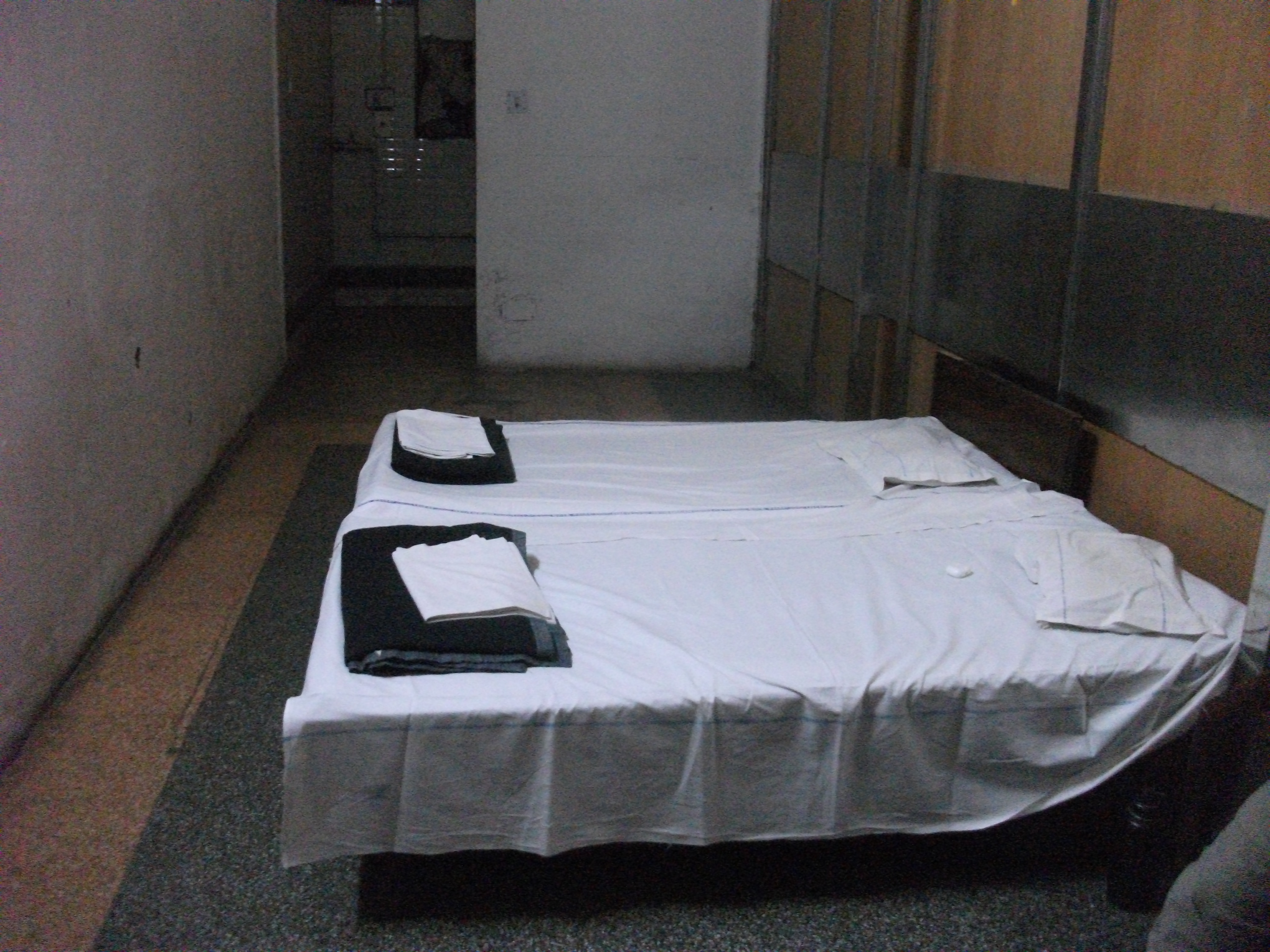
Our retiring room at the Old Delhi Railway Station.
We had booked a train from Delhi to Agra. The name of the train was Taj Express, and its scheduled departure time from Hazrat Nizamuddin station in Delhi is 07:08 hours in the morning, and its arrival time at Agra Cantt station is 09:45. So, we booked a retiring room at the Old Delhi railway station for the previous night. This retiring room was hard to find. We woke up at 05:00 in the morning and took the metro to Hazrat Nizamuddin station. We barely reached the station in time, but anyway, the train was not yet at the station; it was late. We reached Agra at 10:30 and checked into our retiring room, took rest and went out for Taj Mahal at 13:00 in the afternoon. Taj Mahal s outer gate is 5 km away from the Agra Cantt station. As we were going out of the railway station, we were chased by an autorickshaw driver who offered to go to Taj Mahal for 150 INR for both of us. I asked him to bring it down to 60 INR, and after some back and forth, he agreed to drop us off at Taj Mahal for 80 INR. But I said we won t pay anything above 60 INR. He agreed with that amount but said that he would need to fill up with more passengers. When we saw that he wasn t making any effort in bringing more passengers, we walked away. As soon as we got out of the railway station complex, an autorickshaw driver came to us and offered to drop us off at Taj Mahal for 20 INR if we are sharing with other passengers and 100 INR if we reserve the auto for us. We agreed to go with 20 INR per person, but he started the autorickshaw as soon as we hopped in. I thought that the third person in the auto was another passenger sharing a ride with us, but later we got to know he was with the driver. Upon reaching the outer gate of Taj Mahal, I gave him 40 INR (for both of us), and he asked to instead give 100 INR as he said we reserved the auto, even though I clearly stated before taking the auto that we wanted to share the auto, not reserve it. I think this was a scam. We walked away, and he didn t insist further. Taj Mahal entrance was like 500 m from the outer gate. We went there and bought offline tickets just outside the West gate. For Indians, the ticket for going inside the Taj Mahal complex is 50 INR, and a visit to the mausoleum costs 200 INR extra.
Security outside the Taj Mahal complex.
This red colored building is entrance to where you can see the Taj Mahal.
Taj Mahal.
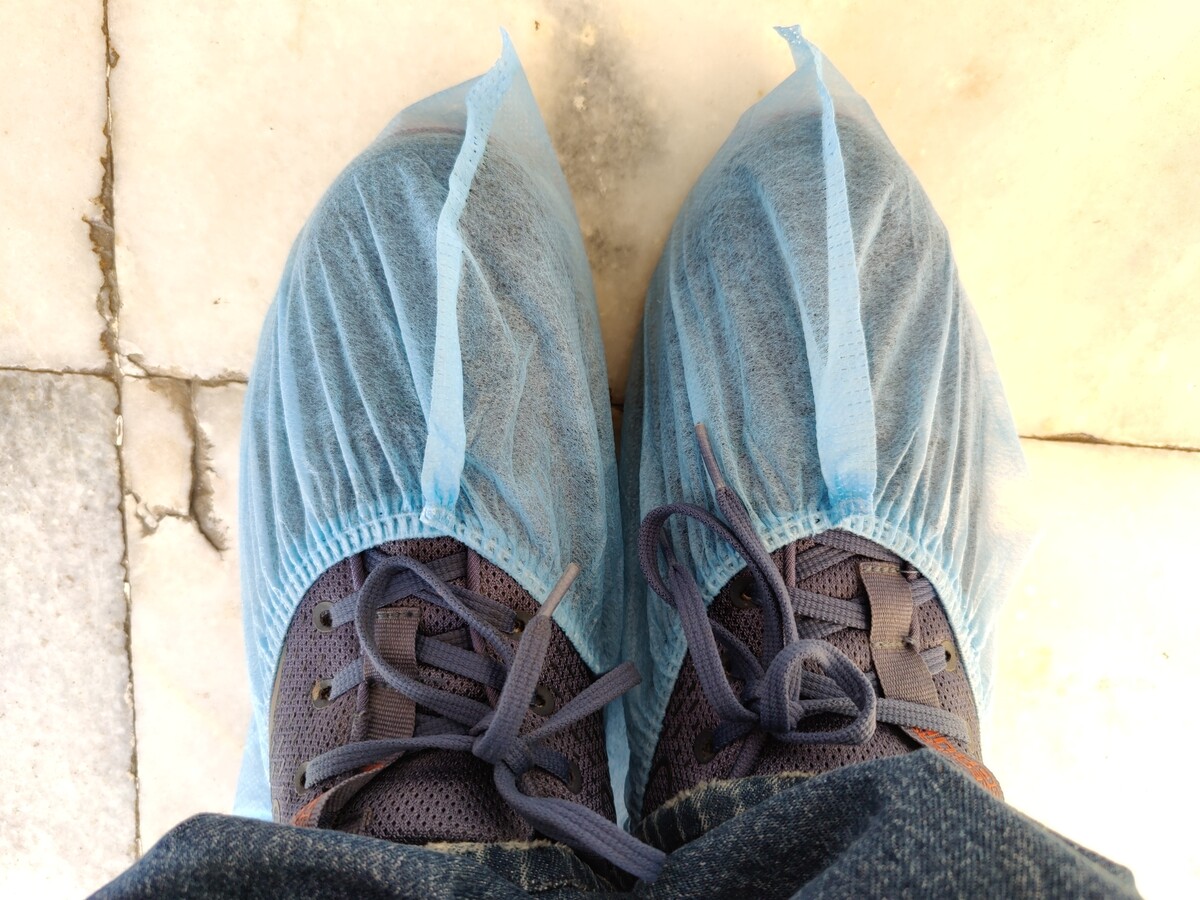
Shoe covers for going inside the mausoleum.
Taj Mahal from side angle.
We came out of the Taj Mahal complex at 18:00 and stopped for some tea and snacks. I also bought a fridge magnet for 30 INR. Then we walked back towards Agra Cantt station, as we had a train for Jaipur at midnight. We were hoping to find a restaurant along the way, but we didn t find any that we found interesting, so we just ate at the railway station. During the return trip, we noticed there was a bus stand near the station, which we didn t know about. It turns out you can catch a bus to Taj Mahal from there. You can click here to check out the location of that bus stand on OpenStreetMap.

Expenses These were our expenses per person Retiring room at Delhi Railway Station for 12 hours 131 Train ticket from Delhi to Agra (Taj Express) 110 Retiring room at Agra Cantt station for 12 hours 450 Auto-rickshaw to Taj Mahal 20 Taj Mahal ticket (including going inside the mausoleum): 250 Food 350

Important information for visitors
  • Taj Mahal is closed on Friday.
  • There are plenty of free-of-cost drinking water taps inside the Taj Mahal complex.
  • Ticket price for Indians is 50, for foreigners and NRIs it is 1100, and for people from SAARC/BIMSTEC is 540. 200 extra for the mausoleum for everyone.
  • A visit inside the mausoleum requires covering your shoes or removing them. Shoe covers costs 10 per person inside the complex, but are probably involved free of charge in foreigner tickets. We could not find a place to keep our shoes, but some people managed to enter barefoot, indicating there must be some place to keep your shoes.
  • Mobile phones and cameras are allowed inside the Taj Mahal, but not eatables.
  • We went there on March 10th, and the weather was pleasant. So, we recommend going around that time.
  • Regarding the timings, I found this written near the ticket counter: Taj Mahal opens 30 minutes before sunrise and closes 30 minutes before sunset during normal operating days, so the timings are vague. But we came out of the complex at 18:00 hours. I would interpret that to mean the Taj Mahal is open from 07:00 to 18:00, and the ticket counter closes at around 17:00. During the winter, the timings might differ.
  • The cheapest way to reach Taj Mahal is by bus, and the bus stop is here
Bye for now. See you in the next post :)

Patryk Cisek: Sanoid on TrueNAS

syncoid to TrueNAS In my homelab, I have 2 NAS systems: Linux (Debian) TrueNAS Core (based on FreeBSD) On my Linux box, I use Jim Salter s sanoid to periodically take snapshots of my ZFS pool. I also want to have a proper backup of the whole pool, so I use syncoid to transfer those snapshots to another machine. Sanoid itself is responsible only for taking new snapshots and pruning old ones you no longer care about.

Reproducible Builds (diffoscope): diffoscope 262 released

The diffoscope maintainers are pleased to announce the release of diffoscope version 262. This version includes the following changes:
[ Chris Lamb ]
* Factor out Python version checking in test_zip.py. (Re: #362)
* Also skip some zip tests under 3.10.14 as well; a potential regression may
  have been backported to the 3.10.x series. The underlying cause is still to
  be investigated. (Re: #362)
You find out more by visiting the project homepage.

28 March 2024

Joey Hess: the vulture in the coal mine

Turns out that VPS provider Vultr's terms of service were quietly changed some time ago to give them a "perpetual, irrevocable" license to use content hosted there in any way, including modifying it and commercializing it "for purposes of providing the Services to you." This is very similar to changes that Github made to their TOS in 2017. Since then, Github has been rebranded as "The world s leading AI-powered developer platform". The language in their TOS now clearly lets them use content stored in Github for training AI. (Probably this is their second line of defense if the current attempt to legitimise copyright laundering via generative AI fails.) Vultr is currently in damage control mode, accusing their concerned customers of spreading "conspiracy theories" (-- founder David Aninowsky) and updating the TOS to remove some of the problem language. Although it still allows them to "make derivative works", so could still allow their AI division to scrape VPS images for training data. Vultr claims this was the legalese version of technical debt, that it only ever applied to posts in a forum (not supported by the actual TOS language) and basically that they and their lawyers are incompetant but not malicious. Maybe they are indeed incompetant. But even if I give them the benefit of the doubt, I expect that many other VPS providers, especially ones targeting non-corporate customers, are watching this closely. If Vultr is not significantly harmed by customers jumping ship, if the latest TOS change is accepted as good enough, then other VPS providers will know that they can try this TOS trick too. If Vultr's AI division does well, others will wonder to what extent it is due to having all this juicy training data. For small self-hosters, this seems like a good time to make sure you're using a VPS provider you can actually trust to not be eyeing your disk image and salivating at the thought of stripmining it for decades of emails. Probably also worth thinking about moving to bare metal hardware, perhaps hosted at home. I wonder if this will finally make it worthwhile to mess around with VPS TPMs?

Scarlett Gately Moore: Kubuntu, KDE Report. In Loving Memory of my Son.

Personal: As many of you know, I lost my beloved son March 9th. This has hit me really hard, but I am staying strong and holding on to all the wonderful memories I have. He grew up to be an amazing man, devoted christian and wonderful father. He was loved by everyone who knew him and will be truly missed by us all. I have had folks ask me how they can help. He left behind his 7 year old son Mason. Mason was Billy s world and I would like to make sure Mason is taken care of. I have set up a gofundme for Mason and all proceeds will go to the future care of him. https://gofund.me/25dbff0c

Work report Kubuntu: Bug bashing! I am triaging allthebugs for Plasma which can be seen here: https://bugs.launchpad.net/plasma-5.27/+bug/2053125 I am happy to report many of the remaining bugs have been fixed in the latest bug fix release 5.27.11. I prepared https://kde.org/announcements/plasma/5/5.27.11/ and Rik uploaded to archive, thank you. Unfortunately, this and several other key fixes are stuck in transition do to the time_t64 transition, which you can read about here: https://wiki.debian.org/ReleaseGoals/64bit-time . It is the biggest transition in Debian/Ubuntu history and it couldn t come at a worst time. We are aware our ISO installer is currently broken, calamares is one of those things stuck in this transition. There is a workaround in the comments of the bug report: https://bugs.launchpad.net/ubuntu/+source/calamares/+bug/2054795 Fixed an issue with plasma-welcome. Found the fix for emojis and Aaron has kindly moved this forward with the fontconfig maintainer. Thanks! I have received an https://kfocus.org/spec/spec-ir14.html laptop and it is truly a great machine and is now my daily driver. A big thank you to the Kfocus team! I can t wait to show it off at https://linuxfestnorthwest.org/. KDE Snaps: You will see the activity in this ramp back up as the KDEneon Core project is finally a go! I will participate in the project with part time status and get everyone in the Enokia team up to speed with my snap knowledge, help prepare the qt6/kf6 transition, package plasma, and most importantly I will focus on documentation for future contributors. I have created the ( now split ) qt6 with KDE patchset support and KDE frameworks 6 SDK and runtime snaps. I have made the kde-neon-6 extension and the PR is in: https://github.com/canonical/snapcraft/pull/4698 . Future work on the extension will include multiple versions track support and core24 support.

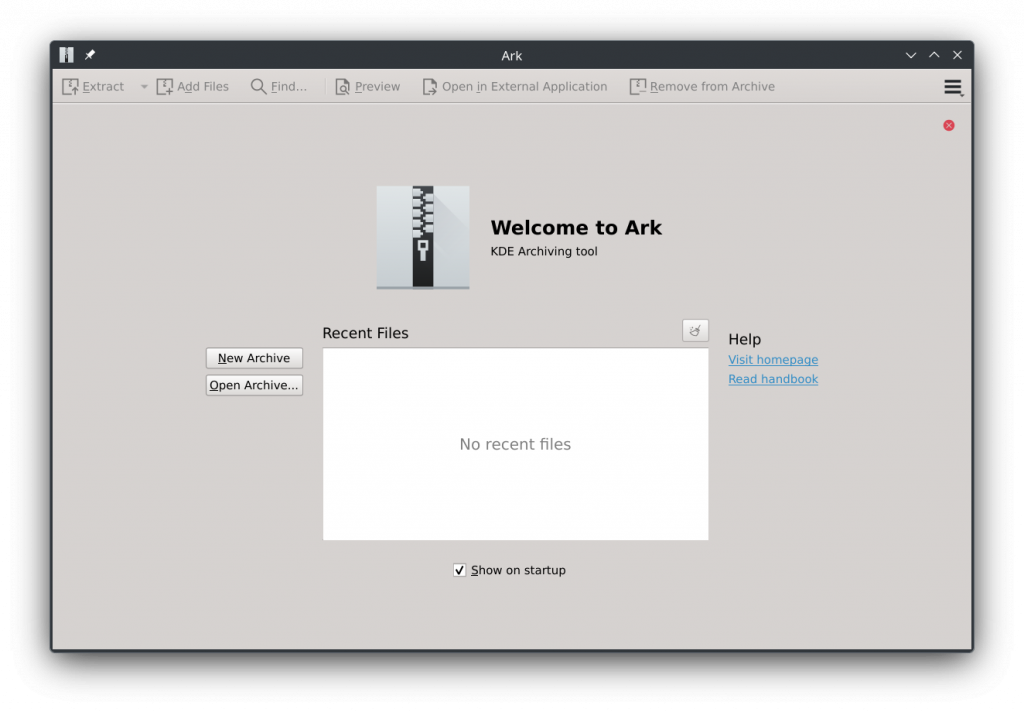
I have successfully created our first qt6/kf6 snap ark. They will show showing up in the store once all the required bits have been merged and published. Thank you for stopping by. ~Scarlett

26 March 2024

Emmanuel Kasper: Adding a private / custom Certificate Authority to the firefox trust store

Today at $WORK I needed to add the private company Certificate Authority (CA) to Firefox, and I found the steps were unnecessarily complex. Time to blog about that, and I also made a Debian wiki article of that post, so that future generations can update the information, when Firefox 742 is released on Debian 17. The cacert certificate authority is not included in Debian and Firefox, and is thus a good example of adding a private CA. Note that this does not mean I specifically endorse that CA.
  • Test that SSL connections to a site signed by the private CA is failing
$ gnutls-cli wiki.cacert.org:443
...
- Status: The certificate is NOT trusted. The certificate issuer is unknown. 
*** PKI verification of server certificate failed...
*** Fatal error: Error in the certificate.
  • Download the private CA
$ wget http://www.cacert.org/certs/root_X0F.crt
  • test that a connection works with the private CA
$ gnutls-cli --x509cafile root_X0F.crt wiki.cacert.org:443
...
- Status: The certificate is trusted. 
- Description: (TLS1.2-X.509)-(ECDHE-SECP256R1)-(RSA-SHA256)-(AES-256-GCM)
- Session ID: 37:56:7A:89:EA:5F:13:E8:67:E4:07:94:4B:52:23:63:1E:54:31:69:5D:70:17:3C:D0:A4:80:B0:3A:E5:22:B3
- Options: safe renegotiation,
- Handshake was completed
...
  • add the private CA to the Debian trust store located in /etc/ssl/certs/ca-certificates.crt
$ sudo cp root_X0F.crt /usr/local/share/ca-certificates/cacert-org-root-ca.crt
$ sudo update-ca-certificates --verbose
...
Adding debian:cacert-org-root-ca.pem
...
  • verify that we can connect without passing the private CA on the command line
$ gnutls-cli wiki.cacert.org:443
... 
 - Status: The certificate is trusted.
  • At that point most applications are able to connect to systems with a certificate signed by the private CA (curl, Gnome builtin Browser ). However Firefox is using its own trust store and will still display a security error if connecting to https://wiki.cacert.org. To make Firefox trust the Debian trust store, we need to add a so called security device, in fact an extra library wrapping the Debian trust store. The library will wrap the Debian trust store in the PKCS#11 industry format that Firefox supports.
  • install the pkcs#11 wrapping library and command line tools
$ sudo apt install p11-kit p11-kit-modules
  • verify that the private CA is accessible via PKCS#11
$ trust list   grep --context 2 'CA Cert'
pkcs11:id=%16%B5%32%1B%D4%C7%F3%E0%E6%8E%F3%BD%D2%B0%3A%EE%B2%39%18%D1;type=cert
    type: certificate
    label: CA Cert Signing Authority
    trust: anchor
    category: authority
  • now we need to add a new security device in Firefox pointing to the pkcs11 trust store. The pkcs11 trust store is located in /usr/lib/x86_64-linux-gnu/pkcs11/p11-kit-trust.so
$ dpkg --listfiles p11-kit-modules   grep trust
/usr/lib/x86_64-linux-gnu/pkcs11/p11-kit-trust.so
  • in Firefox (tested in version 115 esr), go to Settings -> Privacy & Security -> Security -> Security Devices.
    Then click Load , in the popup window use My local trust as a module name, and /usr/lib/x86_64-linux-gnu/pkcs11/p11-kit-trust.so as a module filename. After adding the module, you should see it in the list of Security Devices, having /etc/ssl/certs/ca-certificates.crt as a description.
  • now restart Firefox and you should be able to browse https://wiki.cacert.org without security errors

25 March 2024

Jonathan Dowland: a bug a day

I recently became a maintainer of/committer to IkiWiki, the software that powers my site. I also took over maintenance of the Debian package. Last week I cut a new upstream point release, 3.20200202.4, and a corresponding Debian package upload, consisting only of a handful of low-hanging-fruit patches from other people, largely to exercise both processes. I've been discussing IkiWiki's maintenance situation with some other users for a couple of years now. I've also weighed up the pros and cons of moving to a different static-site-generator (a term that describes what IkiWiki is, but was actually coined more recently). It turns out IkiWiki is exceptionally flexible and powerful: I estimate the cost of moving to something modern(er) and fashionable such as Jekyll, Hugo or Hakyll as unreasonably high, in part because they are surprisingly rigid and inflexible in some key places. Like most mature software, IkiWiki has a bug backlog. Over the past couple of weeks, as a sort-of "palate cleanser" around work pieces, I've tried to triage one IkiWiki bug per day: either upstream or in the Debian Bug Tracker. This is a really lightweight task: it can be as simple as "find a bug reported in Debian, copy it upstream, tag it upstream, mark it forwarded; perhaps taking 5-10 minutes. Often I'll stumble across something that has already been fixed but not recorded as such as I go. Despite this minimal level of work, I'm quite satisfied with the cumulative progress. It's notable to me how much my perspective has shifted by becoming a maintainer: I'm considering everything through a different lens to that of being just one user. Eventually I will put some time aside to scratch some of my own itches (html5 by default; support dark mode; duckduckgo plugin; use the details tag...) but for now this minimal exercise is of broader use.

Valhalla's Things: Piecepack and postcard boxes

Posted on March 25, 2024
Tags: madeof:bits, craft:cartonnage
This article has been originally posted on November 4, 2023, and has been updated (at the bottom) since.
An open cardboard box, showing the lining in paper printed with a medieval music manuscript. Thanks to All Saints Day, I ve just had a 5 days weekend. One of those days I woke up and decided I absolutely needed a cartonnage box for the cardboard and linocut piecepack I ve been working on for quite some time. I started drawing a plan with measures before breakfast, then decided to change some important details, restarted from scratch, did a quick dig through the bookbinding materials and settled on 2 mm cardboard for the structure, black fabric-like paper for the outside and a scrap of paper with a manuscript print for the inside. Then we had the only day with no rain among the five, so some time was spent doing things outside, but on the next day I quickly finished two boxes, at two different heights. The weather situation also meant that while I managed to take passable pictures of the first stages of the box making in natural light, the last few stages required some creative artificial lightning, even if it wasn t that late in the evening. I need to build1 myself a light box. And then decided that since they are C6 sized, they also work well for postcards or for other A6 pieces of paper, so I will probably need to make another one when the piecepack set will be finally finished. The original plan was to use a linocut of the piecepack suites as the front cover; I don t currently have one ready, but will make it while printing the rest of the piecepack set. One day :D an open rectangular cardboard box, with a plastic piecepack set in it. One of the boxes was temporarily used for the plastic piecepack I got with the book, and that one works well, but since it s a set with standard suites I think I will want to make another box, using some of the paper with fleur-de-lis that I saw in the stash. I ve also started to write detailed instructions: I will publish them as soon as they are ready, and then either update this post, or they will be mentioned in an additional post if I will have already made more boxes in the meanwhile.
Update 2024-03-25: the instructions have been published on my craft patterns website

  1. you don t really expect me to buy one, right? :D

24 March 2024

Niels Thykier: debputy v0.1.21

Earlier today, I have just released debputy version 0.1.21 to Debian unstable. In the blog post, I will highlight some of the new features.
Package boilerplate reduction with automatic relationship substvar Last month, I started a discussion on rethinking how we do relationship substvars such as the $ misc:Depends . These generally ends up being boilerplate runes in the form of Depends: $ misc:Depends , $ shlibs:Depends where you as the packager has to remember exactly which runes apply to your package. My proposed solution was to automatically apply these substvars and this feature has now been implemented in debputy. It is also combined with the feature where essential packages should use Pre-Depends by default for dpkg-shlibdeps related dependencies. I am quite excited about this feature, because I noticed with libcleri that we are now down to 3-5 fields for defining a simple library package. Especially since most C library packages are trivial enough that debputy can auto-derive them to be Multi-Arch: same. As an example, the libcleric1 package is down to 3 fields (Package, Architecture, Description) with Section and Priority being inherited from the Source stanza. I have submitted a MR to show case the boilerplate reduction at https://salsa.debian.org/siridb-team/libcleri/-/merge_requests/3. The removal of libcleric1 (= $ binary:Version ) in that MR relies on another existing feature where debputy can auto-derive a dependency between an arch:any -dev package and the library package based on the .so symlink for the shared library. The arch:any restriction comes from the fact that arch:all and arch:any packages are not built together, so debputy cannot reliably see across the package boundaries during the build (and therefore refuses to do so at all). Packages that have already migrated to debputy can use debputy migrate-from-dh to detect any unnecessary relationship substitution variables in case you want to clean up. The removal of Multi-Arch: same and intra-source dependencies must be done manually and so only be done so when you have validated that it is safe and sane to do. I was willing to do it for the show-case MR, but I am less confident that would bother with these for existing packages in general. Note: I summarized the discussion of the automatic relationship substvar feature earlier this month in https://lists.debian.org/debian-devel/2024/03/msg00030.html for those who want more details. PS: The automatic relationship substvars feature will also appear in debhelper as a part of compat 14.
Language Server (LSP) and Linting I have long been frustrated by our poor editor support for Debian packaging files. To this end, I started working on a Language Server (LSP) feature in debputy that would cover some of our standard Debian packaging files. This release includes the first version of said language server, which covers the following files:
  • debian/control
  • debian/copyright (the machine readable variant)
  • debian/changelog (mostly just spelling)
  • debian/rules
  • debian/debputy.manifest (syntax checks only; use debputy check-manifest for the full validation for now)
Most of the effort has been spent on the Deb822 based files such as debian/control, which comes with diagnostics, quickfixes, spellchecking (but only for relevant fields!), and completion suggestions. Since not everyone has a LSP capable editor and because sometimes you just want diagnostics without having to open each file in an editor, there is also a batch version for the diagnostics via debputy lint. Please see debputy(1) for how debputy lint compares with lintian if you are curious about which tool to use at what time. To help you getting started, there is a now debputy lsp editor-config command that can provide you with the relevant editor config glue. At the moment, emacs (via eglot) and vim with vim-youcompleteme are supported. For those that followed the previous blog posts on writing the language server, I would like to point out that the command line for running the language server has changed to debputy lsp server and you no longer have to tell which format it is. I have decided to make the language server a "polyglot" server for now, which I will hopefully not regret... Time will tell. :) Anyhow, to get started, you will want:
$ apt satisfy 'dh-debputy (>= 0.1.21~), python3-pygls'
# Optionally, for spellchecking
$ apt install python3-hunspell hunspell-en-us
# For emacs integration
$ apt install elpa-dpkg-dev-el markdown-mode-el
# For vim integration via vim-youcompleteme
$ apt install vim-youcompleteme
Specifically for emacs, I also learned two things after the upload. First, you can auto-activate eglot via eglot-ensure. This badly feature interacts with imenu on debian/changelog for reasons I do not understand (causing a several second start up delay until something times out), but it works fine for the other formats. Oddly enough, opening a changelog file and then activating eglot does not trigger this issue at all. In the next version, editor config for emacs will auto-activate eglot on all files except debian/changelog. The second thing is that if you install elpa-markdown-mode, emacs will accept and process markdown in the hover documentation provided by the language server. Accordingly, the editor config for emacs will also mention this package from the next version on. Finally, on a related note, Jelmer and I have been looking at moving some of this logic into a new package called debpkg-metadata. The point being to support easier reuse of linting and LSP related metadata - like pulling a list of known fields for debian/control or sharing logic between lintian-brush and debputy.
Minimal integration mode for Rules-Requires-Root One of the original motivators for starting debputy was to be able to get rid of fakeroot in our build process. While this is possible, debputy currently does not support most of the complex packaging features such as maintscripts and debconf. Unfortunately, the kind of packages that need fakeroot for static ownership tend to also require very complex packaging features. To bridge this gap, the new version of debputy supports a very minimal integration with dh via the dh-sequence-zz-debputy-rrr. This integration mode keeps the vast majority of debhelper sequence in place meaning most dh add-ons will continue to work with dh-sequence-zz-debputy-rrr. The sequence only replaces the following commands:
  • dh_fixperms
  • dh_gencontrol
  • dh_md5sums
  • dh_builddeb
The installations feature of the manifest will be disabled in this integration mode to avoid feature interactions with debhelper tools that expect debian/<pkg> to contain the materialized package. On a related note, the debputy migrate-from-dh command now supports a --migration-target option, so you can choose the desired level of integration without doing code changes. The command will attempt to auto-detect the desired integration from existing package features such as a build-dependency on a relevant dh sequence, so you do not have to remember this new option every time once the migration has started. :)

Marco d'Itri: CISPE's call for new regulations on VMware

A few days ago CISPE, a trade association of European cloud providers, published a press release complaining about the new VMware licensing scheme and asking for regulators and legislators to intervene. But VMware does not have a monopoly on virtualization software: I think that asking regulators to interfere is unnecessary and unwise, unless, of course, they wish to question the entire foundations of copyright. Which, on the other hand, could be an intriguing position that I would support... I believe that over-reliance on a single supplier is a typical enterprise risk: in the past decade some companies have invested in developing their own virtualization infrastructure using free software, while others have decided to rely entirely on a single proprietary software vendor. My only big concern is that many public sector organizations will continue to use VMware and pay the huge fees designed by Broadcom to extract the maximum amount of money from their customers. However, it is ultimately the citizens who pay these bills, and blaming the evil US corporation is a great way to avoid taking responsibility for these choices.
"Several CISPE members have stated that without the ability to license and use VMware products they will quickly go bankrupt and out of business."
Insert here the Jeremy Clarkson "Oh no! Anyway..." meme.

Jacob Adams: Regular Reboots

Uptime is often considered a measure of system reliability, an indication that the running software is stable and can be counted on. However, this hides the insidious build-up of state throughout the system as it runs, the slow drift from the expected to the strange. As Nolan Lawson highlights in an excellent post entitled Programmers are bad at managing state, state is the most challenging part of programming. It s why did you try turning it off and on again is a classic tech support response to any problem. In addition to the problem of state, installing regular updates periodically requires a reboot, even if the rest of the process is automated through a tool like unattended-upgrades. For my personal homelab, I manage a handful of different machines running various services. I used to just schedule a day to update and reboot all of them, but that got very tedious very quickly. I then moved the reboot to a cronjob, and then recently to a systemd timer and service. I figure that laying out my path to better management of this might help others, and will almost certainly lead to someone telling me a better way to do this. UPDATE: Turns out there s another option for better systemd cron integration. See systemd-cron below.

Stage One: Reboot Cron The first, and easiest approach, is a simple cron job. Just adding the following line to /var/spool/cron/crontabs/root1 is enough to get your machine to reboot once a month2 on the 6th at 8:00 AM3:
0 8 6 * * reboot
I had this configured for many years and it works well. But you have no indication as to whether it succeeds except for checking your uptime regularly yourself.

Stage Two: Reboot systemd Timer The next evolution of this approach for me was to use a systemd timer. I created a regular-reboot.timer with the following contents:
[Unit]
Description=Reboot on a Regular Basis
[Timer]
Unit=regular-reboot.service
OnBootSec=1month
[Install]
WantedBy=timers.target
This timer will trigger the regular-reboot.service systemd unit when the system reaches one month of uptime. I ve seen some guides to creating timer units recommend adding a Wants=regular-reboot.service to the [Unit] section, but this has the consequence of running that service every time it starts the timer. In this case that will just reboot your system on startup which is not what you want. Care needs to be taken to use the OnBootSec directive instead of OnCalendar or any of the other time specifications, as your system could reboot, discover its still within the expected window and reboot again. With OnBootSec your system will not have that problem. Technically, this same problem could have occurred with the cronjob approach, but in practice it never did, as the systems took long enough to come back up that they were no longer within the expected window for the job. I then added the regular-reboot.service:
[Unit]
Description=Reboot on a Regular Basis
Wants=regular-reboot.timer
[Service]
Type=oneshot
ExecStart=shutdown -r 02:45
You ll note that this service is actually scheduling a specific reboot time via the shutdown command instead of just immediately rebooting. This is a bit of a hack needed because I can t control when the timer runs exactly when using OnBootSec. This way different systems have different reboot times so that everything doesn t just reboot and fail all at once. Were something to fail to come back up I would have some time to fix it, as each machine has a few hours between scheduled reboots. One you have both files in place, you ll simply need to reload configuration and then enable and start the timer unit:
systemctl daemon-reload
systemctl enable --now regular-reboot.timer
You can then check when it will fire next:
# systemctl status regular-reboot.timer
  regular-reboot.timer - Reboot on a Regular Basis
     Loaded: loaded (/etc/systemd/system/regular-reboot.timer; enabled; preset: enabled)
     Active: active (waiting) since Wed 2024-03-13 01:54:52 EDT; 1 week 4 days ago
    Trigger: Fri 2024-04-12 12:24:42 EDT; 2 weeks 4 days left
   Triggers:   regular-reboot.service
Mar 13 01:54:52 dorfl systemd[1]: Started regular-reboot.timer - Reboot on a Regular Basis.

Sidenote: Replacing all Cron Jobs with systemd Timers More generally, I ve now replaced all cronjobs on my personal systems with systemd timer units, mostly because I can now actually track failures via prometheus-node-exporter. There are plenty of ways to hack in cron support to the node exporter, but just moving to systemd units provides both support for tracking failure and logging, both of which make system administration much easier when things inevitably go wrong.

systemd-cron An alternative to converting everything by hand, if you happen to have a lot of cronjobs is systemd-cron. It will make each crontab and /etc/cron.* directory into automatic service and timer units. Thanks to Alexandre Detiste for letting me know about this project. I have few enough cron jobs that I ve already converted, but for anyone looking at a large number of jobs to convert you ll want to check it out!

Stage Three: Monitor that it s working The final step here is confirm that these units actually work, beyond just firing regularly. I now have the following rule in my prometheus-alertmanager rules:
  - alert: UptimeTooHigh
    expr: (time() - node_boot_time_seconds job="node" ) / 86400 > 35
    annotations:
      summary: "Instance  Has Been Up Too Long!"
      description: "Instance  Has Been Up Too Long!"
This will trigger an alert anytime that I have a machine up for more than 35 days. This actually helped me track down one machine that I had forgotten to set up this new unit on4.

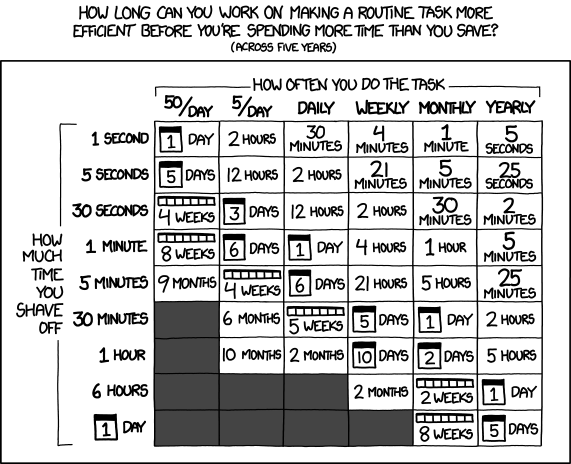
Not everything needs to scale Is It Worth The Time One of the most common fallacies programmers fall into is that we will jump to automating a solution before we stop and figure out how much time it would even save. In taking a slow improvement route to solve this problem for myself, I ve managed not to invest too much time5 in worrying about this but also achieved a meaningful improvement beyond my first approach of doing it all by hand.
  1. You could also add a line to /etc/crontab or drop a script into /etc/cron.monthly depending on your system.
  2. Why once a month? Mostly to avoid regular disruptions, but still be reasonably timely on updates.
  3. If you re looking to understand the cron time format I recommend crontab guru.
  4. In the long term I really should set up something like ansible to automatically push fleetwide changes like this but with fewer machines than fingers this seems like overkill.
  5. Of course by now writing about it, I ve probably doubled the amount of time I ve spent thinking about this topic but oh well

23 March 2024

Dirk Eddelbuettel: littler 0.3.20 on CRAN: Moar Features!

max-heap image The twentyfirst release of littler as a CRAN package landed on CRAN just now, following in the now eighteen year history (!!) as a package started by Jeff in 2006, and joined by me a few weeks later. littler is the first command-line interface for R as it predates Rscript. It allows for piping as well for shebang scripting via #!, uses command-line arguments more consistently and still starts faster. It also always loaded the methods package which Rscript only began to do in recent years. littler lives on Linux and Unix, has its difficulties on macOS due to yet-another-braindeadedness there (who ever thought case-insensitive filesystems as a default were a good idea?) and simply does not exist on Windows (yet the build system could be extended see RInside for an existence proof, and volunteers are welcome!). See the FAQ vignette on how to add it to your PATH. A few examples are highlighted at the Github repo:, as well as in the examples vignette. This release contains another fair number of small changes and improvements to some of the scripts I use daily to build or test packages, adds a new front-end ciw.r for the recently-released ciw package offering a CRAN Incoming Watcher , a new helper installDeps2.r (extending installDeps.r), a new doi-to-bib converter, allows a different temporary directory setup I find helpful, deals with one corner deployment use, and more. The full change description follows.

Changes in littler version 0.3.20 (2024-03-23)
  • Changes in examples scripts
    • New (dependency-free) helper installDeps2.r to install dependencies
    • Scripts rcc.r, tt.r, tttf.r, tttlr.r use env argument -S to set -t to r
    • tt.r can now fill in inst/tinytest if it is present
    • New script ciw.r wrapping new package ciw
    • tttf.t can now use devtools and its loadall
    • New script doi2bib.r to call the DOI converter REST service (following a skeet by Richard McElreath)
  • Changes in package
    • The CI setup uses checkout@v4 and the r-ci-setup action
    • The Suggests: is a little tighter as we do not list all packages optionally used in the the examples (as R does not check for it either)
    • The package load messag can account for the rare build of R under different architecture (Berwin Turlach in #117 closing #116)
    • In non-vanilla mode, the temporary directory initialization in re-run allowing for a non-standard temp dir via config settings

My CRANberries service provides a comparison to the previous release. Full details for the littler release are provided as usual at the ChangeLog page, and also on the package docs website. The code is available via the GitHub repo, from tarballs and now of course also from its CRAN page and via install.packages("littler"). Binary packages are available directly in Debian as well as (in a day or two) Ubuntu binaries at CRAN thanks to the tireless Michael Rutter. Comments and suggestions are welcome at the GitHub repo. If you like this or other open-source work I do, you can sponsor me at GitHub.

This post by Dirk Eddelbuettel originated on his Thinking inside the box blog. Please report excessive re-aggregation in third-party for-profit settings.

Bits from Debian: New Debian Developers and Maintainers (January and February 2024)

The following contributors got their Debian Developer accounts in the last two months: The following contributors were added as Debian Maintainers in the last two months: Congratulations!

Kentaro Hayashi: How about allocating more buildd resource for armel and armhf?

This article is cross-posting from grow-your-ideas. This is just an idea. salsa.debian.org

The problem According to Developer Machines [1], current buildd machines are like this:
  • armel: 4 buildd (4 for arm64/armhf/armel)
  • armhf: 7 buildd (4 for arm64/armhf/armel and 3 for armhf only)
[1] https://db.debian.org/machines.cgi In contrast to other buildd architectures, these instances are quite a few and it seems that it causes a shortage of buildd resourses. (e.g. during mass transition, give-back turn around time becomes longer and longer.)

Actual situation As you know, during 64bit time_t transition, many packages should be built, but it seems that +b1 or +bN build becomes slower. (I've hit BD-Uninstalled some times because of missing dependency rebuild) ref. https://qa.debian.org/dose/debcheck/unstable_main/index.html

Expected situation Allocate more buildd resources for armel and armhf. It is just an idea, but how about assigning some buildd as armel/armhf buildd? Above buildd is used only for arm64 buildd currently. Maybe there is some technical reason not suitable for armel/armhf buildd, but I don't know yet.
2024/03/24 UPDATE: arm-arm01,arm-arm03,arm-arm-04 has already assigned to armel/armhf buildd, so it is an invalid proposal. See https://buildd.debian.org/status/architecture.php?a=armhf&suite=sid&buildd=buildd_arm64-arm-arm-01, https://buildd.debian.org/status/architecture.php?a=armhf&suite=sid&buildd=buildd_arm64-arm-arm-03, https://buildd.debian.org/status/architecture.php?a=armhf&suite=sid&buildd=buildd_arm64-arm-arm-04

Additional information
  • arm64: 10 buildd (4 for arm64/armhf/armel, 6 for arm64 only)
  • amd64: 7 buildd (5 for amd64/i386 buildd)
  • riscv64: 9 buildd

Next.

Previous.