Debian security is pretty good, but there s always scope for improvement. Here are some ideas that I think could be used to improve things.
A security wizard , basically a set of scripts with support for plugins that will investigate your system and look for things that can be improved. It could give suggestions on LSMs that could be used, sysctl settings, lists of daemons running as root that possibly don t need root privs, etc. Plugins could be for different daemons, so there could be a plugin for Apache that looks for potential issues with Apache configuration. It wouldn t be possible to cover everything, but it would be possible to cover many common cases. It appears that we used to have a harden package to do some of these things which disappeared. It appears that the only remnant of that is the hardening-runtime package.
Kali Linux [1] is a distribution designed for penetration testing, I recently tried out many of it s features and I was very impressed. While I don t think that the aim should be to copy all Kali features into Debian there are probably some that are worthy of inclusion. Most Kali features run well in a VM, but the Wifi penetration testing tools need access to the hardware, so they could be a good candidate for inclusion in Debian (license permitting).
We have a Securing Debian Manual [2] that is really good. It s a little out of date and needs some contributions, it also needs to be better known.
The Security Management page of the Debian wiki [3] has links to a number of pages about improving system security. It needs some updates, it doesn t have a link to a page about SE Linux so there s some work for me to do there.
Can training help people? I would be happy to run some Debian SE Linux training sessions over Matrix or Jitsi. We can probably find people to offer training on other aspects of Linux security that are implemented in Debian if there is an audience. I don t think that I and other DDs (Debian Developers) can train everyone, but we could train people who then go on to run other training sessions and make the session notes etc available under the GPL.
There would also be some benefits to training other DDs as probably no-one has a good overview of all the security features that are supported.
Any other ideas? Feel free to comment here or start a thread on a public mailing list. If you start a mailing list discussion please email me or comment here with the URL if it s a list that I m not on so I can track it via the archives. This post was inspired by a discussion on a private list of a related topic. I think it s better to have a public discussion instead.
The first time I applied for grad school it was a bit of a lark. I was serious about it, I wanted to go, I had goals, and I am happy to be here now. However, it was a little fun. I took a white paper and crisped it up with the help of some friends who read it and provided comments. I wrote a personal statement, got some letters of recommendation, and generally felt pretty good about the process. It wasn t stressful.
The second time I applied to grad school it was a slog. For several weeks I gave up most of my free time to application writing and when I wasn t working on applications I thought about how I ought to be doing something about it. Applications are due while you re coming up on the end of your semester or end of the year push at work or both! There just isn t enough time for everything. I think even applying for grad school qualifies you to attend.
Here are some things I learned in the application process. Note, I haven t gotten in anywhere (yet), so we ll see how it pans out.
You have to do a lot of research.
This changes by field, school, and even individual faculty preference. Some possible mentors / advisors like to talk with prospective students ahead of time. On two of my applications I was explicitly asked who I spoke with in the department. On others I was asked to list faculty (in order of preference even!) that I would be interested in working with. Some schools requested in essays to list faculty. In general, it s considered important to explain why a particular school: what about that school attracts you? What resources do they have that you want to take advantage of? What research that they are doing interests you?
Faculty profiles and department websites are useful for this, but far from complete. A co-worker suggested I contact someone who, based on their profile, I shared no research interests with. However, we talked and it turns out we had things in common! In general, colleagues, peers, other academics, and friends were the best resource I had for investigating schools and potential faculty.
I also went to some Q&A sessions / office hours run by schools / departments / labs. Some really cool people wrote blog posts and / or Tweets soliciting grad students. These are great.
Sometimes the people you want to work with aren t taking grad students.
Most schools I looked at did not maintain lists of who is taking on grad students starting in the fall, but I think two did. Sometimes I contacted people and got back Sorry, not taking on anyone this year. Try $OtherProfessor. This was actually really helpful! But, it s a downer to learn you re not going to get to work with one of your academic heroes because the timing is wrong.
It s expensive and waivers might not help.
Most applications in the US cost about $100 (USD). In some fields it s recommended you apply to 8-10 schools. That s a lot of money. I think everywhere I applied had a waiver you could apply for, but I generally didn t qualify. Some waivers require you to submit days to weeks ahead of the deadline. Others require that you participate in certain professional organizations, student organizations, or live locally to the school. These might be less useful than you were hoping.
Everyone says your writing sample matters, but only five people will read it.
This is what I was told anyway. I was told that my writing sample (which was 20 pages!) will probably only be read by faculty who are thinking of taking me on as an advisee. Someone else might pick it up and read it out of curiosity. I was told stories about how the right writing sample turned eh, maybe candidates into enthusiastic yeses.
Everyone says letters of recommendation matter and it s extremely frustrating.
My recommenders are all amazing people I have so much respect and admiration for it s wild. They re people I want to be like in my academic career. They also all got their letters in the day they were due. I had a moment where I genuinely thought I was just not going to go to grad school because of how close the deadline was.
I ve been told that a great letter matters a lot, but meh letters don t hold you back as much as it sounds like they will. I ve been told that where a recommender is affiliated matters a lot.
My personal statement radically changed based on school / program.
Two of the schools I applied to had very specific requirements for their personal statements. Other schools wanted me to mostly talk about my research interests. One school had a 350 word personal statement, but a 1,000 word research statement. I wrote a research statement and a personal statement and then used them as the basis for what I submitted to different schools. Each application ended up with something pretty different, and not just because I talked about why each program was exciting to me in different ways.
I also applied to different kinds of programs, and presented myself a differently depending on the program s focus and the faculty. For the more social science heavy programs I emphasized the empirical research I did, while for others I leaned more heavily on my philosophical background and theoretical interests.
Oh, also, I was told to not use contractions. Getting rid of them in all my materials was super tedious.
Diversity Statements are becoming more common.
A few of my schools had diversity statements either required or optional. The purpose of these, I was told, is not to play some sort of marginalization Olympics, but to show that you can talk about diversity (and equity and inclusion, etc) without being offensive. It s just as valid to write about your own disability as the disability of a parent (though, ask their permission first).
Triple check what s required.
I made spreadsheets about what each school required. For example, some people wanted official transcripts, some unofficial. Some places required essays rather than generic personal statements, and I needed to build in enough time to manage that.
Ask your friends to help.
I hate asking for help, but applying for grad school made me shameless. I asked anyone I could to read over materials, proofread, or just talk with me about what I was writing. People picked up on things like you used the word technology five times in this one sentence and it looks real weird.
Some schools have projects where current grad students will even look over materials!
As a follow on to a previous blog entry of mine, Free and Open, I feel it
worthwhile to do my bit to dismantle the pseudo-science and over
simplification in the idea that gender is binary at a biological level.
TL;DR: Science simply does not support binary sexes or binary genders.
Truth is a bit more complicated.
There is certainty and there are binary answers in mathematics. Things
get less definitive in physics, certainly as soon as quantum is
broached. Processes become more of an equilibrium between states in
chemistry, never wholly one or the other. Yes, there is the oddity of
absolute zero but no experiment has yet achieved that fully. It is
accurate to describe physics as a development of applied mathematics
and to view chemistry as applied physics. Biology, at the biochemical
level, is applied chemistry. The sciences build on each other, "on the
shoulders of giants", but at each level, some certainty is lost, some
amount of uncertainty is expanded and measurements become
probabilities, proportions and percentages.
Biology is dependent on biochemistry - chemistry is how a biological
change results in a different organism. Physics is how that chemical
change occurs - temperature, pressure and physical states are inherent
to all chemical changes.
Outside laboratory constraints, few chemical reactions, especially in
organic chemistry, produce one and only one result from two or more
known reagents.
In biology, everyone is familiar with genetic mutations but a genetic
mutation only happens because a biochemical reaction (hydrogen bonding
of nucleobases) does not always produce the expected result. Every cell
division, every viral infection, there is a finite probability that a
change will occur. It might be a small number but it is never zero and
can never be dismissed. This is obvious in the current Covid pandemic -
genetic mutations result in new variants. Some variants are inviable,
some variants produce no net change in the way that the viral particles
infect adjacent cells. Sometimes, a mutation happens that changes
everything. These mutations are not mistakes - these are simply changes
with undetermined outcomes. Genetic changes are the foundation of
biodiversity and variety is what allows lifeforms of all kinds to
survive changes in environmental factors and/or changes in prevalent
diseases.
It is precisely the same in humans, particularly in one of the
principle spheres of human life that involves replicating genetic
material - the creation of gametes for sexual reproduction. Every
single time any DNA is copied, there is a finite chance that a
different base will be put in place compared to the original. Copying
genetic material is therefore non-binary. Given precisely the same
initial conditions, the result is not always predictable and the range
of how the results vary from one to another increases with every
iteration.
Let me stress that - at the molecular level, no genetic operation in
any biological lifeform has a truly binary result. Repeat that
operation sufficiently often and an unexpected result WILL inevitably
occur. It is a mathematical certainty that genetic changes will arise
by attempting precisely the same genetic operation enough times.
Genetic changes are fundamental to how lifeforms survive changing
conditions. Life would likely have died out a long time ago on this
planet if every genetic operation was perfect. Diversity is life.
Similarity leads to extinction.
Viral load is interesting at this point. Someone can be infected with a
virus, including coronavirus, by encountering a small number of viral
particles. Some viruses, it may be a few hundred, some viruses may need
a few thousand particles to infect a vulnerable host. But here's the
thing, for that host to be at risk of infecting another host, the virus
needs the host to produce billions upon billions of copies of the virus
by taking over the genetic machinery within a huge number of cells in
the host. This, as is accepted with Covid, is before the virus has been
copied enough times to produce symptoms in the host. Before those
symptoms become serious, billions more copies will be made. The numbers
become unimaginable - and that is within a single host, let alone the
265 million (and counting) hosts in the current Covid19 pandemic. It's
also no wonder that viral infections cause tiredness, the infection is
diverting huge resources to propagating itself - before even
considering the activity of the immune system.
It is idiocy of the highest order to expect all those copies to be
identical. The rise of variants is inevitable - indeed essential - in
all spheres of biology. A single viral particle is absolutely no threat
of any kind - it must first get inside and then copy the genetic
information in a host cell. This is where the complexity lies in the
definition of life itself. A virus can be considered a lifeform but it
is only able to reproduce using another, more complex, lifeform. In
truth, a viral particle does not and cannot mutate. The infected host
mutates the virus. The longer it takes that host to clear the
infection, the more mutations that host will create and then
potentially spread to others.
Now apply this to the creation of gametes in humans. With seven billion
humans, the amount of copying of genetic material is not as large as
the pandemic but it is still easy for everyone to understand that
children do not merely combine the DNA of both parents. Changes happen.
Human sexual reproduction is not as simple as 1 + 1 = 2. Sometimes, the
copying of the genetic material produces an unexpected result. Sexual
reproduction itself is non-binary. Sexual reproduction is not easy or
simple for lifeforms to adopt - the diversity which results from the
non-binary operations are exactly why so many lifeforms invest so much
energy in reproducing in this way.
Whilst many genetic changes in humans will be benign or beneficial, I d
like to take an example of a genetic disorder that results from the
non-binary nature of sex. Humans can be born with the XY phenotype -
i.e. at a genetic level, the individual has the same combination of
chromosomes as another XY individual but there are changes within the
genes in those chromosomes. We accept this, some children of blonde
parents do not have blonde hair, etc. There are also genetic changes
where an XY phenotype is not binary. Some people, who at a genetic
level would be almost identical to another person who is genetically
male, have a genetic mutation which makes it impossible for the cells
of that individual to respond to androgens (testosterone). (See
Androgen insensitivity syndrome). Genetically, that individual has an X
and a Y chromosome, just like many other individuals. However, due to a
change in how the genes on those chromosomes were copied, that
individual is biologically incapable of constructing the secondary
sexual characteristics of a male. At a genetic level, the individual
has the XY phenotype of a male. At the physical level, the individual
has all the sexual characteristics of a female and none of the sexual
characteristics of a male. The gender of that individual is not binary.
Treatment is centred on supporting the individual and minimising some
risks from the inactive genes on the Y chromosome.
Human sexual reproduction is non-binary. The results of any sexual
reproduction in humans will not always produce the binary option of
male or female. It is a lie to claim that human gender is binary. The
science is in plain view and cannot be ignored.
Identifying as non-binary is not a "cop out" - it can be a biological,
genetic, scientific fact.
Human sexuality and gender are malleable. Where genetic changes result
in symptoms, these can be ameliorated by treatment with human sex
hormones, like oestrogen and testosterone. There are valid medical uses
for anabolic steroids and hormone replacement therapies to help
individuals who, at a genetic level, have non-binary gender. These
treatments can help align the physical outer signs with the personality
and identity of the individual, whether with or without surgery. It is
unacceptable to abandon such people to suffer life long discrimination
and harassment by imposing a binary definition that has no basis in
science.
When a human being has an XY phenotype, that human being is not
necessarily male. That individual will be on a spectrum from female
(left unaffected by sex hormones in the womb, the foetus will be
female, even with an X and a Y chromosome), to various degrees of male.
So, at a genetic, biological level, it is a scientific fact that human
beings do not have binary gender. There is no evidence that this is new
to the modern era, there is no scientific basis for thinking that
copying of genetic material was somehow perfectly reliable in earlier
history, or that such mutations are specific to homo sapiens. Changes
in genetic material provide the diversity to fight infections and adapt
to changing environmental factors. Species have and will continue to go
extinct if this diversity is absent.
With that out of the way, it is no longer a stretch to encompass other
aspects of human non-binary genders beyond the known genetic syndromes
based on changes in the XY phenotype. Science has not uncovered all of
the ways that genes affect personality, behaviour, or identity.
How other, less studied, genetic changes affect the much more subtle
human facets, especially anything to do with consciousness, identity,
personality, sexuality and behaviour, is guesswork. All of these facets
can and likely are being affected by genetic factors as well as
environmental factors in an endless range of permutations. Personality
traits are a beautiful and largely unknowable blend of genes and
environment. Genetic information has a finite probability of changes at
each and every iteration. Environmental factors are more akin to chaos
theory. The idea that the results will fit into binary constructs is
laughable.
Human society puts huge emphasis on societal norms. Individuals who do
not fit into those norms suffer discrimination. The norms themselves
have evolved over time as a response to various influences on human
civilisation but most are not based on science. It is up to all humans
in that society to call out discrimination, to call for changes in the
accepted norms and support those who are marginalised. It is a
precarious balance, one that humans rarely get right, but it must be
based on an acceptance that variation is the natural state. Artificial
constraints, like binary genders, must be dismantled because human
beings and human sexual reproduction are not binary.
To those who think, "well it is for 99%", think again about Covid. 99%
(or closer to 98%) of infected humans recover without notable after
effects. That has still crippled the nations of the globe and humbled
all those who tried to deny it. Five million human beings are dead
because "most infected people recover".
Just because something only affects a proportion of human beings does
not invalidate the suffering of those humans and the discrimination
that those humans will face.
Societal norms are not necessarily correct. Religious and other
influences typically obscure and ignore scientific fact and undermine
human kindness.
The scientific truth of life on this planet is that gender is not
binary.
The more complex the lifeform, the more factors will affect where on
the spectrum any one individual will appear.
Just because we do not yet fully understand how genes affect human
personality and sexuality, does not invalidate the science that
variation is the natural order.
My previous blog about diversity is not just about male vs female, one
nationality vs another, one ethnicity compared to another. Diversity is
diverse. Diversity requires accepting that every facet of humanity is
subject to variation. That leads to tension at times, it is inevitable.
Tension against societal norms, tension against discrimination, tension
around those individuals who would abuse the tolerance of others for
their own gratification or from their own ignorance.
None of us are perfect, none of us have any of this fully sorted and
all of us will make mistakes. Personally, I try to respect those around
me. I will use whatever pronouns and other conventions that the person
requests, from their perspective and not mine. To do otherwise is to
deny the natural order and to deny the science.
Celebrate all diversity, it is the very stuff of life.
Final comments:
The discussions around (typically female) bathroom facilities often
miss the point. The concern is not about individuals who describe
themselves as non-binary. The concern is about individuals who are
fully certain of their own sexuality and who act as sexual predators
for their own gratification. These people are acting out a lie for
their own ends. The problem people are the predators, so stop blaming
the victims who are just as at risk as anyone else who identifies as
female. Maybe the best people to spot such predators are those who are
non-binary, who have had to pretend to fit into societal norms. Just as
travel can be a good antidote to racism, openness and discussion can be
a tool to undermine the lies of sexual predators and reassure those who
are justifiably fearful. There can never be a biological binary test of
gender, there can never be any scientific justification for binary
division of facilities.
Humanity itself is not binary, even life itself has blurry borders
around comas, suspended animation and locked-in syndrome. Legal
definitions of human death vary around the world.
The only common thread I have ever found is: Be kind to each other.
If you find anything above objectionable, then I can only suggest that
you reconsider the science and learn to be kind to your fellow humans.
None of us are getting out of this alive.
My degree is in pharmaceutical sciences and I practised community and
hospital pharmacy for 20 years before moving into programming. I have
direct experience of supporting people who were prescribed hormones to
transition their physical characteristics to match their personal
identity. I had a Christian upbringing but my work showed me that those
religious norms were incompatible with being kind to others, so I
rejected religion and I now consider myself a secular humanist.
Advent of Code 2021Advent of Code, for those not in the know,
is a yearly Advent calendar (since 2015) of coding puzzles many people
participate in for a plenary of reasons ranging from speed coding to code
golf with stops at learning a new language or practicing already known
ones.
I usually write boring C++, but any language and then some can be used.
There are reports of people implementing it in hardware, solving them by
hand on paper or using Microsoft Excel
so, after solving a puzzle the easy way yesterday, this time
I thought: CHALLENGE ACCEPTED! as I somehow remembered an old 2008
article about solving Sudoku with aptitude
(Daniel Burrows via archive.org as the blog is long gone)
and the good same old a package management system that can solve [puzzles] based on package dependency rules is not something that I think would be useful or worth having (Russell Coker).
Day 8 has a rather lengthy
problem description and can reasonably be approached in a bunch of
different way. One unreasonable approach might be to massage the
problem description into Debian packages and let apt help me solve the
problem (specifically Part 2, which you unlock by solving Part 1. You
can do that now, I will wait here.)
Be warned: I am spoiling Part 2 in the following, so solve it yourself
first if you are interested.
I will try to be reasonable consistent in naming things in the following
and so have chosen: The input we get are lines like acedgfb cdfbe gcdfa fbcad dab cefabd cdfgeb eafb cagedb ab cdfeb fcadb cdfeb cdbaf.
The letters are wires mixed up and connected to the segments of the
displays: A group of these letters is hence a digit (the first 10)
which represent one of the digits 0 to 9 and (after the pipe) the four
displays which match (after sorting) one of the digits which means
this display shows this digit. We are interested in which digits are
displayed to solve the puzzle. To help us we also know which segments
form which digit, we just don't know the wiring in the back.
So we should identify which wire maps to which segment!
We are introducing the packages wire-X-connects-to-Y for this which
each provide & conflict1 with the virtual packages segment-Y and
wire-X-connects.
The later ensures that for a given wire we can only pick one segment and
the former ensures that not multiple wires map onto the same segment.
As an example: wire a's possible association with segment b is
described as:
Note that we do not know if this is true! We generate packages for
all possible (and then some) combinations and hope dependency resolution
will solve the problem for us. So don't worry, the hard part will be
done by apt, we just have to provide all (im)possibilities!
What we need now is to translate the 10 digits (and 4 outputs) from
something like acedgfb into digit-0-is-eight and not, say
digit-0-is-one. A clever solution might realize that a one consists
only of two segments so a digit wiring up seven segments can not be
a 1 (and must be 8 instead), but again we aren't here to be clever:
We want apt to figure that out for us! So what we do is simply making
every digit-0-is-N (im)possible choice available as a package and
apply constraints: A given digit-N can only display one number and
each N is unique as digit so for both we deploy Provides
& Conflicts again.
We also need to reason about the segments in the digits: Each of the
digit packages gets Depends on wire-X-connects-to-Y where X is each
possible wire (e.g. acedgfb) and Y each segment forming the digit
(e.g. cf for one). The different choices for X are or'ed together,
so that either of them satisfies the Y.
We know something else too through: The segments which are not used by
the digit can not be wired to any of the Xs. We model this with
Conflicts on wire-X-connects-to-Y.
As an example: If digit-0s acedgfb would be displaying a one
(remember, it can't) the following package would be installable:
Repeat such stanzas for all 10 possible digits for digit-0 and then
repeat this for all the other nine digit-N. We produce pretty much the
same stanzas for display-0(-is-one), just that we omit the second
Provides & Conflicts from above (digit-is-one) as in the display
digits can be repeated. The rest is the same (modulo using display
instead of digit as name of course).
Lastly we create a package dubbed solution which depends on all 10
digit-N and 4 display-N all of them virtual packages apt will have
to choose an installable provider from and we are nearly done!
The resulting Packages file2 we can give to apt while requesting to
install the package solution and it will spit out not only the display
values we are interested in but also which number each digit represents
and which wire is connected to which segment. Nifty!
$ ./skip-aoc 'acedgfb cdfbe gcdfa fbcad dab cefabd cdfgeb eafb cagedb ab   cdfeb fcadb cdfeb cdbaf'
[ ]
The following additional packages will be installed:
  digit-0-is-eight digit-1-is-five digit-2-is-two digit-3-is-three
  digit-4-is-seven digit-5-is-nine digit-6-is-six digit-7-is-four
  digit-8-is-zero digit-9-is-one display-1-is-five display-2-is-three
  display-3-is-five display-4-is-three wire-a-connects-to-c
  wire-b-connects-to-f wire-c-connects-to-g wire-d-connects-to-a
  wire-e-connects-to-b wire-f-connects-to-d wire-g-connects-to-e
[ ]
0 upgraded, 22 newly installed, 0 to remove and 0 not upgraded.
We are only interested in the numbers on the display through, so grepping
the apt output (-V is our friend here) a bit should let us end up with
what we need as calculating3 is (unsurprisingly) not a strong suit of
our package relationship language so we need a few shell commands to
help us with the rest.
$ ./skip-aoc 'acedgfb cdfbe gcdfa fbcad dab cefabd cdfgeb eafb cagedb ab   cdfeb fcadb cdfeb cdbaf' -qq
5353
I have written the skip-aoc script as a testcase for apt,
so to run it you need to place it in
/path/to/source/of/apt/test/integration and built apt first, but that
is only due to my laziness. We could write a standalone script
interfacing with the system installed apt directly and in any apt
version since
~2011.
To hand in the solution for the puzzle we just need to run this on each
line of the input (~200 lines) and add all numbers together. In other
words: Behold this beautiful shell one-liner:
parallel -I ' ' ./skip-aoc ' ' -qq < input.txt paste -s -d'+' - bc
(You may want to run parallel with -P to properly grill your CPU as
that process can take a while otherwise and it still does anyhow as
I haven't optimized it at all the testing framework does a lot of
pointless things wasting time here, but we aren't aiming for the
leaderboard so )
That might or even likely will fail through as I have so far omitted a
not unimportant detail: The default APT resolver is not able to solve
this puzzle with the given problem description we need another solver!
Thankfully that is as easy as installing apt-cudf (and with it aspcud)
which the script is using via --solver aspcud to make apt hand over the
puzzle to a "proper" solver (or better: A solver who is supposed to be
good at "answering set" questions). The buildds are using this for
experimental and/or backports builds and also for installability checks
via dose3 btw, so you might have encountered it before.
Be careful however: Just because aspcud can solve this puzzle doesn't
mean it is a good default resolver for your day to day apt. One of the
reasons the default resolver has such a hard time solving this here is
that or-groups have usually an order in which the first is preferred over
every later option and so fort. This is of no concern here as all these
alternatives will collapse to a single solution anyhow, but if there are
multiple viable solutions (which is often the case) picking the "wrong"
alternative can have bad consequences. A classic example would be
exim4 postfix nullmailer. They are all MTAs
but behave very different. The non-default solvers also tend to lack
certain features like keeping track of auto-installed packages or
installing Recommends/Suggests. That said, Julian is working on
another solver
as I write this which might deal with more of these issues.
And lastly: I am also relatively sure that with a bit of massaging the
default resolver could be made to understand the problem, but I can't
play all day with this maybe some other day.
Disclaimer: Originally posted in the daily megathread
on reddit, the version here is just slightly better understandable as
I have hopefully renamed all the packages to have more conventional
names and tried to explain what I am actually doing.
No cows were harmed in this improved version, either.
If you would upload those packages somewhere, it would be good
style to add Replaces as well, but it is of minor concern for apt
so I am leaving them out here for readability.
We have generated 49 wires, 100 digits, 40 display and 1 solution
package for a grant total of 190 packages. We are also making use of
a few purely virtual ones, but that doesn't add up to many packages
in total. So few packages are practically childs play for apt given it
usually deals with thousand times more. The instability for those
packages tends to be a lot better through as only 22 of 190 packages
we generated can (and will) be installed. Britney will hate you if
your uploads to Debian unstable are even remotely as bad as this.
What we could do is introduce 10.000 packages which denote every
possible display value from 0000 to 9999. We would then need to
duplicate our 10.190 packages for each line (namespace them) and then
add a bit more than a million packages with the correct dependencies
for summing up the individual packages for apt to be able to display
the final result all by itself. That would take a while through as at
that point we are looking at working with ~22 million packages with
a gazillion amount of dependencies probably overworking every solver
we would throw at it a bit of shell glue seems the better option for
now.
This article was written by David Kalnischkies on apt-get a life and republished here by pulling it from a syndication feed. You should check there for updates and more articles about apt and EDSP.
The redhat talk I gave at UK Systems '21 was entitled "Java in a
Container World: What we've done and where we're going". The slides (with
notes) for it are available:
Last week I attended the UK Systems Research
2021 conference in County Durham, my first
conference in nearly two years (since FOSDEM 2020,
right on the cusp of the Pandemic). The Systems conference community
is very pleasant and welcoming and so when I heard it was going to
take place "physically" again this year I was so keen to attend I
decided to hedge my bets and submit two talk proposals. I wasn't
expecting them both to be accepted
As well as the regular talks (more on those in another post) there is
a tradition for people to give short, impromptu lightning talks after
dinner on the second night. I've given two of these before, and I'd
been considering whether to offer to one this time or not, but with
two talks to deliver (and finish writing) I wasn't sure. Usually
people talk about something interesting that they have been doing
besides their research or day-jobs, but the last two years have been
somewhat difficult and I didn't really think I had a topic to talk
about. Then I wondered if that was a topic in itself
During the first day of the conference (and especially one I'd got
past one of my talks) I started to outline a lightning talk idea and
it seemed to come out well enough that I thought I'd give it a go.
Unusually I therefore had something written down and I was surprised
how well it was received, so I thought I'd share it. Here it is:
I was anticipating the lightning talks and being cajoled into talking
about something. I've done it twice before. So I've been racking my
brains to figure out if I've done anything interesting enough to talk
about.
in 2018 I talked about some hack I'd made to the classic computer game
Doom from 1993. I've done several hacks to Doom that I could probably
talk about except I've become a bit uncomfortable about increasingly
being thought of as "that doom guy". I'd been reflecting on why it was
that I continued to mess about with that game in the first place and I
realised it was a form of expression: I was treating Doom like a canvas.
I've spent most of my career thinking about what I do in the frame of
either science or engineering. I suffer from the creative urge and I've
often expressed (and sated) that through my work. And that's possible
because there's a craft in what we do.
In 2019 I talked about a project I'd embarked on to resurrect my
childhood computer, a Commodore Amiga 500, in order to rescue my
childhood drawings and digital paintings. (There's the artistic thing
again). I'd achieved that and I have ambitions to do some more Amiga
stuff but again that's a work in progress and there's nothing much to
talk about.
In recent years I've been thinking more and more about art and became
interested in the works and writings of people like Grayson Perry,
Laurie Anderson and Brian Eno. I first learned about Eno through his
music but he's also a visual artist. and a music producer. As a producer
in the 70s he co-invented a system to try and break out of writer's
block called "oblique strategies": A deck of cards with oblique
suggestions written on them. When you're stuck, you pull a card and it
might help you to reframe what you are working on and think about it in
a completely different way.
I love this idea and I think we should use more things like that in
software engineering at least.
So back to casting about for something to talk about. What have I been
doing in the last couple of years? Frankly, surviving - I've just about
managed to keep doing my day job, and keep working on the PhD, at home
with two young kids and home schooling and the rest of it. Which is an
achievement but makes for a boring lightning talk. But I'd like to say
that for anyone here who might have been worrying similarly: I think
surviving is more than enough.
I'll close on the subject of thinking like an artist and not an
engineer. I brought some of the Oblique Strategies deck with me and I
thought I'd draw a card to perhaps help you out of a creative dilemma if
you're in one. And I kid you not, the first card I drew was this one:
On the road to AppStream 1.0, a lot of items from the long todo list have been done so far only one major feature is remaining, external release descriptions, which is a tricky one to implement and specify. For AppStream 1.0 it needs to be present or be rejected though, as it would be a major change in how release data is handled in AppStream.
Besides 1.0 preparation work, the recent 0.15 release and the releases before it come with their very own large set of changes, that are worth a look and may be interesting for your application to support. But first, for a change that affects the implementation and not the XML format:
1. Completely rewritten caching code
Keeping all AppStream data in memory is expensive, especially if the data is huge (as on Debian and Ubuntu with their large repositories generated from desktop-entry files as well) and if processes using AppStream are long-running. The latter is more and more the case, not only does GNOME Software run in the background, KDE uses AppStream in KRunner and Phosh will use it too for reading form factor information. Therefore, AppStream via libappstream provides an on-disk cache that is memory-mapped, so data is only consuming RAM if we are actually doing anything with it.
Previously, AppStream used an LMDB-based cache in the background, with indices for fulltext search and other common search operations. This was a very fast solution, but also came with limitations, LMDB s maximum key size of 511 bytes became a problem quite often, adjusting the maximum database size (since it has to be set at opening time) was annoyingly tricky, and building dedicated indices for each search operation was very inflexible. In addition to that, the caching code was changed multiple times in the past to allow system-wide metadata to be cached per-user, as some distributions didn t (want to) build a system-wide cache and therefore ran into performance issues when XML was parsed repeatedly for generation of a temporary cache. In addition to all that, the cache was designed around the concept of one cache for data from all sources , which meant that we had to rebuild it entirely if just a small aspect changed, like a MetaInfo file being added to /usr/share/metainfo, which was very inefficient.
To shorten a long story, the old caching code was rewritten with the new concepts of caches not necessarily being system-wide and caches existing for more fine-grained groups of files in mind. The new caching code uses Richard Hughes excellent libxmlb internally for memory-mapped data storage. Unlike LMDB, libxmlb knows about the XML document model, so queries can be much more powerful and we do not need to build indices manually. The library is also already used by GNOME Software and fwupd for parsing of (refined) AppStream metadata, so it works quite well for that usecase. As a result, search queries via libappstream are now a bit slower (very much depends on the query, roughly 20% on average), but can be mmuch more powerful. The caching code is a lot more robust, which should speed up startup time of applications. And in addition to all of that, the AsPool class has gained a flag to allow it to monitor AppStream source data for changes and refresh the cache fully automatically and transparently in the background.
All software written against the previous version of the libappstream library should continue to work with the new caching code, but to make use of some of the new features, software using it may need adjustments. A lot of methods have been deprecated too now.
2. Experimental compose support
Compiling MetaInfo and other metadata into AppStream collection metadata, extracting icons, language information, refining data and caching media is an involved process. The appstream-generator tool does this very well for data from Linux distribution sources, but the tool is also pretty heavyweight with lots of knobs to adjust, an underlying database and a complex algorithm for icon extraction. Embedding it into other tools via anything else but its command-line API is also not easy (due to D s GC initialization, and because it was never written with that feature in mind). Sometimes a simpler tool is all you need, so the libappstream-compose library as well as appstreamcli compose are being developed at the moment. The library contains building blocks for developing a tool like appstream-generator while the cli tool allows to simply extract metadata from any directory tree, which can be used by e.g. Flatpak. For this to work well, a lot of appstream-generator s D code is translated into plain C, so the implementation stays identical but the language changes.
Ultimately, the generator tool will use libappstream-compose for any general data refinement, and only implement things necessary to extract data from the archive of distributions. New applications (e.g. for new bundling systems and other purposes) can then use the same building blocks to implement new data generators similar to appstream-generator with ease, sharing much of the code that would be identical between implementations anyway.
2. Supporting user input controls
Want to advertise that your application supports touch input? Keyboard input? Has support for graphics tablets? Gamepads? Sure, nothing is easier than that with the new control relation item and supports relation kind (since 0.12.11 / 0.15.0, details):
3. Defining minimum display size requirements
Some applications are unusable below a certain window size, so you do not want to display them in a software center that is running on a device with a small screen, like a phone. In order to encode this information in a flexible way, AppStream now contains a display_length relation item to require or recommend a minimum (or maximum) display size that the described GUI application can work with. For example:
This will make the application require a display length greater or equal to 300 logical pixels. A logical pixel (also device independent pixel) is the amount of pixels that the application can draw in one direction. Since screens, especially phone screens but also screens on a desktop, can be rotated, the display_length value will be checked against the longest edge of a display by default (by explicitly specifying the shorter edge, this can be changed).
This feature is available since 0.13.0, details. See also Tobias Bernard s blog entry on this topic.
4. Tags
This is a feature that was originally requested for the LVFS/fwupd, but one of the great things about AppStream is that we can take very project-specific ideas and generalize them so something comes out of them that is useful for many. The new tags tag allows people to tag components with an arbitrary namespaced string. This can be useful for project-internal organization of applications, as well as to convey certain additional properties to a software center, e.g. an application could mark itself as featured in a specific software center only. Metadata generators may also add their own tags to components to improve organization. AppStream gives no recommendations as to how these tags are to be interpreted except for them being a strictly optional feature. So any meaning is something clients and metadata authors need to negotiate. It therefore is a more specialized usecase of the already existing custom tag, and I expect it to be primarily useful within larger organizations that produce a lot of software components that need sorting. For example:
This feature is available since 0.15.0, details.
5. MetaInfo Creator changes
The MetaInfo Creator (source) tool is a very simple web application that provides you with a form to fill out and will then generate MetaInfo XML to add to your project after you have answered all of its questions. It is an easy way for developers to add the required metadata without having to read the specification or any guides at all.
Recently, I added support for the new control and display_length tags, resolved a few minor issues and also added a button to instantly copy the generated output to clipboard so people can paste it into their project. If you want to create a new MetaInfo file, this tool is the best way to do it!
The creator tool will also not transfer any data out of your webbrowser, it is strictly a client-side application.
And that is about it for the most notable changes in AppStream land! Of course there is a lot more, additional tags for the LVFS and content rating have been added, lots of bugs have been squashed, the documentation has been refined a lot and the library has gained a lot of new API to make building software centers easier. Still, there is a lot to do and quite a few open feature requests too. Onwards to 1.0!
This post is part of a series called "PACKRAT". If this is the first post
you've found, it'd be worth reading the
intro post first and then looking over
all posts in the series.
In the last post, we left off at being able to send and recieve PACKRAT frames
to and from devices. Since we can transport IPv4 packets over the network,
let s go ahead and see if we can read/write
Ethernet frames from a Linux network
interface, and on the backend, read and write PACKRAT frames over the air.
This has the benifit of continuing to allow Linux userspace tools to work (like
cURL, as we ll try!), which means we don t have to do a lot of work to
implement higher level protocols or tactics to get a connection established
over the link.
Given that this post is less RF and more Linuxy, I m going to include more code
snippits than in prior posts, and those snippits are closer to runable Go, but
still not complete examples. There s also a lot of different ways to do this,
I ve just picked the easiest one for me to implement and debug given my
existing tooling for you, you may find another approach easier to implement!
Again, deviation here is very welcome, and since this segment is the least
RF centric post in the series, the pace and tone is going to feel different.
If you feel lost here, that s OK. This isn t the most important part of
the series, and is mostly here to give a concrete ending to the story arc.
Any way you want to finish your own journy is the best way for you to finish
it!
Implement Ethernet conversion code
This assumes an importable package with a Frame struct, which we can use to
convert a Frame to/from Ethernet. Given that the PACKRAT frame has a field that
Ethernet doesn t (namely, Callsign), that will need to be explicitly passed
in when turning an Ethernet frame into a PACKRAT Frame.
...// ToPackrat will create a packrat frame from an Ethernet frame.
funcToPackrat(callsign [8]byte, frame*ethernet.Frame) (*packrat.Frame, error)
varframeTypepackrat.FrameTypeswitchframe.EtherTypecaseethernet.EtherTypeIPv4:
frameType = packrat.FrameTypeIPv4default:
returnnil, fmt.Errorf("ethernet: unsupported ethernet type %x", frame.EtherType)
return&packrat.FrameDestination: frame.Destination,
Source: frame.Source,
Type: frameType,
Callsign: callsign,
Payload: frame.Payload,
, nil// FromPackrat will create an Ethernet frame from a Packrat frame.
funcFromPackrat(frame*packrat.Frame) (*ethernet.Frame, error)
varetherTypeethernet.EtherTypeswitchframe.Typecasepackrat.FrameTypeRaw:
returnnil, fmt.Errorf("ethernet: unsupported packrat type 'raw'")
casepackrat.FrameTypeIPv4:
etherType = ethernet.EtherTypeIPv4default:
returnnil, fmt.Errorf("ethernet: unknown packrat type %x", frame.Type)
// We lose the Callsign here, which is sad.
returnðernet.FrameDestination: frame.Destination,
Source: frame.Source,
EtherType: etherType,
Payload: frame.Payload,
, nil
Our helpers, ToPackrat and FromPackrat can now be used to transmorgify
PACKRAT into Ethernet, or Ethernet into PACKRAT. Let s put them into use!
Implement a TAP interface
On Linux, the networking stack can be exposed to userland using TUN or
TAP interfaces. TUN devices allow a
userspace program to read and write data at the Layer 3 / IP layer. TAP devices
allow a userspace program to read and write data at the Layer 2 Data Link /
Ethernet layer. Writing data at Layer 2 is what we want to do, since we re
looking to transform our Layer 2 into Ethernet s Layer 2 Frames. Our first job
here is to create the actual TAP interface, set the MAC address, and set the IP
range to our pre-coordinated IP range.
...import (
"net""github.com/mdlayher/ethernet""github.com/songgao/water""github.com/vishvananda/netlink"
)
...config:=water.ConfigDeviceType: water.TAPconfig.Name = "rat0"iface, err:=water.New(config)
...netIface, err:=netlink.LinkByName("rat0")
...// Pick a range here that works for you!
//
// For my local network, I'm using some IPs
// that AMPR (ampr.org) was nice enough to
// allocate to me for ham radio use. Thanks,
// AMPR!
//
// Let's just use 10.* here, though.
//
ip, cidr, err:=net.ParseCIDR("10.0.0.1/24")
...cidr.IP = iperr = netlink.AddrAdd(netIface, &netlink.AddrIPNet: cidr,
Peer: cidr,
)
...// Add all our neighbors to the ARP table
for_, neighbor:=rangeneighborsnetlink.NeighAdd(&netlink.NeighLinkIndex: netIface.Attrs().Index,
Type: netlink.FAMILY_V4,
State: netlink.NUD_PERMANENT,
IP: neighbor.IP,
HardwareAddr: neighbor.MAC,
)
// Pick a MAC that is globally unique here, this is
// just used as an example!
addr, err:=net.ParseMAC("FA:DE:DC:AB:LE:01")
...netlink.LinkSetHardwareAddr(netIface, addr)
...err = netlink.LinkSetUp(netIface)
varframe = ðernet.Framevarbuf = make([]byte, 1500)
forn, err:=iface.Read(buf)
...err = frame.UnmarshalBinary(buf[:n])
...// process frame here (to come)
...
Now that our network stack can resolve an IP to a MAC Address (via ip neigh
according to our pre-defined neighbors), and send that IP packet to our daemon,
it s now on us to send IPv4 data over the airwaves. Here, we re going to take
packets coming in from our TAP interface, and marshal the Ethernet frame into a
PACKRAT Frame and transmit it. As with the rest of the RF code, we ll leave
that up to the implementer, of course, using what was built during Part 2:
Transmitting BPSK symbols and Part 4: Framing
data.
...for// continued from above
n, err:=iface.Read(buf)
...err = frame.UnmarshalBinary(buf[:n])
...switchframe.EtherTypecase0x0800:
// ipv4 packet
pack, err:=ToPackrat(
// Add my callsign to all Frames, for now
[8]byte'K', '3', 'X', 'E', 'C' ,
frame,
)
...err = transmitPacket(pack)
......
Now that we have transmitting covered, let s go ahead and handle the recieve
path here. We re going to listen on frequency using the code built in
Part 3: Receiving BPSK symbols and
Part 4: Framing data. The Frames we decode from
the airwaves are expected to come back from the call
packratReader.Next in the code below, and the exact way that works
is up to the implementer.
...for// pull the next packrat frame from
// the symbol stream as we did in the
// last post
packet, err:=packratReader.Next()
...// check for CRC errors and drop invalid
// packets
err = packet.Check()
...ifbytes.Equal(packet.Source, addr)
// if we've heard ourself transmitting
// let's avoid looping back
continue// create an ethernet frame
frame, err:=FromPackrat(packet)
...buf, err:=frame.MarshalBinary()
...// and inject it into the tap
err = iface.Write(buf)
......
Phew. Right. Now we should be able to listen for PACKRAT frames on the
air and inject them into our TAP interface.
Putting it all Together
After all this work weeks of work! we can finally get around to putting
some real packets over the air. For me, this was an incredibly satisfying
milestone, and tied together months of learning!
I was able to start up a UDP server on a remote machine with an RTL-SDR dongle
attached to it, listening on the TAP interface s host IP with my defined MAC
address, and send UDP packets to that server via PACKRAT using my laptop,
/dev/udp and an Ettus B210, sending packets into the TAP interface.
Now that UDP was working, I was able to get TCP to work using two PlutoSDRs,
which allowed me to run the cURL command I pasted in the first post (both
simultaneously listen and transmit on behalf of my TAP interface).
It s my hope that someone out there will be inspired to implement their own
Layer 1 and Layer 2 as a learning exercise, and gets the same sense of
gratification that I did! If you re reading this, and at a point
where you ve been able to send IP traffic over your own Layer 1 / Layer 2,
please get in touch! I d be thrilled to hear all about it. I d love to link
to any posts or examples you publish here!
Welcome to the November 2021 report from the Reproducible Builds project.
As a quick recap, whilst anyone may inspect the source code of free software for malicious flaws, almost all software is distributed to end users as pre-compiled binaries. The motivation behind the reproducible builds effort is therefore to ensure no flaws have been introduced during this compilation process by promising identical results are always generated from a given source, thus allowing multiple third-parties to come to a consensus on whether a build was compromised. If you are interested in contributing to our project, please visit our Contribute page on our website.
On November 6th, Vagrant Cascadian presented at this year s edition of the SeaGL conference, giving a talk titled Debugging Reproducible Builds One Day at a Time:
I ll explore how I go about identifying issues to work on, learn more about the specific issues, recreate the problem locally, isolate the potential causes, dissect the problem into identifiable parts, and adapt the packaging and/or source code to fix the issues.
In the role of a packager, updating packages is a recurring task. For some projects, a packager is involved in upstream maintenance, or well written release notes make it easy to figure out what changed between the releases. This isn t always the case, for instance with some small project maintained by one or two people somewhere on GitHub, and it can be useful to verify what exactly changed. Diffoscope can help determine the changes between package releases. []
diffoscopediffoscope is our in-depth and content-aware diff utility. Not only can it locate and diagnose reproducibility issues, it can provide human-readable diffs from many kinds of binary formats. This month, Chris Lamb made the following changes, including preparing and uploading versions 190, 191, 192, 193 and 194 to Debian:
New features:
Continue loading a .changes file even if the referenced files do not exist, but include a comment in the returned diff. []
Log the reason if we cannot load a Debian .changes file. []
Bug fixes:
Detect XML files as XML files if file(1) claims if they are XML files or if they are named .xml. (#999438)
Don t duplicate file lists at each directory level. (#989192)
Don t raise a traceback when comparing nested directories with non-directories. []
Re-enable test_android_manifest. []
Don t reject Debian .changes files if they contain non-printable characters. []
Codebase improvements:
Avoid aliasing variables if we aren t going to use them. []
Use isinstance over type. []
Drop a number of unused imports. []
Update a bunch of %-style string interpolations into f-strings or str.format. []
When pretty-printing JSON, mark the difference as being reformatted, additionally avoiding including the full path. []
Import itertools top-level module directly. []
Chris Lamb also made an update to the command-line client to trydiffoscope, a web-based version of the diffoscope in-depth and content-aware diff utility, specifically only waiting for 2 minutes for try.diffoscope.org to respond in tests. (#998360)
In addition Brandon Maier corrected an issue where parts of large diffs were missing from the output [], Zbigniew J drzejewski-Szmek fixed some logic in the assert_diff_startswith method [] and Mattia Rizzolo updated the packaging metadata to denote that we support both Python 3.9 and 3.10 [] as well as a number of warning-related changes[][]. Vagrant Cascadian also updated the diffoscope package in GNU Guix [][].
Software development
The Reproducible Builds project detects, dissects and attempts to fix as many currently-unreproducible packages as possible. We endeavour to send all of our patches upstream where appropriate. This month, we wrote a large number of such patches, including:
Elsewhere, in software development, Jonas Witschel updated strip-nondeterminism, our tool to remove specific non-deterministic results from a completed build so that it did not fail on JAR archives containing invalid members with a .jar extension []. This change was later uploaded to Debian by Chris Lamb.
reprotest is the Reproducible Build s project end-user tool to build the same source code twice in widely different environments and checking whether the binaries produced by the builds have any differences. This month, Mattia Rizzolo overhauled the Debian packaging [][][] and fixed a bug surrounding suffixes in the Debian package version [], whilst Stefano Rivera fixed an issue where the package tests were broken after the removal of diffoscope from the package s strict dependencies [].
Testing framework
The Reproducible Builds project runs a testing framework at tests.reproducible-builds.org, to check packages and other artifacts for reproducibility. This month, the following changes were made:
Holger Levsen:
Document the progress in setting up snapshot.reproducible-builds.org. []
Extend testing to include Debian bookworm too.. []
Automatically create the Jenkins view to display jobs related to building the Live images. []
Vagrant Cascadian:
Add a Debian package set group for the packages and tools maintained by the Reproducible Builds maintainers themselves. []
If you are interested in contributing to the Reproducible Builds project, please visit our Contribute page on our website. However, you can get in touch with us via:
This post is part of a series called "PACKRAT". If this is the first post
you've found, it'd be worth reading the
intro post first and then looking over
all posts in the series.
In the last post, we we were able to build a functioning
Layer 1 PHY where we can encode symbols to transmit, and receive symbols on the
other end, we re now at the point where we can encode and decode those symbols
as bits and frame blocks of data, marking them with a Sender and a Destination
for routing to the right host(s). This is a Layer 2 scheme in the OSI model,
which is otherwise known as the Data Link
Layer. You re using one to
view this website right now I m willing to bet your data is going
through an Ethernet layer 2 as well as WiFi or maybe a cellular data
protocol like 5G or LTE.
Given that this entire exercise is hard enough without designing a complex
Layer 2 scheme, I opted for simplicity in the hopes this would free me from the
complexity and research that has gone into this field for the last 50 years. I
settled on stealing a few ideas from Ethernet Frames namely, the use of MAC
addresses to identify parties, and
the EtherType field to indicate the Payload type. I also stole the idea of
using a CRC at the end of the Frame to check for corruption, as well as the
specific CRC method (crc32 using 0xedb88320 as the polynomial).
Lastly, I added a callsign field to make life easier on ham radio frequencies
if I was ever to seriously attempt to use a variant of this protocol over the
air with multiple users. However, given this scheme is not a commonly used
scheme, it s best practice to use a nearby radio to identify your transmissions
on the same frequency while testing or use a Faraday box to test without
transmitting over the airwaves. I added the callsign field in an effort to lean
into the spirit of the Part 97 regulations, even if I relied on a phone
emission to identify the Frames.
As an aside, I asked the ARRL for input here, and their stance to me over email
was I d be OK according to the regs if I were to stick to UHF and put my
callsign into the BPSK stream using a widely understood encoding (even with no
knowledge of PACKRAT, the callsign is ASCII over BPSK and should be easily
demodulatable for followup with me). Even with all this, I opted to use FM
phone to transmit my callsign when I was active on the air (specifically, using
an SDR and a small bash script to automate transmission while I watched for
interference or other band users).
Right, back to the Frame:
sync
dest
source
callsign
type
payload
crc
With all that done, I put that layout into a struct, so that we can marshal
and unmarshal bytes to and from our Frame objects, and work with it
in software.
Time to pick some consts
I picked a unique and distinctive sync sequence, which the sender
will transmit before the Frame, while the receiver listens for that
sequence to know when it s in byte alignment with the symbol stream.
My sync sequence is [3]byte 'U', 'f', '~' which works out to be a
very pleasant bit sequence of 01010101 01100110 01111110. It s important
to have soothing preambles for your Frames. We need all the good energy
we can get at this point.
var (
FrameStart = [3]byte'U', 'f', '~'FrameMaxPayloadSize = 1500
)
Next, I defined some FrameType values for the type field,
which I can use to determine what is done with that data next,
something Ethernet was originally missing, but has since grown
to depend on (who needs Length anyway? Not me. See below!)
FrameType
Description
Bytes
Raw
Bytes in the Payload field are opaque and not to be parsed.
[2]byte 0x00, 0x01
IPv4
Bytes in the Payload field are an IPv4 packet.
[2]byte 0x00, 0x02
And finally, I decided on a maximum length of the Payload, and decided on
limiting it to 1500 bytes to align with the MTU of Ethernet.
var (
FrameTypeRaw = FrameType0, 1FrameTypeIPv4 = FrameType0, 2
)
Given we know how we re going to marshal and unmarshal binary data to and from
Frames, we can now move on to looking through the bit stream for our Frames.
Why is there no Length field?
I was initially a bit surprised that Ethernet Frames didn t have a Length field
in use, but the more I thought about it, the more it seemed like a big ole'
failure mode without a good implementation outcome. Either the Length is right
(resulting in no action and used bits on every packet) or the Length is not the
length of the Payload and the driver needs to determine what to do with the
packet does it try and trim the overlong payload and ignore the rest? What
if both the end of the read bytes and the end of the subset of the packet
denoted by Length have a valid CRC? Which is used? Will everyone agree? What
if Length is longer than the Payload but the CRC is good where we detected a
lost carrer?
I decided on simplicity. The end of a Frame is denoted by the loss of the BPSK
carrier when the signal is no longer being transmitted (or more correctly,
when the signal is no longer received), we know we ve hit the end of a packet.
Missing a single symbol will result in the Frame being finalized. This can
cause some degree of corruption, but it s also a lot easier than doing tricks
like bit stuffing to create an end of symbol stream delimiter.
Finding the Frame start in a Symbol Stream
First thing we need to do is find our sync bit pattern in the symbols we re
receiving from our BPSK demodulator. There s some smart ways to do this, but
given that I m not much of a smart man, I again decided to go for simple
instead. Given our incoming vector of symbols (which are still float values)
prepend one at a time to a vector of floats that is the same length as the
sync phrase, and compare against the sync phrase, to determine if we re in
sync with the byte boundary within the symbol stream.
The only trick here is that because we re using BPSK to modulate and demodulate
the data, post phaselock we can be 180 degrees out of alignment (such that a +1
is demodulated as -1, or vice versa). To deal with that, I check against both
the sync phrase as well as the inverse of the sync phrase (both [1, -1, 1] as well as [-1, 1, -1]) where if the inverse sync is matched, all symbols
to follow will be inverted as well. This effectively turns our symbols back
into bits, even if we re flipped out of phase. Other techniques like
NRZI will represent a 0 or
1 by a change in phase state which is great, but can often cascade into long
runs of bit errors, and is generally more complex to implement. That
representation isn t ambiguous, given you look for a phase change, not the
absolute phase value, which is incredibly compelling.
Here s a notional example of how I ve been thinking about the phrase sliding
window and how I ve been thinking of the checks. Each row is a new symbol
taken from the BPSK receiver, and pushed to the head of the sliding window,
moving all symbols back in the vector by one.
Given the pseudocode above, let s step through what the checks would be doing
at each step:
Buffer
Sync
Inverse Sync
[ ]float 0, ,0
[ ]float -1, ,-1
[ ]float 1, ,1
[ ]float 0, ,1
[ ]float -1, ,-1
[ ]float 1, ,1
[more bits in]
[ ]float -1, ,-1
[ ]float 1, ,1
[ ]float 1, ,1
[ ]float -1, ,-1
[ ]float 1, ,1
After this notional set of comparisons, we know that at the last step, we are
now aligned to the frame and byte boundary the next symbol / bit will be the
MSB of the 0th Frame byte. Additionally, we know we re also 180 degrees out of
phase, so we need to flip the symbol s sign to get the bit. From this point on
we can consume 8 bits at a time, and re-assemble the byte stream. I don t know
what this technique is called or even if this is used in real grown-up
implementations, but it s been working for my toy implementation.
Next Steps
Now that we can read/write Frames to and from PACKRAT, the next steps here are
going to be implementing code to encode and decode Ethernet traffic into
PACKRAT, coming next in Part 5!
A few months ago I was trying to compare two mortgage offers, and ended up
writing a small mortgage calculator to help me. Both mortgages were fixed-term
for the same time period (5 years). One of the mortgages had a lower rate than
the other, but much higher arrangement fees.
A broker recommended the mortgage with the higher rate but lower fee, on an
affordability basis for the fixed term: over all, we would spend less money
within the fixed term on that deal than the other. (I thought) this left one
bit of information missing: what remaining balance would there be at the end of
the term?
The mortgages I want to model are defined in terms of a monthly repayment
figure and an annual interest rate for the fixed period. I think interest is
usually recalculated on a daily basis, so I convert the annual rate down to a
daily rate.
Repayments only happen once a month. Months are not all the same size.
Using mod 30 on the 'day' approximates a monthly payment. Over 5 years,
there would be 60 months, meaning 60 repayments. (I'm ignoring leap years)
 > length . filter id .take (5*365) $ [ x mod 30==0   x <- [1..]]
60
Here's what I came up with. I was a little concerned the repayment
approximation was too far out so I compared the output with a more precise
(but boring) spreadsheet and they agreed to within an acceptable tolerance.
The numbers that follow are all made up to illustrate the function and
don't reflect my actual mortgage.
borrowed = 1000000 -- day 0 amount outstanding
aer   = 0.89
repay = 1000
der   = aer / 36
owed n   n == 0          = borrowed
         n  mod  30 == 0 = last + interest - repay
         otherwise       = last + interest
    where
        last     = owed (n - 1)
        interest = last * der
This post is part of a series called "PACKRAT". If this is the first post
you've found, it'd be worth reading the
intro post first and then looking over
all posts in the series.
In the last post, we worked through what IQ is,
and different formats that it may be sent or received in. Let s take that
and move on to Transmitting BPSK using IQ data!
When we transmit and receive information through RF using an SDR, data is
traditionally encoded into a stream of
symbols
which are then used by a program to modulate the IQ stream, and sent over
the airwaves.
PACKRAT uses BPSK to
encode Symbols through RF. BPSK is the act of modulating the phase of a
sine wave to carry information. The transmitted wave swaps between two
states in order to convey a 0 or a 1. Our symbols modulate the transmitted
sine wave s phase, so that it moves between in-phase with the SDR s transmitter
and 180 degrees (or radians) out of phase with the SDR s transmitter.
The difference between a Bit and a Symbol in PACKRAT is not incredibly
meaningful, and I ll often find myself slipping up when talking about them.
I ve done my best to try and use the right word at the right stage, but it s
not as obvious where the line between bit and symbol is at least not as
obvious as it would be with QPSK or QAM. The biggest difference is that there
are three meaningful states for PACKRAT over BPSK - a 1 (for In phase ), -1
(for 180 degrees out of phase ) and 0 (for no carrier ). For my
implementation, a stream of all zeros will not transmit data over the airwaves,
a stream of all 1s will transmit all 1 bits over the airwaves, and a stream
of all -1s will transmit all 0 bits over the airwaves.
We re not going to cover turning a byte (or bit) into a symbol yet I m going
to write more about that in a later section. So for now, let s just worry about
symbols in, and symbols out.
Transmitting a Sine wave at 0Hz
If we go back to thinking about IQ data as a precisely timed measurements of
energy over time at some particular specific frequency, we can consider what
a sine wave will look like in IQ. Before we dive into antennas and RF, let s go
to something a bit more visual.
For the first example, you can see an example of a camera who s frame rate (or
Sampling Rate!) matches the exact number of rotations per second (or
Frequency!) of the propeller and it appears to stand exactly
still. Every time the Camera
takes a frame, it s catching the propeller in the exact same place in space,
even though it s made a complete rotation.
The second example is very similar, it s a light strobing (in this case, our
sampling rate, since the darkness is ignored by our brains) at the same rate
(frequency) as water dropping from a
faucet and the video creator
is even nice enough to change the sampling frequency to have the droplets move
both forward and backward (positive and negative frequency) in comparison to the
faucet.
IQ works the same way. If we catch something in perfect frequency alignment
with our radio, we ll wind up with readings that are the same for the entire
stream of data. This means we can transmit a sine wave by setting all of the
IQ samples in our buffer to 1+0i, which will transmit a pure sine wave at
exactly the center frequency of the radio.
Alternatively, we can transmit a Sine wave (but with the opposite phase) by
flipping the real value from 1 to -1. The same Sine wave is transmitted on
the same Frequency, except when the wave goes high in the example above, the
wave will go low in the example below.
In fact, we can make a carrier wave at any phase angle and amplitude by using a
bit of trig.
// angle is in radians - here we have
// 1.5 Pi (3 Tau) or 270 degrees.
varangle = pi*1.5// amplitude controls the transmitted
// strength of the carrier wave.
varamplitude = 1.0// output buffer as above
varsine []complexfori:=rangesinesine[i] = complex(
amplitude*cos(angle),
amplitude*sin(angle),
)
The amplitude of the transmitted wave is the absolute value of the IQ
sample (sometimes called magnitude), and the phase can be computed as the
angle (or argument). The amplitude remains constant (at 1) in both cases.
Remember back to the airplane propeller or water droplets we re controlling
where we re observing the sine wave. It looks like a consistent value
to us, but in reality it s being transmitted as a pure carrier wave at the
provided frequency. Changing the angle of the number we re transmitting will
control where in the sine wave cycle we re observing it at.
Generating BPSK modulated IQ data
Modulating our carrier wave with our symbols is fairly straightforward to
do we can multiply the symbol by 1 to get the real value to be used
in the IQ stream. Or, more simply - we can just use the symbol directly in
the constructed IQ data.
varsampleRate = 2,621,440varbaudRate = 1024// This represents the number of IQ samples
// required to send a single symbol at the
// provided baud and sample rate. I picked
// two numbers in order to avoid half samples.
// We will transmit each symbol in blocks of
// this size.
varsamplesPerSymbol = sampleRate/baudRatevarsamples = make([]complex, samplesPerSymbol)
// symbol is one of 1, -1 or 0.
foreachsymbolinsymbolsfori:=rangesamplessamples[i] = complex(symbol, 0)
// write the samples out to an output file
// or radio.
write(samples)
Next Steps
Now that we can transmit data, we ll start working on a receive path in Part 3,
in order to check our work when transmitting the packets, as well as being
able to hear packets we transmit from afar, coming up next in
Part 3!!
A few days ago, a productive translator started working on a new
translation of the Made with Creative
Commons book for Brazilian Portuguese. The translation take place on
the
Weblate web based translation system. Once the translation is
complete and proof read, we can publish it on paper as well as in PDF,
ePub and HTML format. The translation is already 16% complete, and if
more people get involved I am conviced it can very quickly reach 100%.
If you are interested in helping out with this or other translations
of the Made with Creative Commons book, start translating on
Weblate. There are partial translations available in Azerbaijani,
Bengali, Brazilian Portuguese, Dutch, French, German, Greek, Polish,
Simplified Chinese, Swedish, Thai and Ukrainian.
The git
repository for the book contain all source files needed to build
the book for yourself.
HTML editions
to help with proof reading is also available.
As usual, if you use Bitcoin and want to show your support of my
activities, please send Bitcoin donations to my address
15oWEoG9dUPovwmUL9KWAnYRtNJEkP1u1b.
It s been over 20 months since the first COVID lockdown kicked in here in Northern Ireland and I started working from home. Even when the strict lockdown was lifted the advice here has continued to be If you can work from home you should work from home . I ve been into the office here and there (for new starts given you need to hand over a laptop and sort out some login details it s generally easier to do so in person, and I ve had a couple of whiteboard sessions that needed the high bandwidth face to face communication), but day to day is all from home.
Early on I commented that work had taken over my study. This has largely continued to be true. I set my work laptop on the stand on a Monday morning and it sits there until Friday evening, when it gets switched for the personal laptop. I have a lovely LG 34UM88 21:9 Ultrawide monitor, and my laptops are small and light so I much prefer to use them docked. Also my general working pattern is to have a lot of external connections up and running (build machine, test devices, log host) which means a suspend/resume cycle disrupts things. So I like to minimise moving things about.
I spent a little bit of time trying to find a dual laptop stand so I could have both machines setup and switch between them easily, but I didn t find anything that didn t seem to be geared up for DJs with a mixer + laptop combo taking up quite a bit of desk space rather than stacking laptops vertically. Eventually I realised that the right move was probably a desktop machine.
Now, I haven t had a desktop machine since before I moved to the US, realising at the time that having everything on my laptop was much more convenient. I decided I didn t want something too big and noisy. Cheap GPUs seem hard to get hold of these days - I m not a gamer so all I need is something that can drive a ~ 4K monitor reliably enough. Looking around the AMD Ryzen 7 5700G seemed to be a decent CPU with one of the better integrated GPUs. I spent some time looking for a reasonable Mini-ITX case + motherboard and then I happened upon the ASRock DeskMini X300. This turns out to be perfect; I ve no need for a PCIe slot or anything more than an m.2 SSD. I paired it with a Noctua NH-L9a-AM4 heatsink + fan (same as I use in the house server), 32GB DDR4 and a 1TB WD SN550 NVMe SSD. Total cost just under 650 inc VAT + delivery (and that s a story for another post).
A desktop solves the problem of fitting both machines on the desk at once, but there s still the question of smoothly switching between them. I read Evgeni Golov s article on a simple KVM switch for 30. My monitor has multiple inputs, so that s sorted. I did have a cheap USB2 switch (all I need for the keyboard/trackball) but it turned out to be pretty unreliable at the host detecting the USB change. I bought a UGREEN USB 3.0 Sharing Switch Box instead and it s turned out to be pretty reliable. The problem is that the LG 32UM88 turns out to have a poor DDC implementation, so while I can flip the keyboard easily with the UGREEN box I also have to manually select the monitor input. Which is a bit annoying, but not terrible.
The important question is whether this has helped. I built all this at the end of October, so I ve had a month to play with it. Turns out I should have done it at some point last year. At the end of the day instead of either sitting at work for a bit longer, or completely avoiding the study, I m able to lock the work machine and flick to my personal setup. Even sitting in the same seat that disconnect , and the knowledge I won t see work Slack messages or emails come in and feeling I should respond, really helps. It also means I have access to my personal setup during the week without incurring a hit at the start of the working day when I have to set things up again. So it s much easier to just dip in to some personal tech stuff in the evening than it was previously. Also from the point of view I don t need to setup the personal config, I can pick up where I left off. All of which is really nice.
It s also got me thinking about other minor improvements I should make to my home working environment to try and improve things. One obvious thing now the winter is here again is to improve my lighting; I have a good overhead LED panel but it s terribly positioned for video calls, being just behind me. So I think I m looking some sort of strip light I can have behind the large monitor to give a decent degree of backlight (possibly bouncing off the white wall). Lots of cheap options I m not convinced about, and I ve had a few ridiculously priced options from photographer friends; suggestions welcome.
This post is part of a series called "PACKRAT". If this is the first post
you've found, it'd be worth reading the
intro post first and then looking over
all posts in the series.
When working with SDRs, information about the signals your radio is receiving
are communicated by streams of
IQ
data. IQ is short for In-phase and Quadrature , which means 90 degrees
out of phase. Values in the IQ stream are
complex numbers, so
converting them to a native complex type in your language
helps greatly when processing the IQ data for meaning.
I won t get too deep into what IQ is or why complex numbers (mostly since I
don t think I fully understand it well enough to explain it yet), but here s
some basics in case this is your first interaction with IQ data before
going off and reading more.
Before we get started
at any point, if you feel lost in this post, it's OK to take a break to do
a bit of learning elsewhere in the internet. I'm still new to this, so I'm
sure my overview in one paragraph here won't help clarify things too much.
This took me months to sort out on my own. It's not you, really! I particularly
enjoyed reading
visual-dsp.switchb.org
when it came to learning about how IQ represents signals, and
Software-Defined Radio for Engineers
for a more general reference.
Each value in the stream is taken at a precisely spaced sampling interval
(called the sampling rate of the radio). Jitter in that sampling interval, or a
drift in the requested and actual sampling rate (usually represented in PPM, or
parts per million how many samples out of one million are missing) can cause
errors in frequency. In the case of a PPM error, one radio may think it s
100.1MHz and the other may think it s 100.2MHz, and jitter will result in added
noise in the resulting stream.
A single IQ sample is both the real and imaginary values, together. The complex
number (both parts) is the sample. The number of samples per second is the
number of real and imaginary value pairs per second.
Each sample is reading the electrical energy coming off the antenna at that
exact time instant. We re looking to see how that goes up and down over time to
determine what frequencies we re observing around us. If the IQ stream is only
real-valued measures (e.g., float values rather than complex values reading
voltage from a wire), you can still send and receive signals, but those signals
will be mirrored across your 0Hz boundary. That means if you re tuned to
100MHz, and you have a nearby transmitter at 99.9MHz, you d see it at 100.1MHz.
If you want to get an intuitive understanding of this concept before getting
into the heavy math, a good place to start is looking at how Quadrature
encoders
work. Using complex numbers means we can see up in frequency as well as
down in frequency, and understand that those are different signals.
The reason why we need negative frequencies is that our 0Hz is the center of
our SDR s tuned frequency, not actually at 0Hz in nature. Generally speaking,
it s doing loads in hardware (and firmware!) to mix the raw RF signals with a
local oscillator to a frequency that can be sampled at the requested rate
(fundamentally the same concept as a superheterodyne
receiver), so a
frequency of -10MHz means that signal is 10 MHz below the center of our SDR s
tuned frequency.
The sampling rate dictates the amount of frequency representable in the data
stream. You ll sometimes see this called the
Nyquist frequency. The Nyquist
Frequency is one half of the sampling rate. Intuitively, if you think about the
amount of bandwidth observable as being 1:1 with the sampling rate of the stream,
and the middle of your bandwidth is 0 Hz, you would only have enough space to
go up in frequency for half of your bandwidth or half of your sampling rate.
Same for going down in frequency.
Float 32 / Complex 64
IQ samples that are being processed by software are commonly processed as
an interleaved pair of 32 bit floating point numbers, or a 64 bit complex
number. The first float32 is the real value, and the second is the imaginary
value.
I#0
Q#0
I#1
Q#1
I#2
Q#2
The complex number 1+1i is represented as 1.0 1.0 and the complex number
-1-1i is represented as -1.0 -1.0. Unless otherwise specified, all the
IQ samples and pseudocode to follow assumes interleaved float32 IQ data
streams.
Example interleaved float32 file (10Hz Wave at 1024 Samples per Second)
RTL-SDR
IQ samples from the RTL-SDR are encoded as a stream of interleaved unsigned
8 bit integers (uint8 or u8). The first sample is the real (in-phase or I)
value, and the second is the imaginary (quadrature or Q) value. Together each
pair of values makes up a complex number at a specific time instant.
I#0
Q#0
I#1
Q#1
I#2
Q#2
The complex number 1+1i is represented as 0xFF 0xFF and the complex number
-1-1i is represented as 0x00 0x00. The complex number 0+0i is not easily
representable since half of 0xFF is 127.5.
Complex Number
Representation
1+1i
[]uint8 0xFF, 0xFF
-1+1i
[]uint8 0x00, 0xFF
-1-1i
[]uint8 0x00, 0x00
0+0i
[]uint8 0x80, 0x80 or []uint8 0x7F, 0x7F
And finally, here s some pseudocode to convert an rtl-sdr style IQ sample
to a floating point complex number:
HackRF
IQ samples from the HackRF are encoded as a stream of interleaved signed
8 bit integers (int8 or i8). The first sample is the real (in-phase or I)
value, and the second is the imaginary (quadrature or Q) value. Together each
pair of values makes up a complex number at a specific time instant.
I#0
Q#0
I#1
Q#1
I#2
Q#2
Formats that use signed integers do have one quirk due to
two s complement,
which is that the smallest negative number representable s absolute
value is one more than the largest positive number. int8 values can
range between -128 to 127, which means there s bit of ambiguity in
how +1, 0 and -1 are represented. Either you can create perfectly symmetric
ranges of values between +1 and -1, but 0 is not representable, have more
possible values in the negative range, or allow values above (or just below)
the maximum in the range to be allowed.
Within my implementation, my approach has been to scale based on the max
integer value of the type, so the lowest possible signed value is actually
slightly smaller than -1. Generally, if your code is seeing values that low
the difference in step between -1 and slightly less than -1 isn t very
significant, even with only 8 bits. Just a curiosity to be aware of.
Complex Number
Representation
1+1i
[]int8 127, 127
-1+1i
[]int8 -128, 127
-1-1i
[]int8 -128, -128
0+0i
[]int8 0, 0
And finally, here s some pseudocode to convert a hackrf style IQ sample to a
floating point complex number:
PlutoSDR
IQ samples from the PlutoSDR are encoded as a stream of interleaved signed
16 bit integers (int16 or i16). The first sample is the real (in-phase or I)
value, and the second is the imaginary (quadrature or Q) value. Together each
pair of values makes up a complex number at a specific time instant.
Almost no SDRs capture at a 16 bit depth natively, often you ll see 12 bit
integers (as is the case with the PlutoSDR) being sent around as 16 bit
integers. This leads to the next possible question, which is are values LSB
or MSB aligned? The PlutoSDR sends data LSB aligned (which is to say, the
largest real or imaginary value in the stream will not exceed 4095), but
expects data being transmitted to be MSB aligned (which is to say the lowest
set bit possible is the 5th bit in the number, or values can only be set in
increments of 16).
As a result, the quirk observed with the HackRF (that the range of values
between 0 and -1 is different than the range of values between 0 and +1) does
not impact us so long as we do not use the whole 16 bit range.
Complex Number
Representation
1+1i
[]int16 32767, 32767
-1+1i
[]int16 -32768, 32767
-1-1i
[]int16 -32768, -32768
0+0i
[]int16 0, 0
And finally, here s some pseudocode to convert a PlutoSDR style IQ sample to a
floating point complex number, including moving the sample from LSB to MSB
aligned:
...in = []int16-15072, 496// shift left 4 bits (16 bits - 12 bits = 4 bits)
// to move from LSB aligned to MSB aligned.
in[0] = in[0] <<4in[1] = in[1] <<4real = (float(in[0]))/32767imag = (float(in[1]))/32767out = complex(real, imag)
....
Next Steps
Now that we can read (and write!) IQ data, we can get started first on the
transmitter, which we can (in turn) use to test receiving our own BPSK signal,
coming next in Part 2!
Hello! Welcome. I m so thrilled you re here.
Some of you may know this (as I ve written about in the past), but if you re
new to my RF travels, I ve spent nights and weekends over the last two years
doing some self directed learning on how radios work. I ve gone from a very
basic understanding of wireless communications, all the way through the process
of learning about and implementing a set of libraries to modulate and
demodulate data using my now formidable stash of
SDRs. I ve been
implementing all of the RF processing code from first principals and purely
based on other primitives I ve written myself to prove to myself that I
understand each concept before moving on.
I ve just finished a large personal milestone I was able to successfully
send a cURL HTTP request through a network interface into my stack of
libraries, through my own
BPSK
implementation, framed in my own artisanal hand crafted Layer 2 framing scheme,
demodulated by my code on the other end, and sent into a Linux network
interface. The combination of the Layer 1
PHY and Layer 2 Data
Link is something that I ve
been calling PACKRAT .
$ curl http://44.127.0.8:8000/
* Connected to 44.127.0.8 (44.127.0.8) port 8000 (#0)
> GET / HTTP/1.1
> Host: localhost:1313
> User-Agent: curl/7.79.1
> Accept: */*
>
* Mark bundle as not supporting multiuse
* HTTP/1.0, assume close after body
< HTTP/1.0 200 OK
< Content-Length: 236
<
____ _ ____ _ ______ _ _____
  _ \ / \ / ___   / / _ \ / \ _ _
   _) / _ \      ' /   _)   / _ \
  __/ ___ \  ___  . \  _ < / ___ \
 _  /_/ \_\____ _ \_\_  \_\/_/ \_\_
* Closing connection 0
In an effort to pay it forward to thank my friends for their time walking me
through huge chunks of this, and those who publish their work, I m now spending
some time documenting how I was able to implement this protocol. I would never
have gotten as far as I did without the incredible patience and kindness of
friends spending time working with me, and educators publishing their hard work
for the world to learn from. Please accept my deepest thanks and appreciation.
The PACKRAT posts are written from the perspective of a novice radio engineer,
but experienced software engineer. I ll be leaving
out a lot of the technical details on the software end and specific software
implementation, focusing on the general gist of the implementation in the radio
critical components exclusively. The idea here is this is intended to be a
framework a jumping off point for those who are interested in doing this
themselves. I hope that this series of blog posts will come to be useful
to those who embark on this incredibly rewarding journey after me.
This is the first post in the series, and it will contain links to all the
posts to follow. This is going to be the landing page I link others to as I
publish additional posts, I ll be updating the links on this page. The posts
will also grow a tag, which you can check back on, or follow along with
here.
Tau
Tau ( ) is a much more natural expression of the mathematical constant used
for circles which I use rather than Pi ( ).
You may see me use Tau in code or text Tau is the same as 2 , so if you
see a Tau and don t know what to do, feel free to mentally or textually
replace it with 2 . I just hate always writing 2 everywhere and only
using (or worse yet 2 /2) .when I mean 1/2 of a circle (or, /2).
Psuedo-code
Basicaly none of the code contained in this series is valid on its own. It s
very lightly basically Go, and only meant to express concepts in term of
software. The examples in the post shouldn t be taken on their own as working
snippits to process IQ data, but rather, be used to guide implementations
to process the data in question. I d love to invite all readers to try to
play at home with the examples, and try and work through the example data
captures!
Captures
Speaking of captures, I ve included live on-the-air captures of PACKRAT
packets, as transmitted from my implementation, in different parts of these
posts. This means you can go through the process of building code to parse and
receive PACKRAT packets, and then build a transmitter that is validated by your
receiver. It s my hope folks will follow along at home and experiment with
software to process RF data on their own!
A fresh and new minor release of drat arrived on CRAN overnight. This is another small update relative to the 0.2.0 release in April followed by a 0.2.1 update in July. This release follows the changes made in digest yesterday. We removed the YAML file (and badge) for the disgraced former continuous integration service we shall not name (yet that we all used to use). And we converted the vignette from using the minidown package to the (fairly new) simplermarkdown package which is so much more appropriate for our use of the minimal water.css style.
drat stands for drat R Archive Template, and helps with easy-to-create and easy-to-use repositories for R packages. Since its inception in early 2015 it has found reasonably widespread adoption among R users because repositories with marked releases is the better way to distribute code. See below for a few custom reference examples.
Because for once it really is as your mother told you: Friends don t let friends install random git commit snapshots. Properly rolled-up releases it is. Just how CRAN shows us: a model that has demonstrated for two-plus decades how to do this. And you can too: drat is easy to use, documented by six vignettes and just works.
Detailed information about drat is at its documentation site.
The NEWS file summarises the release as follows:
Here s my (twenty-sixth) monthly but brief update about the activities I ve done in the F/L/OSS world.
Debian
This was my 35th month of actively contributing to Debian.
I became a DM in late March 2019 and a DD on Christmas 19! \o/
Just churning through the backlog again this month. Ugh.
Anyway, I did the following stuff in Debian:
Uploads and bug fixes:
rails (2:6.1.4.1+dfsg-3) - No-change rebuild for unstable.
Other $things:
Mentoring for newcomers.
Moderation of -project mailing list.
Ubuntu
This was my 10th month of actively contributing to Ubuntu.
Now that I ve joined Canonical to work on Ubuntu full-time, there s a bunch of things I do! \o/
I mostly worked on different things, I guess.
I was too lazy to maintain a list of things I worked on so there s
no concrete list atm. Maybe I ll get back to this section later or
will start to list stuff from next year onward, as I was doing before. :D
Debian (E)LTS
Debian Long Term Support (LTS) is a project to extend the lifetime of all Debian stable releases to (at least) 5 years. Debian LTS is not handled by the Debian security team, but by a separate group of volunteers and companies interested in making it a success.
And Debian Extended LTS (ELTS) is its sister project, extending support to the Jessie release (+2 years after LTS support).
This was my twenty-sixth month as a Debian LTS and seventeenth month as a Debian ELTS paid contributor.
I was assigned 30.00 hours for LTS and 45.00 hours for ELTS and worked on the following things:
Issued DLA 2836-1, fixing CVE-2021-43527, for nss.
For Debian 9 stretch, these problems have been fixed in version 2:3.26.2-1.1+deb9u3.
Started working on src:samba for CVE-2020-25717 to CVE-2020-25722 and CVE-2021-23192 for jessie and stretch, both.
The version difference b/w the suites are a bit too much for the patch(es) to be easily backported. I ve talked to Anton to work something out. \o/
Found the problem w/ libjdom1-java. Will have to roll the regression upload.
I ve prepared the patch but needs some testing to be finally rolled out. Same for jessie.
Issued ELA 524-1, fixing CVE-2021-43618, for gmp.
For Debian 8 jessie, these problems have been fixed in version 2:6.0.0+dfsg-6+deb8u1.
Issued ELA 525-1, fixing CVE-2021-43527, for nss.
For Debian 8 jessie, these problems have been fixed in version 2:3.26-1+debu8u14.
Started working on src:samba for CVE-2020-25717 to CVE-2020-25722 and CVE-2021-23192 for jessie and stretch, both.
The version difference b/w the suites are a bit too much for the patch(es) to be easily backported. I ve talked to Anton to work something out. \o/
Found the problem w/ libjdom1-java. Will have to roll the regression upload.
I ve prepared the patch but needs some testing to be finally rolled out. Same for stretch.
Other (E)LTS Work:
Front-desk duty from 29-11 to 05-12 for both LTS and ELTS.
A World Without Email is the latest book by computer science
professor and productivity writer Cal Newport. After a detour to comment
on the drawbacks of social media in Digital Minimalism, Newport is back to writing about focus and
concentration in the vein of Deep Work.
This time, though, the topic is workplace structure and collaborative
process rather than personal decisions.
This book is a bit hard for me to review because I spoiled myself for the
contents by listening to a lot of Newport's podcast, where he covers the
same material. I therefore didn't enjoy it as much as I otherwise would
have because the ideas were familiar. I recommend the book over the
podcast, though; it's tighter, more coherent, and more comprehensive.
The core contention of this book is that knowledge work (roughly, jobs
where one spends significant time working on a computer processing
information) has stumbled into a superficially tempting but inefficient
and psychologically harmful structure that Newport calls the hyperactive
hive mind. This way of organizing work is a local maxima: it feels
productive, it's flexible and very easy to deploy, and most minor changes
away from it make overall productivity worse. However, the incentive
structure is all wrong. It prioritizes quick responses and coordination
overhead over deep thinking and difficult accomplishments.
The characteristic property of the hyperactive hive mind is free-flowing,
unstructured communication between co-workers. If you need something from
someone else, you ask them for it and they send it to you. The "email" in
the title is not intended literally; Slack and related instant messaging
apps are even more deeply entrenched in the hyperactive hive mind than
email is. The key property of this workflow is that most collaborative
work is done by contacting other people directly via ad hoc, unstructured
messages.
Newport's argument is that this workflow has multiple serious problems,
not the least of which is that it makes us miserable. If you have read
his previous work, you will correctly expect this to tie into his concept
of deep work. Ad hoc, unstructured communication creates a constant
barrage of unimportant small tasks and interrupts, most of which require
several asynchronous exchanges before your brain can stop tracking the
task. This creates constant context-shifting, loss of focus and
competence, and background stress from ever-growing email inboxes, unread
message notifications, and the semi-frantic feeling that you're forgetting
something you need to do.
This is not an original observation, of course. Many authors have
suggested individual ways to improve this workflow: rules about how often
to check one's email, filtering approaches, task managers, and other
personal systems. Newport's argument is that none of these individual
approaches can address the problem due to social effects. It's all well
and good to say that you should unplug from distractions and ignore
requests while you concentrate, but everyone else's workflow assumes that
their co-workers are responsive to ad hoc requests. Ignoring this social
contract makes the job of everyone still stuck in the hyperactive hive
mind harder. They won't appreciate that, and your brain will not be able
to relax knowing that you're not meeting your colleagues' expectations.
In Newport's analysis, the necessary solution is a comprehensive redesign
of how we do knowledge work, akin to the redesign of factory work that
came with the assembly line. It's a collective problem that requires a
collective solution. In other industries, organizing work for efficiency
and quality is central to the job of management, but in knowledge work
(for good historical reasons) employees are mostly left to organize their
work on their own. That self-organization has produced a system that
doesn't require centralized coordination or decisions and provides a lot
of superficial flexibility, but which may be significantly inferior to a
system designed for how people think and work.
Even if you find this convincing (and I think Newport makes a good case),
there are reasons to be suspicious of corporations trying to make people
more productive. The assembly line made manufacturing much more
efficient, but it also increased the misery of workers so much that
Henry Ford had to offer substantial raises to retain workers. As one of
Newport's knowledge workers, I'm not enthused about that happening to my
job.
Newport recognizes this and tries to address it by drawing a distinction
between the workflow (how information moves between workers) and the work
itself (how individual workers solve problems in their area of expertise).
He argues that companies need to redesign the former, but should leave the
latter to each worker. It's a nice idea, and it will probably work in
industries like tech with substantial labor bargaining power. I'm more
cynical about other industries.
The second half of the book is Newport's specific principles and
recommendations for designing better workflows that don't rely on
unstructured email. Some of this will be familiar (and underwhelming) to
anyone who works in tech; Newport recommends ticket systems and thinks
agile, scrum, and kanban are pointed in the right direction. But there
are some other good ideas in here, such as embracing specialization.
Newport argues (with some evidence) that the drastic reduction in
secretarial jobs, on the grounds that workers with computers can do the
same work themselves, was a mistake. Even with new automation, this
approach increased the range of tasks required in every other job. Not
only was this a drain on the time of other workers, it caused more context
switching, which made everyone less efficient and undermined work quality.
He argues for reversing that trend: where the work cannot be automated,
hire more support workers and more specialized workers in general, stop
expecting everyone to be their own generalist admin, and empower support
workers to create better systems rather than using the hyperactive hive
mind model to answer requests.
There's more here, ranging from specifics of how to develop a structured
process for a type of work to the importance of enabling sustained
concentration on a task. It's a less immediately actionable book than
Newport's previous writing, but I welcome the partial shift in focus to
more systemic issues. Newport continues to be relentlessly apolitical,
but here it feels less like he's eliding important analysis and more like
he thinks the interests of workers and good employers are both served by
the approach he's advocating.
I will warn that Newport leans heavily on evolutionary psychology in his
argument that the hyperactive hive mind is bad for us. I think he has
some good arguments about the anxiety that comes with not responding to
requests from others, but I'm not sure intrusive experiments on
spectacularly-unusual remnant hunter-gatherer groups, who are treated like
experimental animals, are the best way of making that case. I realize
this isn't Newport's research, but I think he could have made his point
with more directly relevant experiments.
He also continues his obsession with the superiority of in-person
conversation over written communication, and while he has a few good
arguments, he has a tendency to turn them into sweeping generalizations
that are directly contradicted by, well, my entire life. It would be nice
if he were more willing to acknowledge that it's possible to express deep
emotional nuance and complex social signaling in writing; it simply
requires a level of practice and familiarity (and shared vocabulary)
that's often missing from the workplace.
I was muttering a lot near the start of this book, but thankfully those
sections are short, and I think the rest of his argument sits on a
stronger foundation.
I hope Newport continues moving in the direction of more systemic
analysis. If you enjoyed Deep Work, you will probably find A
World Without Email interesting. If you're new to Newport, this is not a
bad place to start, particularly if you have influence on how
communication is organized in your workplace. Those who work in tech will
find some bits of this less interesting, but Newport approaches the topic
from a different angle than most agile books and covers a broader range if
ideas.
Recommended if you like reading this sort of thing.
Rating: 7 out of 10
 As a follow on to a previous blog entry of mine,


](https://jmtd.net/log/lightning/tweet.jpg)
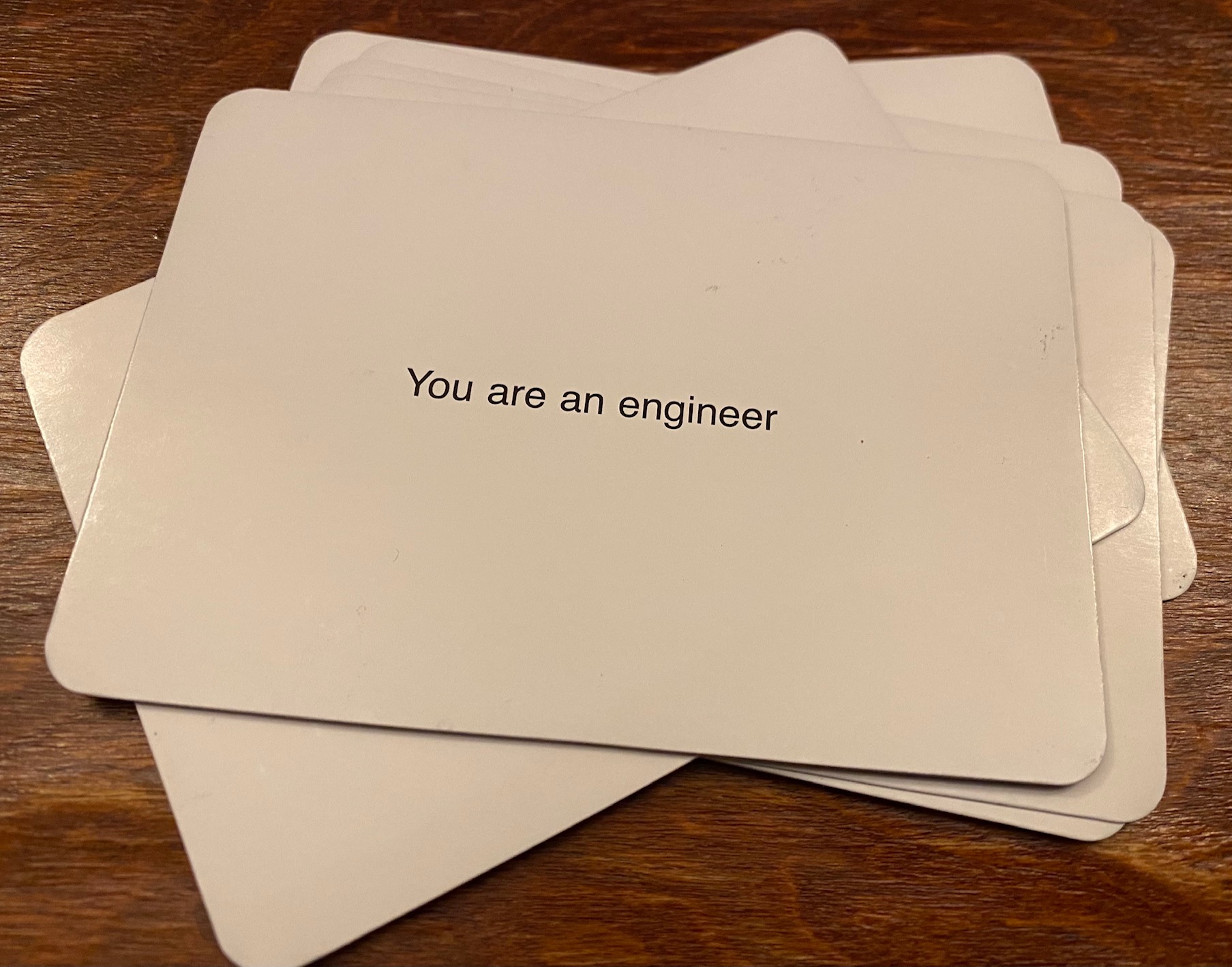

 Now that UDP was working, I was able to get TCP to work using two PlutoSDRs,
which allowed me to run the cURL command I pasted in the first post (both
simultaneously listen and transmit on behalf of my TAP interface).
It s my hope that someone out there will be inspired to implement their own
Layer 1 and Layer 2 as a learning exercise, and gets the same sense of
gratification that I did! If you re reading this, and at a point
where you ve been able to send IP traffic over your own Layer 1 / Layer 2,
please get in touch! I d be thrilled to hear all about it. I d love to link
to any posts or examples you publish here!









 It s been over 20 months since the first COVID lockdown kicked in here in Northern Ireland and I started working from home. Even when the strict lockdown was lifted the advice here has continued to be If you can work from home you should work from home . I ve been into the office here and there (for new starts given you need to hand over a laptop and sort out some login details it s generally easier to do so in person, and I ve had a couple of whiteboard sessions that needed the high bandwidth face to face communication), but day to day is all from home.

 A fresh and new minor release of


