David Nusinow: Halfway Point
Long time no blog I guess. Things haven't been that exciting on the Debian front for me. Many of you may have noticed the Xorg -8 packages just hit unstable, complete with minor annoying debconf bug (fixed in svn now). That work was almost all packaging bugs, most of which are now taken care of. All those changes apply to the 6.9 packages too, so it's like I'm getting a two for one. This means that the 6.9 packages will be pretty well cleaned up on the Debian side of things when they actually ship. Thanks to Sven Luther, Julien Cristau, and Ari Pollak we can build 6.9 for powerpc, sparc, and amd64 (although there's currently an unrelated bug on amd64 stopping us from building any X packages there). Hopefully we can get the remainder of the arches ready to go so that we can drop 6.9 in to unstable as soon after it's released as possible.
One of the very cool changes that's come about lately is that David Mart nez Moreno has taken up the torch for xterm and produced a package for experimental. xterm never really lived at X.Org, and now we're getting it from the real upstream source. So thanks to David we'll have an up to date xterm ready to go with 6.9. It's sort of a little taste of the modular tree: if you need to get an xterm update for some reason, then you don't have to update all of X in the process.
Terrifyingly, I've reached a point where I can start working on the modular packages the moment I sit down to do Debian work next time. I'm going to repeat what I did with 6.8 and start with the Ubuntu packages and work from there. Now that I know a little more about how the whole thing is laid out I feel a lot more confident in what I'm doing. Last time it was really by the seat of my pants. The scariest thing for me is that I finally have to break down and learn the autotools, which is something I've managed to avoid until now. That should be the biggest hurdle for me in moving the modular packages forward. I have no idea how long it'll take, although history has shown that my time estimates are about 1/3 of the time that it actually takes to do a thing :-) The first third of what I set out to do (get Xorg in to Debian) is finished. The second third will be when 6.9 is in testing. The final third is when the modular packages that I'm happy with land in testing. It may take the entire etch release cycle to run this marathon, but I feel like I've reached the halfway point around now, with 6.9 stabilizing.
I've started talking with people about where to go after all that. Once the Debian packaging work is done, I want to start working on the Xorg codebase itself, preferrably on making the xserver a little nicer on the user. I have a project or two in mind, but I don't want to start on them until Debian's X packages are well in hand for the forseeable future.
 Is it perhaps time for a nom de plume? Any suggestions welcome. I've been thinking of something with two initials and a surname. Like I.M. Sirius.
 Although its author Joe Hewitt cautions us to remember that Firebug is still an alpha release, I'd still recommend rushing to install it. If you're developing anything for the web browser this year, it's the most important tool you'll find. While it won't rid you of the problems of cross-browser compatibility, Firebug will speed you in uncovering the smelly bits of your web application.
 I would have posted a pic here for everyone to see what I mean, but I fear would-be lawyers coming at my door and shouting “him, him, that’s the man!!!
Anyhow, salamat at congrats ulit, Manny, sa iyong pagkapanalo!
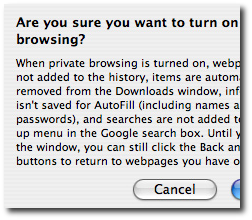 Mac OS X offers a great default, which looks good on all modern machines. No user configuration required.
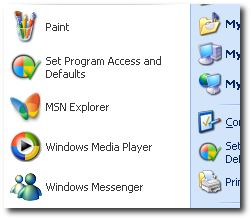 Windows default is blocky, as there's no anti-aliasing to speak of, but the hinting on the fonts is excellent and they're crisp. If you dig a bit and find the crazily hidden Display properties - Appearance - Effects dialog, you can turn on ClearType.
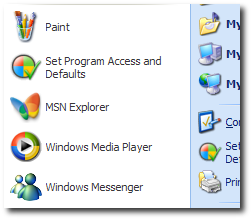 Windows ClearType offers a pleasing level of font smoothing. Now, let's look at the GNOME default, taken from a screenshot on the GNOME 2.12 start page.
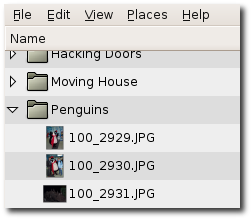 This is pretty much how default GNOME looks on any machine. In particular, it's the default look you get when you install Ubuntu. This corresponds to a setting of full hinting in the font preferences, with the font Bitstream Vera Sans. The quality of the type, however, is poor. It has a spidery and ungainly quality to it.
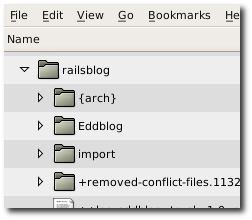 The effect isn't perfect, but a lot better to look at. The font is Bitstream Vera Sans as before. To get this, I had to switch off any hinting then slowly play with the DPI setting until I get letterforms that rendered neatly. Alas, this brings problems of its own. For a start, not all popular GNOME applications respect this setting. Firefox often gets its own idea about such matters as screen DPI, and OpenOffice.org2 completely ignores my hinting preferences and gives me nasty looking menu bars. Murray Cumming's recent