Search Results: "ed"

31 August 2010

Joey Hess: swarmnation story

Swarmnation is a neat game, but I'm not sure if it's for the reasons its authors intended. It may be interesting mostly because of its bugs. Read on for spoilers and the story that developed from an apparently abstract time waster game. When I first saw the game, I saw a grid of squares moving around. I was obviously one: A (Blue) Square. There seemed to be no pattern to the movements. So, it seemed the game represented random passers-in-the-night on the net, unable to communicate except by dashing back and forth. Then after a few minutes, a geometric shape was highlighted in yellow from out of the mass of squares. Woah! I'd been missing something here. It turned out my display was too small, and I had not noticed that the gameboard scolled over to show a tetris-style "next shape" display. Which the other squares had been busily trying to make before time ran out. Now all their movements made sense. Now with a shared goal, we could communicate. Some of us were trolls and blocked shapes from forming. A few of us became leaders, boldly taking that center position in the hollow-square-with-spot-in-the-middle shape. Most of us herded into place as soon as a shape began to form, and stayed there, frantically hoping our neighbors would also conform and keep property values high. We were playing the game. We were accumulating scores. We split into two groups, both playing the game, and then some of us defected from one group to the other, which seemed to be doing better at making a particular shape, and there was no reason to go back to that first group, I felt strongly that I was part of the second, better, group. Then, as I was getting bored and feeling the neighbors all around stifling, I noticed my square highlighted yellow for a shape that I was not currently part of. Oh, this must be a bug I thought. I hacked around, and got it to happen again. I thought maybe it was just being a bit fuzzy in accepting shapes, but no, it turned out to be more interesting. The game didn't care if we stayed in the shape. Just being part of the shape for an instant was enough. With this realization, whole new ways to play the game opened up. Dash left and right, near a forming shape, and you'll probably, for an instant, be part of it. Hang back and have your fun, spot an instant to plug a hole, and then get out and let someone else also take part. Try to form the same shape in both groups. And so on. So a grid of squares hooked up to keyboards on the net has let me watch the invention of politics, rebel from conformity and hack the system, in an hour? That's what games are about!

Dominique Dumont: Improve config upgrade Ep 03 GSoC results

Hello Thanks to Google, Debian and more importantly Krzysztof Tyszecki, the accept feature discussed in episode 2 is now implemented and tested in Config::Model 1.206 and Config::Model::Itself 1.216. Next task is to create a minimal model to enable upgrades for cupsd.conf. This minimal model will heavily use the new accept feature coded during this GSoC. Cups configuration is an interesting use case because: Next episode should provide more details on the work required to provide this minimal model. All the best

Steve McIntyre: Frans Pop

My good friend Frans Pop died on the 20th of August, just over a week ago. We had worked together for several years within Debian (especially within the Debian CD team), and we had become firm friends during that time. He was great to work with, always ready to help design new features or pick holes and find the bugs in the stuff I was developing myself, happy for others to dig into his own projects. On the more personal side, we met up many times at different Free Software events like DebConf and FOSDEM, and also for pure social things like BBQs and parties. We shared a lot of good times. Last week, along with some other Debian people who had worked with Frans, I headed over to the Netherlands for his funeral. His family also asked me to talk about him, and I was honoured to do so. I spoke briefly about Frans' work in Debian, highlighting the areas where he worked and the number of people he had worked with in various teams. I also told the group about the massive number of messages of sympathy and condolence which I had been asked to pass on from all over the world. His family knew that Debian was important to Frans, but were not aware of just how wide his influence and effect had been. They were especially surprised and grateful that people had travelled so far for the funeral; I told them that I would not have missed it for anything. Rest In Peace, my friend. You will be missed.

Iustin Pop: Spooky harddrive

For a couple of weeks, one of the harddrives in my server has started to behave strangely. The RAID controller has started first reporting some drive timeouts (daily, when the drive runs a short or long smart test), and now it even kicks it out of the (RAID1) array. And yet, during normal operation, there's no read error or write error that I can trigger, and there are no reallocated sectors (according to smart). The only time when I can reproduce the error is: What happens when both these conditions are met? The the SMART query is taking ages (as in ~20-30 seconds). This might cause some such high delays that the drive itself will report a timeout error (if any I/O takes place at the same time), and log an error in its internal error log. Another harddrive (identical brand): ~3s for SMART query during selftest and I/O load, no issues whatsoever. For this harddrive, smartctl -a reads a while, and then:
Error SMART Error Self-Test Log Read failed: Input/output error
Smartctl: SMART Self Test Log Read Failed
 
real    0m39.029s
The timeout above also has generated lots of errors in the drive's error log. I don't know how to read these properly, but in any case they don't seem too scary:
Error 144 occurred at disk power-on lifetime: 13552 hours (564 days + 16 hours)
  When the command that caused the error occurred, the device was doing SMART Offline or Self-test.
  After command completion occurred, registers were:
  ER ST SC SN CL CH DH
  -- -- -- -- -- -- --
  10 51 00 80 ae 39 40
  Commands leading to the command that caused the error were:
  CR FR SC SN CL CH DH DC   Powered_Up_Time  Command/Feature_Name
  -- -- -- -- -- -- -- --  ----------------  --------------------
  61 80 70 80 ae 39 1c 08  41d+08:07:45.052  WRITE FPDMA QUEUED
  b0 d0 01 00 4f c2 00 08  41d+08:07:45.038  SMART READ DATA
  ec 00 01 00 00 00 00 08  41d+08:07:44.958  IDENTIFY DEVICE
  2f 00 01 10 00 00 00 08  41d+08:07:44.957  READ LOG EXT
  61 80 70 80 ae 39 1c 08  41d+08:07:37.960  WRITE FPDMA QUEUED
For some of the errors, all preceding commands are WRITE FPDMA QUEUED, but all are during a "SMART Offline or Self-test" phase. When a self-test is not being done, reading all the SMART data (smartctl -a) is very very quick, taking half a second. The only thing I can think of is that the drive's own area for storing SMART data is unhealthy, and reading it takes time, and a concurrent SMART test and I/O load makes it hard for the drive to do so. But again, I can't trigger any real I/O error, nor at the beginning of the drive neither at the end, so This also happens when the drives is connected to a plain SATA port, skipping the RAID controller, so it's not just the controller playing games on me. I'm really confused now. Given my previous experience, this drive will die, should already have died, and yet, no I/O errors, just some timeouts. Do I just need to wait a couple more weeks?

30 August 2010

Steve Kemp: jQuery in use upon this blog

Blog Update
I've just updated the home-grown javascript I was using upon this blog to be jQuery powered. This post is a test. I'll need to check but I believe I'm almost 100% jQuery-powered now.
AJAX Proxies
It is a well-known fact that AJAX requests are only allowed to be made to the server the javascript was loaded from. The so-called same-origin security restriction. To pull content from other sites users are often encouraged to write a simple proxy:
  • http://example.com/ serves Javascript & HTML.
  • http://example.com/proxy/http://example.com allows arbitrary fetching.
Simples? No. Too many people write simple proxies which use PHP's curl function, or something similar, with little restriction on either the protocol or the destination of the requested resource. Consider the following requests:
  • http://example.com/proxy.php?url=/etc/passwd
  • http://example.com/proxy.php?url=file:///etc/passwd
If you're using some form of Javascript/AJAX proxy make sure you test for this. (ObRandom: Searching google for inurl:"proxy.php?url=http:" shows this is a real problem. l33t.)
ObQuote: "You're asking me out? That's so cute! What's your name again? " - 10 things I hate about you.

Tim Retout: Hacking

Here in the UK we've had a bank holiday weekend. Usually I would have gone to Cambridge for the Debian BBQ, but this year I joined forces with Thomas Adam for some SmoothWall Express on Debian hacking. There are several challenges involved in moving the SWE3 code from its native distribution to Debian; this weekend we worked around some of the permissions problems. On SWE3, the web server and most of the service daemons run as the user 'nobody'. This means that the web server can write out configuration files as the same user as everything else; it can also read the system log files. When the web interface needs to run a privileged action (like setting firewall rules), it sends a command to 'smoothd', which is a daemon running as root. (Admin ssh access is always directly as the root user.) However, web servers in Debian tend to run as user 'www-data', which does not have permission to read log files. Similarly, writing out configuration files as that user would mean that any cgi script (not just ones in the swe3 package) could modify them. I would prefer to run the swe3 cgi scripts as a separate user, and grant this user permission to view logs etc. This debian-webapps thread makes it sound very easy, but if you want to do that with cgi scripts rather than fastcgi, I think you have to run a separate web server for each user. On Sunday afternoon, in a dramatic display of corner-cutting, I gave up on that approach and added www-data to the 'adm' and 'proxy' groups in the postinst. Thomas heroically patched all the cgis to call the "config writers" via smoothd, although I'm wondering whether some careful use of the chgrp command in the postinst might be better than running that code as root. Another hack: in order to actually start a firewall, we needed to know which network card is the "RED" interface, in SWE3 terms; i.e. which one is meant to be the public-facing network device. It's also nice to know which one is "GREEN". So two debconf questions and some hardcoded magic numbers later, we have a basic firewall init script. Lovely. Oh, and at some point I removed the htaccess file, so any user on your network can mess with your firewall. Should probably fix that. Today I started some awful scripts which use Simple-CDD to build an iso containing all the packages we want. We are going to need to extend the networking configuration in the installer to set up multiple network cards. Then we need to figure out a nicer way of assigning IP addresses to devices; unlike on the proprietary version of the product, there seems to be no web configuration of network settings in Express. I've not figured all of this out yet. So, in summary: we are deliberately trading some technical debt in order to quickly produce an initial release that might interest people. (But please note the disclaimer of warranty in the README file in that directory.) And in other news, I've been working at Smoothwall Ltd. for just over one year. Hmm. So this is what they call 'experience'.

Petter Reinholdtsen: Broken hard link handling with sshfs

Just got an email from Tobias Gruetzmacher as a followup on my previous post about sshfs. He reported another problem with sshfs. It fail to handle hard links properly. A simple way to spot this is to look at the . and .. entries in the directory tree. These should have a link count >1, but on sshfs the count is 1. I just tested to see what happen when trying to hardlink, and this fail as well:
% ln foo bar
ln: creating hard link  bar' =>  foo': Function not implemented
%
I have not yet found time to implement a test for this in my file system test code, but believe having working hard links is useful to avoid surprised unix programs. Not as useful as working file locking and symlinks, which are required to get a working desktop, but useful nevertheless. :) The latest version of the file system test code is available via git from http://github.com/gebi/fs-test

Martín Ferrari: Some LaTeX stuff

The last few weeks I have been using LaTex a lot, to write the final report for my master's course. During that period I found a couple of LaTeX goodies that might be interesting to share: the memoir class, gnuplot integration, and some stuff to help preparing cover pages. The memoir class is a kind of all-in-one package. It is meant to be used in place of the book and report classes, but it can also replace simpler environments, such as article. It provides many ready-to-use templates, and loads of commands to easily customize them. It seems to be specially tailored for dead-tree publication, dedicating an entire chapter in the manual to page layout. It also aims at removing the usual cruft you have to add into any medium sized project, it is macro-compatible with: abstract, appendix, array, booktabs, ccaption, chngcntr, chngpage, dcolumn, delarray, enumerate, epigraph, framed, ifmtarg, ifpdf, index, makeidx, moreverb, needspace, newfile, nextpage, parskip, patchcmd, setspace, shortvrb, showidx, tabularx, titleref , titling, tocbibind, tocloft, verbatim, and verse. Furthermore, it provides functionality equivalent to the following packages: crop, fancyhdr, geometry, sidecap, subfigure, titlesec. In the end, you have a project that only needs a couple of packages, and a few customisation commands, which is nice and also eases distribution. Other nice thing I have found is that there is not one, but many ways of merging gnuplot graphs into your text while having LaTeX typeset all the labels. There is some LaTeX packages aimed at this, but I have more success using a special gnuplot terminal. Again, there is more than one option: eepic, epslatex, latex, lua, mp, pslatex, pstex, pstricks, texdraw, and tpic. While I could not try them all, I tried a few and the easiest and prettiest was epslatex. This terminal creates two files: a EPS file, as would have been created with the usual postscript terminal, except that it does not contain any text; and a LaTeX snippet meant to be included with \input foo . Finally, I could generate graphs that match the rest of the document! To end this post, a couple of things about creating the dreaded cover page. First, a suggestion: don't fret too much about finding a ready-made template, once you understood the basics of how to insert arbitrary spaces around text, it is quite easy to roll your own cover! Having said that, the memoir manual has some sample cover pages that can be useful to use as a base, and there is another really useful resource I have found: titlepages.pdf, a collection of 40 sample title pages with source code for you to choose. Tags: Planet Debian, Planet Lugfi, latex

Raphaël Hertzog: Understanding Membership Structures in Debian and Ubuntu

Debian and Ubuntu have a set of official membership roles that can be granted to regular contributors. Those roles come with rights that enable the contributors to do their work and to participate in the project governance (elections and other official decision-making processes). It s also a way for the distributions to acknowledge the work done: most contributors are proud of the status they reached. The membership structure plays an important role in the development of a distribution: it defines the kind of contributors that are welcome in the project, it sets expectations of the project towards its contributors and defines their rights. In the end, this shapes the project s ability to recruit new contributors to keep the project alive and kicking. This article introduces the existing statuses in Debian and Ubuntu, and defines the sometimes confusing jargon associated with them. The Debian Case Debian only has two types of official members: Debian Developers (DD) and Debian Maintainers (DM). The rights of the developers are codified in the Debian Constitution while those of the maintainers have been defined in a general resolution of 2007. The Debian Maintainer status is still mostly documented in a wiki page. The integration of this new status in Debian s official processes has been slow to come largely because it was introduced at that time without enough negotiation with the involved parties. Nowadays, it is preferred that people get the DM status before applying for DD. DM is a very limited role: maintainers can only upload packages that already have their name on them (either in the Maintainer or Uploaders field) and a specific flag (DM-Upload-Allowed: yes) that only Debian Developers can add. They have no other rights and limited access to Debian s resources. Besides those official roles, there are also maintainers of packages that have no official status within Debian except that they are listed in the Maintainer field of the package. They are doing the maintenance work but all uploads are done by a Debian Developer after verification of the work done (this is called sponsorship and is the only way to start with official packaging work). Once the DD trusts the maintainer, the developer will typically ask the maintainer to apply for DM status in order to be relieved from the sponsorship work. In the end, that makes three different kind of package maintainers and a lot of confusion when you discuss membership issues in particular when the New Maintainer process is the path that you follow to become a Debian Developer. Don t be fooled by the names when reading Debian s documentation! The Ubuntu Case Ubuntu had, from the start, an official Ubuntu Member status that includes all contributors: developers of course, but also documentation writers, artists, translators, etc. This status notably grants the right to vote in elections of the Community Council, the right to participate on Planet Ubuntu, and the @ubuntu.com email alias. For developers, the situation is more complicated: the wiki page lists no less than five different statuses. Initially, developers were split between Ubuntu Core Developers and the MOTU (Masters Of The Universe). The latter were responsible of the universe/multiverse sections of the archive while the former also had upload rights for the main/restricted sections. But, inspired by the Debian Maintainers concept and facing concrete problems in terms of archive management, they changed their infrastructure to offer more fine-grained control on package uploads. Ubuntu can now grant upload permissions on a package-per-package basis, but it can also delegate the right to grant upload permissions with the same granularity. This lead to the new Per-Package Uploader status which is simply an Ubuntu Member with upload rights on a limited set of packages where they have a specific expertise. The more generic Ubuntu Developers status now encompasses members of various development teams that have been delegated the right to manage upload permissions on a (usually large) package set (the current teams are Ubuntu Desktop, Mythubuntu, Kubuntu, and Edubuntu). Those teams can define their own policy to add new members provided they follow the basic rules defined by the Developer Membership Board (see this wiki page). Ubuntu Contributing Developer is an intermediate status for someone who is not yet ready for one of the other developer statuses but who has still shown enough commitment to be an Ubuntu Member. All those statuses can be obtained in a similar way: you prepare a wiki page listing your past contributions, you collect testimonials from existing members that you have worked with, you add yourself in the agenda of the next meeting of the board (or council) that grants the status that you seek, and you attend the meeting. The members of the board will decide whether you are ready for the status (or not) based on what you provided in the wiki, based on your answers during the meeting (and on a mailing-list for developers), and based on what others have to say about you. The most important boards are usually elected by the community while others are commonly appointed by the community council. Those governance bodies include Canonical employees but not as many as one would expect: two out of eight in the Developer Membership Board, two out of eight in the Community Council, but all six members of the Technical Board. The last figure, while not intended, is not surprising given the high expectations set on potential members of the technical board. Mark, as the founder, is the only person to have a permanent seat on both the Community Council and the Technical Board. Comparison of the Statuses Between Debian and Ubuntu The following table summarizes the rights given to each developer role in the two projects (Put the mouse over the abbreviations to know what they are referring to).
Rights Debian Ubuntu
DM DD UM PPU/UD MOTU UCD
Package maintenance via sponsorshipYN/AYYYN/A
Official email alias-YYYYY
Participate in votes for members-YYYYY
Participate in votes for developers-Y-YYY
Upload rights restricted to pre-approved packagesY--Y--
Upload rights restricted to a section of the archive----Y-
Unlimited upload rights-Y---Y
Number of contributors (as of 2010-07-27)117904462278563
Please note that the number of contributors are not 100% accurate for Ubuntu. A contributor can have multiple statuses (direct membership to a launchpad group) granted over time (while gaining experience). The problem has been mostly avoided by calculating differences between number of members of the various groups but it s not perfect and it can t be: some MOTU are also PPU for packages in main and it s legitimate (but I only counted them as MOTU and not as PPU). Another limitation is that members of some administrative teams are included indirectly in many teams and thus appear in the count while they should not. Anyway, this simple table makes it obvious that Ubuntu s structure offers a broader choice of statuses. They acknowledge the work of all contributors from the start while still giving the most critical rights only to those who have proven that they deserve them. Despite this difference, Debian still has a significant advantage in terms of number of developers. That number does not tell the whole story though: the Ubuntu contributors include many Canonical employees (e.g. 36 out of 63 core developers have a @canonical.com email registered on their launchpad account) that are likely to spend more time working on the distribution than the average Debian member. But even if comparing person-hours would be a challenging thought experiment, in practice it s of not much interest if both projects continue to cooperate and if more and more of the contributions flow in both directions. Debian is aware of the shortcomings of its structure. Changes to better accommodate non-packagers have been discussed several times already. The last efforts in that direction were unfortunately perceived as a solution ready to go rather than a proposal to be discussed, and the project got quickly buried by a general resolution (GR). Even if that resolution invited for further discussion and a new proposal, the truth is that when someone s initiative is corrected by way of GR, it usually kills any motivation to go forward. Possible Evolution? On the Ubuntu side, the infrastructural changes were completed recently and they don t expect any further change in the near future. They do plan, however, to expand usage of those new features so that more teams benefit from the possibility to control upload rights on packages that are relevant to them, and so that more individuals developers apply to become Per-Package Uploaders on packages that they know very well. On the Debian side, a recent discussion on the debian-project list brought back the topic of the bad terminology and it was agreed that the New Maintainer process should be renamed into something else ( New Developer process has been suggested). But Christoph Berg Debian Account Manager and hence heavily involved in the New Maintainer Team suggested that Debian would be better off implementing the long-awaited membership changes before trying to update all the documentation. It would certainly imply some more vocabulary updates. Later in the discussion, he confirmed that membership reform is on the top of the TODO list of the new maintainer team (just after the rewrite of the nm.debian.org website). What can be expected from this reform? The following answers are my own guesses based on my experience of Debian, but the project hasn t decided anything yet. Almost two years have elapsed since the previous efforts in that direction, the new maintainer team has recruited new members and is in a general better shape. Hopefully, the next episode of this saga will have a better outcome.
This article was first published in Linux Weekly News. In a comment, Mark Shuttleworth tried to explain how the Ubuntu community is being setup.
Flattr this Share/Bookmark 10 comments Support my work

Matt Zimmerman: Traveling at home

For me, the most enjoyable part of traveling is the inspiration that I derive from visiting different places, talking to people, and generally being outside of my normal environment. This bank holiday weekend, when so many Londoners visit faraway lands, my partner and I stayed in London instead, and my sought inspiration closer to home. The city has been delightfully quiet, and in contrast to the preceding week, the weather was mostly pleasant, apart from the sudden downpours the BBC described as squally showers .
Photo of deer in Richmond Park

Photo credit: M rcio Cabral de Moura


We spent Saturday afternoon in Richmond Park, a 2500-acre nature preserve easily accessible via public transport from London. The plentiful oak trees, fallow deer, and various species of water fowl made it easy to forget the city for a while. Having visited a few times on foot, I think it would be fun to cycle next time, and see different areas of the park. Afterward, we had dinner at a tapas restaurant in Parsons Green which offered notably excellent service as well as good food. By this time, it was nearly 7:00pm, and we took a chance on getting last-minute theatre tickets to see Jeff Goldblum and Mercedes Ruehl in Neil Simon s The Prisoner of Second Avenue. We arrived at the theatre just in time for the show, which was not sold out, and in fact had quite reasonable seats available. The show had several good laughs, holding up fairly well after nearly 40 years since the original Broadway production.
Photo of the exhibition at the Design Museum

Photo credit: Gary Bembridge


On Sunday, we visited the Design Museum for the first time. Having been disappointed by the nearby Fashion and Textile Museum, our expectations were not too high, but it turned out to be very worthwhile. The Brit Insurance Designs of the Year exhibition showcased designs from architecture, fashion, furniture, transport and more. Some of my favorites were: I was delighted to see that there were a half dozen or so exhibits which related to open source software. Even including the theatre tickets, it was a very inexpensive holiday compared to traveling overseas, and generated a lot less CO2. I was more than satisfied with the inspiration available within a relatively small radius. I don t think I ll give up traveling, as I really enjoy seeing friends who live far away, but I think I ll be more inclined to stay home during peak travel times and enjoy local activities.

Julian Andres Klode: Google Public DNS blocks wikileaks.org (Update: No, they don t)

It seems that Google is blocking wikileaks.org in its Public DNS servers (8.8.8.8 and 8.8.4.4):
; <<>> DiG 9.7.1-P2 <<>> @8.8.8.8 wikileaks.org ; (1 server found) ;; global options: +cmd ;; Got answer: ;; ->>HEADER<<- opcode: QUERY, status: SERVFAIL, id: 50227 ;; flags: qr rd ra; QUERY: 1, ANSWER: 0, AUTHORITY: 0, ADDITIONAL: 0 ;; QUESTION SECTION: ;wikileaks.org. IN A ;; Query time: 2457 msec ;; SERVER: 8.8.8.8#53(8.8.8.8) ;; WHEN: Fri Aug 27 18:10:43 2010 ;; MSG SIZE rcvd: 31
Update: Sorry Google, for me doubting you. As it turns out, you did no evil, you were just a bit slower than the others.
Filed under: General

Richard Darst: The DebConf registration process

The DebConf registration team has the hard job of coordinating accommodation, food, and payments for hundreds of people.There are two major dates here: the sponsored registration deadline, and the reconfirmation deadline. There is also the date of opening registration, but that's usually more a matter of "how soon can we?" than "when should we?"The sponsored registration deadline (April 15 for DC10) is the deadline for requesting sponsored accommodation, food, or travel. This allows us to figure out how much we'll have to pay for attendees - attendees who register after this point should pay enough to cover their own costs.The reconfirmation deadline (June 10th for DC10) is used as a ping for attendees, particularly the sponsored ones. Attendees must reconfirm they will attend, so that we don't waste money reserving more food/rooms than we will have people using them. This deadline usually depends on the date we must give firm numbers to our accommodations.Historically, registration hasn't ever closed, anyone can come, just if you register too late you won't necessarily get any free stuff (and definitely no free food/accommodation). The deadline for food and accommodation themselves has been based on the logistics of the conference itself - DC9, when we ran out of physical rooms for accommodation, and DC10, when we had to give firm housing numbers to Columbia. Food has tended to be easier as caterers could take updates on shorter notice, usually the day before.DebConf8 began a system where attendees could pay a registration fee if they desired. This was encouraged, for example, for attendees whom could get this fee reimbursed by their company, but was not required nor encouraged of sponsored attendees. DC8-9 had two classes of fees: Professional, covering the actual costs, and Corporate, covering about double of professional and for companies or registrants whom could provide extra financial support for DebConf. DebConf10 added an extra layer of "pay per day" on top of this.It's up to the registration team to pin down attendee numbers as early as possible, as this is usually the biggest cost. DebConf provides food and accommodations to a huge number of people, but the numbers are constantly changing. It's hard to know how many people will drop out at the last minute. It's hard to know how many people will actually pay a corporate or professional fee, as opposed to mistakingly selecting it when they'd rather something else. Our registration system can't support all the little intricacies of how much an attendee will cost us, or pay us. Without knowing how many people will attend, how can we accurately get the right number of meals and right number of rooms? Sponsored people may always choose to not eat some meals with us, possibly saving us money there. How many people with travel sponsorship will actually request their full reimbursement?The registration system, Pentabarf, is used to track attendance numbers, but it isn't completely reliable. Not everyone in it will attend all days, and most people who aren't staying with us don't have accurate dates of attendance. Thus, it can only be used as estimates, not for all decisions.
The difficulties above are challenges for the registration and budgeting teams, but are not too bad - they just require thought, time, and answering many questions from attendees.Tags: debconf

Russell Coker: Interesting Developments in Islamic Culture

Shereen El Feki gave an inspiring TED talk about Islamic youth culture [1]. She shows some interesting exerpts from the 4SHBAB TV network which is known as Islamic MTV , the music video from the US was of particularly high quality while I expect high quality videos to be made in the US I don t generally expect quality Islamic videos from the US (or anywhere else really). She also notes that the videos show a kinder gentler face of Islam . She contrasts that with a clip by Haifa Wehbe [2] a Lebanese pop star who appears to have a lot in common with Britney Spears (Shereen describes her as a pan-Arab pinup-girl ). She cites the comic The 99 which has Islamic super-heros who represent the 99 attributes of Allah. One thing that I found very interesting was that the 99 character Jemi is shown using what is obviously an OLPC. This seems to indicate some very positive trends for the interaction of Islamic culture with the European and American culture which is Christian and Atheist dominated. Kavita Ramdas gave an interesting TED talk about radical women embracing tradition [3]. She highlights a woman who teaches girls to read in Afghanistan based on the religious edict that every Muslim should read the Koran and a Croatian Lesbian choir that sings traditional folk songs. Naif al-Mutawa gave an interesting TED talk about the creation of The 99 [4]. He starts by comparing some of the characters in the Justice League of America to Christian traditions and then describes the back story behind his Islamic super-heroes. His major aim is to provide positive role models for Muslim children. Apparently a cross-over production involving characters from The 99 and the Justice League of America is being developed at the moment Wonder Woman wears clothing that is less revealing than usual though. It s worth noting that Naif is a practicing psychologist who s clients include victims of political torture, so he seems to have some insight into the problems that most people will never have.

29 August 2010

Steve Kemp: Proxies and Robots

I don't like repeating myself, but I'm very tempted to past my mini-review of the Roomba Vacuum Cleaner robot into this blog. Instead I will practise restraint and summerise: 250. Worth. Every. Penny. In more Debian-friendly news I've been fighting HTTP proxies today. I've noticed a lot of visitors to the various websites I host are logged as 127.0.0.1 - which is an irritation. My personal machine looks like this:
Internet -> Apache listening on *:80 -> thttpd on 127.0.0.1:xxxx
(This has been documented previously - primarily it is a security restriction. It means I can run per-UID web-servers.) I had previous added a patch to thttpd to honour the X-Forwarded-For: header - so that it would receive the correct remote address passed on from Apache. However the fact that so many visitors are logged as coming from 127.0.0.1 meant it wasn't working 100% correctly, and I wanted to understand why. Today I used ngrep to capture the incoming headers and the source of the problem became apparent:
skx:~# ngrep  -d lo  X-For ' port 1007'
..
T 127.0.0.1:41886 -> 127.0.0.1:1007 [AP]
  GET /about/ HTTP/1.1..Host: images.steve.org.uk..If-Modified-Since: Mon, 07
   Jun 2010 15:24:33 GMT..User-Agent: Mozilla/5.0 (X11; U; Linux x86_64; en-U
  S; rv:1.9.1.10) Gecko/20100701 Iceweasel/3.5.10 (like Firefox/3.5.10)..Acce
  pt: text/html,application/xhtml+xml,application/xml;q=0.9,*/*;q=0.8..Accept
  -Language: en-us,en;q=0.5..Accept-Encoding: gzip,deflate..Accept-Charset: I
  SO-8859-1,utf-8;q=0.7,*;q=0.7..Referer: http://images.steve.org.uk/2009/11/
  20/img_0471.html..X-Forwarded-For: 127.0.0.1, 11.22.33.123..Cache-Control:
  max-age=0..X-Forwarded-Host: images.steve.org.uk..X-Forwarded-Server: image
  s.steve.org.uk..Connection: Keep-Alive....
I bolded the important input; just in case that didn't jump out it was:
X-Forwarded-For: 127.0.0.1, 11.22.33.123
My patch to thttpd was making it read the first address, rather than the second - which meant that requests were being logged as coming from 127.0.0.1 and avoiding my efforts to track sources. Now I understand the problem - The X-Forwarded-Host header is being tweaked by a proxy server, such as Squid, upstream of my server. For the moment I've updated the thttpd patch to read:
        else if ( strncasecmp( buf, "X-Forwarded-For:", 16 ) == 0 )
            char *tmp = NULL;
            /* Jump to the header-value  */
            cp = &buf[16];
            cp += strspn( cp, " \t" );
            /*
             * If the first change is a 127.0.0.1, then we'll
             * jump over it.  Cope with Squid, et al.
             */
            if (  ( tmp = strstr( cp, "127.0.0.1, " ) ) != NULL )
              cp = tmp + strlen( "127.0.0.1, " );
            /* Parse the IP */
           inet_aton( cp, &(hc->client_addr.sa_in.sin_addr) );
         
That's not perfect, but the alternative would be: Or something equally hacky and security-by-obscurity-alike. Really I just want a simple way of always getting the correct remote IP. Shouldn't be so hard, should it? *pout*. ObQuote: "You don't mess with fate, Peanut. People die when they are meant to die. There's no discussion. There's no negotiation. When life's done, it's done." - Dead Like Me.

Bastian Blank: New software: python-dvdvideo

After a long time, I decided to write again. I decided to start with software I wrote for my own usage that could be usefull for other people. I'll start with python-dvdvideo, a DVD-Video reader written in Python 3, and the reference tool dvd-video-backup-image, a generic DVD-Video dumper. Lets see, if this blog will see more postings in the future.
Intention I started to write this software, because libdvdread was often unable to decipher my newly purchased video DVDs. libdvdread expects a rather valid structure of the filesystem and other metadata on the disk. It will forcefully bail out on several error conditions. So I often ended patching libdvdread to make dvdbackup able to read the new disks. Usually there are two ways to create backups of such DVDs, as files or complete images. Dumping them as files have large problems if there are certain defects in the filesystem, like some space is referenced in several titlesets. I have a disk that produces 25GiB of output during such a dump. So the less problematic way to do that is to dump the complete image. That is the way I used in the tool I built on top of this.
Parts The software is devided into several parts. First a small UDF reader. On top of this comes a DVD video reader. It makes use of libdvdcss wrapper. All of this is used to implement a small tool to dump whole images. I will describe this parts here.
UDF reader The UDF reader implements a minimal set of features. I implemented only the stuff I found as needed and used in the available DVDs. This reader allows to read the lowlevel UDF, used as base of all video DVDs.
DVD video reader The dvd video reader uses the UDF reader to get the necessary information from the disk. Again this reader is quiet smallish. It only trusts the UDF for the starts of titlesets and expects that anything else is listed in the info files. This allows to read even discs with broken filesystems, which are really common.
libdvdcss wrapper The libdvdcss wrapper is implemented using ctypes. The ctypes library allows easy access to functions defines in shared object. The library allows calling of the functions and maps arguments and return values to the Python datatypes. This wrapper allows me to read also encrypted DVDs.
Image dumper This tool allows to dump a encrypted video DVD into a file. It tries to detect encrypted (video/vob files) and unencrypted (info files, otherwise used space) parts of the disk. This way it is able to dump anything, as long as it can read the filesystem and info files. However, some discs contains overlapping areas, which can't be that easily deguised. The tool includes a small conflict resolver that handles overlapping parts. It uses a set of rules to allow some types to coexist and some to be modified. On of the rules relabels things included in an info files but also a title vob as always unencrypted. With this resolver, most of the problems can be handled and we get a playable result.
License and distribution This package is licensed GPL 3 or later. It is for new distributed via Alioth.
Conclusion This tool allows me to dump all video DVDs I got my hands on in the last time. It allows me to watch the videos on my notebook that have no optical disc reader on its own. Maybe someone may need such a tool also.

Julien Blache: forked-daapd: new features, Squeeze

A number of things have happened in and around forked-daapd in the last month or so, so let s review the new features and the plan for Squeeze. On the features front, Kai Elwert has done a lot of work since July to implement missing features at the DAAP and DACP level to get better support for Remote: Also, forked-daapd can now remember which speakers were selected before shutdown and attempts to automatically reselect these speakers the next time around. Speakers that were selected will be reselected if they appear at most 5 minutes after startup and the player isn t running at that time. On the Squeeze front, a viable snapshot of forked-daapd will release with Squeeze. This snapshot doesn t have all the Remote improvements listed above, although it s got the playlist support, can remember the speaker selection and includes bug fixes. My plan is to provide backports through backports.org once Squeeze is released and for as long as possible after that. There s always more in the works, so stay tuned =)

Luca Bruno: Too many gurus spoil the plug

Being a rather patient and peaceful guy, I acknowledge that perfection is a difficult goal and I rarely rant publicly about troubles I ve stumbled upon.
Today however, I feel I have to wholeheartedly agree with Bernd about Guruplug: it has been a waste of money. I received mine in May, with the order placed and payed in February. First thing noticed is the issue with the power supply: I really think they forgot QA testing on these machines, as my PSU (and many others, just skim through the official forum) blew up just an hour after power-up. I wasn t lucky enough to admire over-heating and internal (mis-)cooling, as it went immediately through GlobalScale sales department for a RMA under warranty. And then I waited for GlobalScale, for an actually working unit. And still I am, it s almost September now. Patiently waiting (hoping, I d say) for some answers. I m not sure who to blame here, Marvell, GlobalScale or both, for this issues with regards to QA, design and sales. But I m quite sure the final result has been already perfectly described: a major fail.

Bernd Zeimetz: the guruplug server plus - major design and qa fail

As a lot of people are coming to my blog to read the installing instructions for Debian on the GuruPlug Server Plus, I shall not hide my opinion about it: It is a major design and QA fail. Don't waste your money on it.
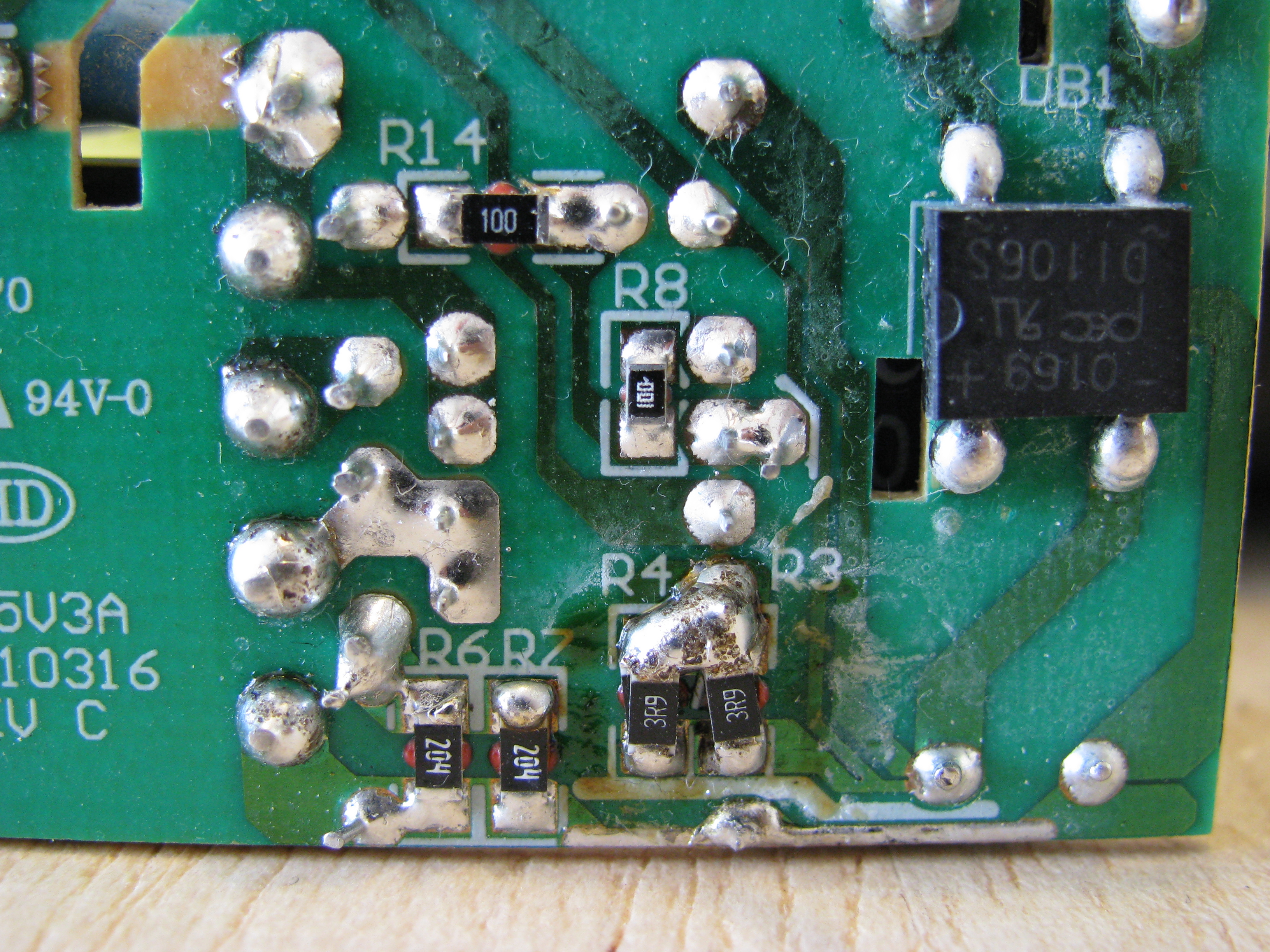
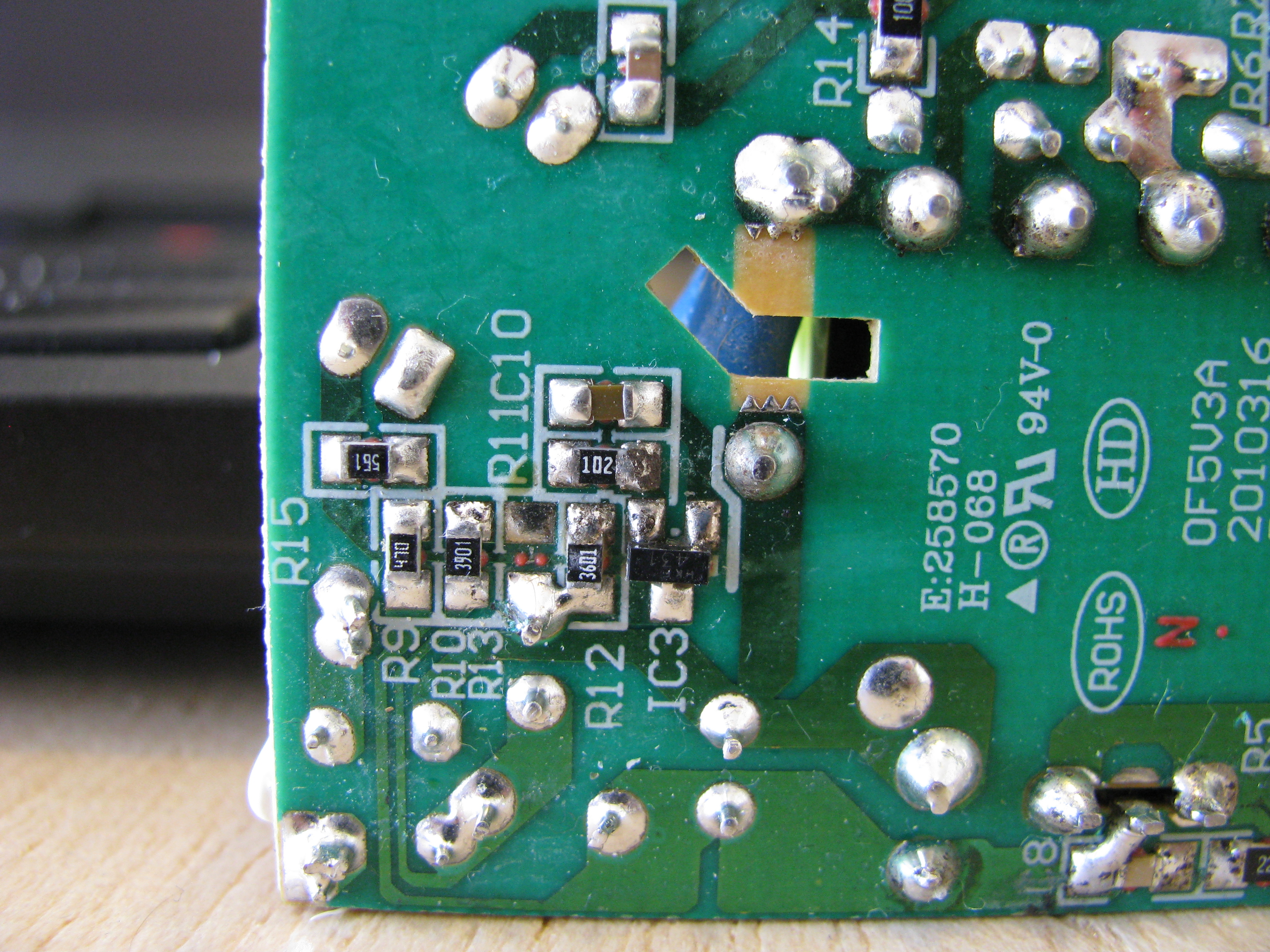
The power supply Although I've ordered the Guruplug pretty early with the promise, that I'd have it in April, it arrived at the end of May due to QA issues with the power supply. While I appreciate that they didn't deliver broken power supplies, I would have preferred not to receive one which was "fixed" by somebody who uses the soldering iron like an axe. Here are some macro photos to show the gory details: GuruPlug Server Plus PSU 1 GuruPlug Server Plus PSU 2 GuruPlug Server Plus PSU 3

Software issues The version of UBoot which shipped with the device was only able to boot from NAND and network. Booting from USB failed and ext2 support was missing, too. Didn't have a look if the community came up with a fixed UBoot version yet, but in my opinion a piece of hardware for >100 EUR should not have such flaws.

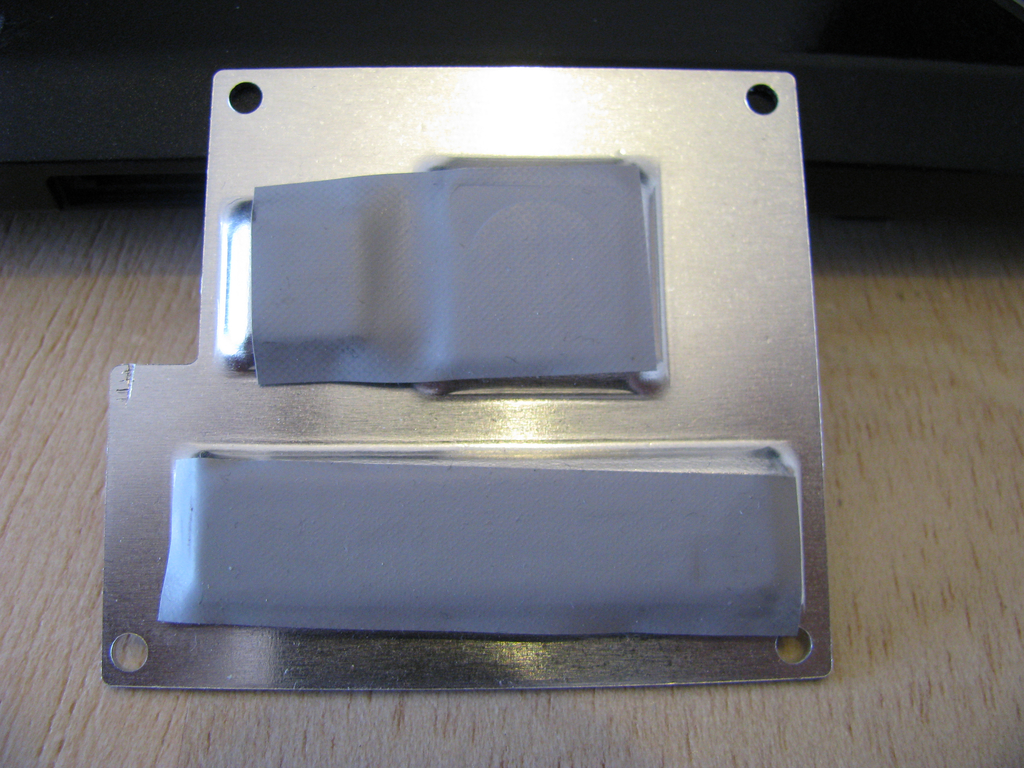
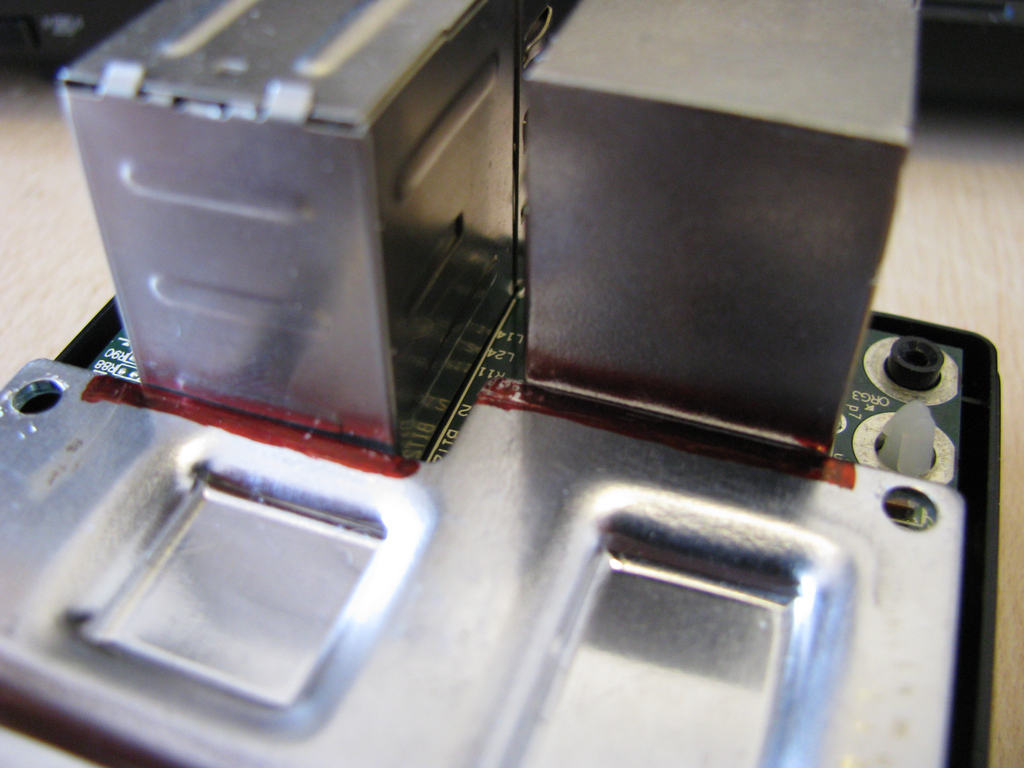
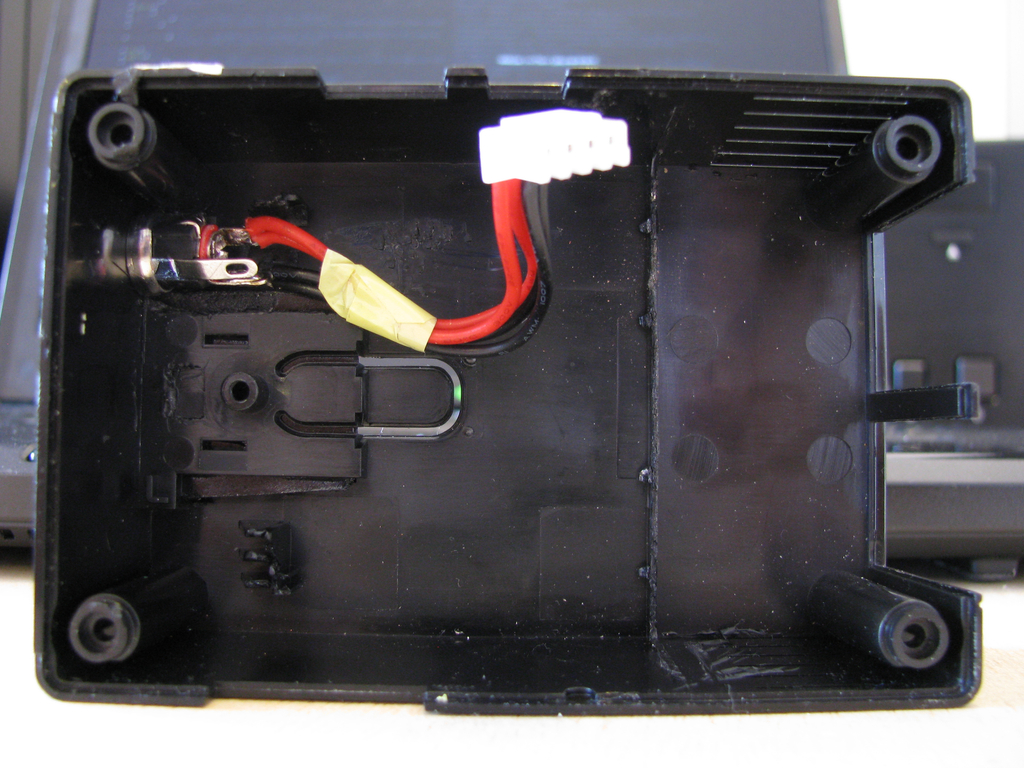
Thermal issues Using the Guruplug with more than one 100 MBit/s connection is just not possible, as it would toast itself to death. For the details have a look at this discussion in the NewIT forum, it links to a lot of interesting photos and postings. This issue is a major design and QA failure. Even without knowing what the datasheets say, it is easy to imagine that a thin piece of alloy is not the proper way to cool a CPU and network chip. Especially not when it is mounted with cheapish pads instead of a proper paste. GuruPlug Server Plus Cooling 1 As it seems the plan was to send the heat to the shielding of the network/USB/eSata ports (the area is marked red as my first plan was to remove that part of the alloy and reuse the heat-spreader), a strong indication for that is that this is the only area with holes for air circulation. I could imagine that it was not possible to have these holes next to the PSU, which was mounted above the heat-spreader, to avoid electrical shocks. GuruPlug Server Plus Cooling 2 As there was no other opening for the heat to leave the case, even the microSD card became pretty hot - I've measured temperatures around 60 deg. C next to the card - while CPU and 100MB/s network were idling. The official information from GlobalScale Technologies is that only 10/100MBit/s should be used as workaround to avoid overheating until a "Professional Upgrade Kit" is released. As mentioned here the upgrade kit announcement was removed silently from GST's website. To be honest, this doesn't make me wonder. There is no way to fix the Guruplug with an external fan or any other external magic as the only way to fix it is to cool the CPU and networking chip properly. There are various workarounds for the cooling issues posted to the forums. I've decided to rip out the power supply and heat spreader out of the case and get a nice external PSU. The new connector is mounted, ready to supply the GuruPlug's board with power. GuruPlug Server Plus power connector Currently I'm waiting for the new heat sinks and glue to arrive. Then I'll give it a try to mount eveything in the small case again, probably with some additional air holes. As soon as I have a workign solution, I'll blog about it again.

Bernd Zeimetz: the guruplug server plug - major design and qa fail

As a lot of people are coming to my blog to read the installing instructions for Debian on the GuruPlug Server Plus, I shall not hide my opinion about the Guruplug Server Plus: It is a major design and QA fail. Don't waste your money on it.
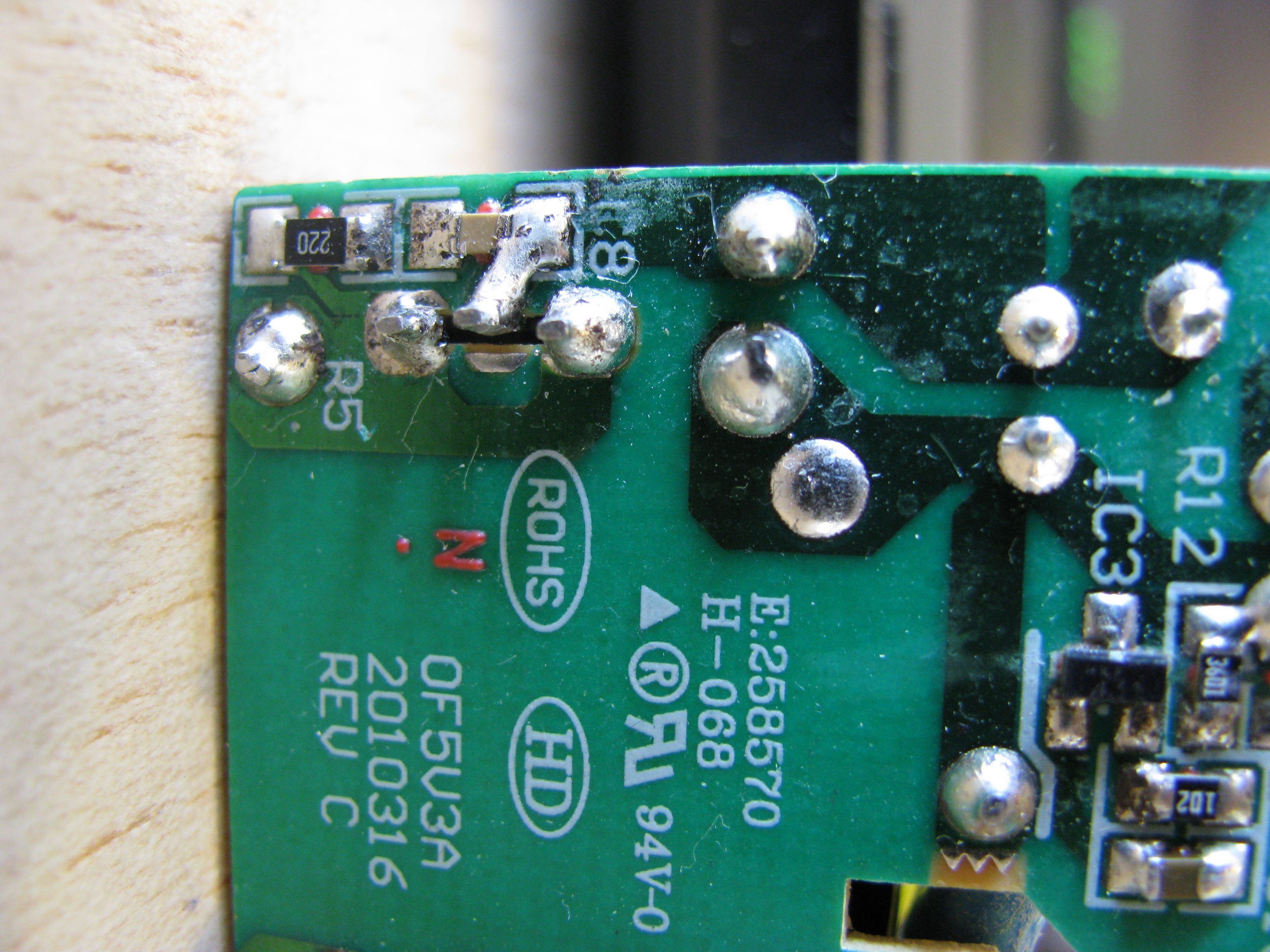
The power supply Although I've ordered the Guruplug pretty early with the promise, that I'd have it in April, it arrived at the end of March due to QA issues with the power supply. While I appreciate that they didn't deliver broken power supplies, I would have preferred not to receive one which was "fixed" by somebody who uses the soldering iron like an axe. Here are some macro photos to show the gory details: GuruPlug Server Plus PSU 1 GuruPlug Server Plus PSU 2 GuruPlug Server Plus PSU 3

Software issues The version of UBoot which shipped with the device was only able to boot from NAND and network. Booting from USB failed and ext2 support was missing, too. Didn't have a look if the community came up with a fixed UBoot version yet, but in my opinion a piece of hardware for >100 EUR should not have such flaws.

Thermal issues Using the Guruplug with more than one 100 MBit/s connection is just not possible, as it would toast itself to death. For the details have a look at this discussion in the NewIT forum, it links to a lot of interesting photos and postings. This issue is a major design and QA failure. Even without knowing what the datasheets say, it is easy to imagine that a thin piece of alloy is not the proper way to cool a CPU and network chip. Especially not when it is mounted with cheapish pads instead of a proper paste. GuruPlug Server Plus Cooling 1 As it seems the plan was to send the heat to the shielding of the network/USB/eSata ports (the area is marked red as my first plan was to remove that part of the alloy and reuse the heat-spreader), a strong indication for that is that this is the only area with holes for air circulation. I could imagine that it was not possible to have these holes next to the PSU, which was mounted above the heat-spreader, to avoid electrical shocks. GuruPlug Server Plus Cooling 2 As there was no other opening for the heat to leave the case, even the microSD card became pretty hot - I've measured temperatures around 60 deg. C next to the card - while CPU and 100MB/s network were idling. The official information from GlobalScale Technologies is that only 10/100MBit/s should be used as workaround to avoid overheating until a "Professional Upgrade Kit" is released. As mentioned here the upgrade kit announcement was removed silently from GST's website. To be honest, this doesn't make me wonder. There is no way to fix the Guruplug with an external fan or any other external magic as the only way to fix it is to cool the CPU and networking chip properly. There are various workarounds for the cooling issues posted to the forums. I've decided to rip out the power supply and heat spreader out of the case and get a nice external PSU. The new connector is mounted, ready to supply the GuruPlug's board with power. GuruPlug Server Plus power connector Currently I'm waiting for the new heat sinks and glue to arrive. Then I'll give it a try to mount eveything in the small case again, probably with some additional air holes. As soon as I have a workign solution, I'll blog about it again.

28 August 2010

Clint Adams: Today on Libre.fm

librefm://community/loved

Next.

Previous.