Search Results: "sf"

5 January 2015

Russ Allbery: Review: Ancillary Sword

Review: Ancillary Sword, by Ann Leckie
Series: Imperial Radch #2
Publisher: Orbit
Copyright: October 2014
ISBN: 0-316-24665-4
Format: Trade paperback
Pages: 354
This is the second book in the Imperial Radch series and a direct sequel to Ancillary Justice. You don't want to read this book out of order, since the previous book sets up the background of everything that happens here. Besides, Ancillary Justice is an amazing book. It's going to be challenging to review Ancillary Sword without spoiling the previous book. If you're planning on reading Ancillary Justice but haven't gotten to it, you may want to stop here and come back to this review after you've read it. Or, even better, just read both books. They're some of the best science fiction I've read. Ancillary Justice started small, with one person and their quixotic search for revenge, and grew large, to encompass conflicts and confrontations that would shake the Radch. Ancillary Sword returns to a smaller scale and stays there. This means that much of what was left unresolved at the end of the previous book is still unresolved; Leckie does not continue escalating into large-scale conflict. It also means that we see a lot more of Breq making personal choices and trying to work out her own sense of morality, plus semi-adopting a couple more injured people along the way. One of my favorite types of stories is where I get to watch someone who is very good at something do the thing that they're very good at. Breq's unique background and experience makes her a wildcard outsider with vast experience in her new role. (Not to mention the special advantages she has from her implants.) Her long experience with people, similarly from a unique perspective, lets her use her power to effectively navigate political situations while keeping people slightly off-balance. And now she has some real power, made more potent for being somewhat ill-defined. In short, this is a story of political agency, given to someone who hasn't had it before but who is very good at using it. It's immensely satisfying, in part because it's not a simple wish fulfillment. Breq can't just reshape the world to her preferences; in fact, she can't do much about one of the social conflicts she runs into, except treat the people involved with unexpected respect. But she can occasionally do something, and she can always upset existing power structures in subtle ways, and the way Leckie writes this makes it so much fun to read. I think one of the reasons why I enjoyed this so much is that Breq is not relentlessly introspective. She just acts. Usually this sort of book involves lots of soul-searching and analysis, and the lack is refreshing. The other people in the story analyze Breq much more than she analyzes herself, sometimes incorrectly, and Breq finds the whole thing faintly amusing. Not only does this keep the story from bogging down in too much internal drama, it means that Breq frequently surprises the reader, usually in ways that had me grinning. And, despite not mulling things over incessantly, she is growing and developing, finding her own sense of morality and and ethics in a way that's sometimes only apparent in retrospect. The one caveat I will mention is that this is a book that concerns itself a great deal with colonialism and racial slavery, but it's a fantasy of political agency focused on someone who's part of the dominant culture. While it's not quite accurate to say that Breq is this world's equivalent of white, she can pass, and she's Radchaai. I thought the book handles the issues reasonably well, but it is still using oppressed cultures to focus on the agency and power of someone who is, comparatively, privileged. This didn't bother me while I was reading the story, but it started to bother me a little afterwards once it was pointed out. There's nothing inherently wrong with that story, but it's a rather common pattern, and I'm afraid Ancillary Sword doesn't do much to broaden the pattern. That said, it's a caveat rather than a fatal flaw, at least for me. Ancillary Sword is obviously the middle book of a trilogy, and normally the lack of forward progress on the overarching story and the sense of filling in background and setting the scene would undermine the book. But Breq and the other characters in this world are so fascinating that I didn't mind. The ending was not quite what I expected, but worked better the more that I thought about it. I'm really looking forward to the next book. Followed by Ancillary Mercy. Rating: 9 out of 10

3 January 2015

Russ Allbery: Review: The Ring of Charon

Review: The Ring of Charon, by Roger MacBride Allen
Series: Hunted Earth #1
Publisher: Tor
Copyright: December 1990
ISBN: 0-8125-3014-4
Format: Mass market
Pages: 500
Larry Chao is a junior scientist at a gravity research on Pluto, at the very outer limits of human reach in the solar system. The facility is for researching artificial gravity, which is one reason it's in the middle of nowhere. Another is that their experimental generator is built in a ring around Charon, and the close proximity of the two bodies is useful for scientific observation. Unfortunately, there hasn't been much to observe. They can create very short-lived gravity fields in very small areas, but nothing like the artificial gravity that was the original promise of the facility. As a result, the government is shutting the facility down. The authoritarian director, Simon Raphael, is... not exactly happy with that decision, but resigned to it and running the facility to completion with a sullen anger. When Larry makes a startling breakthrough at nearly the last minute for the society, Simon is uninterested and hostile. This leads Larry and his fellow scientist Sondra Berghoff to attempt a more radical demonstration of Larry's success and prove to the rest of the solar system that the facility should be kept open. That decision has a far deeper impact on humanity and the solar system than they could have possibly imagined. The Ring of Charon and its sequel, Shattered Sphere, were recommended to me as good harder science fiction. It took me a while to track down copies in fact, it took an in-person trip to Powell's. Once I found them, a relatively straightforward, old-school science fiction novel seemed like just the thing to read during my commute. Allen delivers there. I'm not spoiling the main plot driver of the book even though it's given away on the back cover, since it's some time in coming in the novel. But The Ring of Charon turns into a multi-viewpoint cross between a disaster novel and a scientific investigation. Larry and Sondra stay central to the plot, of course, but Allen adds a variety of other characters who are attempting to figure out what happened to the solar system and then deal with the consequences: everyone from scientists to pilots to communications officers in weird surrealistic stations. The science is mostly believable, apart from the scientific breakthrough that motivates the plot. Characterization isn't absent completely, but it's simple and unsubtle; dialogue is a bit wooden, characters aren't entirely multidimensional, but Allen does a reasonably good job with both pacing and the sense of mystery and investigation, and a surprisingly good job portraying organizational politics. As you might guess from the tone of my review, this is not the book to reach for if you want something ground-breaking. It's a very conventional, multi-viewpoint SF novel full of scientists and investigation of unknown and possibly hostile phenomena. If you've read much science fiction, you've read books like this before. But one thing that Allen does surprisingly well, which makes The Ring of Charon stand a bit above the pack, is that he doesn't write villains. Even Simon, who goes out of his way to make the reader hate him at the start of the book, becomes a surprisingly sympathetic character. The characters who are usually villains or at least foils in books like this the smooth PR person, the religious man, the blindly-focused scientist who isn't interested in anyone else's theories never turn into caricatures, play important roles in the plot, and turn out to be competent in their fields of expertise. There are actual villains, sort of, but I found myself feeling sympathetic even towards them, at least in places. Allen takes a rather old SF dodge to achieve conflict without an evil enemy, and, because of that, the end of the book felt like a bit of an anticlimax. But I did like the feel of the book where there isn't a good versus evil fight, just a wide variety of people (and others) trying to understand and control the universe in the best ways they know how. I'm not sure I can quite recommend this book. The quality of the writing is not particularly high, and I'm not generally a fan of the disaster novel style of storytelling. But despite not being very original, there's just something likable about it. It moves along reasonably well for a 500 page book, and it's refreshingly light on irritating stereotypes. I think one has to be in the right mood when reading it and set expectations accordingly, but it fit what I was looking for when I picked it up. One warning, though: although The Ring of Charon reaches a climax, the major plot conflict is not resolved at the end of this book, so you may want to have the sequel around. Followed by Shattered Sphere. Rating: 6 out of 10

2 January 2015

Simon Josefsson: OpenPGP Smartcards and GNOME

The combination of GnuPG and a OpenPGP smartcard (such as the YubiKey NEO) has been implemented and working well for around a decade. I recall starting to use it when I received a FSFE Fellowship card long time ago. Sadly there has been some regressions when using them under GNOME recently. I reinstalled my laptop with Debian Jessie (beta2) recently, and now took the time to work through the issue and write down a workaround. To work with GnuPG and smartcards you install GnuPG agent, scdaemon, pscsd and pcsc-tools. On Debian you can do it like this:
apt-get install gnupg-agent scdaemon pcscd pcsc-tools
Use the pcsc_scan command line tool to make sure pcscd recognize the smartcard before continuing, if that doesn t recognize the smartcard nothing beyond this point will work. The next step is to make sure you have the following line in ~/.gnupg/gpg.conf:
use-agent
Logging out and into GNOME should start gpg-agent for you, through the /etc/X11/Xsession.d/90gpg-agent script. In theory, this should be all that is required. However, when you start a terminal and attempt to use the smartcard through GnuPG you would get an error like this:
jas@latte:~$ gpg --card-status
gpg: selecting openpgp failed: unknown command
gpg: OpenPGP card not available: general error
jas@latte:~$
The reason is that the GNOME Keyring hijacks the GnuPG agent s environment variables and effectively replaces gpg-agent with gnome-keyring-daemon which does not support smartcard commands (Debian bug #773304). GnuPG uses the environment variable GPG_AGENT_INFO to find the location of the agent socket, and when the GNOME Keyring is active it will typically look like this:
jas@latte:~$ echo $GPG_AGENT_INFO 
/run/user/1000/keyring/gpg:0:1
jas@latte:~$ 
If you use GnuPG with a smartcard, I recommend to disable GNOME Keyring s GnuPG and SSH agent emulation code. This used to be easy to achieve in older GNOME releases (e.g., the one included in Debian Wheezy), through the gnome-session-properties GUI. Sadly there is no longer any GUI for disabling this functionality (Debian bug #760102). The GNOME Keyring GnuPG/SSH agent replacement functionality is invoked through the XDG autostart mechanism, and the documented way to disable system-wide services for a normal user account is to invoke the following commands.
jas@latte:~$ mkdir ~/.config/autostart
jas@latte:~$ cp /etc/xdg/autostart/gnome-keyring-gpg.desktop ~/.config/autostart/
jas@latte:~$ echo 'Hidden=true' >> ~/.config/autostart/gnome-keyring-gpg.desktop 
jas@latte:~$ cp /etc/xdg/autostart/gnome-keyring-ssh.desktop ~/.config/autostart/
jas@latte:~$ echo 'Hidden=true' >> ~/.config/autostart/gnome-keyring-ssh.desktop 
jas@latte:~$ 
You now need to logout and login again. When you start a terminal, you can look at the GPG_AGENT_INFO environment variable again and everything should be working again.
jas@latte:~$ echo $GPG_AGENT_INFO 
/tmp/gpg-dqR4L7/S.gpg-agent:1890:1
jas@latte:~$ echo $SSH_AUTH_SOCK 
/tmp/gpg-54VfLs/S.gpg-agent.ssh
jas@latte:~$ gpg --card-status
Application ID ...: D2760001240102000060000000420000
...
jas@latte:~$ ssh-add -L
ssh-rsa AAAAB3NzaC1yc2EAAAADAQABAAABAQDFP+UOTZJ+OXydpmbKmdGOVoJJz8se7lMs139T+TNLryk3EEWF+GqbB4VgzxzrGjwAMSjeQkAMb7Sbn+VpbJf1JDPFBHoYJQmg6CX4kFRaGZT6DHbYjgia59WkdkEYTtB7KPkbFWleo/RZT2u3f8eTedrP7dhSX0azN0lDuu/wBrwedzSV+AiPr10rQaCTp1V8sKbhz5ryOXHQW0Gcps6JraRzMW+ooKFX3lPq0pZa7qL9F6sE4sDFvtOdbRJoZS1b88aZrENGx8KSrcMzARq9UBn1plsEG4/3BRv/BgHHaF+d97by52R0VVyIXpLlkdp1Uk4D9cQptgaH4UAyI1vr cardno:006000000042
jas@latte:~$ 
That s it. Resolving this properly involves 1) adding smartcard code to the GNOME Keyring, 2) disabling the GnuPG/SSH replacement code in GNOME Keyring completely, 3) reorder the startup so that gpg-agent supersedes gnome-keyring-daemon instead of vice versa, so that people who installed the gpg-agent really gets it instead of the GNOME default, or 4) something else. I don t have a strong opinion on how to solve this, but 3) sounds like a simple way forward.

Vincent Fourmond: Release 0.11 of ctioga2

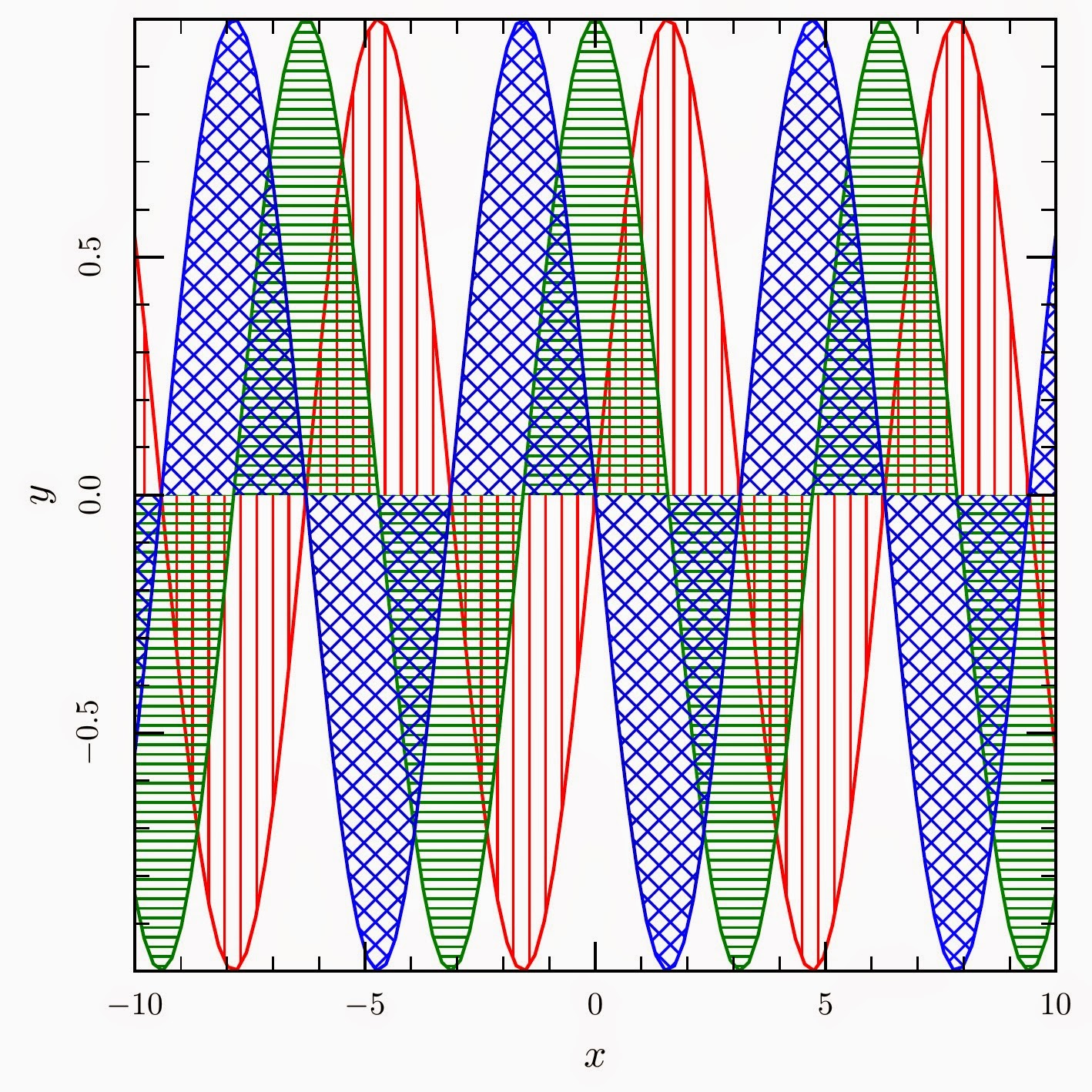
The new year is starting with a new release of ctioga2, with a lot of new features, such as:
The new release is of course available using rubygems:
~ gem update ctioga2
It can also be downloaded from sourceforge.The possibilities of the new styling system are particularly interesting, and I'm working on ways to make it more powerful, and providing series of default style files that anyone could use as they want. Among other future changes, I want to improve the position of ticks, especially when using non-linear axes, and add functions to draw vector fields (though this still needs some thinking). Enjoy, and a happy new year to everyone !

Russell Coker: DNSSEC

reason= verification failed; insecure key I ve recently noticed OpenDKIM on systems I run giving the above message when trying to verify a DKIM message from my own domain. According to Google searches this is due to DNSSEC not being enabled. I m not certain that I really need DNSSEC for this reason (I can probably make DKIM work without it), but the lack of it does decrease the utility of DKIM and DNSSEC is generally a good thing to have. Client (Recursive) Configuration The Debian Wiki page about DNSSEC is really good for setting up recursive resolvers [1]. Basically if you install the bind9 package on Debian/Wheezy (current stable) it will work by default. If you have upgraded from an older release then it might not work (IE if you modified the BIND configuration and didn t allow the upgrade to overwrite your changes). The Debian Wiki page is also quite useful if you aren t using Debian, most of it is more Linux specific than Debian specific. dig +short test.dnssec-or-not.net TXT tail -1 After you have enabled DNSSEC on a recursive resolver the above command should return Yes, you are using DNSSEC . dig +noall +comments dnssec-failed.org The above command queries a zone that s deliberately misconfigured, it will fail if DNSSEC is working correctly. Signing a Zone Digital Ocean has a reasonable tutorial on signing a zone [2]. dnssec-keygen -a NSEC3RSASHA1 -b 2048 -n ZONE example.com The above command creates a Zone Signing Key. dnssec-keygen -f KSK -a NSEC3RSASHA1 -b 4096 -n ZONE example.com The above command creates a Key Signing Key. This will take a very long time if you don t have a good entropy source, on my systems it took a couple of days. Run this from screen or tmux. $INCLUDE ksk/Kexample.com.+123+12345.key
$INCLUDE zsk/Kexample.com.+123+34567.key When you have created the ZSK and KSK you need to add something like the above to your zone file to include the DNSKEY records. all: example.com.signed %.signed: %
dnssec-signzone -A -3 $(shell head -c 100 /dev/random sha1sum cut -b 1-16) -k $(shell echo ksk/K$<*.key) -N INCREMENT -o $< -t $< $(shell echo zsk/K$<*.key)
rndc reload Every time you change your signed zone you need to create a new signed zone file. Above is the Makefile I m currently using to generate the signed file. This relies on storing the KSK files in a directory named ksk/ and the ZSK files in a directory named zsk/. Then BIND needs to be configured to use example.com.signed instead of example.com. The Registrar Every time you sign the zone a file with a name like dsset-example.com. will be created, it will have the same contents every time which are the DS entries you send to the registrar to have your zone publicly known as being signed. Many registrars don t support DNSSEC, if you use such a registrar (as I do) then you need to transfer your zone before you can productively use DNSSEC. Without the DS entries being signed by a registrar and included in the TLD no-one will recognise your signatures on zone data. ICANN has a list of registrars that support DNSSEC [3]. My next task is to move some of my domains to such registrars, unfortunately they cost more so I probably won t transfer all my zones. Some of my zones don t do anything that s important enough to need DNSSEC.

Vincent Fourmond: New home for Tioga

Now, it's been a long time since Rubyforge has become unusable, and the Tioga project (on which ctioga2 is based) was still hosted there. I first wanted to thanks Rubyforge for hosting our projects for so long, and then say that Tioga is now maintained in sourceforge in a git repository. The web page is hosted by sourceforge as well, and that includes the documentation. A clone of the git repository is available on github. Enjoy !

1 January 2015

Chris Lamb: Goals

Dr. Guy Winch:
We used to think that happiness is based on succeeding at our goals, but it turns out not so much. Most marathon runners, for example not professionals but the amateur runners their high for completing the marathon usually disappears even before their nipples stop bleeding. My point is that the high lasts for a very short amount of time. If you track where people's happiness and satisfaction is, it is in "getting" or in making progress towards our goals. It's a more satisfying, life-affirming, motivating and happy thing than actually reaching them. So it's a great thing to keep in mind... Health, for example. When you define health as something you want to do, living your life and looking back on the week and saying "That was a healthy week for me: I worked out this number of times, I did this amount of push-ups, I ate reasonably most of the time..." that's very satisfying and that's where you'll feel happy about yourself. And if you're too focused on a scale for some reason, then that's an external thing that you'll hit... and then what? So it is about creating goals that are longer lasting and really focusing on the journey because that's really where we get our happiness and our satisfaction. Once it's achieved... now what?

Simon Kainz: Pigs-in-a-mud-pond Cake

In lack of some New-Years-Charms, this is our attempt at creating something by ourselves: Step 1 Make some pigs (Pigs being a symbol of luck!) 1 2 (Closeup, probably NSFW :-) ) Step 2 Make some pie. We made a simple, two layeres chocolate pie, topped with some jam to prevent that is all gets very dry. We then made the pond "walls" by sticking KitKat on the side of the pie. We used molten chocolate as "glue". 3 Step 3 Add some more chocolate and add the pigs! 4 5 (Piggy relaxing in liquid chocolate! :-) Step 4 Enjoy! Happy 2015!

Thorsten Alteholz: My Debian Activities in December 2014

FTP assistant This month at the end of the year has been rather quiet as well. The holiday season is not suited for lots of REJECTs, so all in all I marked 91 packages for accept and rejected only 14 packages. But be aware, the period of grace is over now. Squeeze LTS This was my sixth month that I did some work for the Squeeze LTS initiative, started by Raphael Hertzog at Freexian. This month I got assigned a workload of 20.5h and I spent these hours to upload new versions of: This month I also sponsored the upload of [DLA 126-1] ettercap security update. As far as I know, this has been the first time that someone who is not (yet?) involved in Debian as a Debian Maintainer or Debian Developer prepared a patch for Squeeze LTS. So many thanks to Nguyen Cong for doing the work. Thanks to Toshiba as well, who allowed him to work on this package. I am sure there is more to come. As December is the time of gifts, I also uploaded [DLA 104-1] pdns-recursor security update although no LTS sponsor indicated any interest. Other packages Unfortunately the Debian Med Advent Calendar wasn t as successful as the years before. Only five bugs in packages python-mne, avifile , biomaj-watcher, trimmomatic and uc-echo have been closed. Things can only get better

Russ Allbery: Review: Three Parts Dead

Review: Three Parts Dead, by Max Gladstone
Series: Craft #1
Publisher: Tor
Copyright: October 2012
ISBN: 1-4668-0203-0
Format: Kindle
Pages: 336
Tara Abernathy was a student in the Hidden Schools, learning Craft, until she was expelled. Literally expelled: thrown from the floating schools to crash painfully to earth in the Badlands, left to return to her family and village and a life of small workings of Craft and contracts on behalf of local farmers. She had largely resigned herself to that life until raiders started killing people. Tara is not the sort of person who could stand by and watch that, or someone to refrain from using Craft to fix the world. The result was undead guardians for the town, perhaps unwisely formed from the town's risen dead, and only a job offer saves Tara from the ungrateful attention of her neighbors. That's how Tara finds herself employed by the firm of Kelethras, Albrecht, and Ao, in the person of partner Elayne Kevarian. Provisionally, depending on her performance on their job: the investigation of the death of a god. It's possible to call Three Parts Dead urban fantasy if you squint at it the right way. It is fantasy that takes place largely in cities, it features the investigation of a crime (and, before long, several crimes), and Tara's attitude is reminscent of an urban fantasy heroine. But this is considerably different from the normal fare of supernatural creatures. In this world, magic, called Craft, is an occupation that requires a great deal of precision and careful construction. Small workings are described similar to magic, although with an emphasis on metaphor. Larger workings more often come in the form of energy flows, contracts, and careful hedging, and the large Craft firms bear more resemblence to mergers and acquisitions specialists than to schools of wizards. This means that the murder investigation of the god of Alt Coulumb involves a compelling mix of danger, magic, highly unusual library investigations, forensic accounting, hidden Craft machinery, unexpected political alliances, and an inhuman police force. Rather than the typical urban fantasy approach of being beaten up until the resolution of the mystery becomes obvious, Tara and her companions do quite a lot of footwork and uncover a more complex political situation than they were expecting. And, in keeping with this take on magic, the story culminates in a courtroom drama (of a sort). I really enjoyed this. It combines the stylistic elements of urban fantasy that I like with some complex and original world-building and a great take on magical contracts. I prefer worlds like this one, where any source of power people have lived with for a long time is surrounded by the controls, formal analysis, and politics that humans create around anything of value. Tara is also a great protagonist. This is a coming of age story in a sense, and Tara is sometimes unsure of her abilities, but it's refreshingly devoid of worry or angst over new-found abilities. Tara enjoys her work, and approaches it with a well-written mix of uncertainty, impulsiveness, and self-confidence (sometimes warranted, sometimes not). I've read some good stories where the protagonist gets dragged into the story against their will, and some of them are quite good, but it's refreshing to read a book about someone who takes to the story like a duck to water. This is a believable protrayal of a character with a lot of native ability and intelligence, not much wisdom (yet), but a lot of thoughtful enthusiasm. I was disappointed to learn that she isn't the protagonist of the next book in the series. The biggest flaw I found in this book is that Gladstone doesn't stick reliably to his world conception. At times, Craft collapses into something more like typical fantasy magical battles, instead of legal procedure and contract made concrete. I suppose this makes parts of the book more exciting, but I would have preferred a plot resolution that involved less combat and more argument. This isn't helped by the utterly hissable villain. There's a lot of complexity in understanding what happened and who was going to benefit (and how), but there is absolutely no doubt who the enemy is, and he's essentially without redeeming qualities. I would have preferred more nuance, given how satisfyingly complex the rest of the world-building is. Three Parts Dead also occasionally suffers from the typical first novel problem of being a bit overstuffed. The world-building comes fast and thick, and nearly everything Tara does involves introducing new concepts. But the world does have a coherent history, and quite a lot of it. It used to be a more typical fantasy world ruled by gods, each with their own territory and worshippers (and Alt Coulumb is a throwback to this era), but an epic war between gods and Craft is in Tara's past, leading to the defeat or destruction of many of the gods. She lives in a time of uneasy truce between human and inhuman powers, featuring some very complex political and economic alliances. There's a lot of material here for an ongoing series. This is a great first novel. It's not without its flaws, but I enjoyed it from beginning to end, and will definitely keep reading the series. Recommended. Followed by Two Serpents Rise. Rating: 8 out of 10

30 December 2014

Michael Prokop: Installing Debian in UEFI mode with some stunts

For a recent customer setup of Debian/wheezy on a IBM x3630 M4 server we used my blog entry State of the art Debian/wheezy deployments with GRUB and LVM/SW-RAID/Crypto as a base. But this time we wanted to use (U)EFI instead of BIOS legacy boot. As usual we went for installing via Grml and grml-debootstrap. We started by dd-ing the Grml ISO to a USB stick ( dd grml64-full_2014.11.iso of=/dev/sdX bs=1M ). The IBM server couldn t boot from it though, as far as we could identify it seems to be related to a problem with the IBM server not being able to properly recognize USB sticks that are registering themselves as mass storage device instead of removable storage devices (you can check your device via the /sys/devices/ /removable setting). So we enabled Legacy Boot and USB Storage in the boot manager of the server to be able to boot Grml in BIOS/legacy mode from this specific USB stick. To install the GRUB boot loader in (U)EFI mode you need to be able to execute modprobe efivars . But our system was booted via BIOS/legacy and in that mode the modprobe efivars doesnt work. We could have used a different USB device for booting Grml in UEFI mode but because we are lazy sysadmins and wanted to save time we went for a different route instead: First of all we write the Grml 64bit ISO (which is (U)EFI capable out-of-the-box, also when dd-ing it) to the local RAID disk (being /dev/sdb in this example):
root@grml ~ # dd if=grml64-full_2014.11.iso of=/dev/sdb bs=1M
Now we should be able to boot in (U)EFI mode from the local RAID disk. To verify this before actually physically rebooting the system (and possibly getting into trouble) we can use qemu with OVMF:
root@grml ~ # apt-get update
root@grml ~ # apt-get install ovmf
root@grml ~ # qemu-system-x86_64 -bios /usr/share/qemu/OVMF.fd -hda /dev/sdb
The Grml boot splash comes up as expected, perfect. Now we actually reboot the live system and boot the ISO from the local disks in (U)EFI mode. Then we put the running Grml live system into RAM to not use and block the local disks any longer since we want to install Debian there. This can be achieved not just by the toram boot option, but also by executing grml2ram on-demand as needed from user space:
root@grml ~ # grml2ram
Now having the local disks available we verify that we re running in (U)EFI mode by executing:
root@grml ~ # modprobe efivars
root@grml ~ # echo $?
0
Great, so we can install the system in (U)EFI mode now. Starting with the according partitioning (/dev/sda being the local RAID disk here):
root@grml ~ # parted /dev/sda
GNU Parted 3.2
Using /dev/sda
Welcome to GNU Parted! Type 'help' to view a list of commands.
(parted) mklabel gpt
(parted) mkpart primary fat16 2048s 4095s
(parted) name 1 "EFI System"
(parted) mkpart primary 4096s 100%
(parted) name 2 "Linux LVM"
(parted) print
Model: IBM ServeRAID M5110 (scsi)
Disk /dev/sda: 9000GB
Sector size (logical/physical): 512B/4096B
Partition Table: gpt
Disk Flags:
  Number  Start   End     Size    File system  Name        Flags
   1      1049kB  2097kB  1049kB  fat16        EFI System
   2      2097kB  9000GB  9000GB               Linux LVM
(parted) quit
Information: You may need to update /etc/fstab.
Then setting up LVM with a logical volume for the root fs and installing Debian via grml-debootstrap on it:
root@grml ~ # pvcreate /dev/sda2
  Physical volume "/dev/sda2" successfully created
root@grml ~ # vgcreate vg0 /dev/sda2
  Volume group "vg0" successfully created
root@grml ~ # lvcreate -n rootfs -L16G vg0
  Logical volume "rootfs" created
root@grml ~ # grml-debootstrap --target /dev/mapper/vg0-rootfs --password secret --hostname foobar --release wheezy
[...]
Now finally set up the (U)EFI partition and properly install GRUB in (U)EFI mode:
root@grml ~ # mkfs.fat -F 16 /dev/sda1
mkfs.fat 3.0.26 (2014-03-07)
WARNING: Not enough clusters for a 16 bit FAT! The filesystem will be
misinterpreted as having a 12 bit FAT without mount option "fat=16".
root@grml ~ # mount /dev/mapper/vg0-rootfs /mnt
root@grml ~ # grml-chroot /mnt /bin/bash
Writing /etc/debian_chroot ...
(foobar)root@grml:/# mkdir -p /boot/efi
(foobar)root@grml:/# mount /dev/sda1 /boot/efi
(foobar)root@grml:/# apt-get install grub-efi-amd64
[...]
(foobar)root@grml:/# grub-install /dev/sda
Timeout: 10 seconds
BootOrder: 0003,0000,0001,0002,0004,0005
Boot0000* CD/DVD Rom
Boot0001* Hard Disk 0
Boot0002* PXE Network
Boot0004* USB Storage
Boot0005* Legacy Only
Boot0003* debian
Installation finished. No error reported.
(foobar)root@grml:/# ls /boot/efi/EFI/debian/
grubx64.efi
(foobar)root@grml:/# update-grub
[...]
(foobar)root@grml:/# exit
root@grml ~ # umount /mnt/boot/efi
root@grml ~ # umount /mnt/
root@grml ~ # vgchange -an
  0 logical volume(s) in volume group "vg0" now active
That s it. Now rebooting the system should bring you to your Debian installation running in (U)EFI mode. You can verify this before actually rebooting into the system by using the qemu/OVMF trick from above once again.

28 December 2014

Russ Allbery: Review: Some Remarks

Review: Some Remarks, by Neal Stephenson
Publisher: William Morrow
Copyright: June 2013
ISBN: 0-06-202444-2
Format: Trade paperback
Pages: 336
This is going to be another weird review, since I read this essay collection about three months ago, and I borrowed it from a friend. So this is both from fading memory and without a handy reference other than Internet searches. Apologies in advance for any important details that I miss. The advantage is that you'll see what parts of this collection stuck in my memory. Some Remarks is, as you might guess from the title, a rather random collection of material. There's one long essay that for me was the heart of the book (more on that in a moment), two other longer essays, two short stories, and thirteen other bits of miscellaneous writing of varying lengths. I found most of the short essays unremarkable. Stephenson uses a walking desk because sitting is bad for you that sentence contains basically all of the interesting content of one of the essays. I think it takes a large topic and some running room before Stephenson can get up to speed and produce something that's more satisfying than technological boosterism. That means the most interesting parts of this book are the three longer works. "In the Kingdom of Mao Bell" was previously published in Wired and is still available. Some Remarks contains only excerpts; Stephenson says that some of the original essay is no longer that interesting. I had mixed feelings about this one. Some of the sense of place he creates was fun to read, but Stephenson can't seem to quite believe that the Chinese don't care about "freedom" according to his definitions in the same way and therefore don't have the same political reaction to hacker culture that he does. This could have been an opportunity for him to question assumptions, but instead it's mostly an exercise in dubious, sweeping cultural evaluation, such as "the country has a long history of coming up with technologies before anyone else and then not doing a lot with them." A reminder that the detail with which Stephenson crams his writing is not always... true. Stronger is "Atoms of Cognition: Metaphysics in the Royal Society 1715 2010," which covers material familiar to readers of Stephenson's Baroque Cycle. The story of Newton, Leibniz, their rivalry, and the competing approaches to thinking about mathematics and science was my favorite part of that series, and in some ways the non-fiction treatment is better than the fictional one. If you liked the Baroque Cycle, this is worth reading. But the highlight of the book for me was "Mother Earth Mother Board." This is a long essay (50,000 words, practically a small book and the largest part of this collection) about the laying of undersea fiber-optic cables. Those who have read Cryptonomicon will recognize some of the themes here, but there's way more to this essay than there was to the bits about undersea cables in Cryptonomicon. It's mostly about technology, rather than people, which puts Stephenson on firmer ground. The bit about people reads more like a travelogue, full of Stephenson's whole-hearted admiration of people who build things and make things work. There's a bit of politics, a bit of history, a bit of tourism, and a lot of neat trivia about a part of the technological world that I'd not known much about before. I would say this is worth the price of the collection, but it too was previously published in Wired, so you can just read it online. Those reading this review on my web site will notice that I filed it in non-fiction. There are a couple of stories, but they're entirely forgettable (in fact, I had entirely forgotten them, and had to skim them again). But, for the record, here are short reviews of those: "Spew": This originally appeared in Wired and can still be read on-line. The protagonist takes a job as a sort of Internet marketing inspector who looks for deviations from expected profiles. While tracing down an anomaly, though, he finds another use of the Internet that's outside of the marketing framework he's using. It's unlikely that anyone who's been online for long will find much new in this story. Some of that is because it was originally published in 1994, but most of it is just that this isn't a very good story. Stephenson seems to have turned up his normal manic infodump to 11 to satisfy the early Wired aesthetic, and the result is a train wreck of jargon, bad slang, and superficial social observation. (3) "The Great Simoleon Caper": Originally published in TIME, this story too is still available online. It's primarily interesting because it's a story about Bitcoin (basically), written in 1995. And it's irritating for exactly the same reason that Bitcoin enthusiasm often tends to be irritating: the assumption that cryptocurrency is somehow a revolutionary attack on government-run currency systems. I'm not going to get into the ways in which this doesn't make sense given how money is used socially (David Graeber's Debt is the book to read if you want more information); just know that the story follows that path and doesn't engage with any of the social reasons why that outcome is highly unlikely. Indeed, the lengths to which the government tries to go to discredit cryptocurrency in this story are rather silly. Apart from that, this is typical early Stephenson writing. It's very in love with ideas, not as much with characterization, and consists mostly of people explaining things to each other. Sometimes this is fun, but when focused on topics about which considerably more information has become available, it doesn't age very well. (5) Overall, there was one great essay and a few interesting bits, but I wouldn't have felt I was missing much if I'd never read this collection. I borrowed Some Remarks from a friend, and I think that's about the right level of effort. If it falls into your hands, or you see it in a library, some of the essays, particularly "Mother Earth Mother Board," are worth reading, but given that the best parts are available on-line for free, I don't think it's worth a purchase. Rating: 6 out of 10

25 December 2014

Russ Allbery: Review: Bad Pharma

Review: Bad Pharma, by Ben Goldacre
Publisher: Faber and Faber
Copyright: 2012, 2013
Printing: 2014
ISBN: 0-86547-806-6
Format: Trade paperback
Pages: 397
If you have previously read Bad Science by Ben Goldacre, it's doubtful you need me to do anything other than point out that he has a new book. Oh, and it's subtitled How Drug Companies Mislead Doctors and Harm Patients, and it's written with the same indignant determination, clear explanation, and appreciation for real science as Bad Science. If you haven't read Bad Science, I recommend it. You don't have to read it before Bad Pharma, but it's a more approachable start, and a funnier book. Bad Science opens with some obviously horrible examples, and slowly develops the tools required to analyze more advanced and deceptive quackery. Bad Pharma jumps straight into the deep end of statistical biases in data, how and why they're introduced, and why they undermine your health care. This is a more serious book than Bad Science, since it lacks the medical quackery that is so ludicrous it's funny. Everything in Bad Science is successfully sold to someone there are people who believe in candling but most readers of the book can laugh a bit that anyone would believe in such things before getting to the parts of the book where the quackery is widespread and kills people. Bad Pharma focuses on the mainstream pharmaceutical industry and the way that it distorts the scientific process, which leads to serious consequences quite quickly. Goldacre is more pointedly on a mission here than in his previous book. This is not just an expos . It includes detailed recommendations for how to make the drug evaluation process better, and some specific ethical recommendations for doctors to avoid being unduly influenced by drug company marketing. But before that, he provides the best detailed explanation of how the drug research and approval process is supposed to work that I've seen. There's also a lot of good information about how to detect trials and related studies that haven't been done properly, and how to separate marketing language from scientific evidence. Goldacre wisely does not get into all the details of how to do a trial properly, which would be way beyond the scope of this book, but he does provide valuable rules of thumb and red flags that indicate when someone is probably not doing the trial properly. A point that's both frustrating and enlightening, and made very well by this book, is that fixing many of the problems with the drug approval process is not that difficult. Fixing all of them would be exceedingly difficult, of course, since they involve humans, complex financial motivations, the effectiveness of propaganda, and talented people who are paid well to create favorable impressions for new drugs. But we could get quite significant benefits from a few straightforward enhancements of the existing drug approval process, such as requiring that all clinical trials be pre-registered and all trial results published as a prerequisite for any drug approval. Goldacre makes his case for these changes forcefully and persuasively, and with justified anger. The current situation is bad enough for people like me who are only potential patients with no urgent medical issues. For a practicing doctor like Goldacre, it's infuriating to be actively denied the information required to effectively save people's lives. Normally, I find books like this interesting, but depressing and frustratingly limited. It's easy to write books about abuses that currently exist, or the limitations of the current approach. It's much harder to do what Goldacre does here: clearly describe the goals and ideals of drug testing for the lay reader, detail how the current approaches fall short of that goals, and then propose practical and concrete ways to correct the situation. And keep the details interesting and entertaining enough that I enjoyed reading every page of a nearly 400 page book. This is not a book that will fill you with trust or enthusiasm for the medical establishment (anywhere in the world). But it's still oddly comforting: we do know how to do these things properly, and occasionally we even act on that knowledge. These problems are serious, but they should provoke outrage partly because they're correctable and yet aren't being corrected. And there are doctors like Goldacre who are trying to push medicine towards proper use of evidence, research, and knowledge, instead of commercial manipulation. Recommended if you have any interest at all in how medicine or scientific research is actually done, and what its pitfalls look like. Rating: 8 out of 10

23 December 2014

Dirk Eddelbuettel: RcppEigen 0.3.2.3.0

A new release of RcppEigen is now on CRAN, and will get to Debian shortly. This is thanks to a fabulous pull request by Yixuan Qiu who single-handedly managed to upgrade to the new minor release of Eigen -- after having expanded the unit tests a few weeks earlier in another pull request. The NEWS file entry follows.
Changes in RcppEigen version 0.3.2.3.0 (2014-12-22)
  • Updated to version 3.2.3 of Eigen
  • Added a number of additional unit tests for wrap, transform and sparse
  • Updated one of the examples
Courtesy of CRANberries, there is also a diffstat report for the most recent release.

This post by Dirk Eddelbuettel originated on his Thinking inside the box blog. Please report excessive re-aggregation in third-party for-profit settings.

Russ Allbery: Review: Wakulla Springs

Review: Wakulla Springs, by Andy Duncan & Ellen Klages
Publisher: Tor
Copyright: October, 2013
ASIN: B00EWZDPH4
Format: Kindle
Pages: 99
This is another nominee for the 2014 Hugo Awards (for works published in 2013), this time in the novella category. In this case, though, I read the free ebook version from Tor (Macmillan) rather than the version from the voter packet, since I usually grab all the free ebooks of Tor.com stories. (Even if I'm quite behind in reading them, since I don't read much short fiction.) As an independently-published novella, it gets its own review in the book category. Wakulla Springs is the story of three generations (and four protagonists) who lived near or visited Wakulla Springs in the Florida panhandle. This is a real place: a huge freshwater springs and underwater cave system, now protected as a national park. Two of the four episodes in this story revolve around the filming of movies: a Tarzan movie and Creature from the Black Lagoon. This actually happened as well, although of course the story takes liberties with the details. This is also the story of race relations in the American deep south: the tense and uncertain interactions between black locals and rich white people, both locals and people from the film industry who came for a brief time and then left again. It's also a story about water, swimming, and the sense of being part of the water and knowing it well. This story doesn't develop any particular point; rather, it's more of a collection of character sketches, grabbing moments in time, glimpsing what it's like to cross racial barriers and to feel at home with one's choices. It's also, in a nicely subtle way, about encountering mythical creatures that are not part of one's world. To the locals, the film stars who visit Wakulla Springs are as wild and strange as the imagined creatures of the swamp, and in their way even more foreign. What this is not, though, is science fiction, or even fantasy. One of the complaints I'd heard about Wakulla Springs in the context of the Hugos was that it didn't qualify as a genre story. I'm usually inclined to dismiss these sorts of complaints, since they're often put forth by people with a far narrower definition of genre than mine. But, having read this story, I have to concur. It's very well-written and engaging, but it's not genre in any sense that I'd define it. There are some rare mentions of mythical creatures, but only in ways that are part of the setting, and which are no more fantastic than I'd expect from many mainstream stories. I'm a bit baffled why an SFF publisher would have bought it for an explicitly SFF forum; I have to assume that it's just because it's well-written and the authors have both written SFF. That said, even though this is not the sort of story I'd normally seek out, I'm still glad I read it. I thought the best part of the story was the first, which follows a black woman who takes a job at the Wakulla Springs resort during the filming of a Tarzan movie. The color lines are simply taken for granted by everyone, but Johnny Weissmuller comes off very well in his fictional representation and adds an enthusiastic energy that plays off well against the thoughtful care of the protagonist. The second part echoes this with a boy as the protagonist, but shifts a generation later. This means the color line is fought instead of simply assumed, although with limited success. I thought this part of the story had the best descriptions of the joy of swimming, and once again the movie folks bring a disruptive and positive change to the tightly-drawn lines of local roles and politics. The third and fourth parts I found slighter, elaborating on the story by showing the reader glimpses of the later life of the first two protagonists, but not, I thought, adding anything fundamental to the story. I'm not sure this would be satisfying if you were looking for a science fiction or fantasy story, but it's a solid mainstream story about race, class, and the joy of knowing and feeling a place. It captures an angle of Hollywood that I've rarely seen in movies: a disruptive and almost subversive playfulness and energy that doesn't fix problems but that does provide moments of escape from the realities of the world, even outside of the film. Worth reading, particularly since it's free. Rating: 7 out of 10

22 December 2014

Gregor Herrmann: GDAC 2014/22

today I read about a nice & successful example that shows that a debian derivative works best by contributing back to debian & working on debian directly. - great to see again that debian is at the center of a whole ecosystem, & thanks to the grml team!
this posting is part of GDAC (gregoa's debian advent calendar), a project to show the bright side of debian & why it's fun for me to contribute.

Erich Schubert: Java sum-of-array comparisons

This is a follow-up to the post by Daniel Lemire on a close topic.
Daniel Lemire hat experimented with boxing a primitive array in an interface, and has been trying to measure the cost.
I must admit I was a bit sceptical about his results, because I have seen Java successfully inlining code in various situations.
For an experimental library I occasionally work on, I had been spending quite a bit of time on benchmarking. Previously, I had used Google Caliper for it (I even wrote an evaluation tool for it to produce better statistics). However, Caliper hasn't seen much updates recently, and there is a very attractive similar tool at openJDK now, too: Java Microbenchmarking Harness (actually it can be used for benchmarking at other scale, too).
Now that I have experience in both, I must say I consider JMH superior, and I have switched over my microbenchmarks to it. One of the nice things is that it doesn't make this distinction of micro vs. macrobenchmarks, and the runtime of your benchmarks is easier to control.
I largely recreated his task using JMH. The benchmark task is easy: compute the sum of an array; the question is how much the cost is when allowing different data structures than double[].
My results, however, are quite different. And the statistics of JMH indicate the differences may be not significant, and thus indicating that Java manages to inline the code properly.
adapterFor       1000000  thrpt  50  836,898   13,223  ops/s
adapterForL      1000000  thrpt  50  842,464   11,008  ops/s
adapterForR      1000000  thrpt  50  810,343    9,961  ops/s
adapterWhile     1000000  thrpt  50  839,369   11,705  ops/s
adapterWhileL    1000000  thrpt  50  842,531    9,276  ops/s
boxedFor         1000000  thrpt  50  848,081    7,562  ops/s
boxedForL        1000000  thrpt  50  840,156   12,985  ops/s
boxedForR        1000000  thrpt  50  817,666    9,706  ops/s
boxedWhile       1000000  thrpt  50  845,379   12,761  ops/s
boxedWhileL      1000000  thrpt  50  851,212    7,645  ops/s
forSum           1000000  thrpt  50  845,140   12,500  ops/s
forSumL          1000000  thrpt  50  847,134    9,479  ops/s
forSumL2         1000000  thrpt  50  846,306   13,654  ops/s
forSumR          1000000  thrpt  50  831,139   13,519  ops/s
foreachSum       1000000  thrpt  50  843,023   13,397  ops/s
whileSum         1000000  thrpt  50  848,666   10,723  ops/s
whileSumL        1000000  thrpt  50  847,756   11,191  ops/s
The postfix is the iteration type: sum using for loops, with local variable for the length (L), or in reverse order (R); while loops (again with local variable for the length). The prefix is the data layout: the primitive array, the array using a static adapter (which is the approach I have been using in many implementations in cervidae) and using a "boxed" wrapper class around the array (roughly the approach that Daniel Lemire has been investigating. On the primitive array, I also included the foreach loop approach (for(double v:array) ).
If you look at the standard deviations, the results are pretty much identical, except for reverse loops. This is not surprising, given the strong inlining capabilities of Java - all of these codes will lead to next to the same CPU code after warmup and hotspot optimization.
I do not have a full explanation of the differences the others have been seeing. There is no "polymorphism" occurring here (at runtime) - there is only a single Array implementation in use; but this was the same with his benchmark.
Here is a visualization of the results (sorted by average):
Result boxplots
As you can see, most results are indiscernible. The measurement standard deviation is higher than the individual differences. If you run the same benchmark again, you will likely get a different ranking.
Note that performance may - drastically - drop once you use multiple adapters or boxing classes in the same hot codepath. Java Hotspot keeps statistics on the classes it sees, and as long as it only sees 1-2 different types, it performs quite aggressive optimizations instead of doing "virtual" method calls.

Michael Prokop: Ten years of Grml

* On 22nd of October 2004 an event called OS04 took place in Seifenfabrik Graz/Austria and it marked the first official release of the Grml project. Grml was initially started by myself in 2003 I registered the domain on September 16, 2003 (so technically it would be 11 years already :)). It started with a boot-disk, first created by hand and then based on yard. On 4th of October 2004 we had a first presentation of grml 0.09 Codename Bughunter at Kunstlabor in Graz. I managed to talk a good friend and fellow student Martin Hecher into joining me. Soon after Michael Gebetsroither and Andreas Gredler joined and throughout the upcoming years further team members (Nico Golde, Daniel K. Gebhart, Mario Lang, Gerfried Fuchs, Matthias Kopfermann, Wolfgang Scheicher, Julius Plenz, Tobias Klauser, Marcel Wichern, Alexander Wirt, Timo Boettcher, Ulrich Dangel, Frank Terbeck, Alexander Steinb ck, Christian Hofstaedtler) and contributors (Hermann Thomas, Andreas Krennmair, Sven Guckes, Jogi Hofm ller, Moritz Augsburger, ) joined our efforts. Back in those days most efforts went into hardware detection, loading and setting up the according drivers and configurations, packaging software and fighting bugs with lots of reboots (working on our custom /linuxrc for the initrd wasn t always fun). Throughout the years virtualization became more broadly available, which is especially great for most of the testing you need to do when working on your own (meta) distribution. Once upon a time udev became available and solved most of the hardware detection issues for us. Nowadays X.org doesn t even need a xorg.conf file anymore (at least by default). We have to acknowledge that Linux grew up over the years quite a bit (and I m wondering how we ll look back at the systemd discussions in a few years). By having Debian Developers within the team we managed to push quite some work of us back to Debian (the distribution Grml was and still is based on), years before the Debian Derivatives initiative appeared. We never stopped contributing to Debian though and we also still benefit from the Debian Derivatives initiative, like sharing issues and ideas on DebConf meetings. On 28th of May 2009 I myself became an official Debian Developer. Over the years we moved from private self-hosted infrastructure to company-sponsored systems, migrated from Subversion (brr) to Mercurial (2006) to Git (2008). Our Zsh-related work became widely known as grml-zshrc. jenkins.grml.org managed to become a continuous integration/deployment/delivery home e.g. for the dpkg, fai, initramfs-tools, screen and zsh Debian packages. The underlying software for creating Debian packages in a CI/CD way became its own project known as jenkins-debian-glue in August 2011. In 2006 I started grml-debootstrap, which grew into a reliable method for installing plain Debian (nowadays even supporting installation as VM, and one of my customers does tens of deployments per day with grml-debootstrap in a fully automated fashion). So one of the biggest achievements of Grml is from my point of view that it managed to grow several active and successful sub-projects under its umbrella. Nowadays the Grml team consists of 3 Debian Developers Alexander Wirt (formorer), Evgeni Golov (Zhenech) and myself. We couldn t talk Frank Terbeck (ft) into becoming a DM/DD (yet?), but he s an active part of our Grml team nonetheless and does a terrific job with maintaining grml-zshrc as well as helping out in Debian s Zsh packaging (and being a Zsh upstream committer at the same time makes all of that even better :)). My personal conclusion for 10 years of Grml? Back in the days when I was a student Grml was my main personal pet and hobby. Grml grew into an open source project which wasn t known just in Graz/Austria, but especially throughout the German system administration scene. Since 2008 I m working self-employed and mainly working on open source stuff, so I m kind of living a dream, which I didn t even have when I started with Grml in 2003. Nowadays with running my own business and having my own family it s getting harder for me to consider it still a hobby though, instead it s more integrated and part of my business which I personally consider both good and bad at the same time (for various reasons). Thanks so much to anyone of you, who was (and possibly still is) part of the Grml journey! Let s hope for another 10 successful years! Thanks to Max Amanshauser and Christian Hofstaedtler for reading drafts of this.

21 December 2014

Russ Allbery: Review: 2014 Hugos: Novelettes

Review: 2014 Hugos: Novelettes, edited by Loncon 3
Publisher: Loncon 3
Copyright: 2014
Format: Kindle
This is another weird "book review" covering the Hugo-nominated novelettes for the 2014 Hugos (given for works published in 2014) at Loncon 3, the 2014 Worldcon. The "editor" is the pool of attendees and supporting members who chose to nominate works, all of which had been previously edited by other editors in their original publication. I received all of these as part of the Hugo voter's packet for being a supporting member, but they all appear to be available for free on the Internet (at least at the time of this writing). "The Exchange Officers" by Brad Torgersen: An okay, if not particularly ground-breaking, military SF story, ruined for me by the ham-handed introduction of superficial jingoism. The protagonists are doing a tour as remote operators of humanoid battle suits in orbit: not a new premise, but a servicable one. Since this is military SF, they predictably have to defend a space installation against attackers. So we get a bit of drama, a bit of zero-g combat, and the fun of people learning how to remotely operate suits. You've probably read this before, but it passes the time reasonably well. Unfortunately, Torgersen decided to make the villains the Chinese military for no adequately-explained reason. (Well, I'm being kind; I suspect the reason is the standard yellow peril nonsense, but that's less generous.) So there is snide commentary about how only the military understand the Chinese threat and a fair bit of old-fashioned jingoism mixed in to the story, to its detriment. If you like this sort of thing, it's a typical example, although it escapes me why people thought it was exceptional enough to warrant nomination. (5) "The Lady Astronaut of Mars" by Mary Robinette Kowal: Once again, my clear favorite among the stories also won, which is a lovely pattern. Elma was the female astronaut in an alternate history in which manned space exploration continued to grow, leading to permanent settlement on Mars. She spent lots of time being photographed, being the smiling face of the space program, while her husband worked on the math and engineering of the launches. Now, she's an old woman, taking care of her failing and frail husband, her career behind her. Or so she thinks, before an offer that forces an impossible choice between space and staying with her husband for his final days. This is indeed the tear-jerker that it sounds like, but it's not as maudlin as it might sound. Kowal does an excellent job with Elma's characterization: she's no-nonsense, old enough to be confident in her opinions, and knows how to navigate through the world. The story is mixed with nostalgia and memories, including a reminder of just what Elma meant to others. It touches on heroism, symbolism, and the horrible choices around dying loved ones, but I thought it did so deftly and with grace. I was expecting the story to be too obvious, but I found I enjoyed the quotidian feel. It's not a story to read if you want to be surprised, but I loved the small touches. (9) "Opera Vita Aeterna" by Vox Day: Before the review, a note that I consider obligatory. The author of this story is an aggressively misogynistic white supremacist, well-known online for referring to black people as savages and arguing women should not be allowed to vote. To what extent you choose to take that into account when judging his fiction is up to you, but I don't think it should go unsaid. "Opera Vita Aeterna" is the story of a monastery in a typical fantasy world (at least as far as one can tell from this story; readers of Vox Day's fantasy series will probably know more background). At the start of the story, it gets an unexpected visit from an elf. Not just any elf, either, but one of the most powerful magicians of his society. He comes to the monastery out of curiousity about the god that the monks worship and stays for a project of illuminating their scriptures, while having theological debates with the abbot. This story is certainly not the offensive tirade that you might expect from its author. Its biggest problem is that nothing of substance happens in the story, either theologically or via more conventional action. It's a lot of description, a lot of talking, a lot of warmed-over Christian apologetics that dodges most of the hard problems, and a lot of assertions that the elf finds something of interest in this monastery. I can believe this could be the case, but Vox Day doesn't really show why. There is, at the end of the story, some actual drama, but I found it disappointing and pointless. It leads nowhere. The theology has the same problem: elves supposedly have no souls, which is should be the heart of a theological question or conflict Vox Day is constructing, but that conflict dies without any resolution. We know nothing more about the theology of this world at the end of the story than we do at the beginning. Some of the descriptions here aren't bad, and the atmosphere seems to want to develop into a story. But that development never happens, leaving the whole work feeling fundamentally pointless. (4) "The Truth of Fact, the Truth of Feelng" by Ted Chiang: This is another oddly-constructed story, although I think a bit more successful. It's a story in two interwoven parts. One is a fictional essay, told in a non-fiction style, about a man living in a future world with ubiquitous life recording and very efficient search software. Any part of one's life can be easily found and reviewed. The other is the story of a boy from a tribal culture during European colonialism. He learns to read and write, and from that a respect for written records, which come into conflict with the stories that the tribe elders tell about the past. The purpose of both of these stories is to question both the value and the implications of recording everything in a way that preserves and guarantees the facts instead of individual interpretations. The boy's story calls this into question; the narrator's story offers ambiguous support for its value and a deeper plea for giving people space to change. I found the style a bit difficult to get used to, since much of it did not feel like a story. But it grew on me as I read it, and the questions Chiang raises have stuck with me since. The problem of how and when to allow for change in others when we have perfect (or at least vastly improved) memory is both important and complicated, and this is one of the better presentations of the problem that I've seen. It's more of a think-y piece, and closer to non-fiction than a story, but I thought it was worth reading. (8) "The Waiting Stars" by Aliette de Bodard: I keep wanting to like de Bodard's space opera world of AIs and living ships, but it never quite works for me. I've read several stories set in this universe now, and it has some neat ideas, but I always struggle with the characters. This story at least doesn't have quite as much gruesome pregnancy as the previous ones (although there's still some). "The Waiting Stars" opens with a raid on a ship graveyard, an attempt to rescue and "reboot" an AI starship under the guidance of another Mind. This is intermixed with another story about a woman who was apparently rescued in childhood from birthing ship Minds and raised in a sort of foster institution. This feels like a flashback at first, but its interaction with the rest of the story is something more complicated. The conceptual trick de Bodard pulls here is thought-provoking, but once again I struggled to care about all of the characters. I also found the ending discouraging and unsatisfying, which didn't help. Someone who isn't me might really like this story, but it wasn't my thing. (6) Rating: 6 out of 10

15 December 2014

Thomas Goirand: Supporting 3 init systems in OpenStack packages

tl;dr: Providing support for all 3 init systems (sysv-rc, Upstart and systemd) isn t hard, and generating the init scripts / Upstart job / systemd using a template system is a lot easier than I previously thought. As always, when writing this kind of blog post, I do expect that others will not like what I did. But that s the point: give me your opinion in a constructive way (please be polite even if you don t like what you see I had too many times had to read harsh comments), and I ll implement your ideas if I find it nice. History of the implementation: how we came to the idea I had no plan to do this. I don t believe what I wrote can be generalized to all of the Debian archive. It s just that I started doing things, and it made sense when I did it. Let me explain how it happened. Since it s clear that many, and especially the most advanced one, may have an opinion about which init system they prefer, and because I also support Ubuntu (at least Trusty), I though it was a good idea to support all the main init system: sysv-rc, Upstart and systemd. Though I have counted (for the sake of being exact in this blog) : OpenStack in Debian contains currently 64 init scripts to run daemons in total. That s quite a lot. A way too much to just write them, all by hand. Though that s what I was doing for the last years until this the end of this last summer! So, doing all by hand, I first started implementing Upstart. Its support was there only when building in Ubuntu (which isn t the correct thing to do, this is now fixed, read further ). Then we thought about adding support for systemd. Gustavo Panizzo, one of the contributors in the OpenStack packages, started implementing it in Keystone (the auth server for OpenStack) for the Juno release which was released this October. He did that last summer, early enough so we didn t expect anyone to use the Juno branch Keystone. After some experiments, we had kind of working. What he did was invoking /etc/init.d/keystone start-systemd , which was still using start-stop-daemon. Yes, that s not perfect, and it s better to use systemd foreground process handling, but at least, we had a unique place where to write the startup scripts, where we check the /etc/default for the logging configuration, configure the log file, and so on. Then around in october, I took a step backward to see the whole picture with sysv-rc scripts, and saw the mess, with all the tiny, small difference between them. It became clear that I had to do something to make sure they were all the same, with the support for the same things (like which log system to use, where to store the PID, create /var/lib/project, /var/run/project and so on ). Last, on this month of December, I was able to fix the remaining issues for systemd support, thanks to the awesome contribution of Mikael Cluseau on the Alioth OpenStack packaging list. Now, the systemd unit file is still invoking the init script, but it s not using start-stop-daemon anymore, no PID file involved, and daemons are used as systemd foreground processes. Finally, daemons service files are also activated on installation (they were not previously). Implementation So I took the simplistic approach to use always the same template for the sysv-rc switch/case, and the start and stop functions, happening it at the end of all debian/*.init.in scripts. I started to try to reduce the number of variables, and I was surprised of the result: only a very small part of the init scripts need to change from daemon to daemon. For example, for nova-api, here s the init script (LSB header stripped-out):
DESC="OpenStack Compute API"
PROJECT_NAME=nova
NAME=$ PROJECT_NAME -api
That is it: only 3 lines, defining only the name of the daemon, the name of the project it attaches (eg: nova, cinder, etc.), and a long description. There s of course much more complicated init scripts (see the one for neutron-server in the Debian archive for example), but the vast majority only needs the above. Here s the sysv-rc init script template that I currently use:
#!/bin/sh
# The content after this line comes from openstack-pkg-tools
# and has been automatically added to a .init.in script, which
# contains only the descriptive part for the daemon. Everything
# else is standardized as a single unique script.
# Author: Thomas Goirand <zigo@debian.org>
# PATH should only include /usr/* if it runs after the mountnfs.sh script
PATH=/sbin:/usr/sbin:/bin:/usr/bin
if [ -z "$ DAEMON " ] ; then
	DAEMON=/usr/bin/$ NAME 
fi
PIDFILE=/var/run/$ PROJECT_NAME /$ NAME .pid
if [ -z "$ SCRIPTNAME " ] ; then
	SCRIPTNAME=/etc/init.d/$ NAME 
fi
if [ -z "$ SYSTEM_USER " ] ; then
	SYSTEM_USER=$ PROJECT_NAME 
fi
if [ -z "$ SYSTEM_USER " ] ; then
	SYSTEM_GROUP=$ PROJECT_NAME 
fi
if [ "$ SYSTEM_USER " != "root" ] ; then
	STARTDAEMON_CHUID="--chuid $ SYSTEM_USER :$ SYSTEM_GROUP "
fi
if [ -z "$ CONFIG_FILE " ] ; then
	CONFIG_FILE=/etc/$ PROJECT_NAME /$ PROJECT_NAME .conf
fi
LOGFILE=/var/log/$ PROJECT_NAME /$ NAME .log
if [ -z "$ NO_OPENSTACK_CONFIG_FILE_DAEMON_ARG " ] ; then
	DAEMON_ARGS="$ DAEMON_ARGS  --config-file=$ CONFIG_FILE "
fi
# Exit if the package is not installed
[ -x $DAEMON ]   exit 0
# If ran as root, create /var/lock/X, /var/run/X, /var/lib/X and /var/log/X as needed
if [ "x$USER" = "xroot" ] ; then
	for i in lock run log lib ; do
		mkdir -p /var/$i/$ PROJECT_NAME 
		chown $ SYSTEM_USER  /var/$i/$ PROJECT_NAME 
	done
fi
# This defines init_is_upstart which we use later on (+ more...)
. /lib/lsb/init-functions
# Manage log options: logfile and/or syslog, depending on user's choosing
[ -r /etc/default/openstack ] && . /etc/default/openstack
[ -r /etc/default/$NAME ] && . /etc/default/$NAME
[ "x$USE_SYSLOG" = "xyes" ] && DAEMON_ARGS="$DAEMON_ARGS --use-syslog"
[ "x$USE_LOGFILE" != "xno" ] && DAEMON_ARGS="$DAEMON_ARGS --log-file=$LOGFILE"
do_start()  
	start-stop-daemon --start --quiet --background $ STARTDAEMON_CHUID  --make-pidfile --pidfile $ PIDFILE  --chdir /var/lib/$ PROJECT_NAME  --startas $DAEMON \
			--test > /dev/null   return 1
	start-stop-daemon --start --quiet --background $ STARTDAEMON_CHUID  --make-pidfile --pidfile $ PIDFILE  --chdir /var/lib/$ PROJECT_NAME  --startas $DAEMON \
			-- $DAEMON_ARGS   return 2
 
do_stop()  
	start-stop-daemon --stop --quiet --retry=TERM/30/KILL/5 --pidfile $PIDFILE
	RETVAL=$?
	rm -f $PIDFILE
	return "$RETVAL"
 
do_systemd_start()  
	exec $DAEMON $DAEMON_ARGS
 
case "$1" in
start)
	init_is_upstart > /dev/null 2>&1 && exit 1
	log_daemon_msg "Starting $DESC" "$NAME"
	do_start
	case $? in
		0 1) log_end_msg 0 ;;
		2) log_end_msg 1 ;;
	esac
;;
stop)
	init_is_upstart > /dev/null 2>&1 && exit 0
	log_daemon_msg "Stopping $DESC" "$NAME"
	do_stop
	case $? in
		0 1) log_end_msg 0 ;;
		2) log_end_msg 1 ;;
	esac
;;
status)
	status_of_proc "$DAEMON" "$NAME" && exit 0   exit $?
;;
systemd-start)
	do_systemd_start
;;  
restart force-reload)
	init_is_upstart > /dev/null 2>&1 && exit 1
	log_daemon_msg "Restarting $DESC" "$NAME"
	do_stop
	case $? in
	0 1)
		do_start
		case $? in
			0) log_end_msg 0 ;;
			1) log_end_msg 1 ;; # Old process is still running
			*) log_end_msg 1 ;; # Failed to start
		esac
	;;
	*) log_end_msg 1 ;; # Failed to stop
	esac
;;
*)
	echo "Usage: $SCRIPTNAME  start stop status restart force-reload systemd-start " >&2
	exit 3
;;
esac
exit 0
Nothing particularly fancy here You ll noticed that it s really OpenStack centric (see the LOGFILE and CONFIGFILE things ). You may have also noticed the call to init_is_upstart which is needed for upstart support. I m not sure if it s at the correct place in the init script. Should I put that on top of the script? Was I right with the exit values for it? Please send me your comments Then I thought about generalizing all of this. Because not only the sysv-rc scripts needed to be squared-up, but also Upstart. The approach here was to source the sysv-rc script in debian/*.init.in, and then generate the Upstart job accordingly, using the above 3 variables (or more as needed). Here, the fun is that, instead of taking the approach of calculating everything at runtime with the sysv-rc, for Upstart jobs, many things are calculated at build time. For each debian/*.init.in script that the debian/rules finds, pkgos-gen-upstart-job is called. Here s pkgos-gen-upstart-job:
#!/bin/sh
INIT_TEMPLATE=$ 1 
UPSTART_FILE= echo $ INIT_TEMPLATE    sed 's/.init.in/.upstart/' 
# Get the variables defined in the init template
. $ INIT_TEMPLATE 
## Find out what should go in After=
#SHOULD_START= cat $ INIT_TEMPLATE    grep "# Should-Start:"   sed 's/# Should-Start://' 
#
#if [ -n "$ SHOULD_START " ] ; then
#	AFTER="After="
#	for i in $ SHOULD_START  ; do
#		AFTER="$ AFTER $ i .service "
#	done
#fi
if [ -z "$ DAEMON " ] ; then
        DAEMON=/usr/bin/$ NAME 
fi
PIDFILE=/var/run/$ PROJECT_NAME /$ NAME .pid
if [ -z "$ SCRIPTNAME " ] ; then
	SCRIPTNAME=/etc/init.d/$ NAME 
fi
if [ -z "$ SYSTEM_USER " ] ; then
	SYSTEM_USER=$ PROJECT_NAME 
fi
if [ -z "$ SYSTEM_GROUP " ] ; then
	SYSTEM_GROUP=$ PROJECT_NAME 
fi
if [ "$ SYSTEM_USER " != "root" ] ; then
	STARTDAEMON_CHUID="--chuid $ SYSTEM_USER :$ SYSTEM_GROUP "
fi
if [ -z "$ CONFIG_FILE " ] ; then
	CONFIG_FILE=/etc/$ PROJECT_NAME /$ PROJECT_NAME .conf
fi
LOGFILE=/var/log/$ PROJECT_NAME /$ NAME .log
DAEMON_ARGS="$ DAEMON_ARGS  --config-file=$ CONFIG_FILE "
echo "description \"$ DESC \"
author \"Thomas Goirand <zigo@debian.org>\"
start on runlevel [2345]
stop on runlevel [!2345]
chdir /var/run
pre-start script
	for i in lock run log lib ; do
		mkdir -p /var/\$i/$ PROJECT_NAME 
		chown $ SYSTEM_USER  /var/\$i/$ PROJECT_NAME 
	done
end script
script
	[ -x \"$ DAEMON \" ]   exit 0
	DAEMON_ARGS=\"$ DAEMON_ARGS \"
	[ -r /etc/default/openstack ] && . /etc/default/openstack
	[ -r /etc/default/\$UPSTART_JOB ] && . /etc/default/\$UPSTART_JOB
	[ \"x\$USE_SYSLOG\" = \"xyes\" ] && DAEMON_ARGS=\"\$DAEMON_ARGS --use-syslog\"
	[ \"x\$USE_LOGFILE\" != \"xno\" ] && DAEMON_ARGS=\"\$DAEMON_ARGS --log-file=$ LOGFILE \"
	exec start-stop-daemon --start --chdir /var/lib/$ PROJECT_NAME  \\
		$ STARTDAEMON_CHUID  --make-pidfile --pidfile $ PIDFILE  \\
		--exec $ DAEMON  -- --config-file=$ CONFIG_FILE  \$ DAEMON_ARGS 
end script
" >$ UPSTART_FILE 
The only thing which I don t know how to do, is how to implement the Should-Start / Should-Stop in an Upstart job. Can anyone shoot me a mail and tell me the solution? Then, I wanted to add support for systemd. Here, we cheated, since we only just called the sysv-rc script from the systemd unit, however, the systemd-start target uses exec, so the process stays in the foreground. It s also much smaller than the Upstart thing. However, here, I could implement the After thing, corresponding to the Should-Start:
#!/bin/sh
INIT_TEMPLATE=$ 1 
SERVICE_FILE= echo $ INIT_TEMPLATE    sed 's/.init.in/.service/' 
# Get the variables defined in the init template
. $ INIT_TEMPLATE 
if [ -z "$ SCRIPTNAME " ] ; then
	SCRIPTNAME=/etc/init.d/$ NAME 
fi
if [ -z "$ SYSTEM_USER " ] ; then
	SYSTEM_USER=$ PROJECT_NAME 
fi
if [ -z "$ SYSTEM_GROUP " ] ; then
	SYSTEM_GROUP=$ PROJECT_NAME 
fi
# Find out what should go in After=
SHOULD_START= cat $ INIT_TEMPLATE    grep "# Should-Start:"   sed 's/# Should-Start://' 
if [ -n "$ SHOULD_START " ] ; then
	AFTER="After="
	for i in $ SHOULD_START  ; do
		AFTER="$ AFTER $ i .service "
	done
fi
echo "[Unit]
Description=$ DESC 
$AFTER
[Service]
User=$ SYSTEM_USER 
Group=$ SYSTEM_GROUP 
WorkingDirectory=/var/lib/$ PROJECT_NAME 
PermissionsStartOnly=true
ExecStartPre=/bin/mkdir -p /var/lock/$ PROJECT_NAME  /var/log/$ PROJECT_NAME  /var/lib/$ PROJECT_NAME 
ExecStartPre=/bin/chown $ SYSTEM_USER :$ SYSTEM_GROUP  /var/lock/$ PROJECT_NAME  /var/log/$ PROJECT_NAME  /var/lib/$ PROJECT_NAME 
ExecStart=$ SCRIPTNAME  systemd-start
Restart=on-failure
[Install]
WantedBy=multi-user.target
" >$ SERVICE_FILE 
As you can see, it s calling /etc/init.d/$ SCRIPTNAME sytemd-start, which isn t great. I d be happy to have comments from systemd user / maintainers on how to fix it to make it better. Integrating in debian/rules To integrate with the Debian package build system, we only need had to write this:
override_dh_installinit:
	# Create the init scripts from the template
	for i in  ls -1 debian/*.init.in  ; do \
		MYINIT= echo $$i   sed s/.init.in//  ; \
		cp $$i $$MYINIT.init ; \
		cat /usr/share/openstack-pkg-tools/init-script-template >>$$MYINIT.init ; \
		pkgos-gen-systemd-unit $$i ; \
	done
	# If there's an upstart.in file, use that one instead of the generated one
	for i in  ls -1 debian/*.upstart.in  ; do \
		MYPKG= echo $$i   sed s/.upstart.in//  ; \
		cp $$MYPKG.upstart.in $$MYPKG.upstart ; \
	done
	# Generate the upstart job if there's no already existing .upstart.in
	for i in  ls debian/*.init.in  ; do \
		MYINIT= echo $$i   sed s/.init.in/.upstart.in/  ; \
		if ! [ -e $$MYINIT ] ; then \
			pkgos-gen-upstart-job $$i ; \
		fi \
	done
	dh_installinit --error-handler=true
	# Generate the systemd unit file
	# Note: because dh_systemd_enable is called by the
	# dh sequencer *before* dh_installinit, we have
	# to process it manually.
	for i in  ls debian/*.init.in  ; do \
		pkgos-gen-systemd-unit $$i ; \
		MYSERVICE= echo $$i   sed 's/debian\///'  ; \
		MYSERVICE= echo $$MYSERVICE   sed 's/.init.in/.service/'  ; \
		dh_systemd_enable $$MYSERVICE ; \
	done
As you can see, it s possible to use a debian/*.upstart.in and not use the templating system, in the more complicated case (I needed it mostly for neutron-server and neutron-plugin-openvswitch-agent). Conclusion I do not pretend that what I wrote in the openstack-pkg-tools is the ultimate solution. But I m convince that it answers our own need as the OpenStack maintainers in Debian. There s a lot of room for improvements (like implementing the Should-Start in Upstart jobs, or stop calling the sysv-rc script in the systemd units), but that this is a very good move that we did to use templates and generated scripts, as the init scripts are a way more easy to maintain now, in a much more unified way. As I m not completely satisfied for the systemd and Upstart implementation, I m sure that there s already a huge improvements on the sysv-rc script maintainability. Last and again: please send your comments and help improving the above! :)

Next.

Previous.