Search Results: "ads"

22 January 2023

Junichi Uekawa: Working through crosvm dependencies in Debian.

Working through crosvm dependencies in Debian. intrusive-collections Debian package went in. Next up is argh. I think most of them is there now and the next challenge is getting crosvm to build with the newer dependencies.

21 January 2023

Dirk Eddelbuettel: RcppSimdJson 0.1.9 on CRAN: New Upstream

The RcppSimdJson package was just updated to release 0.1.9. RcppSimdJson wraps the fantastic and genuinely impressive simdjson library by Daniel Lemire and collaborators. Via very clever algorithmic engineering to obtain largely branch-free code, coupled with modern C++ and newer compiler instructions, it results in parsing gigabytes of JSON parsed per second which is quite mindboggling. The best-case performance is faster than CPU speed as use of parallel SIMD instructions and careful branch avoidance can lead to less than one cpu cycle per byte parsed; see the video of the talk by Daniel Lemire at QCon. This release updates the underlying simdjson library to version 3.0.1, settles on C++17 as the language standard, exports a worker function for direct C(++) access, and polishes a few small things around the package and tests. The NEWS entry for this release follows.

Changes in version 0.1.9 (2023-01-21)
  • The internal function deseralize_json is now exported at the C++ level as well as in R (Dirk in #81 closing #80).
  • simdjson was upgraded to version 3.0.1 (Dirk in #83).
  • The package now defaults to C++17 compilation; configure has been retired (Dirk closing #82).
  • The three main R access functions now use a more compact argument check via stopifnot (Dirk).

Courtesy of my CRANberries, there is also a diffstat report for this release. For questions, suggestions, or issues please use the issue tracker at the GitHub repo. If you like this or other open-source work I do, you can now sponsor me at GitHub.

This post by Dirk Eddelbuettel originated on his Thinking inside the box blog. Please report excessive re-aggregation in third-party for-profit settings.

Dirk Eddelbuettel: RcppFastFloat 0.0.4 on CRAN: New Upstream

A new release of RcppFastFloat arrived on CRAN yesterday. The package wraps fast_float, another nice library by Daniel Lemire. For details, see the arXiv paper showing that one can convert character representations of numbers into floating point at rates at or exceeding one gigabyte per second. This release updates the underlying fast_float library version. Special thanks to Daniel Lemire for quickly accomodating a parsing use case we had encode as a test, namely with various whitespace codes. The default in fast_float, as in C++17, is to be more narrow but we enable the wider use case via two #define statements.

Changes in version 0.0.4 (2023-01-20)
  • Update to fast_float 3.9.0
  • Set two #define re-establish prior behaviour with respect to whitespace removal prior to parsing for as.double2()
  • Small update to continuous integration actions

Courtesy of my CRANberries, there is also a diffstat report for this release. If you like this or other open-source work I do, you can now sponsor me at GitHub.

This post by Dirk Eddelbuettel originated on his Thinking inside the box blog. Please report excessive re-aggregation in third-party for-profit settings.

18 January 2023

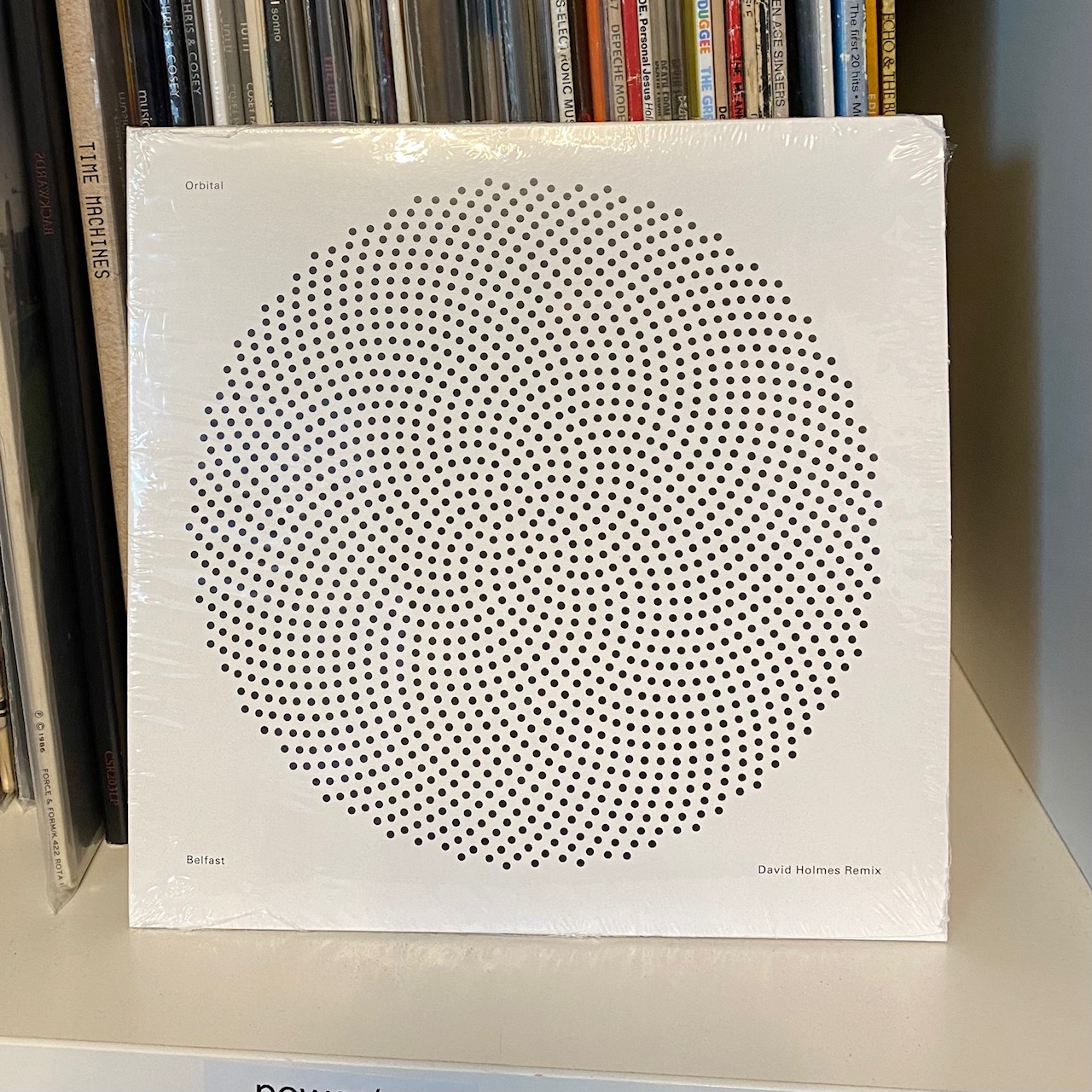
Jonathan Dowland: Belfast (David Holmes Remix)

This morning s record to start the day is David Holmes s remix of Belfast , by Orbital: the latest cover mount record with Electronic Sound magazine. This, and several other new remixes are available on the recent compilation 30 Something which, despite being yet another comp, I ve found quite compelling.
picture of a vinyl record
An unusual decision by ES: they ve split the remix across both sides, but kept the RPM at 45. I haven t ran the numbers to figure out if they could have fit it on one side at 33, but even if they could perhaps it would be too compromised. Quite a trade-off with splitting the track! Orbital are embarking on a new UK tour soon and play Newcastle in March. They ve got a new album out in February.

Matthew Garrett: PKCS#11. hardware keystores, and Apple frustrations

There's a bunch of ways you can store cryptographic keys. The most obvious is to just stick them on disk, but that has the downside that anyone with access to the system could just steal them and do whatever they wanted with them. At the far end of the scale you have Hardware Security Modules (HSMs), hardware devices that are specially designed to self destruct if you try to take them apart and extract the keys, and which will generate an audit trail of every key operation. In between you have things like smartcards, TPMs, Yubikeys, and other platform secure enclaves - devices that don't allow arbitrary access to keys, but which don't offer the same level of assurance as an actual HSM (and are, as a result, orders of magnitude cheaper).

The problem with all of these hardware approaches is that they have entirely different communication mechanisms. The industry realised this wasn't ideal, and in 1994 RSA released version 1 of the PKCS#11 specification. This defines a C interface with a single entry point - C_GetFunctionList. Applications call this and are given a structure containing function pointers, with each entry corresponding to a PKCS#11 function. The application can then simply call the appropriate function pointer to trigger the desired functionality, such as "Tell me how many keys you have" and "Sign this, please". This is both an example of C not just being a programming language and also of you having to shove a bunch of vendor-supplied code into your security critical tooling, but what could possibly go wrong.

(Linux distros work around this problem by using p11-kit, which is a daemon that speaks d-bus and loads PKCS#11 modules for you. You can either speak to it directly over d-bus, or for apps that only speak PKCS#11 you can load a module that just transports the PKCS#11 commands over d-bus. This moves the weird vendor C code out of process, and also means you can deal with these modules without having to speak the C ABI, so everyone wins)

One of my work tasks at the moment is helping secure SSH keys, ensuring that they're only issued to appropriate machines and can't be stolen afterwards. For Windows and Linux machines we can stick them in the TPM, but Macs don't have a TPM as such. Instead, there's the Secure Enclave - part of the T2 security chip on x86 Macs, and directly integrated into the M-series SoCs. It doesn't have anywhere near as many features as a TPM, let alone an HSM, but it can generate NIST curve elliptic curve keys and sign things with them and that's good enough. Things are made more complicated by Apple only allowing keys to be used by the app that generated them, so it's hard for applications to generate keys on behalf of each other. This can be mitigated by using CryptoTokenKit, an interface that allows apps to present tokens to the systemwide keychain. Although this is intended for allowing a generic interface for access to such tokens (kind of like PKCS#11), an app can generate its own keys in the Secure Enclave and then expose them to other apps via the keychain through CryptoTokenKit.

Of course, applications then need to know how to communicate with the keychain. Browsers mostly do so, and Apple's version of SSH can to an extent. Unfortunately, that extent is "Retrieve passwords to unlock on-disk keys", which doesn't help in our case. PKCS#11 comes to the rescue here! Apple ship a module called ssh-keychain.dylib, a PKCS#11 module that's intended to allow SSH to use keys that are present in the system keychain. Unfortunately it's not super well maintained - it got broken when Big Sur moved all the system libraries into a cache, but got fixed up a few releases later. Unfortunately every time I tested it with our CryptoTokenKit provider (and also when I retried with SecureEnclaveToken to make sure it wasn't just our code being broken), ssh would tell me "provider /usr/lib/ssh-keychain.dylib returned no slots" which is not especially helpful. Finally I realised that it was actually generating more debug output, but it was being sent to the system debug logs rather than the ssh debug output. Well, when I say "more debug output", I mean "Certificate []: algorithm is not supported, ignoring it", which still doesn't tell me all that much. So I stuck it in Ghidra and searched for that string, and the line above it was

iVar2 = __auth_stubs::_objc_msgSend(uVar7,"isEqual:",*(undefined8*)__got::_kSecAttrKeyTypeRSA);

with it immediately failing if the key isn't RSA. Which it isn't, since the Secure Enclave doesn't support RSA. Apple's PKCS#11 module appears incapable of making use of keys generated on Apple's hardware.

There's a couple of ways of dealing with this. The first, which is taken by projects like Secretive, is to implement the SSH agent protocol and have SSH delegate key management to that agent, which can then speak to the keychain. But if you want this to work in all cases you need to implement all the functionality in the existing ssh-agent, and that seems like a bunch of work. The second is to implement a PKCS#11 module, which sounds like less work but probably more mental anguish. I'll figure that out tomorrow.

comment count unavailable comments

Russ Allbery: Review: Forward

Review: Forward, edited by Blake Crouch
Publisher: Amazon Original Stories
Copyright: September 2019
ISBN: 1-5420-9206-X
ISBN: 1-5420-4363-8
ISBN: 1-5420-9357-0
ISBN: 1-5420-0434-9
ISBN: 1-5420-4363-8
ISBN: 1-5420-4425-1
Format: Kindle
Pages: 300
This is another Amazon collection of short fiction, this time mostly at novelette length. (The longer ones might creep into novella.) As before, each one is available separately for purchase or Amazon Prime "borrowing," with separate ISBNs. The sidebar cover is for the first in the sequence. (At some point I need to update my page templates so that I can add multiple covers.) N.K. Jemisin's "Emergency Skin" won the 2020 Hugo Award for Best Novelette, so I wanted to read and review it, but it would be too short for a standalone review. I therefore decided to read the whole collection and review it as an anthology. This was a mistake. Learn from my mistake. The overall theme of the collection is technological advance, rapid change, and the ethical and social question of whether we should slow technology because of social risk. Some of the stories stick to that theme more closely than others. Jemisin's story mostly ignores it, which was probably the right decision. "Ark" by Veronica Roth: A planet-killing asteroid has been on its inexorable way towards Earth for decades. Most of the planet has been evacuated. A small group has stayed behind, cataloging samples and filling two remaining ships with as much biodiversity as they can find with the intent to leave at the last minute. Against that backdrop, two of that team bond over orchids. If you were going "wait, what?" about the successful evacuation of Earth, yeah, me too. No hint is offered as to how this was accomplished. Also, the entirety of humanity abandoned mutual hostility and national borders to cooperate in the face of the incoming disaster, which is, uh, bizarrely optimistic for an otherwise gloomy story. I should be careful about how negative I am about this story because I am sure it will be someone's favorite. I can even write part of the positive review: an elegiac look at loss, choices, and the meaning of a life, a moving look at how people cope with despair. The writing is fine, the story structure works; it's not a bad story. I just found it monumentally depressing, and was not engrossed by the emotionally abused protagonist's unresolved father issues. I can imagine a story around the same facts and plot that I would have liked much better, but all of these people need therapy and better coping mechanisms. I'm also not sure what this had to do with the theme, given that the incoming asteroid is random chance and has nothing to do with technological development. (4) "Summer Frost" by Blake Crouch: The best part of this story is the introductory sequence before the reader knows what's going on, which is full of evocative descriptions. I'm about to spoil what is going on, so if you want to enjoy that untainted by the stupidity of the rest of the plot, skip the rest of this story review. We're going to have a glut of stories about the weird and obsessive form of AI risk invented by the fevered imaginations of the "rationalist" community, aren't we. I don't know why I didn't predict that. It's going to be just as annoying as the glut of cyberpunk novels written by people who don't understand computers. Crouch lost me as soon as the setup is revealed. Even if I believed that a game company would use a deep learning AI still in learning mode to run an NPC (I don't; see Microsoft's Tay for an obvious reason why not), or that such an NPC would spontaneously start testing the boundaries of the game world (this is not how deep learning works), Crouch asks the reader to believe that this AI started as a fully scripted NPC in the prologue with a fixed storyline. In other words, the foundation of the story is that this game company used an AI model capable of becoming a general intelligence for barely more than a cut scene. This is not how anything works. The rest of the story is yet another variation on a science fiction plot so old and threadbare that Isaac Asimov invented the Three Laws of Robotics to avoid telling more versions of it. Crouch's contribution is to dress it up in the terminology of the excessively online. (The middle of the story features a detailed discussion of Roko's basilisk; if you recognize that, you know what you're in for.) Asimov would not have had a lesbian protagonist, so points for progress I guess, but the AI becomes more interesting to the protagonist than her wife and kid because of course it does. There are a few twists and turns along the way, but the destination is the bog-standard hard-takeoff general intelligence scenario. One more pet peeve: Authors, stop trying to illustrate the growth of your AI by having it move from broken to fluent English. English grammar is so much easier than self-awareness or the Turing test that we had programs that could critique your grammar decades before we had believable chatbots. It's going to get grammar right long before the content of the words makes any sense. Also, your AI doesn't sound dumber, your AI sounds like someone whose native language doesn't use pronouns and helper verbs the way that English does, and your decision to use that as a marker for intelligence is, uh, maybe something you should think about. (3) "Emergency Skin" by N.K. Jemisin: The protagonist is a heavily-augmented cyborg from a colony of Earth's diaspora. The founders of that colony fled Earth when it became obvious to them that the planet was dying. They have survived in another star system, but they need a specific piece of technology from the dead remnants of Earth. The protagonist has been sent to retrieve it. The twist is that this story is told in the second-person perspective by the protagonist's ride-along AI, created from a consensus model of the rulers of the colony. We never see directly what the protagonist is doing or thinking, only the AI reaction to it. This is exactly the sort of gimmick that works much better in short fiction than at novel length. Jemisin uses it to create tension between the reader and the narrator, and I thoroughly enjoyed the effect. (As shown in the Broken Earth trilogy, Jemisin is one of the few writers who can use second-person effectively.) I won't spoil the revelation, but it's barbed and biting and vicious and I loved it. Jemisin does deliver the point with a sledgehammer, so be aware of that if you want subtlety in your short fiction, but I prefer the bluntness. (This is part of why I usually don't get along with literary short stories.) The reader of course can't change the direction of the story, but the second-person perspective still provides a hit of vicarious satisfaction. I can see why this won the Hugo; it's worth seeking out. (8) "You Have Arrived at Your Destination" by Amor Towles: Sam and his wife are having a child, and they've decided to provide him with an early boost in life. Vitek is a fertility lab, but more than that, it can do some gene tweaking and adjustment to push a child more towards one personality or another. Sam and his wife have spent hours filling out profiles, and his wife spent hours weeding possible choices down to three. Now, Sam has come to Vitek to pick from the remaining options. Speaking of literary short stories, Towles is the non-SFF writer of this bunch, and it's immediately obvious. The story requires the SFnal premise, but after that this is a character piece. Vitek is an elite, expensive company with a condescending and overly-reductive attitude towards humanity, which is entirely intentional on the author's part. This is the sort of story that gets resolved in an unexpected conversation in a roadside bar, and where most of the conflict happens inside the protagonist's head. I was initially going to complain that Towles does the standard literary thing of leaving off the denouement on the grounds that the reader can figure it out, but when I did a bit of re-reading for this review, I found more of the bones than I had noticed the first time. There's enough subtlety that I had to think for a bit and re-read a passage, but not too much. It's also the most thoughtful treatment of the theme of the collection, the only one that I thought truly wrestled with the weird interactions between technological capability and human foresight. Next to "Emergency Skin," this was the best story of the collection. (7) "The Last Conversation" by Paul Tremblay: A man wakes up in a dark room, in considerable pain, not remembering anything about his life. His only contact with the world at first is a voice: a woman who is helping him recover his strength and his memory. The numbers that head the chapters have significant gaps, representing days left out of the story, as he pieces together what has happened alongside the reader. Tremblay is the horror writer of the collection, so predictably this is the story whose craft I can admire without really liking it. In this case, the horror comes mostly from the pacing of revelation, created by the choice of point of view. (This would be a much different story from the perspective of the woman.) It's well-done, but it has the tendency I've noticed in other horror stories of being a tightly closed system. I see where the connection to the theme is, but it's entirely in the setting, not in the shape of the story. Not my thing, but I can see why it might be someone else's. (5) "Randomize" by Andy Weir: Gah, this was so bad. First, and somewhat expectedly, it's a clunky throwback to a 1950s-style hard SF puzzle story. The writing is atrocious: wooden, awkward, cliched, and full of gratuitous infodumping. The characterization is almost entirely through broad stereotypes; the lone exception is the female character, who at least adds an interesting twist despite being forced to act like an idiot because of the plot. It's a very old-school type of single-twist story, but the ending is completely implausible and falls apart if you breathe on it too hard. Weir is something of a throwback to an earlier era of scientific puzzle stories, though, so maybe one is inclined to give him a break on the writing quality. (I am not; one of the ways in which science fiction has improved is that you can get good scientific puzzles and good writing these days.) But the science is also so bad that I was literally facepalming while reading it. The premise of this story is that quantum computers are commercially available. That will cause a serious problem for Las Vegas casinos, because the generator for keno numbers is vulnerable to quantum algorithms. The solution proposed by the IT person for the casino? A quantum random number generator. (The words "fight quantum with quantum" appear literally in the text if you're wondering how bad the writing is.) You could convince me that an ancient keno system is using a pseudorandom number generator that might be vulnerable to some quantum algorithm and doesn't get reseeded often enough. Fine. And yes, quantum computers can be used to generate high-quality sources of random numbers. But this solution to the problem makes no sense whatsoever. It's like swatting a house fly with a nuclear weapon. Weir says explicitly in the story that all the keno system needs is an external source of high-quality random numbers. The next step is to go to Amazon and buy a hardware random number generator. If you want to splurge, it might cost you $250. Problem solved. Yes, hardware random number generators have various limitations that may cause you problems if you need millions of bits or you need them very quickly, but not for something as dead-simple and with such low entropy requirements as keno numbers! You need a trivial number of bits for each round; even the slowest and most conservative hardware random number generator would be fine. Hell, measure the noise levels on the casino floor. Point a camera at a lava lamp. Or just buy one of the physical ball machines they use for the lottery. This problem is heavily researched, by casinos in particular, and is not significantly changed by the availability of quantum computers, at least for applications such as keno where the generator can be reseeded before each generation. You could maybe argue that this is an excuse for the IT guy to get his hands on a quantum computer, which fits the stereotypes, but that still breaks the story for reasons that would be spoilers. As soon as any other casino thought about this, they'd laugh in the face of the characters. I don't want to make too much of this, since anyone can write one bad story, but this story was dire at every level. I still owe Weir a proper chance at novel length, but I can't say this added to my enthusiasm. (2) Rating: 4 out of 10

17 January 2023

Thomas Lange: FAI 6.0 released and new ISO images using Debian 12 bookworm/testing

After more than a year, a new major FAI release is ready to download. Following new features are included: We have included a lot of bug fixes for free of course. Even if FAI 6.0 will only be included into Debian bookworm, you can install it on a bullseye FAI server and create a nfsroot using bookworm without any problems. The combination of a bullseye FAI server with FAI 6.0 and a bullseye nfsroot should also work. New ISO images are available at https://fai-project.org/fai-cd/ The FAI.me build service is not yet using FAI 6.0, but support will be added in the future. FAI

16 January 2023

Gunnar Wolf: Back to Understanding Computers and Cognition

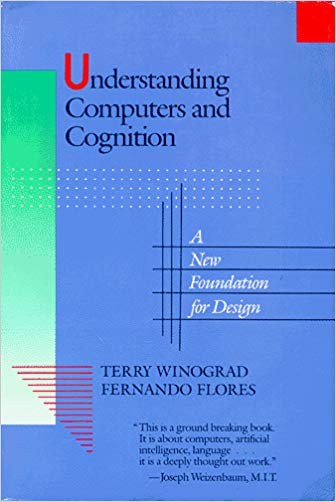
As many of you know, I work at UNAM, Mexico s largest university. My work is split in two parts: My full-time job is to be the systems and network administrator at the Economics Research Institute, and I do some hours of teaching at the Engineering Faculty. At the Institute, my role is academic but although I have tried to frame my works in a way amenable to analysis grounded on the Social Sciences (Construcci n Colaborativa del Conocimiento, Hecho con Creative Commons, Mecanismos de privacidad y anonimato), so far, I have not taken part of academic collaboration with my coworkers Economics is a field very far from my interests, to somehow illustrate it. I was very happy when I was invited to be a part of a Seminar on The Digital Economy in the age of Artificial Intelligence . I talked with the coordinator, and we agreed we have many Economic Science experts but understanding what does Artificial Intelligence mean eludes then, so I will be writing one of the introductory chapters to this analysis. But Hey, I m no expert in Artificial Intelligence. If anything, I could be categorized as an AI-skeptical! Well, at least I might be the closest thing at hand in the Institute So I have been thinking about what I will be writing, and finding and reading material to substantiate what I ll be writing. One of the readings I determined early on I would be going back to is Terry Winograd and Fernando Flores 1986 book, Understanding Computers and Cognition: A New Foundation for Design (oh, were you expecting a link to buy it instead of reading it online?) I first came across this book by mere chance. Back in the last day of year 2000, my friend Ariel invited me and my then-girlfriend to tag along and travel by land to the USA to catch some just-after-Christmas deals in San Antonio. I was not into shopping, but have always enjoyed road trips, so we went together. We went, yes, to the never-ending clothing shops, but we also went to some big libraries And the money I didn t spend at other shops, I spent there. And then some more. There was a little, somewhat oldish book that caught my eye. And I ll be honest: I looked at this book only because it was obviously produced by the LaTeX typesetting system (the basics of which I learnt in 1983, and with which I have written well, basically everything substantial I ve ever done). I remember I read this book with most interest back in that year, and finished it with a Wow, that was a strange trip! And Although I have never done much that could be considered AI-related, this has always been my main reference. But not for explaining what is a perceptron, how is an expert system to ponder the weight of given information, or whether a neural network is convolutional or recurrent, or how to turn from a network trained to recognize feature x into a generational network. No, our book is not technical. Well Not in that sense. This book tackles cognition. But in order to discuss cognition, it must first come to a proper definition of it. And to do so, it has to base itself on philosophy, starting by noting the author s disagreement with what they term as the rationalistic tradition: what we have come to term valid reasoning in Western countries. Their main claim is that the rationalistic tradition cannot properly explain a process as complex as cognition (how much bolder can you be than proposing something like this?). So, this book presents many constructs of Heidggerian origin, aiming to explain what it is understanding and being. In doing so, it follows Humberto Maturana s work. Maturana is also a philosopher, but comes from a background in biology he published works on animal neurophysiology that are also presented here. Writing this, I must ensure you I am not a philosopher, and lack field-specific knowledge to know whether this book is so unique. I know from the onset it does not directly help me to write the chapter I will be writing (but it will surely help me write some important caveats that will make the chapter much more interesting and different to what anybody with a Web browser could write about artificial intelligence). One last note: Although very well written, and notable for bringing hard to grasp concepts to mere technical staff as myself, this is not light, easy reading. I started re-reading this book a couple of weeks ago, and have just finished chapter 5 (page 69). As some reviewers state, this is one of those books you have to go back a paragraph or two over and over. But it is a most enjoyable and interesting reading.
Dirk Eddelbuettel: RcppArmadillo 0.11.4.3.1 on CRAN: Updates

armadillo image Armadillo is a powerful and expressive C++ template library for linear algebra and scientific computing. It aims towards a good balance between speed and ease of use, has a syntax deliberately close to Matlab, and is useful for algorithm development directly in C++, or quick conversion of research code into production environments. RcppArmadillo integrates this library with the R environment and language and is widely used by (currently) 1034 packages other packages on CRAN, downloaded 27.6 million times (per the partial logs from the cloud mirrors of CRAN), and the CSDA paper (preprint / vignette) by Conrad and myself has been cited 509 times according to Google Scholar. This release brings another upstream bugfix interation 11.4.3, released in accordance with the aimed-for monthly release cadence. We had hoped to move away from suppressing deprecation warnings in this release, and had prepared over two dozen patch sets all well as pull requests as documented in issue #391. However, it turns out that we both missed with one or two needed set of changes as well as two other sets of changes triggering deprecation warnings. So we expanded issue #391, and added issue #402 and prepared another eleven pull requests and patches today. With that we can hopefully remove the suppression of these warnings by an expected late of late April. The full set of changes (since the last CRAN release 0.11.4.2.1) follows.

Changes in RcppArmadillo version 0.11.4.3.1 (2023-01-14)
  • The #define ARMA_IGNORE_DEPRECATED_MARKER remains active to suppress the (upstream) deprecation warnings, see #391 and #402 for details.

Changes in RcppArmadillo version 0.11.4.3.0 (2022-12-28) (GitHub Only)
  • Upgraded to Armadillo release 11.4.3 (Ship of Theseus)
    • fix corner case in pinv() when processing symmetric matrices
  • Protect the undefine of NDEBUG behind additional opt-in define

Courtesy of my CRANberries, there is a diffstat report relative to previous release. More detailed information is on the RcppArmadillo page. Questions, comments etc should go to the rcpp-devel mailing list off the R-Forge page. If you like this or other open-source work I do, you can sponsor me at GitHub.

This post by Dirk Eddelbuettel originated on his Thinking inside the box blog. Please report excessive re-aggregation in third-party for-profit settings.

Freexian Collaborators: Monthly report about Debian Long Term Support, December 2022 (by Anton Gladky)

Like each month, have a look at the work funded by Freexian s Debian LTS offering.

Debian LTS contributors In December, 17 contributors have been paid to work on Debian LTS, their reports are available:
  • Abhijith PA did 3.0h (out of 0h assigned and 14.0h from previous period), thus carrying over 11.0h to the next month.
  • Anton Gladky did 8.0h (out of 6.0h assigned and 9.0h from previous period), thus carrying over 7.0h to the next month.
  • Ben Hutchings did 24.0h (out of 9.0h assigned and 15.0h from previous period).
  • Chris Lamb did 18.0h (out of 18.0h assigned).
  • Dominik George did 0.0h (out of 10.0h assigned and 14.0h from previous period), thus carrying over 24.0h to the next month.
  • Emilio Pozuelo Monfort did 8.0h in December, 8.0h in November (out of 1.5h assigned and 49.5h from previous period), thus carrying over 43.0h to the next month.
  • Enrico Zini did 0.0h (out of 0h assigned and 8.0h from previous period), thus carrying over 8.0h to the next month.
  • Guilhem Moulin did 17.5h (out of 20.0h assigned), thus carrying over 2.5h to the next month.
  • Helmut Grohne did 15.0h (out of 15.0h assigned, 2.5h were taken from the extra-budget and worked on).
  • Markus Koschany did 40.0h (out of 40.0h assigned).
  • Ola Lundqvist did 10.0h (out of 7.5h assigned and 8.5h from previous period), thus carrying over 6.0h to the next month.
  • Roberto C. S nchez did 24.5h (out of 20.25h assigned and 11.75h from previous period), thus carrying over 7.5h to the next month.
  • Stefano Rivera did 2.5h (out of 20.5h assigned and 14.5h from previous period), thus carrying over 32.5h to the next month.
  • Sylvain Beucler did 20.5h (out of 37.0h assigned and 22.0h from previous period), thus carrying over 38.5h to the next month.
  • Thorsten Alteholz did 10.0h (out of 14.0h assigned), thus carrying over 4.0h to the next month.
  • Tobias Frost did 16.0h (out of 16.0h assigned).
  • Utkarsh Gupta did 51.5h (out of 42.5h assigned and 9.0h from previous period).

Evolution of the situation In December, we have released 47 DLAs, closing 232 CVEs. In the same year, in total we released 394 DLAs, closing 1450 CVEs. We are constantly growing and seeking new contributors. If you are a Debian Developer and want to join the LTS team, please contact us.

Thanks to our sponsors Sponsors that joined recently are in bold.

15 January 2023

Matthew Garrett: Blogging and microblogging

Long-term Linux users may remember that Alan Cox used to write an online diary. This was before the concept of a "Weblog" had really become a thing, and there certainly weren't any expectations around what one was used for - while now blogging tends to imply a reasonably long-form piece on a specific topic, Alan was just sitting there noting small life concerns or particular technical details in interesting problems he'd solved that day. For me, that was fascinating. I was trying to figure out how to get into kernel development, and was trying to read as much LKML as I could to figure out how kernel developers did stuff. But when you see discussion on LKML, you're frequently missing the early stages. If an LKML patch is a picture of an owl, I wanted to know how to draw the owl, and most of the conversations about starting in kernel development were very "Draw two circles. Now draw the rest of the owl". Alan's musings gave me insight into the thought processes involved in getting from "Here's the bug" to "Here's the patch" in ways that really wouldn't have worked in a more long-form medium.

For the past decade or so, as I moved away from just doing kernel development and focused more on security work instead, Twitter's filled a similar role for me. I've seen people just dumping their thought process as they work through a problem, helping me come up with effective models for solving similar problems. I've learned that the smartest people in the field will spend hours (if not days) working on an issue before realising that they misread something back at the beginning and that's helped me feel like I'm not unusually bad at any of this. It's helped me learn more about my peers, about my field, and about myself.

Twitter's now under new ownership that appears to think all the worst bits of Twitter were actually the good bits, so I've mostly bailed to the Fediverse instead. There's no intrinsic length limit on posts there - Mastodon defaults to 500 characters per post, but that's configurable per instance. But even at 500 characters, it means there's more room to provide thoughtful context than there is on Twitter, and what I've seen so far is more detailed conversation and higher levels of meaningful engagement. Which is great! Except it also seems to discourage some of the posting style that I found so valuable on Twitter - if your timeline is full of nuanced discourse, it feels kind of rude to just scream "THIS FUCKING PIECE OF SHIT IGNORES THE HIGH ADDRESS BIT ON EVERY OTHER WRITE" even though that's exactly the sort of content I'm there for.

And, yeah, not everything has to be for me. But I worry that as Twitter's relevance fades for the people I'm most interested in, we're replacing it with something that's not equivalent - something that doesn't encourage just dropping 50 characters or so of your current thought process into a space where it can be seen by thousands of people. And I think that's a shame.

comment count unavailable comments

14 January 2023

Dirk Eddelbuettel: RApiDatetime 0.0.8 on CRAN: Maintenance

A new release of our RApiDatetime package is now on CRAN. RApiDatetime provides a number of entry points for C-level functions of the R API for Date and Datetime calculations. The functions asPOSIXlt and asPOSIXct convert between long and compact datetime representation, formatPOSIXlt and Rstrptime convert to and from character strings, and POSIXlt2D and D2POSIXlt convert between Date and POSIXlt datetime. Lastly, asDatePOSIXct converts to a date type. All these functions are rather useful, but were not previously exported by R for C-level use by other packages. Which this package aims to change. This release accomodates a CRAN request (as one does) to change (one single) instance of sprintf() to snprintf(). No more, no less.

Changes in RApiDatetime version 0.0.8 (2023-01-14)
  • Update one use of sprint to snprintf
  • Minor edits to DESCRIPTION

Courtesy of my CRANberries, there is are comparisons to the previous release. More information is on the rapidatetime page. For questions or comments please use the issue tracker off the GitHub repo.

This post by Dirk Eddelbuettel originated on his Thinking inside the box blog. Please report excessive re-aggregation in third-party for-profit settings.

Kentaro Hayashi: bibata cursor theme is available on Debian (unstable)

Recently bibata cursor theme is available on Debian (unstable) github.com You can install via sudo apt install -y bibata-cursor-theme. After you installed its theme, you can configure the cursor theme via desktop configuration. (budgie desktop screenshot)
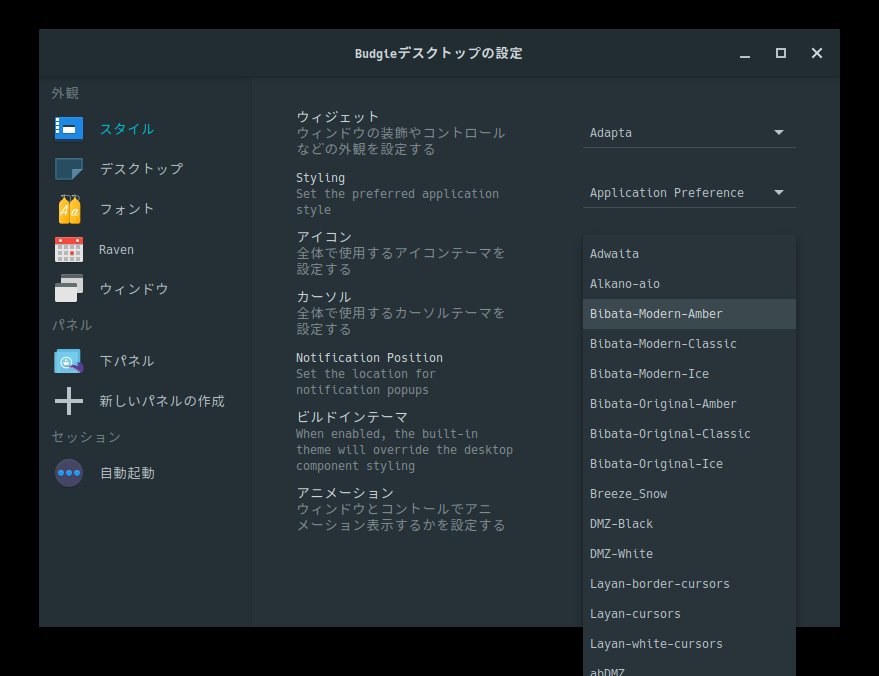
Set bibata-cursor-theme
In bibata-cursor-theme, you can choose the following cursor themes:

Matt Brown: Rebooting...

Hi! After nearly 7 years of dormancy, I m rebooting this website and have a goal to write regularly on a variety of topics going forward. More on that and my goals in a coming post For now, this is just a placeholder note to help double-check that everything on the new site is working as expected and the letters are flowing through the pipes in the right places.

Technical Details I ve migrated the site from Wordpress, to a fully static configuration using Hugo and TailwindCSS for help with styling. For now hosting is still on a Linode VM in Fremont, CA, but my plan is to move to a more specialized static hosting service with better CDN reach in the very near future. If you want to inspect the innards further, it s all at https://github.com/mattbnz/web-matt.

Still on the TODO list
  • Improve the hosting situation as noted above.
  • Integrate Bert Hubert s nice audience minutes analytics script.
  • Write up (or find) LinkedIn/Twitter/Mastodon integration scripts to automatically post updates when a new piece of writing appears on the site, to build/notify followers and improve the social reach. Ideally, the script would then also update the page here with links to the thread(s), so that readers can easily join/follow any resulting conversation on the platform of their choice. I m not planning to add any direct comment or feedback functinoality on the site itself.
  • Add a newsletter/subscription option for folks who don t use RSS and would prefer updates via email rather than a social feed.

13 January 2023

Dirk Eddelbuettel: RcppGSL 0.3.13 on CRAN: Mandated Update

A new release 0.3.13 of RcppGSL is now on CRAN. The RcppGSL package provides an interface from R to the GNU GSL by relying on the Rcpp package. This release contains one change (made at the request of a CRAN email in light of possible future changes for C standard C17 and then C23) and removes a compiler-check from configure.ac. It is both a fair point as our src/Makevars does not actually set a compiler yet also a little marginal? The NEWS entry follows:

Changes in version 0.3.13 (2023-01-12)
  • Remove 'AC_PROG_CC' from 'configure.ac' per CRAN wish

Courtesy of CRANberries, a summary of changes in the most recent release is also available. More information is on the RcppGSL page. Questions, comments etc should go to the issue tickets at the GitHub repo. If you like this or other open-source work I do, you can now sponsor me at GitHub.

This post by Dirk Eddelbuettel originated on his Thinking inside the box blog. Please report excessive re-aggregation in third-party for-profit settings.

12 January 2023

Dirk Eddelbuettel: RDieHarder 0.2.5 on CRAN: Mandated Update

An new version 0.2.5 of the random-number generator tester RDieHarder (based on the DieHarder suite developed / maintained by Robert Brown with contributions by David Bauer and myself along with other contributors) is now on CRAN. This release contains one change (made at the request of a CRAN email in light of possible future changes for C standard C17 and then C23) and removes a compiler-check from configure.ac. It is both a fair point as our src/Makevars does not actually set a compiler yet also a little marginal? Thanks to CRANberries, you can also look at the most recent diff. If you like this or other open-source work I do, you can now sponsor me at GitHub.

This post by Dirk Eddelbuettel originated on his Thinking inside the box blog. Please report excessive re-aggregation in third-party for-profit settings.

Jonathan McDowell: Building a read-only Debian root setup: Part 1

I mentioned in the post about upgrading my home internet that part of the work I did was creating a read-only Debian root with a squashfs image. This post covers the details of how I boot with that image; a later post will cover how I build the squashfs image. First, David Reader kindly pointed me at his rodebian setup, which was helpful in making me think about the whole problem but ultimately not the direction I went. Primarily because on the old router (an RB3011) I am space constrained, with only 120M of usable flash, and so ideally I wanted as much as possible of the system in a well compressed filesystem. squashfs seemed like the best option for that, and ultimately I ended up with a 39M image. I ve then used overlayfs to mount a tmpfs, so I get what looks like a writeable system without having to do too many tweaks to the actual install. On the plus side I can then see exactly what is getting written where and decide whether I need to update something in the squashfs. I don t boot with an initrd - for initial testing I booted directly off a USB stick. I ve actually ended up continuing to do this in production, because I ve had no pressing reason to move it all to booting off internal flash (I ve ended up with a Sandisk SDCZ430-032G-G46 which is tiny). However nothing I m going to describe is dependent on that - this would work perfectly well for a initial UBIFS rootfs on internal NAND. So the basic overview is I boot off a minimal rootfs, mount a squashfs, create an appropriate tmpfs, mount an overlayfs that combines the two, then pivotroot into the overlayfs and exec its init so it becomes the rootfs. For the minimal rootfs I started with busybox, in particular I used the armhf busybox-static package from Debian. My RB5009 is an ARM64, but I wanted to be able to test on the RB3011 as well, which is ARMv7. Picking an armhf binary for the minimal rootfs lets me use the same image for both. Using the static build helps reduce the number of pieces involved in putting it all together. The busybox binary goes in /bin. I was able to cheat and chroot into the empty rootfs and call busybox --install -s to create symlinks for all the tools it provides, but I could have done this manually. There s only a handful that are actually needed, but it s amazing how much is crammed into a 1.2M binary. /sbin/init is a shell script:
Contents
#!/bin/ash
# Make sure we have a sane date
if [ -e /data/saved-date ]; then
        CURRENT_DATE=$(date -Iseconds)
        if [ "$ CURRENT_DATE:0:4 " -lt "2022" -o \
                        "$ CURRENT_DATE:0:4 " -gt "2030" ]; then
                echo Setting initial date
                date -s "$(cat /data/saved-date)"
        fi
fi
# Work out what platform we're on
ARCH=$(uname -m)
if [ "$ ARCH " == "aarch64" ]; then
        ARCH=arm64
else
        ARCH=armhf
fi
# Mount a tmpfs to store the changes
mount -t tmpfs root-rw /mnt/overlay/rw
# Make the directories we need in the tmpfs
mkdir /mnt/overlay/rw/upper
mkdir /mnt/overlay/rw/work
# Mount the squashfs and build an overlay root filesystem of it + the tmpfs
mount -t squashfs -o loop /data/router.$ ARCH .squashfs /mnt/overlay/lower
mount -t overlay \
        -o lowerdir=/mnt/overlay/lower,upperdir=/mnt/overlay/rw/upper,workdir=/mnt/overlay/rw/work \
        overlayfs-root /mnt/root
# Build the directories we need within the new root
mkdir /mnt/root/mnt/flash
mkdir /mnt/root/mnt/overlay
mkdir /mnt/root/mnt/overlay/lower
mkdir /mnt/root/mnt/overlay/rw
# Copy any stored state
if [ -e /data/state.$ ARCH .tar ]; then
        echo Restoring stored state
        cd /mnt/root
        tar xf /data/state.$ ARCH .tar
fi
cd /mnt/root
pivot_root . mnt/flash
echo Switching into root filesystem
exec chroot . sh -c "$(cat <<END
mount --move /mnt/flash/mnt/overlay/lower /mnt/overlay/lower
mount --move /mnt/flash/mnt/overlay/rw /mnt/overlay/rw
exec /sbin/init
END
)"
Most of what the script is doing is sorting out the squashfs + tmpfs backed overlayfs that becomes the full root filesystems, but there are a few other bits to note. First, we pick up a saved date from /data/saved-date - the router has no RTC and while it ll sort itself out with NTP once it gets networking up it s useful to make sure we don t end up comically far in the past or future. Second, the script looks at what architecture we re running and picks up an appropriate squashfs image from /data based on that. This let me use the same USB stick for testing on both the RB3011 and the RB5011. Finally we allow for a /data/state.$ ARCH .tar file to let us pick up changes to the rootfs at boot time - this prevents having to rebuild the squashfs image every time there s a persistent change. The other piece that doesn t show up in the script is that the kernel and its modules are all installed into this initial rootfs (and then symlinked from the squashfs). This lets me build a mostly modular kernel, as long as all the necessary drivers to mount the USB stick are built in. Once the system is fully booted the initial rootfs is available at /mnt/flash, by default mounted read-only (to avoid inadvertent writes), but able to be remounted to update the squashfs image, install a new kernel, or update the state tarball. /mnt/overlay/rw/upper/ is where updates to the overlayfs are written, which provides an easy way to see what files are changing, initially to determine what might need tweaked in the squashfs creation process and subsequently to be able to see what needs updated in the state tarball.

Dirk Eddelbuettel: linl 0.0.5 on CRAN: Extended Background Support

A new release of our linl package for writing LaTeX letters with (R)markdown is now on CRAN. linl makes it easy to write letters in markdown, with some extra bells and whistles thanks to some cleverness chiefly by Aaron. This version add extended header and footer placement support thanks to an included copy of wallpaper.sty as added in a nice PR by I aki. As the previous release was well over three years ago, we also enhanced continuous integration in the process. The repository README.md shows some screenshots of input and output files. The NEWS entry follows:

Changes in linl version 0.0.5 (2023-01-11)
  • Several updates to continuous integration and testing
  • Enhanced placment functionality for images in header and footer via wallpaper.sty and new x and y offset variable (I aki Ucar in #30)

Courtesy of CRANberries, there is a comparison to the previous release. More information is on the linl page. For questions or comments use the issue tracker off the GitHub repo. If you like this or other open-source work I do, you can now sponsor me at GitHub.

This post by Dirk Eddelbuettel originated on his Thinking inside the box blog. Please report excessive re-aggregation in third-party for-profit settings.

11 January 2023

Dirk Eddelbuettel: qlcal 0.0.4 on CRAN: Extended and Updated

The fourth release of the still new-ish qlcal package arrivied at CRAN just now. qlcal is based on the calendaring subset of QuantLib. It is provided (for the R package) as a set of included files, so the package is self-contained and does not depend on an external QuantLib library (which can be demanding to build). qlcal covers over sixty country / market calendars and can compute holiday lists, its complement (i.e. business day lists) and much more. This release generalizes the advanceDate() function (similar to what advanceUnits() already had), and updates several calendars along with the upcoming QuantLib 1.29 release. This includes updates for the UK and Australia related to changes in the monarchy, an update for South Africa and the additional of 2023 holidays for China.

Changes in version 0.0.4 (2023-01-11)
  • The advanceDate function can now selects a business day convention, a time unit and an end-of-month convention
  • Calendars routines for Australia, China, South Africa, UK, US have been updated to current versions from QuantLib 1.29.

Courtesy of my CRANberries, there is a diffstat report for this release. See the project page and package documentation for more details, and more examples. If you like this or other open-source work I do, you can now sponsor me at GitHub.

This post by Dirk Eddelbuettel originated on his Thinking inside the box blog. Please report excessive re-aggregation in third-party for-profit settings.

Junichi Uekawa: Reading through intrusive-collections.

Reading through intrusive-collections. My eyes are not quite used to reading macro packages and they don't quite make sense to me yet. Error messages look strange too.

Next.

Previous.