Search Results: "sto"

8 November 2021

Enrico Zini: An educational debugging session

This morning we realised that a test case failed on Fedora 34 only (the link is in Italian) and we set to debugging. The initial analysis This is the initial reproducer:
$ PROJ_DEBUG=3 python setup.py test
test_recipe (tests.test_litota3.TestLITOTA3NordArkimetIFS) ... pj_open_lib(proj.db): call fopen(/lib64/../share/proj/proj.db) - succeeded
proj_create: Open of /lib64/../share/proj/proj.db failed
pj_open_lib(proj.db): call fopen(/lib64/../share/proj/proj.db) - succeeded
proj_create: no database context specified
Cannot instantiate source_crs
EXCEPTION in py_coast(): ProjP: cannot create crs to crs from [EPSG:4326] to [+proj=merc +lon_0=0 +k=1 +x_0=0 +y_0=0 +ellps=WGS84 +datum=WGS84 +over +units=m +no_defs]
ERROR
Note that opening /lib64/../share/proj/proj.db sometimes succeeds, sometimes fails. It's some kind of Schr dinger path, which works or not depending on how you observe it:
# ls -lad /lib64
lrwxrwxrwx 1 1000 1000 9 Jan 26  2021 /lib64 -> usr/lib64
$ ls -la /lib64/../share/proj/proj.db
-rw-r--r-- 1 root root 8925184 Jan 28  2021 /lib64/../share/proj/proj.db
$ cd /lib64/../share/proj/
$ cd /lib64
$ cd ..
$ cd share
-bash: cd: share: No such file or directory
And indeed, stat(2) finds it, and sqlite doesn't (the file is a sqlite database):
$ stat /lib64/../share/proj/proj.db
  File: /lib64/../share/proj/proj.db
  Size: 8925184     Blocks: 17432      IO Block: 4096   regular file
Device: 33h/51d Inode: 56907       Links: 1
Access: (0644/-rw-r--r--)  Uid: (    0/    root)   Gid: (    0/    root)
Access: 2021-11-08 14:09:12.334350779 +0100
Modify: 2021-01-28 05:38:11.000000000 +0100
Change: 2021-11-08 13:42:51.758874327 +0100
 Birth: 2021-11-08 13:42:51.710874051 +0100
$ sqlite3 /lib64/../share/proj/proj.db
Error: unable to open database "/lib64/../share/proj/proj.db": unable to open database file
A minimal reproducer Later on we started stripping layers of code towards a minimal reproducer: here it is. It works or doesn't work depending on whether proj is linked explicitly, or via MagPlus:
$ cat tc.cc
#include <magics/ProjP.h>
int main()  
    magics::ProjP p("EPSG:4326", "+proj=merc +lon_0=0 +k=1 +x_0=0 +y_0=0 +ellps=WGS84 +datum=WGS84 +over +units=m +no_defs");
    return 0;
 
$ g++ -o tc  tc.cc -I/usr/include/magics  -lMagPlus
$ ./tc
proj_create: Open of /lib64/../share/proj/proj.db failed
proj_create: no database context specified
terminate called after throwing an instance of 'magics::MagicsException'
  what():  ProjP: cannot create crs to crs from [EPSG:4326] to [+proj=merc +lon_0=0 +k=1 +x_0=0 +y_0=0 +ellps=WGS84 +datum=WGS84 +over +units=m +no_defs]
Aborted (core dumped)
$ g++ -o tc  tc.cc -I/usr/include/magics -lproj  -lMagPlus
$ ./tc
What is going on here? A difference between the two is the path used to link to libproj.so:
$ ldd ./tc   grep proj
    libproj.so.19 => /lib64/libproj.so.19 (0x00007fd4919fb000)
$ g++ -o tc  tc.cc -I/usr/include/magics   -lMagPlus
$ ldd ./tc   grep proj
    libproj.so.19 => /lib64/../lib64/libproj.so.19 (0x00007f6d1051b000)
Common sense screams that this should not matter, but we chased an intuition and found that one of the ways proj looks for its database is relative to its shared library. Indeed, gdb in hand, that dladdr call returns /lib64/../lib64/libproj.so.19. From /lib64/../lib64/libproj.so.19, proj strips two paths from the end, presumably to pass from something like /something/usr/lib/libproj.so to /something/usr. So, dladdr returns /lib64/../lib64/libproj.so.19, which becomes /lib64/../, which becomes /lib64/../share/proj/proj.db, which exists on the file system and is used as a path to the database. But depending how you look at it, that path might or might not be valid: it passes the stat(2) check that stops the lookup for candidate paths, but sqlite is unable to open it. Why does the other path work? By linking libproj.so in the other way, dladdr returns /lib64/libproj.so.19, which becomes /share/proj/proj.db, which doesn't exist, which triggers a fallback to a PROJ_LIB constant defined at compile time, which is a path that works no matter how you look at it. Why that weird path with libMagPlus? To complete the picture, we found that libMagPlus.so is packaged with a rpath set, which is known to cause trouble
# readelf -d /usr/lib64/libMagPlus.so grep rpath
 0x000000000000000f (RPATH)              Library rpath: [$ORIGIN/../lib64]
The workaround We found that one can set PROJ_LIB in the environment to override the normal proj database lookup. Building on that, we came up with a simple way to override it on Fedora 34 only:
    if distro is not None and distro.linux_distribution()[:2] == ("Fedora", "34") and "PROJ_LIB" not in os.environ:
         self.env_overrides["PROJ_LIB"] = "/usr/share/proj/"

This has been a most edifying and educational debugging session, with only the necessary modicum of curses and swearwords. Working in a team of excellent people really helps.

Russell Coker: Installing NextCloud

NextCloud and OwnCloud History Some time ago I tried OwnCloud, it wasn t a positive experience for me. Since that time I ve got a server with a much faster CPU, a faster Internet connection, and the NextCloud code is newer and running on a newer version of PHP, I didn t make good notes so I m not sure which factors were most responsible for having a better experience this time. According to the NextCloud Wikipedia page [1] the fork of NextCloud from the OpenCloud base happened in 2016 so it s obviously been a while since I tried it, it was probably long before 2016. Recently the BBC published an interesting article on Turnover contagion which is when one resignation can trigger many more [2] which is interesting to read in the context of OwnCloud losing critical staff failing after one key developer resigned. I mentioned OwnCloud in a 2012 blog post about Liberty and Mobile Phones [3], since then I haven t done well at achieving those goals. A few days ago I decided to try NextCloud and found it a much better experience than I recall OwnCloud being in the past. Installation I installed OwnCloud on an Oracle Cloud ARM VM (see my previous blog post about the Oracle Cloud Free Tier [4]). This CloudCone article on installing NextCloud on Debian 10 (Buster) covers the basics well [5]. Here is the NextCloud URL for downloading the PHP files (a large ZIP archive) [6]. You have to extract to where Apache is configured to have it s webroot and then run chown -R www-data nextcloud/lib/private/Log nextcloud/config nextcloud/apps (or if you use php-fpm then chown it to the user for that). NextCloud recommend having all of the NextCloud files owned by www-data, but that s just a bad idea, allowing it to rewrite some of it s program files is bad, allowing it to rewrite all of them is worse. For my installation I used the Apache modiles macro, rewrite, ssl, php7.4, and headers (this is more about how I configure Apache than about NextCloud). Also I edited /etc/php/7.4/apache2/php.ini and changed memory_limit to 512M (the default of 128M is not enough). I m currently only testing it, for a production use I would use php-fpm and run it under it s own UID so that it can t interact with other PHP apps. After that it was just a matter of visiting the configuration URL and giving it the details of the database etc. After setting it up the command php -d memory_limit=512M occ app:install richdocumentscode_arm64 when run from the root of the OwnCloud installation installs the Cloudera components for editing LibreOffice documents in OwnCloud, this is the command for ARM64 architecture, I presume the command for other architectures is similar. Conclusion OwnCloud is very usable, it has a decent feature set built in and the option to download modules such as the components for editing LibreOffice files on the web is useful. But I am hesitant to install things that require the sort of access it requires. I think it would be better if there was a documented and supported way of installing things and then locking them down so that at runtime it can only write to data files not any program files or configuration files. It would also be better if it was packaged for Debian and had the Debian update process for security fixes. I can imagine many people installing it, forgetting to update it, and ending up with insecure systems.

Michael Ablassmeier: Libvirt/KVM Backup on Debian Bullseye

The libvirt and qemu versions in Debian Bullseye support a new feature that allows for easier backup and recovery of virtual machines. Instead of using snapshots for backup operation, its now possible to enable dirty bitmaps. Other hypervisors tend to call this changed block tracking . Using the new backup begin approach, its not only possible to create live full backups (without having to create an snapshot) but also track the changes between so called checkpoints, which is very useful for incremental backups. Over the course of the last few months, i have been working on a simple backup and recovery utility called virtnbdbackup It uses the pull based approach in the libvirt api set and currently supports: Preparing the virtual machines The dirty bitmap feature is not enabled by default, users can enable it by adding a new capability to a virtual machine configuration:
 <domain type='kvm' id='1' xmlns:qemu='http://libvirt.org/schemas/domain/qemu/1.0'>
 [..]
 <qemu:capabilities>
   <qemu:add capability='incremental-backup'/>
 </qemu:capabilities>
 [..]
 </domain>
To finally enable the feature, power cycle virtual machine once. Creating backups By default, virtnbdbackup saves the virtual machine config, disks and its logfiles to a given target directory. Its also possible to stream the output into a uncompressed zip archive Taking a backup is as simple as:
# virtnbdbackup -d vm2 -l full -o /tmp/WEEKLY_BACKUP/
 [..]
[2021-11-08 15:43:46] INFO virtnbdbackup - main [MainThread]: Backup jobs finished, stopping backup task.
[2021-11-08 15:43:46] INFO virtnbdbackup - main [MainThread]: Finished
# tree /tmp/WEEKLY_BACKUP/
 /tmp/WEEKLY_BACKUP/
  backup.full.11082021154343.log
  checkpoints
    virtnbdbackup.0.xml
  sda.full.data
  vm2.cpt
  vmconfig.virtnbdbackup.0.xml
From that point on, its now possible to create incremental backups:
 # virtnbdbackup -d vm2 -l inc -o /tmp/WEEKLY_BACKUP/
 # tree /tmp/WEEKLY_BACKUP/
 /tmp/WEEKLY_BACKUP/
  backup.full.11082021154343.log
  backup.inc.11082021154538.log
  checkpoints
    virtnbdbackup.0.xml
    virtnbdbackup.1.xml
  sda.full.data
  sda.inc.virtnbdbackup.1.data
  vm2.cpt
  vmconfig.virtnbdbackup.0.xml
  vmconfig.virtnbdbackup.1.xml
Restoring backups The virtnbdrestore utility can be used to reconstruct the backup sets into usable qcow images, like so:
 # virtnbdrestore -a restore -i /tmp/WEEKLY_BACKUP/ -o /tmp/VM_RESTORE
Using the --until option its also possible to only reconstruct the images to a certain checkpoint, allowing for point in time recovery. Restoring single files Via virtnbdmap you can map full backups back into an usable block device, without having to reconstruct the complete backup image:
# virtnbdmap -f /tmp/WEEKLY_BACKUP/sda.full.data
 [..] INFO virtnbdmap - <module> [MainThread]: Done mapping backup image to [/dev/nbd0]
 [..] INFO virtnbdmap - <module> [MainThread]: Press CTRL+C to disconnect
# fdisk -l /dev/nbd0
Disk /dev/nbd0: 2 GiB, 2147483648 bytes, 4194304 sectors
From here, you can either mount the disc and recover single files, or boot from it via:
qemu-img create -b /dev/nbd0 -f qcow2 bootme.qcow2
qemu-system-x86_64 -enable-kvm -m 2000 -hda bootme.qcow2
Check out the README for the full feature set.

6 November 2021

Evgeni Golov: I just want to run this one Python script

So I couldn't sleep the other night, and my brain wanted to think about odd problems Ever had a script that's compatible with both, Python 2 and 3, but you didn't want to bother the user to know which interpreter to call? Maybe because the script is often used in environments where only one Python is available (as either /usr/bin/python OR /usr/bin/python3) and users just expect things to work? And it's only that one script file, no package, no additional wrapper script, nothing. Yes, this is a rather odd scenario. And yes, using Python doesn't make it easier, but trust me, you wouldn't want to implement the same in bash. Nothing that you will read from here on should ever be actually implemented, it will summon dragons and kill kittens. But it was a fun midnight thought, and I like to share nightmares! The nice thing about Python is it supports docstrings, essentially strings you can put inside your code which are kind of comments, but without being hidden inside commnent blocks. These are often used for documentation that you can reach using Python's help() function. (Did I mention I love help()?) Bash on the other hand, does not support docstrings. Even better, it doesn't give a damn whether you quote commands or not. You can call "ls" and you'll get your directory listing the same way as with ls. Now, nobody would under normal circumstances quote ls. Parameters to it, sure, those can contain special characters, but ls?! Another nice thing about Python: it doesn't do any weird string interpolation by default (ssssh, f-strings are cool, but not default). So "$(ls)" is exactly that, a string containing a Dollar sign, an open parenthesis, the characters "l" and "s" and a closing parenthesis. Bash, well, Bash will run ls, right? If you don't yet know where this is going, you have a clean mind, enjoy it while it lasts! So another thing that Bash has is exec: "replace[s] the shell without creating a new process". That means that if you write exec python in your script, the process will be replaced with Python, and when the Python process ends, your script ends, as Bash isn't running anymore. Well, technically, your script ended the moment exec was called, as at that point there was no more Bash process to execute the script further. Using exec is a pretty common technique if you want to setup the environment for a program and then call it, without Bash hanging around any longer as it's not needed. So we could have a script like this:
#!/bin/bash
exec python myscript.py "$@"
Here "$@" essentially means "pass all parameters that were passed to this Bash script to the Python call" (see parameter expansion). We could also write it like this:
#!/bin/bash
"exec" "python" "myscript.py" "$@"
As far as Bash is concerned, this is the same script. But it just became valid Python, as for Python those are just docstrings. So, given this is a valid Bash script and a valid Python script now, can we make it do something useful in the Python part? Sure!
#!/bin/bash
"exec" "python" "myscript.py" "$@"
print("lol")
If we call this using Bash, it never gets further than the exec line, and when called using Python it will print lol as that's the only effective Python statement in that file. Okay, but what if this script would be called myscript.py? Exactly, calling it with Python would print lol and calling it with Bash would end up printing lol too (because it gets re-executed with Python). We can even make it name-agnostic, as Bash knows the name of the script we called:
#!/bin/bash
"exec" "python" "$0" "$@"
print("lol")
But this is still calling python, and it could be python3 on the target (or even something worse, but we're not writing a Halloween story here!). Enter another Bash command: command (SCNR!), especially "The -v option causes a single word indicating the command or file name used to invoke command to be displayed". It will also exit non-zero if the command is not found, so we can do things like $(command -v python3 command -v python) to find a Python on the system.
#!/bin/bash
"exec" "$(command -v python3   command -v python)" "$0" "$@"
print("lol")
Not well readable, huh? Variables help!
#!/bin/bash
__PYTHON="$(command -v python3   command -v python)"
"exec" "$ __PYTHON " "$0" "$@"
print("lol")
For Python the variable assignment is just a var with a weird string, for Bash it gets executed and we store the result. Nice! Now we have a Bash header that will find a working Python and then re-execute itself using said Python, allowing us to use some proper scripting language. If you're worried that $0 won't point at the right file, just wrap it with some readlink -f .

Reproducible Builds: Reproducible Builds in October 2021

Welcome to the October 2021 report from the Reproducible Builds project!
This month Samanta Navarro posted to the oss-security security mailing on a novel category of exploit in the .tar archive format, where a single .tar file contains different contents depending on the tar utility being used. Naturally, this has consequences for reproducible builds as Samanta goes onto reply:

Arch Linux uses libarchive (bsdtar) in its build environment. The default tar program installed is GNU tar. It is possible to create a source distribution which leads to different files seen by the build environment than compared to a careful reviewer and other Linux distributions.
Samanta notes that addressing the tar utilities themselves will not be a sufficient fix:
I have submitted bug reports and patches to some projects but eventually I had to conclude that the problem itself cannot be fixed by these implementations alone. The best choice for these tools would be to only allow archives which are fully compatible to standards but this in turn would render a lot of archives broken.
Reproducible builds, with its twin ideas of reaching consensus on the build outputs as well as precisely recording and describing the build environment, would help address this problem at a higher level.
Codethink announced that they had achieved ISO-26262 ASIL D Tool Certification, a way of determining specific safety standards for software. Codethink used open source tooling to achieve this, but they also leverage:
Reproducibility, repeatability and traceability of builds, drawing heavily on best-practices championed by the Reproducible Builds project.

Elsewhere on the internet, according to a comment on Hacker News, Microsoft are now comparing NPM Javascript packages with their original source repositories:
I got a PR in my repository a few days ago leading back to a team trying to make it easier for packages to be reproducible from source.

Lastly, Martin Monperrus started an interesting thread on our mailing list about Github, specifically that their autogenerated release tarballs are not deterministic . The thread generated a significant number of replies that are worth reading.

Events and presentations

Community news On our mailing list this month:
There were quite a few changes to the Reproducible Builds website and documentation this month as well, including Feng Chai updating some links on our publications page [ ] and marco updated our project metadata around the Bitcoin Core building guide [ ].
Lastly, we ran another productive meeting on IRC during October. A full set of notes from the meeting is available to view.

Distribution work Qubes was heavily featured in the latest edition of Linux Weekly News, and a significant section was dedicated to discussing reproducibility. For example, it was mentioned that the Qubes project has been working on incorporating reproducible builds into its continuous integration (CI) infrastructure . But the LWN article goes on to describe that:
The current goal is to be able to build the Qubes OS Debian templates solely from packages that can be built reproducibly. Templates in Qubes OS are VM images that can be used to start an application qube quickly based on the template. The qube will have read-only access to the root filesystem of the template, so that the same root filesystem can be shared with multiple application qubes. There are official templates for several variants of both Fedora and Debian, as well as community maintained templates for several other distributions.
You can view the whole article on LWN, and Fr d ric also published a lengthy summary about their work on reproducible builds in Qubes as well for those wishing to learn more.
In Debian this month, 133 reviews of Debian packages were added, 81 were updated and 24 were removed this month, adding to Debian s ever-growing knowledge about identified issues. A number of issues were categorised and added by Chris Lamb and Vagrant Cascadian too [ ][ ][ ]. In addition, work on alternative snapshot service has made progress by Fr d ric Pierret and Holger Levsen this month, including moving from the existing host (snapshot.notset.fr) to snapshot.reproducible-builds.org (more info) thanks to OSUOSL for the machine and hosting and Debian for the disks.
Finally, Bernhard M. Wiedemann posted his monthly reproducible builds status report.

diffoscope diffoscope is our in-depth and content-aware diff utility. Not only can it locate and diagnose reproducibility issues, it can provide human-readable diffs from many kinds of binary formats. This month, Chris Lamb made the following changes, including preparing and uploading versions 186, 187, 188 and 189 to Debian
  • New features:
    • Add support for Python Sphinx inventory files (usually named objects.inv on-disk). [ ]
    • Add support for comparing .pyc files. Thanks to Sergei Trofimovich for the inspiration. [ ]
    • Try some alternative suffixes (e.g. .py) to support distributions that strip or retain them. [ ][ ]
  • Bug fixes:
    • Fix Python decompilation tests under Python 3.10+ [ ] and for Python 3.7 [ ].
    • Don t raise a traceback if we cannot unmarshal Python bytecode. This is in order to support Python 3.7 failing to load .pyc files generated with newer versions of Python. [ ]
    • Skip Python bytecode testing where we do not have an expected diff. [ ]
  • Codebase improvements:
    • Use our file_version_is_lt utility instead of accepting both versions of uImage expected diff. [ ]
    • Split out a custom call to assert_diff for a .startswith equivalent. [ ]
    • Use skipif instead of manual conditionals in some tests. [ ]
In addition, Jelle van der Waa added external tool references for Arch Linux for ocamlobjinfo, openssl and ffmpeg [ ][ ][ ] and added Arch Linux as a Continuous Integration (CI) test target. [ ] and Vagrant Cascadian updated the testsuite to skip Python bytecode comparisons when file(1) is older than 5.39. [ ] as well as added external tool references for the Guix distribution for dumppdf and ppudump. [ ][ ]. Vagrant Cascadian also updated the diffoscope package in GNU Guix [ ][ ]. Lastly, Guangyuan Yang updated the FreeBSD package name on the website [ ], Mattia Rizzolo made a change to override a new Lintian warning due to the new test files [ ], Roland Clobus added support to detect and log if the GNU_BUILD_ID field in an ELF binary been modified [ ], Sandro J ckel updated a number of helpful links on the website [ ] and Sergei Trofimovich made the uImage test output support file() version 5.41 [ ].

reprotest reprotest is the Reproducible Build s project end-user tool to build same source code twice in widely differing environments, checking the binaries produced by the builds for any differences. This month, reprotest version 0.7.18 was uploaded to Debian unstable by Holger Levsen, which also included a change by Holger to clarify that Python 3.9 is used nowadays [ ], but it also included two changes by Vasyl Gello to implement realistic CPU architecture shuffling [ ] and to log the selected variations when the verbosity is configured at a sufficiently high level [ ]. Finally, Vagrant Cascadian updated reprotest to version 0.7.18 in GNU Guix.

Upstream patches The Reproducible Builds project detects, dissects and attempts to fix unreproducible packages. We try to send all of our patches upstream where appropriate. We authored a large number of such patches this month, including:

Testing framework The Reproducible Builds project runs a testing framework at tests.reproducible-builds.org, to check packages and other artifacts for reproducibility. This month, the following changes were made:
  • Holger Levsen:
    • Debian-related changes:
      • Incorporate a fix from bremner into builtin-pho related to binary-NMUs. [ ]
      • Keep bullseye environments around longer, in an attempt to fix a Jenkins issue. [ ]
      • Improve the documentation of buildinfos.debian.net. [ ]
      • Improve documentation for the builtin-pho setup. [ ][ ]
    • OpenWrt-related changes:
      • Also use -j1 for better debugging. [ ]
      • Document that that Python 3.x is now used. [ ]
      • Enable further debugging for the toolchain build. [ ]
    • New snapshot.reproducible-builds.org service:
      • Actually add new node. [ ][ ]
      • Install xfsprogs on snapshot.reproducible-builds.org. [ ]
      • Create account for fpierret on new node. [ ]
      • Run node_health_check job on new node too. [ ]
  • Mattia Rizzolo:
    • Debian-related changes:
      • Handle schroot errors when invoking diffoscope instead of masking them. [ ][ ]
      • Declare and define some variables separately to avoid masking the subshell return code. [ ]
      • Fix variable name. [ ]
      • Improve log reporting. [ ]
      • Execute apt-get update with the -q argument to get more decent logs. [ ]
      • Set the Debian HTTP mirror and proxy for snapshot.reproducible-builds.org. [ ]
      • Install the libarchive-tools package (instead of bsdtar) when updating Jenkins nodes. [ ]
    • Be stricter about errors when starting the node agent [ ] and don t overwrite NODE_NAME so that we can expect Jenkins to properly set for us [ ].
    • Explicitly warn if the NODE_NAME is not a fully-qualified domain name (FQDN). [ ]
    • Document whether a node runs in the future. [ ]
    • Disable postgresql_autodoc as it not available in bullseye. [ ]
    • Don t be so eager when deleting schroot internals, call to schroot -e to terminate the schroots instead. [ ]
    • Only consider schroot underlays for deletion that are over a month old. [ ][ ]
    • Only try to unmount /proc if it s actually mounted. [ ]
    • Move the db_backup task to its own Jenkins job. [ ]
Lastly, Vasyl Gello added usage information to the reproducible_build.sh script [ ].

Contributing If you are interested in contributing to the Reproducible Builds project, please visit our Contribute page on our website. However, you can get in touch with us via:

5 November 2021

Jonathan Dowland: 25 things I would like to 3D print

Last year I started collecting ideas of things I would like to 3D print one day, on Twitter. Twitter is fundamentally ephemeral, so I'll collect it here instead. I got up to 14 items on Twitter, and now I'm up to 25. I don't own a 3D printer, but I have access to one at the work office. Perhaps this list is my subconcious trying to convince me to buy one. What am I missing? What else should I be thinking of printing? Let me know!
  1. Some kind of 45 leaning prong to dry bottles and flasks on
  2. A tea tray and coasters
  3. a replacement prop arm/foot for my computer keyboard (something like this but for the Lenovo Ultranav)
  4. some attempted representation of Borges Library of Babel, a la @jwz The Library of Babel, again
  5. an exploration of the geometry of Susanna Clarke s Piranesi
  6. further iterations of my castle
  7. Small tins to keep loose-leaf tea in
  8. Who am I kidding, bound to be a map from DOOM. E1M1 perhaps, or something more regular (MAP07? E2M8?) See also this amazing print of Quake 3: Arena's "Camping Grounds"
  9. replacement bits for kids toy sets, e.g. a bolt with long shank from Early Learning Centre Build It Deluxe Set, without all 4 of which you can't build much of anything
  10. A stand for a decorative Christmas bauble (kid's hand print on it) A roll of cellotape works pretty well in the mean time
  11. DIY bits-and-bobs sorter/storage (nuts and bolts etc)
  12. A space ship from Elite/Frontier. Probably a Cobra mk3 or maybe a Viper mk2. In a glow-in-the-dark PLA which i d overpaint with gunmetal except for the fuselage
  13. A watch stand/holder/storage thing Except it would look nicer in wood (And I m more inclined to get rid of all but one watch instead)
  14. Little tabbed 7 dividers for vinyl records, with A-Z cut into the tabs 12 ones might be a stretch (something like this)
  15. A low-profile custom trackpoint cover like the ones by SaotoTech (e.g.)
  16. A vinyl record. (Not sure that any 3D printer I would have access to would have the necessary resolution. I haven't done any research yet.)
  17. A free-standing inclined vinyl record display stand (e.g.)
  18. A "Settlers of Catan" set. I've got the travel edition which is great but it would be nicer to have a larger-sized set. There are some things I really like about the travel set that the full-size set lacks; so designing and printing a larger set myself could incorporate them. Also I don't feel inclined to buy the full-size set for 50 or so to end up with essentially the same game I already bought. No doubt I'd spent at least that much in PLA.
  19. Little kids trinkets. Pacman ghosts, that sort-of thing. Whatever my daughters come up with next.
  20. Lego storage/sorters.
  21. Some kind of lenticular picture. Perhaps a gift or Christmas card combined in one.
  22. A bracket to install a Gotek drive in my Amiga 500 (e.g.). I've managed without but the fit isn't great.
  23. An attempt at using the 3D printer for 2D drawing. I would never get the same kind of quality results you can get from a proper plotter, but still Take a look at some proper plotter art!
  24. Garden decorations. I like the idea of porous geometric shapes that you can plant mosses or ferns into, but also things which might be taken over and "used" by nature in ways I hadn't thought of.
  25. Floor plans / 3D plans of my house (including variations if I remodelled)

Molly de Blanc: Tea(GL) Sandwiches

For SeaGL 2021 I m making some tea sandwiches. I know nothing about tea sandwiches, but read a Wikipedia article. If you want to make them along with me, I recommend getting the ingredients ahead of time. Smoked Not-salmon Sandwiches I guess you could make these with smoked salmon, though I think it s cleverer this way. Ingredients Procedure Apple and Brie Sandwiches This sounded good to me. Let s see how it goes. Ingredients Procedure

Jonathan Dowland: Mastodon again

I've been an occasional Mastodon user for (apparently) four years. I experimented with running my own instance for a while before giving that up, then I shopped around for an interesting little instance and settled on one, which was lovely until the maintainer decided (quite reasonably) it wasn't worth the trouble any more and turned it off. So I'm in need of a new instance! The first account I had was @Jmtd@mastodon.cloud, but that instance was too busy for my liking. I'd like to find something with small but vibrant local traffic, ideally matching to my interests. In fact one of the problems with my last instance1 was it was too quiet, and the local timeline was mostly empty. So something between "empty" and "overwhelmingly busy" as mastodon.cloud is, or was. Recommendations welcome! I'd set @jmtd@mastodon.cloud to forward to my instance for most of the last four years. I've turned that off now, so I am (at least temporarily) back to that instance. That's got me thinking: perhaps it's less onerous to run a local instance that only forwards, and to use that as a sort-of "permalink", allowing me to migrate from real instance-to-instance when required, but giving me a Mastodon "perma-link". Something to look at. (It's also worth considering that you should back up the list of accounts you are following off whichever instance you are on. I'm starting again with almost a clean slate.)

  1. I'm deliberately omitting the name of my last instance to give the former maintainer a break.

1 November 2021

Paul Wise: FLOSS Activities October 2021

Focus This month I didn't have any particular focus. I just worked on issues in my info bubble.

Changes

Issues

Review
  • Spam: reported 2 Debian bug reports and 73 Debian mailing list posts
  • Patches: merged whohas/iotop-py/libusbgx patches
  • Debian wiki: RecentChanges for the month
  • Debian BTS usertags: changes for the month
  • Debian screenshots:

Administration
  • Debian BTS: unarchive/reopen/triage bugs for reintroduced packages
  • Debian IRC: disable anti-spam channel modes for some channels, rescue #debian-printing from retired chanop
  • Debian wiki: unblock IP addresses, approve accounts

Communication

Sponsors The valgrind bug was sponsored by my employer. All other work was done on a volunteer basis.

31 October 2021

Joachim Breitner: A mostly allocation-free optional type

The Motoko programming language has a built-in data type for optional values, named ?t with values null and ?v (for v : t); this is the equivalent of Haskell s Maybe, Ocaml s option or Rust s Option. In this post, I explain how Motoko represents such optional values (almost) without allocation. I neither claim nor expect that any of this is novel; I just hope it s interesting.

Uniform representation The Motoko programming language, designed by Andreas Rossberg and implemented by a pretty cool team at DFINITY is a high-level language with strict semantics and a strong, structural, equi-recursive type system that compiles down to WebAssembly. Because the type system supports polymorphism, it represents all values uniformly. Simplified for the purpose of this blog post, they are always pointers into a heap object where the first word of the heap object, the heap tag, contains information about the value:
 
  tag    
 
The tag is something like array, int64, blob, variant, record, , and it has two purposes:
  • The garbage collector uses it to understand what kind of object it is looking at, so that it can move it around and follow pointers therein. Variable size objects such as arrays include the object size in a subsequent word of the heap object.
  • Some types have values that may have different shapes on the heap. For example, the ropes used in our text representation can either be a plain blob, or a concatenation node of two blobs. For these types, the tag of the heap object is inspected.

The optional type, naively The optional type (?t) is another example of such a type: Its values can either be null, or ?v for some value v of type t, and the primitive operations on this type are the two introduction forms, an analysis function, and a projection for non-null values:
null : () -> ?t
some : t -> ?t
is_some : ?t -> bool
project : ?t -> t     // must only be used if is_some holds
It is natural to use the heap tag to distinguish the two kind of values:
  • The null value is a simple one-word heap object with just a tag that says that this is null:
     
      null  
     
  • The other values are represented by a two-word object: The tag some, indicating that it is a ?v, and then the payload, which is the pointer that represents the value v:
     
      some   payload  
     
With this, the four operations can be implemented as follows:
def null():
  ptr <- alloc(1)
  ptr[0] = NULL_TAG
  return ptr
def some(v):
  ptr <- alloc(2)
  ptr[0] = SOME_TAG
  ptr[1] = v
  return ptr
def is_some(p):
  return p[0] == SOME_TAG
def project(p):
  return p[1]
The problem with this implementation is that null() and some(v) both allocate memory. This is bad if they are used very often, and very liberally, and this is the case in Motoko: For example the iterators used for the for (x in e) construct have type
type Iter<T> =   next : () -> ?T  
and would unavoidably allocate a few words on each iteration. Can we avoid this?

Static values It is quite simple to avoid this for for null: Just statically create a single null value and use it every time:
static_null = [NULL_TAG]
def null():
  return static_null
This way, at least null() doesn t allocate. But we gain more: Now every null value is represented by the same pointer, and since the pointer points to static memory, it does not change even with a moving garbage collector, so we can speed up is_some:
def is_some(p):
  return p != static_null
This is not a very surprising change so far, and most compilers out there can and will do at least the static allocation of such singleton constructors. For example, in Haskell, there is only a single empty list ([]) and a single Nothing value in your program, as you can see in my videos exploring the Haskell heap. But can we get rid of the allocation in some(v) too?

Unwrapped optional values If we don t want to allocate in some(v), what can we do? How about simply
def some(v):
  return v
That does not allocate! But it is also broken. At type ??Int, the values null, ?null and ??null are distinct values, but here this breaks. Or, more formally, the following laws should hold for our four primitive operations:
  1. is_some(null()) = false
  2. v. is_some(some(v)) = true
  3. p. project(some(p)) = p
But with the new definition of some, we d get is_some(some(null())) = false. Not good! But note that we only have a problem if we are wrapping a value that is null or some(v). So maybe take the shortcut only then, and write the following:
def some(v):
  if v == static_null   v[0] == SOME_TAG:
    ptr <- alloc(2)
    ptr[0] = SOME_TAG
    ptr[1] = v
    return ptr
  else:
    return v
The definition of is_some can stay as it is: It is still the case that all null values are represented by static_null. But the some values are now no longer all of the same shape, so we have to change project():
def project(p):
  if p[0] == SOME_TAG:
    return p[1]
  else:
    return p
Now things fall into place: A value ?v can, in many cases, be represented the same way as v, and no allocation is needed. Only when v is null or ?null or ??null or ???null etc. we need to use the some heap object, and thus have to allocate. In fact, it doesn t cost much to avoid allocation even for ?null:
static_some_null = [SOME_TAG, static_null]
def some(v):
  if v == static_null:
    return static_some_null
  else if v[0] == SOME_TAG:
    ptr <- alloc(2)
    ptr[0] = SOME_TAG
    ptr[1] = v
    return ptr
  else:
    return v
So unless one nests the ? type two levels deep, there is no allocation whatsoever, and the only cost is a bit more branching in some and project. That wasn t hard, but quite rewarding, as one can now use idioms like the iterator shown above with greater ease.

Examples The following tables shows the representation of various values before and after. Here [ ] is a pointed-to dynamically allocated heap object, a statically allocated heap object, N = NULL_TAG and S = SOME_TAG.
type value before after
Null null N N
?Int null N N
?Int ?23 [S,23] 23
??Int null N N
??Int ?null [S, N ] S, N
??Int ??23 [S,[S,23]] 23
???Int null N N
???Int ?null [S, N ] S, N
???Int ??null [S,[S, N ]] [S, S, N ]
???Int ???23 [S,[S,[S,23]]] 23

Concluding remarks
  • If you know what parametric polymorphism is, and wonder how this encoding can work in a language that has that, note that this representation is on the low-level of the untyped run-time value representation: We don t need to know the type of v in some(v), merely its heap representation.
  • The uniform representation in Motoko is a bit more involved: The pointers are tagged (by subtracting 1) and some scalar values are represented directly in place (shifted left by 1 bit). But this is luckily orthogonal to what I showed here.
  • Could Haskell do this for its Maybe type? Not so easily:
    • The Maybe type is not built-in, but rather a standard library-defined algebraic data type. But the compiler could feasible detect that this is option-like?
    • Haskell is lazy, so at runtime, the type Maybe could be Nothing, or Just v, or, and this is crucial, a yet to be evaluated expression, also called a thunk. And one definitely needs to distinguish between a thunk t :: Maybe a that may evaluate to Nothing, and a value Just t :: Maybe a that definitely is Just, but contains a value, which may be a thunk.
    Something like this may work for a strict Maybe type or unlifted sums like (# (# #) a #), but may clash with other ticks in GHC, such as pointer tagging.
  • As I said above, I don t expect this to be novel, and I am happy to add references to prior art here.
  • Given that a heap object with tag SOME_TAG now always encodes a tower ? null for n>0, one could try to optimize that even more by just storing the n:
     
      some    n   
     
    But that seems unadvisable: It is only a win if you have deep towers, which is probably rare. Worse, now the project function would have to return such a heap object with n decremented, so now projection might have to allocate, which goes against the cost model expected by the programmer.
  • If you rather want to see code than blog posts, feel free to check out Motoko PR #2115.
  • Does this kind of stuff excite you? Motoko is open source, so your contributions may be welcome!

Russ Allbery: Review: Shadow Scale

Review: Shadow Scale, by Rachel Hartman
Series: Seraphina #2
Publisher: Ember
Copyright: 2015
ISBN: 0-375-89659-7
Format: Kindle
Pages: 458
Shadow Scale, despite confusing publisher marketing that calls it a "companion" to Seraphina, is a direct sequel. It picks up shortly after Seraphina and resolves most of the loose ends of the previous book. This is a book for which my completionist tendencies did me no favors. The book I was intending to read, when I started on Hartman's work, is Tess of the Road, but I hate starting series in the middle and it was clear that Tess was set after Seraphina. (I have been repeatedly assured that this doesn't matter and that one can start with Tess. Such reassurances rarely work on me; do as I say, not as I do.) For Seraphina itself, this turned out fine; I'm mildly surprised by the book's Andre Norton award nomination, but it was enjoyable enough and I liked the first-person protagonist. Shadow Scale I approached with a bit more trepidation. I hadn't heard much about it and the few reviews I saw were lukewarm. Unfortunately, there's a reason for that. Seraphina left obvious room for a sequel, including a brewing war, significant unresolved interpersonal relationships, and Seraphina's own newfound understanding of the nature of her internal menagerie. Alas, the start of the book uses the war primarily as plot device (and introduces a brand-new bit of magic that I never found interesting), largely ignores the relationship, and focuses on that third plot element. And by focuses, I mean Seraphina is sent out of the country of Goredd on a journey of map exploration to collect plot coupons. The best description I have for the middle of this book is tedious and depressing. Like a lot of novels, it has a U-shaped plot: things get worse and worse until a crisis, and then start getting better. This plot can work, but the reader has to have a good reason to stick through the depressing bits. One of the better reasons is if the plot allows the main character some small triumphs, maintaining their agency throughout even if larger events are spiraling out of control. This is not one of those books. After some early successes tracking down some objects of her search, Seraphina encounters an antagonist from her own past (barely hinted at in the first book) who can systematically corrupt everything she is trying to do. She spends most of the book feeling like what she's doing is futile, or hoping for things the reader knows aren't going to happen. Given that this is happening during plodding map exploration fantasy through largely indistinguishable faux-medieval countries, or (later) somewhat more interesting but obviously irrelevant local politics in a remote trading city, it's hard to avoid sharing that sense of futility. The other structural problem with Shadow Scale is that the plot coupons are people, which means this book has an excessive cast size problem. Seraphina collects too many people for me to even keep straight, let alone care about. Critical developments (usually for the worst) in the lives of one of these characters were frequently met with reader mutterings like, "Now which one was Brasidas again, was he the plague doctor?" This tends to undermine the emotional impact. It didn't help that the plot was enough of a slog that I kept putting the book aside for a few days. This does get better, but not enough better to redeem the middle of the book, and one has to put up with a lot of helpless despair to get there. Shadow Scale is one of those stories where the protagonist has the innate power to resolve the plot, is told cryptically by various people that this is the case, but has absolutely no idea how to use it and her supposed mentors are essentially useless. The result is that she feels both hopeless and guilty, which was not the reading experience I wanted. I did enjoy the moment when she finally figures it out, and I thought Hartman's idea was reasonably clever, but it would have been better if that had happened faster. Like, 200 pages faster. At least. The major world-building in Seraphina was the dragons. The dragons also show up in this book (and feel less like autism spectrum archetypes, which I appreciated), and in theory are central to the plot, but I'm not entirely sure why? It was an odd reading experience. I think Hartman was attempting to set up dual villains posing different threats, but the dragon one is off-screen for nearly the entire book and never developed, so it feels perfunctory. Near the end of the book, Hartman abruptly picks up the dragons again, but that whole section felt oddly disconnected from the rest of the plot and is only barely relevant to the resolution. At least for me, the plot structure didn't cohere. Shadow Scale does go up a whole point in rating for me because of the romance plot and how Hartman resolves it, which I will not spoil but which I loved. The process of getting there is immensely frustrating because it feels like Hartman is forcing the characters into a corner where only stupid resolutions are possible, but in this case the U-shaped emotional structure worked on me. The ending is completely true to the characters in a way that I thought Hartman had made impossible (and which does a lovely bit of undermining of traditional roles), so full credit there. It helped that the relationship is put on ice for most of the book and only appears at the end (which is also the best part of the book), so it didn't drag on like the other parts of the plot. Overall, though, I tentatively agree with the general advice to skip this one, and suspect that advice will become less tentative once I read Tess of the Road. It's a largely unpleasant slog. There are some mildly interesting world-building revelations that fill in the background of Seraphina, the ending was reasonably good, and the relationships were much better than I was expecting through most of the book, but the amount of time and patience required to get there was not a good trade-off for me. Followed (in the sense that it's set in the same universe but is not a sequel and I suspect does not depend heavily on this plot) by Tess of the Road. Rating: 4 out of 10

29 October 2021

Reproducible Builds (diffoscope): diffoscope 189 released

The diffoscope maintainers are pleased to announce the release of diffoscope version 189. This version includes the following changes:
[ Chris Lamb ]
* Try some alternative suffixes (eg. ".py") to support distributions that
  strip or retain them. (Closes: reproducible-builds/diffoscope#283)
* Skip Python bytecode testing where we do not have an expected diff.
  (Closes: reproducible-builds/diffoscope#284)
* Refactor the find_executable utility into an explicit method.
* Split out a custom call to assert_diff to support a .startswith equivalent.
* Use skipif instead of manual conditionals in some tests.
[ Vagrant Cascadian ]
* Add an external tool reference for Guix to support ppudump and dumppdf.
[ Sergei Trofimovich ]
* Update uImage test output for file(1) version 5.41.
[ Jelle van der Waa ]
* Add Arch Linux as CI test target.
* Add external tools on Arch Linux for ffmpeg, openssl and ocalobjinfo.
You find out more by visiting the project homepage.

26 October 2021

Russell Coker: Links October 2021

Bloomburg has an insightful article about Juniper, the NSA, and the compromise of Netscreen [1]. It was worse than we previously thought and the Chinese government was involved. Haaretz has an amusing story about security issues at a credit card company based on a series of major WTFs [2]. They used WhatsApp for communicating with customers (despite the lack of support from Facebook for issues like account compromise), stored it on a phone (they should have used a desktop PC), didn t lock the phone down (should have been in a locked case and bolted down like any other financial security device), and allowed it to get stolen. Fortunately the thief was only after a free phone not the financial data stored on it. David Brin wrote an insightful blog post Should facts and successes matter in economics? Or politics? [3] which is part of his series about challenging conservatives to bet on their policies. Vice has an interesting article about a normal-looking USB-C to Lightning cable that intercepts data transfer and sends it out via an embedded Wifi AP [4]. Getting that into such a small space is an impressive engineering feat. The vendor already has a YSB-A to lightning cable with such features for $120 [5]. That s too expensive to just leave them lying around and hope that someone with interesting data finds them, but it s also quite cheap for a targeted attack. Interesting article about tracking people via Bluetooth MAC address or device name [6]. Most of the research is based on a man riding a bike around Norway and passively sniffing Bluetooth transmissions. You can buy commercial devices that can receive Bluetooth from 1Km away. A recent version of Bluetooth has random Mac addresses but that still allows tracking by device name which for many people is their own name. Cory Doctorow has a good summary of the ways that Facebook is rotten [7]. It s worse than you think. In 2019 almost all Facebook s top Christian pages were run by foreign troll farms [8]. This is partly due to Christians being gullible, but Facebook is also to blame for this. Cornell has an interesting article about using CRISPR to identify the gender of chicken eggs before they hatch [9]. This means that instead of killing roosters hatched from eggs for egg production they can just put those eggs for eating and save some money. Another option would be to genetically engineer more sexual dimorphism into chickens as the real problem is that hens for laying eggs are too thin to be good for eating so if you could have a breed of chicken with thin hens and fat cocks then all eggs could be hatched and the chickens used. The article claims that this is an ethical benefit of not killing baby roosters, but really it s about saving 50 cents per egg. Umair Haque wrote an insightful article about why everything will get more expensive as the externalities dating back to the industrial revolution have to be paid for [9]. Alexei Navalny (the jailed Russian opposition politician who Putin tried to murder) wrote an insightful article about why corruption is at the root of most world problems and how to solve it [10]. Cory Doctorow wrote an insightful article about breaking in to the writing industry which can apply to starting in most careers [11]. The main point is that people who have established careers have knowledge about starting a career that s at best outdated and at most totally irrelevant. Learning from people who are at most one step ahead of you is probably best. Peter Wehner wrote an insightful article for The Atlantic about the way churches in the US are breaking apart due to political issues [12]. Similar things appear to be happening in Australia for the same reason, conservative fear based politics which directly opposes everything in the Bible about Jesus is taking over churches. On the positive side this should destroy churches and the way churches are currently going they should be destroyed. The Guardian has an article about the incidence of reinfection with Covid19 [13]. The current expectation is that people who aren t vaccinated will probably get it about every 16 months if it becomes endemic (as it has in the US and will do in Australia if conservatives have their way). If the mortality rate is 2% each time then an unvaccinated person could expect a 15% chance of dying over the course of 10 years if there is no cumulative damage. However if damage to the heart and lungs accumulates over multiple courses of the disease then the probability of death over 10 years could be a lot higher. Psyche has an interesting article by Professor Jan-Willem van Prooijeni about the way that conspiracy theories bypass rationality [14]. The way that entertaining stories bypass rationality is particularly concerning given the way Facebook and other social media are driven by clickbait.

24 October 2021

Petter Reinholdtsen: Debian still an excellent choice for Lego builders

The Debian Lego team saw a lot of activity the last few weeks. All the packages under the team umbrella has been updated to fix packaging, lintian issues and BTS reports. In addition, a new and inspiring team member appeared on both the debian-lego-team Team mailing list and IRC channel #debian-lego. If you are interested in Lego CAD design and LEGO Minestorms programming, check out the team wiki page to see what Debian can offer the Lego enthusiast. Patches has been sent upstream, causing new upstream releases, one even the first one in more than ten years, and old upstreams was released with new ones. There are still a lot of work left, and the team welcome more members to help us make sure Debian is the Linux distribution of choice for Lego builders. If you want to contribute, join us in the IRC channel and become part of the team on Salsa. As usual, if you use Bitcoin and want to show your support of my activities, please send Bitcoin donations to my address 15oWEoG9dUPovwmUL9KWAnYRtNJEkP1u1b.

23 October 2021

Antoine Beaupr : The Neo-Colonial Internet

I grew up with the Internet and its ethics and politics have always been important in my life. But I have also been involved at other levels, against police brutality, for Food, Not Bombs, worker autonomy, software freedom, etc. For a long time, that all seemed coherent. But the more I look at the modern Internet -- and the mega-corporations that control it -- and the less confidence I have in my original political analysis of the liberating potential of technology. I have come to believe that most of our technological development is harmful to the large majority of the population of the planet, and of course the rest of the biosphere. And now I feel this is not a new problem. This is because the Internet is a neo-colonial device, and has been from the start. Let me explain.

What is Neo-Colonialism? The term "neo-colonialism" was coined by Kwame Nkrumah, first president of Ghana. In Neo-Colonialism, the Last Stage of Imperialism (1965), he wrote:
In place of colonialism, as the main instrument of imperialism, we have today neo-colonialism ... [which] like colonialism, is an attempt to export the social conflicts of the capitalist countries. ... The result of neo-colonialism is that foreign capital is used for the exploitation rather than for the development of the less developed parts of the world. Investment, under neo-colonialism, increases, rather than decreases, the gap between the rich and the poor countries of the world.
So basically, if colonialism is Europeans bringing genocide, war, and its religion to the Africa, Asia, and the Americas, neo-colonialism is the Americans (note the "n") bringing capitalism to the world. Before we see how this applies to the Internet, we must therefore make a detour into US history. This matters, because anyone would be hard-pressed to decouple neo-colonialism from the empire under which it evolves, and here we can only name the United States of America.

US Declaration of Independence Let's start with the United States declaration of independence (1776). Many Americans may roll their eyes at this, possibly because that declaration is not actually part of the US constitution and therefore may have questionable legal standing. Still, it was obviously a driving philosophical force in the founding of the nation. As its author, Thomas Jefferson, stated:
it was intended to be an expression of the American mind, and to give to that expression the proper tone and spirit called for by the occasion
In that aging document, we find the following pearl:
We hold these truths to be self-evident, that all men are created equal, that they are endowed by their Creator with certain unalienable Rights, that among these are Life, Liberty and the pursuit of Happiness.
As a founding document, the Declaration still has an impact in the sense that the above quote has been called an:
"immortal declaration", and "perhaps [the] single phrase" of the American Revolutionary period with the greatest "continuing importance." (Wikipedia)
Let's read that "immortal declaration" again: "all men are created equal". "Men", in that context, is limited to a certain number of people, namely "property-owning or tax-paying white males, or about 6% of the population". Back when this was written, women didn't have the right to vote, and slavery was legal. Jefferson himself owned hundreds of slaves. The declaration was aimed at the King and was a list of grievances. A concern of the colonists was that the King:
has excited domestic insurrections amongst us, and has endeavoured to bring on the inhabitants of our frontiers, the merciless Indian Savages whose known rule of warfare, is an undistinguished destruction of all ages, sexes and conditions.
This is a clear mark of the frontier myth which paved the way for the US to exterminate and colonize the territory some now call the United States of America. The declaration of independence is obviously a colonial document, having being written by colonists. None of this is particularly surprising, historically, but I figured it serves as a good reminder of where the Internet is coming from, since it was born in the US.

A Declaration of the Independence of Cyberspace Two hundred and twenty years later, in 1996, John Perry Barlow wrote a declaration of independence of cyberspace. At this point, (almost) everyone has a right to vote (including women), slavery was abolished (although some argue it still exists in the form of the prison system); the US has made tremendous progress. Surely this text will have aged better than the previous declaration it is obviously derived from. Let's see how it reads today and how it maps to how the Internet is actually built now.

Borders of Independence One of the key ideas that Barlow brings up is that "cyberspace does not lie within your borders". In that sense, cyberspace is the final frontier: having failed to colonize the moon, Americans turn inwards, deeper into technology, but still in the frontier ideology. And indeed, Barlow is one of the co-founder of the Electronic Frontier Foundation (the beloved EFF), founded six years prior. But there are other problems with this idea. As Wikipedia quotes:
The declaration has been criticized for internal inconsistencies.[9] The declaration's assertion that 'cyberspace' is a place removed from the physical world has also been challenged by people who point to the fact that the Internet is always linked to its underlying geography.[10]
And indeed, the Internet is definitely a physical object. First controlled and severely restricted by "telcos" like AT&T, it was somewhat "liberated" from that monopoly in 1982 when an anti-trust lawsuit broke up the monopoly, a key historical event that, one could argue, made the Internet possible. (From there on, "backbone" providers could start competing and emerge, and eventually coalesce into new monopolies: Google has a monopoly on search and advertisement, Facebook on communications for a few generations, Amazon on storage and computing, Microsoft on hardware, etc. Even AT&T is now pretty much as consolidated as it was before.) The point is: all those companies have gigantic data centers and intercontinental cables. And those are definitely prioritizing the western world, the heart of the empire. Take for example Google's latest 3,900 mile undersea cable: it does not connect Argentina to South Africa or New Zealand, it connects the US to UK and Spain. Hardly a revolutionary prospect.

Private Internet But back to the Declaration:
Do not think that you can build it, as though it were a public construction project. You cannot. It is an act of nature and it grows itself through our collective actions.
In Barlow's mind, the "public" is bad, and private is good, natural. Or, in other words, a "public construction project" is unnatural. And indeed, the modern "nature" of development is private: most of the Internet is now privately owned and operated. I must admit that, as an anarchist, I loved that sentence when I read it. I was rooting for "us", the underdogs, the revolutionaries. And, in a way, I still do: I am on the board of Koumbit and work for a non-profit that has pivoted towards censorship and surveillance evasion. Yet I cannot help but think that, as a whole, we have failed to establish that independence and put too much trust in private companies. It is obvious in retrospect, but it was not, 30 years ago. Now, the infrastructure of the Internet has zero accountability to traditional political entities supposedly representing the people, or even its users. The situation is actually worse than when the US was founded (e.g. "6% of the population can vote"), because the owners of the tech giants are only a handful of people who can override any decision. There's only one Amazon CEO, he's called Jeff Bezos, and he has total control. (Update: Bezos actually ceded the CEO role to Andy Jassy, AWS and Amazon music founder, while remaining executive chairman. I would argue that, as the founder and the richest man on earth, he still has strong control over Amazon.)

Social Contract Here's another claim of the Declaration:
We are forming our own Social Contract.
I remember the early days, back when "netiquette" was a word, it did feel we had some sort of a contract. Not written in standards of course -- or barely (see RFC1855) -- but as a tacit agreement. How wrong we were. One just needs to look at Facebook to see how problematic that idea is on a global network. Facebook is the quintessential "hacker" ideology put in practice. Mark Zuckerberg explicitly refused to be "arbiter of truth" which implicitly means he will let lies take over its platforms. He also sees Facebook as place where everyone is equal, something that echoes the Declaration:
We are creating a world that all may enter without privilege or prejudice accorded by race, economic power, military force, or station of birth.
(We note, in passing, the omission of gender in that list, also mirroring the infamous "All men are created equal" claim of the US declaration.) As the Wall Street Journal's (WSJ) Facebook files later shown, both of those "contracts" have serious limitations inside Facebook. There are VIPs who systematically bypass moderation systems including fascists and rapists. Drug cartels and human traffickers thrive on the platform. Even when Zuckerberg himself tried to tame the platform -- to get people vaccinated or to make it healthier -- he failed: "vaxxer" conspiracies multiplied and Facebook got angrier. This is because the "social contract" behind Facebook and those large companies is a lie: their concern is profit and that means advertising, "engagement" with the platform, which causes increased anxiety and depression in teens, for example. Facebook's response to this is that they are working really hard on moderation. But the truth is that even that system is severely skewed. The WSJ showed that Facebook has translators for only 50 languages. It's a surprisingly hard to count human languages but estimates range the number of distinct languages between 2500 and 7000. So while 50 languages seems big at first, it's actually a tiny fraction of the human population using Facebook. Taking the first 50 of the Wikipedia list of languages by native speakers we omit languages like Dutch (52), Greek (74), and Hungarian (78), and that's just a few random nations picks from Europe. As an example, Facebook has trouble moderating even a major language like Arabic. It censored content from legitimate Arab news sources when they mentioned the word al-Aqsa because Facebook associates it with the al-Aqsa Martyrs' Brigades when they were talking about the Al-Aqsa Mosque... This bias against Arabs also shows how Facebook reproduces the American colonizer politics. The WSJ also pointed out that Facebook spends only 13% of its moderation efforts outside of the US, even if that represents 90% of its users. Facebook spends three more times moderating on "brand safety", which shows its priority is not the safety of its users, but of the advertisers.

Military Internet Sergey Brin and Larry Page are the Lewis and Clark of our generation. Just like the latter were sent by Jefferson (the same) to declare sovereignty over the entire US west coast, Google declared sovereignty over all human knowledge, with its mission statement "to organize the world's information and make it universally accessible and useful". (It should be noted that Page somewhat questioned that mission but only because it was not ambitious enough, Google having "outgrown" it.) The Lewis and Clark expedition, just like Google, had a scientific pretext, because that is what you do to colonize a world, presumably. Yet both men were military and had to receive scientific training before they left. The Corps of Discovery was made up of a few dozen enlisted men and a dozen civilians, including York an African American slave owned by Clark and sold after the expedition, with his final fate lost in history. And just like Lewis and Clark, Google has a strong military component. For example, Google Earth was not originally built at Google but is the acquisition of a company called Keyhole which had ties with the CIA. Those ties were brought inside Google during the acquisition. Google's increasing investment inside the military-industrial complex eventually led Google to workers organizing a revolt although it is currently unclear to me how much Google is involved in the military apparatus. Other companies, obviously, do not have such reserve, with Microsoft, Amazon, and plenty of others happily bidding on military contracts all the time.

Spreading the Internet I am obviously not the first to identify colonial structures in the Internet. In an article titled The Internet as an Extension of Colonialism, Heather McDonald correctly identifies fundamental problems with the "development" of new "markets" of Internet "consumers", primarily arguing that it creates a digital divide which creates a "lack of agency and individual freedom":
Many African people have gained access to these technologies but not the freedom to develop content such as web pages or social media platforms in their own way. Digital natives have much more power and therefore use this to create their own space with their own norms, shaping their online world according to their own outlook.
But the digital divide is certainly not the worst problem we have to deal with on the Internet today. Going back to the Declaration, we originally believed we were creating an entirely new world:
This governance will arise according to the conditions of our world, not yours. Our world is different.
How I dearly wished that was true. Unfortunately, the Internet is not that different from the offline world. Or, to be more accurate, the values we have embedded in the Internet, particularly of free speech absolutism, sexism, corporatism, and exploitation, are now exploding outside of the Internet, into the "real" world. The Internet was built with free software which, fundamentally, was based on quasi-volunteer labour of an elite force of white men with obviously too much time on their hands (and also: no children). The mythical writing of GCC and Emacs by Richard Stallman is a good example of this, but the entirety of the Internet now seems to be running on random bits and pieces built by hit-and-run programmers working on their copious free time. Whenever any of those fails, it can compromise or bring down entire systems. (Heck, I wrote this article on my day off...) This model of what is fundamentally "cheap labour" is spreading out from the Internet. Delivery workers are being exploited to the bone by apps like Uber -- although it should be noted that workers organise and fight back. Amazon workers are similarly exploited beyond belief, forbidden to take breaks until they pee in bottles, with ambulances nearby to carry out the bodies. During peak of the pandemic, workers were being dangerously exposed to the virus in warehouses. All this while Amazon is basically taking over the entire economy. The Declaration culminates with this prophecy:
We will spread ourselves across the Planet so that no one can arrest our thoughts.
This prediction, which first felt revolutionary, is now chilling.

Colonial Internet The Internet is, if not neo-colonial, plain colonial. The US colonies had cotton fields and slaves, we have disposable cell phones and Foxconn workers. Canada has its cultural genocide, Facebook has his own genocides in Ethiopia, Myanmar, and mob violence in India. Apple is at least implicitly accepting the Uyghur genocide. And just like the slaves of the colony, those atrocities are what makes the empire run. The Declaration actually ends like this, a quote which I have in my fortune cookies file:
We will create a civilization of the Mind in Cyberspace. May it be more humane and fair than the world your governments have made before.
That is still inspiring to me. But if we want to make "cyberspace" more humane, we need to decolonize it. Work on cyberpeace instead of cyberwar. Establish clear code of conduct, discuss ethics, and question your own privileges, biases, and culture. For me the first step in decolonizing my own mind is writing this article. Breaking up tech monopolies might be an important step, but it won't be enough: we have to do a culture shift as well, and that's the hard part.

Appendix: an apology to Barlow I kind of feel bad going through Barlow's declaration like this, point by point. It is somewhat unfair, especially since Barlow passed away a few years ago and cannot mount a response (even humbly assuming that he might read this). But then again, he himself recognized he was a bit too "optimistic" in 2009, saying: "we all get older and smarter":
I'm an optimist. In order to be libertarian, you have to be an optimist. You have to have a benign view of human nature, to believe that human beings left to their own devices are basically good. But I'm not so sure about human institutions, and I think the real point of argument here is whether or not large corporations are human institutions or some other entity we need to be thinking about curtailing. Most libertarians are worried about government but not worried about business. I think we need to be worrying about business in exactly the same way we are worrying about government.
And, in a sense, it was a little naive to expect Barlow to not be a colonist. Barlow is, among many things, a cattle rancher who grew up on a colonial ranch in Wyoming. The ranch was founded in 1907 by his great uncle, 17 years after the state joined the Union, and only a generation or two after the Powder River War (1866-1868) and Black Hills War (1876-1877) during which the US took over lands occupied by Lakota, Cheyenne, Arapaho, and other native American nations, in some of the last major First Nations Wars.

Appendix: further reading There is another article that almost has the same title as this one: Facebook and the New Colonialism. (Interestingly, the <title> tag on the article is actually "Facebook the Colonial Empire" which I also find appropriate.) The article is worth reading in full, but I loved this quote so much that I couldn't resist reproducing it here:
Representations of colonialism have long been present in digital landscapes. ( Even Super Mario Brothers, the video game designer Steven Fox told me last year. You run through the landscape, stomp on everything, and raise your flag at the end. ) But web-based colonialism is not an abstraction. The online forces that shape a new kind of imperialism go beyond Facebook.
It goes on:
Consider, for example, digitization projects that focus primarily on English-language literature. If the web is meant to be humanity s new Library of Alexandria, a living repository for all of humanity s knowledge, this is a problem. So is the fact that the vast majority of Wikipedia pages are about a relatively tiny square of the planet. For instance, 14 percent of the world s population lives in Africa, but less than 3 percent of the world s geotagged Wikipedia articles originate there, according to a 2014 Oxford Internet Institute report.
And they introduce another definition of Neo-colonialism, while warning about abusing the word like I am sort of doing here:
I m loath to toss around words like colonialism but it s hard to ignore the family resemblances and recognizable DNA, to wit, said Deepika Bahri, an English professor at Emory University who focuses on postcolonial studies. In an email, Bahri summed up those similarities in list form:
  1. ride in like the savior
  2. bandy about words like equality, democracy, basic rights
  3. mask the long-term profit motive (see 2 above)
  4. justify the logic of partial dissemination as better than nothing
  5. partner with local elites and vested interests
  6. accuse the critics of ingratitude
In the end, she told me, if it isn t a duck, it shouldn t quack like a duck.
Another good read is the classic Code and other laws of cyberspace (1999, free PDF) which is also critical of Barlow's Declaration. In "Code is law", Lawrence Lessig argues that:
computer code (or "West Coast Code", referring to Silicon Valley) regulates conduct in much the same way that legal code (or "East Coast Code", referring to Washington, D.C.) does (Wikipedia)
And now it feels like the west coast has won over the east coast, or maybe it recolonized it. In any case, Internet now christens emperors.

Arthur Diniz: Dropdown for GitHub workflows input parameters

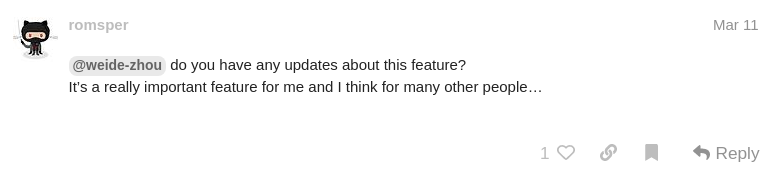
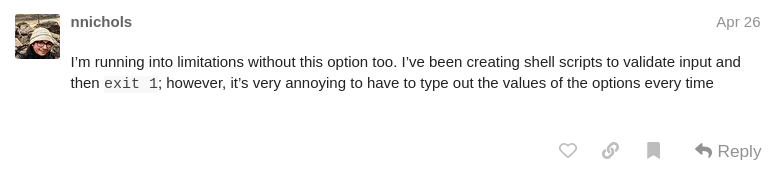
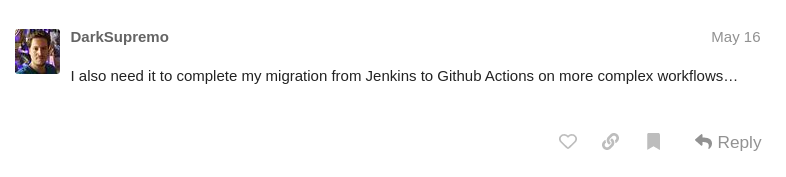
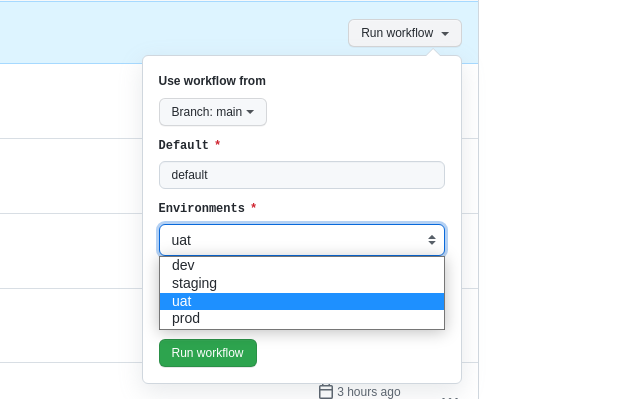
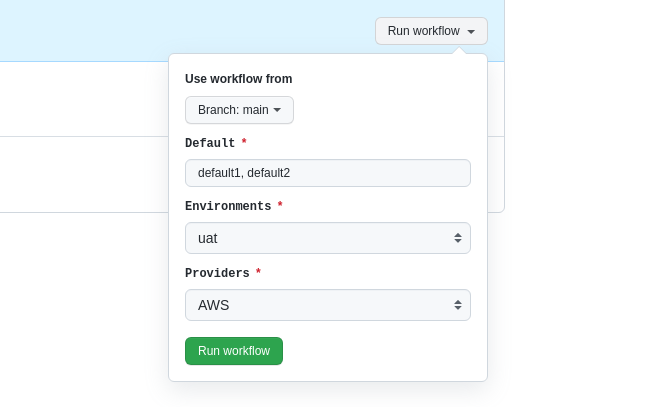
Dropdown for GitHub workflows input parameters Sometimes when we look at CI/CD tools embedded within git-based software repository manager like GitHub, GitLab or Bitbucket, we ran into a lack of some features. This time me and my DevOps/SRE team were facing a pain of not being able to have the option to create drop-downs within GitHub workflows using input parameters. Although this functionality is already available on other platforms such as Bitbucket, the specific client we were working on stored the code inside GitHub. At first I thought that someone has already solved this problem somehow, but doing an extensive search on the internet I found several angry GitHub users opening requests within the Support Community and even in the stack overflow. comment-1 comment-2 comment-3 comment-5 comment-4 So I decided to create a solution for this, always thinking about simplicity and in a way that makes it easy to get this missing functionality. I started by creating an input array pattern using commas and using a tag (the selector) e.g brackets as the default value marker. Here is an example of what an input string would look like:
name: gh-action-dropdown-list-input
on:
  workflow_dispatch:
    inputs:
      environment:
        description: 'Environment'
        required: true
        default: 'dev,staging,[uat],prod'
Now the final question that would turn out to be the most complicated to deal with. How can I change the GitHub Actions interface to replace the input pattern we created earlier to a dropdown? The simplest answer I thought was to create a chrome and firefox extension that would do all this logic behind the scenes and replace the HTML input element with the selected tag containing the array values and leaving the tag value (selector) always as the default. All code was developed in pure JavaScript, open-source licensed under Apache 2.0 and available at https://github.com/arthurbdiniz/gh-action-dropdown-list-input.

Install extension Once installed, the extension is ready to use and the final result we see is the Actions interface with drop-downs. :) showcase-1 showcase-2

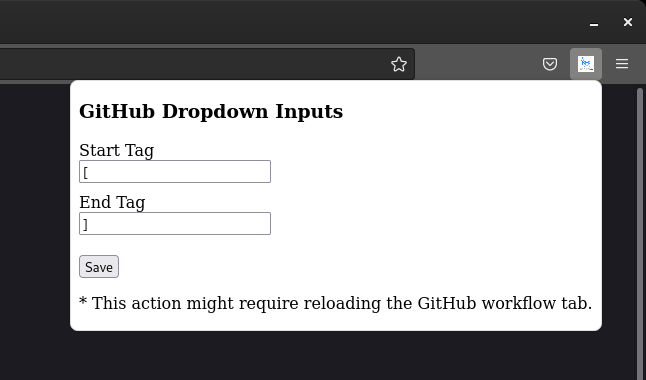
Configuring selectors Go to the top right corner of the browser you are using and click on the extension logo. A screen will popup with tag options. Choose the right tags for you and save it.
This action might require reloading the GitHub workflow tab. config

Have fun using drop-downs inside GitHub. If you liked this project please share this post and if possible star within the repository. Also feel free to connect with me on LinkedIn: https://www.linkedin.com/in/arthurbdiniz

References
  • https://github.community/t/can-workflow-dispatch-input-be-option-list/127338
  • https://stackoverflow.com/questions/69296314/dropdown-for-github-workflows-input-parameters

20 October 2021

Arturo Borrero Gonz lez: Iterating on how we do NFS at Wikimedia Cloud Services

Logos This post was originally published in the Wikimedia Tech blog, authored by Arturo Borrero Gonzalez. NFS is a central piece of infrastructure that is essential to services like Toolforge. Recently, the Cloud Services team at Wikimedia had been reviewing how we do NFS. The current situation NFS is a central piece of technology for some of the services that the Wikimedia Cloud Services team offers to the community. We have several shares that power different use cases: Toolforge user home directories live on NFS, and Cloud VPS users can also access dumps using this protocol. The current setup involves several physical hardware servers, with about 20TB of storage, offering shares over 10G links to the cloud. For the system to be more fault-tolerant, we duplicate each share for redundancy using DRBD. Running NFS on dedicated hardware servers has traditionally offered us advantages: mostly on the performance and the capacity fields. As time has passed, we have been enumerating more and more reasons to review how we do NFS. For one, the current setup is in violation of some of our internal rules regarding realm separation. Additionally, we had been longing for additional flexibility managing our servers: we wanted to use virtual machines managed by Openstack Nova. The DRBD-based high-availability system required mostly a hand-crafted procedure for failover/failback. There s also some scalability concerns as NFS is easy to grow up, but not to grow horizontally, and of course, we have to be able to keep the tenancy setup while doing so, something that NFS does by using LDAP/Unix users and may get complicated too when growing. In general, the servers have become too big to fail , clearly technical debt, and it has taken us years to decide on taking on the task to rethink the architecture. It s worth mentioning that in an ideal world, we wouldn t depend on NFS, but the truth is that it will still be a central piece of infrastructure for years to come in services like Toolforge. Over a series of brainstorming meetings, the WMCS team evaluated the situation and sorted out the many moving parts. The team managed to boil down the potential service future to two competing options: Then we decided to research both options in parallel. For a number of reasons, the evaluation was timeboxed to three weeks. Both ideas had a couple of points in common: the NFS data would be stored on our Ceph farm via Cinder volumes, and we would rely on Ceph reliability to avoid using DRBD. Another open topic was how to back up data from Ceph, to store our important bits in more than one basket. We will get to the back up topic later. The manila experiment The Wikimedia Foundation was an early adopter of some Openstack components (Nova, Glance, Designate, Horizon), but Manila was never evaluated for usage until now. Our approach for this experiment was to closely follow the upstream guidelines. We read the documentation and tried to understand the different setups you can build with Manila. As we often feel with other Openstack components, the documentation doesn t perfectly describe how to introduce a given component in your particular local setup. Here we use an admin-controller flat-topology Neutron network. This network is shared by all tenants (or projects) in our Openstack deployment. Also, Manila can use many different driver backends, for things like NetApps or CephFS that we don t use , yet. After some research, the generic driver was the one that seemed to better fit our use case. The generic driver leverages Nova virtual machines instances plus Cinder volume to create and manage the shares. In general, Manila supports two operational modes, whether it should create/destroy the share servers (i.e, the virtual machine instances) or not. This option is called driver_handles_share_server (or DHSS) and takes a boolean value. We were interested in trying with DHSS=true, to really benefit from the potential of the setup. Manila diagram NFS idea 6, original image in Wikitech So, after sorting all these variables, we moved on with our initial testing. We built a PoC setup as depicted in the diagram above, with the manila-share component running in a virtual machine inside the cloud. The PoC led to us reporting several bugs upstream: In some cases we tried to address these bugs ourselves: It s worth mentioning that the upstream community was extra-welcoming to us, and we re thankful for that. However, at the end of our three-week period, our Manila setup still wasn t working as expected. Your experience may change with other drivers perhaps the ZFSonLinux or the CephFS ones. In general, we were having trouble making the setup work as expected, so we decided to abandon this approach in favor of the other option we were considering at the beginning. Simple virtual machine serving NFS The alternative was to create a Nova virtual machine instance by hand and to configure it using puppet. We have been investing in an automation framework lately, so the idea is to not actually create the server by hand. Anyway, the data would be decoupled from the instance into Cinder volumes, which led us to the question we left for later: How should we back up those terabytes of important information? Just to be clear, the backup problem was independent of the above options; with Manila we would still have had to solve the same challenge. We would like to see our data be backed up somewhere else other than in Ceph. And that s exactly where we are at right now. We ve been exploring different backup strategies and will finally use the Cinder backup API. Conclusion The iteration will end with the dedicated NFS hardware servers being stopped, and the shares being served from within the cloud. The migration will take some time to happen because we will check and double-check that everything works as expected (including from the performance point of view) before making definitive changes. We already have some plans to make sure our users experience as little service impact as possible. The most troublesome shares will be those related to Toolforge. At some point we will need to disallow writes to the NFS share, rsync the data out of the hardware servers into the Cinder volumes, point the NFS clients to the new virtual machines, and then enable writes again. The main Toolforge share has about 8TB of data, so this will take a while. We will have more updates in the future. Who knows, perhaps our next-next iteration, in a couple of years, will see us adopting Openstack Manila for good. Featured image credit: File:(from break water) Manila Skyline panoramio.jpg, ewol, CC BY-SA 3.0 This post was originally published in the Wikimedia Tech blog, authored by Arturo Borrero Gonzalez.
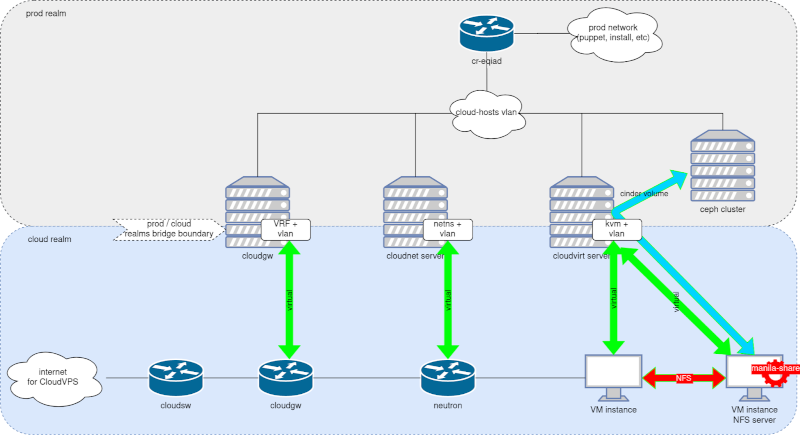

15 October 2021

Sven Hoexter: ThinkPad P15v Gen1, Xorg and a Samsung QHD Display

Wasted quite some hours until I found a working Modeline in this stack exchange post so the ThinkPad works with a HDMI attached Samsung QHD display. Internal display of the ThinkPad is a FHD display detected as eDP-1, the external one is DP-3 and according to the packaging known by Samsung as S24A600NWU. The auto deteced EDID modes for QHD - 2560x1440 - did not work at all, the display simply stays dark. After a lot of back and forth with the i915 driver vs nouveau vs nvidia/nvidia-drm with and without modesetting, the following Modeline did the magic:
xrandr --newmode 2560x1440_54.97  221.00  2560 2608 2640 2720  1440 1443 1447 1478  +HSync -VSync
xrandr --addmode DP-3 2560x1440_54.97
xrandr --output DP-3 --mode 2560x1440_54.97 --right-of eDP-1 --primary
Modelines for 50Hz and 60Hz generated with cvt 2560 1440 60 did not work, neither did the one extracted with edid-decode -X from the hex blob found in .local/share/xorg/Xorg.0.log. From the auto-detected Modelines FHD - 1920x1080 - did work. In case someone struggles with a similar setup, that might be a starting point. Fun part, if I attach my several years old Dell E7470 everything is just fine out of the box. But that one just has an Intel GPU and not the unholy combination I've here:
$ lspci grep -E "VGA 3D"
00:02.0 VGA compatible controller: Intel Corporation CometLake-H GT2 [UHD Graphics] (rev 05)
01:00.0 3D controller: NVIDIA Corporation GP107GLM [Quadro P620] (rev ff)

9 October 2021

Ritesh Raj Sarraf: Lotus to Lily

The Lotus story so far My very first experience with water flowering plants was pretty good. I learnt a good deal of things; from setting up the pond, germinating the lotus seeds, setting up the right soil, witnessing the growth of the lotus plant, fish eco-system to take care of the pond. Overall, a lot of things learnt. But I couldn t succeed in getting the Lotus flower. A lot many reasons. The granite container developed some leakage, which I had to fix by emptying it, which might have caused some shock to the lotus. But more than that, in my understanding, the reason for not being able to flower the lotus, was the amount of sunlight. From what I have learned, these plants need a minimum of 6-8 hrs of sunlight to really give you with the flowering result, whereas the setup of my pond was on the ground with hardly 3-4 hrs of sun. And that too, with all the plants growing, resulted in indirect sunlight.

Lotus to Lily For my new setup, I chose a large oval container. And this one, I placed on my terrace, carefully choosing a spot where it d get 6-8 hrs of very bright sun on usual days. Other than that, the rest of the setup is pretty similar to my previous setup in the garden. Guppies, Solar Water Fountain etc.
Initial lily pond setup
The good thing about the terrace is that the setup gets ample amount of sun. You can see that in the picture above, with the amount of algae that has been formed. Something that is vital for the plant s ecosystem. I must thank my wonderful neighbor who kindly shared a sapling from their lily plant. They already had had success with flowering the lily. So I had high hopes to see the day come when I d be happy to write down my experience in this blog post. Though, a lot of patience is needed. I got the lily some time in January this year. And it blossomed now, in October. So, here s me sharing my happiness here, in particular order of how I documented the process.
Monday morning greeted with a blossomed lily
Lily Blossom Closeup
Beautiful water reflection

Dawn to Dusk The other thing that I learned in this whole lily episode is that the flower goes back to sleeping at dusk. And back to flowering again at dawn. There s so much to learn in the surrounding, only if you spare some time to the little things with mother nature.
Lily status at dusk
Lily status at dusk
Lily the next day
Lily the next day
Not sure how long this phenomenon is to last, but overall witnessing this whole process has been mesmerizing. This past week has been great.

6 October 2021

Thomas Goirand: Infomaniak launches its public IaaS cloud with ground breaking prices

My employer, the biggest Swiss server hosting company, Infomaniak, has just opened registration for its new IaaS (Infrastructure as a Service) OpenStack-based public cloud. Well, in fact, it s been opened since a week or so. Previously, it was only in beta (during that beta period, we hosted (for free) the whole Debconf 21 infrastructure). Nothing really new in the market, except that it is by far cheaper than most (if not all) of its (OpenStack-based or not) competitors, including AWS, GCE or Azure. Also, everything is hosted in Switzerland, in our own data centers, where data protection is written in the law (and Infomaniak often advertises about data privacy: this is real here ). Not only Infomaniak is (by far ) the cheapest offer in the market (including a 300 CHF free tier: enough for our smallest VM for a full year), but we also have very good technical support, and the hardware we used is top notch: Some of our customers didn t even believe how we could do such pricing. Well, the reason is simple: most of our competitors are simply really overpriced, and are making too much money. Since we re late in the market, and that newer hardware (with many cores on a single server) makes is possible to increase density without too much over-commit, my bosses decided that since we could, we would be the cheapest! Hopefully, this will work as a good business strategy. All of that public cloud infrastructure has been setup with OpenStack Cluster Installer for which I m the main author, and that is fully in Debian. All of this is running on a plain, unmodified Debian Bullseye (well, with a few OpenStack packages a little bit more up-to-date, but really not much, and all of that is publicly available ). Last, choosing the cheapest and best offer is also a good action: it promotes OpenStack and cloud computing in Debian, which I believe is the least vendor locked-in IaaS solution.

Next.

Previous.