Search Results: "pm"

6 July 2015

Matthew Garrett: Internet abuse culture is a tech industry problem

After Jesse Frazelle blogged about the online abuse she receives, a common reaction in various forums[1] was "This isn't a tech industry problem - this is what being on the internet is like"[2]. And yes, they're right. Abuse of women on the internet isn't limited to people in the tech industry. But the severity of a problem is a product of two separate factors: its prevalence and what impact it has on people.

Much of the modern tech industry relies on our ability to work with people outside our company. It relies on us interacting with a broader community of contributors, people from a range of backgrounds, people who may be upstream on a project we use, people who may be employed by competitors, people who may be spending their spare time on this. It means listening to your users, hearing their concerns, responding to their feedback. And, distressingly, there's significant overlap between that wider community and the people engaging in the abuse. This abuse is often partly technical in nature. It demonstrates understanding of the subject matter. Sometimes it can be directly tied back to people actively involved in related fields. It's from people who might be at conferences you attend. It's from people who are participating in your mailing lists. It's from people who are reading your blog and using the advice you give in their daily jobs. The abuse is coming from inside the industry.

Cutting yourself off from that community impairs your ability to do work. It restricts meeting people who can help you fix problems that you might not be able to fix yourself. It results in you missing career opportunities. Much of the work being done to combat online abuse relies on protecting the victim, giving them the tools to cut themselves off from the flow of abuse. But that risks restricting their ability to engage in the way they need to to do their job. It means missing meaningful feedback. It means passing up speaking opportunities. It means losing out on the community building that goes on at in-person events, the career progression that arises as a result. People are forced to choose between putting up with abuse or compromising their career.

The abuse that women receive on the internet is unacceptable in every case, but we can't ignore the effects of it on our industry simply because it happens elsewhere. The development model we've created over the past couple of decades is just too vulnerable to this kind of disruption, and if we do nothing about it we'll allow a large number of valuable members to be driven away. We owe it to them to make things better.

[1] Including Hacker News, which then decided to flag the story off the front page because masculinity is fragile

[2] Another common reaction was "But men get abused as well", which I'm not even going to dignify with a response

comment count unavailable comments

Mike Gabriel: My FLOSS activities in June 2015

June 2015 has been mainly dedicated to these five fields of endeavour: Received Sponsorship Last month's contributions of mine (8h) to the Debian LTS project had been contracted by Freexian [1] again. Thanks to Raphael Hertzog for having me on the team. Thanks to all the people and companies sponsoring the Debian LTS Team's work. Also a big thanks to people from Hetzner GmbH for sponsoring my stay at X2Go: The Gathering 2015 @ Linuxhotel (in Essen, Germany). MATE 1.10 entering Debian experimental Together with Martin Wimpress from Ubuntu MATE and other people in the Debian MATE Packaging Team I managed to upload a great portion of the MATE 1.10 packages to Debian experimental. Please note that this is still work in progress. Not all MATE 1.10 packages have been uploaded yet and several packages from the MATE 1.10 series in Debian have grave bugs still (mostly packaging and installation issues). The plan is to make the complete MATE 1.10 stack available in Debian experimental by the end of July and also get all the open kinks fixed by then. Development nx-libs 3.6.x In June 2015, I have looked at various aspects of nx-libs development: read more

5 July 2015

Robert Edmonds: Git packaging workflow for py-lmdb

Recently, I packaged the py-lmdb Python binding for the LMDB database library. This package is going to be team maintained by the pkg-db group, which is responsible for maintaining BerkeleyDB and LMDB packages. Below are my notes on (re-)Debianizing this package and how the Git repository for the source package is laid out. The upstream py-lmdb developer has a Git-centric workflow. Development is done on the master branch, with regular releases done as fast-forward merges to the release branch. Release tags of the form py-lmdb_X.YZ are provided. The only tarballs provided are the ones that GitHub automatically generates from tags. Since these tarballs are synthetic and the content of these tarballs matches the content on the corresponding tag, we will ignore them in favor of using the release tags directly. (The --git-pristine-tar-commit option to gbp-buildpackage will be used so that .orig.tar.gz files can be replicated so that the Debian archive will accept subsequent uploads, but tarballs are otherwise irrelevant to our workflow.) To make it clear that the release tags come from upstream's repository, they should be prefixed with upstream/, which would preferably result in a DEP-14 compliant scheme. (Unfortunately, since upstream's release tags begin with py-lmdb_, this doesn't quite match the pattern that DEP-14 recommends.) Here is how the local packaging repository is initialized. Note that git clone isn't used, so that we can customize how the tags are fetched. Instead, we create an empty Git repository and add the upstream repository as the upstream remote. The --no-tags option is used, so that git fetch does not import the remote's tags. However, we also add a custom fetch refspec refs/tags/*:refs/tags/upstream/* so that the remote's tags are explicitly fetched, but with the upstream/ prefix.
$ mkdir py-lmdb
$ cd py-lmdb
$ git init
Initialized empty Git repository in /home/edmonds/debian/py-lmdb/.git/
$ git remote add --no-tags upstream https://github.com/dw/py-lmdb
$ git config --add remote.upstream.fetch 'refs/tags/*:refs/tags/upstream/*'
$ git fetch upstream
remote: Counting objects: 3336, done.
remote: Total 3336 (delta 0), reused 0 (delta 0), pack-reused 3336
Receiving objects: 100% (3336/3336), 2.15 MiB   0 bytes/s, done.
Resolving deltas: 100% (1958/1958), done.
From https://github.com/dw/py-lmdb
 * [new branch]      master     -> upstream/master
 * [new branch]      release    -> upstream/release
 * [new branch]      win32-sparse-patch -> upstream/win32-sparse-patch
 * [new tag]         last-cython-version -> upstream/last-cython-version
 * [new tag]         py-lmdb_0.1 -> upstream/py-lmdb_0.1
 * [new tag]         py-lmdb_0.2 -> upstream/py-lmdb_0.2
 * [new tag]         py-lmdb_0.3 -> upstream/py-lmdb_0.3
 * [new tag]         py-lmdb_0.4 -> upstream/py-lmdb_0.4
 * [new tag]         py-lmdb_0.5 -> upstream/py-lmdb_0.5
 * [new tag]         py-lmdb_0.51 -> upstream/py-lmdb_0.51
 * [new tag]         py-lmdb_0.52 -> upstream/py-lmdb_0.52
 * [new tag]         py-lmdb_0.53 -> upstream/py-lmdb_0.53
 * [new tag]         py-lmdb_0.54 -> upstream/py-lmdb_0.54
 * [new tag]         py-lmdb_0.56 -> upstream/py-lmdb_0.56
 * [new tag]         py-lmdb_0.57 -> upstream/py-lmdb_0.57
 * [new tag]         py-lmdb_0.58 -> upstream/py-lmdb_0.58
 * [new tag]         py-lmdb_0.59 -> upstream/py-lmdb_0.59
 * [new tag]         py-lmdb_0.60 -> upstream/py-lmdb_0.60
 * [new tag]         py-lmdb_0.61 -> upstream/py-lmdb_0.61
 * [new tag]         py-lmdb_0.62 -> upstream/py-lmdb_0.62
 * [new tag]         py-lmdb_0.63 -> upstream/py-lmdb_0.63
 * [new tag]         py-lmdb_0.64 -> upstream/py-lmdb_0.64
 * [new tag]         py-lmdb_0.65 -> upstream/py-lmdb_0.65
 * [new tag]         py-lmdb_0.66 -> upstream/py-lmdb_0.66
 * [new tag]         py-lmdb_0.67 -> upstream/py-lmdb_0.67
 * [new tag]         py-lmdb_0.68 -> upstream/py-lmdb_0.68
 * [new tag]         py-lmdb_0.69 -> upstream/py-lmdb_0.69
 * [new tag]         py-lmdb_0.70 -> upstream/py-lmdb_0.70
 * [new tag]         py-lmdb_0.71 -> upstream/py-lmdb_0.71
 * [new tag]         py-lmdb_0.72 -> upstream/py-lmdb_0.72
 * [new tag]         py-lmdb_0.73 -> upstream/py-lmdb_0.73
 * [new tag]         py-lmdb_0.74 -> upstream/py-lmdb_0.74
 * [new tag]         py-lmdb_0.75 -> upstream/py-lmdb_0.75
 * [new tag]         py-lmdb_0.76 -> upstream/py-lmdb_0.76
 * [new tag]         py-lmdb_0.77 -> upstream/py-lmdb_0.77
 * [new tag]         py-lmdb_0.78 -> upstream/py-lmdb_0.78
 * [new tag]         py-lmdb_0.79 -> upstream/py-lmdb_0.79
 * [new tag]         py-lmdb_0.80 -> upstream/py-lmdb_0.80
 * [new tag]         py-lmdb_0.81 -> upstream/py-lmdb_0.81
 * [new tag]         py-lmdb_0.82 -> upstream/py-lmdb_0.82
 * [new tag]         py-lmdb_0.83 -> upstream/py-lmdb_0.83
 * [new tag]         py-lmdb_0.84 -> upstream/py-lmdb_0.84
 * [new tag]         py-lmdb_0.85 -> upstream/py-lmdb_0.85
 * [new tag]         py-lmdb_0.86 -> upstream/py-lmdb_0.86
$
Note that at this point we have content from the upstream remote in our local repository, but we don't have any local branches:
$ git status
On branch master
Initial commit
nothing to commit (create/copy files and use "git add" to track)
$ git branch -a
  remotes/upstream/master
  remotes/upstream/release
  remotes/upstream/win32-sparse-patch
$
We will use the DEP-14 naming scheme for the packaging branches, so the branch for packages targeted at unstable will be called debian/sid. Since I already made an initial 0.84-1 upload, we need to start the debian/sid branch from the upstream 0.84 tag and import the original packaging content from that upload. The --no-track flag is passed to git checkout initially so that Git doesn't consider the upstream release tag upstream/py-lmdb_0.84 to be the upstream branch for our packaging branch.
$ git checkout --no-track -b debian/sid upstream/py-lmdb_0.84
Switched to a new branch 'debian/sid'
$
At this point I imported the original packaging content for 0.84-1 with git am. Then, I signed the debian/0.84-1 tag:
$ git tag -s -m 'Debian release 0.84-1' debian/0.84-1
$ git verify-tag debian/0.84-1
gpg: Signature made Sat 04 Jul 2015 02:49:42 PM EDT using RSA key ID AAF6CDAE
gpg: Good signature from "Robert Edmonds <edmonds@mycre.ws>" [ultimate]
gpg:                 aka "Robert Edmonds <edmonds@fsi.io>" [ultimate]
gpg:                 aka "Robert Edmonds <edmonds@debian.org>" [ultimate]
$
New upstream releases are integrated by fetching new upstream tags and non-fast-forward merging into the packaging branch. The latest release is 0.86, so we merge from the upstream/py-lmdb_0.86 tag.
$ git fetch upstream --dry-run
[...]
$ git fetch upstream
[...]
$ git checkout debian/sid
Already on 'debian/sid'
$ git merge --no-ff --no-edit upstream/py-lmdb_0.86
Merge made by the 'recursive' strategy.
 ChangeLog                        46 ++++++++++++++
 docs/index.rst                   46 +++++++++++++-
 docs/themes/acid/layout.html      4 +-
 examples/dirtybench-gdbm.py       6 ++
 examples/dirtybench.py           19 ++++++
 examples/nastybench.py           18 ++++--
 examples/parabench.py             6 ++
 lib/lmdb.h                       37 ++++++-----
 lib/mdb.c                       281 ++++++++++++++++++++++++++++++++++++++++++++++++++++++++++++---------------------
 lib/midl.c                        2 +-
 lib/midl.h                        2 +-
 lib/py-lmdb/preload.h            48 ++++++++++++++
 lmdb/__init__.py                  2 +-
 lmdb/cffi.py                    120 ++++++++++++++++++++++++-----------
 lmdb/cpython.c                   86 +++++++++++++++++++------
 lmdb/tool.py                      5 +-
 misc/gdb.commands                21 ++++++
 misc/runtests-travisci.sh         3 +-
 misc/runtests-ubuntu-12-04.sh    28 ++++----
 setup.py                          2 +
 tests/crash_test.py              22 +++++++
 tests/cursor_test.py             37 +++++++++++
 tests/env_test.py                73 +++++++++++++++++++++
 tests/testlib.py                 14 +++-
 tests/txn_test.py                20 ++++++
 25 files changed, 773 insertions(+), 175 deletions(-)
 create mode 100644 lib/py-lmdb/preload.h
 create mode 100644 misc/gdb.commands
$
Here I did some additional development work like editing the debian/gbp.conf file and applying a fix for #790738 to make the package build reproducibly. The package is now ready for an 0.86-1 upload, so I ran the following gbp dch command:
$ gbp dch --release --auto --new-version=0.86-1 --commit
gbp:info: Found tag for topmost changelog version '6bdbb56c04571fe2d5d22aa0287ab0dc83959de5'
gbp:info: Continuing from commit '6bdbb56c04571fe2d5d22aa0287ab0dc83959de5'
gbp:info: Changelog has been committed for version 0.86-1
$
This automatically generates a changelog entry for 0.86-1, but it includes commit summaries for all of the upstream commits since the last release, which I had to edit out. Then, I used gbp buildpackage with BUILDER=pbuilder to build the package in a clean, up-to-date sid chroot. After checking the result, I signed the debian/0.86-1 tag:
$ git tag -s -m 'Debian release 0.86-1' debian/0.86-1
$
The package is now ready to be pushed to git.debian.org. First, a bare repository is initialized:
$ ssh git.debian.org
edmonds@moszumanska:~$ cd /srv/git.debian.org/git/pkg-db/
edmonds@moszumanska:/srv/git.debian.org/git/pkg-db$ umask 002
edmonds@moszumanska:/srv/git.debian.org/git/pkg-db$ mkdir py-lmdb.git
edmonds@moszumanska:/srv/git.debian.org/git/pkg-db$ cd py-lmdb.git/
edmonds@moszumanska:/srv/git.debian.org/git/pkg-db/py-lmdb.git$ git --bare init --shared
Initialized empty shared Git repository in /srv/git.debian.org/git/pkg-db/py-lmdb.git/
edmonds@moszumanska:/srv/git.debian.org/git/pkg-db/py-lmdb.git$ echo 'py-lmdb Debian packaging' > description
edmonds@moszumanska:/srv/git.debian.org/git/pkg-db/py-lmdb.git$ mv hooks/post-update.sample hooks/post-update
edmonds@moszumanska:/srv/git.debian.org/git/pkg-db/py-lmdb.git$ chmod a+x hooks/post-update
edmonds@moszumanska:/srv/git.debian.org/git/pkg-db/py-lmdb.git$ logout
Shared connection to git.debian.org closed.
Then, we add a new debian remote to our local packaging repository. Per our repository conventions, we need to ensure that only branch names matching debian/* and pristine-tar and tag names matching debian/* and upstream/* are pushed to the debian remote when we run git push debian, so we add a a set of remote.debian.push refspecs that correspond to these conventions. We also add an explicit remote.debian.fetch refspec to fetch tags.
$ git remote add debian ssh://git.debian.org/git/pkg-db/py-lmdb.git
$ git config --add remote.debian.push 'refs/tags/debian/*'
$ git config --add remote.debian.push 'refs/tags/upstream/*'
$ git config --add remote.debian.push 'refs/heads/debian/*'
$ git config --add remote.debian.push 'refs/heads/pristine-tar'
$ git config --add remote.debian.fetch 'refs/tags/*:refs/tags/*'
We now run the initial push to the remote Git repository. The --set-upstream option is used so that our local branches will be configured to track the corresponding remote branches. Also note that the debian/* and upstream/* tags are pushed as well.
$ git push debian --set-upstream
Counting objects: 3333, done.
Delta compression using up to 8 threads.
Compressing objects: 100% (1083/1083), done.
Writing objects: 100% (3333/3333), 1.37 MiB   0 bytes/s, done.
Total 3333 (delta 2231), reused 3314 (delta 2218)
To ssh://git.debian.org/git/pkg-db/py-lmdb.git
 * [new branch]      pristine-tar -> pristine-tar
 * [new branch]      debian/sid -> debian/sid
 * [new tag]         debian/0.84-1 -> debian/0.84-1
 * [new tag]         debian/0.86-1 -> debian/0.86-1
 * [new tag]         upstream/last-cython-version -> upstream/last-cython-version
 * [new tag]         upstream/py-lmdb_0.1 -> upstream/py-lmdb_0.1
 * [new tag]         upstream/py-lmdb_0.2 -> upstream/py-lmdb_0.2
 * [new tag]         upstream/py-lmdb_0.3 -> upstream/py-lmdb_0.3
 * [new tag]         upstream/py-lmdb_0.4 -> upstream/py-lmdb_0.4
 * [new tag]         upstream/py-lmdb_0.5 -> upstream/py-lmdb_0.5
 * [new tag]         upstream/py-lmdb_0.51 -> upstream/py-lmdb_0.51
 * [new tag]         upstream/py-lmdb_0.52 -> upstream/py-lmdb_0.52
 * [new tag]         upstream/py-lmdb_0.53 -> upstream/py-lmdb_0.53
 * [new tag]         upstream/py-lmdb_0.54 -> upstream/py-lmdb_0.54
 * [new tag]         upstream/py-lmdb_0.56 -> upstream/py-lmdb_0.56
 * [new tag]         upstream/py-lmdb_0.57 -> upstream/py-lmdb_0.57
 * [new tag]         upstream/py-lmdb_0.58 -> upstream/py-lmdb_0.58
 * [new tag]         upstream/py-lmdb_0.59 -> upstream/py-lmdb_0.59
 * [new tag]         upstream/py-lmdb_0.60 -> upstream/py-lmdb_0.60
 * [new tag]         upstream/py-lmdb_0.61 -> upstream/py-lmdb_0.61
 * [new tag]         upstream/py-lmdb_0.62 -> upstream/py-lmdb_0.62
 * [new tag]         upstream/py-lmdb_0.63 -> upstream/py-lmdb_0.63
 * [new tag]         upstream/py-lmdb_0.64 -> upstream/py-lmdb_0.64
 * [new tag]         upstream/py-lmdb_0.65 -> upstream/py-lmdb_0.65
 * [new tag]         upstream/py-lmdb_0.66 -> upstream/py-lmdb_0.66
 * [new tag]         upstream/py-lmdb_0.67 -> upstream/py-lmdb_0.67
 * [new tag]         upstream/py-lmdb_0.68 -> upstream/py-lmdb_0.68
 * [new tag]         upstream/py-lmdb_0.69 -> upstream/py-lmdb_0.69
 * [new tag]         upstream/py-lmdb_0.70 -> upstream/py-lmdb_0.70
 * [new tag]         upstream/py-lmdb_0.71 -> upstream/py-lmdb_0.71
 * [new tag]         upstream/py-lmdb_0.72 -> upstream/py-lmdb_0.72
 * [new tag]         upstream/py-lmdb_0.73 -> upstream/py-lmdb_0.73
 * [new tag]         upstream/py-lmdb_0.74 -> upstream/py-lmdb_0.74
 * [new tag]         upstream/py-lmdb_0.75 -> upstream/py-lmdb_0.75
 * [new tag]         upstream/py-lmdb_0.76 -> upstream/py-lmdb_0.76
 * [new tag]         upstream/py-lmdb_0.77 -> upstream/py-lmdb_0.77
 * [new tag]         upstream/py-lmdb_0.78 -> upstream/py-lmdb_0.78
 * [new tag]         upstream/py-lmdb_0.79 -> upstream/py-lmdb_0.79
 * [new tag]         upstream/py-lmdb_0.80 -> upstream/py-lmdb_0.80
 * [new tag]         upstream/py-lmdb_0.81 -> upstream/py-lmdb_0.81
 * [new tag]         upstream/py-lmdb_0.82 -> upstream/py-lmdb_0.82
 * [new tag]         upstream/py-lmdb_0.83 -> upstream/py-lmdb_0.83
 * [new tag]         upstream/py-lmdb_0.84 -> upstream/py-lmdb_0.84
 * [new tag]         upstream/py-lmdb_0.85 -> upstream/py-lmdb_0.85
 * [new tag]         upstream/py-lmdb_0.86 -> upstream/py-lmdb_0.86
Branch pristine-tar set up to track remote branch pristine-tar from debian.
Branch debian/sid set up to track remote branch debian/sid from debian.
$
After the initial push, we need to configure the remote repository so that clones will checkout the debian/sid branch by default:
$ ssh git.debian.org
edmonds@moszumanska:~$ cd /srv/git.debian.org/git/pkg-db/py-lmdb.git/
edmonds@moszumanska:/srv/git.debian.org/git/pkg-db/py-lmdb.git$ git symbolic-ref HEAD refs/heads/debian/sid
edmonds@moszumanska:/srv/git.debian.org/git/pkg-db/py-lmdb.git$ logout
Shared connection to git.debian.org closed.
We can check if there are any updates in upstream's Git repository with the following command:
$ git fetch upstream --dry-run -v
From https://github.com/dw/py-lmdb
 = [up to date]      master     -> upstream/master
 = [up to date]      release    -> upstream/release
 = [up to date]      win32-sparse-patch -> upstream/win32-sparse-patch
 = [up to date]      last-cython-version -> upstream/last-cython-version
 = [up to date]      py-lmdb_0.1 -> upstream/py-lmdb_0.1
 = [up to date]      py-lmdb_0.2 -> upstream/py-lmdb_0.2
 = [up to date]      py-lmdb_0.3 -> upstream/py-lmdb_0.3
 = [up to date]      py-lmdb_0.4 -> upstream/py-lmdb_0.4
 = [up to date]      py-lmdb_0.5 -> upstream/py-lmdb_0.5
 = [up to date]      py-lmdb_0.51 -> upstream/py-lmdb_0.51
 = [up to date]      py-lmdb_0.52 -> upstream/py-lmdb_0.52
 = [up to date]      py-lmdb_0.53 -> upstream/py-lmdb_0.53
 = [up to date]      py-lmdb_0.54 -> upstream/py-lmdb_0.54
 = [up to date]      py-lmdb_0.56 -> upstream/py-lmdb_0.56
 = [up to date]      py-lmdb_0.57 -> upstream/py-lmdb_0.57
 = [up to date]      py-lmdb_0.58 -> upstream/py-lmdb_0.58
 = [up to date]      py-lmdb_0.59 -> upstream/py-lmdb_0.59
 = [up to date]      py-lmdb_0.60 -> upstream/py-lmdb_0.60
 = [up to date]      py-lmdb_0.61 -> upstream/py-lmdb_0.61
 = [up to date]      py-lmdb_0.62 -> upstream/py-lmdb_0.62
 = [up to date]      py-lmdb_0.63 -> upstream/py-lmdb_0.63
 = [up to date]      py-lmdb_0.64 -> upstream/py-lmdb_0.64
 = [up to date]      py-lmdb_0.65 -> upstream/py-lmdb_0.65
 = [up to date]      py-lmdb_0.66 -> upstream/py-lmdb_0.66
 = [up to date]      py-lmdb_0.67 -> upstream/py-lmdb_0.67
 = [up to date]      py-lmdb_0.68 -> upstream/py-lmdb_0.68
 = [up to date]      py-lmdb_0.69 -> upstream/py-lmdb_0.69
 = [up to date]      py-lmdb_0.70 -> upstream/py-lmdb_0.70
 = [up to date]      py-lmdb_0.71 -> upstream/py-lmdb_0.71
 = [up to date]      py-lmdb_0.72 -> upstream/py-lmdb_0.72
 = [up to date]      py-lmdb_0.73 -> upstream/py-lmdb_0.73
 = [up to date]      py-lmdb_0.74 -> upstream/py-lmdb_0.74
 = [up to date]      py-lmdb_0.75 -> upstream/py-lmdb_0.75
 = [up to date]      py-lmdb_0.76 -> upstream/py-lmdb_0.76
 = [up to date]      py-lmdb_0.77 -> upstream/py-lmdb_0.77
 = [up to date]      py-lmdb_0.78 -> upstream/py-lmdb_0.78
 = [up to date]      py-lmdb_0.79 -> upstream/py-lmdb_0.79
 = [up to date]      py-lmdb_0.80 -> upstream/py-lmdb_0.80
 = [up to date]      py-lmdb_0.81 -> upstream/py-lmdb_0.81
 = [up to date]      py-lmdb_0.82 -> upstream/py-lmdb_0.82
 = [up to date]      py-lmdb_0.83 -> upstream/py-lmdb_0.83
 = [up to date]      py-lmdb_0.84 -> upstream/py-lmdb_0.84
 = [up to date]      py-lmdb_0.85 -> upstream/py-lmdb_0.85
 = [up to date]      py-lmdb_0.86 -> upstream/py-lmdb_0.86
We can check if any co-maintainers have pushed updates to the git.debian.org repository with the following command:
$ git fetch debian --dry-run -v
From ssh://git.debian.org/git/pkg-db/py-lmdb
 = [up to date]      debian/sid -> debian/debian/sid
 = [up to date]      pristine-tar -> debian/pristine-tar
 = [up to date]      debian/0.84-1 -> debian/0.84-1
 = [up to date]      debian/0.86-1 -> debian/0.86-1
 = [up to date]      upstream/last-cython-version -> upstream/last-cython-version
 = [up to date]      upstream/py-lmdb_0.1 -> upstream/py-lmdb_0.1
 = [up to date]      upstream/py-lmdb_0.2 -> upstream/py-lmdb_0.2
 = [up to date]      upstream/py-lmdb_0.3 -> upstream/py-lmdb_0.3
 = [up to date]      upstream/py-lmdb_0.4 -> upstream/py-lmdb_0.4
 = [up to date]      upstream/py-lmdb_0.5 -> upstream/py-lmdb_0.5
 = [up to date]      upstream/py-lmdb_0.51 -> upstream/py-lmdb_0.51
 = [up to date]      upstream/py-lmdb_0.52 -> upstream/py-lmdb_0.52
 = [up to date]      upstream/py-lmdb_0.53 -> upstream/py-lmdb_0.53
 = [up to date]      upstream/py-lmdb_0.54 -> upstream/py-lmdb_0.54
 = [up to date]      upstream/py-lmdb_0.56 -> upstream/py-lmdb_0.56
 = [up to date]      upstream/py-lmdb_0.57 -> upstream/py-lmdb_0.57
 = [up to date]      upstream/py-lmdb_0.58 -> upstream/py-lmdb_0.58
 = [up to date]      upstream/py-lmdb_0.59 -> upstream/py-lmdb_0.59
 = [up to date]      upstream/py-lmdb_0.60 -> upstream/py-lmdb_0.60
 = [up to date]      upstream/py-lmdb_0.61 -> upstream/py-lmdb_0.61
 = [up to date]      upstream/py-lmdb_0.62 -> upstream/py-lmdb_0.62
 = [up to date]      upstream/py-lmdb_0.63 -> upstream/py-lmdb_0.63
 = [up to date]      upstream/py-lmdb_0.64 -> upstream/py-lmdb_0.64
 = [up to date]      upstream/py-lmdb_0.65 -> upstream/py-lmdb_0.65
 = [up to date]      upstream/py-lmdb_0.66 -> upstream/py-lmdb_0.66
 = [up to date]      upstream/py-lmdb_0.67 -> upstream/py-lmdb_0.67
 = [up to date]      upstream/py-lmdb_0.68 -> upstream/py-lmdb_0.68
 = [up to date]      upstream/py-lmdb_0.69 -> upstream/py-lmdb_0.69
 = [up to date]      upstream/py-lmdb_0.70 -> upstream/py-lmdb_0.70
 = [up to date]      upstream/py-lmdb_0.71 -> upstream/py-lmdb_0.71
 = [up to date]      upstream/py-lmdb_0.72 -> upstream/py-lmdb_0.72
 = [up to date]      upstream/py-lmdb_0.73 -> upstream/py-lmdb_0.73
 = [up to date]      upstream/py-lmdb_0.74 -> upstream/py-lmdb_0.74
 = [up to date]      upstream/py-lmdb_0.75 -> upstream/py-lmdb_0.75
 = [up to date]      upstream/py-lmdb_0.76 -> upstream/py-lmdb_0.76
 = [up to date]      upstream/py-lmdb_0.77 -> upstream/py-lmdb_0.77
 = [up to date]      upstream/py-lmdb_0.78 -> upstream/py-lmdb_0.78
 = [up to date]      upstream/py-lmdb_0.79 -> upstream/py-lmdb_0.79
 = [up to date]      upstream/py-lmdb_0.80 -> upstream/py-lmdb_0.80
 = [up to date]      upstream/py-lmdb_0.81 -> upstream/py-lmdb_0.81
 = [up to date]      upstream/py-lmdb_0.82 -> upstream/py-lmdb_0.82
 = [up to date]      upstream/py-lmdb_0.83 -> upstream/py-lmdb_0.83
 = [up to date]      upstream/py-lmdb_0.84 -> upstream/py-lmdb_0.84
 = [up to date]      upstream/py-lmdb_0.85 -> upstream/py-lmdb_0.85
 = [up to date]      upstream/py-lmdb_0.86 -> upstream/py-lmdb_0.86
$
We can check if anything needs to be pushed from our local repository to the git.debian.org repository with the following command:
$ git push debian --dry-run -v
Pushing to ssh://git.debian.org/git/pkg-db/py-lmdb.git
To ssh://git.debian.org/git/pkg-db/py-lmdb.git
 = [up to date]      debian/sid -> debian/sid
 = [up to date]      pristine-tar -> pristine-tar
 = [up to date]      debian/0.84-1 -> debian/0.84-1
 = [up to date]      debian/0.86-1 -> debian/0.86-1
 = [up to date]      upstream/last-cython-version -> upstream/last-cython-version
 = [up to date]      upstream/py-lmdb_0.1 -> upstream/py-lmdb_0.1
 = [up to date]      upstream/py-lmdb_0.2 -> upstream/py-lmdb_0.2
 = [up to date]      upstream/py-lmdb_0.3 -> upstream/py-lmdb_0.3
 = [up to date]      upstream/py-lmdb_0.4 -> upstream/py-lmdb_0.4
 = [up to date]      upstream/py-lmdb_0.5 -> upstream/py-lmdb_0.5
 = [up to date]      upstream/py-lmdb_0.51 -> upstream/py-lmdb_0.51
 = [up to date]      upstream/py-lmdb_0.52 -> upstream/py-lmdb_0.52
 = [up to date]      upstream/py-lmdb_0.53 -> upstream/py-lmdb_0.53
 = [up to date]      upstream/py-lmdb_0.54 -> upstream/py-lmdb_0.54
 = [up to date]      upstream/py-lmdb_0.56 -> upstream/py-lmdb_0.56
 = [up to date]      upstream/py-lmdb_0.57 -> upstream/py-lmdb_0.57
 = [up to date]      upstream/py-lmdb_0.58 -> upstream/py-lmdb_0.58
 = [up to date]      upstream/py-lmdb_0.59 -> upstream/py-lmdb_0.59
 = [up to date]      upstream/py-lmdb_0.60 -> upstream/py-lmdb_0.60
 = [up to date]      upstream/py-lmdb_0.61 -> upstream/py-lmdb_0.61
 = [up to date]      upstream/py-lmdb_0.62 -> upstream/py-lmdb_0.62
 = [up to date]      upstream/py-lmdb_0.63 -> upstream/py-lmdb_0.63
 = [up to date]      upstream/py-lmdb_0.64 -> upstream/py-lmdb_0.64
 = [up to date]      upstream/py-lmdb_0.65 -> upstream/py-lmdb_0.65
 = [up to date]      upstream/py-lmdb_0.66 -> upstream/py-lmdb_0.66
 = [up to date]      upstream/py-lmdb_0.67 -> upstream/py-lmdb_0.67
 = [up to date]      upstream/py-lmdb_0.68 -> upstream/py-lmdb_0.68
 = [up to date]      upstream/py-lmdb_0.69 -> upstream/py-lmdb_0.69
 = [up to date]      upstream/py-lmdb_0.70 -> upstream/py-lmdb_0.70
 = [up to date]      upstream/py-lmdb_0.71 -> upstream/py-lmdb_0.71
 = [up to date]      upstream/py-lmdb_0.72 -> upstream/py-lmdb_0.72
 = [up to date]      upstream/py-lmdb_0.73 -> upstream/py-lmdb_0.73
 = [up to date]      upstream/py-lmdb_0.74 -> upstream/py-lmdb_0.74
 = [up to date]      upstream/py-lmdb_0.75 -> upstream/py-lmdb_0.75
 = [up to date]      upstream/py-lmdb_0.76 -> upstream/py-lmdb_0.76
 = [up to date]      upstream/py-lmdb_0.77 -> upstream/py-lmdb_0.77
 = [up to date]      upstream/py-lmdb_0.78 -> upstream/py-lmdb_0.78
 = [up to date]      upstream/py-lmdb_0.79 -> upstream/py-lmdb_0.79
 = [up to date]      upstream/py-lmdb_0.80 -> upstream/py-lmdb_0.80
 = [up to date]      upstream/py-lmdb_0.81 -> upstream/py-lmdb_0.81
 = [up to date]      upstream/py-lmdb_0.82 -> upstream/py-lmdb_0.82
 = [up to date]      upstream/py-lmdb_0.83 -> upstream/py-lmdb_0.83
 = [up to date]      upstream/py-lmdb_0.84 -> upstream/py-lmdb_0.84
 = [up to date]      upstream/py-lmdb_0.85 -> upstream/py-lmdb_0.85
 = [up to date]      upstream/py-lmdb_0.86 -> upstream/py-lmdb_0.86
Everything up-to-date
Finally, in order to set up a fresh local clone of the git.debian.org repository that's configured like the local repository created above, we have to do the following:
$ git clone --origin debian ssh://git.debian.org/git/pkg-db/py-lmdb.git
Cloning into 'py-lmdb'...
remote: Counting objects: 3333, done.
remote: Compressing objects: 100% (1070/1070), done.
remote: Total 3333 (delta 2231), reused 3333 (delta 2231)
Receiving objects: 100% (3333/3333), 1.37 MiB   1.11 MiB/s, done.
Resolving deltas: 100% (2231/2231), done.
Checking connectivity... done.
$ cd py-lmdb
$ git remote add --no-tags upstream https://github.com/dw/py-lmdb
$ git config --add remote.upstream.fetch 'refs/tags/*:refs/tags/upstream/*'
$ git fetch upstream
remote: Counting objects: 56, done.
remote: Total 56 (delta 25), reused 25 (delta 25), pack-reused 31
Unpacking objects: 100% (56/56), done.
From https://github.com/dw/py-lmdb
 * [new branch]      master     -> upstream/master
 * [new branch]      release    -> upstream/release
 * [new branch]      win32-sparse-patch -> upstream/win32-sparse-patch
$ git branch --track pristine-tar debian/pristine-tar 
Branch pristine-tar set up to track remote branch pristine-tar from debian.
$ git config --add remote.debian.push 'refs/tags/debian/*'
$ git config --add remote.debian.push 'refs/tags/upstream/*'
$ git config --add remote.debian.push 'refs/heads/debian/*'
$ git config --add remote.debian.push 'refs/heads/pristine-tar'
$ git config --add remote.debian.fetch 'refs/tags/*:refs/tags/*'
$
This is a fair amount of effort beyond a simple git clone, though, so I wonder if anything can be done to optimize this.

4 July 2015

Guido G nther: Debian work in June 2015

June was the second month I contributed to Debian LTS under the Freexian umbrella. In total I spent ten hours working on: Besides that I did CVE triaging of 17 CVEs to check if and how they affect oldoldstable security. The information provided by the Security team on these issues in data/CVE/list is an awesome help here. So I tried to be as verbose when triaging CVEs that weren't looked at for Wheezy or Jessie yet. On non LTS time I patched our lts-cve-triage tool to allow to skip packages that are already in dla-needed.txt. This avoids wasting time on CVEs that were already triaged.

3 July 2015

Norbert Preining: Debian/TeX Live 2015.20150703-1

The first upload of new packages after TeX Live 2015 hit unstable. Against my expectations, the bugs didn t come in in the thousands, more or less there were only some fixes necessary in the binary package, which lead to a few updates over the last week. This upload fixes an RC bug (missing replaces), and also takes a step further in the Debianization of the packages: I finally removed texconfig and texlinks programs, as they are not useful on Debian, and should actually not be used. Debian - TeX Live 2015 Besides a few other fixes, of course there was the usual chore of package updates. Updated packages babel-french, biblatex-fiwi, biblatex-opcit-booktitle, c90, chemformula, chemgreek, cjkutils, ctex, curve2e, dozenal, eledmac, elements, enotez, garuda-c90, koma-script, l3build, latex, leadsheets, norasi-c90, pkuthss, poemscol, pstricks, pst-solides3d, siunitx, termmenu, texlive-scripts, tudscr, upmethodology, xindy. New packages arabi-add, br-lex. Enjoy.


2 July 2015

Enrico Zini: italian-fattura-elettronica

Billing an Italian public administration Here's a simple guide for how I managed to bill one of my customers as is now mandated by law in Italy. Create a new virtualbox machine I would never do any of this to any system I would ever want to use for anything else, so it's virtual machine time. Install smart card software into it Descent into darkness Set up things for fattura-pa Set up things for signing locally with dike Set up things for signing locally with ArubaSign Try fattura-pa again Maybe fattura-pa would work with Oracle's Java plugin? Aftermath I shut down that virtual machine and I'm making sure I never run anything important on it. Except, of course, generating legally binding signatures as required by the Italian government. What could possibly go wrong?

Antonio Terceiro: Upgrades to Jessie, Ruby 2.2 transition, and chef update

Last month I started to track all the small Debian-related things that I do. My initial motivation was to be concious about how often I spend short periods of time working on Debian. Sometimes it s during lunch breaks, weekends, first thing in the morning before regular work, after I am done for the day with regular work, or even during regular work, since I do have the chance of doing Debian work as part of my regular work occasionally. Now that I have this information, I need to do something with it. So this is probably the first of monthly updates I will post about my Debian work. Hopefully it won t be the last. Upgrades to Jessie I (finally) upgraded my two servers to Jessie. The first one, my home server, is a Utilite which is a quite nice ARM box. It is silent and consumes very little power. The only problem I had with it is that the vendor-provided kernel is too old, so I couldn t upgrade udev, and therefore couldn t switch to systemd. I had to force systemv for now, until I can manage to upgrade the kernel and configure uboot to properly boot the official Debian kernel. On my VPS things are way better. I was able to upgrade nicely, and it is now running a stock Jessie system. fixed https on ci.debian.net pabs had let me know on IRC of an issue with the TLS certificate for ci.debian.net, which took me a few iterations to get right. It was missing the intermediate certificates, and is now fixed. You can now enjoy Debian CI under https . Ruby 2.2 transition I was able to start the Ruby 2.2 transition, which has the goal of switch to Ruby 2.2 on unstable. The first step was updating ruby-defaults adding support to build Ruby packgaes for both Ruby 2.1 and Ruby 2.2. This was followed by updates to gem2deb (0.18, 0.18.1, 0.18.2, and 0.18.3) and rubygems-integration . At this point, after a few rebuild requests only 50 out of 137 packages need to be looked at; some of them just use the default Ruby, so a rebuild once we switch the default will be enough to make it use Ruby 2.2, while others, specially Ruby libraries, will still need porting work or other fixes. Updated the Chef stack Bringing chef to the very latest upstream release into unstable was quite some work. I had to update: In the middle I also had to package a new dependency, ruby-ffi-yajl, which was very quickly ACCEPTED thanks to the awesome work of the ftp-master team. Random bits

Ritesh Raj Sarraf: Laptop Mode Tools 1.67

I am pleased to announce the release of Laptop Mode Tools, version 1.67. This release has many important bug fixes, and everyone is recommended to upgrade. Of the many, one important fix is to, more reliably check for Device Mapper based devices, which is common these days with Crypt and LVM. For the summary of changes to quote from git log:
1.67 - Thu Jul  2 17:05:07 IST 2015
    * Relax minimum window size to accomodate low res screens
    * Fix variable name to comply with our "constants" assuptions
    * Get more aggressive in power saving for Intel HD Audio
    * Account Device Mapper devices
    * Add swsusp freeze support
    * Switch battery-level-polling default to True
    * Detect ethernet carrier, early and relibaly
    * changes the boolean setting *_ACTIVATE_SATA_POWER to a customizable
      *_SATA_POLICY, with backward-compatible defaults and documentation
      Thanks Yuir D'Elia
PS: On a side note, over the years, Linux's power savings functionality has improved a lot, all thanks to its use in the mobile worlds. At the same time, because of more companies shipping drivers depending on external firmware, stability has become less reliable. And to add to that, bare functionality of devices typically ask for disabling, you know what, LPM. So, at the end, the result is the same.

Categories:

Keywords:

Like:

Steve Kemp: My new fitness challenge

So recently I posted on twitter about a sudden gain in strength: To put that more into context I should give a few more details. In the past I've been using an assisted pull-up machine, which offers a counterweight to make such things easier. When I started the exercise I assumed I couldn't do it for real, so I used the machine and set it on 150lb. Over a few weeks I got as far as being able to use it with only 80lb. (Which means I was lifting my entire body-weight minus 80lb. With the assisted-pullup machine smaller numbers are best!) One evening I was walking to the cinema with my wife and told her I thought I'd be getting close to doing one real pull-up soon, which sounds a little silly, but I guess is pretty common for random men who are 40 as I almost am. As it happens there were some climbing equipment nearby so I said "Here see how close I am", and I proceeded to do 1.5 pullups. (The second one was bad, and didn't count, as I got 90% of the way "up".) Having had that success I knew I could do "almost two", and I set a goal for the next gym visit: 3 x 3-pullups. I did that. Then I did two more for fun on the way out (couldn't quite manage a complete set.) So that's the story of how I went from doing 1.5 pullus to doing 11 in less than a week. These days I can easily do 3x3, but struggle with more. It'll come, slowly.

So pull-up vs. chin-up? This just relates to which way you place your hands: palm facing you (chin-up) and palm way from you (pull-up). Some technical details here but chinups are easier, and more bicep-centric.
Anyway too much writing. My next challenge is the one-armed pushup. However long it takes, and I think it will take a while, that's what I'm working toward.

Lars Wirzenius: Obnam 1.10 released (backup software)

I have just released version 1.10 of Obnam, my backup program. See the website at http://obnam.org for details on what it does. The new version is available from git (see http://git.liw.fi) and as Debian packages from http://code.liw.fi/debian, and uploaded to Debian, hopefully soon in unstable. The NEWS file extract below gives the highlights of what's new in this version. Version 1.10, released 2015-07-01 Major bug fixes: Minor new features: Minor fixes:

29 June 2015

Lunar: Reproducible builds: week 9 in Stretch cycle

What happened about the reproducible builds effort this week: Toolchain fixes Norbert Preining uploaded texinfo/6.0.0.dfsg.1-2 which makes texinfo indices reproducible. Original patch by Chris Lamb. Lunar submitted recently rebased patches to make the file order of files inside .deb stable. akira filled #789843 to make tex4ht stop printing timestamps in its HTML output by default. Dhole wrote a patch for xutils-dev to prevent timestamps when creating gzip compresed files. Reiner Herrmann sent a follow-up patch for wheel to use UTC as timezone when outputing timestamps. Mattia Rizzolo started a discussion regarding the failure to build from source of subversion when -Wdate-time is added to CPPFLAGS which happens when asking dpkg-buildflags to use the reproducible profile. SWIG errors out because it doesn't recognize the aforementioned flag. Trying to get the .buildinfo specification to more definitive state, Lunar started a discussion on storing the checksums of the binary package used in dpkg status database. akira discovered while proposing a fix for simgrid that CMake internal command to create tarballs would record a timestamp in the gzip header. A way to prevent it is to use the GZIP environment variable to ask gzip not to store timestamps, but this will soon become unsupported. It's up for discussion if the best place to fix the problem would be to fix it for all CMake users at once. Infrastructure-related work Andreas Henriksson did a delayed NMU upload of pbuilder which adds minimal support for build profiles and includes several fixes from Mattia Rizzolo affecting reproducibility tests. Neils Thykier uploaded lintian which both raises the severity of package-contains-timestamped-gzip and avoids false positives for this tag (thanks to Tomasz Buchert). Petter Reinholdtsen filled #789761 suggesting that how-can-i-help should prompt its users about fixing reproducibility issues. Packages fixed The following packages became reproducible due to changes in their build dependencies: autorun4linuxcd, libwildmagic, lifelines, plexus-i18n, texlive-base, texlive-extra, texlive-lang. The following packages became reproducible after getting fixed: Some uploads fixed some reproducibility issues but not all of them: Untested uploaded as they are not in main: Patches submitted which have not made their way to the archive yet: debbindiff development debbindiff/23 includes a few bugfixes by Helmut Grohne that result in a significant speedup (especially on larger files). It used to exhibit the quadratic time string concatenation antipattern. Version 24 was released on June 23rd in a hurry to fix an undefined variable introduced in the previous version. (Reiner Herrmann) debbindiff now has a test suite! It is written using the PyTest framework (thanks Isis Lovecruft for the suggestion). The current focus has been on the comparators, and we are now at 93% of code coverage for these modules. Several problems were identified and fixed in the process: paths appearing in output of javap, readelf, objdump, zipinfo, unsqusahfs; useless MD5 checksum and last modified date in javap output; bad handling of charsets in PO files; the destination path for gzip compressed files not ending in .gz; only metadata of cpio archives were actually compared. stat output was further trimmed to make directory comparison more useful. Having the test suite enabled a refactoring of how comparators were written, switching from a forest of differences to a single tree. This helped removing dust from the oldest parts of the code. Together with some other small changes, version 25 was released on June 27th. A follow up release was made the next day to fix a hole in the test suite and the resulting unidentified leftover from the comparator refactoring. (Lunar) Documentation update Ximin Luo improved code examples for some proposed environment variables for reference timestamps. Dhole added an example on how to fix timestamps C pre-processor macros by adding a way to set the build date externally. akira documented her fix for tex4ht timestamps. Package reviews 94 obsolete reviews have been removed, 330 added and 153 updated this week. Hats off for Chris West (Faux) who investigated many fail to build from source issues and reported the relevant bugs. Slight improvements were made to the scripts for editing the review database, edit-notes and clean-notes. (Mattia Rizzolo) Meetings A meeting was held on June 23rd. Minutes are available. The next meeting will happen on Tuesday 2015-07-07 at 17:00 UTC. Misc. The Linux Foundation announced that it was funding the work of Lunar and h01ger on reproducible builds in Debian and other distributions. This was further relayed in a Bits from Debian blog post.

25 June 2015

Norbert Preining: TeX Live 2015 hits Debian/unstable

Here we go, I just uploaded 15 packages to the Debian archive that brings TeX Live in Debian up to the 2015 release (and a bit newer)! Debian - TeX Live 2015 Uploaded packages are asymptote, biber, context, context-modules, jadetex, musixtex, pmx, tex-common, texinfo, texinfo-doc-nonfree, texlive-base, texlive-bin, texlive-extra, texlive-lang, xmltex. The packages are basically what has been in experimental for quite some time, plus a checkout of tlnet from yesterday. For details on the changes and the new packaging, please consult this post. So, now let the flood of bug reports begin, but in the mean time, enjoy!

24 June 2015

Norbert Preining: TeX Live Manager News June 2015

TeX Live 2015 has been released, and normal operation with daily updates has started. During the freeze time and afterwards I have made a few changes to the TeX Live Manager (tlmgr) that I want to highlight here. texlive-tlmgr The main changes are better error and return code handling (which should be hardly visible for the users), and more more informative output of the tlmgr info action, incorporating more data from the TeX Catalogue. Error handling With a program that started as an experiment that has grown into the central configuration and management program, there are lots of old code pieces that did not do proper error signaling via return values. That meant that the return value of a tlmgr run didn t have any meaning, mostly because it was 0 (success) most of the times. I have now tried to do proper return code handling throughout the tlmgr code base, that is the tlmgr.pl and the necessary Perl modules. While this should not be a user visible changes, it turned out that the MacOS TeX Live Utility by Adam Maxwell (btw, a great program, it would be nice to have something similar written for Unix replacing the bit clumsy tlmgr gui), got broken for paper configuration, due to forgotten return value fixes in the TLPaper.pm module. That is fixed now in our repository. All in all we do hope that the return value of a tlmgr run now gives proper information about success or error. I might add a bit more semantics by returning bit-values in case of errors, but this is in early stages of thinking. TeX Catalogue data in tlmgr info Since more or less the very beginning we incorporated information from the TeX Catalogue into our database. In particular did we carry over the license information, version, CTAN directory, and date of last change of information in the Catalogue. ctan-page-asana-mathRecently (or not so recently, I actually don t know), CTAN has enriched their package view with more information, in particular a list of topics, and a list of related packages. Take for example the Asana-math package. It s CTAN page now displays besides the previously available information also a list of topics and a list of related packages. The topic index can also be browsed directly when searching for a specific package. I have now added functionality in the TeX Live Manager that tlmgr info also prints out the topic names and related packages. In the case of Asana Math fonts, that would look like:
$ tlmgr info Asana-Math
package:     Asana-Math
category:    Package
shortdesc:   A font to typeset maths in Xe(La)TeX and Lua(La)TeX.
longdesc:    The Asana-Math font is an OpenType font that includes almost all mathematical Unicode symbols and it can be used to typeset mathematical text with any software that can understand the MATH OpenType table (e.g., XeTeX 0.997 and Microsoft Word 2007). The font is beta software. Typesetting support for use with LaTeX is provided by the fontspec and unicode-math packages.
installed:   Yes
revision:    37556
sizes:       doc: 9k, run: 1177k
relocatable: No
cat-version: 000.955
cat-date:    2015-06-02 20:04:19 +0200
cat-license: ofl
cat-topics:  font font-maths font-otf font-ttf
cat-related: stix xits
collection:  collection-fontsextra
GUIs could use the topic names and related packages to link directly to the CTAN page. At the moment the related packages are named according to CTAN standards, which are a bit different from what we use in TeX Live. I am not sure whether I will change that, or ship out both names. We will see.
The changes are currently in testing, see section about Test version here, and will be pushed out in due time, probably in the next week. As usual, in case of any problems or bugs, please contact us at the TeX Live mailing list. Enjoy.

23 June 2015

Orestis Ioannou: GSoC Debsources updates

The first 4 weeks have been really great. I had the chance to work on the new webapp, the copyright tracker. Here are my first 4 reports for the weeks: Summary During these weeks i completed the navigation (by prefix, list of versions etc) for the copyright tracker, the license rendering and the API for searching by checksum and by package/version/filename. Still under review the batch API (request many files at once) and the the respective views for the API. In the following weeks I ll work on the database and the plugins to mine license information on update time. Experience The experience i accumulate every week is immense. During the review process of my code i receive great feedback from zack, matthieu, and jpleau. It is a great chance for everyone to improve his/hers coding skills. At the university we barely get any feedback on our code, let alone communicate directly with professors to find the best solution for a given problem. I think it gets development in another level. For example at the university we use git/mercurial for our projects, although we don't really pay attention at commit messages and we marginally make use of these tools besides 'commit pull push'. During the last weeks i had the chance to use far more commands in order to squash amend rebase commits to have a beautiful and useful log history! And this is just a minor example. All in all I think it is a great introduction to the free/open source community for somebody, like me, who has been for years only a user and couldn't find the opportunity to contribute! And don't get me wrong, gsoc is not only about coding skills. At least for myself having the chance to get just a small taste of how the Debian community works, gets organised, get things done (!) is somehow priceless! Summer of code TDD I have finally understood why test driven development is so powerful. As i am advancing in the project i am sometimes obliged to retouch some areas, refactor pieces of code. Having a great test suite that keeps you on track about the changes, and possible outages in advance is pretty powerful. What is coming I feel the project is on the right path. Both clemux (fellow gsoc student working on debsources) and me are advancing in a productive pace. I hope that soon enough the copyright Blueprint will be completed (most notable pending functionalities are the plugins-hooks to mine the licenses at update time, introduction of at least another license oracle possible ninka, statistics) so that everyone can take profit of the new tools provided by DebSources. Although we haven't talked much about it the patch tracker should also come into the play sooner rather than later. Stay tuned!

22 June 2015

Lunar: Reproducible builds: week 8 in Stretch cycle

What happened about the reproducible builds effort this week: Toolchain fixes Andreas Henriksson has improved Johannes Schauer initial patch for pbuilder adding support for build profiles. Packages fixed The following 12 packages became reproducible due to changes in their build dependencies: collabtive, eric, file-rc, form-history-control, freehep-chartableconverter-plugin , jenkins-winstone, junit, librelaxng-datatype-java, libwildmagic, lightbeam, puppet-lint, tabble. The following packages became reproducible after getting fixed: Some uploads fixed some reproducibility issues but not all of them: Patches submitted which have not made their way to the archive yet: reproducible.debian.net Bugs with the ftbfs usertag are now visible on the bug graphs. This explain the recent spike. (h01ger) Andreas Beckmann suggested a way to test building packages using the funny paths that one can get when they contain the full Debian package version string. debbindiff development Lunar started an important refactoring introducing abstactions for containers and files in order to make file type identification more flexible, enabling fuzzy matching, and allowing parallel processing. Documentation update Ximin Luo detailed the proposal to standardize environment variables to pass a reference source date to tools that needs one (e.g. documentation generator). Package reviews 41 obsolete reviews have been removed, 168 added and 36 updated this week. Some more issues affecting packages failing to build from source have been identified. Meetings Minutes have been posted for Tuesday June 16th meeting. The next meeting is scheduled Tuesday June 23rd at 17:00 UTC. Presentations Lunar presented the project in French during Pas Sage en Seine in Paris. Video and slides are available.

20 June 2015

Lunar: Reproducible builds: week 4 in Stretch cycle

What happened about the reproducible builds effort for this week: Toolchain fixes Lunar rebased our custom dpkg on the new release, removing a now unneeded patch identified by Guillem Jover. An extra sort in the buildinfo generator prevented a stable order and was quickly fixed once identified. Mattia Rizzolo also rebased our custom debhelper on the latest release. Packages fixed The following 30 packages became reproducible due to changes in their build dependencies: animal-sniffer, asciidoctor, autodock-vina, camping, cookie-monster, downthemall, flashblock, gamera, httpcomponents-core, https-finder, icedove-l10n, istack-commons, jdeb, libmodule-build-perl, libur-perl, livehttpheaders, maven-dependency-plugin, maven-ejb-plugin, mozilla-noscript, nosquint, requestpolicy, ruby-benchmark-ips, ruby-benchmark-suite, ruby-expression-parser, ruby-github-markup, ruby-http-connection, ruby-settingslogic, ruby-uuidtools, webkit2gtk, wot. The following packages became reproducible after getting fixed: Some uploads fixed some reproducibility issues but not all of them: Patches submitted which did not make their way to the archive yet: Also, the following bugs have been reported: reproducible.debian.net Holger Levsen made several small bug fixes and a few more visible changes: strip-nondeterminism Version 0.007-1 of strip-nondeterminism the tool to post-process various file formats to normalize them has been uploaded by Holger Levsen. Version 0.006-1 was already in the reproducible repository, the new version mainly improve the detection of Maven's pom.properties files. debbindiff development At the request of Emmanuel Bourg, Reiner Herrmann added a comparator for Java .class files. Documentation update Christoph Berg created a new page for the timestamps in manpages created by Doxygen. Package reviews 93 obsolete reviews have been removed, 76 added and 43 updated this week. New identified issues: timestamps in manpages generated by Doxygen, modification time differences in files extracted by unzip, tstamp task used in Ant build.xml, timestamps in documentation generated by ASDocGen. The description for build id related issues has been clarified. Meetings Holger Levsen announced a first meeting on Wednesday, June 3rd, 2015, 19:00 UTC. The agenda is amendable on the wiki. Misc. Lunar worked on a proof-of-concept script to import the build environment found in .buildinfo files to UDD. Lucas Nussbaum has positively reviewed the proposed schema. Holger Levsen cleaned up various experimental toolchain repositories, marking merged brances as such.

Lunar: Reproducible builds: week 5 in Stretch cycle

What happened about the reproducible builds effort for this week: Toolchain fixes Uploads that should help other packages: Patch submitted for toolchain issues: Some discussions have been started in Debian and with upstream: Packages fixed The following 8 packages became reproducible due to changes in their build dependencies: access-modifier-checker, apache-log4j2, jenkins-xstream, libsdl-perl, maven-shared-incremental, ruby-pygments.rb, ruby-wikicloth, uimaj. The following packages became reproducible after getting fixed: Some uploads fixed some reproducibility issues but not all of them: Patches submitted which did not make their way to the archive yet: Discussions that have been started: reproducible.debian.net Holger Levsen added two new package sets: pkg-javascript-devel and pkg-php-pear. The list of packages with and without notes are now sorted by age of the latest build. Mattia Rizzolo added support for email notifications so that maintainers can be warned when a package becomes unreproducible. Please ask Mattia or Holger or in the #debian-reproducible IRC channel if you want to be notified for your packages! strip-nondeterminism development Andrew Ayer fixed the gzip handler so that it skip adding a predetermined timestamp when there was none. Documentation update Lunar added documentation about mtimes of file extracted using unzip being timezone dependent. He also wrote a short example on how to test reproducibility. Stephen Kitt updated the documentation about timestamps in PE binaries. Documentation and scripts to perform weekly reports were published by Lunar. Package reviews 50 obsolete reviews have been removed, 51 added and 29 updated this week. Thanks Chris West and Mathieu Bridon amongst others. New identified issues: Misc. Lunar will be talking (in French) about reproducible builds at Pas Sage en Seine on June 19th, at 15:00 in Paris. Meeting will happen this Wednesday, 19:00 UTC.

Russell Coker: BTRFS Status June 2015

The version of btrfs-tools in Debian/Jessie is incapable of creating a filesystem that can be mounted by the kernel in Debian/Wheezy. If you want to use a BTRFS filesystem on Jessie and Wheezy (which isn t uncommon with removable devices) the only options are to use the Wheezy version of mkfs.btrfs or to use a Jessie kernel on Wheezy. I recently got bitten by this issue when I created a BTRFS filesystem on a removable device with a lot of important data (which is why I wanted metadata duplication and checksums) and had to read it on a server running Wheezy. Fortunately KVM in Wheezy works really well so I created a virtual machine to read the disk. Setting up a new KVM isn t that difficult, but it s not something I want to do while a client is anxiously waiting for their data. BTRFS has been working well for me apart from the Jessie/Wheezy compatability issue (which was an annoyance but didn t stop me doing what I wanted). I haven t written a BTRFS status report for a while because everything has been OK and there has been nothing exciting to report. I regularly get errors from the cron jobs that run a balance supposedly running out of free space. I have the cron jobs due to past problems with BTRFS running out of metadata space. In spite of the jobs often failing the systems keep working so I m not too worried at the moment. I think this is a bug, but there are many more important bugs. Linux kernel version 3.19 was the first version to have working support for RAID-5 recovery. This means version 3.19 was the first version to have usable RAID-5 (I think there is no point even having RAID-5 without recovery). It wouldn t be prudent to trust your important data to a new feature in a filesystem. So at this stage if I needed a very large scratch space then BTRFS RAID-5 might be a viable option but for anything else I wouldn t use it. BTRFS still has had little performance optimisation, while this doesn t matter much for SSD and for single-disk filesystems for a RAID-5 of hard drives that would probably hurt a lot. Maybe BTRFS RAID-5 would be good for a scratch array of SSDs. The reports of problems with RAID-5 don t surprise me at all. I have a BTRFS RAID-1 filesystem on 2*4TB disks which is giving poor performance on metadata, simple operations like ls -l on a directory with ~200 subdirectories takes many seconds to run. I suspect that part of the problem is due to the filesystem being written by cron jobs with files accumulating over more than a year. The btrfs filesystem command (see btrfs-filesystem(8)) allows defragmenting files and directory trees, but unfortunately it doesn t support recursively defragmenting directories but not files. I really wish there was a way to get BTRFS to put all metadata on SSD and all data on hard drives. Sander suggested the following command to defragment directories on the BTRFS mailing list: find / -xdev -type d -execdir btrfs filesystem defrag -c + Below is the output of zfs list -t snapshot on a server I run, it s often handy to know how much space is used by snapshots, but unfortunately BTRFS has no support for this.
NAME USED AVAIL REFER MOUNTPOINT
hetz0/be0-mail@2015-03-10 2.88G 387G
hetz0/be0-mail@2015-03-11 1.12G 388G
hetz0/be0-mail@2015-03-12 1.11G 388G
hetz0/be0-mail@2015-03-13 1.19G 388G
Hugo pointed out on the BTRFS mailing list that the following command will give the amount of space used for snapshots. $SNAPSHOT is the name of a snapshot and $LASTGEN is the generation number of the previous snapshot you want to compare with. btrfs subvolume find-new $SNAPSHOT $LASTGEN awk ' total = total + $7 END print total ' One upside of the BTRFS implementation in this regard is that the above btrfs command without being piped through awk shows you the names of files that are being written and the amounts of data written to them. Through casually examining this output I discovered that the most written files in my home directory were under the .cache directory (which wasn t exactly a surprise). Now I am configuring workstations with a separate subvolume for ~/.cache for the main user. This means that ~/.cache changes don t get stored in the hourly snapshots and less disk space is used for snapshots. Conclusion My observation is that things are going quite well with BTRFS. It s more than 6 months since I had a noteworthy problem which is pretty good for a filesystem that s still under active development. But there are still many systems I run which could benefit from the data integrity features of ZFS and BTRFS that don t have the resources to run ZFS and need more reliability than I can expect from an unattended BTRFS system. At this time the only servers I run with BTRFS are located within a reasonable drive from my home (not the servers in Germany and the US) and are easily accessible (not the embedded systems). ZFS is working well for some of the servers in Germany. Eventually I ll probably run ZFS on all the hosted servers in Germany and the US, I expect that will happen before I m comfortable running BTRFS on such systems. For the embedded systems I will just take the risk of data loss/corruption for the next few years.

17 June 2015

Norbert Preining: Gaming: Portal

Ok, I have to admit, I sometimes do game and recently I finished Portal. Quite old (released in 2007), but still lots of fun. I started playing it about one year ago, off and on, until I recently finished the last level. Took me about 1 year of playing to finish the actual playing time of about 10h I guess you can see how much an addict I am  portalhazards I have never been a gamer, and I think there are only three set of games I played for extended periods of time:
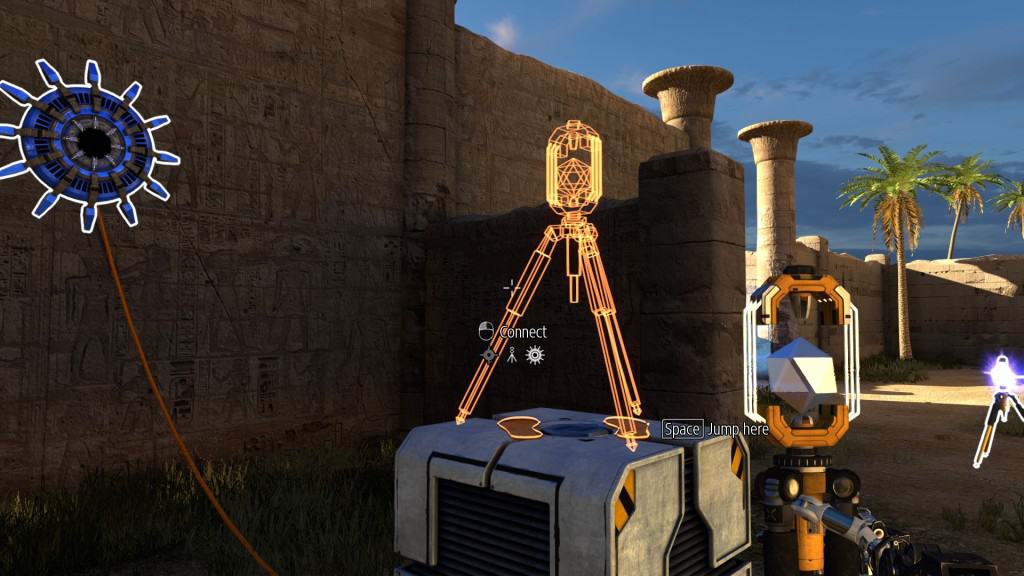
plus one more game, which got me hooked somehow: Hard-core board gamer who I am (I prefer playing with people real games without computer), I loved the Myst series for its crazy riddles, where solving them often needs a combination of logical thinking, recognizing patterns in images and sounds, and piecing together long list of hints. This is something a normal board game cannot provide. From the Descent series I loved the complete freedom of movement. Normal first-person shooters are just like humans running around, a bit of jumping and crouching, but Descent gives you 6D freedom which led to some people getting sick while watching me playing. From the Civilization series I don t know what I liked particularly, but it got you involved and allowed you to play long rounds. After these sins of youngsters, I haven t played for long long time, until a happy coincidence (of being Debian Developer) brought Steam onto my (Linux) machine together with a bunch of games I received for free. One of the games was Portal. Portal is in the style of Myst games one can place dual portals in various places, and by entering one of the portals, one leaves through the other. Using this one has to manage to solve loads of puzzle, evade being shot, dissolved in acid, crashed to death, etc etc, with the only aim to leave the underground station. portal-ex Besides shooting these portals there are some cubes that one can carry around and use for a variety of purposes, like putting them onto buttons, using them as stairs, protecting yourself from being shot, etc. But that s already all the tools one has. Despite of this, the levels pose increasingly difficult problems, and one is surprised how strange things one can achieve with these limited abilities and no, one cannot buy new power-ups, its not WoW. Logical thinking, tactic, and a certain level of reaction suffices. While not as philosophical as Myst, it was still a lot of fun. The only thing I am a bit unclear is, where to go from here. There are two possible successors: The logical one would be Portal 2. But I recently found a game that reminded me even more of the Myst series, combined with Portal: The Talos Principle, with stunning graphics: talos1 talos2 And filled with riddles again, maybe not as involved as in the Myst series (I don t know by now), but still a bit more challenging than Portal s one:
talos3 talos4 Difficult decision. If you have any other suggestions, please let me know!

Next.

Previous.