Search Results: "nic"

27 November 2020

Arturo Borrero Gonz lez: Netfilter virtual workshop 2020 summary

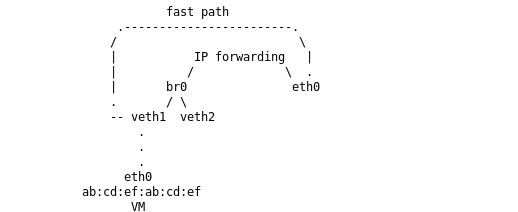
Netfilter logo Once a year folks interested in Netfilter technologies gather together to discuss past, ongoing and future works. The Netfilter Workshop is an opportunity to share and discuss new ideas, the state of the project, bring people together to work & hack and to put faces to people who otherwise are just email names. This is an event that has been happening since at least 2001, so we are talking about a genuine community thing here. It was decided there would be an online format, split in 3 short meetings, once per week on Fridays. I was unable to attend the first session on 2020-11-06 due to scheduling conflict, but I made it to the sessions on 2020-11-13 and 2020-11-20. I would say the sessions were joined by about 8 to 10 people, depending on the day. This post is a summary with some notes on what happened in this edition, with no special order. Pablo did the classical review of all the changes and updates that happened in all the Netfilter project software components since last workshop. I was unable to watch this presentation, so I have nothing special to comment. However, I ve been following the development of the project very closely, and there are several interesting things going on, some of them commented below. Florian Westphal brought to the table status on some open/pending work for mptcp option matching, systemd integration and finally interfacing from nft with cgroupv2. I was unable to participate in the talk for the first two items, so I cannot comment a lot more. On the cgroupv2 side, several options were evaluated to how to match them, identification methods, the hierarchical tree that cgroups present, etc. We will have to wait a bit more to see how the final implementation looks like. Also, Florian presented his concerns on conntrack hash collisions. There are no real-world known issues at the moment, but there is an old paper that suggests we should keep and eye on this and introduce improvements to prevent future DoS attack vectors. Florian mentioned these attacks are not practical at the moment, but who knows in a few years. He wants to explore introducing RB trees for conntrack. It will probably be a rbtree structure of hash tables in order to keep supporting parallel insertions. He was encouraged by others to go ahead and play/explore with this. Phil Sutter shared his past and future iptables development efforts. He highlighted fixed bugs and his short/midterm TODO list. I know Phil has been busy lately fixing iptables-legacy/iptables-nft incompatibilities. Basically addressing annoying bugs discovered by all ruleset managers out there (kubernetes, docker, openstack neutron, etc). Lots of work has been done to improve the situation; moreover I myself reported, or forwarded from the Debian bug tracker, several bugs. Anyway I was unable to attend this talk, only learnt a few bits in the following sessions, so I don t have a lot to comment here. But when I was fully present, I was asked by Phil about the status of netfilter components in Debian, and future plans. I shared my information. The idea for the next Debian stable release is to don t include iptables in the installer, and include nftables instead. Since Debian Buster, nftables is the default firewalling tool anyway. He shared the plans for the RedHat-related ecosystem, and we were able to confirm that we are basically in sync. Pablo commented on the latest Netfilter flowtable enhancements happening. Using the flowtable infrastructure, one can create kernel network bypasses to speed up packet throughput. The latest changes are aimed for bridge and VLAN enabled setups. The flowtable component will now know how to bypass in these 2 network architectures as well as the previously supported ingress hook. This is basically aimed for virtual machines and containers scenarios. There was some debate on use cases and supported setups. I commented that a bunch of virtual machines connected to a classic linux bridge and then doing NAT is basically what Openstack Neutron does, specifically in DVR setups. Same can be found in some container-based environments. Early/simple benchmarks done by Pablo suggest there could be huge performance improvements for those use cases. There was some inevitable comparison of this approach to what others, like DPDK/XDP can do. A point was raised about this being a more generic and operating system-integrated solution, which should make it more extensible and easier to use. flowtable for bridges Stefano Bravio commented on several open topics for nftables that he is interested on working on. One of them, issues related to concatenations + vmap issues. He also addressed concerns with people s expectations when migrating from ipset to nftables. There are several corner features in ipset that aren t currently supported in nftables, and we should document them. Stefano is also wondering about some tools to help in the migration. A translation layer like there is in place for iptables. Eric Gaver commented there are a couple of semantics that will not be suitable for translation, such as global sets, or sets of sets. But ipset is way simpler than iptables, so a translation mechanism should probably be created. In any case, there was agreement that anything that helps people migrate is more than welcome, even if it doesn t support 100% of the use cases. Stefano is planning to write documentation in the nftables wiki on how the pipapo algorithm works and the supported use cases. Other plans by Stefano include to work on some optimisations for faster matches. He mentioned using architecture specific instruction to speed up sets operations, like lookups. Finally, he commented that some folks working with eBPF have showed interest in reusing some parts of the nftables sets infrastructure (pipapo) because they have detected performance issues in their own data structures in some cases. It is not clear how to best achieve it, how to better bridge the two things together. Probably the ideal is to generalize the pipapo data structures and integrate it into the generic bitmap library or something which can be used by anyone. Anyway, he hopes to get some more time to focus on Netfilter stuff begining with the next year, in a couple of months. Moving a bit away from the pure software development topics, Pablo commented on the netfilter.org infrastructure. Right now the servers are running on gandi.net, on virtual machines that are being basically donated to us. He pointed that the plan is to simplify the infrastructure. For that reason, for example, FTP services has been shut down. Rsync services have been shut down as well, so basically we no longer have a mirrors infrastructure. The bugzilla and wikis we have need some attention, given they are old software pieces, and we need to migrate them to be more modern. Finally, the new logo that was created was presented. Later on, we spent a good chunk of the meeting discussing options on how to address the inevitable iptables deprecation situation. There are some open questions, and we discussed several approaches. From doing nothing at all, which means keeping the current status-quo, to setting a deadline date for the deprecation like the python community did with python2. I personally like this deadline idea, but it is perceived like a negative push by other. We all agree that the current do nothing approach is not sustainable either. Probably the way to go is basically to be more informative. We need to clearly communicate that choosing iptables for anything in 2020 is a bad idea. There are additional initiatives to help on this topic, without being too aggressive. A FAQ will probably be introduced. Eric Garver suggested we should bring nftables front and center. Given the website still mentions iptables everywhere, we will probably refresh the web content, introduce additional informative banners and similar things. There was an interesting talk on the topic of nft table ownership. The idea is to attach a table, and all the child objects, to a process. Then, we prevent any modifications to the table or the child objects by external entities. Basically, allocating and locking a table for a certain netlink socket. This is a nice way for ruleset managers, like firewalld, to ensure they have full control of what s happening to their ruleset, reducing the chances for ending with an inconsistent configuration. There is a proof-of-concept patch by Pablo to support this, and Eric mentioned he is pretty much interested in any improvements to support this use case. The final time block in the final session day was dedicated to talk about the next workshop. We are all very happy we could meet. Meeting virtually is way easier (and cheaper) than in person. Perhaps we can make it online every 3 or 6 months instead of, or in addition to, one big annual physical event. We will see what happens next year. That s all on my side!

25 November 2020

Shirish Agarwal: Women state in India and proposal for corporates in Indian banking

Gradle and Kotlin in Debian Few months back, I was looking at where Gradle and Kotlin were in Debian. They still seem to be a work in progress. I found the Android-tools salsa repo which tells me the state of things. While there has been movement on both, a bit more on Kotlin, it still seems it would take a while. For kotlin, the wiki page is most helpful as well as the android-tool salsa kotlin board page . Ironically, some of the more important info. is shared in a blog post which ideally should also have been reflected in kotlin board page . I did see some of the bugs so know it s pretty much dependency hell. I can only congratulate and encourage Samyak Jain and Raman Sarda. I also played a bit with the google-android-emulator-installer which is basically a hook which downloads the binary from google. I do not know what the plans are, but perhaps in the future they also might be build locally, who knows. Just sharing/stating here so it s part of my notes whenever I wanna see what s happening

Women in India I am sure some of you might remember my blog post from last year. It is almost close to a year 2020 now and the question to be asked is, has much changed ? After a lot or hue and cry the Government of India shared the NCRB data of crimes against women and caste crimes. The report shared that crimes against women had risen by 7.3% in a year, similarly crimes against lower castes also went by similar percentage . With the 2020 pandemic, I am sure the number has gone up more. And there is a possibility that just like last year, next year the Government would cite the pandemic and say no data. This year they have done it for migrant deaths during lockdown , for job losses due to the pandemic and so on and so forth. So, it will be no surprise if the Govt. says about NCRB data next year as well. Although media has been showing some in spite of the regular threats to the journalists as shared in the last blog post. There is also data that shows that women participation in labor force has fallen sharply especially in the last few years and the Government seems to have no neither idea nor do they seem to care for the same. There aren t any concrete plans to bring back the balance even a little bit.

Few Court judgements But all hope is not lost. There have been a couple of good judgements, one from the CIC (Chief Information Commissioner) wherein in specific cases a wife can know salary details of her husband, especially if there is some kind of maintenance due from the husband. There was so much of hue and cry against this order that it was taken down from the livelaw RTI corner. Luckily, I had downloaded it, hence could upload and share it. Another one was a case/suit about a legally matured women who had decided to marry without parental consent. In this case, the Delhi High Court had taken women s side and stated she can marry whom she wants. Interestingly, about a week back Uttar Pradesh (most notorious about crime against women) had made laws called Love Jihad and 2 -3 states have followed them. The idea being to create an atmosphere of hate against Muslims and women have no autonomy about what they want. This is when in a separate suit/case against Sudharshan TV (a far-right leaning channel promoting hate against Muslims) , the Government of India itself put an affidavit stating that Tablighis (a sect of Muslims who came from Malaysia to India for religious discourse and assembly) were not responsible for dissemination of the virus and some media has correctly portrayed the same. Of course, those who are on the side of the Govt. on this topic think a traitor has written. They also thought that the Govt. had taken a wrong approach but couldn t tell of a better approach to the matter. There are too many matters in the Supreme Court of women asking for justice to tell all here but two instances share how the SC has been buckling under the stress of late, one is a webinar which was chaired by Justice Subramaniam where he shared how the executive is using judicial appointments to do what it wants. The gulf between the executive and the SC has been since Indira Gandhi days, especially the judicial orders which declared that the Emergency is valid by large, it has fallen much more recently and the executive has been muscling in which have resulted in more regressive decisions than progressive.

This observation is also in tune with another study which came to the same result although using data. The raw data from the study could give so much more than what has been shared. For e.g. as an idea for the study, of the ones cited, how many have been in civil law, personal law, criminal or constitutional law. This would give a better understanding of things. Also what is shocking is none of our court orders have been cited in the west in the recent past, when there used to be a time when the west used to take guidance from Indian jurisprudence sometimes and cite the orders to reach similar conclusion or if not conclusion at least be used as a precedent. I guess those days are over.

Government giving Corporate ownership to Private Sector Banks There was an Internal Working Group report to review extant ownership guidelines and Corporate Structure for Indian Private Sector Banks. This is the actual title of the report. Now there were and are concerns about the move which were put forth by Dr. Raghuram Rajan and Viral Acharya. While Dr. Rajan had been the 23rd Governor of RBI from 4th September 2013 to 4th September 2016. His most commendable work which largely is unknown to most people was the report A hundred small steps which you buy from sage publications. Viral Acharya was the deputy governor from 23rd January 2017 23rd July 2019. Mr. Acharya just recently published his book Quest for Restoring Financial Stability in India which can be bought from the same publication house as well. They also wrote a three page article stating that does India need corporates in banking? More interestingly, he shares two points from history both world war 1 and world war 2. In both cases, the allies had to cut down the businesses who had owned banks. In Germany, it was the same and in Japan, the zaibatsu s dissolution, both of which were needed to make the world safe again. Now, if we don t learn lessons from history it is our fault, not history s. What was also shared that this idea was taken up in 2013 but was put into cold-storage. He also commented on the pressure on RBI as all co-operative banks have come under its ambit in the last few months. RBI has had a patchy record, especially in the last couple of years, with big scams like ILFS, Yes Bank, PMC Bank, Laxmi Vilas Bank among others. The LVB Bank being the most recent one. If new banking licenses have to be given they can be given to good NBFC s who have been in the market for a long time and have shown maturity while dealing with public money. What is the hurry for giving it to Corporate/business houses ? There are many other good points in the report with which both Mr. Rajan and Mr. Acharya are in agreement and do hope the other points/suggestions/proposals are implemented. There was and is an interesting report by Reserve Bank of India called financial sector legislative reforms commission report volume 1 . If and when it gets deleted from RBI, I have put up a copy at my WordPress account, so we shall always have one. Interestingly, while looking through the people who were part of the committee was a somewhat familiar name Murmu . This is perhaps the first time you see people from a sort of political background being in what should be a cut and dry review which have people normally from careers in finance or Accounts. It also turns out that only one person was in favor of banks going to corporates, all the rest were against. It seems that the specific person hadn t heard the terms self-lending , connected-lending and conflict of interest. One of the more interesting comments in the report is if a corporate has a bank, then why would he go to Switzerland, he would just wash the money in his own bank. And if banks were to become to big to fail like it happened in the United States, it would be again private gains, public losses. There was also a Washington Post article which shares some of the reasons that Indian banks fail. I think we need to remind ourselves once again, how things can become
https://www.youtube.com/watch?v=2gK3s5j7PgA

Positive News at end At the end I do not want to end on a sour notes, hence sharing a YouTube channel of Films Division India where you can see of the very classic works and interviews of some of the greats in Indian art cinema.

https://www.youtube.com/user/FilmsDivision/videos Also sharing a bit of funny story I came to know about youtube-dl, apparently it was taken off from github but thanks to efforts from EFF, Hackernews and others, it is now back in action.

Junichi Uekawa: Grabbing screenshot.

Grabbing screenshot. I wanted to know the size of screenshot generated by canvas.toDataURL so I wrote a web app that just measures the size at 60fps because I could. From output I can see webp: 19087 png: 115818 jpg: 115818, so I figured webp is really good at this, or maybe chrome is really good at using webp. and png and jpg look like they are the same size... hmm.. why? UPDATE: image/jpg generated png and image/jpeg generated jpeg.

23 November 2020

Shirish Agarwal: White Hat Senior and Education

I had been thinking of doing a blog post on RCEP which China signed with 14 countries a week and a day back but this new story has broken and is being viraled a bit on the interwebs, especially twitter and is pretty much in our domain so thought would be better to do a blog post about it. Also, there is quite a lot packed so quite a bit of unpacking to do.

Whitehat, Greyhat and Blackhat For those of you who may not, there are actually three terms especially in computer science that one comes across. Those are white hats, grey hats and black hats. Now clinically white hats are like the fiery angels or the good guys who basically take permissions to try and find out weakness in an application, program, website, organization and so on and so forth. A somewhat dated reference to hacker could be Sandra Bullock (The Net 1995) , Sneakers (1992), Live Free or Die Hard (2007) . Of the three one could argue that Sandra was actually into viruses which are part of computer security but still she showed some bad-ass skills, but then that is what actors are paid to do  Sneakers was much more interesting for me because in that you got the best key which can unlock any lock, something like quantum computing is supposed to do. One could equate both the first movies in either as a White hat or a Grey hat . A Grey hat is more flexible in his/her moral values, and they are plenty of such people. For e.g. Julius Assange could be described as a Grey hat, but as you can see and understand those are moral issues.

A black hat on the other hand is one who does things for profit even if it harms the others. The easiest fictitious examples are all Die Hard series, all of them except the 4th one, all had bad guys or black hats. The 4th also had but is the odd one out as it had Matthew Farell (Justin Long) as a Grey hat hacker. In real life Kevin Mitnick, Kevin Poulsen, Robert Tappan Morris, George Hotz, Gary McKinnon are some examples of hackers, most of whom were black hats, most of them reformed into white hats and security specialists. There are many other groups and names but that perhaps is best for another day altogether. Now why am I sharing this. Because in all of the above, the people who are using and working with the systems have better than average understanding of systems and they arguably would be better than most people at securing their networks, systems etc. but as we shall see in this case there has been lots of issues in the company.

WhiteHat Jr. and 300 Million Dollars Before I start this, I would like to share that for me this suit in many ways seems to be similar to the suit filed against Krishnaraj Rao . Although the difference is that Krishnaraj Rao s case/suit is that it was in real estate while this one is in education although many things are similar to those cases but also differ in some obvious ways. For e.g. in the suit against Krishnaraj Rao, the plaintiff s first approached the High Court and then the Supreme Court. Of course Krishnaraj Rao won in the High Court and then in the SC plaintiff s agreed to Krishnaraj Rao s demands as they knew they could not win in SC. In that case, a compromise was reached by the plaintiff just before judgement was to be delivered. In this case, the plaintiff have directly approached the Delhi High Court. The charges against Mr. Poonia (the defendant in this case) are very much similar to those which were made in Krishnaraj Rao s suit hence won t be going into those details. They have claimed defamation and filed a 20 crore suit. The idea is basically to silence any whistle-blowers.

Fictional Character Wolf Gupta The first issue in this case or perhaps one of the most famous or infamous character is an unknown. While he has been reportedly hired by Google India, BJYU, Chandigarh. This has been reported by Yahoo News. I did a cursory search on LinkedIn to see if there indeed is a wolf gupta but wasn t able to find any person with such a name. I am not even talking the amount of money/salary the fictitious gentleman is supposed to have got and the various variations on the salary figures at different times and the different ads.

If I wanted to, I could have asked few of the kind souls whom I know are working in Google to see if they can find such a person using their own credentials but it probably would have been a waste of time. When you show a LinkedIn profile in your social media, it should come up in the results, in this case it doesn t. I also tried to find out if somehow BJYU was a partner to Google and came up empty there as well. There is another story done by Kan India but as I m not a subscriber, I don t know what they have written but the beginning of the story itself does not bode well. While I can understand marketing, there is a line between marketing something and being misleading. At least to me, all of the references shared seems misleading at least to me.

Taking down dissent One of the big no-nos at least from what I perceive, you cannot and should not take down dissent or critique. Indians, like most people elsewhere around the world, critique and criticize day and night. Social media like twitter, mastodon and many others would not exist in the place if criticisms are not there. In fact, one could argue that Twitter and most social media is used to drive engagements to a person, brand etc. It is even an official policy in Twitter. Now you can t drive engagements without also being open to critique and this is true of all the web, including of WordPress and me  . What has been happening is that whitehatjr with help of bjyu have been taking out content of people citing copyright violation which seems laughable. When citizens critique anything, we are obviously going to take the name of the product otherwise people would have to start using new names similar to how Tom Riddle was known as Dark Lord , Voldemort and He who shall not be named . There have been quite a few takedowns, I just provide one for reference, the rest of the takedowns would probably come in the ongoing suit/case.
Whitehat Jr. ad showing investors fighting

Now a brief synopsis of what the ad. is about. The ad is about a kid named Chintu who makes an app. The app. Is so good that investors come to his house and right in the lawn and start fighting each other. The parents are enjoying looking at the fight and to add to the whole thing there is also a nosy neighbor who has his own observations. Simply speaking, it is a juvenile ad but it works as most parents in India, as elsewhere are insecure.
Jihan critiquing the whitehatjr ad
Before starting, let me assure that I asked Jihan s parents if it s ok to share his ad on my blog and they agreed. What he has done is broken down the ad and showed how juvenile the ad is and using logic and humor as a template for the same. He does make sure to state that he does not know how the product is as he hasn t used it. His critique was about the ad and not the product as he hasn t used that.

The Website If you look at the website, sadly, most of the site only talks about itself rather than giving examples that people can look in detail. For e.g. they say they have few apps. on Google play-store but no link to confirm the same. The same is true of quite a few other things. In another ad a Paralympic star says don t get into sports and get into coding. Which athlete in their right mind would say that? And it isn t that we (India) are brimming with athletes at the international level. In the last outing which was had in 2016, India sent a stunning 117 athletes but that was an exception as we had the women s hockey squad which was of 16 women, and even then they were overshadowed in numbers by the bureaucratic and support staff. There was criticism about the staff bit but that is probably a story for another date. Most of the site doesn t really give much value and the point seems to be driving sales to their courses. This is pressurizing small kids as well as teenagers and better who are in the second and third year science-engineering whose parents don t get that it is advertising and it is fake and think that their kids are incompetent. So this pressurizes both small kids as well as those who are learning, doing in whatever college or educational institution . The teenagers more often than not are unable to tell/share with them that this is advertising and fake. Also most of us have been on a a good diet of ads. Fair and lovely still sells even though we know it doesn t work. This does remind me of a similar fake academy which used very much similar symptoms and now nobody remembers them today. There used to be an academy called Wings Academy or some similar name. They used to advertise that you come to us and we will make you into a pilot or an airhostess and it was only much later that it was found out that most kids were doing laundry work in hotels and other such work. Many had taken loans, went bankrupt and even committed suicide because they were unable to pay off the loans due to the dreams given by the company and the harsh realities that awaited them. They were sued in court but dunno what happened but soon they were off the radar so we never came to know what happened to those million of kids whose life dreams were shattered.

Security Now comes the security part. They have alleged that Mr. Poonia broke into their systems. While this may be true, what I find funny is that with the name Whitehat, how can they justify it? If you are saying you are white hat you are supposed to be much better than this. And while I have not tried to penetrate their systems, I did find it laughable that the site is using an expired https:// certificate. I could have tried further to figure out the systems but I chose not to. How they could not have an automated script to get the certificate fixed is beyond me, this is known as certificate outage and is very well understood in the industry. There are tools like Let s Encrypt and Certbot (both EFF) and many others. But that is their concern, not mine.

Comparison A similar offering would be unacademy but as can be seen they neither try to push you in any way and nor do they make any ridiculous claims. In fact how genuine unacademy is can be gauged from the fact that many of its learning resources are available to people to see on YT and if they have tools they can also download it. Now, does this mean that every educational website should have their content for free, of course not. But when a channel has 80% 90% of it YT content as ads and testimonials then they surely should give a reason to pause both for parents and students alike. But if parents had done that much research, then things would not be where they are now.

Allegations Just to complete, there are allegations by Mr. Poonia with some screenshots which show the company has been doing a lot of bad things. For e.g. they were harassing an employee at night 2 a.m. who was frustrated and working in the company at the time. Many of the company staff routinely made sexist and offensive, sexual abusive remarks privately between themselves for prospective women who came to interview via webcam (due to the pandemic). There also seems to be a bit of porn on the web/mobile server of the company as well. There also have been allegations that while the company says refund is done next day, many parents who have demanded those refunds have not got it. Now while Mr. Poonia has shared some quotations of the staff while hiding the identities of both the victims and the perpetrators, the language being used in itself tells a lot. I am in two minds whether to share those photos or not hence atm choosing not to. Poonia has also contended that all teachers do not know programming, and they are given scripts to share. There have been some people who did share that experience with him
Suruchi Sethi
From the company s side they are alleging he has hacked the company servers and would probably be using the Fruit of the poisonous tree argument which we have seen have been used in many arguments.

Conclusion Now that lies in the eyes of the Court whether the single bench chooses the literal meaning or use the spirit of the law or the genuine concerns of the people concerned. While in today s hearing while the company asked for a complete sweeping injunction they were unable to get it. Whatever may happen, we may hope to see some fireworks in the second hearing which is slated to be on 6.01.2021 where all of this plays out. Till later.

22 November 2020

Arturo Borrero Gonz lez: How to use nftables from python

Netfilter logo One of the most interesting (and possibly unknown) features of the nftables framework is the native python interface, which allows python programs to access all nft features programmatically, from the source code. There is a high-level library, libnftables, which is responsible for translating the human-readable syntax from the nft binary into low-level expressions that the nf_tables kernel subsystem can run. The nft command line utility basically wraps this library, where all actual nftables logic lives. You can only imagine how powerful this library is. Originally written in C, ctypes is used to allow native wrapping of the shared lib object using pure python. To use nftables in your python script or program, first you have to install the libnftables library and the python bindings. In Debian systems, installing the python3-nftables package should be enough to have everything ready to go. To interact with libnftables you have 2 options, either use the standard nft syntax or the JSON format. The standard format allows you to send commands exactly like you would do using the nft binary. That format is intended for humans and it doesn t make a lot of sense in a programmatic interaction. Whereas JSON is pretty convenient, specially in a python environment, where there are direct data structure equivalents. The following code snippet gives you an example of how easy this is to use:
#!/usr/bin/env python3

import nftables
import json
nft = nftables.Nftables()
nft.set_json_output(True)
rc, output, error = nft.cmd("list ruleset")
print(json.loads(output))
This is functionally equivalent to running nft -j list ruleset. Basically, all you have to do in your python code is: The key here is to use the JSON format. It allows adding ruleset modification in batches, i.e. to create tables, chains, rules, sets, stateful counters, etc in a single atomic transaction, which is the proper way to update firewalling and NAT policies in the kernel and to avoid inconsistent intermediate states. The JSON schema is pretty well documented in the libnftables-json(5) manpage. The following example is copy/pasted from there, and illustrates the basic idea behind the JSON format. The structure accepts an arbitrary amount of commands which are interpreted in order of appearance. For instance, the following standard syntax input:
flush ruleset
add table inet mytable
add chain inet mytable mychain
add rule inet mytable mychain tcp dport 22 accept
Translates into JSON as such:
  "nftables": [
      "flush":   "ruleset": null  ,
      "add":   "table":  
        "family": "inet",
        "name": "mytable"
     ,
      "add":   "chain":  
        "family": "inet",
        "table": "mytable",
        "chain": "mychain"
     
      "add":   "rule":  
        "family": "inet",
        "table": "mytable",
        "chain": "mychain",
        "expr": [
              "match":  
                "left":   "payload":  
                    "protocol": "tcp",
                    "field": "dport"
                 ,
                "right": 22
             ,
              "accept": null  
        ]
     
] 
I encourage you to take a look at the manpage if you want to know about how powerful this interface is. I ve created a git repository to host several source code examples using different features of the library: https://github.com/aborrero/python-nftables-tutorial. I plan to introduce more code examples as I learn and create them. There are several relevant projects out there using this nftables python integration already. One of the most important pieces of software is firewalld. They started using the JSON format back in 2019. In the past, people interacting with iptables programmatically would either call the iptables binary directly or, in the case of some C programs, hack libiptc/libxtables libraries into their source code. The native python approach to use libnftables is a huge step forward, which should come handy for developers, network engineers, integrators and other folks using the nftables framework in a pythonic environment. If you are interested to know how this python binding works, I invite you to take a look at the upstream source code, nftables.py, which contains all the magic behind the scenes.

21 November 2020

Giovanni Mascellani: Having fun with signal handlers

As every C and C++ programmer knows far too well, if you dereference a pointer that points outside of the space mapped on your process' memory, you get a segmentation fault and your programs crashes. As far as the language itself is concerned, you don't have a second chance and you cannot know in advance whether that dereferencing operation is going to set a bomb off or not. In technical terms, you are invoking undefined behaviour, and you should never do that: you are responsible for knowing in advance if your pointers are valid, and if they are not you keep the pieces. However, turns out that most actual operating system give you a second chance, although with a lot of fine print attached. So I tried to implement a function that tries to dereference a pointer: if it can, it gives you the value; if it can't, it tells you it couldn't. Again, I stress this should never happen in a real program, except possibly for debugging (or for having fun). The prototype is
word_t peek(word_t *addr, int *success);
The function is basically equivalent to return *addr, except that if addr is not mapped it doesn't crash, and if success is not NULL it is set to 0 or 1 to indicate that addr was not mapped or mapped. If addr was not mapped the return value is meaningless. I won't explain it in detail to leave you some fun. Basically the idea is to install a handler for SIGSEGV: if the address is invalid, the handler is called, which basically fixes everything by advancing a little bit the instruction pointer, in order to skip the faulting instruction. The dereferencing instruction is written as hardcoded Assembly bytes, so that I know exactly how many bytes I need to skip. Of course this is very architecture-dependent: I wrote the i386 and amd64 variants (no x32). And I don't guarantee there are no bugs or subtelties! Another solution would have been to just parse /proc/self/maps before dereferencing and check whether the pointer is in a mapped area, but it would have suffered of a TOCTTOU problem: another thread might have changed the mappings between the time when /proc/self/maps was parsed and when the pointer was dereferenced (also, parsing that file can take a relatively long amount of time). Another less architecture-dependent but still not pure-C approach would have been to establish a setjmp before attempting the dereference and longjmp-ing back from the signal handler (but again you would need to use different setjmp contexts in different threads to exclude race conditions). Have fun! (and again, don't try this in real programs) EDIT I realized I should specify the language for source code highlighting to work decently. Now it's better! EDIT 2 I also realized that my version of peek has problems when there are other threads, because signal actions are per-process, not per-thread (as I initially thought). See the comments for a better version (though not perfect).
#define _GNU_SOURCE
#include <stdint.h>
#include <signal.h>
#include <assert.h>
#include <stdlib.h>
#include <stdio.h>
#include <ucontext.h>
#ifdef __i386__
typedef uint32_t word_t;
#define IP_REG REG_EIP
#define IP_REG_SKIP 3
#define READ_CODE __asm__ __volatile__(".byte 0x8b, 0x03\n"  /* mov (%ebx), %eax */ \
                                       ".byte 0x41\n"        /* inc %ecx */ \
                                       : "=a"(ret), "=c"(tmp) : "b"(addr), "c"(tmp));
#endif
#ifdef __x86_64__
typedef uint64_t word_t;
#define IP_REG REG_RIP
#define IP_REG_SKIP 6
#define READ_CODE __asm__ __volatile__(".byte 0x48, 0x8b, 0x03\n"  /* mov (%rbx), %rax */ \
                                       ".byte 0x48, 0xff, 0xc1\n"  /* inc %rcx */ \
                                       : "=a"(ret), "=c"(tmp) : "b"(addr), "c"(tmp));
#endif
static void segv_action(int sig, siginfo_t *info, void *ucontext)  
    (void) sig;
    (void) info;
    ucontext_t *uctx = (ucontext_t*) ucontext;
    uctx->uc_mcontext.gregs[IP_REG] += IP_REG_SKIP;
 
struct sigaction peek_sigaction =  
    .sa_sigaction = segv_action,
    .sa_flags = SA_SIGINFO,
    .sa_mask = 0,
 ;
word_t peek(word_t *addr, int *success)  
    word_t ret;
    int tmp, res;
    struct sigaction prev_act;
    res = sigaction(SIGSEGV, &peek_sigaction, &prev_act);
    assert(res == 0);
    tmp = 0;
    READ_CODE
    res = sigaction(SIGSEGV, &prev_act, NULL);
    assert(res == 0);
    if (success)  
        *success = tmp;
     
    return ret;
 
int main()  
    int success;
    word_t number = 22;
    word_t value;
    number = 22;
    value = peek(&number, &success);
    printf("%d %d\n", success, value);
    value = peek(NULL, &success);
    printf("%d %d\n", success, value);
    value = peek((word_t*)0x1234, &success);
    printf("%d %d\n", success, value);
    return 0;
 

Michael Stapelberg: Winding down my Debian involvement

This post is hard to write, both in the emotional sense but also in the I would have written a shorter letter, but I didn t have the time sense. Hence, please assume the best of intentions when reading it it is not my intention to make anyone feel bad about their contributions, but rather to provide some insight into why my frustration level ultimately exceeded the threshold. Debian has been in my life for well over 10 years at this point. A few weeks ago, I have visited some old friends at the Z rich Debian meetup after a multi-year period of absence. On my bike ride home, it occurred to me that the topics of our discussions had remarkable overlap with my last visit. We had a discussion about the merits of systemd, which took a detour to respect in open source communities, returned to processes in Debian and eventually culminated in democracies and their theoretical/practical failings. Admittedly, that last one might be a Swiss thing. I say this not to knock on the Debian meetup, but because it prompted me to reflect on what feelings Debian is invoking lately and whether it s still a good fit for me. So I m finally making a decision that I should have made a long time ago: I am winding down my involvement in Debian to a minimum.

What does this mean? Over the coming weeks, I will:
  • transition packages to be team-maintained where it makes sense
  • remove myself from the Uploaders field on packages with other maintainers
  • orphan packages where I am the sole maintainer
I will try to keep up best-effort maintenance of the manpages.debian.org service and the codesearch.debian.net service, but any help would be much appreciated. For all intents and purposes, please treat me as permanently on vacation. I will try to be around for administrative issues (e.g. permission transfers) and questions addressed directly to me, permitted they are easy enough to answer.

Why? When I joined Debian, I was still studying, i.e. I had luxurious amounts of spare time. Now, over 5 years of full time work later, my day job taught me a lot, both about what works in large software engineering projects and how I personally like my computer systems. I am very conscious of how I spend the little spare time that I have these days. The following sections each deal with what I consider a major pain point, in no particular order. Some of them influence each other for example, if changes worked better, we could have a chance at transitioning packages to be more easily machine readable.

Change process in Debian The last few years, my current team at work conducted various smaller and larger refactorings across the entire code base (touching thousands of projects), so we have learnt a lot of valuable lessons about how to effectively do these changes. It irks me that Debian works almost the opposite way in every regard. I appreciate that every organization is different, but I think a lot of my points do actually apply to Debian. In Debian, packages are nudged in the right direction by a document called the Debian Policy, or its programmatic embodiment, lintian. While it is great to have a lint tool (for quick, local/offline feedback), it is even better to not require a lint tool at all. The team conducting the change (e.g. the C++ team introduces a new hardening flag for all packages) should be able to do their work transparent to me. Instead, currently, all packages become lint-unclean, all maintainers need to read up on what the new thing is, how it might break, whether/how it affects them, manually run some tests, and finally decide to opt in. This causes a lot of overhead and manually executed mechanical changes across packages. Notably, the cost of each change is distributed onto the package maintainers in the Debian model. At work, we have found that the opposite works better: if the team behind the change is put in power to do the change for as many users as possible, they can be significantly more efficient at it, which reduces the total cost and time a lot. Of course, exceptions (e.g. a large project abusing a language feature) should still be taken care of by the respective owners, but the important bit is that the default should be the other way around. Debian is lacking tooling for large changes: it is hard to programmatically deal with packages and repositories (see the section below). The closest to sending out a change for review is to open a bug report with an attached patch. I thought the workflow for accepting a change from a bug report was too complicated and started mergebot, but only Guido ever signaled interest in the project. Culturally, reviews and reactions are slow. There are no deadlines. I literally sometimes get emails notifying me that a patch I sent out a few years ago (!!) is now merged. This turns projects from a small number of weeks into many years, which is a huge demotivator for me. Interestingly enough, you can see artifacts of the slow online activity manifest itself in the offline culture as well: I don t want to be discussing systemd s merits 10 years after I first heard about it. Lastly, changes can easily be slowed down significantly by holdouts who refuse to collaborate. My canonical example for this is rsync, whose maintainer refused my patches to make the package use debhelper purely out of personal preference. Granting so much personal freedom to individual maintainers prevents us as a project from raising the abstraction level for building Debian packages, which in turn makes tooling harder. How would things look like in a better world?
  1. As a project, we should strive towards more unification. Uniformity still does not rule out experimentation, it just changes the trade-off from easier experimentation and harder automation to harder experimentation and easier automation.
  2. Our culture needs to shift from this package is my domain, how dare you touch it to a shared sense of ownership, where anyone in the project can easily contribute (reviewed) changes without necessarily even involving individual maintainers.
To learn more about how successful large changes can look like, I recommend my colleague Hyrum Wright s talk Large-Scale Changes at Google: Lessons Learned From 5 Yrs of Mass Migrations .

Fragmented workflow and infrastructure Debian generally seems to prefer decentralized approaches over centralized ones. For example, individual packages are maintained in separate repositories (as opposed to in one repository), each repository can use any SCM (git and svn are common ones) or no SCM at all, and each repository can be hosted on a different site. Of course, what you do in such a repository also varies subtly from team to team, and even within teams. In practice, non-standard hosting options are used rarely enough to not justify their cost, but frequently enough to be a huge pain when trying to automate changes to packages. Instead of using GitLab s API to create a merge request, you have to design an entirely different, more complex system, which deals with intermittently (or permanently!) unreachable repositories and abstracts away differences in patch delivery (bug reports, merge requests, pull requests, email, ). Wildly diverging workflows is not just a temporary problem either. I participated in long discussions about different git workflows during DebConf 13, and gather that there were similar discussions in the meantime. Personally, I cannot keep enough details of the different workflows in my head. Every time I touch a package that works differently than mine, it frustrates me immensely to re-learn aspects of my day-to-day. After noticing workflow fragmentation in the Go packaging team (which I started), I tried fixing this with the workflow changes proposal, but did not succeed in implementing it. The lack of effective automation and slow pace of changes in the surrounding tooling despite my willingness to contribute time and energy killed any motivation I had.

Old infrastructure: package uploads When you want to make a package available in Debian, you upload GPG-signed files via anonymous FTP. There are several batch jobs (the queue daemon, unchecked, dinstall, possibly others) which run on fixed schedules (e.g. dinstall runs at 01:52 UTC, 07:52 UTC, 13:52 UTC and 19:52 UTC). Depending on timing, I estimated that you might wait for over 7 hours (!!) before your package is actually installable. What s worse for me is that feedback to your upload is asynchronous. I like to do one thing, be done with it, move to the next thing. The current setup requires a many-minute wait and costly task switch for no good technical reason. You might think a few minutes aren t a big deal, but when all the time I can spend on Debian per day is measured in minutes, this makes a huge difference in perceived productivity and fun. The last communication I can find about speeding up this process is ganneff s post from 2008. How would things look like in a better world?
  1. Anonymous FTP would be replaced by a web service which ingests my package and returns an authoritative accept or reject decision in its response.
  2. For accepted packages, there would be a status page displaying the build status and when the package will be available via the mirror network.
  3. Packages should be available within a few minutes after the build completed.

Old infrastructure: bug tracker I dread interacting with the Debian bug tracker. debbugs is a piece of software (from 1994) which is only used by Debian and the GNU project these days. Debbugs processes emails, which is to say it is asynchronous and cumbersome to deal with. Despite running on the fastest machines we have available in Debian (or so I was told when the subject last came up), its web interface loads very slowly. Notably, the web interface at bugs.debian.org is read-only. Setting up a working email setup for reportbug(1) or manually dealing with attachments is a rather big hurdle. For reasons I don t understand, every interaction with debbugs results in many different email threads. Aside from the technical implementation, I also can never remember the different ways that Debian uses pseudo-packages for bugs and processes. I need them rarely enough to establish a mental model of how they are set up, or working memory of how they are used, but frequently enough to be annoyed by this. How would things look like in a better world?
  1. Debian would switch from a custom bug tracker to a (any) well-established one.
  2. Debian would offer automation around processes. It is great to have a paper-trail and artifacts of the process in the form of a bug report, but the primary interface should be more convenient (e.g. a web form).

Old infrastructure: mailing list archives It baffles me that in 2019, we still don t have a conveniently browsable threaded archive of mailing list discussions. Email and threading is more widely used in Debian than anywhere else, so this is somewhat ironic. Gmane used to paper over this issue, but Gmane s availability over the last few years has been spotty, to say the least (it is down as I write this). I tried to contribute a threaded list archive, but our listmasters didn t seem to care or want to support the project.

Debian is hard to machine-read While it is obviously possible to deal with Debian packages programmatically, the experience is far from pleasant. Everything seems slow and cumbersome. I have picked just 3 quick examples to illustrate my point. debiman needs help from piuparts in analyzing the alternatives mechanism of each package to display the manpages of e.g. psql(1). This is because maintainer scripts modify the alternatives database by calling shell scripts. Without actually installing a package, you cannot know which changes it does to the alternatives database. pk4 needs to maintain its own cache to look up package metadata based on the package name. Other tools parse the apt database from scratch on every invocation. A proper database format, or at least a binary interchange format, would go a long way. Debian Code Search wants to ingest new packages as quickly as possible. There used to be a fedmsg instance for Debian, but it no longer seems to exist. It is unclear where to get notifications from for new packages, and where best to fetch those packages.

Complicated build stack See my Debian package build tools post. It really bugs me that the sprawl of tools is not seen as a problem by others.

Developer experience pretty painful Most of the points discussed so far deal with the experience in developing Debian, but as I recently described in my post Debugging experience in Debian , the experience when developing using Debian leaves a lot to be desired, too.

I have more ideas At this point, the article is getting pretty long, and hopefully you got a rough idea of my motivation. While I described a number of specific shortcomings above, the final nail in the coffin is actually the lack of a positive outlook. I have more ideas that seem really compelling to me, but, based on how my previous projects have been going, I don t think I can make any of these ideas happen within the Debian project. I intend to publish a few more posts about specific ideas for improving operating systems here. Stay tuned. Lastly, I hope this post inspires someone, ideally a group of people, to improve the developer experience within Debian.

19 November 2020

Molly de Blanc: Transparency

Technology must be transparent in order to be knowable. Technology must be knowable in order for us to be able to consent to it in good faith. Good faith informed consent is necessary to preserving our (digital) autonomy. Let s now look at this in reverse, considering first why informed consent is necessary to our digital autonomy. Let s take the concept of our digital autonomy as being one of the highest goods. It is necessary to preserve and respect the value of each individual, and the collectives we choose to form. It is a right to which we are entitled by our very nature, and a prerequisite for building the lives we want, that fulfill us. This is something that we have generally agreed on as important or even sacred. Our autonomy, in whatever form it takes, in whatever part of our life it governs, is necessary and must be protected. One of the things we must do in order to accomplish this is to build a practice and culture of consent. Giving consent saying yes is not enough. This consent must come from a place of understand to that which one is consenting. Informed consent is consenting to the unknowable. (1) Looking at sexual consent as a parallel, even when we have a partner who discloses their sexual history and activities, we cannot know whether they are being truthful and complete. Let s even say they are and that we can trust this, there is a limit to how much even they know about their body, health, and experience. They might not know the extent of their other partners experience. They might be carrying HPV without symptoms; we rarely test for herpes. Arguably, we have more potential to definitely know what is occurring when it comes to technological consent. Technology can be broken apart. We can share and examine code, schematics, and design documentation. Certainly, lots of information is being hidden from us a lot of code is proprietary, technical documentation unavailable, and the skills to process these things is treated as special, arcane, and even magical. Tracing the resource pipelines for the minerals and metals essential to building circuit boards is not possible for the average person. Knowing the labor practices of each step of this process, and understanding what those imply for individuals, societies, and the environments they exist in seems improbable at best. Even though true informed consent might not be possible, it is an ideal towards which we must strive. We must work with what we have, and we must be provided as much as possible. A periodic conversation that arises in the consideration of technology rights is whether companies should build backdoors into technology for the purpose of government exploitation. A backdoor is a hidden vulnerability in a piece of technology that, when used, would afford someone else access to your device or work or cloud storage or whatever. As long as the source code that powers computing technology is proprietary and opaque, we cannot truly know whether backdoors exist and how secure we are in our digital spaces and even our own computers, phones, and other mobile devices. We must commit wholly to transparency and openness in order to create the possibility of as-informed-as-possible consent in order to protect our digital autonomy. We cannot exist in a vacuum and practical autonomy relies on networks of truth in order to provide the opportunity for the ideal of informed consent. These networks of truth are created through the open availability and sharing of information, relating to how and why technology works the way it does. (1) Heintzman, Kit. 2020.

17 November 2020

Rapha&#235;l Hertzog: Freexian s report about Debian Long Term Support, October 2020

A Debian LTS logo Like each month, here comes a report about the work of paid contributors to Debian LTS. Individual reports In October, 221.50 work hours have been dispatched among 13 paid contributors. Their reports are available: Evolution of the situation October was a regular LTS month with a LTS team meeting done via video chat thus there s no log to be shared. After more than five years of contributing to LTS (and ELTS), Mike Gabriel announced that he founded a new company called Frei(e) Software GmbH and thus would leave us to concentrate on this new endeavor. Best of luck with that, Mike! So, once again, this is a good moment to remind that we are constantly looking for new contributors. Please contact Holger if you are interested! The security tracker currently lists 42 packages with a known CVE and the dla-needed.txt file has 39 packages needing an update. Thanks to our sponsors Sponsors that joined recently are in bold.

No comment Liked this article? Click here. My blog is Flattr-enabled.

16 November 2020

Bits from Debian: New Debian Developers and Maintainers (September and October 2020)

The following contributors got their Debian Developer accounts in the last two months: The following contributors were added as Debian Maintainers in the last two months: Congratulations!

15 November 2020

Jamie McClelland: Being your own Certificate Authority

There are many blogs and tutorials with nice shortcuts providing the necessary openssl commands to create and sign x509 certficates. However, there is precious few instructions for how to easily create your own certificate authority. You probably never want to do this in a production environment, but in a development environment it will make your life signficantly easier. Create the certificate authority Create the key and certificate Pick a directory to store things in. Then, make your certificate authority key and certificate:
openssl genrsa -out cakey.pem 2048
openssl req -x509 -new -nodes -key cakey.pem -sha256 -days 1024 -out cacert.pem
Some tips: Want to review what you created?
openssl x509 -text -noout -in cacert.pem 
Prepare your directory You can create your own /etc/ssl/openssl.cnf file and really customize things. But I find it safer to use your distribution's default file so you can benefit from changes to it every time you upgrade. If you do take the default file, you may have the dir option coded to demoCA (in Debian at least, maybe it's the upstream default too). So, to avoid changing any configuration files, let's just use this value. Which means... you'll need to create that directory. The setting is relative - so you can create this directory in the same directory you have your keys.
mkdir demoCA
Lastly, you have to have a file that keeps track of your certificates. If it doesn't exist, you get an error:
touch demoCA/index.txt
That's it! Your certificate authority is ready to go. Create a key and ceritificate signing request First, pick your domain names (aka "common" names). For example, example.org and www.example.org. Set those values in an environment variable. If you just have one:
export subjectAltName=DNS:example.org
If you have more then one:
export subjectAltName=DNS:example.org,DNS:www.example.org
Next, create a key and a certificate signing request:
openssl req -new -nodes -out new.csr -keyout new.key
Again, you will be prompted for some values (country, state, etc) - be sure to choose the same values you used with your certficiate authority! I honestly don't understand why this is necessary (when I set different values I get an error on the signing request step below). Maybe someone can add a comment to this post explaining why these values have to match? Also, you must provide a common name for your certificate - you can choose the same name as the altSubjectNames value you set above (but just one domain). Want to review what you created?
openssl req -in new.csr -text -noout 
Sign it! At last the momenet we have been waiting for.
openssl ca -keyfile cakey.pem -cert cacert.pem -out new.crt -outdir . -rand_serial -infiles new.csr
Now yu have a new.crt and new.csr that you can install via your web browser, mail server, etc specification. Sanity check it This command will confirm that the certificate is trusted by your certificate authority.
openssl verify -no-CApath -CAfile cacert.pem new.crt 
But wait, there's still a question of trust You probably want to tell your computer or browser that you want to trust your certificate signing authority. Command line tools Most tools in linux by default will trust all the certificates in /etc/ssl/certs/ca-certificates.crt. (If that file doesn't exist, try installing the ca-certificates package). If you want to add your certificate to that file:
cp cacert.pem /usr/local/share/ca-certificates/cacert.crt
sudo dpkg-reconfigure ca-certificates
Want to know what's funny? Ok, not really funny. If the certificate name ends with .pem the command above won't work. Seriously. Once your certificate is installed with your web server you can now test to make sure it's all working with:
gnutls-cli --print-cert $domainName
Want a second opinion?
curl https://$domainName
wget https://$domainName -O-
Both will report errors if the certificate can't be verified by a system certificate. If you really want to narrow down the cause of error (maybe reconfiguring ca-certificates didn't work)?
curl --cacert /path/to/your/cacert.pem --capath /tmp
Those arguments tell curl to use your certificate authority file and not to load any other certificate authority files (well, unless you have some installed in the temp directory). Web browsers Firefox and Chrome have their own store of trusted certificates - you'll have to import your cacert.pem file into each browser that you want to trust your key.

14 November 2020

Junichi Uekawa: Rewrote my build system in C++.

Rewrote my build system in C++. I used to write build rules in Nodejs, but I figured if my projects are mostly C++ I should probably write them in C++. I wanted to make it a bit more like BUILD files but couldn't really and ended up looking more C++ than I wanted to. Seems like key-value struct initialization isn't available until C++20.

10 November 2020

Jonathan Dowland: Borg, confidence in backups, GtkPod and software preservation

Over the summer I decided to migrate my backups from rdiff-backup to borg, which offers some significant advantages, in particular de-duplication, but comes at a cost of complexity, and a corresponding sense of unease about how sound my backup strategy might be. I've now hit the Point Of No Return: my second external backup drive is overdue being synced with my NAS, which will delete the last copy of the older rdiff-backup backups. Whilst I hesitate over this last action to commit to borg, something else happened. My wife wanted to put a copy of her iTunes music library on her new phone, and I couldn't find it: not only could I not find it on any of our computers, I also couldn't find a copy on the NAS, or in backups, or even in old DVD-Rs. This has further knocked my confidence in our family data management, and makes me even more nervous to commit to borg. I'm now wondering about stashing the contents of the second external backup disk on some cloud service as a fail-safe. There was one known-good copy of Sarah's music: on her ancient iPod Nano. Apple have gone to varying lengths to prevent you from copying music from an iPod. When Music is copied to an iPod, the files are stripped of all their metadata (artist, title, album, etc.) and renamed to something non-identifying (e.g. F01/MNRL.m4a), and the metadata (and correlation to the obscure file name) is saved in separate database files. The partition of the flash drive containing all this is also marked as "hidden" to prevent it appearing on macOS and Windows systems. We are lucky that the iPod is so old, because Apple went even further in more recent models, adding a layer of encryption. To get the music off the iPod, one has to undo all of these steps. Luckily, other fine folks have worked out reversing all these steps and implemented it in software such as libgpod and its frontend, GtkPod, which is still currently available as a Debian package. It mostly worked, and I got back 95% of the tracks. (It would have been nice if GtkPod had reported the tracks it hadn't recovered, it was aware they existed based on the errors it did print. But you can't have everything.) GtkPod is a quirky, erratic piece of software, that is only useful for old Apple equipment that is long out of production, prior to the introduction of the encryption. The upstream homepage is dead, and I suspect it is unmaintained. The Debian package is orphaned. It's been removed from testing, because it won't build with GCC 10. On the other hand, my experience shows that it worked, and was useful for a real problem that someone had today. I'm in two minds about GtkPod's fate. On the one hand, I think Debian has far too many packages, with a corresponding burden of maintenance responsibility (for the whole project, not just the individual package maintainers), and there's a quality problem: once upon a time, if software had been packaged in a distribution like Debian, that was a mark of quality, a vote of confidence, and you could have some hope that the software would work and integrate well with the rest of the system. That is no longer true, and hasn't been in my experience for many years. If we were more discerning about what software we included in the distribution, and what we kept, perhaps we could be a leaner distribution, faster to adapt to the changing needs in the world, and of a higher quality. On the other hand, this story about GtkPod is just one of many similar stories. Real problems have been solved in open source software, and computing historians, vintage computer enthusiasts, researchers etc. can still benefit from that software long into the future. Throwing out all this stuff in the name of "progress", could be misguided. I'm especially sad when I see the glee which people have expressed when ditching libraries like Qt4 from the archive. Some software will not be ported on to Qt5 (or Gtk3, Qt6, Gtk4, Qt7, etc., in perpetuity). Such software might be all of: unmaintained, "finished", and useful for some purpose (however niche), all at the same time.

9 November 2020

Joachim Breitner: Distributing Haskell programs in a multi-platform zip file

My maybe most impactful piece of code is tttool and the surrounding project, which allows you to create your own content for the Ravensburger Tiptoi platform. The program itself is a command line tool, and in this blog post I want to show how I go about building that program for Linux (both normal and static builds), Windows (cross-compiled from Linux), OSX (only on CI), all combined into and released as a single zip file. Maybe some of it is useful or inspiring to my readers, or can even serve as a template. This being a blob post, though, note that it may become obsolete or outdated.

Ingredients I am building on the these components: Without the nix build system and package manger I probably woudn t even attempt to pull of complex tasks that may, say, require a patched ghc. For many years I resisted learning about nix, but when I eventually had to, I didn t want to go back. This project provides an alternative Haskell build infrastructure for nix. While this is not crucial for tttool, it helps that they tend to have some cross-compilation-related patches more than the official nixpkgs. I also like that it more closely follows the cabal build work-flow, where cabal calculates a build plan based on your projects dependencies. It even has decent documentation (which is a new thing compared to two years ago). Niv is a neat little tool to keep track of your dependencies. You can quickly update them with, say niv update nixpkgs. But what s really great is to temporarily replace one of your dependencies with a local checkout, e.g. via NIV_OVERRIDE_haskellNix=$HOME/build/haskell/haskell.nix nix-instantiate -A osx-exe-bundle There is a Github action that will keep your niv-managed dependencies up-to-date. This service (proprietary, but free to public stuff up to 10GB) gives your project its own nix cache. This means that build artifacts can be cached between CI builds or even build steps, and your contributors. A cache like this is a must if you want to use nix in more interesting ways where you may end up using, say, a changed GHC compiler. Comes with GitHub actions integration.
  • CI via Github actions
Until recently, I was using Travis, but Github actions are just a tad easier to set up and, maybe more important here, the job times are high enough that you can rebuild GHC if you have to, and even if your build gets canceled or times out, cleanup CI steps still happen, so that any new nix build products will still reach your nix cache.

The repository setup All files discussed in the following are reflected at https://github.com/entropia/tip-toi-reveng/tree/7020cde7da103a5c33f1918f3bf59835cbc25b0c. We are starting with a fairly normal Haskell project, with a single .cabal file (but multi-package projects should work just fine). To make things more interesting, I also have a cabal.project which configures one dependency to be fetched via git from a specific fork. To start building the nix infrastructure, we can initialize niv and configure it to use the haskell.nix repo:
niv init
niv add input-output-hk/haskell.nix -n haskellNix
This creates nix/sources.json (which you can also edit by hand) and nix/sources.nix (which you can treat like a black box). Now we can start writing the all-important default.nix file, which defines almost everything of interest here. I will just go through it line by line, and explain what I am doing here.
  checkMaterialization ? false  :
This defines a flag that we can later set when using nix-build, by passing --arg checkMaterialization true, and which is off by default. I ll get to that flag later.
let
  sources = import nix/sources.nix;
  haskellNix = import sources.haskellNix  ;
This imports the sources as defined niv/sources.json, and loads the pinned revision of the haskell.nix repository.
  # windows crossbuilding with ghc-8.10 needs at least 20.09.
  # A peek at https://github.com/input-output-hk/haskell.nix/blob/master/ci.nix can help
  nixpkgsSrc = haskellNix.sources.nixpkgs-2009;
  nixpkgsArgs = haskellNix.nixpkgsArgs;
  pkgs = import nixpkgsSrc nixpkgsArgs;
Now we can define pkgs, which is our version of the nixpkgs package set, extended with the haskell.nix machinery. We rely on haskell.nix to pin of a suitable revision of the nixpkgs set (see how we are using their niv setup). Here we could our own configuration, overlays, etc to nixpkgsArgs. In fact, we do in
  pkgs-osx = import nixpkgsSrc (nixpkgsArgs //   system = "x86_64-darwin";  );
to get the nixpkgs package set of an OSX machine.
  # a nicer filterSource
  sourceByRegex =
    src: regexes: builtins.filterSource (path: type:
      let relPath = pkgs.lib.removePrefix (toString src + "/") (toString path); in
      let match = builtins.match (pkgs.lib.strings.concatStringsSep " " regexes); in
      ( type == "directory"  && match (relPath + "/") != null
        match relPath != null)) src;
Next I define a little helper that I have been copying between projects, and which allows me to define the input to a nix derivation (i.e. a nix build job) with a set of regexes. I ll use that soon.
  tttool-exe = pkgs: sha256:
    (pkgs.haskell-nix.cabalProject  
The cabalProject function takes a cabal project and turns it into a nix project, running cabal v2-configure under the hood to let cabal figure out a suitable build plan. Since we want to have multiple variants of the tttool, this is so far just a function of two arguments pkgs and sha256, which will be explained in a bit.
      src = sourceByRegex ./. [
          "cabal.project"
          "src/"
          "src/.*/"
          "src/.*.hs"
          ".*.cabal"
          "LICENSE"
        ];
The cabalProject function wants to know the source of the Haskell projects. There are different ways of specifying this; in this case I went for a simple whitelist approach. Note that cabal.project.freze (which exists in the directory) is not included.
      # Pinning the input to the constraint solver
      compiler-nix-name = "ghc8102";
The cabal solver doesn t find out which version of ghc to use, that is still my choice. I am using GHC-8.10.2 here. It may require a bit of experimentation to see which version works for your project, especially when cross-compiling to odd targets.
      index-state = "2020-11-08T00:00:00Z";
I want the build to be deterministic, and not let cabal suddenly pick different package versions just because something got uploaded. Therefore I specify which snapshot of the Hackage package index it should consider.
      plan-sha256 = sha256;
      inherit checkMaterialization;
Here we use the second parameter, but I ll defer the explanation for a bit.
      modules = [ 
        # smaller files
        packages.tttool.dontStrip = false;
       ] ++
These modules are essentially configuration data that is merged in a structural way. Here we say that we want the tttool binary to be stripped (saves a few megabyte).
      pkgs.lib.optional pkgs.hostPlatform.isMusl  
        packages.tttool.configureFlags = [ "--ghc-option=-static" ];
Also, when we are building on the musl platform, that s when we want to produce a static build, so let s pass -static to GHC. This seems to be enough in terms of flags to produce static binaries. It helps that my project is using mostly pure Haskell libraries; if you link against C libraries you might have to jump through additional hoops to get static linking going. The haskell.nix documentation has a section on static building with some flags to cargo-cult.
        # terminfo is disabled on musl by haskell.nix, but still the flag
        # is set in the package plan, so override this
        packages.haskeline.flags.terminfo = false;
       ;
This (again only used when the platform is musl) seems to be necessary to workaround what might be a big in haskell.nix.
     ).tttool.components.exes.tttool;
The cabalProject function returns a data structure with all Haskell packages of the project, and for each package the different components (libraries, tests, benchmarks and of course executables). We only care about the tttool executable, so let s project that out.
  osx-bundler = pkgs: tttool:
   pkgs.stdenv.mkDerivation  
      name = "tttool-bundle";
      buildInputs = [ pkgs.macdylibbundler ];
      builder = pkgs.writeScript "tttool-osx-bundler.sh" ''
        source $ pkgs.stdenv /setup
        mkdir -p $out/bin/osx
        cp $ tttool /bin/tttool $out/bin/osx
        chmod u+w $out/bin/osx/tttool
        dylibbundler \
          -b \
          -x $out/bin/osx/tttool \
          -d $out/bin/osx \
          -p '@executable_path' \
          -i /usr/lib/system \
          -i $ pkgs.darwin.Libsystem /lib
      '';
     ;
This function, only to be used on OSX, takes a fully build tttool, finds all the system libraries it is linking against, and copies them next to the executable, using the nice macdylibbundler. This way we can get a self-contained executable. A nix expert will notice that this probably should be written with pkgs.runCommandNoCC, but then dylibbundler fails because it lacks otool. This should work eventually, though.
in rec  
  linux-exe      = tttool-exe pkgs
     "0rnn4q0gx670nzb5zp7xpj7kmgqjmxcj2zjl9jqqz8czzlbgzmkh";
  windows-exe    = tttool-exe pkgs.pkgsCross.mingwW64
     "01js5rp6y29m7aif6bsb0qplkh2az0l15nkrrb6m3rz7jrrbcckh";
  static-exe     = tttool-exe pkgs.pkgsCross.musl64
     "0gbkyg8max4mhzzsm9yihsp8n73zw86m3pwvlw8170c75p3vbadv";
  osx-exe        = tttool-exe pkgs-osx
     "0rnn4q0gx670nzb5zp7xpj7kmgqjmxcj2zjl9jqqz8czzlbgzmkh";
Time to create the four versions of tttool. In each case we use the tttool-exe function from above, passing the package set (pkgs, ) and a SHA256 hash. The package set is either the normal one, or it is one of those configured for cross compilation, building either for Windows or for Linux using musl, or it is the OSX package set that we instantiated earlier. The SHA256 hash describes the result of the cabal plan calculation that happens as part of cabalProject. By noting down the expected result, nix can skip that calculation, or fetch it from the nix cache etc. How do we know what number to put there, and when to change it? That s when the --arg checkMaterialization true flag comes into play: When that is set, cabalProject will not blindly trust these hashes, but rather re-calculate them, and tell you when they need to be updated. We ll make sure that CI checks them.
  osx-exe-bundle = osx-bundler pkgs-osx osx-exe;
For OSX, I then run the output through osx-bundler defined above, to make it independent of any library paths in /nix/store. This is already good enough to build the tool for the various systems! The rest of the the file is related to packaging up the binaries, to tests, and various other things, but nothing too essentially. So if you got bored, you can more or less stop now.
  static-files = sourceByRegex ./. [
    "README.md"
    "Changelog.md"
    "oid-decoder.html"
    "example/.*"
    "Debug.yaml"
    "templates/"
    "templates/.*\.md"
    "templates/.*\.yaml"
    "Audio/"
    "Audio/digits/"
    "Audio/digits/.*\.ogg"
  ];
  contrib = ./contrib;
The final zip file that I want to serve to my users contains a bunch of files from throughout my repository; I collect them here.
  book =  ;
The project comes with documentation in the form of a Sphinx project, which we build here. I ll omit the details, because they are not relevant for this post (but of course you can peek if you are curious).
  os-switch = pkgs.writeScript "tttool-os-switch.sh" ''
    #!/usr/bin/env bash
    case "$OSTYPE" in
      linux*)   exec "$(dirname "''$ BASH_SOURCE[0] ")/linux/tttool" "$@" ;;
      darwin*)  exec "$(dirname "''$ BASH_SOURCE[0] ")/osx/tttool" "$@" ;;
      msys*)    exec "$(dirname "''$ BASH_SOURCE[0] ")/tttool.exe" "$@" ;;
      cygwin*)  exec "$(dirname "''$ BASH_SOURCE[0] ")/tttool.exe" "$@" ;;
      *)        echo "unsupported operating system $OSTYPE" ;;
    esac
  '';
The zipfile should provide a tttool command that works on all systems. To that end, I implement a simple platform switch using bash. I use pks.writeScript so that I can include that file directly in default.nix, but it would have been equally reasonable to just save it into nix/tttool-os-switch.sh and include it from there.
  release = pkgs.runCommandNoCC "tttool-release"  
    buildInputs = [ pkgs.perl ];
    ''
    # check version
    version=$($ static-exe /bin/tttool --help perl -ne 'print $1 if /tttool-(.*) -- The swiss army knife/')
    doc_version=$(perl -ne "print \$1 if /VERSION: '(.*)'/" $ book /book.html/_static/documentation_options.js)
    if [ "$version" != "$doc_version" ]
    then
      echo "Mismatch between tttool version \"$version\" and book version \"$doc_version\""
      exit 1
    fi
Now the derivation that builds the content of the release zip file. First I double check that the version number in the code and in the documentation matches. Note how $ static-exe refers to a path with the built static Linux build, and $ book the output of the book building process.
    mkdir -p $out/
    cp -vsr $ static-files /* $out
    mkdir $out/linux
    cp -vs $ static-exe /bin/tttool $out/linux
    cp -vs $ windows-exe /bin/* $out/
    mkdir $out/osx
    cp -vsr $ osx-exe-bundle /bin/osx/* $out/osx
    cp -vs $ os-switch  $out/tttool
    mkdir $out/contrib
    cp -vsr $ contrib /* $out/contrib/
    cp -vsr $ book /* $out
  '';
The rest of the release script just copies files from various build outputs that we have defined so far. Note that this is using both static-exe (built on Linux) and osx-exe-bundle (built on Mac)! This means you can only build the release if you either have setup a remote osx builder (a pretty nifty feature of nix, which I unfortunately can t use, since I don't have access to a Mac), or the build product must be available in a nix cache (which it is in my case, as I will explain later). The output of this derivation is a directory with all the files I want to put in the release.
  release-zip = pkgs.runCommandNoCC "tttool-release.zip"  
    buildInputs = with pkgs; [ perl zip ];
    ''
    version=$(bash $ release /tttool --help perl -ne 'print $1 if /tttool-(.*) -- The swiss army knife/')
    base="tttool-$version"
    echo "Zipping tttool version $version"
    mkdir -p $out/$base
    cd $out
    cp -r $ release /* $base/
    chmod u+w -R $base
    zip -r $base.zip $base
    rm -rf $base
  '';
And now these files are zipped up. Note that this automatically determines the right directory name and basename for the zipfile. This concludes the step necessary for a release.
  gme-downloads =  ;
  tests =  ;
These two definitions in default.nix are related to some simple testing, and again not relevant for this post.
  cabal-freeze = pkgs.stdenv.mkDerivation  
    name = "cabal-freeze";
    src = linux-exe.src;
    buildInputs = [ pkgs.cabal-install linux-exe.env ];
    buildPhase = ''
      mkdir .cabal
      touch .cabal/config
      rm cabal.project # so that cabal new-freeze does not try to use HPDF via git
      HOME=$PWD cabal new-freeze --offline --enable-tests   true
    '';
    installPhase = ''
      mkdir -p $out
      echo "-- Run nix-shell -A check-cabal-freeze to update this file" > $out/cabal.project.freeze
      cat cabal.project.freeze >> $out/cabal.project.freeze
    '';
   ;
Above I mentioned that I still would like to be able to just run cabal, and ideally it should take the same library versions that the nix-based build does. But pinning the version of ghc in cabal.project is not sufficient, I also need to pin the precise versions of the dependencies. This is best done with a cabal.project.freeze file. The above derivation runs cabal new-freeze in the environment set up by haskell.nix and grabs the resulting cabal.project.freeze. With this I can run nix-build -A cabal-freeze and fetch the file from result/cabal.project.freeze and add it to the repository.
  check-cabal-freeze = pkgs.runCommandNoCC "check-cabal-freeze"  
      nativeBuildInputs = [ pkgs.diffutils ];
      expected = cabal-freeze + /cabal.project.freeze;
      actual = ./cabal.project.freeze;
      cmd = "nix-shell -A check-cabal-freeze";
      shellHook = ''
        dest=$ toString ./cabal.project.freeze 
        rm -f $dest
        cp -v $expected $dest
        chmod u-w $dest
        exit 0
      '';
      ''
      diff -r -U 3 $actual $expected  
          echo "To update, please run"; echo "nix-shell -A check-cabal-freeze"; exit 1;  
      touch $out
    '';
But generated files in repositories are bad, so if that cannot be avoided, at least I want a CI job that checks if they are up to date. This job does that. What s more, it is set up so that if I run nix-shell -A check-cabal-freeze it will update the file in the repository automatically, which is much more convenient than manually copying. Lately, I have been using this pattern regularly when adding generated files to a repository: * Create one nix derivation that creates the files * Create a second derivation that compares the output of that derivation against the file in the repo * Create a derivation that, when run in nix-shell, updates that file. Sometimes that derivation is its own file (so that I can just run nix-shell nix/generate.nix), or it is merged into one of the other two. This concludes the tour of default.nix.

The CI setup The next interesting bit is the file .github/workflows/build.yml, which tells Github Actions what to do:
name: "Build and package"
on:
  pull_request:
  push:
Standard prelude: Run the jobs in this file upon all pushes to the repository, and also on all pull requests. Annoying downside: If you open a PR within your repository, everything gets built twice. Oh well.
jobs:
  build:
    strategy:
      fail-fast: false
      matrix:
        include:
        - target: linux-exe
          os: ubuntu-latest
        - target: windows-exe
          os: ubuntu-latest
        - target: static-exe
          os: ubuntu-latest
        - target: osx-exe-bundle
          os: macos-latest
    runs-on: $  matrix.os  
The build job is a matrix job, i.e. there are four variants, one for each of the different tttool builds, together with an indication of what kind of machine to run this on.
    - uses: actions/checkout@v2
    - uses: cachix/install-nix-action@v12
We begin by checking out the code and installing nix via the install-nix-action.
    - name: "Cachix: tttool"
      uses: cachix/cachix-action@v7
      with:
        name: tttool
        signingKey: '$  secrets.CACHIX_SIGNING_KEY  '
Then we configure our Cachix cache. This means that this job will use build products from the cache if possible, and it will also push new builds to the cache. This requires a secret key, which you get when setting up your Cachix cache. See the nix and Cachix tutorial for good instructions.
    - run: nix-build --arg checkMaterialization true -A $  matrix.target  
Now we can actually run the build. We set checkMaterialization to true so that CI will tell us if we need to update these hashes.
    # work around https://github.com/actions/upload-artifact/issues/92
    - run: cp -RvL result upload
    - uses: actions/upload-artifact@v2
      with:
        name: tttool ($  matrix.target  )
        path: upload/
For convenient access to build products, e.g. from pull requests, we store them as Github artifacts. They can then be downloaded from Github s CI status page.
  test:
    runs-on: ubuntu-latest
    needs: build
    steps:
    - uses: actions/checkout@v2
    - uses: cachix/install-nix-action@v12
    - name: "Cachix: tttool"
      uses: cachix/cachix-action@v7
      with:
        name: tttool
        signingKey: '$  secrets.CACHIX_SIGNING_KEY  '
    - run: nix-build -A tests
The next job repeats the setup, but now runs the tests. Because of needs: build it will not start before the builds job has completed. This also means that it should get the actual tttool executable to test from our nix cache.
  check-cabal-freeze:
    runs-on: ubuntu-latest
    steps:
    - uses: actions/checkout@v2
    - uses: cachix/install-nix-action@v12
    - name: "Cachix: tttool"
      uses: cachix/cachix-action@v7
      with:
        name: tttool
        signingKey: '$  secrets.CACHIX_SIGNING_KEY  '
    - run: nix-build -A check-cabal-freeze
The same, but now running the check-cabal-freeze test mentioned above. Quite annoying to repeat the setup instructions for each job
  package:
    runs-on: ubuntu-latest
    needs: build
    steps:
    - uses: actions/checkout@v2
    - uses: cachix/install-nix-action@v12
    - name: "Cachix: tttool"
      uses: cachix/cachix-action@v7
      with:
        name: tttool
        signingKey: '$  secrets.CACHIX_SIGNING_KEY  '
    - run: nix-build -A release-zip
    - run: unzip -d upload ./result/*.zip
    - uses: actions/upload-artifact@v2
      with:
        name: Release zip file
        path: upload
Finally, with the same setup, but slightly different artifact upload, we build the release zip file. Again, we wait for build to finish so that the built programs are in the nix cache. This is especially important since this runs on linux, so it cannot build the OSX binary and has to rely on the cache. Note that we don t need to checkMaterialization again. Annoyingly, the upload-artifact action insists on zipping the files you hand to it. A zip file that contains just a zipfile is kinda annoying, so I unpack the zipfile here before uploading the contents.

Conclusion With this setup, when I do a release of tttool, I just bump the version numbers, wait for CI to finish building, run nix-build -A release-zip and upload result/tttool-n.m.zip. A single file that works on all target platforms. I have not yet automated making the actual release, but with one release per year this is fine. Also, when trying out a new feature, I can easily create a branch or PR for that and grab the build products from Github s CI, or ask people to try them out (e.g. to see if they fixed their bugs). Note, though, that you have to sign into Github before being able to download these artifacts. One might think that this is a fairly hairy setup finding the right combinations of various repertories so that cross-compilation works as intended. But thanks to nix s value propositions, this does work! The setup presented here was a remake of a setup I did two years ago, with a much less mature haskell.nix. Back then, I committed a fair number of generated files to git, and juggled more complex files but once it worked, it kept working for two years. I was indeed insulated from upstream changes. I expect that this setup will also continue to work reliably, until I choose to upgrade it again. Hopefully, then things are even more simple, and require less work-around or manual intervention.

6 November 2020

Louis-Philippe V ronneau: Book Review: Working in Public by Nadia Eghbal

I have a lot of respect for Nadia Eghbal, partly because I can't help to be jealous of her work on the economics of Free Software1. If you are not already familiar with Eghbal, she is the author of Roads and Bridges: The Unseen Labor Behind Our Digital Infrastructure, a great technical report published for the Ford Foundation in 2016. You may also have caught her excellent keynote at LCA 2017, entitled Consider the Maintainer. Her latest book, Working in Public: The Making and Maintenance of Open Source Software, published by Stripe Press a few months ago, is a great read and if this topic interests you, I highly recommend it. The book itself is simply gorgeous; bright orange, textured hardcover binding, thick paper, wonderful typesetting it has everything to please. Well, nearly everything. Sadly, it is only available on Amazon, exclusively in the United States. A real let down for a book on Free and Open Source Software. The book is divided in five chapters, namely:
  1. Github as a Platform
  2. The Structure of an Open Source Project
  3. Roles, Incentives and Relationships
  4. The Work Required by Software
  5. Managing the Costs of Production
A picture of the book cover Contrary to what I was expecting, the book feels more like an extension of the LCA keynote I previously mentioned than Roads and Bridges. Indeed, as made apparent by the following quote, Eghbal doesn't believe funding to be the primary problem of FOSS anymore:
We still don't have a common understanding about who's doing the work, why they do it, and what work needs to be done. Only when we understand the underlying behavioral dynamics of open source today, and how it differs from its early origins, can we figure out where money fits in. Otherwise, we're just flinging wet paper towels at a brick wall, hoping that something sticks. p.184
That is to say, the behavior of maintainers and the challenges they face not the eternal money problem is the real topic of this book. And it feels refreshing. When was the last time you read something on the economics of Free Software without it being mostly about what licences projects should pick and how business models can be tacked on them? I certainly can't. To be clear, I'm not sure I agree with Eghbal on this. Her having worked at Github for a few years and having interviewed mostly people in the Ruby on Rails and Javascript communities certainly shows in the form of a strong selection bias. As she herself admits, this is a book on how software on Github is produced. As much as this choice irks me (the Free Software community certainly cannot be reduced to Github), this exercise had the merit of forcing me to look at my own selection biases. As such, reading Working in Public did to me something I wasn't expecting it to do: it broke my Free Software echo chamber. Although I consider myself very familiar with the world of Free and Open Source Software, I now understand my somewhat ill-advised contempt for certain programming languages mostly JS skewed my understanding of what FOSS in 2020 really is. My Free Software world very much revolves around Debian, a project with a strong and opinionated view of Free Software, rooted in a historical and political understanding of the term. This, Eghbal argues, is not the case for a large swat of developers anymore. They are The Github Generation, people attached to Github as a platform first and foremost, and who feel "Open Source" is just a convenient way to make things. Although I could intellectualise this, before reading the book, I didn't really grok how communities akin to npm have been reshaping the modern FOSS ecosystem and how different they are from Debian itself. To be honest, I am not sure I like this tangent and it is certainly part of the reason why I had a tendency to dismiss it as a fringe movement I could safely ignore. Thanks to Nadia Eghbal, I come out of this reading more humble and certainly reminded that FOSS' heterogeneity is real and should not be idly dismissed. This book is rich in content and although I could go on (my personal notes clock-in at around 2000 words and I certainly disagree with a number of things), I'll stop here for now. Go and grab a copy already!

  1. She insists on using the term open source, but I won't :)

5 November 2020

Mike Gabriel: Welcome, Fre(i)e Software GmbH

Last week I received the official notice: There is now a German company named "Fre(i)e Software GmbH" registered with the German Trade Register. Founding a New Company Over the past months I have put my energy into founding a new company. As a freelancing IT consultant I started facing the limitation of other companies having strict policies that forbid the cooperation with one person businesses (Personengesellschaften). Thus, the requirement for setting up a GmbH business came onto my agenda. I will move some of my business activities into this new company, starting next year. Policy Ideas The "Fre(i)e Software GmbH" will be a platform to facilitate the growth and spreading of Free Software on this planet. Here are some first ideas for company policies: This is all pretty fresh. I'll be happy about hearing your feedback, ideas and worries. If you are interested in joining the company, please let me know. If you are interested in supporting a company with such values, please also let me know. light+love
Mike Gabriel (aka sunweaver)

Junichi Uekawa: Sent a pull request to document sshfs slave mode.

Sent a pull request to document sshfs slave mode. Every time I try to do it I forget, so at least I have a document about how to do it. Also changed the name from slave to passive, but I don't think that will help me remember... Not feeling particularly creative about the name.

4 November 2020

Martin-&#201;ric Racine: Migrating to Predictable Network Interface Names

A couple of years ago, I moved into a new flat that comes with RJ45 sockets wired for 10 Gigabit (but currently offering 1 Gigabit) Ethernet.This also meant changing the settings on my router box for my new ISP.I took this opportunity to review my router's other settings too. I'll be blogging about these over the next few posts. Migrating to Predictable Network Interface Names Ever since Linus decided to flip the network interface enumeration order in the Linux kernel, I had been relying on udev's persistent network interface rules to maintain some semblance of consistency in the NIC naming scheme of my hosts. It has never been a totally satisfactory method, since it required manually editing the file to list the MAC addresses of all Ethernet cards and WiFi dongles likely to appear on that host to consistently use an easy-to-remember name that I could adopt for ifupdown configuration files. Enter predictable interface names. What started as a Linux kernel module project at Dell was eventually re-implemented in systemd. However, clear documentation on the naming scheme had been difficult to find and udev's persistent network interface rules gave me what I needed, so I postponed the transition for years. Relocating to a new flat and rethinking my home network to match gave me an opportunity to revisit the topic. The naming scheme is surprisingly simple and logical, once proper explanations have been found. The short version: The rest of the name specifies on which PCI bus and which slot the interface is found. On my old Dell laptop, it looks like this: An added bonus of the naming scheme is that it makes replacing hardware a breeze, since the naming scheme is bus and slot specific, not MAC address specific. No need to edit any configuration file. I saw this first-hand when I got around upgrading my router's network cards to Gigabit-capable ones to take advantage of my new home's broadband LAN. All it took was to power off the host, swap the Ethernet cards and power on the host. That's it. systemd took care of everything else. Still, migrating looked like a daunting task. Debian's wiki page gave me some answers, but didn't provide a systematic approach. I came up with the following shell script:
#!/bin/sh
lspci   grep -i -e ethernet -e network
sudo dmesg   grep -i renamed
for n in $(ls -X /sys/class/net/   grep -v lo);
do
  echo $n: && udevadm test-builtin net_id /sys/class/net/$n 2>/dev/null   grep NAME;
  sudo rgrep $n /etc
  sudo find /etc -name '*$n*'
done
This combined ideas found on the Debian wiki with a few of my own. Running the script before and after the migration ensured that I hadn't missed any configuration file. Once I was satisfied with that, I commented out the old udev persistent network interface rules, ran dpkg-reconfigure on all my Linux kernel images to purge the rules from the initrd images, and called it a day. ... well, not quite. It turns out that with bridge-utils, bridge_ports all no longer works. One must manually list all interfaces to be bridged. Debian bug report filed. PS: Luca Capello pointed out that Debian 10/Buster's Release Notes include migration instructions.

Christian Kastner: qemu-sbuild-utils 0.1: sbuild with QEMU

qemu-sbuild-utils, which were recently accepted into unstable, are a collection of scripts that wrap standard features of sbuild, autopkgtest-build-qemu and vmdb2 to provide a trivial interface for creating and using QEMU-based environments for package building:
  • qemu-sbuild-create creates VM images
  • qemu-sbuild-update is to VM images what sbuild-update is to chroots
  • qemu-sbuild wraps sbuild, adding all necessary (and some useful) options for autopkgtest mode.
Here's a simple two-line example for creating an image, and then using it to build a package:
$ sudo qemu-sbuild-create -o simple.img unstable http://deb.debian.org/debian

$ qemu-sbuild --image simple.img -d unstable [sbuild-options] FOO.dsc
That's it. Both qemu-sbuild-create and qemu-sbuild automate certain things, but also accept a number of options. For example, qemu-sbuild-create can install additional packages either from one of the APT sources, or .deb packages from the local filesystem. qemu-sbuild will pass on every option it does not consume itself to sbuild, so it should mostly work as a drop-in replacement for it (see the Limitations section below for where it doesn't). The created images can also be used for running autopkgtest itself, of course.
Advantages Excellent isolation. One can go nuts in an environment, change or even break things, and the VM can always simply be reset, or rolled back to an earlier state. Snapshots are just terrific for so many reasons. With KVM acceleration and a fast local APT cache, builds are really fast. There's an overhead of a few seconds for booting the VM on my end, but that overhead is negligible in comparison to the overall build time. On the upside, with everything being memory-backed, even massive dependency installations are lightning fast. With the parameters of the target environment being configurable, it's possible to test builds in various settings (for example: single-core vs. multi-core, or with memory constraints). Technically, it should be possible to emulate, on one host, any other guest architecture (even if emulation might be slow because of missing hardware acceleration). This would present an attractive alternative to (possibly distant and/or slow) porter boxes. However, support for that in qemu-sbuild-utils is not quite there yet.
Limitations The utilities are currently only available on the amd64 architecture, for building packages in amd64 and i386 VMs. There are plans to support arm64 in the near future. qemu-sbuild-create needs root, for the debootstrap stage. I'm looking into ways around this (by extending vmdb2). In any case, image updating and package building do not need privileges. autopkgtest mode does not yet support interactivity, so one cannot drop into a shell with --build-failed-commands, for example. The easy workaround is to connect to the VM with SSH. For this, the image must contain the openssh-server package.
Alternatives I looked at qemubuilder, but had troubles getting it to work. In any case, the autopkgtest chroot mode of sbuild seemed far more powerful and useful to me. vectis looks incredibly promising, but I had already written qemu-sbuild-utils by the time I stumbled over it, and as my current setup works well for me for now and is simple enough to maintain, I decided to polish and publish it. I'm also looking into Docker- and other namespace-based isolation solutions (of which there are many), which I think are the way forward for the majority of packages (those that aren't too close to the kernel and/or hardware). Rather than relying on the kernel for isolation, KVM-based solutions like Amazon's Firecracker and QEMU's microvm machine type provide minimal VMs with almost no boot overhead. Firecracker, for example, claims less than 125ms from launch to /sbin/init. Investigating these is a medium-term project for me.
Why not schroot? I have a strong aversion towards chroot-based build environments. The concept is archaic. Far superior software- and/or hardware-based technologies for process isolation have emerged in the past two decades, and I think it is high time to leave chroot-based solutions behind.
Acknowledgments These utilities are just high-level abstractions. All the heavy lifting is done by sbuild, autopkgtest, and vmdb2.

3 November 2020

Martin-&#201;ric Racine: GRUB fine-tuning

A couple of years ago, I moved into a new flat that comes with RJ45 sockets wired for 10 Gigabit (but currently offering 1 Gigabit) Ethernet.This also meant changing the settings on my router box for my new ISP.I took this opportunity to review my router's other settings too. I'll be blogging about these over the next few posts. GRUB fine-tuning One thing that had been annoying me ever since Debian migrated to systemd as /sbin/init is that boot message verbosity hasn't been the same. Previously, the cmdline option quiet merely suppressed the kernel's output to the bootscreen, but left the daemon startup messages alone. Not anymore. Nowadays, quiet produces a blank screen. After some googling, I found the solution to that: GRUB_CMDLINE_LINUX_DEFAULT="noquiet loglevel=5" The former restores daemon startup messages, while the later makes the kernel output only significant notices or more serious messages. On most of my hosts, it mostly reports inconsistencies in the ACPI configuration of the BIOS. Another setting I find useful is a reboot delay in case a kernel panic happens: GRUB_CMDLINE_LINUX="panic=15" This gives me enough time to snap a picture of the screen output to attach to the bug report that will follow.

Next.

Previous.